Excerpt: "Jim Crow Journeys"
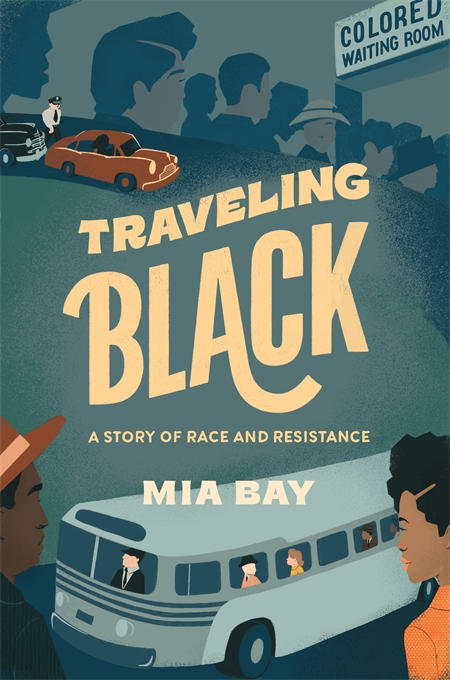
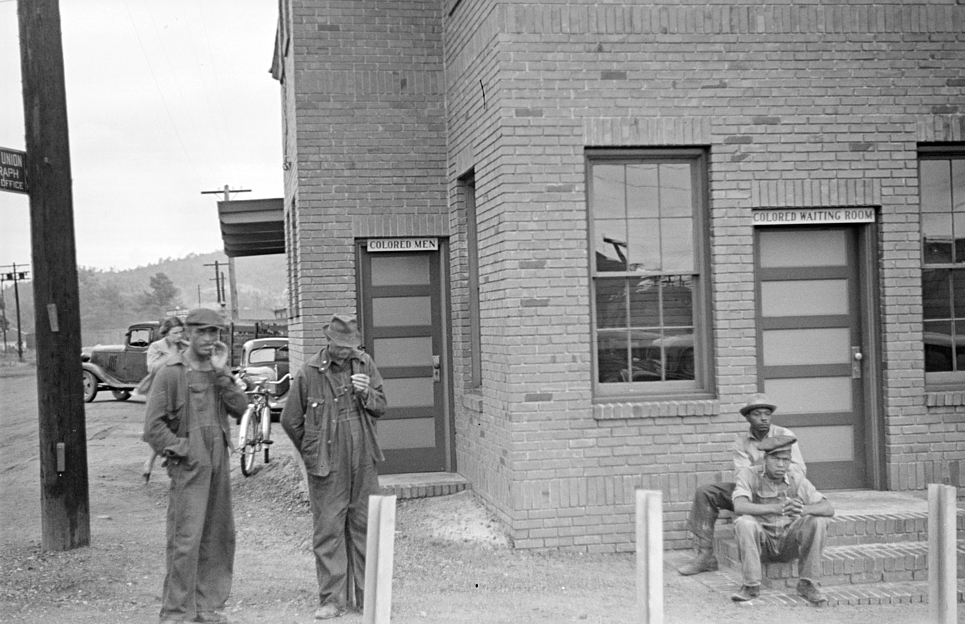
The humiliations involved in traveling Jim Crow began before Black travelers even boarded their trains. By the beginning of the 1890s the proliferation of separate car laws had ushered in separate waiting rooms. Although before 1899 only Arkansas, Louisiana, and Mississippi had passed laws requiring the railroads to construct segregated facilities, colored waiting rooms were common across the South well before then. Writing in 1891, Black academic William Scarborough described one of the New South's most unpleasant innovations as the "the novelty of three waiting rooms—one for ladies, one for gentlemen, and one for neither gentlemen nor ladies, but for 'negroes.'" That Negroes were "neither ladies nor gentlemen" was a point that could be inferred from the conditions in these new spaces. "The negro-waiting room is a dirty miserable place, with here or there a broken chair and [a] few miserable benches," wrote Scarborough of the accommodations that he had seen in Chattanooga, Atlanta, Macon, and elsewhere.1"A Step Backward," Frank Leslie's Illustrated Newspaper, September 19, 1891, 98.
Built and maintained by the railroads, colored waiting rooms were sometimes created as a result of new construction and sometimes added to existing structures; but they were almost always smaller, less comfortable, and less convenient than the facilities available to whites. Black novelist Charles Chesnutt noted in an article written in 1901, "If there is any choice of location" when it came to positioning such rooms, "the Negro always gets the worst room and it is seldom well lighted or clean."2Charles W. Chesnutt, "The White and the Black," Boston Evening Transcript, March 20, 1901, 13.
The "Colored Waiting Room" in Seaboard Air Line and Southern Railway Depot in Raleigh, North Carolina, provides one example of the kind of facility he had in mind.3Founded in 1900 and headquartered in Norfolk, Virginia, the Sea Board Air Line Railway ran along the South's eastern coast, terminating in Florida. Despite its name, it owned no airplanes. Before the days of air travel, "air line" (as in a straight line drawn in the air) was a term widely used to describe the shortest distance between two points, and it became part of the name of a number of nineteenth-century railroads whose proprietors wished to emphasize that their routes were more direct than those of competing roads. Black travelers described it in a discrimination complaint filed before the North Carolina Board of Railroad Commissioners in 1898 as "the most poorly equipped room at the depot, being dark and ill ventilated," and "very inferior" to the waiting room used by the station's white passengers. Small and cramped, it seated only twelve people, and one of its rows of seats was located "within a few feet of its restrooms" and faced directly into these facilities. Travelers who sat in these seats had an unavoidable view of "people going in and out the urinals and stalls," and were close enough to be able to smell the bathrooms as well. These busy bathrooms were used not just by colored travelers, but by railroad hands and "the public around the depot, ad libitum," so the stench that they gave off during warm weather assaulted not only the people in nearby seats, but everyone in the waiting room.4"E. A. Johnson, John Dancy, R. H. W. Leak et al. vs. Seaboard Airline and Southern Railroad," in Eighth Annual Report of the Board of Railroad Commissioners of North Carolina (Raleigh: Guy V. Barnes, Printer to the State, 1898), 110.
Conditions in the station's colored waiting room were especially troubling to Black women passengers, whose race exempted them from the privileges usually accorded to female travelers. The Raleigh station had no ladies' waiting room for Black women, who were "not allowed to go into the general ladies' waiting room." They, too, had to occupy Raleigh's tiny, smelly "colored waiting room" and experience its bird's-eye view of the toilet. "Convicts and insane people" were among the travelers who used these rooms, the complainants charged, and "the seats are so arranged that when such people are in there, lady passengers must sit next to them or immediate back of them."5"E. A. Johnson, John Dancy, R. H. W. Leak et al. vs. Seaboard Airline and Southern Railroad."
Raleigh's small station was built nearly a decade before North Carolina passed its 1899 law requiring the establishment of separate waiting rooms for white and colored races, and may have had an especially cramped colored waiting room for that reason. But southern railroads designed with segregation in mind were often equally problematic. Completed in 1906, Atlanta's massive Terminal Station replaced an older station and provided more spacious accommodations for Blacks. The station it replaced had only two waiting rooms: a general "Waiting Room for Ladies and Gentlemen," and smaller "Colored Waiting Room" that had once served as its "Ladies' Waiting Room."6Chesnutt, "The White and the Black," 13.
Still, most Blacks probably preferred the old station to the palatial new building. The "whole front" of the new station, according to journalist Ray Stannard Baker, "was given up to white people."7Ray Stannard Baker, Following the Color Line: An Account of Negro Citizenship in the American Democracy (New York: Doubleday, 1908), 223. Its facilities included a grand main waiting room, several ladies' waiting rooms, a gentlemen's reading room, a gentlemen's smoking room, and exactly one waiting room for Blacks—a "small and dirty room" that had to be entered from the side of the building.8"Atlanta Terminal of the Southern Railway," International Railway Journal 8, no. 5 (August 1905): 17. The size, location, and unkempt state of the Terminal's colored waiting room were the result of deliberate decisions made by the railroads that built and maintained the facility. Even the dirt served to underscore the racial hierarchies inscribed in the nation's architecture. When asked why the room was so filthy, the Black porter explained he "was expected not to keep the Negro waiting rooms as clean as the one for whites. The differential had to be maintained."9 Benjamin Mays, Born to Rebel: An Autobiography (New York: Scribner, 1971; Athens, GA: University of Georgia Press, 2003), 78. Differential access was also maintained. The only Blacks permitted to pass through the station's white waiting rooms were redcaps, servants, and porters. Black travelers who used the station had to enter and exit the facility through their "dirty little segregated room," which was situated on a side street more than a hundred feet away from the station's main entrance and taxi stands.
The stationmaster who imposed this policy was "no respecter of persons," according to Baptist minister Benjamin Mays, who lived in Atlanta for much his life. "He treated all Negroes with equal disrespect," preventing Black celebrities such as Marian Anderson from passing through the station's front doors and even extending the ban to a white woman, Florence Reed, whom he considered "contaminated because she was the president of Spelman Negro College." Black college president Rufus E. Clement was even more unwelcome: in the 1940s, a station policeman threatened to shoot him "for the heinous crime of having walked through the white room to the train to avoid having to walk outside in the rain as would have been necessary to get to the Negro waiting room."10Mays, Born to Rebel, 79.
Although far larger than most southern railway stations, Atlanta's Terminal Station was not unusual in its design. Most stations built during the segregation era routed Black travelers through separate entrances. Completed in 1899, Forsyth Station, also in Georgia, was typical in its design. Its small colored waiting room was completely cut off from the rest of the station. It had a front door that opened directly onto the street, and a side door through which Black passengers could access the tracks, but no door connecting it to the station's main waiting room. The only space the station's Black travelers shared with their white counterparts was the station's ticket office, which had a ticket window that opened into the station's colored waiting room.
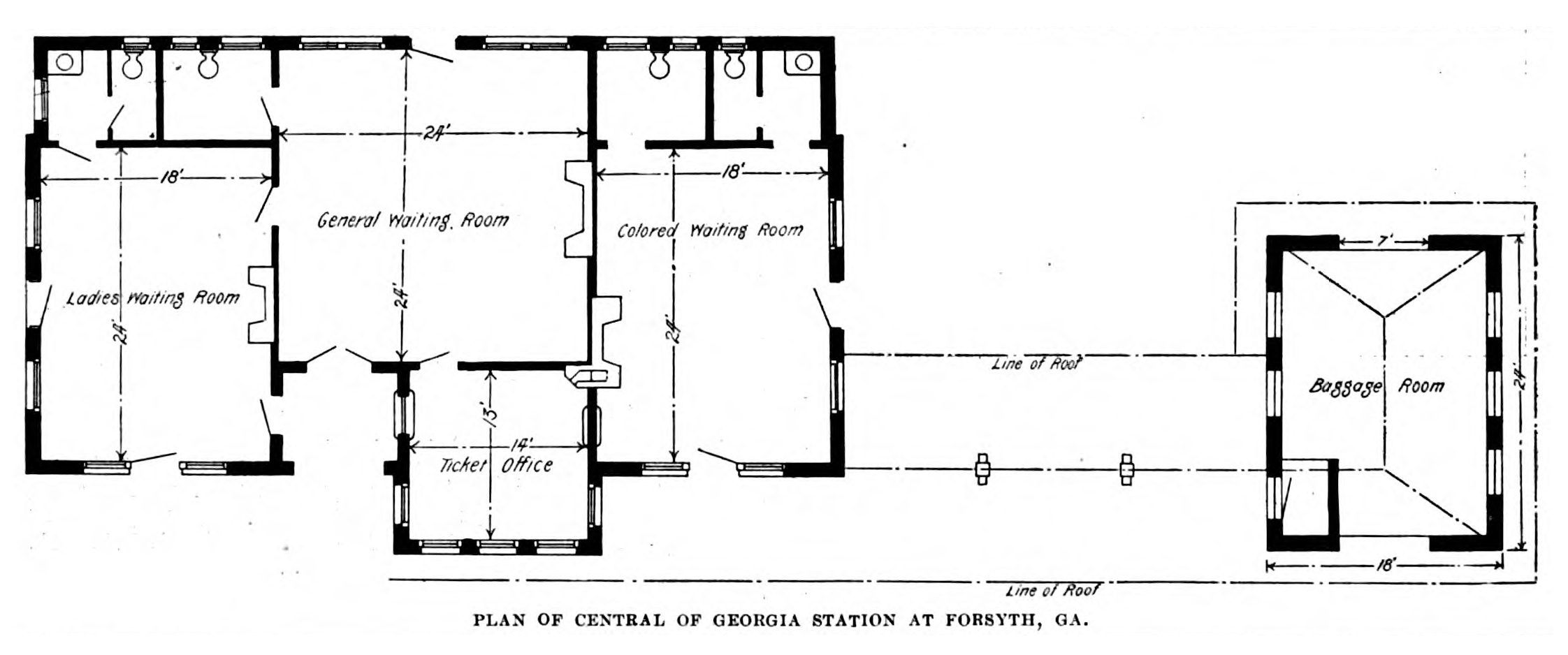
The fact that most railroads had a single ticket booth with segregated ticket windows was less innocuous than it might seem.11A Florida statute passed in 1907 required "Separate Waiting Rooms and Ticket Windows," The Compiled Laws, 1914, of the State of Florida (St. Paul, FL: West, 1915), 2960e. The railroad employees who worked the ticket booths served both windows, but routinely made African American ticket buyers wait until they had finished serving customers on the white side of the booth, regardless of how long their Black customers had been waiting. As a result, however early Black travelers arrived at the train station, they sometimes found themselves forced to purchase their "tickets moments before their train pulled out."12Joan Steinau Lester, Eleanor Holmes Norton: Fire in My Soul (New York: Simon and Schuster, 2003), 24. Sometimes the wait could be fruitless, for by the time the "tired ticket agent" began to serve Black customers, "often there was no time to buy [a] ticket and if they did not get them they had to pay extra on the train." Some unfortunate travelers waited so long at the ticket window that they missed their trains altogether, and even those who managed to secure a ticket could leave the window "burning with indignation and hatred."13W. E. B. Du Bois, "On Being Black," New Republic, 21, no. 272, February 18, 1920.
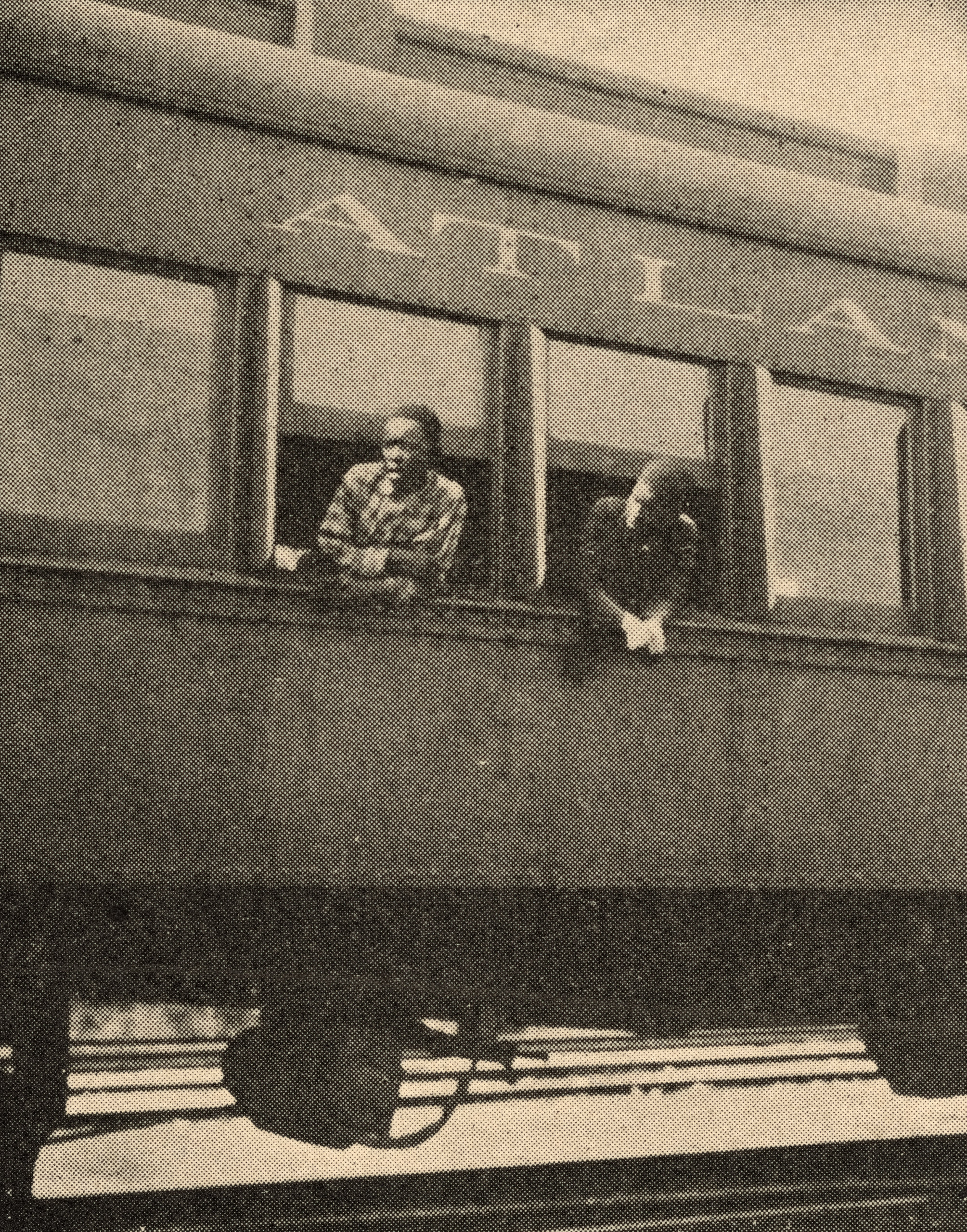
Such emotions were unlikely to abate as Jim Crow travelers progressed on to their destinations. White railroad station personnel were rude to Blacks, who rarely received assistance getting on or off the train and could not count on help carrying their baggage. Even at small stations with no platforms—where passengers typically disembarked "stepping on the narrow little stool placed under by the conductor"—Black women could not count on assistance from these officials, noted the Black writer Anna Julia Cooper in 1892. Instead, "gentlemanly and efficient" railroad conductors would hand "[white] woman after [white] woman from the steps to the stool, thence to the ground, or else relieving her of satchels and bags and enabling her to make the descent easily." But when "the Black Woman's turn came to alight" these men "would deliberately fold their arms and turn round."14Anna Julia Cooper, A Voice from the South (Xenia, OH: Alpine Printing House, 1892), 90. And as the Jim Crow car became entrenched, Black passengers lost access to the step. At small stations, according to W. E. B. Du Bois, southern railroads began to stop the Jim Crow car, which was invariably the first passenger car, "out beyond the covering in the rain or sun or dust," and require Black passengers to climb on and off without even providing a step.15Du Bois, "On Being Black."
African American travelers who boarded trains in the North often experienced similar rudeness well before they crossed the Mason-Dixon Line. Cairo, Illinois, along with Cincinnati, Ohio, and Washington, DC, were all stops where conductors began to force African American passengers to move from regular seats to seats in the Jim Crow car—often with no grace whatsoever. One Black traveler complained in a 1946 letter to the Chicago Defender that when Illinois Central Railroad trains passed through Cairo, conductors sometimes pushed "women and children around as if they were beasts," addressing them as "'nigger' girls and 'nigger' boys" and telling them they had to move to "the 'nigger' coach."16"Tells of Jim Crow by Railroad," Chicago Defender, October 5, 1946, 14. Complaints about being Jim Crowed in Cairo, Illinois, go as far back as the World War I era. See, for example, "Jim Crow in Illinois," Chicago Defender, July 18, 1914, 8; "Ill. Central Mistreats Colored Passengers," Chicago Defender, September 5, 1914, 1. Likewise, in Cincinnati and Washington, conductors "hollered (under their breath of course) 'Every pig to his pen,' or words to that effect."17"Dan Burley's Back Door Stuff: Looking through the Window of a Jim Crow Train," New York Amsterdam News, November 13, 1943, 8B.
The rudeness continued inside the Jim Crow car. "The conductor appropriates two seats for himself and his papers and yells gruffly for your tickets almost before the train has started," wrote Du Bois, describing race relations in a typical Jim Crow car: "It is best not to ask him for information even in the gentlest tones. His information is for white persons chiefly." The other whites who made themselves at home in these cars were equally discourteous, at least according to Du Bois, who especially disliked the "impertinent white newsboy" who always occupied "two seats at the end of the car and importunes you to the point of rage to buy cheap candy, Coca-Cola, and worthless, if not vulgar, books."
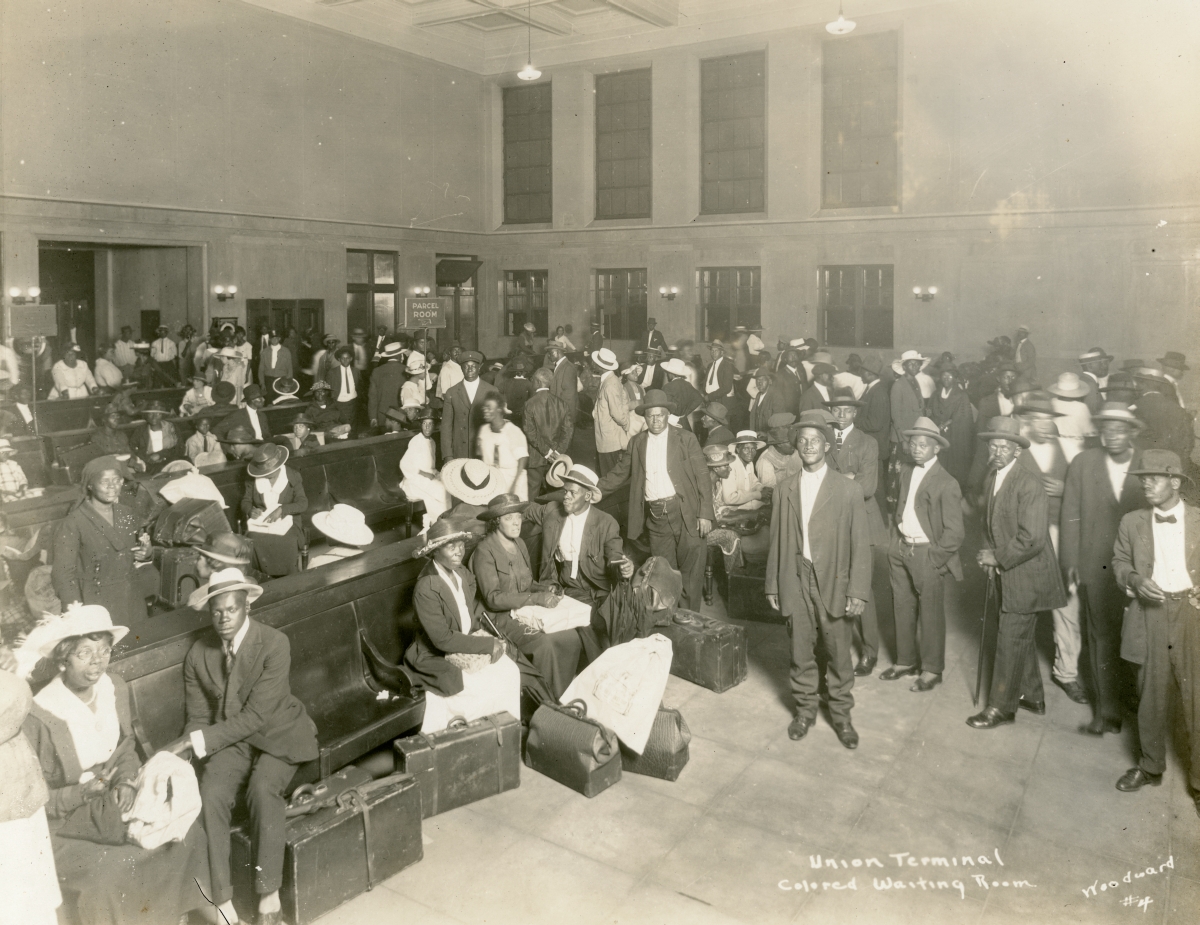
White rudeness, however, was not the most pressing issue that Black passengers faced. Colored waiting rooms often had no heat, and many Jim Crow cars had "no fire" even on the "coldest days." Food was even more of a problem. Few Jim Crow waiting rooms had restaurants, snack bars, or any place where Black travelers could purchase "the refreshments to be found in the big main waiting room."18Langston Hughes, "From Rampart Street to Harlem, I Follow the Trail of the Blues," (December 6, 1952), in The Collected Writings of Langston Hughes, vol. 10: Fight for Freedom and Other Writings on Civil Rights (Columbia: University of Missouri Press, 2001), 245. Nor could African Americans count on being able to buy food once onboard the trains. First introduced on Pullman's Palace sleeping cars in the 1860s, dining cars by the beginning of the twentieth century were all but ubiquitous on long-distance routes. They were designed to offer travelers an attractive alternative to railroad station restaurants, where meals were often hurried and unappealing. But in the South, railroad dining cars were subject to state segregation laws that put them off-limits to Black customers.
While stationary restaurants were free to cater to an exclusively white or Black clientele, railroads and other common carriers were supposed to offer separate but equal facilities to Blacks and whites. They rarely did so, and would have faced insurmountable challenges had they tried to do so, as railroad food services were subject to both restaurant and transportation laws—which were not necessarily complementary or even compatible. On southern trains, any shared coach was to be "divided by a partition, designated for the race to which such passenger belongs," while restaurants were subject to still more stringent regulations.19The Code of Alabama: Adopted by Act of the General Assembly . . . Approved February 16, 1897, prepared by William Logan Martin (Atlanta, GA: Foote and Davies, 1887), chap. 95, art. 2, 3455, p. 975. In Birmingham, Alabama, for instance, facilities that served food could not accommodate Blacks and whites in the same room—unless, as the municipal legislators put it, "such white and colored persons are effectually separated by a solid partition extending from the floor upward to a distance of seven feet or higher, and unless a separate entrance from the street is provided for each compartment."20The General Code of the City of Birmingham, Alabama, of 1930: (Includes All Ordinances of a General and Permanent Nature except as Specified in Sec. 6113). (Birmingham Printing Company, 1930), 215.
The logistics of dining car service made it impossible to fit all of these requirements, and none of the railroads were willing to operate two dining cars. So they adopted a variety of ways to divide up Black and white diners, ranging from excluding Blacks from food services entirely, to creating segregated seating within their dining compartments, to seating African American diners only after all their white passengers had finished eating, to having waiters and other railroad food service personnel take food to the colored car.
In the South the worst of these arrangements usually prevailed. "It can be flatly stated that it is impossible for the Negro to get dining car privileges South of Washington," wrote Howard professor Thomas Montgomery Gregory after completing an investigation of travel segregation for the NAACP in 1916. Gregory came to this conclusion after traveling from New Orleans to Washington on a halting, roundabout trip that took thirty hours, while subsisting on nothing but Coca-Cola. Confined to the Jim Crow car, he had no access to his train's dining car and "the stopovers at stations were not long enough to procure food at the stations if any was provided there for Negroes." Furious, he concluded that "it is not sufficient to say that I should have to take food with me or that I should have lived on grapes and peanuts. If I am to have equal accommodations, I should be able to secure palatable food served in a proper manner."21Thomas Montgomery Gregory, "The Jim-Crow Car: An N.A.A.C.P. Investigation, Part III," Crisis, February 1916, 196.
Gregory's experience was not unusual. Even when Black passengers could purchase food, their options were limited. William Pickens's experience on a ride from Lynchburg to Norfolk, in Virginia, in 1920 was fairly typical. Barred from dining car service, his only hope of food came when the train made a twenty-minute stop in Petersburg to allow white passengers who were "too stingy to pay for dining service and tips" to grab a quick meal at the station's lunch counter. At the end of their meals, just as the train resumed its journey, the lunch counter's staff sent out a basket full of cold leftover food, "which could never be sold to white customers, in an effort to get rid of it among the colored passengers." The food they sent, Pickens noted bitterly, only added "indigestion to insult." For seventy-five cents, you could get "a quarter of an impenetrable dried hen fried the day before yesterday, old bread and a slice of musty pie," whereas "the white passengers in the lunch room may get a hot drink or a fried egg for a few cents." The passengers who bought the overpriced food could not even secure cutlery or any beverages with their meals, as railroad employees were not allowed to bring dishes or flatware into the colored car.22 William Pickens, "Jim-Crowed," Socialist Review 9, no. 2 (1920): 126.
When railroads crossing through the segregated states did open up their dining rooms to Black customers, they observed the requirements of segregation law either by holding a separate seating for Black diners after white diners had eaten, or by setting aside a small number of special tables for Black customers, partitioned off by a curtain—an experience that Blacks found truly humiliating. "The first time that I was seated behind a curtain in a dining car, I felt as if the curtain had been dropped on my selfhood," Martin Luther King Jr. recalled in his autobiography, describing it as one of the moments in which he realized, "I could never adjust to the separate waiting rooms, separate eating places, separate rest rooms, partly because the separate was always unequal, and partly because the very idea of separation did something to my sense of dignity and self-respect."23"Chapter 1: Early Years," The Autobiography of Martin Luther King, Jr., ed. Clayborne Carson, https:// kinginstitute.stanford.edu/king-papers/publications/autobiography-martin-luther-king-jr-contents/chapter-1-early-years. 
Excerpted from TRAVELING BLACK: A STORY OF RACE AND RESISTANCE by Mia Bay, published by Harvard University Press. Copyright © 2021 by the President and Fellows of Harvard College. Used by permission. All rights reserved.
About the Author
Mia Bay is the author of To Tell the Truth Freely: The Life of Ida B. Wells (Farrar, Straus and Giroux, 2009) and The White Image in the Black Mind (Oxford University Press, 2000), and coauthor of Freedom on My Mind: A History of African Americans, with Documents (Bedford/St. Martin's, 2012). She is the Roy F. and Jeannette P. Nichols Professor of American History at the University of Pennsylvania.
]]>Review
 |
Tammy Ingram explores both more and less than the history of the Dixie Highway, built between 1915 and 1926 as a six-thousand-mile loop from Chicago and other Lake Michigan towns to Miami Beach and back. Dixie Highway foregrounds the political challenges in conceiving and creating an integrated, cross-country road in an era when the United States lacked a coordinated system of federal or state funding or planning for road building and when the affected states (especially in the South) had little to no bureaucratic, professional, or labor infrastructure to help plan, build, or manage such projects.
As a vehicle for examining America's transportation and modernization politics at a key moment of the country's rail-to-auto transition, the Dixie Highway project is quite useful. Passing through ten states on both sides of the Mason Dixon line, the highway invites comparison of how politics at the state level shaped transportation debates. Spanning the years during which the first federal aid highway acts were passed, a major war reshaped and reframed transportation needs, and automobile ownership surged, the Dixie Highway's story illuminates many of the planning, construction, and maintenance challenges of twentieth century highway network development.
Ingram opens with a discussion of the nation's chaotic transportation system at the dawn of the twentieth century, noting that until the advent of the automobile, roads and railroads coexisted uneasily. Railroads received considerable congressional investment and dominated long-distance and even regional travel and freight transit. Meanwhile, an anemic "spokes-on-a-wheel" system of ill-funded, mostly unimproved local-destination roads filled in the gaps from farm to railroad depot and enabled horse and wagon travel where railroads didn't go.
Ingram recounts how farmers and merchants chafed at the railroads' control over freight cost and time schedules and at the difficulties of navigating poor surrounding road infrastructure. By the late nineteenth century, road development partisans began to coalesce into a national "Good Roads" movement. A weak federal Office of Road Inquiry was established in 1892, but had no real authority or budget. Federal promises in the 1890s to develop an elaborate Rural Free Delivery system failed to materialize. Dixie Highway details how Good Roads activism (fueled by a fragile coalition of farmers, businessmen, and the nascent automobile industry) accelerated nationwide after 1910 when affordable automobiles vastly expanded the potential for an upgraded road network to present a viable alternative for long-distance travel. Good Roads activists began to lobby for a federally-funded highway system, and, after 1914, planning for the Dixie Highway commenced.
The idea for the highway, Ingram notes, came from Indianapolis automotive headlights manufacturer Carl Fisher, who had plowed his fortune into the Indianapolis Motor Speedway, and later into promoting long-distance roads, including the earlier Lincoln Highway. The Dixie Highway—one of a number of "marked trails" of this era—would join existing local roads into a long-distance highway linking north and south. Not coincidentally, it would connect the metropolitan North with Fisher's new real estate venture in the mangrove swamps of south Florida—Miami Beach. Despite Fisher's self-interested agenda, the idea attracted broad support from farmers, businessmen and tourism promoters, automobile enthusiasts, and state officials. The Dixie Highway Association, founded in 1915 by Fisher and other businessmen, spearheaded their lobbying and planning efforts.
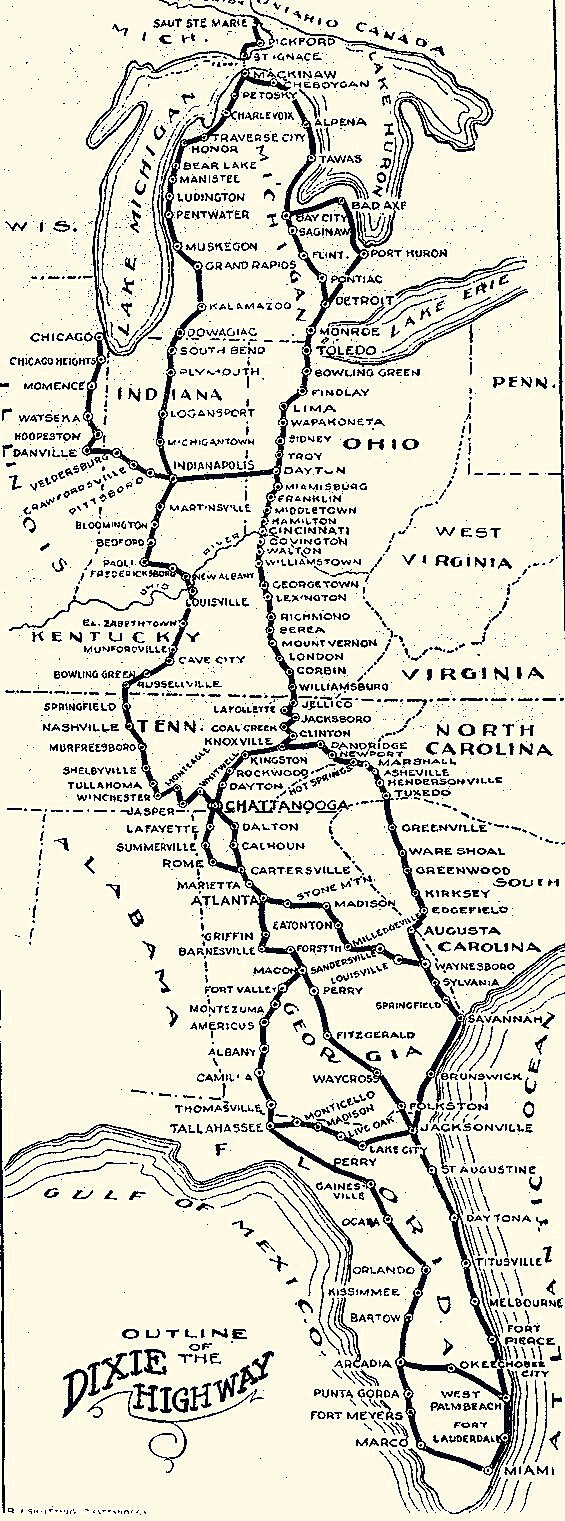 |
| Outline of the Dixie Highway, The Dixie Highway Association, 1915-1927. Courtesy of Wikimedia Commons. |
Bringing Dixie Highway to fruition at this moment when there was no political consensus about road building proved arduous. Ingram explains how disagreements erupted over routing, state and gubernatorial power to designate routes, and concerns about funding and labor sources. At a major meeting in Chattanooga in 1915 "[e]veryone wanted to be involved in planning the Dixie Highway," Ingram quips, "but no one knew how to do it" (76).
In Ingram's narrative, the thorniest questions concerned the need for federal money and more centralized state control. Having inaugurated the project by raising insufficient funds from counties, after 1915 the Dixie Highway Association joined the growing national chorus calling for federal highway aid. Such efforts spurred passage of the first Federal Aid Road Act in 1916 with, Ingram notes, the strong support of southern congressmen. The Act, limited in scope, mandated creation of highway departments in states that wanted to receive federal funds, but lacked other provisions that would have allowed it more fully to support efforts like the Dixie Highway.
Ingram presents World War I as a key turning point. The war bolstered the new state highway departments and calls for expanded federal involvement in road building by revealing the severe limitations of both the nation's railroad and highway infrastructure (which could not handle increasing truck traffic). Advocates of the Dixie Highway and similar routes began to cast their projects as national defense investments rather than just commercial or tourist amenities.
Meanwhile, the growth of domestic tourism during wartime spurred demand not only for road improvements, but also for standardized signage, maps, and travel guides. One wishes that Ingram had explored drivers' early experiences on the Dixie Highway in relation to the larger politics.
The country moved haltingly towards a national highway system. While the Dixie Highway Association advocated "expert engineering, paid labor, and modern machinery" (131) for road construction, many southern states remained committed to a chain gang labor system using (mostly) black convicts. Although the chain gang system was inefficient and ineffective in building quality roads, Ingram says that southern states clung to it as a pillar of (localized) racial control, as well as a way to avoid levying new fees or issuing road-building bonds.
Ingram writes that even after passage of an enhanced Federal Aid Highway Act in 1921, "[t]raditional racial politics collided with the modernizing impulses of the Good Roads Movement along the Dixie Highway" (132). Rifts opened in the movement, and progress on the highway lagged. But national sentiments were changing. In the 1920s, the roads movement culminated in the Bureau of Public Roads' designation of a national system of numbered federal highways. This system subsumed named routes like the Dixie Highway and, Ingram observes, "symbolized a significant transfer of power from local governments to a new centralized highway administration run by unelected state and federal bureaucrats" (174).
Meanwhile, in Georgia, the impulses to retain local control and resist bond- or license-driven statewide funding of highway construction reigned supreme. Ingram details how voters in the 1926 gubernatorial election elevated a pay-as-you-go advocate and highway department critic to the top of state government. "In many ways," Ingram concludes, the race "placed the massive success of the Dixie Highway campaign up for a popular vote, and it lost" (192).
In other southern states, too, "voters recoiled at the power and the cost of the state and federal institutions necessary to implement actual road construction" (193). This sentiment, Ingram argues—relying on data from South Carolina only—prevailed across the South until the 1950s, when the 1956 Federal Aid Highway Act mandated the interstate system based on the centralized, coordinated, national road building ideas that had underlain the Dixie Highway.
In using the Dixie Highway's history to map the contours of early twentieth century US highway politics, Ingram's book is successful. Yet, even on its own terms, the book feels partial and incomplete.
 |
| Logo for the Georgia Dixie Highway Association and 90-mile Yard Sale. © Dixie Highway 90-Mile Yard Sale, 2015. |
The most significant shortcoming is that, while positioning itself as a history of the cross-country interstate "Dixie Highway," substantial parts of the book focus on internal politics in just one state: Georgia. Ingram defends this choice on the basis that Georgia had more Dixie Highway mileage than most other states, was heavily populated but poorly served by improved roads, was the "gateway to Florida" (10, 58), and provides a useful window into larger debates about centralization, planning, funding, and labor.
Dixie Highway's tendency to use Georgia as a proxy for "the South" seems unwarranted, as does the contention that attitudes in "the South" (towards highway expansion or anything else) were generally shared, uniquely shaped by racism, or differed fundamentally from those elsewhere. Discussions of problematic systems in Georgia (e.g. chain gang labor) find no parallel explorations or robust comparisons to labor or funding arrangements in other Dixie Highway states. What were the differences? Besides the chain gang, did other racial (or class) dynamics play out elsewhere along the Dixie Highway (e.g. in terms of route, travelers, accommodations, etc.)?
Regarding attitudes toward state-sponsored highway building, North Carolina's history presents a productive counter-narrative. In the early 1920s, that state issued bonds for an aggressive state-managed road construction program, bucking prevailing trends in Georgia, Virginia, and other southern states and earning the state the "Good Roads" moniker. Although North Carolina had only a small piece of the Dixie Highway, its distinctly different approach to road building finds little representation in Ingram's analysis of "the South."
Equally troubling is the absence from the narrative of Florida, a major Dixie Highway state and the road's southern destination. With the highway a key to south Florida's 1920s real estate and tourism boom (and with both state and private developers sponsoring other road projects like the Tamiami Trail and Tampa's Gandy Bridge), how did Florida state politics compare with Georgia's, where the social and economic context was very different? Ingram makes only cursory attempts at linkages between southern states but implies a broad consensus: "white southerners viewed the creation and expansion of a new highway bureaucracy with a mixture of enthusiasm and caution" (163).
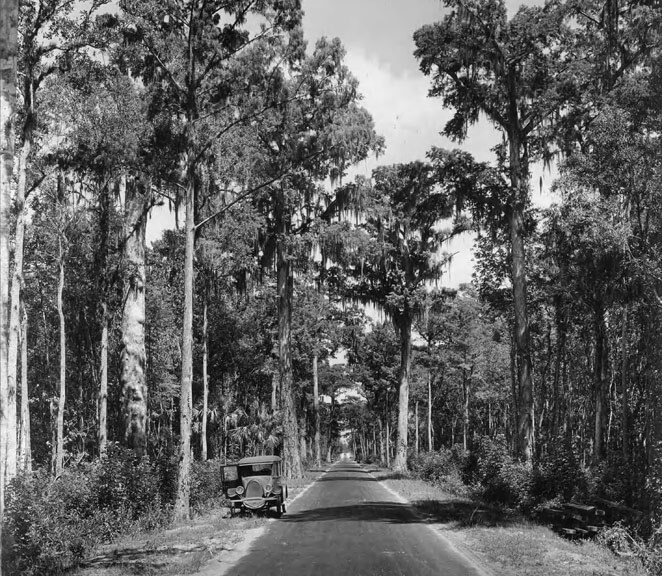 |
| Dixie Highway in the Tampa Bay region. Photograph by the Burgert Brothers, 1925. Courtesy of Burgert Brothers Collection of Tampa Photographs and the University of South Florida Tampa Library, Florida Studies Center Gallery, Image 167. |
The book's conceptualization of key components of Dixie Highway history also betrays the expansive title. Ingram affords scant attention to those who traveled the highway, the expansion of tourism or commerce along the road, anything related to the road's effects on property owners, or the cultural and social dynamics of road development beyond their impact on construction-related state political debates. Dixie Highway's potential to use the road's history to explicate "the making of the modern South" is limited.
The work's potential is also limited by the constraints of the book as a mode of presentation. Could a topic such as highway history be better executed in a media rich, online format? Especially with regard to the Dixie Highway's fundamentally spatial stories of alternative routes, travel, urban-rural divides, state-based differences, and a massive physical transformation of a large swath of the US landscape, readers would benefit from interactive, dynamic maps (showing the halting progress of construction); layered geo-referenced overlays (that would relate the highway, now largely vanished, to the present landscape); infographics (comparing funding, labor, improved road mileage, and other factors across the states, and allowing visualization of regional differences); and plentiful video and images (postcards, advertisements) from the Dixie Highway's golden era.
There are now many models for web and video interpretation of spatial and highway histories; see, for instance, the 2013 film, Paving the Way: The National Park-to-Park Highway, which presents the history of a contemporaneous project to the Dixie Highway or my own Driving Through Time: The Digital Blue Ridge Parkway project. Tools like Neatline, DH Press, and others permit geospatial presentation of historical materials. Given the possibilities, Dixie Highway's selection of some twenty images (concentrated in the chapter on World War I) and limited set of maps (some of which—crucially the 1926 national highway system map on pages 190–191, and the official Dixie Highway map, which appears only on the dust jacket—are very difficult to see) seems unequal to the task.
One hopes, given these exciting possibilities, that Tammy Ingram's Dixie Highway could spur further examinations in multiple formats of this crucial transitional period in American transportation history.
About the Author
Anne Mitchell Whisnant is adjunct associate professor of history and American studies at the University of North Carolina at Chapel Hill. She also serves as deputy secretary of the faculty in the office of faculty governance. Her publications include Super-Scenic Motorway: A Blue Ridge Parkway History (Chapel Hill: University of North Carolina Press, 2006). Whisnant is the scholarly advisor for "Driving Through Time: The Digital Blue Ridge Parkway in North Carolina," a grant-funded digital, geospatial history collection developed collaboratively with the Carolina Digital Library and Archives, part of the UNC libraries system.
]]>Introduction
 |
| Percent of "Yes" vote in T-SPLOST referendum by precinct, August 2012, Atlanta Regional Commission. |
"We took on the governor, the lieutenant governor, the mayor, big business and slick political consultants," boasted Atlanta Tea Party leader Debbie Dooley on July 31, 2012. "[And] we emerged victorious." And, indeed, they did. Though the votes were still being counted when Dooley delivered her victory speech at Midtown's Hudson Grille after last summer's primaries, the outcome was entirely clear: the T-SPLOST (Transportation Special-Purpose Local-Option Sales Tax), which supporters hailed as metro Atlanta's last great chance to solve its transportation crisis, was like its commuters, going nowhere fast.1Craig Schneider, "Tea party stakes claim as tax slayer," The Atlanta Journal-Constitution, August 1, 2012.
The story of Atlanta's T-SPLOST debate follows a long and winding road that began under the state's gold dome where, after four years of false starts, legislators passed the Transportation Investment Act of 2010 (TIA). The legislation carved the state into twelve transportation districts and charged elected officials in each with assembling a list of projects to be funded by a one-percent sales tax over ten years, essentially placing the fate of regional transportation planning in the hands of area voters. The mayors and county commissioners that composed the metro Atlanta "regional roundtable" then set to work crunching numbers, vetting projects, and trading horses in an effort that to longtime observers must have seemed a fool's errand. Competition, not collaboration, had long characterized metropolitan relationships and it wasn't altogether clear that area leaders could even agree on a slate of projects, much less persuade voters to foot the bill. But in the fall of 2011 the group announced that it had approved by unanimous consent a list of 157 projects in ten counties at a total cost of 6.14 billion dollars, surprising many a local cynic and perhaps even a few in the roundtable.2The "regional roundtable" consisted of one mayor and one county commissioner from each of the region's ten counties as well as Atlanta Mayor Kasim Reed. Ariel Hart, "FAQs: What you need to know about the referendum," The Atlanta Journal-Constitution, June 4, 2012; Ariel Hart, "Less-grand plan a political reality: collaboration can only go so far, leaders admit. Voters will say in 2012 if it's enough for a start," The Atlanta Journal-Constitution, October 16, 2011; Atlanta Region Transportation Investment Act (TIA) Roundtable, "Final Investment List," October 13, 2011, accessed, August 26, 2012, http://www.metroatlantatransportationvote.com/documents/Final_project_list_5-3-2012.pdf.
Then the going got rough. From the outset, the Tea Party assailed a project list that squandered precious resources on transit. The Georgia chapter of the Sierra Club meanwhile announced their opposition on the basis that the list lavished generous sums on new roads. And for its part, the state NAACP took exception to a plan that did too little to promote transportation equity. Old resentments resurfaced, new alliances were forged, and with a hundred and fifty some odd projects included, almost everyone most found at least a few to dislike. For a majority, that was all it took. When the dust settled and the votes were tallied, Atlanta's T-SPLOST had failed. Miserably.
It failed not only in staunchly conservative, exurban counties like Fayette and Cherokee, but also in relatively progressive and populous Fulton and DeKalb—the supposed lynchpins of the regional campaign. Only thirty-seven percent of metro voters supported the T-SPLOST, and it won majorities in only two jurisdictions, the cities of Atlanta and Decatur. The final vote totaled 257,942 in favor and 417,593 against. In the first genuinely metropolitan conversation about transportation policy in nearly half a century, Atlanta area voters basically agreed to disagree. But about what?3Atlanta Regional Commission, "Draft Precinct Results, % Vote Yes," August 3, 2012, accessed August 26, 2012, http://www.metroatlantatransportationvote.com/images/atl_voting_map.jpg; "General Primary/General Nonpartisan/Special Election, July 31, 2012," Georgia Election Results, accessed April 24, 2013, http://results.enr.clarityelections.com/GA/40378/95366/en/select-county.html; Ariel Hart, "A loud and clear 'no': metro Atlanta's $7.2 billion transportation tax referendum fails. For 37%, Against 63%," The Atlanta-Journal Constitution, August 1, 2012.
"We're saying you have screwed us . . ."
Untangling the reasons for the T-SPLOST's defeat remains a difficult task, but at least one thing can be said with complete certainty: the campaign didn't lack for financing. Faced with the possibility of defeat in what area leaders were calling the most important vote in a generation, Atlanta business leaders closed ranks and opened their wallets. Georgia Power and Cox Enterprises, the parent company of The Atlanta Journal-Constitution, donated $250,000 apiece. Longtime stalwart Coca-Cola added another $197,500. The construction and design industries contributed more than a million dollars alone and even the good folks at Waffle House chipped in $25,000. All told, Citizens for Transportation Mobility, the political action committee that waged the "Untie Atlanta" campaign, raised a war chest of six and a half million dollars, and spent widely on mailers, door-to-door canvassing, phone banks and television ad buys. The leading opposition group, the Transportation Leadership Coalition, made do with little more than $14,000 and shoe leather.4Shannon McCaffrey and Ariel Hart, "TRANSPORTATION REFERENDUM: Business behind sales tax push: T-SPLOST rests on millions in funds from Ga. Firms," The Atlanta Journal-Constitution, July 24, 2012; Jim Wallis, "Real estate, contractors top T-SPLOST's $8M donor list," Atlanta Unfiltered, July 24, 2012.
Even given their tremendous spending advantage, supporters of the measure had reasons to worry. One was the region's history of white, suburban resistance to public transportation, particularly the Metropolitan Atlanta Rail Transit Authority (MARTA). When it appeared on area ballots in 1971, MARTA's suburban opponents erected a populist defense of local autonomy and defeated the measure by a four to one margin. In the years that followed, the system's critics consistently opposed its expansion, and as the ugly expression "Moving Africans Rapidly Through Atlanta" suggests, a great many were motivated by the worst reasons. Given this tortured history of race and rail, one might expect racial considerations would impact the vote. Indeed, it's hard to imagine otherwise.5MARTA first went before voters in 1968 when it was defeated in the city of Atlanta and Fulton and DeKalb counties, largely due to opposition from black voters. Over the course of the next three years, the MARTA board invited its critics to the negotiating table and the system was reinvented as a genuine public service capable of winning support from the city's diverse constituencies. In 1971, it appeared on ballots for a second time and was approved by voters in the city of Atlanta and Fulton and DeKalb counties but defeated by voters in Clayton and Gwinnett counties. Though Cobb county had been included in MARTA's early plans, its residents voted against the system's expansion in 1965. For more on MARTA and the politics of race, see Larry Keating, Atlanta: Race, Class, and Urban Expansion (Philadelphia: Temple University Press, 2001) and Edward A. Hatfield, MARTA and the Making of Suburban Conservatism (M.A. Thesis, University of Georgia, 2006).
 |
| Percentage of metro Atlanta white residents by 2010 census block group, 2013. Data from Social Explorer. |
 |
| Percentage of metro Atlanta black residents by 2010 census block group, 2013. Data from Social Explorer. |
 |
| Percentage of metro Atlanta Hispanic or Latino residents by 2010 census block group, 2013. Data from Social Explorer. |
Still, there are a number of reasons to suspect that the 2012 T-SPLOST referendum is not the latest chapter in an all-too familiar story. For one, the metropolitan demographic landscape has been significantly altered in recent decades. Between 1960 and 1980, no fewer than 170,000 whites abandoned the city and Atlanta's white population was reduced from two-thirds of the total to a mere third. Even by 1971 when MARTA appeared on area ballots, white flight had produced a black majority inside the city limits and white majorities that exceeded ninety-five percent in the suburban counties of Cobb, Gwinnett and Clayton. However, the "white suburban noose" that Atlanta Mayor Sam Massell famously described some four decades ago has largely come apart at the seams. Today, Clayton has a two-thirds black majority, Gwinnett is majority-minority, and even Cobb, that bastion of lilly-white suburban conservatism, retains a non-Hispanic white majority of only fifty-five percent. Exurban counties like Cherokee or Fayette have demographics more in keeping with suburban stereotypes, but proposed transit lines would not have even approached their borders. In fact, only a single project on the entire list would have linked majority-black and majority-white counties by transit—a $690 million dollar bus rapid transit line traveling north from Atlanta to Cobb County. What's more, recent polling suggests that suburban hostility to public transportation may be in decline. According to a poll commissioned by the Atlanta Journal-Constitution in the wake of the vote, sixty-eight percent of Cobb and Gwinnett residents "strongly or somewhat" supported extending rail lines beyond the core counties of DeKalb and Fulton. Only twenty-two percent were "strongly" opposed, and in 2010, voters in Clayton overwhelmingly approved a non-binding referendum in support of MARTA's expansion.6Kevin Kruse, White Flight: Atlanta and the Making of Modern Conservatism (Princeton: Princeton University Press, 2005), 5, 263; "White Suburban Noose," Clayton News Daily, November 1, 1971; United States Census Bureau, "State and County QuickFacts: Clayton County, Georgia," accessed March 25, 2013, http://quickfacts.census.gov/qfd/states/13/13063.html; United States Census Bureau, "State and County QuickFacts: Gwinnett County, Georgia," accessed March 25, 2013, http://quickfacts.census.gov/qfd/states/13/13135.html; United States Census Bureau, "State and County QuickFacts: Cobb County, Georgia," accessed March 25, 2013, http://quickfacts.census.gov/qfd/states/13/13067.html; Jennifer Mayerle, "Cobb County T-SPLOST: Rapid bus transit," accessed March 25, 2013, http://www.cbsatlanta.com/story/19046752/cobb-county-t-splost-rapid-bus-transit; Ariel Hart, "Poll: Need seen, but trust lacking," The Atlanta Journal-Constitution, December 9, 2012; Curt Yeomans, Clayton News Daily "Transit advocates call for MARTA referendum," August 14, 2012, accessed March 26, 2013, http://www.news-daily.com/news/2012/aug/14/transit-advocates-call-marta-referendum/. A similar non-binding referendum was narrowly defeated by Gwinnett voters in 2008 despite the fact that the wording seemed intended to produce a negative response. Maria Saporta, "Outcome of MARTA vote in Gwinnett signals shift to regional transit," Business Insider, July 20, 2008, accessed March 26, 2013, http://alt.coxnewsweb.com/blogs/content/shared-blogs/ajc/businessinsider/entries/2008/07/20/.
To be sure, these figures should be regarded with some caution. In Atlanta and elsewhere, public transportation has been saddled with racial and class anxieties that are not easily overcome, a fact best illustrated by the forty-two percent of metropolitan poll respondents who still believe that crime and transit go hand in hand. And it bears repeating that while white residents have been relocating to the city proper in recent years and while suburban communities are now home to a wide variety of minority groups, beneath the veneer of metropolitan statistics, segregation by race and class remains a persistent feature of metropolitan life. Clayton County even earned the unhappy distinction of having the single highest rates of resegregation in the entire nation at the turn of the last century according to a study by the Civil Rights Project at Harvard University. Whether on account of the persistence of segregation at the neighborhood level, the developing phenomenon of secessionist cities within core counties, access to quality schools or a host of other quality-of-life measures, it remains true that in metropolitan Atlanta, race still matters. Even so, shifting demographics, evolving views on public transportation and in this particular instance, the nature and location of transit projects under consideration, all suggest that a simple bifocal lens that focuses on white suburbs and black cities may no longer be the best tool for interpreting metropolitan transportation debates. In short, metropolitan relationships have become more complicated and more interesting, too.7Ariel Hart, "Voters reject transportation tax," The Atlanta Journal-Constitution, August 1, 2012, accessed January 25, 2013, http://www.ajc.com/news/news/state-regional-govt-politics/voters-reject-transportation-tax/nQXfq/; Erica Frankenberg and Cungmei Lee, Race in American Public Schools: Rapidly Resegregating School Districts (Cambridge: Harvard University, 2002), 6–7.
When coupled with their spending advantage, evidence indicating newfound support for transit must have given the measure's supporters reason to hope that it might succeed where past efforts had failed. Nevertheless, a great many observers were of the opinion that the referendum stood little chance of passing all along. Ironically, that group even includes the man charged with leading the "Untie Atlanta" campaign. David Stockert, chief executive of Post Properties and chairman of Citizens for Transportation Mobility, told reporters after the vote that the referendum was bound to fail; voter distrust in government was simply too great. "We could not overcome the bigger dynamics out there," Stockert admitted. "I don't think there's anything we could have done that would have changed the outcome." Indeed, local polling on the eve of the vote indicated that some ninety-one percent of the voters opposing the referendum were motivated by a profound lack of faith in government and a poll commissioned by The Atlanta Journal-Constitution months later confirmed that some sixty percent of metro residents believed few public officials were worthy of their trust and that government was wasteful. And there was a good deal of government here, to be sure. MARTA, a perennial conservative punching bag, was to receive $600 million in repairs and upgrades. The Georgia Department of Transportation (GDOT), which oversaw the roundtable's planning efforts, was no more popular with voters, having recently extended the tolls on Georgia 400 past their promised expiration date. Add to that the Georgia Regional Transportation Authority and various jurisdictions within the ten county area and you have a veritable alphabet soup of governmental oversight. Without clear lines of accountability or a history of regional decision-making, voters were asked to support not just their locally elected officials, but, as transportation reporter David Goldberg recently put it, "government writ large." The trust just wasn't there.8Greg Bluestein, "TRANSPORTATION REFERENDUM THE AFTERMATH: Exec: Tax bid had no chance: Leader of T-SPLOST campaign cites outside forces; critic rips rigid mentality," The Atlanta Journal-Constitution August 13, 2012; Ariel Hart, "Government distrust sank tax," The Atlanta Journal-Constitution, August 2, 2012; Ariel Hart, "Poll: Need seen, but trust lacking," The Atlanta Journal-Constitution, December 9, 2012; David Goldberg, "Is metro Atlanta vote a bellweather for transportation funding?" Transportation for America, August 8, 2012, accessed August 23, 2012, http://t4america.org/blog/2012/08/07/is-metro-atlanta-vote-a-bellwether-for-transportation-funding/.
 |
| Robert Carpenter, Tax day Tea Party protest, Atlanta, Georgia, April 15, 2009. |
According to The Atlanta Journal-Constitution columnist Jay Bookman, the region's trust deficit did not develop by accident either. Instead, it reflects the organized efforts of conservative state lawmakers who have undertaken a "crusade to destroy public faith in the institutions that they themselves lead." While prominent conservatives still routinely inveigh against bloated government agencies, it may be that Georgians today may require more government, not less. According to the conservative think tank Tax Foundation, in the decade since Republicans assumed control of both houses of the state legislature, the Governor's office and virtually every statewide post of any consequence, state tax collections have declined by a quarter, making Georgia's leadership among the most parsimonious in the nation. Meanwhile the state ranks among the ten worst in the country in such categories as high school graduation, percentage of the population living in poverty, infant mortality and access to healthcare. While such ignominious distinctions suggest that state leaders have been penny wise and pound foolish, perhaps the greatest danger is that in Georgia and elsewhere, government's inability to solve problems has become a self-fulfilling prophesy.9Jay Bookman, "The self-induced paralysis of Georgia government," The Atlanta Journal-Constitution Jay Bookman Blog, August 8, 2012, accessed January 25, 2012, http://blogs.ajc.com/jay-bookman-blog/2012/08/08/the-self-induced-paralysis-of-georgia-government/; Gracie Bond Staples and D. Aileen Dodd, "State's high school graduation rate in 'crisis,'" The Atlanta Journal-Constitution, July 23, 2009; Nathan Deal, 2013 State-of-the-State Address, accessed January 25, 2013, http://bettergeorgia.com/2013/01/17/gov-nathan-deals-2013-state-of-the-state-address/; 24/7 Wall St., "The States with the Widest Gap Between the Rich and Poor," accessed January 25, 2013, http://247wallst.com/2012/05/31/ten-states-with-the-worst-income-inequality/3/; "Georgia: Infant Mortality (1990–2012)," United Health Foundation, accessed January 25, 2013, http://www.americashealthrankings.org/GA/IMR/2011; "Georgia, 2012: Overall Ranking," United Health Foundation, accessed April 29, 2013, http://www.americashealthrankings.org/GA/2012; Nathan Deal, "Deal: Focus on foundations that strengthen Georgia," Office of the Governor, January 17, 2013, accessed April 29, 2013, http://gov.georgia.gov/press-releases/2013-01-17/deal-focus-foundations-strengthen-georgia.
While Goldberg, Stockert, and Bookman are undoubtedly correct in their assessments, it may be that voter distrust in government cannot fully account for the referendum's dismal failure at the polls. After all, with a sour economy, a predominantly conservative electorate and a historic reluctance to embrace transportation alternatives, such concerns should have been expected. And as it happens, they were. The campaign's architects understood that the T-SPLOST would encounter stiff resistance in conservative jurisdictions and plotted a path to victory that required support from only thirty-five percent of the region's Republican males and just half of Republican women. With such limited support from conservatives, however, the campaign needed to win votes from sixty percent or more of the region's transit-supporting Democrats. And it is here, among area progressives and their interest groups, that the T-SPLOST's story becomes most interesting.10Aaron Gould Sheinin and Greg Bluestein, "Deal: Rule out revote," The Atlanta Journal-Constitution, August 2, 2012; William E. Schmidt "Racial Roadblock Seen in Atlanta Transit System," The New York Times, July 22, 1987; Hart, "Voters reject transportation tax"; Ariel Hart, "Transportation tax campaign makes 300k calls," The Atlanta Journal-Constitution, May 31, 2012.
Because many of the same anxieties that animated suburban resistance to MARTA's expansion were shared by state elected officials, the legislature has for more than four decades refused to divert any revenue from the state's gas tax to fund public transportation, making MARTA the nation's only big city transportation system to make do without assistance from the state. More recently, a combination of fare hikes and service cuts has resulted in declining ridership, raising serious doubts about the system's long-term financial viability at a time when other metro transit systems have experienced modest gains. Given the paucity of prior investment, campaign managers expected that public transportation advocates would have supported the measure with few reservations. After all, a slight majority of the measure's spending was devoted to transit-oriented projects and it would have established some twenty-one new miles of light rail, including worthy projects such as the Clifton Corridor MARTA extension, the Atlanta Streetcar, and the Beltline. Perhaps for this reason, the campaign focused most of its efforts on swaying suburban commuters, touting roadway improvements at the expense of rail and transit investments in its advertisements and promotional materials. Even in Democratic Clayton County, campaign spots promoted the creation of a super-arterial highway along Tara Boulevard, but said precious little about the resuscitation of C-TRAN, the county's bus system that folded in 2010 due to a lack of funding.11Since 2001, ridership has fallen on MARTA's trains and buses by fifteen percent and thirty-one percent, respectively. Overall ridership declined by nearly five percent in 2012 alone; among other major metros, only Philadelphia experienced a decline in 2012 (one percent) and ridership increased by an average of 1.49 percent nationally; Steve Visser, "MARTA bucks national trend; Ridership keeps falling," The Atlanta Journal-Constitution, March 31, 2013; Eric Sturgis, "Group says Georgia transportation plan needs more rail," May 25, 2012, accessed August 23, 2012, http://www.politifact.com/georgia/statements/2012/may/25/colleen-kiernan/group-says-georgia-transportation-plan-needs-more/; Ariel Hart, "Transportation tax campaign makes 300k calls," The Atlanta Journal-Constitution, May 31, 2012; Hart, "Voters reject transportation tax."
The campaign's decision to downplay its investments in public transportation caused a rift between its central leadership and its more transit-minded supporters who even opted to watch election returns separately following the vote. But it was likely the transit advocates who had jumped ship months earlier, as opposed to those still on board, who sealed the referendum's fate. In the weeks and months prior to the vote, liberal leaders condemned the measure for failing to meet what state Senator Vincent Fort called "the fairness test." Not only would the proposal be funded by a regressive sales tax, but it would be levied on essentials such as groceries and medicine while motor fuel was inexplicably exempted. It provided some $600 million in new funds to MARTA, but required they be spent only on capital improvements as opposed to operations where deficits were greatest. And it entrusted the GDOT with more than six billion dollars in new tax receipts despite that agency's woeful record of letting as little as two percent of state contracts to minority-owned firms. The campaign meanwhile appeared to be unconcerned by its growing liberal opposition. According to spokesmen from both the state branches of the NAACP and the Sierra Club, campaign officials did little to court supporters from either group during the months prior to the vote and failed to even arrange meetings where their concerns could have been addressed. The DeKalb branch of the NAACP urged its supporters to oppose a sales tax that was "unfair, short-sighted, racist and deceitful." The group objected to the composition of the "regional roundtable," the refusal of state leaders to raise the gas tax, and the fact that residents in DeKalb and Fulton counties alone have supported MARTA with a penny sales tax since its inception in the early 1970s. But most of all, it took exception to the roundtable's decision to provide only $225 million for transit to South DeKalb—enough for buses, but not rail. "We're saying you have screwed us for years," thundered branch leader John Evans, "and we've paid all this money and you won't even give us this rail line to Stonecrest Mall." For its part, the Sierra Club was less concerned by the fate of any one project than by the steady erosion of transit funding during the final round of debate last fall, while the Atlanta Transit Riders Union registered its opposition on the basis that the referendum did little to expand MARTA's operations.12Vincent Fort, "Fairness, inclusion lacking in T-SPLOST," The Atlanta Journal-Constitution Atlanta Forward Blog, July 24, 2012, accessed March 26, 2013, http://blogs.ajc.com/atlanta-forward/2012/07/24/1583/; "T-SPLOST - Vote No.: The DeKalb Branch NAACP's Opposition to the Transportation Investment Act," DeKalb NAACP, July 3, 2012, accessed August 23, 2012, http://dekalbganaacp.blogspot.com/2012/07/t-splost-vote-no.html; Colleen Kiernan, "Metro Atlanta turning winning season into losing one," Saporta Report, October 9, 2011, accessed August 23, 2012, http://saportareport.com/blog/2011/10/metro-atlanta-turning-winning-season-for-transit-into-a-losing-one/; Steve Visser, "Cracks grow in DeKalb's support for transit tax," The Atlanta Journal-Constitution, February 26, 2012; Steve Visser, "MARTA riders wary of tax," The Atlanta Journal-Constitution, June 28, 2012; Ariel Hart, "A Loud and Clear No: Metro Atlanta's $7.2 billion transportation tax referendum fails," The Atlanta Journal-Constitution, August 1, 2012; Hart, "Voters reject transportation tax."
However compelling, doubts about governmental accountability cannot fully explain the referendum's defeat. Instead, it would seem that Atlanta's T-SPLOST was undone not by tax-averse, suburban conservatives as so many had feared, but by the one constituency that campaign leaders had taken for granted: transit-supporting liberals in the metropolitan core. Or perhaps the best explanation sits somewhere at the intersection of these two narratives. Historically, transportation referenda have been contests between roads, rails, and supporters of both. But as Michael Lewyn, a fellow at the Congress for New Urbanism has recently observed, the rising tide of cynicism and "taxophobia" has engineered a new, "three cornered politics" of transportation policy where small government conservatives, road supporters, and transit advocates all vie in contention with one another. When transit supporters are divided, as was the case in Atlanta, tax-averse conservatives carry the day. Whatever the case, at least one thing now appears certain. The cooperation and unanimity demonstrated by members of the regional roundtable was less the rule than the exception, and metropolitan Atlanta is more fractious and more at odds with itself than anyone might have guessed.13Michael Lewyn, "Three Cornered Politics," Congress For New Urbanism Website, August 1, 2012, accessed August 23, 2012, http://www.cnu.org/cnu-salons/2012/08/three-cornered-politics.
"You're not Hotlanta anymore . . ."
 |
| Transit providers and routes in the Atlanta MPO area, 2009, Plan 2040, Appendix T-2, Atlanta Regional Commission. |
"Atlanta is a perfect example," Robert Bruegmann said recently, "of a place like Los Angeles, Houston, Las Vegas or Phoenix that has done everything the wrong way according to the experts—and has thrived in spite of it." To be sure, Bruegmann should know whereof he spoke. A professor of urban planning at the University of Illinois-Chicago and author of the controversial Sprawl, Bruegmann has parted ways with the vast majority of his peers in the planning profession by touting the very patterns of expansive, leap-frogging development that are so apparent in Atlanta and its Sunbelt peers. And his assessment of Atlanta at least, is more or less correct. Even after decades of robust postwar growth, Atlanta was still posting gains that made it the envy of metropolitan centers nationwide in the 1980s thanks in large part to the expansion of suburban counties like Cobb and Gwinnett, the latter of which was the single fastest growing county in the nation for much of that decade. During the 1990s, the baton was passed to exurban counties like Forsyth, Henry and Paulding, each of which doubled in size enabling the metro population to grow by nearly 40 percent. All together, metro Atlanta has welcomed more than four million new residents and grown by some 6,700 square miles in the last four decades alone—rates of growth that led urban redevelopment impresario Christopher Leinberger to speculate in the mid 1990s that it was "probably the fastest-growing of any metropolitan area in the history of the world."14Michael E. Kanell, "Time for hard choices," The Atlanta Journal-Constitution, July 31, 2011; John Helyar, "The fragmentation of greater Atlanta raises vital questions about its future," The Washington Post, February 29, 1988; Charles Jaret, "Suburban Expansion in Atlanta: 'The City without Limits' Faces Some," in Gregory D. Squires, ed. Urban Sprawl: Causes, Consequences and Policy Responses (Washington DC: The Urban Institute Press, 2002); Adie Tomer and Jessica Lee, "What's Next for Transportation in Atlanta," The New Republic: The Avenue, August 1, 2012, accessed August 29, 2012, http://www.tnr.com/blog/the-avenue/105651/what%E2%80%99s-next-transportation-in-atlanta.
At about the time of Atlanta's greatest civic achievement, however, there began to appear dents in the metropolitan armor. Just two years after hosting the 1996 Olympic Games, Atlanta ran afoul of federal air standards and became the nation's first metropolitan region to lose access to federal highway funds. Funding was restored a few years later when the city produced a plan to reduce its air pollution, but its reputation as a "poster child" for suburban sprawl has hardly improved. And while the recent recession has revealed weaknesses in many a metropolitan economy, Atlanta has suffered more than most of its peers. Its home values have plummeted further and faster than other major metros and its unemployment numbers have stubbornly remained a point or two north of national averages. Altogether, the city shed a remarkable 9.4 percent of all jobs during the recession. However, the most ominous numbers to emerge from the recent downturn may be those pertaining to the city's young, educated workers. During the 1990s, Atlanta was bested by only San Francisco as a magnet for college educated workers in the coveted twenty-five to thirty-four age bracket. Recent numbers indicate that the region's advantage in that department has all but disappeared, however, and Richard Florida, the author and academic who introduced the "creative class" to the national lexicon, now pegs the city a humble forty-seventh in his ranking of the country's best cities for recent college graduates. As Christopher Leinberger, now a visiting fellow at the Brookings Institute put it in a recent address to area leaders, "you're not Hotlanta anymore."15Jason Henderson, "The Politics of Mobility and Business Elites in Atlanta, Georgia," Urban Geography 25, no. 3 (2004): 196–197; Jaret, "Suburban Expansion in Atlanta," 168; Kanell, "Time for hard choices," A9; Dan Chapman, "Youth appeal fades," The Atlanta Journal-Constitution, August 4, 2011; Tammy Joyner, "Passage of transportation referendum critical to ailing metro region, some south metro leaders say," The Atlanta Journal-Constitution, February 9, 2011.
 |
| "Clifton Corridor LPA-LRT 1," recommended locally preferred alternative, Clifton Corridor Transit Initiative. |
Of the myriad challenges confronting the city and its leadership, three rise to the very top: education, which has long been a point of concern; water, which, due to the parsimony of the state's conservative leadership and their inability to resolve the long-standing, tri-state "water wars" amounts to an existential crisis, and yes, to be sure, and by all means, transportation. According to the Clean Air Campaign, the average metro Atlanta resident travels a full thirty-five miles to work each morning and spends more than $360 commuting to work every month, making the region's commutes the most costly in the country. All told, Atlantans spend an average of 260 hours a year commuting, which as the "Untie Atlanta" campaign helpfully reminded voters, is "like working another full time job for a month and a half without pay." And according to Adie Tomer of the Brookings Institute, the city's transit system "ranks dead last among the country's ten largest metropolitan areas when it comes to connecting people with jobs." None of which is to suggest that a successful referendum would have solved all of the region's troubles. While commuters traveling on roads covered by the referendum would have seen congestion cut by a quarter, and while select transit projects like the Clifton Corridor rail line would have dramatically improved the accessibility of large employment centers, the average Atlantan would have seen little more than a six percent improvement in commutes on a daily basis—evidence according to regional planners that reductions in congestion do not come cheap. It may be then that the T-SPLOST's greatest impact may have been to signal to national and even international audiences that Atlanta has the wherewithal to at least address its debilitating mobility crisis. With federal expenditures for transportation expected to decline in the coming years, policy experts have predicted that states and municipalities will have to shoulder greater financial burdens for transportation improvements. And so far they have. Of the sixty-two ballot initiatives it tracked last year, the Center for Transportation Excellence counted forty-nine victories for public transportation—a success rate of nearly eighty percent. Sunbelt cities such as Los Angeles and Phoenix and southern peers such as Durham, North Carolina have approved referenda to improve their transportation networks, focusing predominantly or even wholly on rail and transit. That makes the message from Atlanta perfectly clear: we're not keeping pace. Throughout the campaign, advocates warned of potentially dire consequences to the regional economy if the measure were to fail. As if on cue, Moody's announced a "credit negative" for Atlanta and downgraded MARTA's bond rating two days after the vote. The bond-rating agency did not mince words either: "The Atlanta region needs major upgrades to its dated and limited transit system and congested roadways to maintain its long-term position as an influential economic center."16"Commuting and Traffic Congestion Fast Facts," Clean Air Campaign, accessed August 31, 2012, http://www.cleanaircampaign.org/For-the-Press/Press-Kit/Commuting-and-Traffic-Congestion-Fast-Facts; Airel Hart, "T-SPLOST 'education' campaign push starts," The Atlanta Journal-Constitution, March 15, 2012; Tomer and Lee, "What's Next for Transportation in Atlanta"; Adie Tomer, "Where the Jobs Are: Employer Access to Labor by Transit," The Brookings Institution, July 11, 2012, accessed August 31, 2012, http://www.brookings.edu/research/papers/2012/07/11-transit-jobs-tomer; Ariel Hart, "Will tax shorten Atlanta commutes, reduce traffic?" The Atlanta Journal-Constitution, May 20, 2012; "Will metro Atlanta rise? That's up to us?," The Atlanta Journal-Constitution, July 31, 2011; Eric Jaffe, "We Shouldn't Be Surprised That Most Transit Referendums Won," The Atlantic Cities, November 13, 2012, accessed April 23, 2013, http://www.theatlanticcities.com/politics/2012/11/we-shouldnt-be-surprised-most-transit-referendums-won/3885/; Eric Jaffe, "The End of Federal Transportation Funding as We Know It," The Atlantic Cities, March 11, 2013, accessed April 23, 2013, http://www.theatlanticcities.com/politics/2013/03/its-end-federal-transportation-funding-we-know-it/4931/; "Transportation Ballot Measures," Center for Transportation Excellence, accessed April 23, 2013, http://www.cfte.org/elections; Scott Thomasson, "Advice for Passing a Massive Infrastructure Referendum," The Atlantic Cities, August 14, 2012, accessed August 31, 2012, http://www.theatlanticcities.com/commute/2012/08/advice-passing-massive-infrastructure-referendum/2945/.
"There is No Plan B . . ."
Throughout the campaign it hung on the lips of local leaders, chamber men and advocates of every stripe. Governor Nathan Deal said it; so too did Atlanta Mayor Kasim Reed, Metro Atlanta Chamber of Commerce President Sam Williams, and Norcross mayor and roundtable chairman Bucky Johnson among many others. It was repeated so often and in so many venues, in fact, that it acquired an almost liturgical quality, becoming less a talking point than an incantation to ward off doubt and cynicism. "There is no Plan B."
Strictly speaking, of course, it was not entirely true. The 2010 TIA-enabling legislation does provide area residents the opportunity to vote on a reconfigured project list after a two-year waiting period. If the experiences of other national metros are any indication, it might stand a better chance of passing the second time around. Certainly that is the preference of recently-retired Senate Majority Leader Chip Rogers who called on officials to begin work drafting a second project list, albeit one more focused on roads. For her part, the Sierra Club's Colleen Kiernan began calling for a transit-intensive Plan B even before votes were cast. Recent polling by The Atlanta Journal-Constitution has indicated that a majority of metro voters would support serious transportation improvements under the right circumstances, but splitting the difference between these two poles of opinion will not be any easier in a few years time and there are a great many other impediments to a second round of voting besides. Consider, for example, the matter of political will. A handful of local officials who supported the plan subsequently lost reelection bids and others were narrowly reelected. That means that a second referendum would need to be an awfully safe bet to ensure the requisite support from the ranks of metro Atlanta officialdom. In any event, it is not altogether clear that a second campaign would enjoy the same financial advantages as the first. Area business leaders bankrolled the "Untie Atlanta" campaign and prudent businesspeople, the thinking goes, are not inclined to throw good money after bad. But the single greatest obstacle to a second referendum may be Governor Nathan Deal.17Eric Stirgus, "T-SPLOST supporter says options are slim if referendum fails," PolitiFact, June 20, 2012, accessed September 6, 2012, http://www.politifact.com/georgia/statements/2012/jun/20/terry-lawler/t-splost-supporter-says-options-are-slim-if-refere/; Jim Galloway, "Defeat gives Deal more control, few options," The Atlanta Journal-Constitution, August 1, 2012; Maria Saporta, "Georgia's Sierra Club opposed to regional transportation tax," Saporta Report, April 30, 2012, accessed September 6, 2012, http://saportareport.com/blog/2012/04/georgias-sierra-club-opposed-to-regional-transportation-sales-tax/; Ariel Hart, "Poll: Need seen, but trust lacking," The Atlanta Journal-Constitution, December 9, 2012.
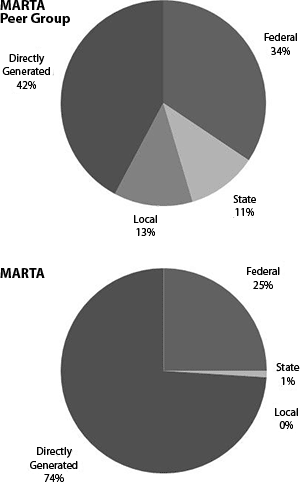 |
| "Percentage operations budget funding source," Figure 4, Metropolitan Atlanta Rapid Transit Authority Revenue and Expense Forecast Evaluation 2011–2016. |
In the wake of the referendum's defeat, Deal signaled his opposition to a second round of voting, and indicated that he would personally take the initiative for state transportation improvements, assembling a "need to do" list of high priority projects like the Georgia 400/I-285 interchange. He also forswore new taxes of any kind to fund transportation investments. In a state that ranks a woeful forty-ninth in the nation in per capita transportation spending, that leaves precious little to pay for an awful lot. According to many planners, metro Atlantans can expect to encounter more toll roads in years to come, making the near future a lot like the recent past. And if transit-supporting opponents of the referendum and their allies in progressive interest groups like the Sierra Club thought that some combination of public advocacy and budgetary alchemy might result in a better deal for transit, the governor had a message for them, too. "Yesterday's vote slams the door on further expansion of our rail network anytime soon," said Deal.18Aaron Gould Sheinin and Greg Bluestein, "Deal: Rule out revote," The Atlanta Journal-Constitution, August 2, 2012; Kim Severson, "For Transit Relief, Congested Atlanta Ponders a Penny Tax," The New York Times, July 15, 2012, accessed September 6, 2012, http://www.nytimes.com/2012/07/16/us/atlanta-area-residents-to-vote-on-tax-for-transportation.html; Bookman, "The self-induced paralysis of Georgia government"; Eric Stirgus, "Does Georgia have a pothole in transportation spending?" PolitiFact, August 7, 2012, accessed September 6, 2012, http://www.politifact.com/georgia/statements/2012/aug/07/stacey-abrams/does-georgia-have-pothole-transportation-spending/; Nathan Deal, "Deal: We'll reprioritize on transportation," Office of the Governor, August 1, 2012, accessed April 29, 2013, http://gov.georgia.gov/press-releases/2012-08-01/deal-well-reprioritize-transportation.
Intransigence at the state level has prompted many observers like longtime Atlanta opinion leader Maria Saporta to conclude that the time has come for Atlanta and the core counties of DeKalb and Fulton to "retake control of their own destinies." If state leaders are unwilling to invest in the region's future and exurban voters insist on nursing an anti-tax nihilism, she reckons, then the metropolitan core must take the reigns and lead the way. However smaller in physical reach, such an approach would undoubtedly result in a project list that privileges rails above roads and that signals to corporate concerns, rating agencies, and even the "young and restless" members of the "creative class" that Atlanta and its immediate environs at least are serious about planning for the future. If truly successful, it might even compel neighboring communities to keep pace and follow suit. Left unsaid, however, is the fact that such an approach would likely require state approval to even appear on area ballots, and Atlanta, as George Hooks, dean of the state senate recently admitted, "has always been the whipping boy." State leaders are none too keen on public transportation either, and in the legislative session that just concluded, genuinely regional solutions to the city's mobility crisis were not even debated. What's more, if recent legislative proposals are any indication, state legislators may demand a handsome pound of flesh in return for any support tendered Atlanta. One measure that failed to come up for a vote during the General Assembly's 2012 session would have taken important steps towards consolidating metro Atlanta's patchwork of transit providers under a single agency—but it also would have vested state leaders with veto power over the agency's decisions despite their devoting nary a cent to local transit operations. In the most recent legislative session, officials debated one measure that would have required MARTA to privatize many of its services and a second that would have lifted its onerous spending restrictions—but only for three years and only on the condition that that the newly-minted, conservative secessionist cities of North Fulton enjoy greater representation on the agency's board. All of which begs the question: what poison pill would Atlanta be forced to swallow simply to pay its own way?19While it would appear that significant public funding for transportation projects may not be available in the near term, Mayor Reed has indicated that public-private partnerships may feasible for the Beltline in particular. Ariel Hart, "After T-SPLOST defeat, transit plans slowed, but not stopped," The Atlanta Journal-Constitution, January 3, 2013, accessed April 29, 2013, http://www.ajc.com/news/news/transit-plans-slowed-but-not-stopped/nTkzh/; Maria Saporta, "It's time for Atlanta, Fulton and DeKalb to retake control of their own destinies," Saporta Report, August 5, 2012, accessed September 6, 2012, http://saportareport.com/blog/2012/08/its-time-for-the-city-of-atlanta-fulton-and-dekalb-counties-to-retake-control-of-their-own-destiny/; Thomas Wheatley, "T-SPLOST failed but Atlanta hasn't," Creative Loafing, Atlanta 8, 2012, accessed September 6, 2012, http://clatl.com/atlanta/t-splost-failed-but-atlanta-hasnt/Content?oid=6060933; Chapman, "Youth appeal fades"; Dan Chapman, "1 region, many voices," The Atlanta Journal-Constitution, August 3, 2011, A1, A9; Ariel Hart, "Prospect of regional transit plan raises ire," The Atlanta Journal-Constitution, December 9, 2011, accessed September 6, 2012, http://www.ajc.com/news/news/state-regional-govt-politics/prospect-of-regional-transit-plan-raises-ire/nQPPb/; Ariel Hart, "Boon for toll lanes, not transit," The Atlanta Journal-Constitution, April 2, 2012, Accessed September 6, 2012, http://www.ajc.com/news/news/local/boon-for-toll-lanes-not-transit/nQShc/; Steve Visser, "MARTA privatization bill stalls in the Senate," The Atlanta Journal-Constitution, March 19, 2013, accessed April 8, 2013, http://www.ajc.com/news/news/state-regional-govt-politics/marta-privatization-bill-stalls-in-senate/nWxpq/; Aaron Gould Sheinin and Kristina Torres, "What survived, what sank in legislative session," The Atlanta Journal-Constitution, March 29, 2013, accessed April 8, 2013, http://www.ajc.com/news/news/state-regional-govt-politics/what-survived-what-sank-in-legislative-session/nQSgd/.
 |
| Jim Pickerell, Passengers board a MARTA bus during rush hour, June 1974, National Archives at College Park, DOCUMERICA Series 556787. |
 |
| Wesley Fryer, Passengers exit a MARTA train, Atlanta, Georgia, June 26, 2007. |
It is worth considering, too, what changes could be made to future proposals, not only to guarantee their success at the polls, but also to enhance their effectiveness for commuters. While all of the projects included in the T-SPOLST were subjected to rigorous analysis to ensure that they resulted in reduced travel times, the project list as a whole was not paired with thoroughgoing changes in land use regulations, meaning that regional transportation policy was still chasing development rather than shaping it. While it's hard to imagine suburban county leaders surrendering their right to approve the development of land within their borders, it's not impossible to contemplate a pared back proposal, focusing on the region's core counties, that leveraged rail investments by promoting greater density in their vicinity. Still more questions remain, particularly with respect to the constituencies and organizations that took part in the debate. Among the more interesting subplots to develop during the T-SPLOST debate has been the "odd bedfellows" pairing of the Sierra Club and the Tea Party. In the wake of the referendum's defeat, leaders from both organizations hastened to reassure their supporters that the alliance would not be permanent, though they did identify areas of common agreement. Of particular interest may be the Tea Party. The group was correctly identified as a "tax slayer" for its steadfast and influential opposition to the T-SPLOST, but it remains an open question as to whether the tight-fisted, grass roots organization can retain a seat at the high-dollar table that is Georgia politics. So far, Dooley and her fellow insurgents have been content to watch from the sidelines while others debated alternatives. The Sierra Club has been no more active, and despite being one of the first groups to call for a "Plan B," has preferred to devote its resources to other initiatives. And then there is the city's business establishment. Whether leading the successful bid for the Olympics, luring major league ball clubs to town, helping to establish MARTA, or even ridding the state flag of the Confederate battlefield emblem, Atlanta's business community has been the unseen hand in large-scale regional developments. The transportation referendum, however, may well have exposed the limits of business influence in a twenty-first century metropolis that spans ten counties by some measures and many, many more by others.20"Tea Party and Sierra Club Points of Agreement for Georgia's Transportation Future," Sierra Club, Georgia Chapter website, accessed September 9, 2012, http://action.sierraclub.org/site/PageNavigator/20120430_TSPLOST.html; Craig Schneider, "Tea party stakes claim as tax slayer," The Atlanta Journal-Constitution, August 1, 2012; Aaron Gould Sheinin and Ariel Hart, "T-SPLOST: Plan B? Not this year," The Atlanta Journal-Constitution, April 2, 2013; Greg Bluestein, "Defeat puts Metro Atlanta Chamber at a crossroads," The Atlanta Journal-Constitution, August 2, 2012.
The single, most profound question facing Atlanta remains what to do next. Denver's Tom Clark may have the answer. Eight years after Denver voters approved the FasTracks transit, which he calls the "nation's most ambitious transit program," Clark and his colleagues at the Metro Denver Economic Development Corporation are still basking in the glow of their own success. They seem more than a little pleased by Atlanta's failure, too. As Clark put it in a recent blog post, "'A wise man does first what a fool does finally.' What do you call a fool who doesn't do anything?" Clark didn't say, but the answer, of course, is "Atlanta." When pitching FasTracks to voters in 2004, campaign managers even invoked Atlanta's example as one that Denver could not afford to follow.21Tom Clark, "Atlanta makes choice to help Metro Denver grow jobs," Metro Denver Economic Development Corporation website, August 2, 2012, accessed September 11, 2012, http://www.metrodenver.org/blog-tags/fastracks/atlanta-makes-choice-to-help-metro-denver-grow-jobs.html; Ariel Hart, "Atlanta's transportation future could have road map in Denver," The Atlanta Journal-Constitution, July 24, 2011, accessed September 11, 2012, http://www.ajc.com/news/news/state-regional-govt-politics/atlantas-transportation-future-could-have-roadmap-/nQJwM/. Perhaps not coincidentally, Denver recently surpassed Atlanta among the nation's best places for young workers. It is worth noting, however, that Denver's success came only after an earlier, failed referendum. What will it take for voters in the southern capital of the Sunbelt to follow Denver's lead and approve a second referendum in years hence? They may just need to decide that they do not want to be the next Atlanta either.
Southern Spaces invites your comments on this essay on our blog »
About the Author
Edward A. Hatfield is a PhD candidate in the history department at Emory University. His dissertation, The Too-Busy City: the Politics of Growth and Development in Atlanta, 1946–1996, examines metropolitan development in Atlanta and the Sunbelt in the half century after World War II.
]]>
Review
Well-worn words and phrases come to mind when driving the Blue Ridge Parkway—stunning, dramatic, timeless, a miracle of engineering and landscape architecture—and all of them ring true. Cruising even a short section of the Parkway on a crisp fall afternoon does give a person pause and inspires superlatives we don't often get to use in today's world. But the word that comes to this driver's mind is slow. I feel it immediately as I enter the roadway—not only my car decelerating to the forty-five mph speed limit, but also my breathing slowing to match the surroundings. The Parkway encourages, insists, that motorists adopt slow time, change their pace, and step back; for me, this is the Parkway's real gift to the public.
Slow has served as the operative word since the Parkway's conception as one of Franklin Roosevelt's New Deal programs. Controversial decisions regarding land use, routing, right-of-way, and access to the roadway from local communities delayed the beginning of actual construction until 1935. After a break for World War II, all but 7.5 of the Parkway's 469-miles opened to the public in 1961. Those final few miles, around Grandfather Mountain in North Carolina, the "missing link," took another twenty-six years to complete because of environmental and public relations concerns and lawsuits filed by the mountain's owner and promoter, Hugh Morton.
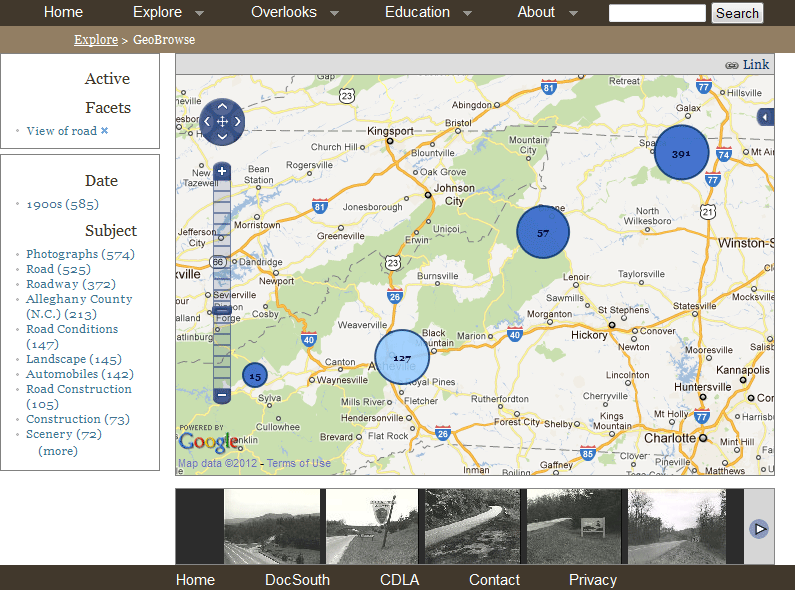 |
| Screen capture of the GeoBrowse tool, Driving Through Time, 2012. The GeoBrowse tool allows visitors to browse documents in the collection by geographical location. |
Beyond the political and legal challenges, the actual construction of the Parkway proved difficult at best and tortuous at worst. High mountain terrain, twenty-six tunnels, weather, and an existing landscape that often had to be made "scenic" presented challenging and ongoing obstacles to the engineers, architects, and workers tasked with building the road. But, after fifty-two years of work, and twenty-five years since its completion, the Blue Ridge Parkway continues to resonate in reality and imagination. According to Anne Mitchell Whisnant, author of Super-Scenic Motorway: A Blue Ridge Parkway History, and the scholarly advisor for the website Driving Through Time, "Since 1946, the Blue Ridge Parkway has been the most visited site in the entire national park system. In recent years, more than eighteen million visitors have traveled parts of the Parkway every year."1Anne Mitchell Whisnant, "About the Parkway," Driving Through Time: the Digital Blue Ridge Parkway in North Carolina, accessed March 20, 2012, http://docsouth.unc.edu/blueridgeparkway/about/about_parkway/parkway/.
Driving Through Time: the Digital Blue Ridge Parkway in North Carolina, a construction of materials from numerous sources, has recently been published by Documenting the American South (DocSouth), a program of the University of North Carolina Library System. A coming addition will include the Virginia section.
It's a huge collection. 363 newspaper articles, thirty-one oral histories, 121 letters, 104 maps, thirty-one drawings and plans, and 3,547 photographs will keep the most dogged visitor on site for days. Searchable by date, subject, and location, materials are meticulously cross-referenced and captioned. Driving Through Time also provides "overlooks," a series of essays and exhibits that will grow over time. These brief stopovers illustrate particular fragments of Park history; for example, an illustrated essay by Katy Vance and Amanda Foster adds welcomed texture and nuance to Asheville's relationship with the Parkway.
Driving Through Time organizes materials in space and time. Geo-referenced historic maps align past and present locations through Google Maps. The geo-browse function gives most materials a geographic coordinate. And the website offers suggestions for use in K-12 classrooms.
 |
| Robert E. Howe, #7, Yellowstone Falls and Headwaters of the East Fork of the Pigeon River, Section 2V of the Blue Ridge Parkway, 1955. National Park Service—Blue Ridge Parkway. This image is accessible through the "Explore" feature of Driving Through Time. |
Photographs make up the bulk of Driving Through Time. The Park Service employed numerous photographers over the years and their work provides evidence of the construction process, the existing landscape, and the times. These photographers created a clear and coherent record of the process. It's a utilitarian portrait, but as you slowly view the pictures, you're left with a discernible sense of place and time. The photographs feel familiar—families picnicking or stopped at overlooks, masons laying stone archways, landscapes. I found one image from 1955 of Yellowstone Falls and the headwaters of the Pigeon River eerily reminiscent of a graying photograph from a family vacation. I've often wondered where that picture was made; my parents couldn't remember. But seeing Robert Howe's image from section 2V of the Parkway told me we had probably stopped at that same overlook. Other visitors to this website will have similar revelations.
While the majority of the pictures in Driving Through Time come with captions which provide engaging ancillary information, the newspaper articles, letters, and oral histories immerse visitors in the Project's minutiae. We can read accounts of drawn-out battles between the state and individual landowners over eminent domain and right-of-way or about the political maneuvering and public relations wars orchestrated by Tennessee and North Carolina over the Parkway's route.
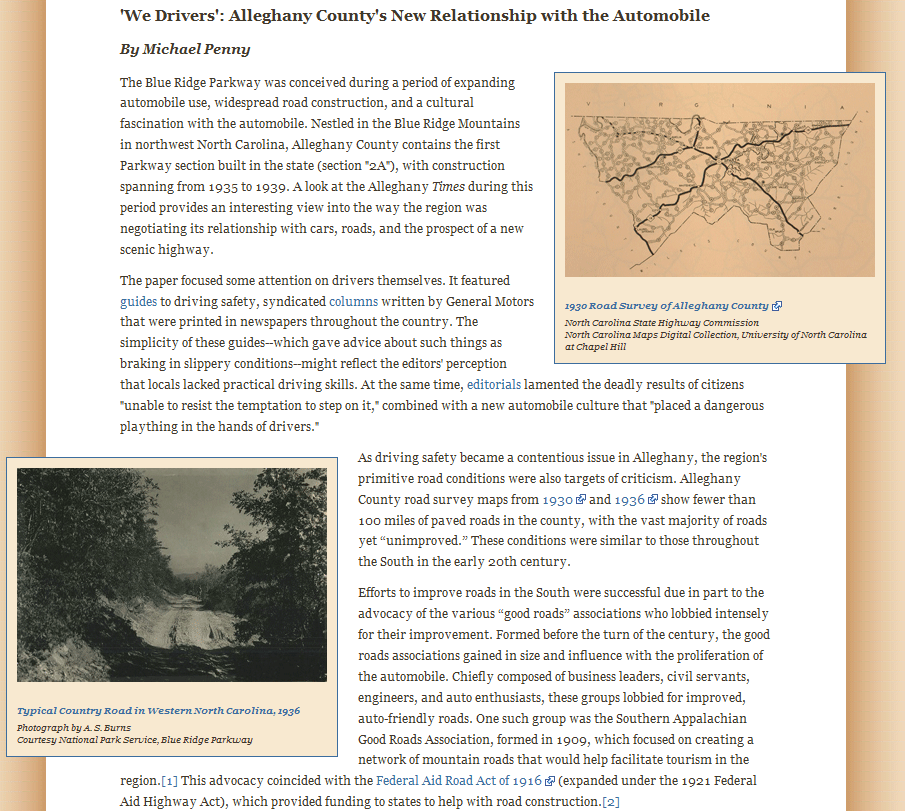 |
| Screen capture of "We Drivers," an Overlooks exhibit, Driving Through Time, 2012. Modeled on the overlooks that punctuate the Blue Ridge Parkway, these short articles highlight documents in the Driving Through Time collection. |
There are gaps. The majority of the Driving Through Time collection comes from the five decades of the Parkway's construction—the 1930s through the 1970s (the 30s, with 1,499 items, has the most representation). In contrast, the decades from 1980 to 2009 have only sixty-eight entries. And, while there is significant documentation of the historical record and the people who shaped that history, we don't get the same detail regarding what I would call the personal past—how the Parkway impacted the 4,500 smaller landowners—the people who lost a couple of acres of high pasture or others who had to move their houses out of the sightline of the road. I also wanted to hear from the driving public—families, church groups, and individuals—to get a feeling of their relationship with the Parkway. But those stories, especially from the early years, likely don't exist except in people's living rooms. A problem? Probably not, although I did find myself thinking a re-photographing and interview project would provide an opportunity for comparison between then and now.
But I'm being picky. Driving Through Time offers an insightful journey—a slow, deliberate meander through our shared history and landscape that lets us see far below the Blue Ridge Parkway's surface. So, pack a lunch, sit down, start up your computer, and take the trip. It's a drive worth taking.
 ]]>
]]>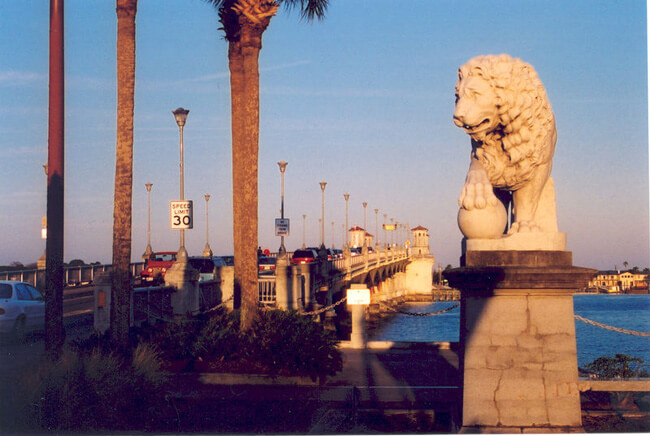
 |
| John McWilliams, Hampton Plantation, McClellanville, South Carolina, 1973. |
In the early 1970s, John was teaching photography at Georgia State University when we discovered McClellanville through Robert Frank’s photograph “Barber shop through screen door - McClellanville, South Carolina” in The Americans. During the discussion of this iconic image, one of John’s students from nearby St. Stephens offered to introduce us to his friends. We began travelling to McClellanville often, built a marsh cabin there in 1981, and eventually moved there. The barber shop Frank photographed has been torn down but was located directly across the street from our studio on Pinckney Street.
McClellanville was settled by plantation owners after the Civil War as a summer refuge and remained remote until the construction of bridges across the Santee River to the north and the Cooper River to Charleston in the 1920s. Today, the town’s largely white population numbers around 450. Conversely, the surrounding communities of Germantown, Tibwin, Pinelands, Buck Hall, and South Santee have a predominantly African American population of about three thousand. Most of the the families have lived in the area for at least 250 years.
 |
| Nancy Marshall and John McWilliams, Homecoming parade preparation, McClellanville, South Carolina, 2010. |
A few years ago, Gussie Humes, the only African American member of the McClellanville town council, and Selden B. Hill, the white director of the Village Museum, proposed a parade to foster interaction between racial communities. We first encountered the Low Country Travelers Car Club as the parade passed our studio. We were struck by the vibrancy of the club and the parade's manifestation of the parallel black and white worlds within McClellanville.
We wanted to photograph the members of the car club alongside their cars. They agreed. In exchange, each member would receive copies of the photographs. We worked in a straight-forward manner to best present the car and its owner. Car club members suggested locations for their significance in the local African American communities: Old Bethel A.M.E. Church, Buck Hall Landing, and Jeremy Creek in McClellanville, the Deer Head Oak, River Road near M&M Garage, Lincoln High School, and Thompson Hill Playground in Awendaw.



A fraternal organization of approximately forty men who reside in McClellanville, Awendaw, Mt. Pleasant and Charleston, the Low Country Travelers began in March 2005 when Frank Ancrum had the idea of getting together men who were interested in owning and restoring “old school” cars. At a small gathering of old school car enthusiasts at James Island County Park, Ancrum had noticed his fourteen year-old son's growing interest and decided to buy a car to restore. His original impulse was “to promote unity of the brothers.” Ancrum asked two men from each area of the county to identify others. More than thirty attended that first meeting. Since its inception, the purpose of the club has been to promote interest in street-rodding activities, to create fellowship, and to encourage youth to develop an interest in mechanics and restoration as an alternative to less constructive activities. Ancrum stresses that the club is not a “social club,” but has a historical mission through preservation of the cars.
 |
| Nancy Marshall and John McWilliams, Award truck at Low Country Travelers car show, Mount Pleasant, South Carolina, 2010. |
By-laws state that members must have good character. Behavior “should not consist of sagging pants [associated with prisonwear], loud music and profane languages.” Displaying club colors of red, black, and silver and wearing red monogrammed sport shirts and hats, members like to look “sharp and pressed.” The Low Country Travelers consists entirely of African American men, although the bylaws do not prohibit members of other races or women. Members' ages range from twenty-somethings to the retired. Dues are $36 per year. Women and children wearing club colors are included in activities such as the annual car show, but do not attend the monthly meetings.
Club members must own American-made classic cars ranging in model year from 1900 to 1972. Restoration need not be completely authentic, as owners frequently paint their cars in colors used on a later models of completely different makes, such as “Mustang Yellow” on a much earlier Chevrolet. Younger members are influenced by muscle car styles which can involve pneumatic operations such as “air rides.” Not driven daily, the club cars are kept garaged or covered.
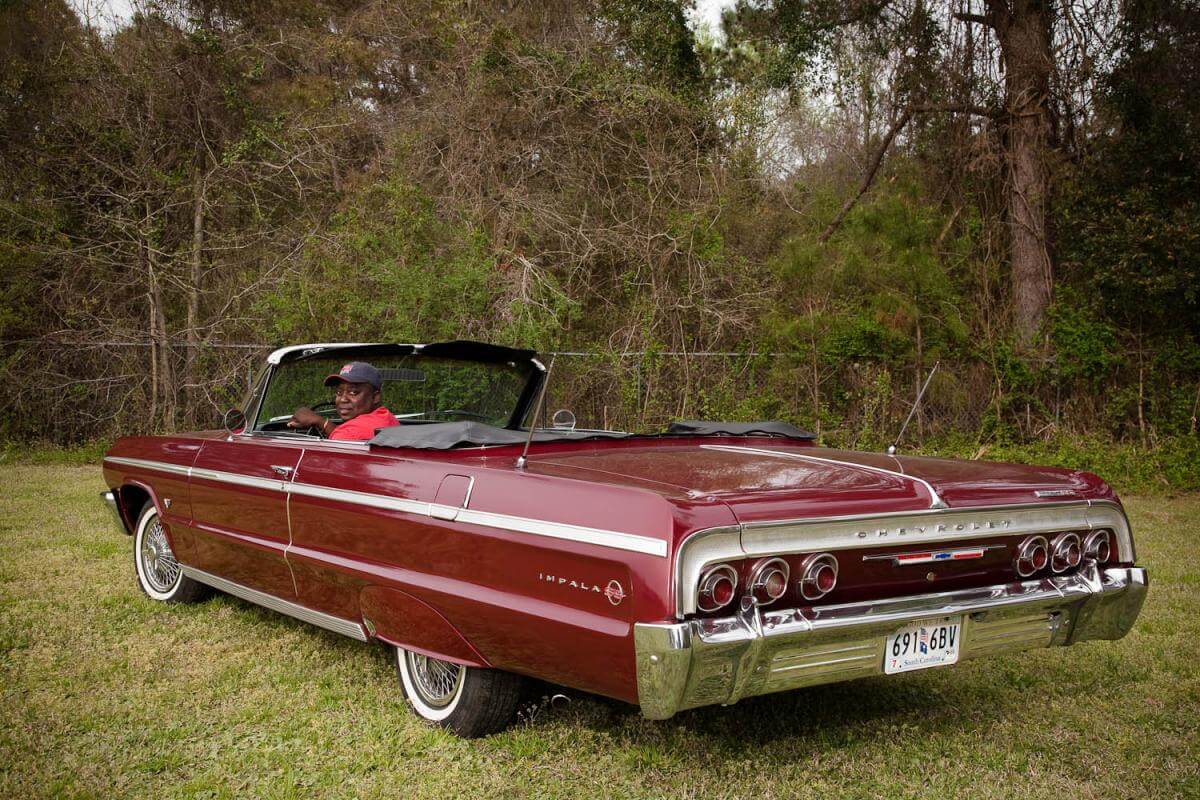



 |
| Nancy Marshall and John McWilliams, Homecoming parade, McClellanville, South Carolina, 2010. |
Low Country African American social life remains centered around churches and there is a strong spiritual camaraderie between car club members. As prescribed in the bylaws, Travelers members take turns every fourth Sunday visiting each other’s churches. These rules also extend to associates of the group: if a club member attends a different church than his wife or girlfriend, then that wife or girlfriend can also invite club members to visit her church. Club members drive their “old school” cars to church and afterwards go as a group to a restaurant for lunch or to a park where the members gather to talk and look over the cars.
In addition to the town parades, club members regularly bring their cars to the annual Lincoln High School Homecoming and have driven in Fourth of July and Christmas events, as well as Charleston’s Martin Luther King Day Parade and the Emancipation Proclamation Day Parade. The club hosts events for Black History Month, as well as a car show and judging every year with raffle prizes and trophies given for various categories such as “furthest distance traveled” and “best in show.” Money raised by the car show goes to charities such as a children’s hospital, and helps purchase school supplies. The club joined with other area clubs such as the Corvette Club to support a benefit for Haiti. Aside from events and charitable activities, the club has a strong sense of pride in its work. Frank Ancrum talks about the joy of driving his beautiful car down the highway and living for “the moment when he passes a little kid who gives him the thumbs up” when he sees the cool car go past.
]]>