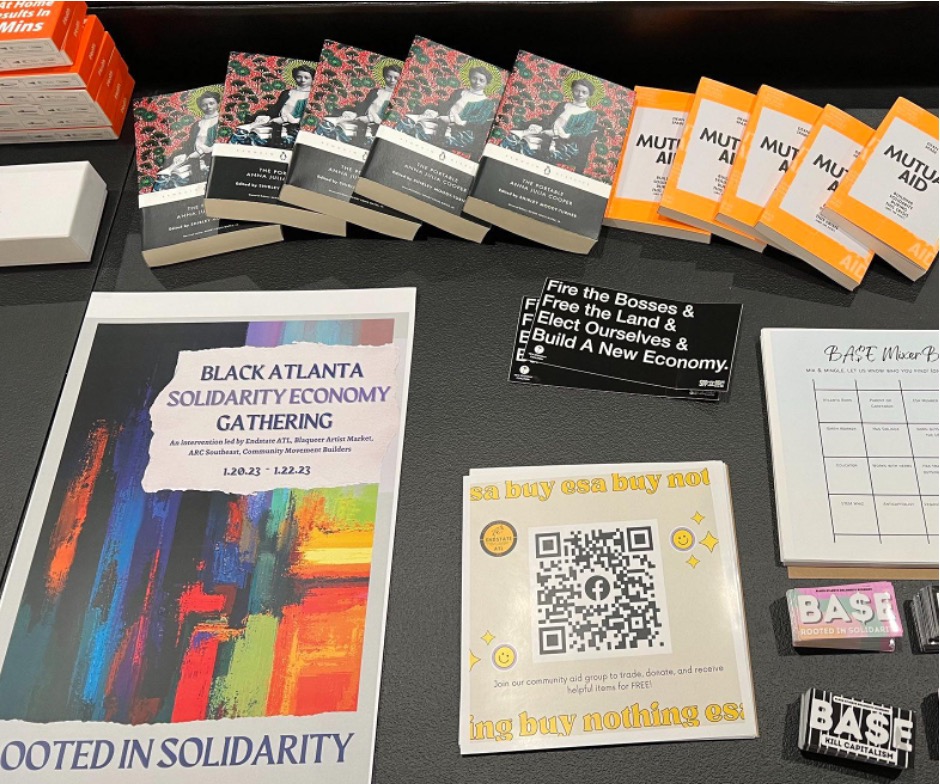
In May of 2023, when the World Health Organization downgraded the coronavirus emergency from a global health pandemic to an "ongoing health crisis," the shift made sense in many ways. Most developed nations have made vaccines available for over two years. Shutdowns and enforced quarantines ended, even in holdout nations. The WHO's announcement signaled that other countries, including the United States, would follow suit if they had not already. This move, however, will have material consequences for grassroots charitable organizations across the US. Endstate ATL (ESA), a group I have worked with since 2021, is one of many non-profit groups that will be affected.
In Georgia, the COVID state of emergency officially ended in May 2022, even as it remained in place at the national level. This allowed organizations like ESA to continue our mutual aid work. But when the US announced the end of the Federal COVID-19 Public Health Emergency (PHE) Declaration on May 11, 2023, enhancements to public assistance and social safety net programs ceased. From this point on, groups like ESA once again will have to jump through multiple bureaucratic hoops to obtain the funding necessary to provide care.
Following the global outbreak of COVID in 2020 many governments created temporary measures to extend aid to vulnerable populations. In the US, these included extensions of unemployment benefits, a moratorium on student loan interest and payments, no-cost COVID testing and vaccinations, Medicare flexibility, and opportunities to provide nontaxable disaster relief funds. The national government also released relief funds to individual state governments, although often these funds did not reach the people who needed them.1Rebecca Riess and Devon M. Sayers, "Alabama Governor Signs Bill to Use Covid-19 Relief Funds to Build Prisons," CNN, October 1, 2021, https://www.cnn.com/2021/10/01/politics/alabama-covid-relief-prison-bills-signed-governor-kay-ivey/index.html. Despite the uneven distribution of aid, many people, specifically children and elders, moved above the poverty line thanks to COVID assistance.2John Creamer, "Supplemental Poverty Measure That Accounts for Additional Government Benefits Lowest on Record at 7.8%," Census, September 13, 2022, https://www.census.gov/library/stories/2022/09/government-assistance-lifts-millions-out-of-poverty.html.
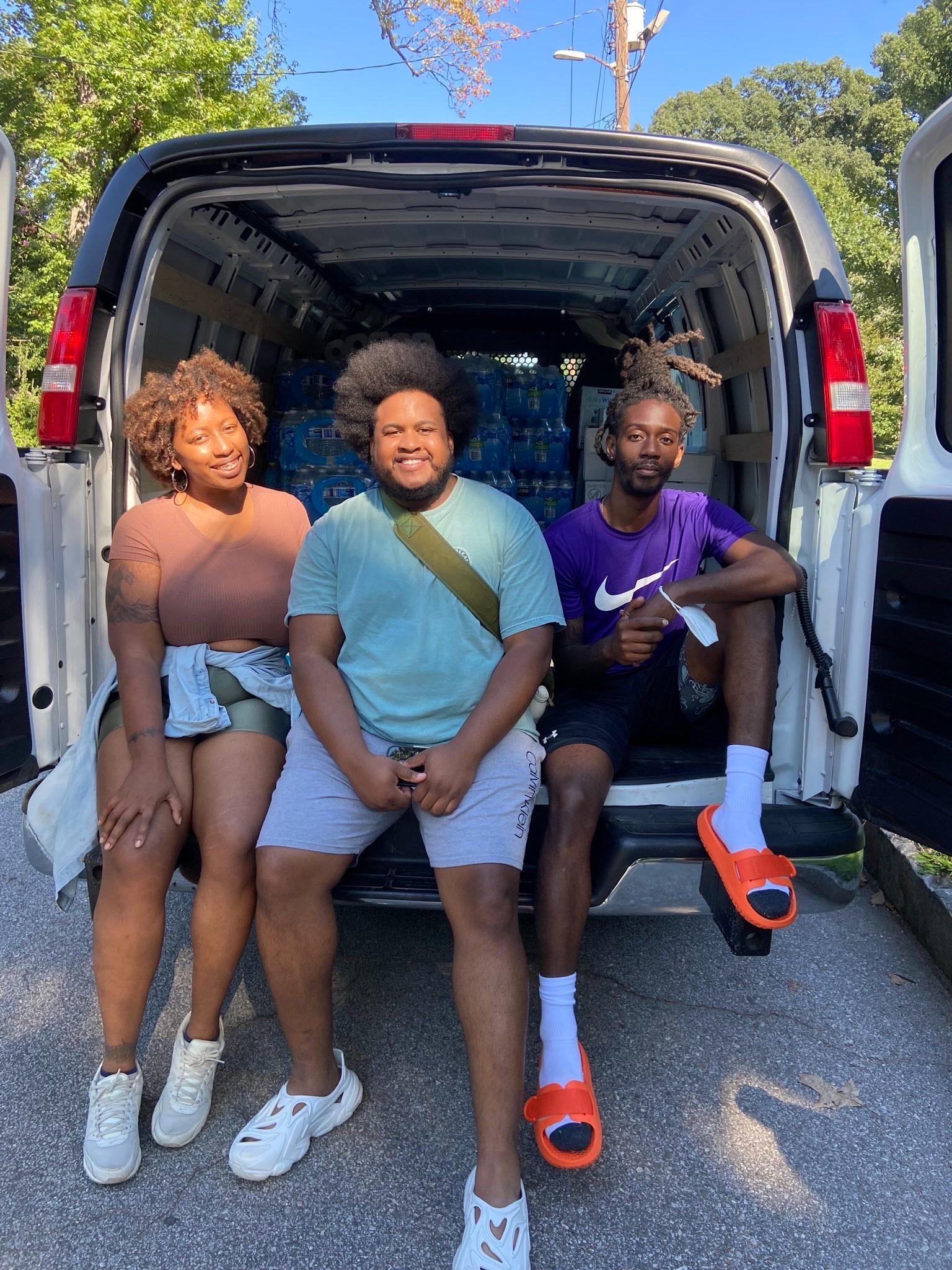
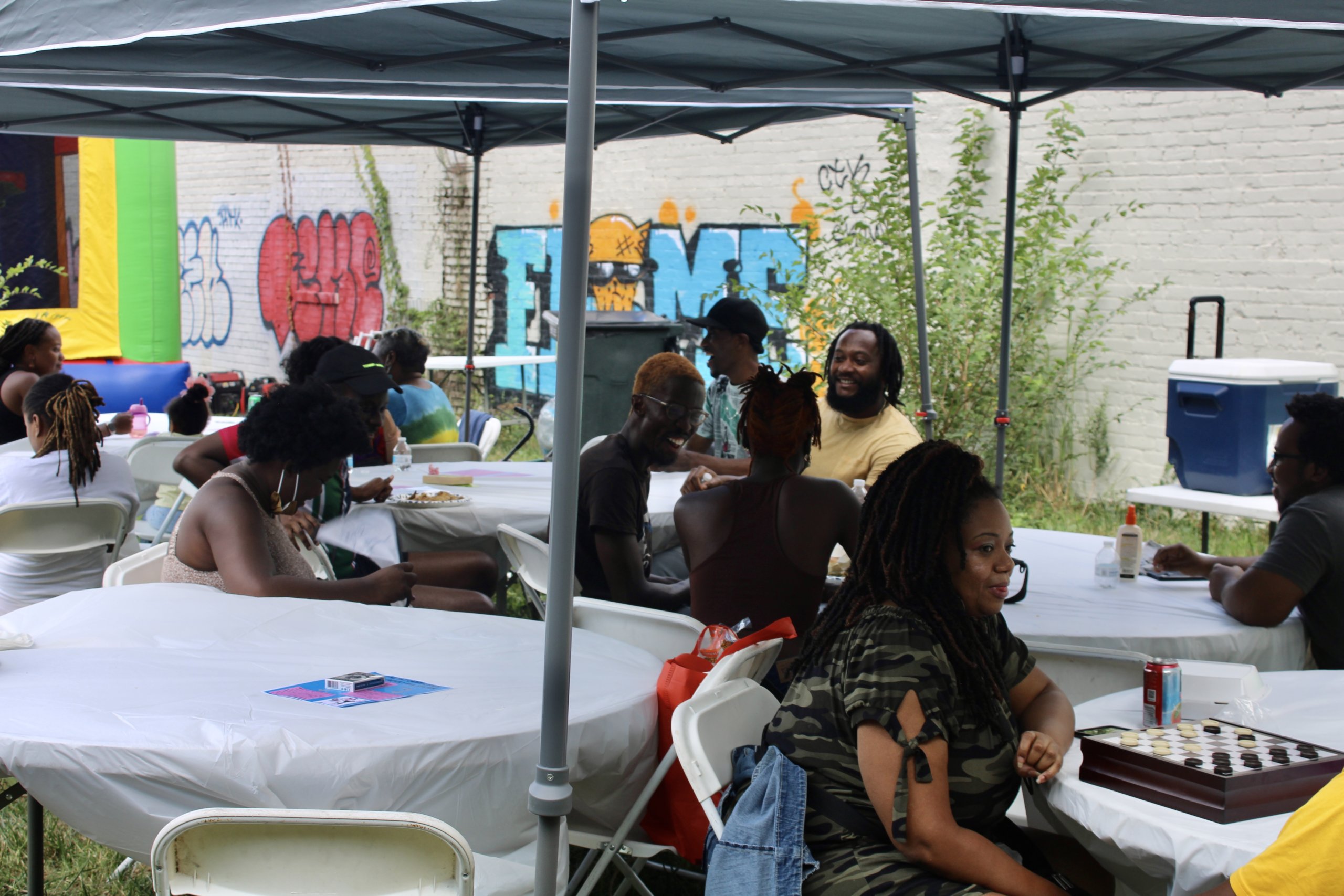
The flexibility surrounding nontaxable disaster relief funds eased mutual aid work. Mutual aid has a long history in the US and Global South, and the onset of the COVID-19 pandemic witnessed an outpouring of community solidarity towards those in need. Mutual aid stands apart from other charity models because of its non-hierachal emphasis on mutualism rather than models that maintain divisions between givers and receivers. Mutual aid is rooted in reciprocity.
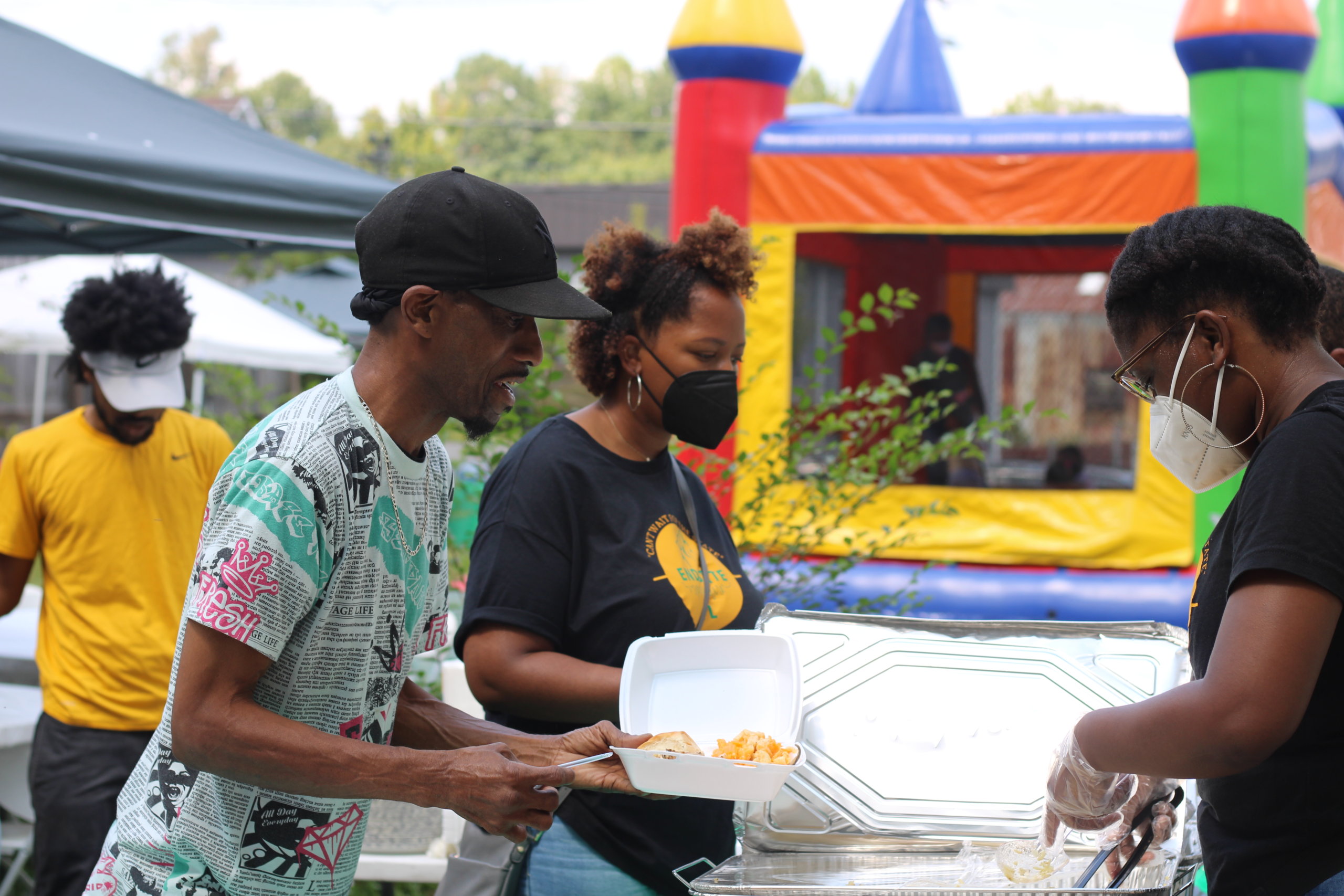
Endstate ATL took advantage of these temporary measures for the betterment and aid of our community members. Rooted in southwest Atlanta with a Black queer feminist politic, ESA's work aims to reach those most marginalized through community building, political education, and mutual aid. Through our Black Power Fund, which pays up to three months' worth of utility bills for Black queer households, and our Pack Provides Programs, which provide household supplies, COVID PPE, and infant essentials including formula, clothing, and sanitary products to caregivers of young children, we seek to step in where the state fails to provide support.
Mutual aid allows organizations to provide immediate care and relief to individuals in need without imposing the bureaucratic processes that often keep aid beyond reach. Under a state of emergency, disaster relief payments are not taxable. As such, ESA, and other groups like it, were able to provide direct aid through a less convoluted system of reporting and disbursement. This allowed us to move funds directly and rapidly to people in need and has been crucial to our ability to substantively support people in a timely way. ESA has covered bills for ten households in the past year, as well as covered a year of utilities for the BARRED Business house, which provides stable, community-owned housing for people recently released from prison. We have been able to report these funds as disaster relief.3"Mutual Aid Legal ToolKit," Sustainable Economies Law Center, Accessed June 22, 2023, https://www.theselc.org/mutual_aid_toolkit.
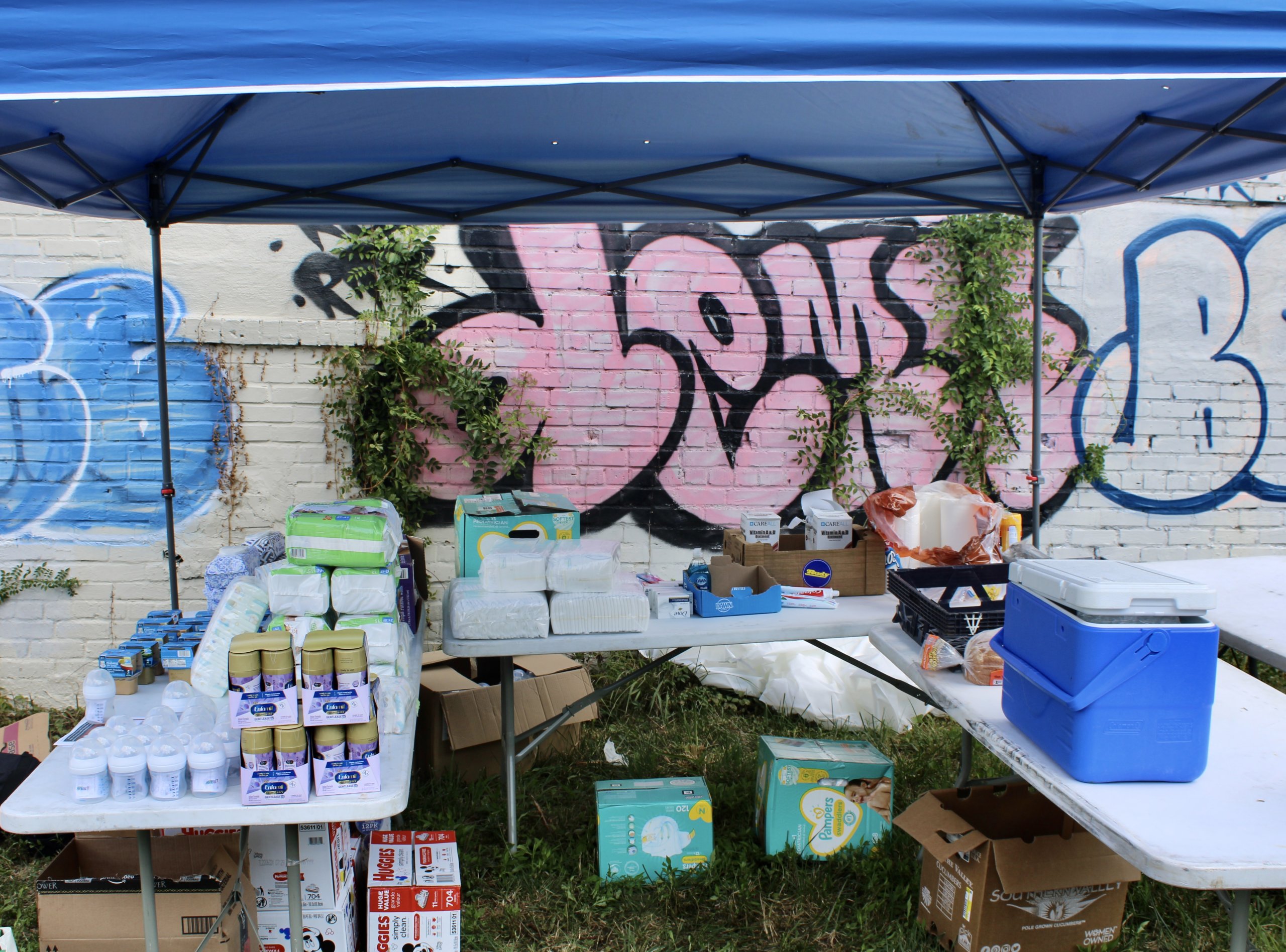
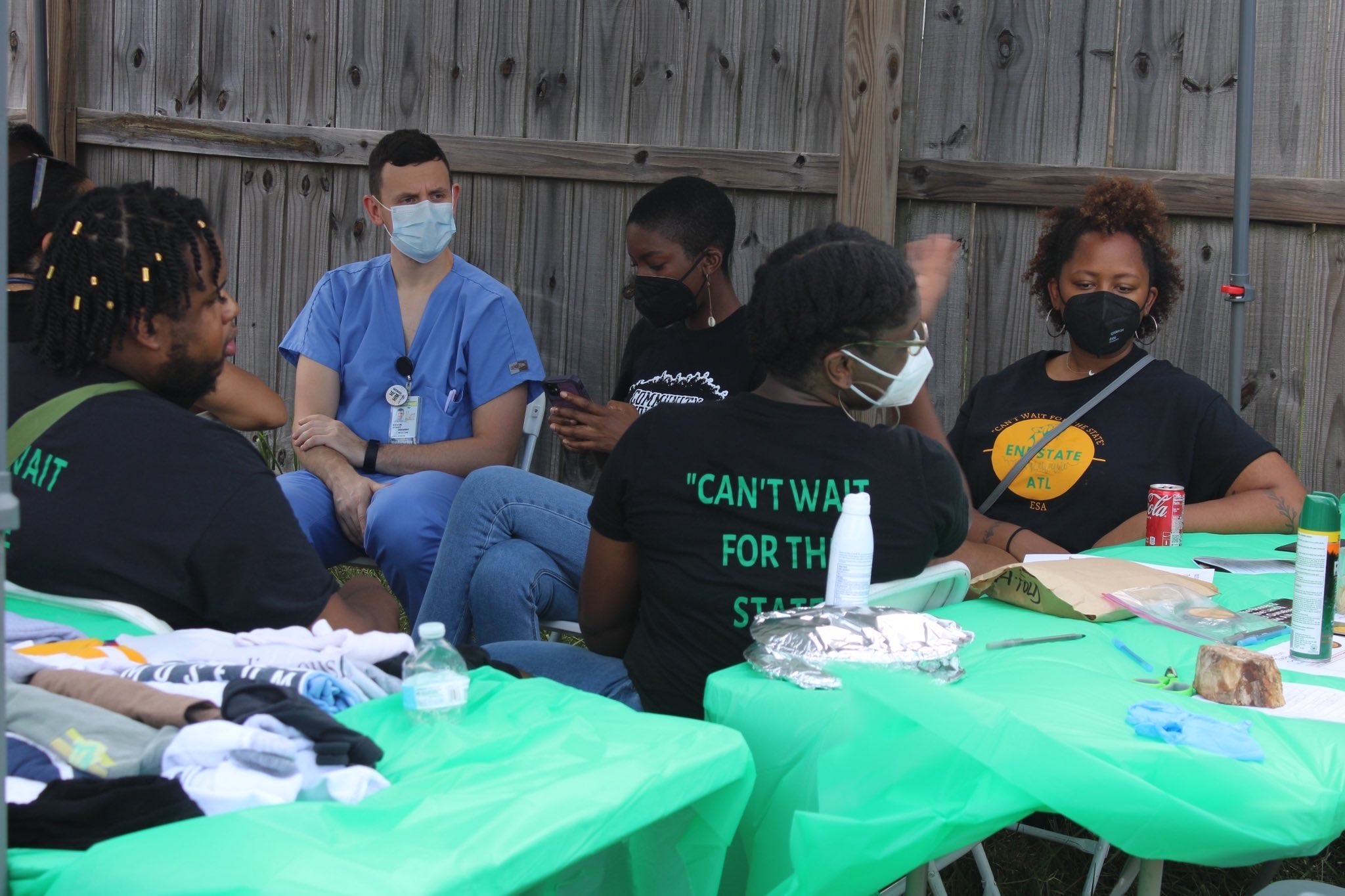


The efforts of mutual aid groups helped supplement aid where state and local leadership failed. Georgia governor Brian Kemp refused to take the COVID-19 pandemic seriously. In 2020, Georgia was the first state in the nation to relax quarantine restrictions, even as Kiesha Lance Bottoms, the mayor of Atlanta, sought to retain many protective measures. Initial reporting that the virus would largely impact the elderly and immunocompromised, combined with anti-fear government propaganda, engendered a sense of invincibility and an attitude of disregard among many Georgians. As of 2021, Georgia had one of the highest COVID mortality rates in the US, and those most impacted were poor, working class, and people of color.4"COVID-19 Mortality by State," CDC, Accessed June 22, 2023, https://www.cdc.gov/nchs/pressroom/sosmap/covid19_mortality_final/COVID19.htm. The refusal of Governor Kemp to implement mandated social distancing or mask requirements, even before vaccines were available, left the entire state population vulnerable to infection. The consequences were devastating, with thousands of unnecessary deaths and debilitating outcomes for those suffering from long COVID.
Pandemic relief payments meant to alleviate the burden of rising interest rates were out of reach for marginalized Georgians. In order to receive national stimulus checks and Kemp's own "special tax credit," individuals needed to have filed and paid taxes for the preceding two years, a barrier that left people who were unemployed or homeless without access to relief.5"Gov. Kemp Announces First Round of This Year's Special Tax Refund," Department of Revenue, May 1, 2023, https://dor.georgia.gov/press-releases/2023-05-01/gov-kemp-announces-first-round-years-special-tax-refund#:~:text=Single%20filers%20and%20married%20individuals,a%20maximum%20refund%20of%20%24500.
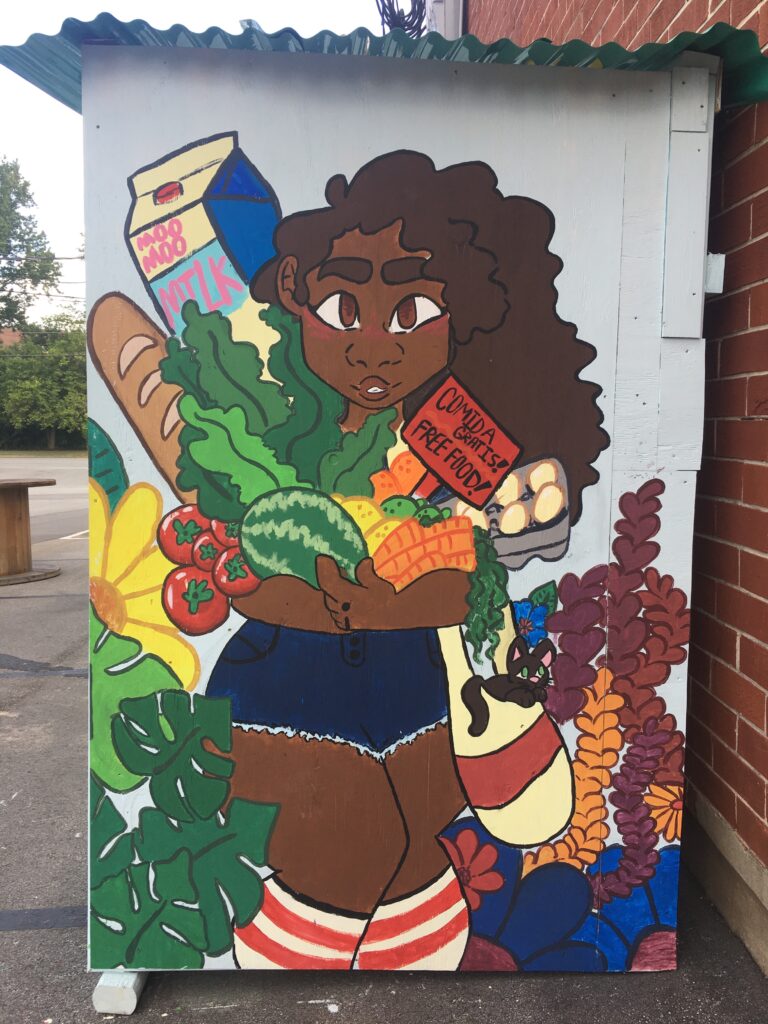
In response to the pandemic, groups emerged such as Bed Stuy Strong, based in Brooklyn, which created a robust grocery delivery system by first relying on the resources at their disposal before evolving into a program that benefited thousands.6Haritha Kumar, "Four Key Takeaways from Mutual Aid Organizing During the COVID-19 Pandemic," Georgetown University Beeckcenter, October 4, 2022, https://beeckcenter.georgetown.edu/four-key-takeaways-from-mutual-aid-organizing-during-the-covid-19-pandemic/. Georgia has similar organizations. Community Movement Builders developed stabilization programs that include rent/mortgage payments as well as groceries in their efforts to impede the gentrification of southwest Atlanta, and Food4Lives a non-profit started by Georgia Tech and Emory students provides food and supplies for the unhoused in the greater Atlanta area.7Katie Burkholder, "Housing as a Human Right: Community Movement Builders Organize Against Gentrification," Georgia Voice, April 21, 2022, https://thegavoice.com/today-in-gay-atlanta/housing-as-a-human-right-community-movement-builders-organize-against-gentrification/; "Who are We?" Food4Lives, Accessed June 22, 2023, https://food4lives.org/about.html. Both organizations preceded the pandemic, but their work became much more indispensable in its wake.
The increase in groups doing this aid work was significant, especially in red states where Republican leadership champions laissez-faire government structures for almost everything but reproductive health, policing, and surveillance. Pandemic or no pandemic, people need help. However, smaller aid groups face difficulties in keeping the work going. ESA has primarily been funded by grants, a funding model that is not easily sustainable. According to one of our members, "A significant struggle we've faced since the end of the COVID-19 pandemic is the philanthropic and public perception that the conditions for folks have changed enough that mutual aid is not necessary even as we continue to field a significant number of requests." Further, all members participate on a volunteer basis, spending much of our time otherwise as graduate students, teachers, doulas, herbalists, and nonprofit workers. Over the last two years, many of us have faced our own destabilizing events, financial uncertainty, bouts of COVID, and family loss. The ability of small groups to come together and push to make a difference in their communities—despite personal difficulties and decreasing assistance from governing bodies—should inspire more activism. But the question remains, how can we continue this work when governmental policies have resumed restricting social safety nets while offering few, if any, alternatives?
Changing policy is one problem organizers face, burnout is another. Studies have suggested that we approach "burnout as a part of activism and as influenced by the organizational context, rather than as something that individual activists experience outside of activism."8Maria Fernandes-Jesus et al., "More Than a COVID-19 Response: Sustaining Mutual Aid Groups During and Beyond the Pandemic," Frontiers in Psychology 12 716202, October 2021, https://www.ncbi.nlm.nih.gov/pmc/articles/PMC8563598/. However, as young Black people organizing in the South, my colleagues and I experience burnout from many directions. We deal with the stress of everyday life, as well as the difficulty of doing our solidarity work, with constant reminders from government leadership that our goals are at odds with theirs.
With the COVID state of emergency ending in the US, aid provided by organizations such as Endstate ATL becomes taxable, dramatically altering the way funds can be mobilized, as well as the process that recipients must go through to receive support. Charitable tax deductions are reserved for individuals and corporations who donate money to qualified charities.9Up until December 2021, entities meeting these requirements were able to claim as much as 100% of their AGI in charitable tax write offs. "CARES Act Charitable Benefits Not Extended For 2022," Stanford Giving, March 14, 2022, https://giving.stanford.edu/stories/cares-act-not-extended-for-2022/. Because ESA puts money "directly" in the hands of marginalized people, such direct contributions to individuals are not tax-exempt. The COVID state of emergency allowed groups like ESA to move funds to individuals more freely—on an emergency basis. The end of the state of emergency means we must restructure our aid programs. The beautiful thing about mutual aid is that even if one group burns out, another group can and likely will step up right behind to fill the gap. In this way, the work continues. We never stop. 
About the Author
Ra'Niqua Lee writes to share her particular visions of love and the South. She earned an MFA in fiction from Georgia State University, and she is currently at Emory pursuing a PhD in late nineteenth/early twentieth century African American literature with a focus on spatial and Black queer feminist theories. Her fiction has appeared or is forthcoming in Cream City Review, SmokeLong Quarterly, Indiana Review, Passages North, Best of the Net 2023, Best Small Fictions 2023, and elsewhere. In 2021, the Georgia Writers Association awarded her the John Lewis Writing Grant for fiction. Her flash collection For What Ails You is forthcoming from ELJ Editions.
Acknowledgments
Many thanks to my colleagues. Without their collaborative support, I would not be able to do this work: Julian Rose, Britni Ruff, Christina Foster, Michelle, Jovan Julien, and extra thanks to Hugh Hunter for his early edits.
Public Health in the US and Global South is a collection of interdisciplinary, multimedia publications examining the relationship between public health and specific geographies—both real and imagined—in and across the US and Global South. These essays raise questions about the origin, replication, and entrenchment of health disparities; the ways that race and gender shape and are shaped by health policy; and the inseparable connection between health justice and health advocacy.
Beginning in 2022, the series expands to include 1000-word blog posts, as well as longer commentaries, essays, articles and media productions that address the public health and political implications of the COVID-19 pandemic from multiple perspectives. The series editor for Public Health in the US and Global South is Mary E. Frederickson.
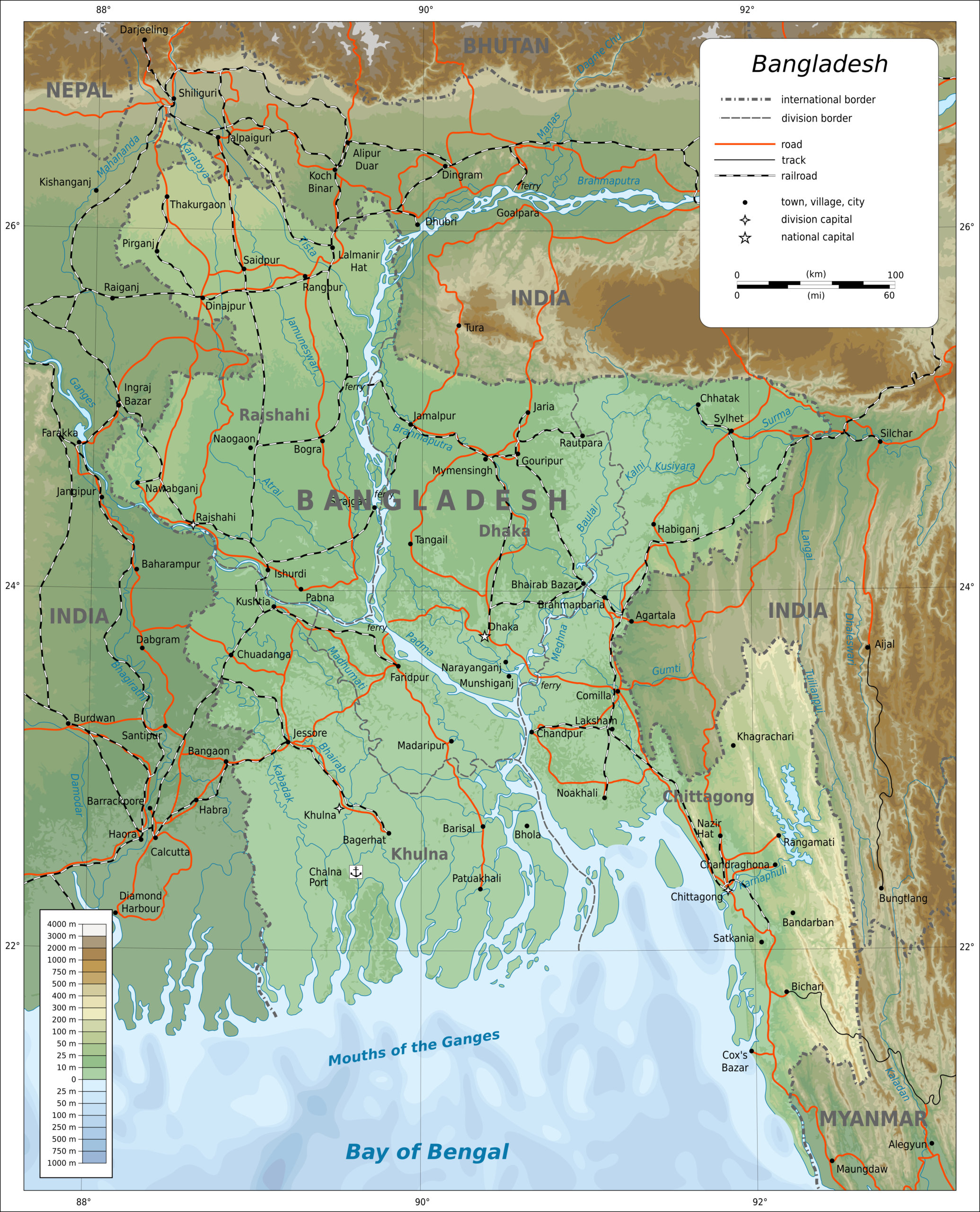
As the world moves into its fourth year since the advent of COVID-19, the pandemic remains a broad public health concern. It is necessary to teach Covid-appropriate behaviors and build public confidence in vaccines and boosters to address new strains of the virus. Across the globe, localized Covid pandemic response projects should complement conventional approaches to preparedness. Community Support Team Dhaka (CST Dhaka) and Community Support Team Cox's Bazar (CST Cox's Bazar) are two projects implemented by the health program of BRAC, a Bangladesh-based NGO.
Bangladesh, the eighth-most populous country in the world (169.4 million people), is a developing country located in South Asia with a 2021 gross domestic product per capita of $2,458. The country has achieved significant progress in reducing maternal, infant, and child mortality rates, decreasing malnutrition, improving immunization coverage, and eliminating infectious diseases like polio. However, it faces emerging health challenges, including the growing burden of noncommunicable diseases, heightened vulnerability to disasters and environmental hazards, and the threat of health emergencies during disease outbreaks such as COVID-19. Bangladesh's health services are centralized and urban-centric.1There are only 1.1 doctors per 10,000 people in rural populations in Bangladesh, while there are 18.2 doctors per 10,000 people in urban areas. Taufique Joarder, Lai B. Rawal, et al, "Retaining Doctors in Rural Bangladesh: A Policy Analysis," International journal of Health Policy and Management 7, no. 9 (2018): 847–858. https://www.ncbi.nlm.nih.gov/pmc/articles/PMC6186485/. The country also faces shortages of well-equipped healthcare facilities and healthcare workers. The health financing system in Bangladesh suffers from a lack of adequate funding, absence of appropriate health insurance, and a large dependence (74%) on out-of-pocket payments.
BRAC, founded in 1972, is the largest non-governmental organization in Bangladesh involved in a variety of sectors including public health, education, microfinance, and livelihood support. It currently employs over 100,000 people across Bangladesh and ten countries. Its Health, Nutrition, and Population Programme (HNPP) has been a global leader in developing and scaling up locally-based health worker programs for the rural population. With support from the Foreign, Commonwealth & Development Office (FCDO), the World Bank, and the United Nations Population Fund (UNFPA), the organization implemented two COVID-19 response projects in Dhaka and Cox's Bazar (two of the high-risk districts identified by the World Health Organization after analyzing infection rates in different districts of Bangladesh). BRAC initiated several creative approaches in these locations to tackle the spread of COVID-19 at the height of the pandemic.
"Miking" in Local Dialects
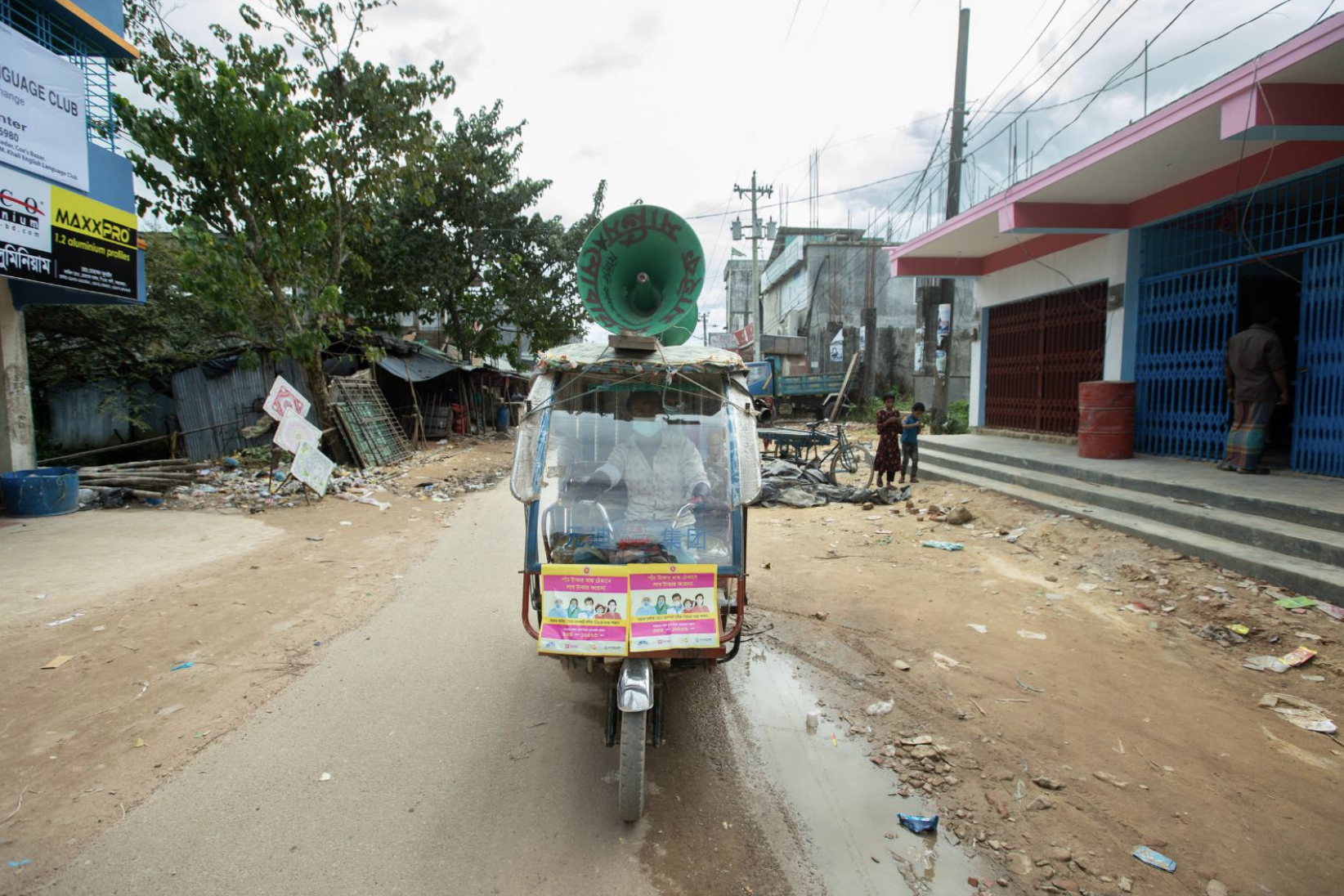
Playing health messages through mobile loudspeakers (locally known as miking) has been around for decades. After the initial round of miking in Cox's Bazar, however, the volunteers and area managers heard from local representatives that the messages in mainstream Bengali were not effectively reaching the people. Here, the Chatgaya/Chittaingya dialect is the primary oral language. Subsequently, the Cox's Bazar project engaged a local voiceover specialist to develop messages in Chittagonian dialect which enhanced the effectiveness of the 849 miking sessions conducted in the region, substantially improving the local population's understanding about vaccination.
Info Cards
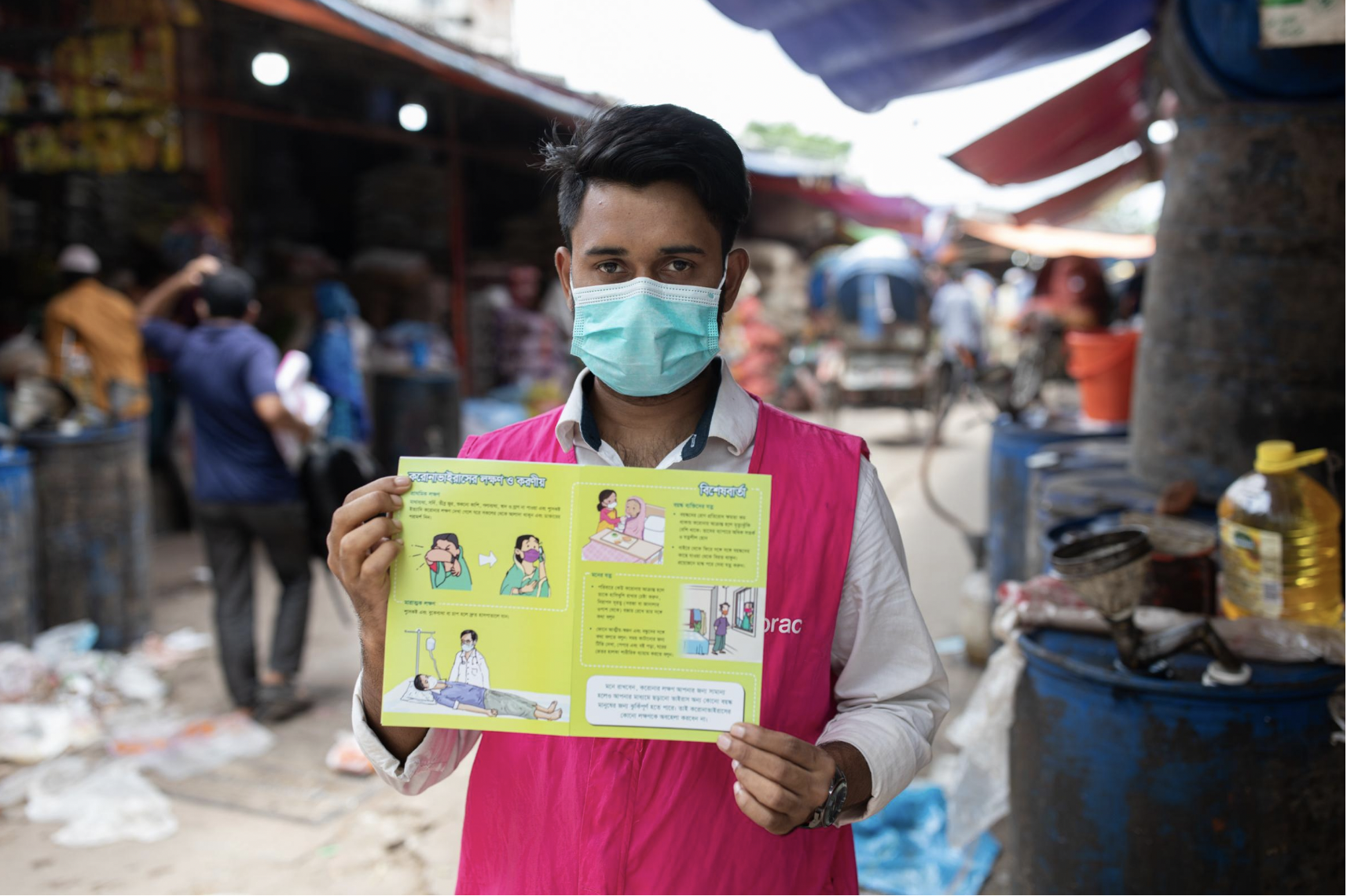
A common request received by the field staff (community health workers, volunteers, and area managers) was for comprehensive materials to complement the messages disseminated verbally. In addition to the usual posters, stickers, and leaflets, BRAC designed tri-fold cards with detailed information on vaccination, handwashing, mask wearing and disposal, and instructions about taking care of people with comorbidities. Info cards were distributed to local change-agents such as market committee members or transport hub leaders to help sustain best practices. The cards garnered a positive response from the public.
Collaboration with Sisimpur
As schools in Bangladesh reopened after an eighteen-month shutdown, BRAC collaborated with Sisimpur—a local adaptation of children's television series Sesame Street—in creating an educational video about COVID-19 featuring the Sisimpur characters. Originally developed for the Dhaka project, this video ran on social media platforms and was shown at some three hundred schools. This intervention was entirely novel for many students and schools, and Sisimpur was also warmly received by parents and teachers. Unfortunately, this project began halfway through BRAC's wider Covid education initiatives, and needed more time and closer supervision.
Comics and Murals
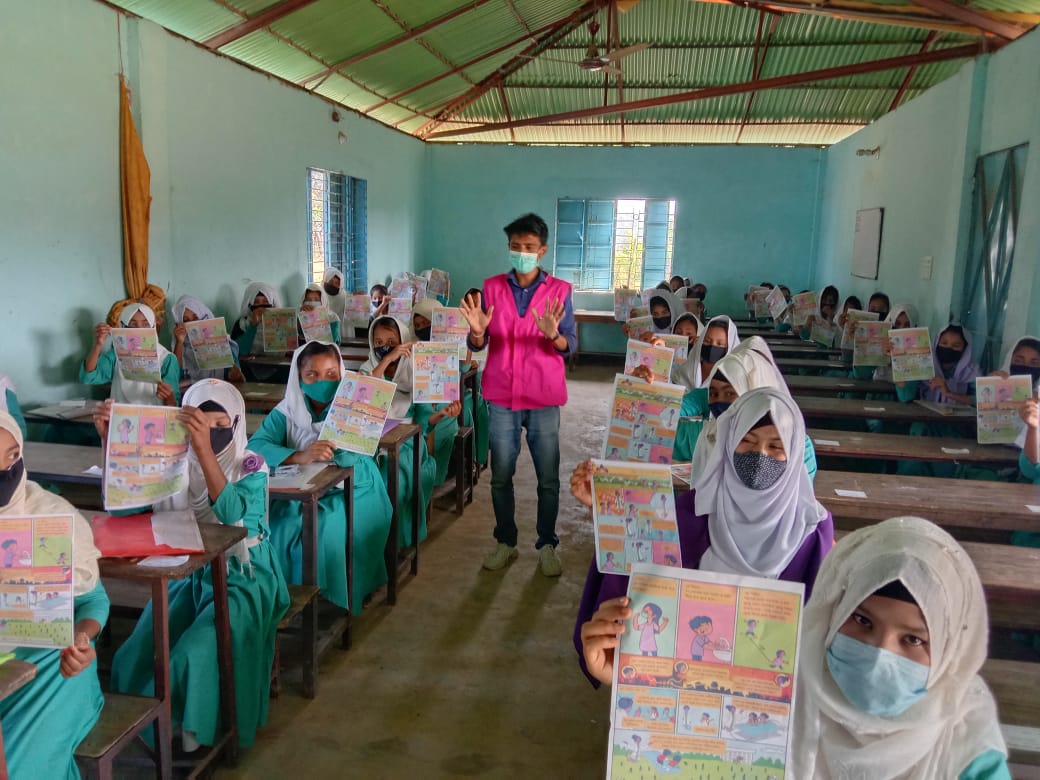
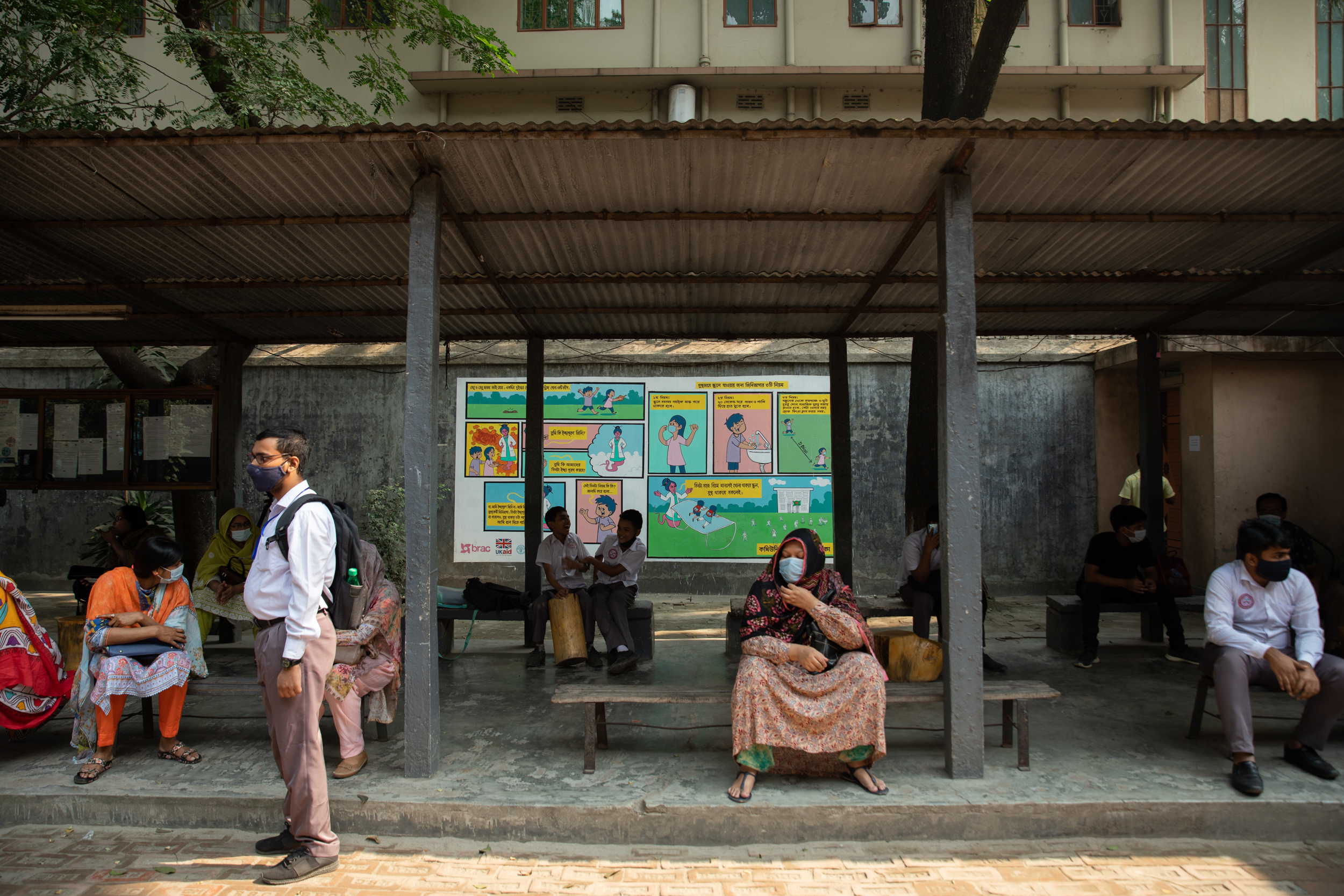
Long perceived as reliable messengers in Bangladesh, local artists often translate crucial information into personable and understandable forms. Working with these artists, BRAC delivered COVID-19 information to schools in an engaging way. Renowned cartoonist Morshed Mishu developed wall murals in Dhaka and Cox's Bazar and 200,000 copies of a comic strip were distributed among schools and madrasas.



Faith Leaders' Endorsement
Faith leaders have addressed misinformation and influenced health behavior changes with a high degree of success. During the biggest Ebola outbreak in history, interfaith leaders were instrumental in delivering health messages in parts of West Africa that governments and NGOs could not reach. As credible sources of information, they worked actively on quashing rumors regarding Ebola and encouraged people to listen to government directives and the health workers.2A 2020 study by Afrobarometer revealed that across 34 countries in Africa, faith leaders are more widely trusted than any other public leaders. Brian Howard, "Religion in Africa: Tolerance and Trust in Leaders are High, but Many Would Allow Regulation of Religious Speech," Afrobarometer Dispatch no. 339 (2020), https://afrobarometer.org/sites/default/files/publications/Policy%20papers/ab_r7_dispatchno339_pap12_religion_in_africa.pdf. Early in the COVID-19 epidemic, BRAC teamed up with Islamic Foundation Bangladesh (IFB) and Bangladesh Baptist Church Fellowship (BBCF) to train their directors on best practices. Local representatives of UNICEF, who had previously engaged Muslim leaders in another health project, facilitated the IFB partnership. BRAC provided online training to IFB field supervisors and BBCF pastors via Zoom, addressing questions and rumors. This collaboration provided 3,400 faith leaders with awareness messaging, 860,000 reusable masks, and 350,000 leaflets.
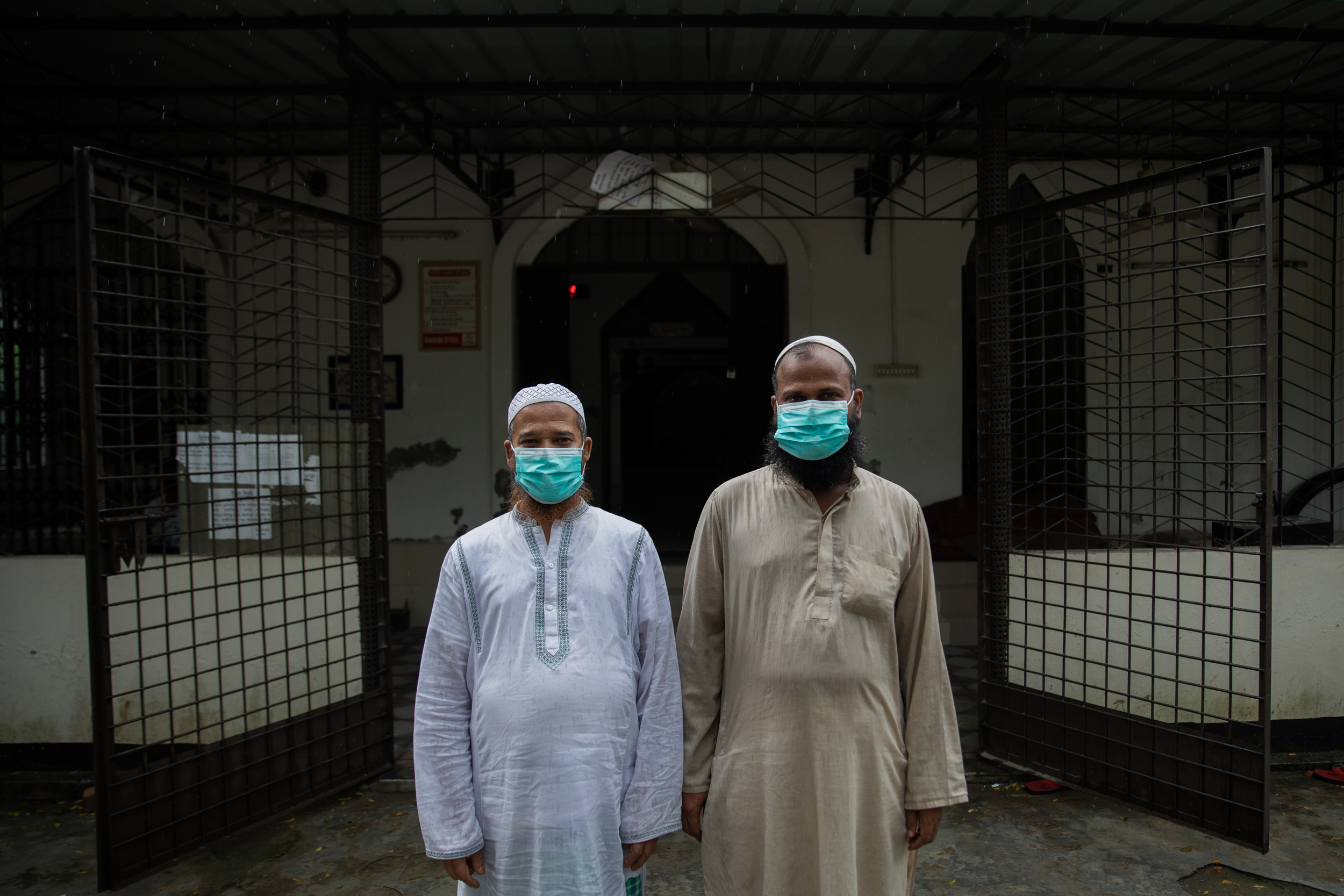
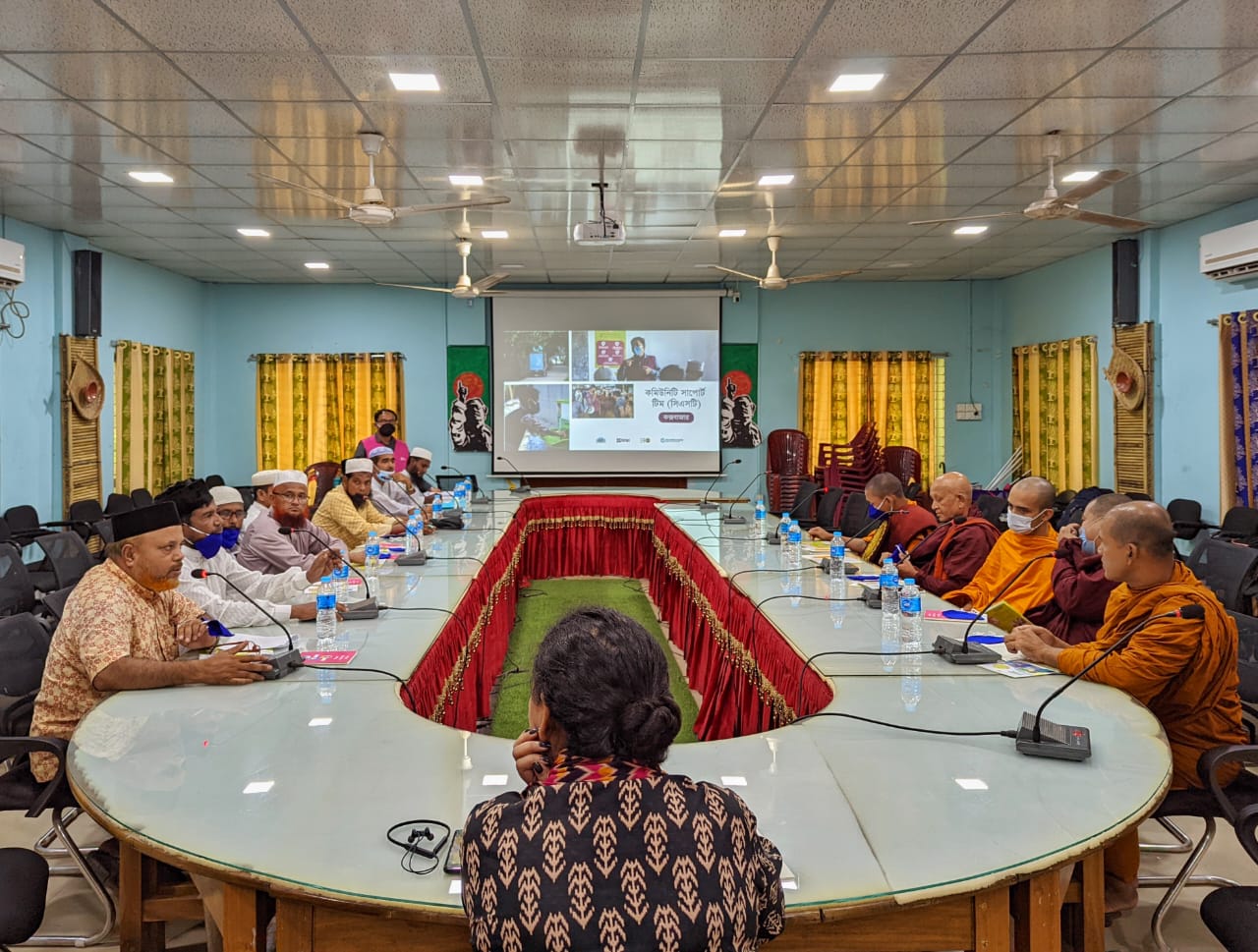

Faith leaders and scholars such as Leor P. Sarkar (General Secretary of the BBCF), Gazi Sanaullah (Islamic scholar), and Pragyananda Bhikkhu (Assistant Director, Ramu Central Sima Bihar) endorsed preventive measures and appeared in short social media videos in support of wearing masks, maintaining social distance, washing hands, and taking vaccines.
While the Dhaka Community Support Team emphasized partnerships with selected faith-based organizations, Cox's Bazar sought to unite all the faith leaders from the intervention areas—Muslim, Buddhist, and Hindu—under one roof for knowledge sharing and collaboration. These meetings included a moderated session that provided equal opportunity to representatives of each religion to share the lessons they had learned. In Ramu, faith-based organizations overcame the silos between their work, meeting to formulate policies for combating the spread of vaccine misinformation. Volunteers working with faith-based groups increased both the reach and acceptance of the interventions.
Faith leader Reverend Leor P. Sarkar speaks on Covid,
Bangladesh. Translated from original Bengali.
Faith leader Gaji Sanaulla Rahmani speaks on Covid,
Bangladesh. Translated from original Bengali.
Interactive Popular Theater
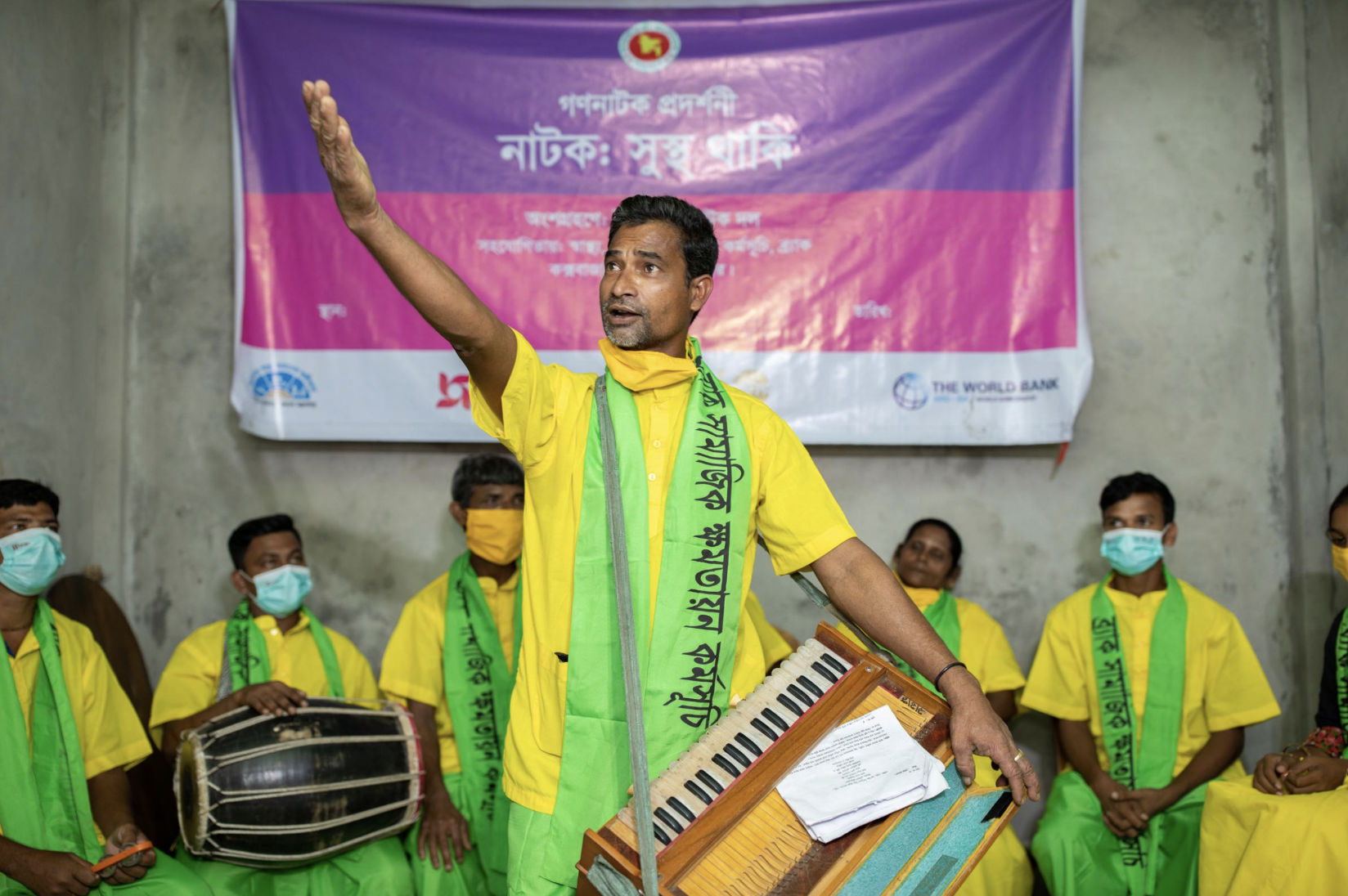
BRAC's popular theater groups under its Social Empowerment and Legal Protection program (SELP), have performed about a wide range of topics such as gender equality, child marriage, violence against women, health, migration, and road safety across sixty-one districts since 1998. To raise COVID-19 awareness, the Cox's Bazar project organized 160 performances, despite dealing with some local challenges. For instance, the acceptance level of popular theatre was lower among the conservative Muslim population and the shows were more difficult to organize in hard-to-reach locations. Social distancing was more challenging when children made up the majority of the audience.
Findings from surveys and focus group discussions indicated increased awareness about COVID-19 symptoms, modes of transmission, and prevention measures (handwashing, mask wearing, social distancing) and vaccination across all intervention areas. Local knowledge about the existence of the virus and its spreadability increased.3Compared to the baseline, 26% more people knew that both hands need to be washed, 11% more people knew not to use a damp or damaged mask, whereas 7% more people knew not to wear the mask loosely. 8% more people reported knowing that the Covid-19 vaccine improves the body's immunity against the virus. School surveys revealed that 10% more students reported that face-to-face communication with the infected was the mode of transmission and almost 4% more knew it could be transmitted through coughing and sneezing. Encouraging accessible, engaging, and equitable approaches to public health communications has led to an increase in the uptake of COVID-19 preventive practices, as well as a reduction in barriers to vaccine confidence.
COVID-19 continues to pose a significant public health concern for many countries, like in India. While Bangladesh faces various health challenges and lacks adequate healthcare facilities and workforce, local NGOs like BRAC have played a significant role in addressing the pandemic's impact through introduction of localized initiatives like miking, info cards, Sisimpur PSAs, comics and murals, and faith leaders' endorsement to strengthen COVID-19 response. Such programs are essential in complementing conventional approaches to pandemic preparedness and mitigating the virus's spread. While these initiatives may be unique to Bangladesh, their successes can provide important lessons for other countries in terms of pandemic response and preparedness.
About the Author
Monzur Morshed Patwary is a public health practitioner with over eleven years of professional experience. As a senior program manager at BRAC, he has led several large-scale projects involving COVID-19 response, maternal and child health, and digitalization of training for community health workers. He has also collaborated with UN organizations and international donors such as USAID, FCDO, DANIDA, and GAC and helped mobilize high-value grants through project design and proposal development. Monzur represents Bangladesh on global platforms such as ParisWHO, Global Leadership Forum and HPAIR Harvard Conference. He completed the Hubert H. Humphrey Fellowship at Emory University-Rollins School of Public Health and is currently pursuing his professional affiliation at The Task Force for Global Health.
Public Health in the US and Global South is a collection of interdisciplinary, multimedia publications examining the relationship between public health and specific geographies—both real and imagined—in and across the US and Global South. These essays raise questions about the origin, replication, and entrenchment of health disparities; the ways that race and gender shape and are shaped by health policy; and the inseparable connection between health justice and health advocacy.
Beginning in 2022, the series expands to include 1000-word blog posts, as well as longer commentaries, essays, articles and media productions that address the public health and political implications of the COVID-19 pandemic from multiple perspectives. The series editor for Public Health in the US and Global South is Mary E. Frederickson.
Commentary
Multiple COVID-19 waves have left in their wake compelling evidence of long overlooked gaps in pandemic readiness and responsiveness. The primary lesson for the US public health and healthcare sectors is that this deep-rooted ignorance took a huge toll on their ability to contend with a novel, rapidly spreading, and lethal contagion. As historian Peter Burke recently noted: "Many vivid examples of the consequences of ignorance come from the history of diseases."1Peter Burke, Ignorance: A Global History (New Haven: Yale University Press, 2023), 189. COVID-19 is a current case in point. What was missed or mismanaged in the run up to the pandemic and during its catastrophic course will, if left unexamined and uncorrected, lead to enormous suffering and loss in additional public health crises. In this commentary, I want to elaborate on how institutionalized ignorance affected the Centers for Disease Control and Prevention's (CDC's) response and what can and should be done to learn from the agency's mistakes, with the goal of avoiding a repetition.

A thorough and fully transparent probe of CDC's recent history is warranted, one that scrutinizes "institutional obliviousness, under a succession of agency directors and programmatic leaders, to basic gaps in readiness and responsiveness that became glaringly obvious during the pandemic and contributed to numerous missteps in the US response to COVID-19."2Daniel Pollock, "COVID-19 Lessons in Ignorance," Southern Spaces, April 28, 2022, the first in a public health series covering the pandemic: https://southernspaces.ecdsdev.org/2022/covid-19-lessons-ignorance/. Far too much had to be cobbled together on the fly in early 2020 largely because of prior organizational neglect. And far too little has changed three years later, even as CDC moves ahead with its latest—to date, largely upper echelon—reorganization.3Centers for Disease Control and Prevention, "CDC Moving Forward Reorganization: A Notice by the Center for Disease Control," Federal Register 88, no. 29 (2023): 9290, https://www.federalregister.gov/documents/2023/02/13/2023-02929/cdc-moving-forward-reorganization.
Yes, SARS CoV-2 is a novel pathogen that spread rapidly, wreaked extraordinary devastation, and evolved quickly. Lots of impromptu learning about the virus and measures to contain or counter was necessary. However, pandemic warning signals abounded for years, and many assets CDC needed to function optimally in public health emergencies—as well as in non-pandemic times—were long overlooked or chronically under supported by virtue of the agency's own strategic planning, programmatic priority setting, and discretionary funding decisions. In surveillance and data science, for example, CDC did not fully mind and mend critically important gaps in electronic case reporting, immunization information systems, forecasting and outbreak analytics, and tools and dashboards for data visualization.
Certainly, factors largely beyond CDC's control had major impacts on the agency's performance. Besides the virus itself, CDC had to contend with (1) a coterie of federal government executives, most notably the 45th President, who failed to respond effectively and exerted unprecedented political interference; (2) a legacy of outbreak responses in the United States that are highly decentralized and contingent on a variety of situational circumstances; (3) longstanding constraints on CDC's public health authorities; and (4) chronic underfunding of public health programs at all levels of government. Each of these factors helps explain limitations, gaps, and shortcomings in the agency's performance. However, to leave the matter there would mean overlooking the impact of internal organizational factors that remain largely under CDC's control. Whether the agency has fully reckoned and responded to its internal problems is an open question that warrants much more attention.

"To be frank, we are responsible for some pretty dramatic, pretty public mistakes, from testing to data to communications," CDC Director Rochelle Walensky acknowledged in August 2022. However, the full CDC Scientific and Programmatic Review report that prompted Dr. Walensky's critique remains under wraps and not publicly available. Many months after the report was completed, all that CDC has published is a high-level summary and set of recommendations.4"CDC Moving Forward Summary Report," Centers for Disease Control and Prevention, Last reviewed September 1, 2022, https://www.cdc.gov/about/organization/cdc-moving-forward-summary-report.html. What was covered in the review, its methods and findings, and how conclusions were reached are shrouded in secrecy. Sequestering the report does not bode well for efforts to learn from CDC's COVID-19 experience and improve the agency's performance. Instead, CDC leaders have opted for a form of knowledge concealment that serves to perpetuate institutionalized ignorance.
For those of us who are deeply concerned about where the agency is headed, this is a fraught moment, yet organizational dysfunctions, mishaps, setbacks, and downturns are not necessarily points of no return. Learning from the COVID-19 pandemic and CDC's response to it can lead to changes that help revitalize the agency. Concealing the recent scientific and programmatic review report is not a good start along the path of organizational learning.

"Organizational learning," according to a leading researcher in the field and her colleagues, "is a process through which experience performing a task is converted into knowledge, which, in turn, changes the organization and affects its future performance."5Linda Argote, Sunkee Lee, and Jisoo Park, "Organizational Learning Processes and Outcomes: Major Findings and Future Research Directions," Management Science 67, no. 9 (2021): 5399–5429. The process should include gathering and moving information across organizational boundaries; eliciting and using multiple viewpoints; acknowledging hierarchies, policies, and practices that have not worked; and trying new approaches that have a higher likelihood of success. A prime example of an opportunity to learn from the COVID-19 experience is reckoning with how the agency organized, staffed, and operated its emergency response. From my perspective, the structure and process defects were profound and persistent, with the upshot that returns on the extraordinary time and effort so many CDC responders committed to their tasks fell well short of what would warrant use of all those precious resources. What purposes did the CDC response serve? Did the agency achieve those purposes? What was necessary to get the job done? Among the more specific questions about CDC's emergency operations is whether all the work involved with preparing, clearing, and presenting extensive PowerPoint slide decks in daily COVID-19 briefings was worthwhile. What were the benefits and at what cost?
Most of CDC's performance problems during the pandemic were the legacy of organizational neglect, not the exigencies of a novel corona virus or other external factors. The botched laboratory test rollout, flawed testing guidance, poorly prepared public health guidelines, confusing messaging, misguided mask recommendations, multiple data and analytic deficiencies, staffing shortfalls, and publication delays are traceable to assumptions widely held within the agency about institutional readiness coupled with longstanding inattentiveness by CDC directors and programmatic leaders to known or partially understood gaps. That CDC was not ready to go live sooner with a publicly facing, state-of-the art COVID-19 data display epitomizes what the agency had neglected. Instead, other data visualization websites, most notably Johns Hopkins University's dashboard, served as the go-to destinations for pandemic surveillance data. The reputational damage to CDC is severe and could have been avoided.
So much had to be launched or improvised by CDC in crisis mode because so much had been taken for granted or ignored for such a long time. Some additional examples from my own experience: When I joined the CDC response as Deputy Incident Manager for data and surveillance at the end of March 2020, I was surprised to learn that the agency had yet to introduce a process to enable secure data access and distribution of COVID-19 data sets to prospective data users who had been identity-proofed by the U.S. Department of Health and Human Services. Further, CDC had taken no steps to inventory and document relevant data sets and make provisions for sharing de-identified data with news organizations, one of which moved forward with a lawsuit to gain access to COVID-19 case data aggregated by CDC. The agency should have closed these basic gaps in data provisioning well before the pandemic, not during the throes of it. The only explanation of this blunder that I can think of is lack of forethought and follow through.

SARS CoV-2 is not the first viral respiratory pathogen to emerge and spread across country borders in the twenty-first century. While each international outbreak has presented a unique mixture of causes and consequences, they also have had much in common. That commonality places a premium on learning from each event and applying take-away lessons in a thoroughgoing way. What's ahead epidemiologically can surpass what's happened already in terms of complexity and magnitude, and that only heightens the stakes for CDC's organizational learning and pandemic preparedness.
While there are many pockets of CDC excellence, the organization, most notably because of its COVID-19 response, has taken multiple hits—some reflect ignorance about the agency's mission, operations, opportunities, and constraints but others are knowledgeable, on target, and of high consequence. There is much to do—and soon. We need to know more about CDC's performance gaps and shortcomings, and how to remedy them. To that end, instead of treating the full details of CDC's COVID-19 mistakes as a sequestered resource, it behooves CDC leaders to build on, transfer, and most importantly, act on what has been learned.6Jeffrey Pfeffer and Robert I. Sutton, The Knowing-doing Gap: How Smart Companies Turn Knowledge into Action (Cambridge, MA: Harvard Business School Press, 2000): 261. In the pandemic's wake, a much stronger commitment to organizational learning by CDC will provide the quickest and most effective solutions to the institutionalized ignorance that placed the public and the agency at risk.
About the Author
After completing the CDC's Epidemic Intelligence Service training program in 1986, Daniel Pollock worked as a medical epidemiologist at the agency for 35 years. Dr. Pollock led the CDC unit responsible for national surveillance of healthcare-associated infections from 2004–2021, and he served in CDC's COVID-19 emergency response in the spring of 2020 as the Deputy Incident Manager for data and surveillance.
Public Health in the US and Global South is a collection of interdisciplinary, multimedia publications examining the relationship between public health and specific geographies—both real and imagined—in and across the US and Global South. These essays raise questions about the origin, replication, and entrenchment of health disparities; the ways that race and gender shape and are shaped by health policy; and the inseparable connection between health justice and health advocacy.
Beginning in 2022, the series expands to include 1000-word blog posts, as well as longer commentaries, essays, articles and media productions that address the public health and political implications of the COVID-19 pandemic from multiple perspectives. The series editor for Public Health in the US and Global South is Mary E. Frederickson.
A case argued in October 2022 concerning Congressional reapportionment in Alabama reveals that the Court's conservative majority is likely poised to follow the lead of Associate Justice Samuel Alito, who in July 2021 wrote the Court's majority opinion reinterpreting the Voting Rights Act's Section 2 to make it more difficult to win a case challenging laws that restrict voting procedures.1 Steve Suitts, "Undoing the Voting Rights Act," Southern Spaces, July 12, 2021, https://southernspaces.ecdsdev.org/2021/undoing-voting-rights-act/.
By further crippling the Act's Section 2, instead of voiding it completely, as the Court did nine years ago to the Act's Section 5 in an opinion by Chief Justice John Roberts involving Shelby County, Alabama, the current Court will reach the same practical result: overturning the ruling of a three-judge court (composed of two Trump-appointed and one Clinton appointed federal judges) that would permit Alabama's Black voters—one-fourth of the state's population—an opportunity to help elect a candidate of their choice in two (not just one) of the state's seven Congressional districts.2Amy Howe, "In 5–4 vote, Justices Reinstate Alabama Voting Map Despite Lower Court's Ruling that It Dilutes Black Votes," Scotusblog, Feb. 7, 2022, https://www.scotusblog.com/2022/02/in-5-4-vote-justices-reinstate-alabama-voting-map-despite-lower-courts-ruling-that-it-dilutes-black-votes/; Merrill v. Milligan, 142 S. Ct. 879 (2022); Shelby County, Ala. v. Holder, 570 US 529 (2013). Steve Suitts, "States Rights Resurgent: The Attack on the Voting Rights Act," Southern Spaces, Aug. 29, 2013, https://southernspaces.ecdsdev.org/2013/states-rights-resurgent-attack-voting-rights-act/.

The case, Merrill v. Milligan, will adversely shape voting rights in Alabama and across the nation, but the worst is yet to come if Justice Alito's remarks from the bench on October 4 foretell the Court's future approach. In an exchange with the US Solicitor General, who sided with Alabama's Black plaintiffs, Alito proffered a couple of far-reaching, deeply flawed notions about voting. If adopted by the Court, they will provide the rationale for further gutting the Voting Rights Act, as effectively as if it were revoked, and for removing federal courts from virtually any future role in protecting Black voting rights in the US South. These are consequences that could be built on Alito's blatant misstatement of facts and blithe misconception of the history of voting rights struggles.
Justice Alito has sought to overturn the Supreme Court's prior cases about reapportionment and voting rights since he was in the Reagan Administration's Justice Department in the 1980s. In his application for a political appointment as Deputy Assistant Attorney General in 1985, he wrote, "In college, I developed a deep interest in constitutional law, motivated in large part by disagreement with Warren Court decisions, particularly in . . . reapportionment."3Mark Sullivan, Memorandum for Mark Levin, Dec. 12, 1985, https://www.archives.gov/files/news/samuel-alito/accession-060-97-761/Acc060-97-761-box1-Alito.pdf. It was in the same application in which Alito that he stated he was "particularly proud of my contributions in recent cases in which the government has argued in the Supreme Court racial and ethnic quotas should not be allowed and that the Constitution does not protect a right to an abortion."
During oral arguments in Merrill v. Milligan, Justice Alito claimed that the current standards used to prove a violation of Section 2 in reapportionment cases were far too easy, allowing Black plaintiffs to win every case or, as he put it, "always run the table" in the South. This assertion is flatly wrong, contradicted by the findings of four noted political scientists who filed a brief in the Alabama case. They told the Court that during the last twenty years, there have been only thirty-one lawsuits claiming dilution of minority voting in the redistricting of the legislative seats of fifty states and 435 Congressional districts. But, only nine of the thirty-one challenges have prevailed in federal courts.4Transcript of Oral Argument, Merrill v. Milligan, US Supreme Court, Oct. 4, 2022, 105, https://www.supremecourt.gov/oral_arguments/argument_transcripts/2022/21-1086_6j36.pdf; Brief of Amici Curiae Jowei Chen, Christopher S. Elmendorf, Nicholas O. Stephanopoulos, and Christopher S. Warshaw In Support of Appellees/Respondents, Merrill v. Milligan, July 18, 2022, 7–8, https://www.supremecourt.gov/DocketPDF/21/21-1086/230239/20220718132621523_91539%20HARVARD%20BRIEF%20PROOF3.pdf. The brief notes that these numbers do not include settlements. Also, the brief reports that earlier in the 1990s 43 Section 2 challenges to district plans involved twenty-two of them in favor of plaintiffs.

Even if Alito and his law clerks had not read the brief, he could not fail to hear Justice Sonya Sotomayor cite the same statistics minutes earlier during oral argument. "Section 2 is not being used that widely," she noted, quoting the brief's statistics as she made the point that cases were brought and won "only in an extreme circumstance where voters are polarized completely and where there's no crossover between the races."5Transcript of Oral Argument, Merrill v. Milligan, 71–72.
Alito would have none of these facts. He claimed that the current test for proving a Section 2 violation meant Alabama would never win a reapportionment case. "They're not going to win on whether the minority group is politically cohesive. They're not going to win on whether the majority votes as a bloc," he charged.6Transcript of Oral Argument, Merrill v. Milligan, 105. In other words, Alito contended that Black plaintiffs would always win a case because they always could prove that white voters in Alabama cast most of their ballots as a bloc and that their bloc-voting rarely, if ever, included support for the candidates of Black voters, who also usually voted as a cohesive group.
But, according to Alito, Black plaintiffs ought not win the cases because the bloc-voting by both Black and white people "may be due to ideology and not have anything to do with race. It may be that voters and white voters prefer different candidates now because they have different ideas about what the government should do."7Transcript of Oral Argument, Merrill v. Milligan, 105. Simply put, Alito suggests it is an ideological, partisan difference, not a racial difference, that can explain why white voters usually reject and defeat the Black voters' candidates of choice in districts where white voters are in the majority.
Alito's observation echoes the outline of an argument that the national Republican Party is aggressively advancing to disable the Voting Rights Act. The National Republican Redistricting Trust (NRRT), the primary Republican organization coordinating national, state, and local Republicans in every state's Congressional and state legislative redistricting, filed a friend of the court brief in the Alabama case. It claims that the Voting Rights Act "intended to equalize minority voting opportunities has instead become a cudgel wielded against any state law that fails to advance the institutional interests of the Democratic Party."8Brief of Amicus Curiae The National Republican Redistricting Trust in Support of Appellants/Petitioners, Merrill v. Milligan, May 2, 2022, https://www.supremecourt.gov/DocketPDF/21/21-1086/222354/20220502163340023_21-1086%20and%2021-1087%20Amicus%20NRRT%20Supp.%20Appellants.pdf.
The NRRT brief cites an earlier lower court opinion from Alabama where US District Court Judge Keith Watkins decided that in the statewide elections for state supreme court justices "factors other than race—most prominently, partisan politics and the decline of the Alabama Democratic Party" explain the election outcomes.9Ala. State Conference of the NAACP v. Alabama (M.D. Ala. Feb. 5, 2020), Case 2:16-cv-00731-WKW-SMD Document 181, 100. The Black plaintiffs lost the case.
Southern Republican leaders are also beginning to parrot this claim. For example, Republican US Representative Troy Nehls of Texas (author of The Big Fraud, in support of former President Trump's claims of a stolen election) recently told the New York Times that the majority of white voters in his Congressional district were not voting against the minority communities' candidate: "These people aren't against brown or Black people. They just don't like the way Democrats are running the country."10Michael H. Keller and David D. Kirkpatrick, "Their America Is Vanishing. Like Trump, They Insist They Were Cheated," New York Times, Oct. 23, 2022, https://www.nytimes.com/2022/10/23/us/politics/republican-election-objectors-demographics.html.
Alito's Republican-inspired argument, if adopted by the Supreme Court, would be devastating to voting rights cases. In 2019 the Court held in a case concerning North Carolina's Congressional reapportionment that federal courts cannot become involved in partisan gerrymandering since it would involve the courts in allocating power among the political parties.11Rucho v. Common Cause. 139 S. Ct. 2484 (2019). An essential part of winning a Section 2 lawsuit against a reapportionment plan requires proving that most white voters in majority-white districts routinely do not vote for the candidate whom Black voters support. In this way, bloc voting by white voters on account of race effectively denies Black voters an equal opportunity to participate in electing candidates to office in violation of the Voting Rights Act. But, if courts begin to decide that bloc voting by whites is based on partisan politics, instead of race, there can be no case heard by the federal courts about voting rights.
Not even the state of Alabama was brazen enough to make this claim, although it did make its own shameless argument in its brief as to why the Court ought not consider the effects of racial bloc voting. "Racially polarized voting is not state action," the state of Alabama claimed. It is the actions of private citizens and therefore outside the reach of the Constitution which only restricts government actions.12 Reply Brief for Appellants/Petitioners, Merrill v. Milligan, Aug. 24, 2022, 37–38, https://www.supremecourt.gov/DocketPDF/21/21-1086/234404/20220824160744143_Merrill%20-%20Merits%20Reply%20Brief%20FINAL.pdf. This is an old, discredited notion. Segregationists of the 1940s argued unsuccessfully that the Democratic party's primary elections in the South were private primaries of private political parties, not state action, uncontrolled by the Constitution or the courts. Of course, the Supreme Court flatly rejected that claim since the Court understood that southern officials were using a non-governmental political party's all-white primary as an essential tool in the state government's plan to minimize the impact of Black voting.13Smith v. Allwright, 321 US 649 (1944).
The assertions of the Republicans and Justice Alito are no less ancient and discredited. Southern white leaders have attempted to intimidate, limit, and deny Black people's voting ever since they gained the right to vote because Black citizens have held a different political ideology. In 1867, for example, the first "Alabama Colored Convention" endorsed the Republican party and as new voters proclaimed a political ideology that included "education secured for all; with the old and helpless properly cared for; with justice everywhere impartially administered."14Lucille Griffith, Alabama: A Documentary History to 1900 (Tuscaloosa: University of Alabama Press, 1968), 461. The following year, the executive committee of the all-white Democratic and Conservative Party of Alabama announced its opposition to the state's Reconstruction Constitution, which sought the Black Convention's political agenda, which included universal, adult voting and free schools for all children financed by a set aside of one-fifth of the state annual revenues.
The conservative white Democrats insisted, "Color or race has nothing to do with the motive of any one in withholding political privileges." They wrote that it was only because too few Black voters embraced "the science of civil policy to cast an intelligent vote, wisely favor or oppose a legislative measure" that they opposed the new constitution and Black voting.15"To the People of Alabama," Jacksonville (AL) Republican, Oct. 24, 1868, 2.
When conservative whites, including the Ku Klux Klan, burned Black schools and churches in Alabama and across the South during Reconstruction, their defenders claimed it had little or nothing to do with race—only political differences. "As a rule the schoolhouses (and churches also) were burned because they were the headquarters of the Union League and the general meeting places for Radical politicians," wrote Walter L. Fleming in 1905, "or because of the character of the teacher and the results of his or her teachings."16Walter L. Fleming, Civil War and Reconstruction in Alabama (New York: Columbia University Press, 1905), 628.
Later, along with other southern states, conservative white Democrats in Alabama disfranchised Black voters in the state's 1901 constitution not merely because they were formerly enslaved Black people. They disfranchised them because Black voters had joined with white Republicans and Populists to challenge conservative white Democratic candidates in pursuit of a different political agenda.17C. Vann Woodward, Origins of the New South, 1877–1913 (Baton Rouge: Louisiana State University Press, 1951), 321–331. Of course, it involved "different ideas about what the government should do" between most white and Black people, and partisan differences. But it was also rank racism.
Similarly, Alabama Governor George Wallace's opposition to Black voting, which eventually helped to enable passage of the Voting Rights Act in 1965, was based on race, but it also involved a partisan fear that the "bloc vote" (as he called Black voters) would join with a minority of white voters to defeat his political agenda at the ballot box.18Steve Suitts, A War of Sections: How Deep South Political Suppression Shaped Voting Rights in America (Athens: University of Georgia Press, 2023).
There is no way to forecast if Justice Alito will attempt to incorporate his Republican-serving rationalizations into the Alabama case or if other members of the Court will follow him in constituting a majority in this case or another. What is clear is that by continuing to dismantle the nation's foremost protections of Black citizens' right to vote and their right to have their votes count equally in election outcomes, a majority of US Supreme Court Justices, often in the name of color-blindness, will be blind to the political history of racism in the Deep South—or will knowingly misconstrue it with an apparent partisan result.
About the Author
An adjunct with Emory University's Institute for the Liberal Arts, Steve Suitts is the author of the A War of Sections: How Deep South Political Suppression Shaped Voting Rights in America (Athens: NewSouth Books, an imprint of the University of Georgia Press, 2023). Earlier in his career, Suitts served as the executive director of the Southern Regional Council, vice president of the Southern Education Foundation, and executive producer and writer of "Will the Circle Be Unbroken," a thirteen-hour public radio series that received a Peabody Award for its history of the civil rights movement in five Deep South cities.
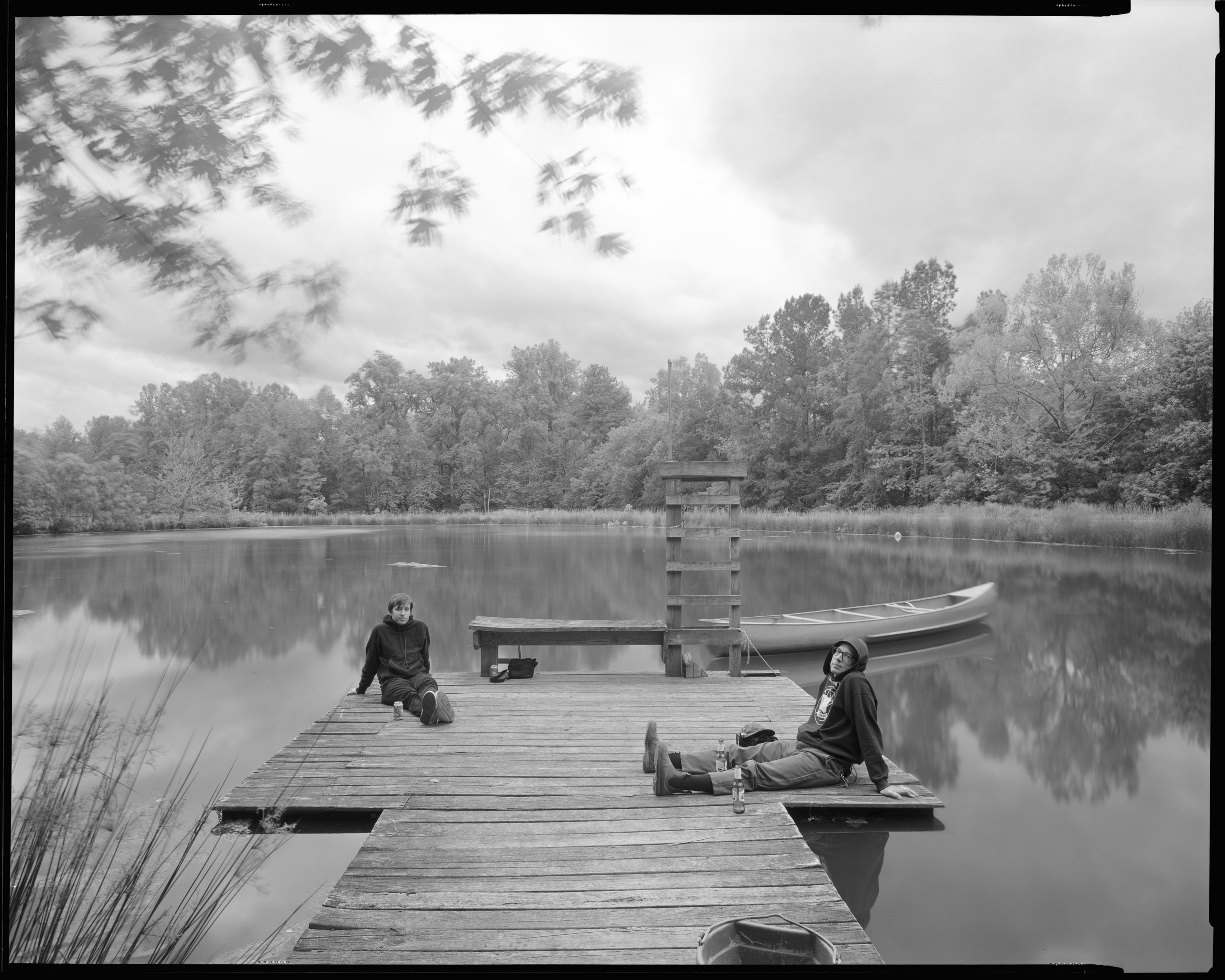
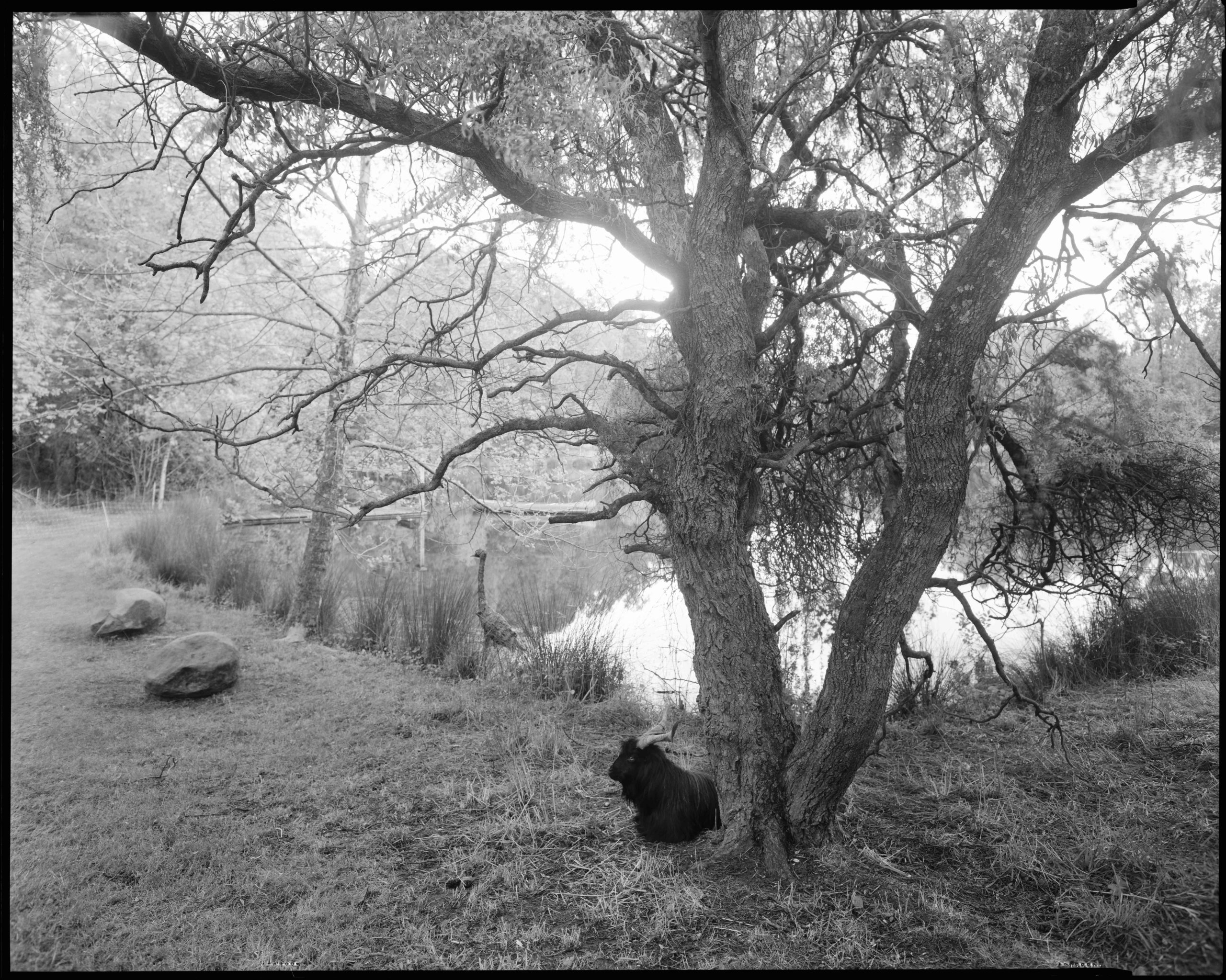
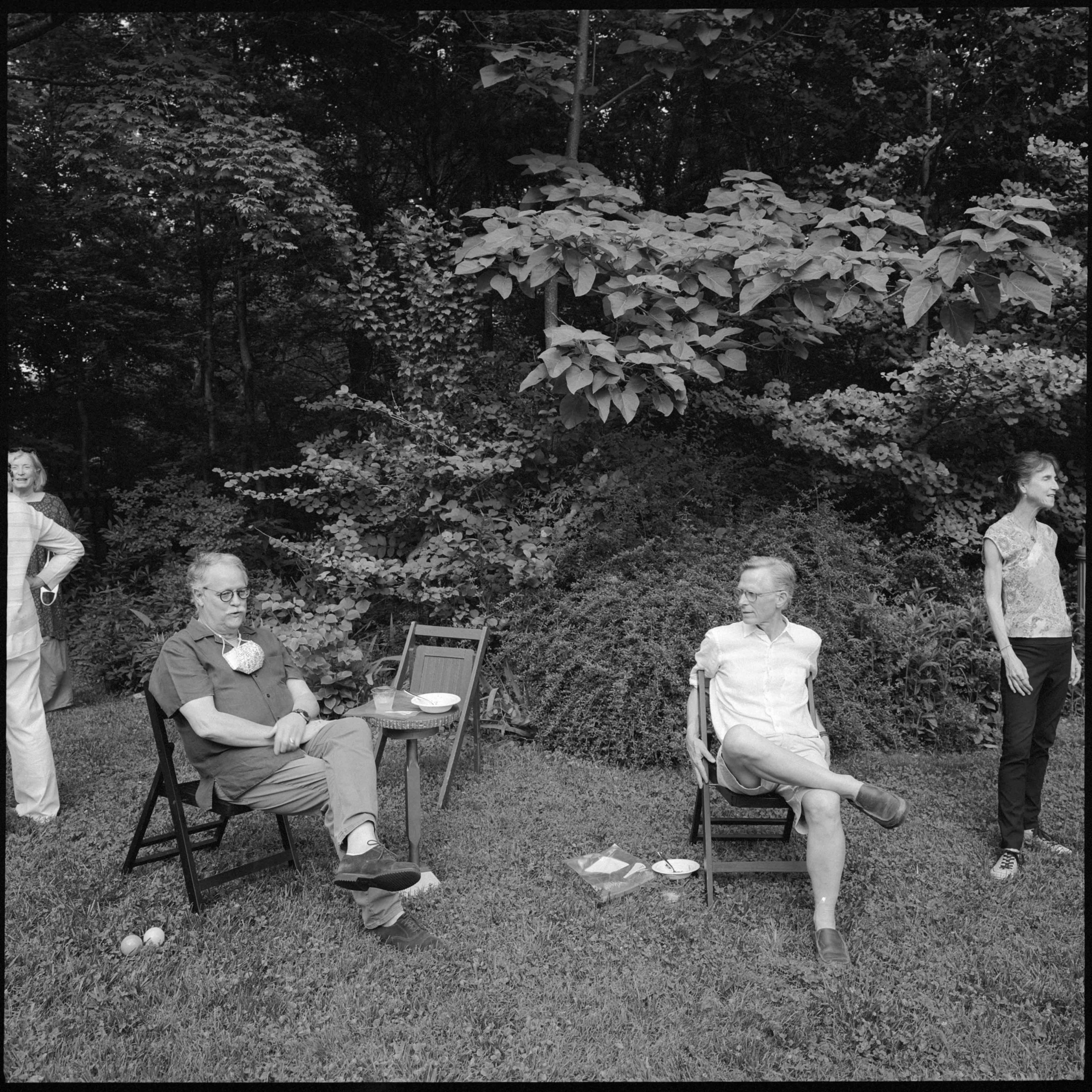
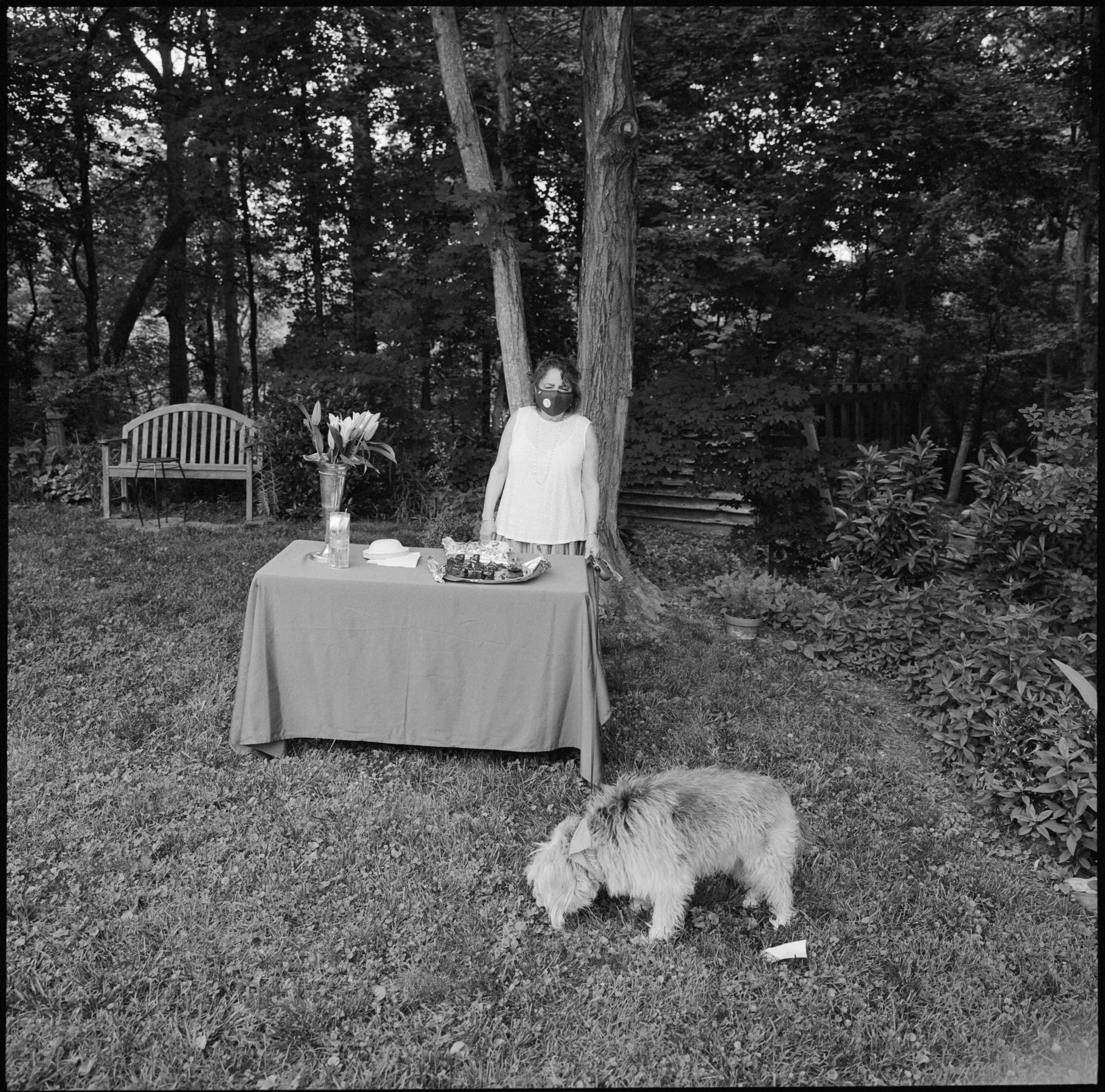
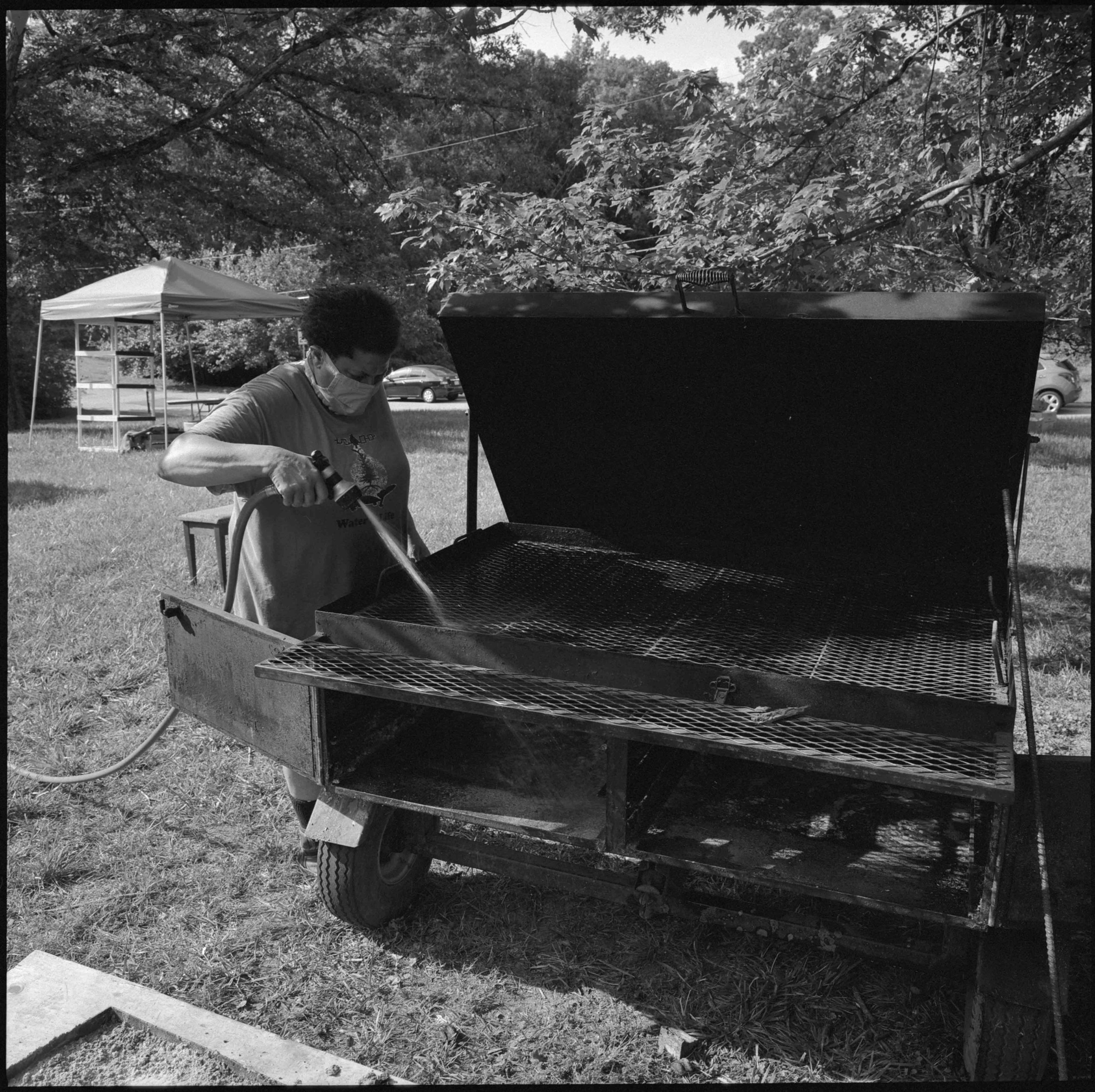
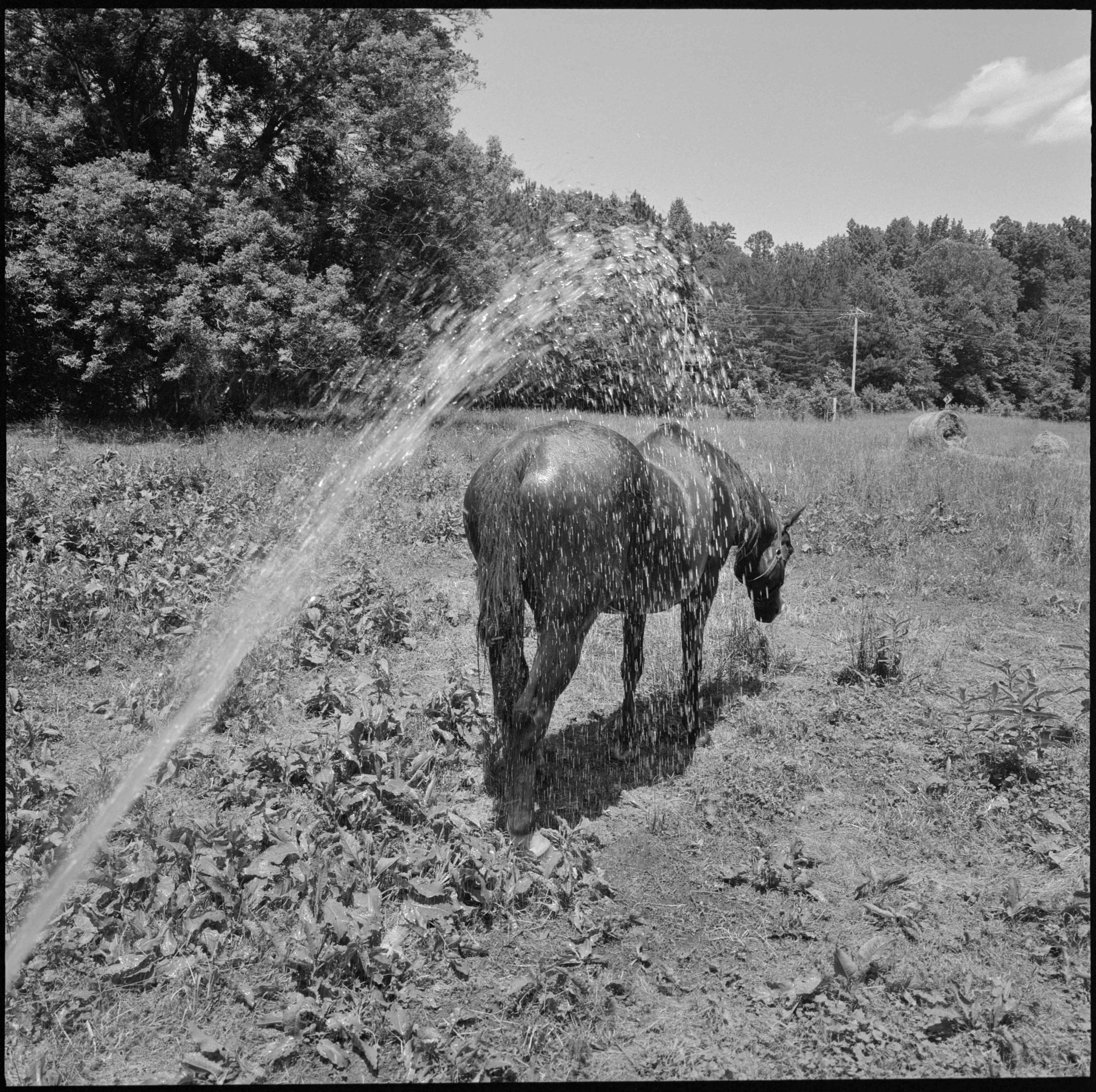
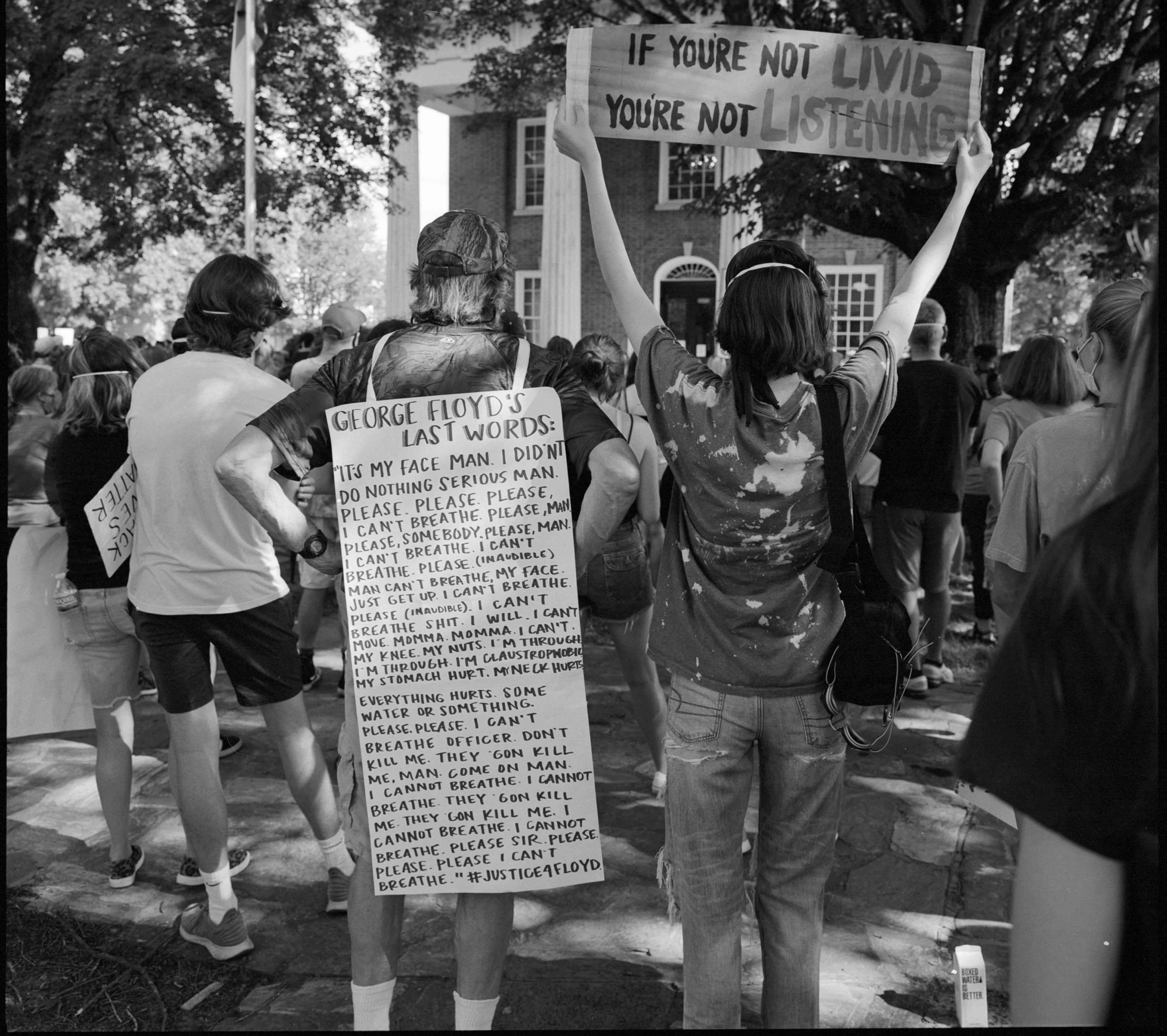
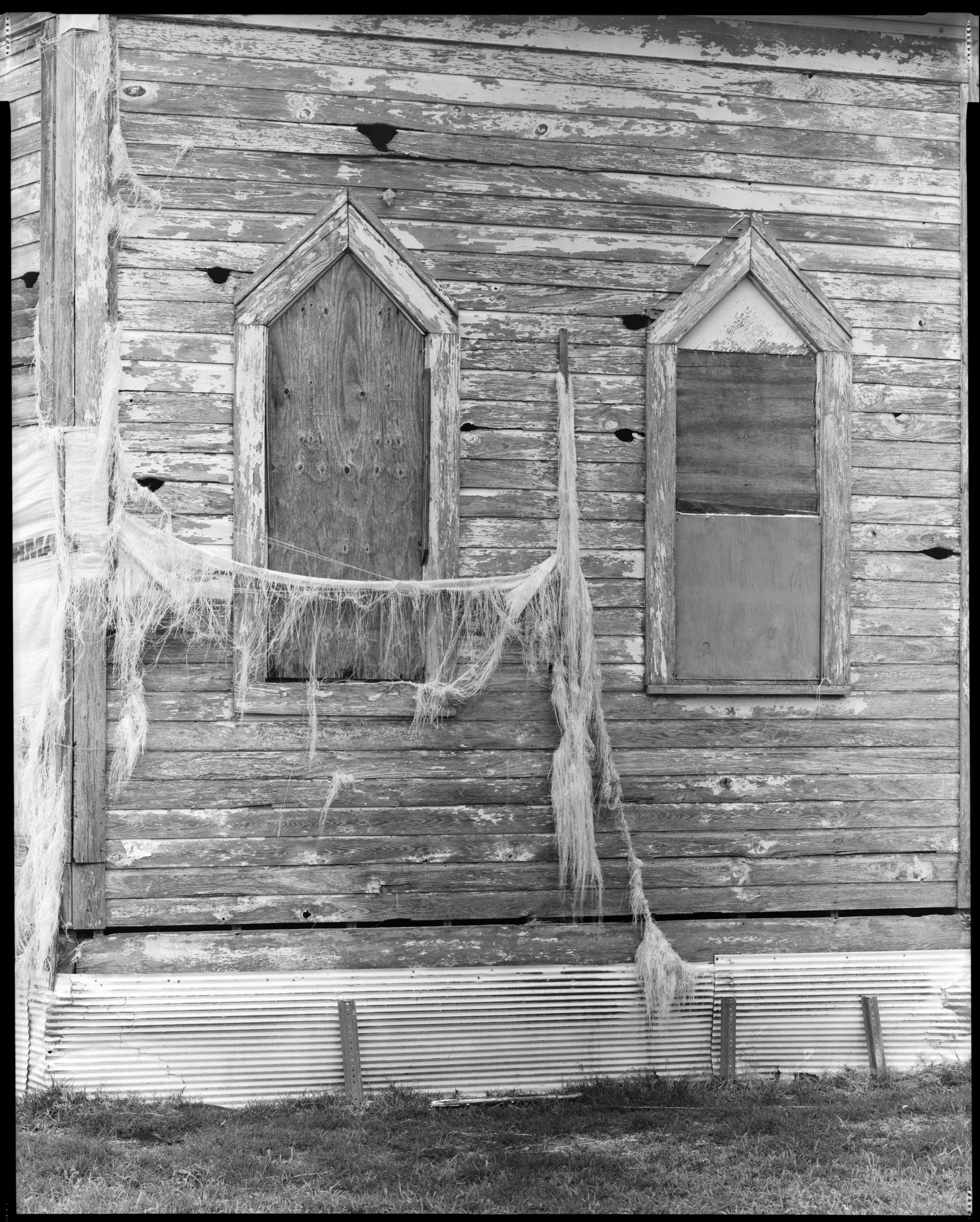
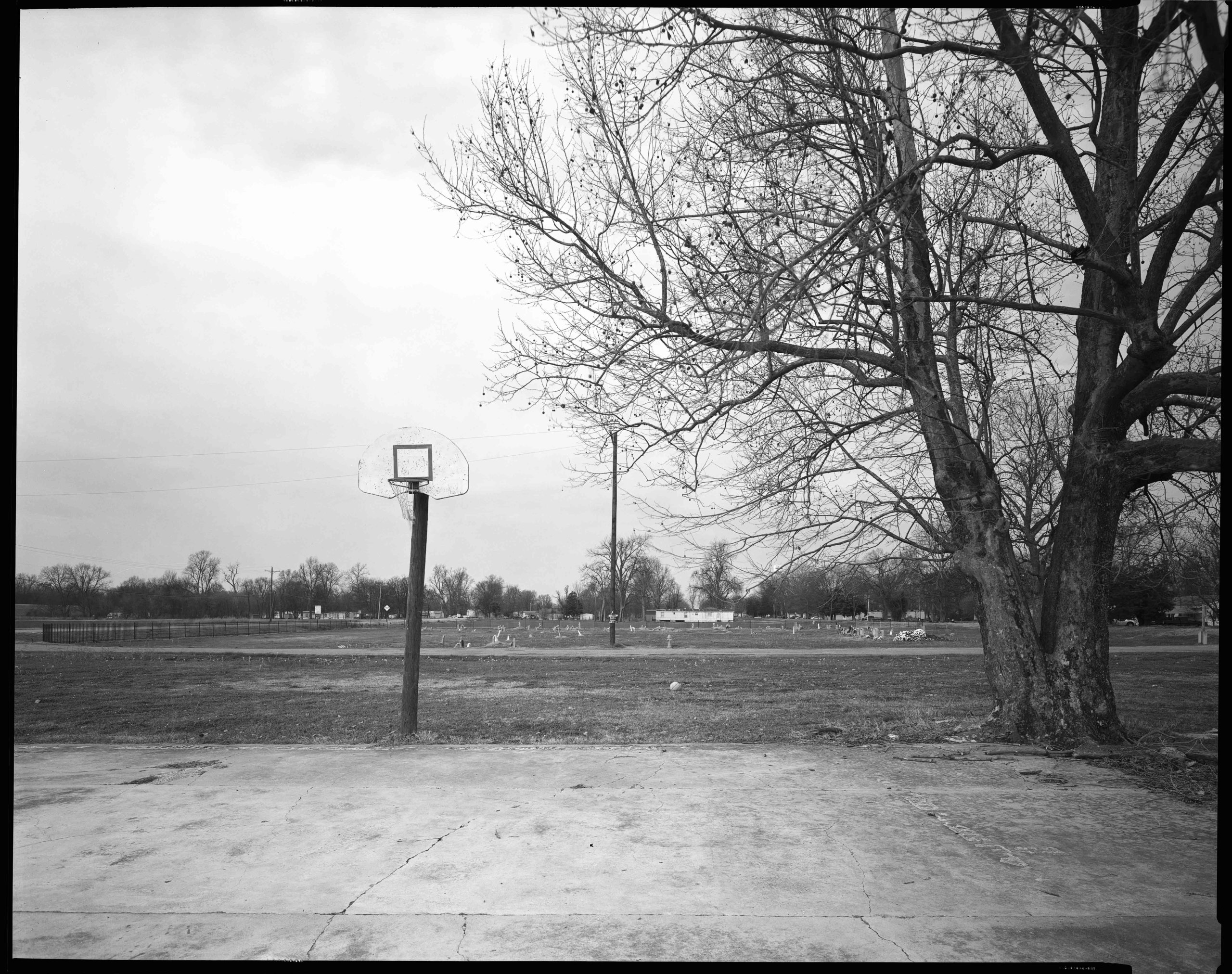
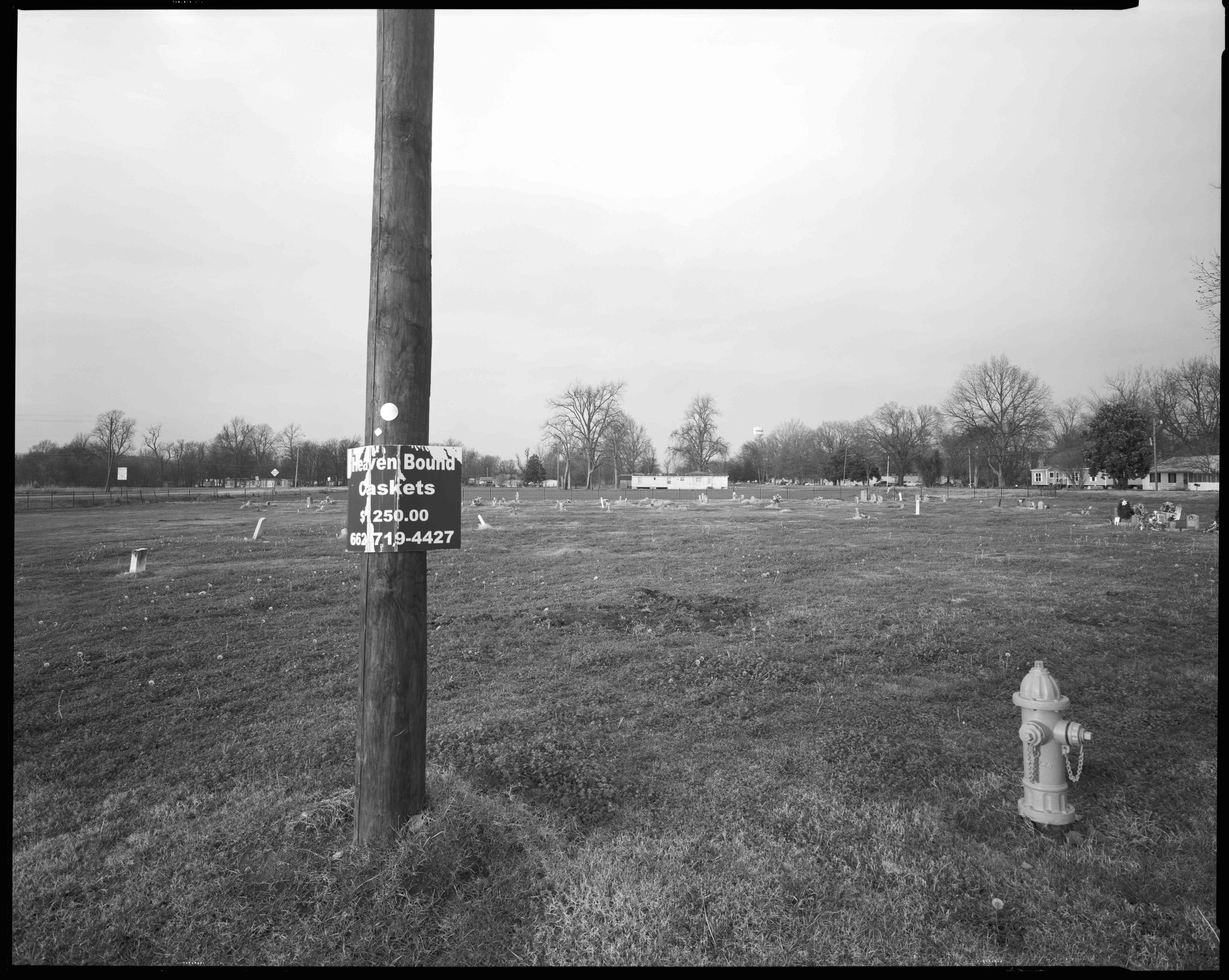
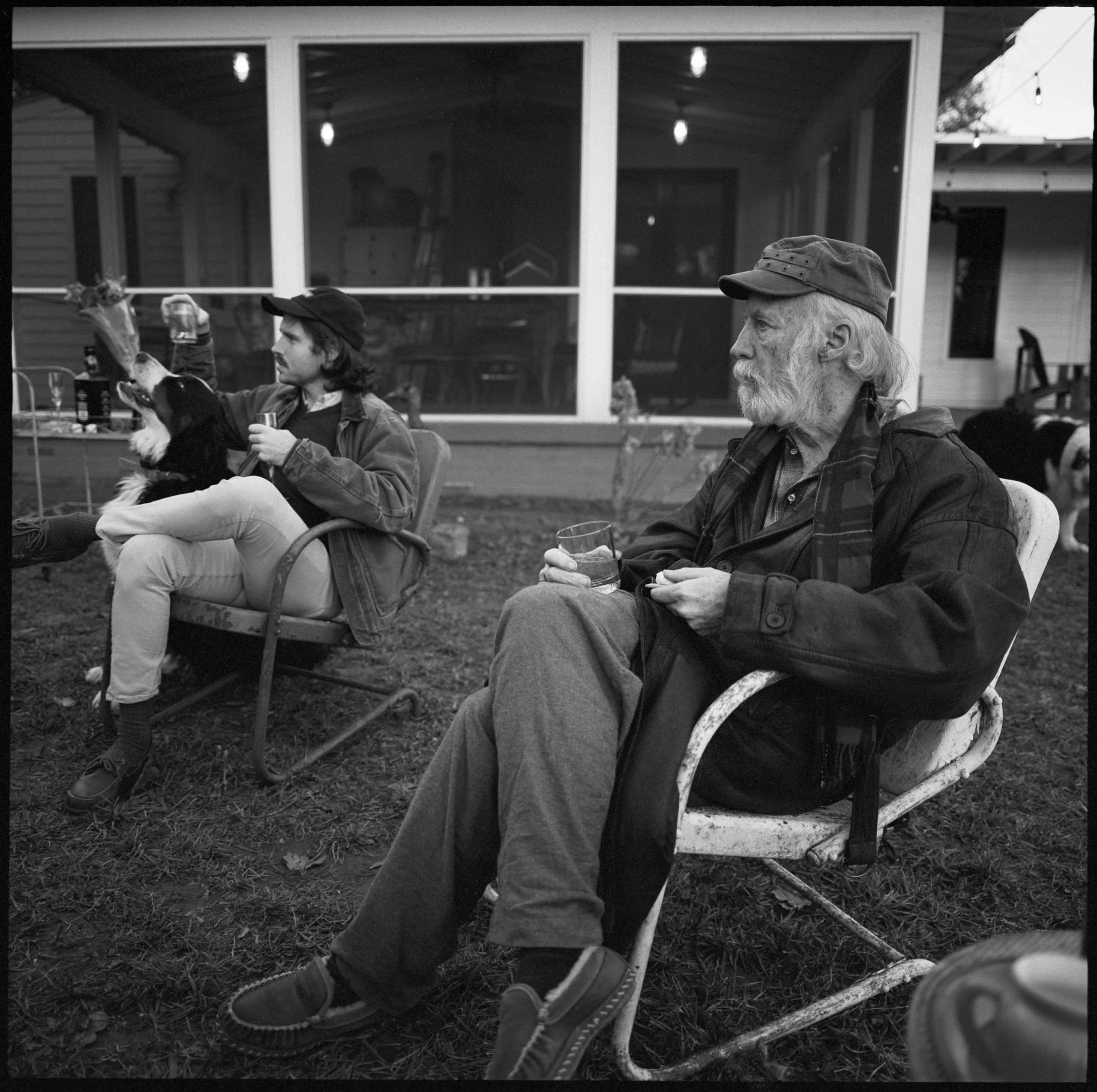
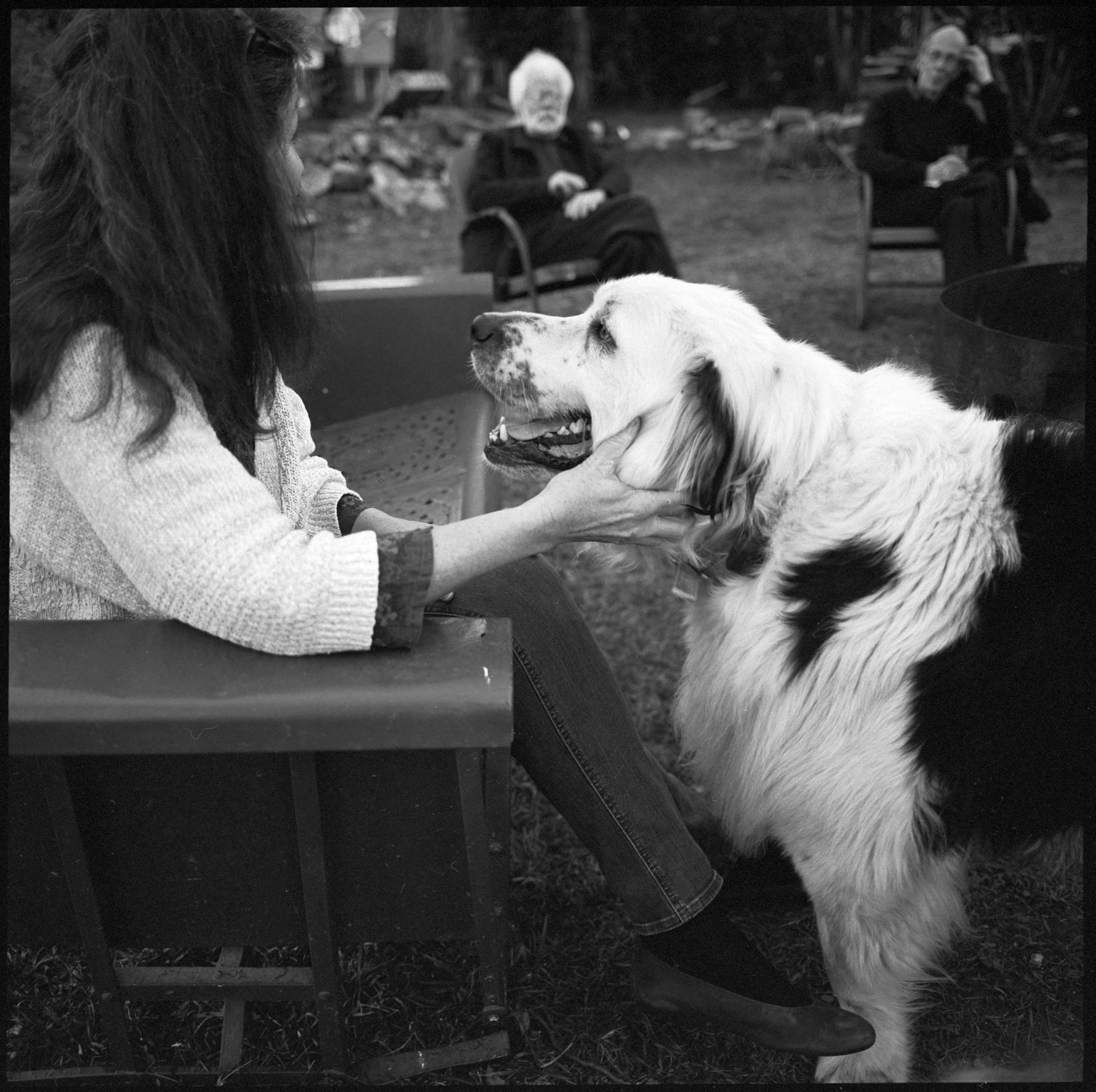
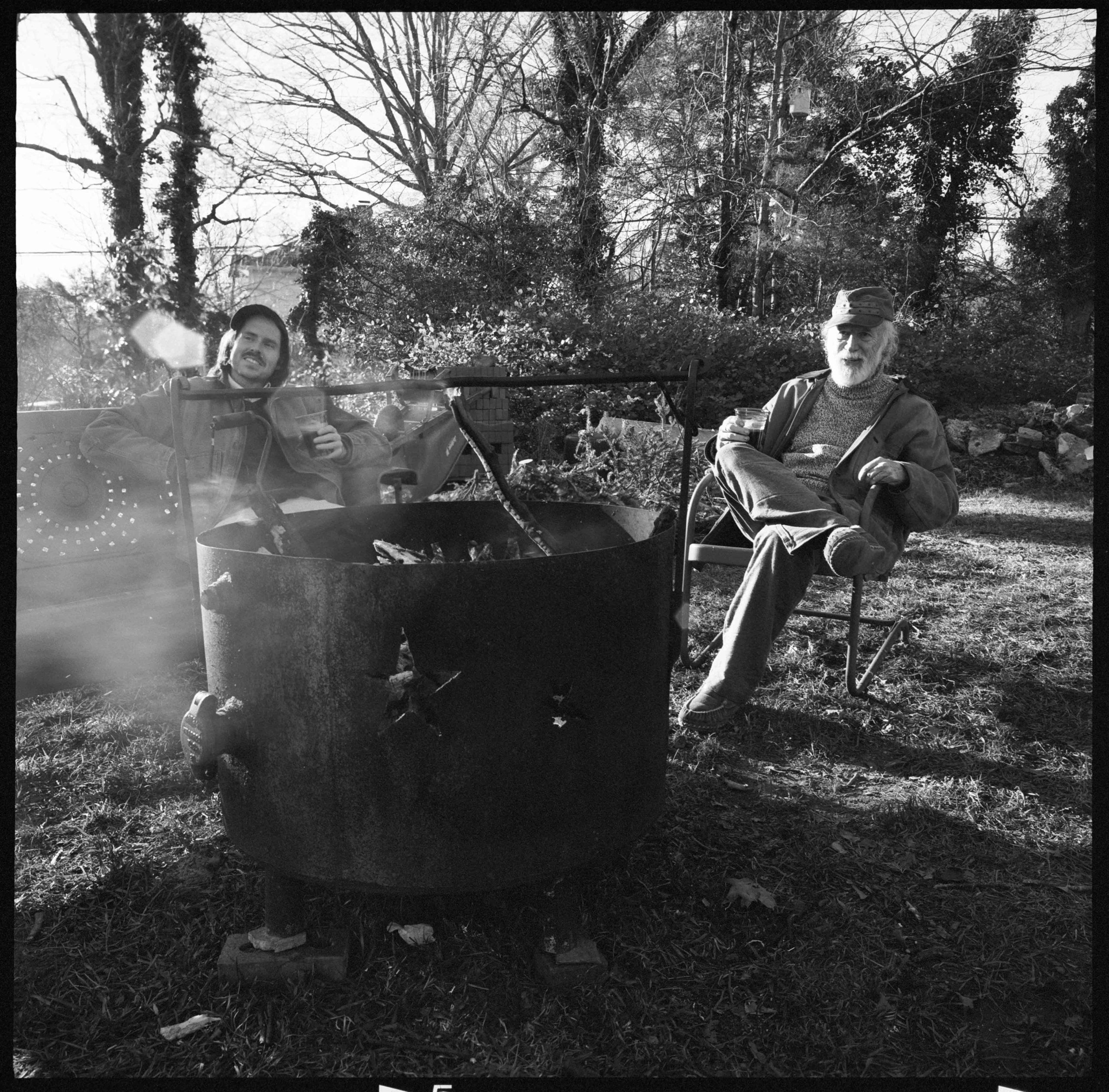
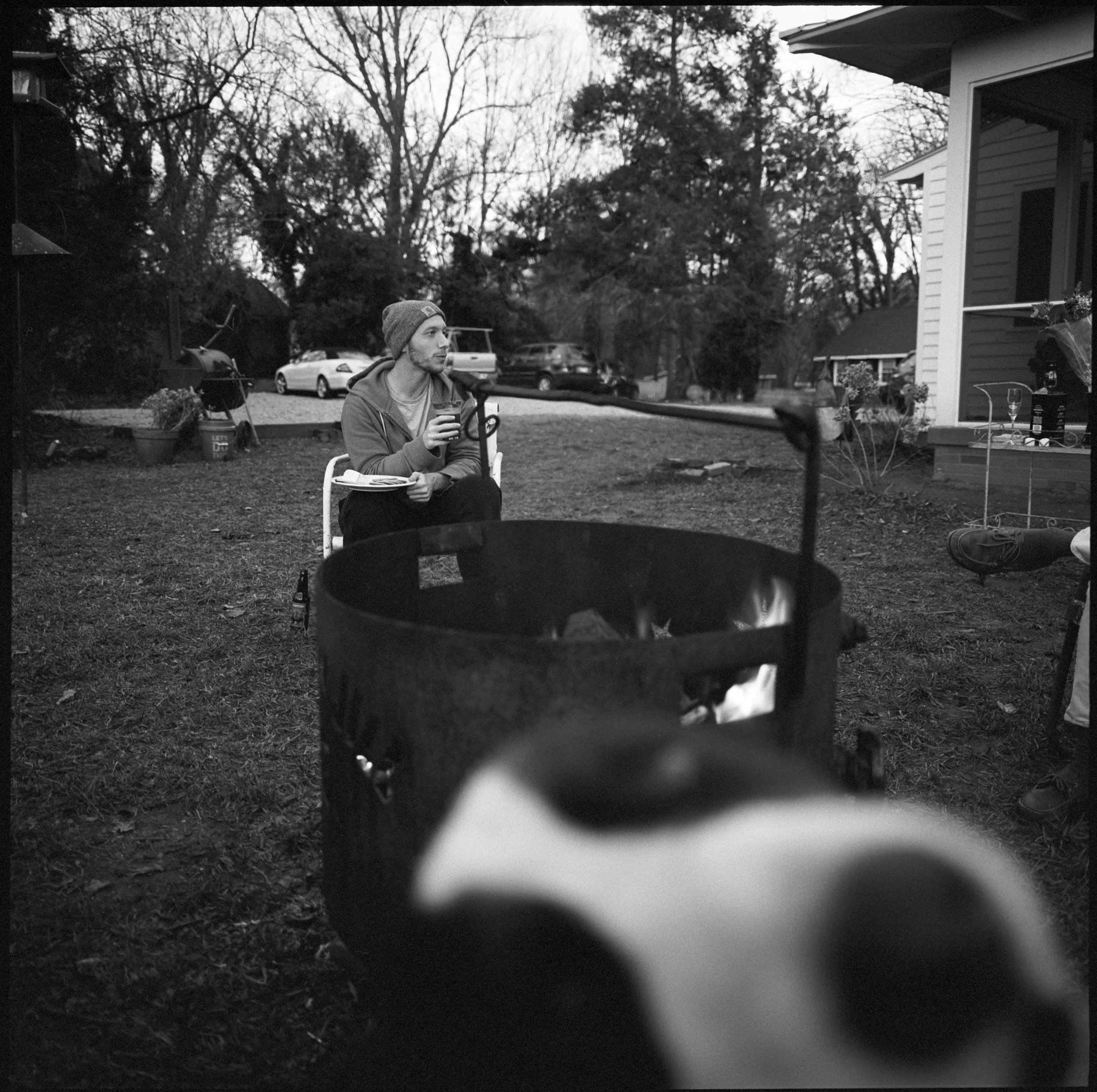
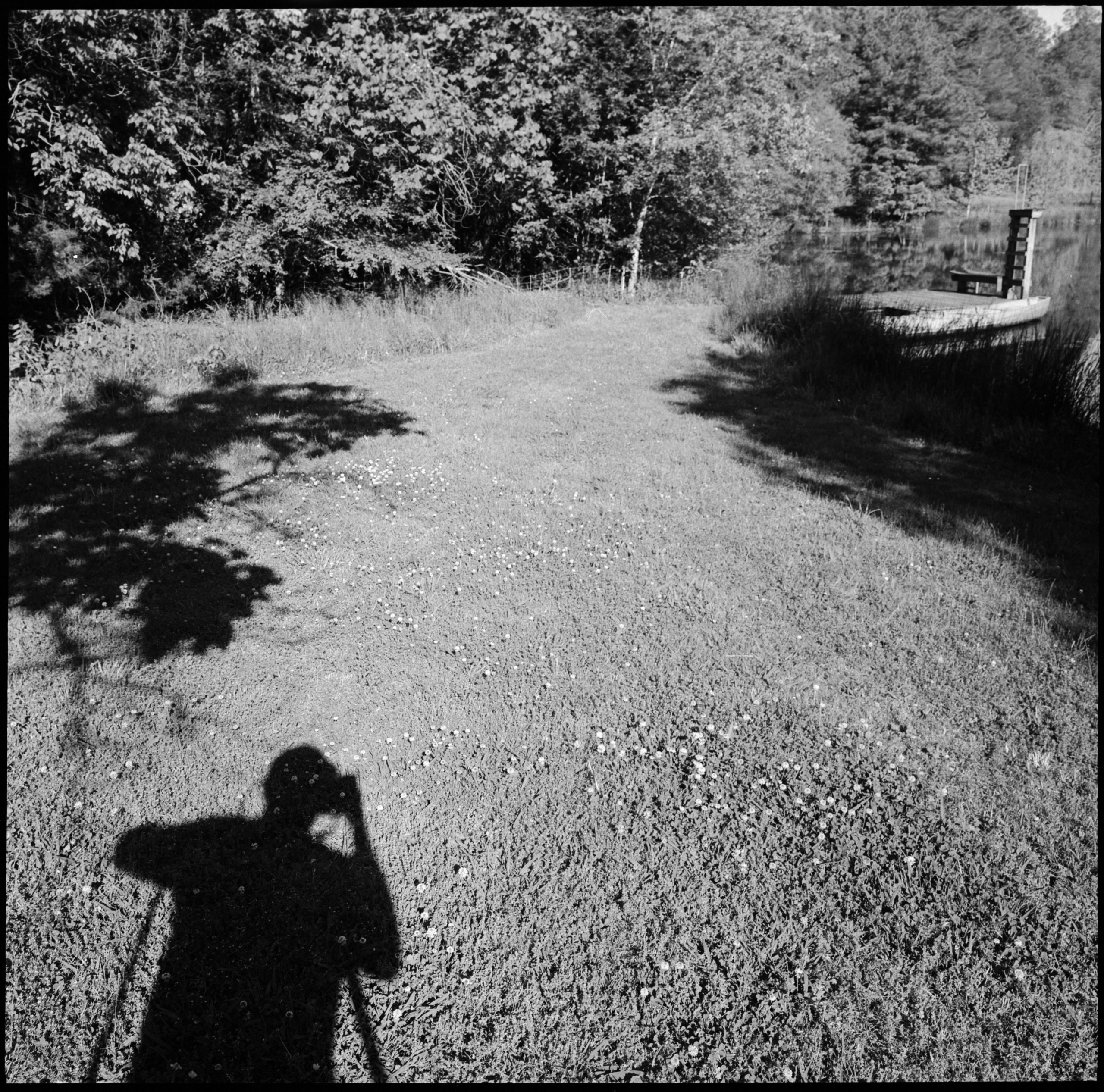
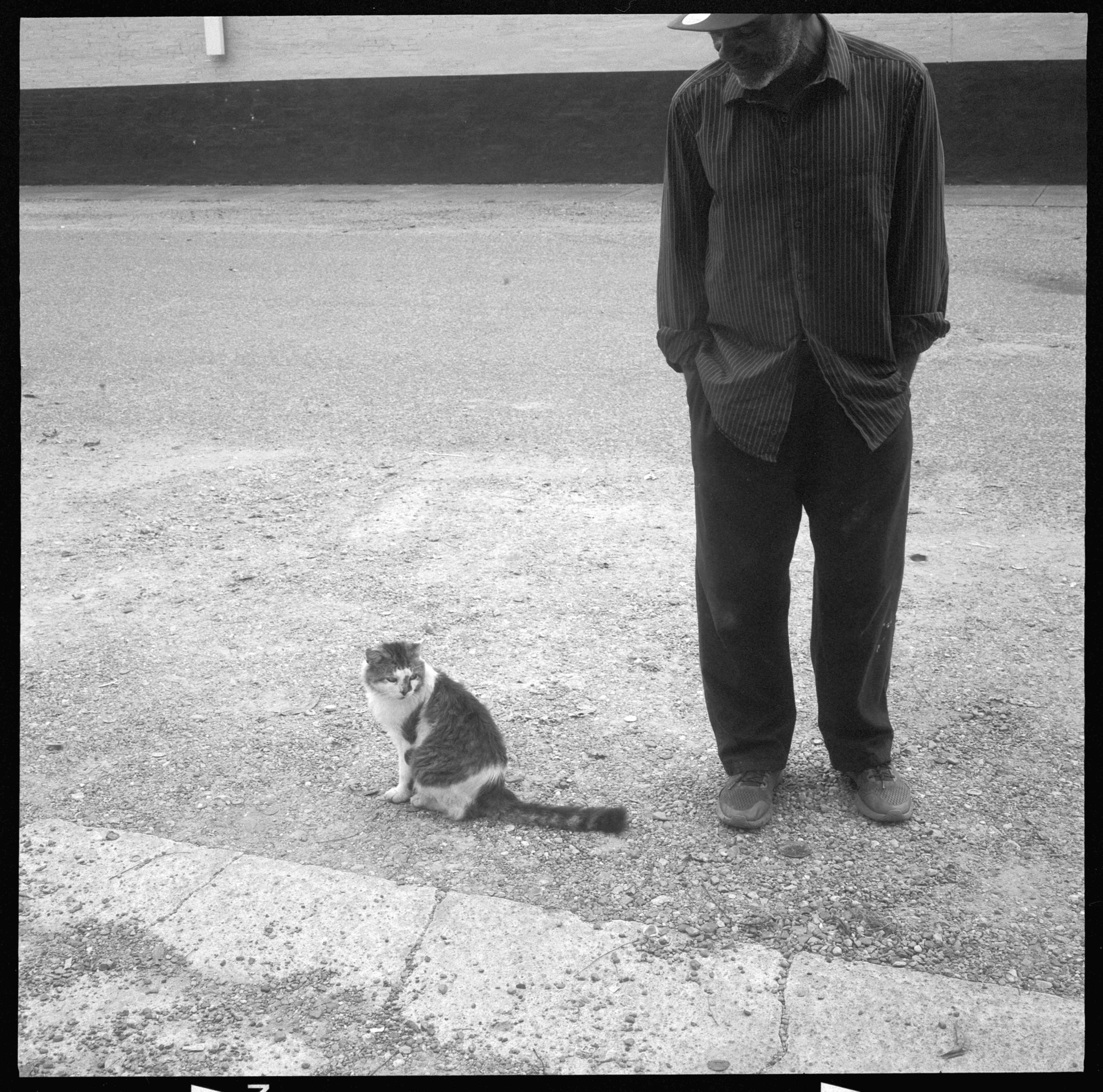
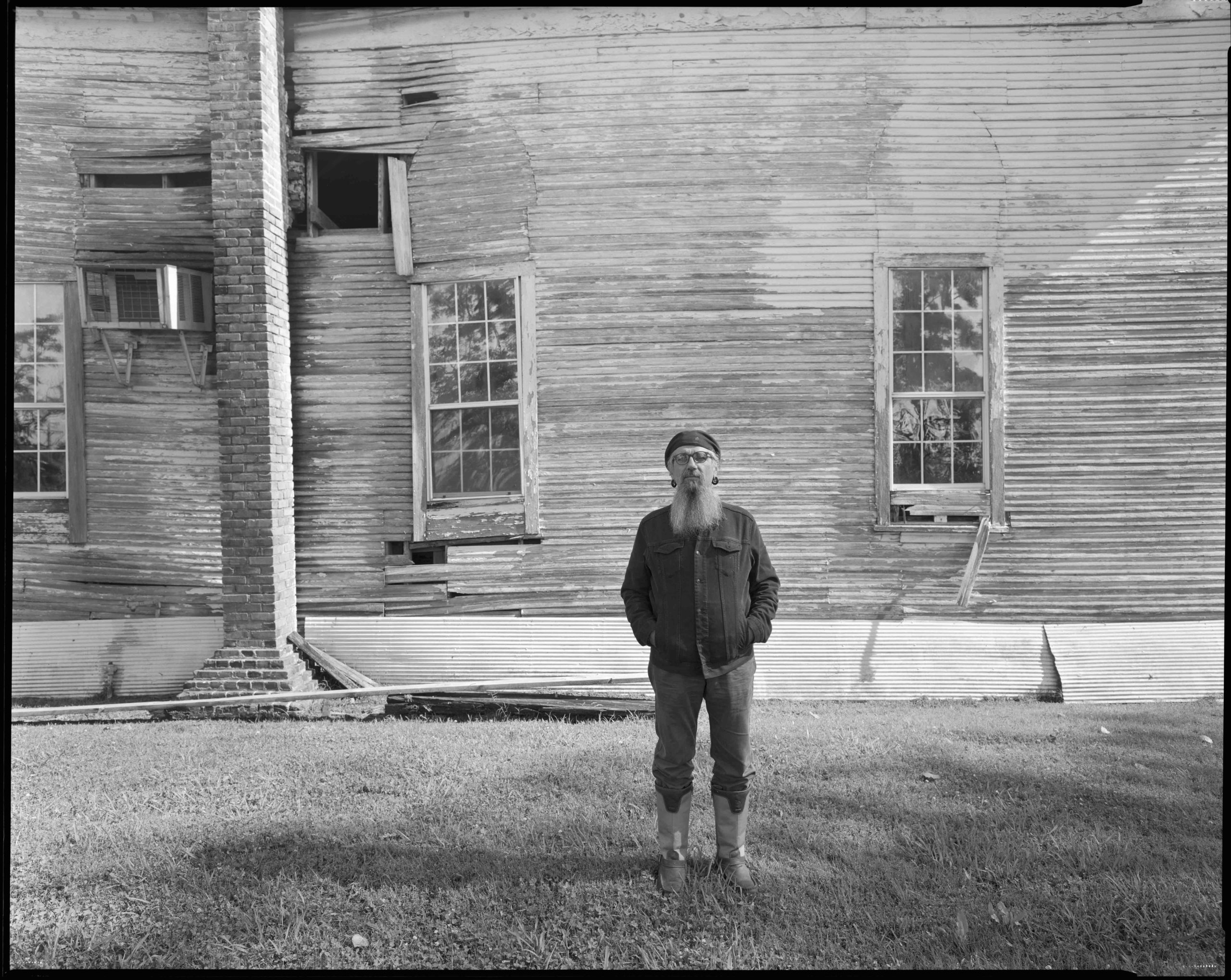
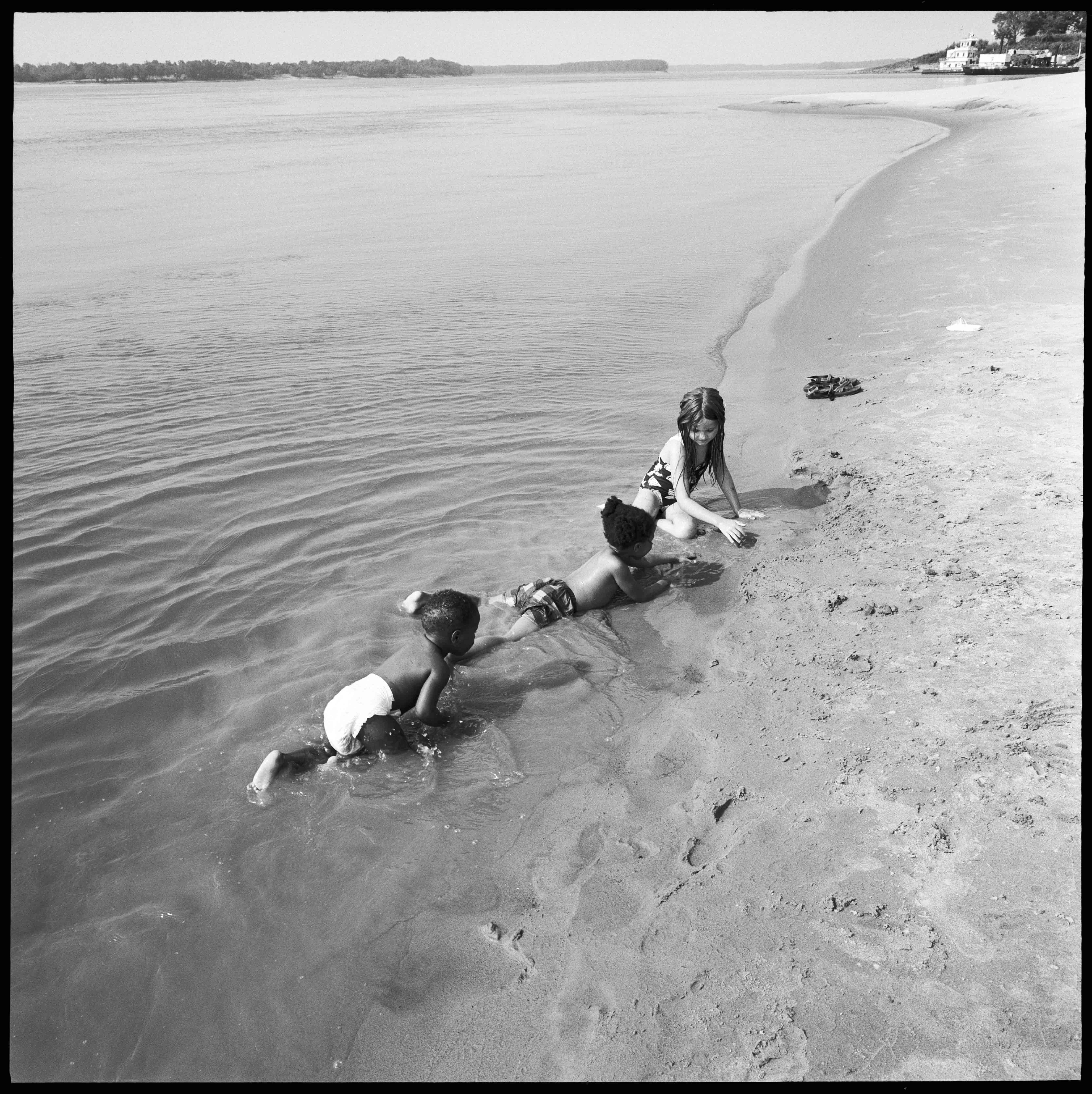
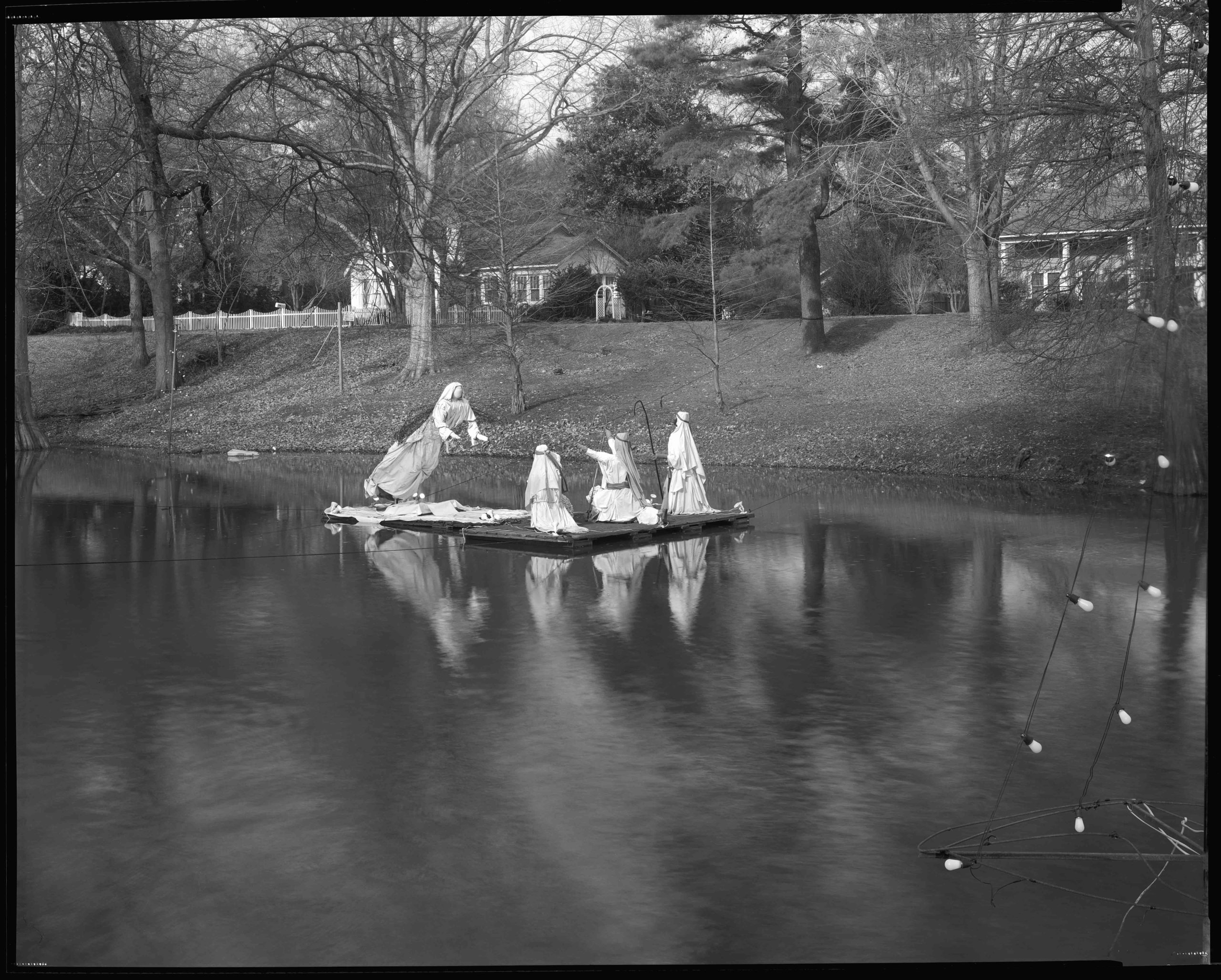
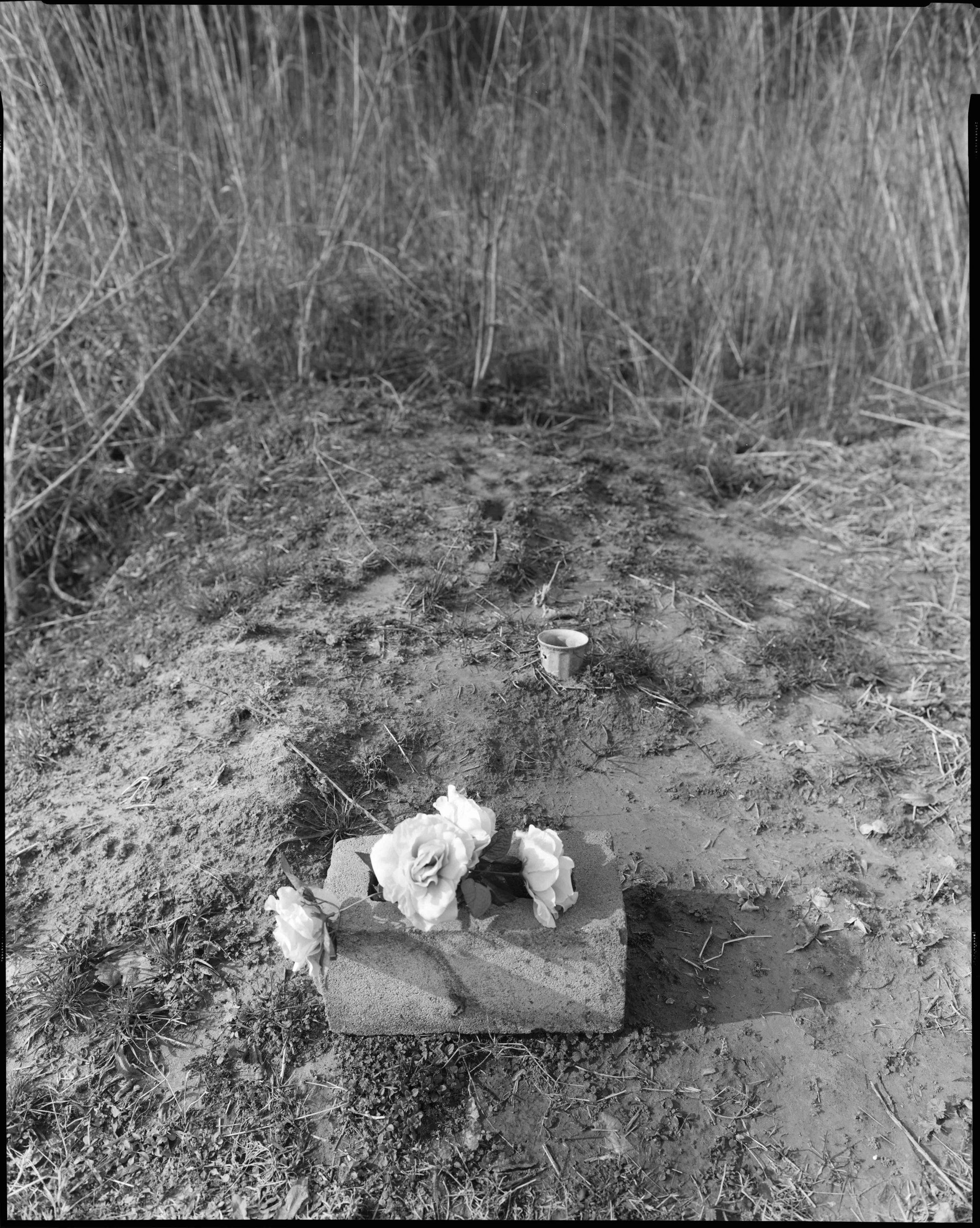
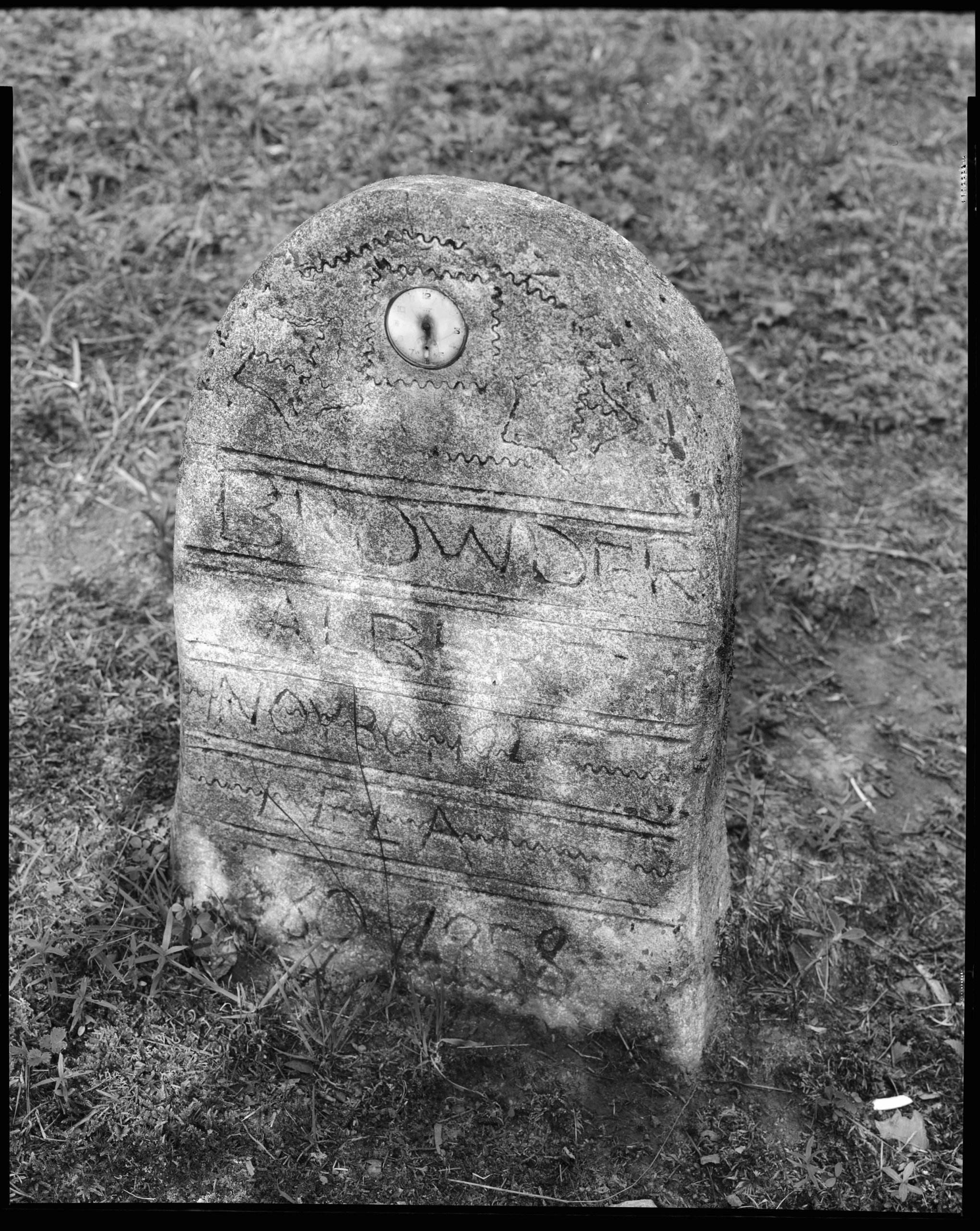
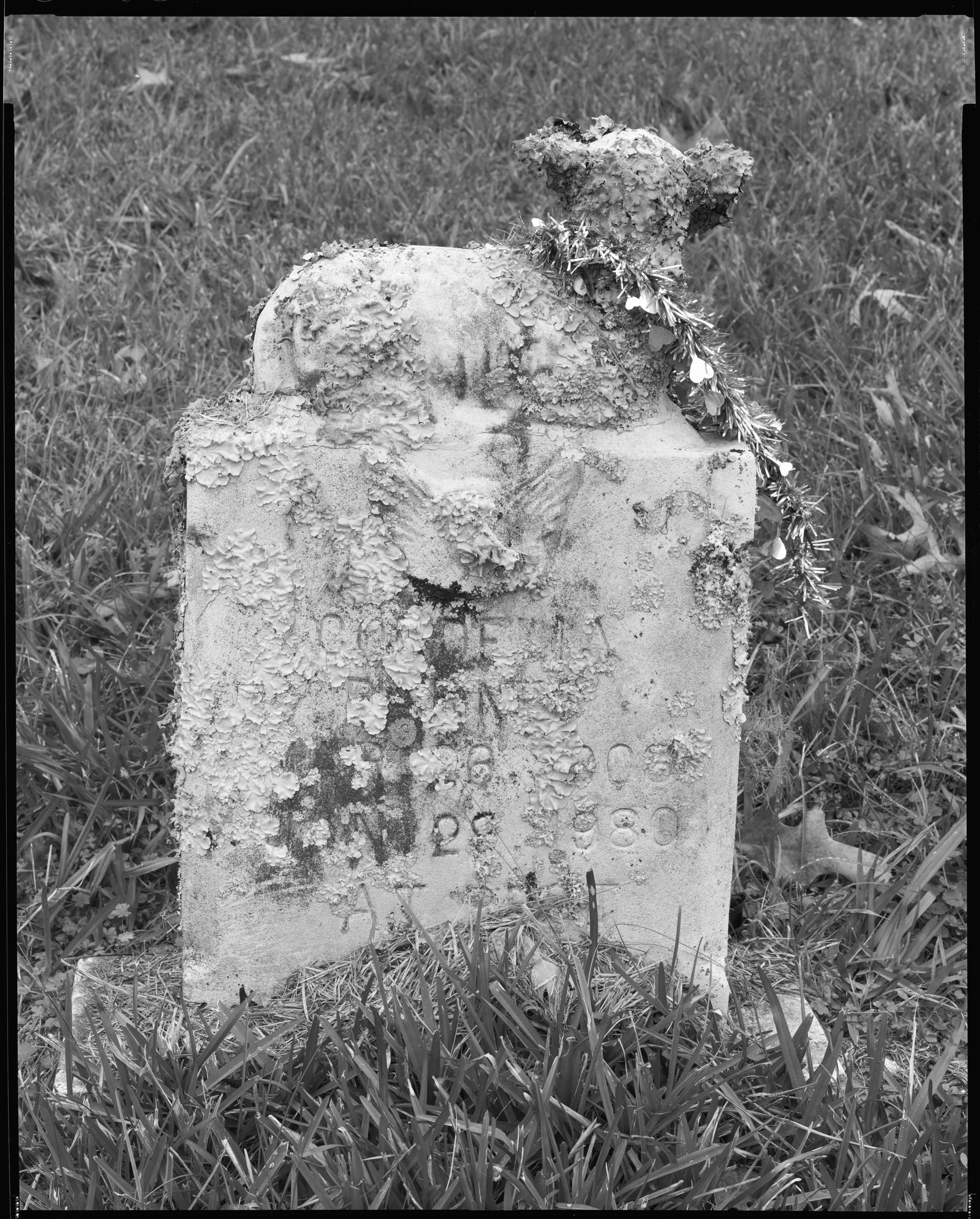
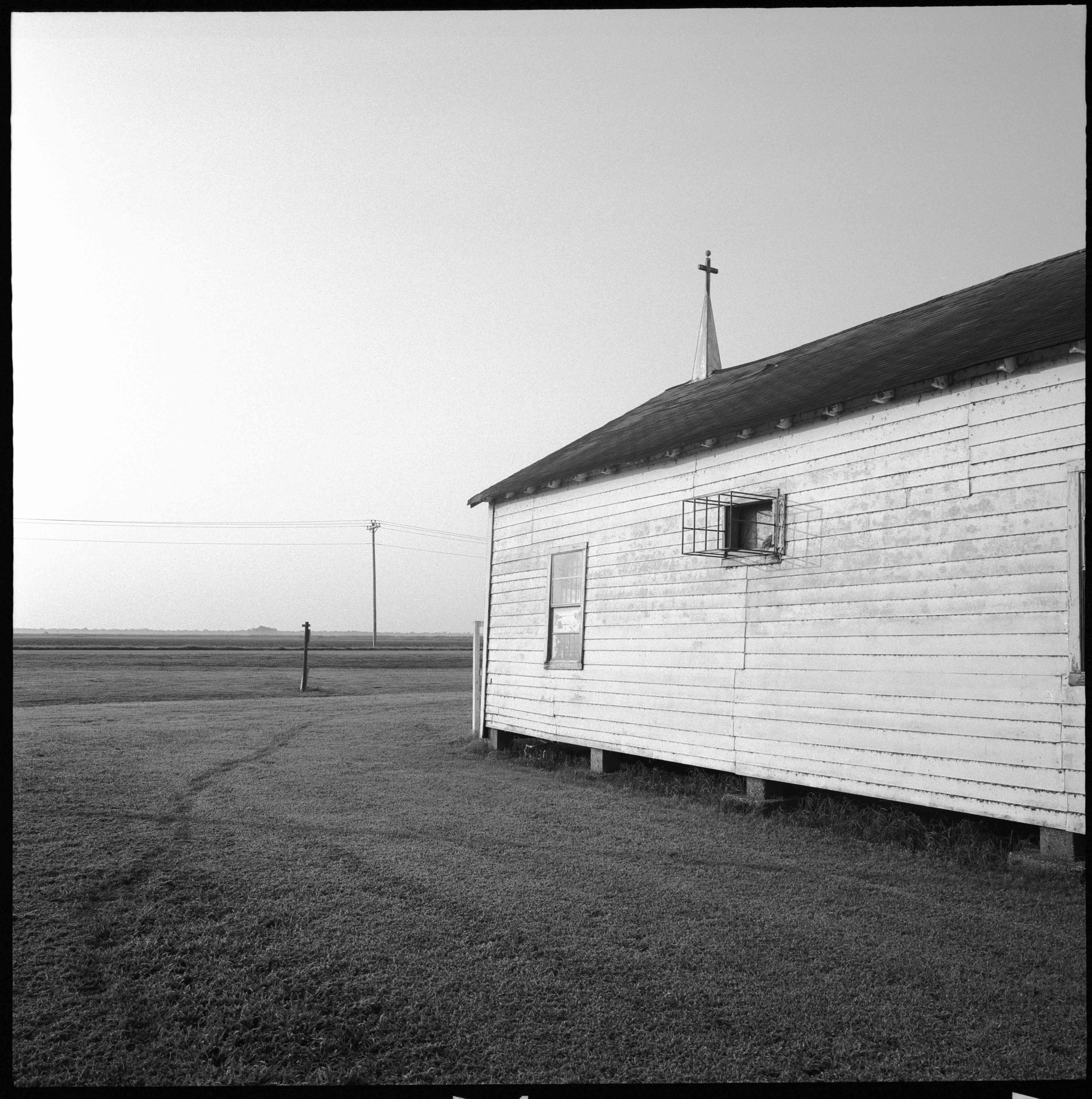
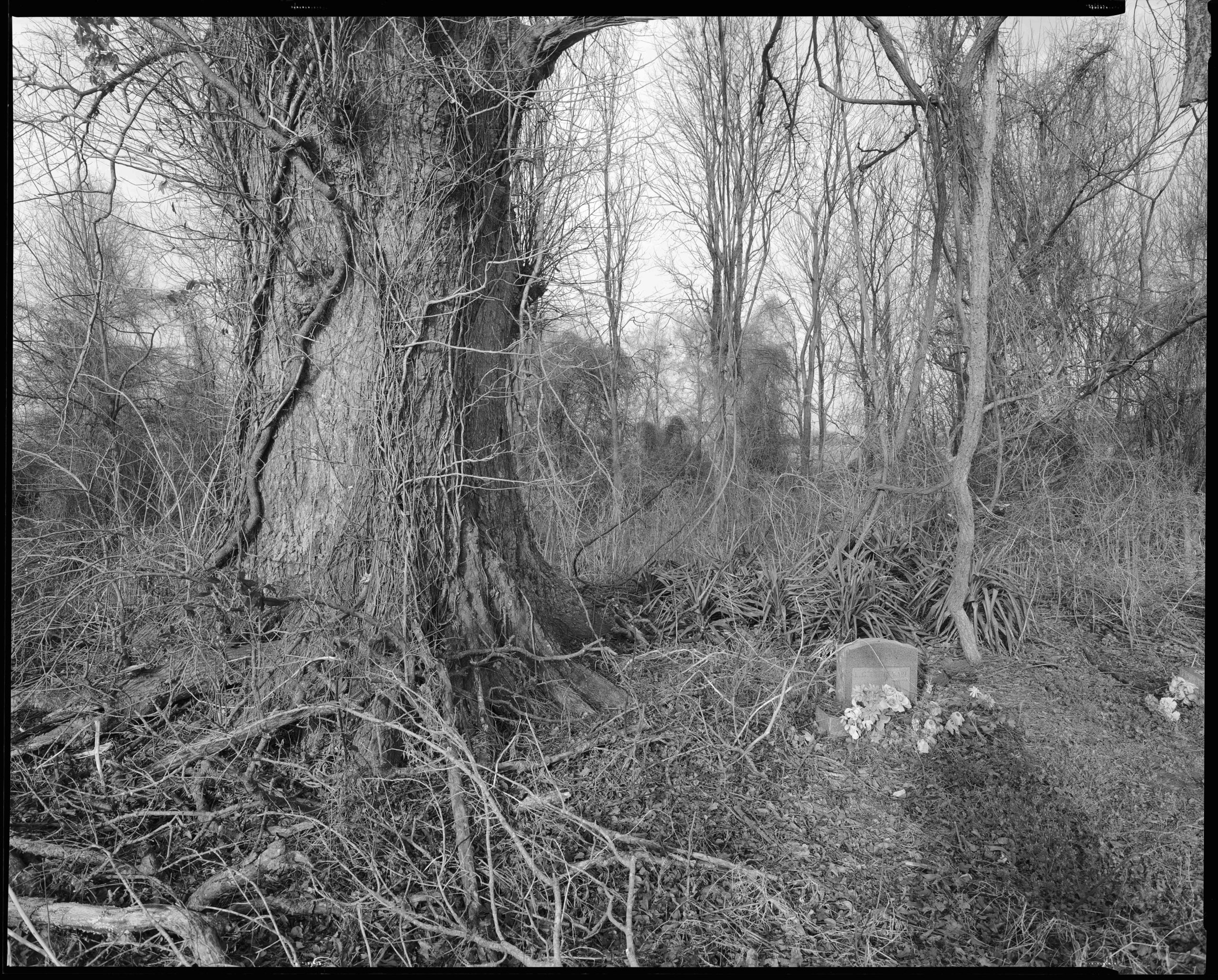
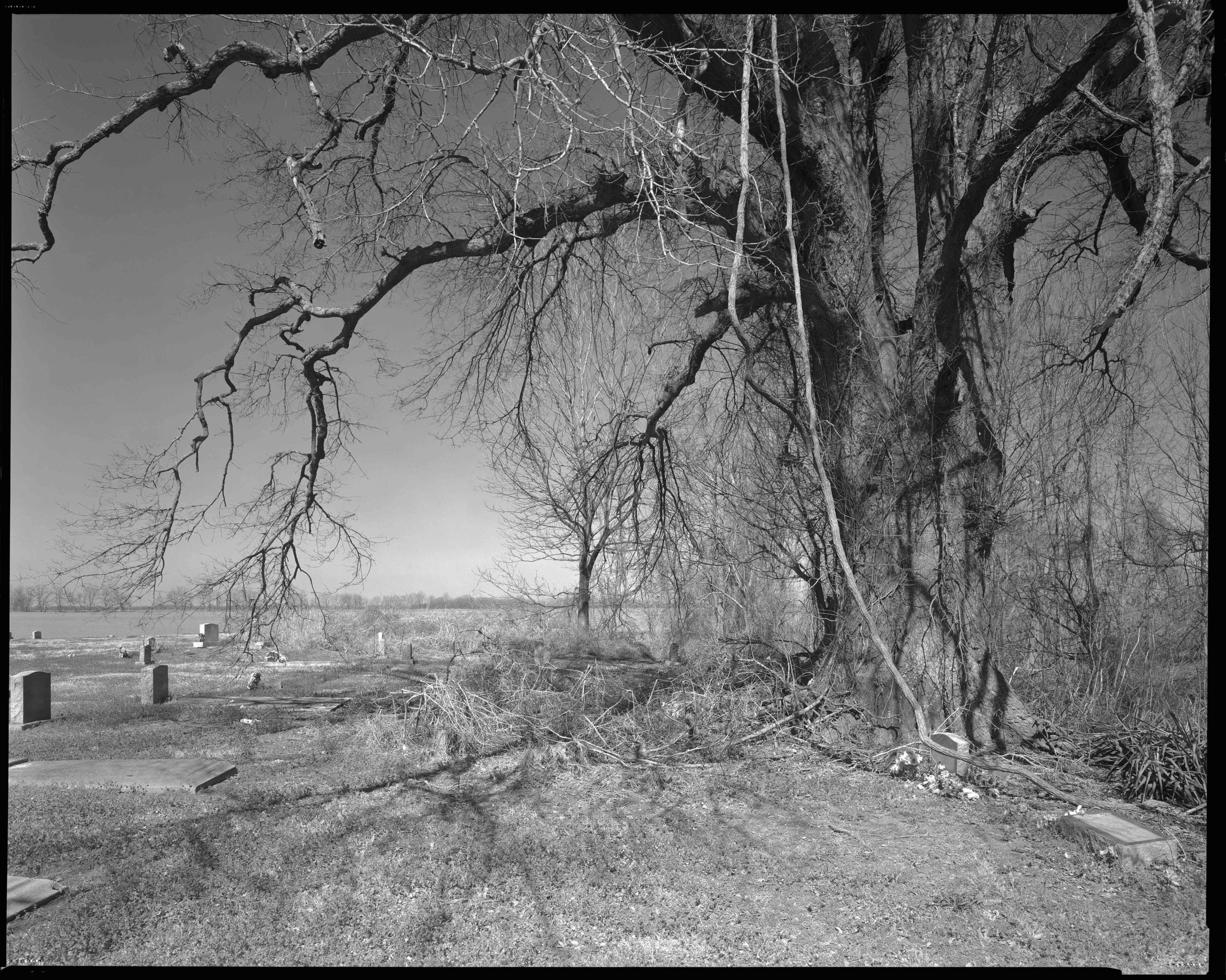
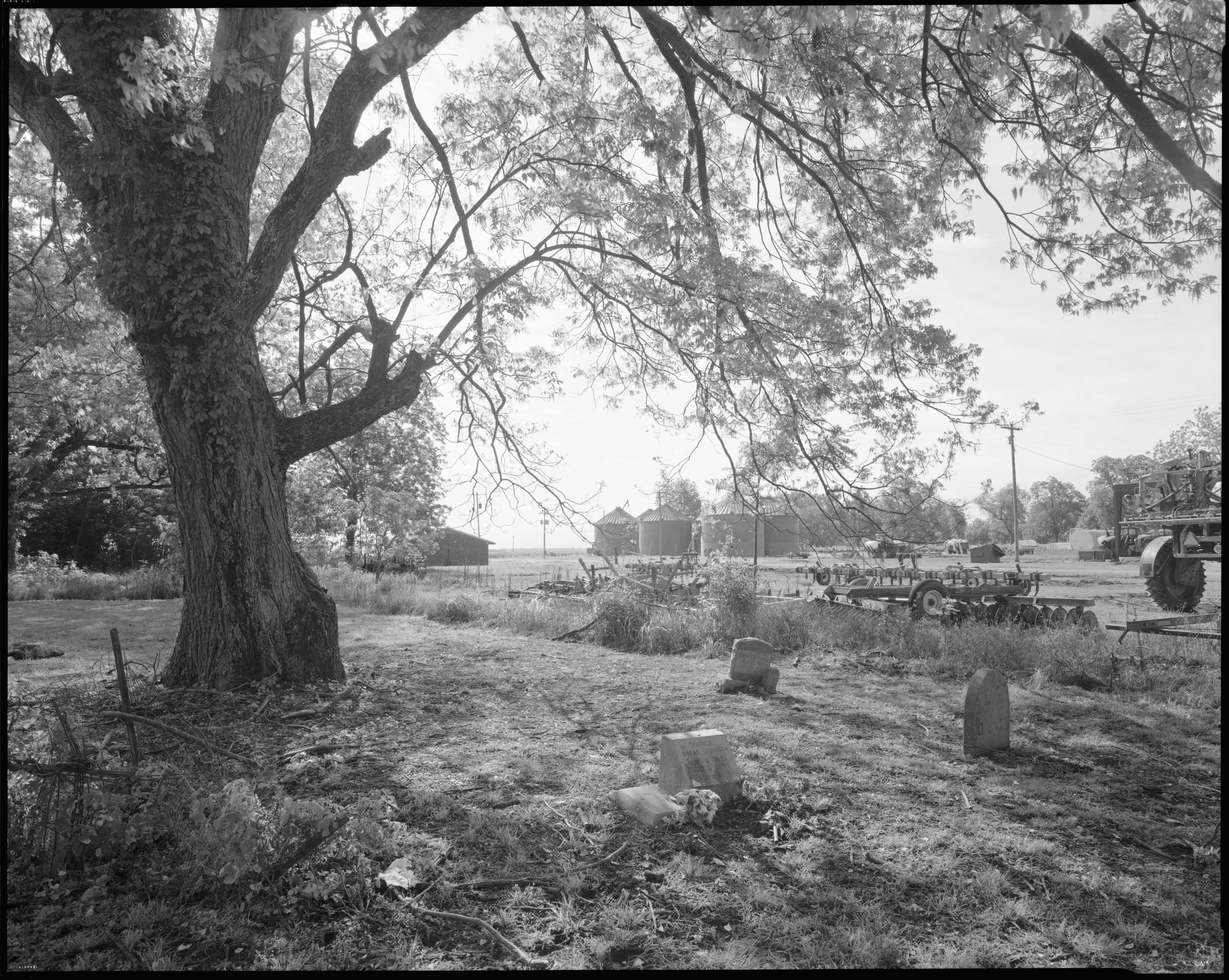
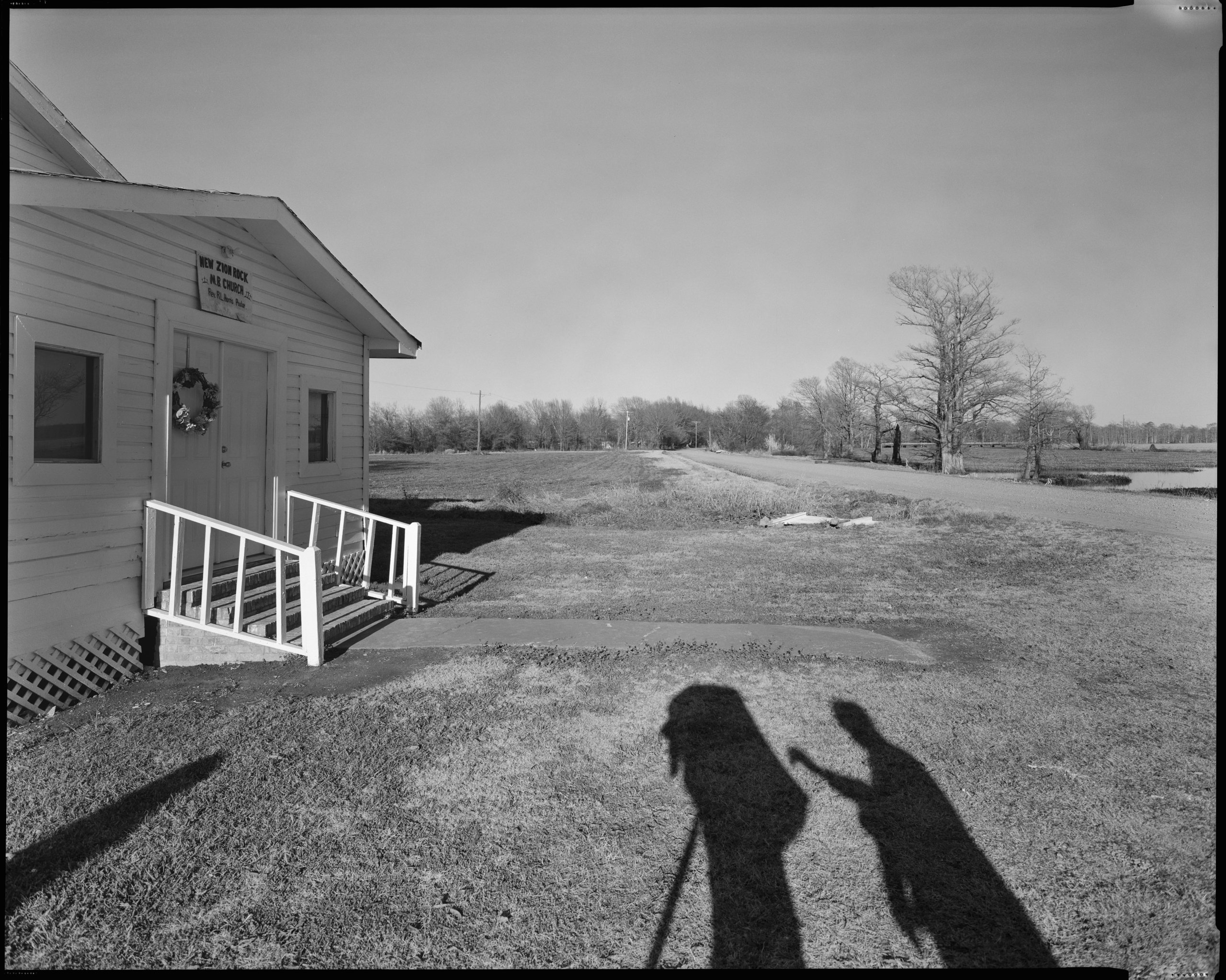
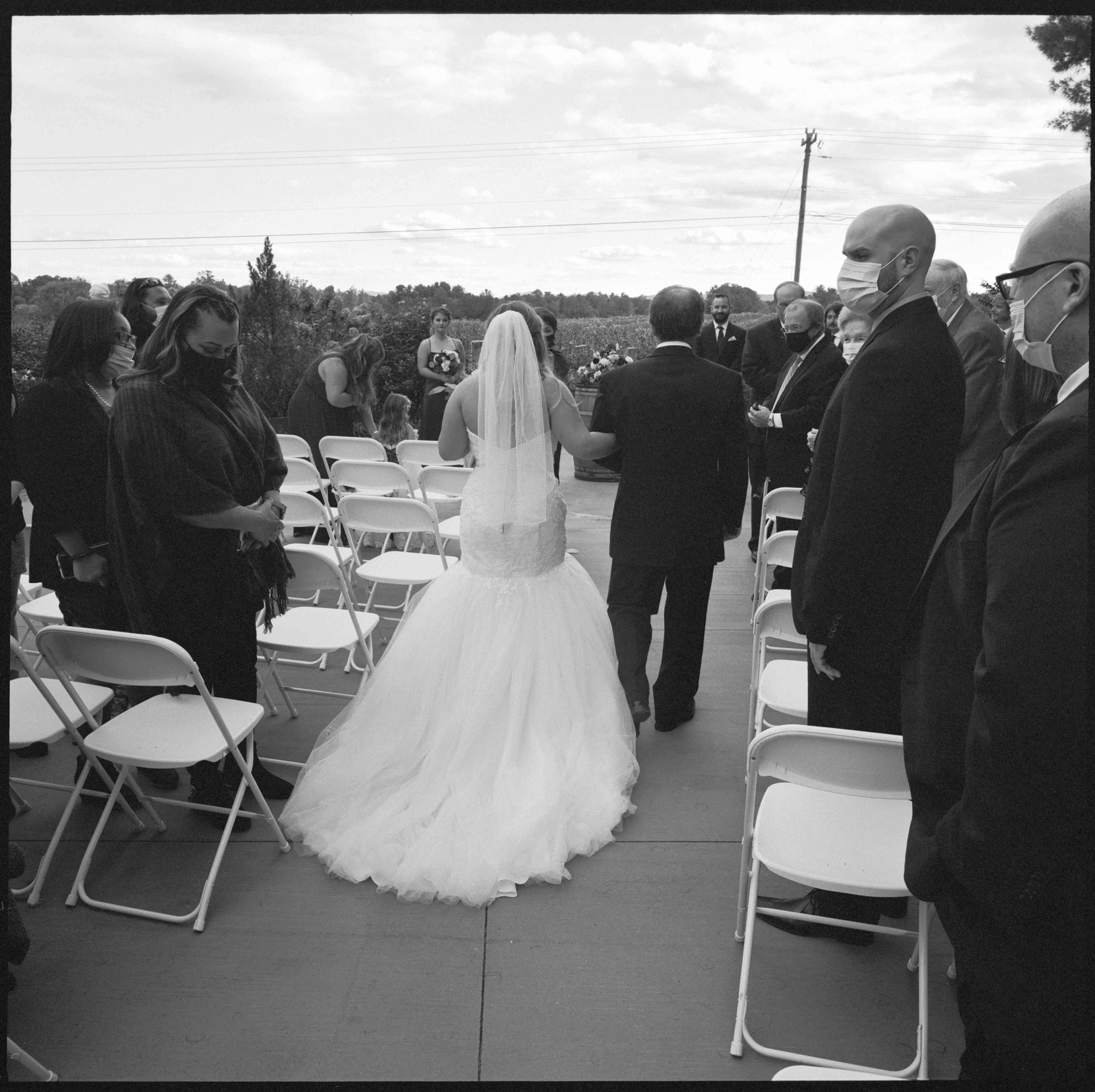
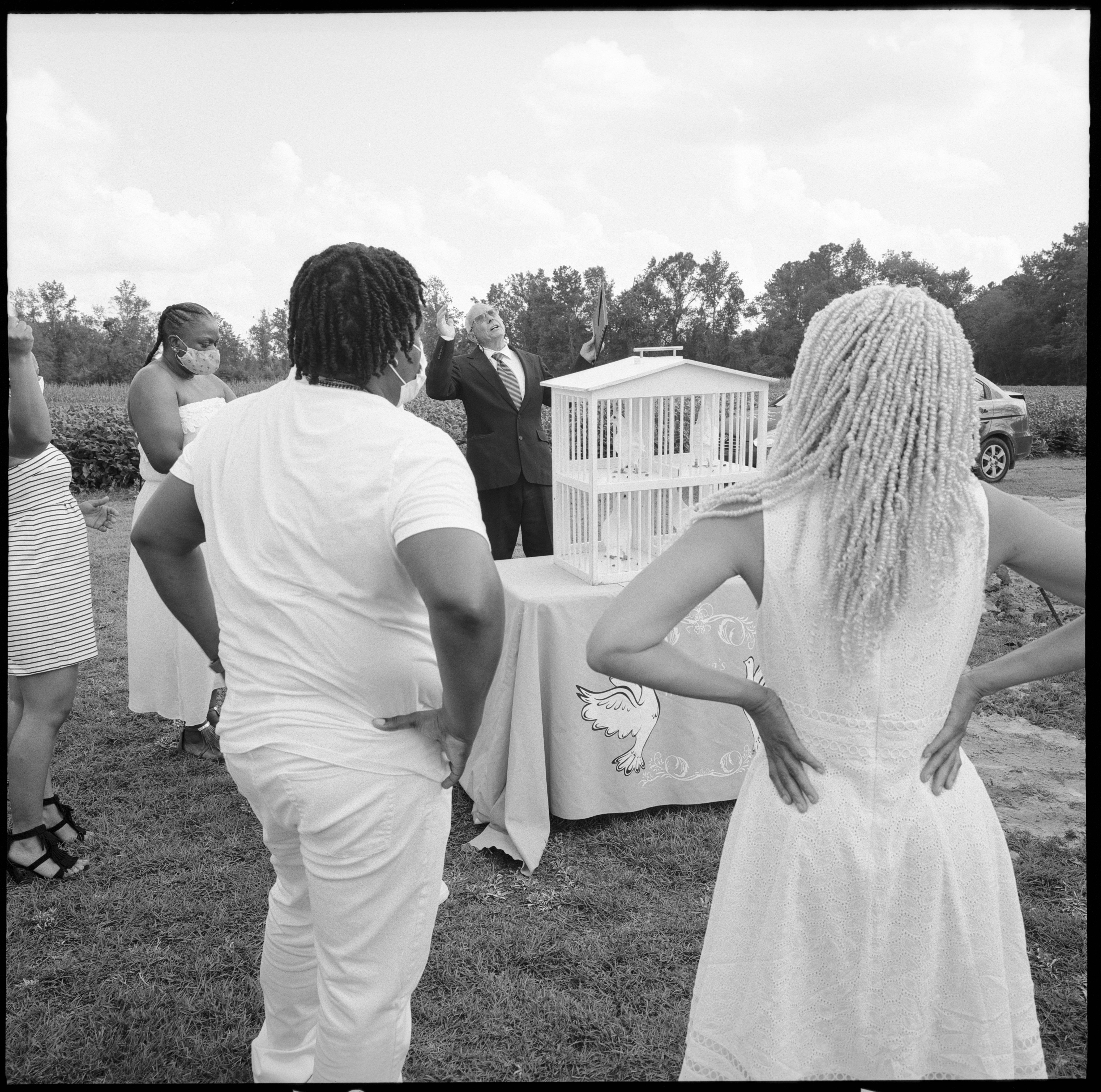
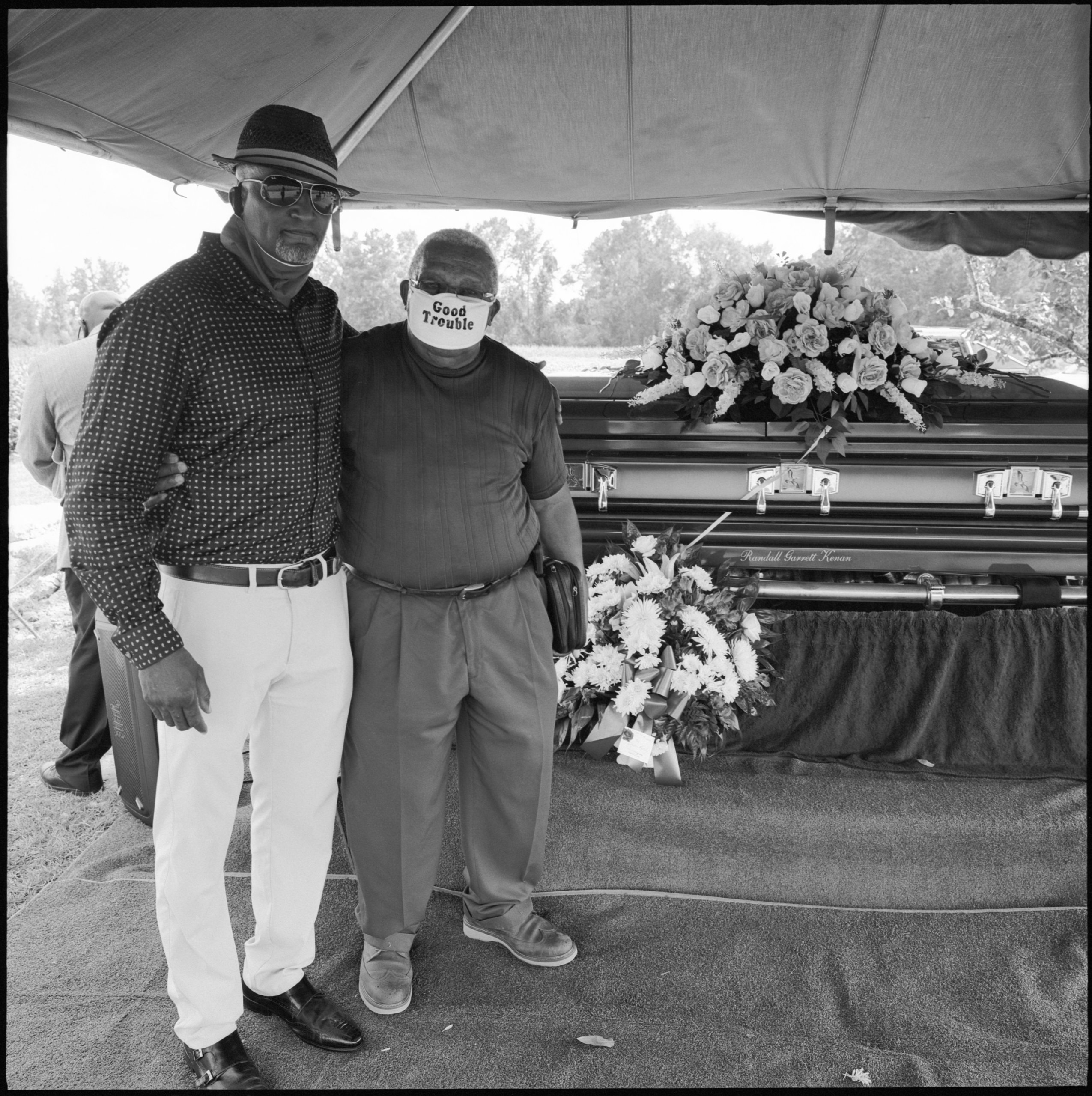
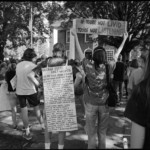
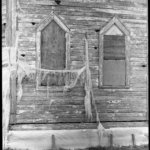
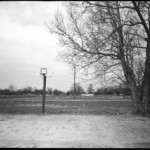
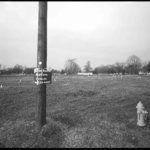
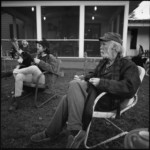
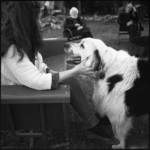
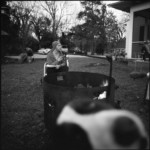
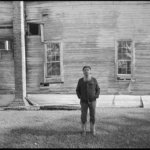
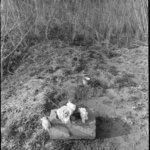
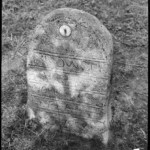
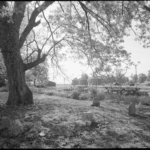
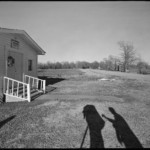
]]>There are no truly universal feelings about the shared experience of Covid, but there is, I believe, a collective impression that we’ve all experienced a tangle of time, a displacement from the normal markers and seasons, a confronting of the inequities that accompany a pandemic, a fuller view of vulnerability and mortality. Amidst the diversity of ways we’ve managed the many interruptions and anxieties, the unknowing and the seeming to know, there’s shared understanding of a narrowing and shortening of our movements, maps, and itineraries. Through it all I’ve photographed. Sometimes in direct response to covid—with a sense that there’s something rare and exceptional about the moment—and at other times just doing what I always do.
I’ve come to understand that any photograph made during Covid is a ‘Covid photograph.’ To be sure, I recognize that some images made over the last couple of years are directly observing a response to Covid. Images of health care workers, vaccine researchers, shuttered businesses and empty offices, empty stands at athletic events, all of those and more are deeply identified with the pandemic. But so are all the other images, photographs made with full recognition of our altered routines and attitudes, the lightness and darkness that we observe having shifted. There is no way to separate the act of making pictures from a recognition of the injuries caused by the weather that surrounds. The Covid weather tightened our geography, led to a perspective that sees closer and perhaps with more intimacy, intended or not. Anytime we find ourselves looking at a singular sameness, we hope for deeper clarity and precision of sight. If there is hopefulness here, it is in the realization that there’s forever more to see in the most ordinary; another way to compose, to transform the world into an image, to confront the temporal luminance before us in an otherwise dimming day.
There is a recognizable evil tyranny in assuming that our worlds never fall apart, in taking the day-to-day for granted. We like to think we know better (“Here today, gone tomorrow,” and all that). Whatever we know doesn’t prevent us from the familiar condition that when at home the protagonist so often wishes to be away, and when away the deepest wish is often to be at home. Making pictures throughout Covid has been energized by an acceptance of a shrinking physical daily terrain, of being isolated in smaller places. My reply was to busy myself by affirming through images the fullness of wonders and contradictions close to home.
Photographers—and photographs—get all they have from embracing the darkness and light equally, shadows adjacent to highlights, contrast next to flatness, what is present alongside what has gone, low fertile valleys juxtaposed with the dry peaks. The opposites are coequal and mutually dependent, elemental to how we see. The last line from Psalms 139:12 is “the darkness and the light are both alike to you.” Alike, I argue, in that both arrive daily, and perpetually offer us a frontier to explore, render, and move to reveal, a time and place to take full visual advantage of the mystery and the uknown.















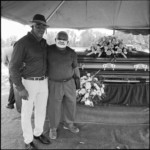
About the Author
Tom Rankin is Professor of the Practice of Art and Documentary Studies at Duke University where he directs the MFA in Experimental and Documentary Arts. For fifteen years he was director of the Center for Documentary Studies at Duke. His books include Sacred Space: Photographs from the Mississippi Delta (Jackson: University Press of Mississippi, 1993); Deaf Maggie Lee Sayre: Photographs of a River Life (Jackson: University Press of Mississippi, 1995); Local Heroes Changing America: Indivisible (New York: W.W. Norton & Co., 2000); One Place: Paul Kwilecki and Four Decades of Photographs from Decatur County, Georgia (Chapel Hill: University of North Carolina Press, 2013); and Goat Light (Durham, NC: Horse and Buggy Press, 2021) coauthored with Jill McCorkle. His photographs have been collected and published widely and included in numerous exhibitions. A frequent writer and lecturer on photography, culture, and the documentary tradition, he is the general editor of the Series on Documentary Arts and Culture with the University of North Carolina Press.
Public Health in the US and Global South is a collection of interdisciplinary, multimedia publications examining the relationship between public health and specific geographies—both real and imagined—in and across the US and Global South. These essays raise questions about the origin, replication, and entrenchment of health disparities; the ways that race and gender shape and are shaped by health policy; and the inseparable connection between health justice and health advocacy.
Beginning in 2022, the series expands to include 1000-word blog posts, as well as longer commentaries, essays, articles and media productions that address the public health and political implications of the COVID-19 pandemic from multiple viewpoints. The series editor for Public Health in the US and Global South is Mary E. Frederickson.
An Excerpt from the Introduction

Throughout the nineteenth century, aided by railroads and steam technologies, industrial plantations expanded their footprint into ever new territories across Latin America. The timing was unique: the process occurred right as enslavement, the foundation of these enterprises, was being subjected to unprecedented challenges—from proliferating slave insurgencies to vocal liberal-abolitionist mobilization. But along industrial plantations' margins, vast and socially vibrant free rural communities of African descent made homes for themselves against many odds. Unearthing their worlds sheds light on a distinct history of emancipation that did not fully align with liberalism's trajectory, pushing us to move away from the teleological notion that modern political behaviors within Latin America were variations on their European or North American counterparts.
Across Latin America, Afro-descendant peasants took manifold paths to reach rural worlds of freedom. Some were fugitives from plantation slavery. Others had purchased their freedom in cash or through some form of service-based payments. In places like Santiago, the far eastern province of the Spanish colony of Cuba—the region which this book focuses on—many were only partially free. They had paid a portion of the price for their manumission while continuing to do some work for enslavers. Many of the free people of African descent in these kinds of communities formed families with poor white peasants living nearby. In spite of their differences and internal hierarchies, most such peasantries contended with the same looming threat: ever-expanding planter power and aspirations. As they creatively withstood or moved out of the plantations' way, they opened up and cultivated new land in forest thickets, occupying rugged landscapes traversed by unkempt dirt roads, far from major commercial centers. They bartered and sold the surplus they made in small regional markets and, on occasion, also purchased enslaved people. Their lives were not circumscribed by the plantation's logics, nor by a rigid Black/white divide, even though they contended with both of these forces.
Throughout the nineteenth century, industrial sugar production in Cuba remained centered in the west-central parts of the island, leaving Santiago, home to some relatively small and economically anemic coffee plantations, in a sort of marginal space. Santiago was close enough to be subjected to some of the same policies as the plantation-dominated regions, but far enough to escape many of the socioracial logics that defined sugar plantation communities. These kinds of peripheral communities of free people of African descent, living in the shadows of the plantation (or other regimes of intense slavery-based extraction), could be found, beyond eastern Cuba, throughout Latin America, including rural parts of Puerto Rico, the Dominican Republic, the Pacific lowlands of Colombia, parts of Brazilian Amazonia, and peripheries of the coffee belt in the Brazilian southeast.1Anne Eller, We Dream Together: Dominican Independence, Haiti, and the Fight for Caribbean Freedom (Durham, NC: Duke University Press, 2016); Claudia Leal, Landscapes of Freedom: Building a Postemancipation Society in the Rainforests of Western Colombia (Tucson: University of Arizona Press, 2018); Oscar de la Torre, The People of the River: Nature and Identity in Black Amazonia, 1835–1945 (Chapel Hill: University of North Carolina Press, 2018); Rosa Carasquillo, Our Landless Patria: Marginal Citizenship and Race in Caguas, Puerto Rico, 1880–1910 (Lincoln: University of Nebraska Press, 2006), chapter 1; Lowell Gudmundson and Justin Wolfe, eds., Blacks and Blackness in Central America: Between Race and Place (Durham, NC: Duke University Press, 2010); Hebe Maria Mattos, Das cores do silêncio: os significados da liberdade no sudeste escravista, Brasil século XIX, 3rd ed. (Campinas, Brazil, 2013 [1995]). For work that shows how access to legal process could be limited in some such areas, see Yesenia Barragan, Freedom's Captives: Slavery and Gradual Emancipation on the Colombian Black Pacific (Cambridge: Cambridge University Press, 2021) and "Commerce in Children: Slavery, Gradual Emancipation, and the Free Womb Trade in Colombia," The Americas 78.2 (2021): 229–257. Historians have used the notion of "the peasant breach" to capture the emergence of a class of free rural cultivators out of slavery with relatively ambiguous land ownership rights. This book builds and expands on this work by focusing on the legal dynamics within such peasant communities. Among others, Ciro Flamarion Cardoso, "The Peasant Breach in the Slave System: New Developments in Brazil," Luso-Brazilian Review 25.1 (1988): 49–57; Flavio dos Santos Gomes and João José Reis, eds., Freedom by a Thread: The History of Quilombos in Brazil (New York: Diasporic Africa Press, 2016); Sidney Mintz, Caribbean Transformations (Chicago: Aldine Publishers, 1974), part II, 180–213, and "Slavery and the Rise of Peasantries," Historical Reflections 6 (1979): 213–242; Ira Berlin and Philip Morgan, eds., The Slaves' Economy: Independent Production by Slaves in the Americas (London: Routledge, 2016 [1995]); Stuart Schwartz, Slaves, Peasants, and Rebels: Reconsidering Brazilian Slavery (Urbana: University of Illinois Press, 1992), chapters 2 and 3; David Wheat, Atlantic Africa and the Spanish Caribbean, 1570–1640 (Chapel Hill: University of North Carolina Press, 2016), chapter 5. On the United States and with a focus on legal consciousness as well, Dylan Penningroth, The Claims of Kinfolk: African American Property and Community in the Nineteenth-Century South (Chapel Hill: University of North Carolina Press, 2003).

Looking at a community such as Santiago shows that the plantation was not the only space that defined the Black experience in the Americas. It also helps bring to light other homes for Black freedom beyond well-studied Atlantic port cities.2On Cuba as an island with two histories, one around plantations and another one, beyond, Juan Pérez de la Riva, El barracón: esclavitud y capitalismo en Cuba (Barcelona: Editorial Crítica, 1978), 169–179. This model, however, assumes that there was only one alternative to sugar—one based on livestock production. On a region of Cuba centered on tobacco, in Vuelta Abajo, see William A. Morgan, "Opportunities and Boundaries for Slave Family Formation: Tobacco Labor and Demography in Pinar del Río, Cuba, 1817–1886," CLAR 29.1 (2020): 139–160. A reflexive piece that considers how sugar's ascent has shaped history writing within Cuba, with most categories of analysis emerging out of the study of sugar plantations, is Alejandro de la Fuente, "Apuntes sobre la historiografía de la segunda mitad del siglo XVI cubano," Santiago 71 (1988): 59–118. On the importance of local/regional history and on the impossibility of subsuming Santiago's trajectory to that of sugar planting and of Havana, see Julio LeRiverend, "De la historia provincial y local en sus relaciones con la historia general de Cuba," Santiago 46 (1982): 121–136. The historiography on urban free populations of color is vast. A sample that captures the breadth of this field appears in Jorge Cañizares-Esguerra, Matt Childs, and James Sidbury, eds., The Black Urban Atlantic in the Age of the Slave Trade (Philadelphia: University of Pennsylvania Press, 2013); Whitney Nell Stuart and John Garrison Marks, eds., Race and Nation in the Age of Emancipations (Athens: University of Georgia Press, 2018); special issue "Urban Slavery in the Age of Abolition," ed. Karwan Fatah-Black, IRSH 65 (2020). The inner workings of such rural worlds during the nineteenth century also suggest that attention to liberal abolitionism, nation-centered emancipation and citizenship struggles, or Atlantic abolitionist circulations leaves out another, perhaps less spectacular history of freedom whose protagonists were families, women, and children of African descent who stayed in place and forged locally focused communities. In these corners of Latin America, the nineteenth century was a time of freedom through custom. Here, people operated in a locally grounded legal sphere that consisted of orally negotiated rights, obligations, and social expectations that had the thinnest foundations in written (positive) law. Custom belonged to community justice; its versatility blurred the boundaries between formal and informal law, between legal experts and ordinary litigants, between courts, the governor's office, and hamlets tucked away in forest thickets in the interior. Its logics defied the notion that individuals were entitled to certain rights for life and could carry them across contexts. Instead, within custom-dominated worlds, legal prerogatives were distributed with an eye to local political hierarchies, economic conditions, and reputations. They could be suspended and reassigned.
In the Age of Emancipation, in places like Santiago, free or semi-free Afro-descendant peasantries led a political revolution through custom-centered community justice that remained barely visible to the authorities at the time and, in the long term, even to historians. These peasants did not rely primarily on liberal ideologies of universal freedom, individual autonomy, or notions of inclusive citizenship within national republics, even though on occasion they did invoke them. They did not wait for liberal-nationalist elites to form coalitions with them and to decree freedom from above. Instead, inside courts of law, they usually sought relief in the custom-centered colonial legal framework. In Santiago, these popular legal practices began as far back as the sixteenth century, but became especially active during the nineteenth century, when, for a range of political and economic reasons, manumission rates increased. Day in and day out, enslaved people chipped away at enslavers' authority locally, by negotiating the terms of their manumission and land access. They pulled one another out of plantation slavery gradually, yet consistently, forging communities whose members also played an important role inside courts of law as witnesses, advocates, or bystanders when conflicts arose. Within rural spaces like Santiago that were marked by relative underdevelopment, Afro-descendant peasants creatively defined manumission-based freedoms piece by piece through mundane social practices that had little grounding in positive law, were orally negotiated, and were recognized by local governors and courts of justice. These freedoms were patchwork, often incomplete when measured against liberal-abolitionist yardsticks, precarious, and even reversible. Yet they were very concrete, and in the long term, they served to corrode the legal structures of plantation slavery locally.
In Santiago's musty rooms and busy antechambers, as elsewhere in Latin America, magistrates and litigants puzzled out enslaved people's rights of access to autonomy, property, and family, case by case. Would a woman who had purchased her freedom while pregnant give birth to an enslaved or to a free child? Could enslaved people who had paid half the price of their freedom spend the night with kin living on other properties? To whom did a pig truly belong, the enslaver on whose estate it roamed, or the enslaved who had purchased it with her savings and had tended to it? Could enslaved and free people of color occupy fallow land inside private estates? In Santiago, such claims were not apparently too small to be assessed and extensively documented by local scribes, notaries, and other legal officers. The freedom that such adjudications yielded had a plurality of meanings, some of them contradictory and akin to subordination and dependence. Scholars of the early modern Atlantic world have shown that vernacular understandings of freedom were highly diverse in social practice, going beyond abstract written definitions embedded in legislation.3On manumission-based Black freedom, among others, Erica Ball, Tatiana Seijas, and Terri Snyder, eds., As If She Were Free: A Collective Biography of Women and Emancipation in the Americas (New York: Cambridge University Press, 2020); Mariana Dantas, Black Townsmen: Urban Slavery and Freedom in the Eighteenth-Century Americas (London: Palgrave, 2008); Mariana Dantas and Douglas Libby, "Families, Manumission, and Freed People in Urban Minas Gerais in the Era of Atlantic Abolitionism," IRSH 65 (2020): 117–144; Erika Denise Edwards, Hiding in Plain Sight: Black Women, the Law, and the Making of a White Argentine Republic (Tuscaloosa: University of Alabama Press, 2020); Zephyr Frank, Dutra's World: Wealth and Family in Nineteenth-Century Rio de Janeiro (Albuquerque: University of New Mexico Press, 2004); Oilda Hevia Lanier and Daisy Rubiera Castillo, Emergiendo del silencio: mujeres negras en la historia de Cuba (Havana: Editorial de Ciencias Sociales, 2016); Lyman Johnson, "Manumission in Colonial Buenos Aires, 1776–1810," HAHR (1979): 258–279; Michelle McKinley, Fractional Freedoms: Slavery, Intimacy, and Legal Mobilization in Colonial Lima, h600–h700 (New York: Cambridge University Press, 2016); Aisnara Perera and María de los Angeles Meriño Fuentes, Para librarse de lazos, antes buena familia que buenos brazos: apuntes sobre la manumisión en Cuba (Santiago: Editorial Oriente, 2009). Beyond the Iberian Atlantic, among others, Randy Sparks and Rosemary Brana-Shute, eds., Paths to Freedom: Manumission in the Atlantic World (Charleston: University of South Carolina Press, 2009); Jessica Marie Johnson, Wicked Flesh: Black Women, Intimacy, and Freedom in the Atlantic World (Philadelphia: University of Pennsylvania Press, 2020); Bernard Moitt, Women and Slavery in the French Antilles, 1635–1848 (Bloomington: Indiana University Press, 2001); Judith Shafer, Becoming Free, Remaining Free: Manumission and Enslavement in New Orleans, 1846–1862 (Baton Rouge: Louisiana State University Press, 2003) Within Spanish America, such pluralism did not operate in parallel or at odds with the law; it was part of custom and as such ensconced in the law.4Scholars of law and slavery in American slave societies have emphasized the importance of considering law broadly, beyond the written, to include litigation and petitioning of higher authorities. Such an approach makes visible the participation of subaltern groups in the legal system as well as the plurality of their understandings of law and freedom. This literature is vast. Among others, focusing on Latin America, Manuel Barcia, "'Fighting with the Enemy's Weapons: The Usage of the Colonial Legal Framework by Nineteenth-Century Cuban Slaves,'" Atlantic Studies 3.2 (2006): 159–181; Herman Bennett, Africans in Colonial Mexico: Absolutism, Christianity, and Afro-Creole Consciousness, 1570–1640 (Bloomington: Indiana University Press, 2003); Sherwin Bryant, "Enslaved Rebels, Fugitives, and Litigants: The Resistance Continuum in Colonial Quito," CLAR 13 (2004): 7–46; Camillia Cowling, Conceiving Freedom: Women of Color, Gender, and the Abolition of Slavery in Havana and Rio de Janeiro (Chapel Hill: University of North Carolina Press, 2013); Alejandro de la Fuente and Ariela Gross, Becoming Free, Becoming Black: Race, Freedom, and Law in Cuba, Virginia, and Louisiana (New York: Cambridge University Press, 2020); Keila Grinberg, "Freedom Suits and Civil Law in Brazil and the United States," Slavery & Abolition 22.3 (2001): 66–82; Chloe Ireton, "Black Africans and Freedom Litigation Suits to Define Just War and Just Slavery in the Early Spanish Empire," Renaissance Quarterly 73 (2020): 1–43; McKinley, Fractional Freedoms; Brian Owensby, "How Juan and Leonor Won Their Freedom: Litigation and Liberty in Seventeenth-Century Mexico," HAHR 85 (2005): 39–79; Aisnara Perera Díaz and María de los Ángeles Meriño Fuentes, Estrategias de libertad: un acercamiento a las acciones legales de los esclavos en Cuba (Havana: Editorial de Ciencias Sociales, 2015), 2 vols.; Bianca Premo, The Enlightenment on Trial: Ordinary Litigants and Colonialism in the Spanish Empire (New York: Oxford University Press, 2017) and Children of the Father King: Youth, Authority, and Legal Minority in Colonial Lima (Chapel Hill: University of North Carolina Press, 2005); Frank Proctor III, "Damned Notions of Liberty": Slavery, Culture, and Power in Colonial Mexico, 1640–1769 (Albuquerque: University of New Mexico Press, 2011); Rebecca Scott and Carlos Venegas, "María Coleta and the Capuchin Friar: Slavery, Salvation, and the Adjudication of Status," WMQ 76.4 (2019): 727–762; Aurora Vergara Figueroa and Carmen Luz Cosme, Demando mi libertad: mujeres negras y sus estrategias de resistencia en la Nueva Granada, Venezuela y Cuba, 1700–1800 (Cali, Colombia: Editorial Universidad Icesi, 2018). Beyond Latin America, Mariana Candido, "African Freedom Suits and Portuguese Vassal Status: Legal Mechanisms for Fighting Enslavement in Benguela, Angola, 1800–1830," Slavery & Abolition 32.3 (2011): 447–459; Roquinaldo Ferreira, Cross-Cultural Exchange in the Atlantic World (New York: Cambridge University Press, 2014), chapter 3; Ariela Gross, Double Character: Slavery and Mastery in the Antebellum Southern Courtroom (Princeton, NJ: Princeton University Press, 2000); Kimberly Welch, Black Litigants in the Antebellum American South (Chapel Hill: University of North Carolina Press, 2018). Historians have explored the role of community justice before the rise of modern legal systems, emphasizing local variations, the role of vernacular understandings of justice, and of social and kinship relations associated with personal reputation. Among others, Tommaso Astarita, Village Justice: Community, Family, and Popular Culture in Early Modern Italy (Baltimore, MD: Johns Hopkins University Press, 1999); Laura Edwards, The People and Their Peace: Legal Culture and the Transformation of Inequality in the Post-Revolutionary South (Chapel Hill: University of North Carolina Press, 2009); Daniel Lord Smail, The Consumption of Justice: Emotion, Publicity, and Legal Culture in Marseille, 1264–1423 (Ithaca, NY: Cornell University Press, 2003).
That custom could hold any emancipatory power is by many measures surprising. Within the Spanish colonial tradition, uso y costumbres ("usage and customs") had historically referred to continuity and tradition. This meant that locally negotiated values enabled a population divided by the hierarchies of birth status to coalesce around a tenuous legal-cultural consensus, known as "the peace." For centuries, jurists and state-makers across the Iberian Atlantic had relied on custom to prevent challenges to entrenched hierarchies or, in early modern juridical language, to keep "the peace" ("buen gobierno," "la paz").5Víctor Tau Anzoátegui, El poder de la costumbre: estudios sobre el derecho consuetudi-nario en América hispana hasta la emancipación (Buenos Aires: Instituto de Investigaciones de Historia de Derecho, 2001).
Birth right status structured the distribution of legislated rights in colonial Latin America; certain lineages who controlled power locally could also shape access to customary rights for all. But beyond the imperative of birth status protections, the law also had to manage conflict, which local authorities usually did through custom. State institutions could temper local elites' powers in the name of "the peace."6Other scholars of law and slavery who have pointed out how enslaved people maneuvered prudence-based legal systems beyond the Iberian Atlantic are Edwards, The People and Their Peace; Malik Ghachem, The Old Regime and the Haitian Revolution (New York: Cambridge University Press, 2012); Edward Ruggemer, Slave Law and the Politics of Resistance in the Early Atlantic World (Cambridge, MA: Harvard University Press, 2018). In Santiago, enslaved people invoked the specter of marronage (the action of fleeing slavery) and insurrection to get their way with local institutions and elites and shape law-making; the distinction between the judicial and extra-judicial was therefore not so clear-cut. As one enslaver remarked, enslaved people were more likely to file freedom suits when fears of marronage were rampant among planters.7ANC, ASC, leg. 582, exp. 13,348, "El Síndico Procurador reclama la libertad de la esclava Gertrudis de Madame Fillet Barberousse, 1833." Whether or not the assessment was accurate, it nevertheless suggests that some people with power saw a connection between these two avenues toward freedom. As a result of these related tactics, whether their connections were real or imagined, subaltern sectors of society might be circumstantially permitted to occupy land on privately owned estates. Enslaved people might be granted time off to tend to a vegetable garden, or they might be permitted to purchase their freedom in installments or conditionally, including in return for certain services. To judges' and governors' minds, such equity-based rulings placated the poor and maximized their political utility, since they could then be mobilized as vassals.8 On casuistic (case-by-case) decision-making as a form of equity-based judgment, Recopilación de Leyes de los Reynos de las Indias (Madrid: Imprenta de la viuda de Joaquín Ibarra, 1791 [1680]), Libro II, Titl. I, Law XXIV, 1:223; Códigos Españoles. Novísima Recopilación de las Leyes de España, Libro III, Tit. IV, Law IV (Madrid: Imprenta de la Publicidad, 1850), 2:16. Also, Antonio Manuel Hespanha, Poder e instituçoes no antigo regime: guia de estudo (Lisbon: Cosmos, 1992), 20–35, and Como os juristas viam o mundo (Lisbon, 2015), 407–424; Tamar Herzog, Upholding Justice: Society, State, and the Penal System in Quito (h650–h750) (Ann Arbor: University of Michigan Press, 2004); Brian Owensby, Empire of Law and Indian Justice in Colonial Mexico (Palo Alto, CA: Stanford University Press, 2008), chapter 3; Premo, The Enlightenment on Trial; Víctor Tau Anzoátegui, Casuismo y sistema: indagación sobre el espiritu del derecho indiano (Buenos Aires: IIHD, 1992); Jesús Vallejo, "Power Hierarchies in Medieval Juridical Thought," Ius commune 19 (1992): 1–29; Joaquín Escriche, Diccionario razonado de legislación y jurisprudencia (Madrid: Imprenta del Colegio Nacional de Sordomudos, 1838), vol. 1, under arbitrio de juez, 325, and vol. 2 (Madrid: Libreria de la Señora Viuda de D. Antonio Oleja, 1847), under equidad, 833–834; Alejandro Guzmán-Brito, Codificación del derecho civil interpretación de las leyes (Madrid: Iustel, 2011), 188–221. Enslaved people had the right to be protected against bodily harm, including hunger. Access to a vegetable garden, an equity-based right, was considered as the satisfaction of such a subsistence right. P. IV, Titl. XXI, Law VI, Los Códigos Españoles. El Código de Las Siete Partidas (Madrid: Imprenta de la Publicidad, 1850), 2:519. On legal actions and marronage as elements of a spectrum of related strategies, rather than as independent tactics, Bryant, "Enslaved Rebels, Fugitives, and Litigants" and Rivers of Gold, Lives of Bondage: Governing through Slavery in Colonial Quito (Chapel Hill: University of North Carolina Press, 2014). These kinds of subsistence rights acquired the weight of custom if exercised over a long period of time. They were more likely in areas where the local elite had a tenuous grip on power. Both Africans and Afro-descendants accessed them and fought for them through the courts, a relatively remarkable phenomenon—in light of the documented difficulty that many Africans had to access courts of law in other parts of Latin America.9Mary Karasch, Slave Life in Rio de Janeiro, h800–h850 (Princeton, NJ: Princeton University Press, 1987).

The practice of allocating rights to enslaved people according to custom—a practice that had existed for hundreds of years in Santiago and elsewhere in Latin America—was not intended to be a liberating act. Indeed, its primary goal was simply to release some of the tensions inherent in birth status hierarchies and slavery, all the while promoting conformity among the enslaved. By the eighteenth century, however, in certain parts of Latin America, some such custom-based openings did hold destabilizing power. This was due to the fact that, more and more, subaltern groups began to claim customary entitlements not just in the name of need but also in the name of merit, and against a background of increasingly vocal abolitionist demands in the Atlantic world. Across Latin America, as manumission became more frequent, so did conflict and debate about its workings. When freedom litigants invoked custom, they often pointed to recently established expectations associated with relations of debt and reciprocation. These customs were less akin to tradition, and more similar to contracts—arrangements that were supposed to reward the parties for their respective contributions to an exchange. Contractual logics therefore became increasingly pervasive in rural Santiago as manumission rates increased. That customary relations could be contractual held politically combustible potential at a time of hemispheric liberal rhetoric emphasizing individual labor rights over fixed birth status. Without a doubt, this particular understanding of custom might have gained greater prominence inside courts of law in the nineteenth century precisely under liberal influences.
Yet, when African and Afro-descendant peasants approached contract-like relations as custom, they also tapped into a second definition of it from within the colonial legal tradition: as an expression of "popular will" and traditions of distributing rights based on individual reputation and political utility, not just lineage.10Bianca Premo, "Custom Today: Temporality, Customary Law, and Indigenous Enlightenment," HAHR 94.3 (2014): 355–379, esp. 359; Paola Miceli, Derecho con-suetudinario y memoria: práctica jurídica y costumbre en Castilla y León (siglos XI–XIV) (Madrid: Universidad Carlos III, 2012); Yanna Yannakakis, The Art of Being In-Between: Native Intermediaries, Indian Identity and Local Rule in Colonial Oaxaca (Durham, NC: Duke University Press, 2008), 119, 123. Though vague, the notion of a "popular will" reflected on local custom's power to metamorphose based on circumstances, to be closer to local realities than positive law, and to unmoor power distribution from birth status, lineage, and tradition.11Premo, The Enlightenment on Trial. By this token, manumission and its locally specific transactional logics triggered, in the words of Michelle McKinley, "ripples of activity"—its legalities were not "frozen."12McKinley, Fractional Freedoms, 168. Such activity accelerated in the nineteenth century, butting against fixed status increasingly more.
While freedom as a liberal-abolitionist artifact and freedom as custom might have evolved in parallel and occasionally intersected, they nevertheless did differ in important respects. The world of customary freedom had plural meanings that arose through practice: the securing of that freedom and its meanings were part of the same process. By contrast, the legal meanings of liberal freedom were far more standardized and abstract because more strictly embedded in written law or liberal manifestos. Customary freedom was also centered on families and on extended networks of support and obligations. Freed people often remained entangled in such obligations after obtaining their manumission, in ways that limited their mobility and choices.13On the precarity of manumission-based freedom, Sidney Chalhoub, "The Precariousness of Freedom in a Slavery Society (Brazil in the Nineteenth Century)," IRSH 56.3 (2011): 405–439; Rebecca Scott and Jean Hébrard, Freedom Papers: An Atlantic Odyssey in the Age of Emancipation (Cambridge, MA: Harvard University Press, 2014). In areas with large free populations of color, individuals who were lateral to the enslave—enslaved relationship—the mothers, fathers, siblings, lovers, neighbors of the manumitted—also informed individual experiences of freedom. Dynamics and hierarchies internal to Afro-descendent communities formed the foundation for manumission's legalities. Belonging to such communities, rather than having autonomy, determined what rights one could acquire locally, an undoubtedly fractious process that yielded hierarchies.
The adjudication of free status (as reputation) through the community also informed popular racial thinking at a key historical moment in the history of racial ideologies in Cuba—the mid-nineteenth century. In Santiago, the peasantry used the language of color to describe free status and local hierarchies. As elsewhere, and as other scholars of Latin America have long pointed out, color status was not fixed but, rather, depended on one's actions and locally defined merits and reputation.14Ben Vinson III, "Introduction: African (Black) Diaspora History, Latin American History," The Americas 63.1 (2006): 1–18, and Before Mestizaje: The Frontiers of Race and Caste in Colonial Mexico (New York: Cambridge University Press, 2018); María del Carmen Baerga, Negociaciones de sangre: dinámicas racializantes en el Puerto Rico decimonónico (San Juan: Ediciones Callejón, 2015); Douglas Cope, The Limits of Racial Domination: Plebeian Society in Colonial Mexico (1660–1720) (Madison: University of Wisconsin Press, 1994); María Elena Martínez, Genealogical Fictions: Limpieza de sangre, Religion, and Gender in Colonial Mexico (Palo Alto, CA: Stanford University Press, 2008); Víctor Goldgel Carballo, "El fantasma de la raza: simulación, caricaturas y cosméticos en la Cuba del siglo XIX," in Miradas efímeras. Cultura visual en el siglo XIX, ed. Cecilia Rodríguez Lehmann and Nathalie Buzaglo (Santiago de Chile: Editorial Cuartopropio, 2017), 177–195; Karen Morrison, Cuba's Racial Crucible: The Sexual Economy of Social Identities, 1750–2000 (Bloomington: Indiana University Press, 2015), chapter 4. The point here is not to rediscover the malleability of race in Latin America. It is, rather, to unearth its politics within a specific context and to offer a method for accessing popular forms of racial thinking that did not gain expression in print culture or in elite political manifestos of the time. Indeed, it is to show that racial thinking was fundamentally entwined with manumission as a process. The state itself had allowed for some malleability of official color taxonomies prudentially. Somewhat privileged people of African descent, who had access to household dependents and enslaved people, questioned official Black/white distinctions in this colonial society before the rise of well-known intellectual theories of whitening or of the well-known ideology of "racial confraternity," such as José Martí's.15On nineteenth-century ideologies and practices of whitening in Latin America, George Reid Andrews, Los afroargentinos de Buenos Aires (Buenos Aires: Ediciones de la Flor, 1989 [1980]) and Blacks and Whites in São Paulo, Brazil, 1888–1988 (Madison: University of Wisconsin Press, 1990), 54–89; Dain Borges, "'Puffy, Ugly, Slothful, and Inert': Degeneration in Brazilian Thought, 1880–1940," Journal of Latin American Studies 25.2 (1993): 235–256; Erika Denise Edwards, Hiding in Plain Sight: Black Women, the Law, and the Making of a White Argentine Republic (Tuscaloosa: University of Alabama Press, 2020); Nancy Leys Stepan, The Hour of Eugenics: Race, Gender, and Nation in Latin America (Ithaca, NY: Cornell University Press, 1991); Winthrop Wright, Café con leche: Race, Class, and National Image in Venezuela (Austin: University of Texas Press, 2013); Laura Gotkowitz, ed., Histories of Race and Racism: The Andes and Mesoamerica from Colonial Times to the Present (Durham, NC: Duke University Press, 2011), especially Parts II and III. Some people lost association with official terms denoting Blackness in the record, all the while their African ancestry was still widely known. They did so, however, without direct knowledge of liberal-intellectual elites' theories of whitening, but rather through local reputational politics. Yet this reconceptualization of status was not so radical. The local elite peasant class still operated within the boundaries of a hierarchical system bearing slavery's imprint. Birth status mattered: Africanness and genealogical proximity to slavery (when one and one's ancestors had been manumitted) were considered a stigma. One's upward mobility depended on the acquisition of retainers, including enslaved people, and therefore on domination. These popular understandings of color status did not necessarily coalesce into a larger current. But Santiago's case proves another point that scholars of Latin America have shown: that popular racial ideologies were regionally specific, because, I argue, rooted in local legal customs of manumission.16Paulina Alberto, Terms of Inclusion: Black Intellectuals in Twentieth-Century Brazil (Chapel Hill: University of North Carolina Press, 2011); Nancy Appelbaum, Muddied Waters: Race, Region, and Local History in Colombia, 1846–1948 (Durham, NC: Duke University Press, 2003); Sarah Chambers, From Subjects to Citizens: Honor, Gender, and Politics, Peru, h780–h854 (University Park: Pennsylvania State University Press, 1999); Barbara Weinstein, The Color of Modernity: São Paulo and the Making of Race and Nation in Brazil (Durham, NC: Duke University Press, 2015).
By mid-century, custom-based entitlements fueled political expectations, as the plantation's footprint expanded into Afro-descendant pea-santries' lands and prerogatives. Through legal reforms, planters and state officials in the Spanish Empire, like their counterparts in Brazil, moved to reduce custom's presence in the courtrooms and replace it with positive law.17Among others, Pedro Cantisano and Mariana Armond Dias Paes, "Legal Reasoning in a Slave Society (Brazil, 1860–1888)," LHR 36 (2018): 471–510; Sidney Chalhoub, "The Politics of Ambiguity: Conditional Manumission, Labor Contracts, and Slave Emancipation in Brazil (1850–1888)," IRSH 60 (2015): 161–191; Keila Grinberg, "Slavery, Liberalism, and Civil Law: Definitions of Status and Citizenship in the Elaboration of the Brazilian Civil Code (1855–1916)," in Honor, Status, and Law in Modern Latin America, ed. Sueann Caulfield, Sarah C. Chambers, and Lara Putnam (Durham, NC: Duke University Press, 2005), 109–130. They wrote down some customs that helped the enslaved, likely knowing that the end of the institution of slavery was in sight and that some such rights would facilitate (from their vantage point) a less conflictive transition to general emancipation. At the same time, the policy of turning custom into legislation eroded local autonomy, crucial to Afro-descendant peasant communities, while placing more control in the hands of legal experts and outside creditors who sought uniform legal contexts. Many enslaved people who had negotiated manumission with their enslavers lost ground when they needed to litigate to enforce the terms of those negotiations because judges could no longer recognize customary arrangements and rights; they had to restrict themselves to enforcing strictly the letter of positive law.
In 1868, eastern Cuba's enslaved and free people of African descent rose up in arms against the attacks on their autonomy and land access. They joined a white liberal elite that had initiated a war of independence against Spain. The Afro-descendant peasantry shaped the goals of this thirty-year-long mobilization (1868–1878, 1879–1880, 1895–1898) to include, beyond national liberation, also general emancipation and racially inclusive citizenship rights.18Carmen Barcia, Burguesía esclavista y abolición (Havana: Editorial de Ciencias Sociales, 1987); Ada Ferrer, Insurgent Cuba: Race, Nation, and Revolution, 1868–1898 (Chapel Hill: University of North Carolina Press, 1999); Bonnie A. Lucero, Revolutionary Masculinity and Racial Inequality (Albuquerque: University of New Mexico Press, 2018); Emilio Roíg de Leuchsenring, La guerra libertadora cubana (Havana: Oficina del Historiador de la Ciudad, 1952). Their support of general emancipation had likely developed out of their earlier efforts to undermine plantation slavery through manumission, the court system, and the customary sphere. Some of the ideological fires driving the three Cuban wars of independence—one of the epic moments of Black liberation in the Western Hemisphere—were kindled by the sense of political entitlement to local autonomy that had emerged through regionally grounded community justice and manumission.
About the Author
Adriana Chira is an assistant professor of history at Emory University. She is the author of Patchwork Freedoms: Law, Slavery, and Race beyond Cuba's Plantations (New York: Cambridge University Press, 2022). Her second project, tentatively titled In the Plantations' Shadows: Black Peasants and Land Ownership by Possession in Cuba, Puerto Rico, and Spanish Equatorial Guinea, 1880–1960, explores a mode of land tenure that many rural communities transitioning from slavery to freedom relied on to subsist. Patchwork Freedoms won the American Historical Association's 2023 Rawley Prize "for outstanding historical writing that explores aspects of integration of Atlantic worlds before the twentieth century.”
]]>Songs Cover the Landscape
Yet another program housed under the Works Progress Administration (WPA), the Federal Writers Project (FWP), invited Zora Neale Hurston in 1938 to join the editorial staff of The Florida Guide, part of an "American Guide" series designed to "hold up a mirror to America." The gig provided her with the opportunity to sharpen her ethnographic game, and through her WPA activities and assignments, she began to move closer toward both recording and performing her folk music findings out in the field. According to her colleague Stetson Kennedy, she collected "fabulous folksongs, tales, and legends, possibly representing gleanings from days long gone by." She also drafted reports on the music of local church services and filed an essay on Florida folklore and music entitled "Go Gator and Muddy the Water." Hurston did all of this in spite of her steadfast autonomy as a member—the only Black woman member—of the editorial staff (the lowest paid and yet, according to Kennedy, quite likely the most experienced). In this context, she emerged as the ideal candidate to participate in a statewide recording expedition organized by the FWP.1 Valerie Boyd, Wrapped in Rainbows: The Life of Zora Neale Hurston (New York: Scribner, 2004), 313; Kennedy as quoted in Boyd, 318. Says Kennedy, "She had already published her first two books by that time, but she wanted a job and was given the same job title that I had when I started out. I was junior interviewer. Imagine Zora Hurston, junior interviewer. She had already had her degrees from Boaz (sic) and Columbia and Barnard and so on." "The Sounds of 1930s Florida Folklife," All Things Considered, February 28, 2002, NPR Hearing Voices, http:// hearingvoices.com/transcript.php?fID =23. In his unpublished manuscript on Hurston's career and his time working with her on what became known as the "Negro Unit" of the FWP, Kennedy notes that Hurston was given the title of "Junior Interviewer" and paid "$67.20 per month" for her work with the WPA. "Ironically," Kennedy adds, "the typist at the Negro Unit" in Jacksonville "was paid $5.00 per month more than Zora, by virtue of a higher urban wage scale." Stetson Kennedy, "Alan Lomax/Zora Neal Hurston Field Trip of 1935 . . . As Described by Alan [Lomax] to Stetson Kennedy," Zora Neale Hurston Box 1, Stetson Kennedy Papers, uncataloged, n.d., George A. Smathers Library, University of Florida, Gainesville. However, Stetson remains a tricky figure when it comes to his own treatment of Hurston's legacy. He was a fierce champion of her legendary status, a jealous protector of his own archival materials related to their shared work for the WPA, and also a spectacularly harsh critic of Hurston's contradictory persona. See, for instance, his searing list of "SAD-BUT-TRUE ASPECTS of Zora" which includes a range of inflammatory monikers including "THE SELF-STYLED 'PET DARKEY' . . . NO RACE CHAMPION . . . THE LICKER OF THE WHIP HAND, THE 'HOUSE NIGGER' . . . THE RACISTS' DARLING," "THE ARCH REACTIONARY," and "THE 24-KARAT BITCH." The latter insult Kennedy attributes to Alan Lomax, quoting him as having said that in "the field, Zora was absolutely magnificent—but of course you know she was a 24-karat bitch. . . ." Kennedy, "SAD-BUT-TRUE ASPECTS OF ZORA," September 5, 2000, Zora Neale Hurston Box 1, Stetson Kennedy Papers, uncataloged at the time of archival research. Kennedy wrote obsessively about Hurston in a range of published material and unpublished material that recycled and occasionally reworked versions of the aforementioned list of traits he logged. See, for instance, Kennedy, "Almost all I know about Zora," unpublished manuscript, September 5, 2000, Zora Neale Hurston Box 1, Stetson Kennedy Papers, uncataloged at the time of archival research. Kennedy, untitled ("I am the one who wrote, in my Tribute to Zora . . ."), unpublished manuscript, September 8, 2000, Zora Neale Hurston Box 1, Stetson Kennedy Papers, uncataloged at the time of archival research.
In the eyes of Ben Botkin, the FWP folklore program's new national director, "mere written transcriptions did not provide enough detail and ambience," and so he turned to Hurston and crew to turn up the volume in the wetlands. "When she first came on board and scheduled a visit to our (lily-white) state office," recalls Kennedy, "a staff conference was convened at which we were admonished that 'we would have to make allowances for Zora, as she had been lionized by New York café society, smoked cigarettes in the presence of white people,' etc. And so she did, and so we did."2Boyd, Wrapped in Rainbows, 322; Stetson Kennedy, unpublished manuscript, 6, Zora Neale Hurston Box 1, Stetson Kennedy Papers, uncataloged at the time of archival research.
It was not a situation without stress for her. Writing in late 1938 to state FWP director Carita Doggett Corse, Hurston noted her personal battle with a "form of phobia," a crushing and incapacitating depression that left her unable to "write, read, or do anything at all for a period." Having assured her "Boss" in that letter that when she does "come out of" such spells, it is "as if [she] had just been born again," Hurston nonetheless was plagued at times with questions about how best to make sense of her inner turmoil in relation to her intellectual and artistic pursuits. In her letter to Corse, she ponders the reasons for her despair and notes that she finds that such spells are often "the prelude to creative effort."3Zora Neale Hurston to Carita Dogget Corse, December 3, 1938, in Zora Neale Hurston: A Life in Letters (New York: Anchor, 2003), 417–418. By summer of the following year, she was rolling with the FWP crew and about to embark on some of her most fascinating and unique methods of research.

Bottom, Zora Neale Hurston with Rochelle French and Gabriel Brown, Eatonville, Florida, June 1935. Photograph by Alan Lomax. Courtesy of Library of Congress.
Some four years after the publication of what would become two of her most famous essays, folklorist Herbert Halpert and a crew of fellow WPA workers recorded Hurston on June 18, 1939, performing a range of rollicking vernacular songs down on the Florida peninsula in Jacksonville. Here she and her Florida guide colleagues had set up camp, among them Corse, "twenty-something" Halpert, and local student-turned-project supervisor Kennedy. On site in Jacksonville, Halpert had on hand a recording device "the size of a coffee table—the moving parts looked like a phonograph—and cut recordings with a sapphire needle directly onto a 12-inch acetate disk." For her part, Hurston had, along with her fellow Black FWP colleagues, rounded up "a group of railroad workers, musicians, and church ladies at the Clara White Mission on Ashley Street, a landmark institution in Jacksonville's Black community." There, Halpert "used his cumbersome recording machine to capture the voices of various informants singing, telling stories, and occasionally hamming it up for posterity."4"Sounds of 1930s Florida Folklife." Kennedy traces the recorder back to "the Hurston/Lomax/Barnicle team," pointing out that the team "borrowed the recorder of the Library of Congress" because of Lomax's father's ties to that institution. "In those pre-tape days," he muses, recorders "consisted of a heavy monstrosity. . . ." After joining the FWP, "Zora was able to again wangle it on loan from the Library of Congress" Stetson Kennedy, unpublished manuscript, 62–63, Zora Neale Hurston Box 1, Stetson Kennedy Papers, uncataloged at the time of archival research. Bordelon further points out that Halpert would arrive in Jacksonville "with the equipment carefully stored in a converted World War I ambulance outfitted by workers from the Federal Theater Project. . . . He was one of the few folklorists with field recording experience. He knew how to transport, repair, and set up the cumbersome equipment as well as how to conduct the first-person interviews, an integral part of the recording sessions." "Zora Neale Hurston," Go Gator and Muddy the Water: Writings by Zora Neale Hurston from the Federal Writers Project, ed. Pamela Bordelon (New York: Norton, 1999), 45; Boyd, Wrapped in Rainbows, 324.
Hurston's approach to this whole operation was always distinct, always bent on both reproducing precious sounds through her own performance practices and yet still capitalizing on the quirks and the character of her own interpretative skills. This is Zora's form of phonography, that which loops together a zone in which she operates at the crossroads of the modern and the folk. On tape, one hears a forty-eight-year-old Hurston (who brashly claims for the record that she is thirty-five) both collaborating with and also facing off against Halpert's bulky, furniture-sized machine to offer her own definitive repertoire of southern vernacular culture for the archive. A copy of Halpert's "Tentative Record Check List" from these sessions dated March 12–June 30, 1939, offers a detailed account of songs sung by Hurston and other local interlocutors (for example, "Beatrice Long (white) age 35"; "Rev. H. W. Stuckey, age 43, blind Negro preacher"). Both a playlist of sorts and an archival testimony to this sister's exhaustive performative dynamism, her mad flow, and her tireless and meticulous attention to the cultural eccentricities manifest in the songs themselves, Halpert's "record check" documents Hurston's instructive commentary and her magnetic presence on these expeditions. These are notes that follow the rhythms of her explanatory cues, the distinctions that she makes between, say, a "jook song" and a "lining" accompaniment, her references to her own ethnographic prowess ("Miss Hurston describ[es] how she collects and learns songs (including those she has published)"). The labor of it all lurks in the parentheses as well, as in the bracketed moment when Halpert indicates that "Miss Hurston was tired (in part) and accidentally tacked songs together." This is the document of her marathon performances, her critical acuity in the realm of listening, performing, and, by extension, arranging the sounds that she encounters, stores, and "carrie[s] . . . in her memory" from the heart of the field right into the center of those scholarly circles awaiting her return.5Boyd, Wrapped in Rainbows, 325; Bordelon, "Mule on the Mount" transcription, 163–164; Herbert Halpert, "Tentative Record Check List: southern recording expedition," March 12– June 30, 1939, Herbert Halpert 1939 Southern States Recording Expedition (AFC 1939/005), Archive of Folk Culture, American Folklife Center, Library of Congress, Washington, DC. Kennedy maintains that it was his "bright idea" to "sav[e] travel money," "summo[n]" Hurston to Jacksonville, "si[t] her down in a chair, and recor[d] all the folkstuff she carried around in her head," and he looked to Halpert, who was "using the machine at the time," to "collaborate in interviewing" her. Stetson Kennedy, unpublished manuscript, 64, Zora Neale Hurston Box 1, Stetson Kennedy Papers, uncataloged at the time of archival research.
By way of Zora's phonography, we are made privy to a listening to a listening: Kennedy and Halpert and Corse and others lean in and pose questions as they strain to follow Hurston's musical cartography of folk songs, work chants, and blues and children's songs gathered up in the American South and the Caribbean diaspora, from the Bahamian "Crow Dance" to the swinging "Charleston rhythms" of "Oh the Buford Boat Done Come," music picked up by Hurston from a South Carolina Geechee country woman she met in Florida. She stands at the center of it all, shifting fluidly between the role of the folklorist and that of the informant, melding songs with communal lore, sketching out their sociocultural context and utility, and belting them out for a wonkish gaggle of folklore scholars, a captive audience who, nonetheless, prods her for details. Scholarly jostling ripples as an undercurrent in these sessions. But Hurston the pro brings all her swagger to these proceedings; she brings all of her skills to bear/bare in her vocal aesthetics of song, the means through which she might put the wonder and specificity of Black sonic art on the Florida map once and for all.6Kennedy's version of this recording expedition occasionally frames Hurston as the object of ethnographic inquiry rather than as a fellow collaborator ("I had gotten into the habit of asking my informants if they knew any 'dirty songs.' As it turned out, they knew plenty. . . . I asked Zora if she knew a song called 'Uncle Bud.'"). Stetson Kennedy, unpublished manuscript, 64, Zora Neale Hurston Box 1, Stetson Kennedy Papers, uncataloged at the time of archival research. The Library of Congress website lists both Halpert and Kennedy as "speakers" along with Hurston on various recordings from these sessions. Elsewhere Kennedy elaborates on the team's working conditions, describing how, "in recent years when asked to speak on the subject 'Working with Zora' . . . I have been tempted to suggest that the title 'Trying to Get Zora to Work' would be more appropriate. Like many of us who were on our own out in the field (again myself included), production was sporadic." Stetson Kennedy, "Zora's Contributions," n.d., unpublished manuscript, n.p., Zora Neale Hurston Box 1, Stetson Kennedy Papers, uncataloged. Kennedy was one of Hurston's greatest defenders and also one of the most consistent critics of her well-known ambivalences when it came to racial uplift politics, her "accomodationist-if-not apologist" leanings, as he puts it. But repeatedly in his manuscript, he argues that "we and generations yet to come should focus upon how Zora Neale Hurston wrote, not how she voted." Stetson Kennedy, unpublished manuscript, 68, Zora Neale Hurston Box 1, Stetson Kennedy Papers, uncataloged. See also Kennedy, "sad-but-true aspects of zora," unpublished manuscript, September 5, 2000, Zora Neale Hurston Box 1, Stetson Kennedy Papers, uncataloged at the time of archival research. For more on Hurston's political leanings, see Boyd, Wrapped in Rainbows.
Songs cover the landscape like regional quilts in Zora Neale Hurston's musical repertoire. As she lets loose on "Mule on the Mount," "the most widely distributed work song in the United States," we hear the varied shades and moods of Black regional experience as verses shift and change according to locality. Hurston's fascination with blues dissonance clearly undergirds her theories of Black performance, her liner notes for the recordings still to come when, for instance, she highlights the importance of both angularity (performances that stress the "angles" of bodily expression) and especially asymmetry ("the abrupt and unexpected changes. The frequent change of key and time . . ."). We can hear her working this blues aesthetic out in songs like "Mule on the Mount," that lining rhythm that we might think of as a Hurston, folkified version of "Wartime Blues" since, as is perhaps implicit in her prefatory comments, it shares moments of startling narrative discordance and social upheaval with that Blind Lemon Jefferson blues classic.
Hurston: This song I am going to sing is a lining rhythm, and I am going to call it "Mule on the Mount," though you can start with any verse you want and give it a name. And it's the most widely distributed work song in the United States . . . it has innumerable verses and whatnot, about everything under the sun. . . . [Black folk] sometimes sing it just sitting around the jook houses and doing any kind of work a t'all. . . .Everywhere you'll find this song. Nowhere where you can't find parts of this song. . . .
Halpert: . . . Is it a consistent song . . . as you hear it all over?
Hurston: The tune is consistent, but . . . the verses, you know . . . every locality you find some new verses everywhere. . . . There is no place that I don't hear some of the same verses. . . .
Halpert: Where did you learn this particular way?
Hurston: Well, I heard the first verses, I got in my native village of Eatonville, Florida, from George Thomas.
Halpert: And is . . . that the only version you're going to sing?
Hurston: The tune is the same. I am going to sing verses from a whole lot of places.
Halpert: All right.7Zora Neale Hurston, "Mule on the Mount," Herbert Halpert 1939 Southern States Recording Expedition, AFC 1939/005: AFS 03136 B01, American Folklife Center, Library of Congress, Washington, DC, https://www.loc.gov/item/flwpa000008/.
If the trope of the mule recurs in Hurston's literary and ethnographic writing most famously as a feminized beast of burden, in this song from "everywhere," it is the vehicle that the masculinist singer "rides down" in the opening verse, replaced in the second verse by "a woman" who "shakes like jelly all over." "Mule on the Mount" is, by no means, a feminist revision of sexist vernacular culture, as it transitions into a stock tale of paranoia and betrayal ("My little woman, she had a baby this morning. . . . He had blue eyes"), alienation and revenge ("And I told her, must be the hellfire cap'n Ha! . . . I got a woman. She won't live long, lawd, lawd, she won't live long"). However, it is a song that emerges in her research and performance as raw material that showcases the ways sonic folklore might serve as the connective tissue that ties dispersed Black peoples together through improvisational innovation, as well as temporally and geographically distant modes of collaboration.8Bordelon transcription of "Mule on the Mount," Bordelon, Go Gator, 163–164; Hurston, "Mule on the Mount." Like the protagonist in Jefferson's ode to estrangement and wandering, the tragic hero of Zora's mule tale retold breaks by the fourth verse onto another plane, away from the arrival of the "blue-eyed baby," the product of probable betrayal and potential racialized sexual violation, away from "the hellfire," and turns instead toward the sound of "a cuckoo bird" that "keep a hollerin' Ha! . . . It look like rain, lawd, lawd, it look like rain."9Blind Lemon Jefferson's 1926 "Wartime Blues" makes use of the blues form's "floating verses," oft-repeated verses in Black radical tradition lore, and ones that reference familiar images, for instance, "trains" and "rivers" and tropes evocative of African American rural and migratory life. Such visions and figures and themes "float" from one song to another and can sometimes take shape as jarring abstractions, as thematic non-sequitar. But in every case, they are manifestations of both a dispersed and disrupted culture and the innovative contemplation of and rejoinder to quotidian and ubiquitous crisis. Blind Lemon Jefferson, "Wartime Blues," Release # 12425A, Matrix # 3070, Take #1, The Rise & Fall of Paramount Records, Vol. 1 (1917–1932) (Third Man Records-Revenant Records, 2013). For more on blues aesthetic traditions, see also Scott Blackwood's monumental work on the archive of Paramount recordings. Scott Blackwood, The Red Book liner notes for The Rise & Fall of Paramount Records, Vol. 1 (1917–1932); and Chapter 7. The pivotal fifth verse, and one that would become a signature line in Hurston's repertoire—"I got a rainbow wrapped and tied around my shoulder/It look like rain, lawd, lawd, it look like rain"—is the most telling break in the song, and it is the kind of rupture that Hurston would capitalize on in her role as a "signifying ethnographic" critic of Black sound. With that technicolor coat supplying crucial cover, the heroine of "Mule on the Mount" stands both outside and inside the song's wending, epic narrative. It may pour cats and dogs all around her, this song suggests, but she stays the course all bundled up in a mystical garment. Here in this place, caught in this storm and yet sheltered from it, she is traveling at her own angle against and through the elements. Moving to her own soundtrack, she possesses the equipment to stay in motion and keep the music alive. She wraps that "rainbow . . . tightly around [her] shoulder" and heads on out into the territory that is Black America, picking up exquisite sound, peculiar sound, vital sound all along the way.10Hurston, "Mule on the Mount."
Hurston on the Open Road
"My search for knowledge of things," Hurston muses in her conundrum of a memoir Dust Tracks on a Road, "took me into many strange places and adventures. My life was in danger several times. If I had not learned how to take care of myself in these circumstances, I could have been maimed or killed on most any day of the several years of my research work." Still more, Carla Kaplan makes plain in her edited edition of Hurston's letters how wary she is of "romanticiz[ing] Hurston with Model T and pistol, searching out 'the Negro farthest down' and 'woofing' in 'jooks' along the way." The "truth is," Kaplan contends, "that she worked hard under harsh conditions: traveling in blistering heat, sleeping in her car when 'colored' hotel rooms couldn't be had, defending herself against jealous women, putting up with bedbugs, lack of sanitation, and poor food in some of the turpentine camps, sawmills, and phosphate mines she visited."11Hurston, Dust Tracks on a Road (New York: Harper Perennial, 1996, 146; Carla Kaplan, "'De Talkin Game': The Twenties (and Before)," in Zora Neale Hurston: A Life in Letters (New York: Anchor Books, 2002), 51–52. With regards to the opacity of Dust Tracks, Maya Angelou's 1995 foreword to the book is instructive. Angelou famously observes of Dust Tracks that "the author stands between the content and the reader. It is difficult, if not impossible, to find and touch the real Zora Neale Hurston" (xii). But as she was prone to "wandering" in "spirit," if not always in "geography" and "time," as she would describe it in her memoir, the automobile proved useful as a source of refuge from Jim Crow danger on more than one occasion for her, particularly as "racially 'mixed' teams" of WPA field researchers "travelling together were virtually unheard of." For these reasons, her "beat-up Chevy" was, more often than not, always her most dependable shelter.12Hurston, Dust Tracks on a Road, 67. See also Boyd, Wrapped in Rainbows, 57. Fellow FWP recording expedition team member Kennedy recalls Hurston's time in the field with him "record[ing] more of the songs of migratory black workers in the Everglades mucklands." Stetson Kennedy, unpublished manuscript, 63, Zora Neale Hurston Box 1, Stetson Kennedy Papers, uncataloged at the time of archival research.
Hurston turned to her engine of modernity to gather up, cultivate, and disseminate songs that played with and through time and space and that called attention to the scale and depth of Black community. . . . The songs are the cars that she drives and the vehicles that carry her listeners into the "imagined cartographies" of Black migrants all at once, working out the politics of spirited togetherness as well as passionate longings and everyday dislocations as her vocal wheels keep turning. They are the sounds that stored up a kind of complex counterknowledge to that which irked Hurston, the seemingly knee-jerk rendering of southland Black life that defined it as steeped in suffering and nothing but.13Marti Slaten, Email message to the author, Jan. 13, 2011. Josh Kun would most certainly identify the "audiotopian" sites of cultural memory, communal questing, and questioning in Hurston's sounds. Josh Kun, Audiotopia: Music, Race, and America (Berkeley: University of California Press, 2005). Concerning this noted Blackness and suffering trend, redolent in the work of some of her most prominent 1930s contemporaries like George Gershwin and Richard Wright, she lamented in a 1936 letter that "some writers are playing to the gallery. That is, certain notions have gotten in circulation about conditions in the south and so writers take this formula and workout so-called true stories." Zora Neale Hurston to Stanley Hoole, March 7, 1936, Folder 60, Box 2, Zora Neale Hurston Papers.
I heard "Halimuhfack" down on the . . . East Coast. . . . I was in a big crowd, and I learned it in the evening [in] the crowd. . . . I learned it from the crowd. [Zora singing]: "You may leave 'n go to Halimuhfack, but my slowdrag will bring you back. Well, you may go, but this will bring you back. I been in the country but I move to town. I'm a toe-low shaker from a head on down. Well you may go but this will bring you back. . . . Some folks call me a toe-low shaker, it's a doggone lie. I'm a backbone breaker. Well you may go, but this will bring you back. Oh you like my peaches but you don't like me. Don't you like my peaches, don't you shake my tree? Oh well you may go but this will bring you back. Hoodo! Hoodo! Hoodo do working! My heels are poppin' . . . my toenails crackin'. Well you may go, but this will bring you back."14Zora Neale Hurston, "Halimuhfack," Herbert Halpert 1939 Southern State Recording Expedition, AFC 1939/005: AFS 03138 B02, recorded in Jacksonville, Florida, June 18, 1939, American Folklife Center, Library of Congress, Washington, DC, https://www.loc.gov /item/flwpa000014/.
You can hear Hurston relishing the wicked innuendos running amuck in "Halimuhfack," a jook song she'd "heard down on the East Coast" of Florida and one that exudes the "slow and sensuous" rhythms of the jook, that undercommons gathering place where, as she would famously insist, Negro theater originates, where "bawdiness" and "pleasure" erupt out of a smoldering elixir of song, dance, and inspired instrumentation.15Zora Neale Hurston, "Characteristics of Negro Expression," in The Jazz Cadence of American Culture, ed. Robert O'Meally (New York: Columbia University Press, 1998), 306–309. All taunt and gentle seduction, Hurston the singer/interpreter gamely seizes on the mischievous wonder of a song that nonetheless documents and archives Black geographies in flux. It is a song that calls attention to the "imbrication of material and metaphorical space."16 Katherine McKittrick, Demonic Grounds: Black Women and the Cartographies of Struggle (Minneapolis: University of Minnesota Press, 2006), xiii. McKittrick calls these kinds of "clandestine geographic-knowledge practices" the "spaces of black liberation" that were "invisibly mapped across the United States and Canada and that this invisibility is, in fact, a real and meaningful geography. . . . the unmapped knowledges" (18). These "black geographies," she argues, "are deep spaces and poetic landscapes, which not only gesture to the difficulties of existing geographies and analyses, but also reveal the kinds of tools that are frequently useful to black social critics" (21–22). As Hurston would describe it in her "Folklore" manuscript chapter for the FWP, "Halimuhfack" is a "blues song" whose "title is a corruption of the Canadian city of Halifax. The extra syllables are added for the sake of rhythm."17Zora Neale Hurston, "First Version of Folklore," n.d., manuscript, Box 12, Zora Neale Hurston Papers. Pamela Bordelon includes "the third and final draft of the folklore and music chapter for The Florida Negro" in her collection of Hurston's transcribed FWP writings, but she spells the title as "Halimufask." The song title in Hurston's "first version" is "Halimuhfack." See Zora Neale Hurston, "Go Gator and Muddy the Water," in Bordelon, Go Gator, 72. The Stetson Kennedy Papers include a Zora Neale Hurston "set list" of sorts with "Halimuhfack" listed as "Halimuhfact," as well as the handwritten additional lyric, "My slow drag will bring you back!" Black theater scholar Eric Glover notes that "Halimuhfack" appears in Hurston's script for Polk County as well. See Eric Glover, "By and About: An Antiracist History of the Musicals and Anti-musicals of Langston Hughes and Zora Neale Hurston" (PhD diss., Princeton University, 2017). Yet "extra syllables," the gateway to lyrical "corruption" here, are the beats that carry the song onto another plane of expressive recourse for African Americans managing the exigent pressures of Jim Crow life, the quest for equality, employment, and human sustenance. Like "Diddy-Wah-Diddy" and other "Negro mythical places" of Black folklore that she documents in her automotive guide writing, "Halimuhfack" is the site of the speculative, the not-here; it's the in-between world of mythical folklore and blues quotidian life.18Bordelon points out that one of the "Negro mythical places" included in her automotive guide excerpt, "'Diddy-Wah-Diddy' . . . [is] a magical destination where neither man nor beast had to worry about work or food. Both were magically supplied. They often laughed and dreamed of far-off 'Heaven,' pinning human qualities on its celestial inhabitants." Bordelon, "Zora Neale Hurston," 26. See also Christopher D. Felker, "'Adaptation of Source': Ethnocentricity and 'The Florida Negro,'" in Zora in Florida, ed. Steve Glassman and Kathryn Lee Seidel (Orlando: University of Central Florida Press, 1991), 149. Hurston's shrewd rhythmic elongation of a north-of-the-border place (a place where Black fugitives found shelter from those who sought to return them to US bondage) renders it unrecognizable, turns this place into something new, another site of Black flight with its own quixotic allure, matched only by the "slow drag" of a singer bold enough to try to seduce her lover to return.
"Halimuhfack" is a record of Florida Jim Crow life as it was lived in a felt relationship with space, place, and the land that our intrepid anthropologist criss-crossed by car. In her time working for the FWP—which, on the one hand, flexed its racism by hiring her "in a relief rather than an editorial-supervisory capacity" and yet, on the other hand, enabled her to "live and work out of her own home in Eatonville, a privilege extended to only a handful of writers nationwide"—Zora's taped performances exude the kind of adventurous independence that would ultimately inform the iconicity of her career.19Bordelon, "Zora Neale Hurston," 17. Her recordings also stand as sound evidence of "different knowledges and imaginations . . . ," they are the kind of recordings that hold out the promise of "call[ing] into question the limits of existing spatial paradigms and put[ting] forth more humanly workable geographies."20McKittrick, Demonic Grounds, xxvi–xxvii. Hurston's rendition of the song encapsulates the driving and oscillating Zora, the woman who was both of and in the crowd as well as whimsically positioned outside of it. Reveling in the taunt, sass, and sly insinuations of this jook song's chorus ("You may go but this will bring you back"), she inhabits the playful ("Hoodo! Hoodo!") and the flirtatious energy of the tune while also wistfully stretching out the song's melancholic lyrics ("You may go but this will bring you back"), lyrics that signal lapsed love, abrupt departures, and the sting of abandonment. She translates into sonic feeling "geographic patterns that are underwritten by black alienation from the land."21McKittrick, 5. As the twinned pressures of the Great Migration and the Depression continued on through the thirties, songs like "Halimuhfack" captured the entwined sounds of vibrant, ingenious, raucous communal sociality and movement; sober, individual despair; and a deep bone will to survive and thrive in the face of enormous socioeconomic and regional transformations. Inside the massive archive that is Zora's playlist, in the anatomy of each of these big, colorful and complex songs of the self, Black folks make their own time while the wheels keep turning round and round.
About the Author
Daphne A. Brooks is William R. Kenan, Jr. Professor of African American Studies, American Studies, Women's, Gender, and Sexuality Studies, and Music at Yale University. She is the author of Bodies in Dissent: Spectacular Performances of Race and Freedom, 1850–1910 (Durham, NC: Duke University Press, 2006), winner of The Errol Hill Award for Outstanding Scholarship on African American Performance from the American Society of Theatre Research; Jeff Buckley's Grace (New York: Continuum, 2005); and Liner Notes for the Revolution: The Intellectual Life of Black Feminist Sound (Harvard University Press, February 2021).
]]>Commentary
As a public health professor at the University of Michigan, I've encountered opinions about the Covid vaccine in my own family that reflect mistrust and hesitancy. I can understand this.1Melissa Creary, "Bounded Justice and the Limits of Health Equity," Journal of Law, Medicine & Ethics 49, vol. 2 (2021): 241–256; Creary, "Legitimate Suffering: A Case of Belonging and Sickle Cell Trait in Brazil," BioSocieties 16 (2021): 492–513; Creary, "Biocultural Citizenship and Embodying Exceptionalism: Biopolitics for Sickle Cell Disease in Brazil," Social Science & Medicine 199 (2018): 123–131; Melissa Creary, Paul Fleming, Sheeba Pawar, and Amel Omari, "Leading with HEART: Working Toward Health Equity with Anti-Racist Teaching," The Pursuit, University of Michigan School of Public Health, April 29, 2021, https://sph.umich.edu/pursuit/2021posts/leading-with-heart.html; Creary, Paul Fleming, Trivellore Eachambadi Raghunathan, "The Impact of Race on Data." University of Michigan Population Healthy Podcast, February 16, 2021, https://sph.umich.edu/podcast/season3/the-impact-of-race-on-data.html; Creary and Anne Pollock, "How COVID-19 has highlighted racism as a health risk." King's College London Podcast, June 11, 2020, https://www.kcl.ac.uk/news/how-covid-19-has-exposed-racism-as-a-health-risk. Like many Black households in the US, my family had little reason to "trust the science," especially that produced during the presidency of Donald Trump, who consistently endorsed racist policies and spewed racist rhetoric.2Karen Grigsby Bates, "Is Trump Really That Racist?" NPR, October 21, 2020, https://www.npr.org/2020/10/19/925385389/is-trump-really-that-racist. While the public health response in the United States to COVID-19 was uneven across federal, state, and local entities, the narrative about disproportionate risk and mortality became apparent early and the public health establishment eventually sprang into action to make a case for health equity in the deployment of testing, prevention, and care.3Tasleem J. Padamsee, Robert M. Bond, Graham N. Dixon, et al, "Changes in COVID-19 Vaccine Hesitancy Among Black and White Individuals in the US," JAMA Network Open 5, no. 1 (2022), https://jamanetwork.com/journals/jamanetworkopen/fullarticle/2788286. A survey published in January 2022, found that COVID-19 vaccine hesitancy had decreased more rapidly among Blacks than among whites since December 2020. Researchers found that Blacks "more rapidly came to believe that vaccines were necessary to protect themselves and their communities."
Even with these efforts, many of my family members initially could not be persuaded to take the vaccine. I was increasingly frustrated and wished they had more faith in science. Yet, even though I was vaccinated, I shared some of their concerns, and as I've written: "how can people who have never experienced equity be trusting of a supposedly new urgent call for equity when it comes to the vaccine?"4Fabiola Cineas, "Black and Latino Communities are Being Left Behind in the Vaccine Rollout," Vox, February 24, 2021, https://www.vox.com/22291047/black-latino-vaccine-race-chicago. If there were a culture that recognized a right to healthcare, would my family feel the same way? If we expected the state to have responsibility for our health and if we had a history of the public health system systematically and consistently providing preventative treatments and care, regardless of partisan politics, would it make a difference in vaccination rates in the present crisis?
In addition to studying health justice and equity in the United States, I have researched health policy development in Brazil. Segments of the Brazilian Black Movement in the 1990s, modeled to a significant extent on the 1960s US Civil Rights Movement, demanded the right to healthcare. Black participants in my Brazilian study deployed policy-based attempts to achieve full access to citizenship—most prominently as a right to health rights.5Creary, "Bounded Justice," 241–256. My work in Brazil explored how patients, non-governmental organizations, and the Brazilian government, at state and federal levels, have contributed to the discourse of sickle cell disease (SCD) as a black disease, despite a prevailing cultural ideology of racial mixture. Drawing on ethnography and oral histories from Rio de Janeiro, Salvador, Brasília, and Porto Alegre, this project charts the simultaneous constructions of race and science through SCD across Brazil. When I lived in Brazil in 2013, I was struck by just how much everyday people, within social movements and as part of civil societies, called on the Brazilian state to manage and provide healthcare access. With this in mind, I compare the public health systems in the United States and Brazil, the right to public health, and the COVID-19 vaccine.

The rollout of Covid vaccines in the United States was painfully slow. The Trump administration's Operation Warp Speed broke records in vaccine development in 2020, but floundered badly when it came to distributing immunizations in early 2021. President-elect Biden set the goal of deploying 100 million vaccinations in the first 100 days of his administration, pledging to streamline delivery throughout the nation. Shots went into arms and by mid-March 2021, a quarter of the population had received at least one vaccine; six months later that number rose to 85 percent.
Although Black Democrats were vaccinated at a lower rate than white Democrats, the values associated with vaccine hesitancy follow the lines of partisan values and ideological orientation. A Michigan study in early 2021 found the following:
. . . in the initial wave of the outbreak in May 2020, Blacks experienced more severe direct impacts: they were more likely to be diagnosed or know someone who was diagnosed, and more likely to lose their job compared to Whites. In addition, Blacks differed significantly from Whites in their assessment of COVID-19's threat to public health and the economy, the adequacy of government responses to COVID-19, and the appropriateness of behavioral changes to mitigate COVID-19's spread. Although in many cases these views of COVID-19 were also associated with political ideology, this association was significantly stronger for Whites than Blacks.
The study found that Black Michiganders had more at stake, and more to lose. They were more likely to be infected with COVID-19, so they were also more likely to adopt behaviors of compliance. A history of racist mistreatment, however, affected their compliance. Those who perceived the impact of COVID-19 as less threatening were less willing to comply with mitigating behaviors. The Michigan study demonstrates how that state is a microcosm of the United States. According to data from mid-2021, the top twenty-two states with the highest adult vaccination rates voted for Joe Biden in the 2020 presidential election, and some of the least vaccinated states were the most pro-Trump. This partially explains the influence that Trump had (and arguably still has) on perceptions of vaccine validity and necessity.
But major resistance remained: in September 2021, 35 percent of the eligible US population remained unvaccinated and of that group, 83 percent said they did not plan to get the lifesaving shots. By the end of 2021, 73 percent of adults eighteen and older had received at least one dose of a Covid vaccine, however, 27 percent remained unvaccinated. Of those, 42 percent reported that they "don't trust the vaccine." Vaccine hesitancy, racial inequities in distribution, and state and local disparities in healthcare funding and facilities, continued to impede vaccine delivery as first the Delta variant and then Omicron took their deadly and debilitating toll.6Staff, "A Timeline of COVID-19 Vaccine Developments in 2021," AMJC, June 3, 2021, https://www.ajmc.com/view/a-timeline-of-covid-19-vaccine-developments-in-2021.
In contrast to the Covid geographies of the US, Brazilians appeared to "love vaccines," as Lucas Fontainha wrote in Undark, a digital magazine exploring the intersection of science and society. "They fight for vaccines," he continued, "they throw vaccine festivals, they kiss all the babies in the line waiting for vaccines, they camp overnight at the clinic to get a vaccine . . . even the anti-vaccination Brazilians vaccinate in secret."7Kiratiana Freelon, "Opinion: In Brazil's Successful Vaccine Campaign, a Lesson for the U.S," Undark, October 14, 2021, https://undark.org/2021/10/14/in-brazil-successful-vaccine-campaign-lesson-for-us/.

Unlike Americans in the US, Brazilians have benefitted from robust public health programs and a strong vaccine infrastructure since the 1970s. That said, throughout the pandemic, Brazilians have had to contend with Jair Bolsanaro, the "Trump of the Tropics," a man filled with authoritarian vitriol and disregard for vaccine science. Many worried that his influence would deter vaccine uptake, especially because 55 percent of the country voted for him. Bolsanaro's sphere of influence remains significant. His lukewarm stance on Covid vaccines and his refusal to pre-order them in 2020 and early 2021, resulted in many deaths. Nevertheless, a citizenry that believes healthcare is a basic right has countermanded Bolsonaro's failure of leadership. As the number of Brasilians dying from Covid increased to over 600,000 in 2021, citizens largely ignored their president, eschewed their free choice option to not vaccinate, and lined up for the shots.8Felicia Marie Knaul, Michael Touchton, Héctor Arreola-Ornelas, et al, "Punt Politics as Failure of Health System Stewardship: Evidence from the COVID-19 Pandemic Response in Brazil and Mexico," The Lancet Regional Health: Americas 4 (2020), https://www.thelancet.com/journals/lanam/article/PIIS2667-193X(21)00082-X/fulltext.
In 1973, Brazil created a national immunization program (Programa Nacional de Imunizações) that led to the near-eradication of polio and measles by 2000.9"National Immunization Program–Vaccination," Ministry of Health, accessed July 6, 2022, https://www.gov.br/saude/pt-br/acesso-a-informacao/acoes-e-programas/programa-nacional-de-imunizacoes-vacinacao. This successful program has been strengthened by the creation of a universal healthcare and public health system (Sistema Único de Saúde or SUS) that invested (in-part) in the delivery of free public healthcare, including vaccinations to every Brazilian, codified by the Brazilian Constitution of 1988.10Jairnilson Paim, Claudia Travassos, Celia Almeida, et al, "The Brazilian Health System: History, Advances, and Challenges," Lancet 377, no. 9779 (2011): 1778–97, https://pubmed.ncbi.nlm.nih.gov/21561655/. Vaccine delivery to Brazilian citizens is integrated into everyday life and normalized through informal connections, familiarity, and hyper-locality. Although Bolsanaro rejects the idea that the nation state owes a responsibility to its citizens, the state and local arms of the government (and the Constitution), disagree.11Vincent Bevins, "Despite Bolsonaro, Brazil Has Barely Any Anti-Vaxxers," Intelligencer, November 10, 2021, https://nymag.com/intelligencer/2021/11/despite-bolsonaro-brazil-has-barely-any-covid-anti-vaxxers.html. Not only is the state obligated by law to distribute free services and pharmaceuticals, but citizens are mandated to be part of the process. Even those who choose private insurance must get their vaccines at SUS.
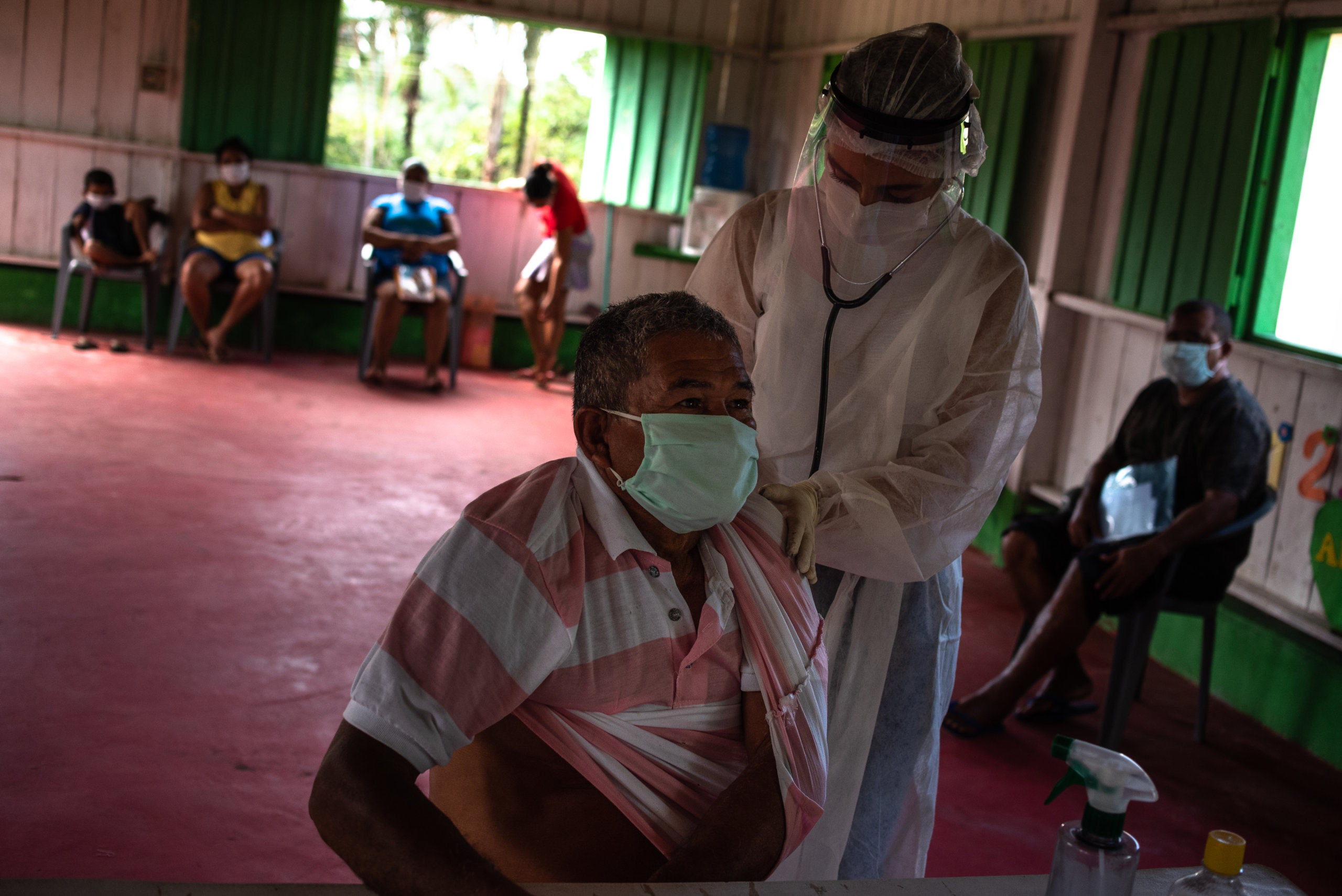

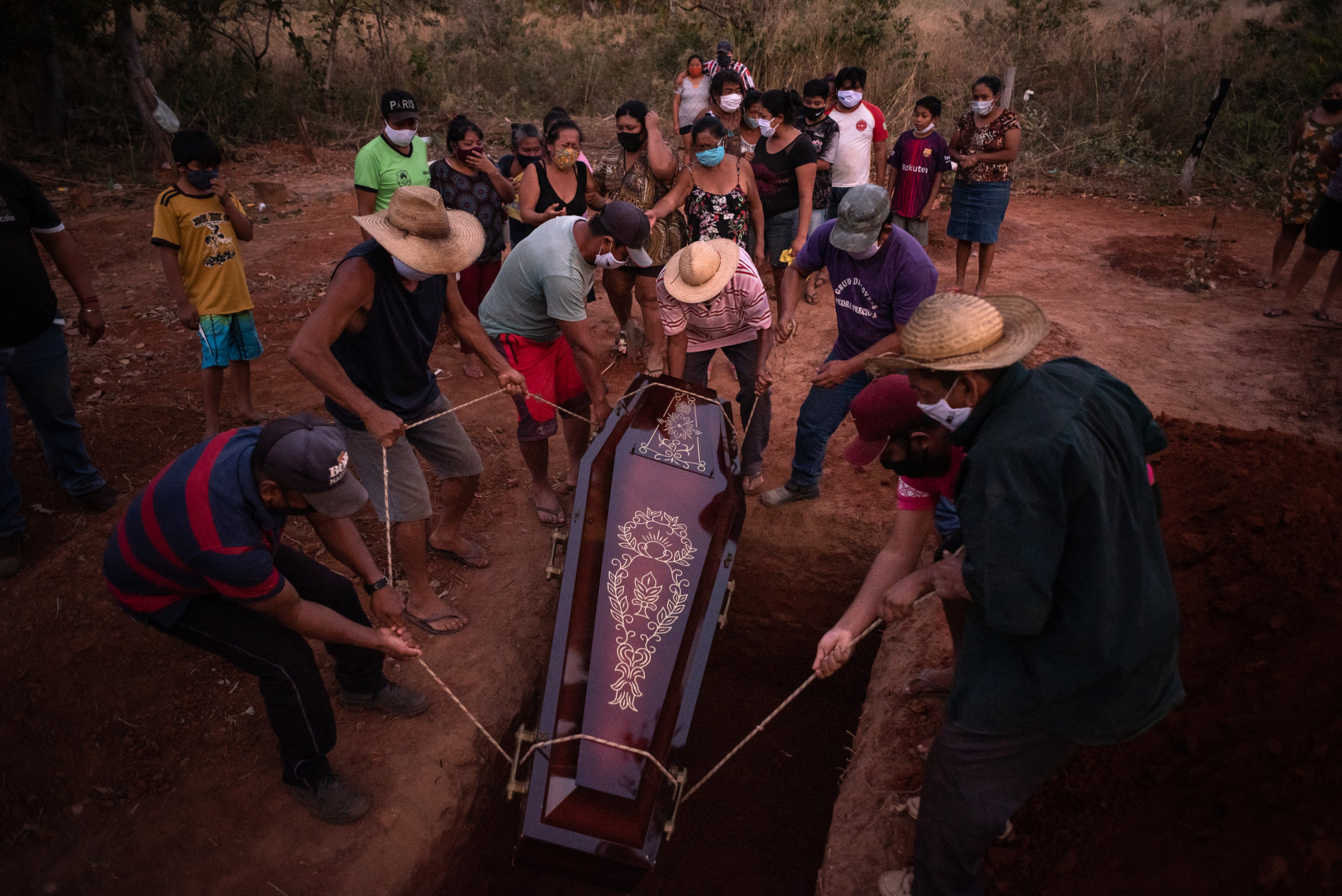
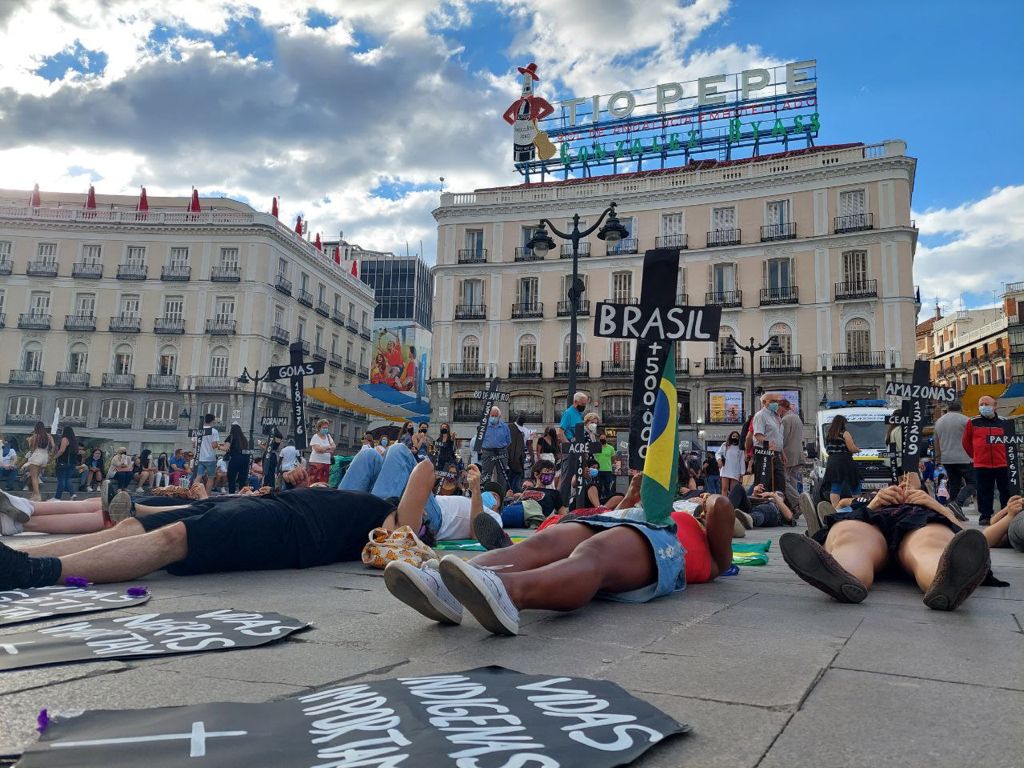


Even when an anti-science president such as Bolsonaro rails against vaccines, there is almost no way for the population to avoid receiving inoculations. In August 2021 in the city of São Paulo, the campaign Virada da Vacina reported that 99 percent of the adults in the city had been vaccinated (Bolsonaro won approximately 45 percent and 60 percent of the vote here in the run offs and general election respectively).12Isabella Menon and Paulo Eduardo Dias, "São Paulo Approaches 99% of Adults with the First Dose of the Covid Vaccine," Folha De S.Paulo, August 15, 2021, https://www1.folha.uol.com.br/equilibrioesaude/2021/08/sao-paulo-se-aproxima-de-99-dos-adultos-com-a-primeira-dose-da-vacina-contra-a-covid.shtml; "See the Calculation Map of all Cities in Brazil," Fohla De S.Paulo, October 7, 2018, https://www1.folha.uol.com.br/poder/eleicoes/2018/veja-o-mapa-de-apuracao-de-todas-as-cidades-do-brasil/?#/cargo/presidente/local/sao-paulo/turno/1/mapa/estadual/municipio/sao-paulo/3550308. Six-hundred locations dispersed the vaccine; sixteen of these were open for walk-in or drive-up around the clock. The state provided DJs, dancing, bands, and artists on stilts to create a carnivalesque atmosphere for those waiting hours in line.
Vaccine culture in Brazil is about accessibility. Locals become part of the campaign. That means you are likely to know and have some regard for the person who comes to you in the name of immunization—in the metro stations, on street corners, or in the park. Public displays boost the vaccine's image. It is harder to retreat into spaces of disinformation when the people you know, or even don't know, seem open to receiving a vaccination. A 2021 study showed that even among vaccine-hesitant individuals in Brazil (10.5 percent of the sample), only 2.5 percent did not intend to vaccinate at all.13Daniella Campelo Batalha Cox Moore, Marcio Fernandes Nehab, Karla Gonçalves Camacho, et al. "Low COVID-19 Vaccine Hesitancy in Brazil," Vaccine 39, no. 42 (2021): 6262–6268. Still, a June 2022 report from The Lancet found that municipalities that supported Bolsonaro in the 2018 elections were those that had the worst COVID-19 mortality rates, especially during the second epidemic wave of 2021.

As of June 2022, 87.3 percent of Brazilians have received at least one dose of COVID-19 vaccine and 79 percent have been fully vaccinated, compared with 79.8 percent of US citizens having received one dose and 67.5 percent being fully vaccinated.14COVID-19 Vaccination Tracker, Reuters, last updated July 15, 2022, https://graphics.reuters.com/world-coronavirus-tracker-and-maps/vaccination-rollout-and-access/. While these numbers are not vastly different, it is of note that Brazil President Bolsonaro remains in power, regularly flouting vaccine regulations and bragging about his unvaccinated status, whereas since 2021 in the United States, President Joe Biden has worked tirelessly to get vaccines in arms, bolster public health, and eliminate health disparities.15Rodrigo Pedroso, "Brazil's Bolosnaro Says He Will Not be Vaccinated Against Covid-19," CNN, October 13, 2021, https://www.cnn.com/2021/10/13/americas/bolsonaro-no-vaccine-intl/index.html; Chuck Todd, Mark Murray and Carrie Dann, "Biden is True to a Key Promise: Getting More Shots in Arms," NBC News, March 19, 2021, https://www.nbcnews.com/politics/meet-the-press/biden-true-key-promise-getting-more-shots-arms-n1261531; HHS Press Office, "Biden-Harris Administration Provides $121 Million in American Rescue Plan Funds to Support Local Community-Based Efforts to Increase COVID-19 Vaccinations in Underserved Communities," HHS, July 27, 2021, https://www.hhs.gov/about/news/2021/07/27/biden-harris-admin-provides-121-million-in-arp-funding-to-local-communities-for-covid-19-vaccines.html.
Early in his tenure, Biden proposed a $1.6 billion increase for the Centers for Disease Control and Prevention to improve core public health capacities in states and territories, modernize public health data systems, train new epidemiologists and other public health workers, and build global capacity to respond to future health threats. Some of these efforts have worked. By August 2021, Pew research reported that around three-quarters of US adults (73 percent) had received at least one dose of a COVID-19 vaccine.
Despite these efforts, too many Americans see vaccine mandates, not as a way toward building public safety, but as extreme government overreach. Republicans and Libertarians have called repeatedly and loudly for "personal freedom" to be prioritized over public safety. Before the Supreme Court blocked the Biden administration's vaccine-or-test requirement for large private businesses in January 2022, there was an outcry for #massnoncompliance. Some scholars have called this political resistance to vaccines based on the tenets of choice and liberty, a "uniquely American predicament."16Alana Wise, "The Political Fight Over Vaccine Mandates Deepens, Despite their Effectiveness," NPR, October 17, 2021, https://www.npr.org/2021/10/17/1046598351/the-political-fight-over-vaccine-mandates-deepens-despite-their-effectiveness. And while the oppositional forces of conservatism and science have been noted as phenomenon elsewhere, including Brazil, the lack of a dominant US culture that trusts and respects public health and expects that the state can and should deliver it can be attributed largely to decades of right wing ideologues across many forms of media.
To date, an Omicron subvariant (BA-5) is the newest variant of concern, threatening a wave of infections and reinfections. As we continue to navigate this global pandemic, we must pay attention to the true influencers of public health. In Brazil, the public health system has a strong history of emboldening citizenry with a message of governmental duty and obligation. We'll see how this may play out in the polls come October for upcoming elections in this country. In the United States, anti-vax politicians, many of whom have themselves received the vaccine for COVID-19, have spread misinformation and anti-government rhetoric about public health. Although conservatism and evangelical religiosity has led to vaccine hesitancy, a Pew Report shows us that most Americans who go to religious services say they would trust their clergy's advice on COVID-19 vaccines. Some advocates of public health have historically prioritized local partnerships with religious leaders and institutions acknowledging this very important sphere of influence.
We must continue to undertake hard conversations about the tensions between individual freedoms and population health much as we did when H1N1 struck our collective shores. As families like my own navigate the implications of a mutating virus that generated a global pandemic, we need trusted resources that are sensitive to historical experiences and the collective common good.
About the Author
Dr. Melissa S. Creary is assistant professor in the Department of Health Management and Policy, School of Public Health at the University of Michigan and the senior director for the Office of Public Health Initiatives at the American Thrombosis and Hemostasis Network (ATHN). She assists ATHN in finding ways to leverage public health research and policy to make a broader impact within the bleeding and blood disorders population. Dr. Creary's areas of specialization include race and racism, genetics, identity politics, health policy, and health equity. She worked for a decade as a health scientist at the Centers for Disease Control and Prevention in the Division of Blood Disorders, has done extensive field work in Brazil, and has more than twenty years of bench, public health, and social science research experience.
Public Health in the US and Global South is a collection of interdisciplinary, multimedia publications examining the relationship between public health and specific geographies—both real and imagined—in and across the US and Global South. These essays raise questions about the origin, replication, and entrenchment of health disparities; the ways that race and gender shape and are shaped by health policy; and the inseparable connection between health justice and health advocacy.
Beginning in 2022, the series expands to include 1000-word blog posts, as well as longer commentaries, essays, articles and media productions that address the public health and political implications of the COVID-19 pandemic from multiple viewpoints. The series editor for Public Health in the US and Global South is Mary E. Frederickson.
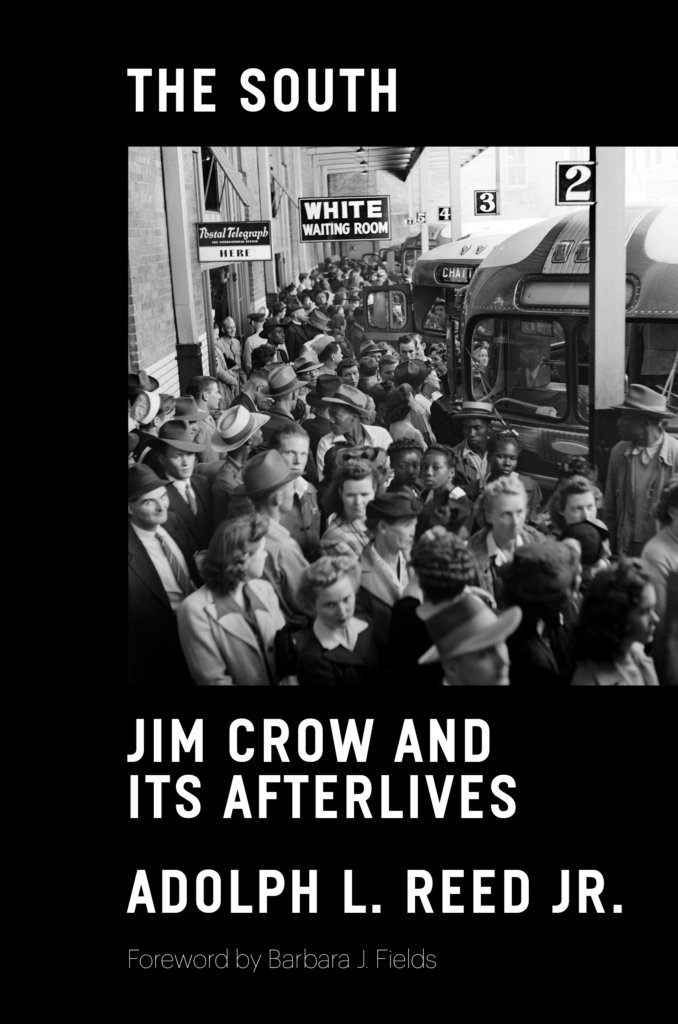
In this short book, distinguished political scientist Adolph L. Reed, Jr. offers remembrances from his early life below the Mason-Dixon line as a member of the last African American generation who came of age during Jim Crow. Reed writes with a purpose—not to chronicle his own pivotal events, hardships, or personal demons, nor to proclaim general truths. Instead, he aims to prevent misconceptions he fears are taking root about the uniform nature of the segregated South and forestall mistaken present-day lessons that ignore the role of class in the racial order of the Jim Crow South.
Reed considers himself a southerner with "a small asterisk."1Reed, Adolph L. Jr., The South: Jim Crow and Its Afterlives (New York: Verso Books, 2022), 9. Born in the Bronx, he was in grammar school in Washington DC, in 1954 when the Supreme Court handed down Brown v. Board of Education. Later, his parents, natives of the Arkansas Delta and New Orleans, moved back to the South where he grew up in Pine Bluff, Arkansas,and the Crescent City. Reed attended college in Chapel Hill, North Carolina and Atlanta and traveled the region while doing summer jobs. He taught at colleges and universities in Atlanta and worked in the city government during the second term of its first Black mayor, Maynard Jackson. He then returned north where he has spent most of the last forty years—primarily at Yale, Northwestern University, and the University of Pennsylvania—teaching and writing about the importance of the working class and the role of class in racial politics.
Although entitled The South, Reed's book illuminates how he and others experienced several different "Souths," where culture, class, ideology, and the laws emerging from segregation varied by geography in practice and form. Reed came to understand that Black people of all ages had to learn differing local white rules of Jim Crow if and when they moved to new places across the southern states—and even in the same city where rules applied differently store-by-store or block-by-block with varying degrees of racial humiliation. For example, one white-owned shop in New Orleans allowed Reed's family to try on clothes before purchase, but in others not shoes or not hats. Some stores permitted no Black person to try the fit of any merchandise. Mistakes in knowing a local "calculus of tolerance" could involve much more than indignity for old or young. "Fourteen-year-old Emmett Till," Reed writes, "was murdered in nearby Mississippi on a family visit from Chicago in 1955 because he unknowingly violated a local rule of subordination in a way that was interpreted as 'getting fresh' with a white woman."2Reed, 12.
"If bristling at Jim Crow's injustices were especially prominent in my consciousness," Reed writes, "it was partly because, as a result of moving around, I was always struggling to learn the local rules and grammar of subordination and how to craft a normal kid's and adolescent's life within them." As the son of well-educated Black teachers, Reed adds, "Where I lived and my family's class position also made it easier to cultivate and express indignation." 3Reed, 13.
The pervasive but varying conditions of white supremacy meant that the places where Black people could be their own free selves, away from everyday racial dangers and indignities, lay within their own segregated communities—especially in Black churches and schools where few whites often entered. As a child living in Pine Bluff, Arkansas, Reed had contact with hardly any white persons because his middle-class father taught at the local historically Black college and his parents kept him close to home near the campus.
Black families deployed a variety of defenses. Traveling on a ferry boat with his grandmother, Reed asked her why chicken wire had been strung between the segregated seating areas. "Well, you see," she stage-whispered, "a lot of crazy people ride this ferry, and they have to sit on the other side."4Reed, 11–12.
Reed's vignette echoes forms of sly resistance, such as that recalled by Mississippi civil rights leader Aaron Henry, growing up under Jim Crow a generation earlier. As a boy, Henry repeatedly complained to his mother that the local white children were able to attend school for seven months but he could only go to school for five. "Aaron," his mother finally responded, "you my boy—and you don't need but five. The rest of them jokers they got to have seven." "Hell, I been cocky ever since," Henry insisted.5Worth Long, "Aaron Henry from Clarksdale," Southern Changes, 5, no. 5 (1983): 9–12. https://southernchanges.digitalscholarship.emory.edu/sc05-5_001/sc05-5_007/.
Passing as white occupies a full chapter as Reed explores the making of racial identities. During his teenage years in New Orleans, passant blanc was often accepted in the Black community as a personal choice, not so much a betrayal of the race. Reed remembers that in the city's Seventh Ward, a family of first cousins with the same surname occupied two sides of a duplex house. "The family on one side lived as black; that on the other side lived as white, and they all acknowledged one another."6Reed, 92–93. In his own family, an adult with light skin color occasionally posed as white to get some prized local delicacy or quicker service from an all-white restaurant, or to momentarily avoid a racial indignity.
Some white leaders openly acknowledged what a large number of various skin complexions meant in the real life of a society where a "one-drop rule" about race-mixing was used to demarcate the presumption of racial inferiority. Reed remembers the legendary Huey Long's brother, Earl, observing in 1960 that a single serving of red beans and rice would be enough to feed all the people in south Louisiana who were truly white (without any mixed ancestry). Alabama's two-term populist governor, James "Big Jim" Folsom, said as much in 1962, after noting the presence of a large number of light-skinned African Americans in his audience. "There's a whole lot of integratin' goin' on at night" in the state's Black Belt, he declared.7Carl Grafton and Anne Permaloff, Big Mules & Branchheads: James E. Folsom and Political Power in Alabama (Athens: University of Georgia Press, 1985), 68.
In concluding his chapter on "The Obsolescence of 'Passing,'" Reed remembers he came to understand at the New Orleans Jazz and Heritage Festival during the 1990s how much the vagaries of race and identity had changed with the end of Jim Crow, especially for young middle class people whose status allowed them to mingle as one at such shared events. "People who may have identified as Cubans and Hondurans, South Asians, Italian (largely Sicilian) Americans, Isleños from the Canary Islands, and other nominal whites formed a physically and behaviorally indistinguishable blur with whoever may have been (Black) Creoles."8Reed, 103.
Throughout The South, Reed investigates continuities and changes in racism and race relations that took place as he experienced the last phases of Jim Crow and the emergence of a second "New South" in Atlanta. His recollections end around 2017 as New Orleans begins removing its most prominent Confederate statues at a time when he was often in the city due to the illness and death of his mother. As if paying tribute to his mother's generation, Reed writes a full-throated analytic attack on the mythology and symbols of the Lost Cause, ripping apart their defenders' rationale for honoring enslavers who undertook a "criminal insurrection."9Reed, 123.
Reed is quick to warn that dwelling on the modern defenders of the erstwhile slave society (touting "heritage not hate") or lingering on "explicit racial hierarchies that defined Jim Crow era" should not replace a "deep examination of the discrete processes that ground and reproduce inequality in the present."10 Reed, 110. The segregationist system of white supremacy not only was more complex and opaque than popularly portrayed today but also was not "merely about white supremacy for its own sake," Reed writes. "It was the instrument of a specific order of political and economic power that was clearly racial but that most fundamentally stabilized and reinforced the dominance of powerful political and economic interests."11Reed, 137. In other words, because "the core of the Jim Crow order was a class system," Reed insists that "a simple racism/antiracism framework isn't adequate for making sense of the segregation era . . . or challenging the forms of inequality and injustice that persist."12 Reed, 140.
This part of Reed's book is not surprising for those who know his career. As a scholar and activist who spent most of his professional life teaching and writing about race and political thought in the United States, Reed has uplifted the importance of class in understanding the dynamics of racial disparities and for dismantling structures of inequality and exploitation. However, most of his remembered experiences with Jim Crow in this book do not directly support his enduring thesis. His argument about the central role of class in The South serves as a coda to his fifty years in advancing the working class as a subject of academic study and political agenda more than a conclusion revealed from the book's remembrances.
In some respects, Reed didn't need to make a case for the importance of class in the life of the South's Jim Crow. It had been done before by himself and others, some of whom he cites in his concluding chapter. One source he did not reference but surely knows is Dr. Martin Luther King, Jr. On March 25, 1965, at the end of the Selma-to-Montgomery march, King delivered a powerful address to the nation—one overshadowed in popular culture by his 1963 Lincoln Memorial "I Have a Dream" speech. In front of the first capitol of the Confederacy, King delivered a speech that included a popular history lesson.
Citing C. Vann Woodward's The Strange Career of Jim Crow, King told the crowd that "the segregation of the races was really a political stratagem" of the South's elite "to keep the southern masses divided and southern labor the cheapest in the land. You see," he explained, "it was a simple thing to keep the poor white masses working for near-starvation wages in the years that followed the Civil War."
King recalled the South's Populist movement when its leaders "began awakening the poor white masses and the former Negro slaves to the fact that they were being fleeced" and "began uniting the Negro and white masses into a voting bloc that threatened" to dislodge elite white control of the South's political power. "To meet this threat, the southern aristocracy began immediately to engineer this development of a segregated society" that became "the roots of racism and the denial of the right to vote," King told thousands who had marched with him for voting rights. "Through their control of mass media, they revised the doctrine of white supremacy. They saturated the thinking of the poor white masses with it." They established segregated laws often making it "a crime for Negroes and whites to come together as equals at any level. And that did it . . ."
"If it may be said of the slavery era," King proclaimed, "that the white man took the world and gave the Negro Jesus, then it may be said … that the southern aristocracy took the world and gave the poor white man Jim Crow."13"Address at the Conclusion of the Selma to Montgomery March," March 25, 1965, The Martin Luther King Jr. Research and Education Institute, Stanford University, Audio, 29:21, https://www.learnoutloud.com/Free-Audio-Video/History/American-History/How-Long-Not-Long/90591.
In remembering the Jim Crow he experienced, Adolph Reed has added nuance and insight to understanding the segregated South as it came to a formal end. In this book and others, Reed has placed himself in the company of southerners who came before him, scholars and activists alike, who devoted their life's work to the search for strategies and means to build a necessary interracial coalition to make democracy work in the nation—and to finally entomb Jim Crow with no chance for an afterlife.
About the Author
An adjunct with Emory University's Institute for the Liberal Arts, Steve Suitts is the author of Hugo Black of Alabama: How His Roots and Early Career Shaped the Great Champion of the Constitution (Montgomery, AL: NewSouth Books, 2017). Earlier in his career, Suitts served as the executive director of the Southern Regional Council, vice president of the Southern Education Foundation, and executive producer and writer of "Will the Circle Be Unbroken," a thirteen-hour public radio series that received a Peabody Award for its history of the civil rights movement in five Deep South cities.
]]>Introduction: Series Editor's Note
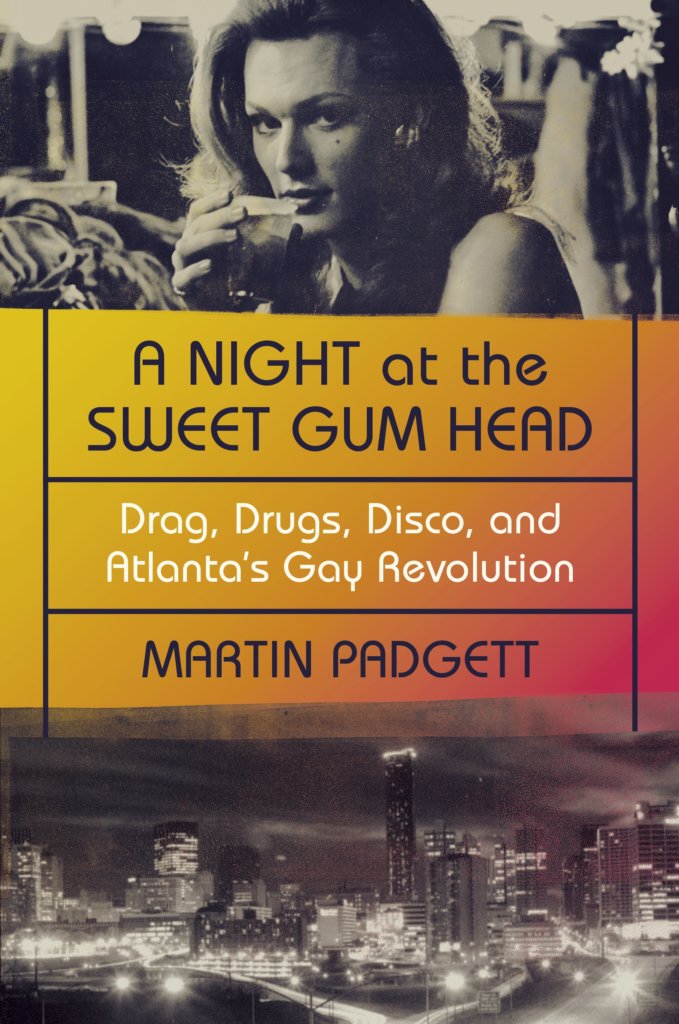
Martin Padgett's A Night at the Sweet Gum Head explores a cast of historical actors who shaped modern LGBTQ+ politics and culture in 1970s Atlanta, Georgia. This cast includes Frank Powell (who owned "more than a dozen gay bars" including the Sweet Gum Head from the late 1960s until his death in 1996), John Greenwell a.k.a. "drag superstar" Rachel Wells, and the activist and trailblazer Bill Smith, who is featured in Padgett's excerpt published here with "Queer Intersections / Southern Spaces." Padgett, too, is central to the narrative he crafts. He writes: "As for me, [the book is] something of a memoir. In many ways, John and Bill and I have lived the same life, in our search for the place we call home, in search of our true selves. . .This isn't my story of Atlanta. It's mine too. It belongs to us" (xiv, emphasis added).
What follows is excerpted from Padgett's "Preface" and a glimpse into Bill Smith's participation in the first Atlanta Pride march on June 27, 1971. This is one of the many entries in Padgett's book that traces the evolution of Bill Smith in 1970s Atlanta until his death in 1980. This exploration of Smith is a brief snapshot of the many nights at the Sweet Gum Head in Padgett's book: pick up your copy to read more about Smith, John Greenwell/Rachel Wells, and the development of LGBTQ+ life across 1970s Atlanta.
From Preface
Today, American lesbians, gays, bisexuals, transgender people, and queers can get married. We can find short-term special friends or life partners on our smartphones. We can venture proudly and safely into the straight world outside the confines of bars and clubs once designated specifically as "gay spaces."
Fifty years ago, none of those things was true. Queer people were shamed and muted, jailed, exiled, and put in danger. Often they were left no choice but to leave home, and to run away to cities where they might be accepted, or at least tolerated.
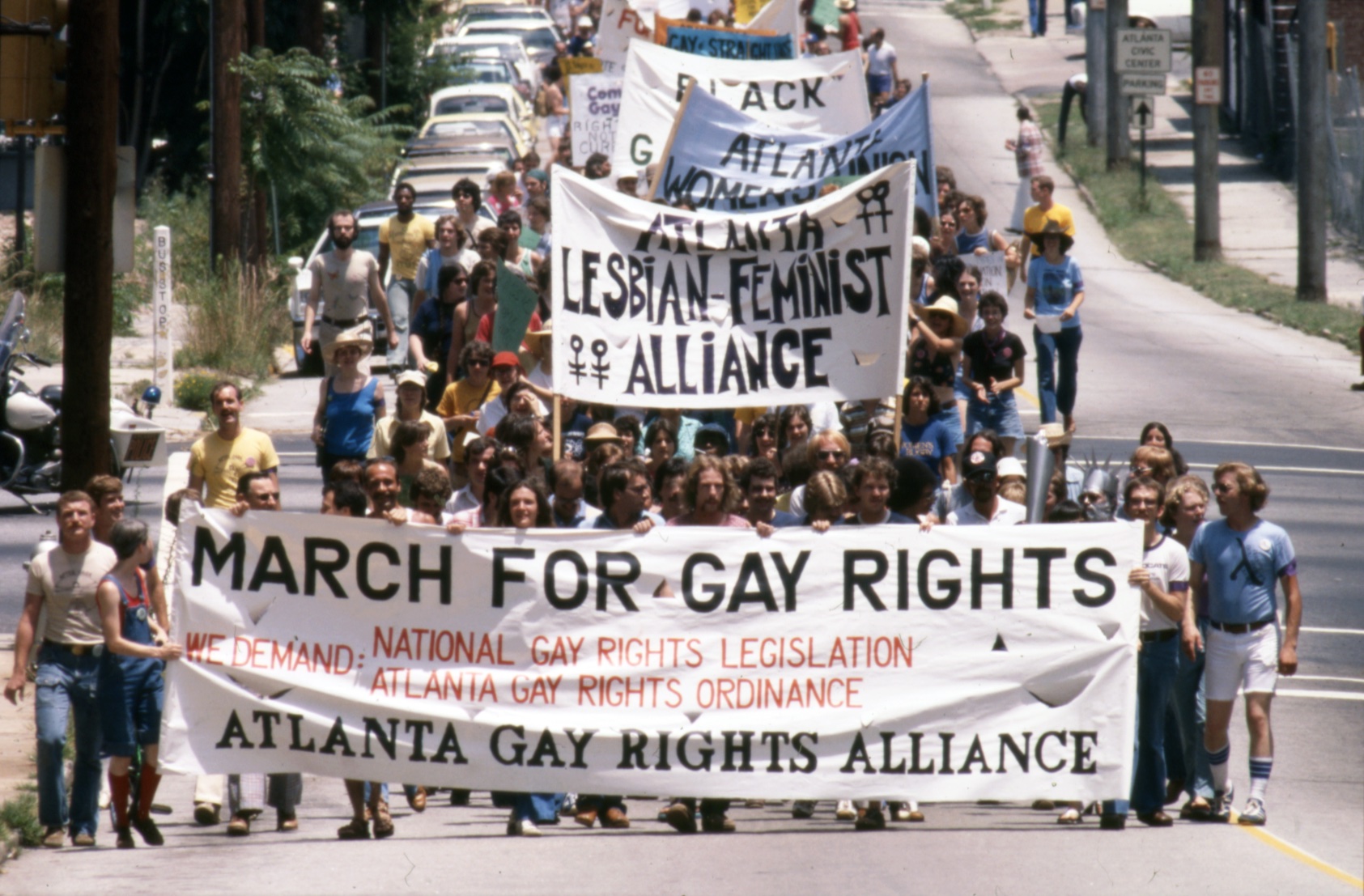
Even in those cities, gay bars were dangerous and illicit places—but they were also the birthplace of the emerging gay rights movement. Queer communities formed, and they demanded equality. It was a time of heady optimism. Many believed anything was possible, even progress. The movement had its most visible roots in New York and San Francisco, but after it flared in the riots at the seedy Stonewall Inn tavern in 1969, it spread quickly to cities such as Atlanta, a relatively progressive oasis surrounded by ultraconservative mores.
In the 1970s, Atlanta's cruisy, electric core was the Sweet Gum Head nightclub, where an intoxicating blend of drag, drugs, disco, and revolution had a pivotal role in uniting Atlanta's gay civil-rights movement—and in turning Stonewall's rebellion into art. The Sweet Gum Head is where Atlanta earned its reputation for top-flight female impersonation. It's where Atlanta's drag came out of the closet.
Before RuPaul Charles, there was John Greenwell, who ran away from Alabama to Atlanta and found a new home at the Sweet Gum Head. John became Rachel Wells—and Rachel became a drag superstar. Along the way, John put the two halves of his life back together.
John left the marches and protests to activists like Bill Smith. A son of devout Baptists, Bill took a seat as a city commissioner, then took over the most influential gay newspaper in the South, The Barb. When his addictions and predilections were revealed, he lost everything.
Then it all died. In the same summer of 1981 when the Sweet Gum Head closed, the New York Times reported on a "rare cancer seen in 41 homosexuals."
Bill Smith, Georgia State Capitol, Summer 1971
The television camera stared at Bill as he strode down the sidewalk. He wore his usual explosion of red-brown hair and goatee, squared-off spectacles, and a white button-down shirt. He clutched protest signs and slung a white purse over his left shoulder as he led more than a hundred protestors from downtown Atlanta to Piedmont Park on June 27, 1971.
He fronted an army of lovers in warpaint and war robes, a Seussian spectacle with signs and bongos and buttons. One marcher hummed through a blue-and-orange kazoo, tootling it beneath a shock of golden hair and gold-rimmed glasses. Another wore a bowl cut, black-rimmed frames, and a mock turtleneck. He sniffed a red carnation and licked his lips luridly.
They marched two by two, animals on an ark, forced by the police onto the sidewalk and to stop for traffic lights and pedestrians. They had asked the ACLU for help with a permit to march, but were told they were not a minority.
People in cars took leaflets and stared as the group tambourined their way to the park and called to motel balconies: "Join us!"
"This is just like the early anti-war marches," one straight-identified protester marveled, "the way passers-by stare at us."
Bill's eyes angled down, dark and serious, as he spoke into the television camera.
"As people find out that you are a homosexual, there's a good chance that you may lose your job," he said with a bit of a lilt in his voice. His bony shoulders shifted while he proceeded with his lecture, part plea, part civic lesson. He told dinner-hour Atlanta how being gay affected every aspect of his life, even outside the bedroom.
"The state will not hire homosexuals," he said. "The schools will not hire homosexuals. The federal government will not hire homosexuals. They consider us a security risk."1Bill Smith, interview by WSB-TV, "Gay Rights Protestors March in Atlanta," The Walter J. Brown Media Archives & Peabody Awards Collection at UGA Libraries, Athens, Georgia, June 27, 1971.
He parsed his words carefully. Atlanta was not San Francisco. He warned Northern friends, half in jest, not to mention General Sherman's name unless they were prepared to be bashed. He worried the Klan would shoot at protestors from the rooftops of nearby buildings. He spoke past that fear, directly to the more than 100,000 gay men and women who lived in Atlanta but had not come to demonstrate, who could lose everything—jobs, churches, family—if they joined the first Gay Pride march in Atlanta history.
Bill had worried that Atlanta still was not ready to mount a successful protest. He knew he could count on seven friends to show up, but on the day of the march more than a hundred had shown up, and some of Bill's closeted friends told him that they had driven around where the marchers had gathered, in silent support.
"Five or 10 years ago nobody would have suspected this," Bill said.2United Press International, "50 in Atlanta Mark Gay Liberation Day," Atlanta Journal Constitution. June 28, 1971. 9A. "It is a new beginning for the gay community."


At Piedmont Park, the march re-formed as a rally replete with guerrilla theatre. In the first skit, soldiers shot at Vietnamese peasants under orders, and had their medals ripped off when they questioned why. Next, police threw people to the ground and hurled epithets—"Queer!" "Lezzy!" "Fag!" In the final act, a panel of experts interrogated a straight couple on the Slick Cavett Show: "How long have you been this way?" Atlanta's first Pride ended with promises for bigger, better, and more.3cyclops, "Celebration . . . Very Gay," Great Speckled Bird, July 5, 1971, 2.
Bill went home to see himself on the evening news. He reported for work the next day as usual at the Board of Education's accounting room. His colleagues stared straight ahead and would not speak to him. Bill laughed and got down to work.4Dave Hayward in discussion with author, November 11, 2017.
About the Author
Martin Padgett has an MFA from the University of Georgia's Grady College of Journalism and is working on a new book about Michael Hardwick and the 1986 Supreme Court sexual-privacy decision bearing his name.
]]>