On election night 2024, when the Associated Press called Pennsylvania and North Carolina for Donald Trump, I knew that he would be our next president, and I went to bed. The next morning, as I came back from a walk, the Harris-Walz bumper stickers on the back of our cars caught my eye.
HARRIS-WALZ 2024 | WE’RE NOT GOING BACK
I immediately thought of the late Willie Lee Rose’s The Port Royal Experiment: Rehearsal for Reconstruction. Rose tells the remarkable story of enslaved and subsequently free Black people living on the South Carolina Sea Islands who gained their freedom—and small plots of land—while the war still raged, and then gained political rights during Reconstruction. That moment ended when a violent white, counter-revolutionary movement took away their rights as citizens and much of their property, returning them to a state of semi-slavery. Written in 1964 at the crest of the civil rights movement, Rose’s last chapter, “Revolutions May Go Backward,” was a cautionary warning to the optimists of her time. Today it seems an epitaph for those of my generation who saw the possibilities of a second Reconstruction that fulfilled the promises of the first.1Willie Lee Rose, Rehearsal for Reconstruction: The Port Royal Experiment (Indianapolis: Bobbs Merrill, 1964), 378–408.
It’s not that I was blindsided by the election results. After President Biden's withdrawal, I became increasingly convinced that the Harris-Walz campaign was in jeopardy. In very close races, polls are unreliable in choosing winners, particularly when it comes to Donald Trump who outperformed almost every major poll in 2016 and 2020, as he would in 2024. But I do think they give some sense of direction. During the last three weeks of the campaign, as Trump became more unhinged in his lies, more threatening to his enemies and more obscene in his rallies, I watched as Harris’s lead slip from 3% to 1%. By election day, I had little confidence that she would win.
I can’t claim to be a prophet. I assumed former President Trump would receive something like his 46 per cent of the vote in 2016 and win because of our archaic and undemocratic eighteenth-century electoral college. I was wrong. He didn’t gain a mandate (49.8 %), but it was more than Harris’s 48.3%. Moreover, by narrow margins in dozens of races, Republicans maintained control of the House and won the Senate. However precarious the majorities, the party of Trump now controls the executive, congressional, judicial branches of government.
Over the next week, I neither read any post-mortems of the election’s outcome nor listened to or watched the news. I knew it would be filled with "what if's?" second-guessing the strategy and tactics of the Harris-Walz/Democratic campaign. The Democratic Party bears some of the blame for this loss. Inhibited by its own wealthy backers and so frightened of the term “socialism” or even “liberalism,” party leaders failed to drive home the economic damage to working- and middle-class voters caused by the neo-liberal policies of the last half century and the dominance of the nation’s new plutocracy.2Elizabeth Popp Berman, Thinking Like an Economist: How Efficiency Replaced Equality in US Policy (Princeton: Princeton University Press, 2023).Despite these failures, there have been substantive policy differences between a Republican Party that has consistently reshaped our tax and economic system to benefit the wealthy and Democratic measures that helped the working and middle-class programs proposed by Democrats. The 2024 election is less about the failures of the Democratic Party than the remarkable success of the wealthy interests and disciplined zealots who have joined hands with Donald Trump to capture the Republican Party.
Historians such as Nancy MacLean (Democracy in Chains), journalists Jane Mayer (Dark Money), and Anne Applebaum (Autocracy, Inc.) as well as other scholars and journalists have described how this anti-government movement has proved successful in carrying out its long-term strategy of promoting libertarian ideas and policies into the mainstream, ideas once dismissed as the work of Ayn Rand cranks and ideologues.3Nancy MacLean, Democracy in Chains: The Deep History of the Radical Right's Stealth Plan for America (New York: Viking Press, 2017); Jane Mayer, Dark Money: The Hidden History of the Billionaires Behind the Rise of the Radical Right (New York: Doubleday, 2016); Anne Applebaum, Autocracy, Inc.: The Dictators Who Want to Run the World (New York: Doubleday, 2024).
Over the last half century, bankrolled by their wealthy backers, this reactionary movement created a broad and effective network of institutions, think tanks, and media mouthpieces that honed dual messages.
The first: money corrupts the poor but elevates the moral character of the rich. Making the lives of marginal and lower middle-class Americans more insecure would lead them to return to the lost work ethic that had made America great. At the same time, making wealthy Americans even richer enabled the super-rich “job creators” to benefit society as a whole.
The second: a contempt for the very concept of “public” in “all its forms (public service, public health and safety agencies, public parks, the protection of public lands, public schools, etc.) and a conviction that the hand of “government” inevitably guarantees inefficiency and corruption. The solution? Replace those critical institutions with the unrestrained market, driven only by profits and freed from the restraints of oversight, regulations, and the demands of labor unions, civil rights activists, feminists, the disabled, and others who struggle for social justice.
The New Right was also able to draw upon a deeply rooted anti-government/“dog-eat-dog”/“everyone for himself and the devil take the hindmost” ethos. While a pittance of charity for widows and orphans has long been considered acceptable, assistance for those who do not succeed (obviously through their own laziness and lack of initiative) designates them as undeserving poor and dependent “takers.”
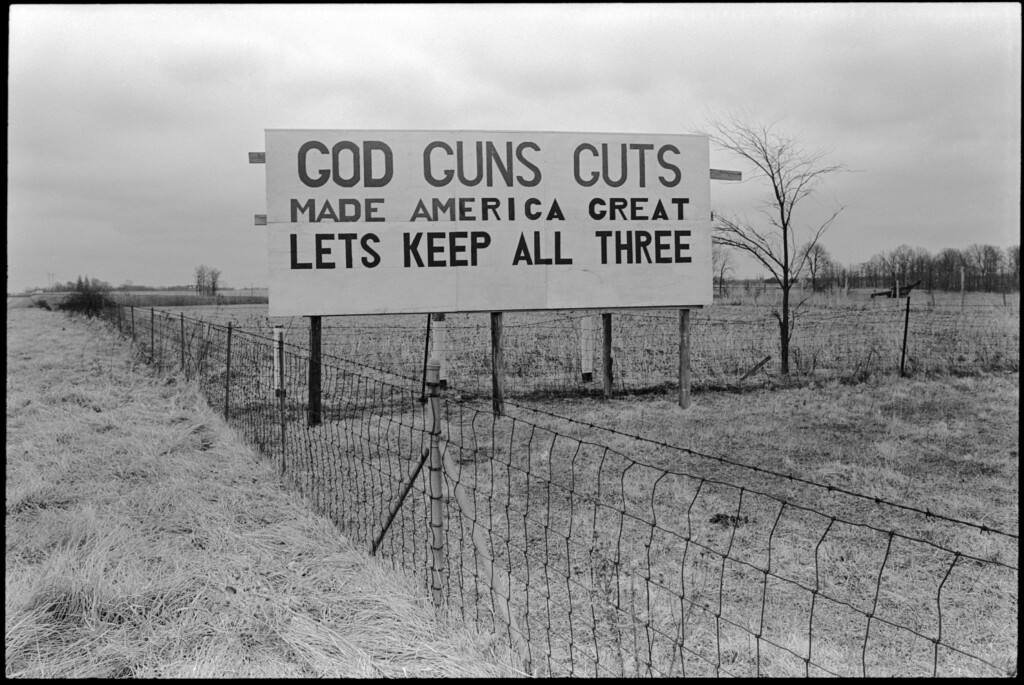
The Social Darwinism of the Gilded Age shifted somewhat in the wake of the late-nineteenth century Populist movement and during the “Progressive Era” of the early twentieth. Bolstered by an emerging “social gospel” movement that emerged within Protestant, Catholic, and, what Rabbi Shaul Magrid, has called the “Jewish social gospel,” when a majority of Americans concluded—in our complex and interdependent economy—only national institutions could offer protection from monopolistic corporate power and reckless actions that threatened citizens’ health and well-being. Then, faced with the devastation of the Great Depression, Americans of that generation learned the hard way that a reliance on rugged individualism proved useless in the face of a collapsing economy.4Christopher H. Evans, The Social Gospel in American Religion (New York: NYU Press, 2017); Rabbi Shaul Magid is professor of Jewish Studies at Dartmouth. His book is The Necessity of Exile: Essays from a Distance (Brooklyn: Ayin Press, 2023).
By the time Dwight Eisenhower took office in 1953, the Roosevelt revolution seemed broadly accepted by both parties. As Eisenhower wrote to his brother in 1954, federal initiatives such as social security, unemployment compensation, labor laws and other government funded programs were essential and the “Texas oil millionaires” and the politicians and businessmen who sought to turn back the clock were “negligible and . . . stupid.”5Dwight D. Eisenhower, “Letter from Dwight D. Eisenhower to Edgar Newton Eisenhower (1954),” Teaching American History, https://teachingamericanhistory.org/document/letter-to-edgar-newton-eisenhower/.
But the political upheavals of the 1950s and 1960s gave an opening to the anti-government reaction of the last fifty years—our backward revolution.
It’s ironic that Richard Nixon took the first steps in this reactionary movement; ironic because he was hardly an anti-government politician. Like Eisenhower, under whom he served for eight years, Nixon had made peace with expansive government under Franklin Roosevelt and Lyndon Johnson. He not only maintained most of the New Deal/Great Society programs, but supported the creation of the Environmental Protection Agency, the Clean Air and Clean Water Acts, expanded federal resources for the CDC and NIH. and signed Title IX, a sweeping measure designed to prevent gender discrimination at colleges and universities. At one point he considered creating a national guaranteed income program. Politically, however, Nixon was always attuned to the shifting currents of public opinion.
You don’t have to be a historian to list the developments that set us on the road to the election of Donald Trump for a second term. White backlash—activated by the civil rights movement and urban unrest—as well as the trauma of the Vietnam War led the way for this right-ward retreat.
In 1968, Nixon ran as a centrist between Hubert Humphrey and third-party segregationist candidate George Wallace. He came within a hair’s breadth of losing the election after Wallace captured fourteen million votes and the electoral votes of five southern states. (According to exit polls, absent Wallace’s “American Party,” at least four of those states would have voted for Nixon.)
Relying upon the advice of his adviser, Kevin Phillips ("The whole secret of politics is knowing who hates who”), Nixon understood the possibilities for political realignment among several groups of voters. White southerners and white northerners opposed to the gains of the civil rights protests and civil rights legislation, suburban voters frightened and angered by the urban violence of the 1960s, and Americans disgusted by an anti-war movement that rejected the patriotic ideology: “My country, right or wrong.”6Garry Wills, “The Politics of Grievance,” New York Review, July 19, 1990, https://www.nybooks.com/articles/1990/07/19/the-politics-of-grievance/.
Thus was born the GOP “Southern Strategy,” a political plan to create a solid Republican South by “blackening” the Democratic Party in the states of the former Confederacy and drawing disgruntled whites across the US into what had once been the party of Lincoln. In the aftermath of the Watergate scandal, Jimmy Carter managed to defeat Gerald Ford in 1976, but his administration was a brief detour.
During the 1950s, middle- and upper-income voters in four southern states had chosen the popular Dwight Eisenhower, but the major growth in Republican support from lower income white voters came over the next two decades. White evangelicals and religious conservatives also played a major role in the political realignment, strongly supporting traditional gender roles, the nuclear family, and male “leadership” while recoiling against the demands of the women’s movement of the 1970s and 1980s as well as the way that a new, wide-open popular culture undermined traditional sexual mores. As Playboy came out from under the drug store counters and onto the magazine racks, it was no accident that third-party candidate George Wallace attacked the Supreme Court for its rulings requiring desegregation and striking down broad obscenity laws.
Today’s white evangelicals point to the 1973 Supreme Court decision, in Roe v. Wade as the critical turning point for devout Christians. But, if that is true, how can we explain the fact that mainline Protestant denominations, including Southern Baptists, praised the decision?
Randall Balmer, Cornell University historian of American religion, argues in Bad Faith: Race and the Religious Right (2021) that the shift among evangelicals was linked directly to racial issues.7Randall Balmer, Bad Faith (Eerdmans Publishing: Grand Rapids, Michigan, 2021). Gerald Ford’s Justice Department first developed a series of legal cases challenging the tax-exempt status of the segregated “academies” (most of them religious) that expanded in the aftermath of the Brown decision. But it was the Carter administration that dramatically increased the number of lawsuits challenging these tax-exempt segregated schools, a policy eventually affirmed by the Supreme Court in Bob Jones v. United States (1983).
Right-wing Republican activists like Paul Weyrich claimed that this was an attack on religious freedom, but such arguments found only limited traction. Instead, skilled conservative organizer (and devout Catholic) Phyllis Schlafly smoothed over long-time tensions between Catholics, Mormons, and Protestant conservatives, bringing them together to create a “right-to-life” and anti-feminist constituency that proved to be a far more “righteous” movement than defending segregation.
White Protestant evangelicals had voted for the “born-again” Carter in 1976, but four years later two thirds of self-identified white evangelicals voted for the divorced and marginally Christian candidate, Ronald Reagan. Republican support increased through the decades that followed. In the 2024 presidential election, 81 per cent of white evangelicals voted for Trump. Between the late 1960s and the end of the 1980s, the Southern Strategy transformed the “solid South” from a Democratic stronghold to the foundation of Republicans’ national strength.
Racism was not the only factor in creating a white Republican South, but it was a major driving force. And the tactics that created the (white) victory for the Republican Party in the South and attracted white northerners, have allowed politicians to exploit different versions of racism on a national level for the last half century. George Wallace pioneered the use of code words that avoided explicit racist language in the 1960s, but Republican operatives and leaders became even more skilled in their exploitation of white Americans’ underlying racial prejudices. As Lee Atwater, a key adviser to Reagan and to George H.W. Bush famously told Vanderbilt political scientist Alexander Lamis, “You start out in 1954 by saying “N--r, n--r, n--r.” By 1968, you can’t say ‘n--r’—that hurts you. Backfires. So you say stuff like forced busing, states’ rights, and all that stuff.”8Lee Atwater (1981): Interview with Alexander P. Lamis, https://www.bradford-delong.com/2017/03/lee-atwater-interview-with-alexander-p-lamis-rough-transcript-weekend-reading.html.
Equally significant in arousing this white backlash was the emergence of Black and, later, Brown Americans into a constant presence on the nation’s television screens that triggered resentment by many white viewers. The emergence of gay men and lesbians prompted a similar response.
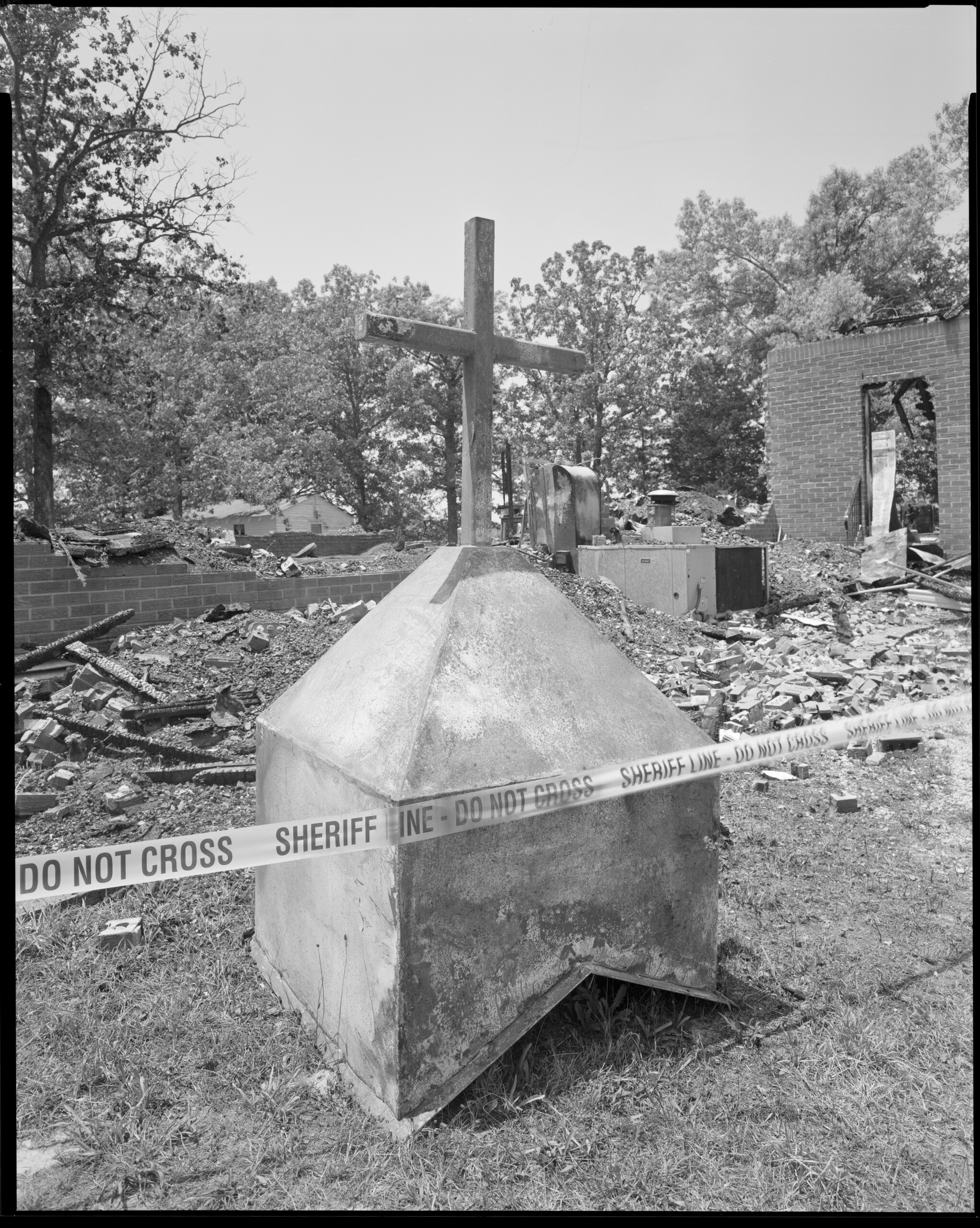
Critics often compare Donald Trumps’ dehumanizing language against his enemies—“vermin,” “garbage,” “scum,” “poisoning the blood of our country,” “traitors,” “diseased,” “bad genes”—to Adolf Hitler.9Gram Slattery, “Trump’s ‘bloodbath’ and other rhetoric inflame his 2024 campaign trail,” Reuters, March 22, 2024, https://www.reuters.com/world/us/bloodbath-vermin-animals-trumps-rhetoric-trail-2024-03-22/. But such rhetoric has deep roots in US history, pitting “us” (true Americans) against “them” (threatening outsiders). From John Higham’s 1955 classic, Strangers in the Land to the more recent publication of Erica Lee’s America for Americans: A History of Xenophobia in the United States, scholars and journalists have described politicians’ exploitation of white/Anglo-Saxon/Protestant Americans’ fear and hatred of Native Americans, Catholics, Jews, Italians, and Hispanics.10John Higham, Strangers in the Land: Patterns of American Nativism, 1860-1925 (Rutgers University Press: New Brunswick University Press, 1955); Erika Lee, America for Americans: A History of Xenophobia in the United States (New York: Basic Books, 2019).
In addition to relying upon such racist and xenophobic appeals, the party that Donald Trump now controls has sought to strengthen its political power by implementing openly undemocratic measures. In Rehearsal for Reconstruction, Willie Lee Rose describes the blunt measures that white Democrats used to disenfranchise (predominantly Black) Republicans. During South Carolina’s 1895 Constitutional Convention the Party stamped out the last handful of Black voters. Whites made no effort to conceal their hand. As one Democrat said, “We don’t propose to have any fair elections.”11Rose, Rehearsal for Reconstruction, 404. Such openly partisan and racist voter suppression measures supported by the modern Republican Party are central to our backward revolution.
When Democrat Bill Clinton won in 1992 and 1996, the Republican Party launched a broad range of measures designed to reduce Democratic voters, particularly Black voters. Despite differences between the disenfranchisement efforts of white Democrats in the late nineteenth century and present-day Republicans, Yogi Berra’s memorable phrase: “It’s déjà vu all over again” seems particularly apt. Political scientists Steven Levitsky and Daniel Ziblatt have shown how this growing anti-democratic movement has exploited weaknesses in our constitutional system to create a “tyranny of the minority,” a process described in detail by scholars like Steve Suitts and Gene Nichols.12Steven Levitsky and Daniel Ziblatt, Tyranny of the Minority: Why American Democracy Reached the Breaking Point (New York: Crown, 2023); Steve Suitts, A War of Sections: How Deep South Political Suppression Shaped Voting Rights in America (Athens, Georgia: New South Books, 2024); Gene R. Nichol, Lessons from North Carolina: Race, Religion, Tribe, and the Future of America (Durham, NC: Blair Publishing, 2023).
Republicans have justified such measures by successfully convincing 88 per cent of Republicans and over 25 percent of Democrats that voter fraud is widespread, despite the fact that every rigorous investigation and analysis has found fraud has been statistically infinitesimal. In a review of such claims over the last twenty-five years, researchers for the Brookings Institution could not find one example of voter fraud that “changed the outcome of a single election.”13Owen Averill, Annabel Hazrati, and Elaine Kamarck, “Widespread election fraud claims by Republicans don’t match the evidence,” Brookings, November 22, 2024, https://www.brookings.edu/articles/widespread-election-fraud-claims-by-republicans-dont-match-the-evidence/.
In 2012, dissatisfied with piecemeal measures to limit Democratic voters, the Republican State Leadership Committee launched its “Redistricting Majority Project” (REDMAP) with the goal of using the decennial redistricting process to gerrymander state and congressional districts to give an advantage to Republican candidates at the state and congressional level. While gerrymandering has long been practiced in American politics, the development of sophisticated computer programs, the heightening of partisan division, and the economic support of dark money by wealthy donors made it possible for the Republican Party to reshape American politics. In 2019, the five-member Republican majority of the Supreme Court gave the green light to such gerrymandering. By 2024, Republicans had created the most distorted electoral system in nine of the ten most gerrymandered states in the nation.14“2012 REDMAP Summary Report,” January 4, 2013, https://www.redistrictingmajorityproject.com/; Nick Wing, “GOP Redmap Memo . . . ,” January 17, 2013, “https://www.huffpost.com/entry/gop-redmap-memo-gerrymandering_n_2498913; “Rucho v. Common Cause," https://en.wikipedia.org/wiki/Rucho_v._Common_Cause; “Most Gerrymandered States,” World Population Review, https://worldpopulationreview.com/state-rankings/most-gerrymandered-states.
Republicans and Democrats argue over whether such measures stem from partisan or racial motives, but it is clear that racism remains one of the key factors in Trump’s personal rise to political prominence. It was his promotion of the “birther lie,” the demonstrably false claim that Barack “Hussein” Obama was born in Kenya and not a “true American” that launched his political career. As a real estate developer with an early history of excluding Black people from his family’s rental properties, Donald Trump learned that traditional anti-Black racism could prove adaptable in politics by exploiting fear and hate against other “outsiders.” Of all his inflammatory and racist claims, none was more successful than his description of a massive (non-existent) crime wave by brown-skinned illegal immigrants spreading chaos, raping and pillaging embattled white Americans.15Slattery, “Trump’s ‘bloodbath’."
Economic inequality grew steadily from the early 1970s onward as members of the middle as well as the working class joined the poor in a struggle from paycheck to paycheck. The New Right didn’t address this increasing wealth gap but kept the emphasis on drawing in religious conservatives by convincing them that Christianity and the family was under attack. Right wing activists and new media outlets spread false but heart-rending accounts of full-term babies ripped from their mother's wombs. As early as 1977, the American singer and anti-gay activist Anita Bryant claimed that homosexuals were seducing children for sexual exploitation, but by 2010, claims of “grooming” were widespread on web sites, promoted by right-wing anti-gay groups and Republican politicians. In a 2023 60 Minute interview, Georgia Congresswoman Marjorie Taylor Greene insisted to interviewer Leslie Stahl that “Democrats are a party of pedophiles. . . . They support grooming children.”16“Anti-gay Organizing on the Right,” PBS Out of the Past, https://www.pbs.org/outofthepast/past/p5/1977.html; “Marjorie Taylor Greene: The 60 Minutes Interview,” https://www.rev.com/transcripts/marjorie-taylor-greene-the-60-minutes-interview-transcript.
Even more astonishing has been the success of the New Right in convincing nearly 60 percent of white Americans that “discrimination against whites is as big a problem as discrimination against blacks and other minorities.”17Ryan Struyk,”Blacks and whites see racism in the United States very, very differently,” CNN, August 18, 2017, https://edition.cnn.com/2017/08/16/politics/blacks-white-racism-united-states-polls/index.html.
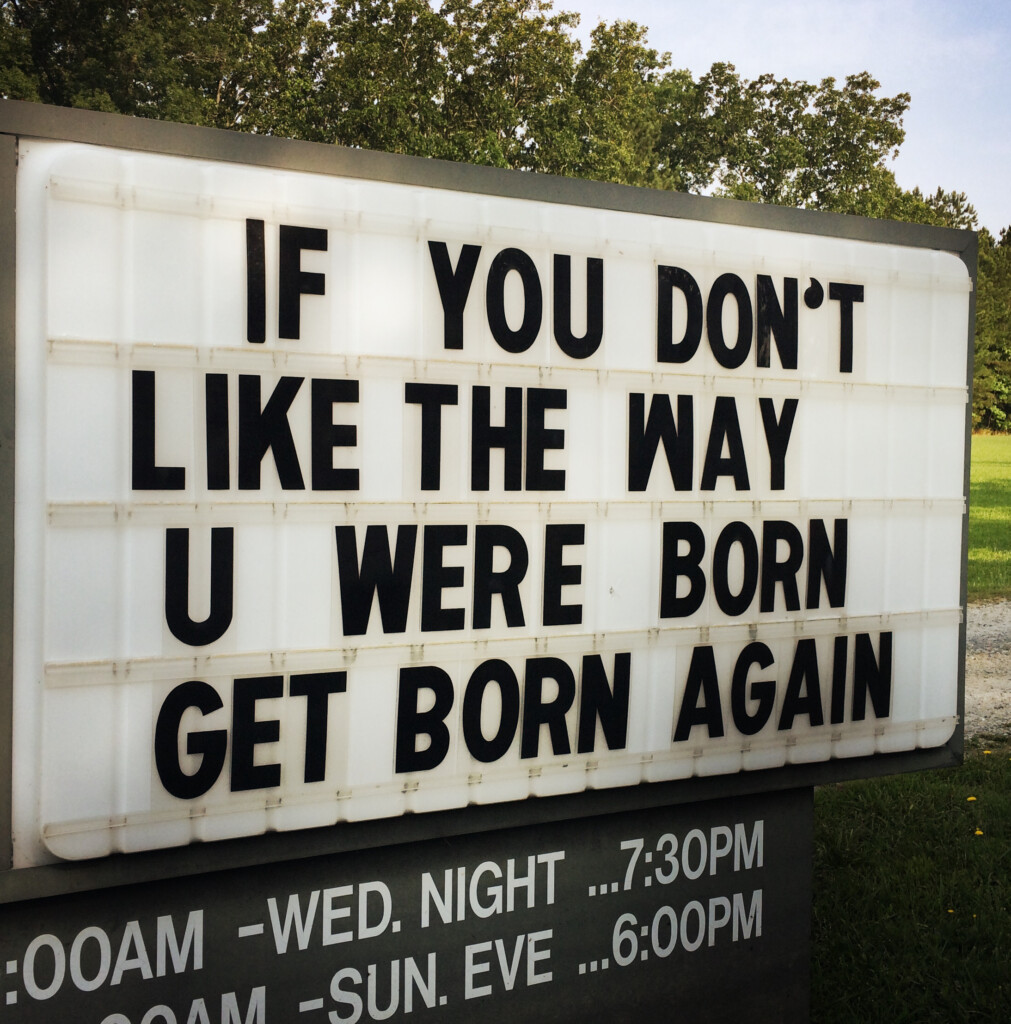
Few examples more clearly illustrate the irrational, but powerful appeal of such success at promoting irrationality than the demonization of transgender people in this country—as though they are somehow an existential threat. When a “Fox and Friends” host asked Trump what he would do to “fix” schools, he responded: “No transgender, no operations. You know, they take your kid. There are some places where your boy leaves the school [and] comes back a girl. Without parental consent.”18Daniel Dale, “Fact Check: Trump revives his lie that schools are secretly sending children for gender-affirming surgeries,” CNN, October 26, 2024, https://www.cnn.com/2024/10/26/politics/fact-check-trump-rogan-children-gender-affirming-surgeries/index.html. During the last three months of the 2024 campaign, the GOP spent more than $215 million on political advertisements attacking transgender individuals.19Zane McNeill, “Republicans Spent Nearly $215M on TV Ads Attacking Trans Rights This Election,” truthout, November 5, 2024, https://truthout.org/articles/republicans-spent-nearly-215m-on-tv-ads-attacking-trans-rights-this-election/.
It is easy to see why special interests such as insurance companies, the pharmaceutical industry, health care monopolies, the fossil fuel industry and libertarian tech billionaires fell in line behind Donald Trump once he gained the enormous powers of the presidency. Given the tax policies enacted during the first Trump administration and those proposed for the second, economic self-interest has also attracted support from the super-rich, the wealthy, and even the moderately well-to-do. While much of the attention has concentrated on the top one percent, between the mid-1970s and 2020, the income of top five percent of America’s taxpayers increased 125 per cent while median family income rose less than fifty per cent.20Eric Schutz to the author, February 17, 2025.
While working-class and struggling middle-class American voters are keenly aware of their growing economic insecurity, they seem oblivious to the role of the wealthy interests that have profited from an economy that has shifted wealth from labor to capital—all reinforced by changes in “tax reform” that lowered taxes on the new plutocracy and led to an explosion of our national debt. This transfer of wealth from the working and middle class to the wealthiest has created in the United States the greatest income inequality in any advanced democracy in the world.
But many of these voters found Donald Trump’s repeated explanation for their plight more persuasive: “The mass migration invasion has crushed wages, crashed school systems . . . wrecked the standard of living and brought crime, drugs, misery and death.”21Linda Qui, “Trump’s Claims That Blame Migrants: False or Misleading,” New York Times, October 18, 2024, https://www.nytimes.com/2024/10/18/us/politics/trump-immigration-fact-check.html.
The Democratic Party is hardly immune from the pressures of big money donors, but promoting the interests of the wealthy has been the explicit policy of the Republican Party since Reagan. Trump’s promise not to reduce the federal government’s most expensive programs—Defense, Social Security and Medicare—mean that the only items on the chopping block are those programs that most affect working-class and poor Americans: SNAP (food stamps), Medicaid, ending student loan forgiveness and loan modifications, dismantling the Education Department, and enacting major tariffs that will be passed on to consumers by higher prices.
Reducing the deficit won’t come from increasing taxes. Since signing the “No New Taxes” pledge in 1986, Republicans have opposed tax increases even though—among the thirty-eight advanced economies—US total federal state and local taxes as a percentage of GDP are lower than all but a handful of countries such as Turkey and Mexico.22“Revenue Statistics 2024, Key Findings for the United States," OECD, https://www.oecd.org/content/dam/oecd/en/topics/policy-sub-issues/global-tax-revenues/revenue-statistics-united-states.pdf.
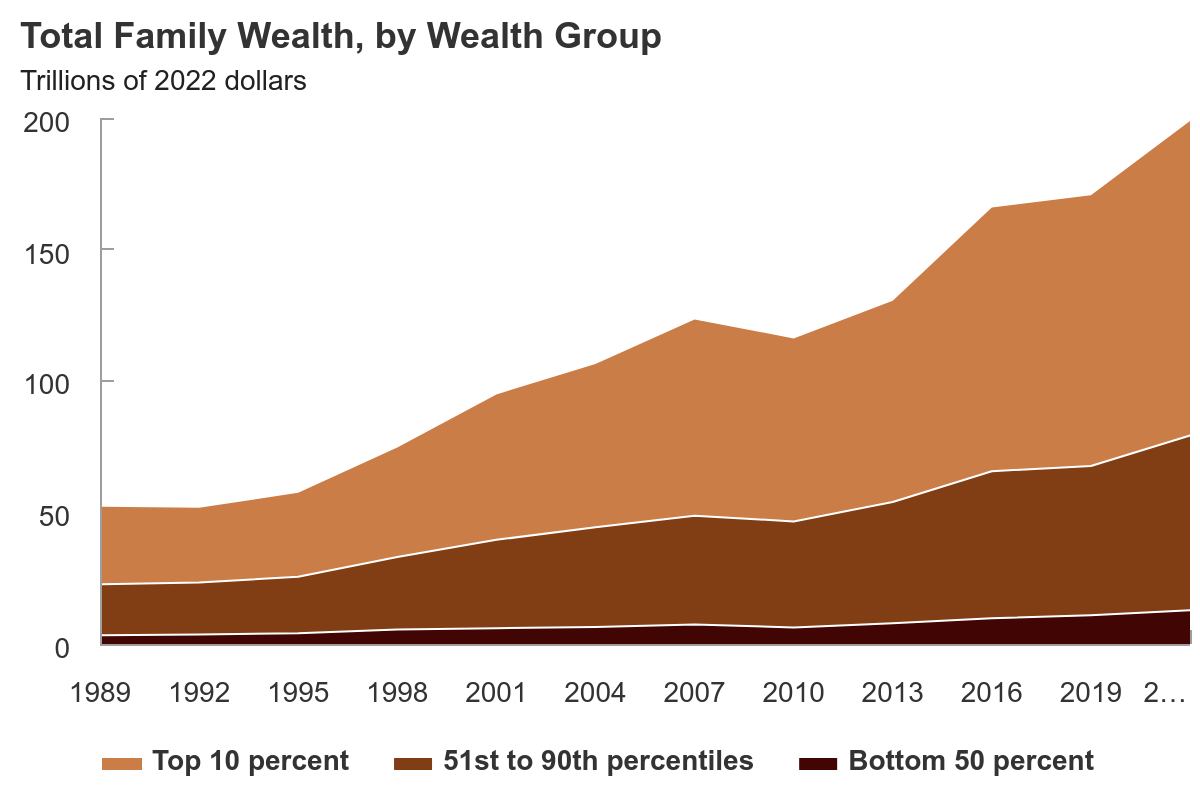
Even as wealth has become more concentrated in the highest income brackets, the tax rates on the upper ten percent and particularly the upper one percent have significantly declined since Ronald Reagan became President in 1981. Over the last forty years, the actual income tax rate paid by the wealthiest one percent of taxpayers has fallen from nearly 40 percent to 26 percent.23Robert McClelland and Nikhita Airi, “Effective Income Tax Rates Have Fallen for the Top One Percent Since World War II,” Tax Policy Center, September 15, 2021, https://taxpolicycenter.org/taxvox/effective-income-tax-rates-have-fallen-top-one-percent-world-war-ii-0. A key provision of the Biden Administration’s 2022 Inflation Reduction was to allocate $80 billion over ten years to the IRS to reduce tax evasion by the wealthiest taxpayers, an amount estimated to be over $600 billion each year.24Natasha Sarin, “The Case for a Robust Attack on the Tax Gap,” U.S. Department of the Treasury Featured Stories, September 7, 2021, https://home.treasury.gov/news/featured-stories/the-case-for-a-robust-attack-on-the-tax-gap; Arianna Fano, “Breaking Down the Federal Tax Gap,” Bipartisan Policy Center, June 27, 2024, https://bipartisanpolicy.org/explainer/breaking-down-the-federal-tax-gap/. Republicans used negotiations over extending the debt ceiling to cut the original $80 billion to $60 billion. Within weeks of Trump’s taking office, he ordered the IRS to lay off 6,000 employees, more than six per cent of the IRS staff, even as he made it clear that this was only the beginning of his assault on the agency. Blocking the IRS from requiring the wealthy to pay their taxes is clearly a cause close to Trump. As he said in his first 2016 debate with Hillary Clinton, “Paying no taxes makes me smart.”25Andrew Duehren and Michael S. Schmidt, “I.R.S. to Begin Laying Off Roughly 6,000 Employees on Thursday,” New York Times, February 19, 2025, https://www.nytimes.com/2025/02/19/us/politics/irs-layoffs.html; Richard Rubin, “Donald Trump on Not Paying Taxes: ‘That Makes Me Smart’,” Wall Street Journal, September 26, 2016, https://www.wsj.com/articles/BL-WB-65659; “September 26, 2016 Debate Transcript,” Commission on Presidential Debates, https://www.debates.org/voter-education/debate-transcripts/september-26-2016-debate-transcript.
In the 2024 campaign, Donald Trump’s unconcealed policies to protect wealthy Americans from paying taxes did not seem to resonate with most Americans who don’t have the advantage of overseas tax havens and creative accountants. Neither did his promise to end clean-energy programs and eviscerate regulations by the Environmental Protection Agency. For decades, the coal, oil, and gas industries have worked to discredit the conclusive evidence that the burning of fossil fuels is the major contributor to global warming. In 2009, Trump signed a full-page New York Times with over one-hundred American business leaders warning that if the United States and other countries failed to act decisively to slow climate change, it was “scientifically irrefutable that there will be catastrophic and irreversible consequences for humanity and our planet.26“Dear President Obama . . .,” New York Times, November 19, 2016, https://static01.nyt.com/packages/pdf/opinion/Dot-Earth/climatead09nyttrumplowrez.pdf. But in 2012, as he began his plans to enter politics, he tweeted that the “concept of global warming was created by and for the Chinese in order to make U.S. manufacturing non-competitive."27Edward Wong, “Trump Has Called Climate Change a Chinese Hoax,” New York Times, November 18, 2016, https://www.nytimes.com/2016/11/19/world/asia/china-trump-climate-change.html.
As in all matters Trump, this was a purely transactional move. Few people were shocked, or even noticed, when he told members of the American Petroleum Industry and over a dozen oil company executives at a private at Mar-a-Lago that they “should donate $1 billion to his presidential campaign.” In return, he said, he would roll back environmental rules.”28Lisa Friedman, Coral Davenport, Jonathan Swan, and Maggie Haberman, “At a Dinner, Trump Assailed Climate Rules and Asked $1 Billion From Big Oil,” New York Times, May 9, 2024, https://www.nytimes.com/2024/05/09/climate/trump-oil-gas-mar-a-lago.html.
Trump knows nothing about economics, science, or history that might guide him as the nation’s President, but his marketing skills honed by years hawking overpriced real estate projects, and his time on television playing the CEO on The Apprentice, created the illusion of him as a brilliant businessman despite his seven bankruptcies and the fact that a jury found his companies guilty of massive tax fraud that led to a $350 million fine. Perhaps many Americans have come to see cheating on taxes by the rich and using bankruptcy laws to stiff those to whom they owe money as simply “good business.”
Above all, Donald Trump discovered what sells in today’s political environment must be saturated with the trappings of entertainment. Our national comedian of cruelty found that the more vulgar, vile and threatening he became, the more millions of Americans adored him.
What initially bewildered me most was the willingness of millions of American voters to accept Trump’s tsunami of transparent lies. In time, I’ve come to believe that Trump sensed the new reality: most Americans believe all politicians lie. By making his lying so brazen and preposterous, he could be seen as somehow more “honest,” and “non-hypocritical” than his opponents.
Even though we can be certain that Trump has never read Hannah Arendt’s Origins of Totalitarianism (1951), he grasped one of her critical insights.
The followers of demagogues, writes Arendt, were “ready at all times to believe the worst, no matter how absurd, and did not particularly object to being deceived because it held every statement to be a lie anyhow.” Such power-obsessed leaders discovered they could “make people believe the most fantastic statements one day, and trust that if the next day they were given irrefutable proof of their falsehood, they would take refuge in cynicism.” They would insist that “they had known all along that the statement was a lie” and would admire their leader for his “tactical intelligence.”29Hannah Arendt, Origins of Totalitarianism (New York: Harcourt, Brace and Company, 1971), 433.
As long as you kept repeating something, “it didn’t really matter if it wasn’t true,” said Stephanie Grisham, Trump’s White House Press Secretary. “Casual dishonesty filtered through the White House as though it were in the air-conditioning system.”30Stephanie Grisham, I’ll Take Your Questions Now: What I Saw at the Trump White House (New York: Harper Collins, 2021), 138; Peter Baker, “In Trump’s Alternate Reality, Lies and Distortions Drive Change,” New York Times, February 23, 2025, https://www.nytimes.com/2025/02/23/us/politics/trump-alternative-reality.html.
Such contempt for the truth is not simply a matter of political tactics. It has demonstrable, and often deadly consequences. In the wake of the COVID epidemic, surveys showed that 75 per cent of Republicans told pollsters they had confidence in Trump’s advice on the epidemic. The result? An analysis published in 2023 in The Journal of American Medicine concluded that, once the COVID vaccine became available, "the excess death rate among Republican voters was 43% higher than the excess death rate among Democratic voters.”31Andrew Greiner, “75% of Republicans trust Trump’s medical advice,” YouGov, April 24, 2020, https://today.yougov.com/politics/articles/29305-75-republicans-trust-trumps-medical-advice; Jacob Wallace, Paul Goldsmith-Pinkham, Jason L. Schwartz, “Excess Death Rates for Republican and Democratic Registered Voters in Florida and Ohio During the COVID-19 Pandemic,” JAMA Internal Medicine, July 24, 2023, https://jamanetwork.com/journals/jamainternalmedicine/fullarticle/2807617; Alyssa Bilinski, Ezekiel J. Emanuel, “COVID-19 and Excess All-Cause Mortality in the US and 18 Comparison Countries,” JAMA Network, October 12, 2020, https://jamanetwork.com/journals/jama/fullarticle/2771841. Lancet, one of the world’s most trusted medical journals, compared America’s COVID response with our European allies during the Trump time in office and estimated that his administration’s inaction and misinformation led to the unnecessary deaths of at least 400,000 Americans.32Steffie Woolhandler, David U. Himmelstein, Sameer Ahmed, Zinzi Bailey, Mary T. Bassett, Michael Bird, et al., “Public Policy and Health in the Trump Era,” The Lancet, February 20, 2021, https://www.thelancet.com/journals/lancet/article/PIIS0140-6736(20)32545-9/abstract.
As I watched his rise to the presidency in 2016 and 2024, I recalled the 1955 book by Milton Mayer, They Thought They Were Free. In 1953, Mayer moved to the small German city of Marburg and came to know a number of local townspeople who looked back on their nation’s journey from the democratic Weimar Republic to Hitler’s Third Reich. None were more perceptive than Heinrich Hildebrandt, a retired teacher of classics and literature. What happened from the beginning of the new German Reich, he said, was the gradual acceptance of the German people to the step-by-step destruction of their democratic institutions, the rise of a dictatorship and the ultimate barbarity: the Holocaust. Each act was worse than the last, but only a little worse, he recalled, and he kept waiting for that one dramatic overreach by Hitler’s regime that would lead decent Germans to rise in resistance.
Then, one evening at dinner, his very young son began talking about “Jew swine”, said Hildebrandt, “and you see that everything, everything, has changed and changed completely under your nose,” recalled Hildebrandt. “The world you live in—your nation, your people—is not the world you were born in at all.”33Milton Mayer, They Thought They Were Free, The Germans, 1933–45 (Chicago: University of Chicago Press, 1955), 171.

Over the last decade a majority of white Americans have come to accept a President who does little to conceal his racism, his contempt for—and abuse of—women, his cruelty toward the displaced and the vulnerable, and his lack of any respect for democratic norms. Donald Trump is no Adolph Hitler, and today’s America is certainly not the Weimar Germany of the Great Depression. But the process of first being appalled by, and then gradually accepting his abnormal words and actions as “normal,” has marked Trump’s rise to power.
Hildebrandt called the response of the German people during the 1930s gewöhnung — "habituation." Social psychologists use the same word to describe the process by which, through repetition, words and behavior once considered unacceptable eventually become dismissed with a shrug. “Just Trump being Trump.” Barring some dramatic shift in the public mood, that process will only continue during a second Trump administration as we are overwhelmed by his incompetence, his merciless cruelty, and his demand for a powerful “unitary executive,” the kind of unlimited authority claimed by monarchs and dictators.
Despite his words and behavior, Trump has gained the passionate support of an overwhelming majority of Republican voters. Their unquestioning embrace has allowed him to achieve something that has never happened in American history: the complete control of one of the nation’s major political parties by a reckless demagogue. Having abandoned integrity and, what earlier generations called a “sense of honor,” his nominees, appointees, and elected Republican officials have prostrated themselves before a President who openly announced that his false claim that the 2020 election was stolen allowed him to “terminate all rules, regulations, and articles, even those found in the Constitution.”34Isaac Arnsdorf and Josh Dawsey, “Trump’s call to suspend Constitution divides Republicans,” Washington Post, December 4, 2022, https://www.washingtonpost.com/national-security/2022/12/04/trump-constitution-republicans/.
Trump’s dismissal of constitutional restraints has been a persistent pattern. Less than a month into his new administration, in a post-midnight post on his “Truth Social” account, he wrote: “He who saves his Country does not violate any law,” a restatement of a quote attributed to Emperor Napoleon Bonaparte. Whether Napoleon actually made such a statement is irrelevant: it reflects Donald Trump’s belief that he is above the law.
Such assertions of unlimited executive power would have discredited any politician a half century ago; a much less extreme claim of presidential authority by Richard Nixon led the Republican Party to abandon the nation’s 37th President and force his resignation in 1974. But the guardrails that help protect our democracy (however flawed) have fallen away during the last thirty to forty years and a crucial element in this process has been the declining confidence of Americans in the institutions that are essential to making informed public policy choices. “Elitists” of all kinds, scientific and medical organizations, professional journalists, social scientists, academics, researchers, colleges and universities, the government agencies that protect our health and safety, judges, prosecutors and legal institutions: all are dismissed as part of the corrupt “Deep State.” While hardly perfect, these social repositories of inquiry and knowledge incorporate ethical guidelines and self-correcting procedures that seek to arrive at some measure of truthfulness, making them infinitely preferable to understand the world as it is rather than what we wish were true, or what feeds our deepest fears.
Is Trump simply a beneficiary of this transformation in our politics? Or is it a moment when an individual’s bizarre and troubling behavior seems matched to our national mood? Since the 1960s, mental health professionals have been wary of diagnosing the mental health of individuals, particularly politicians, but in his 2019 analysis, Diagnosis from a Distance, psychologist John Martin-Joy suggests that, given Donald Trump’s clearly unstable behavior, we may have no choice but to make that assessment.35John Martin-Joy, Diagnosing from a Distance: Debates over Libel Law, Media, and Psychiatric Ethics from Barry Goldwater to Donald Trump (Cambridge: Cambridge University Press, 2019) 224–228.
John Gartner, a nationally recognized psychologist who taught at Johns Hopkins University Medical School for twenty-eight years certainly agrees. He has made a powerful argument that Donald Trump “suffers from malignant narcissism, a diagnosis far more toxic and dangerous than mere narcissistic personality disorder because it combines narcissism with three other severely pathological components: paranoia, sociopathy, and sadism.” In a 2020 essay, Gartner documented Trump’s persistent narcissism (he knows “more about everything than anyone” and his “empathy for no one but himself”). The President’s paranoia was reflected in “his demonization of the press, minorities, immigrants, and anyone who disagrees with him.” Such attributes, concluded Gartner, are classic signs of paranoia. Equally dangerous were the examples of his sociopathy, “a diagnosis that describes people who constantly lie, violate norms and laws, exploit other people, and show no remorse”. Finally, there was his constant sadistic behavior—“He takes gleeful pleasure in harming and humiliating other people. He is undoubtedly the most prolific cyberbully in history.”36John Gartner, “DEFCON 2: Nuclear Risk Is Rising as Donald Trump Goes Downhill,” in Rocket Man: Nuclear Madness and the Mind of Donald Trump, ed. John Gartner, Steven Buser, and Leonard Cruz (Asheville, NC: Chiron Publications, 2018), 29–30.
As it has become more difficult to winnow truth from the torrent of lies, it becomes easier to accept his repeated claim: “I alone can fix it.” Any misgivings can be set aside by finding confirmation of Donald Trump’s lies on conspiracy-affirming social media platforms or Fox News.
Trump also learned much from the internal infighting that marked his first administration. The second time around, he is making certain that every appointment and every candidate who hopes to be re-elected is totally dependent upon his whims. There will be no voices to resist or to ask probing questions. And unlike his first administration, he now has the coordinated support and financial backing of much of America’s plutocracy as well as the right-wing ideologues who produced Project 2025 and have vetted individuals to carry out his wishes.
Indiana Senator Jim Banks (R) described the beginning of the second Trump administration as "shock and awe," but it was essentially Steve Bannon’s recipe: “Flood the zone with shit,” overwhelming critics and the opposition party while insuring that members of his party will approve all his nominees and appointments, even if they are incompetent, convicted criminals, sexual predators, paranoiacs, or xenophobes.37Robert Costa, “Trump ally says first 100 days will be ‘shock and awe’,” CBS Sunday Morning, January 19, 2025, https://www.cbsnews.com/news/trump-ally-says-first-100-days-will-be-shock-and-awe/; Brian Stelter, “This infamous Steve Bannon quote is key to understanding America’s crazy politics,” CNN Business, November 16, 2021, https://www.cnn.com/2021/11/16/media/steve-bannon-reliable-sources/index.html.
As someone who generally votes for Democratic Party candidates, I have been disappointed with election outcomes in the past. However discouraged, I never felt that Ronald Reagan, or the father and son Bushes (or even Richard Nixon) represented a fundamental threat to our democracy. Donald Trump and the extremists, loyalists, and enablers who fill his Administration are that threat and I have no illusion that a subservient Republican congressional majority will stop his abuses of the Constitution. Perhaps the Supreme Court will block his most radical acts, but the Court’s July 2024 decision granting him absolute immunity for actions taken “within his constitutional powers as president” is far from reassuring.38Trump v. United States, 23 U.S. 939 (2024), https://www.supremecourt.gov/opinions/23pdf/23-939_e2pg.pdf.
In all the post-mortems that followed the 2024 election, an interview with Anne Applebaum by the New York Times’ Ezra Klein captured what I had been thinking but couldn’t put into words. As Klein writes:
One of the challenging things about covering Donald Trump is that it is hard to talk about him without sounding unhinged—and that is because he acts in ways that are, by any reasonable standard, unhinged. . . . He makes his opponents look like rabid antagonists by making them respond to a reality that leaves no room for neutrality, no room for a wait-and-see open-mindedness. He creates a wild reality—and then you sound wild simply describing it.39Ezra Klein, “Trump Kicks Down the Guardrails,” New York Times, November 19, 2024, https://www.nytimes.com/2024/11/19/opinion/ezra-klein-podcast-anne-applebaum.html.
In 2018, when the news media uncovered the full extent of the Trump Administration’s deliberate policy of separating children from their mothers and fathers, Joe Biden responded in what would become his refrain over the next six years, “This is not who we are.” He was not referring to policy, but to a code of moral and ethical beliefs that he assumed Americans shared.
Joe Biden was mistaken. On election day, 2024, 61 per cent of white men and 53 percent of white women voted for Donald Trump. This is who the majority of white voters have become.
So, what is to be done? In his 1862 message to Congress as the war for the preservation of the union began, Abraham Lincoln told the nation: “The dogmas of the quiet past are inadequate to the stormy present. The occasion is piled high with difficulty, and we must rise with the occasion,” he said. “As our case is new, we must think anew, and act anew. We must disenthrall ourselves, and then we shall save our country.”40Abraham Lincoln, “December 1, 1862: Second Annual Message,” Miller Center Presidential Speeches, https://millercenter.org/the-presidency/presidential-speeches/december-1-1862-second-annual-message.
More than a century and a half later, Lincoln’s words speak to the present threat to American democracy and the values we once shared. The crisis has been in the making for over half a century. This and future generations now face the long task of reimagining what kind of America, what kind of world, is worth fighting for. 
About the Author and the Photographer
Dan T. Carter is Educational Foundation Emeritus Professor at the University of South Carolina. He is the author of numerous books and articles including The Politics of Rage: George Wallace, the Origins of the New Conservatism, and the Transformation of American Politics (Louisiana State University Press, second edition, 2000) and Unmasking the Klansman: The Double Life of Asa and Forrest Carter (Athens, Georgia: New South Books, 2023)
Tom Rankin is Professor of the Practice of Art and Documentary Studies at Duke University where he directs the MFA in Experimental and Documentary Arts. His books include Sacred Space: Photographs from the Mississippi Delta (1993; Deaf Maggie Lee Sayre: Photographs of a River Life (1995); Faulkner's World: The Photographs of Martin J. Dain (1997); Local Heroes Changing America: Indivisible (2000). He edited and wrote the introductory essay for the book One Place: Paul Kwilecki and Four Decades of Photographs from Decatur County, Georgia (2013). He is a member of the Southern Spaces editorial board.
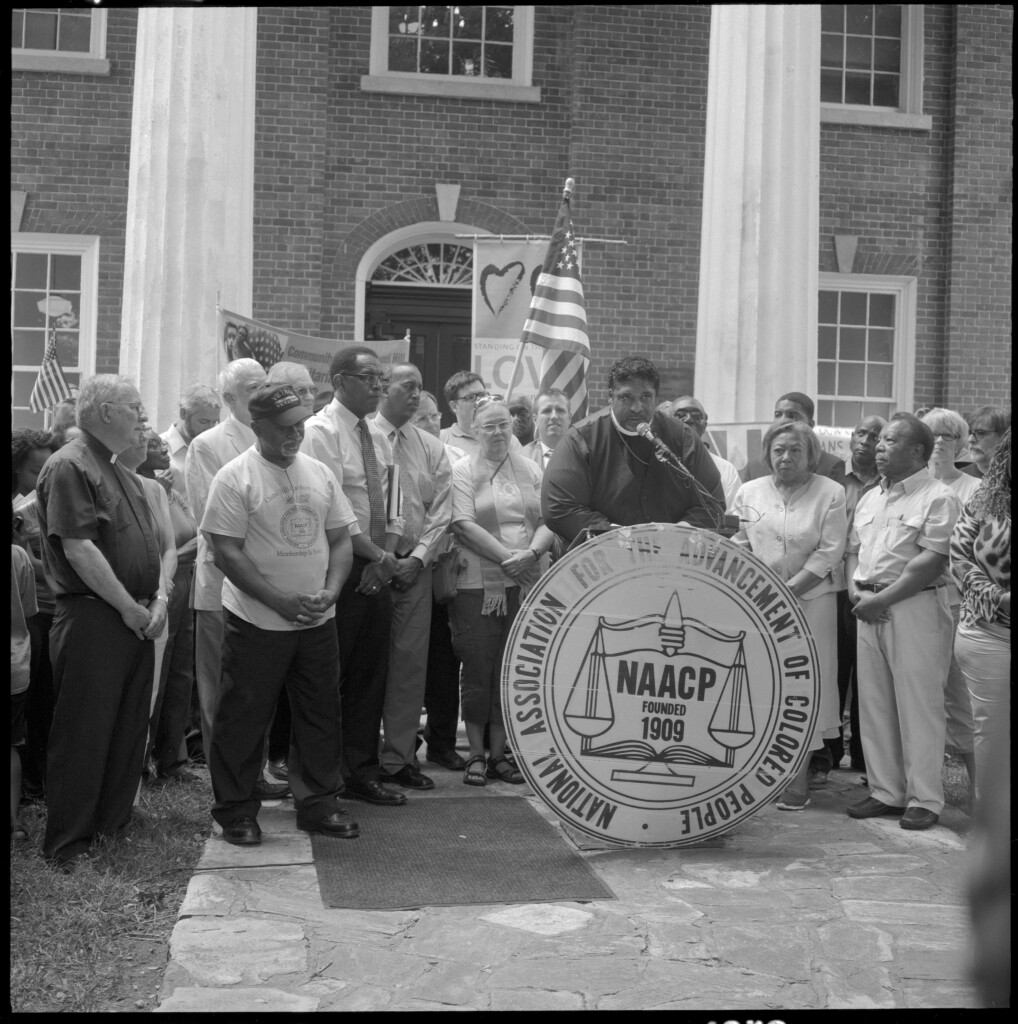
Cover Image Attribution: Camden, Tennessee Christmas Parade, 1982 Billboard along I-65, Indiana, 1976. Photograph by and courtesy of Tom Rankin.
]]>Introduction: The Selected Shepherd: A “Fair, Just Place”
Let us live beyond the here and now by nurturing each other and supporting one another’s works.—Assotto Saint, “Why I Write”1Assotto Saint, “Why I Write,” Spells of a Voodoo Doll: The Poems, Fiction, Essays and Plays of Assotto Saint (Richard Kasak Books: New York, 1996), 3–8, 5.
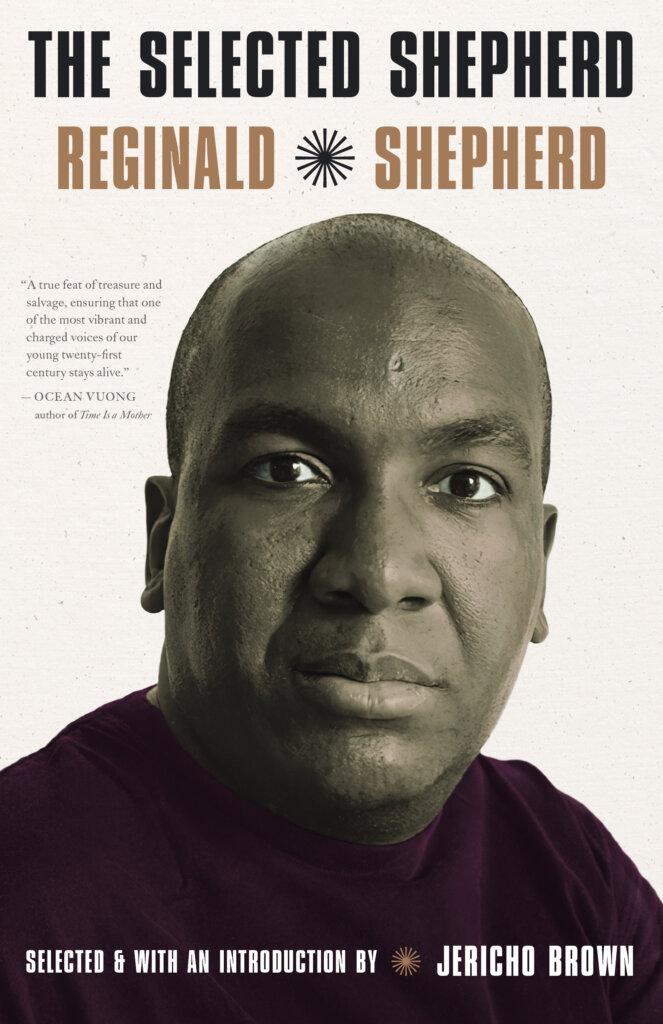
In the first lines of his introduction to The Selected Shepherd (University of Pittsburgh Press 2024), editor Jericho Brown writes of the impossible effort of introducing “a dead man,” the late poet Reginald Shepherd , to readers: “You mean to honor him knowing that you cannot present him as he might present himself.” Brown’s work with The Selected Shepherd allows Shepherd to introduce himself to readers as he would were he still with us: directly through his poetry. Brown describes Shepherd as an unpredictable, fearless, and brilliant poet who wrote “a little more wildly” across each of his six published collections.
Following a short biographical sketch and brief framing narrative written by Eric Solomon, Southern Spaces presents an edited conversation between Eric and Jericho Brown about the work, resonance, and legacy of Reginald Shepherd.2This conversation took place at the Emory Center for Digital Scholarship on August 6, 2024. Brown previously spoke with Natasha Trethewey for Southern Spaces in 2010. See Jericho Brown, “Naming Each Place,” Southern Spaces, March 4, 2010, https://southernspaces.ecdsdev.org/2010/naming-each-place/.
Reginald Shepherd was born Reginald Berry on April 10, 1963, in New York City. When he was five years old, he was issued a birth certificate with the name “Reginald Shepherd” after his mother’s successful suit against the absent man legally proven to be his father. His mother, Blanche Berry, raised him and his sister Regina in the Bronx where he remembers going by “Reggie” until he adopted the more formal “Reginald” in his mid-twenties. (Shepherd addresses the permutations of his name in the essay “What’s in a Name?”3Reginald Shepherd, “What’s in a Name?,” A Martian Muse: Further Essays on Identity, Politics, and the Freedom of Poetry, edited by Robert Philen (Ann Arbor: The University of Michigan Press, 2010): 193–198.). After his mother’s death when he was fourteen—a fact that would shape much of his future poetry—Shepherd moved to his mother’s hometown of Macon, Georgia, to live with family until he left, after graduating from high school, at age seventeen. He enrolled as an undergraduate at Bennington College, leaving in his junior year to move to Boston where he worked at the Boston Public Library, before returning to Bennington to finish his BA four years after his initial expected graduation date. He earned two MFA degrees, one from Brown University and a second from the University of Iowa. Shepherd published five books of poetry [Some Are Drowning (1994); Angel, Interrupted (1996); Wrong (1999); Otherhood (2003); and Fata Morgana (2007)] with a sixth volume published posthumously, Red Clay Weather (2011). He also published two books of essays [Orpheus in the Bronx (2007); A Martian Muse (2010)] and edited two poetry anthologies [The Iowa Anthology of New American Poetries (2004) and Lyric Postmodernisms (2008)].
Shepherd met his partner, Robert Philen, in Ithaca, New York, in 1999, and the two moved to Pensacola, Florida, in July 2001. After a battle with colon cancer, Shepherd died on September 10, 2008, in Pensacola. Though he accomplished much in his career, Shepherd remained aware of the structural inequities that prevented men like him from accessing what he called “fair, just” places of belonging in the academic and literary worlds. “Sometimes I stand in the poetry section of Barnes and Noble and wonder how many authors there come from backgrounds like mine. They can be counted on the fingers of one hand,” he writes in an essay published the year before his death. “Unlike the vast majority of those in academia or the literary world, I have nothing to fall back on. Since leaving Georgia at seventeen, I have been on my own… I have gone from place to place, from circumstance to circumstance, and still I haven’t found that fair, just place, but I continue to search, hoping and believing that there’s a place for me.”4Shepherd, “To Make Me Who I Am,” Orpheus in the Bronx: Essay on Identity, Politics, and the Freedom of Poetry (Ann Arbor: University of Michigan Press, 2007), (7–38), 36–37. Sixteen years after his death, Jericho Brown’s The Selected Shepherd has helped secure the poet’s “fair, just place” on the bookshelves of our great poets.
Searching for Shepherd
Reginald Shepherd’s six volumes of poetry continue to amass a dedicated following from fans, fellow poets, and scholars. Shepherd’s work contains an intoxicating blend of image, metaphor, allusion, formal innovation, and often dizzying complexity. His work incorporates references from Hart Crane to Wallace Stevens to Walter Benjamin to Sam Cooke to Barry White while always remaining the work of an original voice and visionary.
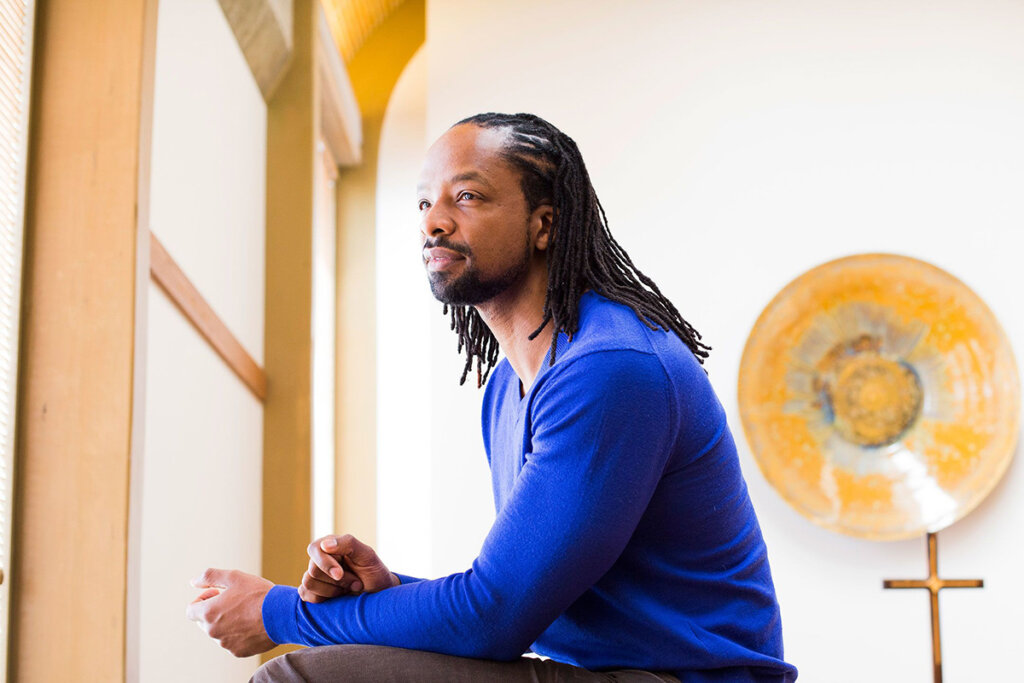
“I was around twenty-four years old when I first read Reginald Shepherd’s poem ‘Semantics at 4 P.M.’ in an edition of the Best American Poetry edited by Rita Dove,” Jericho Brown writes. Transfixed, Brown recalls asking other poets why he had not been made aware of Shepherd’s work beforehand. He continues, “the poem itself does not identify its speaker as gay, but if there is a queer voice, I believed I was reading it.” For Brown, Shepherd became an example of a “gay, Black poet who was alive,” and for those of us lucky enough to have discovered Shepherd’s work, it is the vitality and the voice—queer, brilliant, difficult, propulsive—that resonates long after the initial encounter. Though Brown’s work with The Selected Shepherd will now make a first encounter more accessible for many readers, I would argue that one does not find or search for Shepherd’s poems. As Brown’s story illustrates, you don’t find the poems; his poems find you. Or, as Brown states, poets “are the makers of the beauty that people didn’t know they needed until they see it.”5Jona Colson, “On Truth, Queerness, and Social Media: A Conversation with Jericho Brown,” Literary Hub, November 10, 2020, https://lithub.com/on-truth-queerness-and-social-media-a-conversation-with-jericho-brown/.
Similar to Brown, I (Eric) was twenty-three when I first came to Shepherd’s poetry by happenstance at a time when I needed to “see” his work. I was in an MFA poetry workshop as a MA student in English studying men and masculinities—i.e. not a poet—but we were allowed to take creative writing workshops as our schedules permitted. I recall vividly feeling like an “outsider” to what I perceived to be the “real” poets in the room (classic imposter syndrome), and I found my work at the time out of step with the much more highly innovative and experimental work of my colleagues.
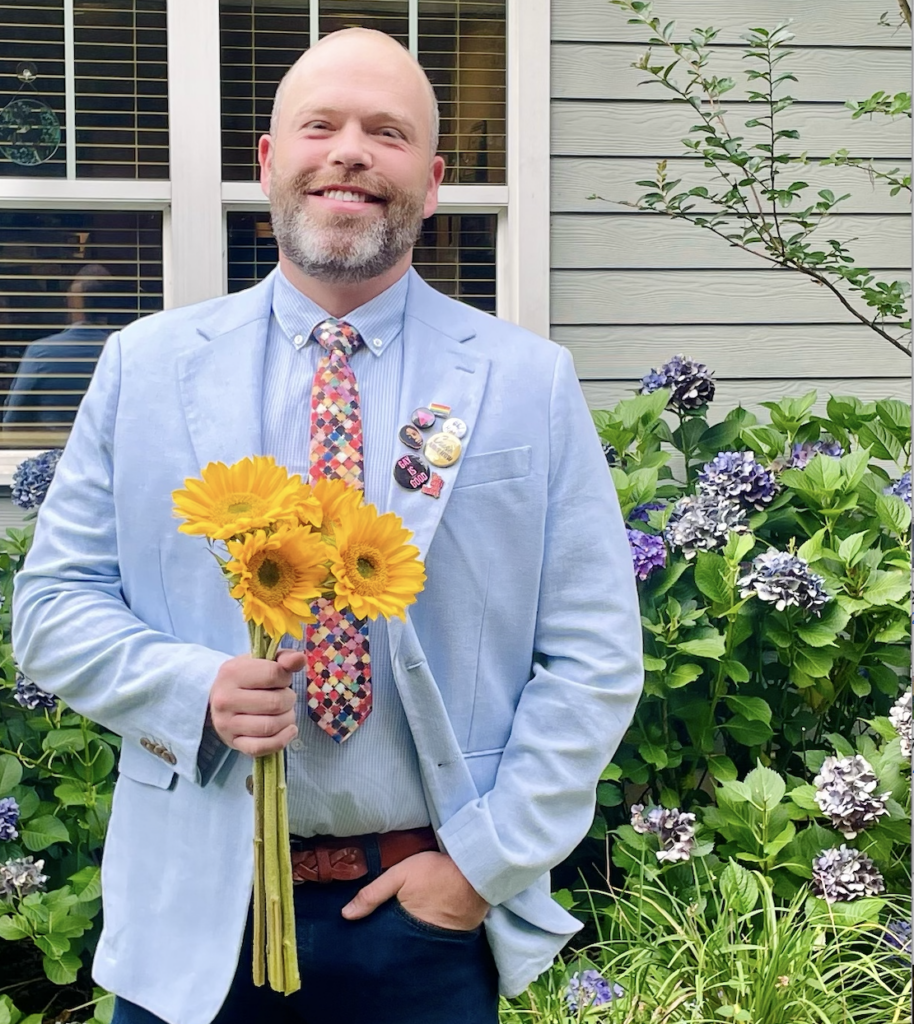
In retrospect, I was attempting in my juvenilia poems to rescue the stories of our queer dead from the tragic detritus to which their lives had forever been relegated in our collective memory. In one poem titled “Appendix,” I elegized Scotty Joe Weaver, an eighteen-year-old gay man from Bay Minette, Alabama, who was killed by two of his roommates in 2004. In another, I attempted to grapple with the death of Matthew Shepard, whose name now serves on official federal hate-crime legislation. One colleague recognized in my meditations on the queer dead something he called a poetic sense of rescue and reclamation, and he invited me to consider Reginald Shepherd when it came time to give presentations on the work of one contemporary poet in our MFA workshop.
Unlike Brown, by the time I found Shepherd, he had passed away. At my friend’s suggestion, I ordered copies of his published work, in which I found poetry full of life and resonance and contradiction and complexity and difficulty but not obscurity. Though they made me feel, I did not then, nor do I now, fully understand what I feel when I encounter and re-read a Shepherd poem. As Brown observes in The Selected Shepherd, Shepherd’s work is not easy by design. Shepherd thought poetry should be “hard enough” to sustain multiple re-readings, not written in such a way that it could be “used up” by readers after a few encounters.6Shepherd, “On Difficulty in Poetry,” A Martian Muse (33–45), 34. For Shepherd, poems should be able to contain different resonances with each return. In a conversation with Krista Tippett, Brown similarly states, “I think poems are better built out of what we don’t understand, not what we do already know, but what we’re trying to figure out and better understand.”7“Jericho Brown: Small Truths and Other Surprises,” On Being with Krista Tippett, June 6, 2019, https://onbeing.org/programs/jericho-brown-small-truths-and-other-surprises.
In searching for and finding Shepherd, equal in importance to the poems for me were something you will not find in The Selected Shepherd: his essays where the poet further attempted to understand his craft, his poetics, as well as identity, politics, and his life journey from the Bronx to Georgia to Boston to Brown University to Iowa and eventually to Florida. In the essays, Shepherd reveals his personal struggles as well as the difficulty of his relationship with academic institutions and the literary world. He also displays his vast critical knowledge and broad reading practice. Shepherd, comments Brown, “was a man who seemed to have read all the books you keep meaning to read.” Further, his insights on what we might call a queer literary canon are must-reads for those of us who study LGBTQ+ culture, past and present.
“My aim,” writes Shepherd, “is to rescue some portion of the drowned and the drowning, including always myself.”8Shepherd, “Why I Write,” Orpheus in the Bronx: Essay on Identity, Politics, and the Freedom of Poetry (Ann Arbor: University of Michigan Press, 2007), (188–198), 188.It seems to me that Shepherd’s “aim” exists in conversation with our queer cultural tradition: those of us in subsequent generations keeping “alive” some portion of the work of those who have gone before, many of whom were lost far too soon. When necessary, we rescue them from the dustbin of memory and place their stories and their works back on the central shelves of literary culture as Jericho Brown has done with The Selected Shepherd. Whether in our creative work or our work as editors, curators, scholars, documentarians or memory-makers, we claim places for our queer kin. As Brown writes, “we know poets don’t die. And if they do, people who love poetry can always resurrect them.” And in rescuing them, in resurrecting them, we rescue, always, ourselves. As Shepherd writes, no matter the challenges we face, we queer folk refuse to “forget beauty, however strange or difficult.”9Shepherd, “Why I Write,” 197.
Interview: Jericho Brown on Selecting Shepherd
Eric Solomon: Thank you, Jericho, for being here for this conversation in our Southern Spaces series “Queer Intersections.” I’ve organized the questions in two parts. First, is thinking about your editing of The Selected Shepherd . And then perhaps we can talk about how Reginald Shepherd’s work helps us think about Jericho Brown.
In choosing poems for The Selected Shepherd, you present a generally equal number from each of his six collections, with a little bit more from Angel, Interrupted. What were you looking for as you were editing?
Jericho Brown: When I got the opportunity to do this, I had somehow already started doing it in my head. It was the kind of thing, you know that phrase “comes to fruition”? it was the kind of thing that I don't even think I was aware of it until I was asked to do it. But I had started doing it somewhere in my brain as a Reginald Shepherd reader, as a person who teaches his poems, as somebody who's interested in his work, as someone who is actually taken by the ways in which his work could be uneven, even.
I don't love every Reginald poem. I don't love every poem by anybody with that many books. I had already started this system of ranking of this particular poet's work, which I think happened because there were so few Black queer poets on the national scene when I was first figuring out that I wanted to be a poet. There were so few that I could hold them all. I could read all of everything they said in every interview. I could read every book. I could read every essay that they had written. Now there are more than I can keep up with. But because there were so few, picking poems for me was at first a matter of going after what I already knew and trying to figure out which book -- was that in Otherhood? Was that in Wrong? Trying to remember exactly which book each poem is in. Rereading the books put me in a position where I could see what Reginald Sheppard's concerns were, or his obsessions, throughout his work. But more than that, it gave me the opportunity to see how he changed from book to book.
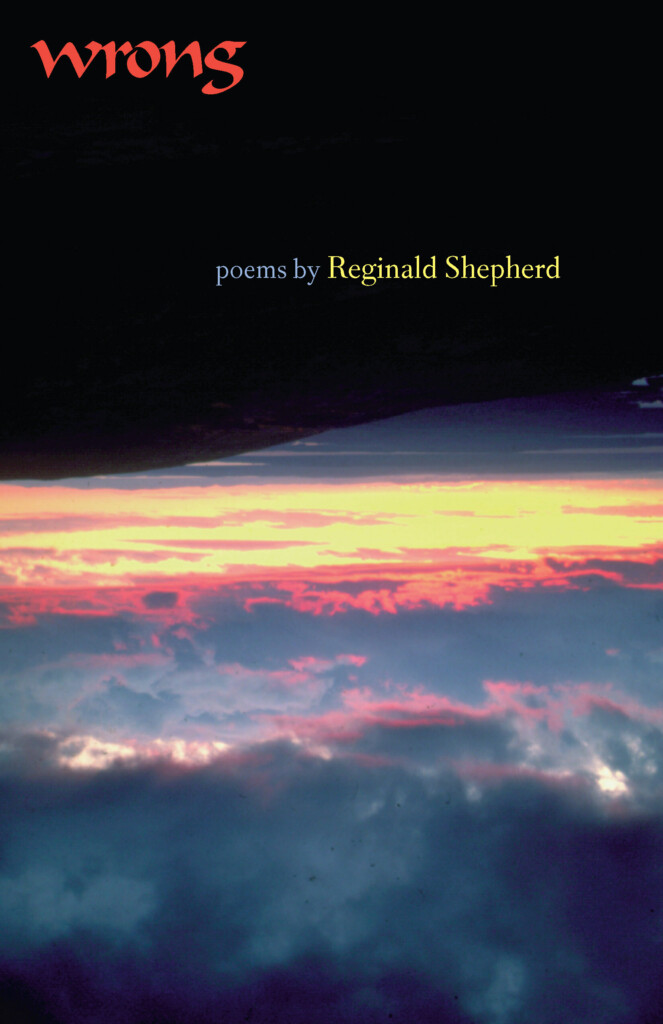
My goal in selecting the poems was to register those changes. I wasn't going to be able to make a book that only was the poems about nature, only was the poems about queer desire, or only poems about his mother. It was never thematic. It was always craft based. For instance, in Angel, Interrupted, he's very clearly trying to write a longer poem. In Otherhood, he's trying to figure out what to make of fragments. In Wrong, he's following up an influence through trying to see what would happen if Wallace Stevens wrote the queer love poem. All of that had a lot to do with how I went about selecting poems. As you mentioned, there are more poems from Angel, Interrupted and from Otherhood, but I just needed more poems to make it clear what those books were doing because they were doing it in a different way.
My favorite book by Shepherd is Wrong because I think it's the most honest that he is in all of his books. I think there are fewer poetic craft tricks. I really love Wrong. I love the long poem “Nights and Days of Nineteen-Something” and “Semantics at Four P.M.” Wrong feels to me when I'm reading it that it's a short book. I can hold on to it in a different way and walk around with it. At some point in “Nights and Days of Nineteen-Something,” he writes,
It was never sex I wanted, the grand etcetera
with a paper towel to wipe it up. I wanted him
to talk to me about Rimbaud while
I sucked him off in the park, drunk
as any wooden boat and tasting of old cigarettes
and Bailey’s Irish Cream, my juvenilia. Don’t talk
with your mouth full. (In the clearing
at the bottom of the artificial hill, his two hands
covered every part of me until I couldn’t be seen,
a darkness past the burnt-out lamppost.
There's something about that kind of audacity. And the way that it includes him. It is indeed that sort of thirst, that primal energy that we associate with desire. But it's also this guy who likes to read Rimbaud. Which is a specific and a particular guy. It's also somebody who's very aware; most of that particular poem includes cruising outside and having sex outside. But also being very aware of the natural landscape that surrounds him as he is following that primal desire, that urge to make love. I'm really taken by that poem and by a lot of the work in Wrong. I would read these books like crazy. I loved Reginald Shepherd, and I would look forward to the next book.
When it became clear to me that he was dying, I felt a kind of sadness. Not because I knew the man. I felt a sadness because I wouldn't be able to see what he was going to pull off next. I thought he was brilliant, and I loved his prose, and I loved following his blog -- at the time that people had blogs. You could wake up and go to the internet and see a beautiful new essay about poetry from Reginald Shepherd, which always included names of poets you never heard of. And because you had never heard of them, you could look them up. You had more reading to do. In many ways, he was like my teacher. I had a lot of respect for him. And I'm glad Terrance Hayes and the editors at Pitt asked me to do it.
Shepherd and Myth
Solomon: I love your craft-based approach being one to register the changes across the six collections and to pull poems that spoke to those changes. And I was reflecting on my own reading of Shepherd. I first encountered his work in 2008, 2009 -- Wrong meant something to me as well. Reading it now, in the light of what you're saying about honesty and audacity and that kind of drive that you see with desire in the poem.
Before we get into thinking about the resonances between Shepherd's work and your own, speaking of those essays that he would post on his blog, he says something about myth, and I'm curious how you understand the role of myth as you were selecting Shepherd's work. He writes in 2007 that “myth can also be used to place one's own experiences, thoughts and feelings in a larger context, opening them up to realms beyond the individual, making them less purely personal.”10Reginald Shepherd, “Mythology in Poetry,” Reginald Shepherd’s Blog, August 17, 2007, https://reginaldshepherd.blogspot.com/2007/08/mythology-in-poetry.html#:~:text=Myth%20can%20also%20be%20used,of%20the%20myth%20of%20Odysseus. How do you see myth in Shepherd's work? Is it speaking to that kind of audacity and that honesty? How is it functioning? As you were selecting poems, did you find yourself drawn to examples of the Adonis, Orpheus, and Narcissus figures?
Brown: No, he uses Greek myths so much that you wouldn't have to plan it out. It's going to happen. Any book you would do selecting Reginald Shepherd's poems, there are so many allusions to Greek mythology that you wouldn't be able to get around it. He had questions about this himself. If you check out the interview he did in Callaloo with Charles Rowell, he talks about that relationship to Greek myth, but also what that might suggest about his relationship to whiteness in general -- which I was really taken by.11Charles Rowell and Reginald Shepherd, “An Interview with Reginald Shepherd,” Callaloo 21, no 2 (Spring 1998), 290–307.He was always honest, and even though he was participating in it, he would also question the ways in which what he thought of as beauty had been informed by whiteness, by white beauty standards. Of course that included not just who he was attracted to physically, but his reading and how that reading played out and how it worked out. And we're all doing that in some way or another. You can only write as wide as your reading is. If you have various kinds of cultures coming in, then that will come through.
People think differently about what writing is and how it's done. What the “we” means in a poem and what the “I” means. That's different considering who you're talking to. And if everything you read is informed by the same classical rendering, then you're going to have a lot of Greek myth in your poems and you're going to have a lot to question about why that Greek myth is there. What does it really mean? And many poets do it. Many poets of color, many African-American poets, even Indigenous poets are making use of, or identifying with, mythological figures from the Greeks. And part of the reason we do that is this understanding that this is something our readers will share. I think Shepherd was very serious about making use of Greek myth because he was very serious about beauty, and he understood that poems must be beautiful.
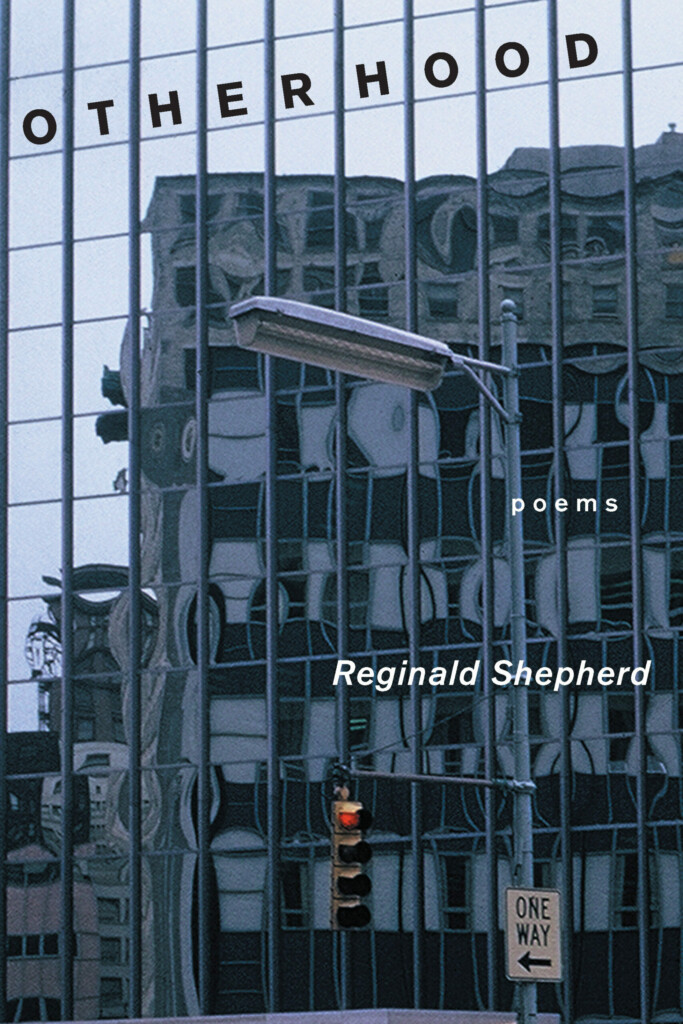
You said something earlier about the book Wrong, and it having meaning for you. Even the titles of Shepherd’s books are so tragic: Otherhood, Some Are Drowning, Wrong, Fata Morgana, Red Clay Weather. It does not sound like a good time. Greek myths lend themselves to tragedy. And Reginald Shepherd, I think, needed a kind of, how do I say this, a backdrop or a landscape of tragedy on which his poems could grow and through which he could build artifice. The Greek myths are full of rapes. They're full of wars. I think it was very important to what he was doing, but I chose poems thinking, okay, in these poems, Reginald Shepherd is making a lot of leaps, a lot of what seems to be non-sequitur leaps. And Orpheus happens to be in here. But in this poem, in another book, for instance, things are very narrative, but Orpheus happens to be in here. So, Orpheus is going to be there.
Solomon: Myth is just a vehicle for him, one of the traditions that he's drawing from and reimagining throughout his work. I know that you were registering changes as you were selecting, but myth is, as you're saying, omnipresent. You couldn't get around it, but it wasn't a strategic thing as you were selecting the poems.
My next question is about the relation of Shepherd with your work. Certainly, the use of myth is a common thread, but I'm thinking in another interview you talked about how poets love flowers, and the use of flowers that connects your work with queer culture. As I was reliving these poems through your work with The Selected Shepherd, I noticed ways in which Jericho Brown and Reginald Shepherd's poetry were in conversation with each other. Have you reflected on these resonances? Either as you were selecting the poems, or post the volume coming out?
Brown: It's hard to tease out.
Solomon: Maybe it's easier for a scholar looking in.
Brown: Yeah, I actually like hearing that. I like finding out what I'm doing and how people relate it to the poets that I'm influenced by. Because I always see things I've never seen before. I recently realized I’ve been reading this poem by Shepherd for years -- I can't think of what poem it is -- but there's a certain kind of phrasing that he uses that I use toward the end of a poem of mine called “Say Thank You, Say I'm Sorry.” As I was reading on a podcast, I'm like, “Oh, I stole that syntax.” I don’t use the same words. I realized there's a lot about my work in terms of syntax that I probably learned from Shepherd.
There are other poets who helped with this, but Shepherd helped me realize that what was most important about my writing would be how singular it was, or is. That I had to somehow either be myself or create a version of my self, and that had to be the speaker of my poems. The way Jericho Brown makes use of sentences. What I sound like in a poem has to be only what I sound like in a poem. So, part of what Shepherd does for me, reading his work through and through, is you realize nobody else wrote these poems.
No one could have written a book like Wrong but Reginald Shepherd. No one could have written “My Mother Was No White Dove,” or “Semantics at Four P.M.” but Reginald Shepherd. And I think he is the person who led me to understand that. It’s like when musical artists appear on the radio, I know its them. The deejay at the radio doesn't have to say “here's the new song by . . . .” I just know, because I've been listening to music, and I know what they sound like. There's really never a question when Mary J. Blige comes. And I figured out through Shepherd that in my own work, when people are reading a Jericho Brown poem, they need to be like, is that Jericho Brown?
So, what does that mean about a consistency of heart, a consistency of intellect, of line, of phrasing, of a kind of experimentation? Which I think was his goal. How do I continue to question myself and to challenge my idea about what a poem is and yet remain who I am throughout the poem? How is it still me? And obviously “me” changes and grows. And yet there's a way that when we look at that last book and we look at that first book by Reginald Shepherd, we can see that it's the same guy, but it's so different. That last book is so different from anything else he's written mostly because he wrote it on his deathbed. He was dying when he was finishing that book. He didn't even get to put the book in order. His partner, Robert Philen, ordered it, but it's all Shepherd’s poems. Which is why there's so many in that last book. I kind of got frustrated because there's so many very long poems, one right after another. And I'm like, “Bro, Shepherd wouldn't have done that.” [laughter] Those long prose poems. But I also noticed maybe he would have done it because it was his first time writing prose poems. I'm fascinated by what those poems yield.
Solomon: Yeah. You're comparing what you learned from Shepherd, that sense of voice, with your own. It is a Jericho Brown poem. It is Reginald Shepherd poem. That can be consistent even if, as you said, the experience of selecting these poems was to track the way he changed in terms of his craft across the six collections. Even though it's changing, there's always a sense that when you read a Reginald Shepherd poem, you know it’s him. And I will say that's also true of a Jericho Brown poem.
Brown: Aw. [laughter] Thanks Eric.
Shepherd's Queer Eros
Solomon: You're welcome. Another thing that I notice as someone who considers myself to be a queer cultural historian, I'm always down for seeing tongue-in-cheek play with the queer community or, “mock” is not quite the right word, but just send us up a little bit. Remind us not to take ourselves too seriously. I think Shepherd does something like that in “The God's at Three A.M." Or where you do it in your poem “Host” which, I think is subversive; it has a message. It's not just pure satire, but it is reminding us as queer people to be better to one another.

Brown: Yeah. To be better to one another is interesting. I never knew I wrote that. But I'm happy to hear it. I'm not against hearing that. I think what attracts me to those poems that you're talking about by Shepherd and by any queer writer, is the same thing that attracts me to poems that I'm attracted to by certain Black writers, whether they are queer or not. Because they're “in-house.” There's a way that you can read Shepherd’s “The Gods” and what you and I see in that poem we know other people are just not going to see. Because we've actually been to that bar. [laughter] And we understand that we could go to any city in America and still go to that bar and see those characters. [laughter] And we can see ourselves. Like, who am I in this poem? And yeah, that’s what is meant in a poem by me, like “Host.” Obviously, there's a reader who won't have had that experience, and they're sort of observing it from the outside, and maybe even identifying with it, but in a different way. It's the same thing as when, Future has this lyric where he says, “Y'all move that dope.” And I'm always amazed. When that song was such a huge song, every time I went to a club, every time I turned on the radio, I would hear that song. And I remember thinking, none of these people dancing to this song are drug dealers. [laughter]
Solomon: Were they “in the know”?
Brown: Yeah, like if I was really moving dope, that song probably had a certain kind of meaning to me when it came out, but when I'm listening to this song, I'm just thinking about grading papers. [laughter] I'm not trying to move dope. I'm just trying to stay up late enough to finish a poem.
I do think some things you can extrapolate or translate beyond that immediate in-house audience, but having an in-house audience I think is the actual backbone to voice. If we're having a conversation about Reginald Shepherd, we're talking about a poet who was always willing to be himself, to always have his own experiences in his poems. And so, sneaking around to make love outside, which I think queer people actually know less about than they used to.
Solomon: I agree.
Brown: But sneaking around to make love outside is an in-house conversation. It can translate. It can extrapolate to anybody sneaking around to do anything. But my experience reading those poems is “Oh, there I am.” Thank you, Reginald Shepherd, for writing this thing about yourself that shows that I'm not crazy, that shows that I exist.
Solomon: And that you're not alone.
Brown: Exactly.
Solomon: A whole history of what we might call cruising.
Brown: Yeah, that I miss. Yeah. [laughter] A whole history of cruising.
Solomon: That some people don't think we need anymore, right?
Brown: Yes. Well, I mean, maybe that's not what this interview is about, so I'll let that go. I don't know if people think we need that anymore. I just know you can meet a guy online and whatever happens from that happens. And you can meet a guy at the grocery store. And if you meet a guy at the grocery store, my personal history has shown that there were more options for what I could do with the guy and what the guy could do with me. When I meet a guy online, it's either I have to make love to you now or marry you? [laughter]
Solomon: There aren’t as many options ... And I love that Shepherd invites us to have this kind of conversation about his work.
Brown: Yeah, exactly.
Solomon: In a way that if I were someone different, if you were someone different, and we were sitting here talking about Reginald Shepherd, maybe we wouldn't be talking about “The God's at Three A.M .” The idea of cruising that you mentioned. I think that's beautiful that his work allows for all these entry points.
Brown: He would love that. And I think that we should also mention that this is all happening for Shepherd from his first book onward at a time when he is in those anthologies with Joseph Beam and Marlon Riggs and Essex Hemphill -- who also heavily used Greek myth. But there's no mixing up Hemphill and Shepherd. Among Black queer writers, even Carl Phillips at the time, there is this idea: we are going to say what our actual experience is in our poems, and we are not coding it. The code will be the fact that we reach out to you, Jericho, in that library when you're nineteen years old. In this library, actually, which is where I found Essex Hemphill’s poems.
Solomon: What you're saying reminds me of Assotto Saint’s “Why I Write” where he says (and I’m paraphrasing) we have an obligation to not file away our experiences in a desk drawer. I think that is very much clear in Shepherd's work and in your work and in Hemphill, and Riggs, and the people that you're mentioning.
Shepherd and the Natural World
You write in the Introduction to The Selected Shepherd, about framing his work around three primary concerns: 1) an understanding of the natural world as endangered; 2) his grief over the death of his mother when he was fourteen, and 3) his desire for the white male body and self-identification as a “snow queen,” and his processing of what this desire might mean.
Can you talk about the way Shepherd “reflects on the beauty of the natural world through an understanding of that world as endangered.” How did his thinking change from Some Are Drowning to Red Clay Weather? Or was it always the natural world as under threat? Did you notice different nuances as you were moving through?

Brown: I think that maybe the one thing Shepherd would have in common with a poet like Mary Oliver is this idea that you protect and conserve the natural world not because of conservation, not because of its resources, but because it is holy. Every image from the environment is always a reason to be excited about nature. But we understand in many of the poems that that which we should be excited about could end.
For me, coming up with these concerns first had to do with separating what is a concern or a subject from that which is artifice. Greek mythology is not a subject, it’s an artifice. He's not writing a poem about the Greek myths. He's making use of classical allusion in order to say something about these other things.
Poets have to use what they have. And what we do have is a bunch of trees, flowers, and grass. We have the sky. We got some dirt. Those things seem to have already been here. They seem to have some capacity to be here if you get rid of us. And I think that particular concern is also the reason why poets can tell you the name of every flower. You just don't know what every flower looks like. You wouldn't be able to actually point to a narcissus. [laughter].
Because you read that part of the intro, I'll read what I say right after that, which I think deals with that, that first concern:
In each book, Shepherd reflects the beauty of the natural world through an understanding of that world as endangered. In his first book, Some Are Drowning, this endangerment appears in direct proportion to the fact of whiteness. And then I quote, “My true love's eyes / are nothing like my own, are bland as the suburban lawn / he mows on a summer Sunday afternoon, backyard / cookout with domesticated dog (And the beef cattle / graze x world? And the deforestation proceeds by x miles / per minute?).”
And that endangerment status matters all the more as environmental elements often get presented as characters with agency. Here are a few lines from “Surface Effects in Summer Wind” from Wrong:
I'm learning to remember the sound
days make: one sky disdaining the idea
of clouds, sunlight surviving
its centrifuge, breeze keeping blessed September
at bay.
Notice September is what's at bay. Then in the same poem a few lines later, he writes:
Midnight,
look at the things I've done
in your name, in my dark, walking out
into the street that changes nothing
Midnight gets called on and talked to directly. September gets held at bay. That which you think of as the natural occurrence, the natural world, has a mind and a life of its own. And the speaker in Shepherd's poems understands that and is always speaking directly to that mind and that life of the natural world.
Solomon: So, there's a sense of that agency of the natural world and that agency being under threat by human actions.
The Day the 'World Ended': Shepherd's Perpetual Return
The second concern is from the very first page of Some Are Drowning to the very last page of Red Clay Weather. It’s everywhere in his poetry. It calls to mind other poets who have talked about what it means to have that sort of exigence—what motivates you to write; what, in many instances, traumatically or tragically, happened that somehow gave you the engine to write. In his poetry and essays, Shepherd writes constantly about – and is processing -- the grief over the death of his mother. In the poem “Vampires,” for example, which you select, he writes “a song like every song for the dead” or in “For My Mother in Lieu of Mourning,” which is in Fata Morgana: “Would you have frozen in these lines? You were their possibility: now love must find another shape.” Really powerfully returning over and over again to what it was like to lose his mother when he was fourteen years old.

I know you spoke with Natasha Trethewey in 2010 in Southern Spaces, and I think about hearing Trethewey speak about that existential wound, the murder of her mother, and also at such a young age. And Shepherd speaking in an essay that he would publish, talking about the day “the world ended” on March 31st, 1978, which was the day of his mother's death.12Reginald Shepherd, “To Make Me Who I Am,” Orpheus in the Bronx: Essays on Identity, Politics, and the Freedom of Poetry (Ann Arbor: University of Michigan Press, 2007), 22. Two questions here. One, how did you live with the loss of Shepherd's mother in these poems as you were reading them? How did that return for you? And then the second question is more for Jericho Brown: does that sense of a wound that writers write from jive with you? Does that make sense to you? What was it like living with that concern that you identify in Shepherd's work?
Brown: I just think it's his best work. I think it's his most beautiful poems. I think when his mother comes into a poem, I'm probably going to like the poem. I think that she was his way into and back to blackness. She was a specter to him. There's a way that she haunted him, and therefore, blackness haunted him. Whenever he talks about music in his work, his mother's coming up. If Sam Cooke, Donny Hathaway, or Otis Redding is in the poem, then his mother's in the poem. Also, the color black itself seems to always appear in a poem where his mother appears, if not talking about Black people, just the fact of a black shirt or a black shoe. I think it's also beautiful because it's not Hallmark washed. It's not a Mother’s Day card. The relationship between the speaker and his mother in these poems is fraught. There's fear as well as love. There's regret. There's also a calling out of neglect in some cases. Reginald Shepherd used to write that his mother knew that if she gave him a book, he would be occupied for the duration of the time that it took him to read the book. So, she could do whatever she wanted. She went through the trouble of making sure he was schooled at the best possible places, in spite of the fact that she was impoverished. He grew up until he was fifteen in the projects, in the Bronx. He has poems about that. I'll give a couple of examples.
I’ll start with this one as it will give me an opportunity to talk about some of the things in Shepherd's work that I'm really interested in.
“My Mother Dated Otis Redding”
My mother is laughing in the hallway with her friends I don’t like much, maybe the numbers runner who gives me dollars to go see movies while they fuck, a mattress propped in the doorway where there’s no door. I know what’s “fuck,” and “dick,” and “pussy.” They’re “tipsy,” she says, they’re having a good time. “Don’t I deserve a good time now and then?” I’m looking through the telescope I just got from a catalogue, while they break out the Tanqueray; I don’t know what that is. They’re putting on some records, it’s 1970, Nixon’s president; there’s a dock in one song and I don’t know how to whistle, but I know what’s a dock, and a bay. There aren’t many stars because of the streetlights, it’s the Bronx, the singer sounds sad, he’s dead. My mother says, “You know, I went to high school with him, back in Macon,” and everybody says “I’ll bet,” and she laughs. I wish I was his son, I wish they’d all go home. It’s late and I just want to go to bed, but she just wants to have a good time. I turn my telescope on the Puerto Rican couple fighting, kissing in a window across the concrete courtyard, three parrots escaped from the loading dock freezing in a trash tree, it’s November, neighborhood kids throwing rocks at each other from bicycles, my mother standing in the hallway with a paper cup of Tanqueray, or lying in the hallway in a pool of her own shit.
That's a poem that's hard on the mother, but also interested in what the mother affords. The mother affords this telescope. The mother affords an awareness of stars. The mother affords an awareness of the speaker's neighbors, of other cultures. The mother also affords this way into Otis Redding's history and music. And then the poem is also political in this way that I think might be in-house for Shepherd. He mentions Nixon; he mentions 1970. What many people don't know is that they would build these projects very purposely without doors in the apartments; you wouldn't have a door on a closet, or a door on a bathroom, or door dividing your bedroom from a hallway. And that was designed to take the idea of deserving privacy out of the minds of people who had to live in the projects. That was real. That was on purpose.
So, part of what he's getting at here goes beyond the mother. And I think what I learned from that poem has to do with how no matter what you start with, the poem's got to include everything. It's got to reach out into the world and somehow be about more than just whatever its obvious subject is.
Here's another poem where Shepherd is talking about his mom:
“My Mother Was No White Dove”
My Mother Was No White Dove no dove at all, coo-rooing through the dusk and foraging for small seeds My mother was the clouded-over night a moon swims through, the dark against which stars switch themselves on, so many already dead by now (stars switch themselves off and are my mother, she was never so celestial, so clearly seen) My mother was the murderous flight of crows stilled, black plumage gleaming among black branches, taken for nocturnal leaves, the difference between two darks: a cacophony of needs in the bare tree silhouette, a flight of feathers, scattering black. She was the night streetlights oppose (perch for the crows, their purchase on sight), obscure bruise across the sky making up names for rain My mother always falling was never snow, no kind of bird, pigeon or crow ...
Which I think is also a beautiful poem because it allows his mother to be a person. And there's a way that when we think about poems -- we found this out during the Iraq War -- the way Laura Bush thinks about poems is that is that they're all sweet. And that's not what poems are. I'm sorry to tell you. So, there's this way we get his mom being his mom, but also a human being, which I really love. Saying your mother is no white dove is a way also of calling to the beauty of one's mother's blackness.
Beautiful White Men: Shepherd's Desire
Solomon: I love hearing you read it. Hearing the rhythm and the way in which it was constructed. One of the things that stood out to me as you read it was the use of the word “snow,” which for readers of Shepherd’s, there's a lot of use of the word snow -- allusion, metaphor, imagery -- throughout his collections, throughout his poetry. And I wonder if this is a convenient segue, or too heavy-handed, but I am curious to get to the last concern that you identify, across his poetry, which is perhaps the most controversial still. I know it was divisive for some readers during Shepherd's lifetime. And that’s his self-identification as a “snow queen.” And where readers today might land. I am thinking about, Shepherd's attraction, veneration, of the white male body.

He writes in the 1986 essay “On Not Being White”: “I write about men, and most of them are white. And I write about white men, and most of them are beautiful. So, I write about beautiful white men.”13 Reginald Shepherd, “On Not Being White,” in In the Life: A Black Gay Anthology, ed. Joseph Beam (Washington DC: Redbone Press, 1986), 30. You can see that in his poems. Do you think that lands differently in 2024? Has anything changed in thinking about Shepherd’s potentially divisive, or confusing, as you put it in your Introduction, presentation of himself.
Brown: I don't know if it's any different. I don't know why, but I guess I just never cared. [laughter] I mean, I do care, but only intellectually. I don't get it, but I don't need to either. Even Shepherd didn't get it. I mean, he says so; he says this is weird. [laughter] There is a poem where he's looking at a very attractive Black guy reading a book and saying, what's wrong with me that I'm not attracted to you? Why not you? You're reading a book. It seems like an admission that the problem that Shepherd has is with himself, with his own idea of his own beauty or possibility for the beauty of blackness. And to be quite honest, I only feel sorry about that.
But all emotions and all ideas are welcome to be expressed in poetry. Only the Black poet can actually write about Black self-loathing that is the result of whiteness. And that's a real thing among us. And not just in the United States. I went to Nigeria a few months ago [laughter] and was just fascinated by how many blonde wigs there were. We've decided something about blonde hair that in and of itself is supposed to have a meaning toward what we think of as beautiful.
So, I don't trip about that from Shepherd. And no shade, but you know these writers who call themselves Black pessimists who are all married to white people, maybe I haven't read enough of it, but I don't see the part of their work where they're like, why is my wife white if I care about Black people so much?
Solomon: So, at least there's a self-reflection that’s happening in Shepherd.
Brown: Yeah. I'm much more attracted to that than I would be attracted to somebody participating in that without understanding that's what they are participating in. There's an awareness. It’s like when I vote Democrat. Like I'm not crazy. I'm not stupid. I also would like to at least have a home to come to. Like, I don't want, like, no shade, but I don't want porn to be illegal. So, I'm not interested in project 2025. And I'm voting for her, but I don't think of Kamala Harris as some kind of freedom fighter or some kind of rebel. I don't think that that is inherent in the fact of her blackness, either.
So, these poems are in the book because they come up so much and that's what he was interested in. And I am so happy that they're there because I would love to see critics and scholars on race and on whiteness -- fields that did not exist during Shepherd's time -- take these poems up.
Solomon: There's a complexity in these poems and in his essays that should lead to studying Shepherd’s approach to the white male body. His will to process and understand.
Brown: He also probably felt, given what was happening among Black queer writers at the time, a bit of a pariah. But it's not like he's the only Black queer person dating white guys. I think him feeling like a bit of a pariah has to do with him expressing it through his poems. When something comes up in a poem, it ends up identifying you like that's who you are. I think we might not be friends with, but we're friends with somebody who's friends with, a Black guy who only dates white people. [laughter]
Solomon: If you think about it, Shepherd publishing in the 90s into the 2000s, the post- In the Life generation, Joseph Beam and the Black man loving Black man is the revolutionary act of the 80s, there is a sense that he is publishing as a poet in contrast to those other writers and poets.
Brown: Yeah. The thing about Shepherd that makes him different is his move that, okay, you call me out about this thing. All right. So that's where I'm going. That's what I'm going to do in this next whole book. We got to see how much of that thing I am. And his way of doing things was put the poems first. And, if that's the experience he had for his poems, that's what was going to be in the poems. I'm really fascinated by that and even envious to some extent. Poets are the people who have to say the brave thing. Who have to say the thing that is true in spite of the fact that nobody else seems to be saying it. Even if that truth makes us look bad.
Solomon: Or is uncomfortable.
Brown: Yeah. And I never felt that I was doing that in my work as much as I feel it now. I feel like, “Oh, damn, I really don't want to talk about this.” I would actually rather not say this in a poem, because once I do, it becomes who I am. You can say this controversial thing in a poem, in Reginald Shepherd's case, he would say in poems that he wanted to suck white cock, which, I've never said it in my life, but -- and he understood this -- after that, you forget that that same person might want a sandwich too, might want a bowl of cereal, might like watching “Charlie's Angels,” might prefer orange to red. [laughter] There's a whole world involved with being a human being. And yet poets have to deal with the fact that once we put it on the page, we understand we will be identified that way, and in many ways dehumanized for that identification. So, Shepherd is an opportunity for me to not dehumanize somebody. But I don't get it. I don't like it, but I like him. I can still be interested in him, even if I'm not interested in that particular facet. And I as I said before, I think that that interest is allowed because he's aware.
From Shepherd to Brown
Solomon: So next is a series of questions that I teased up about how Shepherd can help us think about your work, poetic philosophy, and approach.
In an essay, “To Make Me Who I Am,” Shepherd writes about the importance of certain kinds of music being present in his poetry. For instance, in relationship to his mother as you mentioned. He adds, “Patti Smith was my first image of what a poet might be. She turned social ostracism, into rebellious outsider-hood, loneliness into proud isolation from the uncomprehending mass.” Do you have a Patti Smith? When you think about Jericho Brown before he was Jericho Brown? Was there a person who served as some type of image for you of what a poet might be?
Brown: I think that's a great question. There were always Black poets that I knew about as a kid growing up. I'm always fascinated about people not having an awareness of poetry. I don't know, it's because of the time that I grew up in. I don't know if it's because of what the Black church was then and how it's different now. I learned who Maya Angelou and Nikki Giovanni and Langston Hughes were in church. My idea of a poet were the poets. It is true that when I was a kid listening to Stevie Wonder, I felt like, “Oh, wow, this is poetry!”

I guess the big poet, for me, might be the same as the big poet for a whole bunch of other people. And that's Langston Hughes. Yeah. He seemed to me when I was a kid a kind of unifying force. I was always taken by the fact that the poems are so musical. I loved, and still to this day love, his particularly short poems: “My Friend,” “Island,” “Suicide Note.” He was amazing at creating moments of sublimity. These poems are sublime. When he's good, he's just so good. I don't like “Make America Great Again” or when he goes long. I always thought of him as The Poet because he was given to me as the poet most aware of his people. You know, the self that was made up of many selves; the I that understands there's a we. Later, the more I read his poems, I was taken that he always seemed to be reaching outside of himself.
Hughes was that poet for me. He was the first poet made accessible to me, and I knew when I got him I was getting poems. I never felt locked out of anything. I will also add, I understand people's idea of poetry as a marginal literature. But I didn't understand that at all when I was a kid. I thought poetry was the literature. To this day, I have questions about it. I think there are more poems sitting on people's refrigerators and in their mirrors above their dressers, and right by their door so that they can read them as they walk out, or inside the visor of their car. I think there are more poems in people's lives than there are novels. So, I don't know why we're so marginal. [laughter]
Solomon: Yeah. I wouldn’t argue that.
Brown: Shepherd also in his definition of Patti Smith as that beginning is thinking about how to make use of all the ways that he has been hurt, all the ways that he has been oppressed, both personally and as a Black queer person, and turning that into something else. And part of what he's saying is that Patti Smith was an example of that. I don't think I was self-conscious enough or aware enough as a young person that that was indeed my lot in life. Because I didn't feel that way then, that's not what my need of a poet was.
I liked Sylvia Plath too when I was a kid. I liked Anne Sexton. I liked Gwendolyn Brooks a whole lot. I thought she was amazing. And I mentioned Stevie Wonder. Very early on, Wonder gave me the idea that art could be a contribution to the culture; that you can make a feeling and change the entire culture. I love that. In particular, thinking about blackness. We are having that happening right now with an artist like Kendrick Lamar. Where the music is informing the way the people think about themselves. Which means that blackness, yet again, gets expanded.
So, my idea of what a poem is, and what I do when I write one, is to expand that which is expansive. I do the work of showing you just how big it can be; that it can include all these other things -- definitely Black culture, definitely queer culture, but also the wide American culture.
Identity and Poetry
Solomon: Art has the capacity to expand and not collapse any of our identities. One of the fascinating things for me as a reader of Shepherd's essays is the fact that Orpheus in the Bronx is subtitled Essays On Identity Politics and the Freedom of Poetry and he's constantly ruminating on what identity is and how it makes its way into his poetry or not. And I see some connections here. He states in one interview, “I prefer to call myself a writer who is gay and Black, or a writer who is Black and gay, and to call myself a gay Black writer. I would give the priority to me being a writer. And I certainly think that an engine of my writing is my experience of blackness, my experience of gayness, of marginality, and exclusion. But that doesn't mean that the writing arising from that experience is wholly determined by that experience.”14Charles Rowell and Reginald Shepherd, “An Interview with Reginald Shepherd,” Callaloo 21, no 2 (Spring 1998), 294.
And Shepherd writes in “The Others’ Other” in a similar way: “I have always intensely disliked what I call identity poetics, the use of poetry as a means to assert or claim social identity.”
He continually is thinking through this in his essays: what is the role of identity or “identity politics” in the making and the crafting of a poem. And I really like what you've said before about learning to write about race and sexuality and blackness, in your words, “as if they are givens” and not as if you're “exposing or exposed.”15Marian Kaufman, “Interview with Jericho Brown,” Bayou Magazine, https://bayoumagazine.org/interview-with-jericho-brown/.] I see connections between what Shepherd wrote and what you’ve written. But I also see how they're different. Do you still feel that the priority here is on the writing? What role does politics play in the composition of a Jericho Brown poem?
Brown: I think Shepherd and I were going about this probably the same way, but I also think the difference is that he's worried about bad poems, and I'm not worried about bad poems. People get so frustrated. I mean, I get it. When a really bad book wins a really big prize, you're worried about poetry. [laughter] But if we're doing the immortal thing, let the thing be immortal. It'll work out. It'll happen. But people get really -- and I think Shepherd could have too -- bogged down in the present moment; and in like, oh, why is this a poem? Because you said you were Black three times in it?
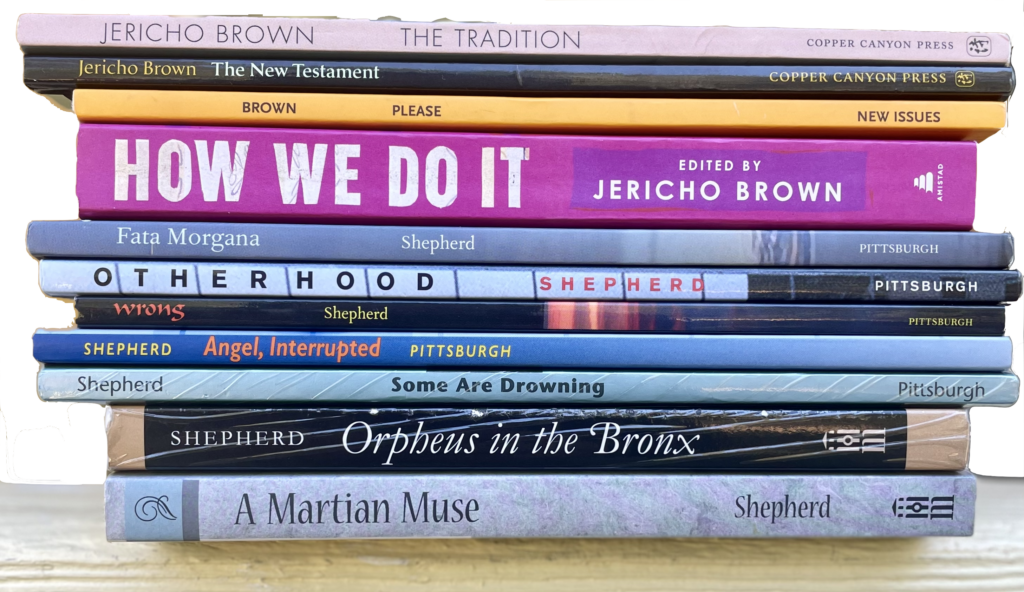
I kind of like the idea that maybe a poem is a poem because you say “Black” three times in it. [laughter] I don't care. [laughter] One of the wonderful things about having served on the National Book Award jury was seeing how many poets that I love and admire and respect approached poetry. Even if I don't like them anymore, [laughter] I still think they're poets. They are people with a lot of reading under their belts. I very distinctly remember being on that jury and seeing people bring up books that I thought were objectively bad. But they liked that mess, and with all their reading history, thought those were great poems. And then the opposite would happen. I'd be like, “Here's this book that's really good.” And they'd be like, “Jericho, no, not that book.” As long as I'm aware of that, I'm not really worried.
I think everything comes out. People get what they need. It's important that we get to hear from as many poets as possible so that we know people are getting what they need. But I also think if something doesn't turn me on, I'm not defensive enough to write an essay. Other people are, and I'm glad they're out there. There are people who are meant for that: something turns you off, you write an essay, go for it. And people talk about it on Twitter [X]. I'm down. Go for it. I love it. Lore, lore. I'm always for more lore. But I just don't get into it because it doesn't fuel my own writing.
My writing, on the other hand, can be fueled by disagreement. I can see someone's poetics being in disagreement with my poetics and my poems can prove them wrong. [laughter] Through craft, through the fact of the poem, but not in a way where I'm calling him on the phone and cussing them out -- which I actually would like better.
Maybe I'm going too far in this question, but I'm always amazed by how people get mad at folks in a community as small as Poetry Land. Where you could just call them. Like if there's a mix up, call me. You don't have to write an essay because you read something wrong. You can send me a DM. Send me an email. Text me.
I think everything goes in a poem and that my job when I'm writing a poem is to allow whatever falls into it to fall into it. And if I'm allowing everything to fall into it, then all that I know will fall into it. Orpheus might be there. Kendrick Lamar might be too. And an experience from when I was sixteen and unhappy might be in there, and an experience from when I was fourteen and happy might be all in the same poem.
And I think that's what Shepherd believes. But I think instead of him saying that he's saying something that puts him on the defensive about identity politics, which I don't get into just because I don't know what that means. And every time I try to define it, every time I look it up, every time I talk to people about it, nobody seems to agree about what identity politics means.
And the other thing I don't know that I see people saying a lot lately is race baiting. I don't know what race baiting means. And I clearly don't need to know to make my work happen. I think poems are political. I don't think there's any way around that. I haven't read the poem that is not. I think people are too. I think lives are. And I think poems are living things. When I'm working on a poem, I'm much more interested in the line, and much more interested in rhyme, and the sounds of things, and the construction of the sentences themselves than I am in what the sentences say. I figure out what the sentences say down in revision land. But when I'm in first draft land, I don't care about that stuff. Then when I'm revising the poem, I'm revising based on a system of sentences and sounds and line and rhyme and meter.
Solomon: There's a sense that you're in agreement with Shepherd on the line itself being the writer constructing the poem. Then these other things may be brought to bear on it in revision or as it’s received in the world. I think that that's powerful. Shepherd is writing these essays in a moment that is different than our moment. During the culture wars of the 90s into the early 2000s, there was this need to define, maybe more so than now in what we might call our queerer moment, when it comes to thinking about identity.
Paying it Forward
One of the things that you mentioned earlier and that I find to be a powerful ethic in Shepherd's work, especially some of his essays, has to do with going to Shepherd to find poets that you should know about. He was always uplifting and amplifying all kinds of different, lesser known, or marginalized poets. That was something that he was committed to: good work getting out there. You've returned to Shepherd here, in the ethic of bringing him to readers today. Are there poets that we should be reading and be talking more about?

Brown: I like everybody, so it's always hard for me. I really do. Nobody believes me, but I do. When I don't like a poet, it's probably because had a run in with them. [laughter] There are poets I don't like. I mean, suddenly your work can get bad to me if you've been disrespectful to me or my students. Or maybe I'm not into it. There aren't a lot of poems out there that I dislike; there are poems that I'm neutral about -- most poems. Most poems happen and I'm like, okay, well moving on. I get Poem a Day, like everybody else and I read poems every day. And sometimes I’m like, ”Oh, God, I gotta send this poem to my ten friends.” And sometimes I'm like, “Okay, girl. Well, you got in there. Go on, go with your bad self.”
So, I like Taylor Johnson, and I think everybody should be reading his work. And I'll stop there.
Solomon: Inevitably someone's going to feel left out.
Brown: Well, it's not just about feeling left out. But there was this other question you had here just about queer poets. I like Brian Teare, Randall Mann, James Allen Hall, Aaron Smith, Danez Smith, Philip B Williams. All of those folks are like the queer men. I like Ellen Bass. I have never disliked a poet whose first name is Robert: Robert Creeley, Robert Frost. I definitely like Robert Duncan. Robert Lowell.
For me, poets write the Bible. You have this book, and what? You don’t like a part of it? [laughter] You don't like Second Thessalonians? You don't you don't like Acts? Which gospel do you not like? You might like some things more than others. People love Song of Solomon because they see it as a love poem. People like any scripture where Jonathan comes up because they like to think about David having a good time. I just think poetry is in and of itself, actually attractive, likable, interesting, complex, a living thing. I like a lot of poets who I think I get on their nerves.
I like Kim Addonizio. I've always liked Terrance Hayes's work. Jeffrey McDaniel. And there are some people whose work I don't get into, but that's just because I don't get into it.
Solomon: And we don't have to name them, right?
Brown: No, I mean, I could. if you want me to say people I don't like, I could do that, too. We could gossip. [laughter] We could talk about who we ought to get rid of. Because they're out there, too. I'm like, oh my God, how is this person still working? You know? That's what y'all doing? I like a lot of very different things. It's easier for me when I'm dealing with students to make recommendations because I've seen their work and I'm like, “Oh, you should read this or that poem.” Everybody's hard on Mary Oliver, but she wrote “The Summer Day.” It's a great poem. Y'all can get crazy if you want. And Sharon Olds wrote “May 1968.” It’s a great poem. You can wear her out all you want. She gave us that. I love Yusef Komunyakaa. If you live in Arkansas and your name is Jeffrey, I probably think you're a great poet. You could spell that “Geo,” “Gef,” “Jeff,” however you get to do. I like a lot of poets because I read a lot of poetry. [laughter]
Solomon: I like finding a sense of connection or commonality with particular poets based upon a student's work. That's how I was introduced to Reginald Shepherd for the first time: someone said, “I see something in your work, read this poet.”
Brown: I like Catherine Barnett. I like Deborah Landau. I generally like poets name Catherine. All poets named Marie or Mary are always good. Mary Shivers. Marie Howe. [laughter]
I'm using that to show that you can't, you can't narrow it down. it is better to create a family tree for yourself. And that includes figuring out who you do love. When you figure out who you love, figuring out who they love. If you can do that, that's a reading life. You can read for the rest of your life that way.
I didn't even say Lucille Clifton's name. Lucille Clifton is my favorite poet. Second to her is probably Louise Glück. She's good. Leave her alone.
Poetry, Theory, Resilience
Solomon: Those of us who've spent time with Shepherd know that he's constantly invoking names like Adorno, Benjamin, Lacan. And he has written, “Unlike many poets, I have never been afraid of theory.” You're a poet, a public intellectual, a teacher. What role does theory play in your creative life? In your intellectual life? Is it something that you begin with? He says it's a “challenge and incitement” for him.16Shepherd, “To Make Me Who I Am,” 31.
Brown: I generally like to read anything that feels like it wants to be read. Anything from novels to criticism to theory to poetry that makes me feel there's an urgency behind it. Sure, I went to graduate school, got a PhD, so I've read these people. Most recently Bettina Judd, a theorist whose work has been so helpful to me. People get frustrated with theorists because they speak abstractly, in the air. And that seems sometimes contradictory to the impulse of poetry to speak on the ground and in images and that which is concrete.
Poets give often the singular situation in order to show that which is common, or known among us. Whereas theorists are doing this other thing where they want to catch the common situation, and then you get to apply it to your individual situation. What I've most recently learned from a writer like Judd has to do with maybe the first question you asked which was about the wound and whether or not I write from it. And maybe I didn't answer that question. Maybe I avoided it.

I think the hardest thing about writing for me has to do with the fact that much of where my earlier writing came from I have healed, or am trying to heal. And knowing that, I am interested in what part of my life, in my personality, only exists because of that wound or because of those wounds. And I want to heal that too. If there is something in me that is a descendant of the abuse I got at the hands of my father, I don't want that thing in me anymore. And some of that I won't be able to get rid of, and it's not like it's bad. I'm like the best friend anybody can have because I am the person who looks forward to cussing people out on somebody else's behalf. But I was never a person that could do that for myself until recently. That's because I always saw myself as a person in a family. And in the family where I grew up, you take care of everybody else, but you don't take care of yourself.
I think that's the case, not just for me. I think it's for my sister. I think it's for my mom. There's this sense that your life is about other people and that you put your life on the backburner, and that's the right thing to do. I just ain’t that person no more. And I don't want to be that person. And so, if I'm not that person, where are my poems coming from? That person wrote Please. So where are my poems going to come from if they're not coming from that wound? And what I've learned from Judd's work is that my present feeling, my present way of being will always have something from which I can pull a poem.
Solomon: It's a powerful reorientation. It makes me think of Whatever Happened to Queer Happiness? I've been thinking with that book by Kevin Brazil. He's questioning why we return to certain kinds of narratives as queer culture. Why we're reproducing certain kinds of stories about loss, about the AIDS dead, for example. And that seems to be even for non queer writers, that's how they imagined queer life. One of the things he talks about is how difficult that reorientation is -- to become someone who can write from a place that's not still dealing with that wound in the same way. You're saying healing, which I think is really powerful. It's not healed. It’s that process. So, I look forward to seeing what you write from this space.
Brown: Me too. Yeah.
About the Authors
Jericho Brown is author of The Tradition, for which he won the Pulitzer Prize. He is the recipient of fellowships from the MacArthur Foundation, Guggenheim Foundation, the Radcliffe Institute for Advanced Study at Harvard, and the National Endowment for the Arts. Brown’s first book, Please, won the American Book Award. His second book, The New Testament, won the Anisfield-Wolf Book Award. He is the director of the Creative Writing Program and a professor at Emory University.
Eric Solomon is an instructor of English and affiliate faculty with the Center for the Study of Southern Culture at the University of Mississippi. He is editor of the “Queer Intersections” series with the journal Southern Spaces; chair of the LGBTQ+ Historic Preservation Advisory Committee with Historic Atlanta; and serves as cultural historian with the Mayor’s LGBTQ+ Advisory Board for the City of Atlanta. In 2021, Solomon launched The #TUOR Project, a digital story tour of sites of importance in Atlanta’s queer past.
Cover Image Attribution
Reginald Shepherd collage created by and courtesy of Eric Solomon, 2024.
]]>Introduction
On the seventieth anniversary of Brown v. Board of Education, which outlawed racial segregation in the nation’s public schools, the states of the southern US are pushing to reestablish publicly financed, dual school systems—one primarily for higher-income and white children and the other primarily for lower-income and minority children. This seismic shift in how states fund K–12 education through universal vouchers isn’t confined to the South. But it is centered among the states that once mandated racially separate, unequal schools and where segregationists in the 1960s attempted to use private school vouchers to evade the watershed US Supreme Court decision.
More than thirty-five states have created voucher programs to send public dollars to private schools. At least twenty, including most in the South, have adopted or are on a path to enact legislation making state-funded “Educational Savings Accounts” (ESAs)—the newest type of voucher approach—available to all or most families who forego public schools. These families can use the funds to send their children to almost any K–12 private school, including home-schooling, or purchase a wide range of educational materials and services, such as tutoring, summer camps, and counseling.
In recent times, private school vouchers were pitched to the public for the purpose of giving a targeted group of disadvantaged children new educational options, but legislatures are now expanding eligibility and funding for vouchers to include advantaged students. By adopting universal or near universal eligibility for ESAs, states will be obligating tens of billions of tax dollars to finance private schooling while creating a voucher system for use by affluent families with children already attending or planning to attend private school.
States are rushing to enact ESAs while they still have the last of huge federal COVID appropriations to distribute among public schools. This timing allows ESAs' sponsors—Republican legislative leaders and governors—to entice once-reluctant, rural legislators to support vouchers. It also camouflages the severe fiscal impact this scheme will have on routinely underfunded public schools after the special federal funds run out.
The states adopting ESAs are also structuring this emerging, publicly funded, dual system so that private schools and homeschooling remain free of almost all regulations, academic standards, accountability, and oversight. These sorts of rules and regulations are always imposed by state legislatures on public schools and are understood as essential to protect students and to advance learning. Even as legislatures are adding restrictive laws on how local public schools teach topics involving race, sex, ethnicity, and gender they are providing new state funding for private schools and home-schooling that will enable racist, sexist, and other bigoted teaching.
If state legislatures succeed in establishing and broadening this dual, tax-funded system of schools, the tremors will transform the landscape of US elementary and secondary education for decades to come. Calling for “freedom of choice,” a battle cry first voiced by segregationists who fought to overturn the Brown decision,1Steve Suitts, “Segregationists, Libertarians, and the Modern 'School Choice' Movement,” Southern Spaces, June 4, 2019, https://southernspaces.ecdsdev.org/2019/segregationists-libertarians-and-modern-school-choice-movement. Available in book form as Overturning Brown: The Segregationist Legacy of the Modern School Choice Movement (Montgomery: NewSouth Books, 2020). predominantly white Republicans will take states back to a future of separate and unequal education.
The Universal Voucher System
By the seventieth anniversary of Brown, five states (Alabama, Arkansas, Florida, Georgia, and North Carolina) have enacted ESA programs that allow all or a vast majority of families with school-age children to send their children to private schools with state funds that equal or closely match the states’ per pupil expenditures for public schools. South Carolina adopted a “pilot” ESA last year, and a bill making its program permanent has already passed one chamber. The lower house of the Louisiana legislature passed a bill for a statewide universal ESA program to start next year, but the state senate is likely to delay adoption for another year to confirm estimated costs. Both states have governors who are likely to push adoption again next year.2The best source for the current status and terms of voucher and ESA legislation, including those bills passed and pending in 2023–2024, can be found at FutureEd, an independent think tank at Georgetown University’s McCourt School of Public Policy. https://www.future-ed.org/legislative-tracker-2024-state-private-school-choice-bills/; Seanna Adcox, “‘Universal’ school choice approved in SC House before pilot even begins,” South Carolina Daily Gazette, Mar. 21, 2024, https://scdailygazette.com/2024/03/21/universal-school-choice-approved-in-sc-house-before-pilot-even-begins/; Greg LaRose, “Lawmakers advance education savings accounts, parents’ curriculum choice,” Louisiana Illuminator, Mar. 20, 2024, https://lailluminator.com/2024/03/20/education-savings-accounts/; Greg LaRose, “High price tag for education savings accounts leads to proposal overhaul,” Louisiana Illuminator, May 2, 2024, https://lailluminator.com/2024/05/02/education-savings-account/.
The Tennessee legislature adjourned in April without passing either of two pending universal ESA bills—only because Governor Bill Lee and legislative leaders failed to agree on which voucher bill to enact. They vow to pass legislation next session. In Texas, Governor Greg Abbott used campaign funds from a Pennsylvania billionaire in the state’s Republican primary to defeat a handful of legislators who blocked his ESA bill last year. Abbott expects to defeat the two remaining state house members who failed to vote for his legislation—giving him the number he needs to pass his bill, while sending a political message that will keep his supporters in line.3Sam Stockard and Adam Friedman, “Tennessee’s statewide school voucher bill dead, but not forgotten,” Tennessee Outlook, Apr. 22, 2024, https://tennesseelookout.com/2024/04/22/tennessees-statewide-school-voucher-bill-dead-but-not-forgotten/. Karen Brooks Harper, “School voucher supporters bask in primary wins, say goals are within reach,” Texas Tribune, Mar. 6, 2024, https://www.texastribune.org/2024/03/06/texas-primaries-vouchers-school-choice/; Renzo Downey, “Gov. Greg Abbott says Texas is two House votes away from passing school vouchers,” Texas Tribune, Mar. 20, 2024, https://www.texastribune.org/2024/03/20/greg-abbott-tppf-vouchers-primary-runoff/. In identifying ESAs, this essay does not distinguish between those funded by state appropriations and those funded by state tax credits.
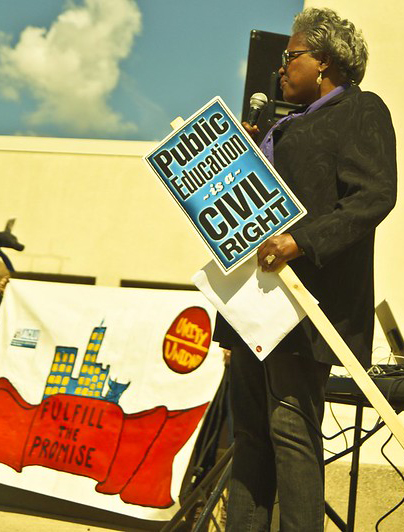
Only two southern states have not yet joined this reactionary movement. Republicans in Virginia’s legislature introduced a half-dozen bills to establish universal ESAs during the last two sessions but were stymied by bipartisan concerns about how vouchers benefited the wealthy and drained funds from public schools, and by Democrats who narrowly control both houses. In prior years, the Virginia legislature passed bills establishing limited ESAs but those too were blocked by the state’s last two Democratic governors.4Joe Landcaster, “Virginia Is Considering 4 Different School Choice Bills,” Reason, Jan. 22, 2023, https://reason.com/2023/01/22/virginia-is-considering-4-different-school-choice-bills/; Megan Pauly, “Wealthiest Virginians are benefiting most from contributions to school voucher program,” VPM News, July 11, 2022, https://www.vpm.org/news/2022-07-11/wealthiest-virginians-are-benefiting-most-from-contributions-to-school-voucher/.
In Mississippi, once the nation’s symbol of truculent political opposition to Brown and home to a vast number of segregation academies set up to evade school desegregation, Republicans control both legislative houses and the governor’s mansion. But, at the end of its 2024 session, the legislature failed to enact both a proposed new $40 million voucher program and a near-universal ESA bill that Governor Tate Reeves sought.5Suitts, Overturning Brown, 29–32; Bracey Harris, “Reckoning with Mississippi’s ‘segregation academies’,” The Hechinger Report, Nov. 29, 2019, https://hechingerreport.org/reckoning-with-mississippis-segregation-academies/; Russ Latino, “New Legislation Would Create Universal School Choice Program in Mississippi by 2029,” Magnolia Tribune, Feb. 20, 2024, https://magnoliatribune.com/2024/02/20/new-legislation-would-create-universal-school-choice-program-in-mississippi-by-2029/; Bobby Harrison, “House advances bill that would establish close study of universal school vouchers,” Mississippi Today, Mar. 5, 2024, https://mississippitoday.org/2024/03/05/house-committee-universal-vouchers/; Bobby Harrison, “Bill increasing tax credits for private schools defeated at end of session,” Mississippi Today, May 7, 2024, https://mississippitoday.org/2024/05/07/private-schools-tax-credits-mississippi-legislature/.
Why is Mississippi currently an exception to the rush to ESAs? First, the state is more rural and poorer than any other southern state, with vastly underfunded public schools and most of its private school children in a few suburban and urban areas. The Democrats who oppose vouchers in the legislature comprise a larger number than in other states (the Black population accounts for the largest percentage of any state). Significant, too, is the work of effective public interest lobbyists in Mississippi, led on school issues by an interracial coalition, The Parents Campaign. The group's director, Nancy Loome, has built a rare reputation on both sides of the legislative aisle as a trusted, honest voice for school children.
Border South states have already joined the separate and unequal movement. In 2021, Oklahoma and West Virginia passed ESA programs that have eligibility guidelines allowing almost every family with school-age children to receive state funding for private schooling and related educational expenses. Missouri expanded its tax credit ESA voucher program to include students across the state in four-person households with incomes up to $147,000. Kentucky passed a tax credit voucher program in 2021, but its supreme court held that the state constitution prohibits financing nonpublic schools. In 2024, the Republican-led legislature passed a bill authorizing a referendum to change the state constitution to permit ESAs.6For the bills terms, see FutureEd, https://www.future-ed.org/legislative-tracker-2024-state-private-school-choice-bills/; Amelia Ferrell Knisely, “Public schools likely to lose $21M after thousands of students left for Hope Scholarship,” West Virginia Watch, Dec. 13, 2023, https://westvirginiawatch.com/2023/12/13/public-schools-likely-to-lose-21m-after-thousands-of-students-left-for-hope-scholarship/; Annelise Hanshaw, “Opposition remains for sprawling education bill expanding Missouri private school tax credits,” Missouri Independent, Mar. 28, 2024, https://missouriindependent.com/2024/03/28/opposition-remains-for-sprawling-education-bill-expanding-missouri-private-school-tax-credits/; McKenna Horsley, “‘Game changer:’ Amendment for public dollars to nonpublic schools clears General Assembly,” Kentucky Lantern, Mar. 15, 2024, https://kentuckylantern.com/2024/03/15/game-changer-amendment-for-public-dollars-to-nonpublic-schools-clears-general-assembly/.
Arizona and Indiana are the leading states for voucher programs outside the South. In 1997, Arizona was one of the earliest adopters. Its ESA now costs more than $900 million a year. Indiana’s near-universal program, enacted in 2022, costs roughly $500 million in 2024.7Beth Lewis and Karen Kirsch, “One year in, Arizona’s universal school vouchers are a cautionary tale for the rest of the nation,” AZMirror, Dec. 11, 2023, https://azmirror.com/2023/12/11/one-year-in-arizonas-universal-school-vouchers-are-a-cautionary-tale-for-the-rest-of-the-nation/; Casey Smith, “Indiana’s ‘school choice’ voucher program grew 20% last year—with more growth coming” Indiana Capital Chronicle, June 14, 2023, https://indianacapitalchronicle.com/2023/06/14/indianas-school-choice-program-grew-20-percent-last-year-with-more-growth-coming/.
The remaining states with ESAs are Kansas, Ohio, Utah, Iowa, New Hampshire, and Wyoming. By 2027, approximately 86 percent of Kansas families could be eligible for a voucher. In Utah, families with a child eligible to attend public schools can receive up to $8,000. Legislation introduced in 2024 would increase the ceiling to $150 million. Iowa’s ESA cost over $100 million in its first year and 60 percent of the recipients were already attending private schools. The New Hampshire ESA program is more restrictive, spending less than $25 million in 2023 and permitting only children from households with incomes below 350 percent of poverty to participate, although school choice advocates are pushing for expansion. Wyoming’s Republican legislature voted to allow families with household incomes of up to $146,000 to receive state funds, but Republican Governor Mark Gordon used a line-item veto to cut the eligibility down to 150 percent of poverty since the state constitution prohibits funding private individuals or organizations “except for the necessary support of the poor.”8Author’s calculations based on the bills’ terms and each state’s median income; FutureEd. Also see Jay Waagmeester, “County-by-county distribution of education savings accounts released,” Iowa Capital Dispatch, Aug. 8, 2023.
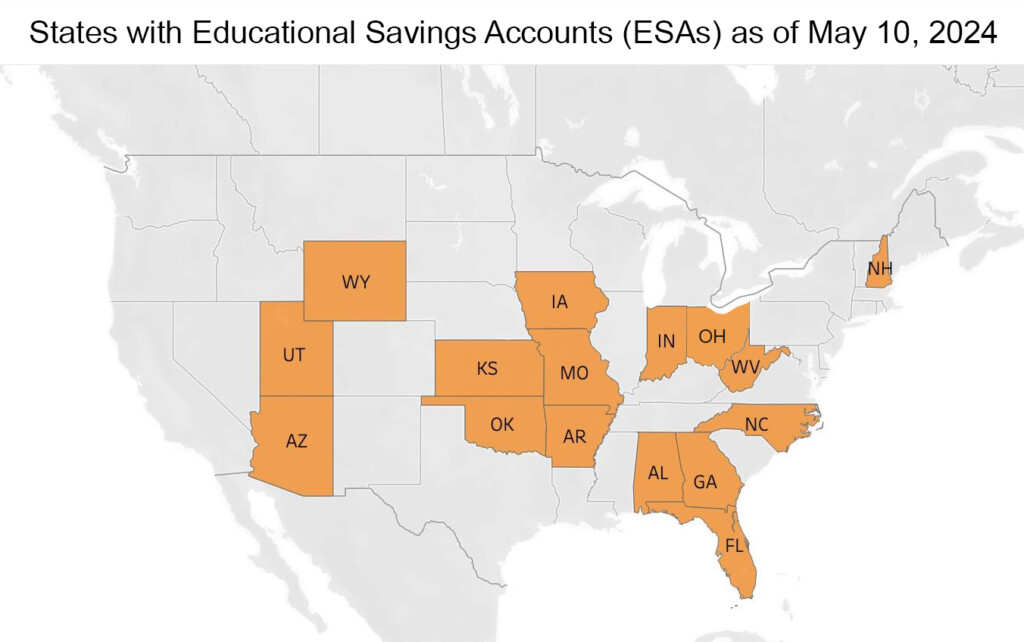
So far, sixteen states have set up ESAs to publicly finance private school attendance, home-schooling, and a range of educational services available to a majority of the states’ school-age children. Southern states are leading this movement by undertaking a classic bait and switch—first selling the public on voucher programs to help poor and disadvantaged students in “chronically failing public schools,” and then building and publicly financing an alternative, dual system of private schooling.
The historical context is shameful. Five of the southern states that now have universal vouchers also enacted open-ended vouchers in the 1960s—attempting to defeat Brown’s mandate for school desegregation. All but four of the states that have already embraced publicly financed ESAs were the only states authorizing segregated public schools on the eve of the Supreme Court’s decision.9Suitts, Overturning Brown, 18–53, 87–89; Suitts, “Segregationists, Libertarians, and the Modern 'School Choice' Movement,”; Pauli Murray, States' Laws on Race and Color (Cincinnati, OH: Women's Division of Christian Service of the Methodist Church, 1951). Indiana had school segregation laws from 1869 until 1949, when five years before the Brown decision the legislature revoked the laws, See Murray, 145–147. The eighteen states are the eleven states of the South: West Virginia, Kentucky, Missouri, and Oklahoma in the Border South; Kansas, Indiana, Arizona, and Wyoming.
The fiscal impact of this rush to fund private schooling will be devastating to public schools. In 2018, all fifty states allocated $2.6 billion to finance private school vouchers. In 2021, legislatures increased the total amount to $3.3 billion and more recently to over $6 billion. If the eleven southern states enact the bills currently adopted or pending in their legislatures, their total funding for vouchers will be as much as $6.8 billion in 2025–26 and, according to independent estimates, as much as $20 billion for private schooling in 2030. This sum would equal the total state funds to public schools among six southern states in 2021.10Suitts, Overturning Brown, 3; EdChoice, The ABCs of School Choice, 2024, https://www.edchoice.org/wp-content/uploads/2023/11/2024-ABCs-of-School-Choice.pdf; author's computations based on the provisions of enacted and pending bills, fiscal notes accompanying legislation and independent estimates by non-profits in the southern states.
The Past Is Future
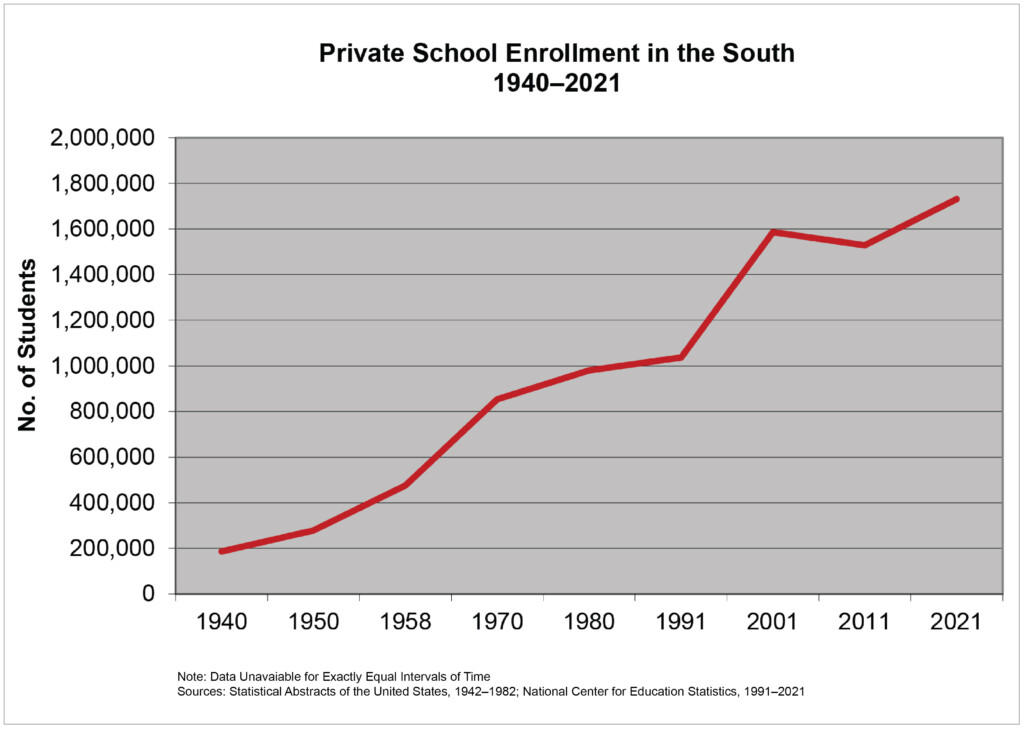
Segregationists’ attempts to use private schools to prevent the implementation of Brown shaped the demography of private school enrollment. After the 1954 decision, enrollment in southern private schools accelerated. With federal court enforcement of Brown, private school growth exploded in the 1960s and 1970s as white families, especially in areas with large Black populations, fled public schools. This was the era of “segregation academies”—private schools created in response to federal court orders to desegregate local public schools. With little or no attempt to hide their intent to evade Brown, seven southern legislatures enacted voucher programs providing families with tax dollars to send their children to private schools. The other four states of the former Confederacy came close to adopting such programs, but abandoned consideration once the federal courts invalidated voucher programs. Adopted as an effort to allow public funds to “fund the child,” Georgia voluntarily defunded its vouchers after segregationist lawmakers realized that they were mostly subsidizing well-to-do families whose children were already attending private schools. In Louisiana, both white and Black families were provided private school vouchers before the federal courts voided the program.11Suitts, “Segregationists, Libertarians, and the Modern 'School Choice' Movement.”
Southern states’ private school enrollment quickened across the decades, especially in the 1990s as population, economy, and personal income markedly increased. To retain a non-profit, federal tax exemption, segregation academies ditched their strict, all-white admission policies, and reoriented their appeal as places of religious education or of higher educational standards. Other private schools became more willing to admit children of color as a new generation of white people was less indoctrinated by received habits, institutions, leaders, and media on the necessity and virtue of total segregation. Whatever non-racial rationale private schools adopted, the vast majority maintained a common character: “These are schools for whites,” observed a group of scholars in the 1970s. “The common thread that runs through them all, Christian, secular, or otherwise, is that they provide white ground to which blacks are admitted only on the school’s terms if at all.”12David Nevin and Robert E. Bills, The Schools that Fear Built: Segregationist Academies in the South (Washington, DC: Acropolis Books, 1976), 11.
Private and Public: Vastly Disparate Students
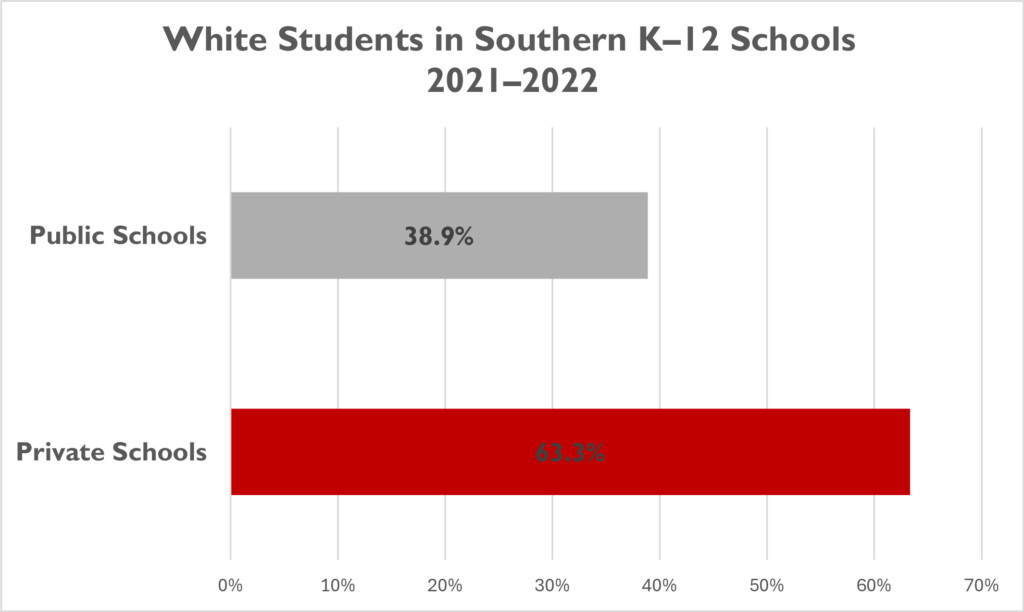
The character of most southern private schools has persisted, but, beginning in the 1990s, the student population of the South’s public schools began to change. Today, the southern states’ private schools remain predominately white and their public schools are predominately non-white, serving children of color. In 2021 (the latest comparable data), white students comprised 63 percent of the South’s private school enrollment and only 39 percent of the public schools. Black and Hispanic children constituted 53 percent of all students in public schools but less than half that proportion—26 percent—in the private schools of the eleven states.13Private school enrollment retrieved and computed from National Center for Education Statistics (NCES), accessed at https://nces.ed.gov/surveys/pss/privateschoolsearch/. Public school enrollment taken from NCES’ Table 203.70 of 2023 Digest of Education Statistics, accessed at https://nces.ed.gov/programs/digest/2023menu_tables.asp.
Income also separates the public and private schools as worlds apart. Private school students come from homes with vastly higher incomes than public school students. The median incomes of private school households in Georgia, Florida, Louisiana North Carolina, Tennessee, Texas, and Virgina have been from 170 percent to nearly 200 percent greater than incomes of public school households over the last two decades. A recent scholarly, national study found that enrollment of higher-income students in private schools had increased over prior decades.14Jacob Fabina, Erik L. Hernandez, and Kevin McElrath, “School Enrollment in the United States: 2021,” American Community Survey Reports, US Census Bureau, Washington, DC, 2023; Bruce D. Baker, Danielle Farrie, David Sciarra, Is School Funding Fair? A National Report Card, 2012, 2014, 2017, “Coverage” appendices; R.J Murnane and Sean Reardon, “Long-Term Trends in Private School Enrollments by Family Income,” AERA Open 4, no. 1 (2018), https://doi.org/10.1177/2332858417751355. The Murname and Reardon study measured the Census South.
As private school enrollment has become wealthier, public school enrollment has become poorer. By 2006, a majority of the South’s public school students came from low-income households, and in 2013, for the first time in recent history, a majority of the nation’s public school children came from low-income households. Despite continued growth in the US economy, these patterns persist. Fifty-two percent of the public school students in the eleven-state South were eligible for free or reduced school meals in 2021, due in large part to the enrollment of so many low-income children. Nationwide, the rate was 49 percent, only slightly down from more than 50 percent during the two prior years.
A sizable number of public school children also have special needs that involve extraordinary educational challenges for teachers and schools. The southern states have almost 40 percent of the nation’s five million school children who are English learners. Students with disabilities (IDEA) range from one in every ten students in Texas to one in every six students in Arkansas public schools. On average, one child out of every fifty in the South’s public schools is homeless.15Steve Suitts, A New Majority: Low Income Students in the South’s Public Schools, Southern Education Foundation, 2008, https://southerneducation.org/publications/newmajority/; Steve Suitts, A New Majority Update: Low Income Students in the South and Nation, Southern Education Foundation, 2013, https://southerneducation.org/wp-content/uploads/documents/new-majority-update-bulletin.pdf; computations from Tables 102.40, 204.10, 204.20, 204.70, 204.75d, “Digest of Education Statistics, 2022,” National Center for Education Statistics, https://nces.ed.gov/programs/digest/2022menu_tables.asp.
There is no reliable data on the number of children with special needs enrolled in private schools. A small number were established to serve special needs students, but the vast majority do not. As a matter of law and mission, most private schools maintain no responsibility to educate disadvantaged students.
Vouchers Worsen School Disparities in a Dual System
Wherever states have abandoned narrow, targeted voucher programs, the expanded public funding has usually been grabbed by the higher-income households, often with children already attending private schools. In 2023, Education Week magazine, which has impartially covered K–12 schools for more than forty years, reported that in states with recently expanded voucher programs a “majority of students participating in these programs were already enrolled in private schools or were homeschool students prior to signing up for the newly expanded, publicly funded education subsidy."16Mark Lieberman, “Most Students Getting New School Choice Funds Aren’t Ditching Public Schools," Education Week, Oct. 4, 2023, https://www.edweek.org/policy-politics/most-students-getting-new-school-choice-funds-arent-ditching-public-schools/2023/10.
During Arkansas’ first year of financing universal ESAs, “95% of the students receiving vouchers” did not attend public schools before receiving the state money. And in four other states that have enacted near-universal ESAs, including Florida, a majority of the new households receiving vouchers have children already attending private schools.17Arkansas Department of Education, LEARNS, Education Freedom Account Annual Report, 2023–2024, https://arktimes.com/wp-content/uploads/2023/10/EFA-Transparency-Report37.pdf; “Iowa’s Students First Education Savings Account program generates more than 29,000 applications,” press of Iowa Governor Kim Reynolds, July 6, 2023, https://governor.iowa.gov/press-release/2023-07-06/iowas-students-first-education-savings-account-program-generates-more; Robin Opsahl, “More than 29,000 apply for Iowa private-school funds in first year,” Iowa Capital Dispatch, July 6, 2023, https://iowacapitaldispatch.com/2023/07/06/more-than-29000-apply-for-iowa-private-school-funds-in-first-year; Ethan Dewitt, “Most education freedom account recipients not leaving public schools, department says,” New Hampshire Bulletin, Mar. 22, 2022, https://newhampshirebulletin.com/briefs/mosteducation-freedom-account-recipients-not-leaving-public-schools-department-says/; News Service Florida, “New report shows nearly 123,000 new students received Florida school vouchers in 2023,” NBC 6 South Florida, https://www.nbcmiami.com/news/local/new-report-shows-nearly-123000-new-students-received-florida-school-vouchers-in-2023/3112869; Florida Department of Education (2023). "Florida’s Private Schools 2022–23: School Year Annual Report," https://www.fldoe.org/core/fileparse.php/7562/urlt/PS-annualReport2023.pdf; Alec MacGillis, “Private Schools, Public Money: School Leaders Are Pushing Parents to Exploit Voucher Programs,” ProPublica, Jan. 21, 2024, https://www.propublica.org/article/private-schools-vouchers-parents-ohio-public-funds.
Data on household income among new ESA recipients is not widely available, but an analysis by Ohio’s former chair of the state house education committee finds that the state’s near-universal voucher programs is subsidizing private school tuition for families in higher income brackets, and that nine of ten of the new recipients have been white. Arizona does not collect income data from its rapidly expanded universal ESA, but Princeton sociologist Jennifer Jennings found in 2024 that “Arizona’s school vouchers are subsidizing its most fortunate families, reinforcing existing disparities rather than mitigating them.” In Florida, the lastest available numbers show that two out of every three new recipients in its universal voucher programs had incomes above 185 percent of poverty. As many as 44 percent had incomes no less than 400 percent above the poverty line.18Stephne Dyer, “Ohio's Disastrous Voucher Explosion,” Tenth Period, Nov. 29, 2023, https://10thperiod.substack.com/p/ohios-disastrous-voucher-explosion?subscribe_prompt=free; Jennifer Jennings, “Arizona’s school vouchers are helping the wealthy and are widening educational opportunity gaps,” Arizona Mirror, Jan. 12, 2024, https://azmirror.com/2024/01/12/arizonas-school-vouchers-are-helping-the-wealthy-and-are-widening-educational-opportunity-gaps; “Transparency in Scholarship Programs,” Step Up for Students via Florida Phoenix Sep. 2023, https://drive.google.com/file/d/1yyl80Jbs9mU6GlV1ktA6zZg8GUjLnsP4/view. The Arizona Common Sense Institute argues that its zip code analysis shows that the state’s ESAs are assisting mostly middle-class families but their analysis lumps together zip codes with median household incomes with those more than twice the state median. In Florida, Step Up for Students expanded the grouping of voucher recipients—the lowest income category showing recipients’ income as high as 185 percent of poverty. Glenn Farley and Kamryn Brunner, Universal ESA’s: Where We Are and Where We Are Going, Arizona Common Sense Institute, May 2023, https://commonsenseinstituteaz.org/wp-content/uploads/2023/05/CSI-Report-_Universal-ESAs_May-2023-2.pdf; Glenn Farley, Growth and Change: How One Year of Universal Empowerment Scholarship Accounts Has (and Has Not) Altered Arizona’s K–12 Landscape, Arizona Common Sense Institute, April 2024, https://commonsenseinstituteaz.org/wp-content/uploads/2024/04/CSI_REPORT_ESA_GROWTH_APRIL_2024.pdf.
It has been evident for years that wealthier households are the primary beneficiaries of open-eligibility tax credit voucher programs. In 2023 the non-profit Institute on Taxation and Economic Policy examined programs in three states that permitted any family to divert state taxes to private school vouchers. Ninety-nine percent of all voucher tax credits in Louisiana and 87 percent in Virginia went to families with annual incomes over $200,000. In Arizona, it was 60 percent. In Georgia, $100 million can now be taken annually from the treasury through state tax credit for funding private school vouchers, and higher-income families have received the majority of the vouchers since 2013. The actual number may be much greater as the program has been plagued by irregularities, deceit, and misrepresentations by private groups distributing the tax credit vouchers. The Georgia Department of Revenue does not use tax records to verify the self-reporting of those receiving the tax credits or vouchers.19Carl Davis, Tax Avoidance Continues to Fuel School Privatization Efforts, Institute on Taxation and Economic Policy, Mar. 3, 2023, https://itep.org/tax-avoidance-fuels-school-vouchers-privatization-efforts/; author’s computations from annual Qualified Education Expense Credit Report, Georgia Department of Revenue, 2013–2021, https://dor.georgia.gov/calendar-year-qualified-education-expense-credit-report; Steve Suitts and Katherine Dunn, A Failed Experiment: Georgia's Tax Credit Scholarships for Private Schools (Summary Report), Southern Education Foundation, 2008, https://southerneducation.org/publications/a-failed-experiment; Nancy Badertscher, “Group targets tax credit scholarships - Revenue Department asked to stem students from private schools,” Atlanta Journal-Constitution, July 22, 2011, B-2; Steve Suitts, “Program encourages deception and helps those who don't need it,” Atlanta Journal-Constitution, July 5, 2011, A-13.
Even with vouchers, few low-income families in the South can afford to keep their children in K–12 private schools. The average cost of private school tuition in ten of eleven southern states exceeds those states’ per-pupil funding of public schools. In other words, even if a voucher equals the state per pupil allocation for public school, it is not enough to match the private school tuition. After including additional expenses of attending a private school—books, supplies, uniforms, technology, athletics, and field trips—the total average cost in all southern states except Arkansas exceeds the state per pupil appropriation. In Texas, that total cost is more than $9,000 over the state’s per pupil public school appropriation. It is more than $2,300 in Mississippi.20Calculations based data on average private tuition prices by state and other costs reported at Raise Right website, https://www.raiseright.com/blog/how-much-do-private-schools-cost, and Prosperity for America website, https://www.prosperityforamerica.org/average-private-school-tuition/. Data on state revenue for state per pupil revenue is found at “2021 Public Elementary-Secondary Education Finance Data, US Census. https://www.census.gov/data/tables/2021/econ/school-finances/secondary-education-finance.html. These back-of-the envelope calculations capture the real-life financial barriers many families will encounter if they rely on an ESA voucher to send a child to a private school, and the calculations don’t even include cost of transportation, something that few private schools provide and is far beyond the resources of most low-income families.
The emerging ESAs are apparently designed for higher-income families that can already afford to pay all or much of the cost of private schooling. Wealthy families can use these vouchers to cover tuition costs and a wide range of expenses. As in several other states, Alabama’s vouchers can go toward tuition, textbooks, fees, after-school care, summer education programs, private tutoring, curriculum and instructional materials, online learning, educational software and applications, standardized assessments, including college admissions tests and advanced placement exams, and college prep courses.
The South Cannot Afford a Dual School System
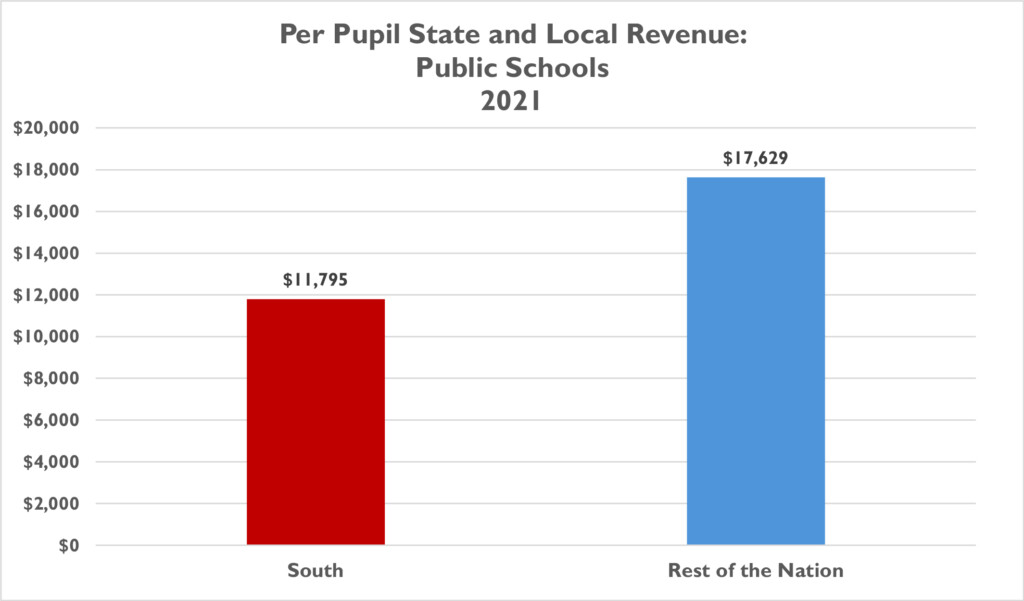
Southern states, while serving a large proportion of disadvantaged children, provide among the lowest per pupil funding in the nation to their public schools. Any given K–12 student in the South received on average $5,831 less for education during 2021–2022 than a student in public school elsewhere in the United States. Public school children in North Carolina, which ranks 48th in state and local funding, received nearly $7,500 less per child than what the rest of the nation provides.
This pattern of underfunding public schools is longstanding and was aggravated over decades, in large part, by the fact that the southern states maintained separate, unequal, dual school systems.21Steve Suitts, “The South: America’s Legacy of Gross Disparities in Funding Education,” No Time to Lose: Why America Needs an Education Amendment to the Constitution, Southern Education Foundation, 2009, https://files.eric.ed.gov/fulltext/ED524094.pdf. And the legacy persists. A recent study by University of Miami Professor Bruce Baker and his colleagues found no less than three out of every four public school districts in the South were chronically underfunded by national standards of need and resources.22Bruce D. Baker, Matthew Di Carlo, and Mark Weber, The Adequacy and Fairness of State School Finance Systems, Jan. 2024, https://www.schoolfinancedata.org/the-adequacy-and-fairness-of-state-school-finance-systems-2024/.
States will soon realize the damage of these disparities. The vast federal funds that were appropriated shortly after the COVID epidemic to shore up schools will run out in 2024. Governors and state legislatures have allocated these temporary funds as if they were state appropriations and often have been able to increase public school funding using federal funds. As that funding is exhausted, public schools in the southern states will suffer extraordinary shortfalls—more so than any other area of the United States.
Approximately nine percent of Louisiana’s education budget across the last three years has been financed with federal funds, almost all of which will be spent by 2025.23Joanna LeFebvre and Sonali Master, Expiration of Federal K–12 Emergency Funds Could Pose Challenges for States, Center on Budget and Policy Priorities, Feb. 2024, https://www.cbpp.org/sites/default/files/2-28-24sfp.pdf. The legislature will be forced to cut K–12 education funding and/or raise additional revenue. If Louisiana's legislature enacts the pending universal ESA it could add more than $65 million in expenses by 2026, and by independent estimates, as much as a half a billion dollars in annual expenditures to the state education budget by 2030.24“Expanding School Choice: Education Savings Accounts Raise Cost, Accountability Concerns,” Public Affairs Research Council of Louisiana, https://parlouisiana.org/wp-content/uploads/2024/03/PAR-Commentary-Expanding-School-Choice-1.pdf.
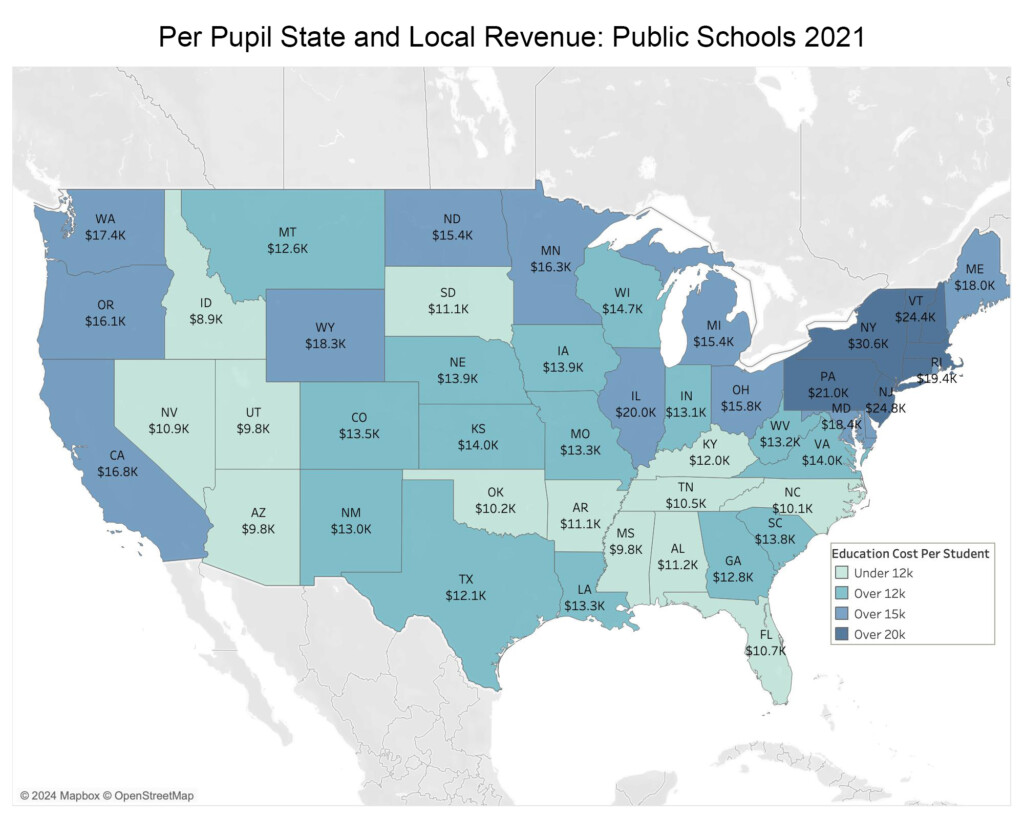
Such grim estimates extend to all states that have enacted or are moving to adopt universal ESAs, including Arizona where 6.9 percent of the state’s recent annual education appropriations will be lost. Yet the fiscal calamities will happen foremost in the southern states where federal funds have constituted an average of 6.4 percent of annual state education spending—and as much as 10.5 percent in Mississippi.
According to ERS, a consulting firm that collaborates with urban school districts, children in fifteen states will be hit hardest as the federal government’s COVID funding ends.25“Here’s Why Some States Are Facing a Steeper ESSER Funding Cliff in 2024,” ERS, Mar. 2023, https://www.erstrategies.org/tap/analysis-esser-funds-fiscal-cliff-by-state/#factor3. Nine of these are southern states, with Florida falling just outside the list. Among the states that will be hardest hit, all except New Mexico have or are currently considering ESA voucher plans.
Replacing $41.5 billion in special federal funding during the last three years will be a daunting challenge for southern states, especially since they also received billions of dollars from other federal COVID relief funding for health care, roads, transportation, and childcare. These funds are also ending. Without massive cutbacks in funding public schools and services, how can the southern states meet this crisis while spending hundreds of millions financing new ESA vouchers in support of a separate system of private schooling? It’s a fool’s errand that will involve educational and financial catastrophe for all but the South’s upper-income households, for whom ESAs will provide a nice subsidy. For public school children, especially most low-income and minority children, it is the making of a disaster.

Dismantling Public Schools
Perhaps it is the aim of some school choice backers who are pushing for a state-financed system of universal vouchers to incapacitate the public education system’s mission and mandate to serve all students with equal educational opportunities. In April 2024, a lead sponsor of universal ESA vouchers in the Tennessee legislature, Republican Scott Cepicky, was caught on tape privately telling home-school parents that his goal for the state’s public schools was to “throw the whole freaking system in the trash at one time and just blow it all back up."26Phil Williams, "'We're trying to throw the whole freaking system in the trash,' school voucher sponsor says," NewsChannel 5 Nashville, Apr. 15, 2024, https://www.newschannel5.com/news/newschannel-5-investigates/revealed/revealed-were-trying-to-throw-the-whole-freaking-system-in-the-trash-school-voucher-sponsor-says
Last year, in a closed meeting of Christian millionaires, one attendee declared that the goal was to “take down the education system as we know it today.” Michael Farris, the Virginia lawyer who has become a prominent leader of the modern home-schooling movement, told the group, “We’ve got to recognize that we’re swinging for the fences here, that any time you try to take down a giant of this nature, it’s an uphill battle,” according to a recording obtained by the Washington Post.27Emma Brown and Peter Jamison, “The Christian home-schooler who made ‘parental rights’ a GOP rallying cry,” Washington Post, Aug. 29, 2023, https://www.washingtonpost.com/education/2023/08/29/michael-farris-homeschoolers-parents-rights-ziklag/.
Few backers of universal vouchers say as much in public, but they no longer keep up a pretense that the school choice movement is about finding ways to provide targeted assistance and opportunities for low-income and minority children. But, Southern governors still like to parade out a group of children of color when they sign voucher bills, as did Georgia Governor Brian Kemp when he held his signing ceremony for the ESA law.28Ty Tagami, “Kemp signs voucher bill he championed,” Atlanta Journal-Constitution, Apr. 24, 2024. Most voucher proponents and wealthy donors who have coalesced for decades, spending enormous energy and money to advance public financing of private education, have confessed openly to a variety of other motives.
This diverse coalition seeks state-supported Christian education, free-market competition, elite-only schooling, unfettered parental control of education, and regulation-free schools, among other objectives. Their movement has progressed over the decades through the collective organizational work and political action committees bankrolled by the super-rich and corporate leaders who believe that the government is too large, taxes too much, and has little or no business in providing education.29David Montgomery, “School Voucher Proponents Spend Big to Overcome Rural Resistance,” Governing, Mar. 28, 2024, https://www.governing.com/finance/school-voucher-proponents-spend-big-to-overcome-rural-resistance; Jimmy Cloutier, “‘School choice’ super PAC targets Texas GOP incumbents,” Open Secrets, Mar. 4, 2024, https://www.opensecrets.org/news/2024/03/school-choice-super-pac-targets-texas-gop-incumbents/; Katie Meyer, “Jeff Yass, the richest man in Pa., is single handedly keeping school choice PACs flush,” WHYY, May 12, 2021, https://www.phillytrib.com/jeff-yass-the-richest-man-in-pa-is-single-handedly-keeping-school-choice-pacs-flush/article_ee7dde98-1989-5ef1-925c-06473429466c.html; James Holmann with Breanne Deppisch and Joanie Greve, “Koch network laying groundwork to fundamentally transform America’s education system,” Washington Post, Jan. 20, 2018, https://www.washingtonpost.com/news/powerpost/paloma/daily-202/2018/01/30/daily-202-koch-network-laying-groundwork-to-fundamentally-transform-america-s-education-system/5a6feb8530fb041c3c7d74db/.
Consider the voucher advocates who believe in economist Milton Freidman’s vision of public education that is entirely based on the government’s providing a voucher to all families with school-age children to go to any school of their choosing. Friedman laid out his free-market idea for voucher-schooling in 1955, a year after Brown. To realize Friedman’s vision today, his adherents’ goal is not a dual school system, but a unitary system of only ESA vouchers. In other words, they seek to destroy public education as it exists.
These free-market proponents fail to grapple deeply with the same issues that Friedman blithely dismissed when condemning “government schools.” In 1955, he acknowledged that his voucher proposal had already been “suggested in several states as a means of evading the Supreme Court ruling against segregation." Friedman’s solution was simple: vouchers paid by government funds would create a system of "exclusively white schools, exclusively colored schools, and mixed schools. Parents can choose which to send their children to." Friedman also opposed a federal fair employment commission to bar racial discrimination in private employment and later the 1964 Civil Rights Act—since it involved government regulation of private businesses for the purpose of prohibiting racial discrimination.30See Suitts, “Segregationists, Libertarians, and the Modern 'School Choice' Movement.”
The belief in the unqualified virtue of private choice means that by design school choice should trump any role government has to prohibit discrimination based on race, sex, and religion in providing the nation’s children with an education. It means the destruction of public schools and their core democratic values.
The emergence of universal vouchers has convinced Pulitzer Prize winning journalist Cara Fitzpatrick to write in The Death of Public Education (2023) that the aim of the movement is to “radically redefine public education in America” with consequences that most citizens have not begun to fully consider.31Cara Fitzpatrick, The Death of Public Education: How Conservatives Won the War over Education in America (New York: Basic Books, 2023). In their revised preface to A Wolf at the Schoolhouse Door (2023), Jack Schneider and Jennifer C. Berkshire write that there is now “a very real threat to public education in the United States . . . we’ve seen more destruction than we imagined could be done in a decade. And we’re worried when we next sit down to update this book, we’ll be writing a eulogy rather than a polemic."32Jack Schneider and Jennifer C. Berkshire, A Wolf at the Schoolhouse Door: The Dismantling of Public Education and the Future of School (New York: The New Press, 2023).
The Bizarre Disparities in Governing the Emerging Dual School Systems
Ending public schools may be the clear goal of the primary advocates behind the private choice movement, but what is emerging in states that are on their way to adopting universal ESAs is a dual school system with vastly, differing, unequal ground rules, responsibilities, and oversight for educating children with public funds.
Most ESA legislation requires minimal regulations of private schools. Children may be rejected by a private school receiving state vouchers for any number of reasons, spoken or unspoken, relating to income, religion, race, ethnicity, dress, sex, gender identity, or disability. The schools will have the ultimate choice—not the children and their families. State legislation usually prohibits discrimination based on race and national origin, but as with most ESAs, there are no mechanisms for oversight, reporting, investigation of complaints, or enforcement.33Kevin G. Welner & Preston C. Green, “Vouchers as a Mechanism for State-Sanctioned Private Discrimination,” in The School Voucher Illusion: Exposing the Pretense of Equity, eds., Kevin Welner, Gary Orfield and Luis A. Huerta (New York: Teacher College Press, 2023), 87–109; Chase M. Billingham and Matthew O. Hunt, “School Racial Composition and Parental Choice: New Evidence on the Preferences of White Parents in the United States,” Sociology of Education, 89, 2 (2016): 99–117, https://doi.org/10.1177/0038040716635718.
The standards for educating children and methods of accountability are minimal or illusory in voucher-supported private schools. The bills establishing ESAs allow these schools to be accredited by a range of private associations, usually comprised of representatives of the schools they accredit. In most southern states, private schools receiving vouchers are not required to assess students for achievement, or, they can use a nationally normed test of their preference, which undermines comparisons among schools. In any case, the results are not always available to the public. Most of these states do not specify, regulate, or review a private school’s curriculum before or after providing voucher funding.
This near-complete freedom to instruct children in whatever way the voucher-supported private schools choose is often justified on the basis that such schools provide students a better education than public schools. There is no factual grounding for this assumption.34Christopher Lubienski, T. Jameson Brewer, and Joel R. Malin, “Bait and Switch: How Voucher Advocates Shift Policy Objectives,” The School Voucher Illusion, 127–141; John Schaaf, “School vouchers hurting students’ academic performance, several studies show,” Kentucky Lantern, Feb. 19, 2024; also, Public Funds, Public Schools has complied a long list of the studies on how private voucher-supported schools have had chronic achievement problems, https://pfps.org/research/. Some private schools are renowned for their high-quality education, but academic study after study has proven this supposition is false. Voucher students are academically harmed on average, particularly in math. Yet, as Cara Fitzpatrick has observed “what the research shows no longer matters.” Private schools are free to indoctrinate students as much as educate them, so long as their parents tolerate or endorse it.35Fitzpatrick, 13.
Some voucher-supported private schools instruct students exclusively about a biblical story of creation. Some require students to pledge allegiance to religious flags and to memorize and recite school-chosen Bible verses. Some teach that homosexuality is a sin. Some expel LGBTQ+ students or even those who associate with LGBTQ+ people. Some use textbooks that belittle the significance of slavery and ignore or downplay the role of Black leaders and the civil rights movement.36Adam Laats, “The Right-Wing Textbooks Shaping What Many Americans Know About History," Time, Oct. 12, 2023, https://time.com/6316978/conservative-textbooks/; Jenna Scaramanga and Michael J. Reiss, “Evolutionary stasis: creationism, evolution and climate change in the Accelerated Christian Education curriculum,” Cultural Studies of Science Education 18 (2023): 809–827. https://link.springer.com/article/10.1007/s11422-023-10187-; Jenna Scaramanga and Michael J. Reiss, “Accelerated Christian Education: a case study of the use of race in voucher-funded private Christian schools,” Curriculum Studies 50, no. 1 (Nov. 2017): 1–19, https://www.researchgate.net/publication/321373088_Accelerated_Christian_Education_a_case_study_of_the_use_of_race_in_voucher-funded_private_Christian_schools; Adam Laats, Forging a Fundamentalist ‘‘'One Best System’': Struggles Over Curriculum and Educational Philosophy for Christian Day Schools, 1970–1989," History of Education Quarterly 49, no. 1 (Jan. 2010): 55–83; Zack Kopplin, “Hundreds of Voucher Schools Teach Creationism in Science Classes,” PBS News, Jan. 29, 2013; “The Loch Ness Monster Is Real; The KKK Is Good: The Shocking Content of Publicly Paid for Christian School Textbooks," Alternet, June 19, 2012; Steve Suitts, Race and Ethnicity in a New Era of Public Funding of Private Schools: Private School Enrollment in the South and the Nation, Southern Education Foundation, 2015, Appendix 14 (available on request); Julie F. Mead and Suzanne E. Eckes, How School Privatization Opens the Door for Discrimination, National Education Policy Center, Nov. 2018; Steve Suitts, Georgia’s Tax Dollars Help Finance Private Schools with Severe Anti-Gay Policies, Practices, & Teachings, Southern Education Foundation, Jan. 2013. There is nothing in the ESA laws, enacted or pending, that restricts a private school teacher, or home-schooling parent from engaging in a lesson plan of indoctrination on the inherent superiority of the white race, the heroism of John Wilkes Booth and James Earl Ray, the need to exterminate LGBTQ+ people, or to punish any woman who seeks an abortion.
In contrast, southern legislatures have piled up decades of regulations, assessments, reporting requirements, and penalties for traditional public schools and more recently are micro-managing what and how teachers can teach and what books local school libraries can keep on their shelves. From 2008 through 2022, the eleven southern states enacted a total of 3,552 laws regulating their public schools. There are nearly a thousand pages devoted to student discipline.37Compilations developed at Education Legislation/Bill Tracking, National Conference of State Legislatures, https://www.ncsl.org/education/education-legislation-bill-tracking; Compendium of School Discipline Laws and Regulations for the 50 States, Washington, DC and the US Territories, National Center on Safe Supportive Learning Environments, 2023, https://safesupportivelearning.ed.gov/school-discipline-compendium.
Southern state legislatures have moved to prohibit what they consider to be inappropriate curricula, lesson plans, and books involving diversity, inclusion, and equity—primarily about how and when persons and groups who are not white or heterosexual should be portrayed in the classroom and in library books. Every southern state has passed laws restricting discussions of race and/or gender identity. Most, like Alabama’s recent law, include restrictions for K–12 public schools on “divisive topics,” or like Arkansas, prohibit “indoctrination or critical race theory." No other area of the US has been as aggressive in restricting public school teachers and librarians, who face penalties or dismissal if they fail to adhere to the regulations banning what they can say and what books students may read.38Hannah Natanson, Lauren Tierney and Clara Ence Morse, “Which states are restricting, or requiring, lessons on race, sex and gender,” Washington Post, Apr. 4, 2024; “America’s Censored Classrooms,” PEN America, Aug. 17, 2022, https://pen.org/report/americas-censored-classrooms/.
It is hard to imagine a more divergent, unequal arrangement. The state-supported private schools can expel a student or teacher for almost any reason, and their teachers and librarians have complete freedom from governmental interference as to what subjects they teach and how they teach it. They have complete freedom to indoctrinate students—with no consequences.
As Vouchers Spread, Brown’s Promise Dies
During the last seventy years, the nation’s public schools have struggled in meeting the promise of Brown, despite clear proof that racially integrated, well-funded schools improve outcomes for Black children.39Rucker C. Johnson, Children of the Dream: Why School Integration Works (New York: Basic Books, 2019). This promise has been especially important to the South, where the states’ first education laws prohibited Black persons from being taught to read or write; where racially segregated schools offered children of color an inferior education across more than a half century. Due to stubborn, racially defined housing patterns, increasing class disparities, adverse, even hostile Supreme Court decisions, a lack of local, interracial community support, and, as recent research confirms, the growth of school choice, public schools continue to face far too many hurdles in providing all children with a good education.40Gary Orfield and Ryan Pfleger, The Unfinished Battle for Integration in a Multiracial America—from Brown to Now, The Civil Rights Project, UCLA, April 2024. https://civilrightsproject.ucla.edu/research/k-12-education/integration-and-diversity/the-unfinished-battle-for-integration-in-a-multiracial-america-2013-from-brown-to-now/National-Segregation-041624-CORRECTED-for.pdf. Also, see Tomas Monarrez, Brian Kisida, and Matthew Chingos, When Is a School Segregated? Making Sense of Segregation 65 Years after Brown v. Board of Education, Urban Institute, Sep. 2019. https://www.urban.org/research/publication/when-school-segregated-making-sense-segregation-65-years-after-brown-v-board-education; Laura Meckler, “The unexpected explanation for why school segregation spiked,” Washington Post, May 6, 2024, https://www.washingtonpost.com/education/2024/05/06/school-segregation-study-policies-court-orders/.
The South’s new dual school system renounces and annuls the mandates and hopes of Brown v. Board of Education. As universal vouchers spread, Brown’s promise dies. By their design, vouchers are an abandonment of Brown’s goal of equality of educational opportunity.
Reestablishing a dual school system will damage the prospects of a good education for all who attend public schools—not just low-income and minority children. The southern states were not able to finance two separate school systems during the era of segregation, even though Black students received a pittance of funding. Today that inability remains. The South continues to be far behind the rest of the nation in state and local funding of public schools. The new schemes of universal Education Savings Account vouchers will exacerbate the lack of sufficient funds for all except those higher-income families whose school-age children can attend private schools or home-schools and enjoy the enhancements and enriching experience that vouchers will subsidize.
Parents, grandparents, and others who support public schools and the democratic promise of public education must raise our voices against this reactionary movement and in furtherance of the importance of public schools. Like democracy itself, public schools may be the worst system for delivering all children an equal opportunity for a good education—except for all the others. We must not betray or abandon public education if we are committed to the democratic goal of a more perfect union and a good society for all.
About the Author
An adjunct with Emory University's Institute for the Liberal Arts, Steve Suitts is the author of A War of Sections: How Deep South Political Suppression Shaped Voting Rights in America (Athens, GA: University of Georgia Press, 2024). Earlier in his career, Suitts served as the executive director of the Southern Regional Council, vice president of the Southern Education Foundation, and executive producer and writer of "Will the Circle Be Unbroken," a thirteen-hour public radio series that received a Peabody Award for its history of the civil rights movement in five Deep South cities.
]]>
During the night of June 19, 2023, the first federally recognized Juneteenth holiday, an unknown vandal or vandals desecrated by fire a much-beloved child's mid-nineteenth-century headstone in Washington, DC's oldest African American burial ground, the Mount Zion–Female Union Band Society cemetery in Georgetown. For a quarter century, visitors to the grave marker have left objects—dolls, toys, and birthday cards—a practice that harkens to the nineteenth century history of the cemetery. Why has this particular child's memorial become the scene of gift-giving? And why did it become a site of apparent racist attack? Equally puzzling is the identity of the child. The simple, crowned bluestone marker bears the following inscription:
Nannie
Born May 26, 1848
Died May 18, 1856
The identity of "Nannie" has been a mystery for generations. Her short life spanned momentous events in local and national African American history. She was born one month after the ill-fated mass escape of enslaved people on the schooner The Pearl, the largest attempted self-liberation event in antebellum US history. She was two years old in 1850 when the slave trade (although not slavery) within the District of Columbia was banned and the Fugitive Slave Act made life precarious for free people of color within the District. She was four when Uncle Tom's Cabin was published, six when fugitive slave Anthony Burns was arrested in Boston and shipped back to Virginia, enraging abolitionists during the same year the Republican Party was founded. Nannie was seven when open mass violent conflict erupted in Kansas. In the month of her death, the US Supreme Court called for re-argument of Dred Scott v. Sanford, leading to the majority opinion in March 1857, authored by Chief Justice Roger Brooke Taney, holding that persons of African descent "had no rights which the white man was bound to respect."
This essay places Nannie's enigmatic gravesite and headstone in the context of the social, political, and spiritual history of the cemetery. We then propose an identity for the girl commemorated as "Nannie," who died one week shy of her eighth birthday, and consider why her resting place has become a compelling site of emotional connection, commemoration, and resistance. Finally, we speculate as to why persons unknown, on the night of Juneteenth, sought to attack this particular site.
The Mount Zion–Female Union Band Society Cemetery
Many District of Columbia residents have incorrectly assumed that Mount Zion Cemetery is composed of a single burial ground. A three-acre property, it actually consists of two separate but adjacent cemeteries of equal size: the old Methodist Burying Ground (now known as Mount Zion Cemetery), and the Female Union Band Society Cemetery.1Stanton L. Wormley, ed. Mt. Zion Cemetery: Washington, DC, Brief History and Interments, comp. by Paul E. Sluby, Sr. (Washington DC: Columbian Harmony Society, 1984); Paul E. Sluby, Sr., Bury me deep: Burial Places Past and Present in and Nearby Washington, D.C.: A Historical Review and Reference Manual (Temple Hills, MD: P.E. Sluby, 2009). In 1931, the Federal Government took one half acre of the earlier cemetery grounds to create Rock Creek Parkway and an adjacent horse riding trail. The grounds are now under the authority of the National Park Service.
The old Methodist Burying Ground was purchased in 1808 by the Montgomery Street Church in Georgetown, one of the first Methodist churches in the country, founded in 1772 (known today as the Dumbarton United Methodist Church).2The church was formerly located on Twenty-Eighth Street between M and Olive Streets, N.W. (formerly Montgomery Street between Bridge and Olive Streets), approximately one-half mile southwest of the cemetery. At the beginning of the nineteenth century the membership of the Montgomery Street Church was almost 50 percent Black and included free and enslaved congregants. Upset with segregated and racist practices, 125 Black members left Montgomery Street in 1816 and formed the first Black congregation in the District of Columbia, known then as the Meeting House or the Little Ark, and today as Mount Zion United Methodist Church. The two Methodist churches, white and Black, continued to share the Methodist Burying Ground until after the Civil War.3The land was purchased from Thomas Beall, who had inherited extensive property from his grandfather Ninian Beall (1630–1717). In the early nineteenth century, Beall owned about fifteen slaves and many properties in Maryland and the District of Columbia, including the properties now known as Dumbarton House, Beall-Washington House, Conjuror's Disappointment and Rock of Dumbarton. He served in the 1790s as the second Mayor of Georgetown and played an important role in establishing the District of Columbia. On Dumbarton Methodist, see: Jane Donovan, Many Witnesses: A History of Dumbarton United Methodist Church 1772–1990 (Washington, DC: Dumbarton United Methodist Church, 1998); J.W. Cromwell, "The First Negro Churches in the District of Columbia," The Journal of Negro History 7, no. 1 (1922): 64–107; Janet Lee Ricks, "Mt. Zion United Methodist Church Marks 185th Anniversary," Washington History 13, no. 1 (Spring/Summer 2001): 71–73.
Around 1832, a group of free women of color formed a benevolent organization, the Female Union Band Society (FUBS). A decade later and for $250, they engaged Joseph T. Mason—schoolteacher and free man of color—to purchase a plot of land adjacent to the Old Methodist Burying Ground to use as a burial ground for the society's members and their families. Court records indicate the land was acquired from Joseph E. Whitehead of New Orleans. Mason ran a school within the Black church that after 1844 was known as Mount Zion Methodist. If Nannie was a free child of color in the vicinity, Joseph Mason most likely taught her as a pupil.
It is also believed that these burial grounds also served as a refuge on the Underground Railroad. Mount Zion Church and the burial holding vault located on the Mount Zion Cemetery property are said to have opperated as hiding site for escaping "passengers" heading north. Over the first half of the nineteenth century, the numbers of enslaved in the District of Columbia declined. By 1850 (when Nannie was two years old) 3,185 of the 13,746 Black inhabitants are listed as enslaved. In DC, enslaved and free persons often lived, worked, and worshipped together, although their life conditions were often precarious.4Pauline Gaksins Mitchell, The History of Mt. Zion United Methodist Church and Mt. Zion Cemetery, 51 (Washington, DC: Records of the Columbia Historical Society, 1984): 103–18. The History of Mt. Zion United Methodist Church is 51st separately bound book; Stella Mae Richard, "Two Hidden Cemeteries in the Georgetown Section of Washington D.C.," Negro History Bulletin, Washington 32, no. 8 (Nov 1969): 29.
In 1849, Oak Hill Cemetery, reserved for white burials, was established by the financier, philanthropist, and former slaveowner William Wilson Corcoran (1798–1888), later denounced as a Confederate sympathizer, who after the Civil War founded the Corcoran Gallery of Art.5In 1830, Thomas Corcoran, William Wilson Corcoran's father and sometime mayor of Georgetown, owned five enslaved people. The 1840 census indicates that William Wilson Corcoran owned one male enslaved person between the ages of ten and twenty-three and three free women of color, who may have been previously enslaved by him; all resided in his household. In 1845, William Corcoran manumitted the enslaved woman Mary and four of her children. (National Archives and Records Administration, Records of the U.S. Circuit Court for the District of Columbia, Records of Manumission, vol. 3, Record Group 60, Washington, DC; cited in Mark Laurence Goldstein, "Capital and Culture: William Wilson Corcoran and the Making of Nineteenth-Century America" (PhD diss., University of Maryland, 2015), 30–31. This woman may appear in the 1850 census as Mary Degges, born 1819, married to Judson Degges, with children Adelia, born 1834 and Mary, born 1837. Corcoran's "Last Will and Testament," September 6, 1887, provides a stipend of $200 to a woman named Mary Neale, "once owned by me, and long since manumitted." This person may be the Mary Neil who evidently married John Neil in 1875, and may have been born as Mary Degges, daughter of the older Mary Degges. This 22.5 acre cemetery sits adjacent to the Female Union Band Society Cemetery and is separated by a sliver of elevated land, Lyon Mill Road, that served as a path leading to a mill within present-day Rock Creek Park. After Oak Hill opened, whites at the Methodist church gradually abandoned the Methodist Burying Ground and began to disinter their white relatives and re-bury them in Oak Hill and other "white only" cemeteries around the city. Early references to the area that became Mount Zion Cemetery are to the "Methodist Episopal Burial Ground of Georgetown," the "Old Methodist Burial Ground," or the "Colored Methodist Burial Ground."6Richard P. Jackson. The Chronicles of Georgetown DC from 1751 to 1878. (Washington DC: R.O. Pokinhorn, Printer, 1878), 270; Wesley E. Pippenger, District of Columbia Interments (Index to Death), January 1, 1858 to July 31, 1874 (Westminster, MD: Heritage Books, 1999), xix. The land in question is north of Q Street and east of Lyons (Mill) Road (now an extension of 27th street) and Oak Hill Cemetery, extending down hilly slopes to Rock Creek. Over time, the eastern section of this burying ground became known as Mount Zion Cemetery (or Mount Zion East) and the western zone as the Female Union Band Society cemetery. By 1879, white parishioners entirely ceased using the Old Methodist Burying Ground and leased it to Mount Zion Church for ninety-nine years, its name officially changing to "Mount Zion Cemetery."
As racist policies and practices pushed many Black residents out of Georgetown over the next half-century, the cemetery suffered neglect and abandonment. The final burial in Mount Zion took place in the early 1950s. The District's department of health condemned the two cemeteries in 1953, prohibiting future burials. In the 1960s, developers sought to buy the land and disinter the remains in both burial grounds. African American activists, including the Afro-American Bicentennial Corporation (ABC), energetically resisted these plans, and in the mid-1970s secured court and appellate rulings that safeguarded the cemeteries' futures as a memorial park, with disinterments prohibited. As part of planning and restoration, many headstones and markers in both cemeteries were relocated and consolidated in 1975, evidently with the intention of restoring and returning them to their original positions. However, given the fragility of the stone tablets, they were left in place and not returned.7Before the moving of the stones, Mount Zion stones were mapped with a good deal of detail; the Female Union Band Society mapping was, it appears, less thorough. Richards, Two Hidden Cemeteries, 29; Mitchell, The History of Mt. Zion United Methodist, 103–118; Kathleen Menzie Lesko, Valerie Babb, Carroll R. Gibbs, Black Georgetown Remembered: A History of its Black Community from the Founding of "The Town of George" in 1751 (Washington, DC: Georgetown University Press, 2016); Steven J. Richardson, The Burial Grounds of Black Washington: 1880–1919 (Washington: DC: Records of the Columbia Historical Society, 1989), 52: 304–326. Burial Grounds is the 52nd separately bound book.
The cemeteries were added to the National Register of Historic Places in 1975. The joint cemetery is now maintained by the non-profit Black Georgetown Foundation (until recently The Mount Zion–Female Union Band Historic Memorial Park, Inc.) The cemeterties' survival and restoration in the face of powerful white-dominated development interests is celebrated as a miraculous point of deep pride. It is located at the very top of Georgetown, one of the wealthiest and whitest quarters of the city, adjacent to Oak Hill Cemetery, where many of the city's elite white residents have been interred since the mid-nineteenth century. It sits besides Dumbarton House, a structure long associated with prominent white slaveowning families, now the national headquarters of the Colonial Dames of America. It overlooks Rock Creek Park, the greenway that connects the metropolitan area's wealthy northwestern suburbs to the downtown seat of government. The cemetery represents, for many, a defiant unofficial monument to Black struggles for self-determination in a historically Black city undergoing rapid gentrification, still denied statehood and Congressional voting representation.8US District Court Judge Oliver Gasch reversed the order allowing disinterment by developers in order to build condos, stating that such action by the heirs and developers "cannot but offend the sensitivities of civilized people." "Equally important," said the judge, "is the fact that not only would such a degradation be perpetrated against the dead, but in this instance the violation of their graves involves the destruction of a monument to evolving free black culture in the District of Columbia." Female Union Band Ass'n v. Unknown Heirs at Law, 403 F.Supp. 540, 547 D.D.C. 1975.
Gravesite Objects as Memorialization Practices
Since organized efforts began in the 1970s to safeguard and restore Mount Zion, volunteers have often come across bottles, pottery shards, sea shells, and related objects. Frequently dismissed by officials as "debris" or "trash," these objects are interpreted by guardians of the cemetery as traces of much older Black memorialization practices, dating back into the era of enslavement.
Strong evidence for this interpretation is provided by a series of newspaper articles, widely reprinted during August and September 1894, documenting popular memorial practices in Mount Zion cemetery. Local African Americans regularly placed objects associated with the life experiences of the deceased on gravesites, including medicine bottles containing residue of medications taken during final illnesses.9Versions of this story are reprinted in the Gazette (York, Pennsylvania), 10 Aug 1894, 5, The Clarion Ledger (Jackson, Mississippi), September 10, 1894 and many other newspapers in August and September 1894. In the articles, Sexton Henry Bowles (c. 1840–1907) explained that familiar toys and tools encouraged the spirits of the dead to "confine their manifestations to the cemetery," rather than haunting the living. On the grave of a "Mr. Johnsing" (perhaps Henry Johnson, who died in December of 1893) his widow placed a wooden hobby horse, "buried up to its haunches," commemorating the dead man's occupation as an express wagon driver, as well as his beloved horse. Each night, she explained, her late husband's spirit would hitch and unhitch the wooden horse, and thus be distracted from tormenting his surviving kin. The half-burial of the horse evoked the object's transitional status, mediating between the realms of the Living and the Dead.
Placed on the grave of a young boy, a high chair and toy wheelbarrow signified objects of importance in his life. A woman named "Lize Lundy," who was fond of wearing a new bonnet to church each Sunday, was honored with her final bonnet and a hand mirror placed on her grave. A particularly complex grave assemblage, perhaps for a military veteran, featured a mound guarded by two large toy soldiers, with smaller soldiers in front of each large soldier; at the mound's center stood three upright bottles. The items may be thought of as "transitional objects," easing the transition from one life stage to another. By repeatedly touching intermediate objects, mourners gradually come to terms with a painful loss and in time relinquish the full burden of their immediate grief.10D.W. Winnicott, Playing and Reality (London: Tavistock Publications, 1971); Melanie Klein, "Mourning and Its Relation to Manic-Depressive States," The International Journal of Psychoanalysis 21 (1940): 125–153; Ellen Schattschneider, "Buy Me a Bride: Death and Exchange in Northern Japanese Bride-Doll Marriage," American Ethnologist 28, no. 4 (2001): 854–880.
These practices are consistent with vernacular African American grave decorations widely documented throughout the Americas, having African antecedents, and transmitted by enslaved and free people across the generations.11Jamieson, Ross W., "Material Culture and Social Death: African-American Burial Practices," Historical Archaeology 29 (1995): 39–58; John Michael Vlach, The Afro-American Tradition in Decorative Arts (Cleveland, OH: Cleveland Museum of Art, 1978). Bottles, shells, pottery and other elements are held to ward off mystical dangers and ease the Dead's transition into the other world and towards ancestral status.12Thompson, Robert Farris, Flash of the Spirit: African & Afro-American Art & Philosophy (New York: Random House, 2010); Vlach, The Afro-American Tradition in Decorative Arts, 142; Savannah Unit Georgia Writers' Project Work Administration, Drums and Shadows: Survival Studies among the Georgia Coastal Negroes (Athens: University of Georgia Press, 1940).
The Nannie Stone in the Modern Era
Public attention to Nannie's gravesite is largely due to the efforts of Omar "Casey" Ibrahim, born around 1936, who during the summer 1997 worked as a volunteer to clear and help restore the cemetery, much of which had been inaccessible due to fallen limbs and extensive weeds and vines. At an October 1997 ceremony, Ibrahim pointed to Nannie's burial site, which was marked only by a fallen-over slab. He urged each person to adopt a gravesite to care for. "I've adopted Nannie . . . I'm going to set her stone up straight and clean all around there. Then I'll put up a little red fence. And then I'll give her a teddy bear and other toys that children like."13Linda Wheeler, "Black Church Honors it Historic Cemetery," Washington Post, October 14, 1997. Mr. Ibrhaim and his daughter continued to place objects at Nannie's memorial for several years. Inspired by this example visitors across the subsequent years have placed objects, including dolls, ribbons, toys, and birthday cards, in front of the Nannie headstone.14Theresa Vargas, "Someone Keeps Leaving Toys and Birthday Cards at a 7-Year-Old's Grave in a Historic Black Cemetery. No One Knows Who," Washington Post, April 17, 2021. The marker has catalyzed speculation and a series of commemorative art works, including by artist Lindsey Brittain Collin, inspired by dolls left at Nannie's graveside.
Nannie's grave marker is currently located within the old "Female Union Band Society" section, at times referred to as "Mount Zion West." The headstone is propped up against a tree. Like many stones in the cemetery it has been moved at least once. Its original location is not marked on the 1970s' survey, but was well within this section—which means that Nannie was almost certainly a child of color who was part of the substantial free Black population residing in Georgetown and other DC neighborhoods. It is possible, however, that she was enslaved for some or all of her short life. Slavery was legal in the District until April 16, 1862, when an act of Congress instituted a compensated emancipation system.15Mary Mitchell, "'I Held George Washington's Horse': Compensated Emancipation in the District of Columbia," Records of the Columbia Historical Society, Washington, DC 63/65 (1963–1965): 221–229; Reidy, Joseph P, "The Winding Path to Freedom under the District of Columbia Emancipation Act of April 16, 1862," Washington History 26, no. 2 (2014): 18–22. The complex relationships between enslaved and free persons of color in the antebellum District of Columbia are examined in Mary Corrigan, "A Social Union of Heart and Effort: the African-American Family in the District of Columbia on the Eve of Emancipation" (PhD diss., University of Maryland, 1996). The broader context of DC emancipation is addressed in Kate Masur, An Example for All the Land: Emancipation and the Struggle Over Equality in Washington, D.C. (Chapel Hill: University of North Carolina Press, 2010).
Considering "Nannie"
Who was Nannie, and why was this striking headstone? The inscription is done professionally and with great care, which suggests that it was paid for by someone of means, or with access to a network of supporters who helped fund the purchase.
Why was only the child's first name used, given that surnames are usually inscribed on Mount Zion–FUBS headstones? Possibly because the child was buried within an extant family plot that was obscured through the relocation of markers in the 1975. Or, if Nannie had been fathered by a prosperous white man with a woman of color, outside of wedlock, the father might have paid for a headstone, but been unwilling to authorize his surname.
The name Nannie, like Anne, is derived from the Hebrew term for favor or grace. Nannie was sometimes a diminutive for Ann, Agnes, Nancy, or other girls' names. "Nannie" was also a girl's name in its own right in the mid-nineteenth century. The 1850 census records about seventeen free women of color named "Nannie" living in the United States. The 1870 census, the first to list all African Americans, lists about two-thousand black women named Nannie. An obelisk to Nannie Diggs, who died October 23, 1923, at age sixty-on, was erected by her daughter Katie Anderson in the same section of the cemetery as the headstone to the mysterious child "Nannie." The records of the Mount Zion–FUBS cemetery list two other Nannies: Nannie Diggs, born 1852 in Virginia, and a Nannie Washington, born 1858, also in Virginia. The most prominent Black Washingtonian bearing the name "Nannie" was the pioneering educator and religious leader, Nannie Helen Burroughs, 1879 –1961, born in Virginia, and a member at 19th Street Baptist. Two months before the death of the young "Nannie" buried in Mount Zion, the Evening Star (DC) reported the death of "Old Aunt Nannie," an enslaved woman at the purported age of 112 years near Powhatan Courthouse, Virginia."16Evening Star (Washington, DC), March 6, 1856, 3.
A Candidate for Nannie: William Teney's Child
Official registers of death were kept in the District of Columbia for Black and white burials from 1855 onwards. However, a register of burials of the Joseph F. Birch Funeral Home, was kept from January 1, 1847 for white and Black burials, and is an invaluable historical resource. Children's deaths were listed by the name of the parent (usually the father) followed by the word "child." The Birch's "Register of Burials, Colored Persons" begins with death #1, January 11, 1847, "Colbert's child," buried in the "Colored Methodist Ground" (the cemetery later known as Mt. Zion). Nineteen pages later, under May 1856, the register lists death #368, "Wm Teney child," as interred in the same Colored Methodist Episcopal Burial Ground. The precise date of death is somewhat ambiguous. The previous line, for death #367, is clearly May 11. Then, for William Teney's child, inverted double commas, indicating ditto, are given for the death date, which would seem to indicate May 11, whereas "our" Nannie, according to her headstone, died one week later on May 18. Nonetheless, other aspects of this child align with our search.17Paul E. Sluby and Stanton L. Wormley, eds., Register of Burials of the Joseph F. Birch Funeral Home, Volume I, (Washington, DC: Columbian Harmony Society, January 1, 1847–April 12, 1864). Also available as FamilySearch microfilm #008135478. Note that a reference to "William Tenney child," is not listed in in Pippenger, District of Columbia Interments.
The most reasonable candidate for William Teney strikes us as a free Black man William Tinny, age twenty or thirty, laborer, born in Maryland, listed with his family in the 1850 census. He is married to Bridget Tinny, born Maryland, age twenty-four, with three children: Sarah Tinny, age seven, born in Maryland c. 1843: Mary Tinny, age five, born in the District of Columbia, c. 1845; Francis Tinny, age three, born in the District of Columbia, c. 1847. Of these three children. Francis, who is born around 1847, is not mentioned in the 1860 census or other subsequent records, and is thus a strong candidate for "our" Nannie. Although Nannie was not a standard nickname for Francis in the period, it seems possible that Nannie was a term of endearment used for her within the family, perhaps rhyming with "Frannie."18Francis's father William appears in a November 15, 1827 District of Columbia manumission record:
"Know all men, by these Presents that I Charles Teney of Washington County in the District of of Columbia for divers good causes and considerations, me thereunto moving [?] and also in further consideration of the sum of one dollar to me in hand paid have released from slavery, liberated and manumitted and set free, and by these present do release from slavery, liberated and manumit and set free my slave woman named Matilda Teney aged about thirty five years, and her three children Anne aged about thirteen years, Andrew aged about three years and William Don Otious aged about 19 months, and able to work and gain a sufficient livelihood and maintenance, which said mentioned slaves were obtained by me as heir at law of my son William Don Otious Teney late of said County deceased, and them the said Matilda and her three children, Ann Andrew and William Don Otious I do declare to be henceforth free, manumitted and discharged from all manner of servitude and service to me and my executors, administrators, or assignees forever. In presence of Lemuel J Middleton and A Balmance."
Two other candidates for "Nannie" are suggested by comparing the 1850 and 1860 censuses: (A) The daughter "Ann" (born about 1848) of freed-people Francis Yates and Caroline (Smith) Yates, who later took the surname Cole, does not appear in the records after 1850. Francis and Caroline married three months before the birth of the "Nannie" memorialized on the headstone. Anna Yates, Black, one year old, died 10 August 1857 and was buried in Ebenezer African Methodist Episcopal burial ground; she may be related, but is clearly a different person; (B) Ann E. Twine, the daughter of coachman David Twine and his wife Caroline Gray Twine, both free persons of color in the District. David Twine was interred in Mount Zion in 1894. A member of Metropolitan A.M.E., David Twine came from a family with long connections to Georgetown and the local Black Methodist community. Both of these girls appear in the 1850 census but are not enumerated in the 1860 census or other records. However, Ann E. Twine may appear in the 1860 census as "Eliza Twine", ten years old, living with an older couple that may be her grandparents. Neither girl is indicated in the DC Register of Burials, so they seem much less likely candidates than the child of William Tenney, who died in May 1856 and who is recorded as interred in the "Colored Methodist Burial Ground."
Francis Tenney (c.1847–c.1856) was born into a free family of color who had been free in the District of Columbia for at least twenty years prior to her birth, and who had struggled intensively to achieve freedom. As noted in the appendices, her family clearly had an extensive network of free kin in the District of Columbia who in 1856 might have pooled resources to enable to purchase and inscription of the well-made headstone.
Desecration
During midday on Monday, June 19, 2023, the first time Juneteenth had been celebrated as a federal holiday, over two-hundred people gathered in Mount Zion-Female Union Bank Society Cemetery to honor the burial ground and the history of African American liberation. The event, organized by the Black Georgetown Foundation, which oversees the two burial grounds, had been widely advertised on social media and radio. Attendees, many of them first-time visitors to the site, were moved by the story of the struggle to preserve and document the cemeteries and the lives of those interred. The event culminated with a gathering in front of Nannie's headstone, where speakers reflected on the enigmas of her life and the history of antebellum Black Georgetown.
During the night of June 19–20, a person or persons unknown set a fire in front of the Nannie headstone, destroying or damaging toys and objects left as offerings during the previous year and leaving dark burn marks on the stone. The attacker was likely aware of the connection felt by thousands of people to Nannie, the preceding day's events, and the fact that in recent years this marker has, more than any other memorial on the grounds, compelled the greatest number of gifts.
The gravestone desecration and the burning of the objects was a form of racial terror, reminiscent of the burning and bombing of sites of Black assembly and resistance such as churches, and indeed, of the burning of victims of lynching. In the days following the fire, people stopped by the cemetery to give new offerings to Nannie.
Memorialization and #BlackLivesMatter
Why has Nannie's grave marker inspired such an outpouring of offerings and attention by scores of people with no direct kinship link to her? Certainly her young age is compelling, as is the approaching storm of national disunion during the span of her life. Perhaps equally significant are the still-ongoing crises of racism and inclusion in the United States. Her prominent, yet plain marker, is suffused with resonance for past and present injustices. The obscurity of her identity allows Nannie to evoke the "many thousands gone" among persons of color in the District and elsewhere. In the present era of #BlackLivesMatter and the continuous assaults on the rights of persons of color to own their bodies, the story of Mount Zion cemetery, nearly eradicated to serve commercial development interests, is particularly resonant. The restoration of this storied African American burial ground, now surrounded by multiples sites of white, elite privilege, is a powerful testimony to African American resilience and cultural vibrancy.
Nannie, for many, has come to represent hallowed ground and the larger history and geography of racial segregation, anti-Blackness, and liberation struggles within the District of Columbia. The centuries-old African-Atlantic practice of grave decoration, ubiquitous in this cemetery in the nineteenth century, has been revived to honor Nannie's memory—poignant testimony to the power of ancestral remembrance—as well as the continuing mission of activism.
About the Authors:
Mark Auslander is the author of The Accidental Slaveowner: Revisiting a Myth of Race and Finding an American Family (Athens: University of Georgia Press, 2011). He is a visiting faculty member in anthropology at Mount Holyoke College.
Lisa Fager, Executive Director of the Black Georgetown Foundation, oversees the Mount Zion and Female Union Band Society cemeteries in Georgetown, Washington DC.
Acknowledgements:
We acknowledge the tireless work and insights of community historians Mary Belcher and Patrick Tisdale, and the many other volunteers associated with the Mount Zion–Female Union Band Society Cemeteries, and the Mount Zion United Methodist Church in documenting the important history associated with the cemetery and the local faith community. Erika Berg located 1894 newspaper accounts of grave decorations in Mount Zion. We are grateful to Carlton Fletcher, Fath Davis Ruffins, Russell Smith, Ibrahim Sundiata, and Jay Ball for many interpretive insights into this narrative. Many thanks to the staff at the Kiplinger Library, Washington historical Society; The Library of Congress Periodicals and Manuscripts rooms; Special Collections and University Archives, The Maryland Room Hornbake Library, University of Maryland College Park; the Smithsonian Institution Archives; the District of Columbia Public Library Washingtoniana/People’s Archive Division and the Georgetown Library Peabody Room; the District of Columbia Archives; the National Archives and Records Administration; the Maryland State Archives; and the Daughters of the American Revolution Library. Particular thanks to Andrew Boisvert of the DAR Library and Damani Davis and Rose Buchanan of NARA Archives 1 for their insights into antebellum District of Columbia records. Omar “Casey" Ibrahim generously shared his memories of recovering the Nannie memorial stone and initiating the modern gift-giving tradition in the 1990s. We are grateful for careful editorial work on this post by Allen Tullos and the Southern Spaces team.
Appendices
]]>Introduction—Salt Creek and City Nature
To place Salt Creek geographically, imagine the state of Florida. Zoom in to the west central coast,1This multi-media essay has developed over a long period of time and thanks are due to my home university's Center for Civic Engagement, the Frank E. Duckwall Foundation, the Tampa Bay Estuary Program, and most of all, to my students. Thanks to my comrades at Friends of Salt Creek; my church community at St. Augustine's Episcopal Church (at Salt Creek's headwaters), who have taught me to see my adopted hometown in a new light; to videographer Devin Rice; to Allen Tullos and anonymous readers for Southern Spaces; to Julie Armstrong, Jack Davis, Ray Arsenault, Amanda Hagood, Ray Roa, Chris Meindl, and Jacqueline Hubbard, Esq. then go to St. Petersburg, a midsized city—the second largest in the Tampa Bay area. St. Pete holds down the bottom of Pinellas County, a peninsula upon a peninsula, bracketed by Tampa Bay to the east and the Gulf of Mexico to the west. Water is everywhere.
St. Petersburg has always been two things: a resort town and a product of the segregated South. Known affectionately as the Sunshine City, St. Pete claims the Guinness World Record for sunshine (as a can of local craft beer will tell you, 768 consecutive days). This winter haven boomed in the early twentieth century. White vacationers and retirees flocked here for the weather, often to relax on the green benches (hence the beer) that once lined Central Avenue, the city's main thoroughfare and longtime racial divide. African Americans first migrated here to build the railroad and work the tourist economy, building tight communities over time.
Off the tourist map, Salt Creek remains absent from view, for reasons both geographic and social. Because the water flows in a northeast direction, starting from the middle of Pinellas County then into Tampa Bay, the creek falls off the orderly cadastral map. Avenues go East-West and the streets North-South, while Salt Creek cuts a diagonal course. Most of the creek's banks are culverted, so its "nature" does not adhere to conventional labels of leisurely consumption. Racial divides further hide this fragmented waterway, and the environmental merges with the Sunshine City's flickering, all-too-easily-denied Jim Crow past.
Today only a handful of locals can trace Salt Creek's full course. The best way is to start at the mouth, Bayboro Harbor, just south of the city's previously moribund but now skyrocketing downtown. As one journeys southwest, going upstream, the creek services a working port (properties now eyed for luxury housing). The creek passes under a mangrove cover and empty lots, owned mostly by absentee speculators. The city's sizeable population of street people, who use its shielded banks for shelter, are the principal stakeholders here. Under Fourth Street, a major north-south corridor, Salt Creek opens into mangrove-shrouded Bartlett Pond. Beyond the pond, it crosses under Twenty-Second Avenue South, also a major thoroughfare, before vanishing into a culvert through Harbordale, one of the poorest neighborhoods in Pinellas County. Dammed at the north-south running Dr. Martin Luther King, Jr. Street (or Ninth Street, to old timers), the channel opens into Lake Maggiore, historically an estuarine body of water, now maintained as fresh. Beyond the lake, finally, Salt Creek splits into several other unnamed sources.
Recovering an urban waterway is no easy task, as it requires travel across both time and space. This tour, "Draining Paradise," attempts to render visible our everyday—yet hidden—lives, where water meets land. Because Salt Creek pays no heed to squared-off boundaries or cornered streets, and because property claims trump natural processes, it suffers neglect. In a city founded upon leisure—moreover, with a disenfranchised working class needed to produce that leisure—what counts as "nature" inevitably falls along social, economic, and racial lines. A continuing legacy of inequity shapes environmental priorities. Yet Salt Creek's history is complicated. Water quality intersects with social structures, though not in any simple or straightforward way. The words and conventions we use to describe natural beauty fill in few gaps, nor do current models of environmental justice fully apply. This aquatic system passes through several different neighborhoods—white and Black, rich and poor, protected and industrialized, through parts of town in clear neglect and others in good health. The social constructs fragment the hydrology until a citizenry can no longer see itself in nature. So how do we teach ourselves to see the parts as one whole? Can we come together as a community by cognitively remapping a forgotten stream? If so, what terms do we use? What's the storyline for a creek that has become a ditch?
I first stumbled upon my problem quite by accident, as an extension of my job as an English professor at the University of South Florida's St. Petersburg campus. I came to USF as a part-time instructor, tasked with developing a course called "Rivers of Florida." For several semesters, I ventured with students in canoes and kayaks onto the state's many spectacular wild and scenic rivers—traveling hours for peak nature experiences amid awesome alligators, long legged wading birds, and floodplains filled with cypress—waving trails of Spanish moss over the slick obsidian water. Despite the beauty of our surroundings, student essays from the "Rivers" classes were mostly pedestrian paeans to the "real Florida" and laments for a vanishing nature. Tired of burning class time and fossil fuels, and bored with cliché writing, I turned to nature close to home—Salt Creek, whose mouth empties right onto our campus.
With little initial support, I threw myself into a curriculum that built nature around the city. The project came to consume my work as teacher, writer-researcher, citizen, and activist. The early stages were marked by confusion and indifference. The problem, from a pedagogical standpoint, starts with semantics. What happens when a stream or creek becomes a culvert or ditch? Why do those words matter? We urban dwellers, who seek out nature close to home, are linguistically bereft: there is no term to describe the successful interface of natural and built environs. Outside cities, we have any number of categories for describing natural landscapes. The "wilderness" and "preserve" define parks, without people; the "georgic" or "bucolic" covers farmland; a "pastoral" is where classical shepherds tended their flock while reflecting upon the corruption in Rome, and today denotes cherished spaces of imagined innocence—like a baseball diamond or the Andy Griffith Show. But nature in the city presents an absence. To address this problem, I set up a classroom model. I founded a fictional group, "Friends of Salt Creek," built a website, and started exploring with my students.2For a timeline see Friends of Salt Creek, Accessed April 11, 2023, https://friendsofsaltcreek.org/; for an example on how the critical terminology overlooks city nature, see survey in Greg Garrard, Ecocriticism (New York: Routledge, 2012), which is organized around a series of chapter-keywords (pollution, wilderness, apocalypse, dwelling, animal, earth), but no urban terms. Like a generation of environmental humanists, I first recognized the shortcomings of advocacy strategies and literary conventions after reading the edited collection by William Cronon, Uncommon Ground: Rethinking the Human Place in Nature (New York: W.W. Norton, 1996); more recently, I discuss cultural categories of nature writing, and the challenges of teaching city nature, see "City Creeks: Lessons in Sustainable Environmental Discourse from a Florida Boom Town," Spaces in-between: Cultural and Political Perspectives on Environmental Discourse, ed. Mark Luccarelli and Sigurd Bergmann (Leiden, Netherlands: Brill Rodopi, 2015), 88–101. Using searchable newspaper articles and government documents, we cobbled together a storyline.
The next step was to theorize. Environmental writer Jenny Price details "Thirteen Ways of Seeing Nature in LA," a classic re-examination of the least "natural" of all places, the Los Angeles River. On the East coast, meanwhile, landscape architect Ann Whiston Spirn has combined activism, teaching and writing in a recovery of Mill Creek, a buried stream that threads through West Philadelphia before feeding the Schuylkill. These models and others provided a conceptual groundwork. Over time, I accumulated equivalents. A trip to New York City took me to the Gowanus Canal, a Superfund site where Walt Whitman once ate oysters. I learned how tourists in London will lay out ten pounds each (five for kids) to slip down the culverted Fleet River, now a covered source but a notorious ditch from the reigns of Queens Elizabeth to Victoria. A sixteenth-century mock epic by Ben Jonson, "On the Famous Voyage," recounts a journey up the filthy Fleet: the open sewer runs foul with "grease, and hair of meazled [leprous] dogs; / The heads, houghs [hocks], entrailes, and hides of hogs."3Jenny Price, "Thirteen Ways of Seeing Nature in LA" (Part 1), Believer 33 (April 1, 2006); Anne Whiston Spirn, "Restoring Mill Creek: Landscape Literacy, Environmental Justice and City Planning and Design," Landscape Research 30, no. 3 (2005): 395–413; Ben Jonson, "On the Famous Voyage," in Complete Poetry, ed. William B. Hunter, Jr. (New York: NYU Press, 1963), 72. The same waterway carries away the cannibalistic offal of Stephen Sondheim's Sweeney Todd, "the demon barber of Fleet Street."
Patterns came together. Urban waterways offer a Realometer, as Thoreau wrote, places where you stand right to face the facts.4Henry David Thoreau describes the "Realometer," distinguished from the "Nilometer" (a gauge to measure the mythologized Nile), in the penultimate paragraph of the chapter "Where I Lived, and What I Lived For," from Walden, or A Life in the Woods (Boston, MA: Ticknor and Fields, 1854). Our city creeks mark charismatic, if uncomfortable points of context between activism and disaster fetish, economics and racial inequity, lost memory and recovery, cool-credibility, and very real marginalization. The more I traveled my own channelized waterway, the more analogs I discovered. Friends and colleagues started volunteering their own favorites. The Chicago River (a graduate school buddy reminds me) previously served as a portage between the Great Lakes and the Mississippi. A stunningly illustrated article in the New York Times charts the harrowing impact of sea level rise on this area.5Dan Egan, "A Climate Crisis Haunts Chicago's Future. A Battle Between a Great City and a Great Lake," New York Times, July 7, 2021, https://www.nytimes.com/interactive/2021/07/07/climate/chicago-river-lake-michigan.html. A colleague who graduated from Columbia's school of journalism reminded me that vestiges of Minetta Brook flow under Minetta Street in Greenwich Village. My writing partner for a series of #Creekshed essays in our local alt-weekly, Amanda Hagood, sent vacation photos of Ala Wai Canal in Honolulu. Another traveling colleague, a classicist, Facebook messaged me a photo of the vestigial Eridanos, Greece—the literal path to Hades—which runs through Athens' Monastiraki Metro stop. The community relations person on my campus insisted I walk the C&O canal on my next trip to to Washington, D.C. And while researching an academic memoir about her hometown of Birmingham, Alabama, my colleague and partner Julie Armstrong traced the entirety of Village Creek—a polluted stream that drains both industrial sites and a neighborhood park where she played as a child.6See Thomas Hallock and Amanda Haygood, "#Creekshed Story Map," May 5, 2022, https://storymaps.arcgis.com/stories/b664d097ee3e408c8eacf5a424075af8; for more information on the Ala Wai canal, a lagoon off Waikiki that displaced wetlands used by island Natives for fishing and agriculture in Waikiki, see Sophie Cocke, "Ala Wai Canal: Hawaii's Biggest Mistake?," Honolulu Civil Beat, May 20, 2013, https://www.civilbeat.org/2013/05/ala-wai-canal-hawaiis-biggest-mistake/; a display of Minetta Brook, which used to run through the lobby of a hotel-apartment, is no longer operable, though reference can be found at "Minetta Green," NYC Parks, Access April 11, 2023, www.nycgovparks.org/parks/minetta-green/history; Village Creek Environmental Human & Environmental Justice Society, Accessed April 11, 2023, https://villagecreeksociety.org; Julie Buckner Armstrong, "Two Days along Village Creek," Learning from Birmingham: A Journey into History and Home (Tuscaloosa: University of Alabama Press, 2023). East Lake was the white working-class neighborhood where Julie grew up. Through the post-civil right's era, it was mostly African American. Because of its increasingly coveted real estate, it became a focal point for the A&E program Flipping Down South.
Why this passion? And why is this work necessary? The recovery of an urban waterway can feel like a very vexed homecoming. Even though social history and economics have shaped our aquatic environs, current land use practices erase the very past that brings value, coherence, justice, and yes, even happiness to our communities. City creeks have a particular way of taking one both to the edges and into the heart of where we now live. We are habituated, as geographer Yi-Fu Tuan reminds us, to link memory and place. Tuan's term, "topophilia," is a well-known coinage for the memories that accrue across space. A crack in the sidewalk carries us back emotionally; a whiff of wisteria fosters connection, and one hopes, concern for a given locale.7Yi-Fu Tuan, Topophilia: A Study of Environmental Perception, Attitudes, and Values (New York: Columbia University Press, 1990). Though simple on the surface, the concept is tough to pin down; topophilia, Tuan reminds us, is not just patriotism, childlike nostalgia, or the marketing copy on a beer can. It means coming to grips with both the pleasures and the problematic.
Take the green bench, which is the name of my local brew of choice, but also a hurtful symbolism. As noted in a recent study of systematic racism in the city, green benches lined the main thoroughfare of Central Avenue from 1916 to 1960. For white residents, these benches were a "symbol of hospitality and place to socialize" on a pleasant winter afternoon; for African Americans, not being allowed to sit there served as an "everyday reminder" of humiliating segregation.8Tuan, Topophilia; Ruthmae Sears et al, "Building Bridges & Racial Equity in St. Petersburg Florida" (Tampa: University of South Florida, 2021), 52. City creeks, likewise, sit uneasily in our idea of nature. They do not offer simple recreation or respite. The active search for broken connections instead takes us beneath the placid surface of a city's daily life.
As a white northern transplant, I have learned how a recovered past opens channels for seeing a difficult present. Every metropolitan area holds its own hydrologic history, buried or forgotten. What I offer in this short trip is a lesson in how cities render nature invisible; how what we count as nature is either valued or subject to abuse, and how those decisions follow social lines; and how past, present, and future landscapes intersect. To cross into our fragmented waterways, I must add, requires humility. The divisions rendered in our shaping of the natural world remain. And so the fundamental challenge: to come together, as one community, cleaning our rivers and streams, while at least recognizing—if not starting to heal—the rifts between us.
Bayboro Harbor
Start at Bayboro Harbor, at the campus where I teach. Faculty, staff and students can rent a kayak, paddleboard, sailboat, or canoe at the waterfront office, and here, I typically begin my nature writing classes. Once called "Fiddler's Paradise," for the crabs foraging in the surrounding mangrove and spartina, this former bayou is where Tampa Bay meets Booker and Salt Creeks—two of the major drainage systems for lower Pinellas. The Gulf Coast of Florida has been home to a series of loosely-defined, overlapping cultures, more local polities than "tribes"; these include "archaic" groups, the Weeden Island culture (300CE–1000CE), followed by the Safety Harbor culture (900CE–1500CE), then Tocobaga (the residents of Tampa Bay who most likely met Spanish explorers in the sixteenth century). Florida's first people fished and gathered crustaceans. The refuse from this bounty formed middens and mounds, many of which appear on early postcards from the city. As St. Petersburg boomed through the twentieth century, during the early years of car culture, these shell mounds were looted for road fill. The Indian works, reminders of a successful synthesis of built and natural environs, remain buried under a hospital's out-parcels and parking garages.9Robert J. Austin, "'Its Origin Steeped in Mystery': The Sorry Saga of St. Petersburg's Shell Mound Park," The Florida Anthropologist 73, no. 2 (June 2020): 113–39; the ongoing status of Native remains, held at the Smithsonian and elsewhere, including (until recently) my university's anthropology department is reviewed in "Notice of Inventory Completion: Department of Anthropology, University of South Florida, Tampa, FL," National Archives Federal Register, Sep. 27, 2011; and Gene Demby and Kumari Devarajan, "Skeletons in the Closet," NPR Code Switch, Oct. 13, 2021, https://www.npr.org/transcripts/1045518876.
Salt Creek, meanwhile, tells the classic Florida story of transformation and rapine. The waterway formerly known as "Salt Run" drains lower-lying land, never particularly suited for human habitation. Starting in 1908, a group called the Bayboro Investment Company (supported by local boosters, fat with congressional pork) oversaw the harbor's dredging, which continued for several years. Imposing steam-fueled engines churned the roots, sand and gravel over bulwarks, carving a fifteen-foot channel from the shallow bayou, transforming the "marshy waste" into "valuable lands." Both Salt and Booker Creeks were straightened and deepened for the purposes of top-down economic interests: to connect with a rail depot one mile to the north, plus harborage for "pleasure yachts." Where there had been "naught but a marsh, inhabited by undesirable tenants" the St. Petersburg Evening Independent boasted, soon would "arise a beautified landscape occupied by happy homes of mankind." Four years later, with more federal funding, the city cleared frontage for a harbor and marina.10"The Bayboro Improvements," St. Petersburg (FL) Evening Independent, March 26, 1908, 1; "Deep Water Harbor Ordinance Up Tonight," St. Petersburg (FL) Daily Times, Aug. 14, 1912, 1.
The creek's industrialization had begun. In 1913 the dredgers worked their way further up the channel, yoking the tidal "Salt Run" to Florida's violently enforced economic and social order. As standard histories recount, the area boomed through the first decades of the twentieth century, with a soggy landscape shaped to property developers who then marketed an affordable paradise for white tourists and transplants; this same paradise needed a labor force, and segregation shaped the landscape as much as the pleasures of outdoor leisure. An invisible line along Central had already divided the city into north (white) and south (African American) sides. African Americans moved to St. Petersburg in search of work and the city council sharpened boundaries where people of color could live. A 1931 charter amendment sought "to establish and set apart in said city separate residential limits or districts for White and negro residents." This redlining, impossible to enforce and revised many times, imprinted the city's demographics permanently, shaping everything from voter registration to school funding and supermarket locations.
Has the creek been subject to the same racial violence as Black bodies? It depends on who you ask, though this much is true: segregation in St. Petersburg remains unfinished business. Redlining language remained in the city charter until 1963; through the Jim Crow era, three lynchings were reported in Pinellas County (low for bloody Florida); and various groups such as Pinellas Remembers (which successfully placed an Equal Justice Initiative marker at the site of a 1914 lynching) continue the important, uphill work of healing. Environmental and social histories undoubtedly intertwine—the question is "how?"
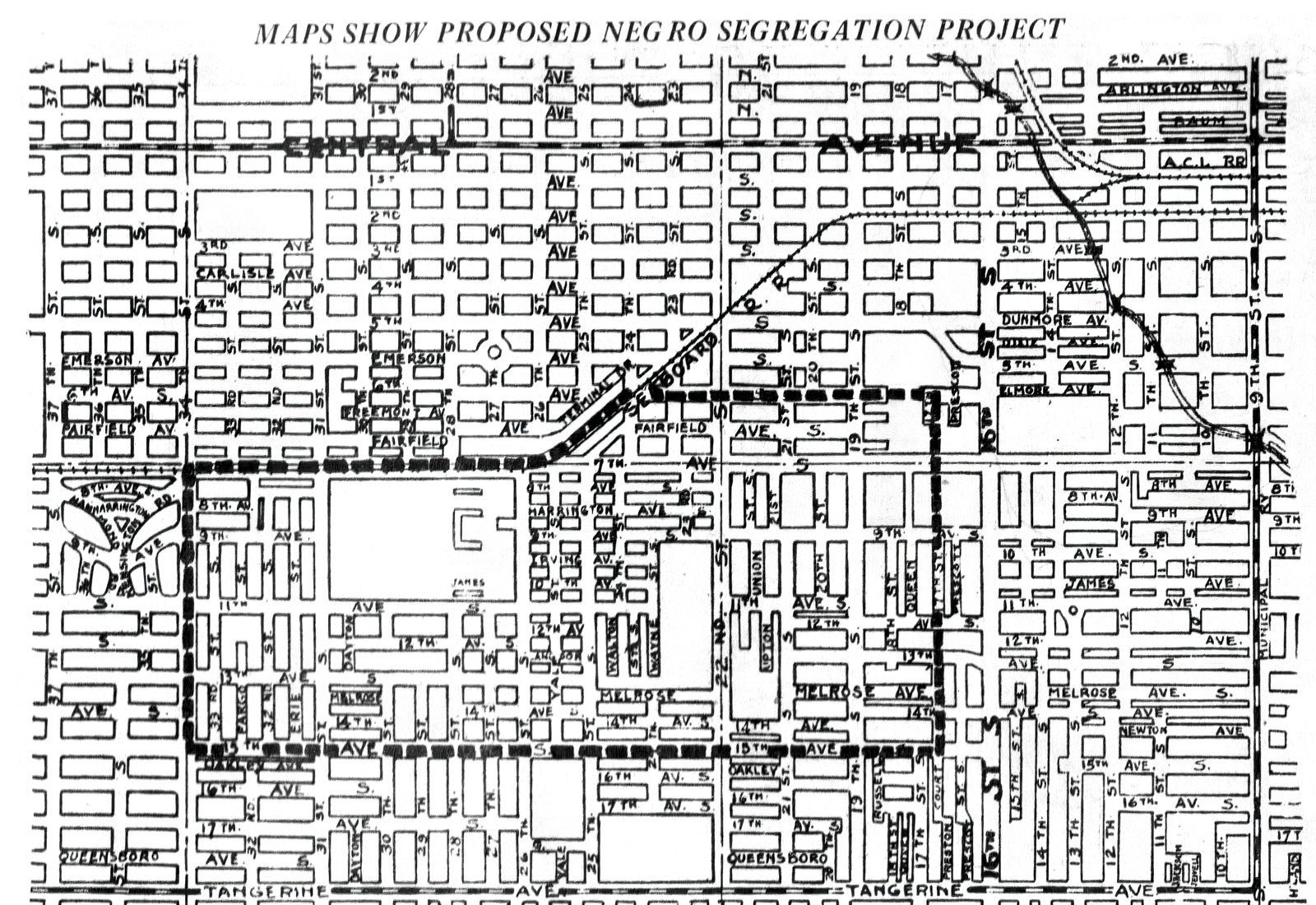
From its early boom years, access to nature came through a front and back door. North of Central Avenue, tourists enjoy Instagram-worthy waterfront parks, showcasing urban amenities alongside Tampa Bay. Today, these parks receive the overwhelming bulk of public funding and remain fiercely guarded by a proud citizenry. The adjacent working waterfront to the south was slated for industry, and set on a course for exploitation. Starting in the 1920s, city leaders commissioned engineering studies, supported business and secured federal money to construct an "industrial harbor." Salt Creek housed oil storage tanks (inevitable spills to follow) and just upstream, a dairy and flash-freeze seafood plants. As industry left in the 1970s, the creek would serve as a site for drugs and illegal sex and squatters, and now, for fast food and a Salvation Army support center. Locals recognize the creek (if at all) from a sharply-arched bridge over Third Street known as "Thrill Hill," or as the place where a sleeping homeless woman tumbled off a seawall and lost her arm to an alligator.
Such are the long string of anecdotes—the stories of drug runners and petty crime, childhood kicks, vagrancy and chicken thieves—that populate the creek's history.11City Council minutes were printed in St. Petersburg (FL) Times, Feb. 14, 1931, 2–3; see also "Open Waters in Salt Creek" St. Petersburg (FL) Times, June 16, 1921, 10. Most recently, the city revised building codes to accommodate Miami developers, who schemed to build high-density housing on the flood plain. That bubble having burst, the area remains scraped.12"Report of Port Exports Announced by Commission," St. Petersburg (FL) Evening Independent, Sept. 16, 1926, 7; "Dairy Concern Adds to Plant on Salt Creek," St. Petersburg (FL) Times, Jan. 1, 1937; "Yacht Basin Boats Face Clampdown," St. Petersburg (FL) Times, Feb. 3, 1960; "Salt Creek Squatters Trouble City Again," St. Petersburg (FL) Independent, Aug. 28, 1961; Jack Alexander, "Drug Raids Nab 11," St. Petersburg (FL) Independent, May 18, 1968.
Salt Creek activists suffer fatigue, even disillusionment, from fighting the combined forces of city hall, Jim Crow's intractable legacy, and poor decisions rationalized by free market economics. Two episodes from the past century illustrate the challenges of turning back the tide. The creek's path traces a low-lying area, or swale. In any other scenario, land this vulnerable to flooding would be set aside for parks and greenspace. Every good planner that has studied a topo map has, in fact, reached that conclusion. In the 1920s John Nolen, the preeminent city planner of his generation, prepared St. Petersburg Today, St. Petersburg Tomorrow—a design that would be considered progressive if it were adopted even now.13John Nolen, City Planning Report: St. Petersburg Today, St. Petersburg Tomorrow (St. Petersburg, FL: St. Petersburg City Planning Board, 1923), https://friendsofsaltcreek.org/wp-content/uploads/2022/02/St-Petersburg-Today-St-Petersburg-Tomorrow-1923-Nolen-Plan-1.pdf; St. Petersburg Conceptual Plan (City of St. Petersburg, FL, May 1974), https://friendsofsaltcreek.org/wp-content/uploads/2022/03/Conceptual-Plan-St.-Petersburg-1974.pdf: 31–32. Nolen suggested a parkway, using Salt Creek to connect gulf to bay with a chain of green "around the lower end of the peninsula." Voters rejected the Nolen plan, however, citing the imposition on private property rights as well as Nolen's reluctance to tighten emerging redline laws. One could blame this shortsightedness on the times. Nolen worked in the shadow of the Rosewood massacre, but fifty years later, the city reached the same conclusion.
Dusting off many of John Nolen's ideas, a 1974 Conceptual Plan also proposed a "green open space network," which included the "natural swale" between Tampa and Boca Ciega Bay. In short, a park along the Salt Creek channel.14R. Bruce Stephenson, Visions of Eden: Environmentalism, Urban Planning, and City Building in St. Petersburg, Florida, 1900–1915 (Columbus: Ohio State University Press, 1997), 65. Neither proposal, almost fifty years apart, made the leap to policy. A common good for the city (sustainable development, equitable access to open space) will lose to private, mostly white interests every time.
In the creek, I confront my own ambivalence towards Florida. I revel in the completely undeserved, over-the-top natural beauty. I also feel overmatched by the state's ugly, obdurate social history. When my own patience runs out, I drop a kayak near the mouth and make a favorite circuit. I enter by the harbor, paddle through the marina, then under the bridges at Third and Fourth Streets, into a hidden wilderness. Past the last dredge line, not far beyond the old trolley bridge, ice cream plant or seafood fast-freeze facility, the docks and crumbling piers give way to a mangrove tangle. Under Thrill Hill, Salt Creek is both wilder and more polluted. The paradox is striking, even in its own way, charismatic. The overlooked canopy serves as a bird sanctuary, where long legged waders roost and nest. Styrofoam and plastic bottles meld with mangrove prop roots. Fecal bacteria levels spike well past acceptable levels. We are still trying to figure out the cause—excrement from the street population, which the city pushed from parks in the tourist center to the poorer southside; guano, which accumulates in the concrete channel because seawalls and dam upstream block the tidal flow; or maybe broken sewer lines.
My route takes me roughly halfway to Lake Maggiore, mostly by industrialized lots left abandoned for speculation. Past the Dollar General and McDonalds, I push through the choking mangroves, then slip under another low-slung bridge at Eighteenth Avenue South. From here the creek opens into Bartlett Pond, a small aperture all but choked off due to overgrowth. I have seen snook roil below the black, murky surface. I've also seen a prize game fish, floating ominously on the surface of the muck. Osprey watch from their nests in the light posts by the athletic fields. Were it not for the hum of traffic, I could be in the 10,000 Islands of the Everglades. Instead I have found Nature in the heart of a city.
This is not where one expects to find a kayak. Citing water quality, Parks and Rec officials have ignored my suggestions to install a put-in off Bartlett Pond. So I engineer my own exit, grabbing the sewer line off a bridge on the opposite side, nudging a gunwale to the shoreline, and throwing my fifty-seven-year-old self onto the muddy bank. From Bartlett Park, I portage back across Fourth Street, past a gas station at the busy intersection of Fourth Street and Twenty-Second Avenue South, back to my once gay and racially-mixed, increasingly gentrified neighborhood. This circuit is not easy, scenic, accessible, or even encouraged. But I find the paddle into every day nature restorative. Wilderness has been erroneously thought of as an escape, rather than as engagement with the here and now. "In wildness is the preservation of the world," Thoreau mused, wandering the clearcuts around Concord. The best wilderness is always close to home.15Henry David Thoreau, "Walking," The Atlantic, June 1862, https://www.theatlantic.com/magazine/archive/1862/06/walking/304674/.
Bartlett Pond
At Bartlett Park, tucked behind Twenty-Second Avenue and Fourth Street, Salt Creek opens into a muddy pool. This little pond adjoins two of St. Petersburg's main thoroughfares, but badly eutrophied and surrounded by mangroves, rarely merits a second look. My wife Julie has lived three blocks away and driven past Bartlett Park for twenty years, but did not know there was actually water behind the brush. A little fishing dock used to provide access on the east side, away from the street and from the park's interior. Vandals, or maybe the homeless on a cold night, burned the outer decking. Repairs to the dock then came slowly and were poorly done. After I called to complain, the parks department blocked off the charred sections, shortening the entire structure.
Environmental racism takes many forms—big and small, from legislation to microaggressions. A perspective at water level renders visible the "slow violence" of local policy, to use Rob Nixon's memorable phrase: the damage "that occurs gradually and out of sight … dispersed across time and space [and] typically not viewed as violence at all." Leisure may not register as a health concern. At least on the surface. But in this city, defined by slow violence, differences in life expectancy across race are measured by decades.16Rob Nixon, Slow Violence and the Environmentalism of the Poor (Cambridge, MA: Harvard University Press, 2011), 2; Sears et al., "Building Bridges," 123. Hypertension kills, green spaces heal.
St. Petersburg and Pinellas County pride themselves on their parks, yet the allocation of amenities follows a classic script in inequity. A Pinellas County park map is literally a reverse image of racial demographics. Docks served by the county's white residents include ADA-compliant handrails, fish cleaning stations, and overhead shelters to protect visitors from the harsh sun or sudden rain. Residents in south St. Pete's poorer Black neighborhood instead get this charred shell, over an overgrown pond my spouse never even knew existed—where health officials deemed the water unsafe to fish or swim.
Economics and social history shape the landscape, but because the history is forgotten and on-the-ground-economics vanish into everyday life, that landscape is tough to read. Bartlett Park embodies this contradiction. Behind the stump of a dock, tennis balls thwock back and forth at the St. Petersburg Tennis Center. Founded in 1926, the municipal courts are a vestige from the early twentieth century, when the neighborhood afforded vacation cottages for winter residents and renting tourists. The court's location seems anomalous, though like every other chapter of the city's history, it can be explained through the local lodestars of leisure and race. The center serves as a throwback to St. Petersburg's peak years as a populist paradise, when white northerners suffering from cold found relief in the mild climate, bay breezes, the foliage, and sport.
The same boom drew African Americans, mostly from across the South, who came here to work a growing service economy. The zoning measures set out to keep the Black population both accessible and cordoned off; these measures, from the middle third of the past century, limited where Blacks could work, live, and travel after dark. African Americans forged communities in neighborhoods that still resound in local lore—the Deuces, Pepper Town, Gas Plant, Campbell Park, Methodist Town. After the waning of de facto segregation, in the early 1970s, once tight communities fanned out across the southern side of the city.17Rosalie Peck and Jon Wilson, St. Petersburg's African American Neighborhoods (Charleston: History Press, 2008), 15–18; Sears et al., "Building Bridges," 108. Black families settled in formerly white neighborhoods on the south side of town, including Bartlett Park. White people moved out, abandoning the neighborhoods, then decades later returned to the same sections—displacing Black families who have now lived there for at least a generation.
The contradictions and shifting dynamics across time and space make Salt Creek difficult to explain. Lime green tennis balls lob over the chain link fence, down the sidewalk, and into the watershed. Environment and community relations cannot seem to find the same page. I struggle personally with my own blindness, fumbling with good intentions. After several years of my teaching along this waterway, graduate students culled together a self-produced book called Salt Creek Journal. During an Earth Day celebration at Bartlett Park, I palmed a copy of the paperback to my city council representative. She actually read the book, then convinced me to form a real group with the same name as the pedagogical fiction—Friends of Salt Creek. For several years, pulled into service, I led the group. We defined goals, calling ourselves a community group centered around nature, not so much preservationist. We met small, consistent successes. Foundation money flowed our way, though before we were logistically prepared to take on projects; we had a grant before we had a bank account. For clean ups, environmental groups like Tampa Bay Watch and the Tampa Bay Estuary Program (who do admirable work advocating for marine health) bring enthusiastic white volunteers from outside, though our constant reminder has been to build from within the neighborhood. The local Keep America Beautiful office wants to drop in cypress trees without asking people who live there.
Conventional narratives of environmental justice, Ellen Griffin Spears observes, have "left out many constituencies—women, workers, indigenous populations, people of color, immigrants—and as a result left out the social justice roots of environmental reform." And so we see the broader trends unfold in local arenas. White environmentalists are not "looking at the community," observes Jacqueline Hubbard, an African American attorney whose family has owned a lakeside home in the area for decades; the result "is a lack of communication and trust."18Ellen Griffith Spears, Rethinking the American Environmental Movement Post–1945 (New York: Routledge, 2020), 4; In my informal interview with Jacqueline Hubbard (Sept. 2, 2022), she mentioned the importance of environmentalists reaching out to churches and groups with well-established records in civil rights; my hope as the author of this article, an online tour, is to have a ready-made program for community presentation.
In retrospect, the lesson feels obvious: restoring the environment starts with community. The questions must always start with, "for whom?" For whom are we working? With whom and why? Bartlett Pond brings fault lines into stark relief. After a long period of asking, the city secured external funds to dredge the eutrophied pond. The mostly white Friends of Salt Creek continue to test waters around the park, hoping to locate the sources of fecal bacteria. But why now? Will the dredging serve the neighborhood's current, mostly Black residents? What will dredging a pond mean for those experiencing homelessness? Is "improvement" merely a bellwether of high-end development downstream? And how does one fight back cynicism? During a May Day clean up, an African American fraternity, the Sigma Betas, led a tree-planting effort that involved local teenage boys. When construction in the park cut off an irrigation line, however, the newly planted trees dried up and died. This story is nothing new. Landscape theorist Anne Whiston Spirn recounts similar frustrations with Philadelphia's Mill Creek. She describes how she led eighth graders along the creek's buried course, then asked the teenagers to develop a landscape plan. The students (more familiar with the realities of the streets than an Ivy League professor) refused to believe any plan they implemented would be suggested. "It won't happen," a student told her; "Someone will wreck it."19Spirn, "Restoring Mill Creek," 404. How do you explain to teenage boys in St. Petersburg, likewise, that the city failed to water plants they put in the ground?
Advocacy puts well intentioned theory to the test. We have to pull out the Thoreauvian "realometer." In our rhetoric and scholarly discourse, one might wax optimistic about bringing together environmental and social justice, building what my local Sierra Club chapter calls a "Black-Green" alliance. But in practice, we learn the hard way, starting by acknowledging the depth of the rift of our divides. We can get the grants but we cannot exact meaningful change. As a white-led group, Friends of Salt Creek seems to have a offered a strategic wedge for easy volunteerism; our group checked the box for "underserved community." Over summer 2021, we drew from a Tampa Bay Estuary Program grant to support an artist in residence program at the local community center. Four artists (two white, two African American) met under a central pavilion, working most closely with kids. The children here are predominantly Black, with many coming from foster homes. White kids go to tennis camp, steps away, taking after-school lessons for $200 per week. Kids from the adjacent Frank Pierce Center are not accustomed to access. The pavilion where we met backs onto the chain-link fences of the neatly rolled courts. At one point, a child passed a gate left open, usually locked, leading to the public court. "Wait," the child asked, "can we go in there?"
The same could be said for the pond. Our entry points to nature are shaped by economics, power, and race. The points of access disclose social boundaries. Where equivalent parks offered sheltered docks and piers, the only dock here is a burnt out stub. The city clears and maintains lakes in other parts of the city, opening code-compliant "windows" through the mangrove; here, the water remains hidden—out of sight and degraded.
This is no accident. Past Bartlett Park, through a hidden gap in the mangroves, Salt Creek cuts diagonally, continuing to run southeast, through one of the poorer parts of the city. Neighborhoods along the creek tumble precipitously from coastal-slash-suburban to impoverished. Median household incomes drop in predictable blocks, as one moves from waterfront from properties along Tampa Bay and west into the city: $78,875 in the mostly white Old Southeast neighborhood, to $44,474 in the Bartlett Park area, to $12,096 in the more African American Harbordale section. A closer analysis provides a much more nuanced intersection of economics and race, not captured by simple caricature, though a trend exists. The city-data website reflects what anyone who lives in St. Petersburg already knows: economics fall along sharp racial lines, effecting in turn, health, access to fresh food, experiences with education and law enforcement, the possibilities of upward mobility, and of course, green space.20"St. Petersburg Florida: Income map, Earnings map, and Wages data," City-Data, Accessed March 31, 2023, https://www.city-data.com/income/income-St.-Petersburg-Florida.html. Structural racism study; see also Sears et al., "Building Bridges," 203-08.
Racial demographics and water quality intersect. At the end of legalized Jim Crow, as African Americans moved into the Harbordale neighborhood, the city let water quality sink. Low oxygen levels during the 1960s resulted in fish kills. Locals likened the smell at low tide to a badly operating sewage plant, the newspaper reported; outsiders (not residents) used the creek as an unlicensed trash pit. The rust colored water tested at almost eight times accepted levels for coliform bacteria. The city was no longer calling this waterway a stream or creek; in newspapers and press conferences the creek was now a "drainage area," or worse, a "ditch."21Willard Cox, "Tests Show [Red] 'Tide' Not Cause of Kills," The Evening Independent, July 6, 1965; "A Fishy Smell at Salt Creek," The Evening Independent, May 2, 1966; "Salt Creek Flow Sickly," The Evening Independent, Sept. 14, 1973; Bill Marden, "Trash, Tide A Problem," The Evening Independent, July 16, 1971. Racism did not cause environmental abuse; water quality was abysmal throughout Tampa Bay. A generation of activists, overwhelmingly white, have "saved the bay"—dramatically improving estuarine health. The poorer areas drained by Salt Creek, following script, are the last to see remediation.
Lake Maggiore
Semantics shape stewardship. At MLK (formerly Ninth, a major north-south street), a dam divides Salt Creek from Lake Maggiore. I am now in the middle-bottom part of the Pinellas Peninsula, on what used to be "Salt Lake," an estuarine habitat typical for coastal Florida. The name changed, however, alongside usage. In the 1920s real estate promoters began pitching new developments around a shallow, still tidal estuarine habitat. A fanciful origin story in the St. Petersburg Times provided the much-needed fiction. The newspaper, upholding real estate interests, staked a dubious claim that "Salt Lake" was discovered by Italian buccaneers, who called it "Maggiore" after a similar body of water on the Swiss-Italian border. In an act of rhetorical desalination, the hucksters presented the Italian as the earlier toponym; the sailors had first found fresh water, though mistakenly, the label "Salt Lake" stuck on later maps. Fiction and finances thus conspired to justify a dam. The Times cited a "peculiar condition" (or what the rest of us call tides) that allowed saltwater species to intrude from the bay. In 1930 a more permanent dam was built, making "Maggiore a freshwater lake for bass fishing." It would remain as such, until no one could recall when the brackish lake was part of an estuarine tidal run. By the 1980s the alligators were so pervasive that water skiers chased them off the slalom course. Neither bass nor gators belong in "Salt Lake," of course, as freshwater species have found their invasive niche in this badly translated Alpine lago.22"Lake Maggiore Believed to be Named by Pirate—To Be a Beautiful Section," St. Petersburg (FL) Times, April 5, 1925; "Lake Maggiore Dam Proposed," St. Petersburg (FL) Independent, Sept. 25, 1930. I am indebted to Jack E. Davis, who grew up on Lake Maggiore and who read a draft of this essay, for the observation about water skiing.
The folly, this not-just-semantic amnesia, has been expensive. Newspapers chronicle a twenty or thirty year cycle of restoration and waste. Eutrophication, fish kill, dredge Crisis, quick fix, repeat. In 1940, ten years after construction of the new dam, the city's Evening Independent would report:
City sanitation crews were burying hundreds of pounds of dead mullet and trout along the eastern shore of Lake Maggiore where they washed up after being killed by what [is] believed to be excessive vegetation gases in the shallow waters of the lake.
The newspaper described a horrific scene. Fish up to two feet long, panting in the grass; sanitation workers removing the rotting carcasses; the city vowing to install a screen to keep saltwater species out of the now-freshwater lake. Again, in 1963, the state game commission concludes that ecologically, the lake has become "old and not conducive to bass reproduction." Fish kills returned in 1968 and 1970, when the city detected chloride, a negatively charged ion that indicated "somehow salt water was getting into" Maggiore. In 1991, the headlines repeat: "Lake Maggiore Sick from Pollution," this time from high concentrations of run-off nitrogen and phosphorous. The following year, sanitation workers hauled off three-hundred pounds of dead menhaden (a coastal and estuarine species), snook, redfish, and yellow fin. Starting in 2004, the city spent two years scraping 1.3 million tons of sediment from the lake bottom. Trucks ran sixteen hours a day, five days a week, transferring the muck to a sod farm and developing area in the swampier part of the county's north end. After high levels of arsenic were detected in the soil, however, the city found itself in a sticky legal battle with the developer who used the fill, eventually settling with a million dollar contamination claim.23"Tons of Fish Die in Lake Maggiore," The Evening Independent Aug. 1, 1940; "Lake Maggiore: Fight Against Aging," St. Petersburg (FL) Times, June 25, 1971; Sue Landry, "Lake Maggiore Sick from Pollution," St. Petersburg (FL) Times, Jan. 16, 1991; "Natural, Normal Fish Kill Hits Lake," St. Petersburg (FL) Times, Nov. 2, 1992; Waveney Ann Moore, "Contaminated Soil to Cost St. Petersburg $1 million, 15 Years after Dredging Project," Tampa Bay (FL) Times, April 12, 2019; Southwest Florida Water Management District, "Final Phase of Lake Maggiore Restoration Project in Full Swing," Water Matters, May–June 2005, https://www.swfwmd.state.fl.us/blog/watermatters-magazine/11/final-phase-lake-maggiore-restoration-project-full-swing. Despite the added cost, toxicity, and history of repeating problems, officials declared victory. "This project attempts to set back the clock on a long history of water quality problems at Lake Maggiore," the Southwest Florida Water Management District (Swiftmud) triumphantly claimed. The irony is deafening. A plan has been set in place, with no heed for the existing pattern of waste. If the clock was "set back," as Swiftmud boasts, then only for the same problems to repeat.24Water Matters, "Final Phase."
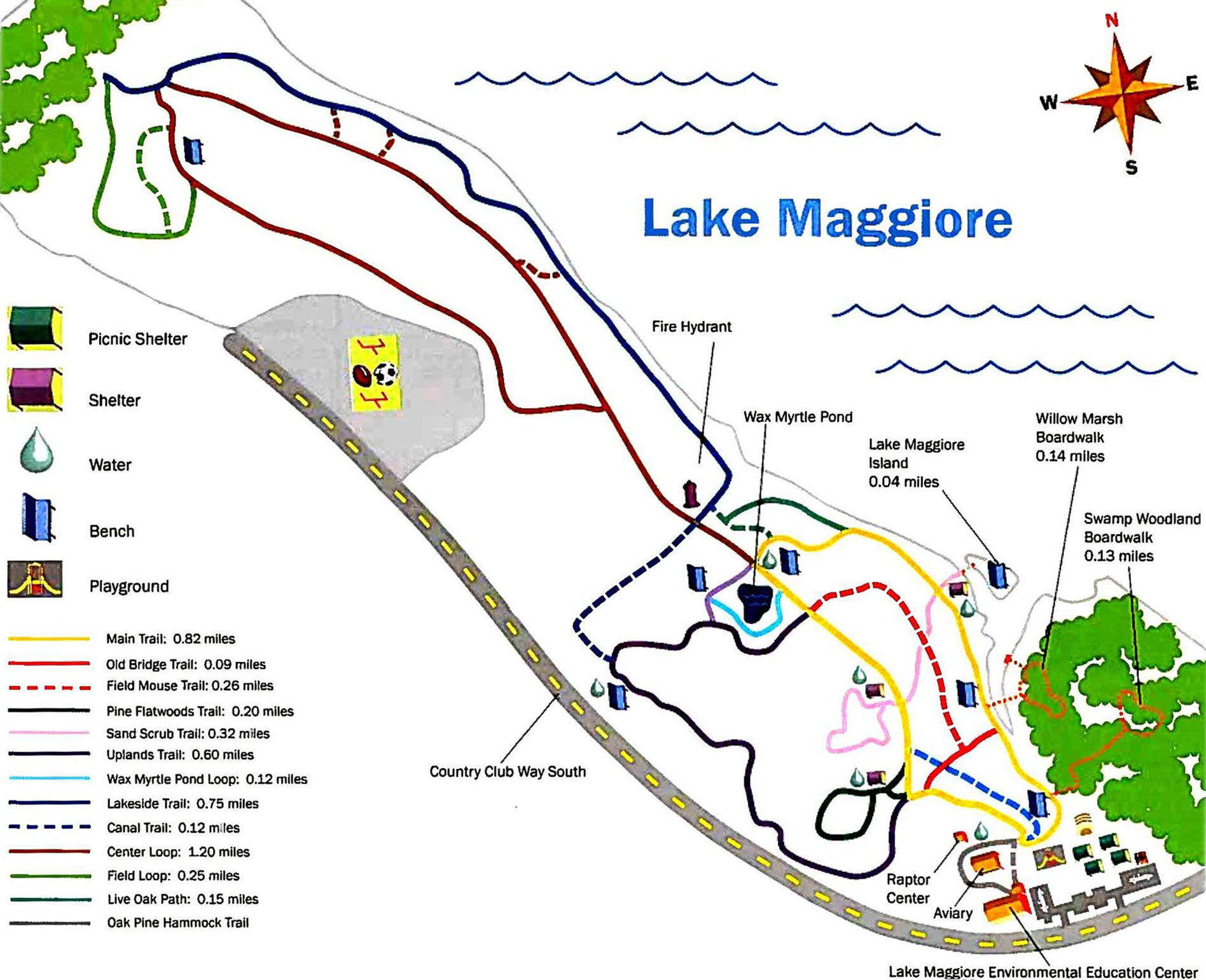
The lake remains awash in contradiction, mismanaged and lexically confused. The dam along MLK seeks to split salt and fresh water. Circle south, past some houses, by a fire station, and a mostly abandoned park. Spin further southwest and much of the land is sheltered by a beloved sanctuary, Boyd Hill Nature Preserve. Along the same tract, adjacent to the preserve, a city dump turns over mulch. At the base of Twenty-Second Street, historically the central corridor for St. Petersburg's African American population, sits a park. The north section fronts Maggiore Shores, originally a white neighborhood, then middle-to-upper-class Black, and today, increasingly white again. Each of the stakeholders holds a claim to the park—some smaller, some larger. Mostly white environmentalists aligned with Boyd Hill argue for removing the dam and restoring the ebb and flow of "Salt Lake." Older home owners in the Maggiore Shores neighborhood (to the north) want cattails around the edges cleared to improve their view; the current water management plan keeps salinity down and serves as flood protection. The only unifying factor is the cattails circling the lake, indicating low water quality. The common denominator is eutrophication; the argument is how to solve the problem. Renamed with a faux history, mispronounced, and managed against its natural flow, this once-tidal lake suffers from being something it is not.
Willow Marsh
On the south shore of the same Lake Maggiore, Salt Creek changes names (again). Then it disappears (again). The precise point of disappearance, ironically, occurs in a beloved nature park, Boyd Hill Nature Preserve, at one of the finest visual prospects in the entire city. A boardwalk on the Willow Marsh Trail faces North, towards downtown. Off in the distance, beyond the lake, cumulus clouds tower over one another, dramatically framing a vast blue horizon and restless skyline. Anhinga roost in a nearby island, and below, any number of species of ducks, moorhen and long-legged waders nudge through spatterdock and duckweed. Common sights are marsh rabbits and alligators, the mother gator often with her yellow-striped young brood. The visitor's map to the preserve marks this particular boardwalk as part of the Willow Marsh Trail, which presumably would make this area "Willow Marsh." Technically, the water forms part of a Salt Creek branch. Trail maps to the preserve, however, do not even mark a stream.
City nature has no place in a "nature preserve." At a point where an urban waterway should be most visible, even celebrated, the comedy of hide-and-seek intensifies. A waterway (now flowing due South) switches names. By the semantically confused lake, it disappears from the map altogether. Why? Because discursive "Nature" and the natural hydrology do not align. Near the Boyd Hill visitors center, hikers have unknowingly crossed Salt Creek. It is the little brook that trickles past an outdoor classroom, by the raptor rehabilitation center, and eventually reaches back to the edge of the nature preserve, where it runs under a chain link fence. Here, the creek becomes a culvert. And with subtle semantic shift, stewardship declines.
The aquatic thread snaps. We lose the connection. In a wealthy suburban neighborhood, the headwaters of Salt Creek runs through a maze of backyard overgrowth, accessible only with permission. To trace the creek now is to trespass. Care falls to individual whim or the conscience of private owners. One particularly zealous environmentalist has dutifully planted native cypress in the bottom, hoping to stabilize the sandy banks and restore habitat; elsewhere, the low-lying area remains mostly a jungle of invasive taro and wild ginger. Further south, where the planner John Nolen proposed a green corridor along the area's natural swale, the St. Petersburg Country Club has engineered the creek's headwaters into a series of water hazards for its golf course. Landscapers mow up to the edges of the artificial ponds along the golf course's back nine.
The hydrology has become impossible to visualize as one piece. Because the waterway is fragmented, no one connects the link from fourteenth fairway to Tampa Bay. Grass clippings run straight into the ditch, Lake Maggiore, into Salt Creek, and eventually into our beloved bay—feeding algae and toxic blooms that have undermined our quality of life, ruined countless fishing trips, and cost the state dearly in tourist revenue.25 The Tampa Bay Regional Planning Council set the loss of tourism revenue for a 2018 red tide bloom at $130.6 million; see The Ripple Effects of Florida Red Tide, (Pinellas Park, FL: Tampa Bay Regional Planning Council, 2019), https://tbrpc.org/wp-content/uploads/2019/01/The-Economic-Ripple-Effects-of-Florida-Red-Tide_unsigned.pdf; A more thorough study set the loss for the same bloom at double the cost, $317 million, see João-Pedro Ferreira, et al. "Impact of Red Tide in Peer-to-Peer Accommodations: A Multi-Regional Input-Output Model," Tourism Economics, March 1, 2022, https://journals.sagepub.com/doi/10.1177/13548166211068276. The neglected stream passes over a dingy concrete weir, amounting to little more than a one-stroke penalty for golfers and repository for lost Titleists.
Again, the aquatic thread splits. There are actually two larger branches feeding Lake Maggiore, the second no easier to trace. In its western course, the stream feeds a lake from a city tract along Dell Holmes Park. From here, it runs due West down a channel, where it parallels a public golf driving range. Canoes and kayaks rarely paddle this channel. The alligators are unusually large. One could go missing here altogether. If I am to put in at Lake Maggiore, I double check my life preserver.
The unnamed, culverted west branch cuts anonymously across public land. I can paddle upstream, with a city mulch processing plant to the left, and a drop-off site for brush to the right. The stream parallels the east-west running Twenty-Sixth Avenue South. Chain-link divides the landfill and private property, in this case two of the more prosperous historically Black churches in the city—St. Augustine's Episcopal and McCabe United Methodist. The location of these churches, or more accurately their relocation, figures into the last half century of city history. Both congregations served Jim Crow neighborhoods closer to the center of town, the middle class Campbell Park and poorer Gas Plant communities. Both neighborhoods were razed in the 1970s and 80s. Following a national trend, in which federal roads targeted Black areas, Interstate i-175 cut the Campbell Park neighborhood in half, running straight over homes where pillars of the African American community lived.
Ten years later, as if by design, the city razed the Gas Plant in the name of urban renewal, leveling a neighborhood to construct a domed stadium. The Tampa Bay Rays (Raze?) now play in the dome, Tropicana Field. But the team's owners (buttressed by city government and a newspaper that depends upon sports for daily copy) declare the thirty-year-old dome obsolete. Once again, the area awaits real estate redevelopment, with little probable return for the people displaced under the banner of "urban renewal" and promises to "get it right." St. Augustine's Episcopal relocated during the 1970s, moving from property now near the interstate, away from a community that has since scattered, and rebuilding on the rich soil of a former nursery near the head of Salt Creek's long swale.
Lake Eli
Where the creek ends remains an open question. According to an environmentalist friend who lives along the south shores of Lake Maggiore, the creek was historically sheet flow, tracing without record or immediate course through pine flatwoods. If I push a kayak further west, past Lake Eli, I trace the drainage ditch, almost to the churches that run along Twenty-Sixth Avenue. Just north of an arrow-straight culvert alongside the parking lot of McCabe United Methodist, the stream unceremoniously ends. The culvert takes a sharp turn at the boundary of church and city land, then runs north, along a straight ditch to north-south running Twenty-Sixth Street. On the other side of the street, Salt Creek finally disappears into underground maze of sewers. And from there, who knows?
Conclusion—Fragmented Headwaters
McCabe's presence at the headwaters embodies a painful chapter of St. Petersburg's history. The congregation of this century old church coalesced around segregated areas, along the eastern edge of the Gas Plant neighborhood. The congregants built the former church themselves, laying their spiritual home on the Black side of a segregation boundary. The interstate and dome destroyed the old structure, and today, the site is now a nondescript concrete parking garage. The current pastor, Reverend Jana Perkins-Hall, speaks clearly of the betrayal:
Black people got together, during that particular time of economic disenfranchisement, pooled their resources and physically built, brick by brick, this place of worship. They were there for fifty years before they were relocated . . . For what?
Perkins-Hall, though not a native, speaks powerfully on behalf of her parishioners: "So what kind of message does that send — spiritually, emotionally, psychologically — to the people who worked for free? That now, in place of a community they called home, is a parking garage?" There is no historical marker, even though stories continue to tell, "that this was once a place of sacred worship." The dislocation remains an unacknowledged erasure. A more visible reminder would at least acknowledge the hurt.26Jana Perkins-Hall spoke at a community forum about Booker Creek and the Tropicana Field site redevelopment, held at the University of South Florida's St. Petersburg campus on Feb. 15, 2019; see, Anna Maria Lineburger, Kelly Kennedy, and Dyllan Furness, ed., Voices of Booker Creek (St. Petersburg: University of South Florida, 2020), 29–30. Just as the teenage boy said to the Penn professor Anne Whiston Spirn: "someone will wreck it."
McCabe United Methodist Church
At McCabe, the unbaptized remnants of Salt Creek disappear into a sewer line, across from the church, at the corner of Twenty-Sixth Avenue and Twenty-Eighth Street. It is smack-dab in the middle Pinellas County, just east of the low sand ridge (a relic dune) that divides the peninsula. How and where the waters ran before development remains a question. Early histories and even the occasional map suggest that the outer reaches of Salt Creek mingled with a bayou to the west, possibly trading headwaters from both the swamp and bay' this memory of an earlier hydrology, however, remains repressed.27Walter Fuller, St. Petersburg and Its People (St. Petersburg: Great Outdoors Publishing Co., 1972), 5. The creek might have run straight across, serving as a liquid connector now lost.
Cities that bury their habitats sacrifice a bit of collective soul. Environmentalists in Los Angeles lament the failure to recognize the human, natural, and even cinematic history of the concretized Los Angeles River. Tourists are drawn to the Fleet River. New Yorkers still want to see the waters that bubbled under Minetta Street in lower Manhattan, and my archaeologist-art history friend clearly felt a connection when she stumbled onto the Eriadnos. With sea level rise, social scientists attend to the psychic costs of disappearing landscapes, citing what they call solastagia or "environmental grief."28Ellis Neville and Ashlee Cunsolo. "Hope and Mourning in the Anthropocene: Understanding Ecological Grief," The Conversation, April 4, 2018, https://theconversation.com/hope-and-mourning-in-the-anthropocene-understanding-ecological-grief-88630; Gren Albrecht et al., "Solastagia: The Distress Caused by Environmental Change," Australasian psychiatry: Bulletin of Royal Australian and New Zealand College of Psychiatrists 15 (2007); Ashlee Cunsolo and Neville R. Ellis, "Ecological Grief as a Mental Health Response to Climate Change-Related Loss," Nature Climate Change 8 no. 3 (2018): 275–281; L.P. Galway , T. Beery, K. Jones-Casey, K. Tasala "Mapping the Solastalgia Literature: A Scoping Review Study." Internal Journal of Environmental Research and Public Health 16:15 (July 2019). The social-historical context adds another layer. My partner Julie walked Birmingham's Village Creek in an effort to connect place and current-day race relations in this iconic civil rights setting. When I trace Salt Creek, I too seek this connection.
Hydrologic systems carry us into our history. They uncover buried pasts, helping us to explain unhealthy divides. Despite Florida's myths of paradise, we remain disconnected from the natural world, from the past that has built itself around us, from one another. Environmentalism needs community, and we best find community in a city's liquid heart. We need to know where the waters run.
About the Author
Thomas Hallock received his PhD from New York University. He is the author of From the Fallen Tree: Frontier Narratives, Environmental Politics and the Roots of a National Pastoral, 1749–1826 (Chapel Hill: University of North Carolina Press, 2003) and the co-editor of Early Modern Ecostudies: From the Florentine Codex to Shakespeare (New York: Palgrave Macmilian, 2008), William Bartram, the Search for Nature's Design: Selected Art, Letters and Unpublished Manuscripts (Athens: University of Georgia Press, 2010), and Travels on the St. Johns River: John and William Bartram (Gainesville: University of Florida Press, 2016). He recently published a series of travel and place-based essays that explain why he loves teaching the American literature survey, A Road Course in Early American Literature: Travel and Teaching from Atzlán to Amherst (Tuscaloosa: University of Alabama Press, 2022).
]]>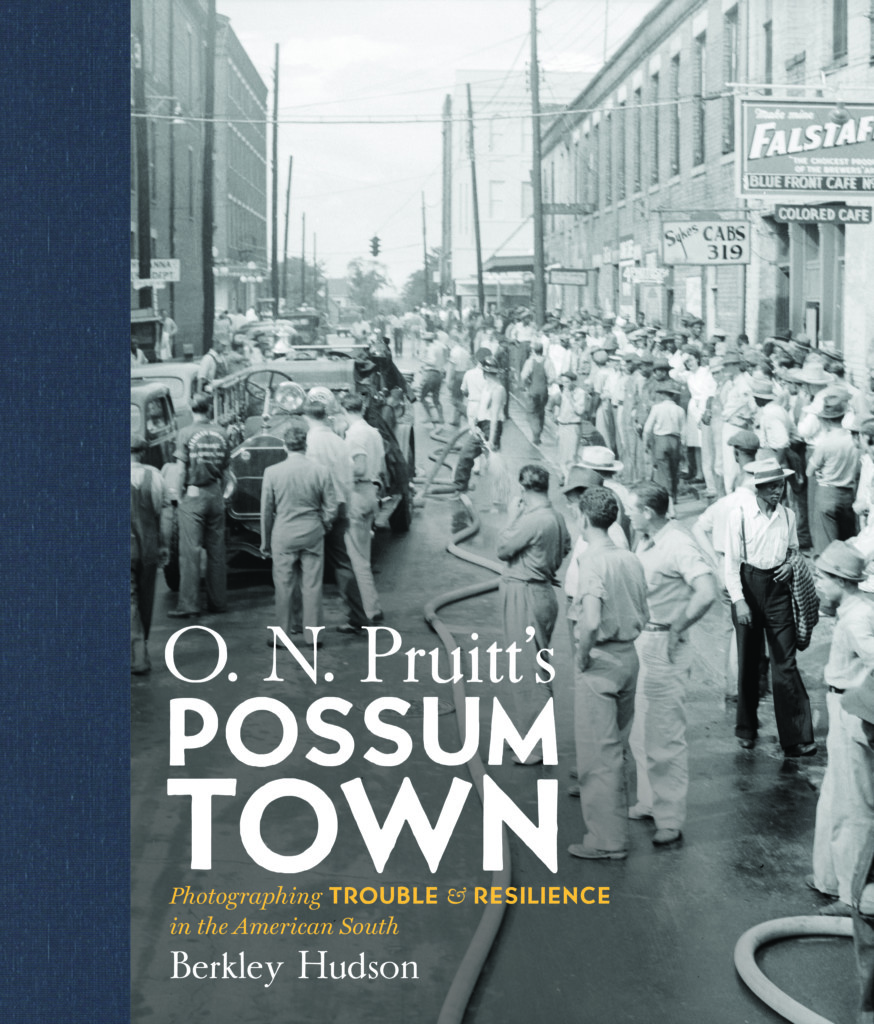
In 1971, a Walker Evans retrospective at the Museum of Modern Art inspired critic Hilton Kramer to reflect on the Evan's enduring influence: "For how many of us, I wonder, has our imagination of what the United States looked like and felt like in the nineteen-thirties been determined not by novel or play or a poem or a painting or even by our own memories, but by a work of a single photographer, Walker Evans."1Kramer quoted in Tom Rankin, "'The Injuries of Time and Weather,'" Southern Cultures 13, no. 2 (2007): 9. Swap out "the United States" for "the US South," and insert some of Evans's contemporaries, including Dorothea Lange, Jack Delano, Ben Shahn, Marion-Post Wolcott, and Margaret Bourke-White, and Kramer's point becomes even more apt. They all photographed a diverse cross section of the United States for various publications and New Deal programs, such as the Farm Security Administration, but the small-town, rural South was the site and subject of their most recognized work. The vivid immediacy of their photographs—and their ubiquity in magazines, books, and exhibits—has made it possible to think of them as surrogates for personal experience and memory. As a cultural imaginary, a "Documentary South," has often served as "the thing itself," a persuasive counterpoint to popular culture ventriloquisms. As Margaret Bourke-White wrote of You Have Seen Their Faces, her 1930s photo-text book about rural poverty, it "may not be the South of song and story, but it is the South that you bring back on sheets of Panchromatic film."2Jonathan A. Silverman, For the World to See: The Life of Margaret Bourke-White (New York: Viking Press, 1983), 80.
The reality is that up until about 1971, if residents of southern cities, towns, or farms thought about the role of photography, most would not have considered (or known of) Bourke-White or Evans. However, they may have been aware of locals who pursued photography as a profession, a passion, or perhaps both by creating snapshots made with Brownies and other Kodaks. Many of these photographers owned their own studios or made photographs for local publications and other purposes. Their portraits and photographs of street scenes, church services, rural life, and landscape often resembled an album whose intended audience was also its subject. Each town and city seemed to have its acknowledged "picture man" or woman, people such as Mike Disfarmer of Heber Springs, Arkansas; Paul Kwilecki of Decatur County, Georgia; Hugh Mangum of Durham, North Carolina; J. W. Otts of Hale County, Alabama; O. N. Pruitt of Columbus, Mississippi; Paul and Layfette Buchanan of western North Carolina; Sam F. Vance, Jr. of Kernersville, North Carolina; Bayard Wooten of New Bern and Chapel Hill, North Carolina; T. R. Phelps of southwest Virginia; Rufus W. Holsinger of Charlottesville, Virginia; and many others.
Black community photographers in the South, including P. H. Polk of Tuskegee, Alabama, Richard Samuel Roberts of Columbia, South Carolina, and Rev. Lonzie Odie Taylor of Memphis, Tennessee, played particularly important roles during the Jim Crow era when Black photographers were largely excluded from the staffs of national magazines and many New Deal agencies, including the FSA. Gordon Parks was the FSA's only Black photographer during the agency's eight-year existence between 1935 and 1943, serving as a Rosenwald fellow for one year in 1942. Black photographers documented aspects of Black life, particularly middle-class life, that white photographers ignored or could not access. Their photographs ultimately transcended their local purposes and created what bell hooks has called "a counterhegemonic world of images" that rebutted the racist caricatures found in popular culture and in the work of some white photographers.3bell hooks, Art on My Mind: Visual Politics (New York: The New Press, 1995), 57.
For most Black and white community photographers, local demands and conventions of circulation limited the reach of their images. That has changed in recent years thanks to the work of some dogged historians and archivists. Knowledge about local photographers has grown since the 1970s when scholars, partly under the influence of new social history and ethnographic movements, began retrieving and saving photographers' archives from oblivion and writing life histories. More recently, libraries have digitized some of these archives, making them more accessible to scholars and the public. Presses have published exquisite books about local photographers that combine beautiful layouts with insightful scholarship. The "Documentary Arts and Culture" series of University of North Carolina Press presents stunning books that chronicle the lives and work of a few of these photographers: One Place: Paul Kwilecki and Four Decades of Photographs from Decatur County, Georgia edited by Tom Rankin; Where We Find Ourselves: The Photographs of Hugh Mangum, 1897–1922 edited by Margaret Sartor and Alex Harris; O. N. Pruitt's Possum Town: Photographing Trouble and Resilience in the American South by Berkley Hudson.4Examples of books and articles on some of the local photographers mentioned in this review essay include, Julia Sully, Disfarmer: The Heber Springs Portraits, 1939–1946 (Danbury, NH: Addison House, 1976); Ann Hawthorne, The Picture Man: Photographs by Paul Buchanan (Chapel Hill: University of North Carolina Press, 1993); David Moltke-Hansen, "Seeing the Highlands: Southwestern Virginia through the Lens of T. R. Phelps," Southern Cultures 1, no. 1 (1994): 23–49; Belena S. Chapp, et al, Through These Eyes: The Photographs of P. H. Polk (Newark, DE: University Gallery, University of Delaware, 2001); Ralph E. Lentz, II, W. R. Trivett, Appalachian Pictureman: Photographs of a Bygone Time (Jefferson, NC: McFarland & Company, Inc., Publishers, 2001); Rob Amberg, Sodom Laurel Album (Chapel Hill: University of North Carolina Press, 2002); Rah Bickley, "Sam F. Vance, Jr. 'Character-Taker': The Faces of Small-Town and Rural North Carolina, 1930s–1940s," Southern Cultures 13, no. 2 (2007): 78–94; Tom Rankin, One Place: Paul Kwilecki and Four Decades of Photographs from Decatur County, Georgia (Chapel Hill: University of North Carolina Press, 2013); Margaret Sartor and Alex Harris, Where We Find Ourselves: The Photographs of Hugh Mangum, 1897–1922 (Chapel Hill: University of North Carolina Press, 2018); James T. Campbell and Elaine Owens, Mississippi Witness: The Photographs of Florence Mars (Jackson: University Press of Mississippi, 2019); Thomas L. Johnson and Phillip C. Dunn, A True Likeness: The Black South of Richard Samuel Roberts, 1920–1936 (Columbia: University of South Carolina Press, 2019); Berkley Hudson, O. N. Pruitt's Possum Town: Photographing Trouble & Resilience in the American South (Chapel Hill: University of North Carolina Press, 2022).
Decades in the making, Hudson's extraordinary book explores the life and work of Otis Noel Pruitt (1891–1967), a white Mississippian who between the 1920s and 1950s served as the "de facto documentarian" for Lowndes County, Mississippi, its seat, Columbus (nickname Possum Town), and surrounding towns and countryside in the northeastern part of the state. An emeritus professor of journalism at the University of Missouri, Hudson grew up in Columbus in the 1950s and knew Pruitt as the "picture man." Pruitt photographed important family gatherings at the "rambling, two-story Victorian filled with Pekingese and antiques" where Hudson's grandmother lived. His photographs adorned the walls of Hudson's childhood home. In the 1970s, as a student journalist and photographer, Hudson began working with friends from Columbus—including photographer Birney Imes, photographer and folklorist Mark Gooch, David Gooch, and Jim Carnes—to track down and acquire Pruitt's archive of 88,657 negatives and 2,000 glass plates, which they donated to the Wilson Library at the University of North Carolina, Chapel Hill in 2012.5Hudson, O. N. Pruitt's Possum Town, 2–5.
Hudson selected nearly two hundred images from Pruitt's sprawling archive to feature in O. N. Pruitt's Possum Town. They are thoughtfully sequenced to tell a coherent and dichotomous story of "Trouble & Resilience." On their own, Pruitt's evocative and deeply disturbing photographs make this a remarkable book, but it's Hudson's poignant writing and his personal connections to Pruitt, Columbus, and its people that make the book especially valuable.
In a series of short interspersed essays, Hudson tells a history of Columbus and Lowndes County, Mississippi and reveals narratives behind some of the photographs Pruitt made. Hudson weaves his research and memories with the memories of others he or his colleagues interviewed, including people featured in the photographs or their descendants, as well as Pruitt's. These voices bring life and death into the photographs. With emotional resonance, they turn abstractions (race, class, gender, place) into a nexus of experiences and relationships. They prod us to reconsider interpretations of photographs we think we know.
Born on a farm in south central Mississippi, O. N. Pruitt came of age while Eastman Kodak was popularizing photography. The introduction of affordable and portable box cameras, such as the Brownie, around the turn of the century transformed "one of the most envied accompaniments of high birth"—family portraits—into an almost common possession.6"Old Photographs," The Living Age, 279, December 13 (1913): 689. Pruitt bought his first camera to make pictures of his young children. Before long he was using his Brownie 122 to photograph timberland for landowners looking to sell. By 1915, he was a full-time photographer. To hone his craft and make himself more marketable, he studied for a year at the Illinois School of Photography in 1916. When he returned to Mississippi, he opened his own studio in the town of Newton near his birthplace. Three years later, he and his family moved ninety miles northeast to Columbus where he began working at the studio of a German immigrant named Henry Emil Hoffmeister. In 1921, Pruitt bought out his boss and began establishing himself as the area's premier photographer.7Hudson, O. N. Pruitt's Possum Town, 9.
As a businessman, Pruitt made studio portraits of Black and white people while the police and insurance companies paid him for photographs of homicide and lynching victims, car accidents, and damage and deaths from natural disasters. Pruitt roamed the area's streets and backroads on his own as a documentary artist. He had an expansive eye and a knack for recording habits and rituals from cradle to grave. He photographed infants in his studio and the dead in their caskets, baptisms and executions, fox hunts and "freak" shows, cotton farmers and Klan rallies, Black Sunday School classes, and Kiwanis Club members in blackface. "His photographs," writes Hudson, "capture scenes of the ordinary graces of everyday life, ethnic identity, and race relations as well as brutal power, full of excruciating suffering." They offer a vivid "photobiography of a time and place" from the perspective of a white photographer living in the Jim Crow South.8Hudson, O. N. Pruitt's Possum Town, 1, 9–11. What these photographs document most of all, however, is the pervasive situation of racial segregation and white domination.
Irony and contradiction saturate Pruitt's persona and his depiction of Lowndes County's segregated society. A member of "the white male Columbus power structure," he was a gregarious man who said and wrote nothing about his photographic interests or inspirations; he faithfully attended Sunday school and enjoyed telling "smutty jokes"; he was a good ole' boy who loved to hunt and fish and who used his camera to cross the color-line by making beautiful, sometimes intimate, portraits of Black clients, including the president of the local NAACP. Even the use of his most widely recognized photograph was paradoxical. Some whites turned his 1935 image of two Black lynching victims into postcards, while the Chicago Defender published it under the caustic heading "White Civilization." Three decades later, the Student Nonviolent Coordinating Committee (SNCC) used the same photo in a voting rights poster.9Hudson, O. N. Pruitt's Possum Town, 10–11, 13.
Columbus sits astride two recognized ecoregions: the last undulations of Appalachia, known in the area as the Tombigbee Hills, roll north and east of town while a band of fertile Black Belt prairieland spreads south and west. Between 1920 and 1960, the years Pruitt photographed there, the town's population grew from 10,501 to 24,771, all the while having an almost equal number of Black and white residents. The guidebook published by Mississippi's Federal Writers' Project in 1937 romanticized Columbus as "a comfortable old-tree shaded town" with homes "characteristic of the lavish ante-bellum period in which they were built. It is the junction of the Old South with the New, with gracious lines of Georgian porticos forming a belt of mellowed beauty about a modern business district." On the northside of town, the "Negro section," sat "low-roofed, red frame houses . . . festooned with wisteria and shaded by umbrella chinaberry trees and tall, brightly colored sunflowers."10Hudson, O. N. Pruitt's Possum Town, 19. The everyday inequalities and racist terror missing in the guidebook descriptions can't help but edge their way into the photos of Pruitt.
Hudson acknowledges that his study of the conservative Pruitt, who photographed him in the segregated world of his youth, helped him find "connections to my life—unknown, unconscious, or purposefully hidden. With this project, I learned heartrending stories I wish someone had told me long ago." From the photographs, Hudson "learned about executions and lynchings that my mother and father knew about but never mentioned. I learned about baptisms in the 1920s and 1930s in the Tombigbee River where Black and white church groups gathered in a measure of biracial Christian harmony. As children, my mother and my uncles went to these on Sunday afternoons near their home and a few blocks from where I one day would live."11Hudson, O. N. Pruitt's Possum Town, 5 and 7.
Despite his personal ties and long work on the project, Hudson avoids turning his study of Pruitt's images into an awakening memoir. As he writes in the opening chapter, "The stories embedded here do not simply belong to me. . . . I alone cannot tell the stories of Pruitt's photographs. That requires a collective effort of reflection and conversations among all kinds of people with all kinds of backgrounds and beliefs."12Hudson, O. N. Pruitt's Possum Town, 5. The power of O. N. Pruitt's Possum Town comes from the interplay and juxtaposition of Hudson's own stories of Pruitt's photographs with those of people whose backgrounds and experiences are, or were, unlike his own.
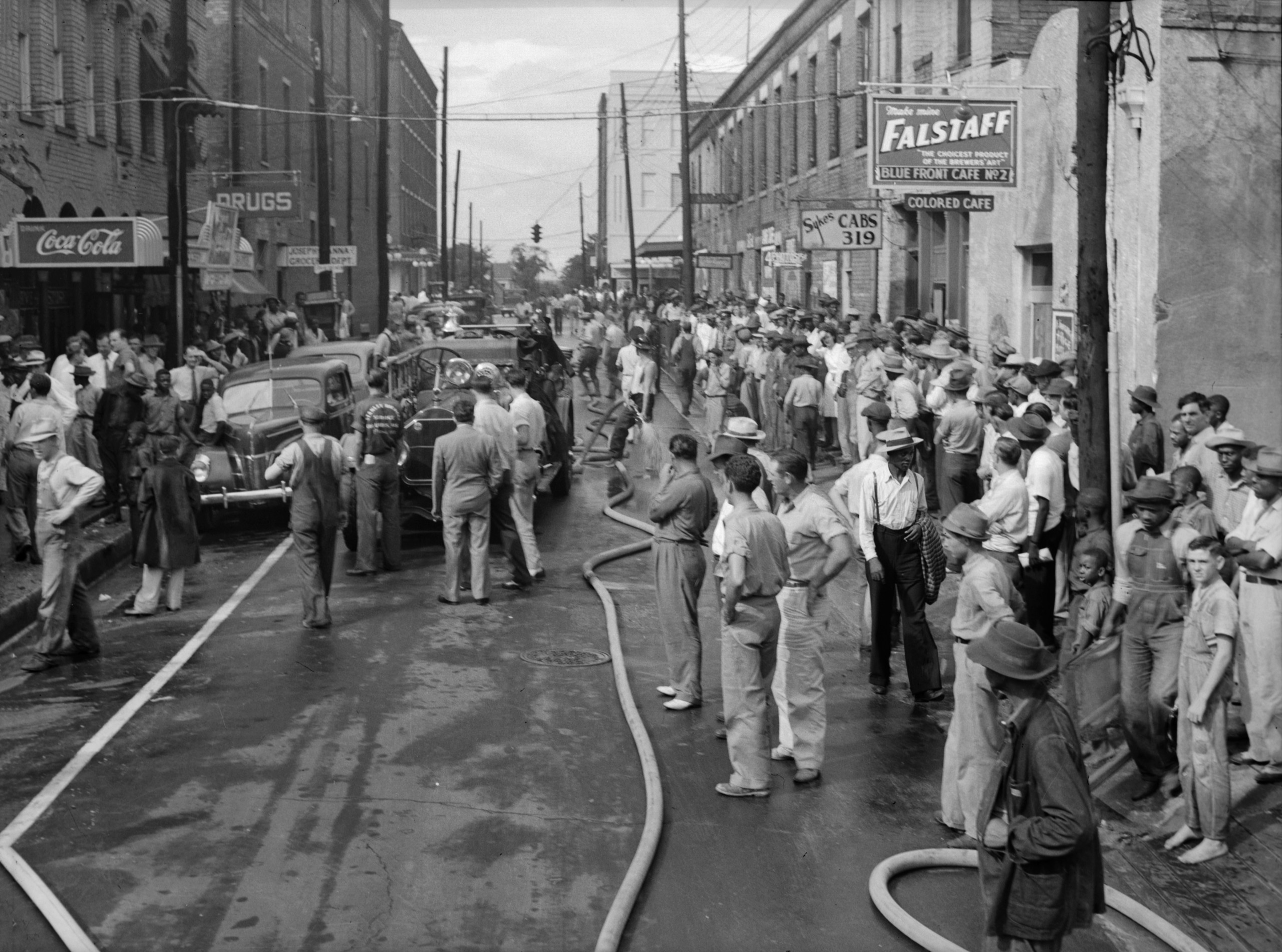
In the essay "Catfish Alley Fire," which accompanies Pruitt's book-cover photograph of the same title, Hudson braids his history of Columbus's former "one-block-long strip of flourishing Black businesses," with the memories of Black and white residents. The effect turns the photograph into a palimpsest of overlapping and competing stories. Although a Black business district, white men visited Catfish Alley to play poker, eat fish and barbeque, and drink illegal whiskey. Some later romanticized it in their memories, portraying it as a place redolent of fried fish and moonshine where the proprieties of middle-class life could be left behind. "Drink whiskey and eat fish," one white man remembered, "That's about all it was to it." But for Black businessman Edward C. Bush, Catfish Alley was a place of Black economic and cultural independence, a refuge from the worst of Jim Crow's indignities.13Hudson, O. N. Pruitt's Possum Town, 110–111.
Pruitt's "Catfish Alley Fire" photograph represents some small portion of the tension between these two sets of memories. Taken about 1940, it shows people congregating on the street to watch the fire department respond to a blaze that's out of view. It's an allusive image, a "tableau of street theater," Hudson writes, that corrals the contradictions of Jim Crow into one city block. Black and white, mostly men, stand in the vicinity of a sign for a "Colored Café" and stare at the fire looming beyond the left frame. It's the rare event that breaks the everyday, but in their proximity, Black and white are distanced, alienated, from each other. The fire hoses snaking along the street form cordons and ligatures, markers of segregation and the ties that bound Black and white together despite it.14Hudson, O. N. Pruitt's Possum Town, 110–111.
The hose can also be read as a rope, a symbol of the white supremacist violence—real and threatened—that runs through Pruitt's photographs in this book. Possum Town opens with a series of beautiful portraits of Black and white sitters and images that illuminate the landscape. Then, abruptly, Hudson presents a photograph of a Black boy with a bloodied nose and blood-stained shirt. He stares straight at Pruitt, wounded but impassive or perhaps stunned to see a camera pointing at him. The white boy over his left shoulder holds a nearly clinched left fist that correlates with the blood dripping from the Black boy's right nostril. The white boy's face conveys a mixture of satisfaction and reluctance as if the white men who stand behind him had goaded him into the fight for their more evident pleasure. The Black bystanders seem variously engaged and uneasy, perhaps tempering their deeper feelings about the bloodshed because of the presence of white men and because they know that this fight, even involving youths, is a species of the violence whites used to maintain power. Hudson's decision to juxtapose this image with a pastoral photograph of two white men standing in a field of oats on the opposite page suggests how suddenly "trouble" can shatter the façade of tranquility and how quickly some want to forget it.15Hudson, O. N. Pruitt's Possum Town, x.
Hudson's book includes two photographs that frame white killings of Black men. The first, on a left-facing page, from 1934, shows James Keaton, a Black man, standing at the gallows with white officials who will soon carry out his execution by hanging. On the opposite page appears one of Pruitt's 1935 photographs of the bodies of Bert Moore and Dooley Morton hanging from a tree following their lynching by a mob. These images are preceded by two photographs of different blackface minstrel shows performed by white youths and Kiwanis Club members and one image of the Klan marching at night through Columbus and passing in front of the photographer's studio. By placing these photographs immediately before the images of executions, Hudson suggests how ritualized theatrical and physical violence conspire, how one enables the other in white racism's bloody crucible.16Hudson, O. N. Pruitt's Possum Town, 149–161.
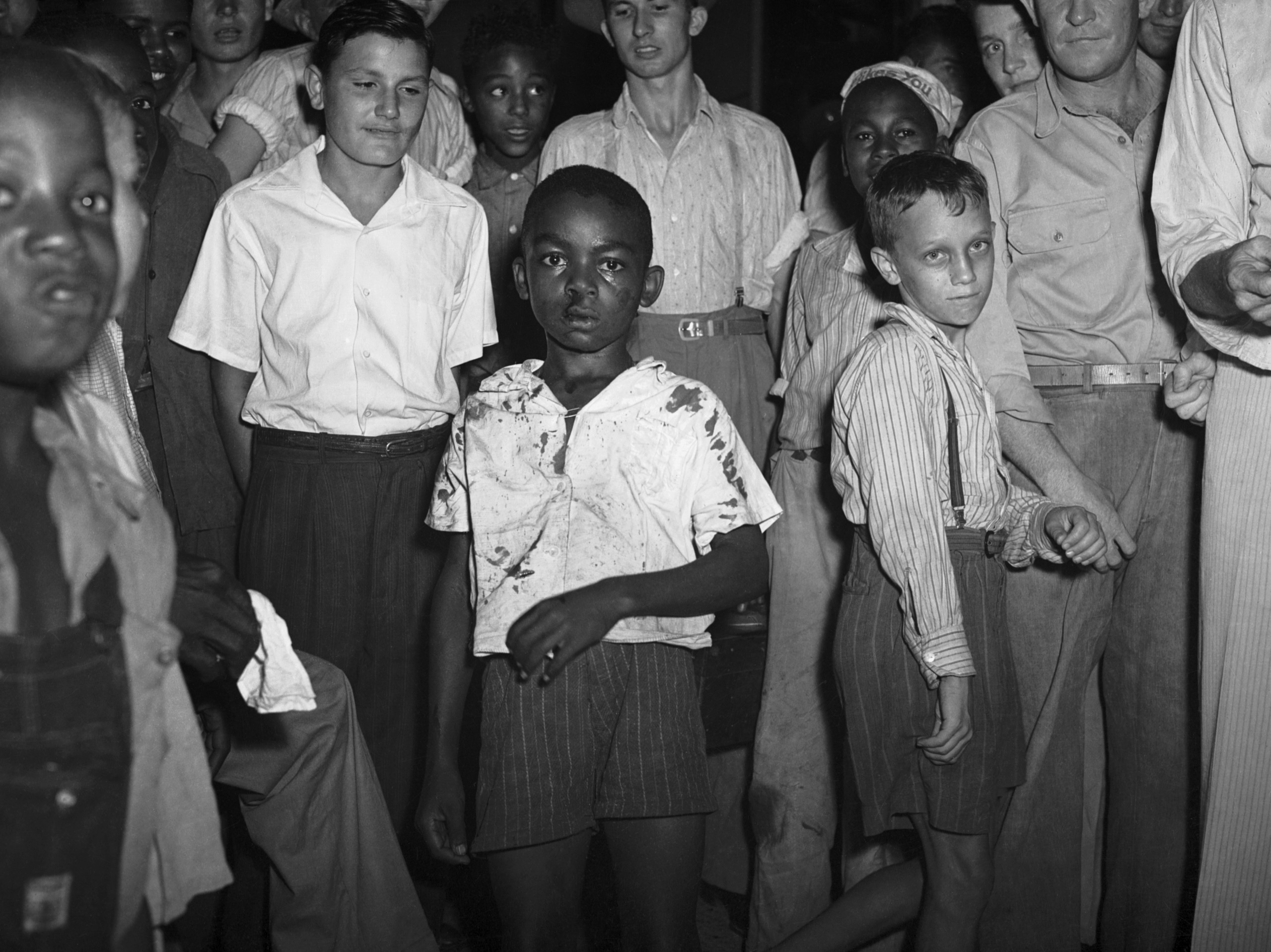
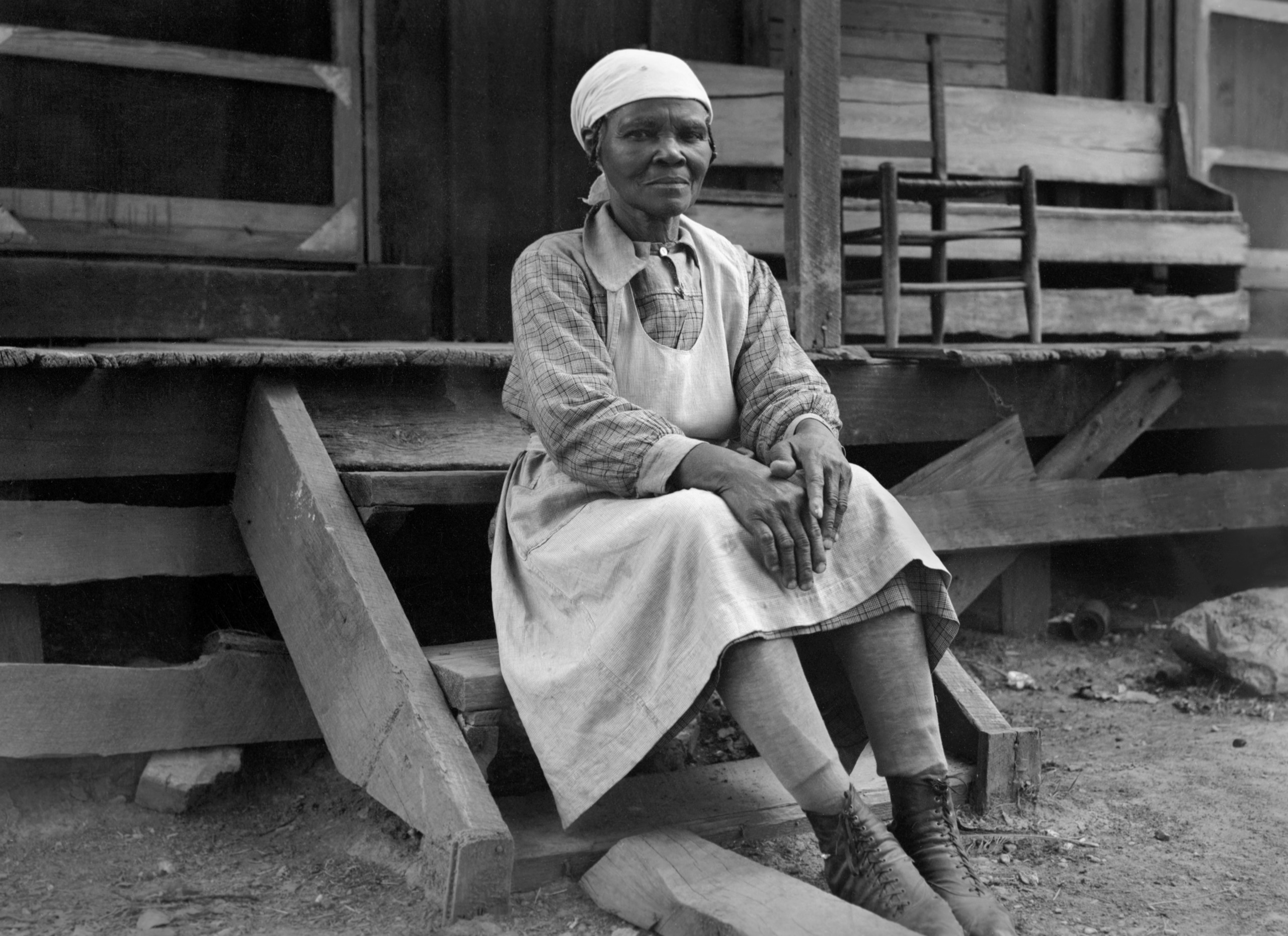
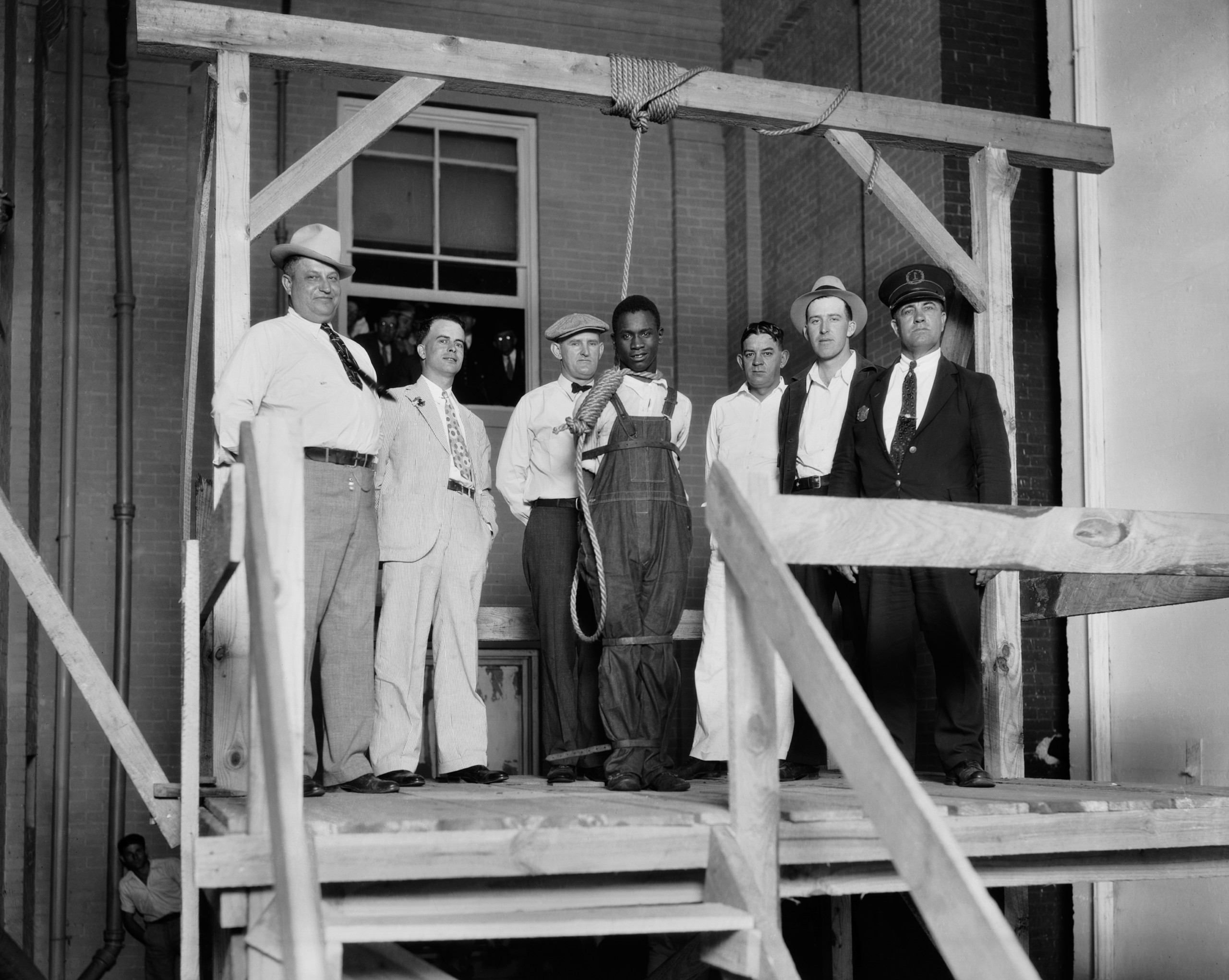
Hudson's accompanying essay to these photos provides another layer of context. In a section on Keaton's execution, Hudson explains the historical significance of Pruitt's photograph: it was the last time officials carried out a "legal" execution by rope hanging in Mississippi. An all-white, all-male jury convicted Keaton of killing a white gas station owner, although a white woman who worked nearby said he was innocent and that she knew who the actual killer was. Keaton, it turns out, was prosecuted by future US Senator and arch segregationist, John Stennis, who implored the jury to convict and "help advance civilization by removing this cancer."17Hudson, O. N. Pruitt's Possum Town, 152–153.
Pruitt's photograph of Keaton at the gallows looks like a re-creation of a scene from some macabre play, which, of course, it is in a sense. Most of the men, including Keaton, feign grins except for the official on the far right who stares at Pruitt's camera with stern self-importance and smugness. Spectators peer from below and behind the scaffold, including through a courthouse window where, in one case, the camera's flash caused a man's eyes to emit a spectral glow. Hudson calls this a "tableau vivant, a living picture, at the death's moment," though it's also a tableau mort, one Pruitt took in service of white supremacy. Though not pictured, Black people, including preachers, writes Hudson, were present outside the courthouse when Pruitt made the photograph at 2 a.m. on May 25. "On the courthouse lawn for hours before the execution, they had sung spirituals through the night." Hudson's sentence evokes the Black presence while stressing their physical absence from a cropped and sanitized image.18Hudson, O. N. Pruitt's Possum Town, 152–153.
Just over a year later, in July 1935, Pruitt, at the request of the sheriff, photographed Bert Moore and Dooley Morton hanging from an oak tree after a white mob lynched them in a churchyard eight miles south of Columbus. Unlike the Keaton execution image, only one white man appears here and he kneels with his back to the camera, "gathering their pant legs into a grasp," Hudson writes, "apparently to keep the bodies steady for the photograph."
The photograph remains Pruitt's most recognized and widely circulated, and its divergent uses have mirrored the contradictions of its creator. White supremacists made it into postcards, while Nazis used or referenced it as propaganda to expose American barbarism, as did the Black press, including the Chicago Defender, Jet, and Afro World. In the 1960s, SNCC used the photograph on posters to promote voting rights in Mississippi. More recently, it was used in the 2016 documentary, I Am Not Your Negro, by Raoul Peck based on an unpublished James Baldwin manuscript, and in a 2021 CNN special about Marvin Gaye's song, "What's Going On."19Hudson, O. N. Pruitt's Possum Town, 155 and 213.
Thanks to Hudson's book, the public can now see and interpret this photograph in light of Pruitt's broader archive, or at least a portion of it. The extraordinary range of Pruitt's photographs, and the vivid stories Hudson tells about them, offers readers a unique opportunity to see the relationship between the quotidian habits and brutal horrors of life in a Mississippi Black Belt town during the depths of Jim Crow. Seen alongside the work of contemporary Black community photographers such as Richard Samuel Roberts and Rev. L. O. Taylor, Possum Town can also shed light on how whiteness and the strictures of segregation result in an archive that obscures as much as it reveals. So far, librarians at UNC, Chapel Hill, where Pruitt's work is located, have only been able to digitize a small portion of Pruitt's massive collection. As more images become available for public access in the future, other curators can build their own chronicles of Pruitt's work on Hudson's remarkable foundation.
About the Author
Scott L. Matthews is a professor of history at Florida State College at Jacksonville. He is author of Capturing the South: Imagining America's Most Documented Region (Chapel Hill: University of North Carolina Press, 2018) and "John Cohen in Eastern Kentucky: Documentary Expression and the Image of Roscoe Halcomb During the Folk Revival."
]]>Introduction
On January 15, 1909, US President-elect William Howard Taft attended a banquet at the Chamber of Commerce along with "the cream of Atlanta and the south's commercial factors, professional men, editors and railroad magnates" where the main course featured a winter trio of roasted opossum, sweet potatoes, and persimmon beer.1"Taft Eats 'Possum, Gives South Pledge," The New York Times, Jan. 16, 1909, 1. Several months earlier and prior to his election, Taft had become the first Republican candidate to venture into the Democratic "Solid South" during a presidential election.2David Charles Needham, "William Howard Taft, The Negro, and the White South, 1908–1912," (PhD diss., University of Georgia, 1970), 31. The Atlanta banquet represented a continuation of Taft's efforts toward sectional reconciliation as he pledged to "weld into a compact unit the North and the South."3"Taft Eats 'Possum, Gives South Pledge," 1. The event highlighted the white supremacist solidarities necessary for such political and economic reunification, with his speech elaborating policies that would assure federal appointments would not go to African Americans and that southern metal and cotton products would find commercial opportunities in Far Eastern markets.4William H. Taft, "The Winning of the South," Political Issues and Outlooks: Speeches Delivered Between August, 1908, and February, 1909 (New York: Doubleday, Page, 1909), 230–234.
For the prominent white male politicians, businessmen, and other leaders seated at the dining tables, roasted opossum was more than just a show of Gilded Age gustatory extravagance. The food held deep cultural meanings. Since the antebellum era, white males of southern plantation households would occasionally oversee or accompany enslaved people's nighttime opossum hunts, claim their spoils, and then relegate the game's preparation to African American cooks. Drawing on this tradition, a generation of white men with rural upbringings came to see opossum hunts as a means of perpetuating antebellum culture by reinforcing and reinscribing racial lines. They mocked and derided opossums as indicative of negative aspects of African American culture while simultaneously celebrating African Americans as possessing a folk knowledge of hunting, preparing, and cooking opossums.5Psyche Williams-Forson examines similar paradoxes in the case of fried chicken in her chapter "More Than Just the 'Big Piece of Chicken': The Power of Race, Class and Food in American Consciousness," in Food and Culture: A Reader, 3rd ed., Carole Counihan and Penny Van Esterik, eds. (New York: Routledge, 2012): 107–118. See also Williams-Forson Building Houses Out of Chicken Legs: Black Women, Food, and Power (Chapel Hill: University of North Carolina Press, 2006). In the decades after the Civil War, whites of all social classes increasingly consumed this survival food, now labeling it a "southern delicacy."6This sort of cultural appropriation persisted for over half a century after the Taft banquet, with the women of the Junior League of Charleston, South Carolina, suing Ernest Matthew Mickler, author of White Trash Cooking, in the mid-1980s for lifting what they claimed was their historical recipe for roasted opossum. For a brief discussion of cultural appropriation in this context, see Angela Jill Cooley, "Southern Food Studies: An Overview of Debates in the Field," History Compass 16, no. 10 (2018): 1–9. The dish, known as "'possum and 'taters," was one of many items of "southern cooking," which, as Diane Spivey points out, signified a "Whites Only Cuisine" during Jim Crow.7Diane M. Spivey, "Economics, War, and the Northern Migration of the Southern Black Cook," The Peppers, Crackling, and Knots of Wool Cookbook: The Global Migration of African Cuisine (New York: State University of New York Press, 1999).
Challenged by the economic competition of freed people who sought urban factory jobs and attempted to purchase rural farms, in addition to the political competition of the Populist movement that aimed to unite Blacks and working-class whites, opossum suppers, particularly in Georgia, provided a Democratic theatre in the decades following Reconstruction. At the 1909 Atlanta supper, staged to garner national attention, Taft appealed to Democrats who sought to regain national political strength. As the New York Times reported: "Five hundred eyes watched until he had been served and bountifully served and had taken his first bite of the tempting dish."8"Taft Eats 'Possum, Gives South Pledge," 1. In the aftermath of this feast, journalist Don Marquis suggested that "the possum, and all the talk back and forth across the festive boards . . . has likely strengthened Mr. Taft's idea that the 'Solid South' is breakable, and that he is the man to break it. . . . How much of the Southern point of view with regard to the negro did Mr. Taft imbibe while eating the possum?"9Don Marquis, "A Glance: Concerning the Possum and the Negro," Uncle Remus's the Home Magazine, March 1909, 26. https://digitalcollections.library.gsu.edu/digital/collection/printed/id/6450/rec/1.
The opossum's momentary rise to glory parallels the shifting of political power during this era of intensifying apartheid. Whites in Georgia and other southern states turned African American reliance on the opossum as a means of sustenance and source of income into a symbol of racial inferiority. This occurred despite the fact that many subsistence-level whites also sought the opossum as a food source. Glorified opossum consumption complemented practices of Confederate memory-making and white sectional identity.10While scholars and writers have given attention to "southern" foods and foodways since the 1970s and 1980s, the opossum remains largely absent from the historiographical record. Most authors have simply highlighted that this food—along with other game such as raccoons and squirrels—formed an important part of the diets of both white settlers and Black slaves in the antebellum era. Sam Bowers Hilliard, Hog Meat and Hoecake: Food Supply in the Old South, 1810–1860 (1972; repr., Athens: University of Georgia Press, 2014), 54; Joe Gray Taylor, Eating, Drinking, and Visiting in the South: An Informal History (1982; Baton Rouge: Louisiana State University Press, 2008), 8; Herbert C. Covey and Dwight Eisnach, What the Slaves Ate: Recollections of African American Foods and Foodways from the Slave Narratives (Santa Barbara, California: Greenwood Press, 2009). Literary scholar David S. Shields discusses the appearance of roasted opossum on a hotel menu in "Possum in Wetumpka," Southern Provisions: The Creation & Revival of a Cuisine (Illinois: University of Chicago Press, 2015), 143–162. With the emergence of food studies as a field in the 1990s, historians have more rigorously used food to study culture, race, class, gender, and political power.
Geography and Ecology of the Opossum
What was the historical geographic range of the Virginia opossum (Didelphis virginiana)? A mid-1950s article by John Guilday indicates an abundant archeological record of the indigenous marsupial in the Lower and Middle Ohio Valley and in Ohio north to the shore of Lake Erie before European colonization.11John E. Guilday, "The Prehistoric Distribution of the Opossum," Journal of Mammalogy 39 no. 1 (1958): 39–43. An absence of remains reveals that the opossum either did not occur or was uncommon in the Appalachian Plateau of northern West Virginia, western Pennsylvania, and southern New York. Guilday shows that species distribution extended beyond the southeastern United States, even though settlers came to associate the opossum with that section of the country. In The Quadrupeds of North America, John James Audubon writes that the opossum was by no means confined to southern states, particularly during the antebellum period. By 1851 the opossum's range extended north to the Hudson River. Audubon believed that populations would soon occupy southern New York and Long Island "as the living animals are constantly carried there."12John James Audubon and the Rev. John Bachman, The Quadrupeds of North America, vol. II (New York: V. G. Audubon, 1851), 124, https://archive.org/details/b22012436_0002/page/124/mode/1up. In New Jersey and Pennsylvania, opossums were common, but they were more abundant southwardly through North Carolina, South Carolina, Georgia, Louisiana and Texas, to Mexico. They also existed in Indiana, Mississippi, Missouri, and Arkansas, and extended to the Pacific, with some populations in California.13Audubon, Quadrupeds, 125.
The opossum—which is remarkably fecund due to its short gestation period and ability to produce two litters a year in warm climates—was one of the most common small mammals before European colonization in the hardwood forests of the southern Coastal Plain and Piedmont ecoregions, according to environmental historian Timothy Silver.14Timothy Silver, A New Face on the Countryside: Indians, Colonists, and Slaves in South Atlantic Forests, 1500–1800 (New York: Cambridge University Press, 1990), 11. Unlike many species of wildlife adapted to these forests, opossums were not negatively impacted by market hunting since their pelts were of low value. The deforestation that accompanied colonial farming practices allowed opossum populations to increase by driving away foxes, wolves, and other predators and by enabling grass and seed-eating mammals, such as rabbits and mice, to proliferate. Audubon's remark that the opossum consumed everything from grain in cornfields to nuts and berries, as well as rodents, rabbits, and hens, indicates that it found plantations and yeoman farms ideal habitats.15Audubon, Quadrupeds, 112.
Many viewed opossums as pests because of their omnivorous eating habits and their ability to destroy food crops. "A 'Possum Sir, is not a critter, but a varmint," remarked an overseer at Belvoir plantation near Pleasant Hill, Alabama, insinuating that the wild animal was not desirable food.16Philip Henry Gosse, Letters From Alabama (U.S.) Chiefly Relating to Natural History (London: Morgan and Chase, 1859), 234, https://archive.org/details/lettersfromalab00goss/page/234/mode/2up. Significantly, English naturalist Philip Henry Gosse, who recorded the overseer's comment while employed as a tutor at Belvoir in 1838, also observed among the neighboring plantations that the meat of both the opossum and raccoon were "scarcely ever eaten by whites, and never in summer." Travel writers, such as Frederick Law Olmsted, offer evidence that whites occasionally ate the meat during the winter. In January 1854, Olmsted recorded the owner of a large plantation in Virginia serving him opossum, which he described as tasting like a "baked sucking-pig."17 Frederick Law Olmsted, A Journey in the Seaboard Slave States, With Remarks on Their Economy (New York: Dix and Edwards, 1856), 92, https://archive.org/details/journeyinseaboar00olms/page/92/mode/2up?view=theater. Ex-slave Anderson Furr, who grew up on a plantation in Hall County, Georgia, offers a different perspective of white consumption: "Dey made N*****s go out and hunt 'em and de white folks et 'em. Our mouths would water for some of dat 'possum but it warn't often dey let us have none."18Interview with Anderson Furr in Federal Writers' Project of the Works Progress Administration, Slave Narratives: A Folk History of Slavery in the United States From Interviews with Former Slaves, vol. IV, Georgia Narratives, Part 1 (Washington, DC: 1941; Project Gutenberg, 2004), https://www.gutenberg.org/files/13602/13602-h/13602-h.htm. Furr's recollection suggests that already, in the antebellum era, opossum consumption factored into a display of racial domination.
Hunting methods, such as capturing opossums live to fatten at home and clean out their digestive tracts may have helped to improve the taste of this wild game. Yet, associating opossums with native persimmon fruits enabled a popular imaginary that helped to reduce prejudices against prominent whites who occasionally consumed this lowly scavenger. The American persimmon tree (Diospyros virginiana)—an early invading species in disturbed areas and along forest-pasture boundaries—was common throughout the opossum's range. While Native American stories connected opossums with persimmon fruits, the association was particularly strong in antebellum African American songs and folklore, as well as white settler accounts of opossum hunts.19For examples of opossums eating persimmons, see James Mooney, "The Terrapin's Escape from the Wolves," Myths of the Cherokee (Washington, DC: Government Printing Office, 1902), 278–279, https://archive.org/details/cu31924104080076/page/n7/mode/2up. See also Joel Chandler Harris, "Why Mr. Possum Loves Peace," The Complete Tales of Uncle Remus (Boston: Houghton Mifflin Company, 1955), 9. Audubon's illustration of the opossum conveys an ecological association between the plant and animal. Ripe persimmons may have enhanced the flavor of the meat, yet the fruit was not essential to supporting this omnivorous species, which indiscriminately ate plants, insects and animals and opportunistically consumed carrion and trash.
Antebellum Opossum Hunting and Black Culture
Although opossums were a choice component of the antebellum diets of white small landholders and tenants, primary accounts offer more insight into the connections between this food and enslaved people of African descent.20Subsistence farmers engaged extensively in hunting opossums for food, but early to mid-nineteenth-century written sources emphasize on African American consumption. Along with other small game, opossums were an important source of protein and fat in diets that enslavers kept lean and scarce. Ex-slave Peter Randolph explained that in Virginia many slaves made traps with cut timber, often setting fifteen to twenty of them in the swamps to capture opossums, raccoons, hares, and squirrels.21Peter Randolph, Sketches of Slave Life: Illustrations of the "Peculiar Institution" (Boston, MA: Peter Randolph, 1855), 19–20, https://docsouth.unc.edu/neh/randol55/randol55.html. Some slaves, however, used trained dogs to tree opossums at night in wooded areas adjoining plantations. Because hunting and setting traps at night did not directly interfere with daytime farm work, some enslavers permitted those they held in bondage to capture small game for supplementary nutrition. Slaves not allowed to go hunting at night had to be more covert. Ex-slave Solomon Northup recalled that in Louisiana, "There are planters whose slaves, for months at a time, have no other meat than such as is obtained in this manner."22Solomon Northup, Twelve Years a Slave: Narrative of Solomon Northup, a Citizen of New-York, Kidnapped in Washington City in 1841, and Rescued in 1853, from a Cotton Plantation Near the Red River, in Louisiana (Buffalo, NY: Derby, Orton, and Mulligan, 1853), 201, https://docsouth.unc.edu/fpn/northup/northup.html. In interviews for the Works Progress Administration's Federal Writers' Project, the numerous ex-slaves who recollected hunting or eating opossums attest to Northrup's claim that the marsupials were an important meat and that hunger drove consumption of this wild game, often described as greasy and fatty.23See Federal Writers' Project of the Works Progress Administration, A Folk History of Slavery in the United States from Interviews with Former Slaves (Washington, DC, 1941; Project Gutenberg, 2004), https://www.gutenberg.org/ebooks/13847. A few of the interview references to opossums from the WPA slave narratives are referenced in Stephen Winick's blog "A Possum Crisp and Brown: The Opossum and American Foodways" (Washington DC: Library of Congress, August 15, 2019), https://blogs.loc.gov/folklife/2019/08/a-possum-crisp-and-brown-the-opossum-and-american-foodways/.
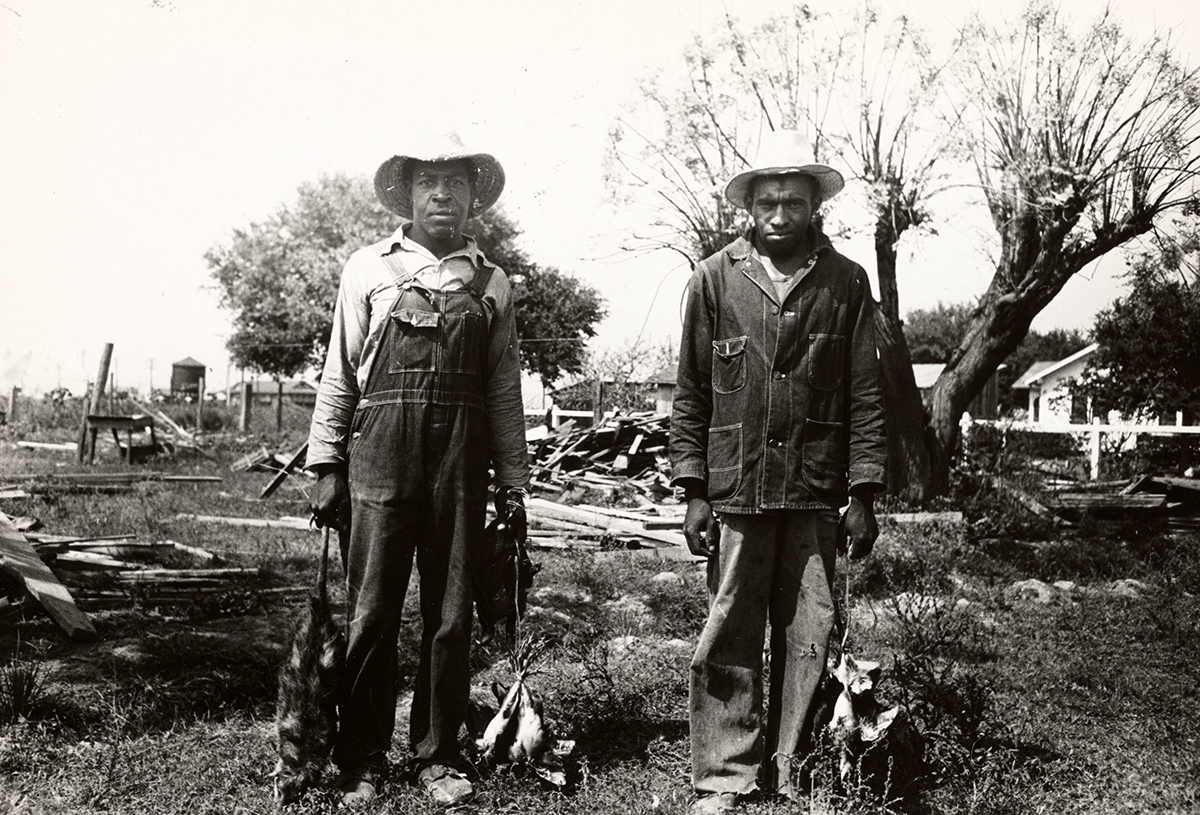
Opossums were more than a survival food for enslaved people. While John Patterson Green, born to emancipated parents in North Carolina, writes that African American opossum consumption "arises not so much from any constitutional partiality on their part, or difference in their tastes [. . .], as from the absence of fresh meats of all kinds," other slaves and freed people expressed the pleasures they experienced from consuming the animal.24John Patterson Green, Recollections of the Inhabitants, Localities, Superstitions and Ku Klux Outrages of the Carolinas (Cleveland, OH: 1880), 181, https://archive.org/details/recollectionsofigree/page/n5/mode/2up]. "The flesh of the coon is palatable," Northrup notes, "but verily there is nothing in all butcherdom so delicious as a roasted 'possum."25Northup, Twelve Years a Slave, 201. The marsupial also enabled enslaved people to access more desirable food. Remembering having "been kept for a long time on corn and potatoes," ex-slave Andrew Jackson of Kentucky revealed that opossums were one of several "expedients to get luxuries."26Andrew Jackson, Narrative and Writings of Andrew Jackson, of Kentucky; Narrated by Himself (Syracuse, NY: Daily and Weekly Star Office, 1847), 27, https://archive.org/details/narrativewriting00jack/page/n27/mode/2up?view=theater&q=pig. Jackson described a scheme of "eating pig for opossum" that entailed obtaining permission to go opossum hunting, skinning several opossums and burying their bodies, killing two pigs and burying their skin and entrails, and then boiling the pork in kettles. The slaves retained the opossum skins as "proof" of the meat's source. Annie Young, from Tennessee, told of a slave caught with a young pig: "Master it may be a shoat now, but it sho was a possum while ago when I put 'im in dis sack."27Interview with Annie Young in The Federal Writers' Project of the Works Progress Administration, Slave Narratives, Oklahoma: A Folk History of Slavery in the United States from Interviews with Former Slaves, vol. XIII, Oklahoma Narratives (Washington, DC: 1941; Project Gutenberg, 2007): 359, https://www.gutenberg.org/files/20785/20785-h/20785-h.htm. Young's trickster humor suggests a realm of everyday practices that lay beyond the master's grasp.28 Consider Jackson's tale alongside Louis Jordan's popular post-World War II hit song "Ain't Nobody Here But Us Chickens" as discussed in George Lipsitz's Rainbow at Midnight (Urbana: University of Illinois Press, 1994), 303–310.
Because opossums were important in survivance, they figured prominently into Black culture. Thomas Talley, an African American folklorist whose parents were former slaves, documented antebellum rhymes used for dancing and entertainment, such as the "Possum-La," "'Possum up the Gum Stump," "An Opossum Hunt," and "Shake the Persimmons Down."29Thomas Talley, Negro Folk Rhymes (New York: The MacMillan Company, 1922), 3, 23–24, 34, 233–234. References to some of these songs or rhymes can also be found in ex-slave narratives recorded through the Federal Writers' Project of the Works Progress Administration. Songs referenced plants, animals, and activities integral to the environments that enslaved people intimately experienced. The deep meanings that the opossum developed through antebellum folklore and foodways—as a connection to the past and an avenue to the future—would make it all the more significant when southern whites tried to claim an exclusivity of this food during Jim Crow.
Postbellum Opossum Hunting and White Supremacy
After the Civil War, hunting, selling, and consuming opossums remained significant among many African Americans. As formerly enslaved people sought to carve out autonomous livelihoods, opossum consumption represented ecologically rooted foraging skills, economic independence, and household sufficiency. Newspapers began to relay impressive—if not exaggerated—hunting accounts. An editor, for example, remarked on New Year's Day 1880 that a Black hunter in Anderson County, South Carolina had caught 127 opossums since the previous fall.30"South Carolina News," Yorkville (SC) Enquirer, Jan. 1, 1880, 2, https://chroniclingamerica.loc.gov/lccn/sn84026925/1880-01-01/ed-1/seq-2/.Although generally considered a male activity, there were exceptions, such as a Black woman's catching fifteen opossums in Muscogee County, Georgia, in 1877.31"Foraging on our Exchanges," The LaGrange (GA) Reporter, Oct. 11, 1877, 2, https://gahistoricnewspapers.galileo.usg.edu/lccn/sn82015287/1877-10-11/ed-1/seq-2/#date1=10%2F11%2F1877&city=LaGrange&date2=10%2F11%2F1877&words=&searchType=advanced¬text=&index=2&sequence=0&proxdistance=5&rows=12&ortext=&proxtext=&andtext=&page=1.
Enslavers may have tolerated—and on occasion, celebrated—antebellum opossum hunting. Yet, when these same men lost control over their labor force and struggled to maintain their livelihoods after the war, Black opossum hunts signaled an infringement on white supremacy. Whites sought to assert control over African American hunting and foraging practices. Attending opossum hunts with their former slaves provided one way for whites to flex their power. Opossum bounties were another. Depicting autonomous Black hunts as pathological and wasteful, one Atlantan wrote: "But we are wandering among the black jocks," adding that an opossum bounty will "protect negro labor and revive their languid interest in the best government."32"Possums and Protection," Atlanta (GA) Constitution, Sept. 20, 1882, 4. Because opossums destroyed crops and raided chicken houses, bounties gave landowners a way to protect their capital from pests and predators.33There may have been other motives behind paying African Americans to hunt opossums. By paying freed people to hunt opossums, former slave owners attempted to assert their authority over Black hunting, which they framed as an idle diversion from necessary farm work.34Scott Giltner, Hunting and Fishing in the New South: Black Labor and White Leisure after the Civil War (Baltimore, MD: Johns Hopkins University Press, 2008), 28.
For white men who had grown up on plantations, postbellum Black opossum hunting could evoke conflicting feelings. Sometimes the activity signaled a threat to white supremacy, while other times it featured in an imagined "South." While the Ramapough Mountain Indians of New Jersey and New York engaged in hunting opossums, a New York Times correspondent asserted in 1886 that they were "not such picturesque35"Picturesque" appears frequently in late-nineteenth century writing describing opossum hunting throughout the southern states. The term was rooted in eighteenth-century British landscape design, but travel writers, such as William Bartram, later used it to describe an attractive or pleasing scene. See "Picturesque," (Washington, DC: National Gallery of Art, last edited 2021), https://heald.nga.gov/mediawiki/index.php/Picturesque. hunters as their brethren of the south" because, instead of using hunting dogs, they relied on guns and deadfall traps (even though slaves and freed people in the southern states also used guns and traps).36"Hunting the Possum," Buffalo (NY) Commercial, Sep. 4, 1886, 1; "Hunting the Opossum. A Place Where He Is Found North of Mason and Dixon's Line," Wood County Reporter (Grand Rapids, WI), Sep. 23, 1886, 6, https://chroniclingamerica.loc.gov/lccn/sn85033078/1886-09-23/ed-1/seq-6/. Stereotypical depictions of place and race formed around the native marsupial. "No one ever located the opossum hunt anywhere but in the gum swamps or among the persimmon trees of the south," the correspondent wrote in popular racist imagery, "where they are ever associated with the spectacle of the bulging-eyed and expectant darky carrying aloft his flaming pine-knot torch, while his lean and lanky dog leads him to the tree where the much prized possum has sought refuge." A racist "plantation song" suggests a chaotic scene:
Afore de n****r could come down de tree would mostly fall—
Then smack among the dogs would light de possum n*g and all,
De dogs would pitch upon 'em both and most tar dem in half,
Old Marster he would stand aside and kill hisself wid laugh.37"Possum Hunting—A Song," Fairfield Herald (Winnsboro, SC), Mar. 12, 1873, 1, https://chroniclingamerica.loc.gov/lccn/sn84026923/1873-03-12/ed-1/seq-1/.
Whites reinforced their belief in Black inferiority by turning this strenuous and risky nighttime activity of Black survival and economic autonomy into a "picturesque" scene and humorous "spectacle." Such depictions omitted the horrific violence of slavery and Jim Crow, as well as the ecological destruction wrought by cotton, tobacco, and other monocrops that increasingly shaped foodways and contributed to the overhunting of wild game.
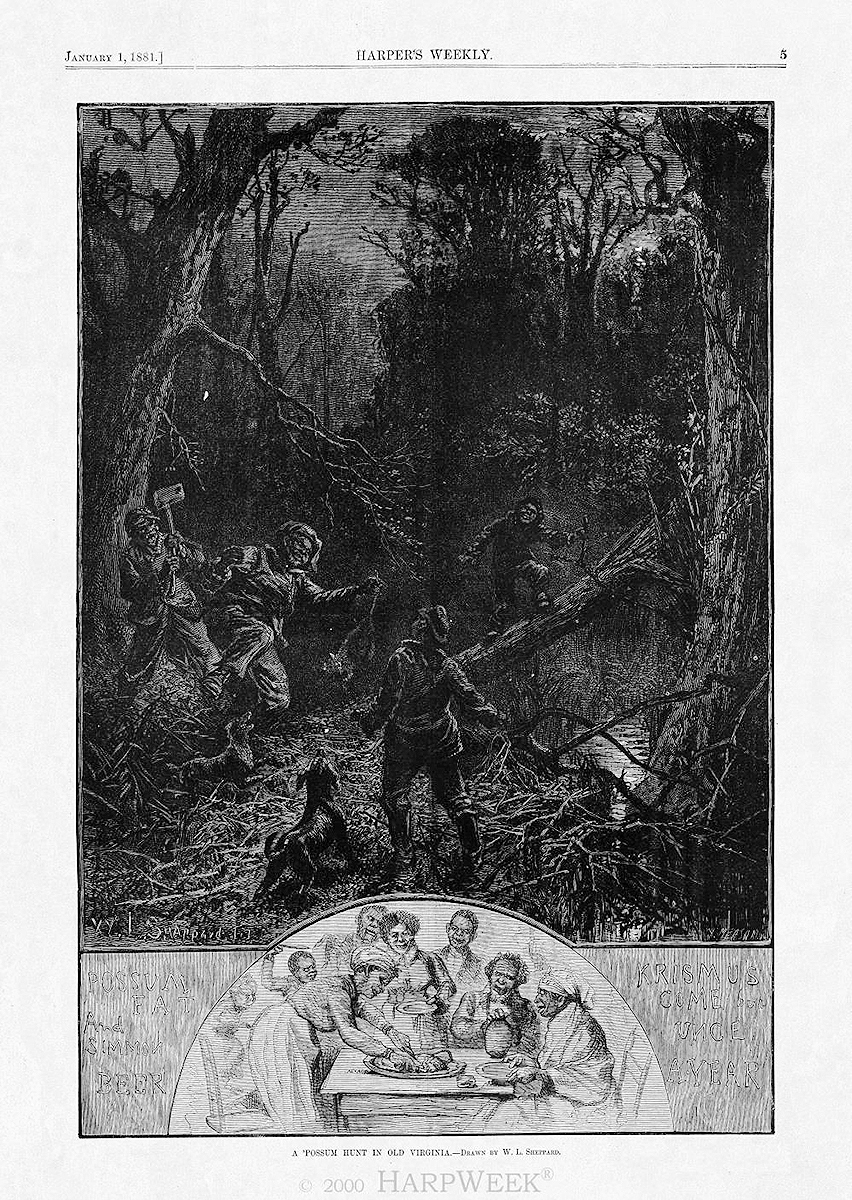
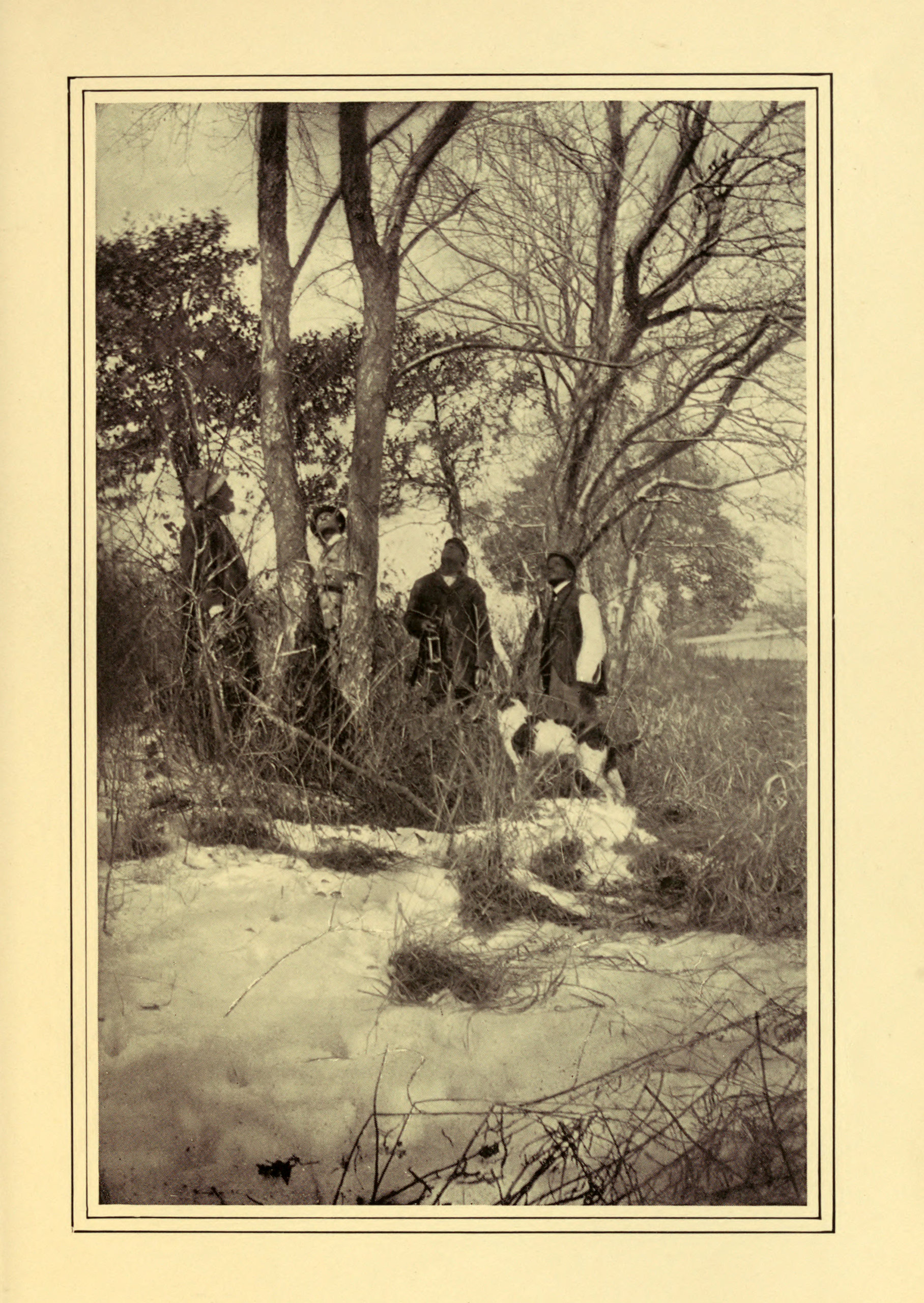
For some white men who grew up on plantations or farms in the southern states, opossum hunting evoked Confederate nostalgia. Drawing on tropes portraying Blacks as ineligible for freedom or citizenship, an Atlanta Constitution editor wrote: "Memory yet dwells with peculiar emotions of pleasure upon those glorious old hunts we used to take in by-gone days before Sambo had been transformed into a fifteenth amendment."39"The Opossum," The Atlanta (GA) Constitution, Dec. 3, 1874, 1. A columnist from Natchitoches, Louisiana, suggested: "It reminds one of the lost days ante bellum to speak of such a delicious treat as cold possum and tater on a winter's night."40"Possum and Tater," The People's Vindicator (Natchitoches, LA), Sept. 15, 1877, 3, https://chroniclingamerica.loc.gov/lccn/sn85038558/1877-09-15/ed-1/seq-3/. As it fed nostalgic memory-making, opossum hunting was more than a way of reenacting a past more often imagined than real; it represented a future where whites could retain aspects of their southern sectional identity. Another Atlanta Constitution writer offered his grandiloquent rumination:
There are some customs that even the reconstruction laws failed to disestablish and some of them are intimately connected with the opossum. The opossum still survives the war and all the sectional strife and we have sometimes hoped that the day would come when [. . .] it might become the basis, if not the emblem, of North American fraternity.41"The Premature 'Possum," The Atlanta (GA) Constitution, Aug. 6, 1882, 4.
A white brotherhood, binding the war-torn sections through the hunting and eating of opossums appealed to an apartheid appetite. As Kyla Wazana Tompkins observes, "acts of eating cultivate political subjects by fusing the social with the biological, by imaginatively shaping the matter we experience as body and self."42Kyla Wazana Tompkins, Racial Indigestion: Eating Bodies in the 19th Century (New York: New York University Press, 2012), 1. The opossum supper—a social occasion where white men came together to consume Black labor—served as a signifier of racist solidarity in the decades after the Civil War.
Cultural Appropriation, Neo-Confederates, and Urban Game Markets
Following Reconstruction, Blacks continued to hunt and eat opossums as they had for generations, as did many rural white farmers. In addition, the ascendant white political leadership ("Redeemers") who were attempting to reclaim racial command over Black labor and southern land, increasingly and publicly engaged in these activities. A plantation imaginary filled with adventuresome opossum hunts contributed to the appeal and surge of opossum suppers among white men, who had grown up on plantations or farms but were now confronting the reality of Black people transitioning from human property to citizens. They scrambled to find and re-hash tropes to narrate white supremacy and reassert racial power. Beyond overseeing Black opossum hunts, these men claimed the opossum as a rightful inheritance while depicting Black consumption as deviant. They drew on longstanding racist tropes that cast Blacks as possessing an excessive animality and fondness for opossums, while situating their own opossum consumption as appropriate, measured, and tastefully respectable. Concurrently with terroristic attempts to overthrow Black freedom struggles during Reconstruction, white men within the Democratic party cultivated the opossum supper as a theatre for leadership rites and as a site for framing anti-democratic contentions and racist tactics as legitimate, authentic, and appropriate.
In the 1870s, opossum supper announcements became common in newspapers of southeastern states and occasionally in some northeastern and midwestern ones where freed people had begun to migrate. Early on, these events involved people of different socioeconomic classes and racial or ethnic backgrounds and occurred for a variety of reasons—from political gatherings to church fundraisers and more intimate domestic occasions. With time, Democratic politicians turned the opossum supper into a social event expressive of white men's solidarity.
With the rebuilding and growth of towns into small cities after the Civil War, markets for selling opossums and other game grew. A shift in urban demographics also contributed to growing markets, with both Black and white consumers. In Atlanta, where the proportion of the city's Black population had more than doubled between 1860 and 1870, a notable opossum trade developed.43Tera Hunter, To 'Joy My Freedom: Southern Black Women's Lives and Labors after the Civil War (Cambridge, MA: Harvard University Press, 1997), 21. Atlanta's opossum market stood out with high demands among restaurant keepers, grocers, and commissioners. The grocery firm Messrs. Hambright & Co., for example, opened a wholesale trade, receiving "an invoice of live opossums nearly every day, sometimes as many as sixty at a time" to distribute to retailers in 1874.44"The Opossum," 1. African American Howard Horton drove daily through the city's streets in a wagon with live and dressed animals from the country.45"The Opossum," 1. Known as the city's "great possum cleaner," Horton, a Republican politician, estimated in 1882 that he had dressed approximately two hundred opossums a season, totaling several thousand in his lifetime.46"Howard Horton on Possums," The Atlanta (GA) Constitution, Oct. 24, 1885, 7. Among his clients were white doctors and businessmen, along with politicians, such as Democratic mayor George Hillyer and governor Alfred Colquitt, who vehemently opposed Republican Reconstruction policies.
The large influx of rural whites and freed people into southern cities fueled the growth of urban game markets throughout the late nineteenth and early twentieth centuries. In 1888, the marsupial had "arisen to a very important place in the commercial world" with one Atlanta commissioner handling three hundred of them a month and reportedly earning about $500.47"'Possum and 'Tater. Georgia Gourmets Now Reveling in the Chief Delight of the Year," reprinted from the Atlanta (GA) Journal in the Sun (New York, NY), Oct. 28, 1888, 5, https://chroniclingamerica.loc.gov/lccn/sn83030272/1888-10-28/ed-1/seq-5/. This "country animal has been a part of the south as long as there has been any south," the author asserted. The next year wholesale grocer J.C. McMillan & Co., located on Marietta Street in Atlanta, had begun keeping 160 opossums in a room, where they were "fed on slops just like a pig" for two weeks before being butchered for the table.48"A Horde of 'Possums. The Animals are Kept in a Room on Marietta Street," The Morning News (Savannah, GA), Dec. 11, 1888, 6, https://gahistoricnewspapers.galileo.usg.edu/lccn/sn86063034/1888-12-11/ed-1/seq-6/. While purifying the digestive tracts of these omnivorous animals helped make their meat more suitable for city consumers, so did the removal of grease and fat through distinct roasting techniques.49Richard Malcolm Johnston's government report indicates some of these class differences. In it, he wrote, "Southerners regard it of all meats the least indigestible, and but for its superabundant fat it would appear more frequently on tables of the whites. In some houses this superfluity was disposed of by placing a layer or more of oak or hickory sticks to the height of 3 or 4 inches at the bottom of the oven, and upon the latticework thus made laying the opossum. By such mode much of the oil was deposited on the bottom. The negro, when cooking for himself, never resorts to these measures, but takes his favorite as he is, indeed preferring him with all his imperfections on his head." Richard Malcolm Johnston, "Opossum Hunting Before the War: From the reports of the Bureau of Education," reprinted in Game Laws in Brief and Woodcraft Magazine 1, no. 1 (New York: Forest and Stream Publishing Company, April 1899), 111, https://babel.hathitrust.org/cgi/pt?id=nyp.33433082123633&view=1up&seq=127&skin=2021.
Enterprising farmers found commercial potential in raising opossums. Their efforts joined other uncommon industries labeled as "freak farms."50For a description of different types of "freak farms," see, "Freak Farms a Big Profit to Their Owners," Evening Star (Washington, DC), Aug. 27, 1911, 3, https://chroniclingamerica.loc.gov/lccn/sn83045462/1911-08-27/ed-1/seq-48/; see also Liberty Hyde Bailey, "The Collapse of Freak Farming," Country Life in America no. 4 (May 1903): 14–16, https://babel.hathitrust.org/cgi/pt?id=mdp.39015028160110&view=1up&seq=26&skin=2021. Thomas Chancey started one of the first opossum "ranches" near Hawkinsville, Georgia, in 1884.51"Opossum Farm Down South," Carroll Free Press (Carrolton, GA), June 20, 1884, 4, https://gahistoricnewspapers.galileo.usg.edu/lccn/sn89053126/1884-06-20/ed-1/seq-4/. Soon after, another began in Spartanburg, South Carolina.52The Anderson (SC) Intelligencer, May 14, 1885, 2, https://chroniclingamerica.loc.gov/lccn/sn84026965/1885-05-14/ed-1/seq-2/. Arthur Pritchard's opossum farm in Elizabeth City, North Carolina, attracted visitors in 1889.53"A Possum Farm," The Democrat (Scotland Neck, NC), Dec. 5, 1889, 1, https://newspapers.digitalnc.org/lccn/sn92073907/1889-12-05/ed-1/seq-1/. With opossums growing in demand and commanding higher prices, commercial enterprises spread to other parts of the country, including Colonel Isaac Davis's opossum farm in Ohio, in 1889;54"The Opossum Farm," Democratic Northwest (Napoleon, OH), Dec. 19, 1889, 4, https://chroniclingamerica.loc.gov/lccn/sn84028296/1889-12-19/ed-1/seq-4/. John Rand's ranch in Louisiana, in 1892;55"State News," St. Landry Clarion (Opelousas, LA), May 7, 1892, 1, https://chroniclingamerica.loc.gov/lccn/sn88064250/1892-05-07/ed-1/seq-1/. an English farmer, H.I. Twigg's establishment in Kentucky, in 1896;56"Two Queer Farms," Hopkinsville Kentuckian, June 19, 1896, 3, https://chroniclingamerica.loc.gov/lccn/sn86069395/1896-06-19/ed-1/seq-3/. an unidentified Texas man who had 200 acres of enclosed persimmon trees and muscadine vines in 1899;57"About Texas Crops," Daily Ardmoreite (Ardmore, OK), June 14, 1899, 1, https://chroniclingamerica.loc.gov/lccn/sn85042303/1899-06-14/ed-1/seq-1/. James Hart's opossum breeding project in Indiana, in 1900;58"From Saturday's Daily," Marshall County Independent (Plymouth, IN), Mar. 23, 1900, 5, https://chroniclingamerica.loc.gov/lccn/sn87056251/1900-03-23/ed-1/seq-5/. and governor John Spark's Alamo cattle ranch in Nevada, which received a shipment of opossums from Florida, in 1903.59"Sparks' Possum Ranch," Morning Appeal (Carson City, NV), Nov. 25, 1903, 2, https://chroniclingamerica.loc.gov/lccn/sn86076999/1903-11-25/ed-1/seq-2/.
While opossum farms existed in several states, the most extensive venture was William Throckmorton's ten-acre persimmon grove in Griffin, Georgia, where "over 700 possums were together so thick that the ground could not be seen between them."60E.W.B., "A 'Possum Farm," The Atlanta (GA) Constitution, June 23, 1889, 10. Of the five hundred opossums Throckmorton shipped in late 1889, some went dressed to cities throughout the state, while most went alive by rail to Washington, DC. Politicians consumed opossums at upscale establishments such as L.B. Folsom's restaurant61Known as the "Reading Room" for keeping newspapers, periodicals, and magazines for patrons, Folsom's became "the meeting place of men famous in Georgia affairs." Notable patrons included politician and former Confederate general Robert Toombs; former Atlanta mayor Captain J.W. English; and Atlanta Constitution editors Henry Grady and Evan Howell. "Folsom's Changes Hands," The Atlanta (GA) Constitution, Oct. 1, 1911, D7. in Atlanta, which reportedly was butchering a hundred of the animals monthly.62"'Possum and 'Tater. Georgia Gourmets Now Reveling in the Chief Delight of the Year," https://chroniclingamerica.loc.gov/lccn/sn83030272/1888-10-28/ed-1/seq-5/. Shipments by enterprising individuals such as Throckmorton fulfilled requests by southern congressmen. Georgia Democratic congressmen John Stewart of Griffin and George Barnes of Augusta were "perhaps the most inveterate 'possum eaters in Congress," according to the Atlanta Constitution.63This story gained significant attention. E.W.B., "A 'Possum Farm," The Atlanta (GA) Constitution, June 23, 1889, 10. The congressmen's consumption of opossum marked a shift from the antebellum era when prominent whites would have seldom consumed this survival food.
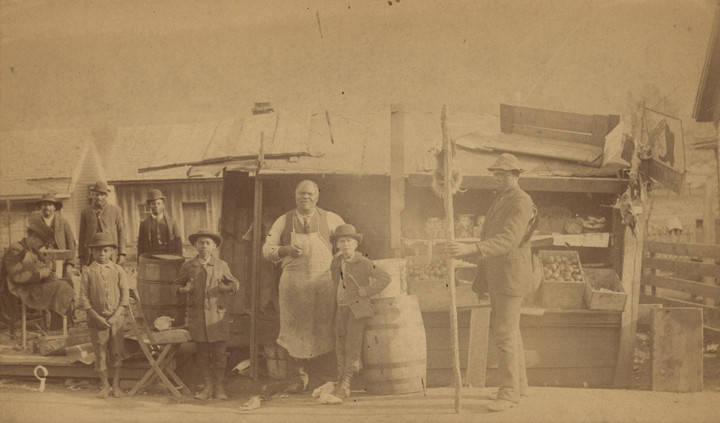
Opossum Stories, Politics, and Populism
As they sought to legitimize public opossum consumption for themselves, whites engaged in an ongoing dance between accounts of their own tasteful meals of opossum meat and narratives portraying opossum eating among Blacks as a sign of racial and cultural inferiority. Racist stories about opossums and other foods that represented African American social, cultural, and economic autonomy proliferated in the wake of Democratic organizing. In 1868, an opossum trickster story surfaced in a speech at a rally in Walhalla, South Carolina, for Democratic presidential and vice-presidential candidates Horatio Seymour and Francis Blair, Jr.64"Thunder in the Mountains," Charleston (SC) Daily News, Sept. 22, 1868, 1, https://chroniclingamerica.loc.gov/lccn/sn84026994/1868-09-22/ed-1/seq-1/. Drawing on a popular tale that newspapers circulated for over four decades after the Civil War, Greenville journalist Robert McKay conveyed a fictional account of an old hunter who had caught an opossum and fell asleep while roasting it. Another character ate it and deceived the sleeping hunter by leaving the bones in his hands and greasing his mouth so that when he awoke, he believed he had eaten it despite still feeling empty. Rooted in the prewar era, this trickster story was one of the few that depicted a slave stealing from another.65Lawrence Levine, Black Culture and Black Consciousness: Afro-American Folk Thought from Slavery to Freedom (New York: Oxford University Press, 2007), 131. The account sent a message that Blacks could not be trusted, while also asserting that Black people were too unintelligent to know when they had been duped. For McKay, the story showed that freed Blacks "could be made to believe anything. If they would not listen to good advice," he insisted, "they must go on until they found everything eaten up, and then they would be devilish hungry still."66"Thunder in the Mountains," https://chroniclingamerica.loc.gov/lccn/sn84026994/1868-09-22/ed-1/seq-1/. The story depicted Blacks as unintelligent and gullible, and incapable of controlling their insatiable appetites without white authority.
Decades later, white Democrats deployed opossum politics by portraying Blacks as chiefly motivated by appetites. In 1890, a Washington Post writer reiterated McKay's earlier claim that Black opossum consumption revealed animal instincts and inherent political naiveté. However, while McKay had insisted that Blacks were gullible, the Post article added to the narrative by suggesting that the food could be used to garner Black votes. Alexander Dockery, a Democratic member of the US House, had taken "two of his trusted lieutenants some days before the last election and made a trip through the 'Black Belt' [cotton-growing area with large populations of ex-slaves], giving out mysterious invitations to the colored voters to meet" for a supper in Missouri. While the 150 Blacks allegedly in attendance dined on opossums and raccoons, Dockery recited a political speech.67"Dockery's Coon Supper," Washington (DC) Post, Nov. 24, 1890, 2. The takeaway of the story was that, by using game stereotypically associated with ex-slaves, unsavory political actors could easily attract Black Republican voters and deceive them with political promises.68"Thunder in the Mountains," https://chroniclingamerica.loc.gov/lccn/sn84026994/1868-09-22/ed-1/seq-1/. Similar stories proliferated, leading a Washington Evening Star writer to later reminisce that opossum suppers were "great vote-getters in the south."69"'Possum for President in Southern Style," Evening Star (Washington, DC), Dec. 22, 1907, 3, https://chroniclingamerica.loc.gov/lccn/sn83045462/1907-12-22/ed-1/seq-51/. Notably, Dockery's story in 1890 appeared shortly before Democrats began to disenfranchise Blacks by law.
The timing coincides with the rise of the Populist Party, which threatened Democratic Redeemers as it sought, in its beginnings, to unite Blacks and poor whites. Populism was concentrated in the agrarian southern, southwestern, and midwestern states. Its leaders, as one historian has written, "advocated radical changes in the monetary system, regulation of the railroads, and land control as the means by which economic fairness could be assured for all oppressed people."70Sarah A. Soule, "Populism and Black Lynching in Georgia, 1890–1900," Social Forces 71, no. 2 (1992): 395–421. In 1890, Thomas E. Watson of Thomson, Georgia, campaigned on the Farmers' Alliance platform and won a seat in the US House of Representatives. Soon after, he emerged as the state's leading Populist politician and his party threatened Democrats with the possibility of dividing the white vote.
To maintain the existing class and political structure, white Democrats turned to tactics of disenfranchisement and terror against Blacks and poor whites. "The Democrats resorted to murder and beatings to drive blacks away from the Populists," explains historian Charles Postel, adding that Populists also "used terror and intimidation to prevent blacks from voting for Democrats."71Charles Postel, The Populist Vision (New York: Oxford University Press, 2007), 196. Historian C. Vann Woodward points out the high degree of election fraud, noting that there was no way to prevent "wholesale repeating, bribery, ballot-box stuffing, voting of minors, and intimidation" at the polls.72C. Vann Woodward, Tom Watson: Agrarian Rebel (New York: Oxford University Press, 1963), 208. Moreover, Black plantation hands and laborers were hauled by wagon loads and forced to vote the Democratic ticket, some doing so multiple times. Watson lost his 1892 bid for reelection to Congress to Democrat James C. C. Black of Augusta and was defeated again in 1894. Widespread violence and fraud shaped these election outcomes.
Georgia's Opossum Regime
While opossum suppers had grown in popularity throughout the southeastern US in the wake of Emancipation, it is not incidental that Georgia—the last of the former Confederate states to be readmitted into the Union (1870)—would become the spiritual center of these events within a few decades. In the 1890s, cotton-growing states had fallen into an economic depression as prices plummeted and farmers' debts increased.73Steven Hahn, The Roots of Southern Populism: Yeoman Farmers and the Transformation of the Georgia Upcountry, 1850–1890 (New York: Oxford University Press, 2006). Populism created political competition. Freedmen, who had begun seeking factory jobs in cities and attempting to purchase farms in the country, represented economic competition. White racism and lynching intensified.74 Jack Bloom, Class, Race and the Civil Rights Movements: The Changing Political Economy of Southern Racism (Bloomington: Indiana University Press, 1987). Georgia had the second highest number of lynchings from 1890–1900.75Susan Olzak, "The Political Context of Competition: Lynching and Urban Racial Violence, 1882–1914," Social Forces 69, no. 2 (1990): 395–421; George Milton, et al., Lynchings and What They Mean: General Findings of the Southern Commission on the Study of Lynching (Atlanta, GA: The Commission, 1932). Statewide Black voter turnout declined from 55% in 1876 to less than 10% after 1890.76J. Morgan Kousser, The Shaping of Southern Politics: Suffrage Restriction and the Establishment of the One Party South, 1880–1910 (New Haven, CT: Yale University Press, 1974). Lynchings and other forms of vigilante violence helped to ensure a Democratic takeover of government.
Opossum suppers became an important stage on which political actors could deploy new strategies and solidify networks of accomplices. Beginning in 1894, Colonel Harry Fisher—"railroad man, fertilizer magnate, friend of corporations"—commenced the political opossum suppers of Newnan, Georgia, to advance the Democratic ticket.77"Possum and Politicians: Many Invitations Have Been Sent Out to Newnan's Possum Supper," The Atlanta (GA) Constitution, Dec. 28, 1897, 5, https://chroniclingamerica.loc.gov/lccn/sn86063034/1897-12-28/ed-1/seq-2/. See also "Politicians to Eat 'Possum. The Supper at Newnan to Be a Unique Affair," The Morning News News (Savannah, GA), Dec. 28, 1897, 2, https://chroniclingamerica.loc.gov/lccn/sn86063034/1897-12-28/ed-1/seq-2/. Located about forty miles southwest of Atlanta where many in-state attendees traveled from, Newnan had escaped destruction during the Civil War. Its supper became an annual event, sending out over six hundred invitations "to men of prominence, both inside and outside" of the state. Politicians gathered in anticipation of the official Democratic convention and, while eating opossum, pre-determined the roster of officials for high-ranking positions.
It wasn't long before outside observers began to recognize that the political sway of the Newnan opossum suppers extended beyond southern states. On January 1, 1898, northern newspapers warned of sinister plans circulating "under the cover of savory vapors":
To these feasts are bidden men who have controlled the destinies of the State for years—shrewd politicians, who are anxious to strengthen their influence, statesmen, who gladly seize the opportunity to keep politically in touch with the elect of the State, and persons of a purely convivial nature, who are useful in lending an airy background to the political scheming which is bound to take place under the cover of savory vapors which ascend from the smoking 'possum.78"A 'Possum Supper," Baltimore (MD) Sun, Jan. 1, 1898, 1. For a similar version of this article, see "'Possum and 'Taters," The World (New York, NY), Jan. 1, 1898, 5.
Nearly a decade later, editor, politician, and defender of lynching John Temple Graves reminisced about Georgia's political "'possum regime," which had come to encompass the two-term governorships of Democrats William Y. Atkinson (1894–1898) and Joseph M. Terrell (1902–1907).79John Temple Graves, "The 'Possum Governors" of Georgia," reprinted from the New York American in The Herald and Advertiser (Newnan, GA), Jan. 15, 1909, 1, https://gahistoricnewspapers.galileo.usg.edu/lccn/sn89053456/1909-01-15/ed-1/seq-1/. Atkinson won by a narrow margin in 1894 against Populist candidate Judge James K. Hines and regained reelection in 1896 over another Populist candidate, Seaborn Wright.80James F. Cook, "William Yates Atkinson 1894–1898," The Governors of Georgia, 1754–2004, 3rd ed. (Macon, GA: Mercer University Press, 2005), 181–184. Benefiting from white terror, voter suppression, and fraud, Atkinson ended the threat Populists posed to Democrats in statewide elections.81The 1896 presidential election would further fracture the Populist party across the southern states. Some Populists who supported a fusion with Democrats nominated Tom Watson as the vice-presidential candidate alongside William Jennings Bryan for president. The Democratic National Convention also nominated Bryan, but with Democrat Arthur Sewall as his running mate, both of whom appeared on the Silver Party ticket. Conservative Democrats who disagreed with Bryan's stance on bimetallism and free silver abandoned the party to form the National Democratic Party and instead nominated Senator John Palmer along with his running-mate Simon Bolivar Buckner. With the country experiencing an ongoing economic depression under Democratic President Grover Cleveland, Republican presidential and vice-presidential nominees William McKinley and Garret Hobart, who stood for protectionism and the gold standard, defeated Bryan.
In his capacity of Speaker of the Georgia House of Representatives, Atkinson "had performed countless favors, helping many of his friends gain appointments as solicitors-general and judges of the circuit courts," explains historian Barton Shaw, adding that "Such men eagerly endorsed Atkinson's candidacy, and he also had support in Atlanta's traditional rivals, Augusta, Macon, and Columbus."82Barton C. Shaw, The Wool-Hat Boys: Georgia's Populist Party (Baton Rouge: Louisiana State University Press, 1984), 111. Through these favors, Atkinson "was able to depose the old Bourbon ring perfected by Henry Grady and the Triumvirate," while forging a new legislative ring.83Shaw, The Wool-Hat Boys, 126. His initial gubernatorial campaign against Confederate veteran General Clement Evans was a "coup d'état" that "allowed younger Democrats to take control of the party."84Shaw, The Wool-Hat Boys, 112.
The complexity and behind-the-scenes maneuvering of numerous political factions during this period cast a cloud over why conservative Democrat Allen D. Candler (1898–1902) or Progressive Hoke Smith (1907–1909, 1911) were not considered part of the conspiracy, although it may relate to their efforts to restrict the power of the state railroad commission.85Cook, "Allen Daniel Candler 1898–1902," "Hoke Smith 1907–1909, 1911," Joseph Mackey Brown 1909–1911, 1912–1913," The Governors of Georgia, 185–188; 192–195. For more on Candler claiming to not be part of the "'possum regime" see "Candler on 'Possum Supper," Americus (GA) Times-Recorder, Jan. 14, 1898, 3, https://gahistoricnewspapers.galileo.usg.edu/lccn/sn89053207/1898-01-14/ed-1/seq-3/. Editor Graves offers some insight that Georgia's "'possum regime' was in large measure a railroad regime, and that under it corporations expect the fullness and the fatness which distinguished the adipose of the Georgia 'possum."86Graves, "The 'Possum Governors' of Georgia," https://gahistoricnewspapers.galileo.usg.edu/lccn/sn89053456/1909-01-15/ed-1/seq-1/. Accordingly, capital interests played an important role in the "booming" of certain politicians over others at events such as the Newnan opossum suppers. Barton Shaw explains the monetary benefits gained by those whom legislators appointed: "Solicitors were partly paid in fees, and citizens who could pay the highest price often found the state's charges against them dropped or at least reduced. Judges not only received handsome salaries, but were in excellent positions for advancement. The convict leaseholders always smiled upon those who helped keep up the supply of prisoners. With such support, many judges soon found themselves holding seats in Congress."87Shaw, The Wool-Hat Boys, 125.
The motives behind the Newnan opossum suppers were multifaceted, serving both the personal and collective interests of those in attendance. While they had a dominant Democratic component, occasional guests from other factions superficially presented images of reunion and reconciliation. Honorable George Peck of Chicago, a well-known railroad man who had served as a federal soldier, "referred to himself as the only yankee in the room" in a speech at the function on New Year's Eve 1897.88"'Possum Aftermath," The Atlanta (GA) Constitution, Jan. 2, 1898, 6. "A good deal of fun had been poked at him during the evening because of republicanism" and Confederate General Clement Evans, who attended the event, claimed to have made him "eat Georgia 'possum until he quit and surrendered and went over to the other side."89"Possum Aftermath;" "'Possum and Politics Wrestle for Supremacy Down at Newnan's Feast," The Atlanta (GA) Constitution, Jan. 1, 1898, 5. Although Atlanta Constitution columnist Bill Arp concluded after the event that "a politician will eat anything for office," eating opossum had developed a deeper meaning for prominent white men attending these events, signifying an economic and political alliance, as well as a racial one.90"'Possums and Politics," Watchman and Southron (Sumter, SC), Jan. 26, 1898, 2. "Bill Arp," was a pseudonym for politician Charles Henry Smith: https://evhsonline.org/bartow-history/people/charles-henry-smith-bill-arp-great-american-humorist-writer. Newspapers reported that the 1897 event included a diorama behind the toastmaster's chair comprised of a real persimmon tree, six live opossums, an actual baying opossum dog, and "old Uncle 'Cotton' See, an anxious-looking aged negro with white hair and a 'possum appetite in keeping with his surroundings" of white governors, secretaries of state, attorney generals, judges, and other high officials discussing politics over the feast.91"And Politics for Down at Newnan's Feast to the Governor," The Atlanta (GA) Constitution, Jan. 1, 1898, 5. This nostalgic scene provided a visual display of white power, delineating the rightful place of Blacks not as consumers of opossum, but as providers, cooks, and servers of it.
While Newnan's political opossum suppers were widely publicized in local and national newspapers, the public's attention soon shifted in 1899 to the horrific mob lynching of Sam Hose—a Black man who was bound, tortured, castrated, and set on fire in front of more than four thousand spectators.92For a detailed analysis of this event, see Edwin T. Arnold, What Virtue There Is in Fire: Cultural Memory and the Lynching of Sam Hose (Athens: University of Georgia Press, 2012). Chicago detective Louis P. Le Vin, whom activist Ida B. Wells-Barnett hired to investigate the lynching, concluded, "The real purpose of these savage demonstrations is to teach the Negro that in the South he has no rights that the law will enforce. Samuel Hose was burned to teach the Negroes that no matter what a white man does to them, they must not resist."93Ida B. Wells-Barnett, "Lynch Law in Georgia," (Chicago, IL: Chicago Colored Citizens, 1899), https://www.loc.gov/resource/lcrbmrp.t1612/?st=text&r=0.267,0.55,0.665,0.719,0. William Atkinson, who had moved to Coweta County to practice law following his second term as governor, spoke out to the mob from the city jail in an unsuccessful attempt to prevent Hose's lynching. 94For more on Atkinson's actions and possible motives, see Arnold, What Virtue There Is in Fire, 98–102. As governor, Atkinson had tried on numerous occasions to get the General Assembly to pass his anti-lynching bills. Because he vehemently opposed the lawlessness of mobs and proposed other solutions such as public executions, the anti-lynching stance of Atkinson and other Democrats cannot be equated with racial justice.95Arnold, What Virtue There Is in Fire, 99–100. The Sam Hose lynching led a writer from Thomasville, located near the state's southern border, to comment that Newnan's "reputation no longer rests on possum suppers."96The Daily-Times Enterprise (Thomasville, GA), May 9, 1899, 2, https://gahistoricnewspapers.galileo.usg.edu/lccn/sn88054087/1899-05-09/ed-1/seq-2/. Yet, to some extent the town's reputation did continue to rest on its opossum suppers as the political scheming that occurred at them played a role in the election of governors and other influential white men who disenfranchised Black citizens and worked to maintain the state's Democratic stranglehold.
Symbolic Separations and the Taft Banquet in Atlanta
If white Democrats were responsible for the publicized and politicized opossum suppers in southern states such as Georgia, Blacks gained attention for hosting their own events in other parts of the country.97For several examples of newspaper accounts highlighting these events, see "New Year Festivities at Crowe's Hall," Alton (IL) Evening Telegraph, Jan. 3, 1894, 9; "Lovers of 'Possums: Indianapolis Epicures Who Fancy the Toothsome Dish," The Indianapolis (IN) Journal, Part Two, Dec. 28, 1902, https://chroniclingamerica.loc.gov/lccn/sn82015679/1902-12-28/ed-1/seq-13/; "Oh, Carve Dat 'Possum: First Annual Banquet of 'Possum Club a Splendid Success," Durant Weekly News (Choctaw Nation, Indian Territory, OK), Dec. 8, 1905, 2, https://chroniclingamerica.loc.gov/lccn/sn82015679/1902-12-28/ed-1/seq-13/; "Happenings Condensed," Palestine (TX) Daily Herald, Nov. 29, 1905, 2, https://chroniclingamerica.loc.gov/lccn/sn86090383/1905-11-29/ed-1/seq-2/; "Local Briefs," Deseret Evening News (Great Salt Lake City, UT), Feb. 18, 1902, 8, https://chroniclingamerica.loc.gov/lccn/sn83045555/1902-02-18/ed-1/seq-8/; "Another 'Possum Supper," Morning World Herald (Omaha, NE), Nov. 18, 1902, 2; "That 'Possum Supper," The Anaconda (MT) Standard, Dec. 31, 1901, 9; "A Possum Supper," Grand Forks (ND) Daily Herald, Jan. 9, 1903, 4; "'Possum Supper with Hoe Cake Trimmin's; Janitor Duncan and His Colored Friends are Preparing a Big Treat for Office Holders and Others," Colorado Springs (CO) Gazette, Dec. 9, 1903, 3. Migrating Black populations continued to host opossum suppers in northern and western states, keeping the tradition popular into the early twentieth century. No doubt these individuals were aware of the strong association that opossum suppers had developed among southern Democrats, as well as the longstanding stereotypes aimed at destroying the personal and collective power of Blacks. Their actions can be understood as what Psyche Williams-Forson describes—in the case of Black women redefining fried chicken—as a refusal "to allow the wider American culture to dictate what represents their expressive culture and thereby what represents blackness."98Williams-Forson, "More than Just a 'Big Piece of Chicken'," 107–118, 343.
In 1901, Alfred King held an opossum supper at his Illinois home for the white members with whom he had served on a grand jury, along with other guests including the state attorney, sheriff, circuit clerk, and chief of police. "This is the first time," King announced, "that a grand jury in Macon county ever dined with a colored man, but the world do[es] move," indicating a shift in race relations.99"'Possum Supper. First Grand Jury to Dine with Colored Man," The Daily Review (Decatur, IL), Nov. 22, 1901. The elaborate menu—which included a course of oyster soup with celery and crackers, as well as main dishes of roasted turkey, baked opossum, mashed and sweet potatoes, corn, slaw, cranberries, white and corn bread, in addition to lemon and pumpkin pie, various fruits, ice cream and cake, and coffee for dessert—was not unlike that of an opossum banquet hosted by southern white Democrats.100"'Possum Supper," The Daily Review (Decatur, IL), Nov. 22, 1901.
A few years later, in 1903, ex-slave Jefferson Logan, who worked in the Senate cloakroom, was planning his nineteenth annual opossum supper in Iowa to which he invited Republican state officials and politicians. Described as "a wealthy leader of the colored population," newspapers noted that Logan generally secured "a good position each legislative session through his pull with the politicians."101"Possum Supper and Politics," Omaha (NE) Daily Bee, Dec. 2, 1903, 6, https://chroniclingamerica.loc.gov/lccn/sn99021999/1903-12-02/ed-1/seq-6/; see also, "Jeff Logan and 'Possum Dinner," The Minneapolis (MN) Journal, Nov. 16, 1901, 18, https://chroniclingamerica.loc.gov/lccn/sn83045366/1901-11-16/ed-1/seq-19/; "'Possum Supper a Great Success," The Des Moines (IA) Register, Dec. 6, 1902, 7. By 1907, the Adams County Free Press of Corning, Iowa, claimed, "What the banquets of the Gridiron club is [sic] to Washington the 'possum suppers of the Jeff Logan lodge are to Iowa's capital."102"Big Guns at 'Possum Feast," Adams County Free Press (Corning, IA), Dec. 25, 1907, 1. Founded in 1885, the Gridiron Club of Washington, DC, is a prestigious journalistic organization that holds annual dinners in which the president of the United States is generally in attendance. The dinners have gained criticism since they bring journalists close together with the political officials they cover in their news stories.
African Americans such as Jeff Logan, Alfred King, and others refused to relinquish opossum consumption to the purview of whites. In "Possum," Black poet Paul Laurence Dunbar plays upon the beliefs that African Americans possess a folk knowledge of preparing opossums, while drawing humor from the inherent lack of knowledge of whites. Dunbar uses "negro dialect"—a poetic genre103For a deeper discussion of Dunbar's poetry, see, Michael Cohen, "Paul Laurence Dunbar and the Genres of Dialect," African American Review 41, no. 2 (2007): 247–257. that appealed to literate, middle-class whites—to express his frustration and anger toward their ignorance:
Ef dey's anyt'ing dat riles me
An' jes' gits me out o' hitch,
Twell I want to tek my coat off,
So 's to r'ar an' t'ar an' pitch,
Hit 's to see some ign'ant white man
'Mittin' dat owdacious sin—
W'en he want to cook a possum
Tekin' off de possum's skin.104Paul Laurence Dunbar, Lyrics of the Hearthside (New York: Dodd, Mead and Company, 1899), 163–164, https://archive.org/details/lyricsofhearthsi00dunb/page/162/mode/2up.
If Blacks vied to maintain a symbolic separation between Black and white opossum consumption, so, too, did whites in their repeated assertions that it was the job of people of African descent to provide, cook, and serve them opossum.
By the time Taft came to Atlanta in 1909, white opossum suppers strongly leaned on the figure of the faithful Black servant who dutifully captured and delightfully prepared the animal for white consumers.105For more information on the faithful Black servant trope, see Micki McElya, Clinging to Mammy: The Faithful Slave in Twentieth-Century America (Cambridge, MA: Harvard University Press, 2007). Early twentieth-century newspapers occasionally published obituaries that figured into the faithful Black servant trope. For example, an obituary for Sam Coleman of Americus, Georgia, who was to be "buried by his white friends," highlighted his "reputation as an excellent cook," who had "for perhaps twenty years [. . .] cooked barbecue dinners and possum suppers for local epicures." "A Famous Old Cook Expires. The Long Time Cook of the Cue Club is No More," Americus (GA) Times-Recorder, July 8, 1902, 3. Writers for white newspapers were keenly aware of the racial power exuded through depictions of subservient Black labor in opossum suppers. Atlanta Constitution correspondent H.T. McIntosh reported on the "strenuous 'possum-catching campaign" in Worth County to secure a hundred of the animals for the banquet, which entailed a score of Black hunters overseen by Judge Frank Park.106H.T. McIntosh, "Worth County 'Possum Mad," The Atlanta (GA) Constitution, January 9, 1909, 1, 5. Northern newspapers added to the image by relaying that "old Uncle Levi and two mammies" sent by Park to Atlanta were busy slaughtering and preparing the game. And at the banquet, Rev. Dr. J.W. Lee sang the minstrel song "Carve Him to de Heart" while two Black male waiters served opossum to the president-elect.107"Taft Feasts on Possum and the South Gets Promise of Better Things," Sun (New York, NY), Jan. 16, 1909, 1, https://chroniclingamerica.loc.gov/lccn/sn83030272/1909-01-16/ed-1/seq-1/; "South to Gain," Washington (DC) Herald, Jan. 16, 1909, 1. In order to provide Taft "insight of what the south was before the war," the entire event depended on Black labor.108"Banquet to Judge Taft Marks a Social Epoch in Atlanta's History," The Atlanta (GA) Constitution, Jan. 16, 1909, 1.
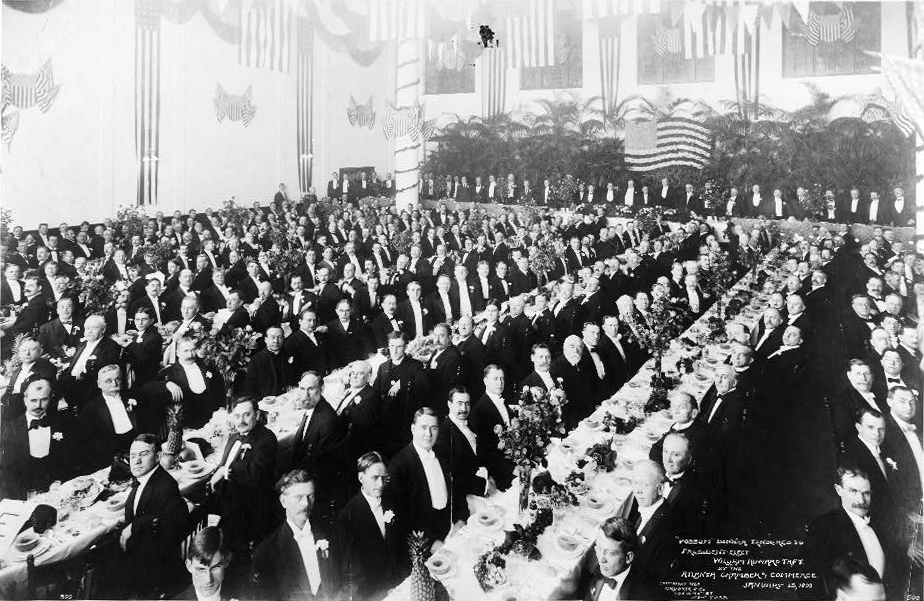
Given the popularity of southern Democratic opossum suppers, Taft knew his actions conveyed racially coded political and economic messages. "Southerners are traditionally partial to this dish," explained a Texas reporter, adding that Taft's request to attend an opossum feast "further endeared himself to the people of this section."109"Plenty of 'Possums," Bryan (TX) Morning Eagle, Jan. 2, 1909, 1. Eating or even just tasting opossum, however, was more than an act of endearment; it provided a way for Taft to become "southern" by performing in a display of white supremacy tied to an imagined antebellum culture. This invented tradition encompassed much more than Black servants catching, preparing, and serving hundreds of opossums to prominent white men at the banquet. Because the menu included numerous, heavy courses that would have required several hours to complete, it is unlikely that Taft or other diners consumed much, if any, of the opossum meat on their plates.110Daniel Frank, "Taft Ate Possum in City Auditorium," The Atlanta (GA) Journal and the Atlanta Constitution, Dec. 2, 1956, 1C. Decades later, columnist Daniel Frank explained that "onlookers noticed that Taft took one taste, and only one taste" of the barbecued opossum set before him at the 1909 banquet. "Waste was part of the point," writes food historian Helen Zoe Veit. "Perhaps nowhere more nakedly than at a banquet did wealthy Americans in the Gilded Age show off their ability to command resources for their own and their guests' pleasure, to select only the very choicest morsels from a choice dish, and to leave most of the carefully prepared, expensive food for the slop bucket or the servants."111Helen Zoe Veit, Food in the American Guilded Age (East Lansing: Michigan State University Press, 2017), 196. Yet, in the case of the opossum, throwing away a food that had been critical to Black survival before and after slavery conveyed a socioeconomic message and a racial one.

Similar to the opossum suppers of Newnan that had begun decades earlier, the 1909 Atlanta event presented images of reunion and reconciliation. "It is beautifully emblematic of the fading away of sectionalism and the bitterness of the civil war, this spectacle of a northern Republicant-elect [sic] beaming over relays of ''possum and 'taters' in his march through Georgia," oozed a writer from Wisconsin.112"South Should Let Up," Topeka (KS) State Journal, Jan. 19, 1909, 4, https://chroniclingamerica.loc.gov/lccn/sn82016014/1909-01-19/ed-1/seq-4/. The dish, along with its accompaniment of persimmon beer, garnered a great deal of local and national attention in the weeks and days leading up to the Atlanta event. While the opossum was closely tied to sectional identity, other items on the menu carried different messages associated with Taft's agenda and with white prejudices. "Clear-Green Turtle [soup] a la Panama" correlated to a part in Taft's speech where he emphasized the future commercial benefits that the canal offered to southern states. "Filipino Ice Cream," on the other hand, gestured toward Taft's stance on race relations, given that throughout his tour Taft had often linked Filipinos and African Americans as inferior people dependent on whites for improvement.113"Taft Eats 'Possum, Gives South Pledge"; Edward Frantz, "Goin' Dixie: Republican Presidential Tours of the South, 1877–1933," (PhD diss., University of Wisconsin-Madison, 2002), 305; Needham, "William Howard Taft, The Negro, and the White South, 1908–1912," 63.
The banquet menu required careful tailoring. So did Taft's speech. To his white male Atlanta audience, Taft pledged, "I shall become the president, not of a party, but of a whole united people," reinforcing his aim to solidify white northerners and southerners.114"How New York Papers View 'Possum Banquet," The Atlanta (GA) Constitution, Jan. 18, 1909, 2. Some questioned Taft's motives, with South Carolina Senator Benjamin Tillman warning in August 1909 that "southerners should beware of Taft spreading molasses to give 'hungry office-seekers an excuse for deserting the democratic party. . . .'"115Needham, "William Howard Taft, The Negro, and the White South, 1908–1912," 96. Yet, Taft's participation in the banquet was a signal of his tolerance—and tacit support—of the Jim Crow laws enacted to maintain social control. Several months after the Atlanta event, Taft would address another white audience at a banquet in Birmingham, Alabama, claiming that he "would not have the South give up a single one of her noble traditions."116William Howard Taft, "Speech at the Chamber of Commerce Banquet, Birmingham, Ala. (November 2, 1909)," Presidential Addresses and State Papers (New York: Doubleday, Page & Company, 1910), 402, https://archive.org/details/presidentialaddr00unit/page/402/mode/2up?view=theater&q=traditions. Taft would prove to be a consistent ally of conservative whites, giving them a free hand, enabling "a moratorium on all African American appointees throughout not only the South, but also the North" and thereby transitioning "into a new, even more lily-white era" for Republicans.117Frantz, "Goin' Dixie," 314; 317. As historian David Needham explains, "probably the most visable [sic] effort by Taft toward wooing white southerners was his appointment of independent Democrats to high federal positions" and elimination of Black governmental involvement.118Needham, "William Howard Taft, The Negro, and the White South, 1908–1912," 118.
While the opossum "topped the pinnacle of fame [. . .] basking in the sunlight of a nation's tender interest" after the Atlanta banquet, other working-class and stereotypically African American foods had the potential to further convey Taft's political stance in other states.119"Is Champagne Better to Wash Down 'Possum Than Persimmon Beer?," The Atlanta (GA) Constitution, Jan. 4 1909, 5. In looking ahead to Taft's stop in New Orleans, the Grant Parish Democrat suggested that Taft should eat alligator steak, "a great dish among the darkeys" in order "to remain on good terms with Louisiana Republicans."120"Alligator Steak," The Caucasian (Shreveport, LA), Feb. 7, 1909, https://chroniclingamerica.loc.gov/lccn/sn88064469/1909-02-07/ed-1/seq-8/. Subsequently, the Charlotte Observer called for Taft "to stop off in North Carolina and partake in a supper of Chatham County rabbits," which "would doubtless compare favorably with the alligator steak."121The Caucasian (Clinton, NC), Feb. 18, 1909, 1. With these foods "in his system," one newspaper editor remarked: "Mr. Taft may become practically Southern, instead of the visionary theorist that he is, particularly in connection with the negro and the Republicanizing of any of the States [. . .]."122"Alligator Steak," https://chroniclingamerica.loc.gov/lccn/sn88064469/1909-02-07/ed-1/seq-8/.
Conclusion
Taft's 1909 Atlanta banquet marked the opossum's peak as a symbol of white supremacy and sectional reconciliation. After Democrats regained their political power and fully achieved Black disenfranchisement, opossum suppers diminished in popularity and, with some exceptions,123For example, the Atlanta Association of Building Owners and Managers hosted an opossum supper for Franklin D. Roosevelt, then Governor of New York, during his visit to White Sulphur Springs, Georgia, in 1930. "Roosevelt Eats and Hunts 'Possum as Georgia Guest: Partakes of Primitive Meal in Role of Adopted Son," New York Herald Tribune, Nov. 30, 1930, 11. its ties with Confederate nostalgia and Jim Crow politics faded from memory. Writing in 1916, the editor of the Jackson News in Mississippi revisited the lore surrounding the opossum, as well as the racist stereotypes:
We feel that it is a duty to shatter one of those long-cherished delusions concerning 'possums and sweet taters' as a typical Southern dish . . . . It is true that Southern homes, instinctively hospitable and willing to feed the stranger within its gates after his own heart rather than the local notion of the eternal fitness of things, serve 'possum, but generally with a silent protest that politeness alone prevents making manifest. [. . .] The dark and dismal truth is that 'possum is an all but impossible diet . . . . Possum is so largely a matter of excessive and not too fragrant fat that even Sambo, despite his reputation for never having had enough, has been known to grow tired of the same and pass it up for boiled cabbage and turnips.124Quoted in "Shattering Illusions," Gulfport (MS) Daily Herald, Nov. 29, 1916, 2.
After Reconstruction, white Democrats from Georgia had taken the lead in reinventing opossum culinary culture, once strongly associated with African American autonomy and survivance, and claimed it as their own rightful inheritance. This entailed mocking and deriding African American opossum consumption as indicative of inherently inferior racial traits. White obsessions with Black opossum consumption transformed hunting and eating the native marsupial into a nostalgic Lost Cause celebration of a supposed common culture that former enslavers claimed to share with enslaved people of African descent in the antebellum era. Since the making of a plantation imaginary filled with unforgettable opossum hunts and faithful house servants who knew the art of slaughtering, cleaning, and roasting the creature added to the dish's appeal, whites of all classes partook of opossum in part because of its association with idealized former times, remaking it, for a brief present time, into a powerful cultural symbol of Black subordination and white power.
About the Author
Stephanie N. Bryan is a PhD candidate in the history department at Emory University. She holds a Master's in Landscape Architecture from the University of Georgia, with an emphasis on historic cultural landscape management. Her dissertation examines the ways in which marginalized plant and animal species indigenous to the southeastern US—such as opossums, persimmons, muscadines, and pokeweed—survived and sometimes thrived amid destructive land use and entered into diets, cultures, economies, and politics. An earlier version of the article was “highly commended” for the 2019 Sophie Coe Prize.
]]>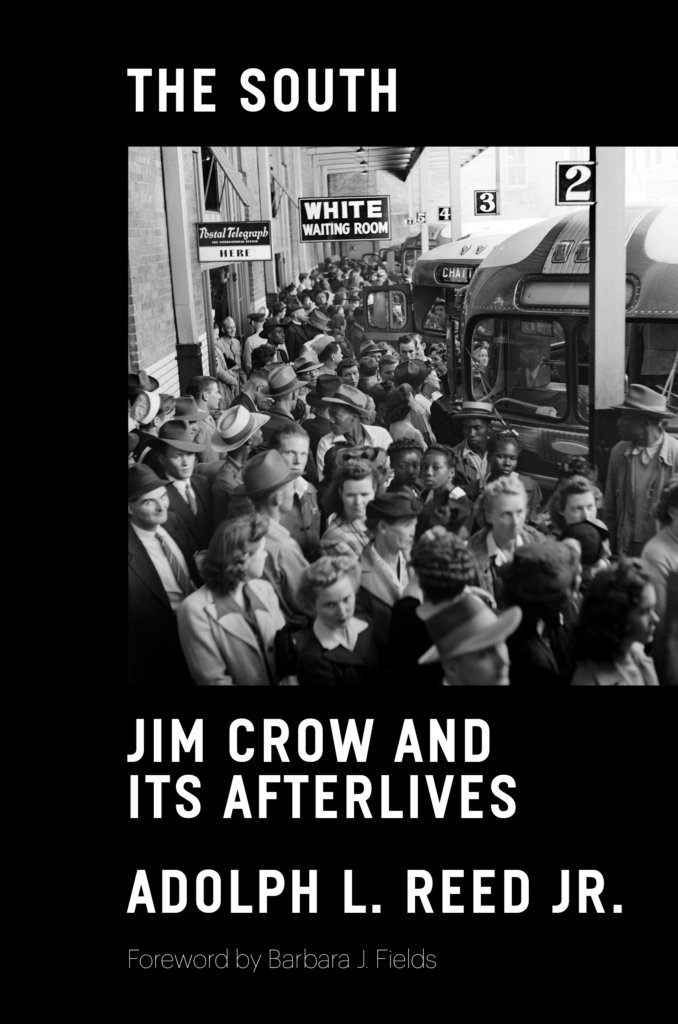
In this short book, distinguished political scientist Adolph L. Reed, Jr. offers remembrances from his early life below the Mason-Dixon line as a member of the last African American generation who came of age during Jim Crow. Reed writes with a purpose—not to chronicle his own pivotal events, hardships, or personal demons, nor to proclaim general truths. Instead, he aims to prevent misconceptions he fears are taking root about the uniform nature of the segregated South and forestall mistaken present-day lessons that ignore the role of class in the racial order of the Jim Crow South.
Reed considers himself a southerner with "a small asterisk."1Reed, Adolph L. Jr., The South: Jim Crow and Its Afterlives (New York: Verso Books, 2022), 9. Born in the Bronx, he was in grammar school in Washington DC, in 1954 when the Supreme Court handed down Brown v. Board of Education. Later, his parents, natives of the Arkansas Delta and New Orleans, moved back to the South where he grew up in Pine Bluff, Arkansas,and the Crescent City. Reed attended college in Chapel Hill, North Carolina and Atlanta and traveled the region while doing summer jobs. He taught at colleges and universities in Atlanta and worked in the city government during the second term of its first Black mayor, Maynard Jackson. He then returned north where he has spent most of the last forty years—primarily at Yale, Northwestern University, and the University of Pennsylvania—teaching and writing about the importance of the working class and the role of class in racial politics.
Although entitled The South, Reed's book illuminates how he and others experienced several different "Souths," where culture, class, ideology, and the laws emerging from segregation varied by geography in practice and form. Reed came to understand that Black people of all ages had to learn differing local white rules of Jim Crow if and when they moved to new places across the southern states—and even in the same city where rules applied differently store-by-store or block-by-block with varying degrees of racial humiliation. For example, one white-owned shop in New Orleans allowed Reed's family to try on clothes before purchase, but in others not shoes or not hats. Some stores permitted no Black person to try the fit of any merchandise. Mistakes in knowing a local "calculus of tolerance" could involve much more than indignity for old or young. "Fourteen-year-old Emmett Till," Reed writes, "was murdered in nearby Mississippi on a family visit from Chicago in 1955 because he unknowingly violated a local rule of subordination in a way that was interpreted as 'getting fresh' with a white woman."2Reed, 12.
"If bristling at Jim Crow's injustices were especially prominent in my consciousness," Reed writes, "it was partly because, as a result of moving around, I was always struggling to learn the local rules and grammar of subordination and how to craft a normal kid's and adolescent's life within them." As the son of well-educated Black teachers, Reed adds, "Where I lived and my family's class position also made it easier to cultivate and express indignation." 3Reed, 13.
The pervasive but varying conditions of white supremacy meant that the places where Black people could be their own free selves, away from everyday racial dangers and indignities, lay within their own segregated communities—especially in Black churches and schools where few whites often entered. As a child living in Pine Bluff, Arkansas, Reed had contact with hardly any white persons because his middle-class father taught at the local historically Black college and his parents kept him close to home near the campus.
Black families deployed a variety of defenses. Traveling on a ferry boat with his grandmother, Reed asked her why chicken wire had been strung between the segregated seating areas. "Well, you see," she stage-whispered, "a lot of crazy people ride this ferry, and they have to sit on the other side."4Reed, 11–12.
Reed's vignette echoes forms of sly resistance, such as that recalled by Mississippi civil rights leader Aaron Henry, growing up under Jim Crow a generation earlier. As a boy, Henry repeatedly complained to his mother that the local white children were able to attend school for seven months but he could only go to school for five. "Aaron," his mother finally responded, "you my boy—and you don't need but five. The rest of them jokers they got to have seven." "Hell, I been cocky ever since," Henry insisted.5Worth Long, "Aaron Henry from Clarksdale," Southern Changes, 5, no. 5 (1983): 9–12. https://southernchanges.digitalscholarship.emory.edu/sc05-5_001/sc05-5_007/.
Passing as white occupies a full chapter as Reed explores the making of racial identities. During his teenage years in New Orleans, passant blanc was often accepted in the Black community as a personal choice, not so much a betrayal of the race. Reed remembers that in the city's Seventh Ward, a family of first cousins with the same surname occupied two sides of a duplex house. "The family on one side lived as black; that on the other side lived as white, and they all acknowledged one another."6Reed, 92–93. In his own family, an adult with light skin color occasionally posed as white to get some prized local delicacy or quicker service from an all-white restaurant, or to momentarily avoid a racial indignity.
Some white leaders openly acknowledged what a large number of various skin complexions meant in the real life of a society where a "one-drop rule" about race-mixing was used to demarcate the presumption of racial inferiority. Reed remembers the legendary Huey Long's brother, Earl, observing in 1960 that a single serving of red beans and rice would be enough to feed all the people in south Louisiana who were truly white (without any mixed ancestry). Alabama's two-term populist governor, James "Big Jim" Folsom, said as much in 1962, after noting the presence of a large number of light-skinned African Americans in his audience. "There's a whole lot of integratin' goin' on at night" in the state's Black Belt, he declared.7Carl Grafton and Anne Permaloff, Big Mules & Branchheads: James E. Folsom and Political Power in Alabama (Athens: University of Georgia Press, 1985), 68.
In concluding his chapter on "The Obsolescence of 'Passing,'" Reed remembers he came to understand at the New Orleans Jazz and Heritage Festival during the 1990s how much the vagaries of race and identity had changed with the end of Jim Crow, especially for young middle class people whose status allowed them to mingle as one at such shared events. "People who may have identified as Cubans and Hondurans, South Asians, Italian (largely Sicilian) Americans, Isleños from the Canary Islands, and other nominal whites formed a physically and behaviorally indistinguishable blur with whoever may have been (Black) Creoles."8Reed, 103.
Throughout The South, Reed investigates continuities and changes in racism and race relations that took place as he experienced the last phases of Jim Crow and the emergence of a second "New South" in Atlanta. His recollections end around 2017 as New Orleans begins removing its most prominent Confederate statues at a time when he was often in the city due to the illness and death of his mother. As if paying tribute to his mother's generation, Reed writes a full-throated analytic attack on the mythology and symbols of the Lost Cause, ripping apart their defenders' rationale for honoring enslavers who undertook a "criminal insurrection."9Reed, 123.
Reed is quick to warn that dwelling on the modern defenders of the erstwhile slave society (touting "heritage not hate") or lingering on "explicit racial hierarchies that defined Jim Crow era" should not replace a "deep examination of the discrete processes that ground and reproduce inequality in the present."10 Reed, 110. The segregationist system of white supremacy not only was more complex and opaque than popularly portrayed today but also was not "merely about white supremacy for its own sake," Reed writes. "It was the instrument of a specific order of political and economic power that was clearly racial but that most fundamentally stabilized and reinforced the dominance of powerful political and economic interests."11Reed, 137. In other words, because "the core of the Jim Crow order was a class system," Reed insists that "a simple racism/antiracism framework isn't adequate for making sense of the segregation era . . . or challenging the forms of inequality and injustice that persist."12 Reed, 140.
This part of Reed's book is not surprising for those who know his career. As a scholar and activist who spent most of his professional life teaching and writing about race and political thought in the United States, Reed has uplifted the importance of class in understanding the dynamics of racial disparities and for dismantling structures of inequality and exploitation. However, most of his remembered experiences with Jim Crow in this book do not directly support his enduring thesis. His argument about the central role of class in The South serves as a coda to his fifty years in advancing the working class as a subject of academic study and political agenda more than a conclusion revealed from the book's remembrances.
In some respects, Reed didn't need to make a case for the importance of class in the life of the South's Jim Crow. It had been done before by himself and others, some of whom he cites in his concluding chapter. One source he did not reference but surely knows is Dr. Martin Luther King, Jr. On March 25, 1965, at the end of the Selma-to-Montgomery march, King delivered a powerful address to the nation—one overshadowed in popular culture by his 1963 Lincoln Memorial "I Have a Dream" speech. In front of the first capitol of the Confederacy, King delivered a speech that included a popular history lesson.
Citing C. Vann Woodward's The Strange Career of Jim Crow, King told the crowd that "the segregation of the races was really a political stratagem" of the South's elite "to keep the southern masses divided and southern labor the cheapest in the land. You see," he explained, "it was a simple thing to keep the poor white masses working for near-starvation wages in the years that followed the Civil War."
King recalled the South's Populist movement when its leaders "began awakening the poor white masses and the former Negro slaves to the fact that they were being fleeced" and "began uniting the Negro and white masses into a voting bloc that threatened" to dislodge elite white control of the South's political power. "To meet this threat, the southern aristocracy began immediately to engineer this development of a segregated society" that became "the roots of racism and the denial of the right to vote," King told thousands who had marched with him for voting rights. "Through their control of mass media, they revised the doctrine of white supremacy. They saturated the thinking of the poor white masses with it." They established segregated laws often making it "a crime for Negroes and whites to come together as equals at any level. And that did it . . ."
"If it may be said of the slavery era," King proclaimed, "that the white man took the world and gave the Negro Jesus, then it may be said … that the southern aristocracy took the world and gave the poor white man Jim Crow."13"Address at the Conclusion of the Selma to Montgomery March," March 25, 1965, The Martin Luther King Jr. Research and Education Institute, Stanford University, Audio, 29:21, https://www.learnoutloud.com/Free-Audio-Video/History/American-History/How-Long-Not-Long/90591.
In remembering the Jim Crow he experienced, Adolph Reed has added nuance and insight to understanding the segregated South as it came to a formal end. In this book and others, Reed has placed himself in the company of southerners who came before him, scholars and activists alike, who devoted their life's work to the search for strategies and means to build a necessary interracial coalition to make democracy work in the nation—and to finally entomb Jim Crow with no chance for an afterlife.
About the Author
An adjunct with Emory University's Institute for the Liberal Arts, Steve Suitts is the author of Hugo Black of Alabama: How His Roots and Early Career Shaped the Great Champion of the Constitution (Montgomery, AL: NewSouth Books, 2017). Earlier in his career, Suitts served as the executive director of the Southern Regional Council, vice president of the Southern Education Foundation, and executive producer and writer of "Will the Circle Be Unbroken," a thirteen-hour public radio series that received a Peabody Award for its history of the civil rights movement in five Deep South cities.
]]>For generations, African American families in Newton County, Georgia have told a haunting story about a tributary of the Yellow River known as "Dried Indian Creek," which meanders about ten miles through the municipalities of Oxford and Covington. The creek passes about a half mile east of the original campus of Emory College—founded in 1836, now known as Oxford College of Emory University—and directly past Bethlehem Baptist Church, the county's oldest African American house of worship. For two centuries the waterway has been a significant site of fishing, trapping, hunting, gathering, reflection, baptism, and recreation for the county's Black residents.
Local Black families are well aware of the white narrative about the name of the creek, published in multiple sources across the decades: when settlers came into the lands that would become Newton County (founded in 1821), they encountered the mummified remains of an individual, whom they assumed to be Native American, and named the waterway "Dried Indian Creek." This version was often told by the segregationist sheriff of Newton County, Henry ("Junior") Odum, (1915–1976), whose grandfather had established "Avon Indian Farm" near the creek. In Sheriff Odum's telling, the mummified Indian was discovered "stretched out under a big old tree."1Odum's account is quoted in a laudatory article about the sheriff in the Atlanta Journal Constitution, 26 May 1968, p. 172.
The African American narrative is different. Elders we have known recalled that when they were children in the 1930s, their elders told them that the creek's name bore witness to a terrible crime. When whites arrived, a courageous Native American leader refused to leave the land his people had long resided on.2We assume this Indigenous leader was Muscogee, but the older African American oral accounts we heard referenced him as "Indian" or "Native American." White settlers seized, beat him, strung him up, and left his body dangling over the water, not allowing anyone to cut him down until his corpse had dried. As the story was told, this early spectacle lynching was staged as a warning to Native and enslaved Black people that any challenge to white rule would be swiftly and violently put down.
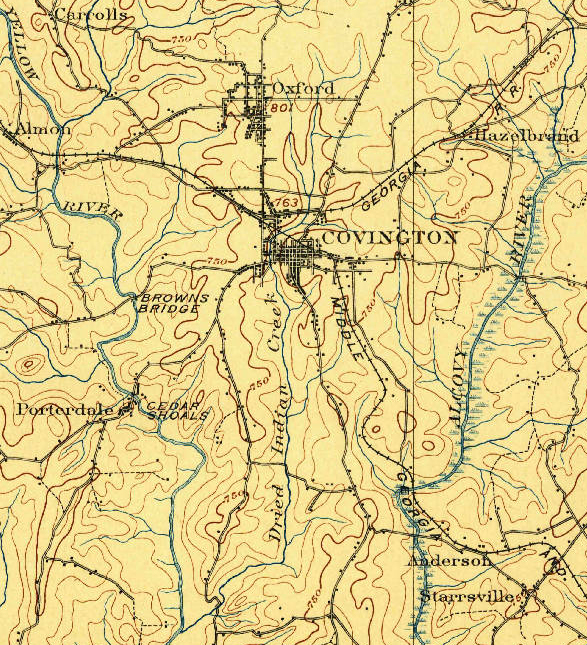

We know of only one white-authored account. The June 4, 1893, Atlanta Constitution reports that a Mr. W.D. Boggus of Covington has a number of curiosities on display in his place of business, including ". . . the leg bone of the Indian chief who was hung in 1795 and left to dry, near the old mill here in town, and from which incident Dried Indian Creek got its name."3Newspaper accounts from the following year state that Boggus wore a ring made from the "bone of an Indian warrior," exhumed from a plundered burial site near Covington (Macon Telegraph, 16 March 1894, p. 4). The individual in question, Woodson D. Boggus (c. 1868–1936), worked in the early twentieth century in Waco, Texas and in Payne, Oklahoma as an oil lease broker before returning to his home state of Georgia. (During the mid-1790s the area that is now Newton County was contested between Muscogee (Creek) inhabitants and encroaching white Georgians.) The Constitution article references the former site of Floyd's Mill, near where Bethlehem Baptist Church now stands, just north of the Clark Street bridge over the creek.
Overlapping Presences: Indigenous and Enslaved
No one we have spoken with recalls the name of this murdered Indigenous man, but the elders shared the belief he was distant kin to many African American families in Oxford. Most of these families trace their descent to two enslaved Native individuals, whom they believe to have been Muscogee (Creek). Cornelius Robinson (born c. 1836) was the enslaved valet of Alexander Means (1801–1883, Emory's professor of natural sciences, who during 1854–1855 was the College's president). Angeline Sims (born c. 1835) was enslaved with her husband George Washington Sims and their children, by Richard Sims, a founding member of Emory College's board of trustees and a founding commissioner of the town of Oxford. Angeline's daughters mainly remained in Oxford and married into local families; nearly every long-term African American family here traces descent back to one of these "Sims" women.
The elders knew that nearly all Muscogee (Creek) had been forced off the local lands around the time of the founding of Newton County, traveling to Alabama and points west, in some cases bringing with them their enslaved people of African descent. Yet they also insisted that not all "Indians" had left, that some intermarried Native and Black families had continued to live in the area.4Newton County, Georgia—created December 24, 1821, from Henry, Jasper, and Walton Counties—was based in three ceded Native territories. Under the terms of the 1805 Treaty of Washington, the 1818 Treaty at Creek Agency, and the 1821–25 Treaty of Indian Springs, all Muscogee lands in Georgia were ceded.
The late educator Emogene Williams (1931–2020), her mother "Miss B," and great-grandmother Sarah Baker Nelson recalled that there was an informal "Indian settlement" to the west of Covington, near Turner Lake, which persisted into the early twentieth century, when the Indigenous people were finally forced off the land. (As they remembered, there were also "gypsies" living in this settlement, who were also forced by whites to leave.) Local historian Johnny Johnson recalls that his grandmother Odessa Smith Gaither, born in 1885, shared stories about Native Americans who passed through Newton County when she was a girl, settling for a while and then "moving on."
A cluster of Afro-Native families continue to reside, semi-autonomously, along the Alcovy (Ulcofauhatchee) River, a couple of miles east of Oxford. (Large Creek villages are known to have been based along this watercourse in the eighteenth century.)5The 1805 Treaty of Washington between the United States and the Creek Nation references the "Ulcofauhatche" river; the term was used through the nineteenth century and was later anglicized to the "Alcovy" River. RaeLynn A. Butler, manager of the Historic and Cultural Preservation Department of the Muscogee Nation, notes that the Mvskoke spelling of the river would be: "orko ofv hvcce," meaning Pawpaw ("Orko," pronounced oth-go), river, or stream. Non-natives, she explains, must have heard "al-co" when mvskoke speakers were saying "oth-go" (RaeLynn A. Butler, personal note to author). See also Jonathan S. Tonge, Ulcofauhatchee: A Guide to Life Along the Alcovy River. Covington: Georgia Wildlife Federation, 2011. This small community of Angeline Sims's collateral descendants, her descendants recall, lived along the Alcovy upstream of the railway trestle, and defined themselves as "Indian" well into the twentieth century.
The late John Pliny ("J.P.") Godfrey, Jr. (1936–2020), great-grandson of Angeline, often visited this settlement of his kin when he was a child in the late 1930s and early 1940s. They trapped, fished, and minimized interactions with local whites. He remembered the elders would sing beautiful songs as they gazed out along the water, with words that were a mixture of English and "old Indian." The songs reminded him of "old Negro spirituals," but were somehow different. He sometimes understood them to be singing in remembrance of the ancestor, the old chief, who had been hanged by whites over the nearby stream and left to dry in the sun. Yet, he recalled, he never heard these elders express bitterness. "They just told me they were singing to help keep the waters rolling along." He smiled, "That's what they felt. Singing somehow helped the river, while the river gave them life and shelter."
Years later, J.P. and Mark walked along stretches of the river, but could find no trace of the old settlement he recalled from his childhood. "It's as if they were never here," J.P. sighed.
J.P and his cousins noted that most Black people in Oxford didn't talk much about their Indian relatives, but he did remember a story about his great aunt Minerva, Sallie's sister. "She was very strong willed. One time, she took her whole family down to live in Louisiana, in 'Ouachita' . . . She used to tell her children there was once a great city there, long before white folks ever came to America. They built pyramids there, just like the ancient pyramids." Records suggest that Minerva, her husband Tom Anderson, and their children lived in Ouachita from around 1890 to around 1908, when they returned to live in Oxford.
Years later, we read about archaeological excavations conducted in Ouachita, Louisiana, indicating that middle archaic mounds and earthworks at Watson Brake dated to at least 3400 BC. J.P. wondered just how Minerva could have known what she had known.
Founding Act of Murder
From time to time, the story of the murder at Dried Indian Creek has resurfaced in our conversations about the early history of Emory College and Oxford, where so many ancestors of local African Americans had been enslaved from 1836 until the end of the Civil War. Deacon Forrest Sawyer, Jr.—who had led the movement for desegregation in Newton County in 1970, famously defying Sheriff Junior Odum—said of Dried Indian Creek, "This county was founded with an act of murder. They were demonstrating the price that would be paid by anyone, red or black, who dared oppose white rule."
Emogene Williams, who traced her descent back to early enslaved persons and white slaveowners in Newton County (and who was the mother of this essay's co-author Rev. Avis Williams) concurred, "That is how they kept power in this county, through public demonstrations of violence, going all the way back to Dried Indian Creek. Lynchings, public executions of Black men scheduled as Black people were filing by going to church on Sunday."
J.P. Godfrey, Jr., whose grandfather Israel Godfrey had worked the land around Oxford in slavery and freedom, remarked, "I don't think it was entirely coincidental that Emory was founded right in the shadow of where that Indian chief was murdered . . . They wanted to show that they had taken hold of this land, and what would happen to anyone who opposed them."
These elders drew a direct link from the public desecration of the body of the murdered Indigenous man in the 1820s to the July 1946 mass lynching by about fifteen white Klansmen of two young African American couples at Moore's Ford on the banks of the Apalachee River in Walton County, which sent terrible shockwaves through surrounding Black communities in the early postwar period.
As Deacon Sawyer put it:
Rivers are the life blood, the arteries, of our land here. Rivers and streams were sacred for Indians, and it was those same creeks we'd steal away to, to feel the flow of the Holy Spirit—from the day we were brought to this county in chains. Of course, white folks chose to torture and kill our people along the river bank, reminding them that nothing was sacred. Any bond of family, any tie of love, could be broken in a moment. That's what white power was back then, and it still is.
Distant Kin: Black Oxford and the Creek Freedmen
These elders had long been fascinated by the stories of the Creek Freedmen, descendants of persons enslaved by Creek slaveowners, who had lived in Georgia and Alabama and then been removed to Indian Territory, later known as Oklahoma. Although there is no direct evidence of common ancestry between Oxford's present-day African American residents and the Creek Freedmen of Oklahoma, many local Oxford Black elders have felt a deep sense of moral kinship with the Freedmen. J.P. Godfrey, Jr., noted, "I know in my heart, those are our people. They were taken from these lands, suffered in ways we can't even imagine, but they endured. They're still our kin."
For J.P. and Emogene Williams, the 1979 de-citizenship of Creek Freedmen—descendants of those who had been enslaved by Creek slaveowners—was particularly painful. As J.P. remarked, "So many thousands gone from here. We had hoped our kin, though in bondage to the Creek, would have finally found a safe harbor in Oklahoma. Now we hear they were expelled, for supposedly being 'too African' . . . For our folks, you might say, the trail of tears never ended."6The precise motivations behind the 1979 changes in the Muscogee Constitution remain deeply contested. Defenders of the 1979 Constitution maintain the change in tribal citizenship was motivated by a desire to recognize only those Creek persons with sufficient Creek blood quanta as Creek citizens. Creek Freedman activists, in turn, insist the disenrollment of the Freedmen was motivated by racial animus, and illegitimately expelled many people whose ancestors had been considered Muscogee for multiple generations. Emogene observed, "I don't know how we're related, but I know from my mother and great-grandmother our people were all mixed together. It pains us to see those folks out West treated with such disrespect. Just like it was happening to us here."
Community members watch as leading figures in the Biden administration and the Congressional Black Caucus advocate for full citizenship rights being restored to all the Five Nation Freedmen. Secretary of the Interior Deb Haaland in May 2021 approved a revision in the Cherokee Nation constitution restoring citizenship status to Cherokee persons of African descent, and indicated her expectation that Muscogee (Creek), Choctaw, Chickasaw, and Seminole would recognize their "moral and legal obligations to the Freedmen."
By the Rivers of Babylon
In 2021, Emory University hosted a conference devoted to tracing the legacies of enslavement and the dispossession of Native American lands on the grounds that later became the institutions that comprise the consortium "Universities Studying Slavery," including Emory, University of Virginia, the Virginia Military Institute, Georgetown, Rutgers, UNC Chapel Hill, and Brigham Young University.7"Program Schedule." In the Wake of Slavery and Dispossession: Emory, Racism, and the Journey towards Restorative Justice. Emory Libraries. Accessed February 3, 2022. https://libraries.emory.edu/slavery-symposium/program-schedule.html. The conference opened with a painfully beautiful Muscogee hymn, "Espoketis Omes Kerreskos" ("This may be the last time, we do not know"), sung by Chebon Kernell, a mekko or ritual leader in the Muscogee (Creek) tradition, and a prayer by Rev. Avis Williams, an ordained Baptist preacher and daughter of the late Emogene Williams.8"Acknowledging the Ancestors with Readings, Music, and Prayer." Emory University. October 13, 2021. YouTube video. 1:13:29. The blessing and song by Cherbon Kernell and the blessing by Rev. Avis Williams are found at (00:00–11:30). https://www.youtube.com/watch?v=ELGjnpgdgJE&list=PLDSBylqXf9oGHja1c3mknOqz8JcVYMNfT&index=6. "Espoketis omes," which resonates with an African American spiritual, was sung along the Trail of Tears, as Muscogee families, including enslaved persons of African descent, made their way towards an uncertain future in the Indian Territory (Oklahoma).9The history of the song "Espoketis Omes Kerreskos" is explored in the 2014 film This May Be the Last Time (dir. Sterlin Harjo). More broadly, the film engages with the intertwined histories of Scottish Congregational line song, African American spirituals, and Muscogee (Creek) songs. Black spirituals and Muscogee hymns draw upon congregational line or note singing, part of a long musical and spiritual trajectory to maintain community amid wrenching dislocations.
Hearing Chebon sing, Avis was struck by the many parallels to the "sorrow songs" she grew up with in the Black Baptist tradition.10W.E.B. DuBois, "Of the Sorrow Songs," The Souls of Black Folk. Chicago: A.C. McClurg, 1903. Wikisource. https://en.wikisource.org/wiki/The_Souls_of_Black_Folk/XIV. In the first chapter of African Creeks (Norman: University of Oklahoma Press, 2007), Gary Zellar notes that early Christian missionization and evangelism in the Creek Nation in Georgia and Alabama was primarily associated with persons of African descent enslaved in Muscogee (Creek) communities. Had her ancestors and Chebon's ancestors perhaps sung together in the past, before or during the terrors of enslavement, forced removal, and land alienation? She was reminded in particular of Psalm 137: "By the rivers of Babylon we sat and wept/when we remembered Zion . . . our tormentors demanded songs of joy/they said, Sing us one of the songs of Zion!" Her ancestors, she knows, sang songs of sorrow but also of hope, in a strange land. So too, she thought, would Muscogee, including enslaved and free people of African descent, have sung these hymns, along many waterways, as they were expelled from their homelands.
On October 10, 2018, a Muscogee Methodist delegation gathered at the long-ago site of Standing Peachtree (Pakanahuili), the Muscogee (Creek) village that stood where Peachtree Creek enters the Chattahoochee River near present-day Buckhead, in north Atlanta.
They offered a prayer and hymn over the river. In a concluding commentary, Marilyn Cloud explained that in Muscogee tradition, "You add the prayer to the tobacco, because it is sacred. You put the tobacco in the flowing water. Whatever the prayer is that you make, the flowing river carries it."
Recently, we've held conversations about how these long-separated people might enter into dialogue. There are many unresolved legacies to work through, including the status of the Creek Freedmen, who are denied basic rights of tribal citizenship. Creek scholar and activist Craig Womack suggests music might be an appropriate starting point, to share and learn, and to hear voices of ancestors tied to riverscapes and landscapes that descendants consider sacred. Perhaps Muscogee and Newton County African American family members might gather along the river bank, joining in old hymns to honor the ancestor murdered long ago and left hanging over the waters, even as their voices, raised in song, help to move the river along.
About the Authors
Rev. Avis E. Williams, a community activist based in Newton County, Georgia, holds four degrees from Emory University (AA, BA, Master of Divinity, Doctor of Ministry). She works for the Putnam County Charter Public School System, and currently serves on the Oxford, Georgia, City Council.
Mark Auslander, a former faculty member at Oxford College of Emory University, is a visiting faculty member in anthropology at Boston University and University of Massachusetts-Amherst.
Acknowledgments
We are grateful for detailed comments on earlier versions of this essay from Craig Womack, Professor Emeritus of English at Emory, RaeLynn A. Butler, Manager of the Historic and Cultural Preservation Department, The Muscogee Nation, and Allen Tullos. We have benefited from guidance on Five Nations Freedmen perspectives on this complex history from Eli Grayson and Marilyn Vann. We acknowledge the teachings of many elders from the Newton County African American community, especially the late Emogene Williams, Sarah Mitchell Wise, Sarah Francis Hardeman, Mary Gaither McClurkin, Forest Sawyer, Jr., and John Pliny (J.P.) Godfrey, Jr.
]]>Video
Essay
Jeff Drew, born in 1951, is a lifelong resident of Birmingham, Alabama's North Smithfield neighborhood. In 2013, following the fiftieth anniversary commemoration of the Birmingham campaign of the civil rights movement, Drew was inspired to be his neighborhood's oral historian: "The people who can tell the story are dying off."
Long before Birmingham was a center of 1960s movement protest, the hilly residential street where Drew grew up and still resides was a battleground in the fight against segregation. In the 1940s, Center Street was the dividing line between white and Black property: white residents on the west side and Black residents on the east side. Ignoring Jim Crow, Drew's family and other Black families crossed the color line and built homes on the west side of Center Street. Between 1947 and 1965, Black residences in Birmingham were bombed at least fifty times.
A graduate of Morehouse College in Atlanta, Jeff Drew's father, John (1908–1991), co-founded the Alexander Insurance Agency with the mission of providing affordable insurance to Black customers. While a Morehouse student, John Drew met Alfred Daniel King, Dr. Martin Luther King, Jr.'s brother. Participants in the Montgomery bus boycott in 1955–56 faced a dilemma: retaliating against Black protestors' refusal to ride the busses, the city imposed higher car insurance fees. When Dr. King asked his brother if he knew anyone who could help, Alfred connected him with John Drew, beginning a relationship that would last until Dr. King's assassination.
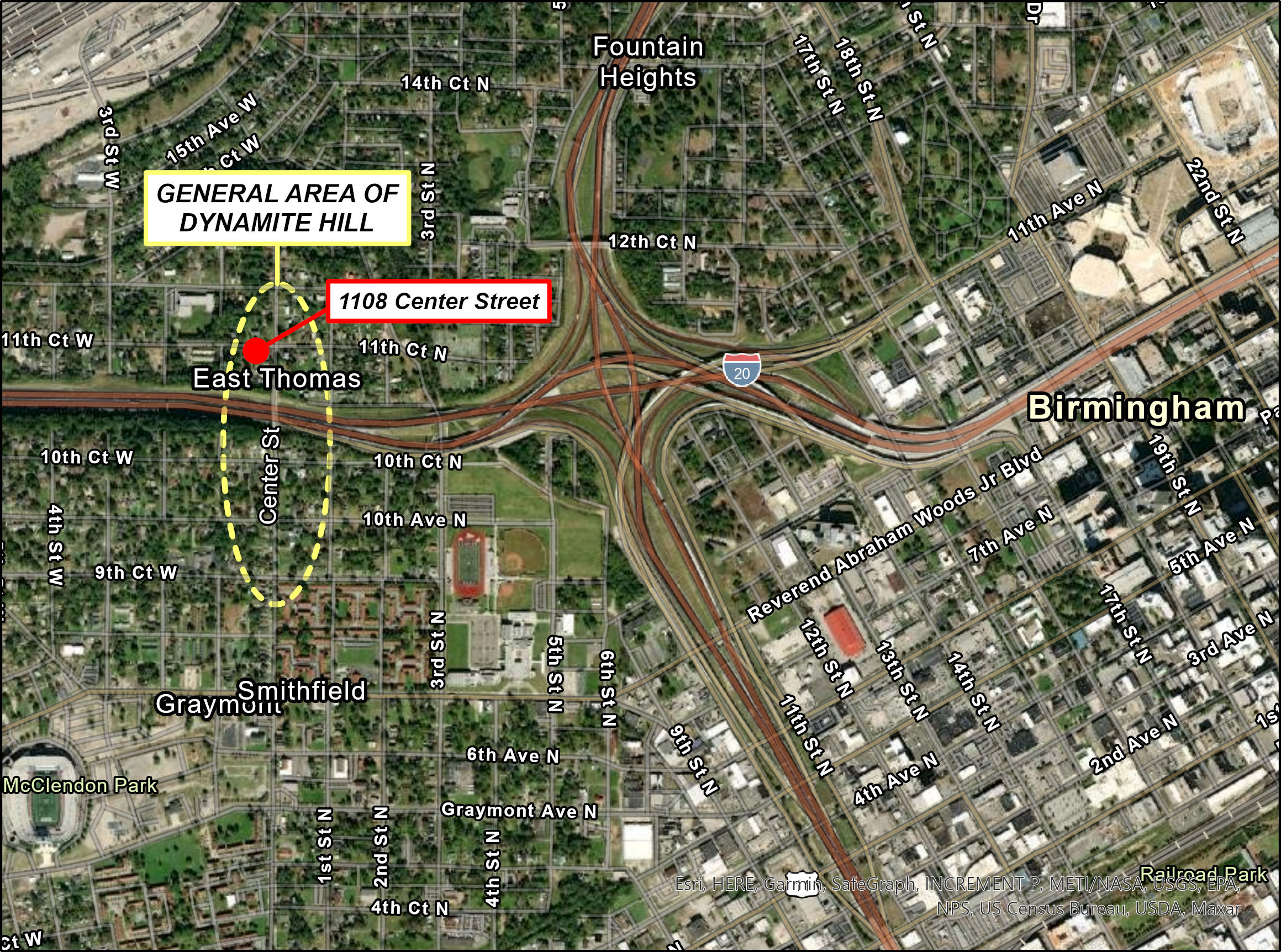
John Drew and Dr. King, along with local Birmingham civil rights leaders such as Fred Shuttlesworth and Arthur Shores, worked closely together to tear down Birmingham's segregated zoning ordinances, paving the way for Black families to live on the west side of Center Street—but not without brutal backlash. The area was bombed so frequently it became known as "Dynamite Hill," in a city already dubbed "Bombingham." Led by the Ku Klux Klan, assailants took to the cover of night to throw bombs, burn doors, and shoot into homes.
Atop Dynamite Hill, the Drew household was a high priority target for domestic terrorism because it was also a safehouse for civil rights organizing. Addine Drew (1916–2003), Jeff's mother, was known as the "Den Mother" of the movement. The trust between the Drews and Dr. King was so strong that he would stay with the family when in Birmingham. Local Black leaders would meet at 1108 Dynamite Hill to plan the next moves for equality. Jeff Drew tells of his childhood in this space, how he spent nights listening in on strategic conversations and woke up to find Dr. King sleeping on the couch. Given the profiles of those in attendance, these meetings were difficult to keep secret, so they were constantly under assault.
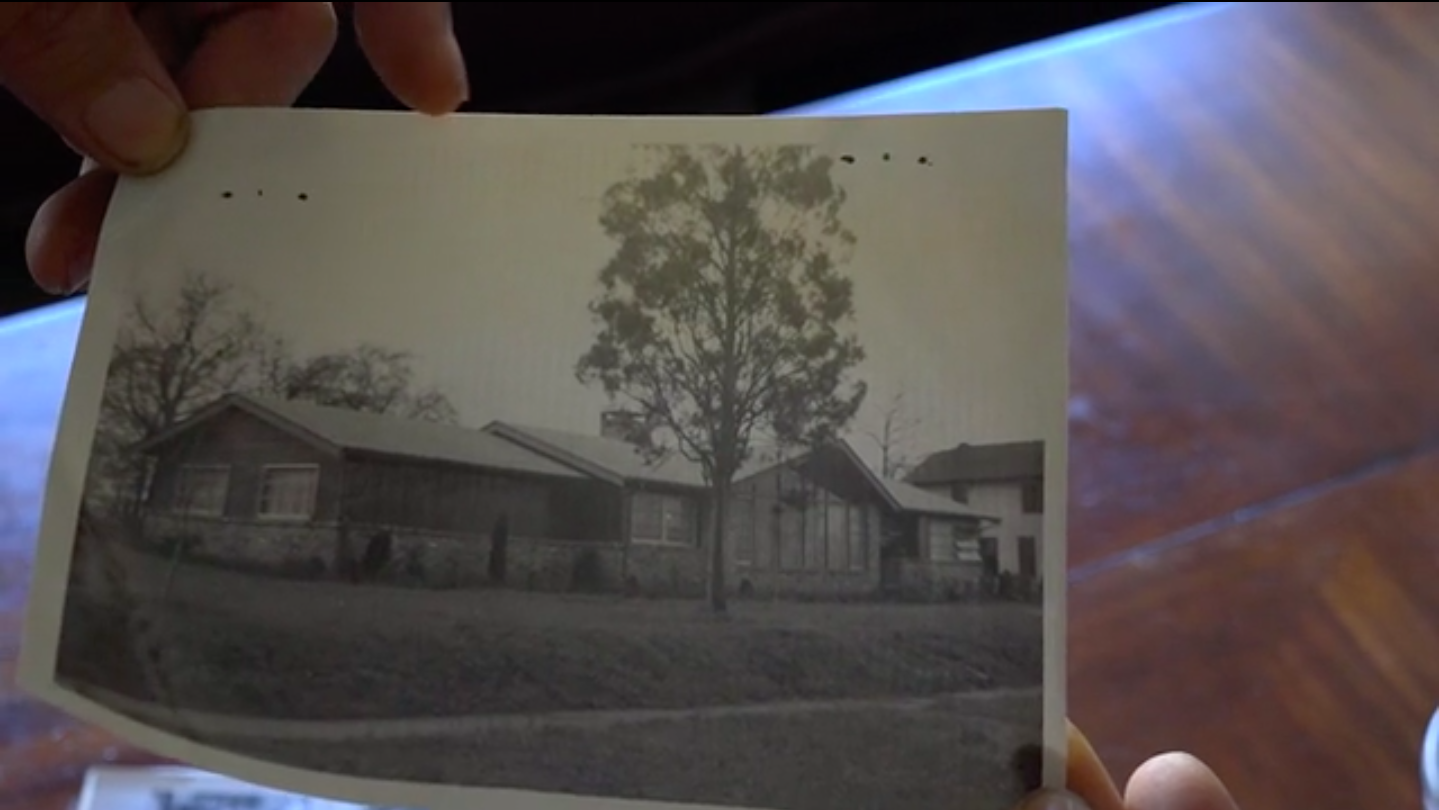

The original street-facing window of 1108 was a grand, cathedral-style frame—a colossal opening into a living room where the organizers met. Shot at and shattered countless times, the scenic window now only exists in photographs. After sustaining several bombings and much gunfire, the Drews had the home rebuilt with a new structure designed to endure bomb blasts. They constructed eight-foot tall brick walls that encased the perimeter of 1108 and reconfigured the interior so that the bedrooms were the furthest away from the street. The walls held and have endured, with the scars of attempted murders visible on the bricks.
The opportunity to hear Jeff Drew's story is a recent development. After Birmingham's 2013 commemoration, Drew told reporters that his parents asked him to never give interviews about "Uncle Mike" for fear that the white press would seek to tarnish his legacy and that of other local Black activists. With time, and the passing of many 1960s movement participants, Drew decided that he would talk more about this history. Seeing Drew outside 1108 talking to whoever will listen is as ordinary as seeing the mail being delivered. The only time he might turn down a conversation would be under similar circumstances to when he had us reschedule: he had a lunch date with childhood neighbor Angela Davis.
Acknowledgements
Special thanks to Jeff Drew for treating strangers like neighbors and taking the time to share his essential story.
About the Authors
Joseph Quintana earned his MA in Communication Studies from the University of Alabama in 2019. He recently received a screenwriting certificate from NYU Tisch School of the Arts and is currently pitching prospective screenplays and researching documentary subjects.
Mary Campbell Kitchens is a graduate from the University of Alabama and works as a secondary math special education instructor in New Orleans, Louisiana.
]]>