Introduction: The Selected Shepherd: A “Fair, Just Place”
Let us live beyond the here and now by nurturing each other and supporting one another’s works.—Assotto Saint, “Why I Write”1Assotto Saint, “Why I Write,” Spells of a Voodoo Doll: The Poems, Fiction, Essays and Plays of Assotto Saint (Richard Kasak Books: New York, 1996), 3–8, 5.
In the first lines of his introduction to The Selected Shepherd (University of Pittsburgh Press 2024), editor Jericho Brown writes of the impossible effort of introducing “a dead man,” the late poet Reginald Shepherd , to readers: “You mean to honor him knowing that you cannot present him as he might present himself.” Brown’s work with The Selected Shepherd allows Shepherd to introduce himself to readers as he would were he still with us: directly through his poetry. Brown describes Shepherd as an unpredictable, fearless, and brilliant poet who wrote “a little more wildly” across each of his six published collections.
Following a short biographical sketch and brief framing narrative written by Eric Solomon, Southern Spaces presents an edited conversation between Eric and Jericho Brown about the work, resonance, and legacy of Reginald Shepherd.2This conversation took place at the Emory Center for Digital Scholarship on August 6, 2024. Brown previously spoke with Natasha Trethewey for Southern Spaces in 2010. See Jericho Brown, “Naming Each Place,” Southern Spaces, March 4, 2010, https://southernspaces.ecdsdev.org/2010/naming-each-place/.
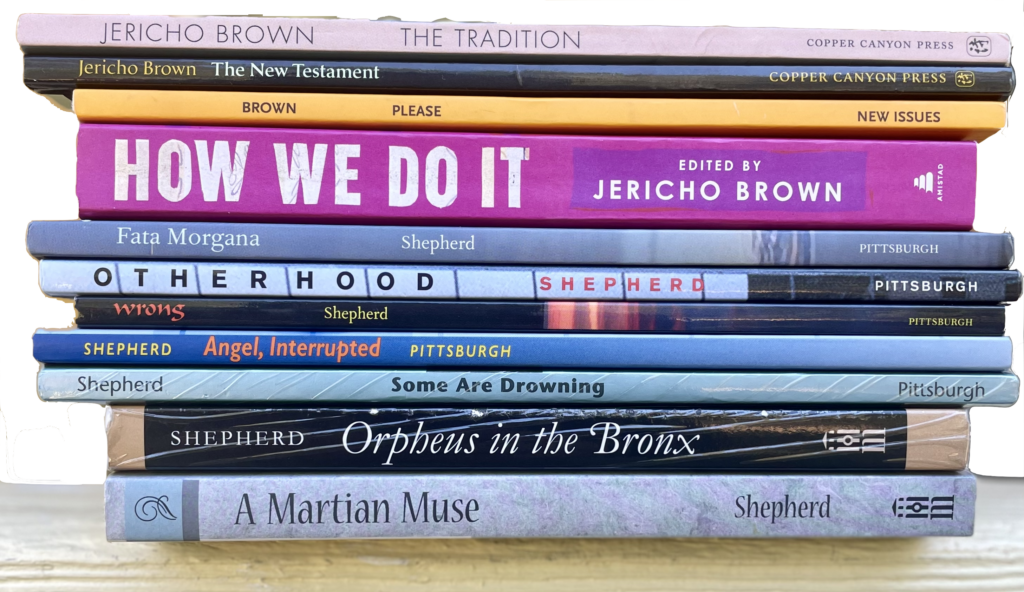
Reginald Shepherd was born Reginald Berry on April 10, 1963, in New York City. When he was five years old, he was issued a birth certificate with the name “Reginald Shepherd” after his mother’s successful suit against the absent man legally proven to be his father. His mother, Blanche Berry, raised him and his sister Regina in the Bronx where he remembers going by “Reggie” until he adopted the more formal “Reginald” in his mid-twenties. (Shepherd addresses the permutations of his name in the essay “What’s in a Name?”3Reginald Shepherd, “What’s in a Name?,” A Martian Muse: Further Essays on Identity, Politics, and the Freedom of Poetry, edited by Robert Philen (Ann Arbor: The University of Michigan Press, 2010): 193–198.). After his mother’s death when he was fourteen—a fact that would shape much of his future poetry—Shepherd moved to his mother’s hometown of Macon, Georgia, to live with family until he left, after graduating from high school, at age seventeen. He enrolled as an undergraduate at Bennington College, leaving in his junior year to move to Boston where he worked at the Boston Public Library, before returning to Bennington to finish his BA four years after his initial expected graduation date. He earned two MFA degrees, one from Brown University and a second from the University of Iowa. Shepherd published five books of poetry [Some Are Drowning (1994); Angel, Interrupted (1996); Wrong (1999); Otherhood (2003); and Fata Morgana (2007)] with a sixth volume published posthumously, Red Clay Weather (2011). He also published two books of essays [Orpheus in the Bronx (2007); A Martian Muse (2010)] and edited two poetry anthologies [The Iowa Anthology of New American Poetries (2004) and Lyric Postmodernisms (2008)].
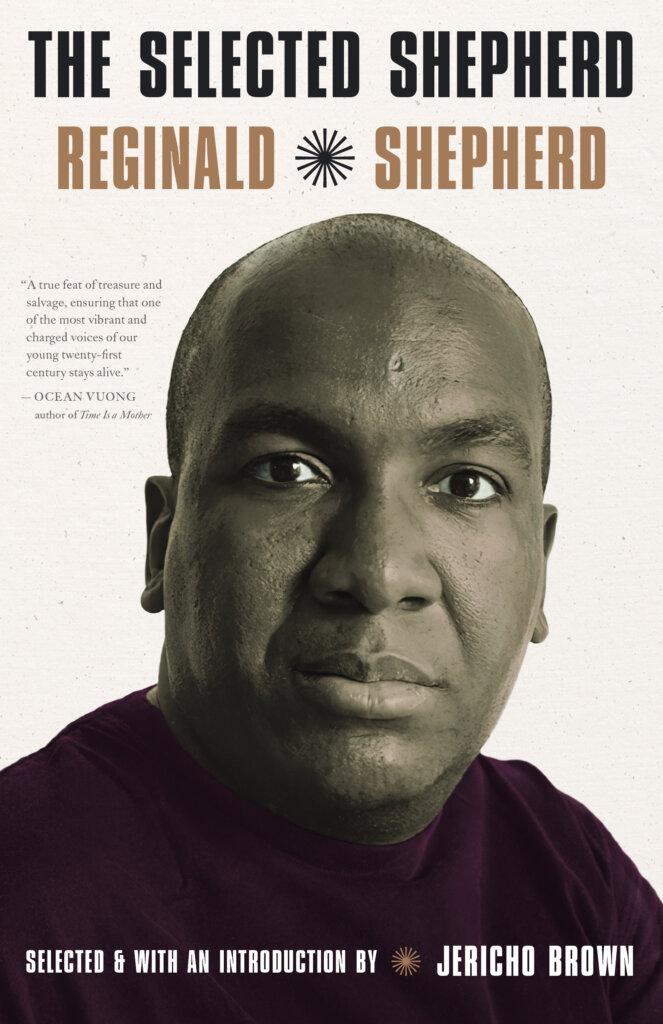
Shepherd met his partner, Robert Philen, in Ithaca, New York, in 1999, and the two moved to Pensacola, Florida, in July 2001. After a battle with colon cancer, Shepherd died on September 10, 2008, in Pensacola. Though he accomplished much in his career, Shepherd remained aware of the structural inequities that prevented men like him from accessing what he called “fair, just” places of belonging in the academic and literary worlds. “Sometimes I stand in the poetry section of Barnes and Noble and wonder how many authors there come from backgrounds like mine. They can be counted on the fingers of one hand,” he writes in an essay published the year before his death. “Unlike the vast majority of those in academia or the literary world, I have nothing to fall back on. Since leaving Georgia at seventeen, I have been on my own… I have gone from place to place, from circumstance to circumstance, and still I haven’t found that fair, just place, but I continue to search, hoping and believing that there’s a place for me.”4Shepherd, “To Make Me Who I Am,” Orpheus in the Bronx: Essay on Identity, Politics, and the Freedom of Poetry (Ann Arbor: University of Michigan Press, 2007), (7–38), 36–37. Sixteen years after his death, Jericho Brown’s The Selected Shepherd has helped secure the poet’s “fair, just place” on the bookshelves of our great poets.
Searching for Shepherd
Reginald Shepherd’s six volumes of poetry continue to amass a dedicated following from fans, fellow poets, and scholars. Shepherd’s work contains an intoxicating blend of image, metaphor, allusion, formal innovation, and often dizzying complexity. His work incorporates references from Hart Crane to Wallace Stevens to Walter Benjamin to Sam Cooke to Barry White while always remaining the work of an original voice and visionary.
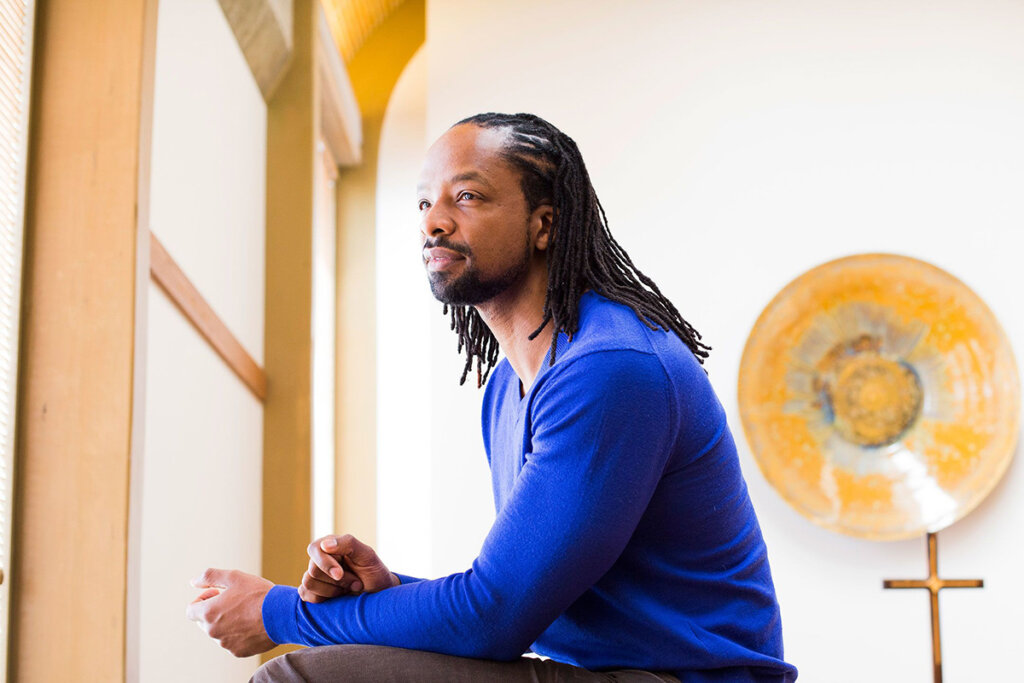
“I was around twenty-four years old when I first read Reginald Shepherd’s poem ‘Semantics at 4 P.M.’ in an edition of the Best American Poetry edited by Rita Dove,” Jericho Brown writes. Transfixed, Brown recalls asking other poets why he had not been made aware of Shepherd’s work beforehand. He continues, “the poem itself does not identify its speaker as gay, but if there is a queer voice, I believed I was reading it.” For Brown, Shepherd became an example of a “gay, Black poet who was alive,” and for those of us lucky enough to have discovered Shepherd’s work, it is the vitality and the voice—queer, brilliant, difficult, propulsive—that resonates long after the initial encounter. Though Brown’s work with The Selected Shepherd will now make a first encounter more accessible for many readers, I would argue that one does not find or search for Shepherd’s poems. As Brown’s story illustrates, you don’t find the poems; his poems find you. Or, as Brown states, poets “are the makers of the beauty that people didn’t know they needed until they see it.”5Jona Colson, “On Truth, Queerness, and Social Media: A Conversation with Jericho Brown,” Literary Hub, November 10, 2020, https://lithub.com/on-truth-queerness-and-social-media-a-conversation-with-jericho-brown/.
Similar to Brown, I (Eric) was twenty-three when I first came to Shepherd’s poetry by happenstance at a time when I needed to “see” his work. I was in an MFA poetry workshop as a MA student in English studying men and masculinities—i.e. not a poet—but we were allowed to take creative writing workshops as our schedules permitted. I recall vividly feeling like an “outsider” to what I perceived to be the “real” poets in the room (classic imposter syndrome), and I found my work at the time out of step with the much more highly innovative and experimental work of my colleagues.
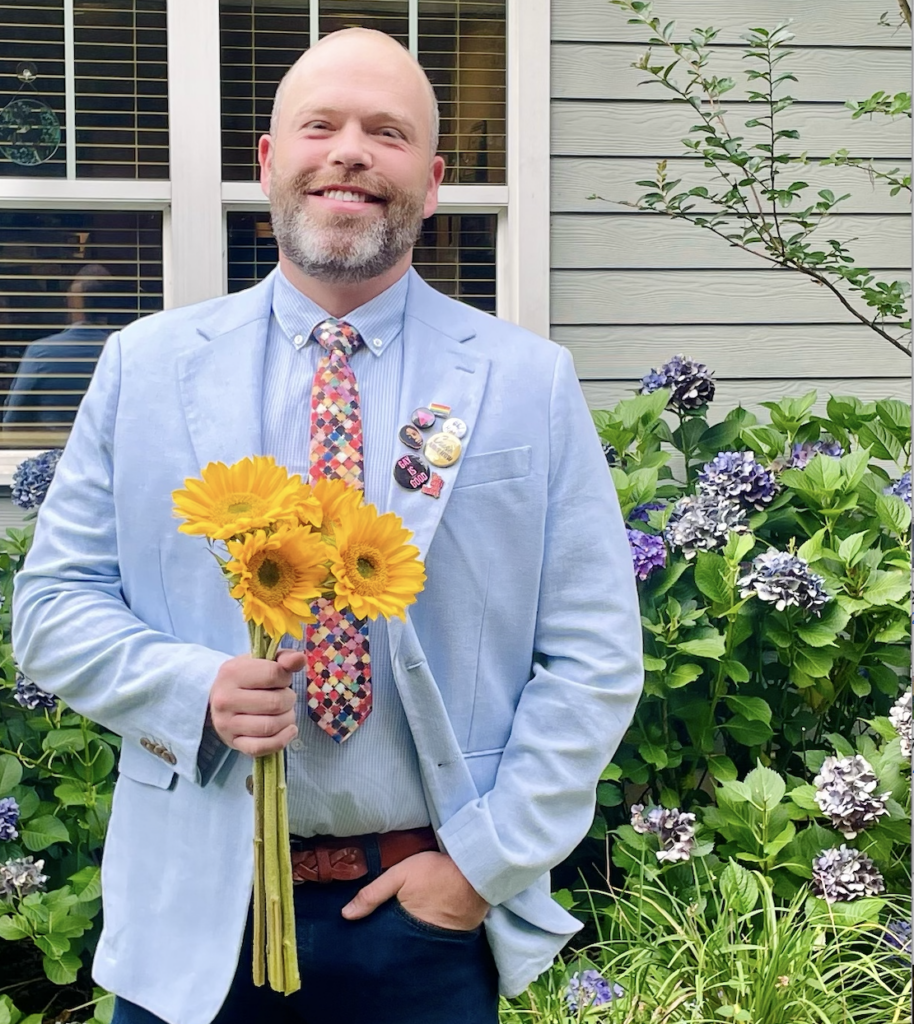
In retrospect, I was attempting in my juvenilia poems to rescue the stories of our queer dead from the tragic detritus to which their lives had forever been relegated in our collective memory. In one poem titled “Appendix,” I elegized Scotty Joe Weaver, an eighteen-year-old gay man from Bay Minette, Alabama, who was killed by two of his roommates in 2004. In another, I attempted to grapple with the death of Matthew Shepard, whose name now serves on official federal hate-crime legislation. One colleague recognized in my meditations on the queer dead something he called a poetic sense of rescue and reclamation, and he invited me to consider Reginald Shepherd when it came time to give presentations on the work of one contemporary poet in our MFA workshop.
Unlike Brown, by the time I found Shepherd, he had passed away. At my friend’s suggestion, I ordered copies of his published work, in which I found poetry full of life and resonance and contradiction and complexity and difficulty but not obscurity. Though they made me feel, I did not then, nor do I now, fully understand what I feel when I encounter and re-read a Shepherd poem. As Brown observes in The Selected Shepherd, Shepherd’s work is not easy by design. Shepherd thought poetry should be “hard enough” to sustain multiple re-readings, not written in such a way that it could be “used up” by readers after a few encounters.6Shepherd, “On Difficulty in Poetry,” A Martian Muse (33–45), 34. For Shepherd, poems should be able to contain different resonances with each return. In a conversation with Krista Tippett, Brown similarly states, “I think poems are better built out of what we don’t understand, not what we do already know, but what we’re trying to figure out and better understand.”7“Jericho Brown: Small Truths and Other Surprises,” On Being with Krista Tippett, June 6, 2019, https://onbeing.org/programs/jericho-brown-small-truths-and-other-surprises.
In searching for and finding Shepherd, equal in importance to the poems for me were something you will not find in The Selected Shepherd: his essays where the poet further attempted to understand his craft, his poetics, as well as identity, politics, and his life journey from the Bronx to Georgia to Boston to Brown University to Iowa and eventually to Florida. In the essays, Shepherd reveals his personal struggles as well as the difficulty of his relationship with academic institutions and the literary world. He also displays his vast critical knowledge and broad reading practice. Shepherd, comments Brown, “was a man who seemed to have read all the books you keep meaning to read.” Further, his insights on what we might call a queer literary canon are must-reads for those of us who study LGBTQ+ culture, past and present.
“My aim,” writes Shepherd, “is to rescue some portion of the drowned and the drowning, including always myself.”8Shepherd, “Why I Write,” Orpheus in the Bronx: Essay on Identity, Politics, and the Freedom of Poetry (Ann Arbor: University of Michigan Press, 2007), (188–198), 188.It seems to me that Shepherd’s “aim” exists in conversation with our queer cultural tradition: those of us in subsequent generations keeping “alive” some portion of the work of those who have gone before, many of whom were lost far too soon. When necessary, we rescue them from the dustbin of memory and place their stories and their works back on the central shelves of literary culture as Jericho Brown has done with The Selected Shepherd. Whether in our creative work or our work as editors, curators, scholars, documentarians or memory-makers, we claim places for our queer kin. As Brown writes, “we know poets don’t die. And if they do, people who love poetry can always resurrect them.” And in rescuing them, in resurrecting them, we rescue, always, ourselves. As Shepherd writes, no matter the challenges we face, we queer folk refuse to “forget beauty, however strange or difficult.”9Shepherd, “Why I Write,” 197.
Interview: Jericho Brown on Selecting Shepherd
Eric Solomon: Thank you, Jericho, for being here for this conversation in our Southern Spaces series “Queer Intersections.” I’ve organized the questions in two parts. First, is thinking about your editing of The Selected Shepherd . And then perhaps we can talk about how Reginald Shepherd’s work helps us think about Jericho Brown.
In choosing poems for The Selected Shepherd, you present a generally equal number from each of his six collections, with a little bit more from Angel, Interrupted. What were you looking for as you were editing?
Jericho Brown: When I got the opportunity to do this, I had somehow already started doing it in my head. It was the kind of thing, you know that phrase “comes to fruition”? it was the kind of thing that I don't even think I was aware of it until I was asked to do it. But I had started doing it somewhere in my brain as a Reginald Shepherd reader, as a person who teaches his poems, as somebody who's interested in his work, as someone who is actually taken by the ways in which his work could be uneven, even.
I don't love every Reginald poem. I don't love every poem by anybody with that many books. I had already started this system of ranking of this particular poet's work, which I think happened because there were so few Black queer poets on the national scene when I was first figuring out that I wanted to be a poet. There were so few that I could hold them all. I could read all of everything they said in every interview. I could read every book. I could read every essay that they had written. Now there are more than I can keep up with. But because there were so few, picking poems for me was at first a matter of going after what I already knew and trying to figure out which book -- was that in Otherhood? Was that in Wrong? Trying to remember exactly which book each poem is in. Rereading the books put me in a position where I could see what Reginald Sheppard's concerns were, or his obsessions, throughout his work. But more than that, it gave me the opportunity to see how he changed from book to book.
My goal in selecting the poems was to register those changes. I wasn't going to be able to make a book that only was the poems about nature, only was the poems about queer desire, or only poems about his mother. It was never thematic. It was always craft based. For instance, in Angel, Interrupted, he's very clearly trying to write a longer poem. In Otherhood, he's trying to figure out what to make of fragments. In Wrong, he's following up an influence through trying to see what would happen if Wallace Stevens wrote the queer love poem. All of that had a lot to do with how I went about selecting poems. As you mentioned, there are more poems from Angel, Interrupted and from Otherhood, but I just needed more poems to make it clear what those books were doing because they were doing it in a different way.
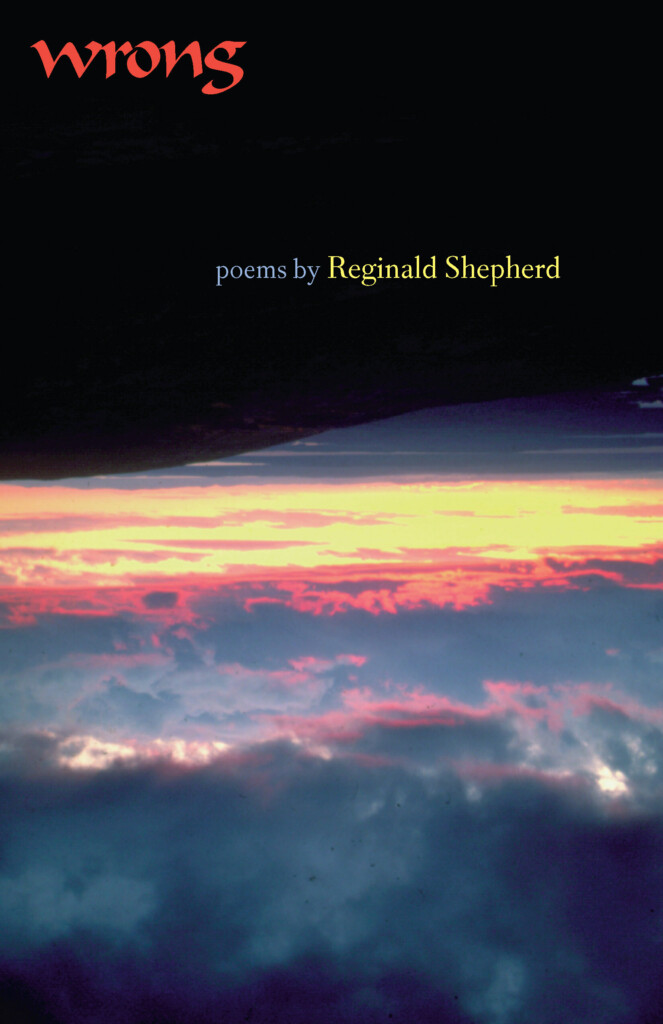
My favorite book by Shepherd is Wrong because I think it's the most honest that he is in all of his books. I think there are fewer poetic craft tricks. I really love Wrong. I love the long poem “Nights and Days of Nineteen-Something” and “Semantics at Four P.M.” Wrong feels to me when I'm reading it that it's a short book. I can hold on to it in a different way and walk around with it. At some point in “Nights and Days of Nineteen-Something,” he writes,
It was never sex I wanted, the grand etcetera
with a paper towel to wipe it up. I wanted him
to talk to me about Rimbaud while
I sucked him off in the park, drunk
as any wooden boat and tasting of old cigarettes
and Bailey’s Irish Cream, my juvenilia. Don’t talk
with your mouth full. (In the clearing
at the bottom of the artificial hill, his two hands
covered every part of me until I couldn’t be seen,
a darkness past the burnt-out lamppost.
There's something about that kind of audacity. And the way that it includes him. It is indeed that sort of thirst, that primal energy that we associate with desire. But it's also this guy who likes to read Rimbaud. Which is a specific and a particular guy. It's also somebody who's very aware; most of that particular poem includes cruising outside and having sex outside. But also being very aware of the natural landscape that surrounds him as he is following that primal desire, that urge to make love. I'm really taken by that poem and by a lot of the work in Wrong. I would read these books like crazy. I loved Reginald Shepherd, and I would look forward to the next book.
When it became clear to me that he was dying, I felt a kind of sadness. Not because I knew the man. I felt a sadness because I wouldn't be able to see what he was going to pull off next. I thought he was brilliant, and I loved his prose, and I loved following his blog -- at the time that people had blogs. You could wake up and go to the internet and see a beautiful new essay about poetry from Reginald Shepherd, which always included names of poets you never heard of. And because you had never heard of them, you could look them up. You had more reading to do. In many ways, he was like my teacher. I had a lot of respect for him. And I'm glad Terrance Hayes and the editors at Pitt asked me to do it.
Shepherd and Myth
Solomon: I love your craft-based approach being one to register the changes across the six collections and to pull poems that spoke to those changes. And I was reflecting on my own reading of Shepherd. I first encountered his work in 2008, 2009 -- Wrong meant something to me as well. Reading it now, in the light of what you're saying about honesty and audacity and that kind of drive that you see with desire in the poem.
Before we get into thinking about the resonances between Shepherd's work and your own, speaking of those essays that he would post on his blog, he says something about myth, and I'm curious how you understand the role of myth as you were selecting Shepherd's work. He writes in 2007 that “myth can also be used to place one's own experiences, thoughts and feelings in a larger context, opening them up to realms beyond the individual, making them less purely personal.”10Reginald Shepherd, “Mythology in Poetry,” Reginald Shepherd’s Blog, August 17, 2007, https://reginaldshepherd.blogspot.com/2007/08/mythology-in-poetry.html#:~:text=Myth%20can%20also%20be%20used,of%20the%20myth%20of%20Odysseus. How do you see myth in Shepherd's work? Is it speaking to that kind of audacity and that honesty? How is it functioning? As you were selecting poems, did you find yourself drawn to examples of the Adonis, Orpheus, and Narcissus figures?
Brown: No, he uses Greek myths so much that you wouldn't have to plan it out. It's going to happen. Any book you would do selecting Reginald Shepherd's poems, there are so many allusions to Greek mythology that you wouldn't be able to get around it. He had questions about this himself. If you check out the interview he did in Callaloo with Charles Rowell, he talks about that relationship to Greek myth, but also what that might suggest about his relationship to whiteness in general -- which I was really taken by.11Charles Rowell and Reginald Shepherd, “An Interview with Reginald Shepherd,” Callaloo 21, no 2 (Spring 1998), 290–307.He was always honest, and even though he was participating in it, he would also question the ways in which what he thought of as beauty had been informed by whiteness, by white beauty standards. Of course that included not just who he was attracted to physically, but his reading and how that reading played out and how it worked out. And we're all doing that in some way or another. You can only write as wide as your reading is. If you have various kinds of cultures coming in, then that will come through.
People think differently about what writing is and how it's done. What the “we” means in a poem and what the “I” means. That's different considering who you're talking to. And if everything you read is informed by the same classical rendering, then you're going to have a lot of Greek myth in your poems and you're going to have a lot to question about why that Greek myth is there. What does it really mean? And many poets do it. Many poets of color, many African-American poets, even Indigenous poets are making use of, or identifying with, mythological figures from the Greeks. And part of the reason we do that is this understanding that this is something our readers will share. I think Shepherd was very serious about making use of Greek myth because he was very serious about beauty, and he understood that poems must be beautiful.
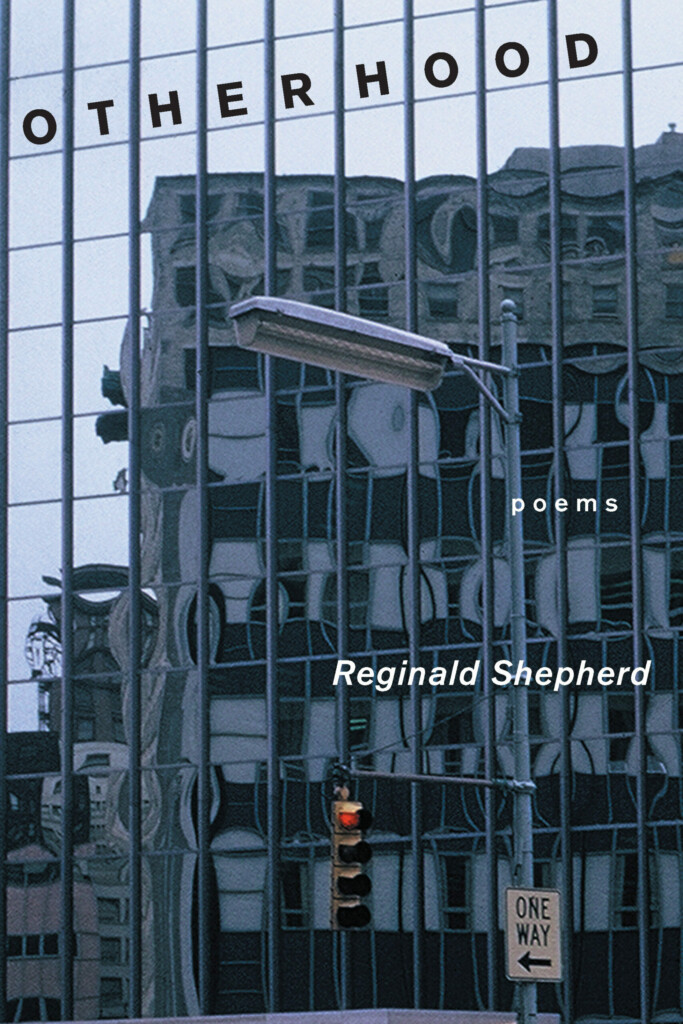
You said something earlier about the book Wrong, and it having meaning for you. Even the titles of Shepherd’s books are so tragic: Otherhood, Some Are Drowning, Wrong, Fata Morgana, Red Clay Weather. It does not sound like a good time. Greek myths lend themselves to tragedy. And Reginald Shepherd, I think, needed a kind of, how do I say this, a backdrop or a landscape of tragedy on which his poems could grow and through which he could build artifice. The Greek myths are full of rapes. They're full of wars. I think it was very important to what he was doing, but I chose poems thinking, okay, in these poems, Reginald Shepherd is making a lot of leaps, a lot of what seems to be non-sequitur leaps. And Orpheus happens to be in here. But in this poem, in another book, for instance, things are very narrative, but Orpheus happens to be in here. So, Orpheus is going to be there.
Solomon: Myth is just a vehicle for him, one of the traditions that he's drawing from and reimagining throughout his work. I know that you were registering changes as you were selecting, but myth is, as you're saying, omnipresent. You couldn't get around it, but it wasn't a strategic thing as you were selecting the poems.
My next question is about the relation of Shepherd with your work. Certainly, the use of myth is a common thread, but I'm thinking in another interview you talked about how poets love flowers, and the use of flowers that connects your work with queer culture. As I was reliving these poems through your work with The Selected Shepherd, I noticed ways in which Jericho Brown and Reginald Shepherd's poetry were in conversation with each other. Have you reflected on these resonances? Either as you were selecting the poems, or post the volume coming out?
Brown: It's hard to tease out.
Solomon: Maybe it's easier for a scholar looking in.
Brown: Yeah, I actually like hearing that. I like finding out what I'm doing and how people relate it to the poets that I'm influenced by. Because I always see things I've never seen before. I recently realized I’ve been reading this poem by Shepherd for years -- I can't think of what poem it is -- but there's a certain kind of phrasing that he uses that I use toward the end of a poem of mine called “Say Thank You, Say I'm Sorry.” As I was reading on a podcast, I'm like, “Oh, I stole that syntax.” I don’t use the same words. I realized there's a lot about my work in terms of syntax that I probably learned from Shepherd.
There are other poets who helped with this, but Shepherd helped me realize that what was most important about my writing would be how singular it was, or is. That I had to somehow either be myself or create a version of my self, and that had to be the speaker of my poems. The way Jericho Brown makes use of sentences. What I sound like in a poem has to be only what I sound like in a poem. So, part of what Shepherd does for me, reading his work through and through, is you realize nobody else wrote these poems.
No one could have written a book like Wrong but Reginald Shepherd. No one could have written “My Mother Was No White Dove,” or “Semantics at Four P.M.” but Reginald Shepherd. And I think he is the person who led me to understand that. It’s like when musical artists appear on the radio, I know its them. The deejay at the radio doesn't have to say “here's the new song by . . . .” I just know, because I've been listening to music, and I know what they sound like. There's really never a question when Mary J. Blige comes. And I figured out through Shepherd that in my own work, when people are reading a Jericho Brown poem, they need to be like, is that Jericho Brown?
So, what does that mean about a consistency of heart, a consistency of intellect, of line, of phrasing, of a kind of experimentation? Which I think was his goal. How do I continue to question myself and to challenge my idea about what a poem is and yet remain who I am throughout the poem? How is it still me? And obviously “me” changes and grows. And yet there's a way that when we look at that last book and we look at that first book by Reginald Shepherd, we can see that it's the same guy, but it's so different. That last book is so different from anything else he's written mostly because he wrote it on his deathbed. He was dying when he was finishing that book. He didn't even get to put the book in order. His partner, Robert Philen, ordered it, but it's all Shepherd’s poems. Which is why there's so many in that last book. I kind of got frustrated because there's so many very long poems, one right after another. And I'm like, “Bro, Shepherd wouldn't have done that.” [laughter] Those long prose poems. But I also noticed maybe he would have done it because it was his first time writing prose poems. I'm fascinated by what those poems yield.
Solomon: Yeah. You're comparing what you learned from Shepherd, that sense of voice, with your own. It is a Jericho Brown poem. It is Reginald Shepherd poem. That can be consistent even if, as you said, the experience of selecting these poems was to track the way he changed in terms of his craft across the six collections. Even though it's changing, there's always a sense that when you read a Reginald Shepherd poem, you know it’s him. And I will say that's also true of a Jericho Brown poem.
Brown: Aw. [laughter] Thanks Eric.
Shepherd's Queer Eros
Solomon: You're welcome. Another thing that I notice as someone who considers myself to be a queer cultural historian, I'm always down for seeing tongue-in-cheek play with the queer community or, “mock” is not quite the right word, but just send us up a little bit. Remind us not to take ourselves too seriously. I think Shepherd does something like that in “The God's at Three A.M." Or where you do it in your poem “Host” which, I think is subversive; it has a message. It's not just pure satire, but it is reminding us as queer people to be better to one another.
Brown: Yeah. To be better to one another is interesting. I never knew I wrote that. But I'm happy to hear it. I'm not against hearing that. I think what attracts me to those poems that you're talking about by Shepherd and by any queer writer, is the same thing that attracts me to poems that I'm attracted to by certain Black writers, whether they are queer or not. Because they're “in-house.” There's a way that you can read Shepherd’s “The Gods” and what you and I see in that poem we know other people are just not going to see. Because we've actually been to that bar. [laughter] And we understand that we could go to any city in America and still go to that bar and see those characters. [laughter] And we can see ourselves. Like, who am I in this poem? And yeah, that’s what is meant in a poem by me, like “Host.” Obviously, there's a reader who won't have had that experience, and they're sort of observing it from the outside, and maybe even identifying with it, but in a different way. It's the same thing as when, Future has this lyric where he says, “Y'all move that dope.” And I'm always amazed. When that song was such a huge song, every time I went to a club, every time I turned on the radio, I would hear that song. And I remember thinking, none of these people dancing to this song are drug dealers. [laughter]
Solomon: Were they “in the know”?
Brown: Yeah, like if I was really moving dope, that song probably had a certain kind of meaning to me when it came out, but when I'm listening to this song, I'm just thinking about grading papers. [laughter] I'm not trying to move dope. I'm just trying to stay up late enough to finish a poem.
I do think some things you can extrapolate or translate beyond that immediate in-house audience, but having an in-house audience I think is the actual backbone to voice. If we're having a conversation about Reginald Shepherd, we're talking about a poet who was always willing to be himself, to always have his own experiences in his poems. And so, sneaking around to make love outside, which I think queer people actually know less about than they used to.
Solomon: I agree.
Brown: But sneaking around to make love outside is an in-house conversation. It can translate. It can extrapolate to anybody sneaking around to do anything. But my experience reading those poems is “Oh, there I am.” Thank you, Reginald Shepherd, for writing this thing about yourself that shows that I'm not crazy, that shows that I exist.
Solomon: And that you're not alone.
Brown: Exactly.
Solomon: A whole history of what we might call cruising.
Brown: Yeah, that I miss. Yeah. [laughter] A whole history of cruising.
Solomon: That some people don't think we need anymore, right?
Brown: Yes. Well, I mean, maybe that's not what this interview is about, so I'll let that go. I don't know if people think we need that anymore. I just know you can meet a guy online and whatever happens from that happens. And you can meet a guy at the grocery store. And if you meet a guy at the grocery store, my personal history has shown that there were more options for what I could do with the guy and what the guy could do with me. When I meet a guy online, it's either I have to make love to you now or marry you? [laughter]
Solomon: There aren’t as many options ... And I love that Shepherd invites us to have this kind of conversation about his work.
Brown: Yeah, exactly.
Solomon: In a way that if I were someone different, if you were someone different, and we were sitting here talking about Reginald Shepherd, maybe we wouldn't be talking about “The God's at Three A.M .” The idea of cruising that you mentioned. I think that's beautiful that his work allows for all these entry points.
Brown: He would love that. And I think that we should also mention that this is all happening for Shepherd from his first book onward at a time when he is in those anthologies with Joseph Beam and Marlon Riggs and Essex Hemphill -- who also heavily used Greek myth. But there's no mixing up Hemphill and Shepherd. Among Black queer writers, even Carl Phillips at the time, there is this idea: we are going to say what our actual experience is in our poems, and we are not coding it. The code will be the fact that we reach out to you, Jericho, in that library when you're nineteen years old. In this library, actually, which is where I found Essex Hemphill’s poems.
Solomon: What you're saying reminds me of Assotto Saint’s “Why I Write” where he says (and I’m paraphrasing) we have an obligation to not file away our experiences in a desk drawer. I think that is very much clear in Shepherd's work and in your work and in Hemphill, and Riggs, and the people that you're mentioning.
Shepherd and the Natural World
You write in the Introduction to The Selected Shepherd, about framing his work around three primary concerns: 1) an understanding of the natural world as endangered; 2) his grief over the death of his mother when he was fourteen, and 3) his desire for the white male body and self-identification as a “snow queen,” and his processing of what this desire might mean.
Can you talk about the way Shepherd “reflects on the beauty of the natural world through an understanding of that world as endangered.” How did his thinking change from Some Are Drowning to Red Clay Weather? Or was it always the natural world as under threat? Did you notice different nuances as you were moving through?
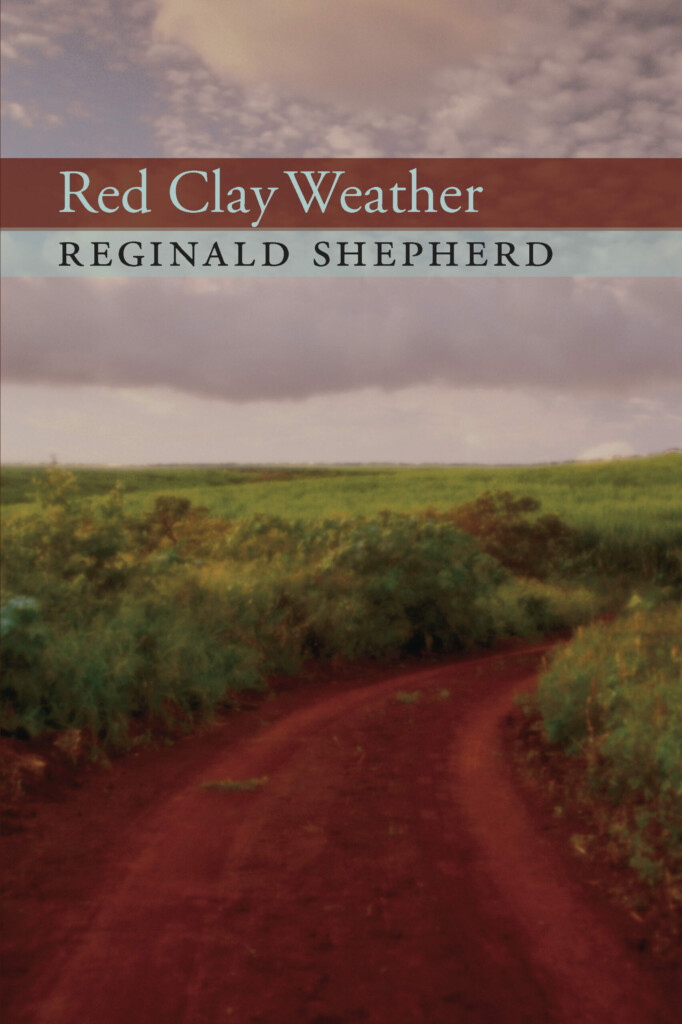
Brown: I think that maybe the one thing Shepherd would have in common with a poet like Mary Oliver is this idea that you protect and conserve the natural world not because of conservation, not because of its resources, but because it is holy. Every image from the environment is always a reason to be excited about nature. But we understand in many of the poems that that which we should be excited about could end.
For me, coming up with these concerns first had to do with separating what is a concern or a subject from that which is artifice. Greek mythology is not a subject, it’s an artifice. He's not writing a poem about the Greek myths. He's making use of classical allusion in order to say something about these other things.
Poets have to use what they have. And what we do have is a bunch of trees, flowers, and grass. We have the sky. We got some dirt. Those things seem to have already been here. They seem to have some capacity to be here if you get rid of us. And I think that particular concern is also the reason why poets can tell you the name of every flower. You just don't know what every flower looks like. You wouldn't be able to actually point to a narcissus. [laughter].
Because you read that part of the intro, I'll read what I say right after that, which I think deals with that, that first concern:
In each book, Shepherd reflects the beauty of the natural world through an understanding of that world as endangered. In his first book, Some Are Drowning, this endangerment appears in direct proportion to the fact of whiteness. And then I quote, “My true love's eyes / are nothing like my own, are bland as the suburban lawn / he mows on a summer Sunday afternoon, backyard / cookout with domesticated dog (And the beef cattle / graze x world? And the deforestation proceeds by x miles / per minute?).”
And that endangerment status matters all the more as environmental elements often get presented as characters with agency. Here are a few lines from “Surface Effects in Summer Wind” from Wrong:
I'm learning to remember the sound
days make: one sky disdaining the idea
of clouds, sunlight surviving
its centrifuge, breeze keeping blessed September
at bay.
Notice September is what's at bay. Then in the same poem a few lines later, he writes:
Midnight,
look at the things I've done
in your name, in my dark, walking out
into the street that changes nothing
Midnight gets called on and talked to directly. September gets held at bay. That which you think of as the natural occurrence, the natural world, has a mind and a life of its own. And the speaker in Shepherd's poems understands that and is always speaking directly to that mind and that life of the natural world.
Solomon: So, there's a sense of that agency of the natural world and that agency being under threat by human actions.
The Day the 'World Ended': Shepherd's Perpetual Return
The second concern is from the very first page of Some Are Drowning to the very last page of Red Clay Weather. It’s everywhere in his poetry. It calls to mind other poets who have talked about what it means to have that sort of exigence—what motivates you to write; what, in many instances, traumatically or tragically, happened that somehow gave you the engine to write. In his poetry and essays, Shepherd writes constantly about – and is processing -- the grief over the death of his mother. In the poem “Vampires,” for example, which you select, he writes “a song like every song for the dead” or in “For My Mother in Lieu of Mourning,” which is in Fata Morgana: “Would you have frozen in these lines? You were their possibility: now love must find another shape.” Really powerfully returning over and over again to what it was like to lose his mother when he was fourteen years old.
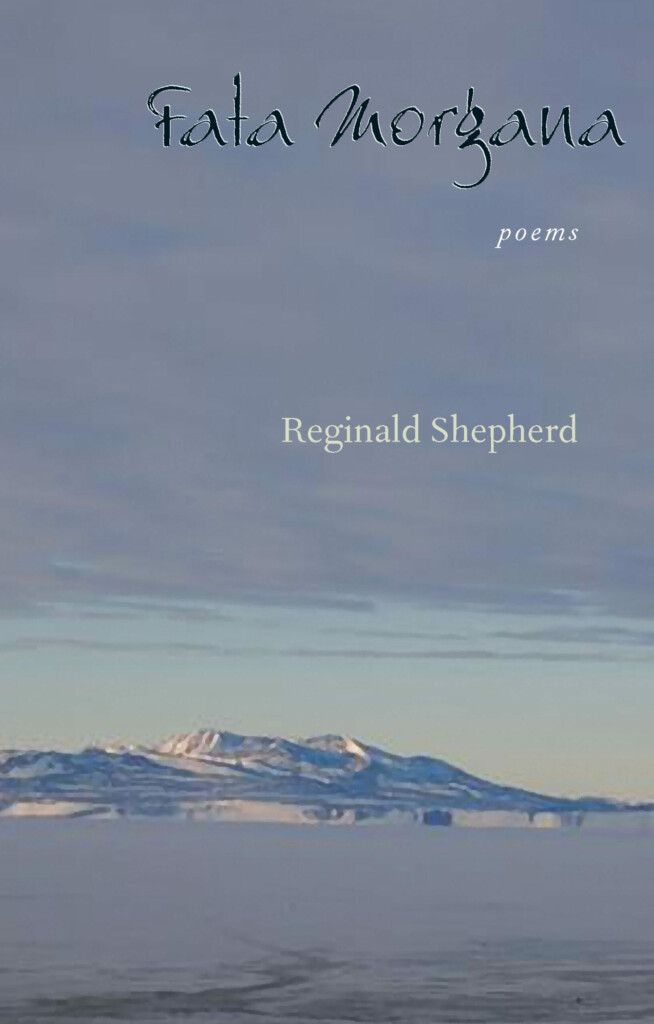
I know you spoke with Natasha Trethewey in 2010 in Southern Spaces, and I think about hearing Trethewey speak about that existential wound, the murder of her mother, and also at such a young age. And Shepherd speaking in an essay that he would publish, talking about the day “the world ended” on March 31st, 1978, which was the day of his mother's death.12Reginald Shepherd, “To Make Me Who I Am,” Orpheus in the Bronx: Essays on Identity, Politics, and the Freedom of Poetry (Ann Arbor: University of Michigan Press, 2007), 22. Two questions here. One, how did you live with the loss of Shepherd's mother in these poems as you were reading them? How did that return for you? And then the second question is more for Jericho Brown: does that sense of a wound that writers write from jive with you? Does that make sense to you? What was it like living with that concern that you identify in Shepherd's work?
Brown: I just think it's his best work. I think it's his most beautiful poems. I think when his mother comes into a poem, I'm probably going to like the poem. I think that she was his way into and back to blackness. She was a specter to him. There's a way that she haunted him, and therefore, blackness haunted him. Whenever he talks about music in his work, his mother's coming up. If Sam Cooke, Donny Hathaway, or Otis Redding is in the poem, then his mother's in the poem. Also, the color black itself seems to always appear in a poem where his mother appears, if not talking about Black people, just the fact of a black shirt or a black shoe. I think it's also beautiful because it's not Hallmark washed. It's not a Mother’s Day card. The relationship between the speaker and his mother in these poems is fraught. There's fear as well as love. There's regret. There's also a calling out of neglect in some cases. Reginald Shepherd used to write that his mother knew that if she gave him a book, he would be occupied for the duration of the time that it took him to read the book. So, she could do whatever she wanted. She went through the trouble of making sure he was schooled at the best possible places, in spite of the fact that she was impoverished. He grew up until he was fifteen in the projects, in the Bronx. He has poems about that. I'll give a couple of examples.
I’ll start with this one as it will give me an opportunity to talk about some of the things in Shepherd's work that I'm really interested in.
“My Mother Dated Otis Redding”
My mother is laughing in the hallway with her friends I don’t like much, maybe the numbers runner who gives me dollars to go see movies while they fuck, a mattress propped in the doorway where there’s no door. I know what’s “fuck,” and “dick,” and “pussy.” They’re “tipsy,” she says, they’re having a good time. “Don’t I deserve a good time now and then?” I’m looking through the telescope I just got from a catalogue, while they break out the Tanqueray; I don’t know what that is. They’re putting on some records, it’s 1970, Nixon’s president; there’s a dock in one song and I don’t know how to whistle, but I know what’s a dock, and a bay. There aren’t many stars because of the streetlights, it’s the Bronx, the singer sounds sad, he’s dead. My mother says, “You know, I went to high school with him, back in Macon,” and everybody says “I’ll bet,” and she laughs. I wish I was his son, I wish they’d all go home. It’s late and I just want to go to bed, but she just wants to have a good time. I turn my telescope on the Puerto Rican couple fighting, kissing in a window across the concrete courtyard, three parrots escaped from the loading dock freezing in a trash tree, it’s November, neighborhood kids throwing rocks at each other from bicycles, my mother standing in the hallway with a paper cup of Tanqueray, or lying in the hallway in a pool of her own shit.
That's a poem that's hard on the mother, but also interested in what the mother affords. The mother affords this telescope. The mother affords an awareness of stars. The mother affords an awareness of the speaker's neighbors, of other cultures. The mother also affords this way into Otis Redding's history and music. And then the poem is also political in this way that I think might be in-house for Shepherd. He mentions Nixon; he mentions 1970. What many people don't know is that they would build these projects very purposely without doors in the apartments; you wouldn't have a door on a closet, or a door on a bathroom, or door dividing your bedroom from a hallway. And that was designed to take the idea of deserving privacy out of the minds of people who had to live in the projects. That was real. That was on purpose.
So, part of what he's getting at here goes beyond the mother. And I think what I learned from that poem has to do with how no matter what you start with, the poem's got to include everything. It's got to reach out into the world and somehow be about more than just whatever its obvious subject is.
Here's another poem where Shepherd is talking about his mom:
“My Mother Was No White Dove”
My Mother Was No White Dove no dove at all, coo-rooing through the dusk and foraging for small seeds My mother was the clouded-over night a moon swims through, the dark against which stars switch themselves on, so many already dead by now (stars switch themselves off and are my mother, she was never so celestial, so clearly seen) My mother was the murderous flight of crows stilled, black plumage gleaming among black branches, taken for nocturnal leaves, the difference between two darks: a cacophony of needs in the bare tree silhouette, a flight of feathers, scattering black. She was the night streetlights oppose (perch for the crows, their purchase on sight), obscure bruise across the sky making up names for rain My mother always falling was never snow, no kind of bird, pigeon or crow ...
Which I think is also a beautiful poem because it allows his mother to be a person. And there's a way that when we think about poems -- we found this out during the Iraq War -- the way Laura Bush thinks about poems is that is that they're all sweet. And that's not what poems are. I'm sorry to tell you. So, there's this way we get his mom being his mom, but also a human being, which I really love. Saying your mother is no white dove is a way also of calling to the beauty of one's mother's blackness.
Beautiful White Men: Shepherd's Desire
Solomon: I love hearing you read it. Hearing the rhythm and the way in which it was constructed. One of the things that stood out to me as you read it was the use of the word “snow,” which for readers of Shepherd’s, there's a lot of use of the word snow -- allusion, metaphor, imagery -- throughout his collections, throughout his poetry. And I wonder if this is a convenient segue, or too heavy-handed, but I am curious to get to the last concern that you identify, across his poetry, which is perhaps the most controversial still. I know it was divisive for some readers during Shepherd's lifetime. And that’s his self-identification as a “snow queen.” And where readers today might land. I am thinking about, Shepherd's attraction, veneration, of the white male body.
He writes in the 1986 essay “On Not Being White”: “I write about men, and most of them are white. And I write about white men, and most of them are beautiful. So, I write about beautiful white men.”13 Reginald Shepherd, “On Not Being White,” in In the Life: A Black Gay Anthology, ed. Joseph Beam (Washington DC: Redbone Press, 1986), 30. You can see that in his poems. Do you think that lands differently in 2024? Has anything changed in thinking about Shepherd’s potentially divisive, or confusing, as you put it in your Introduction, presentation of himself.
Brown: I don't know if it's any different. I don't know why, but I guess I just never cared. [laughter] I mean, I do care, but only intellectually. I don't get it, but I don't need to either. Even Shepherd didn't get it. I mean, he says so; he says this is weird. [laughter] There is a poem where he's looking at a very attractive Black guy reading a book and saying, what's wrong with me that I'm not attracted to you? Why not you? You're reading a book. It seems like an admission that the problem that Shepherd has is with himself, with his own idea of his own beauty or possibility for the beauty of blackness. And to be quite honest, I only feel sorry about that.
But all emotions and all ideas are welcome to be expressed in poetry. Only the Black poet can actually write about Black self-loathing that is the result of whiteness. And that's a real thing among us. And not just in the United States. I went to Nigeria a few months ago [laughter] and was just fascinated by how many blonde wigs there were. We've decided something about blonde hair that in and of itself is supposed to have a meaning toward what we think of as beautiful.
So, I don't trip about that from Shepherd. And no shade, but you know these writers who call themselves Black pessimists who are all married to white people, maybe I haven't read enough of it, but I don't see the part of their work where they're like, why is my wife white if I care about Black people so much?
Solomon: So, at least there's a self-reflection that’s happening in Shepherd.
Brown: Yeah. I'm much more attracted to that than I would be attracted to somebody participating in that without understanding that's what they are participating in. There's an awareness. It’s like when I vote Democrat. Like I'm not crazy. I'm not stupid. I also would like to at least have a home to come to. Like, I don't want, like, no shade, but I don't want porn to be illegal. So, I'm not interested in project 2025. And I'm voting for her, but I don't think of Kamala Harris as some kind of freedom fighter or some kind of rebel. I don't think that that is inherent in the fact of her blackness, either.
So, these poems are in the book because they come up so much and that's what he was interested in. And I am so happy that they're there because I would love to see critics and scholars on race and on whiteness -- fields that did not exist during Shepherd's time -- take these poems up.
Solomon: There's a complexity in these poems and in his essays that should lead to studying Shepherd’s approach to the white male body. His will to process and understand.
Brown: He also probably felt, given what was happening among Black queer writers at the time, a bit of a pariah. But it's not like he's the only Black queer person dating white guys. I think him feeling like a bit of a pariah has to do with him expressing it through his poems. When something comes up in a poem, it ends up identifying you like that's who you are. I think we might not be friends with, but we're friends with somebody who's friends with, a Black guy who only dates white people. [laughter]
Solomon: If you think about it, Shepherd publishing in the 90s into the 2000s, the post- In the Life generation, Joseph Beam and the Black man loving Black man is the revolutionary act of the 80s, there is a sense that he is publishing as a poet in contrast to those other writers and poets.
Brown: Yeah. The thing about Shepherd that makes him different is his move that, okay, you call me out about this thing. All right. So that's where I'm going. That's what I'm going to do in this next whole book. We got to see how much of that thing I am. And his way of doing things was put the poems first. And, if that's the experience he had for his poems, that's what was going to be in the poems. I'm really fascinated by that and even envious to some extent. Poets are the people who have to say the brave thing. Who have to say the thing that is true in spite of the fact that nobody else seems to be saying it. Even if that truth makes us look bad.
Solomon: Or is uncomfortable.
Brown: Yeah. And I never felt that I was doing that in my work as much as I feel it now. I feel like, “Oh, damn, I really don't want to talk about this.” I would actually rather not say this in a poem, because once I do, it becomes who I am. You can say this controversial thing in a poem, in Reginald Shepherd's case, he would say in poems that he wanted to suck white cock, which, I've never said it in my life, but -- and he understood this -- after that, you forget that that same person might want a sandwich too, might want a bowl of cereal, might like watching “Charlie's Angels,” might prefer orange to red. [laughter] There's a whole world involved with being a human being. And yet poets have to deal with the fact that once we put it on the page, we understand we will be identified that way, and in many ways dehumanized for that identification. So, Shepherd is an opportunity for me to not dehumanize somebody. But I don't get it. I don't like it, but I like him. I can still be interested in him, even if I'm not interested in that particular facet. And I as I said before, I think that that interest is allowed because he's aware.
From Shepherd to Brown
Solomon: So next is a series of questions that I teased up about how Shepherd can help us think about your work, poetic philosophy, and approach.
In an essay, “To Make Me Who I Am,” Shepherd writes about the importance of certain kinds of music being present in his poetry. For instance, in relationship to his mother as you mentioned. He adds, “Patti Smith was my first image of what a poet might be. She turned social ostracism, into rebellious outsider-hood, loneliness into proud isolation from the uncomprehending mass.” Do you have a Patti Smith? When you think about Jericho Brown before he was Jericho Brown? Was there a person who served as some type of image for you of what a poet might be?
Brown: I think that's a great question. There were always Black poets that I knew about as a kid growing up. I'm always fascinated about people not having an awareness of poetry. I don't know, it's because of the time that I grew up in. I don't know if it's because of what the Black church was then and how it's different now. I learned who Maya Angelou and Nikki Giovanni and Langston Hughes were in church. My idea of a poet were the poets. It is true that when I was a kid listening to Stevie Wonder, I felt like, “Oh, wow, this is poetry!”
I guess the big poet, for me, might be the same as the big poet for a whole bunch of other people. And that's Langston Hughes. Yeah. He seemed to me when I was a kid a kind of unifying force. I was always taken by the fact that the poems are so musical. I loved, and still to this day love, his particularly short poems: “My Friend,” “Island,” “Suicide Note.” He was amazing at creating moments of sublimity. These poems are sublime. When he's good, he's just so good. I don't like “Make America Great Again” or when he goes long. I always thought of him as The Poet because he was given to me as the poet most aware of his people. You know, the self that was made up of many selves; the I that understands there's a we. Later, the more I read his poems, I was taken that he always seemed to be reaching outside of himself.
Hughes was that poet for me. He was the first poet made accessible to me, and I knew when I got him I was getting poems. I never felt locked out of anything. I will also add, I understand people's idea of poetry as a marginal literature. But I didn't understand that at all when I was a kid. I thought poetry was the literature. To this day, I have questions about it. I think there are more poems sitting on people's refrigerators and in their mirrors above their dressers, and right by their door so that they can read them as they walk out, or inside the visor of their car. I think there are more poems in people's lives than there are novels. So, I don't know why we're so marginal. [laughter]
Solomon: Yeah. I wouldn’t argue that.
Brown: Shepherd also in his definition of Patti Smith as that beginning is thinking about how to make use of all the ways that he has been hurt, all the ways that he has been oppressed, both personally and as a Black queer person, and turning that into something else. And part of what he's saying is that Patti Smith was an example of that. I don't think I was self-conscious enough or aware enough as a young person that that was indeed my lot in life. Because I didn't feel that way then, that's not what my need of a poet was.
I liked Sylvia Plath too when I was a kid. I liked Anne Sexton. I liked Gwendolyn Brooks a whole lot. I thought she was amazing. And I mentioned Stevie Wonder. Very early on, Wonder gave me the idea that art could be a contribution to the culture; that you can make a feeling and change the entire culture. I love that. In particular, thinking about blackness. We are having that happening right now with an artist like Kendrick Lamar. Where the music is informing the way the people think about themselves. Which means that blackness, yet again, gets expanded.
So, my idea of what a poem is, and what I do when I write one, is to expand that which is expansive. I do the work of showing you just how big it can be; that it can include all these other things -- definitely Black culture, definitely queer culture, but also the wide American culture.
Identity and Poetry
Solomon: Art has the capacity to expand and not collapse any of our identities. One of the fascinating things for me as a reader of Shepherd's essays is the fact that Orpheus in the Bronx is subtitled Essays On Identity Politics and the Freedom of Poetry and he's constantly ruminating on what identity is and how it makes its way into his poetry or not. And I see some connections here. He states in one interview, “I prefer to call myself a writer who is gay and Black, or a writer who is Black and gay, and to call myself a gay Black writer. I would give the priority to me being a writer. And I certainly think that an engine of my writing is my experience of blackness, my experience of gayness, of marginality, and exclusion. But that doesn't mean that the writing arising from that experience is wholly determined by that experience.”14Charles Rowell and Reginald Shepherd, “An Interview with Reginald Shepherd,” Callaloo 21, no 2 (Spring 1998), 294.
And Shepherd writes in “The Others’ Other” in a similar way: “I have always intensely disliked what I call identity poetics, the use of poetry as a means to assert or claim social identity.”
He continually is thinking through this in his essays: what is the role of identity or “identity politics” in the making and the crafting of a poem. And I really like what you've said before about learning to write about race and sexuality and blackness, in your words, “as if they are givens” and not as if you're “exposing or exposed.”15Marian Kaufman, “Interview with Jericho Brown,” Bayou Magazine, https://bayoumagazine.org/interview-with-jericho-brown/.] I see connections between what Shepherd wrote and what you’ve written. But I also see how they're different. Do you still feel that the priority here is on the writing? What role does politics play in the composition of a Jericho Brown poem?
Brown: I think Shepherd and I were going about this probably the same way, but I also think the difference is that he's worried about bad poems, and I'm not worried about bad poems. People get so frustrated. I mean, I get it. When a really bad book wins a really big prize, you're worried about poetry. [laughter] But if we're doing the immortal thing, let the thing be immortal. It'll work out. It'll happen. But people get really -- and I think Shepherd could have too -- bogged down in the present moment; and in like, oh, why is this a poem? Because you said you were Black three times in it?
I kind of like the idea that maybe a poem is a poem because you say “Black” three times in it. [laughter] I don't care. [laughter] One of the wonderful things about having served on the National Book Award jury was seeing how many poets that I love and admire and respect approached poetry. Even if I don't like them anymore, [laughter] I still think they're poets. They are people with a lot of reading under their belts. I very distinctly remember being on that jury and seeing people bring up books that I thought were objectively bad. But they liked that mess, and with all their reading history, thought those were great poems. And then the opposite would happen. I'd be like, “Here's this book that's really good.” And they'd be like, “Jericho, no, not that book.” As long as I'm aware of that, I'm not really worried.
I think everything comes out. People get what they need. It's important that we get to hear from as many poets as possible so that we know people are getting what they need. But I also think if something doesn't turn me on, I'm not defensive enough to write an essay. Other people are, and I'm glad they're out there. There are people who are meant for that: something turns you off, you write an essay, go for it. And people talk about it on Twitter [X]. I'm down. Go for it. I love it. Lore, lore. I'm always for more lore. But I just don't get into it because it doesn't fuel my own writing.
My writing, on the other hand, can be fueled by disagreement. I can see someone's poetics being in disagreement with my poetics and my poems can prove them wrong. [laughter] Through craft, through the fact of the poem, but not in a way where I'm calling him on the phone and cussing them out -- which I actually would like better.
Maybe I'm going too far in this question, but I'm always amazed by how people get mad at folks in a community as small as Poetry Land. Where you could just call them. Like if there's a mix up, call me. You don't have to write an essay because you read something wrong. You can send me a DM. Send me an email. Text me.
I think everything goes in a poem and that my job when I'm writing a poem is to allow whatever falls into it to fall into it. And if I'm allowing everything to fall into it, then all that I know will fall into it. Orpheus might be there. Kendrick Lamar might be too. And an experience from when I was sixteen and unhappy might be in there, and an experience from when I was fourteen and happy might be all in the same poem.
And I think that's what Shepherd believes. But I think instead of him saying that he's saying something that puts him on the defensive about identity politics, which I don't get into just because I don't know what that means. And every time I try to define it, every time I look it up, every time I talk to people about it, nobody seems to agree about what identity politics means.
And the other thing I don't know that I see people saying a lot lately is race baiting. I don't know what race baiting means. And I clearly don't need to know to make my work happen. I think poems are political. I don't think there's any way around that. I haven't read the poem that is not. I think people are too. I think lives are. And I think poems are living things. When I'm working on a poem, I'm much more interested in the line, and much more interested in rhyme, and the sounds of things, and the construction of the sentences themselves than I am in what the sentences say. I figure out what the sentences say down in revision land. But when I'm in first draft land, I don't care about that stuff. Then when I'm revising the poem, I'm revising based on a system of sentences and sounds and line and rhyme and meter.
Solomon: There's a sense that you're in agreement with Shepherd on the line itself being the writer constructing the poem. Then these other things may be brought to bear on it in revision or as it’s received in the world. I think that that's powerful. Shepherd is writing these essays in a moment that is different than our moment. During the culture wars of the 90s into the early 2000s, there was this need to define, maybe more so than now in what we might call our queerer moment, when it comes to thinking about identity.
Paying it Forward
One of the things that you mentioned earlier and that I find to be a powerful ethic in Shepherd's work, especially some of his essays, has to do with going to Shepherd to find poets that you should know about. He was always uplifting and amplifying all kinds of different, lesser known, or marginalized poets. That was something that he was committed to: good work getting out there. You've returned to Shepherd here, in the ethic of bringing him to readers today. Are there poets that we should be reading and be talking more about?

Brown: I like everybody, so it's always hard for me. I really do. Nobody believes me, but I do. When I don't like a poet, it's probably because had a run in with them. [laughter] There are poets I don't like. I mean, suddenly your work can get bad to me if you've been disrespectful to me or my students. Or maybe I'm not into it. There aren't a lot of poems out there that I dislike; there are poems that I'm neutral about -- most poems. Most poems happen and I'm like, okay, well moving on. I get Poem a Day, like everybody else and I read poems every day. And sometimes I’m like, ”Oh, God, I gotta send this poem to my ten friends.” And sometimes I'm like, “Okay, girl. Well, you got in there. Go on, go with your bad self.”
So, I like Taylor Johnson, and I think everybody should be reading his work. And I'll stop there.
Solomon: Inevitably someone's going to feel left out.
Brown: Well, it's not just about feeling left out. But there was this other question you had here just about queer poets. I like Brian Teare, Randall Mann, James Allen Hall, Aaron Smith, Danez Smith, Philip B Williams. All of those folks are like the queer men. I like Ellen Bass. I have never disliked a poet whose first name is Robert: Robert Creeley, Robert Frost. I definitely like Robert Duncan. Robert Lowell.
For me, poets write the Bible. You have this book, and what? You don’t like a part of it? [laughter] You don't like Second Thessalonians? You don't you don't like Acts? Which gospel do you not like? You might like some things more than others. People love Song of Solomon because they see it as a love poem. People like any scripture where Jonathan comes up because they like to think about David having a good time. I just think poetry is in and of itself, actually attractive, likable, interesting, complex, a living thing. I like a lot of poets who I think I get on their nerves.
I like Kim Addonizio. I've always liked Terrance Hayes's work. Jeffrey McDaniel. And there are some people whose work I don't get into, but that's just because I don't get into it.
Solomon: And we don't have to name them, right?
Brown: No, I mean, I could. if you want me to say people I don't like, I could do that, too. We could gossip. [laughter] We could talk about who we ought to get rid of. Because they're out there, too. I'm like, oh my God, how is this person still working? You know? That's what y'all doing? I like a lot of very different things. It's easier for me when I'm dealing with students to make recommendations because I've seen their work and I'm like, “Oh, you should read this or that poem.” Everybody's hard on Mary Oliver, but she wrote “The Summer Day.” It's a great poem. Y'all can get crazy if you want. And Sharon Olds wrote “May 1968.” It’s a great poem. You can wear her out all you want. She gave us that. I love Yusef Komunyakaa. If you live in Arkansas and your name is Jeffrey, I probably think you're a great poet. You could spell that “Geo,” “Gef,” “Jeff,” however you get to do. I like a lot of poets because I read a lot of poetry. [laughter]
Solomon: I like finding a sense of connection or commonality with particular poets based upon a student's work. That's how I was introduced to Reginald Shepherd for the first time: someone said, “I see something in your work, read this poet.”
Brown: I like Catherine Barnett. I like Deborah Landau. I generally like poets name Catherine. All poets named Marie or Mary are always good. Mary Shivers. Marie Howe. [laughter]
I'm using that to show that you can't, you can't narrow it down. it is better to create a family tree for yourself. And that includes figuring out who you do love. When you figure out who you love, figuring out who they love. If you can do that, that's a reading life. You can read for the rest of your life that way.
I didn't even say Lucille Clifton's name. Lucille Clifton is my favorite poet. Second to her is probably Louise Glück. She's good. Leave her alone.
Poetry, Theory, Resilience
Solomon: Those of us who've spent time with Shepherd know that he's constantly invoking names like Adorno, Benjamin, Lacan. And he has written, “Unlike many poets, I have never been afraid of theory.” You're a poet, a public intellectual, a teacher. What role does theory play in your creative life? In your intellectual life? Is it something that you begin with? He says it's a “challenge and incitement” for him.16Shepherd, “To Make Me Who I Am,” 31.
Brown: I generally like to read anything that feels like it wants to be read. Anything from novels to criticism to theory to poetry that makes me feel there's an urgency behind it. Sure, I went to graduate school, got a PhD, so I've read these people. Most recently Bettina Judd, a theorist whose work has been so helpful to me. People get frustrated with theorists because they speak abstractly, in the air. And that seems sometimes contradictory to the impulse of poetry to speak on the ground and in images and that which is concrete.
Poets give often the singular situation in order to show that which is common, or known among us. Whereas theorists are doing this other thing where they want to catch the common situation, and then you get to apply it to your individual situation. What I've most recently learned from a writer like Judd has to do with maybe the first question you asked which was about the wound and whether or not I write from it. And maybe I didn't answer that question. Maybe I avoided it.
I think the hardest thing about writing for me has to do with the fact that much of where my earlier writing came from I have healed, or am trying to heal. And knowing that, I am interested in what part of my life, in my personality, only exists because of that wound or because of those wounds. And I want to heal that too. If there is something in me that is a descendant of the abuse I got at the hands of my father, I don't want that thing in me anymore. And some of that I won't be able to get rid of, and it's not like it's bad. I'm like the best friend anybody can have because I am the person who looks forward to cussing people out on somebody else's behalf. But I was never a person that could do that for myself until recently. That's because I always saw myself as a person in a family. And in the family where I grew up, you take care of everybody else, but you don't take care of yourself.
I think that's the case, not just for me. I think it's for my sister. I think it's for my mom. There's this sense that your life is about other people and that you put your life on the backburner, and that's the right thing to do. I just ain’t that person no more. And I don't want to be that person. And so, if I'm not that person, where are my poems coming from? That person wrote Please. So where are my poems going to come from if they're not coming from that wound? And what I've learned from Judd's work is that my present feeling, my present way of being will always have something from which I can pull a poem.
Solomon: It's a powerful reorientation. It makes me think of Whatever Happened to Queer Happiness? I've been thinking with that book by Kevin Brazil. He's questioning why we return to certain kinds of narratives as queer culture. Why we're reproducing certain kinds of stories about loss, about the AIDS dead, for example. And that seems to be even for non queer writers, that's how they imagined queer life. One of the things he talks about is how difficult that reorientation is -- to become someone who can write from a place that's not still dealing with that wound in the same way. You're saying healing, which I think is really powerful. It's not healed. It’s that process. So, I look forward to seeing what you write from this space.
Brown: Me too. Yeah. 
About the Authors
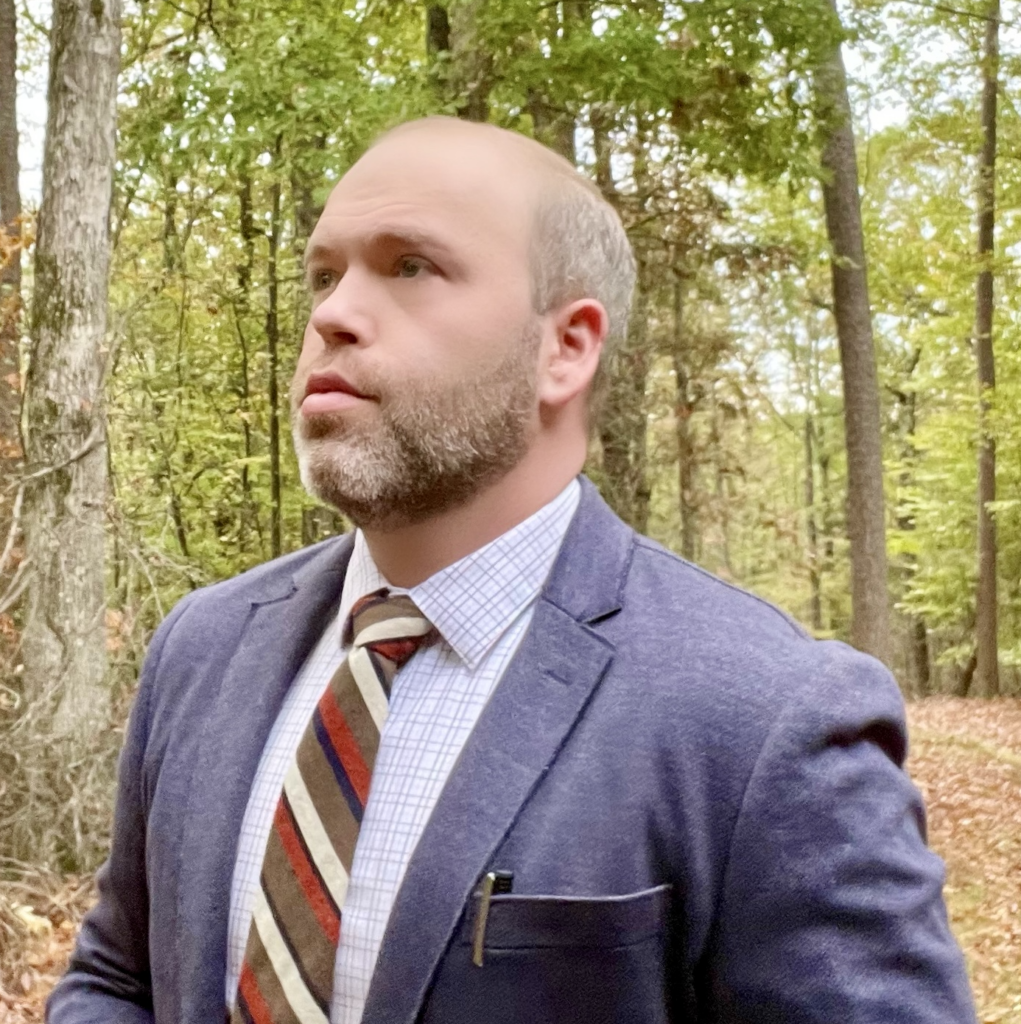
Jericho Brown is author of The Tradition, for which he won the Pulitzer Prize. He is the recipient of fellowships from the MacArthur Foundation, Guggenheim Foundation, the Radcliffe Institute for Advanced Study at Harvard, and the National Endowment for the Arts. Brown’s first book, Please, won the American Book Award. His second book, The New Testament, won the Anisfield-Wolf Book Award. He is the director of the Creative Writing Program and a professor at Emory University.
Eric Solomon is an instructor of English and affiliate faculty with the Center for the Study of Southern Culture at the University of Mississippi. He is editor of the “Queer Intersections” series with the journal Southern Spaces; chair of the LGBTQ+ Historic Preservation Advisory Committee with Historic Atlanta; and serves as cultural historian with the Mayor’s LGBTQ+ Advisory Board for the City of Atlanta. In 2021, Solomon launched The #TUOR Project, a digital story tour of sites of importance in Atlanta’s queer past.
Cover Image Attribution
Reginald Shepherd collage created by and courtesy of Eric Solomon, 2024.
]]>Excerpt
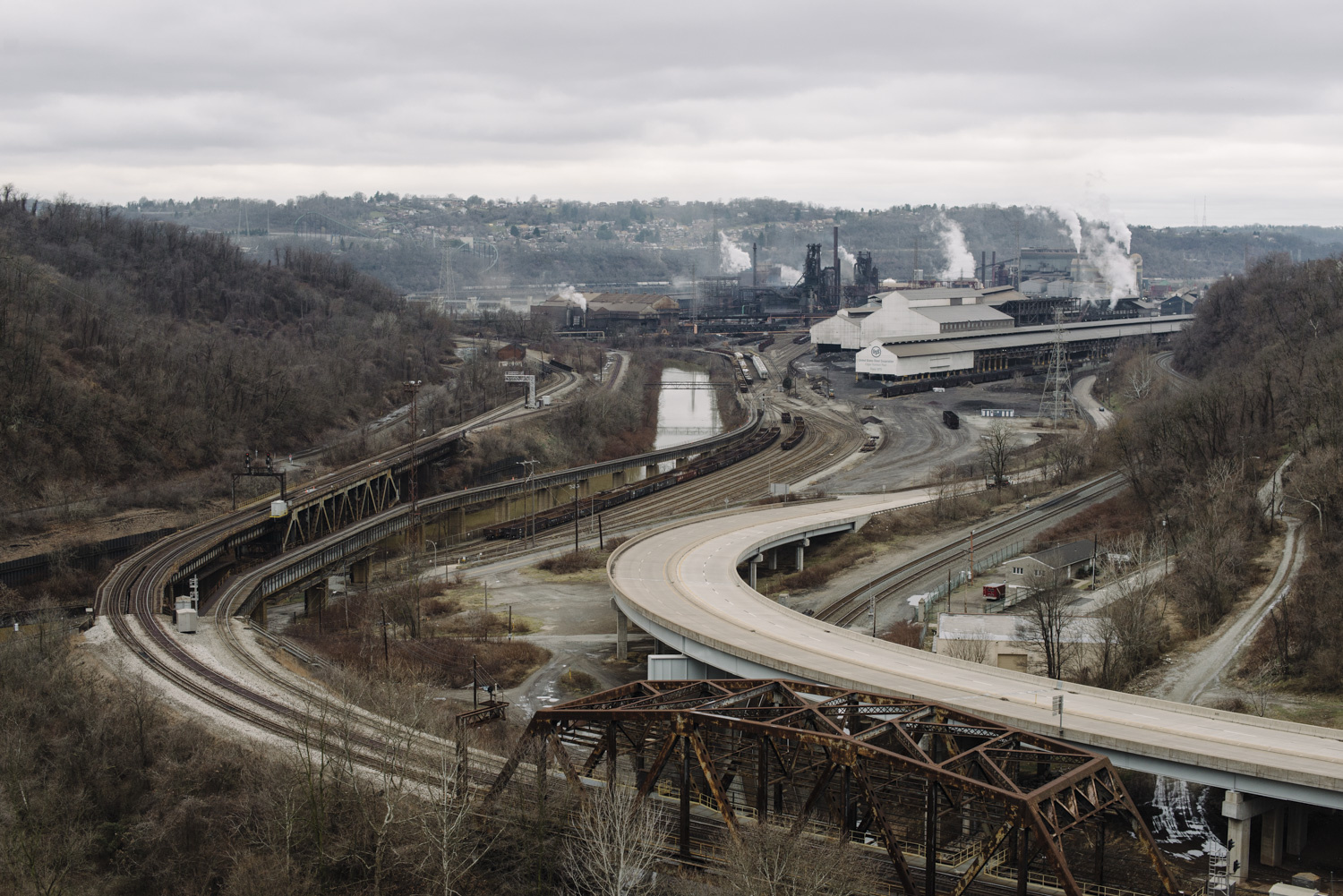
Appalachian literature is thriving. From the earliest oral traditions to print accounts of frontier exploration, from local color to modernism and postmodernism, from an exuberant flowering in the 1970s to its high popular and critical profile in the twenty-first century, Appalachian literature can boast a long tradition of delighting and provoking readers. Yet as anyone who enjoys reading or teaching this literature knows, finding an anthology that offers a representative selection of authors and texts from the earliest days to the present can be difficult. What you are now holding in your hands, or accessing through an electronic device, is the result of our efforts to assemble that book.
We are especially aware of the need to have a representative selection of Appalachian texts in one book because we teach Appalachian literature and have wished for such a book. The problem is not that the region's literature isn't available. Poems, short stories, and novels are available electronically from a myriad of websites; however, even today's computer-savvy readers and students can flounder when the material they seek is scattered to the four quarters of the internet.1Websites for locating Appalachian writing include Documenting the American South (docsouth.unc.edu) and Making of America (quod.lib.umich.edu/m/moagrp/). Additionally, many specialized anthologies of Appalachian literature have appeared over the past few decades. Yet by their very nature, specialized anthologies cannot cover the full sweep of Appalachian literature and must be supplemented by other readings.2Outstanding specialized anthologies include W. K. McNeil, ed., Appalachian Images in Folk and Popular Culture (1995); Sandra L. Ballard and Patricia L Hudson, eds., Listen Here: Women Writing in Appalachia (2004); Felicia Mitchell, ed., Her Word: Diverse Voices in Contemporary Appalachian Women's Poetry (2003); Kevin E. O'Donnell and Helen Hollingsworth, eds., Seekers of Scenery: Travel Writing from Southern Appalachia, 1840–1900 (2004); Marita Garin, ed., Southern Appalachian Poetry: An Anthology of Works by Thirty-Seven Poets (2008); Jessie Graves and William Wright, eds., The Southern Poetry Anthology: Contemporary Appalachia (2010); Chris Green, ed., Coal: A Poetry Anthology (2006); and Anthology of Appalachian Writers (a journal-like, serial publication of contemporary Appalachian writing published by Shepherd University).
Good older anthologies of Appalachian literature exist. Robert J. Higgs and Ambrose Manning's Voices from the Hills: Selected Readings of Southern Appalachia (1975) was an important, groundbreaking work that provided an excellent selection of Appalachian writings in one volume. But by the mid-1990s, changing ideas about Appalachia and literary theory, along with the remarkable number of fine authors whose works had appeared since the book's publication, made that collection feel incomplete. Aware of those gaps, Higgs and Manning, along with scholar and poet Jim Wayne Miller, published a two-volume sequel, Appalachia Inside Out, in 1995.
But to date, no one collection provides the historical depth and range of Appalachian literature, from Cherokee oral narratives to fiction and drama about mountaintop removal and prescription drug abuse, that contemporary readers and scholars seek. What is really needed, we feel, is a one-volume anthology of Appalachian literature that is comprehensive, reflects contemporary ideas about authorship and Appalachia, and brings readers well into the twenty-first century. That is what this book attempts to do.
In creating this anthology, we had a twofold task. Like all anthologists, we had to decide what principles would govern our selection of authors and, given those principles, what authors and texts we should include. But even before wrestling with those difficult decisions, we faced the conundrum that anyone working on our region confronts: just what do we mean when we say "Appalachia"? Geographically and conceptually, debate over this question runs high.
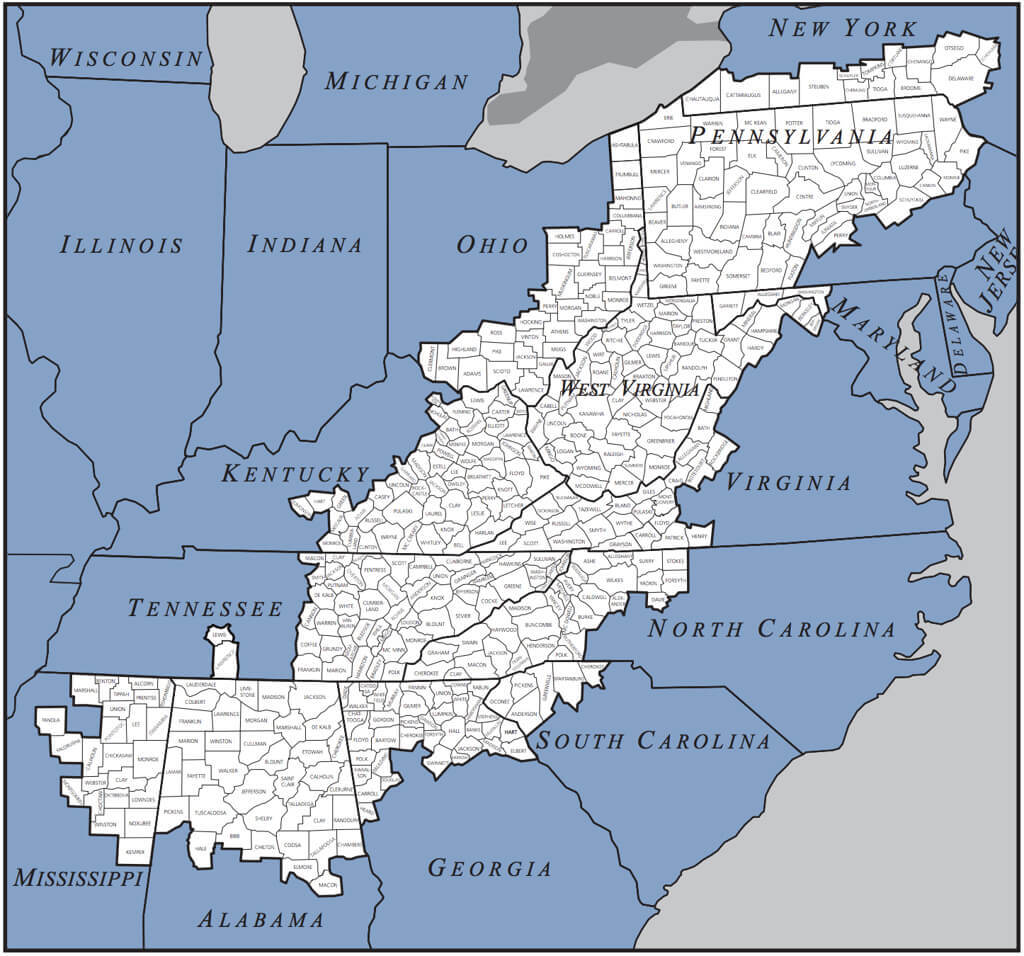
Merely determining the territory encompassed by the term "Appalachia" has been a matter of contention. Geographers' maps delineating the physiographic province of Appalachia, for example, outline a region stretching from central Alabama and Georgia northeast to the Atlantic Ocean off the coast of Labrador, and from the Piedmont through the western rim of the Cumberland Plateau as far as Ohio. However, late nineteenth- and early twentieth-century attempts to trace the region's boundaries, such as the map included in John C. Campbell's The Southern Highlander and His Homeland (1921), place the region within the borders of the slaveholding South with the Mason-Dixon Line demarcating the northern border, the Ohio and Mississippi Rivers marking off the western border, and elevation (the Blue Ridge) delimiting the eastern. The Appalachian Regional Commission's 1965 and subsequent maps of the region, guided by political and economic forces at play in the War on Poverty years, identify an area that incorporates portions of thirteen states, from the southern-tier counties of western New York to central Alabama and northeastern Mississippi, including significant parts of Ohio and a small chunk of the northwest South Carolina Piedmont. In sharp contrast to all of the above, folklorists and cultural geographers such as Henry Glassie and Terry Jordan-Bychkov insist that culturally, Southern and Central Appalachia are part of the Upland South, which runs from the eastern Piedmont of Virginia and the Carolinas west through Tennessee and Kentucky to include the Ozarks (Jordan-Bychkov argues that shared cultural traits extend the Upland South through East Texas); Northern Appalachia, they assert, is part of the mid-Atlantic and midwestern cultural regions.3 John C. Campbell, The Southern Highlander and His Homeland (1921); Henry Glassie, Pattern in the Material Folk Culture of the Eastern United States (1968); Terry G. Jordan-Bychkov, The Upland South: The Making of an American Folk Region and Landscape (2003).
As with maps, the popular conception of the region has also been subject to vicissitudes and controversy. Prior to the mid-nineteenth century, the southern mountains were viewed as just that: southern, with a high elevation and a whiff of the backwater. Since the southern backwater had once lain as far east as the coastal plain, frontier rustication was not yet synonymous with mountain. Yet beginning in the mid-nineteenth century and flowering fully in the post–Civil War era, fueled by an enormous body of writing in the popular press, Appalachia became known as a land apart, home to what William Goodell Frost, president of Berea College, identified in 1899 as America's "contemporary ancestors." These curious creatures were alternately viewed either as a genetic and cultural reservoir of America's best (noble poor rural white people of northern European ancestry who spoke Elizabethan English and lived a lifestyle like that of the colonial era), or as a sad example of America's worst (degenerate poor rural white moonshiners and feudists who spoke substandard English).4William Goodell Frost, "Our Contemporary Ancestors in the Southern Mountains," Atlantic Monthly, 1899. A recent controversial literary example that reinforces the degenerate-culture vision of Appalachia is J. D. Vance's Hillbilly Elegy: A Memoir of a Family and Culture in Crisis (2016). Vance's book has generated so much popular attention on the region that several Appalachian authors, including many of the authors featured in this anthology, decided to write back against Vance's portrayal of Appalachia in Appalachian Reckoning: A Region Responds to "Hillbilly Elegy" (2018). Examples of the degenerate-culture representation in the contemporary media include The Wild and Wonderful Whites of West Virginia (https://www.youtube.com/watch?v=AQBiXDNVeSA); Buckwild (http://www.mtv.com/shows/ buckwild/series.jhtml), Squidbillies (https://www.adultswim.com/search?q=squidbillies), and Saturday Night Live's "Appalachian Emergency Room" (http://www.nbc.com/saturday-night-live/video/appalachian-emergency-room/n12005/). Distorted though they may be, those two views of Appalachia are still present in the popular imagination, as best-seller lists and television shows indicate.5The contemporary popular media engage less in romanticization of Appalachians, although the trope abounds in the literature. Nothing seems to be filling the beloved shoes of The Waltons (serialized from 1972 to 1981 and made into television movies three times in the 1990s) or Christy, the 1994–1995 television series about a stoic young city girl teaching in the Tennessee mountains in 1912 who gently guides the mountain people away from their bad ways, bringing out their natural goodness. The character Kenneth Parcel, played by Jack McBrayer, on the television comedy 30 Rock (2006–2013) may be the best example of contemporary media's embracing of the "good" qualities of Appalachian people, albeit couched within the all-too-familiar hillbilly stereotypes. Kenneth, from Stone Mountain, Georgia, is unfailingly cheerful, kind, and honest. He is also misogynistic and religiously narrow-minded. He rejects science and supports the Confederacy. References to incest abound when Kenneth is around.
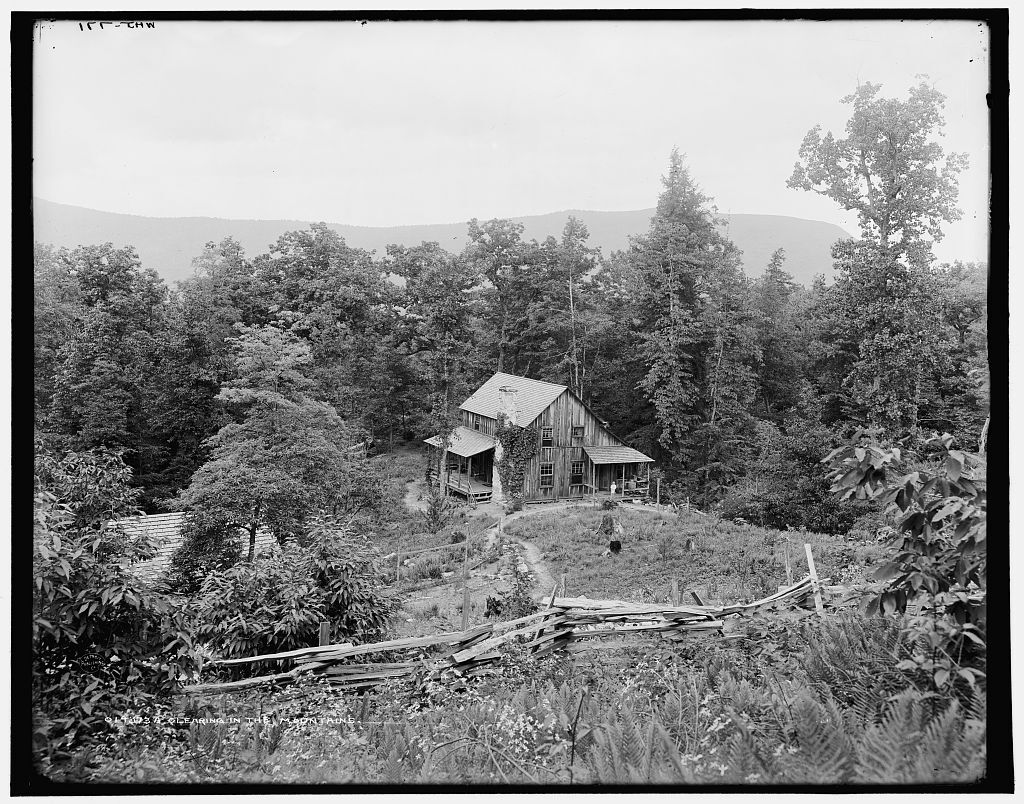
That dichotomy—the romanticized and the degenerate—remained operative through the better part of the twentieth century, with few attempts at complicating it. (Horace Kephart, John C. Campbell, and Harry Caudill are notable exceptions.) Then, in the 1970s, under the influence of the civil rights movement and similar ideological initiatives among women, Native Americans, and other marginalized groups, Appalachian residents, together with activists and scholars, developed an Appalachian studies movement to challenge this distorted image of Appalachia and provide an accurate account of the region's history and contemporary situation.6Chad Berry, Philip J. Obermiller, and Shaunna L. Scott, eds, Studying Appalachian Studies: Making the Path by Walking (2015). This effort has produced outstanding writing, although in some quarters there has remained a tendency to continue romanticizing the region as a haven for old-time living and, as Ronald D. Eller notes, "A flourishing minor industry has developed to fabricate such oddities as dulcimers, quilts, log cabins, and 'Hillbilly Chicken.'"7Eller, Miners, Millhands, and Mountaineers: Industrialization of the Appalachian South, 1880–1930 (1982), xvii. For a discussion of the commodification and fetishization of Appalachia, see Allen W. Batteau, The Invention of Appalachia (1990). Some of the best statements on the conflicting narratives comprising the "invention" of Appalachia appear, of course, in the literature of the region and the scholarship on that literature.8Batteau, The Invention of Appalachia. See also Henry Shapiro, Appalachia on Our Mind: The Southern Mountains and Mountaineers in the American Consciousness, 1870–1920 (1978).
In navigating these turbulent waters, we also had to ask ourselves what story of the region we wanted to tell. In answering this question, we were influenced by current ideas about anthologies and the literary canon. Whereas most early- to mid-twentieth-century American anthologies attempted to produce a master narrative—a collection of canonical authors whose work and biographies support one particular vision of the nation, region, or group represented—contemporary critical theory's expanded ideas of authorship have challenged that approach, which tends to exclude writers who fail to conform to the master narrative, such as women or ethnic minorities.9For a discussion of master narratives in late nineteenth- and early twentieth-century anthologies of southern literature, see Susan Harrell Irons, "Southern Literary Reconstructionists: Shaping Southern Literary Identity, 1895–1915" (Ph.D diss., University of North Carolina, Chapel Hill, 2001). Hence, anthologists today (ourselves included) tend to view their collections as dialogues or debates among sometimes conflicting voices.10William Andrews, preface to The Literature of the American South: A Norton Anthology (1998), xxii.
Indeed, in Appalachia, as in other regions, the culture, like the geographic configuration, can be seen as porous—that is, the boundaries are constantly changing. The result is that no one can definitively say what Appalachia is or is not, even though almost everyone seems to try. As Douglas Reichert Powell observes, "Regions are not so much places themselves but ways of describing relationships among places. These descriptions serve particular purposes for the people doing the describing."11Douglas Reichert Powell, Critical Regionalism: Connecting Politics and Culture in the American Landscape (2007), 10. It is precisely this unsettled definition and the controversies it continues to inspire that is the story we wish to tell in this anthology. Appalachia is complicated, and this rich complexity is worth celebrating and studying.
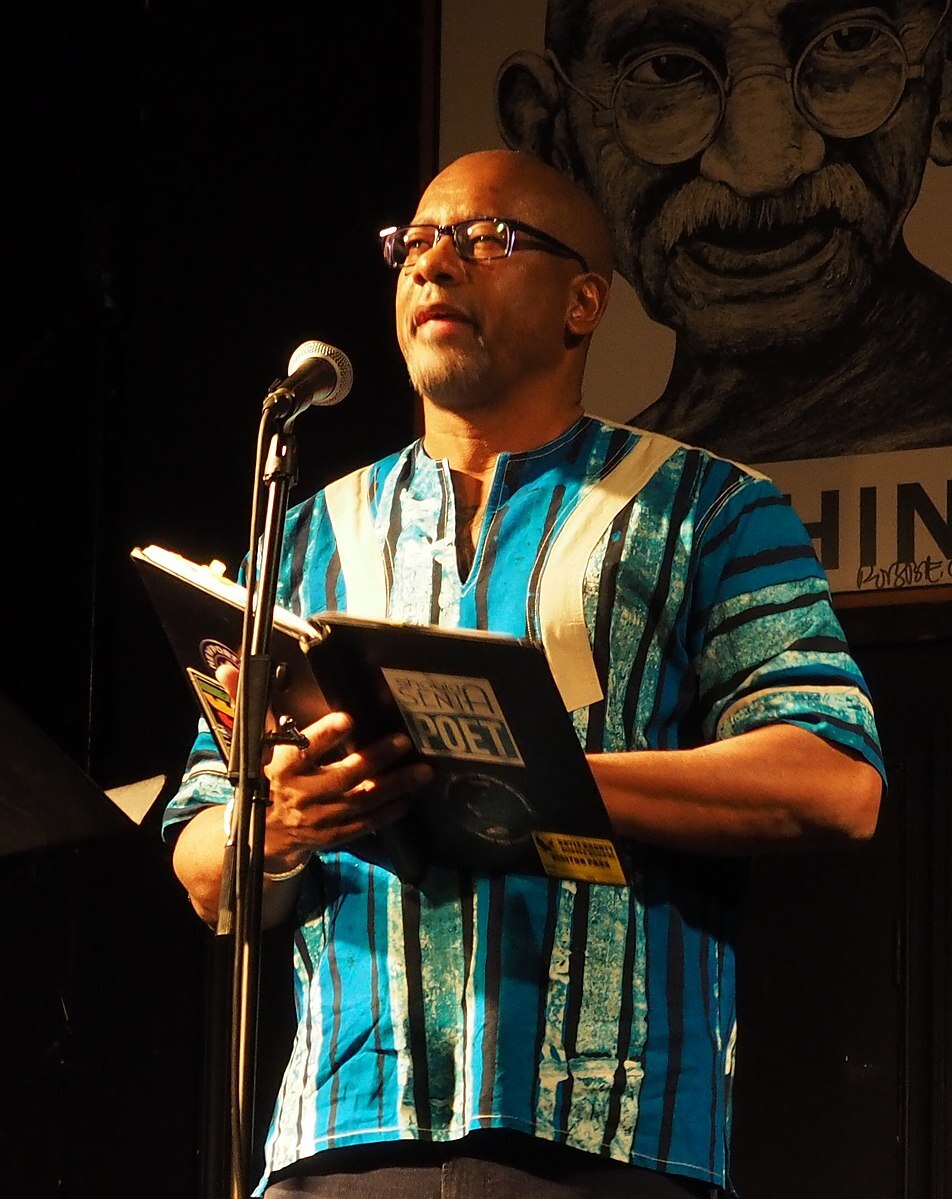
What is the traditional master narrative of Appalachian literature and scholarship? Higgs and Manning summarize it succinctly: "the mountaineer, [and] his struggles with himself, nature, and the outside world."12Robert J. Higgs and Ambrose Manning, Voices from the Hills: Selected Readings of Southern Appalachia (1975), xvii. While it is undeniably true that this story of the (white male) mountaineer has been important throughout the region (and is represented in this anthology), many other stories have existed as well, and we do not want to leave them out—to perpetuate what Edward Cabbell calls black "invisibility" in Appalachia, for example, or to relegate women to "walk-ons in the third act," as Barbara Ellen Smith characterizes the region's historiography, or to deny the experiences of LGBTQ Appalachians.13Edward J. Cabbell, "Black Invisibility and Racism in Appalachia: An Informal Survey," in Blacks in Appalachia, ed. William H. Turner and Edward J. Cabbell (1985); Barbara Ellen Smith, "Walk-Ons in the Third Act: The Role of Women in Appalachian Historiography," Journal of Appalachian Studies (1998); Jeff Mann, Loving Mountains, Loving Men (2005). Hence, diverse voices of gender, sexuality, ethnicity, and race speak throughout this anthology through authors such as Elias Boudinot, Frank X Walker, August Wilson, Dorothy Allison, Jeff Mann, and Blake Hausman.
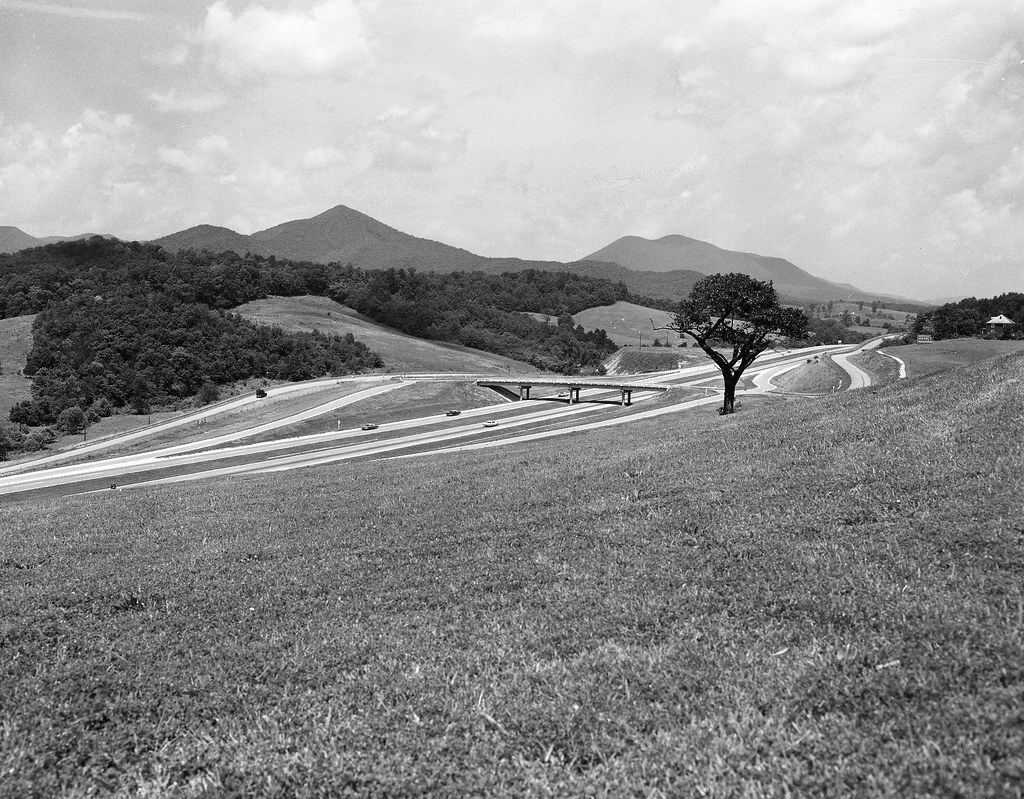
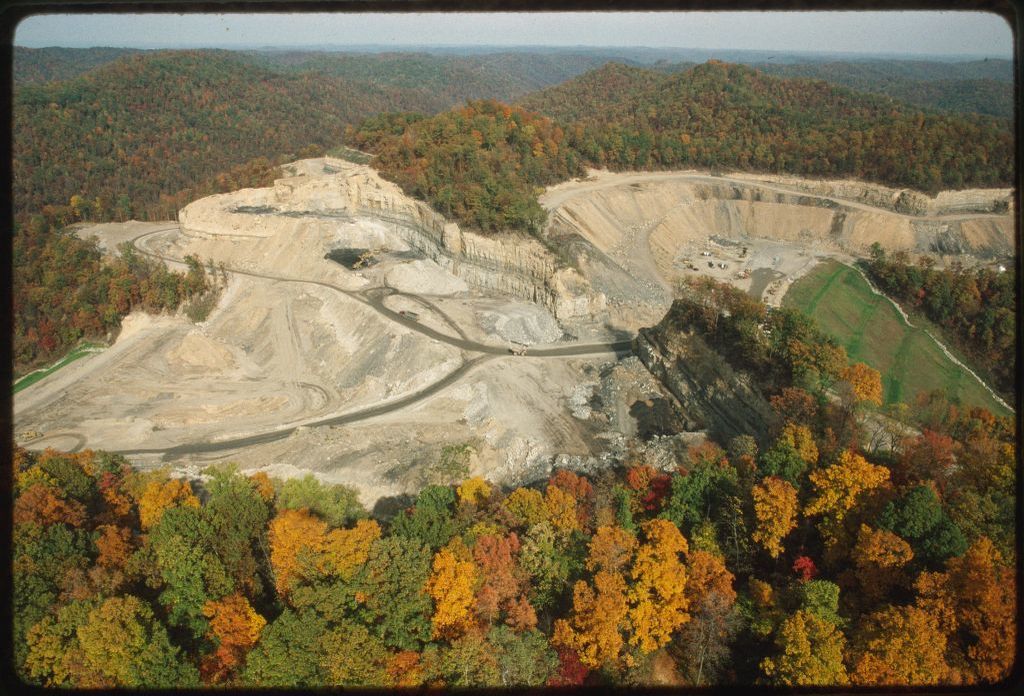
In addition to correcting the obvious omission of a multitude of voices from the traditional Appalachian master narrative, we wanted to avoid miring this anthology in what Theresa Lloyd calls "mama and biscuits literature"—texts that for good or ill stereotype Appalachia as a land of simple agrarian folklife. Not that we fail to represent regional folklore—those looking for it will be pleased to find Jack tales, traditional songs, snake lore, and a great deal more. But along with an important agrarian heritage, our region has long had an urban and suburban dimension. Art historian Betsy White, for example, has demonstrated the presence of a thriving fine arts tradition fully reflective of international trends in western Virginia and East Tennessee towns along the Great Road, a heavily traveled trade route running along the contemporary I-81 corridor from Pennsylvania to Southern Appalachia.14Betsy K. White, Great Road Style: The Decorative Arts Legacy of Southwest Virginia and Northeast Tennessee (2006). In 1858, (West) Virginia artist and author David Hunter Strother confirmed this blend of backwoods and urbane, noting that in East Tennessee one could find both "the prints of the deer-skin moccasin and the French kid slipper," or "the mud-chinked cabin of the pioneer" beside "the elegant villa from a design by Downing or Vaux."15Strother, "A Winter in the South, Fifth Paper," Harper's New Monthly Magazine (1858), 721. In the twentieth and twenty-first centuries, the region has felt the full effects of industrialization, modern transportation, consumerism, migration, the centralization of American agricultural production in agribusiness enterprises outside the region, suburbanization, the global connections of the internet, and the multiple genres of electronic media. These forces have virtually obliterated traditional agrarian Appalachia, although an interest in local foods in the region, part and parcel of a larger local foods movement in the United States, is fueling a return to home gardening and small-scale, specialized farming. This anthology includes not only the canonical texts that have constructed the idea of Appalachia as a rural, isolated folk society—such as work by Jesse Stuart and James Still—but also writings that challenge that stereotype by portraying the region as urban or suburban, and as fully engaged with the social, intellectual, economic, and political world beyond the mountains—as in texts by Thomas Wolfe, Lisa Alther, Jayne Anne Phillips, and many others.16Rudy Abramson and Jean Haskell, eds., The Encyclopedia of Appalachia (2006), which emphasized the region's urban as well as rural dimensions, pioneered this multi-tiered approach to Appalachian studies. We follow this lead.
One non-agrarian facet of the Appalachian experience that has been fully documented in its literature is the effects of the extractive and manufacturing industries, such as coal and textiles. This anthology tells that story through both conventional and more radical texts. Represented are genres and authors such as fiction by Rebecca Harding Davis, Thomas Bell, and Denise Giardina; poetry by Don West, Irene McKinney, and Ron Rash; nonfiction by Mary Harris "Mother" Jones and Harry Caudill; protest songs by Aunt Molly Jackson and Ella May Wiggins; and a strike narrative collected from "Bloody" Harlan County in the 1930s.
Another story that we felt was important to tell was that of the Appalachian environment. Nowhere is human stewardship of the environment more pressing than in the region's coalfields, where people and nature suffer the effects of mining and mountaintop removal, as articulated here by Ann Pancake, Robert Gipe, and Wendell Berry. Yet nowhere more than in our mountains is the possibility of an intimate human-nature relationship as obvious, as witnessed by the writing of Harvey Broome, Harry Middleton, Marilou Awiakta, and bell hooks, among others. Presenting a new vision of agrarianism, Barbara Kingsolver argues the importance of local farming for Appalachia's people and environment, as Sandor Katz and Shannon Hayes encourage readers to relearn homemaking and fermentation skills as a form of activism.
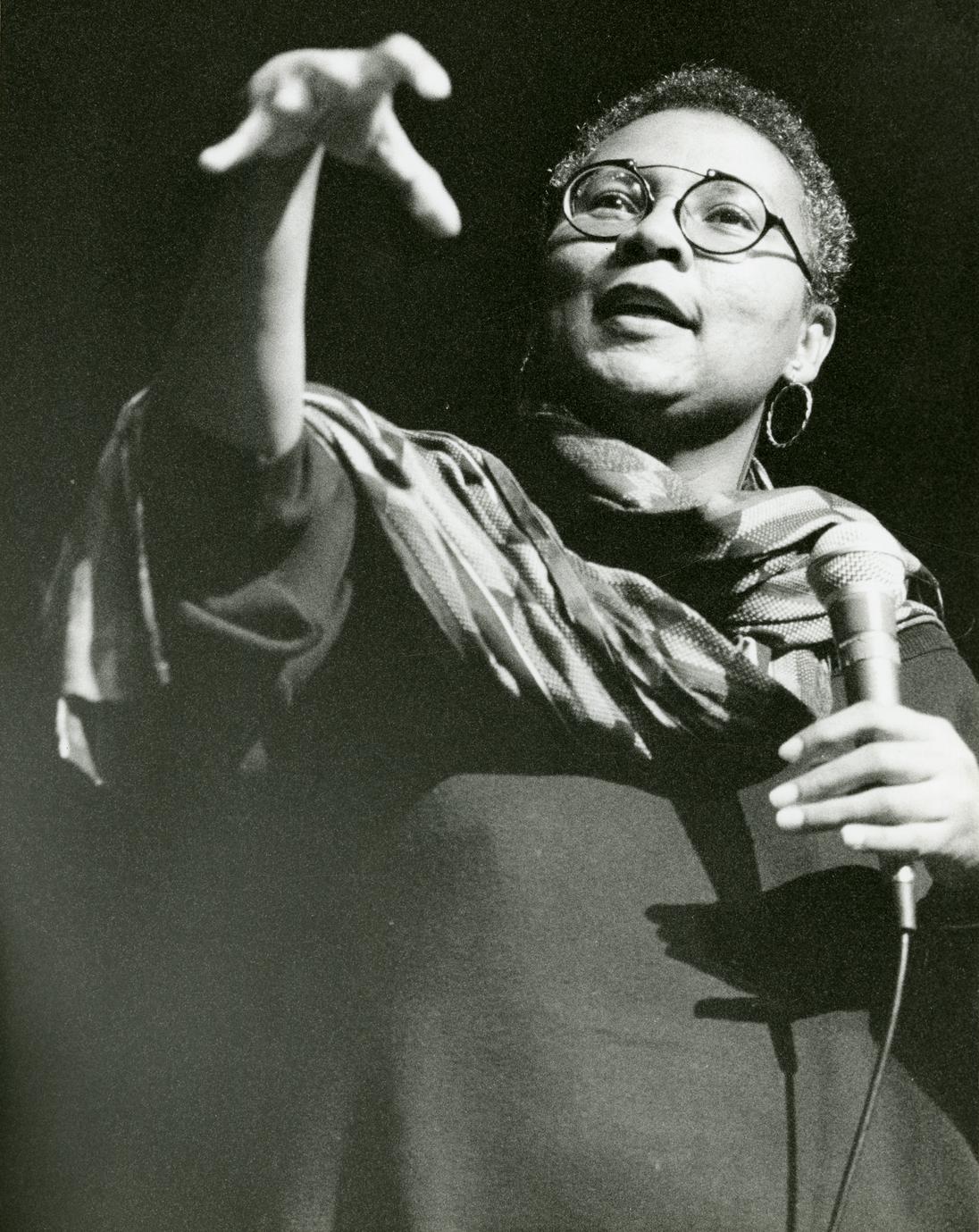
Having explored the stories of Appalachia that we wanted this anthology to tell, we still faced a vexatious problem: who would get to tell those stories? That is, just who is an Appalachian author? The simple answer would be writers born in the region who write about regional topics—for example, Mildred Haun, Harriette Arnow, Wilma Dykeman, Robert Morgan, Fred Chappell, Lee Smith, Harry Caudill, and Jo Carson. However, that definition would have forced us to leave out important writings about the region by authors not born here, such as William Bartram, George Washington Harris, Mary Noailles Murfree, Horace Kephart, and others. It could also have led us to omit significant authors born here but whose writings are not obviously regional, such as Charles Wright. Ultimately, we decided to follow the lead of the Appalachian Writers Association in defining Appalachian authors: writers who were born in the region, adopted the region, or wrote about a significant experience in the region.
Nonetheless, decisions about whom to include were hard to make. We wanted to satisfy expectations by including authors who have a following among the region's readers and scholars, but we also wanted to break new ground by introducing authors who had been marginalized or ignored in the discourse of Appalachian literature. Furthermore, especially since the 1970s, that era of literary outpouring that some scholars identify as the Appalachian Renaissance, so many outstanding authors have been publishing that we were forced to omit many worthy candidates. (Our publisher wisely insisted that we keep the book to one reasonably sized volume.) We know that readers will lament the absence of one favorite author or another, but we hope that our suggestion of the range of Appalachian literature is broad enough to accommodate the region's multitudinous stories. We rely on the excellent specialized anthologies of Appalachian writing to flesh out the stories for those readers who seek more.
Another way that we wanted to break new ground was by including authors from Northern Appalachia. We acknowledge that there are strong arguments for not doing so and for focusing instead on what John Alexander Williams calls "core" Appalachia—that is, the southern mountains as defined by Campbell and others.17John Alexander Williams, Appalachia: A History (2002), 13. Aside from the precedent set by previous anthologies and collections of scholarship, along with the southern-focused expectations of readers who encounter the word "Appalachia," it is in writings from the southern highlands that one finds the "shared themes and narrated stances, . . . [the] repeated and revised tropes" that, according to Henry Louis Gates, are the hallmark of a literary movement.18Henry Louis Gates Jr., The Signifying Monkey: A Theory of African-American Literary Criticism (1988), 127. But as Katherine Ledford notes, incorporating Northern Appalachian authors invites us to engage in comparative regional studies—for example, to examine the concept of the American frontier in the writings of New Yorker James Fenimore Cooper as well as in the southern account of Anne Newport Royall, or to study the effects of extractive industrial economies in Jason Miller's Pennsylvania and Harry Caudill's Kentucky.
Scholars of the South may wonder how we distinguish Appalachian literature from its non-montane cousins of the Upland South. Hugh Holman raised the question in his 1976 review of Voices from the Hills, and it still has relevance.19C. Hugh Holman, "Appalachian Literature? Two Views," Appalachian Journal (1976), 79. There are, for example, obvious similarities between the poor mountain whites of Murfree and Fox, and their counterparts in the work of lowland southern authors Caldwell and O'Connor, who are not included in this Appalachian anthology.20See, for example, Sylvia Jenkins Cook, From Tobacco Road to Route 66: The Southern Poor White in Fiction (1976). But southern literary studies have tended to give short shrift to Appalachian authors, as Fred Chappell and Rodger Cunningham have noted, making the need for Appalachian literary studies of continuing relevance.21Fred Chappell, "The Shape of Southern Literature to Come: An Interview with Will Hickson"; and Rodger Cunningham, "Writing on the Cusp: Double Alterity and Minority Discourse in Appalachia," in The Future of Southern Letters, ed. Jefferson Humphries and John Lowe (1996). Even more important is the obvious fact of a demonstrable, self-conscious literary tradition in the southern highlands.
As for the genres we have included, they range from the traditional belles-lettres—fiction, poetry, and drama—to nonfiction, diaries, interviews, song lyrics, and oral literature. We have a preference for complete units—for example, short stories over selections from novels, essays over portions of nonfiction books or, when we simply could not ignore an important book, whole chapters or excerpts that provide a sense of completeness.
The difficulties of acquiring copyright permissions, the bane of the anthologist, vexed us as well. We had to make some hard choices when permissions trails went cold or when manageable deals could not be struck with copyright holders. Some writing we wished to include was off-limits to us due to copyright restrictions increasingly imposed by large commercial publishing houses. Within these restrictions, we have tried to construct an anthology that covers much ground and does so in a representative manner. We acknowledge that this anthology is only the beginning of the Appalachian story, and we encourage readers and instructors to supplement this anthology with a complete long work such as a novel or a collection of short stories or poems for a more sustained experience with an author and her or his craft.
As our story of creating this anthology suggests, we have been concerned with simultaneously representing, complicating, and furthering the discourse on the Appalachian region and its cultures. The complexity that we have struggled to understand and represent here speaks to the undeniable value of regional studies. Particularly since the rise of critical theory in the 1990s, some scholars have brushed off regional studies as a type of soft scholarship, inferior to studies of race, class, gender, sexuality, or the environment. The richness represented in these pages reveals that this assumption is simply not true.
This, then, is the vision of Appalachia and its literature represented in our anthology. Mountain and valley, rural and urban, folkloric and postmodern, traditional and au courant, northern and southern, white people and people of color, straight and gay, insiders and outsiders, sinners and saints—the dualisms multiply, endlessly and excitingly, and maybe, on some level, are not dualistic at all.
About the Authors
Katherine Ledford is professor of Appalachian studies at Appalachian State University and coeditor of Back Talk from Appalachia: Confronting Stereotypes.
Theresa Lloyd is coeditor of the literature section of the Encyclopedia of Appalachia and professor emerita at East Tennessee State University.
]]>Queer [__] Revolution?
"The place in which I'll fit will not exist until I make it."
—James Baldwin
"The gay revolution began as a literary revolution." This is the first bold statement in Christopher Bram's 2012 cultural history Eminent Outlaws: The Gay Writers Who Changed America. From before the homophile movement of the 1950s to the post-Stonewall gay liberation movement to the virulent activism of ACT UP and other HIV/AIDS activist organizations to the normalcy wars of the 1990s and the fight for marriage equality, the modern LGBTQ+ rights movement has occurred in the streets and in the press, in the courtrooms and in the bedroom, at the intersections and with the hash tag, challenging and revolutionizing American life.
In this article, I suggest that the latest "revolutionary" movement in LGBTQ+ life is not one found in the streets or in published literary forms long familiar to us but in the digital square spaces through which queer intimacy is being reimagined and reenacted. Forms of activism and intimacy have shifted from the mediation of bound rectangles of printed books and pamphlets to the square profiles of gay geospatial social networking and dating applications. It is these square spaces that stand in contrast to the LGBTQ+ normalcy wars of the 1990s and the subsequent proliferation of narratives of assimilation and hetero- and homo-normative relationship structures. Dating and "hook-up" geospatial applications like Grindr, Scruff, Daddyhunt, Growlr, Jack'd, Hornet, Chappy, and others have radically altered the terrain of queer intimacy and precede similar "straight" applications like Tinder that used them as model. As Polly Vernon wrote in "Grindr: a New Sexual Revolution?" (2010): "Grindr is reconfiguring the landscape of human relationships."1Polly Vernon, "Grindr: a New Sexual Revolution?," The Guardian, July 3, 2010, http://www.guardian.co.uk/media/2010/jul/04/grindr-the-new-sexual-revolution/print. Some have described this reconfigured landscape as one of networked intimacy and liquid love, extending Zygmunt Bauman's ruminations into digital terrain.2See Lik Sam Chan, "Ambivalence in Networked Intimacy: Observations from Gay Men Using Mobile Dating Apps," New Media & Society 20, no. 7 (2017): 2566–2581; Mitchell Hobbs, Stephen Owen, and Livia Gerber, "Liquid Love?: Dating Apps, Sex, and the Digital Transformation of Intimacy," Journal of Sociology 53, no. 2 (2016): 271–284. My essay asks several questions to which there are no definitive answers: What do we do with this revolution in queer life? What do we do with this networked intimate landscape? What do we do with this thing called liquid elove?
While others have examined some of these applications' nefarious psychological or public health ripple effects, here I consider two of these applications, Grindr and Scruff, to discuss the vocabularies (a digital lexicon that includes "Masc4Masc," "Woof," and "Tap," among others) and rhetorical methods that queer men deploy to relate to one another anew in both generative and troubling ways. I follow Robert F. Reid-Pharr's assertion that all identities are "essentially permeable and thus impure," and "all names (black, gay, man) are ultimately monuments to the impossibility of ever fully distinguishing self from other."3Robert F. Reid-Pharr, Black Gay Man (New York: NYU Press, 2001), 12. Though impossible to fully distinguish or delineate, and only tenuously related to any authentic representation of self, the square profile spaces of digital dating apps provide stark relief (in literal, discrete boxes) between self and other even if the avatar-self often fulfills the estranged, "other" space in that formulation. In this way, although these apps have revolutionary capabilities and foster a myriad of positive affective encounters both virtual and actual, like earlier moments in queer activist intensity and homotextual production, we are again making code of ourselves in our relational affective structures through mediated digital games of masking, ghosting, haunting, catfishing, kittenfishing, benching, breadcrumbing, cushioning, firedooring, lockering, self-pornographying, among the many other terms in this perpetually expanding digital lexicon.
Finally, I consider lyrical responses to this new "square space" in LGBTQ+ dating practices, namely the poetry of Danez Smith, as a way to illustrate the merging of Bram's high "literary" queer revolutionary tradition with the ongoing "digital" revolution Vernon and others seek to understand. Hopefully, this merger pushes us to think more critically and expansively about the various manifestations of "revolutions" in queer intimacy across time and (real and virtual) terrain as filtered through language, data, "code," and the ever-present "Mask" of queer life.
Mask4Masc: A HomoText(ual) Micro-History
"So we are taking off our masks, are we, and keeping / our mouths shut, as if we'd been pierced by a glance!"
—Frank O'Hara, "Homosexuality" (1954)
A brief historical framing shapes how I think of the generative and troubling dimensions of digital square spaces in contemporary queer life. The figurative "Mask" permeates queer writing and thinking since the first American homotexts, a term I use here to describe explicitly gay/queer-centric publications.4While my conception is perhaps connotatively less complex, I take "homotexts" from a 1978 essay, "Homotextuality: A Proposal," by scholar Jacob Stockinger, who coined the term "homotextuality" to signify one way the then nascent field of gay and lesbian studies might bridge formalist criticism with thematic approaches. The term "homotextuality" itself has a robust history in transnational academic queer literary scholarship, including Robert K. Martin's "Gay Studies in the Victorian Novel" (Newsletter of the Victorian Studies Association of Western Canada 13, no. 1 (1987): 69–71) and Terry Goldie's Pink Snow: Homotextual Possibilities in Canadian Fiction (Peterborough, ON: Broadview Press, 2003). However, as more recent scholars like Catherine A. Davies have written, in the push for a field of homotextual criticism, Stockinger and others often reduced and conflated specific contexts, unique experiences, and cultural moments: the homotextual became the homotext, finite, concrete, fully knowable and not reflective of the spectrum and unknowability of human sexuality, real and imagined. As Davies writes, this model of "homotextuality" seems "to reduce all experiences of same-sex desire to a singular phenomenon" (32). Following Davies, my use of the terms "homotexts" and "homotextuality" herein is not meant to imply singularity or coherent continuity but intersectional moments where what is convergent or divergent might be observed. For me, these moments take place in the "homotexts": fictional, poetic, and nonfictional published works and the "texts" of square spaces. Like Davies, this essay focuses on the "intersections of these divergent lines of gay experience" (Davies 32, emphasis provided). See Jacob Stockinger, "Homotextuality: A Proposal," in The Gay Academic, ed. Louie Crew (Palm Springs, CA: Etc. Publications, 1978): 135–51 and Catherine A. Davies, Whitman's Queer Children: America's Homosexual Epics (New York: Continuum, 2012). In 1906, Edward Prime-Stevenson, writing as "Xavier Mayne," published privately in Italy Imre: A Memorandum, one of the first openly homosexual novels written by an American. Mayne's The Intersexes: A History of Similisexualism as a Problem in Social Life followed two years later, becoming the first study of homosexuality by an American author. Imre's narrative proceeds through parts with subtitles like "Masks" and "Masks and—A Face" and includes lines such as "The Mask—the eternal social mask for the homosexual!—worn before our nearest and dearest" and "I understood perfectly that a man must wear the Mask."5 Xavier Mayne, Imre: A Memorandum (Naples: The English Book-Press, 1906), 146, 111, https://babel.hathitrust.org/cgi/pt?id=mdp.39015019188047;view=1up;seq=7. Mayne's The Intersexes extends these ideas from the fictional to the nonfictional mode and further discusses the pre-U.S. homophile movement's imperative preoccupation with "the Mask":
To hide from his closest friends, from suspicion by the world! Hide it he must. Accounted a diseased human thing, an outcast from men, a beast . . . playing his part like a man . . . . Ever the Mask, the shuddering concealment, the anguish of hidden passion that burns his life away! . . . The Mask, ever the Mask! It becomes like the natural face of the wearer.6Xavier Mayne, The Intersexes: A History of Similisexualism as a Problem in Social Life (Privately Printed, 1908), 86, https://catalog.hathitrust.org/Record/002080887.
In Imre, Mayne writes of the "man-loving man"7Mayne, Imre, 111. as well as "the Friendship which is Love, the Love which is Friendship" in his exploration of Uranian love.8Mayne, Imre, 150. Largely deployed by early "homosexual" thinkers, writers, and advocates like Stevenson, uraninan was once a term used to understand homosexuality, gender variance, and describe same-sex affective bonds. While Imre has a mostly happy ending, the novel still views the "love between two men" as a "nameless horror," one necessitating the mediation of social "masks" to be enacted.9Mayne, Imre, 111.
While I cannot do justice to the richness of either Mayne's Imre or The Intersexes herein, "Xavier Mayne" kicked things off and marked the spot; he put his finger on a queer tension that continues into our present. Foundational to the homotextual literary-activist tradition in the United States is this tension between what Martinican poet-philosopher Édouard Glissant might call transparency and opacity, the desire for love between two men expressed publicly versus a private "anguish of hidden passion" symbolized by the Mask.10Glissant troubles the transparent/opaque binary through his "right to opacity," a right for what one scholar understands as "stubborn shadows." See Nicole Simek, "Stubborn Shadows," symplokē 23, no. 1-2 (2015): 363–373. Glissant states, "As far as I'm concerned, a person has a right to be opaque." See Manthia Diawara's film Un monde en relation (2009). Similarly, he writes in Poetics of Relation, "Opacities can coexist and converge, weaving fabrics. To understand this truly one must focus on the texture of the weave and not on the nature of its components" (190). See Édouard Glissant, Poetics of Relation, translated by Betsy Wing (Ann Arbor: University of Michigan Press, 1997). As Christian Sancto has written, this right need not be understood solely in the judicial-legal sense but as performative. See Sancto, "Visibility in Crisis: Configuring Transparency and Opacity in We Are Here's Political Activism," InVisible Culture 28 (2018). In many ways, this article pays attention to the intersecting performative textures of the mask woven in queer history as one that has persisted, necessarily so for many subjects even as political visibility has increased and expanded legal rights for LGBTQ+ US subjects. Such century's old attention to transparency and opacity in queer cultural production takes on new connotations in the Photoshop age in which it is now possible to modify, highlight, de-focalize what or who can be seen clearly and what or who might be made cloudy. We find this early thinking replicated from 1908 through the official Homophile years of activism beginning in the 1950s, beyond groups like the Gay Liberation Front and the Gay Activist Alliance in the 1970s, through Gay Men's Health Crisis and ACT UP and into our digital present. We can trace the replication of the masked figure through close attention to the genealogy of "coded" thought in queer American life.
From the masked jester of the Mattachine Society to a cover of the Daughters of Bilitis publication The Ladder, post–World War II homophile imagery extends the preoccupation with a necessary secrecy as protection in the era of the Lavender Scare. High literary writers such as Gore Vidal wrote in "code." (Vidal authored pulp fictions under the pseudonyms of Katherine Everard, Cameron Key, and Edgar Box). As Stephen S. Mills writes in his 2014 poem, "A History of the Unmarried," "Frank O'Hara loved Vincent in code: / (F) hearts (V)." This hyper-coded, anonymous and pseudonym-onous form of queer ontology and relationality is the received narrative of queer life at midcentury, when studies of sexual deviancy and the closet-structure were at their apex largely as a result of the social, economic, and indeed existential dangers of visibility.11Another figure of note in this genealogy is William Alexander Percy, who biographer Benjamin E. Wise calls a "sexual freethinker" and who negotiated his same-sex desire against the backdrop of the Mississippi Delta in the first half of twentieth century. Although best remembered for his memoir Lanterns on the Levee (1941), much of Percy's early poetry contains coded referents to Classic Greek tropes of man-man love and friendship in line with other Uranian writers. For an overview of Percy's life and work, see John Howard, "'Our Country'—Benjamin E. Wise's William Alexander Percy," Southern Spaces, April 17, 2012, https://southernspaces.ecdsdev.org/2012/our-country-benjamin-e-wises-william-alexander-percy.
Yet, the pages of homophile periodicals also espoused calls for decoding. The Mattachine Review's September 1958 issue featured the article "Discard the Mask," which in its very title gave the movement an ethical imperative. ONE Magazine featured similar stories, "Homosexuals Without Masks" (November 1958) and "The Tragedy of the Masks" (February 1959).12See Craig M. Loftin's work for deeper critical insight and overviews of much of this ONE Magazine material; Loftin, Masked Voices: Gay Men and Lesbians in Cold War America (Albany, NY: SUNY Press, 2012); Loftin, ed., Letters to ONE: Gay and Lesbian Voices from the 1950s and 1960s (Albany, NY: SUNY Press, 2012). In one of the era's most direct but lesser known homotextual calls for unmasking, Foster Gunnison, Jr., listed as vice-president of the Mattachine Society of Florida, wrote of "The Agony of the Mask" in a 1966 story published in short-lived D.C. homophile periodical The Homosexual Citizen: "Secrecy destroys self-identity . . . To attempt two lives in two worlds at once and still emerge whole would seem to be well beyond the adjustment capabilities of most persons . . . 'The trouble is that for the work's sake you must wear the mask.'"13Foster Gunnison, Jr., "The Agony of the Mask," The Homosexual Citizen 1, no. 4 (April 1966), Don Kelly Collection in Gay Literature and Culture, Cushing Memorial Library, Texas A&M University. In this latter quote within the quote, Gunnison is relating to his readers the feelings of a clergyman who wrote to him and, as Gunnison writes, "shall remain anonymous." Again, the imperative of secrecy and anonymity especially when confronted with the realities of economic survival.14For an overview of Gunnison's papers, see Charles McGraw, "Archives and Sources: The Papers of Foster Gunnison, Jr, and the Politics of Queer Preservation," History Workshop Journal, no. 65 (2008): 179–187.
Across the 1960s, such "anguish" and "agony" over the Mask gave way to a radical if not revolutionary gay and lesbian sensibility in line with the broader social climate and movements. For example: former Students for a Democratic Society member Carl Wittman's 1969 A Gay Manifesto calls for removing the mask of the Mattachine in order to perform a new show: "We've been playing an act for a long time, so we're consummate actors. Now we can begin to be, and it'll be a good show!"15Carl Wittman, "A Gay Manifesto," in We Are Everywhere: A Historical Sourcebook of Gay and Lesbian Politics, ed. Mark Blasius and Shane Phelan (New York: Routledge, 1997): 380–388. Martha Shelley's "Gay is Good," modeled after homophile activist Frank Kameny's earlier coining of that phrase, understood that "the worst part of being a homosexual is having to keep it secret."16"Martha Shelley" is the pseudonym for Martha Altman. For a discussion of her name evolution, see Eric Marcus, "Making Gay History: Martha Shelley," February 21, 2019, in Making Gay History, produced by Nahanni Rous, podcast, mp3 audio, 24:18, https://makinggayhistory.com/podcast/martha-shelley/. See Martha Shelley, "Gay is Good," in We Are Everywhere, ed. Mark Blasius and Shane Phelan, 392. Such activist homotexts responded to publications like Gunnison's "The Agony of the Mask" and still earlier works, such as Xavier Mayne's, in their coalition-building, consciousness-raising calls to visibility as a form of liberation.
And yet, the homotextual periodicals of the gay-Pride era reflect the continuation for masking and secrecy albeit in different forms; post-gay liberation, the inherited coding of queer sexuality and desire for intimate companionship simply evolved to include hanky codes, gay bar and bathhouse secret codes, and other gendered and sexualized forms of inclusion or exclusion. In a letter to the editor published in NEWSWEST, a Los Angeles newspaper for gay people, titled "Those 'Bitches' Need Love Too," San Francisco native Steve Edwards writes, "I only hope that someday we will no longer feel those fears which make us erect such masks, and we will be able to communicate openly and honestly with one another, and without judgment."17 Steve Edwards, "Those 'Bitches' Need Love Too," NEWSWEST, February 19, 1976, Don Kelly Collection in Gay Literature and Culture, Cushing Memorial Library, Texas A&M University. Many proponents of queer digital life celebrate the "open" and "honest" communication that digital applications afford in and for our present, a post-Stonewall line of thinking. The history of liberation is not so simple and the progress narrative too-readily susceptible to critique. The Mask persists, and our attention to both how and where—even if we cannot answer why—it persists is necessary for our coalitional cultural politics.
Few homophile periodicals showed people's faces and much of the material produced by queer writers at midcentury used pseudonyms, like Vidal, replicating Stevenson's "Xavier Mayne" of 1906/1908. While the "ecstasy" of the 1970s might be read as closet doors thrown open and masks removed, I am not alone in arguing that the mask began to take on other forms, wherein the Castro Clone stood in contrast to what Steve Edwards called the "bitchy queen," and the liberated queer world began its own pathway to homonormative standards and expectations. The rhetoric—such as the text-phrase Masc4Masc—and faceless torso profiles common to gay digital dating applications in our current moment are directly related to this history of masking, coding, and erasing certain kinds of sexual and gender identity and performance from mainline queer politics and cultural figurations.18See, for example, Roderick A. Ferguson, One-Dimensional Queer (Cambridge, UK: Polity, 2019). What do we do with the anguish, the agony, and the ecstasy of Masc4Masc in today's queer digital landscape? How is the call for discretion, as in "R U discreet?," any different from earlier terrains of queer intimacy in printed homotexts? Is "Gay is Good" just an appositive for "Grindr is Good," with both "Gay" and "Grindr" standing for gay white masculine-presenting cisgender man? Isn't the Mask still Masc?
This too-brief history gets us to the present, but what do we do in the current digital cruising utopia? My point in setting up this somewhat reductive rhetorical-historical genealogy is to show that before the HIV/AIDS crisis derailed much of this conversation around coding and secrecy in queer life due to its vital-viral and highly publics direct-action politics, many queer homotexts sought to articulate a way of being in the world that directly negotiated the nuances of the "Mask," both within and for queer life. Second, the advent of the digital age and its attendant concerns of mediated spaces of desire and intimate encounter are not by their nature new concerns. Sure, the technology has changed, and the "text" of earlier literary homotexts has been transposed into the text messages exchanged between digital app users. However, as much as this medium shift from text as "literary" to text as "digital"—from the denotative text to the highly visual and spatial domains of digital life—has expanded the definitional dimensions of what we mean when we say textual, rhetorical, spatial, and visual, many of the relational and affective dimensions of digital dating applications echo the coded concerns of earlier generations of queer revolutionaries. In this, LGBTQ+ culture might be more prepared for the hyper-mediated identities and split subjectivities inherent to digital life because of this received history coupled with the already mediated intersectional identities and self-definitions that many of us embody.19Indeed, there is something to be said for a comparative intersectional analysis of the ways in which the "mask" and "masking" have functioned in other historically marginalized and socio-politically oppressed groups using a not explicitly queer framing. For example, in the African diasporic tradition one could trace "masking" from Paul Lawrence Dunbar's "We Wear the Mask" (1896) to W.E.B. Du Bois's "double-consciousness" (1903) to Franz Fanon's Black Skin, White Masks (1952) to Maya Angelou's spoken-word "Mask," among many other entries in a rhetorical genealogy of black thought.


However, in grappling with the often white-cis-gay-male reductive square box of Grindr, we are reminded that masking is a diachronic process through which oppressed groups cope with power structures. Individual acts of masking and collective calls for inclusivity are not concerns unique to Grindr and other digital applications, and to be clear, one can choose to wear the Grindr mask for reasons that are not necessarily non-inclusive or normative. Real and virtual cruising is as complicated as the desire they follow, and I do not suggest here that any group is using Grindr the "right" way. Rather, we may learn from transnational queer-of-color critique how to grapple with those who wear such a Grindr mask and what that mask means for the queer revolutionary present. Much of José Quiroga's work on masks and codes in the Latin American context is essential. Quiroga informs us that, for some, "homosexuality" might be "understood as a constellation—lines of flight, encounters where the code allows for its sparks to fly off in all directions."20José Quiroga, Tropics of Desire: Interventions from Latino America (New York: NYU Press, 2000), 22. As one reviewer of José Esteban Muñoz's work writes, all "cruising is a way of moving with 'no specific destination'; the ultimate goal is 'to get lost [...] in webs of relationality and queer sociality.'"21See Sara Warner, "Cruising Utopia: The Then and There of Queer Futurity (review)," Modern Drama 54, no. 2 (2011): 255-257. Quoted in Joshua Chambers Letson, Tavia Nyong'o, and Ann Pellegrini, "Foreword: Before and After," Cruising Utopia: The Then and There of Queer Futurity (New York: NYU Press, 2019), xiii. Allowing codes to fly off in all directions with no specific destination in "webs" of queer sociality serves as one ethical imperative for how queer people might frame and reframe intimate digital square spaces to consistently resist the reductive hetero- and homonormative structures that exist across twenty-first-century actual-virtual-digital life. Furthermore, in understanding that the "the space of the [digital] mask goes beyond the certainties of assumed identities; it aims, on the contrary, to blur them," we may bring the decades-long norm-confronting work of the queer to bear on the realm of digital queer spaces and the persistent calls to trouble the mask structure for queer life.22Quiroga, 3.
But perhaps this rippling constellation of comments and concerns with masks and codes and inclusivity has gotten ahead of itself. All of this questioning must originate with one question: what are Grindr and Scruff (et al.)? For some, these are still subcultural phenomena, and so I want to take a moment to gloss them. Both Grindr (launched 2009) and Scruff (launched 2010) exist across a spectrum of Web 2.0 geospatial gay social networking applications and mobile platforms targeting narrow intimate markets. As of 2017, Grindr had over 27 million users in 192 countries; Scruff counted 12+ million users in 180 countries. As Andrew DJ Shield has written in "Grindr Culture: Intersectional and Socio-Sexual," with Grindr,
There are no algorithms to match users: instead, Grindr participants initiate contact with (or reject) each other based on one profile photo, about 50 words of text, some drop-down menus, and private chats. By centering on the [square] user photo, Grindr's interface hyper-valuates visual self-presentations, which shapes an individual's experiences on the platform, especially when the user's body provides visible cues about a racial or cultural minority position, gender non-conformity, or disability (150).23Andrew DJ Shield, "Grindr Culture: Intersectional and Socio-Sexual," Ephemera 18, no. 1 (2018): 149–161.
Scruff operates similarly wherein the visual—what is masked or unmasked, concealed or revealed—is, by format and medium, privileged. For both, the textual masks remain in the roughly "50 words of text" that users may select to (mis)represent themselves; both Grindr and Scruff offer a limited range of racial categories, but over time, each has expanded the lexicon of identity constructions, and Scruff, it should be noted, was the first to include space for trans-identification within the homonormative digital app "square-space" framing. Anyone of a certain age can download and use these applications, making them democratic and participatory, in line with Lev Manovich's five principles of new media, and, as spatial and participatory applications, they are in line with Janet Murray's four affordances of digital media.24See Lev Manovich, The Language of New Media (Cambridge, MA: MIT Press, 2001); Janet Murray, Inventing the Medium: Principles of Interaction Design as a Cultural Practice (Cambridge, MA: MIT Press, 2011). Neither Grindr nor Scruff explicitly markets itself as a "hook-up" application; both contain current features like Scruff's Ventures or Grindr's global "Explore" grid that encourage queer travel and exploration and position the platforms as thinking both with and beyond sex. However, most users download the apps for the purposes of cruising or "looking," representing what Tim Dean writes as the heavily mediated nature of gay men's sex lives. As such, the apps operate forcefully as virtual "hook-up" spaces within the queer cultural imagination.25Dean challenges scholars to understand "how erotic contact is mediated" and how we "constitute our objects of research via the languages we use to describe it [...] sex is mediated not only by vernacular but also by expert nomenclatures" (225). He writes, "Looking for UAI' [the scholarly acronym for 'unprotected anal intercourse'] is not something you see on Grindr or cruising websites" (225). See Tim Dean, "Mediated Intimacies: Raw Sex, Truvada, and the biopolitics of chemoprophylaxis," Sexualities, 18, no 1/2: 224–246. In this vein, serosorting (or serodiscrimination) is common on the apps, and many users disclose some degree of sexual health information and sexual practice preferences on their profiles.
Cruising for sexual contact, then, is central to the revolutionary "square spaces" of queer digital intimacy. Rusi Jaspal thinks of Grindr as spatial, as "a new space for sexual self-definition," (189) and Evangelos Tziallas writes of the liberating "self-pornification" the apps enact for many users. These "square spaces," then, are generative of new sexual possibility and definition even if that full possibility has not yet been and may never be attained. Jaspal writes,
Prior to the advent of the Internet, Gay and Bisexual Men used particular social and physical contexts to meet other men, such as saunas/bathhouses, and bars/clubs (Berubé 2003). In the 1970s, for example, many Gay and Bisexual Men employed subtle signifiers (e.g. ''hankie code'', colored handkerchiefs worn in back pockets) to communicate their sexual preferences (Snyder 1989). When the Internet became widely available in the 1990s, it revolutionized the ways in which Gay and Bisexual Men could connect with one another (188).
Like others before and since, Jaspal notes the transitional "revolutionized" landscape of queer intimacy afforded first by the Internet and later by smartphone apps. As John Walker writes, "LGBTQ people have long used digital spaces as a means of connecting with others like themselves . . . Scruff et al. are simply among the latest technological means through which we've learned how to make those connections."26John Walker, "Before Grindr and Scruff: A Brief Oral History of Gay Men Finding Each Other Online," Splinter News, July 19, 2016, https://splinternews.com/before-grindr-and-scruff-a-brief-oral-history-of-gay-m-1793860384. Furthermore, both how we make those digital-intimate connections and how we might use digital technology in the service of our scholarship is a topic queer historian John Howard explores in "Digital Oral History," where he writes, "Digital queer history" both "helps us expose illegitimate hierarchies of productively illicit practices, generating both challenges and possibilities for shattering normative structures of sexual pleasure and desirability" and encourages researchers "to ponder just how far we are willing to bend the rules, as we aggressively push unwieldy old institutions in revolutionary new directions."27John Howard, "Digital Oral History and the Limits of Gay Sex," in Queering the Countryside: New Frontiers in Rural Queer Studies, ed. Mary L. Gray, Colin R. Johnson, and Brian J. Gilley (New York: NYU Press, 2016), 329, 331.
Indeed, this "revolutionary" research is ongoing in many new digital directions as we seek to understand not only the history and development of queer intimacy and affective intensity across various spaces (saunas, bathhouses, bars, clubs, hanky codes, apps, etc.) but also how these newer "square spaces" are playing out in real lives in the here-and-now and how "square space" interactions and encounters might constitute academic evidence within our disciplinary methodologies. First, let me approach the question of Grindr/Scruff as "academic evidence." While many have studied this proliferation of queer dating and hook-up apps since 2007 in terms of the sociological, technological, psychological, or public health impacts of these apps, taking study into those "new directions," here I am more invested both in how queer culture understands them, uses them as means of communication and homotextual composition as well as forms of affective intimate encounter, both virtual and actual, and in their relationship to a long history of LGBTQ+ masking, coding, and inclusionary/exclusionary practices.28For excellent studies in some of these areas, see Rusi Jaspal, "Gay Men's Construction and Management of Identity on Grindr," Sexuality & Culture 21, no. 1 (2017): 187–204; Lik Sam Chan, "The Role of Gay Identity Confusion and Outness in Sex-Seeking on Mobile Dating Apps Among Men Who Have Sex with Men: A Conditional Process Analysis," Journal of Homosexuality 64, no. 5 (2017): 622–637; Evangelos Tziallas, "Gamified Eroticism: Gay Male 'Social Networking' Applications and Self-Pornography," Sexuality & Culture 19, no. 4 (2015): 759–775; Jack Turban, "We Need to Talk about How Grindr is Affecting Gay Men's Mental Health," Vox, April 4, 2018, https://www.vox.com/science-and-health/2018/4/4/17177058/grindr-gay-men-mental-health-psychiatrist. In terms of queer visual rhetoric, it is striking that the logo for Grindr is a mask, usually a black mask against a yellow background or a yellow mask against a black background. Scruff's logo is a bold "S" or its full name in silver against a black background. The niche target audience for each app is somewhat different: Scruff came into being for more mature, hirsute men and pogonophiles in direct contrast to the somewhat younger and smoother early users of Grindr. Such contrast across similar apps remains if often in less stark relief. The evidence attests: although digital applications may represent a certain form of revolution for queer life and a new kind of text for scholars of sexuality to study, the mask—in its textual, spatial, and visual dimensions—persists.
How then are these "square spaces" playing out in real lives in the here-and-now? As one example, as a graduate student I served as co-facilitator of a Queer Men's Discussion Group with an office of LGBT life for two years. During one session, my co-facilitator and I discussed Grindr and Scruff, and while the specifics of that conversation are confidential, the range of responses were vast: from validations of the democratic (even if anonymous) importance such spaces afforded to critiques of their utility for queer life, embodied experience, and issues with inclusivity. In 2016, Gay and Lesbian Review editor Richard Schneider commented on this range of use-value that we are still debating:
Cruising today is more likely to be carried out on smartphone apps like Grindr and Scruff [...] So rapid has been this shift to cyber cruising that its implications for GLBT identity and community have yet to be worked out [...] the cyber world and the classic GLBT world have one thing in common: the possibility of projecting an identity that's either authentic or disguised, out or closeted—or something in between.29Richard Schneider, Jr., "In Time for the Holidays: 'Cruising,'" Gay and Lesbian Review Worldwide 23, no. 6 (2016): 4.
"Identity that's either authentic or disguised, out or closeted—or something in between," again this cyclical tension from the origin of homotextual literary activism, like a spiraling vortex or the seemingly endless image of a Mac's rainbow wheel, returns to us in the digital age. Does one catfish, use other pictures as one's own or ghost, disappear once the allure of the code wears off? R U discreet enough? As we can see, the spaces may have changed, the media may be different, the vocabulary expanded, but the concepts and discourse remain. The ghosts of Xavier Mayne's foundational "Mask" in queer life echo in the ghosting and catfishing encounters mediated by the "filter bubbles" of modern queer digital dating technologies, where the homotext leaps from the printed page of novels and pamphlets to the applications on mobile devices. While this critical, historical, and conceptual framing could go deeper (and it is my hope that this article stimulates further academic and popular conversations), I want to close with a mention of one queer literary figure whose work negotiates the "revolutionary" square space.
The Swipe, the Tap, the Woof, Oh My!: Danez Smith and the Grind of Mediated Digital Desire
". . . everyone on the app says they hate the app but no one stops . . ."
—Danez Smith, "a note on the phone app that tells me how far i am from other men's mouths" (2017)
If Xavier Mayne gave us the evocation of the "Mask" in the wilderness years of pre-gay-rights America with Imre, if Frank O'Hara's poem "Homosexuality" evokes the lyrical (mis)understanding of the mask in 1950s America—"So we are taking off our masks, are we, and keeping / our mouths shut, as if we'd been pierced by a glance!" (1954)—if Mark Doty's 1995 poem "Homo Will Not Inherit" provides us with the landscape of "Downtown Anywhere and between the roil / of bathhouse steam [...] he said to me, I'm going to punish your mouth" of queer spatial intimacies amid post-Stonewall, post-AIDS, 1990s-normalcy-wars, perhaps it is Danez Smith's poetry that gives us both the agonies and the ecstasies of the Grindr mask in our digital age. Danez Smith: the latest queer-literary-activist revolutionary.
Smith's poetry evokes the simultaneously and somewhat paradoxically troubling and generative dimensions of gay digital dating social networks. Smith is a black, genderqueer, and HIV-positive poet and performer whose work often demonstrates how digital intimacy both reinforces and challenges the "essentially permeable and thus impure" nature of identity.30Reid-Pharr, 12. The structure of Smith's first collection (2014) evokes HTML code wherein each section inserts one word into the title [INSERT] BOY: first [INSERT] BOY becomes [black] boy then [papa's lil'] boy, [ruined] boy, [rent] boy, [lover] boy, [again] boy. In the poem "Craigslist Hook-Ups," the speaker recounts three hook-ups orchestrated through online personal ads where the language evokes the expanding lexicon of queer affective terminology: "forgive me father for I have called another man daddy"; "a sloppy chorus of sir yes, please & thank you."31Danez Smith, [INSERT] BOY (Portland, OR: Yesyes Books, 2014), 61, 62. Such language, developed within the queer vernacular and transposed onto Craigslist before becoming lyric evocation in Smith's poems, is potent in its virtual and actual allusions.
However, Smith's second collection Don't Call Us Dead (2017)—their most recent collection is the forthcoming Homie (2020)—directly references the "square spaces" of mobile gay social networking. Indeed the "phone app" of Smith's poem, "a note on the phone app that tells me how far i am from other men's mouths," is most assuredly Grindr. Sometimes through enjambment, Smith's poem juxtaposes the generative aspects of Grindr encounters, virtual and actual, with the troubling ones as in the opening line: "headless horsehung horsemen gallop to my gate / dressed in pictures stolen off Google."32Smith, Don't Call Us Dead (Minneapolis, MN: Graywolf Press, 2017), 32. The figure is "headless," a form of masking common on the apps, which makes him both a "horsehung" horseman, a desired object literally de-faced, and a fraud, "stolen off Google." Smith further evokes how Grindr both concretizes and undermines identity with lines like, "No Fats, No Fems, No Blacks, Sorry, Just a Preference :)" and the accompanying poem entitled "& even the black guy's profile reads sorry, no black guys" to whom Smith addresses the lines "if no one has told / you, you are beautiful & loveable & black & enough & so—you pretty you—am I."33 Smith, Don't Call Us Dead, 32–33. Identity squared-in, then challenged, and ultimately reinforced, sex acts orchestrated and denied, intimacy of various types: Smith's poetry evokes all of the messy complexity of queer digital life through spaces like Grindr, spaces that often reflect the homonormative, transphobic, racist, misogynistic spaces of everyday life. Beyond swipes and taps and woofs, Smith's poetry gives us the get-down-grind of mediated digital desire, what Legacy Russell calls "digital orgasm."34Legacy Russell, "Digital dualism and the glitch feminism manifesto," Cyborgology 10 (2012), http://thesocietypages.org/cyborgology/2012/12/10/digital-dualism-and-the-glitch-feminism-manifesto/. Smith's poetry sees potential (re)generation in what Foster Gunnison, Jr. earlier troubled: the "attempt" at "two lives in two worlds at once," the masks of the virtual and the actual, from which one might "still emerge whole." The attempt may fail, but for Smith there is something potent and beautiful in such failure: "…everyone on the app says they hate the app but no one stops…."35Smith, Don't Call Us Dead, 32. The desire, despite frustration, for more: connection, intimacy, the mediation of two subjects in two separate worlds, a search for some version of (e)love. As David B. Hobbs writes, Smith's poetry "comments on the world and at the same time bends language to hope for the possibility of another."36See David B. Hobbs, "Between the News and a Prayer," The Nation, November 15, 2017, https://www.thenation.com/article/danez-smith-between-the-news-and-a-prayer/. Arguably, this, too, is what the gay geospatial dating applications that Smith riffs off have the potential to do, a possibility to echo and extend the ethic of José Esteban Muñoz's Cruising Utopia: "We must dream and enact new and better pleasures, other ways of being in the world, and ultimately new worlds. Queerness is a longing that propels us onward."37 José Esteban Muñoz, Cruising Utopia: The Then and There of Queer Futurity (New York: NYU Press, 2009), 1.
Furthermore, I want to highlight that beyond references to Grindr and similar apps, digital referents permeate Smith's work. Smith's "elegy with pixels & cum," dedicated to late gay porn star Javier "Kid Chocolate" Bravo, illuminates the dehumanization and objectification of Bravo as well as the glorification, veneration, and immortalization of him afforded by digital life, where "men gather in front of screens to jerk & mourn," again the juxtaposition of liberating carnality and affective intensity.38Smith, Don't Call Us Dead, 48. "[E]legy" is followed by "litany with blood all over," which visually depicts the process of Smith's own seroconversion through digital manipulation: the palimpsestic word cloud of "my blood" and "his blood" becomes increasingly muddied as the separation between the two is impossible to discern, a pool of typography where words mask other words.39Ibid, 51–52. Far from the smartphone's mediation of desire between two autonomous subjects, what these apps reveal through Smith's imagination is a proliferation of desires; the word cloud of Smith's poetry where the digital separation between "him" and "me" becomes increasingly palimpsestic and opaque represents a deliberate blurring, an opacity of unknowingness and unintelligibility, that reflects and replicates the messy masking of the constellation that is desire.
What Danez Smith offers in their poetry is both the context of digital orgasm and an instructive tool, a guide of sorts, to queer digital life for their readers. Smith does this through poetry that reflects the digital form: lowercase lettering throughout, digitally rendered word clouds as poetic meditation, phrases of text struck-through in translucent moments of self-editing, even the separation of poetic sections via two backward slashes evokes the unavoidable presence of digital coding in Smith's lyrical ruminations. Smith's is both digital poetry, written within and for the revolution in queer intimacies and affective human landscapes of the Grindr age, and a lyrical extension of the masked-coded and inclusive coalitional concerns that have permeated homotexts across time in the American queer intimate literary landscape.
Grindr is "Glitch": Or Is the Mask Here to Stay?
"Culture was a way of talking and not talking, it was the code and it was also the mask" (26).
—José Quiroga
I have tried to provide the rhetorical-cultural-spatial-historical, and Smith gives us the lyrical, but perhaps there is more to say about the theoretical potential of Grindr and other apps. I want to end by thinking of Grindr as glitch, a slippery place full of radical cultural potential. In a 2015 article, trans-studies and feminist scholar Jenny Sundén discusses gender as a broken technology, one she thinks of as "accidental error" through the digital term "glitch."40Jenny Sundén, "On trans-, glitch, and gender as machinery of failure," First Monday 20, no. 4 (2015), https://firstmonday.org/ojs/index.php/fm/article/view/5895/4416. While I will not go into Sundén's use of glitch in terms of gender, glitch, etymologically from the Yiddish word glitsh meaning "slippery place," "forces us to pay attention to the materiality and fragility of new media."41Sundén. In this way, Grindr and Scruff are glitchy wherein the possible is sometimes materially attainable via the screen's mediation of fragile and imperfect connections. The proliferation of LGBTQ+ dating and hook-up digital applications clarify and cloud, reveal and conceal, seeking transparency and enacting opacity—a glitch between the virtual and the actual that represents the expansion of the possible as well as the continuation of a m/Mask, a posture once thought of as a "glitch" that was "fixed" via gay liberation and its attendant progressive narratives of closet deconstruction, increased queer visibility, and greater social acceptance.
The digital glitch is often liberating, generative, reductive, ridiculous, troubling: as Zadie Smith questions Facebook and new media gadgetry: "Doesn't it, suddenly, look a little bit ridiculous? Your life in this format?"42Zadie Smith, "Generation Why?," New York Times Review of Books, November 25, 2010, https://www.nybooks.com/articles/2010/11/25/generation-why/. Sure, square spaces are not enough; they're not fully YOU, whatever that you might actually signify; they are not revolutionary enough, not inclusive enough, echoing many of the masks and troubles of our current moment. But as the history of LGBTQ+ movements and the spatial terrain of intimate encounters attests, to quote James Baldwin, "The place in which I'll fit will not exist until I make it."43Baldwin quoted in Claudia Roth Pierpont, "Another Country," New Yorker, February 9, 2009, https://www.newyorker.com/magazine/2009/02/09/another-country. Or as Smith's contemporary Saeed Jones writes, "However many masks we invent and deploy, in the end, we cannot control what other people see when they look at us."44Saeed Jones, How We Fight for Our Lives: A Memoir (New York: Simon & Schuster, 2019), 106. Or, to give the last word to Danez Smith, "We do what we queers do—taking scraps and making an abundance."45Danez Smith, "Reimagining Ourselves in an Increasingly Queer World," New York Times, June 16, 2019, https://www.nytimes.com/2019/06/16/us/danez-smith-lgbtq-essex-hemphill.html. "Grindr is glitch": one slippery place wherein queers continue to make a world that fits them and their forms of loving. 
Acknowledgments
First, I would like to thank Don Kelly for his generosity, trailblazing, queer curation, and friendship. Much of the thinking in this piece originated during my tenure with the Don Kelly Research Collection Fellowship in Gay Literature and Culture at Cushing Memorial Library, Texas A&M University. Thanks to the Cushing Library and fellowship team, especially Rebecca Hankins, Michael Jackson, Krista May, Francesca Marini, Leslie Winter, and Jenny Reibenspies for their assistance and warmth during my time in Texas. Thanks as well to the students in my spring 2019 American Studies course, "Queer Intersections, American Outlaws," for helping to expand my thinking on these topics through our discussions. Finally, thanks to those Grindr and Scruff (et al.) users who continue to imagine and enact new possibilities for queer life.
About the Author
Eric Solomon earned his doctorate in English from Emory University and is a visiting assistant professor of English and American Studies at Oxford College, Emory University. His work is featured in Southern Spaces, south, Pop Matters, and Mississippi Quarterly.
]]>Women's Space, Queer Space: Communes, Landykes, and Queer Contact Zones in the Lesbian Feminist South
The middle-aged man sitting in the row in front of me shoved his wife's arm and pointed at two women. "See?!" he said, conspiratorially, derisively. I looked at my friend Cheryl and raised an eyebrow. Where did he think he was, anyway? The Southeastern Conference (SEC) Women's Basketball Tournament audience is filled with lesbians—butches, femmes, sports dykes, some distinguished by a modified mullet, others by their no-makeup, tennis shoes, and jeans uniform, but all united in their obsession with women's basketball.
Of course, the tournament audience includes others besides lesbians; like most queer spaces in the South, lesbians share the space with many other groups—retirees, parents and their tween daughters, and random diehard SEC fans who love their team or really hate their rivals. Yet the SEC Women's Basketball Tournament is a roving capital of the southern sisterhood, and it is anything but subtle, but if you ask the fathers and the busloads of white-haired retirees about all the lesbians they will look at you blankly, whether they noticed them or not.
This is because "the South" has always been an imagined community, based in wish fulfillment and aspiration, that depends upon deliberate unlooking. It excludes populations that, collectively, comprise a majority of the population. It excludes black southerners, who understandably have a more ambivalent relationship to the "sense of place" invested in their subordination. It excludes the many immigrant groups that have made the South their home over the generations—Chinese, Lebanese, Italians, and more recently, Indians, Vietnamese, Africans, Hispanics. It ignores queer southern communities in towns both small and large. In other words, the "sense of place" so beloved by traditional southern literary critics overlooks the actual people in that place.
This tendency to disavow the full complexity of diverse communities in the South has a long, shameful history. The Confederacy imagined a southern aristocracy based on honor and culture, obscuring a white supremacy dependent on stolen slave labor. Post-Reconstruction politics did more than rewrite the cause of the Civil War—it also remade the space of the South: Confederate memorial statues were erected, often in town squares or in prominent public locations, as Jim Crow laws limited the spaces and places African Americans could live, work, and recreate.1For more see, Caroline E. Janney, Burying the Dead but Not the Past: Ladies' Memorial Associations and the Lost Cause (Chapel Hill: University of North Carolina Press, 2008) and Micki McElya, Clinging to Mammy: The Faithful Slave in Twentieth-Century America (Cambridge, MA: Harvard University Press, 2007). The fact that these public Confederate monuments still dominate southern spaces, and that their removals provoke intense debate and outcry, suggests how effectively this southern space made inequity seem natural.
The ubiquitous notion of a static, conservative South has led to many unwarranted assumptions about LGBTQ communities and their incompatibility in the South. Gay liberation was framed as an urban phenomenon; gay people leave their inhospitable small towns and regions and build a critical mass in major cities like New York and San Francisco, where their visibility and numbers result in political clout and political influence. Greenwich Village in New York and the Castro in San Francisco were two models; pioneer Harvey Milk encouraged queers across the country to join him in paradise.
This metronormativity has been questioned in studies of rural and southern queer spaces like John Howard's Men Like That, Mary Gray's Out in the Country, and Scott Herring's Another Country. Howard's ground-breaking book challenged the linking of gay identity and urban life, insisting that this bias "at times has denied agency to rural folk, [and] has assumed that nonurban dwellers can't attach meanings to, can't find useful ways of framing, their nonconforming attractions and behaviors."2John Howard, Men Like That: A Southern Queer History (Chicago: University of Chicago Press, 1999), 14. He argues that "in Mississippi, spatial configurations—the unique characteristics of a rural landscape—forged distinct human interactions, movements, and sites," and that the urban model "incompletely and inadequately gets at the shape and scope of queer life."3Howard, Men Like That, 15. He suggests new models for understanding that queer life, decoupled from both identity and a fixed sense of place.
Scott Herring concurs. He provides a detailed overview of the growing scholarship on queer rural communities, concluding that "these artists and authors pay heed to the 'non-metropolitan' as a dynamic space of inquiry and sexual vitality. Complicating geophobic claims that ruralized spaces are always and only hotbeds of hostility, cultural and socioeconomic poverty, religious fundamentalism, homophobia, racism, urbanoia, and social conservatism, their works question knee-jerk assumptions that the 'rural' is a hate-filled space for queers as they archive the complex desires that contribute to any non-metropolitan identification."4Scott Herring, Another Country: Queer Anti-Urbanism (New York: New York University Press, 2010), 9. Herring's own work focuses on contemporary artistic portrayals of the rural queer in periodicals, photography, memoirs, and graphic novels.
This work on rural queerness is enhanced by feminist and queer geography, which has provided new paradigms to theorize how ideologies order and impede our understandings of space and how different configurations can remake that sense of space. Jack Geiseking explains that "space is not absolute or fixed in the Kantian sense but constantly produced in how it is all at once created, conceived, and lived."5Jen Jack Giesking, "A Queer Geographer's Life as an Introduction to Queer Theory, Space, and Time," in Queer Geographies: Beirut, Tijuana, Copenhagen, eds. Lasse Lau, Mirene Arsanios, Felipe Zuniga-Gonzalez, Mathia Kryger, and Omar Mismar (Roskilde, Denmark: Museet for Samtidskunst, 2014), 14. Our "natural" notions of space, in other words, are not innocent; instead, as the Women and Geography Study Group argues, "dominant senses of place reflect, in both their form and their content, the meanings given to places by the powerful."6Gillian Rose, Nicky Gregson, Jo Foord, et al., Introduction to Feminist Geographies: Explorations in Diversity and Difference, ed. Women and Geography Study Group (Essex, UK: Longman, 1997), 9. They continue, "A consequence of the way in which very specific senses of place are constructed through the particular images and values attached to them by the socially and culturally powerful, is that senses of place are often highly controversial. Other groups may challenge the senses of place produced by the powerful, and cultural geographers therefore argue that senses of place are often also sites of contestation."7Rose et al., Introduction to Feminist Geographies, 9. This focus on space as a site of contestation serves as a dominant focus of feminist and queer geography. "Space" isn't natural, and it isn't neutral.
Doreen Massey lays out the terms for understanding space beyond the fixed narrative of the powerful. She argues that space is heterogeneous, inhabited by diverse groups of people who often disagree about its functions and purpose. Multiple and relational, space is also open-ended and unfixed. As she explains,
What is special about place is not some romance of a pre-given collective identity or of the eternity of the hills. Rather, what is special about place is precisely that throwntogetherness, the unavoidable challenge of negotiating a here-and-now. . . . There can be no assumption of pre-given coherence, or of community or collective identity. . . . In sharp contrast to the view of place as settled and pre-given, with a coherence only to be disturbed by "external" forces, places as presented here in a sense necessitate invention; they pose a challenge. . . . They require that, in one way or another, we confront the challenge of the negotiation of multiplicity.8Doreen Massey, For Space (London: Sage Publications, 2005), 140–141.
Massey's insistence that there is no "pre-given coherence" to a space challenges a fundamental assumption about the fixity of the South and rejects the idea that there is some coherent essence of southernness. It constructs space that is always being created in the present moment, negotiating often contradictory perspectives.
Indeed, Massey's notion of "throwntogetherness" allows for radical reimaginations of space: "What I'm interested in is how we might imagine spaces for these times; how we might pursue an alternative imagination. What is needed, I think, is to uproot 'space' from that constellation of concepts in which it has so unquestioningly so often been embedded (stasis; closure; representation) and to settle it among another set of ideas (heterogeneity; relationality; coevalness . . . liveliness indeed) where it releases a more challenging political landscape."9Massey, For Space, 13. The idea of "alternative imagination" of space is a dominant theme in feminist and queer geography. Geiseking privileges the "action of queering: refusing the normative and upsetting privilege for more radical, just worlds, even those not yet imagined,"10Giesking, "A Queer Geographer's Life," 15. to "uproariously alter the everyday spatialities of heterosexuality."11Giesking, 15. These disruptions include interventions in "the built environment" and the "landscapes" we construct to represent "nature."
Though studies of this utopian "act of queering" tend to focus on contemporary, urban interventions, the act of queering was central to utopian reimaginations of rural space in early women's liberation. Creating autonomous women's space and queer space was a central focus of women's communes and the landyke movement, which had particular resonance in the archive of southern lesbian feminism.
Landykes, Communes, and Lesbian Idealization of the Rural
Early women's liberation was long engaged with challenging the patriarchal hierarchies of space, both public and private. Many early protests—the sit-in at Ladies Home Journal, for example, and the burning of undergarments at the Miss America pageant—were forms of performance art that sought to make visible the seemingly "natural" public spaces allowed to women. These demonstrations intended to smash the public/private distinction that had isolated women and made their concerns a personal failing rather than a structural injustice. The creation of temporary spaces of freedom within a larger heteropatriarchal society—like gay bars and women's music festivals—were another strategy to reconfigure space.
Some lesbian feminists opted for more permanent means of escape that involved experiments in living that were, fundamentally, experiments of spatiality. Greta Rensenbrink explains that "separatist communities emerged in urban areas, especially San Francisco and New York, and increasingly on rural land communes across the United States."12Greta Rensenbrink, "Parthenogenesis and Lesbian Separatism: Regenerating Women's Community through Virgin Birth in the United States in the 1970s and 1980s," Journal of the History of Sexuality 19, no. 2 (May 2010): 291. These separatist communities often functioned as "collectives" in urban areas; some of the most important manifestos of the early women's movement emerged from collectives, which formed and reformed with alacrity in the early 1970s. Women lived and worked in the same space, breaking down the notions of public and private, masculine and feminine. Collectives broke down hierarchies within private and public lives, as well. Members often rejected the distinction between intellectual labor and physical labor; in press collectives, for example, women both wrote articles, short stories, and poems and physically printed these pieces—sometimes on mimeograph machines and later on letterpresses they bought and taught themselves how to use. There was deep suspicion about "leaders" of these groups; decisions were collectively and democratically reached. Cooking, cleaning, home repair—all were burdens to be shared equally in the collective. Collective members tried to re-make space to construct new revolutionary models. They also tried to remake economic models. Frequently, only a few of the members of these collectives had "straight" jobs, which were used to support the entire community. Collectives experimented with different models for self-sufficiency to free themselves from the obligations of capitalist patriarchy. Very few women stayed in these collectives for long; manifestos often had more staying power than the intentional communities that produced them.
Some collective experiments sought physical separation from mainstream society. Research has shown the "the country was an 'ideal' or 'fantasy' place for lesbians to live,"13David Bell and Gill Valentine, "Introduction: Orientations," in Mapping Desire: Geographies of Sexualities, eds. David Bell and Gill Valentine (New York: Routledge, 1995), 8. because it seemed to allow for a reinvention of space from the ground up. Sine Anahita explains, "In the early 1970s, the landdyke movement was created when a radical branch of second-wave feminism converged with ideas from the hippie back-to-the-land and other social movements. . . . From the outset, landdykes articulated the connections between ecological and feminist principles. Early activists sought to create a network of land-based communities where ecofeminist principles could manifest in everyday acts to prefigure a lesbian feminist, nature-centered, postpatriarchal future."14Sine Anahita, "Nestled into Niches: Prefigurative Communities on Lesbian Land," Journal of Homosexuality 56, no. 6 (August/September 2009): 724. This geographical experiment allowed for more democratic and communal constructions of space to teach, inspire, provide refuge, and influence the larger culture with guerrilla-type actions. Rose Norman, Merril Mushroom, and Kate Ellison, editors of a special issue of Sinister Wisdom on the landyke movement in the South, explain that "landykes were creating something larger, beyond a couple or a family. They attempted to live out egalitarian and ecological principles, which they saw as the core of female culture. They attempted this within sometimes stark financial, cultural, and psychological limitations."15Rose Norman, Merril Mushroom, and Kate Ellison, "Notes for a Special Issue, Landykes of the South: Women's Land Groups and Lesbian Communities in the South," Sinister Wisdom 98 (Fall 2015): 8. While the landyke movement was national, the editors suggested that the South has always contained a large share of these experimental communities.16Norman et al., "Notes for a Special Issue," 5.
Such movements are controversial and have been denounced as essentialist, white-identified, privileged, and unrealistic, but participants portray them differently. Some are unapologetic in their insistence on a women-only space and cling to essentialist notions of women's innate difference and superiority, but others see the landyke movement as an essential part of their development that allowed for creative rethinking of what is possible in culture, politics, and living. Sarah Shanbaum explained: "We created a closed and separatist environment, and in that closed and separatist environment, we learned and we became strong, and then we broke that like an egg, and went out into the world, and did what it was we wanted to do."17Dee Mosbacher, dir., Radical Harmonies: Woodstock Meets Women's Liberation in a Film about a Movement that Exploded the Gender Barriers in Music (Wolfe Video, 2004). Seeing separatism as a necessary phase that led to a broader inclusiveness is common for participants, and it is a pattern that we see in the archive of southern lesbian feminism as well.
Women's space and women's land were essential for the utopian possibilities they fostered. Greta Rensenbrink argues that "separatists embraced prefigurative politics, seeking to live the future in the present and working to create communities and local cultures that anticipated a utopian dream."18Rensenbrink, "Parthenogenesis and Lesbian Separatism," 292. As one landyke participant explained in the documentary Lesbiana:
We were actively rethinking the world. Each time I walked out of the bar, I felt like I was crossing a zone from a fictional world—the life in the bar—into reality—life in the city. And that is how I developed this notion of reality versus fiction. Meaning that women's reality was perceived as fiction by men, and what we called reality, was in fact the accumulation of masculine subjectivity that has been working for centuries establishing laws, traditions, etc. And we called that "reality," but it was nothing more than the male version of reality carried through the centuries. During that time, I was writing two pages. On one page I was trying to figure out the male system, a horrible system, detrimental to women: patriarchy. I was trying to figure out its strategies and its tactics, and how it evolved and was persistent to this day. And on the other page, I was writing about desire, utopia, beauty, pleasure, and everything I was discovering with other women. This is how I stayed in touch with the reality of patriarchy and still I could take flight, into love, lust, sisterhood, and all the discoveries I was making at that time.19Myriam Fougère, dir., Lesbiana: A Parallel Revolution (Women Make Movies, 2012).
The creation of a utopian, liberated space, both actual and imagined, was a key part of early women's liberation. It is why the arts were so enmeshed with political activism; why "consciousness-raising" moved from physical gatherings to novels; why women's press collectives were seen as political activism. Physical and imaginative space were mutually interdependent, and a compelling imagined space might end up having more impact than a physical space.
Many writers in the southern lesbian feminist archive were invested in communes and collectives. Bertha Harris went with a group of lesbian friends (including anthropologist Esther Newton and her then-lover Louise Fishman, the painter) to an upstate New York property owned by Jill Johnston,20Esther Newton, Margaret Mead Made Me Gay: Person Essays, Public Ideas (Durham, NC: Duke University Press, 2000), 277n6. which served as a weekend getaway and part-time retreat that Harris would later memorialize in Lover. Blanche McCrary Boyd joined a commune in Vermont (not an exclusively lesbian commune, though she transforms it into one in Terminal Velocity); Rita Mae Brown was part of a women's collective, the Furies, in Washington, D.C., and when she eventually moved to Virginia (after the sale of Rubyfruit Jungle to Bantam Books) she didn't establish a commune, but she did buy land.
In Rebels, Rubyfruits, and Rhinestones, James T. Sears describes a seamless transition of southern queers from their small southern towns to New York City and back to intentional communities in the South—a fluid circulation that negated neither urban gay communities nor southern identities.21James T. Sears, Rebels, Rubyfruit, and Rhinestones: Queering Space in the Stonewall South (New Brunswick, NJ: Rutgers University Press, 2001). The Pagoda community in St. Augustine, Florida was one of the most famous,22For more information, see Lin Daniels, "Pagoda, Temple of Love: Practice Ground for the Matriarchy," 1977, http://kongress-matriarchatspolitik.ch/upload/Lin-Daniels.pdf. but many smaller ones thrived under the radar across the South. Dorothy Allison belonged to a women's collective in Tallahassee, Florida. Catherine Nicholson lived in a collective in Charlotte, North Carolina but was kicked out for her intergenerational romance with Harriet Desmoines; photographs of the Sinister Wisdom group, taken at Nicholson's house on Country Club Drive (with many of the women topless), suggest a faux commune had formed there. And Catherine Ennis, who was so cautious that she wouldn't do readings of her lesbian novels too close to her hometown, appeared in the Ponchatoula Times in the mid-1980s with her "artisans" collective; the photograph suggests a lesbian commune flying under the radar.23"Copper Fountains Bring Ponchatoula Artisans Fame," Ponchatoula Times, July 31, 1986, http://ptl.stparchive.com/pageimage.php?paper=PTL&year=1986&month=7&day=31&page =1&mode=F&base=PTL07311986P01&title=The%20Ponchatoula%20Times. In smaller communities this sort of caution wasn't uncommon. Other communes—usually those in urban centers or college towns in the South—were more open and combative, though often no more visible. The Atlanta Lesbian Feminist Alliance (ALFA), which operated for two decades in the largest urban center in the South and hosted a number of lesbian writers, including southern lesbian feminist writers, was largely unknown in Atlanta proper. The Feminary collective in Durham, North Carolina was well known within lesbian feminist circles but fairly anonymous inside the Research Triangle. More recent communes include one in Alabama and Camp Sister Spirit in Mississippi.24A 2009 New York Times article discusses the Alabama community—see Sarah Kershaw, "My Sister's Keeper," New York Times, January 30, 2009, http://www.nytimes.com/2009/02 /01/fashion/01womyn.html. For more on Camp Sister Spirit, see "Controversial Camp Sister Spirit Celebrates 10 Years," WLOX News, September 22, 2003, http://www.wlox.com/story/1451559/controversial-camp-sister-spirit-celebrates-10-years/.
Despite their many differences in locations, visibility, and intentions, all these communes and collectives served an important function in the archive of southern lesbian feminism. Southern lesbian feminists were deeply invested in the spaces and places of the South. Whether they stayed in the South or fled to New York or San Francisco, they engaged imaginatively and combatively in the remaking of southern place to create a South they did not have to leave. Southern lesbian feminists—white, Latina, and African American—reconsidered their own "sense of place" in regard to their sexual identities and regional inheritance.
Southern lesbian feminist writers reinvent southern space as an imagined kingdom of racial impurities, sexual perversity, and political radicalism. In their imaginary sites of southern space, they include utopian imaginings, communes and collectives, and queer contact zones within the larger communities.
About the Author
Jaime Harker is professor of English and the director of the Sarah Isom Center for Women and Gender Studies at the University of Mississippi. Her research centers on popular American women writers of the interwar period, Cold War gay literature, and women's liberation and gay liberation literature. Prior to writing the book from which this essay is excerpted, she has written two other monographs: America the Middlebrow: Women's Novels, Progressivism, and Middlebrow Authorship Between the Wars (Amherst: University of Massachusetts Press, 2007) and Middlebrow Queer: Christopher Isherwood in America (Minneapolis: University of Minnesota Press, 2013).
]]>The Great South
From 1873–74, towards the end of Reconstruction, journalist Edward King travelled the former Confederacy attempting to unpack the meaning of "the Great South" (1875) for largely northern readers of Scribner's magazine.1See King, "This book is the record of an extensive tour of observation through the States of the South and South-west during the whole of 1873, and the Spring and Summer of 1874" (i). Along with Scribner's publishers and illustrator J. Wells Champney, King aimed to provide "the reading public a truthful picture of life in a section" recovering from the ravages of war (i). King divided his documentary travel narrative into serialized segments largely along state and town lines.2See King's subtitle: "A Record of Journeys in Louisiana, Texas, the Indian Territory, Missouri, Arkansas, Mississippi, Alabama, Georgia, Florida, South Carolina, North Carolina, Kentucky, Tennessee, Virginia, West Virginia, and Maryland." King's empathetic analysis brought to light many of the problems (political, racial, economic) afflicting the still-occupied former Confederacy; "The South can never be cast in the same mould as the North," he wrote (793). One had to experience it to understand it. King's work reified and reinforced conceptions of how the idea of the South functioned in the American imaginary of that time: an exotic "other" land to be penetrated, explored, known, purposed.3See Jennifer Greeson, Our South: Geographic Fantasy and the Rise of National Literature (Cambridge, MA: Harvard University Press, 2010). Nearly 150 years later, despite numerous changes and persistent discussions of the demise of distinctly southern ways of being and doing, scholars and popularizers continue to debate and deploy variations of King's Great "Southern question" (794).
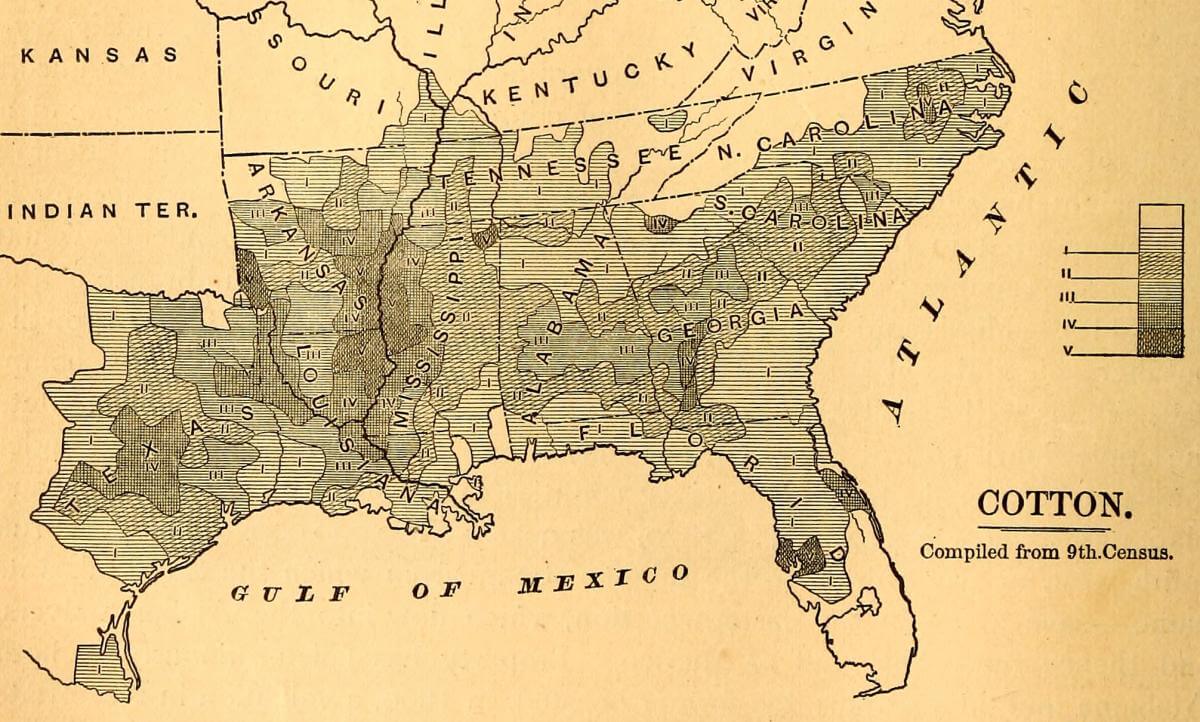
In different ways, both John Wharton Lowe's Calypso Magnolia and Joshua Jelly-Schapiro's Island People descend from King's documentary travel memoir. While Lowe's Calypso Magnolia is written in an academic idiom, he extends The Great South to a larger Circum-Caribbean geography, proposing a movement across and not simply within. In contrast, Jelly-Schapiro's Island People draws from the well of Caribbean thinkers and documentarians in enacting theories of place through the practice of experience. Lowe travels imaginatively through literary texts. Jelly-Schapiro travels literally to examine histories and cultures of the islands he visits. However, like King, both ask readers big, overarching questions—what and where is the Great (circum)Caribbean?—and, more importantly, does it matter?
"Hyphenating Waters": Calypso Magnolia and the circumCaribbean
Lowe approaches these questions through a diligent analysis of books spanning the Mexican-American War (1846–1848) to the more recent Cuban American writing of the 1980s–90s. He invests substantial energy in altering the grand, exceptionalist narrative of southern literary studies, which goes (reductively) something like this: for decades after the Civil War, the South was a "Sahara of the Bozart," devoid of anything resembling "high" culture, until the arrival of native (white) sons such as William Faulkner4"The emergence of William Faulkner as the centerpiece of narrowly focused notions of Southern identity seemed to crystallize the inward-looking aspect of the discipline" (5). and the Nashville Agrarians, who almost single-handedly were responsible for a cultural Renaissance that proved "the South" to be a place of great, autochthonously conceived and produced, art. Like much other recent scholarship, including Candace Waid's excerpt in Southern Spaces which challenges the idea of the white exceptionalist Southern Renaissance, Calypso Magnolia seeks to rethink the South and southern literary history through specific attention to movement and migration across geographic and imaginary borderlands, and against any essentialist, bounded notion of "the South," southern racial demographics, or "southern culture." Lowe aims to "cross artificial boundaries," "to unlock old geographical and cultural restrictions," to "help us see ourselves anew" (ix, xi). Lowe invites us, as readers and scholars, to "reconfigure the South and the Caribbean" (11). These are large tasks that Calypso Magnolia sets and achieves to varying degrees.
Lowe's work enters existing scholarly conversations in what some have called the "New Southern Studies."5In a June 2001 special issue of American Literature, Houston A. Baker, Jr. and Dana D. Nelson coined the phrase "new Southern Studies" as an "emerging collective already producing a robust body of work" in rethinking southern culture (231). Baker and Nelson cite Patricia Yaeger's Dirt and Desire (2000) as one of these works. Baker's Turning South Again (2001) represents his own venture at this scholarship. In responding to the article which formed the basis of Lowe's book-length study, Kimberly Nichele Brown firmly places "Calypso Magnolia" within this scholarly trend: "the South" becomes "unmoored from its local or provincial connotations" and "finds its rightful place within transnational discourses" (82). Like others before him, Lowe uses an aquatic metaphor, "crosscurrents," in his scholarly act of drawing connections between "the South" as traditionally conceived and the broader circumCaribbean.
Lowe models his frame—"circumCaribbean"—after the "circum-Atlantic" work of Paul Gilroy and Joseph Roach, among others.6Lowe cites Glissant, Foucault, Bhabha, and Brent Staples as further influences. See Paul Gilroy, The Black Atlantic: Modernity and Double-Consciousness (Cambridge, MA: Harvard University Press, 1995); Joseph Roach, Cities of the Dead (New York: Columbia University Press, 1996). One can see Lowe approaching the term "circumCaribbean" in his earlier article on these subjects; in writing of Roach's "path-breaking" work, Lowe praises him for adumbrating "a culture of performance that circles around the Caribbean rim" (71). See Lowe, "'Calypso Magnolia': The Caribbean Side of the South," South Central Review 22, no. 1, 54–80. Spatially, writes Lowe, the circumCaribbean "embraces the coastal Gulf and the Caribbean, as well as the islands that dot the seas and the western Atlantic" (xi). Lowe moves around and within, creating a geography that is boundary crossing and somewhat nebulous by definition and limitation. In such a vast space, what is the rationale for the foci of individual chapters? Admitting the difficulty of language barriers and distinctions, Lowe opens the conversation to other scholars with greater proficiency in the non-English speaking locales of this circumCaribbean (11).
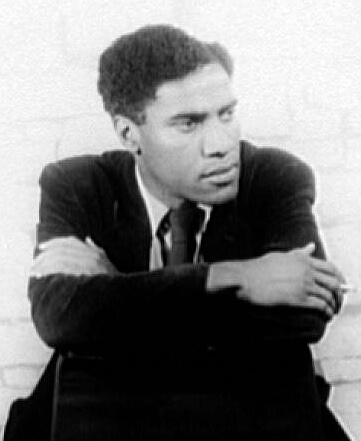
He begins with the Mexican-American War via southern writers who wrote about it, William C. Falkner (great-grandfather of that Faulkner), Arthur Manigault, and Raphael Semmes. Next, he presents two enigmatic figures of the nineteenth century—Lucy Holcombe Pickens and Martin Delaney—as writers who "saw the affinities of the coastal South with the Caribbean lands and had their characters crisscross Gulf waters" to and from Cuba (60). For Lowe, Pickens and Delaney were writers of the Caribbean imaginary who saw, from different worldviews, equal benefits in this crisscross movement. Calypso Magnolia then follows the seismic shift of the Haitian Revolution in subsequent literature. Lowe centralizes the work of Floridians Zora Neale Hurston and James Weldon Johnson and Tennessean Madison Smartt Bell, but he is careful to include non-US southern writers such as Victor Séjour, C. L. R. James, and Alejo Carpentier. Lowe then turns to the travel writing of northerner Constance Fenimore Woolson and the peripatetic Lafcadio Hearn, who "limned a new sense of the circumCaribbean" (18). His chapters five and six offer comparative readings of contemporaneous authors: Zora Neale Hurston through the prism of Claude McKay, and Richard Wright through George Lamming. Calypso Magnolia closes with the experience of Cuban American writers in south Florida largely in the final decades of the twentieth century.
Lowe is exhaustive and syncretic, weaving disparate strands across multiple locales from multiple perspectives. He is a close reader from the outset, and his copious plot summaries serve as helpful entrances into unfamiliar texts.
As necessary and vital as Lowe's molecular moves are to thinking anew about "southern" literature and scholarship, the overarching narrative still favors a certain way of perceiving. At the beginning of this project, before Lowe coined circumCaribbean and was talking only about the "Caribbean Side of the South," he aimed "to rupture the artificial boundaries of region and nation to reach out to the Caribbean" ("Calypso Magnolia," 60). Why must the US South "reach out"? Why must the "South" have a "Caribbean Side"? What if the Caribbean has no desire to be reached out to? What if there's no South to reach out? What if the gaze was reversed? Arguably, Lowe's impulse teeters on making the Caribbean an exotic "side-chick" to the central story. Why centralize Hurston and Johnson and Smartt Bell in a discussion of the Haitian Revolution? Why read Wright through the prism of Lamming and not complicate this impulse more thoroughly?
Lowe aims "to pursue narrative as it cuts across maps that create artificial lines around peoples and cultures" (7). Why not, then, make more radical departures in authorial choices and texts? For example, why not read Reinaldo Arenas's pre-exile La Vieja Rosa/Old Rosa (1980) as a "southern" text clearly speaking back to Faulkner's Absalom, Absalom! from a distinctly Cuban-to-US South direction?7Lowe broached this type of critical move at moments. In his final chapter, he posits a reading of Cristina García's The Agüero Sisters alongside Faulkner's Absalom, Absalom!. However, the aims of Calypso Magnolia seem to be more syncretic and surveying (317). As Kimberly Nichele Brown writes, "What would it mean to southern literary studies to cast Faulkner not just as a southern writer, but as a Caribbean one?" (86). How would such a reversal in perspective "cut across" more disruptively and make us rethink cultural hegemony more deeply? Such questions persist in a work that could justify its organizational logic more forcefully in conjunction with its larger aims. The "currents" of the Caribbean, after all, flow in multiple directions.
Additionally, Lowe writes, "I mean to suggest through the term 'Calypso Magnolia'" a "kind of cultural overlapping" (67). Overlapping seems to imply a one-directional filter that places something "new and fresh" atop a foundational norm, simultaneously rethinking and reifying it. Consider what Lowe labels "the overarching pattern of [his] book":
the movement of Southerners both physically and imaginatively, out of the constructed boundaries of the Southern United States into the wider world of the circumCaribbean, a process that unsettled notions of exceptionalism and nationalism alike, while simultaneously, and paradoxically, creating a vision of a new Southern empire, which would conjoin slave-owning states with the plantations and territories of the Caribbean, Central America, and beyond (22).
Aside from political and economic implications, what are we to make of the imperial cultural ramifications evident in this statement of the larger "pattern" of Calypso Magnolia? Throughout, Lowe brilliantly elucidates what "Southern" writers gain from such a physical and/or imaginative movement. What do those writers or thinkers "beyond" gain from this movement? The book lays "out the myriad ways the 'South of the South' has affected the inhabitants of the U.S. South," and attempts gestures in the opposite direction (1). However, the whole remains too linear and one-directional. Calypso Magnolia could benefit from a more circular, messier approach.
A weightier "Introduction" might have offered a firmer sense of what Lowe means by "crosscurrents" as an organizing principle. This is a substantial missed opportunity. Current is a term of physical movement. In more directly defining "crosscurrents," Lowe might have pulled together his circumCaribbean frame with other critical movements and interventions. As is, Calypso Magnolia leaves us with currents as an aquatic, uniting metaphor:8As Brown writes in her review of Lowe's earlier "Calypso Magnolia," "I can see many benefits of using the sea… to find points of connection between the South and the Caribbean" (83). where all is "tied… together across and upon the currents of the great sea" (19).
Lowe asks readers to cross those currents via his case studies. Calypso Magnolia's final and most exciting chapter, "Southern Aijaco: Miami and the Generation of Cuban American Writing," addresses crossings as they impact identity, pondering what it might mean to feel "crossed" or hyphenated in southern-Caribbean-ness. Spatially, Florida seems the perfect confined locale for Lowe's larger study: not quite "southern," not quite "Caribbean," but somehow a cross of both. He considers the work of Cuban-Americans of the "'one-and-a-half' generation," such as Gustavo Pérez Firmat's Life on the Hyphen and Next Year in Cuba, Cristina García's The Agüero Sisters, Virgil Suarez's Going Under, and Roberto Fernández's Holy Radishes! (293). Lowe's readings of Cuban American fiction and memoir, often "in and on the liminal space of the hyphenating waters between Cuba and Florida," are some of the most original and engaging in Calypso Magnolia (332). In reading lives on the hyphen, Lowe opens the door for future studies of hybridity modeled after his circumCaribbean framing. Despite my concerns, Lowe's writing is careful and specific, and always exemplary. As it seeks to shift the kinds of questions we ask, Calypso Magnolia's "crosscurrents" will help readers think beyond and across hyphenating waters.
"So Many One Night Stands": Island People and Island Hopping
In Calypso Magnolia's chapter on Woolson and Hearn, Lowe mentions Edward King's The Great South as making "extravagant claims as to the novelty of its 'discoveries,' which were achieved through 'penetration' and 'investigation'" (147). The Great South helped a nascent American empire "train the eye southward" as testing ground for its global ambitions and depicted in its illustrations stereotypes of African Americans and poor whites (147, 167). Unlike Lowe, Joshua Jelly-Schapiro's Island People: The Caribbean and the World never mentions The Great South. Similarly, many of the figures discussed by Lowe are not mentioned in Jelly-Schapiro's travel narrative. There are two small exceptions. While Lowe devotes half a chapter to Lafcadio Hearn, Jelly-Schapiro casually mentions a parking garage in Fort-de-France named in Hearn's honor; while Lowe seems to primarily read George Lamming only in relation to Richard Wright, Jelly-Schapiro reads Lamming directly in relation to Barbados, casually nodding to Wright in describing Lamming as a "native son" (341, 287). Otherwise, one should not approach a comparison of Calypso Magnolia and Island People via the figures they mention and/or study but the ideas and questions they elicit.9Other than a passing reference to Faulkner's Mississippi, the only traditionally defined "southern" writer to appear in Island People is Georgian Flannery O'Conner, whose relationship to depictions of race is mentioned in reference to Jean Rhys (12, 367). For US readers, Jelly-Schapiro's Island People again trains "the eye southward," to the "South of the South." However, unlike The Great South, Jelly-Schapiro does not present the Caribbean as a place of discovery, penetration, or investigation. Island People is an experiential travel narrative in which orientalism and exoticism are mostly resisted and the Caribbean is firmly centered.
What is Jelly-Schapiro's idea of the (circum)Caribbean? And why does it matter in/to the "World" of his subtitle?
While Edward King is understandably absent in Island People, another titan of travel writing hovers over many of its pages. Patrick Leigh Fermor's The Traveller's Tree: A Journey through the Caribbean Islands (1950) seems Island People's singularly most direct antecedent. Both are "pitched neither strictly at scholars nor at holiday makers" but at a general readership (Island People 11). Jelly-Schapiro returns to The Traveller's Tree throughout as he narrates his travels sometimes in relation to Fermor's own 1940s-era perceptions; it comes as little surprise to learn that Jelly-Schapiro wrote a new introduction to the 2011 reissue of Fermor's classic.10Joshua Jelly-Schapiro, "Introduction," in The Traveller's Tree: A Journey through the Caribbean Islands (New York: New York Review of Books, 1950, 2011), ix–x. The genealogical link is apparent. Like Fermor, Jelly-Schapiro is, among many other things, a travel writer. Like Fermor, Jelly-Schapiro comes from elsewhere.
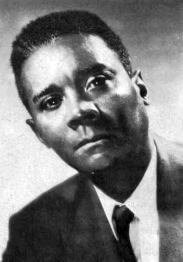
Fermor is not the most important figure looming over Island People. As a Caribbeanist thinker, Jelly-Schapiro is influenced largely by C. L. R. James. In fact, Island People begins and ends with James and feels like an epic homage to him: "But the Caribbean, James argued, was unique" (5); "I had… adopted C. L. R. James as a kind of intellectual hero and style icon alike" (401). For Jelly-Schapiro, James was "his first big intellectual crush," and it is easy to see James's influence on Island People (401). In James, Jelly-Schapiro finds a great syncretic thinker who brought together disparate strands of philosophy, culture, and history into a coherent narrative in which the Caribbean was central (not marginal) to "the larger telos" of modernity, capitalism, and democracy (3). Island People, in its structure and vastness, also aims to be a syncretic work mapping and describing the central importance of the Caribbean in the world.
Unlike Lowe, Jelly-Schapiro is not a literary critic but a geographer, and in large part, Island People reads as a much more "centered" and "bounded" investigation. Like Calypso Magnolia's "circumCaribbean-South," Island People considers its subject, "the Caribbean," as both "place" and "idea" (6). Although Jelly-Schapiro mentions the full range of Caribbean thinkers, Island People feels more invested in specificities of place and practice than theories or philosophies. "The abstraction was also a place," he writes (335), and "This book ponders not merely what the Caribbean is but where it is as well" (12, emphasis provided). Unlike Lowe, Jelly-Schapiro does not move around the circumCaribbean rim, but dwells on the subaquatic link of islands that form the Greater and Lesser Antilles. He "centers on the islands," viewing the "Caribbean as an archipelago: as a 'sea of islands'" (13). Whereas Lowe aims to move around and form connections, Jelly-Schapiro island hops, with nearly every chapter focusing on a singular island in the archipelago.
As a result, Island People often reads like a disjointed narrative of island hopping tourism, a text structured around what José Quiroga calls "scattered" islands that form "so many one night stands."11José Quiroga, Tropics of Desire: Interventions from Queer Latino America (New York: New York University Press, 2000), xiii. Like Fermor's Traveller's Tree, the structural logic lies in sections divided by island nations: part one, the "Greater Antilles" of Jamaica, Cuba, Puerto Rico, and Hispaniola; part two, the "Lesser Antilles," including Martinique, Dominica, and Trinidad. While Jelly-Schapiro often makes a joke of Caribbean tourists, some in thrall to "stories about how Papa Hemingway" got drunk on daiquiris on a Havana barstool "after a day of marlin hunting in the Florida Current," the lingering effect is of so many island-hopping one night stands in which the experience is fleeting even if fulfilling (117). The power of Island People is that it attempts to be something other than that story. It is a documentary effort to let the islands, their peoples, histories, and cultures, speak for themselves, from the Caribbean to the World.
Island People's textual logic constantly reminds readers that this is a book in which an outsider, a tourist, is describing, probing, and organizing a narrative to tell the rest of the "world" about it. No matter his affinity, deep care and carefulness, Jelly-Schapiro is still a traveler leaving traces in his archipelagic tour. You can, for example, follow his trail of hotels throughout.12The reader follows Jelly-Schapiro from Kingston's Myrtle Bank Hotel (44) to Havana's Hotel Nacional (99) and Havana Hilton (100) to San Juan's Condado Vanderbilt Hotel (175) to La Romana's Casa de Campo (216), Port-au-Prince's Hotel Oloffson (260), George Town's unnamed Hotwire.com recommendation (281), Grenada's Heliconia guesthouse (296), to Antigua's Sandals and "Florida-style condos" (309), St. John's Heritage Hotel (310), Fort-de-France's Hotel L'Imperatrice (336), Dominica's Pointe Baptiste (369), and finally, Jelly-Schapiro's last stop, Trinidad's "ugly new Hyatt" (400). As historically well-researched, fiercely intelligent, and superbly written as Island People can be, readers never stop travelling. You may choose to "enter" at the island of your choice. (I began with Cuba). All of this amounts to what can feel like a lack of foundation for important claims and moments to resonate.
Island People is immensely satisfying. If it often fails to resonate, it constantly reverberates. We learn about Brand Jamaica, run with Usain Bolt, hear Bob Marley, Pete Tosh, and Lady Saw, find Stella's groove, and search for the "moments of filial love" and the "ghosts of colonial violence" (49, 58); in Cuba, we enter the "empire of vice" (99), find cubanidad, Fernando Ortiz, El Taino y la yuma, José Martí, Carpentier, Batista, Che and Castro, have a "love affair with spandex" (113) and phallocentrism, meet Eleggua and Abakuá, Antonio Maceo and Bola de Nieve, Assata Shakur and Carlos Moore, and many more. And so on and on across the islands13A small list of Island People's inhabitants: in Puerto Rico (via the Bronx), we find Rita Moreno, Pedro Albizu Campos, Luis Muñoz Marín, Tito Puente, "El Cantante" Héctor Lavoe all sharing the same island; in the Dominican Republic, we read about tigueres, the Coliseum of Cockfighting (208), the "sex economy" (206), Trujillo, "los morenos" and a lack of "pride" in "racial hybridity" (221, 203), perejil and el corte; in Haiti, centered in the text, "at the core of the Caribbean story" (226), again revealing C. L. R. James's influence, the same perejil and el corte, Kreyol, the Massacre River, Toussaint L'Ouverture, Dessalines, the Citadel and Henri Christophe, Boukman, the Duvaliers, Tonton Macoutes, Carnival of Flowers and earthquakes where the "'earth moved like a wave and all was ruined'" (261), Titanyen and bodies, Wyclef Jean, Cité Soleil, Katherine Dunham, and "people's invisibility to their own state" (265); in the Lesser Antilles, we read about George Lamming and Rihanna, Paule Marshall, Jamaica Kincaid, Maurice Bishop, Barbuda's "breeding myth" (308), Montserrat's "volcano crisis" (315), Martinique's Aimé Césaire, Glissant, Fanon, Chamoiseau, and other "literary riches" (358), Jean Rhys and Dominica's "Candy Land for lovers of nature and calm" (365). until finally, Trinidad gives us Beyoncé (yes, that one), Eric Williams, Derek Walcott, "soul calypso," New Orleans and the rim of Carnival, Palance, "queer subcultures" and "gay-bashing norms," the "Black Power Killings," Stuart Hall, and the inevitable return to C. L. R. James.
Jelly-Schapiro's exhaustive, four hundred page, highly syncretic, travel narrative is indeed full of people, places, things, and historic events. Yet, in breaking the Caribbean into its disparate parts, Island People falls short in crafting coherent meaning—realistic, theoretical, or phantasmagoric—of the Caribbean idea. Perhaps this is an impossible request due to sheer scale, genre (travel narrative/history), and intended audience (general). However, many a Caribbean thinker has articulated a central argument for the basin's meaning and function—Edouard Glissant's Poetics of Relation, Antonio Benítez-Rojo's Repeating Island, Kamau Brathwaite's tidalectics, Wilson Harris's cross-culturality, Stuart Hall's "home of hybridity," and Derek Walcott's "sea is history," to name a few. Jelly-Schapiro touches on many of them in Island People, revealing both his deep knowledge of his subject and his recognition of the almost sheer impossibility of unifying the Caribbean idea into any original tidy narrative.
Is the Caribbean exceptional or relational? Island People does not seek to answer this question. Instead, in refusing to form concrete connections between the islands of the Caribbean and other comparative sites, Jelly-Schapiro follows his hero C. L. R. James in extrapolating Caribbean history and meaning to make larger claims about modernity and "the World" of his title: "It was in the Caribbean that many of the salient characteristics of the Americas at large—traumatic histories of colonialism and genocide and slavery; migration and creolization as facts of life; the persistent sense of cosmopolitan possibility and newness inherent to a New World—were brought into starkest relief" (8). Whereas Lowe's Calypso Magnolia works to rethink traditionalist readings of southern literary culture, Jelly-Schapiro's Island People refutes V. S. Naipaul's claim that "History is built around achievement and creation, and nothing was created in the West Indies" (11). In its aim to center the Caribbean in the World and document the West Indies as crucible of syncretic creation and significant global influence, Island People succeeds tremendously.
Wade in the Crosscurrents
Together, Lowe and Jelly-Schapiro have written one important work: Calypso Magnolia-Island People. Where Lowe is sometimes too lofty in his desire to bridge, Jelly-Schapiro is often too reductive in his discrete articulation of separate island spaces. Jelly-Schapiro's justification of a book solely about the Caribbean can seem too specific and isolationist. Lowe's constant syncretic desire to move across raises questions of positional privilege and universalist tendencies. In reading them side-by-side, readers can wade in the crosscurrents and decide for themselves what and where the (circum)Caribbean is.
The conversation between Calypso Magnolia and Island People benefits all who join it. In an era when a US travel ban seeks to curtail the movements of individuals and groups of people and much is made of walls and constructed borders, Lowe and Jelly-Schapiro remind us of the history of colonization, enslavement, exploitation, exoticization, narrativization, and migration at the heart of all histories of the Americas. Lowe cuts across the "artificial borders" confining the US South to rethink national borders and cultural restrictions; Jelly-Schapiro invites us on a journey in which America signifies much more than the myopic vision of any one nation-state and the Caribbean, place and idea, takes center stage in a history of all of the Americas.
Understanding what we mean when we say "South," "(circum)Caribbean," or "America" matters as our definitions and limitations directly affect those who get included and those who get excluded from our spaces and our ideas of place. Jelly-Schapiro writes, the "ways in which a place is imagined, especially by those with power to act on it, matters" (7). Both Calypso Magnolia and Island People help put into perspective how our ideas of place matter and reverberate locally and beyond.
About the Author
Eric Solomon earned his doctorate in English from Emory University. Dr. Solomon is an independent scholar living in Atlanta, Georgia. He is currently revising his first manuscript.
]]>Introduction
As a child, Ann Pancake dreamed of escaping from West Virginia. Achieving this goal as a young adult, however, only served to strengthen her emotional and cultural bonds to the Mountain State. Over the last two decades, Pancake has become one of the leading Appalachian writers of her generation. Her work addresses many themes in its concern with the everyday lives of West Virginians and the making of regional and national identities. Pancake engages the history of Appalachia and its people, revealing the impact of deindustrialisation, rural poverty, and environmental destruction.
Ann Pancake, Seattle, Washington, 2014. Photograph by Catherine Alexander. Courtesy of the author.
Published by the University Press of New England in 2001, Pancake's first collection of short stories, Given Ground, earned the praise of Elizabeth Judd in the New York Times for "depicting an ignored part of the country with a clear and admiring eye." Pancake, wrote Judd, possesses the "unusual gift for portraying difficult lives with a plain-spoken accuracy that makes them seem suddenly exceptional."1Elizabeth Judd, "Books in Brief," New York Times, August 12, 2001. Six years after Given Ground came Pancake's first novel, Strange as this Weather Has Been.2Ann Pancake, Strange as this Weather Has Been (Berkeley, CA: Counterpoint Press/ Shoemaker & Hoard, 2007). Widely praised for its literary vision and striking language, the novel presents an unflinching portrait of a poor West Virginian family living in the shadow of a strip mine. Writing in the Iowa Review, Jeremy Jones declared Strange as this Weather Has Been to be "a true novel . . . brimmed with beauty and poetics but aimed at change and justice."3Jeremy Jones, "Ann Pancake's STRANGE AS THIS WEATHER HAS BEEN," Iowa Review, January 8, 2011. Pancake's most recent collection of short stories, Me and My Daddy Listen to Bob Marley, arrived in 2015 to considerable acclaim; Publisher's Weekly recommended it as a "gritty, stylish assembly."4"Me and My Daddy Listen to Bob Marley," Publisher's Weekly, December 8, 2014.
Cover of Ann Pancake's Strange as this Weather Has Been (Berkeley, CA: Counterpoint Press/Shoemaker & Hoard, 2007). Cover design by Gerilyn Attebery featuring Jeff Chapman-Crane's The Agony of Gaia, which was created in response to the devastation caused by mining techniques such as mountaintop removal.
Pancake's distinctive style and incisive portraits of Appalachian life have led to acclaim and awards. West Virginian novelist Jayne Anne Phillip characterised Pancake as "Appalachia's Steinbeck." Georgian writer and environmental activist Janisse Ray has described her writing as "shockingly pure, like holding gold in your hands." For critics such as Dan Chaon, Pancake's work is "astonishing . . . tender, alive, full of heart and empathy but never sentimental, full of clenched drama and secrets and surprises but always subtle."5Quotes taken from Pancake's personal website, http://www.annpancake.blogspot.com. Pancake has received the Bakeless Literary Award for short story writing, a Whiting Award, an NEA grant, a Pushcart Prize, and creative writing fellowships from Washington, West Virginia, and Pennsylvania. Strange as this Weather Has Been won the 2007 Weatherford Award by the Appalachian Studies Association, was a finalist for the 2008 Orion Book Award, and was chosen as one of Kirkus Review's ten best fiction books of 2007. Most recently Pancake was chosen as the first recipient of the Barry Lopez Visiting Writer Fellowship at the University of Hawaii.
This interview considers the formative role of Pancake's childhood in Appalachia, and the impact of her time in college and working abroad on her literary aesthetic. Pancake considers her work from a variety of perspectives, tackling questions of violence, historical memory, race, and culture, before discussing the publication of her most recent collection and her plans for the future.
[This interview took place on Wednesday, March 9, 2016 with supplementary correspondence in July and October. It has been edited for clarity. Many thanks to Ann Pancake for being so generous with her time and her willingness to talk about her life and work. Thanks also to the Hagley Museum in Wilmington, Delaware, for providing the setting and the equipment for this discussion.]
Growing Up
JAMES: Hi Ann. Thanks for taking the time to talk with me. Perhaps you can start by offering a brief introduction to readers who might be unfamiliar with your life prior to the publication of Given Ground.
Welcome to Romney, Romney, West Virginia, November 13, 2011. Photograph by Flickr user Ron Cogswell. Creative Commons license CC BY 2.0.
ANN: Sure. Until I was eight years old I lived in Summersville, West Virginia. That's in Nicholas County, an important coal producing part of the state. That was the period of my life in which I became aware of the coal industry and of strip mining, partly because we could see strip mining from our house, and my dad talked to me about strip-mining and the damage it caused. When I was eight we moved to Romney, West Virginia, which is where my dad's family has been for a couple hundred years, and it's agricultural—there's no coal up there. I lived in Romney until I was eighteen, and then I went to West Virginia University.
When I graduated with my BA at twenty-two, I went overseas, partly because I didn't think there was anything to write about in West Virginia, and also because I didn't have a job and the unemployment rate was really high in West Virginia. I got a job in Japan and taught there for a year. In my twenties I also taught in American Samoa for two years and I taught in Thailand for almost a year. I did a good bit of travelling in Asia and the South Pacific. I got my MA in English at the University of North Carolina at Chapel Hill and shortly after, went into the doctorate program at the University of Washington, where I was from 1993 until 1998.
JAMES: I've read about your wanting to get away from West Virginia when you were growing up.
Center of Romney, WV, Romney, West Virginia, April 24, 2004. Photograph by Flickr user Taber Andrew Bain. Creative Commons license CC BY 2.0.
ANN: By the time I was a teenager I really wanted to see other parts of the world and get out of West Virginia. I thought the state was boring and very limited . . . at the same time, my whole life I'd had this highly complicated relationship with it because I was also much prone to homesickness. So I was both deeply attached to West Virginia but also feeling very much the pull to see places outside. I still have that conflicted relationship. Appalachia has an almost mysterious pull on people who grow up there, even on people who aren't native but who have lived there a long time. As a teenager, I felt very strongly the push/pull relationship with West Virginia I feel still.
JAMES: Do your siblings have the same fraught relationship with West Virginia?
ANN: Yes, I'd say the five of us who left the state do have a deep attachment that is also fraught. My only sibling who stayed is my brother who has a lot of addiction problems, which is why he will never leave. My sister, as I think you know, made a documentary film about mountaintop removal in West Virginia called Black Diamonds – she lived in Baltimore while she made it and lives in Philadelphia now, but she feels a profound connection to West Virginia like I do. We're all pretty attached to it. West Virginia is like no other place I've ever been, culturally. You can't find it or replicate it.
JAMES: One of your brothers is an actor and your sister is involved in film and documentary production.6Sam Pancake and Catherine Pancake. Ann and Catherine collaborated on the production of Black Diamonds, a 2006 documentary film about mountaintop removal and the fight for coalfield justice in West Virginia. Did your parents encourage you to develop an interest in the arts as children and was that typical where you grew up?
ANN: My parents did encourage us in the arts, and it was not typical in our community, but my parents both went to college, which was also not typical. Only a small percentage of people in our home county finished college, even now, and that was even a smaller percentage in the 1970's. But my parents expected us to go to college, and we had access to many books, which a lot of families did not. My mom was an art teacher in high school so we were also given art materials from the time we were little. We were very fortunate that way. Most of us were born pretty creative, and I think it was wonderful to grow up playing all the time with these creative siblings because we could make up games and imagine things together. I believe this early kind of play was instrumental to how we later developed as artists, Sam and Catherine and I. At least it was for me. Growing up in West Virginia was poor in some ways, but it was rich in imaginative activity, and it was rich in its proximity to the natural world.
JAMES: What kind of literature did you read growing up?
ANN: Oh . . . stories about being outside. Books about dogs! Old Yeller, Where the Red Fern Grows, Sounder, that kind of thing.7Fred Gipson, Old Yeller (New York: Harper & Bros., 1956). Wilson Rawls, Where the Red Fern Grows (New York: Laurel-Leaf Books, 1961). William Armstrong, Sounder (New York: Harper Collins Publishers, 1969). It wasn't that common to get kids' books that were set in rural areas, most seemed to be set in cities, so if I got my hands on books with rural settings, they resonated more. Where the Lilies Bloom was important to me. It was set in Appalachia. My Side of the Mountain was another one I really liked.8Jean Craighead George, My Side of the Mountain (New York: Scholastic, 1959). Bill Cleaver and Vera Cleaver, Where The Lilies Bloom (New York: Harper Collins, 1969).
Cover of William H. Armstrong's Sounder (New York: Harper & Row, 1969). Cover illustrations by James Barkley.
JAMES: What kind of things would you write as a child?
ANN: When I began to write, I usually wouldn't finish things, but I would write the starts to disaster stories or adventure stories. I didn't understand what "literature" was or why you would read it, so as a teenager, I read authors like Stephen King. But by the time I was sixteen, along with the disaster stories and horror stories, I wrote a few pieces set in West Virginia, pieces that were realism and based on my own experiences. Even then, I knew that those stories felt different in my body.
JAMES: Living so close to the boundaries of other states, how did you identify as a West Virginian?
ANN: Growing up, many of us were very aware we were West Virginian. As a kid in West Virginia, you get a lot of messaging from the larger culture and from the states surrounding you that your place is more backwards, that you are hicks. And, of course, the media delivered that message all the time about "hillbillies." So I understood us as underdogs and I understood that others looked down on us. That sense of identity didn't come from my parents, it came more from the dominant culture. And anytime we ventured out of West Virginia (not that it was common) I was very aware of how West Virginia was different, and how people considered us lesser than them.
College and Travel
Nighttime shot of Woodburn Hall on the West Virginia University Campus, Morgantown, West Virginia, April 22, 2007. Photograph by Flickr user J. Robinson. Creative Commons license CC BY-NC-ND 2.0.
JAMES: Why did you decide to stay in West Virginia for college?
ANN: It was an economic thing. I didn't know how to get scholarships anywhere else, and my dad planned to pay for it, so he said we needed to go to school in state. I did get a good scholarship from WVU after my first semester.
JAMES: How was college? Was it strange being close to and yet apart from your family?
ANN: College was really difficult for me socially. I did fine academically, but going to Morgantown was a culture shock, even though it was only a hundred miles from Romney. Now I know a small college would have been much better for me. I don't know what WVU is like now, but at that time we had a large number of out of state students, partly because our tuition was so cheap, and the whole time I was there I only had one professor who was actually from Appalachia. I experienced a lot of culture clash at WVU and little sensitivity to that on the part of the faculty and the administration. I think it's different there now.
Morgantown, West Virginia Skyline, Morgantown, West Virginia, June 4, 2011. Photograph by Flickr user J. Stephen Conn. Creative Commons license CC BY-NC 2.0.
JAMES: In what ways did you experience this culture clash?
ANN: Our accents marked us. You'd open your mouth, and others would make assumptions about your intelligence and class and politics and your level of sophistication. It made you want to keep quiet. I think now about interviews Catherine and I did for her documentary, and how people in southern West Virginia would preface things by saying, "Now, I can't talk good," and then they'd say something incredibly insightful. In their accent.
JAMES: Early in Strange as this Weather Has Been you describe the loneliness of your protagonist Lace at West Virginia University in a way that feels intensely autobiographical.9"I told myself once I go to WVU, I'd never look back. Truth was, though, after a month away, I was feeling a kind of lonesomeness I'd never known there was…they had hills in Morgantown, but not backhome hills, and not the same feel backhome hills wrap you in. I'd never understood that before, had never even known the feeling was there." Pancake, Strange as this Weather has Been, 4.
ANN: Yeah it is very autobiographical. I mean, I stayed, I didn't quit, but yeah a lot of that is autobiographical.
JAMES: Lace ends up dropping out of West Virginia University to return to the mountains. Did you ever think about following that trajectory?
ANN: Oh yeah, I thought about dropping out, but again, the alternatives were worse. By that time in my life, I'd worked fast food and done line work and waited tables and worked in a grocery store—I realized that if I dropped out, those kinds of jobs would be my future.

Osaka Nightlife, Osaka, Japan, October 23, 2016. Photograph by Flickr user Pedro Szekely. Creative Commons license CC-BY-SA 2.0.
JAMES: After college you just split for Japan.
ANN: Yeah [laughs]
JAMES: Why?
ANN: I heard about a job there from a friend, heard that the owner of a language school in Japan was coming to campus to interview, and I interviewed, and I got it. I had never, ever thought about going to Japan. But I was working at Wendy's, after graduating with my BA in English, no teaching certificate. Unemployment in West Virginia was 12% then. It could have been anybody that showed up, from Norway or South Africa, I think I would have gone.
JAMES: In terms of teaching abroad, particularly teaching English as a foreign language, do you feel that process of thinking about the construction of language had an impact on your own writing?
ANN: Hmm . . . that's a really good question. I think what had an impact was less the actual teaching of English than being in cultures that weren't American and weren't Appalachian. By being in such a radically different culture, I recognized that Appalachia itself had its own distinct and interesting culture, and I started to understand how different our language was from Standard English. It's hard to describe how mind-expanding it was to go from West Virginia to Japan. I'd not even been on a commercial airplane. As an artist and a writer from West Virginia living in Japan, I would feel like I had eyes opening all over my head. Also the Japanese relationship to art and to perception . . . their attentiveness and receptiveness to beauty in the everyday was something they gave to me.10In an earlier interview with Robert Gipe for Appalachian Journal, Pancake cited the impact of the Japanese 'wabi sabi' aesthetic, noting its similarities with Appalachian culture—"an aesthetic that values the old and flawed and rusty." Robert Gipe and Ann Pancake, "Straddling Two Worlds," Appalachian Journal, 2011.
Language and Regional Dialect
ANN: When I first started writing about West Virginia, I wrote with dialect by default, more or less unconsciously, because I wasn't yet very aware that we spoke a dialect nor was I aware that our accent was as strong as it was. I became more aware of the dialect in my stories as I got older and left West Virginia. I write very intuitively. When I'm doing early drafts I hear the story in my head or I hear sounds in my head or the characters talking in my head, and if I'm writing about West Virginia, those voices and sounds naturally come as dialect. Over the decades I have come to think more consciously about the politics of dialect. Dialect in literature can be used in a demeaning way, to set aside the characters who use dialect as "less than" the writer, the reader, and the characters who don't use dialect. Or, one can use dialect in a culturally sensitive and less politically regressive way. I, of course, aim for the latter. I want to use dialect in ways that empower the people I write about and in ways that show how beautiful and inventive Appalachian language can be.
JAMES: It feels like there is a form of double movement here where, to teach English as a foreign language, you became very aware of your own dialect, and the pressure to mould your own patterns of language into a standardised form of English. How aware of that conflict were you?
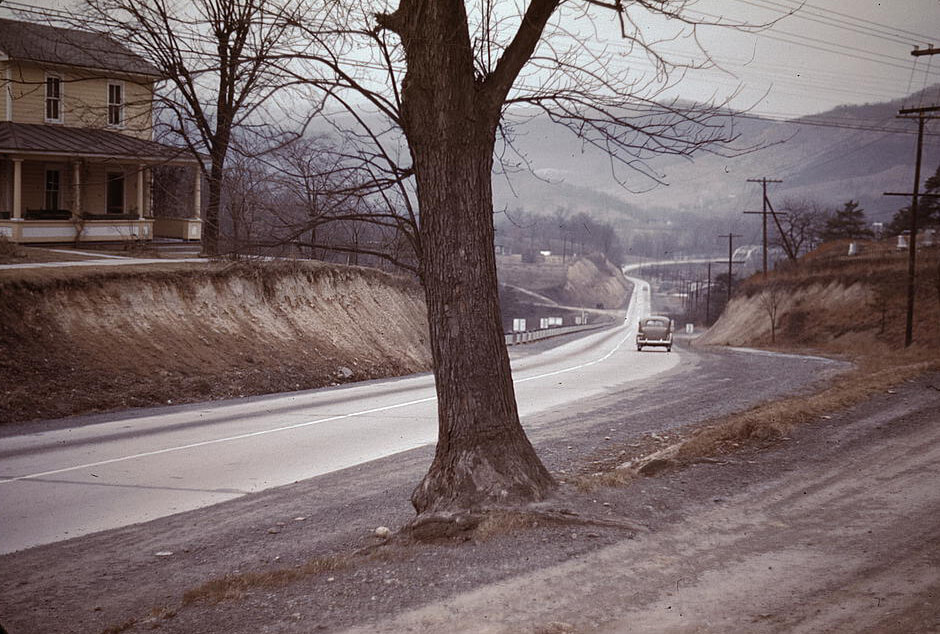
US 50 Looking West, Romney, West Virginia, 1942. Photograph originally published as part of the Farm Security Administration, Office of War Information Collection in the Library of Congress Prints and Photographs Division. Courtesy of Wikimedia Commons. Image is in public domain.
ANN: When I first left West Virginia and was teaching ESL and then attending graduate school, I felt compelled to use Standard English exclusively and to clean up my accent. Once in Japan when teaching kindergartners, I walked in a classroom after six months or so and said "Good morning, how are you?" And they came right back with, "Fahhhn, Thank you." And I was kind of horrified, that without my knowledge, I had taught these forty, five-year-old Japanese kids English with an Appalachian accent without knowing I was doing that. So certainly during my twenties and during graduate school I tried to mask or change my accent. I don't worry about that so much anymore, although I know when I'm not home, my accent is much diminished. But I'm lucky because I can go back and forth, speak without the accent and speak with it, whereas some of my siblings have lost their accent and can't get it back.
JAMES: Do you worry about losing your accent? How does your accent relate to your identification with West Virginia?"
ANN: I have worried about it. But I know now it's not going to be lost because I'm fifty-three and if I go home I can go right back into it. It's not as strong as when I was little, but it's still in there.
JAMES: And after Japan you returned to the States, and then went to teach in American Samoa?
"Welcome to American Samoa," Nu'Uuli, Eastern District, American Samoa, February 22, 2008. Photograph by Flickr user Ben Miller. Creative Commons license CC BY-ND 2.0.
ANN: Yes, after Japan, I lived in Albuquerque, New Mexico for a year. After that, I taught in American Samoa. This was again economic necessity and also a desire for adventure.
JAMES: Did living in American Samoa affect the way you felt about yourself as an American?
ANN: That's a good question. In American Samoa, I lived for the first time in a place that had been colonized by the United States. I became acutely aware of colonization in the South Pacific and also more aware of the relationship between the US and other countries, the way America exerts power over other countries and exploits them.
JAMES: Did you see similarities or connections between class inequalities or exploitation in West Virginia, and American Samoa as part of a larger colonial project?
ANN: I did, I did. The connections became even more clear to me when I started living in parts of the US that weren't Appalachia, and as I began to understand dominant middle class white culture in the US. As I came to recognize the class discrepancies within the US and realized how little economic and political power Appalachia had, I saw the relationship between Appalachia and exploited non-Western countries. I realized how Appalachia can be seen as a resource colony for the larger United States. And those connections became more defined during graduate school when I started to read postcolonial theory and post-Marxist theory. The only places I've seen people as poor as they are in parts of southern West Virginia was in Indonesia and Thailand.
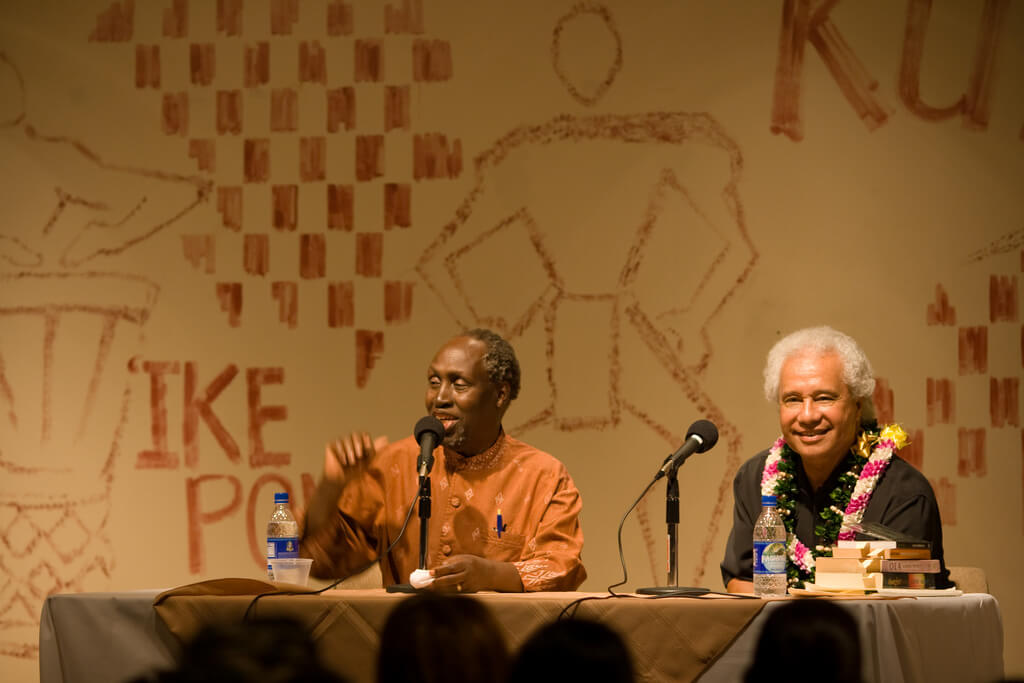
Samoan author Albert Wendt (right) with Kenyan writer Ngũgĩ wa Thiong'o (left), University of Hawaii at Manoa, Honolulu, Hawaii, April 30, 2008. Photograph by Flickr user Kanaka Rastamon. Creative Commons license CC BY-NC 2.0.
JAMES: Did that experience impact your direction in graduate school?
ANN: Yes. I wrote my master's thesis on a Samoan writer, Albert Wendt, using postcolonial theory. The driving question of my PhD dissertation was how Americans sustain their delusion that we have essentially a classless society given the glaring economic disparity in this country. I explored that question through nineteenth and twentieth-century literature and film. When Americans can't blame class discrepancy on racism, they often explain poverty as temporary. The idea is that the lower classes will eventually catch up, in time. This has been used to explain the "Appalachian problem," when Appalachia's poverty is not attributed to how dumb and lazy we are.
JAMES: Alongside your dissertation were you still writing fiction?
ANN: I was writing fiction whenever I could. That usually meant during breaks between quarters. While I was writing so much intellect-driven scholarly work, the pressure to write intuitive fiction would build, so when I had a break, the fiction would kind of come boiling out.
Early Work and Literary Style
Cover of Ann Pancake's Given Ground (Hanover, NH, Middlebury College Press, University Press of New England, 2001).
JAMES: Your first published collection Given Ground was released not too long after you finished graduate school. Was that writing you had been collecting and publishing over a period of time?
ANN: Yes. The oldest story in that book, "Getting Wood," I wrote in 1987. Those stories were not written as a collection but pulled together over a period of years.
JAMES: How did you pick the stories you wanted to put into the collection?
ANN: I pulled together Given Ground when I needed to publish a book for tenure. I put into it every story I'd written that seemed finished enough, and then received feedback from a few friends. I jettisoned one story, then wrote "Redneck Boys" to complete the book. Half of the stories had been published in literary journals already, so that was a kind of confirmation that they were solid enough to put into the collection. However, if I hadn't had the pressure of tenure, I wouldn't have tried to publish that book because I didn't think it was strong enough to find a publisher. Not yet.
JAMES: Did the reaction to the book surprise you? Or is critical acclaim not something you really put a lot of weight on?
ANN: The award, the Bakeless Prize, was a huge surprise. And I was surprised, too, by how the book has been received. It's not an easy book in a lot of ways. The sensibility and style are idiosyncratic, I think. The subject matter is dark. I've come to understand that it's not ever going to reach a broad audience, but those readers it does reach, it reaches deeply, and that's fine with me.
JAMES: To what extent can that idiosyncrasy be traced back to West Virginia? Or, to your broader nomadic experience as a young adult?
ANN: The idiosyncrasy in my writing is mostly rooted in having grown up in WV, although I may not have recognized those idiosyncratic parts without the perspective of having lived in wildly different cultures outside West Virginia. But part of the idiosyncrasy I think I was just born with.
JAMES: You've been praised for moving away from a literary tradition rooted in formula and caricature, and for the complexity of your characterisation of both Appalachia's land and people. Was that always explicit in your work?
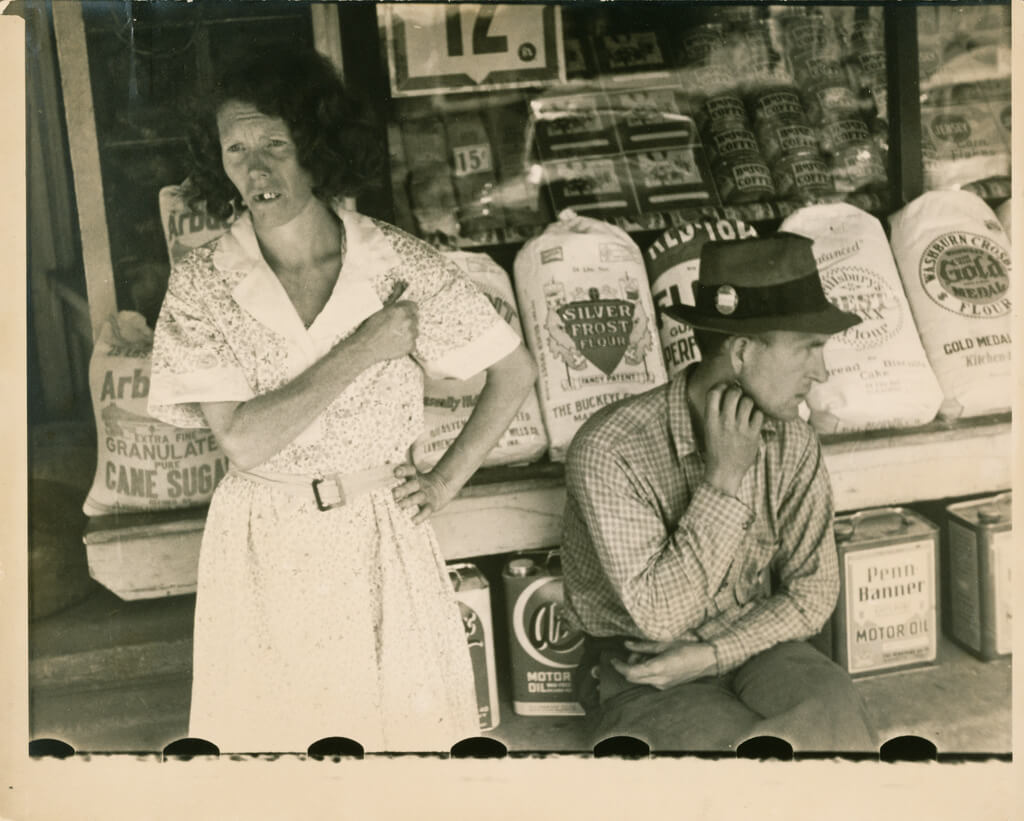
ANN: I was aware that I was resisting stereotype by the time I was writing in college. There are plenty of amazing Appalachian writers who work with complex representations of our region and who influenced me. Still, much writing about Appalachia over the past 150 years, especially writing that has gotten wide distribution, has been by outsiders, and a lot of that perpetuates the usual stereotypes. I've come to believe that the general reading public expects those stereotypes, so publishers expect them, too. But what I also understand are the political ramifications of stereotypes—they demean the people, make it easier to justify their exploitation, easier to see them as worthless. So I've always been very sensitive about complicating or overturning the usual caricatures and stereotypes.
JAMES: Could you name some of those writers, and say how their work appeals to you and what makes it unique?
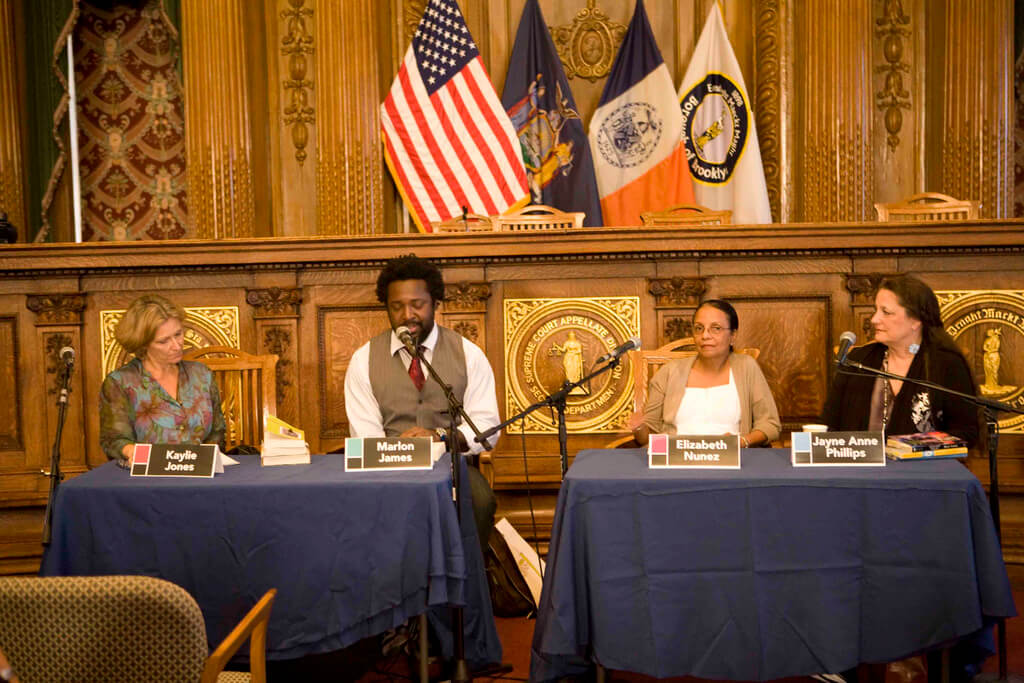
Jayne Anne Phillips (seated on far right) featured on a panel with (from left to right) Kaylie Jones, Marlon James, and Elizabeth Nunez at the Brooklyn Book Festival, Brooklyn, New York, September 12, 2010. Photograph by Flickr user Navdeep Dhillon. Creative Commons license CC BY 2.0.
ANN: Some writers from West Virginia who work with complex representations of the region and who influenced me as a younger writer include Breece Pancake, Jayne Anne Phillips, Denise Giardina, Davis Grubb, and Chuck Kinder.11Breece Pancake, The Stories of Breece D'J Pancake (Boston, MA: Little, Brown,1983). Jayne Anne Phillips, Black Tickets (New York: Dell Pub., 1979). Jayne Anne Phillips, Machine Dreams (New York: E.P. Dutton/Seymour Lawrence, 1984). Jayne Anne Phillips, Lark and Termite: A Novel (New York: Alfred A. Knopf, 2009). Denise Giardina, The Unquiet Earth: A Novel (New York: Norton, 1992). Denise Giardina, Storming Heaven: A Novel (New York: Ballantine Pub. Group, 1987). Davis Grubb, The Night of the Hunter (New York: Harper, 1953). Davis Grubb, The Voices Of Glory (New York: Scribner, 1962). Chuck Kinder, Snakehunter (New York: Knopf, 1973).All of these writers grew up in West Virginia. Each has a different vision of the place, but each vision presents our culture with a nuanced depth perception that complicates the one-note picture of Appalachia so often perpetuated by outsider writers. They offer characters struggling with internal contradictions; they provide context and history that help shed light on the state's darker elements; they carry a sense of place deep in their bodies; and they do amazing things with our language.
There are also West Virginia writers younger than I am who deserve far more recognition than they've received so far, writers who are writing better, in my opinion, than most of their peers outside the region: Jessie Van Eerden; Matthew Neil Null; Glenn Taylor. Only Glenn has received much notice from the wider literary establishment.12For recent work see Jessie Van Eerden, My Radio Radio (Morgantown, WV: Vandalia Press, 2016). Matthew Neill Null, Honey from the Lion (Wilmington, NC: Lookout Books, 2015). M. Glenn Taylor, A Hanging at Cinder Bottom (London Borough Press, 2015).
JAMES: The way you write about Appalachia is clearly very striking, but also something which can be co-opted into broader cultural/media narratives of Appalachian rural poverty that offer a simplistic and frequently unflattering image of Appalachian life—do you grapple with this as a writer, how aware of it are you, does it affect your craft or editing process?
ANN: I'm very aware of how easily one can lapse into stereotype when writing about Appalachia. Appalachian people in the world are confronted with stereotypes about themselves constantly, so we're sharply conscious of them. Still, in early drafts, I might fall into a stereotype because I haven't gotten to the stage of the work where I'm complicating things. So, to answer your question, when I'm writing about violence in Appalachia, I try to be careful to complicate the issue. I try to tell the truth, and I try to tell it with context and by offering different perspectives on the violence and by making the perpetrators and the victims full human beings as opposed to flat caricatures.
West Virginia is its own culture within Appalachian culture, and Appalachian culture, in turn, shares some qualities with US southern culture. If I'm around Southerners there is a feeling of familiarity and home, more so than if I'm around people from Pennsylvania, even though Pennsylvania is fifty miles from where I grew up. I've also been influenced as a writer primarily by writers from the South and from Appalachia.
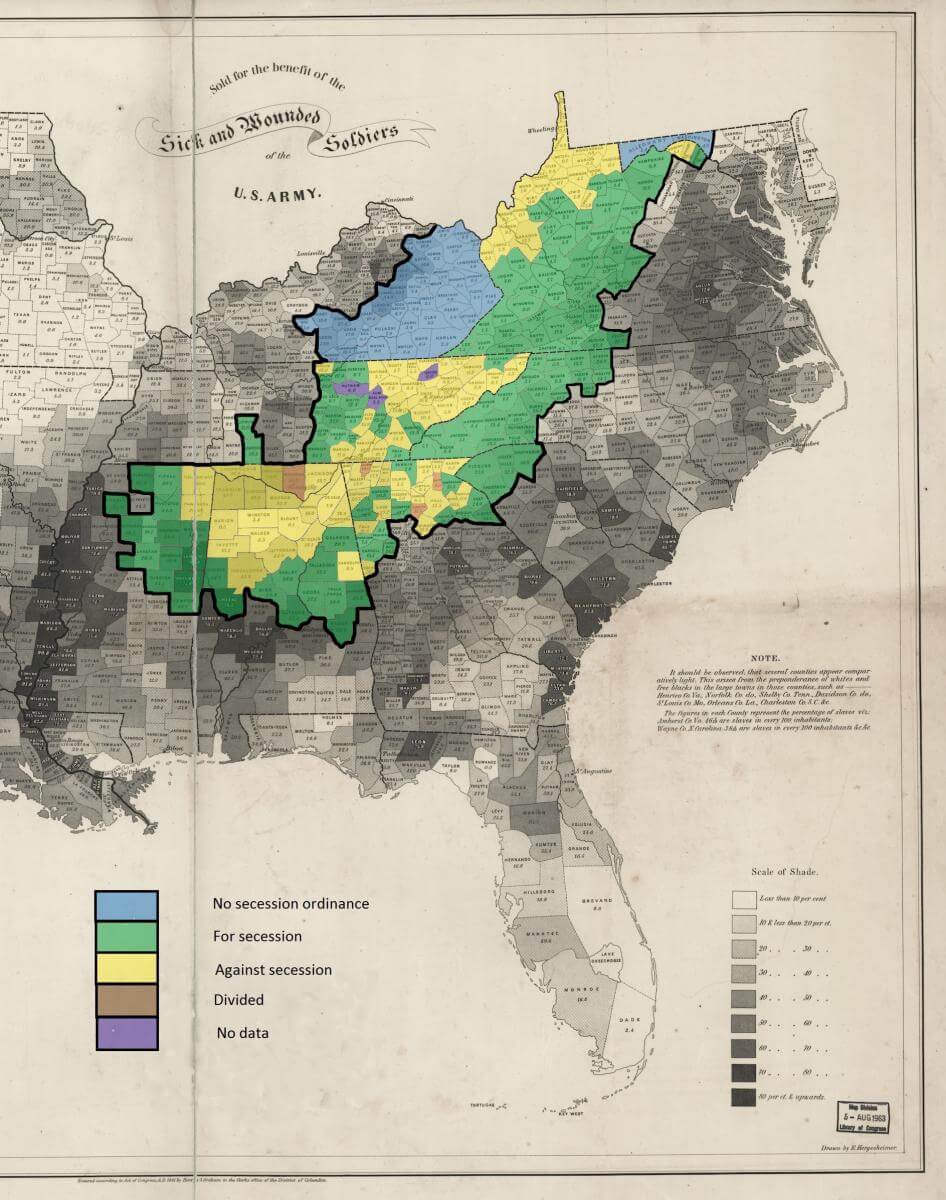
Map of county secession votes of 1860–1861 in Appalachia. Map drawn by E. Hergesheimer. Image courtesy of Wikimedia Commons. Creative Commons license CC BY-SA 4.0.
JAMES: I wanted to talk a little about your use of violence in your writing. One of the recurrent themes in your work is ghosts, especially in relation to the Confederacy and the Civil War. How does that historical violence, or its afterlife, translate into and overlap with physical or literal violence?
ANN: That's a good observation and a good question. I'm not sure how exactly to answer it. Appalachia does have a violent past: the violence of the Civil War and the "Indian" wars before that; the violence inflicted on the environment starting from the time of industrialization; the violence surrounding the labor movement in the early part of the twentieth century; the forms of violence the larger nation imposes on Appalachia in its appetite for Appalachian resources. Appalachian people are not more violent than other Americans, however, despite popular narratives to the contrary. In fact, before the drug epidemic, West Virginia consistently had the lowest violent crime rate in the nation. Still, I believe that all that violence in our past continues to manifest in our present.
The violence to the environment continues, and there is not the political will to stop it, and there is much violence suffered by Appalachia's people. Although often that's self-inflicted: addiction, overdose, suicide. I believe that self-inflicted violence is related to environmental destruction and economic exploitation. I recognize that my work contains a fair amount of literal violence. Some of that is just factual, reflecting the region's history. Some of the violence in my work, though, probably comes out of my love and hate for the region, my fears of and for the region, and my deep desires for the region. The violence may arise from all that conflicted unconscious material.
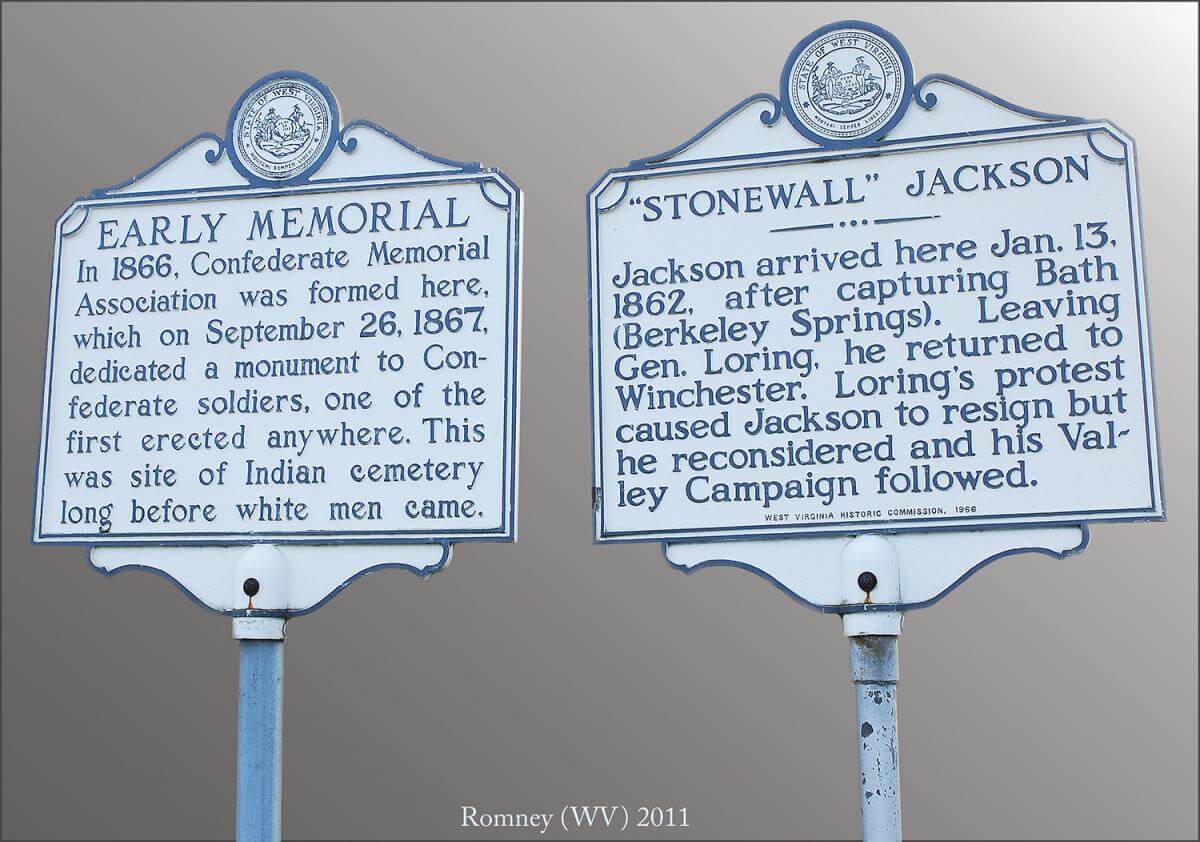
"Early Memorial" and "Stonewall Jackson," Interpretive Signage, Romney, West Virginia, November 13, 2011. Photograph by Flickr user Ron Cogswell. Creative Commons license CC BY 2.0.
JAMES: How much of that fear comes from a sense of displacement, or fracture? Earlier you talked about becoming aware of your identity as a West Virginian through interacting with people from surrounding states. You describe a sense of "we are this because we are not something else." How much of that can be traced back to the Civil War?
ANN: West Virginia's paradoxical place in the Civil War is one of the reasons I find West Virginia fascinating. The state separated from Virginia to be part of the Union in 1863, and popular belief is that we did this because we were against slavery. The truth about our secession is much more complicated and is tied also to the schemes of industrialists. There were certainly Union sympathizers in West Virginia and Union troops. My county, Hampshire, was very Confederate, though, with slave-owners, including my own family. Romney was right on the border, and Romney changed hands between the Union and the Confederacy fifty-four times during the war. I grew up playing in Civil War trenches a mile behind my house.13The trenches Pancake is describing are the Fort Mill Ridge Civil War Trenches, among the best preserved Civil War trenches in the nation. "Fort Mill Civil War Trenches", National Parks Service, http://www.nps.gov/nr/feature/places/13001121.htm.The remnants of the war were very present when I was growing up. And there are stories my family has passed down from the war—my family was Confederate identified, so their stories are about the Yankees coming in and raiding the farm.
JAMES: That feeds into another question I wanted to ask about the role of race in your work—I believe West Virginia is the third or fourth whitest state in the country.14According to the latest United States Census estimates, West Virginia is the fourth-whitest state in the Union.
ANN: West Virginia is very white, but there are and were African-Americans there. It's true, they don't often appear in my work, and I don't think I have any who are main characters. I believe this is the case because I don't want to misappropriate or misrepresent them. My personal relationship with race growing up taught me a lot. My county was very racist and still is, but my parents were much more liberal than most people there. My parents tried to bring us up with a "colorblind" philosophy: everyone is the same regardless of skin color, which also of course isn't true, but it was pretty enlightened for those times and that place. In junior high and high school I had an African-American boyfriend. I haven't talked about that or written about it much, I probably should. That certainly opened my eyes to racism, by the time I was fourteen, because of the kinds of insults I would receive and also because I started to see through my boyfriend's perspective. It also called into question my belief in Christianity. I started to reject the church at that time in large part because I saw very clearly its hypocrisy concerning race, at least where I lived.
JAMES: In your work you're very aware of trying to offer a representative account of West Virginian life. Are you more reluctant to write about African American experience?
ANN: Yeah, I'm much more comfortable writing about class. It's good that you bring that up, people don't usually ask me about it. The truth is, I do have experience with race in Appalachia. I need to ask myself why I don't write more about it.
JAMES: I want to read a short moment from your short story "Ghostless" which encapsulates one of the reasons I enjoy your writing so much:
The cold came high in my chest, but the wind had finally laid and from some distance I could feel the heat off the horse. The hide-odor off the horse, that soily smell he carried even in winter. I pushed my face into it, into the hollow behind the shoulder, before the belly swell . . . . I still had horse on my hands, and I smeared them across my Sunday pants, listening, the wood fire brightening my back.
That's gorgeous. The physicality of your writing, its tactile nature, your relationship to senses and sensory language. Where does that come from and how has it developed over time?
ANN: I write by sinking myself as deeply as I can into a place or a person, then imagining how the character's senses would respond to a situation, or imagining how I personally would react sensorily to a place. Certainly touch and smell in particular are powerful for me in the way they evoke memories. The way they are more animal. I also revise a whole lot, so as I do more drafting, more of that sensory detail comes in.
Me Up the Hollow, Romney, West Virginia, December 14, year unknown. Photograph by Ann Pancake. Courtesy of Ann Pancake.
JAMES: And growing up in West Virginia played an important role in developing that detail in your work?
ANN: Now that I've lived out of West Virginia I've come to understand that growing up in Appalachia usually means growing up closer to the ground than one might in other places. Growing up in Appalachia in the 70's was pretty raw. You were not sheltered in the ways the middle-class is sheltered in Seattle. We had a lot of tactile interaction with the natural world, plants and animals, we were raised working big gardens and running the woods, and we saw our food get killed and skinned out and butchered. We ate that. I think as little kids we were very directly in touch with our senses. We weren't inside, we weren't on computers. I could also identify how poor people were by how they smelled, because the really poor people didn't have plumbing, so couldn't wash like we could. I see this as a metaphor for how white poverty is sometimes invisible in this country.
JAMES: How do you keep that visceral relationship to West Virginia in your writing?
ANN: I try to get home at least twice a year, and the place is very deeply embedded in my memory and in my body, so it's present to some extent even when I'm not there. When I do return, I can settle back into the land pretty quickly. At the same time, the culture in West Virginia has changed since I was a kid. Also, at this point in my life and my career, I'd like to be writing more about places that aren't West Virginia. That'll happen some in my next book.
Presents, Pasts, and Futures
Cover of Ann Pancake's Me and My Daddy Listen to Bob Marley (Berkeley: Counterpoint Press/Shoemaker & Hoard, 2015). Cover design by Briar Levit.
JAMES: Your latest collection Me and My Daddy Listen to Bob Marley remains centered in West Virginia, but in a different way. There seems to be more scope for hope or forward momentum than in your earlier writing.
ANN: I'd agree with that, I think part of it is time of life. I'm at a point in my life where I just can't bear to be spending all that time in darkness like I could while writing Given Ground and some of my earlier work. I also think that, just in order to survive as an American in 2016, I've had to try to figure out ways to look towards light exactly because we are in such a dark time, from a certain perspective. I also think—I wrote about this in an essay for the Georgia Review—I'm finished with writing about how things are hurt in Appalachia.15Ann Pancake, "Towards Light," Georgia Review, 2009. I'm tired of documenting destruction. I'm committed to writing that imagines unconventional ways to relate to the natural, including the natural world in Appalachia. Some of the stories in Me and My Daddy Listen to Bob Marley such as "Sab" or "The Following" play with redefining relationship with the natural world.
JAMES: In the story that opens Me and My Daddy, "In Such Light," that progression definitely comes through. Trauma and hurt persist, but it holds more scope for maturation than many of your earlier stories.
ANN: I'd agree.
JAMES: Do you think that literary shift is connected to a broader recognition within the United States that the country needs to move away from a reliance on coal and seek less destructive and more sustainable forms of energy?
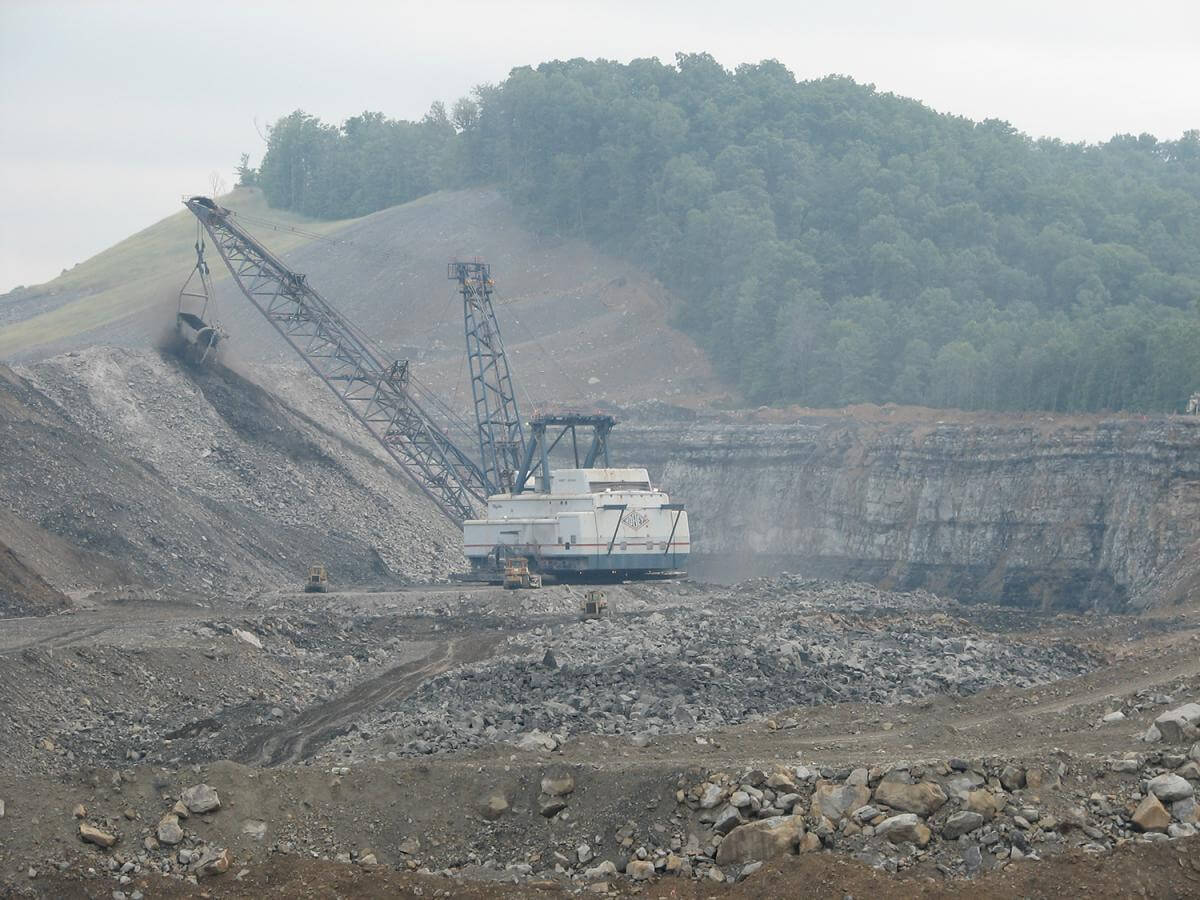
Dragline, West Virginia, ca. 2007. Photograph by Vivian Stockman. Courtesy of Ann Pancake.
ANN: I think my literary shift is connected to a recognition that we won't survive as a species unless we think very, very differently about live beings that aren't human in this world. As for the shift away from coal, it is true that in Appalachia less coal is being mined now, but that's in part because of the boom in natural gas. Areas of West Virginia that were untouched by coal mining are now being devastated by hydrofracking. However, I do think we're at the beginning of the end of coal. And I think there is a wider movement, particular among younger generations in West Virginia, which understands that our state must move beyond dependence on natural resource extraction if we are to survive as a culture and as a people. This gives me optimism.
JAMES: It's been almost fifteen years since the publication of your first short story collection. What do you think are the most notable differences between Me and My Daddy and Given Ground?
ANN: Given Ground was written almost entirely intuitively and without much consideration of an audience. I wrote that book mostly for myself, not because I'm a narcissist, but because I couldn't imagine that many people would want to read those stories. For those reasons, it's more music-driven, less concerned with plot, and less accessible than Me and My Daddy. Me and My Daddy I obviously wrote after finishing my novel, and the novel required that I learn how to work with plot and that I make my writing more accessible. I wanted an audience for Strange as this Weather Has Been. I think those influences and considerations bled over into my writing of Me and My Daddy. Teaching creative writing and writing a novel has made me more conscious of craft, has made me use a little more intellect when I write fiction. I'm not convinced, however, that that is a good thing.
JAMES: Why did you choose that particular title?
ANN: [Laughs] My publisher decided that. I had named the book "Bone Dowser" which was also the original name of the story in the collection now called "The Following." My publisher thought we'd sell more books with the title Me and My Daddy Listen to Bob Marley. I'm sure he's right.
JAMES: If that was a conversation which had happened fifteen years ago, do you think the outcome would have been the same?
ANN: [Laughs] would I have been as malleable do you mean? No I probably would have been more resistant. I've become less resistant, and I don't have as much investment in that kind of stuff anymore. That's a good question!
JAMES: Part of maturing is coming to terms with what exactly you are able to do through your work and through your activism, and being able to channel that in ways and into things which are productive.
ANN: Yeah, exactly.
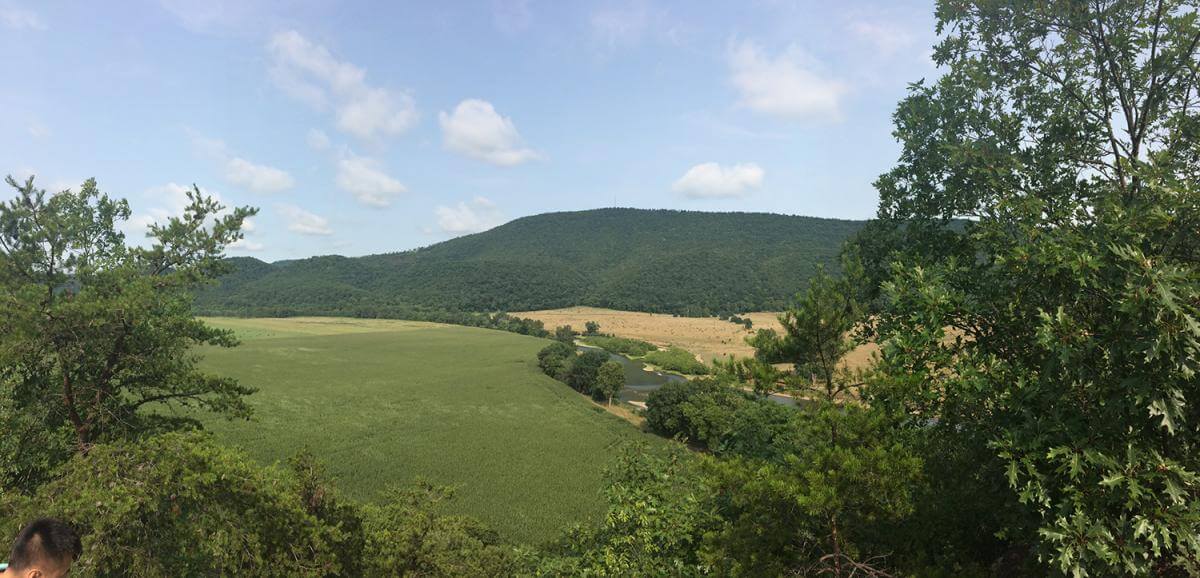
Breakneck Scenic Overlook, Romney, West Virginia, July 29, 2014. Photograph by Justin Wilcox. Courtesy of Wikimedia Commons. Creative Commons license CC BY-SA 4.0. Pancake family land appears in the lower section of the photo.
JAMES: Do you ever feel like you're writing about a West Virginia that doesn't exist in the same way anymore?
ANN: In some ways West Virginia has changed significantly since I grew up there. One change that I mourn is the way the dialect and accent are being lost among younger people. Exposure to mass media is homogenizing our language. The place is also under greater environmental attack and is suffering a drug addiction epidemic. Those changes, though, I understand very well, because of my research and experiences and because of addiction problems in my family, so when I write about that West Virginia, I'm writing about one that still exists.
JAMES: You live in Seattle now, quite far removed from Appalachia. Is your relationship with the land different now, and if so in what ways?
Seattle Skyline view from Queen Anne Hill, Seattle, Washington, February 17, 2010. Photograph by Wikimedia Commons user Daniel Schwen. Creative Commons license CC BY-SA 4.0.
ANN: I'm not immersed in the land here like I was growing up in West Virginia. Also, the land here doesn't speak to me like back home does. It doesn't give me sounds and stories. Still, I love the mountains in Washington. But it feels more like a friend, while back home land feels like family -- and that includes the way family can be fraught. My relationship to the land back home is very painful because there is so much ongoing destruction of it. In Washington, there is certainly destruction, but because of the kind of economic and political will here, there are vast tracts of land that aren't going to be destroyed, at least not anytime soon, and I can escape into those. That helps to ameliorate the pain I feel about back home. But I won't ever be rooted in the land in Washington like I am rooted in Appalachia.
JAMES: What's the next step? You mentioned that moving forward you are looking to write about Appalachia, but in different ways, and then looking to write about other things as well.
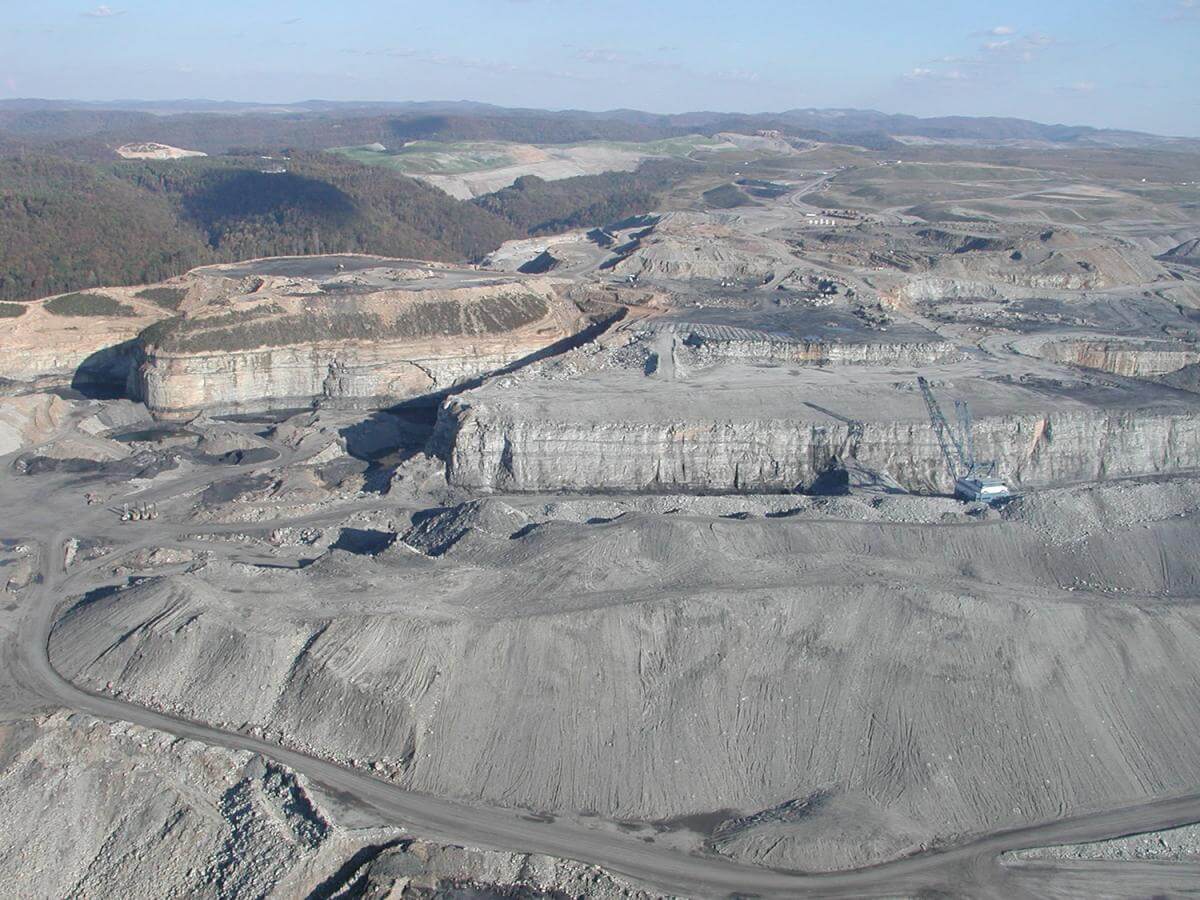
ANN: I can't be really specific about the project I'm working on now because it's in its very early stages, but it's a book that explores the ways we can have different relationships with the natural world and with things that aren't human. It's nonfiction. So there's that strand of it, which runs simultaneously with the ways I see Appalachia as a microcosm of what's happening globally in terms of the environment and as a harbinger of where we're headed without a revolution in our common sense. Finally, there' s a thread about my family, whom I see as a kind of microcosm of Appalachia, in the ways my family's addiction, fear, economic exigencies, and mental illness have caused the destruction of land I love where I grew up.
The book is part memoir, part imagining forward. It asks how we might live well in a time of mass extinction. A modest thesis, I know. I'm obsessed with the question because I've witnessed all my life a place I love be destroyed. Appalachia has always been called backwards, but in the last couple of decades, the rest of the country caught up with Appalachia and recognized the natural environment everywhere is being devastated.
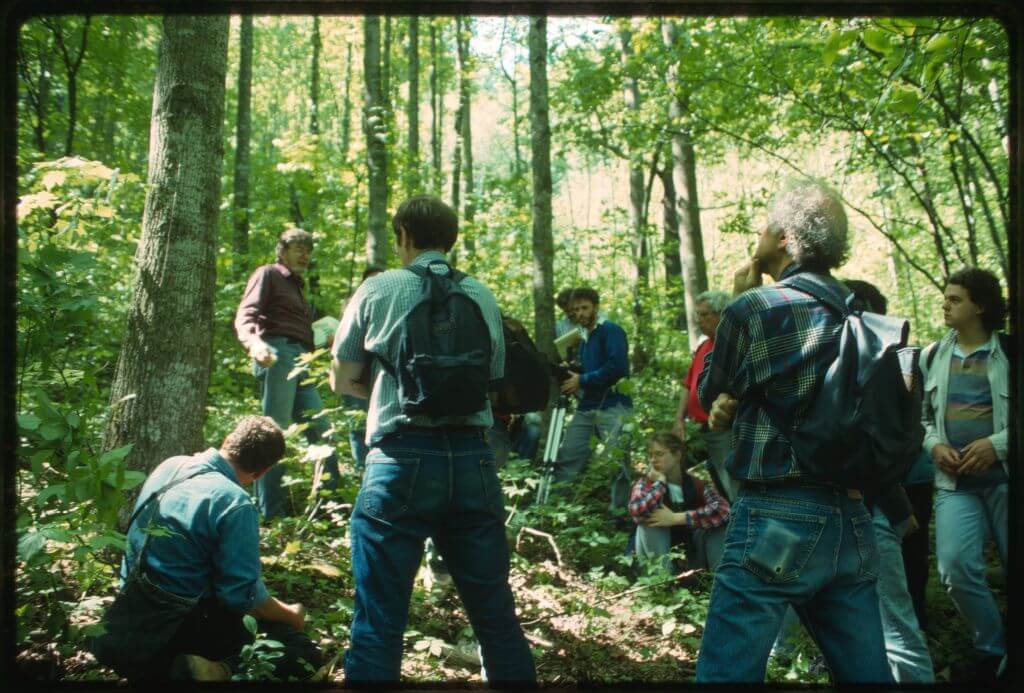
Appalachia Forest Action Project volunteers learning about the land, Rock Creek, West Virginia, May 21, 1994. Photograph by Mary Hufford. Image courtesy of the Library of Congress American Folklife Center.
Most recently, the land where I grew up, in Romney, has been destroyed by the parts of my family who are entangled in my brother's drug addiction. I see this family dynamic and tragedy as a microcosm of larger destructive forces in Appalachia. I see Appalachia, in turn, as a microcosm of larger destructive forces in the United States, especially capitalist corporate forces. So in this new book, I plumb that question—"how do we live well while natural places and beings are being annihilated at an unprecedented rate?"—by tracing my own personal history of loss as a West Virginian.
Part of my answer to the question involves radically reconceiving our relationships with natural beings. To do that, we need to become intellectually flexible enough to see rationalism and mechanistic science as just one way of knowing among several, with no one way superior to the other, and each with its own purpose. In other words, I'm suggesting we give more validity to intuition, the unconscious mind, the imagination, and ideas of the sacred.
About the Interviewer
E. James West is a teaching fellow in the Department of History at the University of Birmingham and a postdoctoral fellow at the Eccles Centre for American Studies at the British Library. His research centers upon on African American history and literature since 1865, with a particular interest in African American media and print culture.
]]>Introduction
Thomas Mullen is the author of four novels, including The Last Town On Earth (2006), which received the James Fenimore Cooper Prize and was recognized by USA Today as the best debut novel of the year. Mullen's books are notable for the range and variety of their historical settings and influences. Last Town on Earth is set in a mill town in the Pacific Northwest during the 1918 flu epidemic. The Many Deaths of the Firefly Brothers (2010) is a Depression-era story following two brothers who gain notoriety due to their bank-robbing exploits. Even his novel The Revisionists (2011), although set in a dystopian future, examines historical agency.
Mullen's newest book, Darktown (2016), is set in the racially polarized, crime-ridden underworld of Atlanta in 1948. The city is on the cusp of a civil rights movement that will transform it politically, socially, and spatially. By following the travails of two African American policemen who were among the first men to desegregate the Atlanta police force, Mullen's novel offers an original perspective on the city's history.
Mullen, a resident of Decatur, Georgia for nearly a decade, came upon this episode in Atlanta's history while researching a magazine article. In this exclusive Southern Spaces interview, he speaks with Joseph Crespino about the sources that informed his fiction, the history that underlies Darktown, and the uses of history and fiction in understanding place and time.
Interview
About the Interviewer
Joseph Crespino is Jimmy Carter Professor of American History at Emory University, specializing in southern history since Reconstruction. He is the author of Strom Thurmond's America (New York: Hill & Wang, 2012) and In Search of Another Country: Mississippi and the Conservative Counterrevolution (Princeton, NJ: Princeton UP, 2007) and co-editor, with Matthew Lassiter, of The Myth of Southern Exceptionalism (Oxford: Oxford University Press, 2010).
]]>
Flannery O'Connor's place in American literature is undisputed. A master of the short story, her The Complete Stories (1971) was voted the "favorite" of the sixty fiction winners of the National Book Award in 2009. August 3, 2014 marked the fiftieth anniversary of O'Connor's death. Had she not succumbed to complications related to lupus in 1964, she would have been eighty-nine years this March 25. O'Connor's legacy is unique among southern writers. Unlike contemporaries Eudora Welty or Carson McCullers, O'Connor primarily wrote short stories that drew upon her bleak, dark, and deeply religious worldview.
Whittled down to a two-word sound bite appropriate to the age of Twitter, O'Connor's work might be described as peacock grotesque or grotesque peacockian, if one has the three extra characters to spare. (O'Connor's work and image have long been associated with the image of the peafowl she raised at her Andalusia Farm in Milledgeville, Georgia, and the grotesque southern Gothicism of her written work.) And yet, far from being reduced to a convenient sound bite, O'Connor's sensibilities have infiltrated society in far-reaching ways: what might O'Connor make of True Blood and the consistent vamipirization of the South?1In addition to the HBO series True Blood and the series of novels that inspired the show, Charlaine Harris's The Southern Vampire Mysteries, see A Game of Thrones author George R. R. Martin's early novel Fevre Dream (1982), set on a Mississippi Riverboat in 1857; Anne Rice's The Vampire Chronicles, largely set in-and-around New Orleans; Seth Grahame-Smith's 2010 novel Abraham Lincoln, Vampire Hunter and the 2012 film of the same name, which reimagines slaves as food for vampires and the roots of Lincoln's antislavery crusade following his realization of this in New Orleans; and the television series The Vampire Diaries, set in Virginia and largely filmed in Georgia, among many others. What would O'Connor say about Savannah residents Jim Williams and the Lady Chablis, the carnivalesque at the heart of John Berendt's Midnight in the Garden of Good and Evil? What would O'Connor think of so-called "reality" television where a real housewife of New York detaches and throws her prosthetic leg during a fight, à la Joy/Hulga in perhaps O'Connor's most famous short story "Good Country People"? What would O'Connor's take be on what I call "Flannery on Film," the numerous in-the-works film adaptations of her texts?2 O'Connor's first novel, Wise Blood, was memorably brought to the screen in 1980 by filmmaker John Huston. Atlanta's Good Country Pictures has acquired the film rights to many of O'Connor's texts, planning to mount a production of The Violent Bear It Away and a television series based on her short stories. Irish filmmaker John Michael McDonagh has also recently stated that he plans to complete his so-called "glorified suicide trilogy"—which currently combines the films The Guard (2011) and Calvary (2014)—with a film that takes its title from O'Connor's story "The Lame Shall Enter First" to star Brendan Gleeson. What would O'Connor have to say about the continual othering of southern space (the land of "freaks" made visible for the world's gaze) in television shows like Duck Dynasty and Here Comes Honey Boo Boo? Fifty years after her death, it is these types of questions that emerge when I think about O'Connor's legacy.
 |  | |
| Brooke Hatfield experimented with several iterations of FLANnery O'Connor. Photographs by Brooke Hatfield. Courtesy of Brooke Hatfield. Pictured above are versions 1 and 2. | ||
Recently, Brooke Hatfield, an avid O'Connor fan, designer, and artist, described O'Connor's legacy as "zine-inspiring." Released at the June 2014 Atlanta Zine Fest, one of Hatfield's passion projects, Scale Highly Eccentric: A Zine of Portraits of Flannery O'Connor, asks fourteen artists, utilizing a variety of mediums, to imagine their versions of O'Connor's iconic image.3The "esteemed zine artists" include: Ashley Anderson, Rebecca Bowen, Jenifer Carter, Alvin Diec, Travis Ekmark, Christine Ernest, Brooke Hatfield, Yoonhwa Jang, Tori LaConsay, Elizabeth McNair, Dan Murdoch, Natalie Nelson, Emily Wallace, and Lydia Walls. Some artists chose more traditional methods of portraiture, while others, as in Yoonhwa Jang's portrait of O'Connor as a dog, chose more radical methods and images to represent her. Hatfield states that she was attracted to the happenstance mix of "reverent, more traditional portraiture with something a little more untethered to legend."4Brooke Hatfield in discussion with the author, September 2014. While Dan Murdoch and Ashley Anderson painted "mind-blowing beautiful" portraits, "Yoonhwa Jang's [portrait of O'Connor as animal] uses a couple of notable elements of O'Connor's appearance (Those glasses! Those pearls!) to tell a very different story."5Ibid. Hatfield herself has previously made a portrait of another of her favorite southern women, Harper Lee's Scout Finch dressed as a ham made out of a piece of ham. "I love food and puns in pretty equal measure," Hatfield states. Hatfield's portrait of O'Connor is in this food-pun vein. The piece is titled "FLANnery O'Connor," which as the capitalization suggests, is a portrait of O'Connor drawn on regular print paper, cut out with a "scalpel" (a surgical tool utilized by Hatfield in true O'Connor fashion), and then laid on top of a baking dish of Flan, or what Hatfield calls her "flanvas," which she made herself.6Ibid.
 |
| Travis Ekmark's art for the zine. Portrait by Travis Ekmark. Courtesy of Travis Ekmark and Brooke Hatfield. |
During a July 29 event to promote the zine's release, writer Johnny Drago read a short fictional piece, "The Name of This is a Sacred Relic," inspired by Travis Ekmark's art for the zine. Drago describes his story as "about two friends, two writers who go down to Milledgeville, Georgia looking for inspiration. Of course, they come back with something completely different. The story is essentially based on the Instagram feeds of some friends of mine who visited Andalusia and the Central State mental hospital recently, and the parallel, vicarious visit I had in my head as I scrolled down."7Johnny Drago in discussion with the author, September 2014. Whereas some of the portraits for the Zine explore the more eccentric sides of O'Connor, Ekmark's portrait on which Drago's story is based is startling in its simplicity—a solid background with a black-ink drawing in the foreground—and as such, Drago's story follows an age old plot: two friends go on a journey from which they return changed.
As a writer of fiction and drama, Drago describes O'Connor's influence: "[Her] work has absolutely influenced my fiction, in much the same way that the writing of Tennessee Williams impacted my plays."8Ibid. For Drago, O'Connor addressed "reality in a detailed and truthful way."9Ibid. Elsewhere, Drago has commented on the "meditative qualities" of O'Connor's work. Drago's focus on the details and the meditative qualities of O'Connor's work points to a way of approaching O'Connor that elides the whole and ruminates on the fragment.
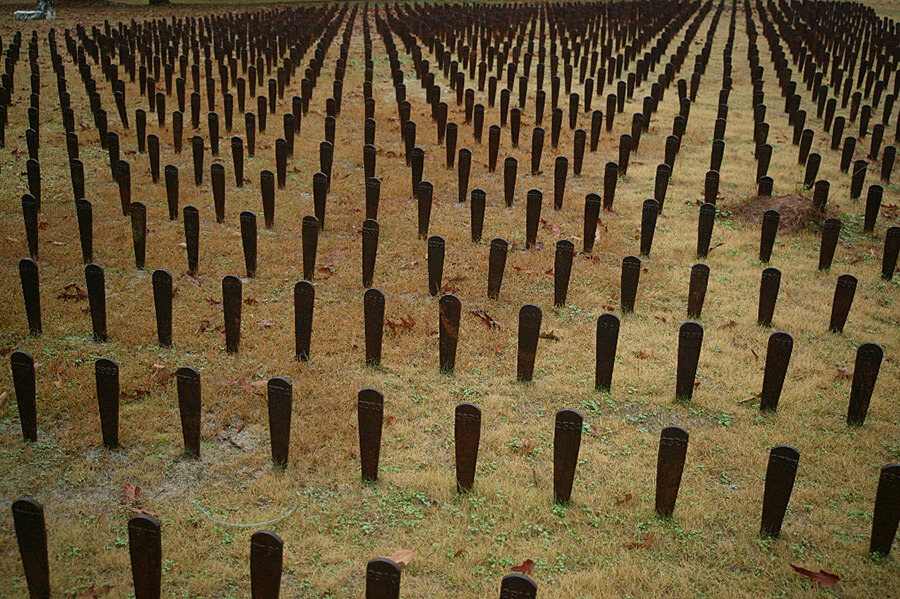 |
| A symbolic representation of the more than 25,000 patients buried in unmarked graves on the Central State Hospital grounds in Milledgeville, Georgia. Photograph by John Kloepper. Creative Commons Liscense CC-BY-3.0. |
For all the cleverness and cuteness of many of the zine's portraits, what are (were) the details and truths of O'Connor's reality? What types of things did O'Connor meditate on, ruminate over, and why do they matter today? Fans, readers, and critics often interpret the "truth" of Flannery O'Connor's work as grotesque, as gothic, as haunting. How do words haunt, and what does it mean to be haunted by Flannery O'Connor's words? In "Ghosts and Shattered Bodies, or What Does it Mean to Still be Haunted by Southern Literature?" the late Patricia Yaeger writes, "We live in a world that is haunted, knows it's haunted, and denies its own hauntedness. What do we do when we see a ghost?"10Patricia Yaeger, "Ghosts and Shattered Bodies, or What Does it Mean To Still Be Haunted by Southern Literature?," South Central Review 2, no.1 (Spring 2005): 87. What do we do when we see, when we encounter, Flannery O'Connor? O'Connor's ghost no doubt resides in Hatfield's flanvas, in the pearls and glasses of Jang's portrait, in the rough lines of Ekmark's sketch, in Drago's words, in Christine Ernest's pixelated and distorted needlework portrait, in O'Connor's words that remain in print and are read by countless students and fans. As the recent Bitter Southerner publication on Hatfield's zine declared, O'Connor indeed "walks among us still."11"A Talented Group of Writers and Artists Prove that Flannery O'Connor Walks Among Us Still," The Bitter Southerner, August 2014, http://bittersoutherner.com/flannery-oconnor-walks-among-us-still. And yet, focusing on the entirety of O'Connor's legacy—the full portrait—ignores the ways in which she actually moved through the world. Nearly all of the images in the zine present O'Connor's ghost in various illustrations of her face and upper body. Only two images, Dan Murdoch's and Alvin Diec's, portray the crutch with which O'Connor literally walked for many years of her life. When we encounter a ghost, even one like O'Connor's, we inevitably make choices as to what to see, witness, and represent.
 |
| Dan Murdoch's portrait for the zine, featuring O'Connor holding her crutch. Portrait by Dan Murdoch. Courtesy of Dan Murdoch and Brooke Hatfield. |
 |
| The cover of the 2007 paperback edition of O'Connor's second and final novel, The Violent Bear it Away. |
A portrait by definition is only part of the whole picture, only a fragment of what can be known or seen. Returning to O'Connor's works helps us to shift focus from the whole picture to the haunting fragment in interpreting O'Connor. The most recent paperback edition of O'Connor's second and final novel, The Violent Bear it Away (1960), features an extinguished matchstick haloed by a veil of smoke. It seems a fitting image to approach an understanding of O'Connor's work and legacy. Yaeger asks that we look beyond the "operatic" grotesque and excess of the southern gothic so often associated with O'Connor's work and view the fragments: "A focus on scraps or remnants changes received notions of the southern gothic. Excess, monstrosity, perversion, nightmares, rattling machinery: these rhetorical structures give way to less operatic forms in which fragments, residues, or traces of trauma fashion a regime of haunting."12Yaeger, 90. What haunts more is the residue; the "vestige, the scrap, the remainder" is "the force that's most frightening."13Ibid. The extinguished match haloed by smoke. Or the lavender handkerchief.
Towards the end of The Violent Bear it Away, a nameless stranger with a car picks up the protagonist-hitchhiker, Francis Marion Tarwater: "The person who had picked him up was a pale, lean, old-looking young man with deep hollows under his cheekbones. He had on a lavender shirt and a thick black suit and a panama hat. . . . His eyes were the same color as his shirt . . . he turned . . . and gave the boy a long personal look."14Flannery O'Connor, The Violent Bear It Away (New York: Farrar, Straus, and Giroux, 1955), 227, emphasis added. After "the boy," Tarwater, passes out in the car, "the man pick[s] him up and carrie[s] him into the woods."15Ibid., 231. A break in the narration occurs. Next, the man emerges from the woods, his skin "a faint pink," as "if he had refreshed himself on blood."16Ibid. (Note the vampiric South resonance of this simile.) When Tarwater awakens, "his hands were loosely tied with a lavender handkerchief . . . his clothes were neatly piled by his side. Only his shoes were on him . . . [his] mouth twisted open to the side as if it were going to displace itself permanently . . . he began to tear savagely at the lavender handkerchief until he had shredded it off."17Ibid, 232. The monstrosity and perversion of this closing scene is the act of forced sodomy Tarwater experiences at the hands of this "friendly" man passing through. Yet, the less operatic scrap, the lavender handkerchief, becomes the focused detail that haunts the reader long after the novel's close.18 It will be lost on few that "lavender" has long been associated with homosexuality. The so-called "lavender scare" of the 1950s would have been on people's minds upon the novel's publication in 1960. The lavender scare paralleled Joe McCarthy's Red Scare, with McCarthy stating that gays and lesbians were perhaps "even more dangerous than Reds." On April 27, 1953, as O'Connor was preparing to publish "You Can't Be Any Poorer Than Dead," a short story which serves as chapter one in The Violent Bear It Away, President Eisenhower signed Executive Order 10450, which made it legal to hunt down and fire gay and lesbian government employees. The policy lasted until President Clinton officially rescinded it in 1995. What exactly O'Connor is doing with this image and this grotesque act of violence at the novel's close is a question for another forum. Tison Pugh gives an insightful reading of homosexuality in O'Connor's work and this novel in particular in his recent Queer Chivalry: Medievalism and the Myth of White Masculinity in Southern Literature (Baton Rouge: Louisiana State University Press, 2013).
The lavender handkerchief. The extinguished match. The veil of smoke. The barbed-wire heart.19The 1999 thirty-fifth printing of O'Connor's first novel Wise Blood features a barbed-wire heart on the cover. Flannery O'Connor, Wise Blood (New York: Farrar, Straus, and Giroux, 1949). The prosthetic leg. The peacock's feather. The pointy-rimmed glasses. The pearl necklace. The imperfect flanvas. The hobbled body. The crutch. However we interpret O'Connor, her ghost remains in these fragments and remnants she leaves behind as much as the "whole" portraits artists and writers continue to imagine. Fifty years after her death, her legacy seems cemented. Master of the southern gothic, champion of the grotesque, a meditative writer whose truth is found in the details, O'Connor's image and words continue to haunt, inspire, and generate robust conversation. As O’Connor’s cousin and a trustee of her estate, Louise Florencourt, said in a recent announcement of materials donated to Emory University’s Manuscript Archive and Rare Books Library, "Flannery should be seen as whole as could be made possible."20Richard Fausset, "Emory Receives Archive of Work by O’Connor," The New York Times, October 7, 2014, http://www.nytimes.com/2014/10/08/books/university-acquires-flannery-oconnors-papers-and-effects.html?_r=0. As we all continue to interpret O'Connor, we would do well to heed the advice of the master herself: Remember, "an identity is not to be found on the surface . . . it lies very deep,"21 Flannery O'Connor, "The Regional Writer" in Mystery and Manners: Occasional Prose, ed. Sally Fitzgerald and Robert Fitzgerald (New York: Farrar, Straus, and Giroux, 1969), 58. and "'if there's no bottom in your eyes, they hold more.'"22O'Connor, Wise Blood, 222.
 |  | |
| Flannery O'Connor's bedroom at Andalusia, her home in Milledgeville, Georgia. Photograph by pdoyen, November 12, 2008. Courtesy of pdoyen. | The porch at Andalusia, Flannery O'Connor's home in Milledgeville, Georgia. Photograph by pdoyen, November 12, 2008. Courtesy of pdoyen. |
For more information and to purchase Scale Highly Eccentric: A Zine of Portraits of Flannery O'Connor, visit Brooke Hatfield's website and shop. A portion of the proceeds will benefit the Flannery O'Connor – Andalusia Foundation, Inc. Hatfield describes this decision as one based on the importance of place to O'Connor's work: "O'Connor wrote the majority of her published work at Andalusia. It's a literary landmark. And O'Connor's work was so informed by the specifics of place, so Andalusia is sort of uniquely valuable to her fans. Also there's a huge screened-in porch with lots of rocking chairs, and it's a perfect place to eat a Publix Cuban sub."23Brooke Hatfield in discussion with the author, September 2014. In a related Southern Spaces publication, photographer Nancy Marshall echoes Hatfield's evocation of the importance of place to O'Connor's work. Like Hatfield and the characters of Drago's story, Marshall journeys to Andalusia three times a year to trace or commune with O'Connor's ghost; she writes, "my interest is in trying to photograph the landscape as O'Connor saw it in her time and to allow the traces of her presence there to reveal themselves."24Nancy Marshall, "Andalusia: Photographs of Flannery O'Connor's Farm," Southern Spaces, April 28, 2008, https://southernspaces.ecdsdev.org/2008/andalusia-photographs-flannery-oconnors-farm.
About the Author
Eric Solomon is an editorial associate at Southern Spaces and a PhD student in the department of English at Emory University. He received his BA in English and Spanish from the University of Mississippi and the University of Belgrano, Buenos Aires, Argentina.
]]>Review
 |
Bill Hardwig's Upon Provincialism opens with an arresting photographic image: nineteenth-century local colorist Mary Noailles Murfree, author of In the Tennessee Mountains, a collection of purportedly "authentic" sketches, sits in a fine white dress, surrounded by members of the Boston literati, including Thomas Bailey Aldrich, Edwin Booth, James M. Bugbee, and Elizabeth Harris Houghton. The Appalachian author looks quite comfortable "back east" and in such august company. To Hardwig's mind, this image elegantly captures the "enormous gulf between the communities depicted in Murfree's dialect stories about the Tennessee mountains and the readership of the Atlantic Monthly in which these stories appeared" (2). Hardwig's cogent and concise book helps us to understand the outsize role that gulf played in determining the way "southern literature" would be both marketed and received in the twentieth and twenty-first centuries.
This quietly ambitious study reminds us that we cannot understand the phenomenon of nineteenth-century regional writing outside of the context of its original publication and reception.1"Regional writing" is the received critical vocabulary for the literature Hardwig treats. See, for instance, Stephanie Foote's Regional Fictions: Culture and Identity in Nineteenth-Century American Literature (Madison: University of Wisconsin Press, 2001). This is particularly important with "southern" local color since it was largely written for and consumed by affluent, white, urban easterners. As the opening sentence of Upon Provincialism notes, "Local-color writing concerning the southern United States from 1870 until 1900 reveals as much about national readers and editors as it does about the region itself" (1). And, as Hardwig ably demonstrates, those national readers and editors were interested in the "margins" of southern culture: "ethnic minorities, culturally distinct communities, geographically isolated peoples" (10). Excepting Thomas Nelson Page and Joel Chandler Harris, this is a South largely free of plantation myths, lost causes, and moonlight and magnolias.
 |
|
A Garden Party, Boston, 1885. Standing: Edwin Booth, Fanny N. D. Murfee, James M. Bugbee. Sitting: Mary Noailles Murfree, Thomas Bailey Aldrich, Mrs. Aldrich, Elizabeth Harris Houghton. From Edd Winfield Parks, Charles Egbert Craddock (Chapel Hill: University of North Carolina Press, 1941), 127. |
What made southern local color writing exceptional wasn't its "mind" or any particular historical "burden," but instead its over-representation of African American communities, creole New Orleans, and Appalachia. This "amalgamation of fringe spaces" contained, in Hardwig's words, "many pockets of life that seemed exceptionally foreign to the national readership of the period" (12). Suffice it to say, the imagined South that emerged from the pages of periodicals like the Atlantic Monthly, the Century, Harper's, and Scribner's was much stranger and more varied than previous critics like Richard Brodhead, Amy Kaplan, Judith Fetterley, and Marjorie Pryse have allowed.
Hardwig attends to short fiction by a diverse group of writers: George Washington Cable, Charles Chesnutt, Alice Dunbar-Nelson, Lafcadio Hearn, Grace King, Mary Noailles Murfree, and Thomas Nelson Page, among others. His consistently incisive readings restore these writers' texts to their original, periodical contexts, and to great effect. Indeed, Hardwig's recovery work yields some stunning insights, not least of which are an alternative literary history of the South—or, better, an alternative literary history of the imagined South—and a much more complex rendering of the cultural work of local color writing.
For instance, Hardwig valiantly pushes back against the purported provincialism of local color fictions. He shows again and again how this literature responded to its own historical moment and helped to imagine the future. In his telling, local color "actually engages pressing national and international issues, rather than presenting a nostalgic alternative to them" (6). This is a bold, even swaggering claim. Yet, Hardwig's forceful interpretations and deft marshaling of textual evidence are utterly convincing. (His elegant, unfussy prose also helps.) In showing the national and global interests of these fictions, Hardwig effectively brings local color writing back into the main currents of American literary history. He also makes local color available to our current critical moment, with its keen interest in transnationalism, global networks, and critical regional studies.
In order to do so, Hardwig, an assistant professor of English at the University of Tennessee, Knoxville, has to recuperate the genre, which is maligned for its formulaic feel and predictable plots. Rather than lament or critique generic conventions, Hardwig touts their explanatory power. He shows how local color reveals a "radical engagement with the cultural anxieties of the era"—in particular, the cultural anxieties of northeastern periodical editors and readers (16). In turn, Hardwig situates local color in relation to other dominant genres from this period. For instance, he catalogs striking similarities between postwar travel writing about the South and southern local color fiction, noting that both genres "generally presented the region as an object for analysis, a confounding book of riddles, requiring an objective outsider's expertise to make sense of the information gleaned therein" (18). Here Hardwig deftly constellates northern writers like Jonathan Baxter Harrison and Edward King, whose influential travel narratives helped to define the imagined South for post-Civil War readers, and popular writers like Mark Twain, Page, and Chesnutt.
Upon Provincialism's most provocative arguments center on the "outing" of Chesnutt and Murfree as a black man and a white woman. (Chesnutt, a light skinned African American, was often assumed to be a white writer. Murfree published her early fiction under the pseudonym "Charles Egbert Craddock.") Hardwig's readings of the identity politics of local color render intelligible late nineteenth-century readers' anxious desire for an authentic and embodied authorship. The idea of passing as a member of another race, class, or gender was anathema to the sort of "realistic" reportage that readers expected from the periodical press. Hardwig notes the irony of those expectations: the writers he studies conceived of their work as part of a relatively insular conversation among fellow local colorists—not among writers of the same race, class, or gender. As Hardwig notes, "Neither Murfree nor Chesnutt felt the need to obey the demands of a gendered and racialized sense of authenticity, but their readership and editors imposed it upon them" (68). In charting the resulting tensions between authorial intention and readerly want, Hardwig is particularly good on the reviews of local color fictions.
"On the Fringes: Local Color's Haunting of the Unified South" offers Hardwig's most sustained literary historical critique; it also finds him shifting somewhat abruptly from specific authors to specific localities. Questioning the centrality of Lost Cause ideology to the formation of southern literature (à la the "Southern Renaissance"), Hardwig reminds readers that much local color literature takes place far away from the plantation, in places like Appalachia and New Orleans. He also rightly calls out critics who have considered Thomas Nelson Page and Joel Chandler Harris the sine qua non of southern local color writing. As he notes, "If we used late-nineteenth-century southern local color as the anchor for southern cultural history, instead of antebellum and twentieth-century literature, we would not hear much about a 'lost cause'" (72). Much more interesting—and much more accurate—narratives are possible once we look a bit farther afield to "the Appalachian mountain communities and the ex-slave sharecroppers. . . . populaces [who] did not experience the end of the Civil War as a loss" (72). After broaching this critique, Hardwig reads local color ghost stories by Cable, Chesnutt, Murfree, and even Page—all of which embody, he argues, "anxieties surrounding cultural difference in the present and the specter of their continuance in the future" (73).
 |
| Portrait of Lafcadio Hearn, 1889. Photograph by Fredrick Gutekunst. From The Lafcadio Hearn Library, University of Toyama Central Library. |
Hardwig's final chapter returns to New Orleans to focus on the fascinating and still woefully understudied Lafcadio Hearn, a peripatetic journalist who did stints in Cincinnati and New Orleans before moving to Japan in the early 1890s. Born in 1850 on an Ionian island to a Greek mother and an Irish father, Hearn found New Orleans increasingly congenial—especially as someone who came to "worship the Odd, the Queer, the Strange, the Exotic, the Monstrous" (quoted in Hardwig 107). (Perhaps predictably, New Orleans reciprocated his affection: Hearn remains an important figure in New Orleans history and lore.) Hardwig helps us to make sense of some of Hearn's most elusive texts, arguing that Hearn saw New Orleans as the "gate of the tropics," a crucial connection to hemispheric and eventually global flows of money, goods, and people (108). Hardwig then brings Hearn into close conversation with his fellow New Orleans local colorists, Cable, Dunbar-Nelson, and King, around topics such as labor, commerce, sexuality, and racial difference.
Throughout Upon Provincialism, Hardwig's methodology is a bit slippery. He occasionally gets distracted by texts outside the purview of his study, and latter chapters sometimes wander from the book's stated aim. Moreover, I remain a bit dubious about Hardwig's text selection principles. (That Kate Chopin is excluded from consideration here is baffling—especially given Hardwig's small sample size.) Finally, Hardwig struggles at times with his critical vocabulary. Although he is deft at showing how particular geographies (e.g., Appalachia) and subjects (e.g., New Orleans creoles) undermine a totalizing "southern" logic, Hardwig nonetheless uses the terms "South," "region," and "community" loosely throughout. As a result, differences between real regions and imagined Souths are not as clearly demarcated as one might hope.
These concerns notwithstanding, Upon Provincialism is an important book for literary and cultural studies, one that sits comfortably beside recent publications by Leigh Anne Duck, Jennifer Rae Greeson, Scott Romine, and Jon Smith. Hardwig offers a provocative and eminently useful account of the imaginative work that helped a newly reunited nation to narrate its southern states and itself. As Hardwig ably demonstrates, the years 1870–1900 witnessed a national investment in an imagined South that quickly turned into a cultural obsession. In the wake of a catastrophic civil war, this supposedly "real South" became a site of national cathexis—an exotic, largely imaginary geography that elicited both loathing and longing from (mostly white) readers across the United States. By blurring together the diverse regions of the southern United States into an insistently coherent imaginary South, late nineteenth-century periodical culture offered a screen onto which national fears about rapid social change could be projected. Most broadly, then, this book provides another opportunity to reconsider the often vexed relationship between the United States and its ever-present southern other.
About the Author
Coleman Hutchison is associate professor of English at the University of Texas at Austin. He recently published the first literary history of the Civil War South, Apples and Ashes: Literature, Nationalism, and the Confederate States of America (Athens: University of Georgia Press, 2012).
]]>Introduction
 |
| The Digital Yoknapatawpha Project's current home page, showing the "shelf" of texts from which a user can select one to explore, 2014. Screenshot by Stephen Railton. Courtesy of Digital Yoknapatawpha Project. |
Taylor Hagood: I'm an associate professor of American Literature at Florida Atlantic University and a member of a team of scholars, technical experts, programmers, and cartographers who contribute to the Digital Yoknapatawpha Project.
The project is still in development so any overview I provide now has to be provisional. The project continues to expand, often in ways that surprise us. But the heart of it is an online resource that will allow scholars, teachers, students, and general readers to map William Faulkner's Yoknapatawpha fictions, as single texts and in the aggregate, and in multiple ways, including the familiar forms of maps and timelines, but also in more abstract digital displays. My involvement began with the Modern Language Association (MLA) convention in Seattle in 2012 where I saw a presentation that unveiled this developing project, which blew me away. I had a few doubts at first, but I became convinced that there is something to work with and I became one of the collaborating editors. The overall editor is Stephen Railton at the University of Virginia, where the project is housed. There are also collaborative editors and advising editors.
Collaboration
How many people are involved in the project?
Taylor Hagood: At the moment, there are over thirty editors in a team that breaks into groups of two to three to deal with each work. Until now, we have considered only short stories, but in teams of six we're starting on Faulkner's novels. This increased size presents challenges for collaborating editors as we create a database. We are trying to achieve a translation of Faulkner's writing, which is not something that easily lends itself to data entry.
Collaboration is critical in the Digital Yoknapatawpha Project. We have set up a wiki for the site and are trying to make that work. In particular, we are negotiating which editors need to communicate with one another. The site has become its own project and the online platform is key to our communication across multiple countries and time zones. Some collaborating editors work in low-tech environments, sharing lists as Microsoft Word documents. Others have found online platforms that modify PDFs and provide advanced in-text track changes and editing programs.
 |
| Having selected Flags in the Dust, a user can click Show Locations from the map controls to see the various locations (both inside and outside Yoknapatawpha) that appear in the novel. Clicking on any of the map's icons brings up additional information. Screenshot by Stephen Railton, 2014. Courtesy of Digital Yoknapatawpha Project. |
Part of our conversation is specific to mapping and our approaches to cartography. Working in virtual reality, we do not have to choose one concept or another, since there is room in Digital Yoknapatawpha for as many visualization approaches as we can imagine. For example, we have discussed ways to represent how Faulkner's imagination develops and changes over the course of his writing career. In an early story, like "Barn Burning" or "A Rose for Emily," Faulkner doesn't seem to have clarified what Yoknapatawpha County is. Later in his career, he draws his own maps. We are trying to figure out what the relationship should be between Faulkner's own mapping and ours. The decisions and justifications that accompany the creation of any cartography seem intrinsic to the project, although I sometimes wonder whether I should feel guilty about that kind of intervention. However, I think that as long as we are transparent, then we are making an important contribution. In the future, it may be possible to be more transparent about these creative/constructive processes and to offer an interactive platform. These applied goals might not be shared among all collaborating editors, but many of us are trying to think about how to understand what we're doing now, what this could be in the future, and how to collaborate most effectively.
You raise interesting questions about authority within the project and within the text. Are there places where Faulkner's writing is inconsistent or doesn't translate readily into cartographic relationships?
Taylor Hagood: It seems that nothing is simple and that everything we do requires discussion. Deciding which stories to work on requires clarifying conversations. Some Faulkner stories were initially published in a magazine and then later reworked into a book. "The Unvanquished" was originally a short story and was then republished as a novel or short story collection, depending on whether you interpret The Unvanquished as stand-alone stories or similar to chapters from Faulkner's compilation Go Down Moses. On that basic level, trying to decide what we're going to work on becomes a big discussion.
With regards to authority, we're still figuring it out. For different items, we have tags that address multiple sites of authority. If we are locating something on our map, we have to specify how we determine that location; whether it's based on Faulkner's own mapping, speculation, or some other internal factor. We are trying to account for these possible authenticators, but multiple interpretive layers make this challenging. The biggest challenge seems to be locating, naming, and agreeing on something solid enough to work with. Sometimes, we arrive at seemingly insurmountable standoffs and we have to find enough common ground to move forward, shelving some conversations and decisions for later. And that leads to another critical aspect of this work: digital humanities projects are not as bounded as other academic projects, which is something Stephen Railton made very clear at the outset. I remember him saying, "These digital projects are constantly developing. There is no place to write 'The End' in virtual reality." I think that shifting from traditional and more static publishing paradigms to the constant development and interaction of digital platforms requires adjustment, but also offers us a great opportunity.
Narratives into Data
How do you translate the stories into data? Do you experience doubts about this translation exercise?
Taylor Hagood: One of our chief concerns involves the texts. We don't want to be involved in a project that discourages people from reading Faulkner. A primary concern voiced at the MLA meeting revolved around the translation of Faulkner's stories into icons and maps and the implications for the cognitive mapping that occurs in the encounter with a screen, as opposed to a text. As Faulkner seemed particularly invested in writing texts to provoke something within his readers, we are concerned with the implications of translating his medium into a digital format. At the MLA panel, there was discussion about the difference between a print book and the way one encounters those pages, as opposed to a Kindle version of a Faulkner story or book; the formats themselves result in different types of mapping. As such, there will likely be plenty of resistance to this particular use of digital platforms, some of which stems from the general challenges of translation. This is something we're currently encountering in our work with the character Joe Christmas from Light in August. As a character with ambiguous racial status, Joe Christmas moves through various situations in which his racial status changes. When we then seek to represent his character with an icon, we have to designate his icon as either white or black or half-white or half-black. Trying to codify this ambiguous and opaque racial configuration into the static form of an icon remains very problematic.
How do you and your co-editors make choices about which elements of a story to include and exclude? How do you decide which aspects of a character to map?
 |
| Users have several options for exploring a text's characters. Here, members of the Sartoris family have been selected from an alphabetical list of all 249 characters in the database of Flags in the Dust. Screenshot by Stephen Railton, 2014. Courtesy of Digital Yoknapatawpha Project. |
Taylor Hagood: This is part of a broad and ongoing conversation. As a National Endowment for the Humanities (NEH)–funded project, we had a recent meeting at the University of Virginia where we tried to start this important dialogue. At the beginning of the project, these types of discussions and decisions about what constitutes data were less urgent to those of us joining the ranks of collaborating editors. I was initially drawn to the mapping possibilities of the project, in particular the ways in which a map might track events in the form of "heat spots" that change in intensity as events occur in specific sites. At the time, this seemed very new and different and it didn't seem complicated to identify characters, events, and locations—the three categories that constitute the basic framework of our mapping. We were quickly confronted by the complications of translating these literary elements into a spatial dimension. What are characters and how do they change in different situations? It has been hard to come to a consensus on what data is and how it relates to these three categories and how we represent them digitally. When it comes to race, class, gender, and other inherited categories and constructs, we now have the opportunity to reframe or redefine those terms.
From our technical experts, I have learned about the utility in focusing on the relationships between and among characters, as opposed to attempting to identify rigid definitions of our data. They have encouraged us to examine relationships as the starting point for our understanding of race, class, and gender. Initially, that was a hard concept for me to grasp, but ultimately it proved fruitful and productive. I am most excited by the prospect of this relational perspective of our digital translation resulting in new scholarly trajectories for the Faulkner canon.
Our creative and constructive work speaks to future applications of this project. We are coming to realize how this database is a construct of various factors, including our own moment and what seems important to us, and an important example of how the traditional humanities might be informed by these technological advances and possibilities. One of our technical experts, Rafael Alvarado, can use the parameters of our database to translate a Faulkner story via an algorithm into a "forced directional graph," which is a map that both lists specific narrative elements and various lines of connection of the data. The result is a powerful example of the potential of this abstract mapping. We can see the potential this project has to change how we understand the relationships within a narrative more generally and how scholars approach Faulkner specifically. As we move forward, we are trying to identify additional categories for characters and continue to grapple with the definition of a character. How do we distinguish between human and non-human characters, and how might we map disability? In some ways, I think that we want to put everything into this database, but that is neither feasible nor desirable. If we were to map "everything," I'm not sure that we'd understand what we're supposed to do with that.
One of the things we're working on right now is how to create a database that's searchable, which means that we are trying to identify and agree on key terms. An unbelieveable amount of work is involved in creating a body of items that you can search. At the moment, we are generating key words that will eventually be searched in a meaningful way. Those of us working in teams of six on these novels are trying to identify and name the characters, the locations, and the events, in addition to key words, all of which are subject to debate.
Creation of data structures can be one of the biggest obstacles for digital projects. What are some central technologies Digital Yoknapatawpha uses?
 |
| The user has begun the "Play Narrative" animation for Flags in the Dust, and has reached page 75. Events can also be viewed in chronological order. The area highlighted in red indicates the current Event. Locations and dates in purple indicate the places and times that the narrative has moved through already (darker purple indicates multiple returns to a specific time). Screenshot by Stephen Railton, 2014. Courtesy of Digital Yoknapatawpha Project. |
Taylor Hagood: We use Drupal to create a location that we can describe and qualify in different ways. We log into Drupal and input information and options for each location or item. When we're entering events in the system, for example, we are registering heat spots on the map. Our goal is not to provide any kind of narrative, and you can't look at the project and understand the narrative arc of any of the stories. Instead, we define and locate the events on our digital map. Most recently, our technology experts have developed tools that arrange the events and locations in narrative order and chronologically. You can hit the "play" button and the site moves you through a story chronologically in addition to the narrative order that text itself creates. The hot spots are categorized by page number and the user can specify a range of pages that will restrict the map's details and move through the events of those pages. There's also a parallel bar that shows the dates, which allows the user to move through an event by calendar date. Users can specify how they would like to encounter the events, either as they emerge in the text or in chronological order, or a combination of the two. The map allows us to engage the geography, narrative order, and chronology of Faulkner in a dynamic and interactive way.
Spatiality and Faulkner
Your own work deals with Faulkner's spatiality. What is it like to be dealing with this imagined space?
Taylor Hagood: It's equal parts frightening and empowering. It can make you feel a little shaky, because you realize that you're creating beyond Faulkner, potentially moving beyond his own imagination. But, in another way, I think that theorists from Yi-Fu Tuan to Gaston Bachelard have dealt with these spatial issues, as well as issues of power and translation that come into play in this kind of project. I don't think I realized how abstract my conceptualization of space was and what that meant. Without recognizing it, I would take a text by Faulkner or any other writer and move through it, taking or imposing certain cues upon it, ultimately mapping an imaginary space in my mind. I don't think that I realized how fluid maps can be. And I certainly wasn't thinking about how the author might have imagined the space he or she was writing about. Now these have become important to my own scholarship and thought process.
Yi-Fu Tuan's concept of anthropocentric mapping posits that, as you develop and grow, you learn to map out from yourself. I'm not implying that Tuan offers the only theoretical framework, but he certainly writes about mapping in very provocative ways. I think that I am becoming increasingly aware of how mapping begins during the reading process and continues into the actual creation of the maps. One of the first stories that I worked on for the Digital Yoknapatawpha County Project was "Barn Burning." It became clear that Faulkner himself might not have had a larger space in mind, beyond the confines of this local narrative. I'm just not sure that he was thinking concretely about what Mississippi was supposed to be at that point. I don't know that he was even thinking about any particular county; which is not to say that he definitively wasn't, but we're just not certain that he was thinking along the lines that we have identified for this project. While this might not be a particularly original observation, the space and distance between a cabin and a mansion is critical. Or if we think about the space of the country store in "Barn Burning," where Ab Snopes is initially judged at the beginning of the story, that space and its items, products, and floors, I previously took all of those spatial dimensions for granted.
 |
| By clicking on a character's icon, users have access to fairly detailed information about him or her, including a biographical sketch, a list of the other texts the character appears in, social class, occupation, and so on. Screenshot by Stephen Railton, 2014. Courtesy of Digital Yoknapatawpha Project. |
But to your question, "What is it like to be dealing with this imaginary space?" I find it very hard to map those kinds of spaces, such as the country store or the distance from hypothetical point A to B. I find that very hard and I don't yet know how to map that in Digital Yoknapatawpha, where we are currently mapping at the county level. At this point we don't know how to map an interior space, which is a limitation. Another concern about the project lies in its name: Digital Yoknapatawpha, which clearly boxes Faulkner into Yoknapatawpha County. There are many of us working on this project and plenty of people who have written about Faulkner that are interested in Faulkner's spaces beyond those located in Yoknapatawpha. And those spaces are currently confined to the side as "outside spaces" that we aren't examining and mapping in detail. We have, however, begun discussing various models to map and represent these outside spaces, including the possibility of framing the central Yoknapatawpha County map with various outside locations, similar to a globe. But the idea of trying to map a much more intimate space—which is where I think literature happens in many ways, or rather, the experience of reading happens—provides unique challenges that we are continuing to engage, as these intimate spaces might ultimately be more attuned to the experience of Faulkner.
What are the politics of choosing to do a digital project about Faulkner and the imagined spaces of the South?
Taylor Hagood: In some ways, the project can feel distinctly not self-aware in terms of larger issues in southern studies. Stephen Railton has worked on other digital projects, including work on Mark Twain. One of his previous projects involved the digitization of the Faulkner materials at the University of Virginia, which resulted in a website that featured Absalom Absalom! and was a precursor to our project. Railton comes to this work as a scholar of nineteenth- and twentieth-century American literature, as opposed to a southern studies specialist, which impacts the framework for the project. Faulkner himself represents an "Open Sesame" figure of sorts. If you want to do something and need funding, Faulkner can be a magic word. Pragmatically, Faulkner can be a smart choice for many different reasons. However, we do have several collaborating editors on the project who specialize in various aspects of southern studies and who offer a more critical perspective. At this point, we haven't applied that perspective, but eventually the Digital Yoknapatawpha Project will have to engage Faulkner's role in southern studies. As the project goes live, there will be people who love it and some people will probably hate it and critique it for the issues we are discussing here.
Interesting counterpoints to mapping Faulkner's work are the live tours of James Joyce's Dublin that allow a tourist to experience Ulysses in the Dublin landscape. How does the Faulkner project understand itself in comparison to other projects that exist in real time and space?
 |
| A visualization of "A Rose for Emily," after the user has "played" the narrative. The vertical line at 1924 indicates the date at which story both begins (black line) and ends (red on top of that).The events of this story occur in a very circumscribed space. However, note how far and frequently the narrative travels back in time. Screenshot by Stephen Railton, 2014. Courtesy of Digital Yoknapatawpha Project. |
Taylor Hagood: Faulkner Studies is no stranger to that kind of tourism, nor is southern studies. Literary tourism certainly impacts this project on one level. There is a kind of doubleness between the so-called "real spaces" and so-called "fictional spaces" that challenges us as collaborating editors. There is a complementary challenge for the site's users who ultimately ask themselves, "How is this site imagined?" In some ways, our project occupies middle ground between the "real spaces" of Joyce's Dublin or Charles Dickens' London and the "fictional spaces" of J. R. R. Tolkien's Middle Earth. Faulkner locates his writing in a landscape between the "real" and the "fictional," rendering it unique and problematic. As we generate our maps, we are working with a cartographer who is exploring how to represent topographical elements in a series of maps. Right now, we are working with one basic map, but ultimately we will have as many as it takes to re-present the texts and the way Yoknapatawpha is re-created each time Faulkner imaginatively returns to it. At a recent meeting at the University of Virginia, an institution with large Faulkner holdings, an archivist brought out a map that none of us had ever seen. It was incomplete, but was a draft of a map that Faulkner had made. It didn't quite match up with his other maps, which points to the shifting nature of Faulkner's conception of mapping, and a constantly shifting relationship to the changing "real life" spaces of Mississippi in which he lived. We're focused on putting this database together, because that seems like the first step. Then we will continue the challenge of mapping Faulkner.
Beyond Yoknapatawpha
Does this project have any relationship to other digital humanities projects, particularly geospatial ones?
Taylor Hagood: There are older and more established ways of using digital platforms that involve incredible amounts of work. Perhaps our biggest challenge is defining and creating a grand Faulkner website that does everything. Even with a team of thirty people, it's a very taxing project, and we find ourselves constantly identifying new dimensions that require more time and effort. We would love to use many different categories and to attach these categories to characters and locations, but it boils down to issues of time and resources.
 |
| Welcome page for the data entry site featuring a hand-drawn map of Jefferson. Screenshot by Southern Spaces, 2014. Courtesy of Digital Yoknapatawpha Project. |
John Padgett, who is also a collaborating editor on this project created one of the first Faulkner websites, William Faulkner On the Web. The Sound and the Fury: A Hypertext Edition project is another example of a digital Faulkner project. One of its developers is also working on Digital Yoknapatawpha. In terms of the editorial staff, there is interaction with other digital work. Beyond Faulkner, there are also online maps of Charles Dickens' work, notably David Perdue's Charles Dickens Page and then there are sites devoted to James Joyce. As the combination of Faulkner, Dickens, and Joyce demonstrates, these projects seem to be structured in the "great writer" mode, privileging certain authors for a web presence and digitization. Some of this work is geared towards teaching, and we hope that this mapping will function as a teaching aid.
At the moment, I'm thinking through the implications of digital platforms and digital environments at the personal level. These modes of creating and defining taxonomies for digital spaces allow for a different kind of depth than traditional literary critical discourse. Others who come to this work from a digital humanities background might have more insight into the broader implications and possibilities. One of the more fascinating aspects of our collaboration is the interaction between scholars who come to this project from a Faulkner background, and those from a more technical, digital humanities background. This digital work provides the opportunity for established Faulkner scholars such as Jay Watson at the University of Mississippi, Theresa Towner at the University of Texas-Dallas, and James Carothers at the University of Kansas to work closely with digital humanities scholars as well as newly minted professors.
We are only beginning to understand the potential of this contribution, but I feel strongly that this project will make a big difference and make its mark on Faulkner scholarship. The database will allow people to study and write about Faulkner in ways that are not currently possible. I think that many of us on the editorial team will utilize the database for writing and theoretical work. We hope and imagine that people will utilize the project in the classroom and as a scholarly tool. I can envision how our platform will enable a scholar to "layer" maps from different moments in Faulkner's world and track changes in both Faulkner's conceptualization of the landscape and important narrative progressions. For scholars in digital humanities, our site should offer research opportunities that will make a lasting impact on our field. But this sort of scholarship offers real challenges to our younger colleagues working towards tenure. Whether and how this type of work "counts" toward tenure and promotion are critical questions. How do we make the case for this work? For some, this is less of a problem. One of my colleagues recently emailed me about the incredible institutional support for digital humanities at her university. Others, however, have to advocate strongly to participate in and include this type of work towards tenure and promotion. Scholars are trying to figure out how to best represent these types of efforts in their portfolios and on their CVs. When we call ourselves collaborating editors, I'm not sure that term captures what we are doing. Editing is part of what I'm doing, but I don't know the right word for this work. What is the word for deciding where something is supposed to happen in a Faulkner text? I'm not a cartographer or a geographer. And editor doesn't quite do it. These are things that we will continue to figure out. I believe this work warrants some new terminology.
About the Author
Taylor Hagood is associate professor of American Literature at Florida Atlantic University. His publications include Faulkner's Imperialism: Space, Place, and the Materiality of Myth (Baton Rouge: Louisiana State University Press, 2008); Secrecy, Magic, and the One-Act Plays of Harlem Renaissance Women Writers (Columbus: Ohio State University Press, 2010); and the forthcoming Faulkner, Writer of Disability. He is co-editor, with Daniel Cross Turner, of H-Southern-Lit, and is a contributing editor for Digital Yoknapatawpha.
About the Interviewers
This interview was conducted by Southern Spaces staff members Sarah Van Horn Melton and Emma Lirette.
]]>