How To Navigate
We’ve arranged Stand & Witness as a guided tour. We recommend that you move through the exhibition according to the numbered tour stops or “hotspots.”
To start the guided tour, click (don’t hover over) the red hotspot located at the first stop. Once clicked, the embedded video and navigation will load. The navigation will indicate the stop, for instance, at the first stop, it will say “1 of 10.” There are forward and backward arrows to move to the next and previous stops.
To view the videos in fullscreen, click the left-facing arrow located in the bottom right of the embedded video player to reveal “Show controls” and then click the “Fullscreen” button.
If you lose your way, click the magnifying glass at upper left corner of the screen, then click on the hotspot where you left off or would like to go next. On a mobile device, you’ll need to click the upward-facing arrow next to “10 Items” to reveal hotspots.
Introduction
In many ways, artists are first responders—to repurpose a term often used in public health. Soon after COVID-19 shutdowns began in March 2020, artists took to their studios, desks, and Zoom to bear witness to the pandemic and the tragic experiences of morbity and mortality that upended millions of lives. Throughout the pandemic, artists continued to serve on the emotional frontlines of COVID-19 interpretation.
Unlike the 1918 influenza pandemic, which is often referred to as the “forgotten pandemic,” COVID-19 took place in an era of global connection and social media, allowing for new audiences and shared artistic production. While scientists worked to understand the novel SARS-CoV-2, many artists leaned into the disruption that COVID-19 caused, discovering innovative strategies to interpret the impact of the pandemic individually and collectively. Artists across the globe investigated the heartbreak, poignancy, and isolation of the pandemic. Some turned to forms of humor. Novelists and poets wove narratives. When theaters were forced to close, performers found innovative ways to stage their productions and attracted new audiences on Zoom. Impelled by the pandemic, artists from around the world gathered online in August 2020, for the Edinburgh International Festival’s “Artists in the Age of Covid.” They examined new work and forms. They pondered the future of the arts, post-pandemic, and they asked, “what is the irreplaceable impact of the arts?” Stand & Witness: Art in the Time of Covid addresses that question.
Stand & Witness: Art in the Time of COVID-19 brings together an international group of artists, poets, authors, and performers to help us understand the individual and collective experiences of a pandemic that reshaped cultures and societies.
The title Stand & Witness is excerpted from “From 'Trading Riffs to Slay Monsters',” a poem by Yusef Komunyakaa and Laren McClung published in Four Quartets: Poetry in the Pandemic, (North Adams: MA, Tupelo Press, 2020).
Sponsored by the David J. Sencer CDC Museum, Office of Communications and the CDC COVID-19 response. Additional support provided by the Consulate General of Canada to the U.S. Southeast. The Stand & Witness exhibition ran from June 17–October 25, 2024 at the CDC Museum in Atlanta.
About the Authors
Louise E. Shaw served as curator of the David J. Sencer CDC Museum from 2002-2023, where she developed history and art exhibitions relevant to the work of CDC and public health. Previously she led Nexus Contemporary Art Center (now Atlanta Contemporary Art Center) and served as assistant curator at the Atlanta Historical Society (now Atlanta History Center).
Heather E. Rodriguez (contractor, Chickasaw Nation Industries) is the assistant curator at the David J. Sencer CDC museum. During her time at the museum, she has spearheaded the COVID-19 Collection Project and helped curate several exhibitions. Her areas of interest are the intersections between public health, sex, race and ethnicity, and United States culture.
Steve Bransford is senior video producer at the Emory Center for Digital Scholarship.
Public Health in the US and Global South is a collection of interdisciplinary, multimedia publications examining the relationship between public health and specific geographies—both real and imagined—in and across the US and Global South. These essays raise questions about the origin, replication, and entrenchment of health disparities; the ways that race and gender shape and are shaped by health policy; and the inseparable connection between health justice and health advocacy.
Beginning in 2022, the series expands to include 1000-word blog posts, as well as longer commentaries, essays, articles and media productions that address the public health and political implications of the COVID-19 pandemic from multiple perspectives. The series editor for Public Health in the US and Global South is Mary E. Frederickson.
Introduction
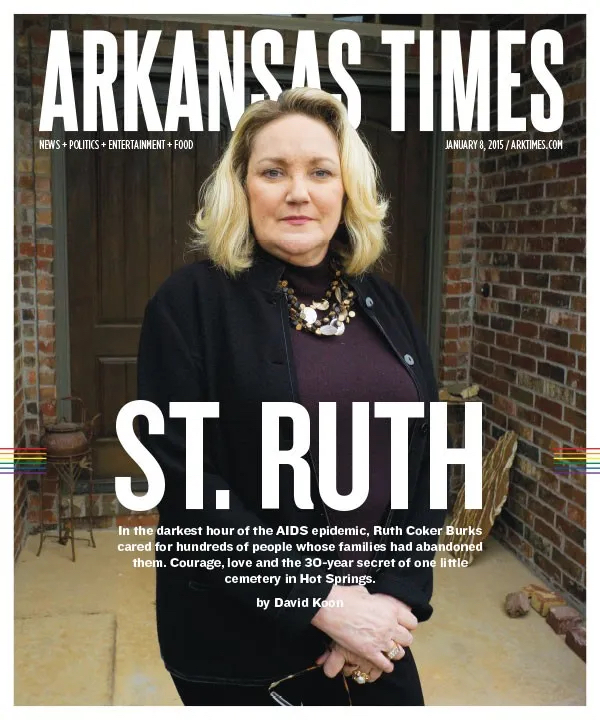
Ruth Coker Burks (born Frances Ruth Coker in 1959) is an Arkansas woman who was a caregiver and AIDS activist in central Arkansas from the mid-1980s to the mid-1990s during the height of the HIV/AIDS epidemic. In 1986, when Burks began her informal care work, she was a mid-twenties single mother who sold timeshare condominiums on Lake Hamilton near her hometown of Hot Springs in central Arkansas. Over the next few years, her informal end-of-life care expanded into daily care work, AIDS activism, and education. Newspaper and magazine profiles, television interviews, a popular memoir, and social media posts have documented her efforts as the ‘Arkansas Cemetery Angel’ (we will refer to Ruth Coker Burks as Ruth since this is how she is named in her memoir and in most press coverage). Laudatory media coverage also led to pointed criticisms of the limits of Ruth’s efforts and to potential flaws in her memory. Rather than evaluating the accuracy of Ruth’s account or those of her critics, this article investigates what her rich, if fragmentary, archival materials, along with her published memoir and newspaper accounts, can reveal about care work, gender, and the lived experience of the AIDS epidemic in Arkansas. More broadly, it begins to address what the publicity (and controversy) around Ruth’s life story offers the study of queer memory in southern spaces.
Ruth’s career as an AIDS caregiver and activist began with a case of mistaken maternal identity and a contested family cemetery. As described in newspaper profiles and her memoir, All the Young Men (2020), in 1986, while visiting a friend in the hospital in Little Rock, Arkansas's capital city, Ruth noticed a neglected patient, Jimmy, who was dying of complications from AIDS. When she went into Jimmy's hospital room, he mistook Ruth for his mother, who refused to visit him. After she confronted the nursing staff, who largely avoided Jimmy's room and failed to convince his mother (over the phone) to come to visit her dying son, Ruth returned to Jimmy's room. And it was as his ‘mama’ that Ruth sat by his bedside for hours, holding his hand and comforting him as he died. This moment of assumed maternal identity marked the beginning of Ruth's decade of informal care work.1Ruth Coker Burks and Kevin Carr O’Leary, All The Young Men: A Memoir of Love, AIDS, and Chosen Family in the American South (New York: Grove Press, 2020), 3–11; Michael Garofalo, “Lessons in Love,” StoryCorps, December 5, 2014, https://storycorps.org/podcast/storycorps-449-lessons-in-love/; David Koon, “Ruth Coker Burks: The Cemetery Angel,” Arkansas Times, January 8, 2015, https://arktimes.com/news/cover-stories/2015/01/08/ruth-coker-burks-the-cemetery-angel.
Alongside care work and public activism, Ruth provided a final resting place for some men she cared for in the Files Cemetery in Hot Springs, an hour's drive southwest of Little Rock in the Ouachita Mountains. It was for Jimmy, who had mistaken Ruth for his mother, that she turned to Files Cemetery.
From the first chapter of Ruth’s memoir, the Files Cemetery is described as a site of commemoration, refuge, and conflict.2Burks and O’Leary, All the Young Men, 11–14. In the following decades, this cemetery has become an essential site of LGBTQ+ memory in Arkansas. Layers of informal commemoration at the Files Cemetery and Ruth’s fragmentary archival record speak to the kinds of alternative archives of AIDS activism—beyond the public sphere—that Stephen Vider has examined in his discussion of community caregiving during the AIDS epidemic as part of his more extensive study of the importance of domestic spaces in LGBTQ+ politics in the United States.3Stephen Vider, The Queerness of Home: Gender, Sexuality, and the Politics of Domesticity after World War II (Chicago, IL: University of Chicago Press, 2021). As far as we know, the Files Cemetery is one of only a few cemeteries in the United States that became a documented resting place for people who died during the HIV/AIDS epidemic.4Two other documented final resting places for those who died during the HIV/AIDS epidemic are the Congressional Cemetery in Washington, DC and the Hart Island Potter's Field in New York City. The Files Cemetery operates at a much smaller and more informal scale than either of these.
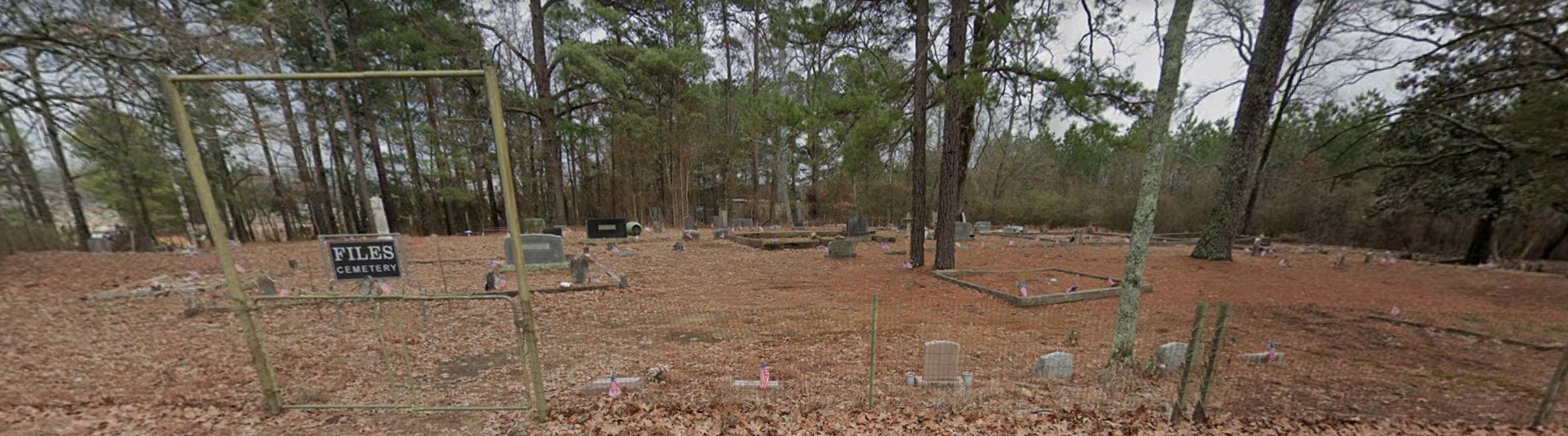
There also is scattered but evocative evidence of continuing engagement with the Files Cemetery as a space for queer memory-making. Facebook posts from March 2019 record how the drag troupe, the Arkansas Sisters of Perpetual Indulgence: The Abbey of the Hillbilly Harlots, cared for the cemetery’s grounds and planted rose bushes. A series of photographs of the Files Cemetery taken at regular intervals from spring 2020 to fall 2024, which are part of a forthcoming donation to the Center for Arkansas History and Culture, reveal earlier layers of informal commemoration (including notes, beer bottles, Mardi Gras beads, and devotional objects) near the resting places of some of the men. In 2020, a grave was added to the cemetery (of which Ruth was unaware.) Some of these later commemorative efforts at individual graves did not involve Ruth and were potentially enacted by local critics of Ruth, as evidenced by one stone that was partially funded by a critical host of a YouTube podcast.
Praise extended to the national and international levels. The first prominent news article on Ruth, which predated the Arkansas Times' profile, was a twelve-minute interview with NPR's StoryCorps in 2014. The December 7, 2020, issue of People magazine featured a glowing article, “They Call Me the AIDS Angel.”5Jason Sheeler, “They Call Me the AIDS Angel,” People, December 7, 2020. Exemplifying Ruth's newfound fame, the Guardian published an article on February 3, 2021 titled, "The Aids Angel: How Ruth Coker Burks Comforted Dying Gay Men." That same year, however, the Arkansas Times published a more critical piece by Austin Gelder about a “missing monument.” Gelder's piece centered on accusations that Burks had exaggerated some of her claims and failed to establish a much-discussed monument at the Files Cemetery in honor of those for whom she had cared.6Austin Gelder, “Ruth Coker Burks and the Missing Monument,” Arkansas Times, July 8, 2021, https://arktimes.com/arkansas-blog/2021/07/08/ruth-coker-burks-and-the-missing-monument. National press coverage trended from the laudatory to the skeptical with pointed questions about Ruth's claims about the number of men for whom she cared, the number of gravesites at the Files Cemetery, and her contested ownership of the cemetery.7Alexander Kacala, “Doubts Surround Viral Story of ‘AIDS Angel’ Who Says She Helped Hundreds of Dying Men,” NBC News, October 29, 2021, https://www.nbcnews.com/nbc-out/out-news/doubts-surround-viral-story-aids-angel-says-helped-hundreds-dying-men-rcna4163. These critiques came largely from residents of Hot Springs, some of whom knew Ruth, some of whom wanted a more thorough history of the events, some who are invested in the history and its public telling, and also those who feel that her version of events is somehow maligning the city. A YouTube podcast, RUTHLESS: The Real Story Behind the ‘Cemetery Angel of Arkansas’ is representative of this critique and is discussed in more detail below. In the wake of this praise and criticism, the Center for Arkansas History and Culture at the University of Arkansas at Little Rock has collected Ms. Burks’ archival materials in an ongoing effort to preserve LGBTQ+ history in Arkansas. The CAHC's archival work complements that of Invisible Histories—an organization who "believes archiving is resistance to oppression and history leads to liberation"—to document queer histories and spaces of memory in the southern United States.8"Invisible Histories." Accessed January 3, 2025. https://invisiblehistory.org/.
This article discusses the history of Ruth's care work and activism in central Arkansas in the broader context of scholarship on gender and care work during the HIV/AIDS epidemic. We will survey the gendered construction of care work and motherhood in Arkansas in Ruth’s memoir and archival materials. Then, we will tackle the life histories of the predominantly white and Latino working class and rural men she cared for and what her archive—with its evocative fragments and enduring silences— reveals about the lived experience of the AIDS epidemic for some people in Arkansas. We conclude with Ruth’s critics and what her story can teach about the contested memory of the AIDS epidemic. This article does not attempt to evaluate the accuracy of the claims of either Ruth or her local critics, but rather examines the possibilities and limits that her archive, and the published materials about her, open up. The historical importance of Ruth’s care work and the validity of some of the criticisms of her are not incompatible. Rather than a binary understanding, we are interested in what Ruth’s archive reveals about the history of the AIDS epidemic and the construction of the role of the idealized caregiver for some women in Arkansas.
Care Work and AIDS Activism in Arkansas
Ruth was one of many women across the United States who played leading roles in AIDS activism and care. As the ACT UP Oral History Project states, “Women were an integral part of the AIDS crisis—first, and foremost, as People with AIDS, but also as leaders of the AIDS Activist Movement, and as caregivers.”9“Women and AIDS,” ACT UP Oral History Project, digital archive, https://www.actuporalhistory.org/actions/women-aids. Ruth’s trajectory reflects what scholars have argued was the complex array of personal, political, social, and spiritual motivations behind many women’s activism during the AIDS epidemic in the United States.10See, for example, Ulrike Boehmer, The Personal and the Political: Women’s Activism in Response to the Breast Cancer and AIDS Epidemics (Albany: State University of New York Press, 2000); Angelique Harris, “Emotions, Feelings, and Social Change: Love, Anger, and Solidarity in Black Women’s AIDS Activism,” Women, Gender, and Families of Color 6, no. 2 (2018): 181–201; For a more expansive history of women’s activism in the United States, see Dawn Durante, ed., Women’s Activist Organizing in US History (Urbana: University of Illinois Press, 2022).
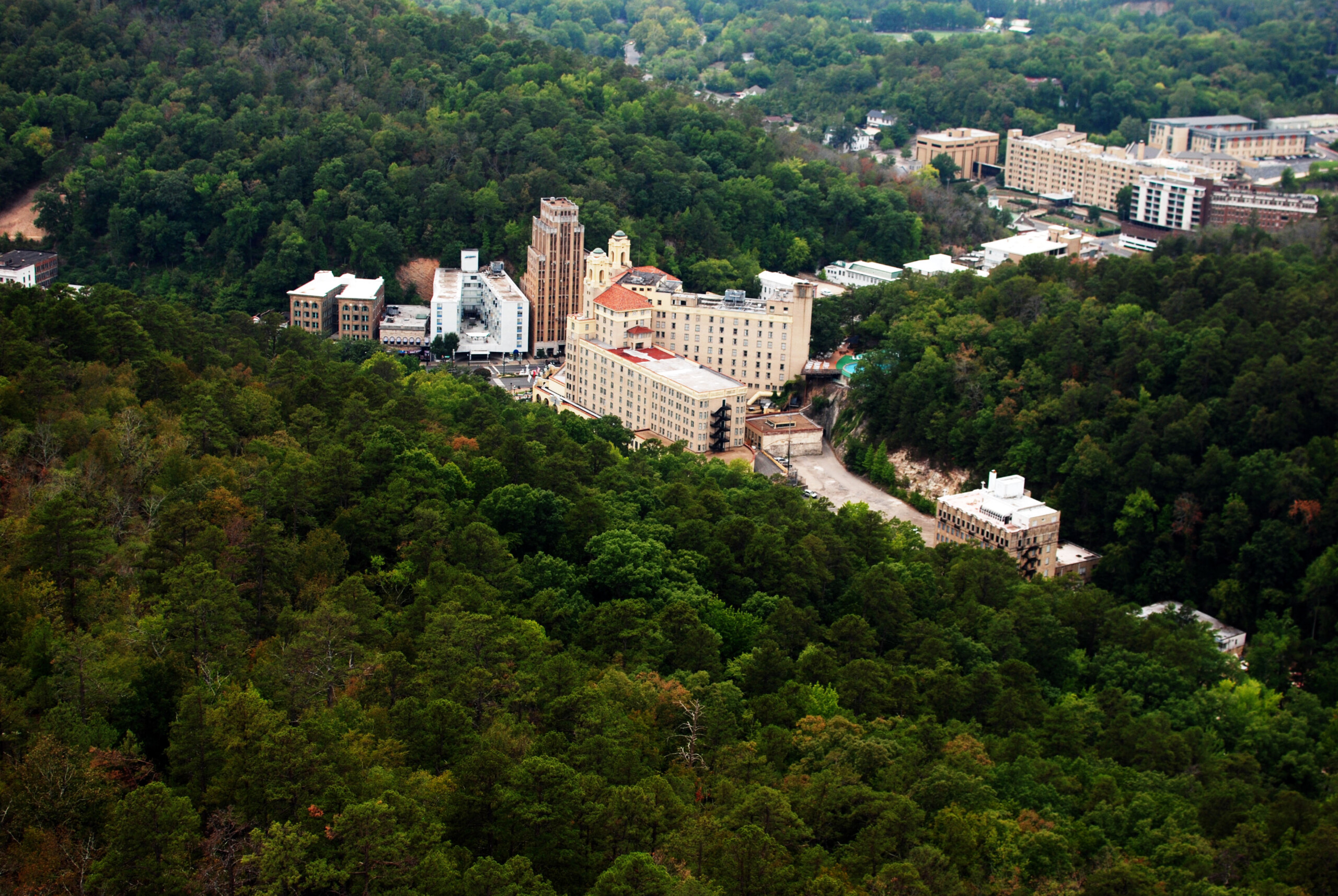
Ruth was a single mother who sold lakeshore timeshares in Hot Springs when she began her informal care work. Her work's flexible and commission-based practices facilitated Ruth’s initial care work. AIDS activism and end-of-life care were not how recently divorced Ruth planned to spend her twenties and early thirties. “All I want sometimes is to be a wife and be in the Junior League.”11Burks and O’Leary, All the Young Men, 74. While Ruth did not come from a well-off background, she hoped to advance in the social scene of Hot Springs. Ruth’s care work encompassed a shifting range of activities from 1986 to 1995. Initially, she focused on visiting the hospital, comforting dying men, and providing supplemental food for those still alive.12Burks and O’Leary, 62; Paula Cocozza, “The AIDS Angel: How Ruth Coker Burks Comforted Dying Gay Men,” The Guardian, February 3, 2021, https://www.theguardian.com/society/2021/feb/03/aids-angel-ruth-coker-burks-dying-gay-men. As she described at one point (she had started dumpster-diving to get adequate cooking supplies), “I could be like this little grocery-delivery person.”13Burks and O’Leary, All the Young Men, 96. Word of mouth drove her first few years of care work as anxious Little Rock and Hot Springs hospital staff contacted her. “More calls started coming. I guess the nurses and doctors all went to the same places to drink and unwind because I later found out they got to talking. ‘Oh my God, we had this insane woman come in, and she went right in the AIDS patient’s room.’ . . . I had two calls that first month, which I thought was crazy. Then three the second.”14Burks and O’Leary, 24–25.
This soon shifted to men calling her directly, either for themselves or for a friend or loved one. As Ruth notes, by 1988, this “network of calls from the hospitals and gay men giving out my number” kept her more than busy, along with caring for her young daughter and trying to make a living.15Burks and O’Leary, 54, 83. It is important not to reify the assumption that persons with HIV/AIDS were always gay men, even if that is often how Ruth discusses her experiences in central Arkansas in her memoir. Ruth’s archive and the ambiguities surrounding the Files Cemetery underline the importance of not projecting contemporary categories onto the past and respecting privacy in the telling of these histories.
From 1986 to 1989, Ruth worked quietly, and from 1989 onwards, she was much more public in attempting to raise awareness and draw local media attention to the AIDS epidemic in central Arkansas. Building on her connections to some of “the town elders” of Hot Springs, Ruth also gave talks at Rotary Clubs across Arkansas and quietly facilitated donations from well-to-do residents of Hot Springs. In her description of one of her early speeches at Rotary, “I talked about the people with AIDS in town, how they needed food and access to care, but what we mainly needed was education.”16Burks and O’Leary, All the Young Men, 125, 129–134, 184, 257. Formalizing her activism, Ruth assisted Norman Jones, who ran the Arkansas non-profit, Helping People with AIDS (HPWA.) Ruth’s work with HPWA encompassed everything from the distribution of accessible sex education materials to creative publicity efforts, including the production of humorous T-shirts with the phrase “I believe in Jesus. Do you?” transformed into “I DO. DO YOU?” about safer sex practices.17Burks and O’Leary, 270–271.
The sharply diverging reactions to Ruth in the present-day echo in her recollections of care work and AIDS activism from the mid-1980s to the mid-1990s. Ruth claims that initially, she was perceived as a prim “‘church lady’” by many of the men she cared for. However, she remembers that to most of Hot Springs, she was viewed as “this insane woman” and “that crazy Ruth Coker Burks,” who wouldn’t stop talking about AIDS and gay rights.18Ruth Coker Burks, "All Her Sons: The Cemetery Angel," interview by Seth Doane, Video, December 1, 2019, CBS Sunday Morning, https://www.cbsnews.com/news/all-her-sons-ruth-coker-burks-the-cemetery-angel/; Burks and O’Leary, All the Young Men, 24, 94, 156.
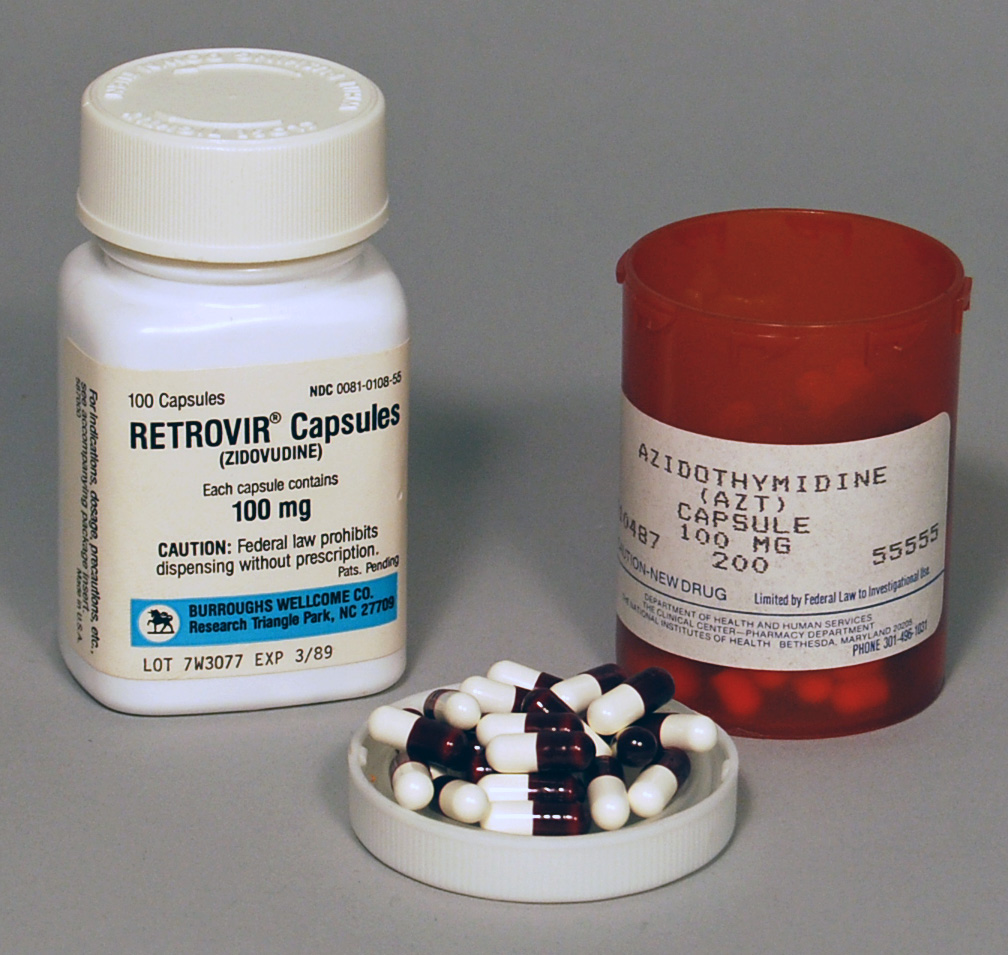

Along with public-facing activism, Ruth’s informal hospice care evolved from providing company at the bedside of dying men to helping ‘her guys’ live as long as they could by securing housing assistance, filling out death certificates, seeking social security payments, filling AZT prescriptions at often hostile local pharmacies, HIV testing, and ultimately AIDS education.19Koon, “Ruth Coker Burks: The Cemetery Angel”; Burks and O’Leary, All the Young Men, 57–58, 72, 81–83, 86–88, 112–113. Ruth regularly visited hospitals in Hot Springs and Little Rock and frequently cared for people in their homes. At times, she appears to have operated as an informal pharmacy herself, distributing leftover AIDS medication across central Arkansas.20Garofalo, “Lessons in Love”; Burks and O’Leary, All the Young Men, 173. These shifts did not mean she stopped providing personal daily attention. For example, in her time with one of the men for whom she cared, Chip, she visited daily, fed him, bathed him, and read him the newspaper.21Burks and O’Leary, All the Young Men, 234. In his study of queer public history and the home, Vider challenges the often-presumed division between political action (outside of the home) and care work (inside the home). Rather than framing the home as a space away from politics, Vider argues that the home and the care for people with AIDS in their own homes constitute an essential site for activism.22Vider, The Queerness of Home, 179–213. The contours of Ruth's care work reflect Vider's argument.
While Ruth’s individualized efforts to keep ‘her guys’ fed are distinct from the more extensive history of food justice organizing in the twentieth-century United States that Emily Twarog studies in Politics of the Pantry (2017), food was at the center of Ruth’s work, especially in the late 1980s, and her subsequent gendered construction as a caregiving angel.23Emily E. LB. Twarog, Politics of the Pantry: Housewives, Food, and Consumer Protest in Twentieth-Century America (New York: Oxford University Press, 2017). In early media profiles from 2014 and 2015, Ruth estimated that she cared for "nearly 1,000 people" and "hundreds of dying people" from the mid-1980s to the mid-1990s.24Garofalo, “Lessons in Love”; Koon, “Ruth Coker Burks: The Cemetery Angel.” As discussed below, these numbers have been contested. While it is beyond the scope of this article to fully address how Ruth’s efforts intersected with formal and informal care networks in Arkansas, there were additional organized efforts, including the important work of RAIN (Regional AIDS Interfaith Network), which was profiled in a 2016 Arkansas Times piece, among others.
Ruth’s unprocessed archival collection at the Center for Arkansas History and Culture provides some indications of how her care work intersected with broader caregiving networks in Arkansas. Specifically, her archives include a binder of letters of recommendation and typed endorsements from prominent community members regarding Ruth’s nomination for the Arkansas Community Service Award, the establishment of an HIV/AIDS program at Levi Hospital, and the nomination of Ruth for the position of Executive Director of the Arkansas AIDS Foundation. In one letter, the assistant director of the American Psychological Association recommended Ruth for the Arkansas Community Service Award with the argument that “Ruth’s efforts in promoting the conference have remained unflagging. Most impressively, Ruth has served without remuneration, preferring that we hire two part-time local coordinators from our community of those directly affected by AIDS. As one of our local coordinators has suffered an unfortunate precipitous decline in health. Ruth has generously stepped forward to assume his responsibilities while insisting that he still receive the full salary offered for the position.” A local attorney wrote in a separate letter of recommendation, “I would like to recommend Ruth Burks as the person to get this program started. Ruth has demonstrated her commitment to the care of those who are HIV positive and we are fortunate to have someone already in the community who is prepared to immediately take on such a responsibility.”25These recommendation letters are part of Ruth's collection donated to and being processed by the Center for Arkansas History and Culture. Box 6, Folder 20, Ruth Coker Burks papers, Center for Arkansas History and Culture, Little Rock, Arkansas.
Ruth's memoirs and archives only get us so far in researching the experience of AIDS in Arkansas and of women activists during the AIDS epidemic. Ruth remembers primarily, but not exclusively, caring for white and Latinx men. Her life story and archival materials tell us little about the impact of HIV/AIDS on Black communities in Arkansas (15.5% of the Hot Springs population in 1990) or the work of Black women in AIDS activism both at the state and national levels. Recent scholarship has drawn attention to the central role of Black women to AIDS activism and care work in the United States. In her influential study of Black women activists, Angelique Harris argues for the importance of the intersecting emotions of love, compassion, community solidarity, anger, and frustration in AIDS activism and care work.26Harris, “Emotions, Feelings, and Social Change,” 181–183, 186–188, 191–195.
While this article centers upon Ruth’s life and her account of primarily caring for white and Latinx men, it is critical to acknowledge how racial disparities in healthcare profoundly shaped the history of HIV/ AIDS. Unfortunately Ruth’s archive does not tell us much about the impact of the AIDS epidemic on Black people in Arkansas. However, our study of Ruth’s memoir and archival fragments builds on Cherisse Jones-Branch and Gary Edwards’ compelling model of biographical essays in Arkansas Women: Their Lives and Times (2018) and Jayme Stone’s 2010 study of Black women as activist mothers in the Arkansas Delta.27Cherisse Jones-Branch and Gary T. Edwards, eds., Arkansas Women: Their Lives and Times, Southern Women: Their Lives and Times (Athens: University of Georgia Press, 2018); Jayme Millsap Stone, “‘They Were Her Daughters:’ Women and Grassroots Organizing for Social Justice in the Arkansas Delta, 1870–1970” (Memphis, TN, University of Memphis, 2010), https://digitalcommons.memphis.edu/cgi/viewcontent.cgi?article=1238&context=etd. Our examination of the richness and limits of Ruth’s archive expands on these authors’ approach of using various sources to demonstrate women's diverse and multifaceted historical roles.
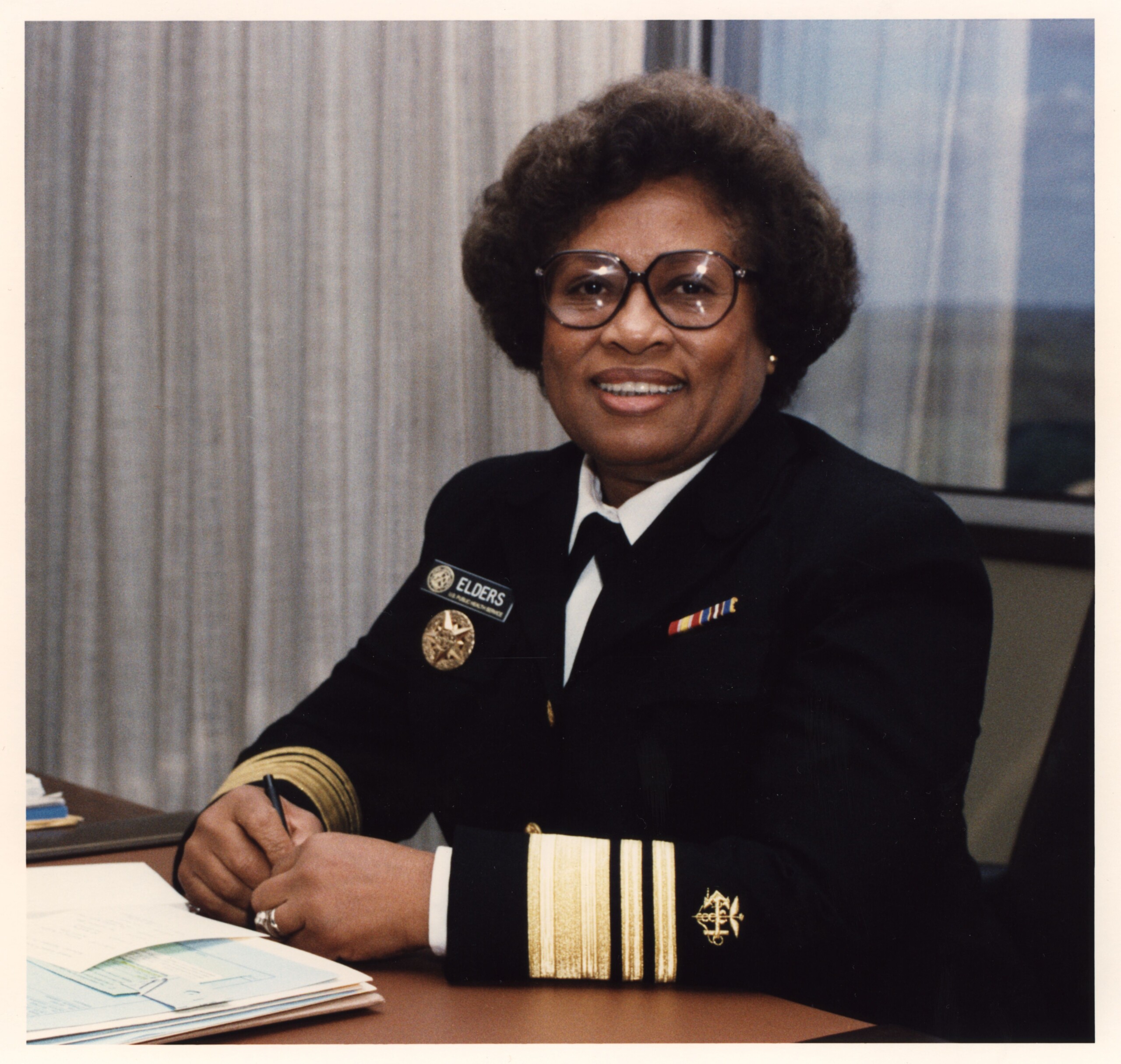
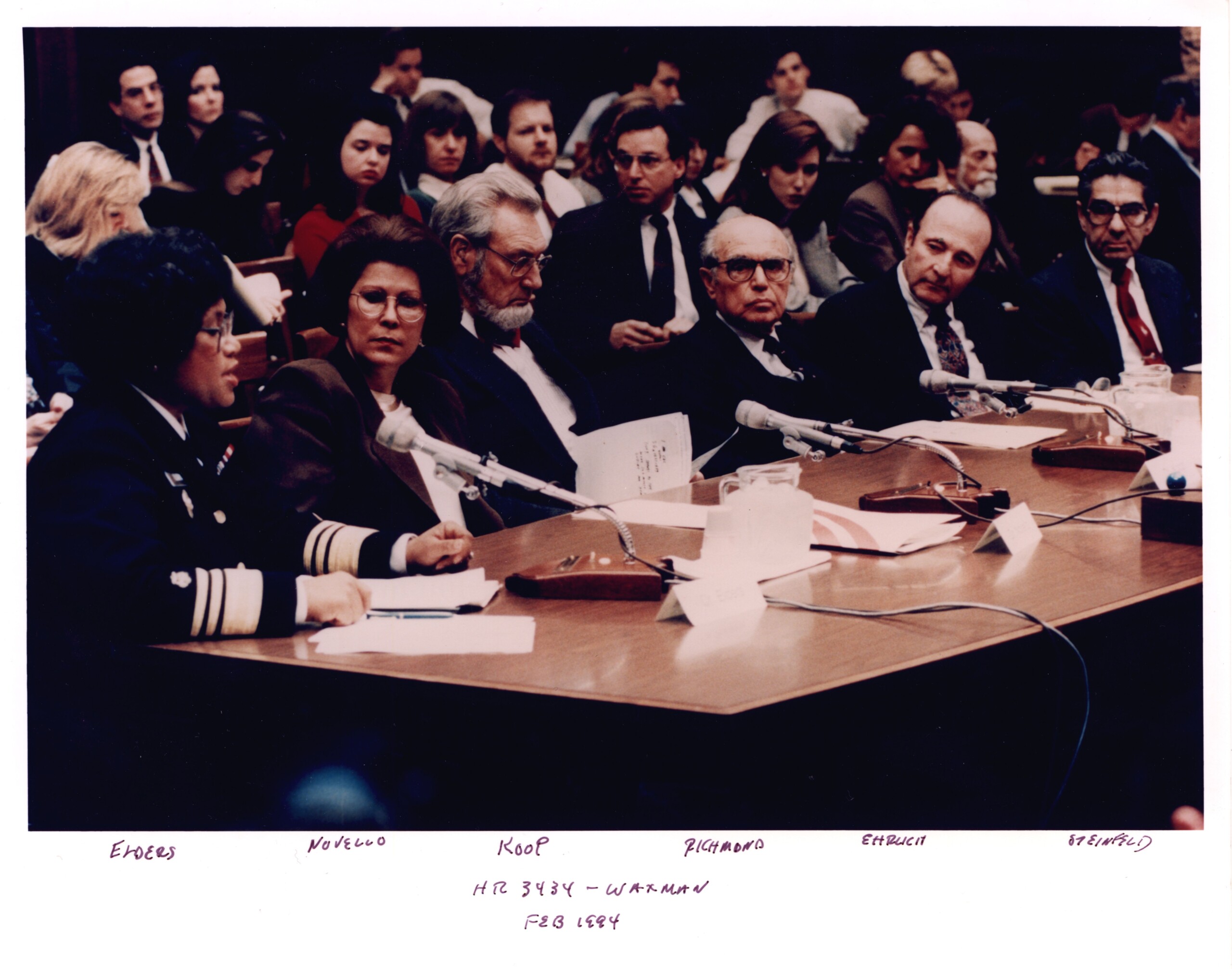
If contested understandings and expectations of gender run through Ruth’s memoir and archives, and the discrimination experienced by many of the men she cared for, Arkansas’s enduring racial divisions implicitly shaped her narrative and its silences. In the words of Catherine Fosl and Daniel Vivian, “the same race, gender, and class divides that mark US society are evident within LGBTQ communities, making histories of queer people of color, women, and trans people more difficult to access, especially by those who do not identify as such.”28Catherine Fosl and Daniel Vivian, “Investigating Kentucky’s LBGTQ Heritage: Subaltern Stories from the Bluegrass State,” The Public Historian 41, no. 2 (2019): 221. Ongoing archival projects in Arkansas are beginning to address these histories. The Historical Research Center at the UAMS Library has collected and preserved the papers of Dr. Joycelyn Elders, Director of the Arkansas Department of Health (1987–1993) and Surgeon General of the United States (1993–1994), who played an important role in the AIDS epidemic both in Arkansas and nationally.
To understand Ruth’s story—and what her archives and cemetery mean for queer memory in the southern United States—we must address how Ruth embraced and struggled against an ideal of “southern femininity” in the 1980s and early 1990s. Ruth’s memoir is a record of the constricted gender expectations imposed on her and her strategic use of her identity to help the men for whom she cared. In her 1991 essay, Frances Ross provides a formative background on changing notions of femininity and how women addressed social problems in turn-of-the-twentieth-century Arkansas.29Frances Mitchell Ross, "The New Woman as Club Woman and Social Activist in Turn of the Century Arkansas," The Arkansas Historical Quarterly 50, no. 4 (1991): 317–351. These norms remained decades later, as Anna Zajicek, Allyn Lord, and Lori Holyfield argue in their article on the women’s movement in northwest Arkansas: “To become activists in the civil rights movement, these women had to challenge the ideals of southern femininity and create a new sense of self.”30Anna M. Zajicek, Allyn Lord, and Lori Holyfield, “The Emergence and First Years of a Grassroots Women’s Movement in Northwest Arkansas, 1970-1980,” The Arkansas Historical Quarterly 62, no. 2 (2003): 155. Ruth also grappled with ideals of femininity while embracing the gendered role of caregiver.
In her memoirs and archival notes, Ruth does not directly discuss feminist politics in Arkansas. However, her complex experiences as a caregiver and activist contribute to what Janet Allured referred to as alternative “wellsprings” of “southern change-seekers” in her study of second-wave feminism in Louisiana.31Janet Allured, Remapping Second-Wave Feminism: The Long Women’s Rights Movement in Louisiana, 1950–1997 (Athens: University of Georgia Press, 2016), 49. Moreover, when we examine Ruth’s experiences, it is vital to consider the historical context of Arkansas in the mid-1980s, a little over a decade after the intense political backlash against the proposed Equal Rights Amendment. As Janine Parry argues, “the Equal Rights Amendment in Arkansas had swiftly moved from being perceived by many observers as ‘virtually assured’ of ratification in January of 1973 to being openly reviled at the next legislative session.”32Janine A. Parry, “‘What Women Wanted’: Arkansas Women’s Commissions and the ERA,” The Arkansas Historical Quarterly 59, no. 3 (2000): 283. While distinct from Ruth's story, these conflicting political currents indirectly shaped her activism and experiences.
Constructing Care Work and Motherhood in Arkansas
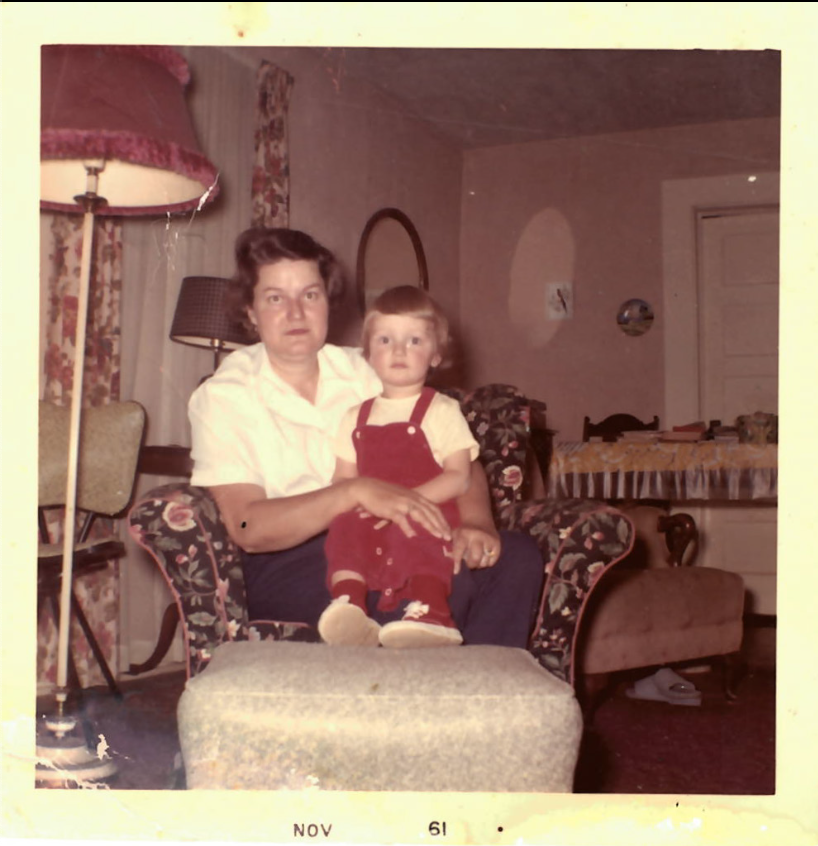
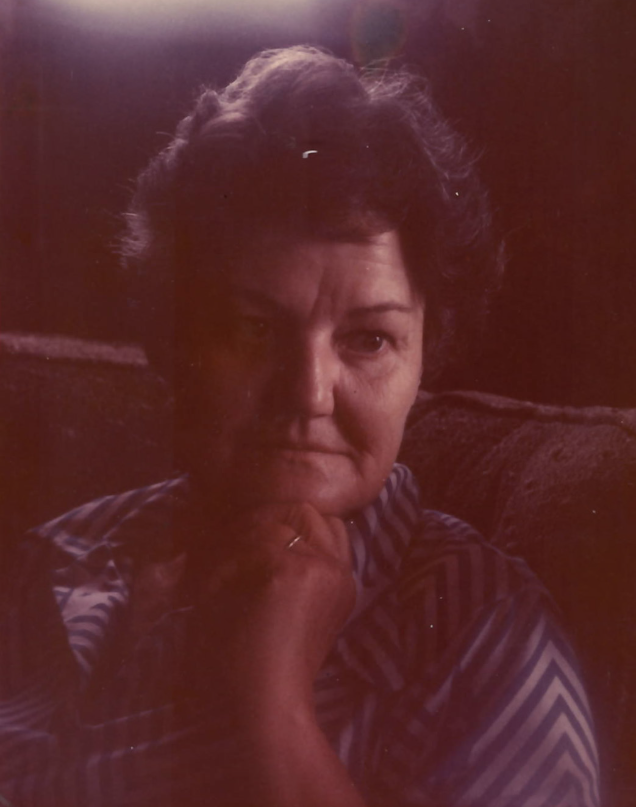
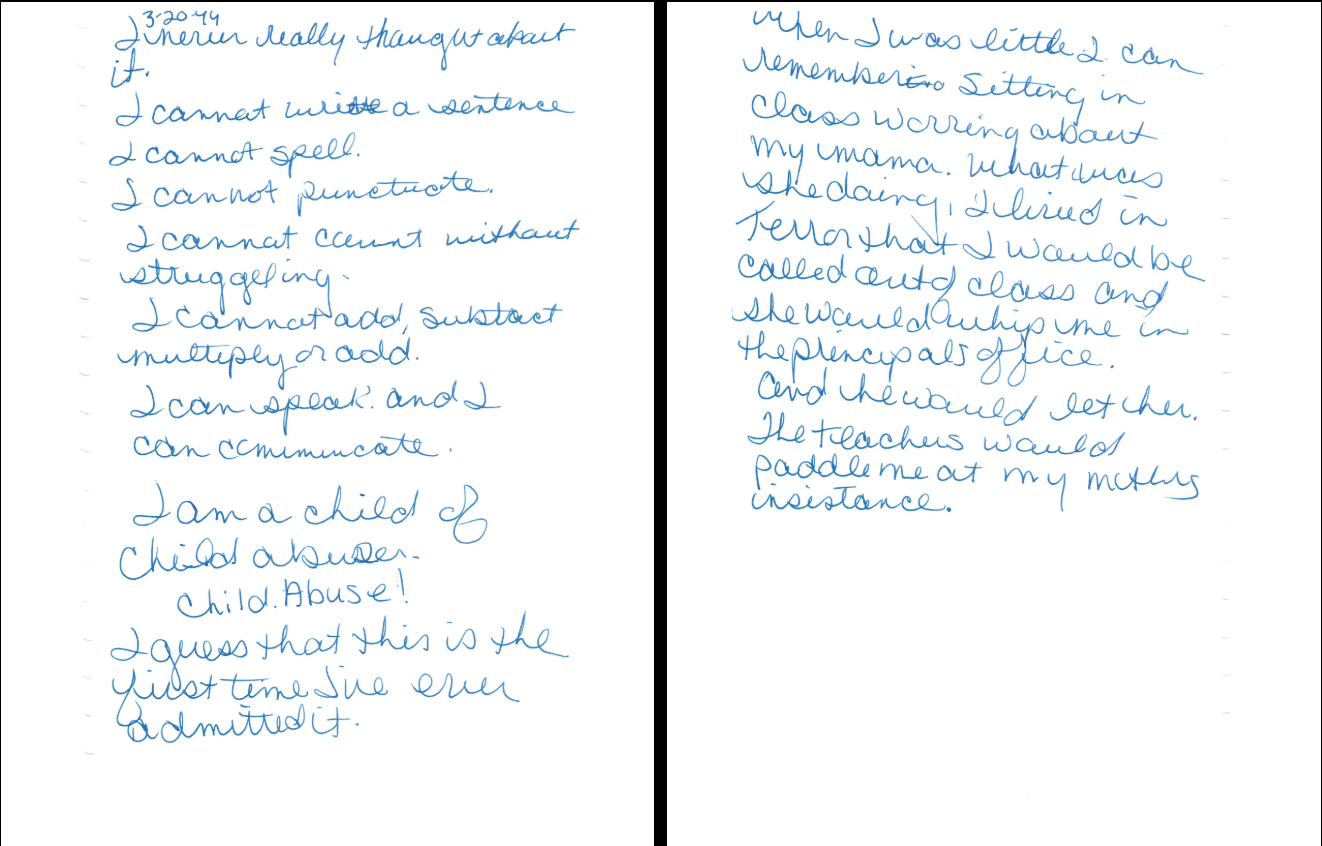
Ruth’s written and archival ephemera record the gendered expectations of care and motherhood often imposed on women in late twentieth-century Arkansas. Her autobiography contains a steady commentary on the contested meaning of motherhood in her life and care work. The figures of abusive mothers, absent mothers, and idealized alternative mothers run throughout the book. Ruth’s deeply damaging mother and her own constant worries that she might cause her young daughter harm through her AIDS work are recurring themes.33Burks and O’Leary, All the Young Men, 100–102. Ruth’s memoir and archives contain glimpses of the range of substitute mothers these dying men sought, including Ruth, the Virgin Mary, and even Dolly Parton.
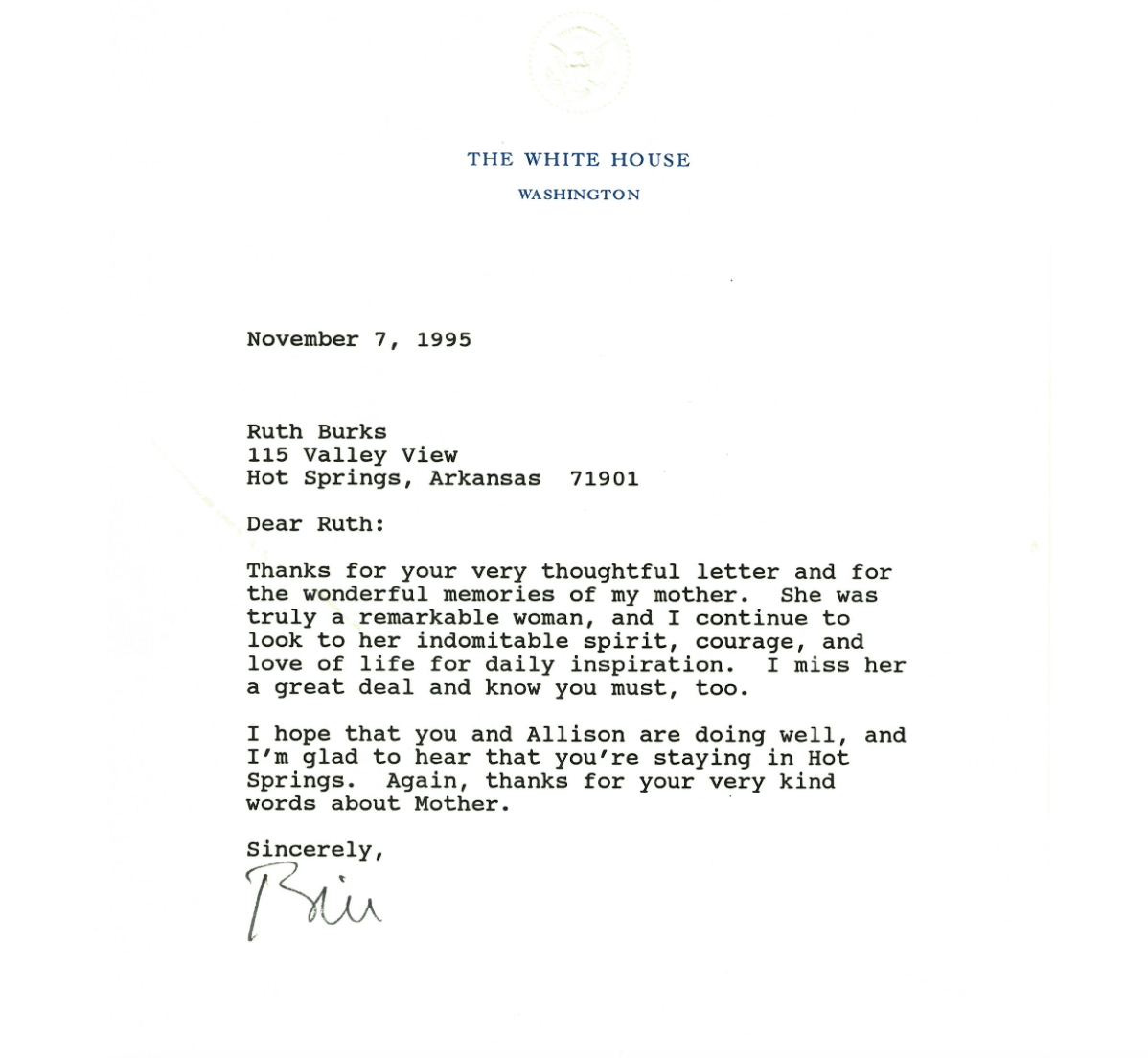
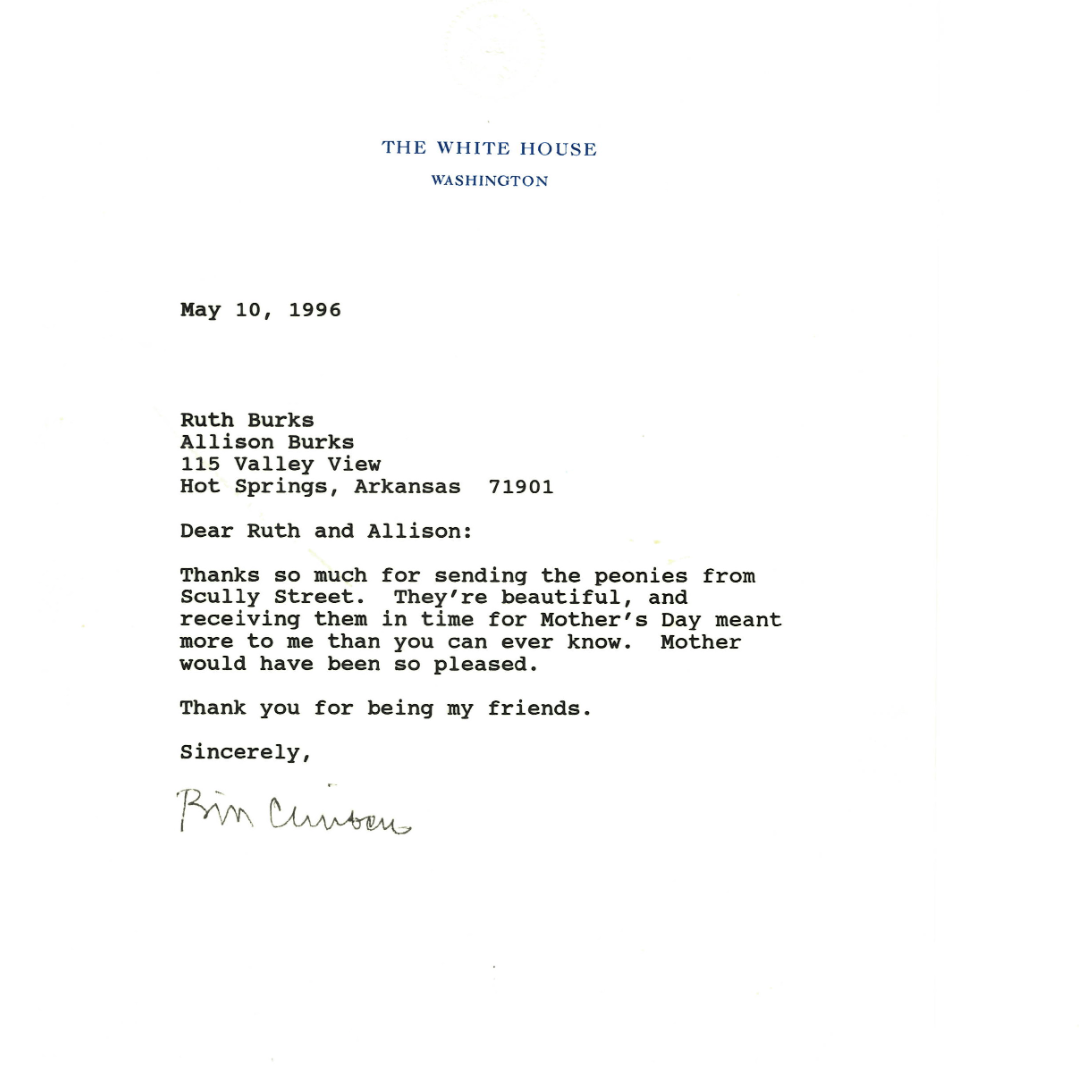
As mentioned, Ruth's career as an informal caregiver in the mid-1980s began with a case of mistaken maternal identity. With only a few exceptions, the men's families for whom Ruth provided care rejected their sick and dying sons.34Garofalo, “Lessons in Love.” “So many arrived [back in Arkansas] thinking Mama would take them back. Sometimes I would go to their homes with them, mostly just to save me a trip of driving back out there when she wouldn’t.”35Burks and O’Leary, All the Young Men, 55.
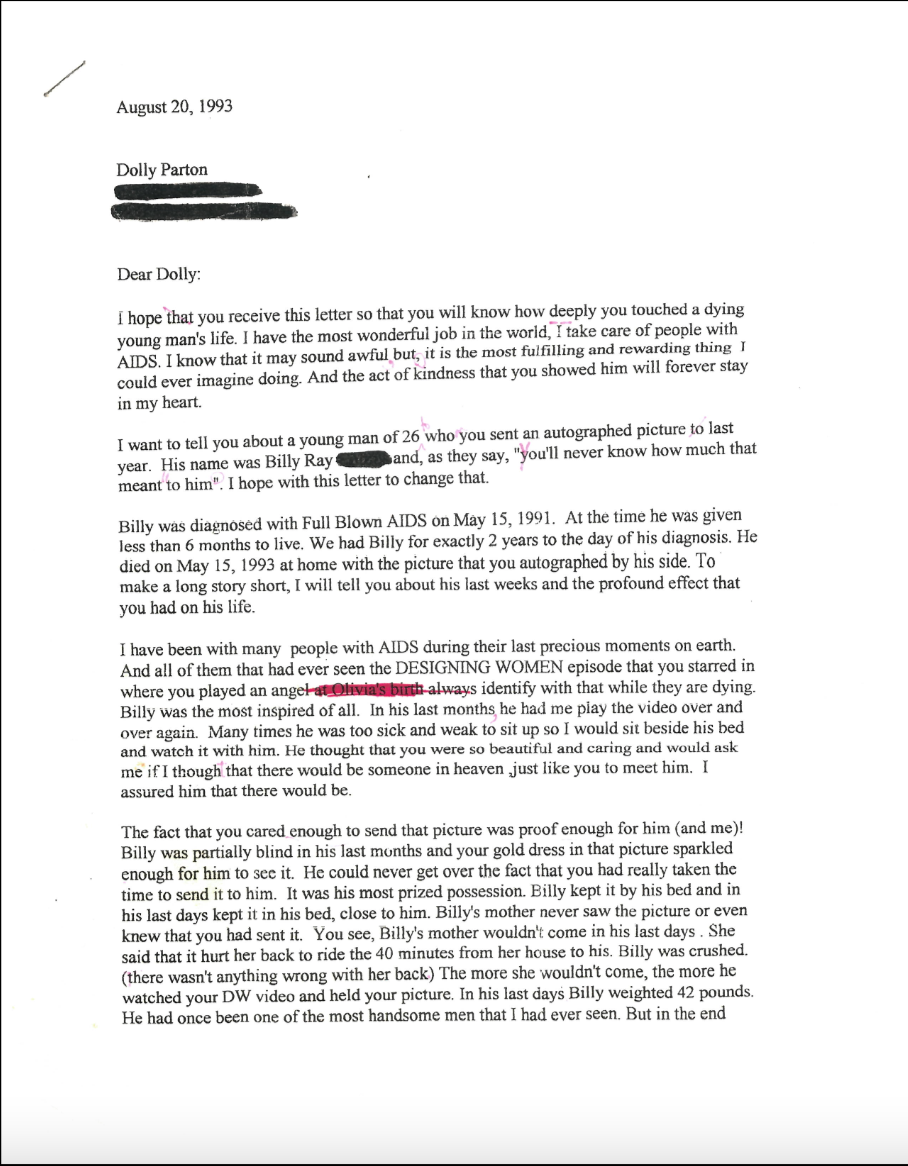
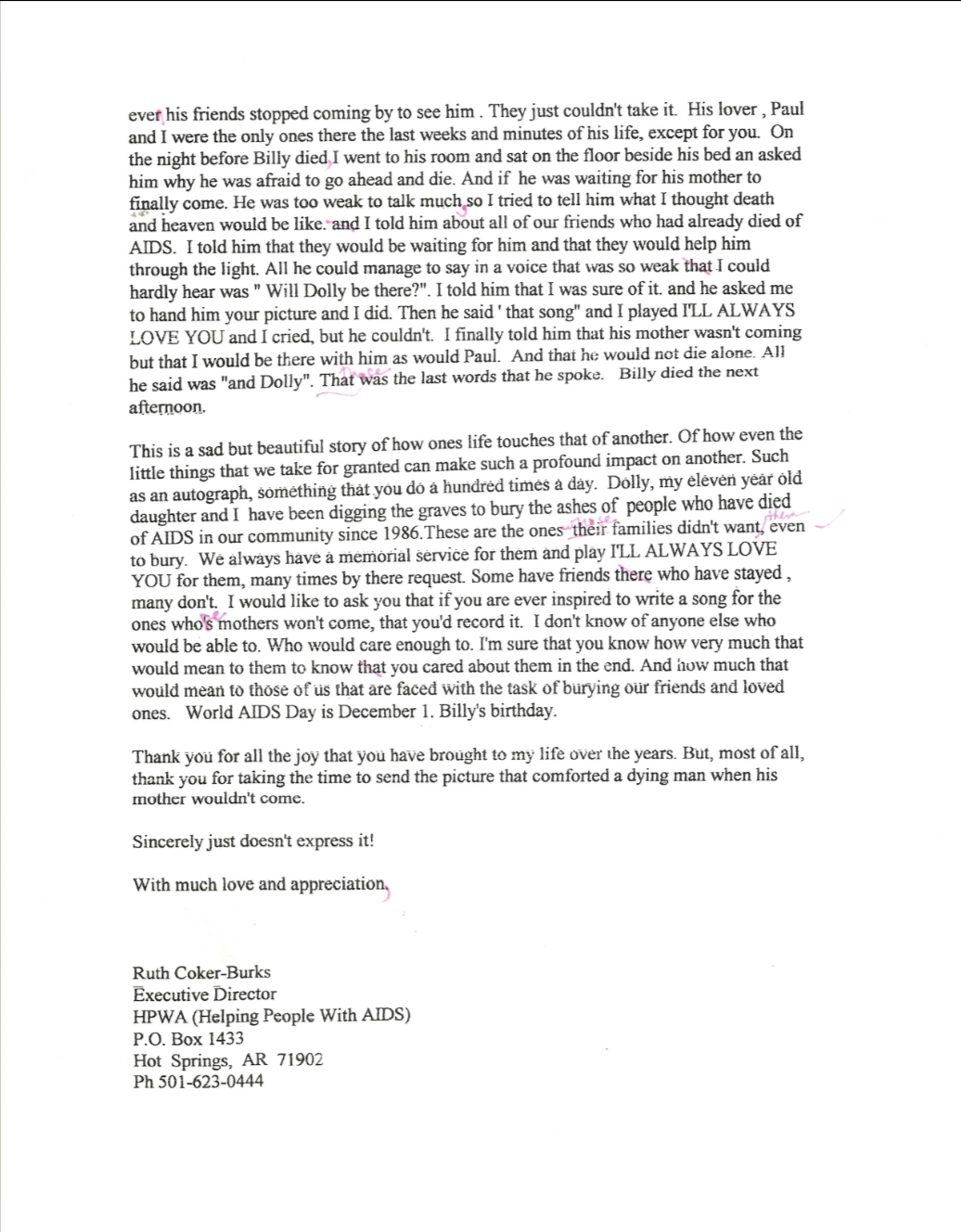
Alongside this parade of neglectful parents, another narrative of idealized mother figures runs through Ruth’s life history and archives. A letter she wrote to Dolly Parton on August 20, 1993, on behalf of Billy Ray Collins soon after he died, fashioned the beloved country music singer as a substitute maternal figure for the dead man. Ruth wrote the letter thanking Dolly for a picture that she had sent to Billy, a devoted fan. “Billy’s mother never saw the picture or even knew that you had sent it,” the letter begins “You see, Billy’s mother wouldn’t come in his last days. . . . Billy was crushed.” Ruth's letter underlined a profound sense of loneliness: “But in the end, even his friends stopped coming by to see him. They just couldn’t take it. His lover, Paul, and I were the only ones there in the last weeks and minutes of his life, except for you.” Ultimately, Ruth had to tell the dying Billy that his mother would not visit him. “I finally told him that his mother wasn’t coming but that I would be there with him as would Paul. And that he would not die alone. All he said was ‘and Dolly’.” In Ruth’s memory of Billy’s final days, recorded in a letter to Parton, a photograph of the singer was transformed into an icon standing in for Billy’s absent mother.36See, Box 6, Folder 16, Ruth Coker Burks papers, Center for Arkansas History and Culture, Little Rock, Arkansas. Billy was certainly not the only one of Ruth’s guys to reach out for their mothers and be denied at the end of their lives. This is a recurring theme in Ruth’s memoir.
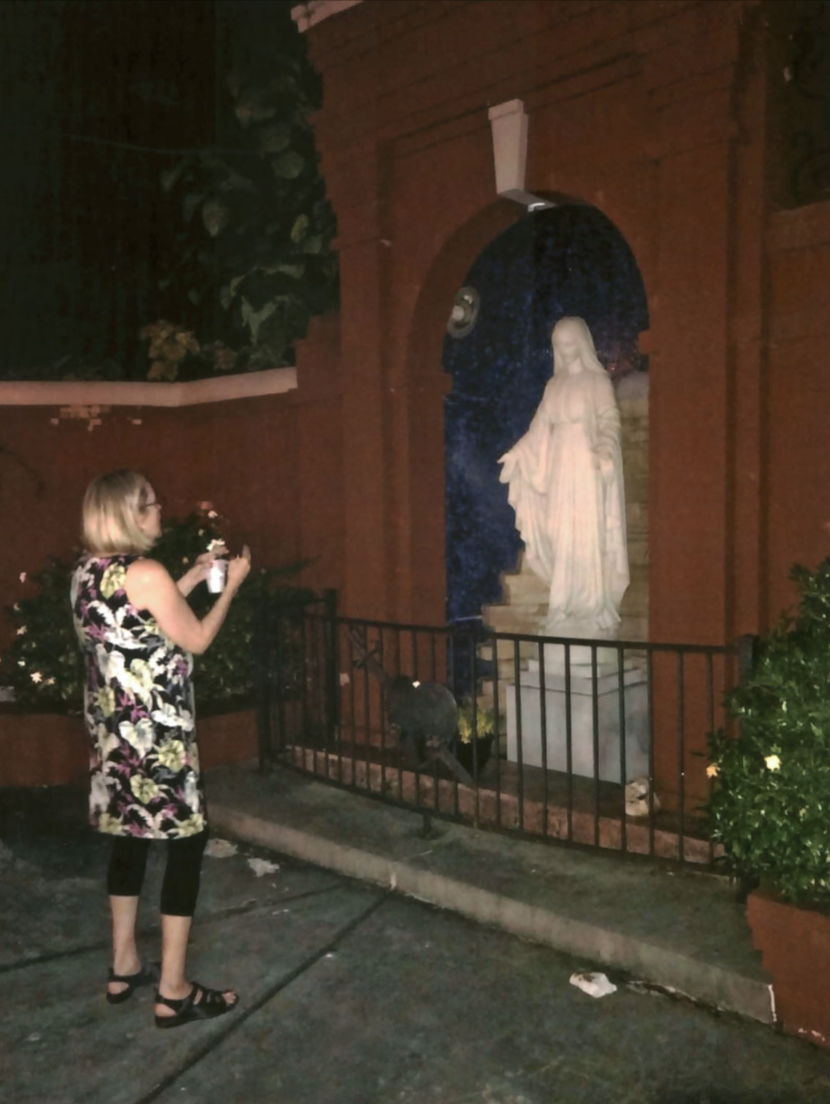
This search for an alternative maternal figure is perhaps best exemplified by Ruth’s visits with the men she cared for to that most idealized, and unrealizable, of mothers: the Virgin Mary. They often visited a small grotto at St. Mary of the Springs Catholic Church in Hot Springs. “There’s a statue of the Virgin Mary there,” writes Ruth, “in a red-brick shrine, hidden from the street. She’s on a pedestal, so she looks down on you, but there’s kindness in the stone of her eyes. . . . Whatever their religion, or lack thereof, my guys often like to visit her . . . sit on the brick and talk to her.”37Burks and O’Leary, 232.
All the Young Men
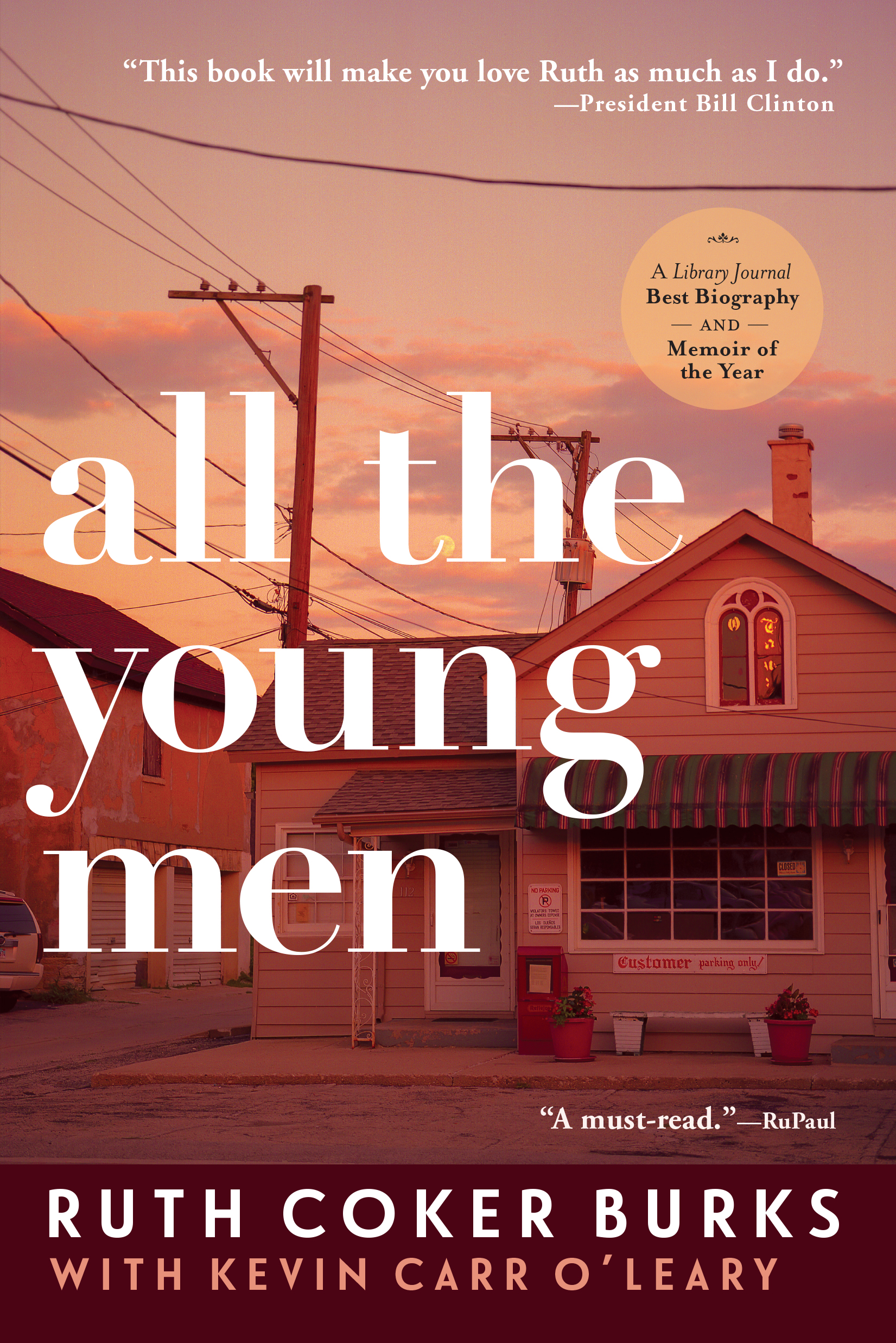
At the heart of Ruth’s memoir, and of recent criticisms of her memory, are the men, including Chip and Billy, who she cared for and those she later buried, such as Jimmy, in the Files Cemetery. Who were the titular ‘young men’ of Ruth’s autobiography, or as some of her critics lament, the lost ‘forty names’ of the Files Cemetery?38Gelder, “Ruth Coker Burks and the Missing Monument.”
Based on Ruth’s account, she cared for hundreds of men dealing with HIV/AIDS in central Arkansas from 1986 to 1995.39Garofalo, “Lessons in Love”; Koon, “Ruth Coker Burks: The Cemetery Angel”; Burks, "All Her Sons: The Cemetery Angel.” The ashes of a small number of them are interred in the Files Cemetery. These men had returned to Arkansas in search of care after living in New York or Washington, DC, or when they had left more rural parts of the state for Hot Springs or Little Rock. In Ruth’s telling, many of these young men only reluctantly returned to Arkansas for care that their families denied them.40Burks and O’Leary, All the Young Men, 30–31, 76–77. “My guy who made it all the way to DC,” wrote Ruth upon visiting Chip’s grave, “only to end up in the place he’d escaped from.”41Burks and O’Leary, 343.
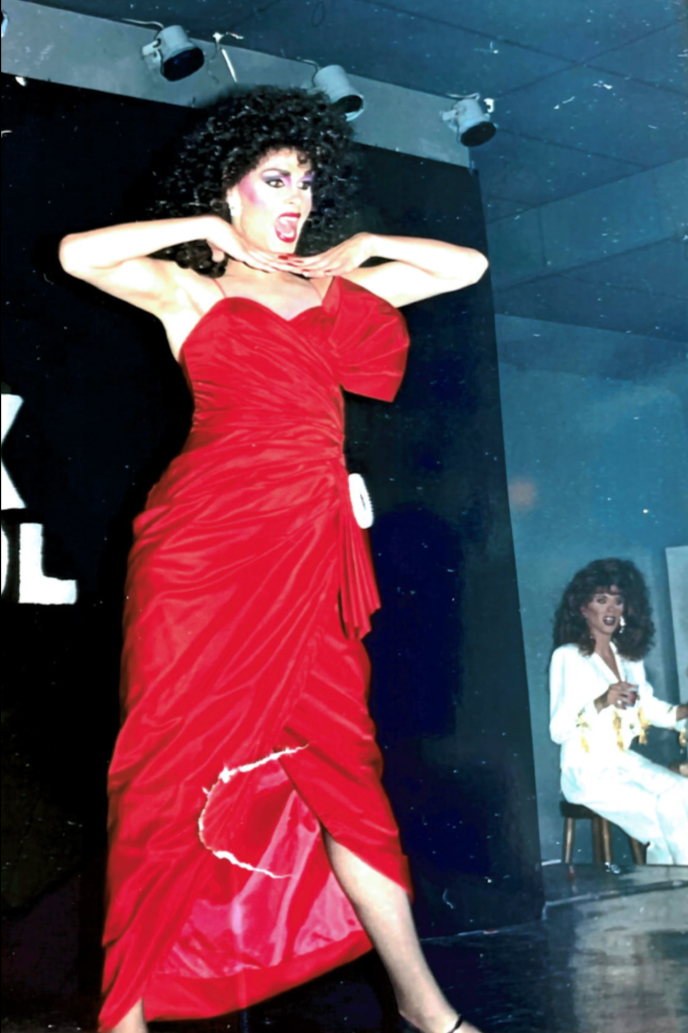
She cared for primarily working-class (sometimes indigent) young white and Latino men. Specifically, Ruth’s memoir, archives, and interviews record her work with numerous white country boys from the hills of Arkansas, Mexican immigrants in Hot Springs, and working-class drag queens. Many came from Mount Ida, Dardanelle, and other rural towns in central Arkansas.42Burks and O’Leary, 148–149, 165–167. Exemplifying this, Ruth’s beloved Billy, a luminescent drag queen, was “the movie star from Dardanelle.”43Burks and O’Leary, 166. Her guys included everyone from Jim, her first patient; to Tim Gentry, “a hillbilly dandy”; to Roger, whose family tried to wash away his sins in a creek baptism; and to the aforementioned Billy, the charismatic drag queen from Dardanelle who prominently featured in many newspaper profiles of Ruth and her book.44Koon, “Ruth Coker Burks: The Cemetery Angel”; Matthew Kincanon, “Ruth Coker Burks Describes Her Lifetime Caring for AIDS Patients to the Gonzaga Community,” The Gonzaga Bulletin, March 1, 2017, https://www.gonzagabulletin.com/news/ruth-coker-burks-describes-her-lifetime-caring-for-aids-patients-to-the-gonzaga-community/article_0e5de906-fdeb-11e6-b294-d72df02858f2.html; Burks and O’Leary, All the Young Men, 70. They also included men from Mexico who worked in tree planting or at the Hot Springs racetrack Oaklawn Park, including Angel Mestizo, whom Ruth recounts assisting as he simultaneously sought medical care and to avoid deportation.45Burks and O’Leary, All the Young Men, 274–277. The marginalized status of many of these men led them to Ruth, who, as she frequently reminds her readers and interviewers, lacked any formal medical training. As Paul Wineland, Billy's former partner, notes in the 2014 StoryCorps interview, "You were the only person that we could call. There wasn’t a doctor. There wasn’t a nurse. There wasn’t anyone. It was just you."46Garofalo, “Lessons in Love.”
Occasionally, Ruth did comment on the class divisions. She provided concise descriptions in her efforts to keep her childhood friend, Arkansas Governor Bill Clinton, informed about the AIDS epidemic: “But I knew he didn’t know the gay men I saw—the poor, the rejected, the ones with nobody to care for them.”47Burks and O’Leary, All the Young Men, 92. In discussing a professional ballet dancer whose partner came home to die in Arkansas, Ruth described “this ballet dancer who seemed so out of place and of a different class than the Hot Springs guys.” Ruth remembers the drag queens she saw at Our House in Hot Springs as goddesses who transformed the city. “The performers came and went . . . It was like Dynasty, but that was absurd because we were in Arkansas, which meant these people didn’t have the means to have a fabulous life. But there they were in fabulous gowns. . . . They were goddesses. The idea that I could breeze by someone like this in Hot Springs.”48Burks and O’Leary, 161, 267.
Not all of the men lacked political or social connections. Chip exemplifies this. While he was from Glenwood, which Ruth described as “one county over from Hot Springs and about forty years behind,” Chip had enjoyed a rising career working for the Democratic Party in Washington, DC. Chip lived with Ruth and her daughter for a few weeks, and she cared for him as he died.49Burks and O’Leary, 230, 233–235. This simultaneous intensity and brevity helps explain some of the gaps in her detailed knowledge of these men: “I felt at home, yet still at a distance from what these men were going through.”50Burks and O’Leary, 53. Ruth often provided daily care for weeks or months before their families sometimes stepped in for their last few days of life.51Burks and O’Leary, 260–266.
While Arkansas was the site of flight and reluctant return in Ruth’s memoir, Hot Springs served as a refuge for many rural gay men. At the gay bar Our House, “almost all the regulars had left their hometowns to create their own lives here in Hot Springs.”52Burks and O’Leary, 5, 37, 166. For a fuller queer history of Arkansas, see Brock Thompson, The Un-Natural State: Arkansas and the Queer South (Fayetteville: University of Arkansas Press, 2010).
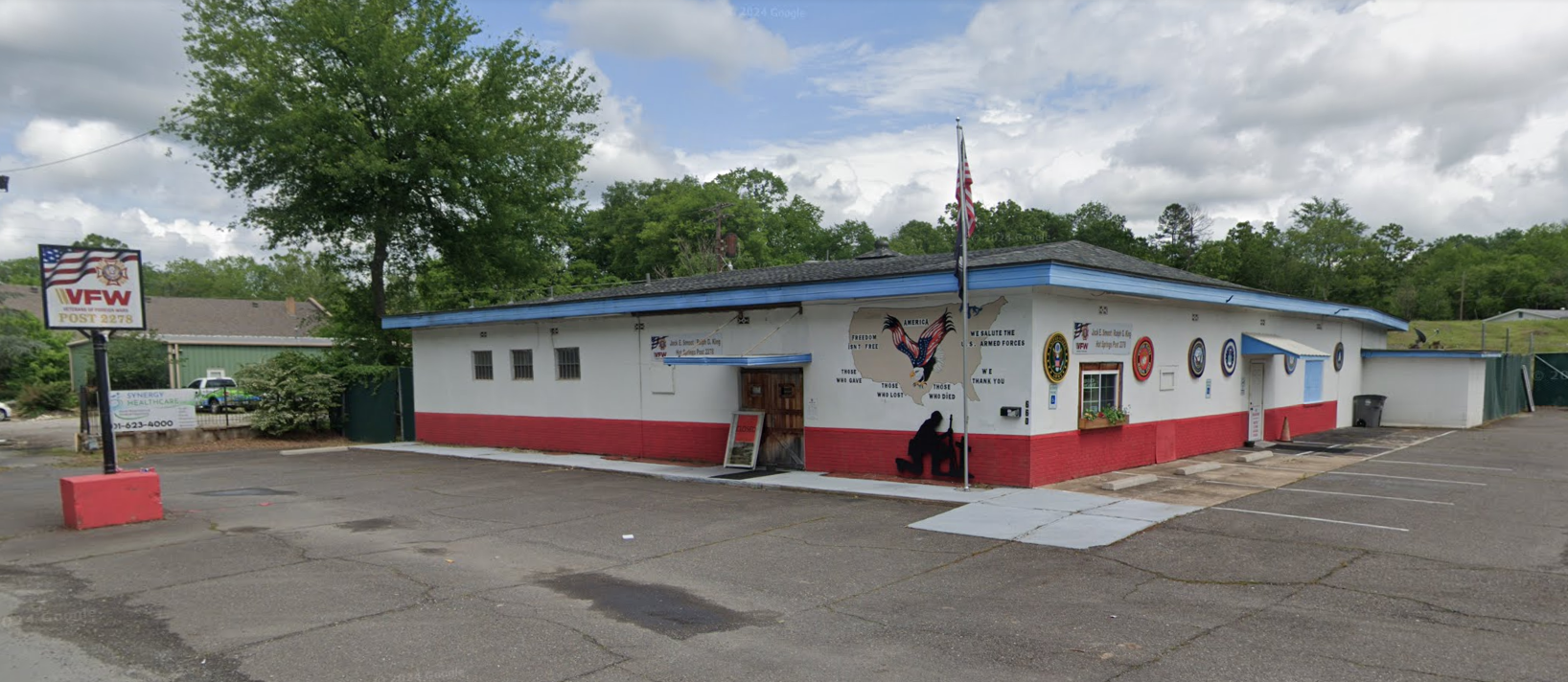
If Hot Springs was a refuge, the Files Cemetery emerged as a site for queer memory. Flagging the commemorative importance of this small cemetery, Ruth says “I wanted them to be counted, to have their lives matter, and I wanted them to have control over their destinies, no matter how limited they might seem to others. If I felt they were strong enough, I brought them to Files Cemetery and asked them to tell me where they’d like to be buried.”53Burks and O’Leary, 58.
A significant challenge of working with Ruth's archives and autobiography is the enduring ambiguities surrounding the number of cremations interred in the Files Cemetery either by her from the mid-1980s to the mid-1990s, or in the following years as the cemetery became informally associated with LGBTQ+ memory in Arkansas. Estimates of the number of men whose ashes Ruth interred range from five to approximately forty. In her early interview with StoryCorps, Ruth stated, "I’ve buried over forty people in my family’s cemetery because their families didn’t want them."54Garofalo, “Lessons in Love.” As one longtime resident of Hot Springs, Tim Looper, notes, there are five identifiable graves of men who died during the HIV/AIDS epidemic, and he remembers explicitly going to six funerals there.55Kacala, “Doubts Surround Viral Story of ‘AIDS Angel’ Who Says She Helped Hundreds of Dying Men.” Ruth has long maintained that dozens of other cremations have been interred at Files; she mentions fifteen names in her memoir. She insists that given the passage of time and her health problems, she does not remember the names of all the men she cared for.56Koon, “Ruth Coker Burks: The Cemetery Angel”; Kacala, “Doubts Surround Viral Story of ‘AIDS Angel’ Who Says She Helped Hundreds of Dying Men.” Moreover, she claims that initially in the 1980s, she concealed what she was doing in the Files Cemetery so that those who would have opposed burying abandoned people associated with AIDS there would not find out.57Burks and O’Leary, All the Young Men, 27–28. Further complicating the matter, Ruth claims that she started to receive anonymous ashes in the mail once she was interviewed about HIV/AIDS in local news outlets, and she proceeded to inter these ashes as well.58Burks and O’Leary, 133–136. Finally, the ashes of people Ruth did not know personally have also been interred at Files, as it became a potent space of LGBTQ+ memory. During an August 2020 visit to the cemetery, Ruth noticed a recently added memorial to a queer-identifying young man whom she had never met.
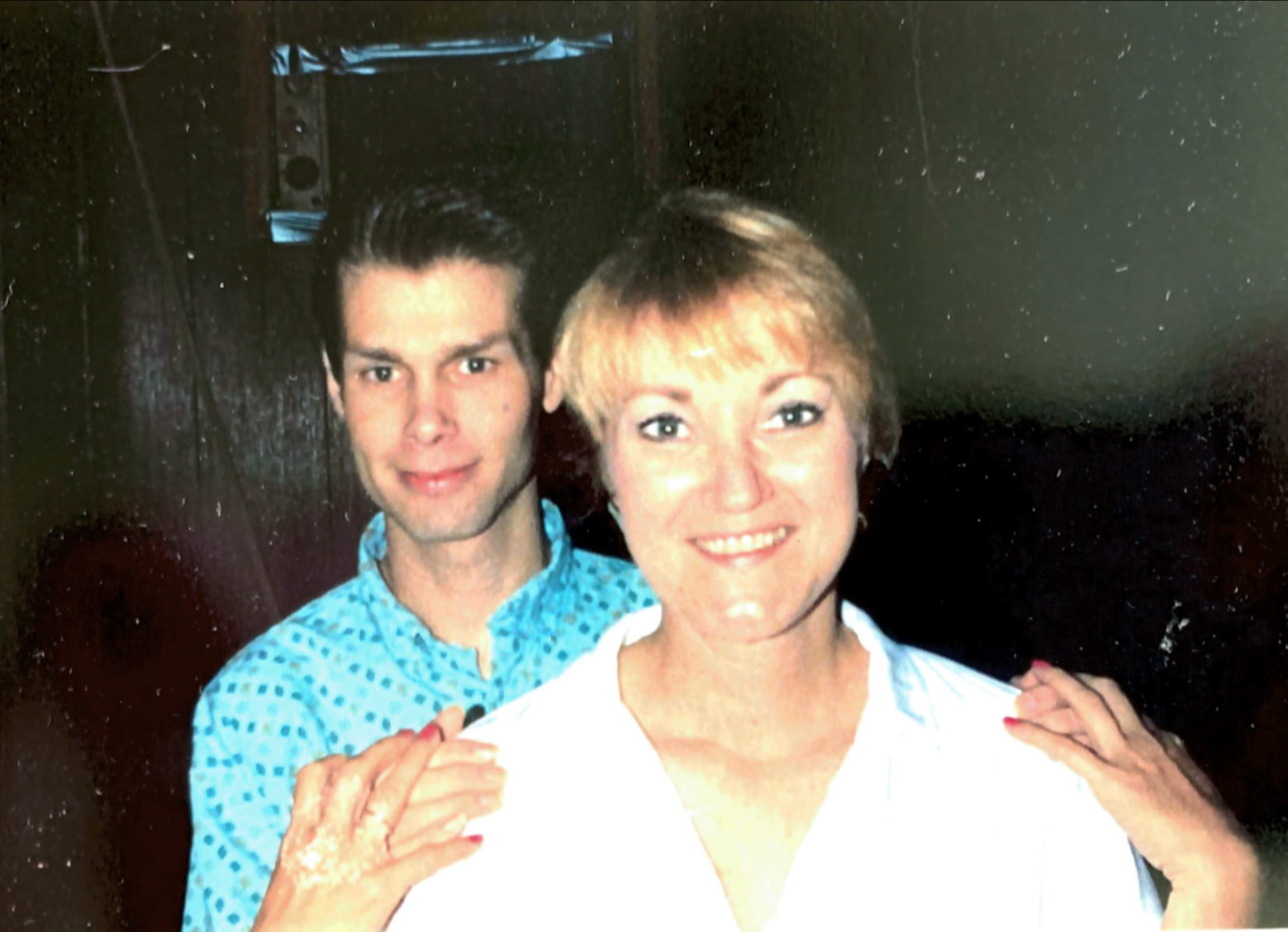
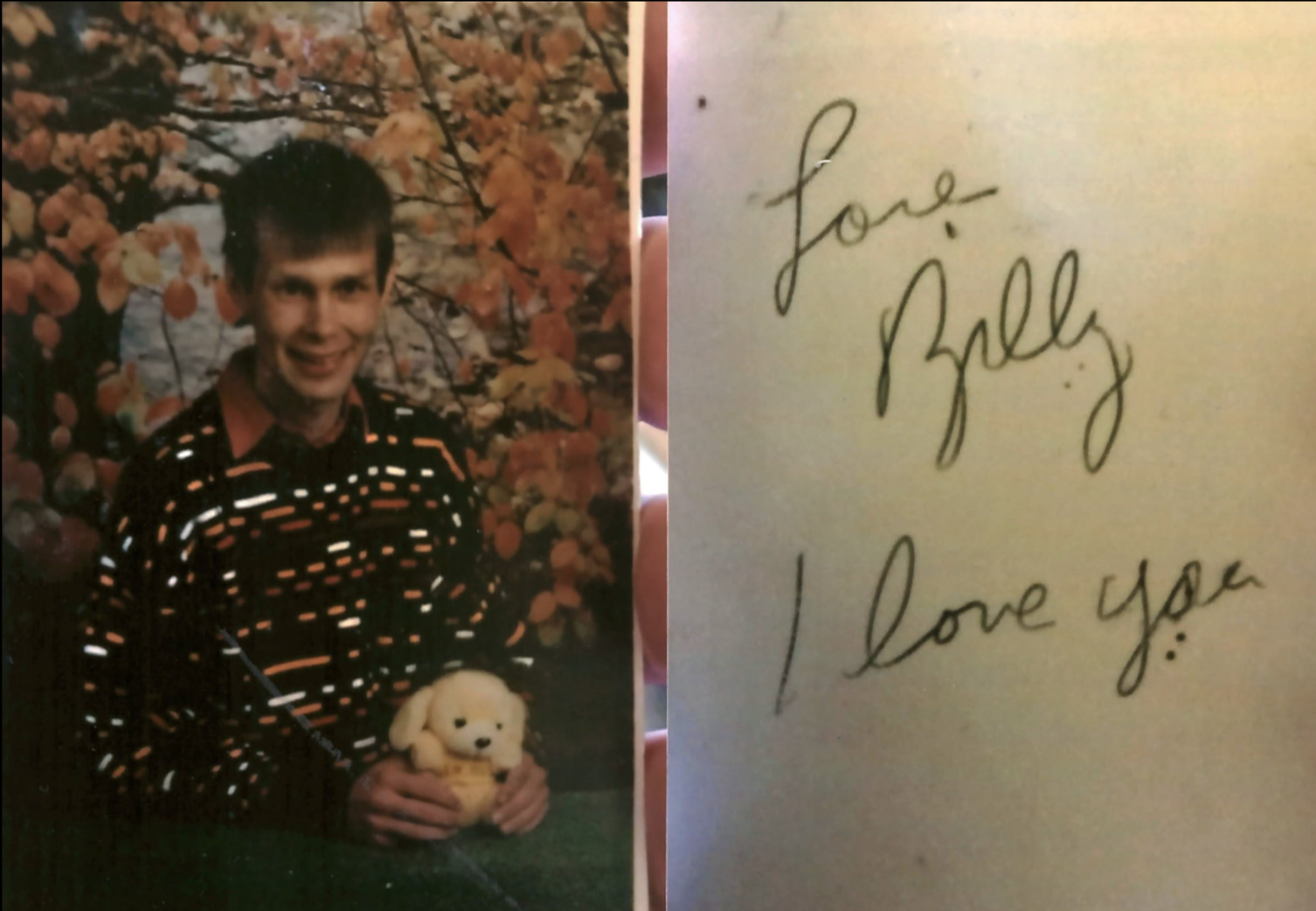
Ambiguity, anonymity, and informality have been central elements of Ruth's work from the beginning. In response to praise during her StoryCorps interview, Ruth said, "You know, they always say 'fake it ‘til you make it,' and I faked my way through the whole thing. I didn’t know what I was doing. I didn’t know anything."59Garofalo, “Lessons in Love.” Respecting the anonymity of many men is central to Ruth's understanding. "I'd go to an apartment to bring food, and another man would be there,” she writes. "There were people I recognized, though I pretended not to know anything about them."60Burks and O’Leary, All the Young Men, 97–98. Ruth's publisher noted in 2021, "Many of the men Ruth helped and eventually buried approached her asking for anonymity due to not wanting to be outed."61Kacala, “Doubts Surround Viral Story of ‘AIDS Angel’ Who Says She Helped Hundreds of Dying Men.”
The cemetery is a throughline in Ruth's memoirs and interviews. She returns to this commemorative geography at the end of All the Young Men as she narrates the journey from Rogers, in the northwestern corner of Arkansas, where she currently lives, back to her hometown of Hot Springs. “I make my way, finally, to Files Cemetery. The carpet of pine needles crunches under my feet as I make the rounds. The mockingbirds still caw above me. I clear brush here and there on the graves, saying hi to Misty before walking over to see Angel, Carlos, and Antonio.”62Burks and O’Leary, All the Young Men, 344. Alongside its status as a refuge and commemorative space, the cemetery is a site of considerable pain for Ruth, not only in terms of the family conflict that resulted in her contested ownership of many cemetery plots and the memory of the men she buried there, but also the more recent debates over what she did (or did not do) in caring for them.
Ruth's Fragmentary Archive
There are scattered, evocative references to Ruth’s archival materials throughout All the Young Men, whether to her pink leather daybook or to the collection of newspaper clippings related to her successful efforts to mobilize the Downtown Merchants Association of Hot Springs for Worlds AIDS Day on December 1, 1993.63Burks and O’Leary, 154, 337, 339. Her fragmentary archive complements recent public history scholarship on queer history and memory in rural areas of the United States. For example, a 2019 special issue on “Commemorating Queer History" in The Public Historian explored how museum exhibits and historical sites, especially in smaller towns and more rural areas, engage queer history.64See Rebecca Bush, “Woman, Southern, Bisexual: Interpreting Ma Rainey and Carson McCullers in Columbus, Georgia,” The Public Historian 41, no. 2 (2019): 94–115; Christopher Hommerding, “Queer Public History in Small-Town Wisconsin: The Pendarvis Historic Site and Interpreting the Queer Past,” The Public Historian 41, no. 2 (2019): 70–93; Fosl and Vivian, “Investigating Kentucky’s LBGTQ Heritage.” As Christopher Hommerding argues, such histories in non-urban areas “[give] lie to the notion that queerness outside of urban centers was historically hidden, invisible, and cut off from queers in other locations.”65Hommerding, “Queer Public History in Small-Town Wisconsin,” 73. Moreover, public historians such as Fosl and Vivian have foregrounded the challenge of “an uneven, often spare historical record” and the need for “better geographic representation” of queer histories in southern spaces.66Fosl and Vivian, “Investigating Kentucky’s LBGTQ Heritage,” 221–222.
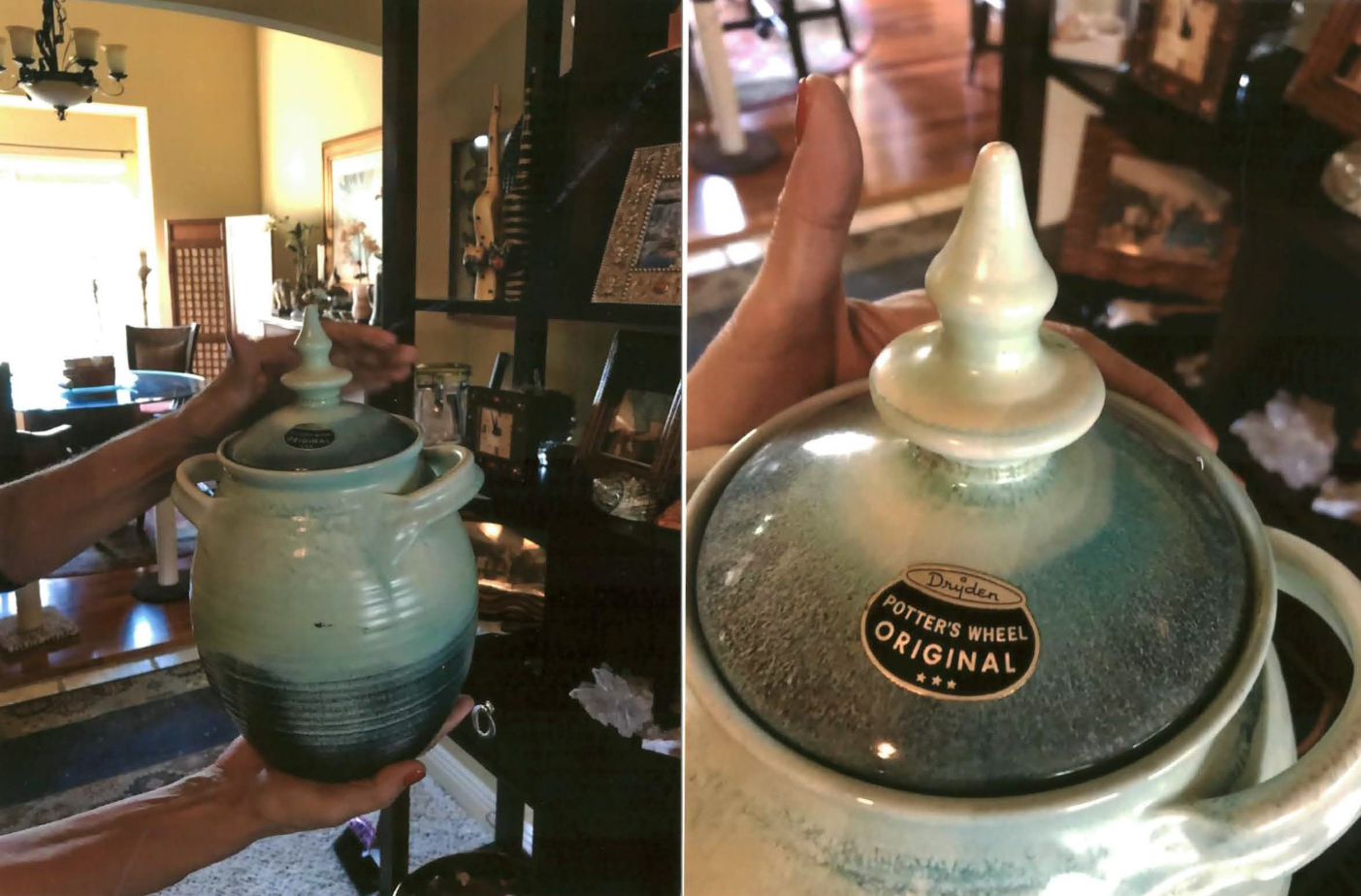
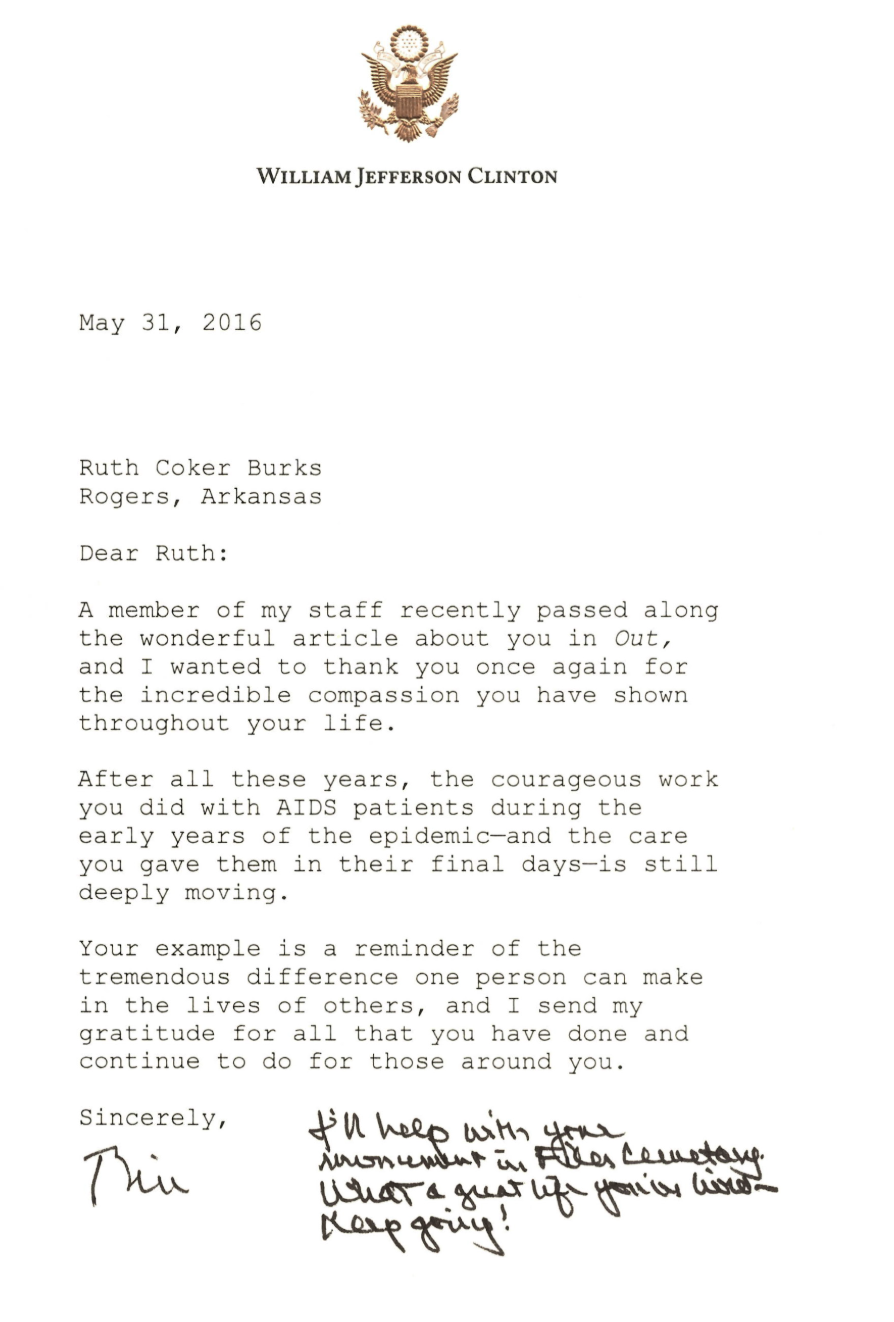
In 2022, Ruth donated her archival materials to the Center for Arkansas History and Culture (CAHC) in two batches. The first, more significant donation of materials primarily consisted of biographical and professional information, including planners, personal writing, news clippings, Christmas cards, and scattered photographs from Ruth’s activism and travels in the 1990s. This also included ephemera such as AIDS education t-shirts, drag ball gowns (one of which Ruth wore to Bill Clinton’s first inaugural ball), and the final pottery urn from Dryden Pottery that Ruth never used. The second, smaller donation comprised photo albums, newspapers, magazines, and All the Young Men publication materials. We wish that Ruth had kept better records, but this is the regrettable reality of many archives. Perhaps a better question than why Ruth did not keep better records is what this rich, if incomplete, archive can tell us about the history of HIV/AIDS.
Ruth’s daily planners illustrate the simultaneously rich and fragmentary nature of the collection. The planners in the archival collection include more blank pages than written ones, with some pages marked with only a single name. These fragmentary entries are mundane, a day-to-day account of an individual woman’s hopes and fears. Many are simple notes or reminders, the importance and context coming from either conversation with Ruth or other external sources.
Ruth’s archive reveals what it must have felt like in those difficult early years when she claims she primarily acted alone. As she puts it in the epilogue of her autobiography, “There was no one behind me. I had no choice but to help them.”67Burks and O’Leary, All the Young Men, 343. David Koon began his 2015 profile of Ruth in the Arkansas Times as “one lonely person” attempting to “budge the vast stone wheel of apathy.”68Koon, “Ruth Coker Burks: The Cemetery Angel.” This theme of isolation and hostility runs throughout her memoir. As Ruth notes of one church supper, other parishioners “eyed me suspiciously, but they always eyed me suspiciously, even before I was the town pariah.”69Burks and O’Leary, All the Young Men, 152.
But Ruth was not the only individual caring for AIDS patients in central Arkansas. All the Young Men can be read as a record of “the town elders” of Hot Springs who quietly assisted her. This is best exemplified by Clay Farrar, a prominent Hot Springs lawyer. Clay introduced Ruth to a network of Rotary Clubs where she spoke about her care work and AIDS activism and connected with prominent men who were willing to provide support quietly. Several bankers in Hot Springs occasionally assisted Ruth with monetary donations or by requesting favors in the medical profession.70Burks and O’Leary, 182–184, 257–258.
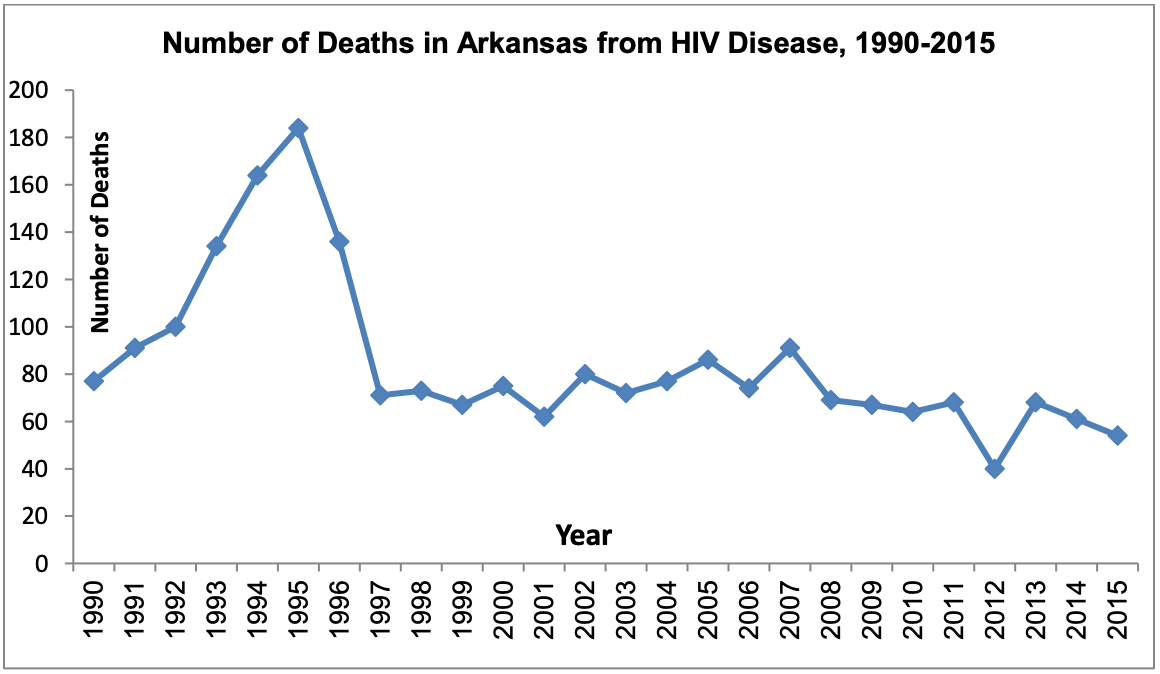
Certainly, a range of individuals and non-profits attempted to help those dealing with HIV/AIDS in Arkansas in the 1980s and early 1990s; however, Ruth’s searing memory but factual inaccuracy in insisting that she acted alone evokes the experience of the HIV/AIDS epidemic for the men she cared for, many of whom—working class, indigent, and abandoned—were from the hills of Arkansas or were Mexican immigrants far from their families. These men were on society’s margins in multiple abject ways. As Ruth describes visiting Angel in the hospital, “Angel and I smiled at each other, together in our lonely place.”71Burks and O’Leary, 277.
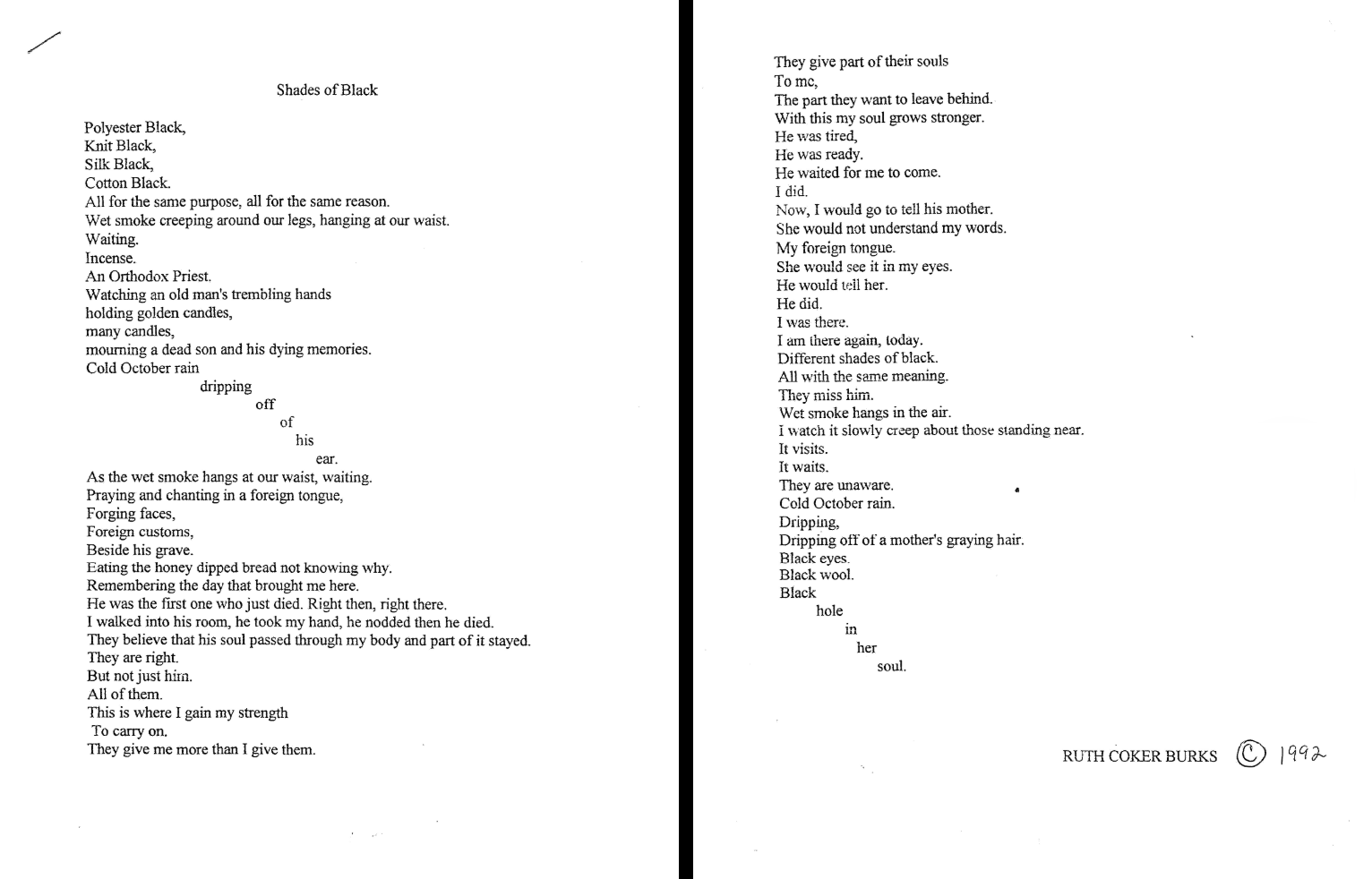
This sense of isolation is also represented in Ruth’s archival materials, for instance, in two poems she wrote in the early 1990s, “Shades of Black” and “THIRTYONE.” In writing about her first patient, Jimmy, in “Shades of Black,” the death Ruth recalls is sudden and lonely; there is only Ruth and a dying man crying out for his absent mother. Ruth went into the room alone, held this man’s hand, watched him die, and walked out of the hospital room alone. “Remembering the day that brought me here. He was the first one who just died. Right then, right there. I walked into his room, he took my hand, he nodded and then he died.”72See, Box 6, Folder 16, Ruth Coker Burks papers, Center for Arkansas History and Culture, Little Rock, Arkansas.
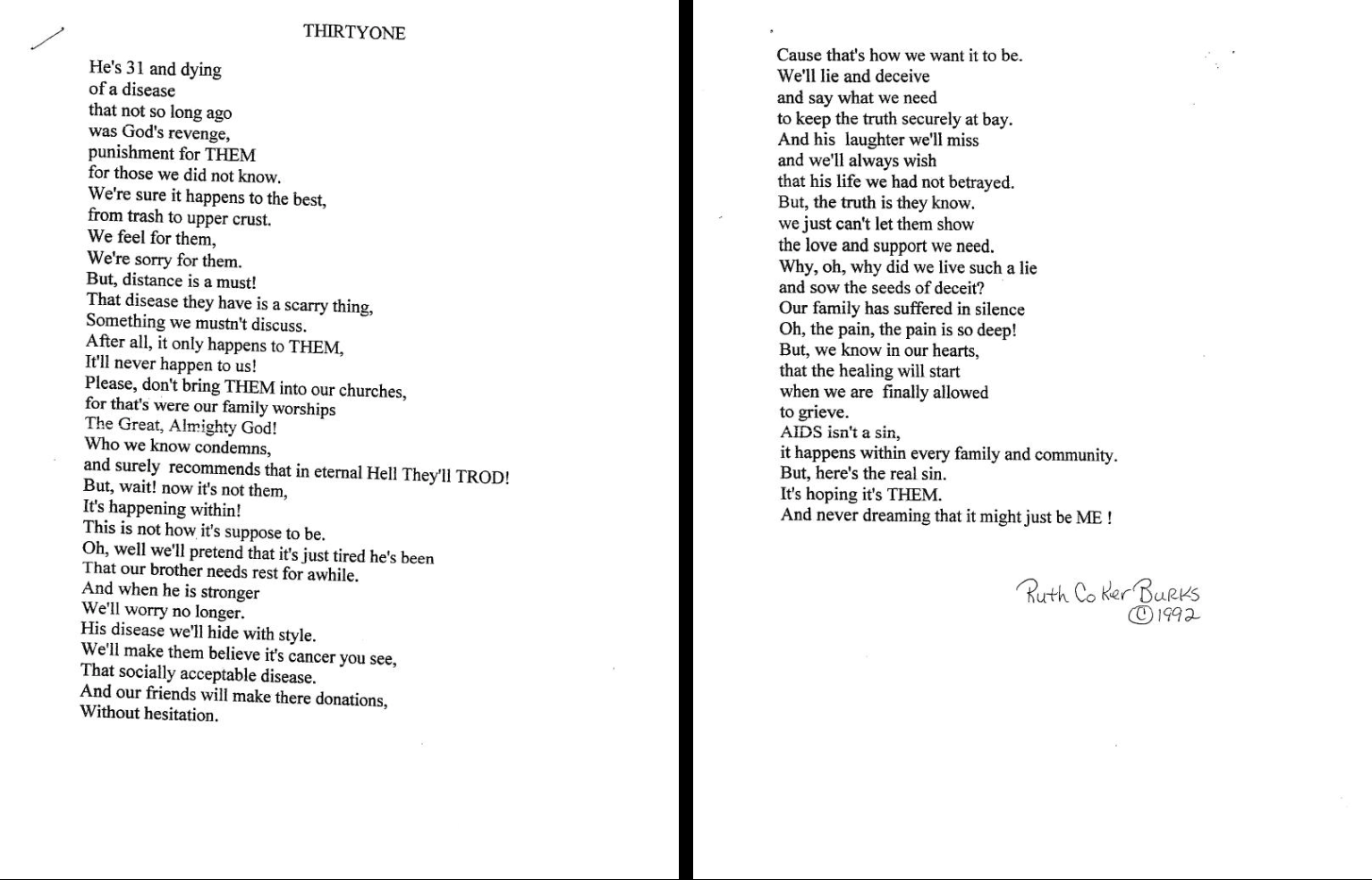
In “THIRTYONE,” the sense of isolation is deployed in anger against society and religious institutions. Ruth writes: “He’s 31 and dying of a disease that not so long ago was God’s revenge, punishment for THEM. While Ruth was sharply critical of the hostility of many religious institutions in Arkansas from the mid-1980s and mid-1990s, she remembers her care work and activism relative to her religious faith. As she has repeated in conversations with us, “I never lost my faith; I just lost faith in everyone else’s faith.”73See, Box 6, Folder 16, Ruth Coker Burks papers, Center for Arkansas History and Culture, Little Rock, Arkansas.
Criticism in Context
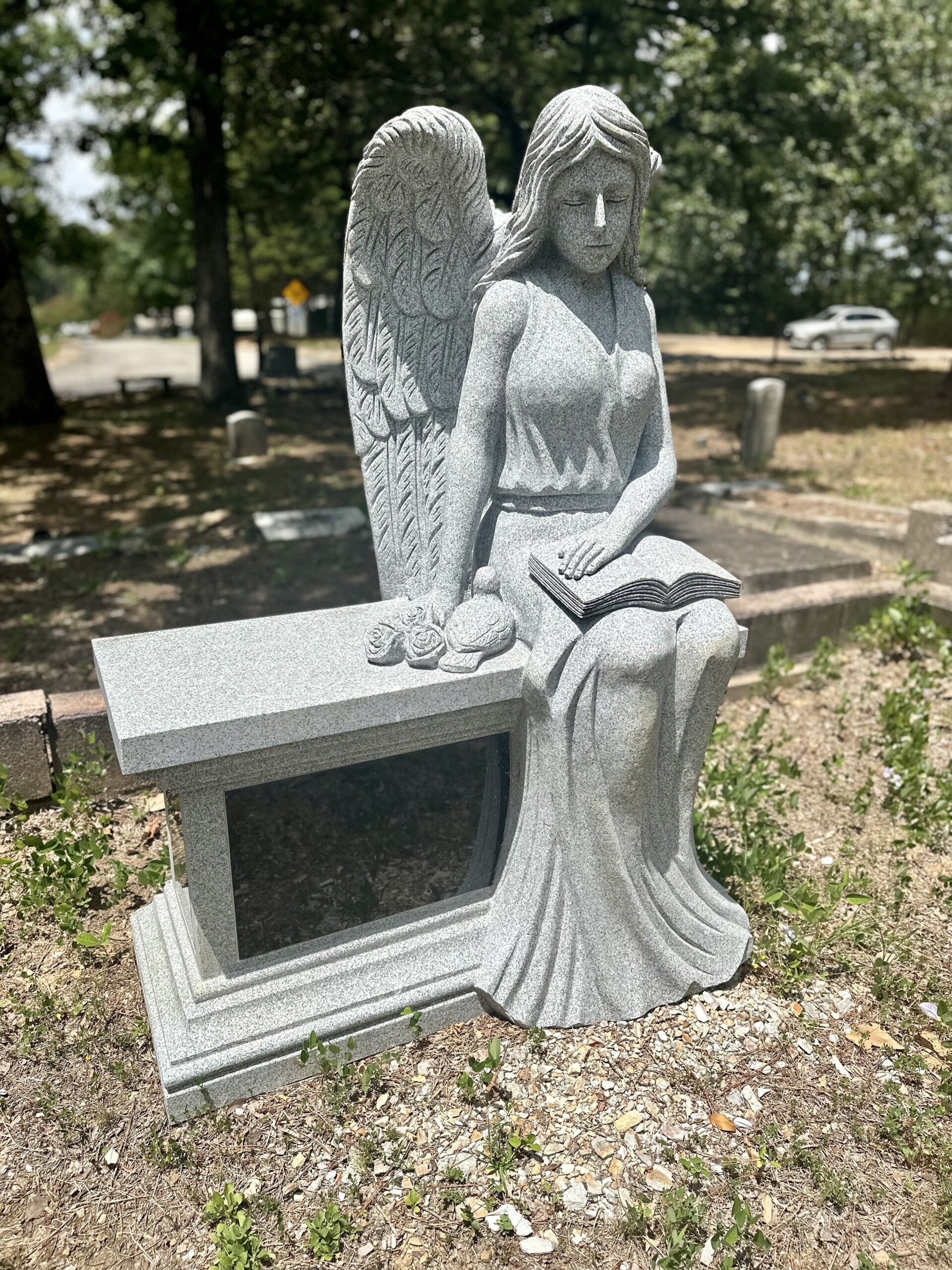
In time, media coverage of Ruth shifted from the laudatory into two overarching criticisms. First, Ruth either kept shoddy records of the men whose ashes she interred in the Files Cemetery or was guilty of exaggerating the number she cared for or buried. Second, she has either been unwilling or unable to put up a monument to these men at the Files Cemetery despite advocating for a memorial for years. Some of her critics suggest that a successful GoFundMe campaign (to raise money for a cemetery memorial and Ruth’s medical bills) was entirely used for the latter purpose and not for the former. For example, in a 2021 piece, the Arkansas Times journalist Austin Gelder discussed how there was not yet a memorial, local disappointment in the limited impact of Ruth’s newfound celebrity on Hot Springs, and debates over ownership and oversight of the Files Cemetery. In a subsequent piece for NBC News, Alexander Kacala expanded on these concerns over funding, management of the Files Cemetery, and local disappointment (and anger.) Kacala also suggested that Ruth may have exaggerated or even fictionalized some of her claims, particularly regarding the number of men for whom she cared.74Kacala, “Doubts Surround Viral Story of ‘AIDS Angel’ Who Says She Helped Hundreds of Dying Men.” It is important to note that in late 2022, Ruth arranged for a monument to be constructed and delivered to the Files Cemetery.
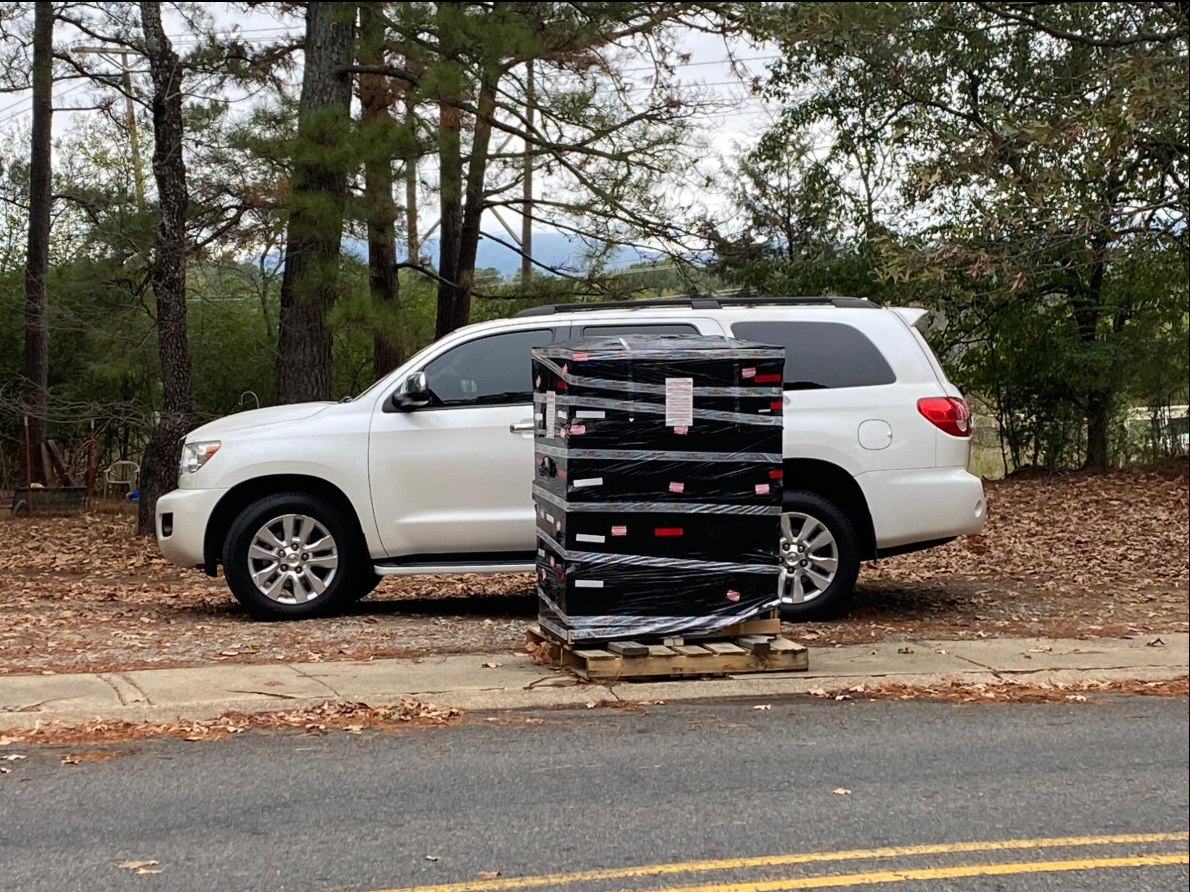
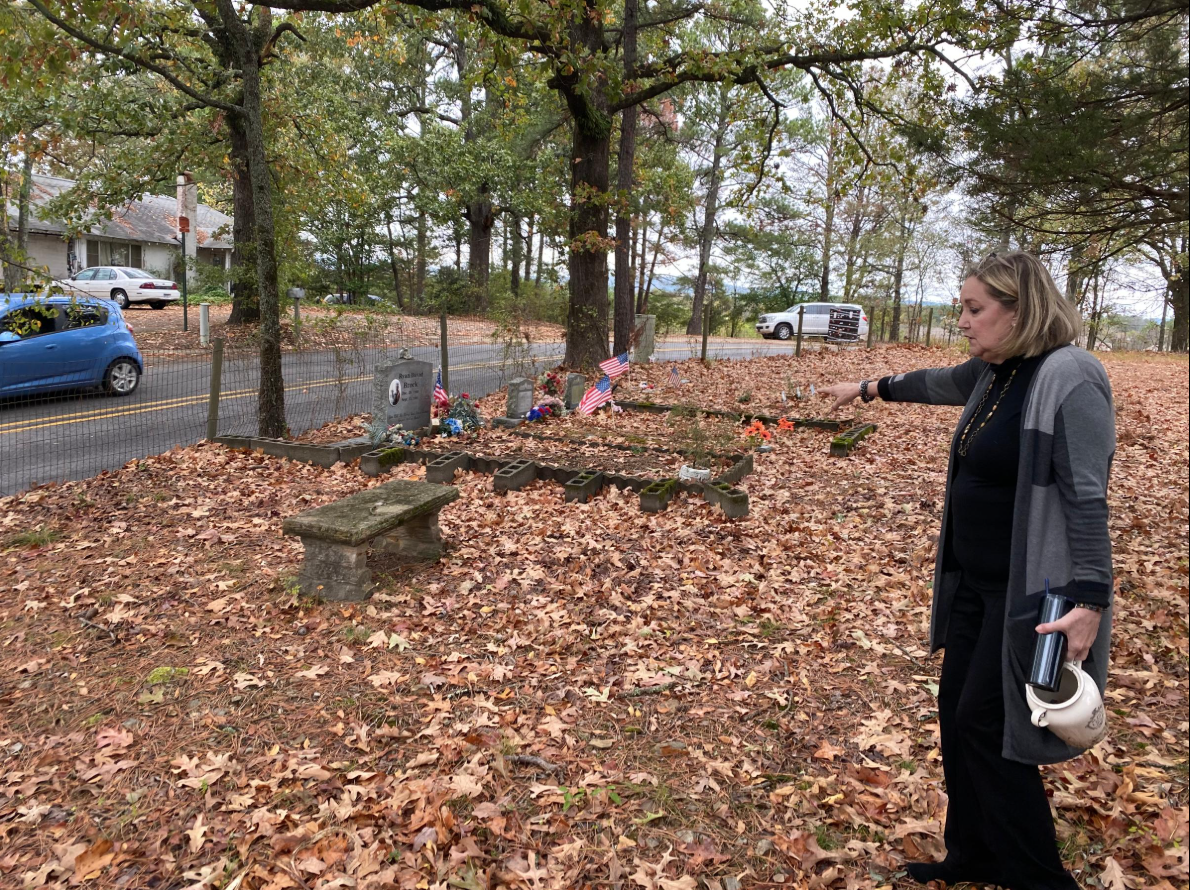
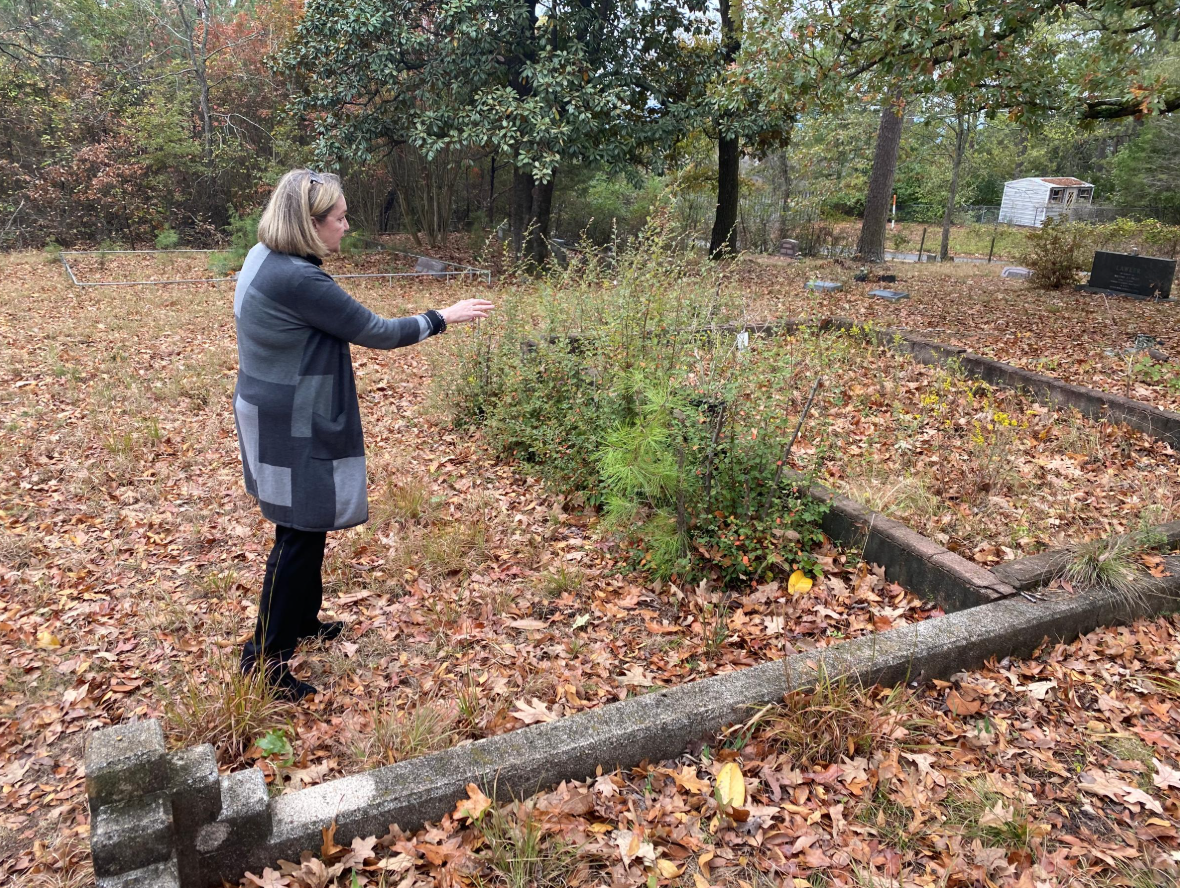
As Gelder notes, most of her critics still “commend Burks . . . [and] don’t want to detract from her good deeds” while insisting on clarity.75Gelder, “Ruth Coker Burks and the Missing Monument.” In turn, Kacala surmises that beyond the good deeds that Ruth did in the 1980s and early 1990s, “over the years either she or the media have sensationalized the story for some sort of gain.”76Kacala, “Doubts Surround Viral Story of ‘AIDS Angel’ Who Says She Helped Hundreds of Dying Men.” Some in Hot Springs are more critical, including Robert Klintworth, a former friend of Ruth who cared for the Files Cemetery for many years (Klintworth provides much of the criticism in both the Arkansas Times and NBC News pieces). Klintworth claims he and his partner, Paul Wineland (who was Billy's partner before his death), cared for the cemetery and provided Ruth with significant assistance in remembering details and names for her book, but that the rewards of the “book deal, a movie deal, and international recognition” have accrued to Ruth alone.77Gelder, “Ruth Coker Burks and the Missing Monument.” Paul Wineland was also central to the 2014 StoryCorp profile, which fed the media's interest on Ruth’s story.
Along with Klintworth, Tim Looper cared for the cemetery for several years after 2015. Looper also is one of Ruth’s prominent local critics, and has argued that Ruth exaggerated her narrative and/or does not remember events accurately.78Kacala, “Doubts Surround Viral Story of ‘AIDS Angel’ Who Says She Helped Hundreds of Dying Men.” Looper maintains, for instance, that Ruth’s first hospital visit occurred in Hot Springs and not in Little Rock, as she writes in her memoir. According to Ruth, some local drag troupes have also provided informal care for the cemetery. In 2023, Hot Springs resident Jim Thompson began to care for the seemingly neglected cemetery, as reported by the local news.79Rolly Hoyt, “One Man’s Mission Helps Restore a Site of Arkansas Cemetery Holding Remains of AIDS Victims,” THV 11, October 26, 2023, https://www.thv11.com/article/news/local/arkansas-files-cemetery-aids-restoration/91-39e9dad1-7ece-4244-b854-4e1d2091c5bc.
A June 2024 YouTube video podcast, RUTHLESS: The Real Story Behind the ‘Cemetery Angel of Arkansas’ alleges to uncover the “scam” perpetrated by the “grifter” Burks. The three-hour video is a sensational retelling of the 2021 Arkansas Times article. Looper is the principal source and the recurrent themes include the alleged exploitation of gay deceased men for fame and fortune, the accusation of profiting from a never-constructed (but since built) memorial, the flagging of factual errors and inconsistencies in the memoir, Ruth’s alleged failure to recognize other individuals and entities who provided aid, and a general sense that her version of events has disparaged Hot Springs and Arkansas. Posted comments about the video are overwhelmingly critical of Ruth, but it is beyond the scope of this article to evaluate these claims.
The CAHC is working to process Ruth's and others' archival papers from these years. However, it would take a large research budget (and a significant scholarly team) to, 1) carefully and responsibly reconstruct the life histories of the men buried in the Files Cemetery, 2) locate the interred cremations within the Files Cemetery with both precision and respect for anonymity, and 3) carefully and empathetically adjudicate the conflicting claims by drawing on state and local records. Complicating any research efforts is the reality that almost all of the direct witnesses of what Ruth did are long dead, and the remaining few include both fervent supporters and biting critics. These conflicting accounts rely on individual memories of traumatic events that occurred at least thirty years ago.
Many of the critiques voiced in newspaper articles and videos are valid. We too would like to know more about the men's life histories and see the Files Cemetery physically transformed into the commemorative site it already is in the minds of so many. In telling and retelling Ruth's story, it is clear that many details and claims remain constant, alongside some ambiguities and exaggerations. Ruth is not necessarily the appropriate target for all of these legitimate concerns. Or to reframe Kacala’s observation as a question, if elements of Ruth’s story have been ‘sensationalized’ over the years, to what end have they been sensationalized for a reading public in Arkansas and beyond?
Our preliminary research suggests that the presentation of Ruth as an almost saintly figure began with the 2014 StoryCorps interview and the 2015 Arkansas Times profile. In the StoryCorps interview, Michael Garofalo notes, "Ruth is one of those rare people who doesn’t run away from suffering. She runs toward it without hesitation."80Garofalo, “Lessons in Love.” David Koon’s article in the Arkansas Times in 2015 was titled, “Ruth Coker Burks, the Cemetery Angel.” A photograph of Ruth overlayed with the text, “St. Ruth,” was the cover story of the initial print edition (the “St. Ruth” title was removed from the online version). It was more often in the headlines of stories, rather than in the body of articles, that she was presented in saintly or angelic terms.
These binary understandings of Ruth, either as a living saint and the Arkansas cemetery angel, or as a fantasist and teller of tall tales, do not map onto the reality of her evocative and fragmentary archive. Returning to the questions we posed at the beginning of this article, what can Ruth’s archive tell us about the history of the AIDS epidemic in Arkansas and the construction of the role of the idealized caregiver for some Arkansas women at the time?
One answer that her archive does provide is that contestation and debate have long been integral to Ruth's care work and activism and that she has always had both enthusiastic supporters and harsh critics. Based on newspaper clippings from her archival donation, the criticism of Ruth and her work began in the early 1990s. In a 1993 letter to the editor published in the Sentinel-Record (Hot Springs, AR) that echoes some of the later criticism, the author states that Ruth “claims too much credit . . . her statistics are out of this world,” and that Ruth made AIDS patients stand out in the cold during a World AIDS Day service. Other local newspaper pieces saved by Ruth from the early 1990s had less to do with Ruth herself and instead reflected rampant prejudice against gay men. An undated letter to the editor states that the author is withdrawing their membership to the Downtown Merchants Association of Hot Springs due to the Association’s support of AIDS Awareness Day since, in the words of the outraged author, “AIDS is a behaviorally transmitted disease and does not need awareness or anything other than saying 'no' to homosexual activity or drug use. How much does it cost to teach that?”81See, Box 6, Folder 2, Ruth Coker Burks papers, Center for Arkansas History and Culture, Little Rock, Arkansas.
Criticisms of Ruth are not the only subject of the news clippings that she assiduously collected. There are several undated articles praising Ruth and her work. These positive assessments from the early 1990s foreshadow the recent praise of Ruth's care work and activism. One letter by Robert Gale (the vice-president of Helping People with AIDS) refuted the claim that Ruth was not the executive director of HPWA, and praised her efforts in that role. At least two articles in Ruth’s collection mention her professional work at her day job at Prudential Lakefront Real Estate.
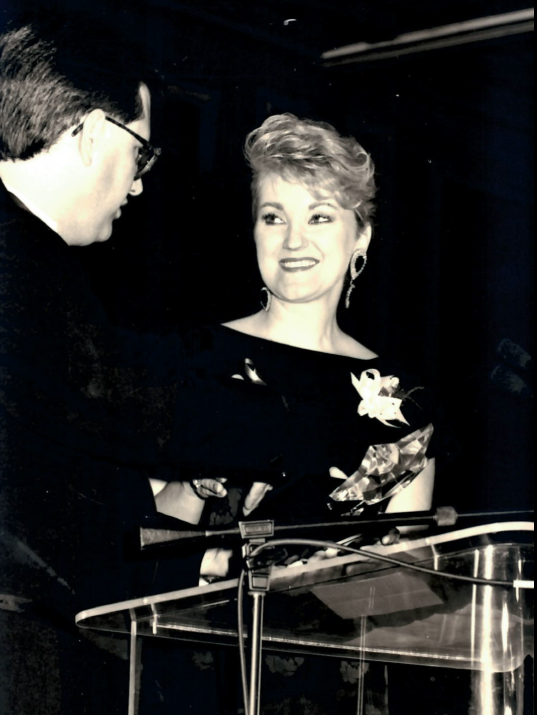
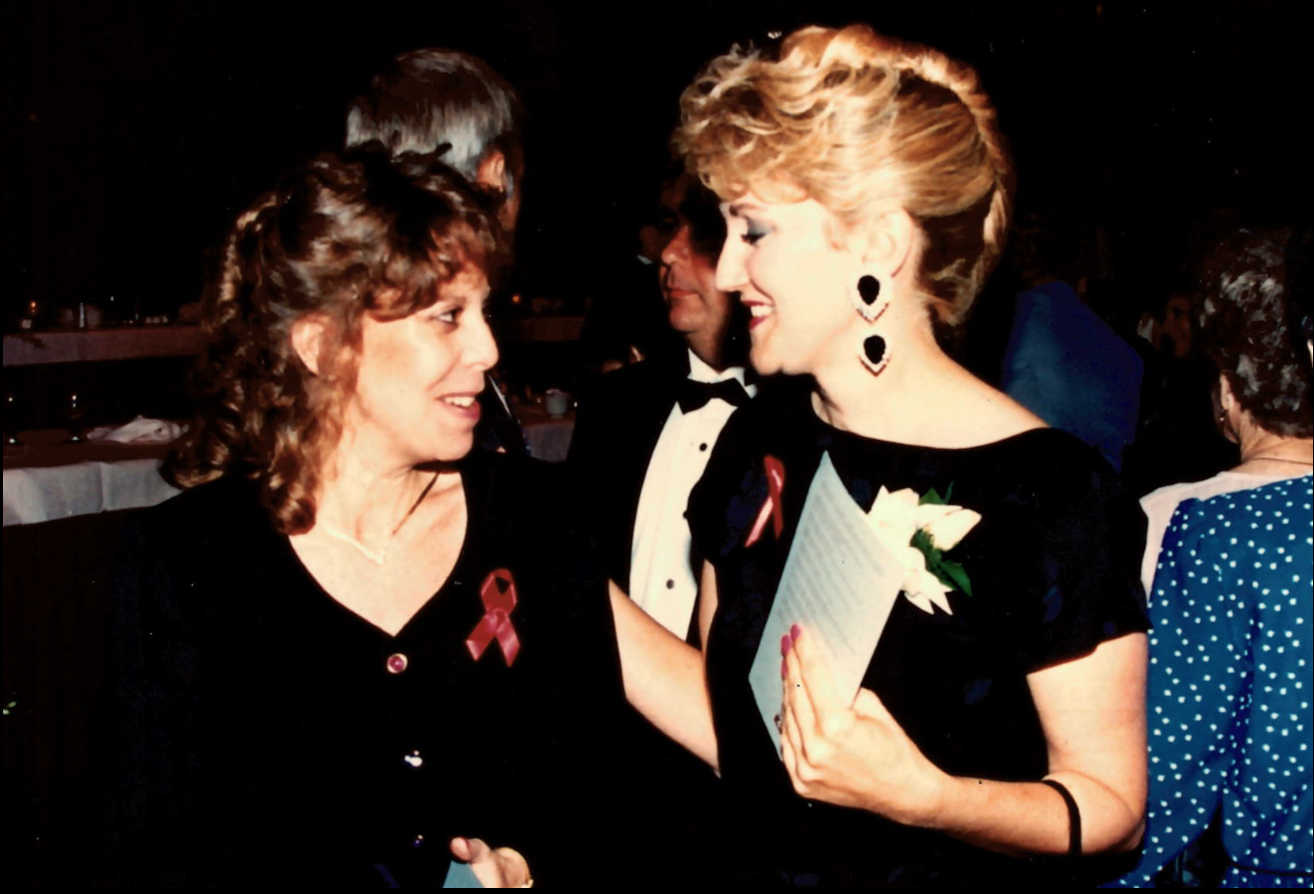
Ruth’s archival collection includes a binder of letters of recommendation and typed endorsements from prominent citizens regarding Ruth’s nomination for the Arkansas Community Service Award, the establishment of an HIV/AIDS program at Levi Hospital, and the nomination of Ruth for the position of Executive Director of the Arkansas AIDS Foundation. These letters provide further evidence of the sustained care work that she offered. For example, a local attorney wrote that “Ruth has demonstrated her commitment to the care of those who are HIV positive, and we are fortunate to have someone already in the community who is prepared to immediately take on such a responsibility.”82See, Box 6, Folder 20, Ruth Coker Burks papers, Center for Arkansas History and Culture, Little Rock, Arkansas.
The testimony of some of Ruth’s critics lends credence to her sustained, if controversial, presence. Kacala includes an extended quote from Hot Springs resident Daymon Jones, a long time survivor of the AIDS epidemic in Hot Springs, who is harshly critical of Ruth. In Jones’ own words, “I have contempt for her … She makes it look like my town was hostile to people with HIV. It’s the fact that she has used that stereotype to portray my town and my community as something horrible and that was not the story.” Jones was particularly annoyed at what he saw as Ruth’s pushy methods in attempting to provide him with unwanted help. Again, in Jones’s own terms, “What really got me riled up [was] how she does it. . . . She said, ‘Well you know I can bury you, too, when you die.’ Well Ruth, I have no intention of dying right now, and even if I do, I have a family cemetery. ‘They won’t let you in, you know that.’ Oh yes they will. We discussed this already. She tried to use fear to make herself look like she was somebody that was going to help.”83Kacala, “Doubts Surround Viral Story of ‘AIDS Angel’ Who Says She Helped Hundreds of Dying Men.
Jones’ comments clearly illustrates that some people living with AIDS in Hot Springs found Ruth’s efforts unnecessary and even offensive. At the same time, the anecdote also suggests that by the early 1990s, Ruth was locally well-known for AIDS-related activism and care work and that she regularly discussed her cemetery as a possible final resting place for those excluded elsewhere.
Conclusion
What can we make of the competing media narratives depicting this individual woman to be either a saint, selflessly salving the wounds of AIDS patients, or a sinner, exaggerating what she did and pocketing the cash? We want to argue that the legitimate anger aimed at the incomplete historical record of these men's lives and the decaying state of their final resting place is standing in for a much larger problem—the terrible treatment accorded those dealing with HIV/AIDS in Arkansas in the 1980s and 1990s by many medical institutions, by civil society, by their families, and by religious congregations. As Ruth put it, with hopefulness, “if I sound the alarm . . . the cavalry will come.”84Burks and O’Leary, All the Young Men, 183. Yet the cavalry never arrived, at least for many of the men for whom Ruth cared. These conclusions are born out in the two persistent emotions that weave their way throughout her story: her searing anger at the failure of others to not do more, and her deep, enduring love for these men whom she often only knew briefly at the very end of their lives. This echoes Harris’s influential analysis of the role of a range of emotions in Black women activists' perspective on their AIDS activism, especially the entanglement of love, compassion, and solidarity with frustration and anger.85Harris, “Emotions, Feelings, and Social Change,” 191–195.
Maybe this rush to canonize or vilify Ruth is an effort to displace this broader societal failure. Suppose Ruth was an angelic caregiver for those dying of AIDS. In that case, it absolves all those in Arkansas (and elsewhere) who either did nothing or actively discriminated against gay men. In turn, if Ruth was an imperfect record keeper with a shaky memory, she could become the target of all the legitimate anger of how these men were treated in life and death.
The archive of Ruth’s life, activism, and care work, and its fragments offers a much more sobering history of AIDS in Arkansas: a colossal tragedy and a systemic failure. Not a failure on the part of Ruth or the other individuals who, at a tremendous personal sacrifice, helped those dealing with HIV/AIDS, but rather a systemic failure on the part of many medical institutions, state government, and civil society. Returning at the very end of her autobiography to the very beginning of her story (when she walked into Jimmy’s hospital room in Little Rock in 1986), Ruth puts it a different way: “The question I get most, the one I hate, is why I went into his room. And why I helped people. Again and again . . . the answer is, How could I not? The real question is, How could you not?”86Burks and O’Leary, All the Young Men, 345.
Ultimately, it is not a question of what Ruth Coker Burks did (or did not do) to become the Arkansas Cemetery Angel, but rather what the depictions of Ruth as an angel and a saint in print and the media reveals about the memory (and continuing reality) of AIDS in Arkansas. At its most potent, Ruth's memoir and archives—alongside the Files Cemetery—not only illustrate the deep commitment of one inspiring individual, however imperfect, to help those suffering at society's margins, but also provide a glimpse into the lives of the men she cared for, whether in documenting their loneliness, their heroic efforts to live as long as they could, or in their fashioning of substitute mothers and chosen family. 
Acknowledgements
The authors would like to thank Nathan Marvin, Marta Cieslak, and David Baylis for their encouragement, generous feedback, and insights that contributed to the development of this article.
About the Authors
Andrew Amstutz is an assistant professor of history at Queens College, CUNY. He has published articles in Comparative Studies of South Asia, Africa and the Middle East, Philological Encounters, and South Asia. Prior to joining Queens College, he taught at the University of Arkansas at Little Rock.
Jess Porter is executive director of the Center for Arkansas History and Culture, the University of Arkansas at Little Rock's archive. He is a geographer and former chair of UALR's history department.
Phoenix Smithey is the head of special collections and university archivist at the University of Central Arkansas. Smithey is active with the Academy of Certified Archivists, the Society of Southwest Archivists, and the Arkansas Humanities Council. She teaches in the fields of archival management and archival preservation.
]]>Call for Submissions
Southern Spaces invites scholars, critics, writers, health care providers, public health practitioners, activists, media producers, community organizers, and patients to submit 1,000-word blog posts, as well as longer articles and media productions, that address the continuing public health and political implications of the COVID-19 pandemic. Queries and abstracts are also welcome.
Southern Spaces is an open access, multimedia journal publishing innovative work on regions, places, and cultures of the US South and their global connections. We welcome submissions that creatively examine real and imagined spaces and places through the use of textual, visual media, archival, and ethnographic materials—including artistic expressions.
The COVID-19 series examines relationships between pandemic public health and specific geographies in the US and global South. We encourage interdisciplinary perspectives, critical approaches to space and place, and work that foregrounds the pandemic perspectives and experiences of BIPOC and other marginalized groups.
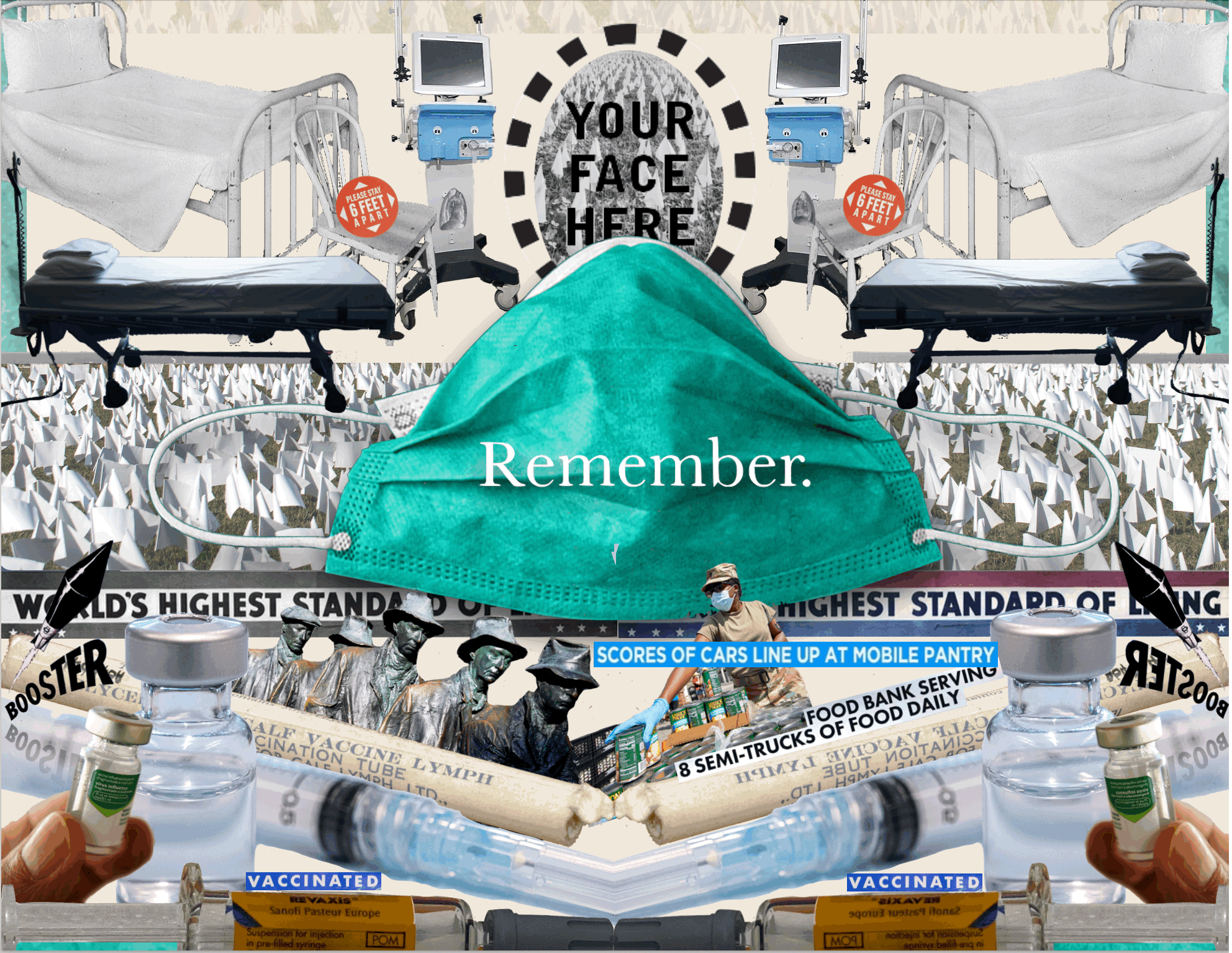
We are especially interested in individual experiences of Covid that address larger societal questions both in the US and globally, such as:
- How are individual and collective memories shaping and being shaped by conflicting historical narratives of the Covid pandemic?
- How has Covid exacerbated racial, gender, ethnic, and class disparities in healthcare systems and public health infrastructure?
- How did the politicization of Covid impede mobilization for the crisis, affect vaccination strategies and distribution efforts, and/or shape conflicting narratives of the pandemic in the US and globally?
- How has the Covid pandemic differed from previous pandemics such as HIV, polio, the 1918 influenza pandemic, smallpox and yellow fever?
- How is Covid impacting modes of expression for artists and writers?
- How have diverse forms of media carried, shaped, and spread political ideas and religious beliefs related to Covid?
- What are representative symbols and sites of this pandemic (e.g. masks, vaccines, ventilators, Zoom/virtual meetings)?
- How have individuals experienced affective dimensions of the pandemic, including transformative expressions of grief, loss, community, and connection?
- How did the pandemic transform the urban landscape, e.g. occupancy of office buildings; closure of retail stores; restructuring of restaurants and pedestrian spaces?
- How are the over one million lives lost to Covid in the United States being remembered?
How to Submit
Submissions, queries, and abstracts are welcome immediately and will be considered on an ongoing basis. The Covid series is part of Public Health in the US and Global South, edited by Dr. Mary E. Frederickson. Submit all inquiries and materials to Southern Spaces managing editor Mary Ann Robertson at seditor@emory.edu. See the Southern Spaces submissions guidelines for style and formatting. The pieces currently published in the Covid series can be found below under "Similar Publications."
]]>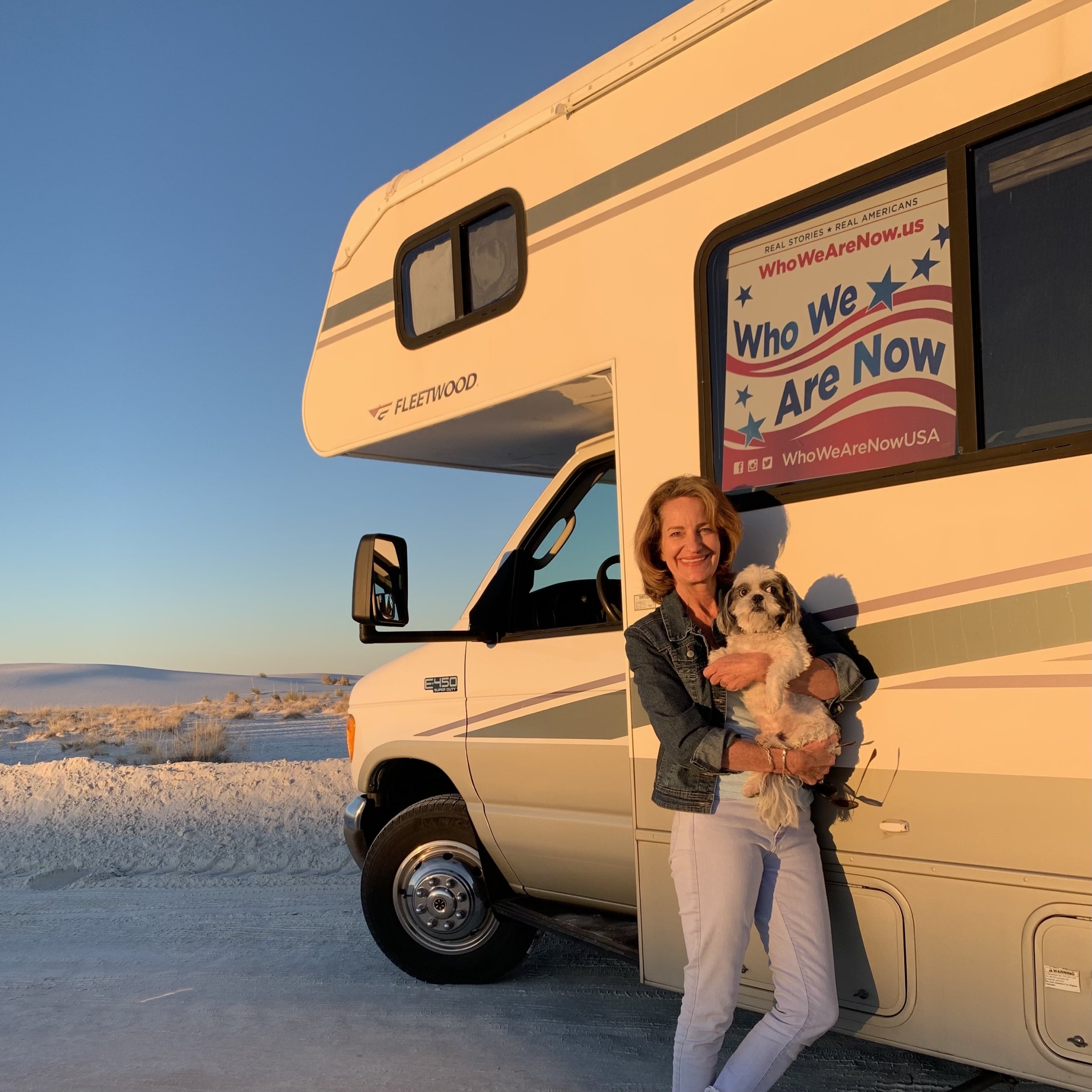
Southern Spaces: Oh, here's Michelle now. Are you in your RV?
Michelle Fishburne: Yes, I am. As a matter of fact, I'm in the RV at Jordan Lake State Park near Chapel Hill. It's about ten minutes from where I raised the kids. I have a twenty-three-year-old who has struggled with long COVID, but has just graduated from UNC. And then we'll go up to Princeton, New Jersey, where I grew up. I'll be housesitting for two weeks.
Q: We've been intrigued by your book, Who We Are Now. It's an important project. The interviews hit powerfully with regard to the loss and heartbreak from COVID. Sometimes now, in the wake of the pandemic, it's possible to think it wasn't really that bad. Life goes on. But going back to the beginnings and to the following many months as you do, the power of this pandemic can't be avoided.
Let's start with what were you doing when it became evident COVID had arrived and was not going away. What were the early months of COVID in 2020 like for you? When was it evident that COVID was not going to be a two week, stay-home-and-then-go-back-to-life-as-normal situation? And how did you develop the project that ultimately became the book?
Fishburne: I think that moment when I realized this was going to last more than two weeks takes me into early April. In January, I had just gotten back from a wonderful vacation in Grand Cayman and I had told everybody all over holiday break how much I was enjoying my job and that I could just pinch myself. It was just a great job. I was a public relations partnership person for Inmates to Entrepreneurs, some people who really, really needed it. I was working on an event at the US Senate and the House of Representatives. We were talking to John Legend, who was working on something similar, about going into a prison with him.
And then on January 17, an unknown virus attacked my eighth cranial nerve and I lost my hearing in my right ear and my vestibular functioning. I began using a walker and learning to adjust to life without hearing in one ear. In February, I bought a prom dress for my senior in high school. She was very excited about the prom and we were waiting to hear back from colleges.
Then my boss, when he saw COVID coming, he was having some struggles. His doctor said to him, "You know, you can't go anywhere." And so he said to me, "I'm going to have to lay you off because I can't go do any of these things that you are preparing." So I was laid off and I thought, "No big deal. I have a law degree from UVA. I have had an illustrious career. I've done wonderful things. I'll find a job." I wasn't panicked. But I submitted eighty-six customized cover letters between the middle of March and the middle of July, and I had nothing.
The lease on the post-divorce house was coming up on July 31. I knew that on August 1 I would have no house, no spouse, no job, and no kids to take care of. And the big critical moment happened in a Target parking lot on June 15, when I had to decide where to have the movers put my stuff. I thought, "What doesn't make any sense for me is to rent a place because I have no idea where I'm gonna have to go to get a job. I've got the motorhome that I homeschooled my kids in for ten months once. All right, I can move into the motorhome." So I put everything in storage.
And then I thought, "Oh, what will I do? Well, I love the Outer Banks. Take the motorhome to the Outer Banks." But then I thought, "Michelle, you can be in hell while you're in paradise. And if you're waking up every day thinking what's your next job, you're kidding yourself. You need a project."
I could drive out to Yellowstone from North Carolina because I've done it before. Yeah, and then I will cry the entire time I go to national parks because I won't be with my little ones anymore and I'll be all by myself.
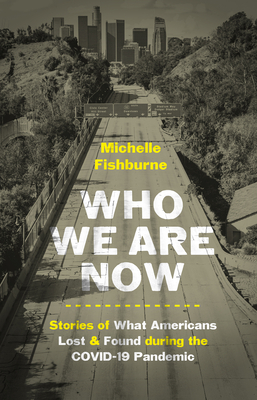
Then out of the blue came the idea of Humans of New York. And I thought, "Oh, Brandon Stanton interviewed thousands of people in New York, took their photo, got a little snippet of their story, put it on social media." I could do the same thing. I could do Americans of the pandemic. Who We Are Now—that was the name right from the beginning.
I know that when you focus on other people, it's easier not to be afraid. I also know now from somebody I met during the interviews that action is the antidote to fear.
Getting in the motorhome and doing a fast run helped with my fear. And focusing on other people helped with a different kind of fear. But I was also very naive. What made me think I could go out in the middle of the pandemic and find strangers to talk with?
Q: Your project started off the way interviews work. One person leads to another. But you say that your fear did not seem to have been pandemic related. We're wondering, weren't you concerned about catching the virus?
Fishburne: I wasn't. Once again, naivete really helped. I thought, "I'll just wear my mask and I'll be smart. I mean, I could be smart in Chapel Hill. Why can't I be smart in Saint Louis or New Mexico?" But what I found when I got out into parts of the country that were sparsely populated, I started to reconsider what critical thinking meant.
I did take some risks. I'd think, "Okay, this building is big enough and it's just me and this person. They're way over there and I'm way over here." Because if somebody is going to tell you a story, and they've just met you, and it's about their lives, especially since I only ask one question, what I really needed was for somebody to keep going and going, going and going, right in my face. Inviting them to continue and showing interest. The mouth is really important to that. As much as I tried to use just part of my face and some body language, there were times when I needed to take off the mask.
Q: That makes perfect sense. So you talk about how this book got started, but then you traveled a long road. How did you have the momentum to sustain the project?
Fishburne: It became something unto itself. I'm just a project person and I got in the groove. What sustained me was how surprised I was every single time I got to listen to somebody else. I mean, there were genuine moments of surprise in every single interview. For example, when I talked with Anne, who's the wedding planner in LA, I had in my mind all these questions I was going to ask her because I was interested in how weddings had changed. But when I asked her the one question, she went off in a completely different direction that surprised me.
I think the excitement of knowing I was going to hear somebody else's story is what sustained me.
Q: Who was most helpful in encouraging and supporting you?
Fishburne: My mother, who is now eighty-five, was my sounding board and supporter. She also is an editor. I would send her transcripts of the interviews. I would think, "Well, this person's got different parts of their story in different places in this transcript." So I would move it around then send it back to the person and ask, "Is this what you said?" Or they'd say, "Yes, that's pretty much what I said. Or, "I said 'like' too many times. Can you take that out?"
My mom has a PhD in sociology from NYU. I grew up knowing about qualitative and quantitative research. Knowing how you ask the question is so important. We talked about the question a lot. And I needed to have a grid, a mosaic, to do a representation of the US as best I could. We talked about that, too.
Q: How did you organize your project? And, to get a sense of the scale and the scope of all the interviews you did, how much is included? How much is left out? How did you edit?
Fishburne: I was conscious of what was going on geographically. Age, race, gender, class, they're all in the mosaic. Urban, suburban and rural. Religion of different kinds. There's New York City and there's Jackson, Mississippi. I used a reverse order of population of the top fifty cities to make sure that I got different types of urban places in different parts of the country.
One area I leaned into heavily was the performing arts because they rely on a live audience. And other vocations that really had a hard time. I overloaded those a bit because they were compelling.
I interviewed about three hundred people, but only a hundred are in the book. There are more on the website and there are more that never made their way into a story. One of the peer reviewers called the book "elegiac," not a word I had anticipated. He had seen the book without any photos. Originally the contract was for forty photos, but one hundred people. And I thought, "I don't know how I'm going to choose which forty people." This was December 2021. My editor at UNC, Lucas Church, said, "Maybe we shouldn't have photos in the book. Then it would be elegiac." So the book went without the photos; the way it's set up, it kind of tumbles.
In order to get that tumble feel, some of the stories had to be very short. For example, I spent two hours with Luke and Rodney and only used Luke's story about how he got more grief for wearing a mask than holding the hand of his partner. Lucas said the stories need to be between 250 words and about 1,200. The average interview was probably thirty-five or forty minutes. If the average story length is six-hundred words, which takes about three to five minutes to say out loud, the book has about five hundred minutes of material. And I recorded three-hundred times thirty minutes. A lot was left out.
When Who We Are Now was published—I'm just going to say the truth—it did not do very well. We think what happened is that it arrived during COVID exhaustion. Yeah. More recently, the couple of book clubs that have used it have really delighted in it because it helped them reframe what the pandemic was. I know that however-many-years hence everything that I gathered is going to have more value than it has today. I think in seven years, when I'm sixty-seven, I'm going to be a very popular lady at the ten-year anniversary.
Q: As a historical read as compared with a contemporary read, I think you may not have to wait that long.
Fishburne: Sometimes when I pick it up and I read it—like I just opened up to Tina, the grief counselor—it washes over me. It all just comes back and you think, "Oh, yes, we had to go through that. How do you grieve when you can't have the formal process?"
And then when I was re-reading Tina's story, Melissa's story in Corinth, Mississippi came flooding back. Her mom had died during COVID. And Melissa said to me, "I've always thought it odd when a family member passes and you go back to the home and you have the whole spread of food that people bring. I never understood the importance of it until now. Because now when I walk down the street, it can be a beautiful day, months and months after my mom has passed and I'm having a good day and somebody who hasn't seen me since my mom passed will say, 'Melissa, I am so sorry about your mom.' I didn't get the kind of closure you get with everyone there eating food, drinking, talking."
And in a way that's how it was with COVID itself. It came, peaked, and petered out, but we never had the "end," even though the federal emergency was over. But it's not the end. Especially for people with long COVID.
Q: You mention that Who We Are Now came out around the time of COVID fatigue. But how did these oral histories affect you? Did you compartmentalize them as research?
Fishburne: I didn't see the project as research. It was just my life. Even now, when people talk about the pandemic, most people talk about it in ways that are very foreign to me. And the way I talk about it is very foreign to most people. Before I got in the motorhome and drove around the country, I thought I knew the pandemic experience, but that was based on my own lived experience. When I left here in September 2020, I expected to find desolation, depression, and division. I expected it to be very, very negative. What really surprised me was the human tenacity. The pluck. And that's the word that I use now a lot, pluck, which is spirited and determined.
In doing the interviews, I settled on asking only one question: What was your 2020 supposed to be like and what did it end up being? And people could talk about what they wanted to. They talked about what really mattered to them, what really defined this period of time, and what made it very difficult, or challenging, or surprising.
People who were out in areas that are sparsely populated would say, "Oh, I just went on the same way." But I know having been there, that every person was changed during the pandemic. More than normally every person genuinely thought about other people and what they were going through. And then there were people who were not given anywhere near the support they needed.
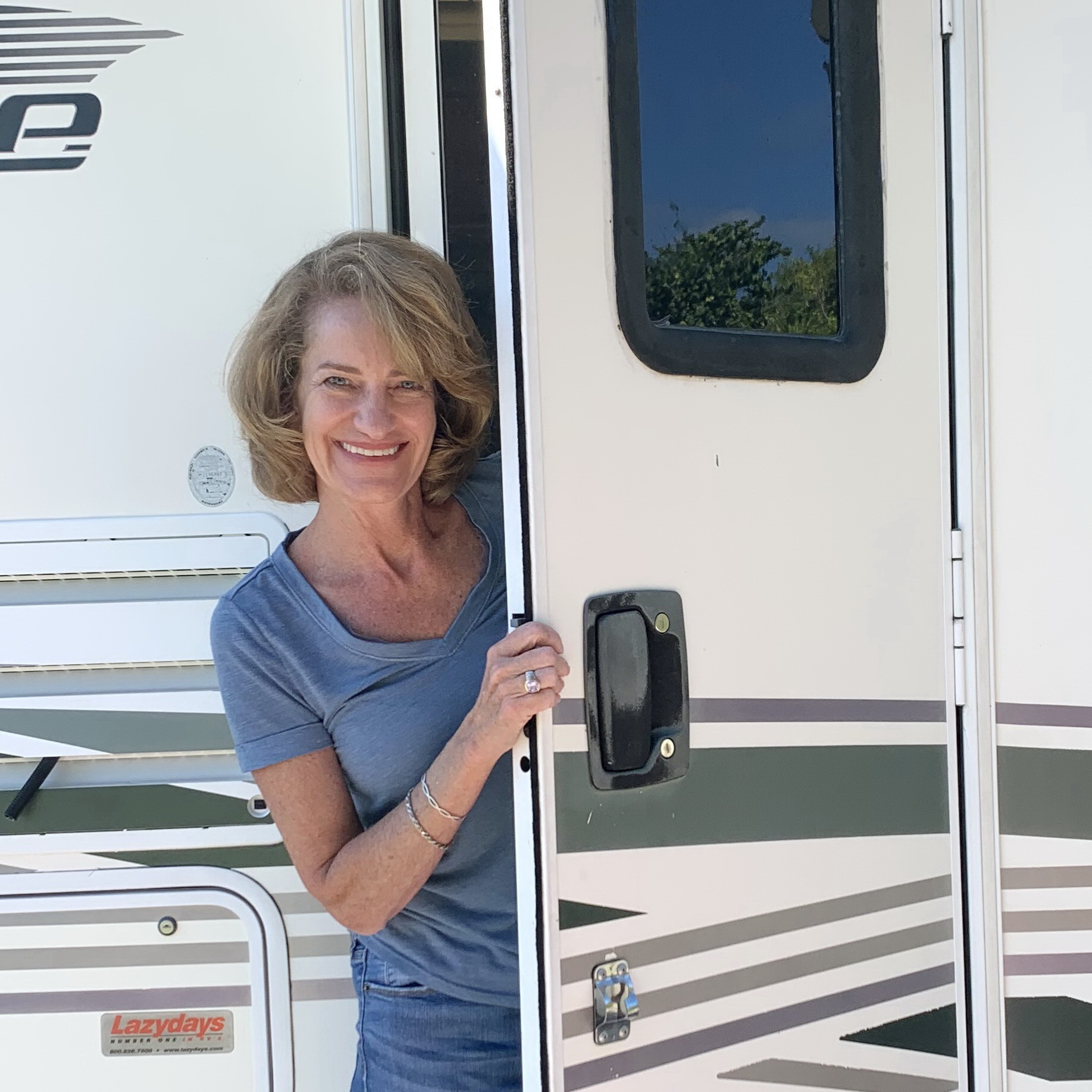
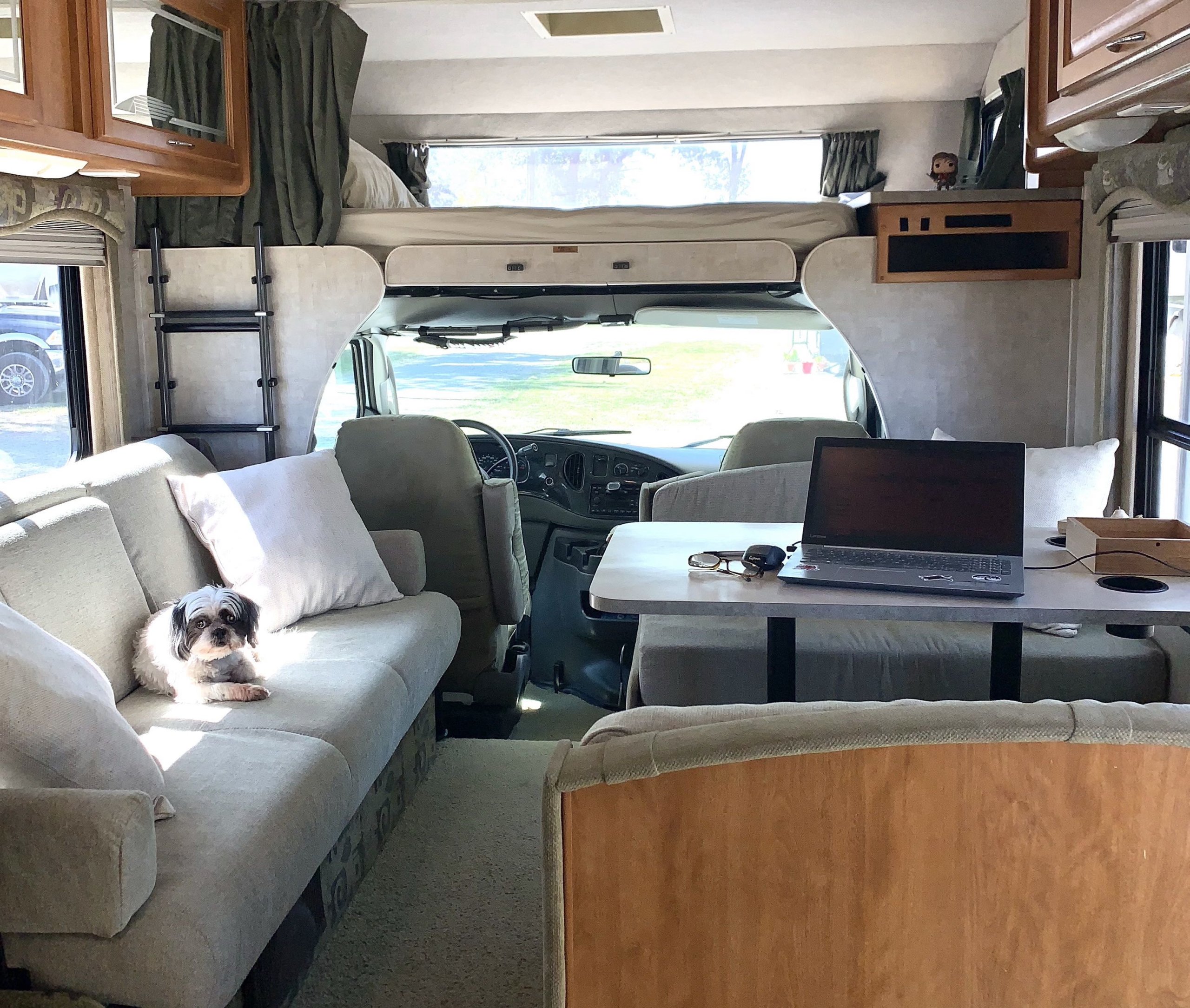
Q: And what do you say now, with a bit of distance, in terms of the perspective that you have?
Fishburne: My mom keeps telling me that I'm a sociologist and I keep pushing back and saying, no, I'm a collector of stories because a sociologist goes back and looks writ large. And I don't feel qualified to do that. I centered the project on individuals and offered up each story.
Many people had very difficult experiences of having to go in and try to do their jobs under incredibly hard circumstances. Often, they didn't have the equipment, didn't have the guidance, didn't have the support. They were watching people die or people turned people away. They couldn't do the jobs that they had trained to do. Then people would come in and reject what they were trying to do or tell them they were wrong. That was head spinning. Or to walk into a store and nobody would have masks on because it was a state where you didn't need to have a mask. It was like a horror movie. They'd think, "Which one of you am I going to see next week?" A lot of the people that I talked with in the healthcare field felt like they went through a trauma.
I thought about various groups of people who were struggling. For instance, I talked with Emma, a director of a migrant farmworker nonprofit. She told me about how really nobody cared to protect migrant farmworkers and about one man who died alone in a motel room. That never should happen. In Birmingham, I interviewed Anne, who was running a homeless shelter. She said it got to a moment when she had to ask whether people were safer inside the building or outside.
I had just started eastward in Texas when Governor Abbott announced that you didn't need to wear a mask anymore. I'm like, "What the heck, Texas is a long state to have to go through no matter which way you do it, right up or down or sideways." I was going west to east and had to be in the state for four more days. It became very uncomfortable. I am a political animal so it was really hard for me to not lean into that. But I became so fascinated with each individual. And I thought, "We are all in this together."
But let's take Fox News, on cable all over America right now. And I was really angry at a big part of the country. I'm like, how can you think that way? How can you think that way? It's Fox News. People have had it in their homes for so long. Fox was pitting us against each other, making people angrier and angrier. Some really ugly parts of us came out. But when you actually get in and talk to people, that's not who they want to be. That's not what they want to be thinking about it.
The false narrative that COVID was not as serious as it indeed was really impacted our healthcare workers and public health officials. I interviewed people who had significant responsibilities, including top public health officials in major metropolitan areas, and they stepped away or are in therapy. And some decided not to deal with it affirmatively. One doctor I spoke with recently said, "I can't talk about it." She started the dialogue and then she said, "I can't. I've just put this away in a compartment. I just can't touch it. I just can't do it." But then, there was a nurse who cried at the end of the interview and said, "Oh my gosh, I just really needed to talk about that."
I saw and heard America in these different ways. People trying to get through. It was such an odd time. The challenges we faced were very unusual.
Luke, South Carolina
Mask Wearer—November 2020
We have felt more discriminated against for wearing masks than being gay. And that's crazy. In the United States of America, we are getting more nasty comments said to us in a grocery store, on the street, for the fact that we have a mask on than the fact that we're holding hands as two men. That's just hilariously tragic. Like, that's where we're at? You're really going to be angry that I have a mask on? So no shame or foul to people who don't want to wear a mask—just don't call me a sheep because I have a mask. That literally happened to me at the gas pump this week.
Valerie, North Carolina
State Senator—December 2020
On March 3, I was attending a conference in Charlotte, and I got a text message from Health and Human Services. It was, to put it mildly, surprising to get a text from DHHS out of the blue. They were alerting me that the first confirmed cases of coronavirus in the state of North Carolina were in my district. Two residents of Chatham County who had traveled to Italy had contracted the disease. I knew enough to know that this was huge and that we were on our way into something that was not going to be good. I left Charlotte that day rather than staying over the next night because I knew that if there were two cases, there certainly were more.
When I look back at 2020, coming from that point of entry into where we are now, with massive unemployment because of shutdowns, and then the blowback, the pushback, it has been very, very difficult. We knew the shutdowns were not the best thing for the economy, but having this juxtaposition of the economy versus overall healthy communities was hard. The governor was in a tough position.
And in the midst of all of that, we were waiting on the federal government to bring in aid. When people started to lose their jobs and people's rents and mortgages and car payments went into jeopardy, there was no help. And the state system was not equipped to handle the massive number of unemployment insurance claims. Before COVID, we usually had about 800 or so claims a week. Then all of a sudden, we went from 800 to 1,800 to 300,000.
Our constituents were coming to us saying, "I followed everything you told me, Senator. I filed my unemployment claim and I've waited for three weeks now. When I call, nobody answers the phone. When I go online, I get knocked off. When I do stay online, I keep getting the same thing saying I'm not eligible. I know I'm eligible. I can't pay my rent and my family is going to be out on the street. Can you help me?"
How many of those folks do you think I could help? Very few. And then the small businesses were calling and saying, "Senator, we're not eligible for PPP [Paycheck Protection Program]." Or "Senator, you can only apply through certain banks or lending institutions. I've never done this before. I need technical assistance in applying." Or "Senator, I don't have an established relationship with this bank, so they will not even talk to me. So where's our help?" That's so painful.
And then I got the call that brought everything really close to home. It went like this.
"Hey, Valerie, how are you?"
"I'm good, how are you?"
"Not so good. So-and-so died of COViD."
"No, can't be."
"Yes."
"What happened?"
"Well, you know he had surgery. After the surgery, he was sent to a convalescent center. He contracted COVID there and died in four days."
Two days later, his family asked me if I would eulogize him. The ceremony was on May 2. There was no church service, just a graveside service, because of course we had to be outside. Afterwards, my husband and I just drove around because I just was not ready to go inside. While we were driving, I got a phone call. I had noticed at the funeral that my friend's best friend was not there. Well, so I got the call from another friend who was at the funeral. This is how it went:
"Valerie, I know this is going to upset you, but they found Kenneth dead today."
"What do you mean?"
"That's why he wasn't at the funeral."
He was only two years older than me. Kenneth was the editor and publisher of the Carolina Times newspaper, one of the few Black newspapers in our state. So that's no more. That's the end of an era that started with his grandfather, Louis Austin, way back in 1927.
And so, when I quiet myself, those are the things I most vividly remember.
Frank, Louisiana
COVID-19 Ventilator Patient—January 2021
I was working for a nonprofit organization driving a bus. We would bring older people, people on Medicare, back and forth to doctor appointments, rehab centers. I come home from work, sit down, and watch TV, and all of a sudden, I can't breathe. I called my son and he took me to the hospital. They diagnosed me: "You have COVID." I said, "Man, I ain't got no COVID." The next morning, Dr. M. come and say, "What's the matter?" I'm telling him I come here last night, and the doctor told me I have COVID. I just couldn't breathe. He said, "Are you ready to go home?" I said, "Yeah." So they let me come home. Got home, next day, the same thing. Can't breathe.
They had an ambulance service come get me. They came in here and gave me a breathing treatment and took me to the hospital. And when I got there, on March 24, Dr. M. say he's going to put me in a medically induced coma. I went to sleep on March 24 and when I woke up, it was April 23. I'd been on a ventilator for almost thirty days. The hospital's head of infectious medicine told Dr. M. to unplug me earlier than that, but Dr. M. said, "Man, I'm in the business of saving lives. I'm not going to unplug that man and tell his family he is brain dead, which he's not." When I woke up, I asked my wife when was Easter, and she said, "Boy, Easter been gone." And I say, "Where I been?" And she said, "You been out, asleep." But I didn't remember nothing, and I didn't realize how sick I was until I called my wife and said, "When you come get me?" and she said, "Not right now." I had no idea that I couldn't walk. I had no idea. I couldn't go to the bathroom. I couldn't pull up in the bed. I couldn't use nothing on my body. Hands, legs, feet, nothing. I couldn't do nothing, period, in a vegetative state. I lost the use of everything, man.
They told me they would send me to a rehab center. When I got there, they put me in a room, and the next thing I know, they put me on a second floor by myself and told me that I got COVID again. So I stayed thirty days in there, with everybody masked up, aproned up, gloved up. And they just got me laying there in the bed, can't turn over, can't feed myself, can't do nothing. And nobody could come visit me because I was in isolation. Every time they come in the room, they'd say, "Why are you down in that hole?" "Man, I've been trying to get out of this hole, but I don't have the strength to pull myself up." And then they get mad with you, they'd bring three or four people in and take you out of the hole and then all of a sudden you're back in that hole. Yeah, I mean, I'm laying flat like this for three months. It was supposed to be a rehab center, but they did nothing for me.
I finally got out of there and back to the hospital to do rehab. In two weeks, I was able to stand at the parallel bars and sit in this wheelchair and push up. And then they started walking me, and it was amazing because I hadn't walked in ninety-something days. I got off-balance and never could get the strength. I would walk with a walker and then I would get tired. Like right now, I still get tired fast, I still don't have no balance, still can't taste every now and then, still can't smell every now and then.
I know there's a God 'cause it's a miracle that I am here. The guy's son who does the dialysis tell me, "Mr. Frank, you're a walking miracle." I say, "What are you talking about?" He say, "Frankie, everyone who
was on that floor that had COVID, all of them died but you." And he say, "I know there is a God, you blessed." Then Dr. V., the heart doctor, say, "Man, we really thought you was going to die." Dr. S., "Man, we really thought you was going to die." You know, it's a bad feeling when everybody coming to you, telling you that they really thought you was going to die. And they look at you, "Man, Frank!" and you don't remember. The doctor told me maybe it's good I don't remember. You know? And I'll be asking my wife, "What happened?" And she'll be telling me, and I don't remember. He said, "That's a part of your life that you will never be able to get back." That's fine, I'm here now. I don't wish this on nobody, man.
Emma, Arizona
Migrant Farmworker—February 2021
Our farmworker population start their days at 2:00 a.m., sometimes earlier. Approximately 15,000 to 20,000 of them cross every day, and the lines on the border can be two or three hours long. They leave early so they can make it here in time to get on the bus and be taken to the fields where they harvest the fruits and vegetables that America eats. This area around Yuma is called "America's Salad Bowl." Our organization provides services to our population, including immigration, housing, parenting, chronic disease prevention, and behavioral health. We're always very busy, so when we started hearing the news that this virus was impacting China and how bad it was, we didn't have a lot of time to think about it. We have a small, rural life, so you don't think a lot about whether something international will hit here. You don't think about how interconnected you are in reference to it. Then at the end of January, we had three cases. It was still not a pandemic at that point, and it was just three cases, so we were thinking, Okay, so three cases. We continued business as usual, no additional precautions, just basic hygiene and all that. When the governor issued a shelter-in-place order, we realized this was serious. Shops started closing and people were running around and piling up food and toilet paper.
After our agricultural season ended, a lot of our farmworkers migrated to California, particularly Salinas, San Joaquin, Santa Maria. Then we started hearing about the pandemic hitting them over there, and even some deaths. One man died in a hotel room by himself. The family knew he was very sick. Nobody was visiting him or giving him food or anything, according to the family. The only contact they had was just through the phone, and all of a sudden, he stopped answering. That's how they realized he had died.
During the stay-at-home order, I had a lot of thinking to do about our office here in Yuma. We have thirty employees, and it's important for personal and cultural issues to have direct, one-on-one contact with the individuals we serve. After the two weeks of stay-at-home, we opened the office back up. My husband used to work at the Health Department's emergency preparedness program and helped us understand the precautions we needed to take. We invested a lot of money in plastic safety barriers and hygiene equipment and products, and we had the offices fumigated every two weeks to sanitize them.
Then there was the question of whether to open the doors or lock them and make people knock. But I felt badly for the elderly or the farmworkers who just needed a form to be read or translated or just basic services like that. So I decided that we were going to have to take a risk and open the doors and do whatever we could and pray to God. We were going to face the threats and fight them because we could not be paralyzed; we have to continue serving our population. So we opened the doors. We let people in just two at a time or one at a time to keep as safe an environment for them and for us as possible.
When the agricultural season started back up again in October, the owners of the farms required the workers to wear masks and did temperature checks, but the buses were loaded just the same as before, everyone crowded in. We did two or three campaigns where we went to meet the loading area for the buses at three o'clock in the morning. We provided tote bags with masks, information, gloves, and everything. Our staff was wearing their gowns and PPE, like they were in a hospital. They were there, facing their fears, because what else could we do? One time we gave out about one thousand bags between 3:00 a.m. and 4:30 a.m.
At some point in the pandemic, we were ground zero in the world for the number of cases. The harvest season and the pandemic season collided. Many of the migrants were sick, but they wouldn't say anything. And a lot of them were young, between eighteen and thirty-six, and didn't show symptoms. Migrant workers don't get fringe benefits or sick leave or anything like that, so a lot of them, especially the H-2A temporary workers, didn't want to be quarantined for two or three weeks. So the sick workers wouldn't say anything and then the whole crew would get sick, but they would not say anything. The employers wouldn't say anything either. They wouldn't want the testing to be done for the workers and the workers wouldn't want to be tested, and so there was like this kind of silent agreement. "Don't ask, don't tell, because we need you and you need us." That is what I have been hearing.
Donna, Georgia
Senior Living Community Executive—July 2021
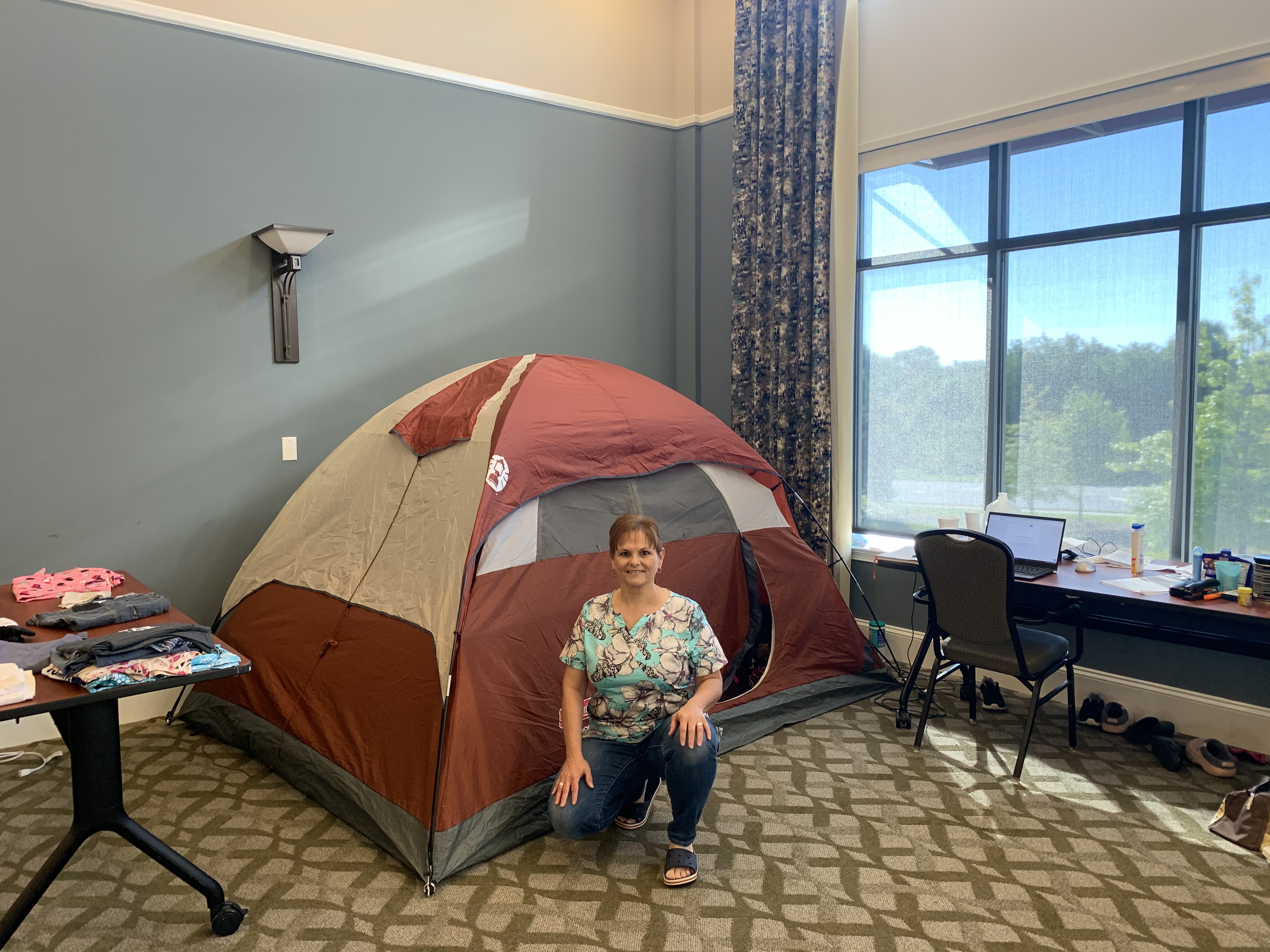
The coronavirus came to our campus on March 13. It was one employee and we sent them home. I then went to my boss, the CEO of our company, and said, "Our best strategy right now is to lock in. We'll ask employees to volunteer to live on campus and we'll reward them. And we will just live on campus with our members. It'll be over in two weeks, four weeks max." He never blinked. He was behind me 100 percent.
We didn't call it "lock out." We "locked in" with our members and we kept the world out. We kept coronavirus out. The gate was literally locked, and the only thing that came in and out of that gate was food deliveries, Amazon packages, and Instacart.
I asked for volunteers from our employee body, and sixty people raised their hands immediately.
They included our director of accounting, our moving coordinator, servers, housekeepers, maintenance, security. I took any volunteer who raised their hand. Ended up being seventy-five. The next step was figuring out where people were going to sleep, how we were going to feed employees, and how we were going to keep the operations of our 500-member community running with a staff of seventy-five instead of 300.
Some of the employees lived in model rooms, some lived in rooms on air mattresses, and some people, like me, lived in our health center, with memory care and skilled nursing. I lived in a tent in the community hall.
We left our titles at the door and we all took on different roles, whatever we needed to do to take care of members. Everybody at mealtime became someone that delivered meals. Everyone became someone who would disinfect our common areas. Everyone became whatever we needed them to be in the moment. I don't even know that some of my employees that I was serving with knew I was the COO. They just knew I was that girl that came and made French toast on Sunday mornings and vacuumed the hallways and helped do laundry. It didn't matter because it was all of us together, fighting a common enemy called COVID.
Each day, I would crawl out of my tent, put on my scrubs and ball cap, and go down to see who needed help with breakfast. I might be feeding a member, I might be cooking in the kitchen, I might be just engaging with members around a game of cards or a board game, or painting nails or giving a haircut. By the time breakfast was over, it was already lunchtime, and we were making sure that everybody was eating and getting their meals. Days were filled with making sure our households were clean, members' rooms were clean, laundry was done for everyone, and everyone received their medications. And spending time together, like sitting outside in the courtyard, soaking up the sun, talking and visiting. We did things to keep people entertained, too, like Zoom karaoke. They got such a hoot out of hearing me sing not well.
We were working twelve, fourteen, sixteen hours a day, doing what was needed and trying to keep everyone's spirits up. It was constant motion. I will admit that sometimes it was nice to retreat to my tent and just turn off the device and just be. I have an Energizer Bunny in my body, so it wasn't so much physically exhausting as much as just mentally exhausting. Retreating to my tent and just being by myself was a relief for me.
Two weeks went by and the coronavirus was a hot-fire mess in Georgia. Then four weeks. I got everyone together and said, "If you need to go home, you can. You did what I asked you to do. You committed for four weeks. But I still need you." That's the hardest thing I've ever had to do as a leader, to say, "You have given me what you promised, but I need more." And every time I did that, they would say, "You can count on me." And that's not about me, it's about what we do here. It's about our mission of loving and serving members. We make a promise to them that they never have to leave, that we will move them through the continuum of care as they progress in age, and that we will always take care of them.
This was a wonderful example of seeing people living our mission in action. It was about living it to the extreme. And it was a beautiful thing. Our employees talk about our members as their second family. We got to live that; we got to see it in action.
Employees made a commitment to leave their own families during this crisis so they could take care of the members of their second family. We have one director of nursing who has six kids, a husband, and her mom who lives with them. She talked to her family, and she said, "I feel like I need to do this." And the family said, "Don't worry about us. You go and do this and we will take care of home." I've got a picture of her standing in a window, looking at her family two stories down, waving up at the window. That's powerful commitment.
Growing up, my father was a soldier who went to Vietnam twice. You know, I was watching my father go off and hoping he would come back. With COVID, we knew we could lose members. If we didn't do extreme things like locking in, we could lose members, and we weren't willing to do that. That's what I learned from my father about mission and commitment.
We locked in for seventy-five days. When we did leave, it was because we had the processes in place, the PPE and testing in place, that we needed to make sure we could take care of our members and employees. But it was so interesting on that last day when everyone was leaving, and their families were meeting them in the parking lot. They all hung out in the parking lot talking, like they didn't quite know how to leave. They were a big family of seventy-three sisters and two brothers, needing to leave each other so they could be with their own families.
I was remembering that the other day when we finally were able to open up to family visits for our members. They had not seen their families in person, to be able to touch and hug each other, for over a year. Our staff, because they remember how emotional they were after the seventy-five days, were standing by the doors, crying, while the families were reuniting in the rooms. They knew.
We all walked away changed. You can't go through something like that and not be changed.
Michael, Texas
Bar Owner—January 2021
Bars are places that people rely on in disasters. We're community hubs, a place where people go to be able to contextualize what's going on. So even people who you might not see in a bar regularly, you'll see them in times of crisis because it's a place to get news, it's a place to get out of your house, and it's a place to be around people in your neighborhood or community and reassure yourself that there's other people like you. That things are going to be okay. This particular disaster, though, was one that featured humans gathering as the disaster.
When we had to shut down, we wanted to find a way to be able to serve our clientele. We have a community of people that rely on us to be there for them for whatever reason they need us.
People don't go to bars because they want to get drunk. You can get drunk anywhere. People go to bars because of the basic human need to connect. Given the way modern society is going, there's more and more separation and less and less connection. As grocery stores have gone from local shops to big-box stores, there isn't anyone there to talk with anymore. Same with coffee shops. And now that everything is automated and delivered, you can sit in your home and order everything you need and have every interaction through a computer.
We were very cognizant of the fact that the people that needed us as bartenders were still going to need us, and probably more because they were stuck at home, so whatever drove them out of their house in the first place, that hadn't gone away. And more than that, their social outlet was gone; their community gathering outlet was gone.
We started livestreaming from the bar. We went on every night for an hour, and we did all kinds of crazy things, like we sang karaoke for them, hosted trivia nights, and sometimes made cocktails. I called it a virtual bar, and we were as interactive as possible with people. Sometimes we had guests come on from other places in the country. We ended up building a really, really strong following. Basically, virtual bar clientele would sit at home and have a beer, or they'd have a drink of their own, and they would come and talk to us and they would watch us do silly stuff. We put out a tip jar that they could put money in for the staff. It was surprisingly powerful.
That lasted for a while until Texas reopened again, very early and very unwisely. At the time, we were getting towards the end of whatever resources we had, so we tried to open as safely as possible. That lasted for a couple of weeks until one of my bartenders got COVID. Then I was furious. Furious that we'd been put in the position of even trying to let people in our place. And so, out of pique, I recorded a video that was basically addressed to Greg Abbott, the governor of Texas. It was a plea from a bar in a pandemic. It ended up getting something like half a million views on social media. What a lot of people didn't realize was that bars were excluded from a lot of the aid being offered to small businesses during the pandemic. We were placed in a position of needing to open as soon as we were allowed to, even if it was unwise.
Pretty much right after my video, Texas closed down again because there was a big spike in cases. It was a big spike at the time, but compared to where we are now, it was nothing. That big spike that closed Texas down in July was a fraction of where we are now.
Mike, Florida
Doctor—January 2021
We have knowledge we learned based on our experiences in past pandemics. Yet, over the last year, we've acted like we learned nothing. That's very disheartening. We have had a lack of direction, and that's been very frustrating. They say that tough times bring out the best in people. It also brings out the worst in people. I have seen benevolence and kindness that was just phenomenal. And I have seen selfishness and self-centeredness that I would never have expected. It's really been an eye-opening experience.
My grandmother used to say, "I've been alive long enough that I have a right to say what I believe, especially if it's true." I'm not even close to her age, but that being said, I also feel that I've been around long enough, and especially around the medical field long enough, more than thirty-five years, that I can be open and honest.
Over the last year, I've become extremely disappointed with people, from leadership all the way down. I've seen political leaders come out and say, "The doctors and the medical experts say this, but I'm going to do what I want to do." And they're supposed to be our leaders. When people say, "I'm not going to follow guidelines because it's an infringement on my rights," I want to ask, "At what point does it become not all about you but all about everybody else and all about society?" Rather than people uniting with a focused approach, which would have led to a lot less suffering and death for many people, many leaders took such a selfish and self-centered approach that it made a bad situation terrible.
And I'll be honest, I would never have foreseen this happening. Previously, I thought that if we had a worldwide pandemic and we knew it and we saw it daily, that we would take the right approach, follow the high road, a consistent approach. We have done none of that.
I work as a hospitalist and do critical care medicine as well as palliative care work. In the Florida panhandle, our COVID hospitalization numbers have been climbing rapidly. From the beginning in March through November, I would have twelve to fifteen patients to work with each shift, with somewhere between two to four COVID patients. Occasionally, I had up to eighteen patients, but that would be a heavy load. On my shift a week and a half ago, I had twenty-six patients, fourteen of which had COVID. COVID-positive patients take about 50 percent more time. So taking care of twenty-six patients was actually like taking care of thirty-nine regular patients. Four of those patients were in the ICU on mechanical ventilators, which takes even more time.
I truly try to provide the best care I can for each patient, but at some point, it's like something's got to give. That is very disheartening to the doctors and nurses and other members of the medical team because we try to give our all, but unfortunately, it doesn't always work. I've taken care of hundreds of patients with this disease, and I've seen dozens and dozens die from it. Yesterday, more than 4,000 people died from COVID nationally. Many of those dying are young, and even more are dying alone.
It's frustrating when the emergency room is packed with COVID patients, the ambulance bays are packed with COVID patients, and we have no ICU beds available for our critically ill patients. I had a patient come in who was not COVID positive, but he was bleeding out from the bottom, terribly, and he had dropped his blood count by two-thirds.
When a COVID patient died, we cleaned the room and then put this guy in there, but he was the only non-COVID patient in the entire ICU. We have other patients coming in who need ICU beds, like patients with acute strokes and severe heart failure. When these patients come in and the hospital tells them, "We don't have any beds, you've got to go to another hospital," that means more time before they're admitted. As they say, every second is brain tissue in a stroke; every second is heart muscle in a heart attack. And we're having to divert these patients because there's no room. And if we can fit them in the hospital but not in the ICU, then they are put on other floors without the equipment and staffing needed to give them the proper care.
I started during the HIV days, so I've been doing this a long time. Now, when I get home after working up to sixteen hours instead of what is supposed to be a twelve-hour shift, I just try to close my eyes, sleep, and let it go. Because I know that I have to go back tomorrow and do it again.
About the Author
Michelle Fishburne is a full-time digital nomad, splitting her time between her 2006 motorhome, Airbnbs, and the occasional housesitting gig.
Public Health in the US and Global South is a collection of interdisciplinary, multimedia publications examining the relationship between public health and specific geographies—both real and imagined—in and across the US and Global South. These essays raise questions about the origin, replication, and entrenchment of health disparities; the ways that race and gender shape and are shaped by health policy; and the inseparable connection between health justice and health advocacy.
Beginning in 2022, the series expands to include 1000-word blog posts, as well as longer commentaries, essays, articles and media productions that address the public health and political implications of the COVID-19 pandemic from multiple perspectives. The series editor for Public Health in the US and Global South is Mary E. Frederickson.
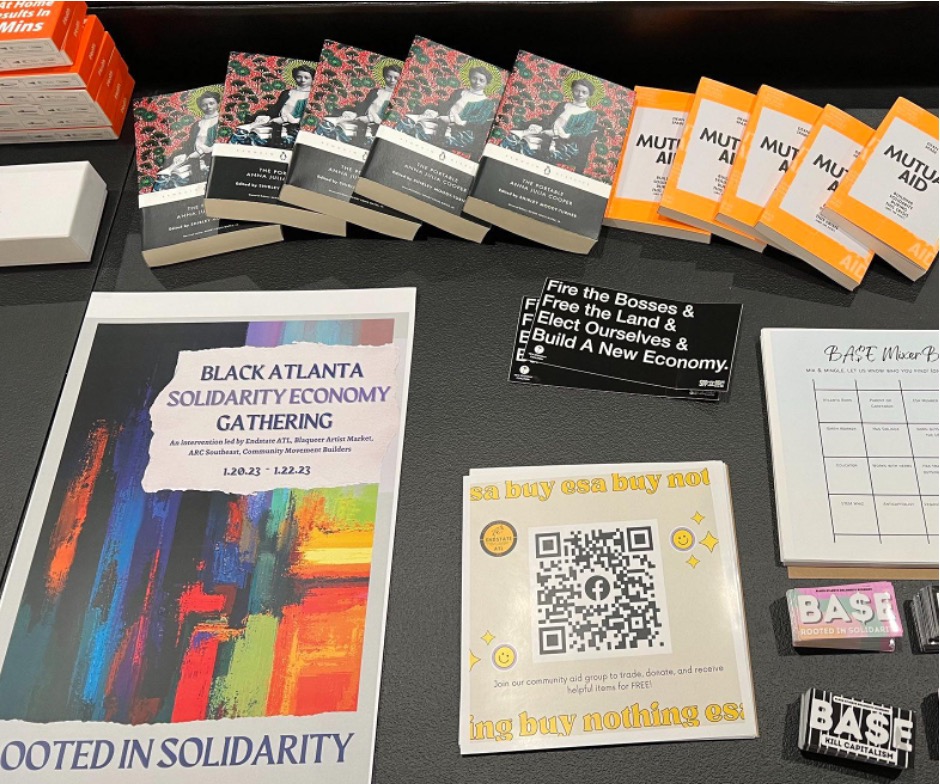
In May of 2023, when the World Health Organization downgraded the coronavirus emergency from a global health pandemic to an "ongoing health crisis," the shift made sense in many ways. Most developed nations have made vaccines available for over two years. Shutdowns and enforced quarantines ended, even in holdout nations. The WHO's announcement signaled that other countries, including the United States, would follow suit if they had not already. This move, however, will have material consequences for grassroots charitable organizations across the US. Endstate ATL (ESA), a group I have worked with since 2021, is one of many non-profit groups that will be affected.
In Georgia, the COVID state of emergency officially ended in May 2022, even as it remained in place at the national level. This allowed organizations like ESA to continue our mutual aid work. But when the US announced the end of the Federal COVID-19 Public Health Emergency (PHE) Declaration on May 11, 2023, enhancements to public assistance and social safety net programs ceased. From this point on, groups like ESA once again will have to jump through multiple bureaucratic hoops to obtain the funding necessary to provide care.
Following the global outbreak of COVID in 2020 many governments created temporary measures to extend aid to vulnerable populations. In the US, these included extensions of unemployment benefits, a moratorium on student loan interest and payments, no-cost COVID testing and vaccinations, Medicare flexibility, and opportunities to provide nontaxable disaster relief funds. The national government also released relief funds to individual state governments, although often these funds did not reach the people who needed them.1Rebecca Riess and Devon M. Sayers, "Alabama Governor Signs Bill to Use Covid-19 Relief Funds to Build Prisons," CNN, October 1, 2021, https://www.cnn.com/2021/10/01/politics/alabama-covid-relief-prison-bills-signed-governor-kay-ivey/index.html. Despite the uneven distribution of aid, many people, specifically children and elders, moved above the poverty line thanks to COVID assistance.2John Creamer, "Supplemental Poverty Measure That Accounts for Additional Government Benefits Lowest on Record at 7.8%," Census, September 13, 2022, https://www.census.gov/library/stories/2022/09/government-assistance-lifts-millions-out-of-poverty.html.
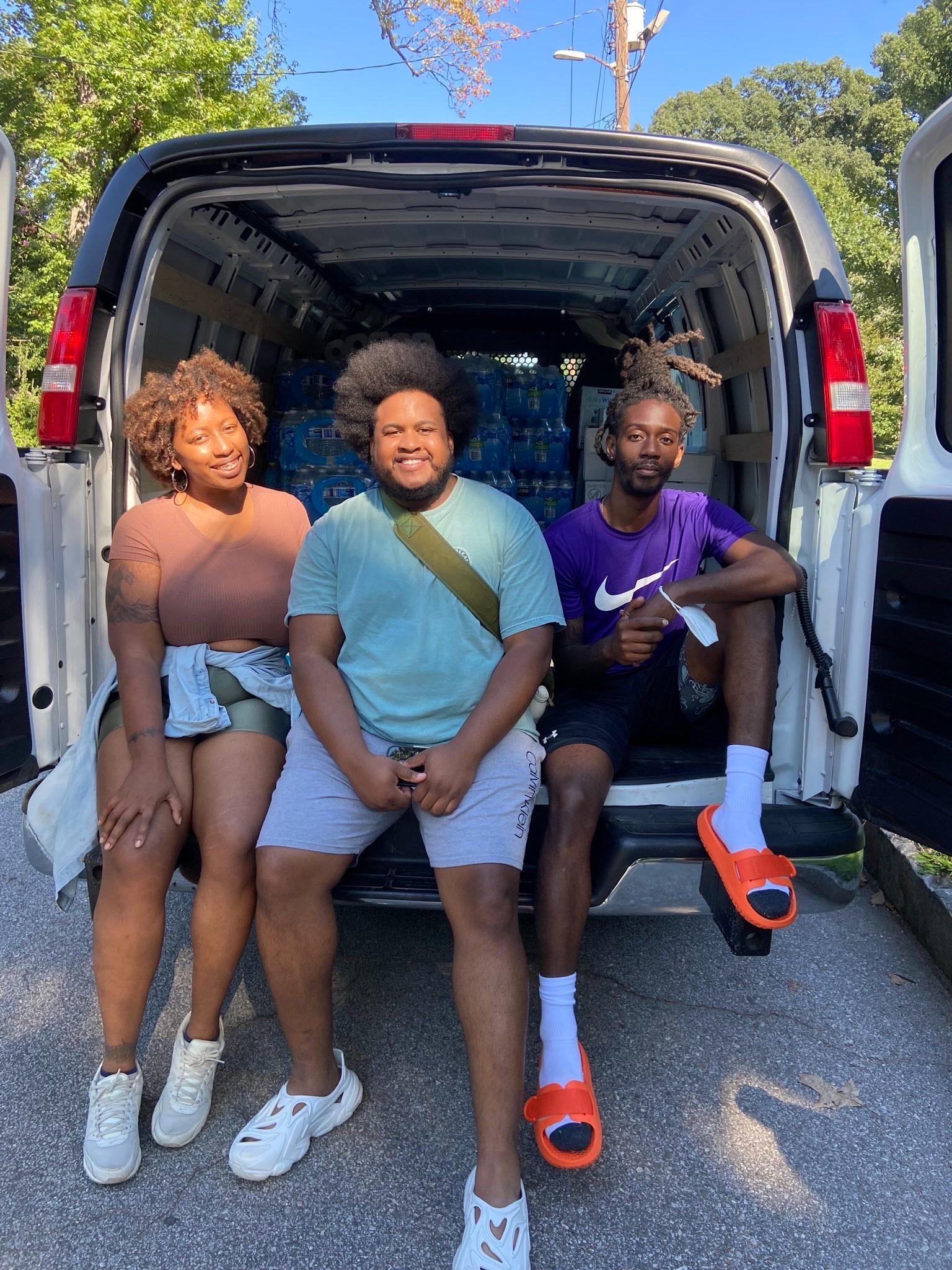
The flexibility surrounding nontaxable disaster relief funds eased mutual aid work. Mutual aid has a long history in the US and Global South, and the onset of the COVID-19 pandemic witnessed an outpouring of community solidarity towards those in need. Mutual aid stands apart from other charity models because of its non-hierachal emphasis on mutualism rather than models that maintain divisions between givers and receivers. Mutual aid is rooted in reciprocity.
Endstate ATL took advantage of these temporary measures for the betterment and aid of our community members. Rooted in southwest Atlanta with a Black queer feminist politic, ESA's work aims to reach those most marginalized through community building, political education, and mutual aid. Through our Black Power Fund, which pays up to three months' worth of utility bills for Black queer households, and our Pack Provides Programs, which provide household supplies, COVID PPE, and infant essentials including formula, clothing, and sanitary products to caregivers of young children, we seek to step in where the state fails to provide support.
Mutual aid allows organizations to provide immediate care and relief to individuals in need without imposing the bureaucratic processes that often keep aid beyond reach. Under a state of emergency, disaster relief payments are not taxable. As such, ESA, and other groups like it, were able to provide direct aid through a less convoluted system of reporting and disbursement. This allowed us to move funds directly and rapidly to people in need and has been crucial to our ability to substantively support people in a timely way. ESA has covered bills for ten households in the past year, as well as covered a year of utilities for the BARRED Business house, which provides stable, community-owned housing for people recently released from prison. We have been able to report these funds as disaster relief.3"Mutual Aid Legal ToolKit," Sustainable Economies Law Center, Accessed June 22, 2023, https://www.theselc.org/mutual_aid_toolkit.
The efforts of mutual aid groups helped supplement aid where state and local leadership failed. Georgia governor Brian Kemp refused to take the COVID-19 pandemic seriously. In 2020, Georgia was the first state in the nation to relax quarantine restrictions, even as Kiesha Lance Bottoms, the mayor of Atlanta, sought to retain many protective measures. Initial reporting that the virus would largely impact the elderly and immunocompromised, combined with anti-fear government propaganda, engendered a sense of invincibility and an attitude of disregard among many Georgians. As of 2021, Georgia had one of the highest COVID mortality rates in the US, and those most impacted were poor, working class, and people of color.4"COVID-19 Mortality by State," CDC, Accessed June 22, 2023, https://www.cdc.gov/nchs/pressroom/sosmap/covid19_mortality_final/COVID19.htm. The refusal of Governor Kemp to implement mandated social distancing or mask requirements, even before vaccines were available, left the entire state population vulnerable to infection. The consequences were devastating, with thousands of unnecessary deaths and debilitating outcomes for those suffering from long COVID.
Pandemic relief payments meant to alleviate the burden of rising interest rates were out of reach for marginalized Georgians. In order to receive national stimulus checks and Kemp's own "special tax credit," individuals needed to have filed and paid taxes for the preceding two years, a barrier that left people who were unemployed or homeless without access to relief.5"Gov. Kemp Announces First Round of This Year's Special Tax Refund," Department of Revenue, May 1, 2023, https://dor.georgia.gov/press-releases/2023-05-01/gov-kemp-announces-first-round-years-special-tax-refund#:~:text=Single%20filers%20and%20married%20individuals,a%20maximum%20refund%20of%20%24500.
In response to the pandemic, groups emerged such as Bed Stuy Strong, based in Brooklyn, which created a robust grocery delivery system by first relying on the resources at their disposal before evolving into a program that benefited thousands.6Haritha Kumar, "Four Key Takeaways from Mutual Aid Organizing During the COVID-19 Pandemic," Georgetown University Beeckcenter, October 4, 2022, https://beeckcenter.georgetown.edu/four-key-takeaways-from-mutual-aid-organizing-during-the-covid-19-pandemic/. Georgia has similar organizations. Community Movement Builders developed stabilization programs that include rent/mortgage payments as well as groceries in their efforts to impede the gentrification of southwest Atlanta, and Food4Lives a non-profit started by Georgia Tech and Emory students provides food and supplies for the unhoused in the greater Atlanta area.7Katie Burkholder, "Housing as a Human Right: Community Movement Builders Organize Against Gentrification," Georgia Voice, April 21, 2022, https://thegavoice.com/today-in-gay-atlanta/housing-as-a-human-right-community-movement-builders-organize-against-gentrification/; "Who are We?" Food4Lives, Accessed June 22, 2023, https://food4lives.org/about.html. Both organizations preceded the pandemic, but their work became much more indispensable in its wake.
The increase in groups doing this aid work was significant, especially in red states where Republican leadership champions laissez-faire government structures for almost everything but reproductive health, policing, and surveillance. Pandemic or no pandemic, people need help. However, smaller aid groups face difficulties in keeping the work going. ESA has primarily been funded by grants, a funding model that is not easily sustainable. According to one of our members, "A significant struggle we've faced since the end of the COVID-19 pandemic is the philanthropic and public perception that the conditions for folks have changed enough that mutual aid is not necessary even as we continue to field a significant number of requests." Further, all members participate on a volunteer basis, spending much of our time otherwise as graduate students, teachers, doulas, herbalists, and nonprofit workers. Over the last two years, many of us have faced our own destabilizing events, financial uncertainty, bouts of COVID, and family loss. The ability of small groups to come together and push to make a difference in their communities—despite personal difficulties and decreasing assistance from governing bodies—should inspire more activism. But the question remains, how can we continue this work when governmental policies have resumed restricting social safety nets while offering few, if any, alternatives?
Changing policy is one problem organizers face, burnout is another. Studies have suggested that we approach "burnout as a part of activism and as influenced by the organizational context, rather than as something that individual activists experience outside of activism."8Maria Fernandes-Jesus et al., "More Than a COVID-19 Response: Sustaining Mutual Aid Groups During and Beyond the Pandemic," Frontiers in Psychology 12 716202, October 2021, https://www.ncbi.nlm.nih.gov/pmc/articles/PMC8563598/. However, as young Black people organizing in the South, my colleagues and I experience burnout from many directions. We deal with the stress of everyday life, as well as the difficulty of doing our solidarity work, with constant reminders from government leadership that our goals are at odds with theirs.
With the COVID state of emergency ending in the US, aid provided by organizations such as Endstate ATL becomes taxable, dramatically altering the way funds can be mobilized, as well as the process that recipients must go through to receive support. Charitable tax deductions are reserved for individuals and corporations who donate money to qualified charities.9Up until December 2021, entities meeting these requirements were able to claim as much as 100% of their AGI in charitable tax write offs. "CARES Act Charitable Benefits Not Extended For 2022," Stanford Giving, March 14, 2022, https://giving.stanford.edu/stories/cares-act-not-extended-for-2022/. Because ESA puts money "directly" in the hands of marginalized people, such direct contributions to individuals are not tax-exempt. The COVID state of emergency allowed groups like ESA to move funds to individuals more freely—on an emergency basis. The end of the state of emergency means we must restructure our aid programs. The beautiful thing about mutual aid is that even if one group burns out, another group can and likely will step up right behind to fill the gap. In this way, the work continues. We never stop.
About the Author
Ra'Niqua Lee writes to share her particular visions of love and the South. She earned an MFA in fiction from Georgia State University, and she is currently at Emory pursuing a PhD in late nineteenth/early twentieth century African American literature with a focus on spatial and Black queer feminist theories. Her fiction has appeared or is forthcoming in Cream City Review, SmokeLong Quarterly, Indiana Review, Passages North, Best of the Net 2023, Best Small Fictions 2023, and elsewhere. In 2021, the Georgia Writers Association awarded her the John Lewis Writing Grant for fiction. Her flash collection For What Ails You is forthcoming from ELJ Editions.
Acknowledgments
Many thanks to my colleagues. Without their collaborative support, I would not be able to do this work: Julian Rose, Britni Ruff, Christina Foster, Michelle, Jovan Julien, and extra thanks to Hugh Hunter for his early edits.
Public Health in the US and Global South is a collection of interdisciplinary, multimedia publications examining the relationship between public health and specific geographies—both real and imagined—in and across the US and Global South. These essays raise questions about the origin, replication, and entrenchment of health disparities; the ways that race and gender shape and are shaped by health policy; and the inseparable connection between health justice and health advocacy.
Beginning in 2022, the series expands to include 1000-word blog posts, as well as longer commentaries, essays, articles and media productions that address the public health and political implications of the COVID-19 pandemic from multiple perspectives. The series editor for Public Health in the US and Global South is Mary E. Frederickson.
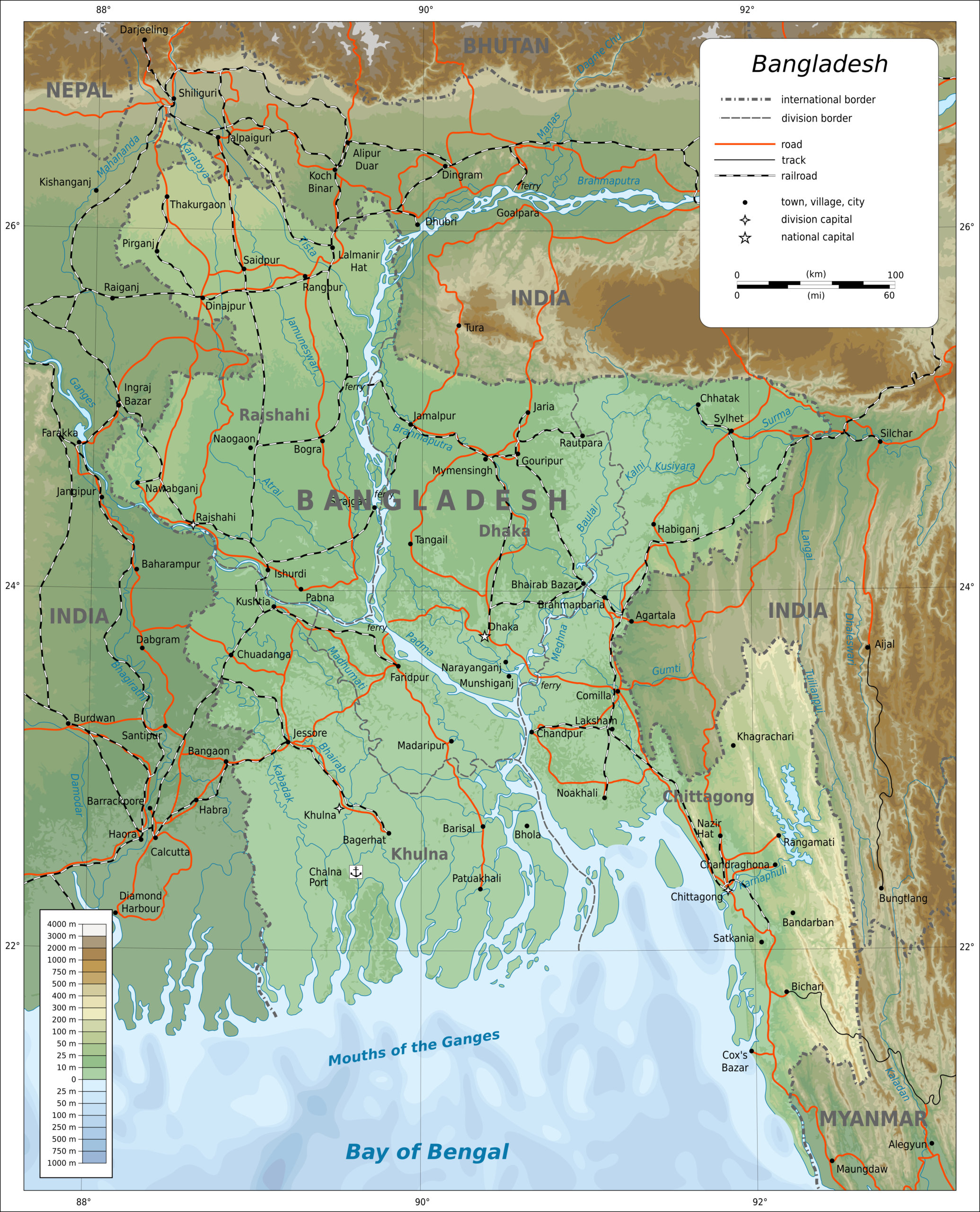
As the world moves into its fourth year since the advent of COVID-19, the pandemic remains a broad public health concern. It is necessary to teach Covid-appropriate behaviors and build public confidence in vaccines and boosters to address new strains of the virus. Across the globe, localized Covid pandemic response projects should complement conventional approaches to preparedness. Community Support Team Dhaka (CST Dhaka) and Community Support Team Cox's Bazar (CST Cox's Bazar) are two projects implemented by the health program of BRAC, a Bangladesh-based NGO.
Bangladesh, the eighth-most populous country in the world (169.4 million people), is a developing country located in South Asia with a 2021 gross domestic product per capita of $2,458. The country has achieved significant progress in reducing maternal, infant, and child mortality rates, decreasing malnutrition, improving immunization coverage, and eliminating infectious diseases like polio. However, it faces emerging health challenges, including the growing burden of noncommunicable diseases, heightened vulnerability to disasters and environmental hazards, and the threat of health emergencies during disease outbreaks such as COVID-19. Bangladesh's health services are centralized and urban-centric.1There are only 1.1 doctors per 10,000 people in rural populations in Bangladesh, while there are 18.2 doctors per 10,000 people in urban areas. Taufique Joarder, Lai B. Rawal, et al, "Retaining Doctors in Rural Bangladesh: A Policy Analysis," International journal of Health Policy and Management 7, no. 9 (2018): 847–858. https://www.ncbi.nlm.nih.gov/pmc/articles/PMC6186485/. The country also faces shortages of well-equipped healthcare facilities and healthcare workers. The health financing system in Bangladesh suffers from a lack of adequate funding, absence of appropriate health insurance, and a large dependence (74%) on out-of-pocket payments.
BRAC, founded in 1972, is the largest non-governmental organization in Bangladesh involved in a variety of sectors including public health, education, microfinance, and livelihood support. It currently employs over 100,000 people across Bangladesh and ten countries. Its Health, Nutrition, and Population Programme (HNPP) has been a global leader in developing and scaling up locally-based health worker programs for the rural population. With support from the Foreign, Commonwealth & Development Office (FCDO), the World Bank, and the United Nations Population Fund (UNFPA), the organization implemented two COVID-19 response projects in Dhaka and Cox's Bazar (two of the high-risk districts identified by the World Health Organization after analyzing infection rates in different districts of Bangladesh). BRAC initiated several creative approaches in these locations to tackle the spread of COVID-19 at the height of the pandemic.
"Miking" in Local Dialects
Playing health messages through mobile loudspeakers (locally known as miking) has been around for decades. After the initial round of miking in Cox's Bazar, however, the volunteers and area managers heard from local representatives that the messages in mainstream Bengali were not effectively reaching the people. Here, the Chatgaya/Chittaingya dialect is the primary oral language. Subsequently, the Cox's Bazar project engaged a local voiceover specialist to develop messages in Chittagonian dialect which enhanced the effectiveness of the 849 miking sessions conducted in the region, substantially improving the local population's understanding about vaccination.
Info Cards
A common request received by the field staff (community health workers, volunteers, and area managers) was for comprehensive materials to complement the messages disseminated verbally. In addition to the usual posters, stickers, and leaflets, BRAC designed tri-fold cards with detailed information on vaccination, handwashing, mask wearing and disposal, and instructions about taking care of people with comorbidities. Info cards were distributed to local change-agents such as market committee members or transport hub leaders to help sustain best practices. The cards garnered a positive response from the public.
Collaboration with Sisimpur
As schools in Bangladesh reopened after an eighteen-month shutdown, BRAC collaborated with Sisimpur—a local adaptation of children's television series Sesame Street—in creating an educational video about COVID-19 featuring the Sisimpur characters. Originally developed for the Dhaka project, this video ran on social media platforms and was shown at some three hundred schools. This intervention was entirely novel for many students and schools, and Sisimpur was also warmly received by parents and teachers. Unfortunately, this project began halfway through BRAC's wider Covid education initiatives, and needed more time and closer supervision.
Comics and Murals
Long perceived as reliable messengers in Bangladesh, local artists often translate crucial information into personable and understandable forms. Working with these artists, BRAC delivered COVID-19 information to schools in an engaging way. Renowned cartoonist Morshed Mishu developed wall murals in Dhaka and Cox's Bazar and 200,000 copies of a comic strip were distributed among schools and madrasas.
Faith Leaders' Endorsement
Faith leaders have addressed misinformation and influenced health behavior changes with a high degree of success. During the biggest Ebola outbreak in history, interfaith leaders were instrumental in delivering health messages in parts of West Africa that governments and NGOs could not reach. As credible sources of information, they worked actively on quashing rumors regarding Ebola and encouraged people to listen to government directives and the health workers.2A 2020 study by Afrobarometer revealed that across 34 countries in Africa, faith leaders are more widely trusted than any other public leaders. Brian Howard, "Religion in Africa: Tolerance and Trust in Leaders are High, but Many Would Allow Regulation of Religious Speech," Afrobarometer Dispatch no. 339 (2020), https://afrobarometer.org/sites/default/files/publications/Policy%20papers/ab_r7_dispatchno339_pap12_religion_in_africa.pdf. Early in the COVID-19 epidemic, BRAC teamed up with Islamic Foundation Bangladesh (IFB) and Bangladesh Baptist Church Fellowship (BBCF) to train their directors on best practices. Local representatives of UNICEF, who had previously engaged Muslim leaders in another health project, facilitated the IFB partnership. BRAC provided online training to IFB field supervisors and BBCF pastors via Zoom, addressing questions and rumors. This collaboration provided 3,400 faith leaders with awareness messaging, 860,000 reusable masks, and 350,000 leaflets.
Faith leaders and scholars such as Leor P. Sarkar (General Secretary of the BBCF), Gazi Sanaullah (Islamic scholar), and Pragyananda Bhikkhu (Assistant Director, Ramu Central Sima Bihar) endorsed preventive measures and appeared in short social media videos in support of wearing masks, maintaining social distance, washing hands, and taking vaccines.
While the Dhaka Community Support Team emphasized partnerships with selected faith-based organizations, Cox's Bazar sought to unite all the faith leaders from the intervention areas—Muslim, Buddhist, and Hindu—under one roof for knowledge sharing and collaboration. These meetings included a moderated session that provided equal opportunity to representatives of each religion to share the lessons they had learned. In Ramu, faith-based organizations overcame the silos between their work, meeting to formulate policies for combating the spread of vaccine misinformation. Volunteers working with faith-based groups increased both the reach and acceptance of the interventions.
Faith leader Reverend Leor P. Sarkar speaks on Covid,
Bangladesh. Translated from original Bengali.
Faith leader Gaji Sanaulla Rahmani speaks on Covid,
Bangladesh. Translated from original Bengali.
Interactive Popular Theater
BRAC's popular theater groups under its Social Empowerment and Legal Protection program (SELP), have performed about a wide range of topics such as gender equality, child marriage, violence against women, health, migration, and road safety across sixty-one districts since 1998. To raise COVID-19 awareness, the Cox's Bazar project organized 160 performances, despite dealing with some local challenges. For instance, the acceptance level of popular theatre was lower among the conservative Muslim population and the shows were more difficult to organize in hard-to-reach locations. Social distancing was more challenging when children made up the majority of the audience.
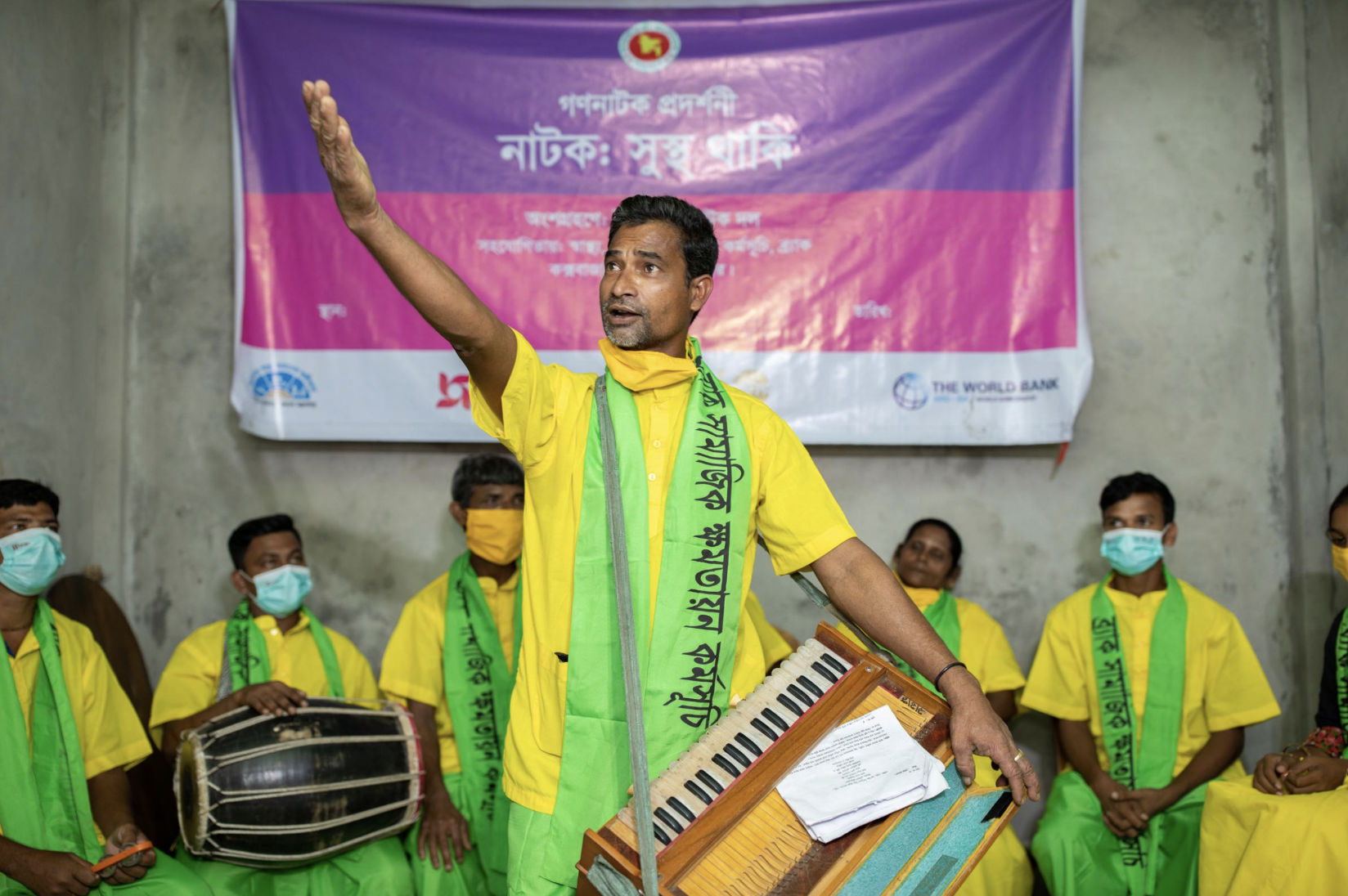
Findings from surveys and focus group discussions indicated increased awareness about COVID-19 symptoms, modes of transmission, and prevention measures (handwashing, mask wearing, social distancing) and vaccination across all intervention areas. Local knowledge about the existence of the virus and its spreadability increased.3Compared to the baseline, 26% more people knew that both hands need to be washed, 11% more people knew not to use a damp or damaged mask, whereas 7% more people knew not to wear the mask loosely. 8% more people reported knowing that the Covid-19 vaccine improves the body's immunity against the virus. School surveys revealed that 10% more students reported that face-to-face communication with the infected was the mode of transmission and almost 4% more knew it could be transmitted through coughing and sneezing. Encouraging accessible, engaging, and equitable approaches to public health communications has led to an increase in the uptake of COVID-19 preventive practices, as well as a reduction in barriers to vaccine confidence.
COVID-19 continues to pose a significant public health concern for many countries, like in India. While Bangladesh faces various health challenges and lacks adequate healthcare facilities and workforce, local NGOs like BRAC have played a significant role in addressing the pandemic's impact through introduction of localized initiatives like miking, info cards, Sisimpur PSAs, comics and murals, and faith leaders' endorsement to strengthen COVID-19 response. Such programs are essential in complementing conventional approaches to pandemic preparedness and mitigating the virus's spread. While these initiatives may be unique to Bangladesh, their successes can provide important lessons for other countries in terms of pandemic response and preparedness.
About the Author
Monzur Morshed Patwary is a public health practitioner with over eleven years of professional experience. As a senior program manager at BRAC, he has led several large-scale projects involving COVID-19 response, maternal and child health, and digitalization of training for community health workers. He has also collaborated with UN organizations and international donors such as USAID, FCDO, DANIDA, and GAC and helped mobilize high-value grants through project design and proposal development. Monzur represents Bangladesh on global platforms such as ParisWHO, Global Leadership Forum and HPAIR Harvard Conference. He completed the Hubert H. Humphrey Fellowship at Emory University-Rollins School of Public Health and is currently pursuing his professional affiliation at The Task Force for Global Health.
Public Health in the US and Global South is a collection of interdisciplinary, multimedia publications examining the relationship between public health and specific geographies—both real and imagined—in and across the US and Global South. These essays raise questions about the origin, replication, and entrenchment of health disparities; the ways that race and gender shape and are shaped by health policy; and the inseparable connection between health justice and health advocacy.
Beginning in 2022, the series expands to include 1000-word blog posts, as well as longer commentaries, essays, articles and media productions that address the public health and political implications of the COVID-19 pandemic from multiple perspectives. The series editor for Public Health in the US and Global South is Mary E. Frederickson.
Commentary
Multiple COVID-19 waves have left in their wake compelling evidence of long overlooked gaps in pandemic readiness and responsiveness. The primary lesson for the US public health and healthcare sectors is that this deep-rooted ignorance took a huge toll on their ability to contend with a novel, rapidly spreading, and lethal contagion. As historian Peter Burke recently noted: "Many vivid examples of the consequences of ignorance come from the history of diseases."1Peter Burke, Ignorance: A Global History (New Haven: Yale University Press, 2023), 189. COVID-19 is a current case in point. What was missed or mismanaged in the run up to the pandemic and during its catastrophic course will, if left unexamined and uncorrected, lead to enormous suffering and loss in additional public health crises. In this commentary, I want to elaborate on how institutionalized ignorance affected the Centers for Disease Control and Prevention's (CDC's) response and what can and should be done to learn from the agency's mistakes, with the goal of avoiding a repetition.

A thorough and fully transparent probe of CDC's recent history is warranted, one that scrutinizes "institutional obliviousness, under a succession of agency directors and programmatic leaders, to basic gaps in readiness and responsiveness that became glaringly obvious during the pandemic and contributed to numerous missteps in the US response to COVID-19."2Daniel Pollock, "COVID-19 Lessons in Ignorance," Southern Spaces, April 28, 2022, the first in a public health series covering the pandemic: https://southernspaces.ecdsdev.org/2022/covid-19-lessons-ignorance/. Far too much had to be cobbled together on the fly in early 2020 largely because of prior organizational neglect. And far too little has changed three years later, even as CDC moves ahead with its latest—to date, largely upper echelon—reorganization.3Centers for Disease Control and Prevention, "CDC Moving Forward Reorganization: A Notice by the Center for Disease Control," Federal Register 88, no. 29 (2023): 9290, https://www.federalregister.gov/documents/2023/02/13/2023-02929/cdc-moving-forward-reorganization.
Yes, SARS CoV-2 is a novel pathogen that spread rapidly, wreaked extraordinary devastation, and evolved quickly. Lots of impromptu learning about the virus and measures to contain or counter was necessary. However, pandemic warning signals abounded for years, and many assets CDC needed to function optimally in public health emergencies—as well as in non-pandemic times—were long overlooked or chronically under supported by virtue of the agency's own strategic planning, programmatic priority setting, and discretionary funding decisions. In surveillance and data science, for example, CDC did not fully mind and mend critically important gaps in electronic case reporting, immunization information systems, forecasting and outbreak analytics, and tools and dashboards for data visualization.
Certainly, factors largely beyond CDC's control had major impacts on the agency's performance. Besides the virus itself, CDC had to contend with (1) a coterie of federal government executives, most notably the 45th President, who failed to respond effectively and exerted unprecedented political interference; (2) a legacy of outbreak responses in the United States that are highly decentralized and contingent on a variety of situational circumstances; (3) longstanding constraints on CDC's public health authorities; and (4) chronic underfunding of public health programs at all levels of government. Each of these factors helps explain limitations, gaps, and shortcomings in the agency's performance. However, to leave the matter there would mean overlooking the impact of internal organizational factors that remain largely under CDC's control. Whether the agency has fully reckoned and responded to its internal problems is an open question that warrants much more attention.

"To be frank, we are responsible for some pretty dramatic, pretty public mistakes, from testing to data to communications," CDC Director Rochelle Walensky acknowledged in August 2022. However, the full CDC Scientific and Programmatic Review report that prompted Dr. Walensky's critique remains under wraps and not publicly available. Many months after the report was completed, all that CDC has published is a high-level summary and set of recommendations.4"CDC Moving Forward Summary Report," Centers for Disease Control and Prevention, Last reviewed September 1, 2022, https://www.cdc.gov/about/organization/cdc-moving-forward-summary-report.html. What was covered in the review, its methods and findings, and how conclusions were reached are shrouded in secrecy. Sequestering the report does not bode well for efforts to learn from CDC's COVID-19 experience and improve the agency's performance. Instead, CDC leaders have opted for a form of knowledge concealment that serves to perpetuate institutionalized ignorance.
For those of us who are deeply concerned about where the agency is headed, this is a fraught moment, yet organizational dysfunctions, mishaps, setbacks, and downturns are not necessarily points of no return. Learning from the COVID-19 pandemic and CDC's response to it can lead to changes that help revitalize the agency. Concealing the recent scientific and programmatic review report is not a good start along the path of organizational learning.

"Organizational learning," according to a leading researcher in the field and her colleagues, "is a process through which experience performing a task is converted into knowledge, which, in turn, changes the organization and affects its future performance."5Linda Argote, Sunkee Lee, and Jisoo Park, "Organizational Learning Processes and Outcomes: Major Findings and Future Research Directions," Management Science 67, no. 9 (2021): 5399–5429. The process should include gathering and moving information across organizational boundaries; eliciting and using multiple viewpoints; acknowledging hierarchies, policies, and practices that have not worked; and trying new approaches that have a higher likelihood of success. A prime example of an opportunity to learn from the COVID-19 experience is reckoning with how the agency organized, staffed, and operated its emergency response. From my perspective, the structure and process defects were profound and persistent, with the upshot that returns on the extraordinary time and effort so many CDC responders committed to their tasks fell well short of what would warrant use of all those precious resources. What purposes did the CDC response serve? Did the agency achieve those purposes? What was necessary to get the job done? Among the more specific questions about CDC's emergency operations is whether all the work involved with preparing, clearing, and presenting extensive PowerPoint slide decks in daily COVID-19 briefings was worthwhile. What were the benefits and at what cost?
Most of CDC's performance problems during the pandemic were the legacy of organizational neglect, not the exigencies of a novel corona virus or other external factors. The botched laboratory test rollout, flawed testing guidance, poorly prepared public health guidelines, confusing messaging, misguided mask recommendations, multiple data and analytic deficiencies, staffing shortfalls, and publication delays are traceable to assumptions widely held within the agency about institutional readiness coupled with longstanding inattentiveness by CDC directors and programmatic leaders to known or partially understood gaps. That CDC was not ready to go live sooner with a publicly facing, state-of-the art COVID-19 data display epitomizes what the agency had neglected. Instead, other data visualization websites, most notably Johns Hopkins University's dashboard, served as the go-to destinations for pandemic surveillance data. The reputational damage to CDC is severe and could have been avoided.
So much had to be launched or improvised by CDC in crisis mode because so much had been taken for granted or ignored for such a long time. Some additional examples from my own experience: When I joined the CDC response as Deputy Incident Manager for data and surveillance at the end of March 2020, I was surprised to learn that the agency had yet to introduce a process to enable secure data access and distribution of COVID-19 data sets to prospective data users who had been identity-proofed by the U.S. Department of Health and Human Services. Further, CDC had taken no steps to inventory and document relevant data sets and make provisions for sharing de-identified data with news organizations, one of which moved forward with a lawsuit to gain access to COVID-19 case data aggregated by CDC. The agency should have closed these basic gaps in data provisioning well before the pandemic, not during the throes of it. The only explanation of this blunder that I can think of is lack of forethought and follow through.

SARS CoV-2 is not the first viral respiratory pathogen to emerge and spread across country borders in the twenty-first century. While each international outbreak has presented a unique mixture of causes and consequences, they also have had much in common. That commonality places a premium on learning from each event and applying take-away lessons in a thoroughgoing way. What's ahead epidemiologically can surpass what's happened already in terms of complexity and magnitude, and that only heightens the stakes for CDC's organizational learning and pandemic preparedness.
While there are many pockets of CDC excellence, the organization, most notably because of its COVID-19 response, has taken multiple hits—some reflect ignorance about the agency's mission, operations, opportunities, and constraints but others are knowledgeable, on target, and of high consequence. There is much to do—and soon. We need to know more about CDC's performance gaps and shortcomings, and how to remedy them. To that end, instead of treating the full details of CDC's COVID-19 mistakes as a sequestered resource, it behooves CDC leaders to build on, transfer, and most importantly, act on what has been learned.6Jeffrey Pfeffer and Robert I. Sutton, The Knowing-doing Gap: How Smart Companies Turn Knowledge into Action (Cambridge, MA: Harvard Business School Press, 2000): 261. In the pandemic's wake, a much stronger commitment to organizational learning by CDC will provide the quickest and most effective solutions to the institutionalized ignorance that placed the public and the agency at risk.
About the Author
After completing the CDC's Epidemic Intelligence Service training program in 1986, Daniel Pollock worked as a medical epidemiologist at the agency for 35 years. Dr. Pollock led the CDC unit responsible for national surveillance of healthcare-associated infections from 2004–2021, and he served in CDC's COVID-19 emergency response in the spring of 2020 as the Deputy Incident Manager for data and surveillance.
Public Health in the US and Global South is a collection of interdisciplinary, multimedia publications examining the relationship between public health and specific geographies—both real and imagined—in and across the US and Global South. These essays raise questions about the origin, replication, and entrenchment of health disparities; the ways that race and gender shape and are shaped by health policy; and the inseparable connection between health justice and health advocacy.
Beginning in 2022, the series expands to include 1000-word blog posts, as well as longer commentaries, essays, articles and media productions that address the public health and political implications of the COVID-19 pandemic from multiple perspectives. The series editor for Public Health in the US and Global South is Mary E. Frederickson.
Commentary
As a public health professor at the University of Michigan, I've encountered opinions about the Covid vaccine in my own family that reflect mistrust and hesitancy. I can understand this.1Melissa Creary, "Bounded Justice and the Limits of Health Equity," Journal of Law, Medicine & Ethics 49, vol. 2 (2021): 241–256; Creary, "Legitimate Suffering: A Case of Belonging and Sickle Cell Trait in Brazil," BioSocieties 16 (2021): 492–513; Creary, "Biocultural Citizenship and Embodying Exceptionalism: Biopolitics for Sickle Cell Disease in Brazil," Social Science & Medicine 199 (2018): 123–131; Melissa Creary, Paul Fleming, Sheeba Pawar, and Amel Omari, "Leading with HEART: Working Toward Health Equity with Anti-Racist Teaching," The Pursuit, University of Michigan School of Public Health, April 29, 2021, https://sph.umich.edu/pursuit/2021posts/leading-with-heart.html; Creary, Paul Fleming, Trivellore Eachambadi Raghunathan, "The Impact of Race on Data." University of Michigan Population Healthy Podcast, February 16, 2021, https://sph.umich.edu/podcast/season3/the-impact-of-race-on-data.html; Creary and Anne Pollock, "How COVID-19 has highlighted racism as a health risk." King's College London Podcast, June 11, 2020, https://www.kcl.ac.uk/news/how-covid-19-has-exposed-racism-as-a-health-risk. Like many Black households in the US, my family had little reason to "trust the science," especially that produced during the presidency of Donald Trump, who consistently endorsed racist policies and spewed racist rhetoric.2Karen Grigsby Bates, "Is Trump Really That Racist?" NPR, October 21, 2020, https://www.npr.org/2020/10/19/925385389/is-trump-really-that-racist. While the public health response in the United States to COVID-19 was uneven across federal, state, and local entities, the narrative about disproportionate risk and mortality became apparent early and the public health establishment eventually sprang into action to make a case for health equity in the deployment of testing, prevention, and care.3Tasleem J. Padamsee, Robert M. Bond, Graham N. Dixon, et al, "Changes in COVID-19 Vaccine Hesitancy Among Black and White Individuals in the US," JAMA Network Open 5, no. 1 (2022), https://jamanetwork.com/journals/jamanetworkopen/fullarticle/2788286. A survey published in January 2022, found that COVID-19 vaccine hesitancy had decreased more rapidly among Blacks than among whites since December 2020. Researchers found that Blacks "more rapidly came to believe that vaccines were necessary to protect themselves and their communities."
Even with these efforts, many of my family members initially could not be persuaded to take the vaccine. I was increasingly frustrated and wished they had more faith in science. Yet, even though I was vaccinated, I shared some of their concerns, and as I've written: "how can people who have never experienced equity be trusting of a supposedly new urgent call for equity when it comes to the vaccine?"4Fabiola Cineas, "Black and Latino Communities are Being Left Behind in the Vaccine Rollout," Vox, February 24, 2021, https://www.vox.com/22291047/black-latino-vaccine-race-chicago. If there were a culture that recognized a right to healthcare, would my family feel the same way? If we expected the state to have responsibility for our health and if we had a history of the public health system systematically and consistently providing preventative treatments and care, regardless of partisan politics, would it make a difference in vaccination rates in the present crisis?
In addition to studying health justice and equity in the United States, I have researched health policy development in Brazil. Segments of the Brazilian Black Movement in the 1990s, modeled to a significant extent on the 1960s US Civil Rights Movement, demanded the right to healthcare. Black participants in my Brazilian study deployed policy-based attempts to achieve full access to citizenship—most prominently as a right to health rights.5Creary, "Bounded Justice," 241–256. My work in Brazil explored how patients, non-governmental organizations, and the Brazilian government, at state and federal levels, have contributed to the discourse of sickle cell disease (SCD) as a black disease, despite a prevailing cultural ideology of racial mixture. Drawing on ethnography and oral histories from Rio de Janeiro, Salvador, Brasília, and Porto Alegre, this project charts the simultaneous constructions of race and science through SCD across Brazil. When I lived in Brazil in 2013, I was struck by just how much everyday people, within social movements and as part of civil societies, called on the Brazilian state to manage and provide healthcare access. With this in mind, I compare the public health systems in the United States and Brazil, the right to public health, and the COVID-19 vaccine.
The rollout of Covid vaccines in the United States was painfully slow. The Trump administration's Operation Warp Speed broke records in vaccine development in 2020, but floundered badly when it came to distributing immunizations in early 2021. President-elect Biden set the goal of deploying 100 million vaccinations in the first 100 days of his administration, pledging to streamline delivery throughout the nation. Shots went into arms and by mid-March 2021, a quarter of the population had received at least one vaccine; six months later that number rose to 85 percent.
Although Black Democrats were vaccinated at a lower rate than white Democrats, the values associated with vaccine hesitancy follow the lines of partisan values and ideological orientation. A Michigan study in early 2021 found the following:
. . . in the initial wave of the outbreak in May 2020, Blacks experienced more severe direct impacts: they were more likely to be diagnosed or know someone who was diagnosed, and more likely to lose their job compared to Whites. In addition, Blacks differed significantly from Whites in their assessment of COVID-19's threat to public health and the economy, the adequacy of government responses to COVID-19, and the appropriateness of behavioral changes to mitigate COVID-19's spread. Although in many cases these views of COVID-19 were also associated with political ideology, this association was significantly stronger for Whites than Blacks.
The study found that Black Michiganders had more at stake, and more to lose. They were more likely to be infected with COVID-19, so they were also more likely to adopt behaviors of compliance. A history of racist mistreatment, however, affected their compliance. Those who perceived the impact of COVID-19 as less threatening were less willing to comply with mitigating behaviors. The Michigan study demonstrates how that state is a microcosm of the United States. According to data from mid-2021, the top twenty-two states with the highest adult vaccination rates voted for Joe Biden in the 2020 presidential election, and some of the least vaccinated states were the most pro-Trump. This partially explains the influence that Trump had (and arguably still has) on perceptions of vaccine validity and necessity.
But major resistance remained: in September 2021, 35 percent of the eligible US population remained unvaccinated and of that group, 83 percent said they did not plan to get the lifesaving shots. By the end of 2021, 73 percent of adults eighteen and older had received at least one dose of a Covid vaccine, however, 27 percent remained unvaccinated. Of those, 42 percent reported that they "don't trust the vaccine." Vaccine hesitancy, racial inequities in distribution, and state and local disparities in healthcare funding and facilities, continued to impede vaccine delivery as first the Delta variant and then Omicron took their deadly and debilitating toll.6Staff, "A Timeline of COVID-19 Vaccine Developments in 2021," AMJC, June 3, 2021, https://www.ajmc.com/view/a-timeline-of-covid-19-vaccine-developments-in-2021.
In contrast to the Covid geographies of the US, Brazilians appeared to "love vaccines," as Lucas Fontainha wrote in Undark, a digital magazine exploring the intersection of science and society. "They fight for vaccines," he continued, "they throw vaccine festivals, they kiss all the babies in the line waiting for vaccines, they camp overnight at the clinic to get a vaccine . . . even the anti-vaccination Brazilians vaccinate in secret."7Kiratiana Freelon, "Opinion: In Brazil's Successful Vaccine Campaign, a Lesson for the U.S," Undark, October 14, 2021, https://undark.org/2021/10/14/in-brazil-successful-vaccine-campaign-lesson-for-us/.

Unlike Americans in the US, Brazilians have benefitted from robust public health programs and a strong vaccine infrastructure since the 1970s. That said, throughout the pandemic, Brazilians have had to contend with Jair Bolsanaro, the "Trump of the Tropics," a man filled with authoritarian vitriol and disregard for vaccine science. Many worried that his influence would deter vaccine uptake, especially because 55 percent of the country voted for him. Bolsanaro's sphere of influence remains significant. His lukewarm stance on Covid vaccines and his refusal to pre-order them in 2020 and early 2021, resulted in many deaths. Nevertheless, a citizenry that believes healthcare is a basic right has countermanded Bolsonaro's failure of leadership. As the number of Brasilians dying from Covid increased to over 600,000 in 2021, citizens largely ignored their president, eschewed their free choice option to not vaccinate, and lined up for the shots.8Felicia Marie Knaul, Michael Touchton, Héctor Arreola-Ornelas, et al, "Punt Politics as Failure of Health System Stewardship: Evidence from the COVID-19 Pandemic Response in Brazil and Mexico," The Lancet Regional Health: Americas 4 (2020), https://www.thelancet.com/journals/lanam/article/PIIS2667-193X(21)00082-X/fulltext.
In 1973, Brazil created a national immunization program (Programa Nacional de Imunizações) that led to the near-eradication of polio and measles by 2000.9"National Immunization Program–Vaccination," Ministry of Health, accessed July 6, 2022, https://www.gov.br/saude/pt-br/acesso-a-informacao/acoes-e-programas/programa-nacional-de-imunizacoes-vacinacao. This successful program has been strengthened by the creation of a universal healthcare and public health system (Sistema Único de Saúde or SUS) that invested (in-part) in the delivery of free public healthcare, including vaccinations to every Brazilian, codified by the Brazilian Constitution of 1988.10Jairnilson Paim, Claudia Travassos, Celia Almeida, et al, "The Brazilian Health System: History, Advances, and Challenges," Lancet 377, no. 9779 (2011): 1778–97, https://pubmed.ncbi.nlm.nih.gov/21561655/. Vaccine delivery to Brazilian citizens is integrated into everyday life and normalized through informal connections, familiarity, and hyper-locality. Although Bolsanaro rejects the idea that the nation state owes a responsibility to its citizens, the state and local arms of the government (and the Constitution), disagree.11Vincent Bevins, "Despite Bolsonaro, Brazil Has Barely Any Anti-Vaxxers," Intelligencer, November 10, 2021, https://nymag.com/intelligencer/2021/11/despite-bolsonaro-brazil-has-barely-any-covid-anti-vaxxers.html. Not only is the state obligated by law to distribute free services and pharmaceuticals, but citizens are mandated to be part of the process. Even those who choose private insurance must get their vaccines at SUS.
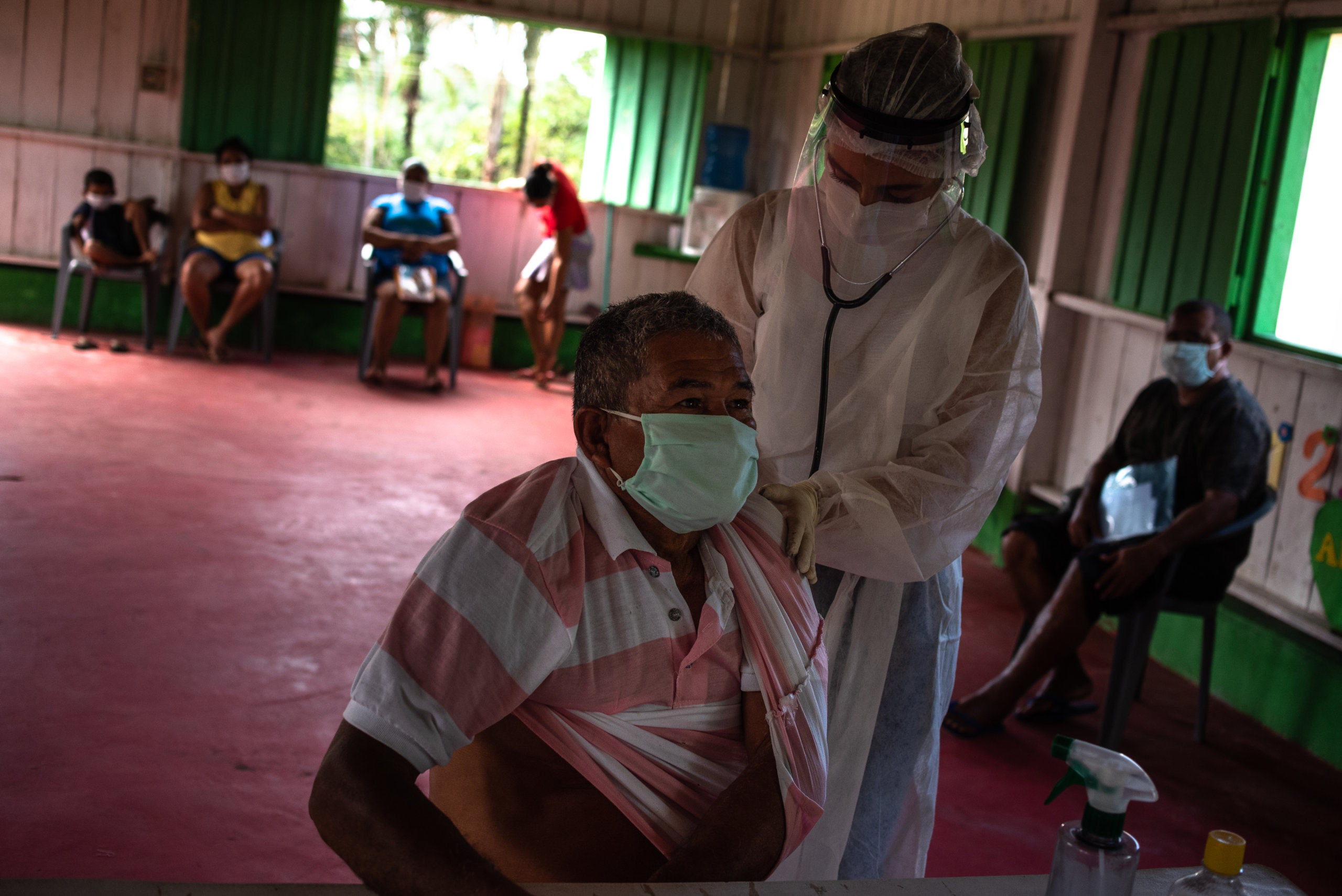
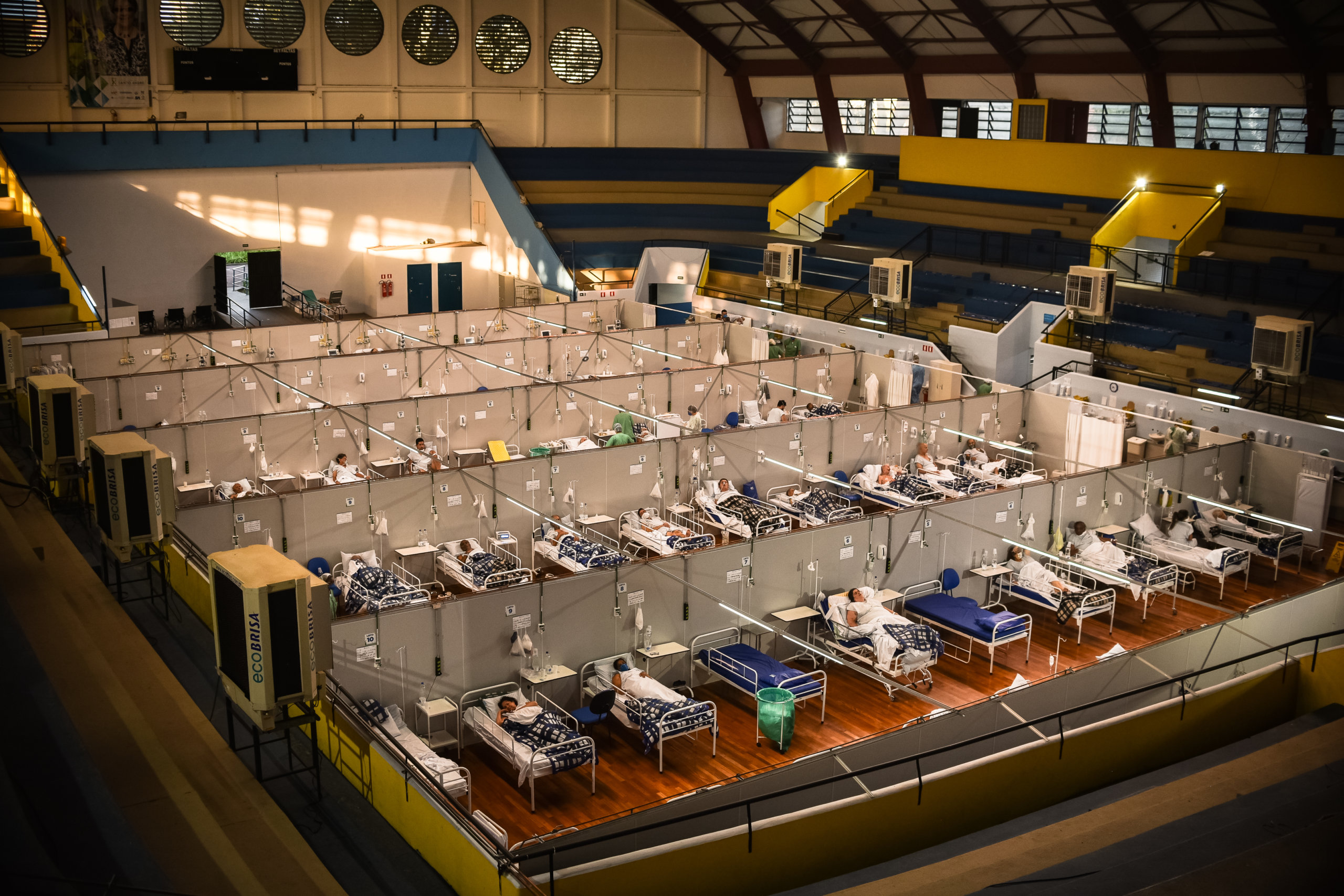
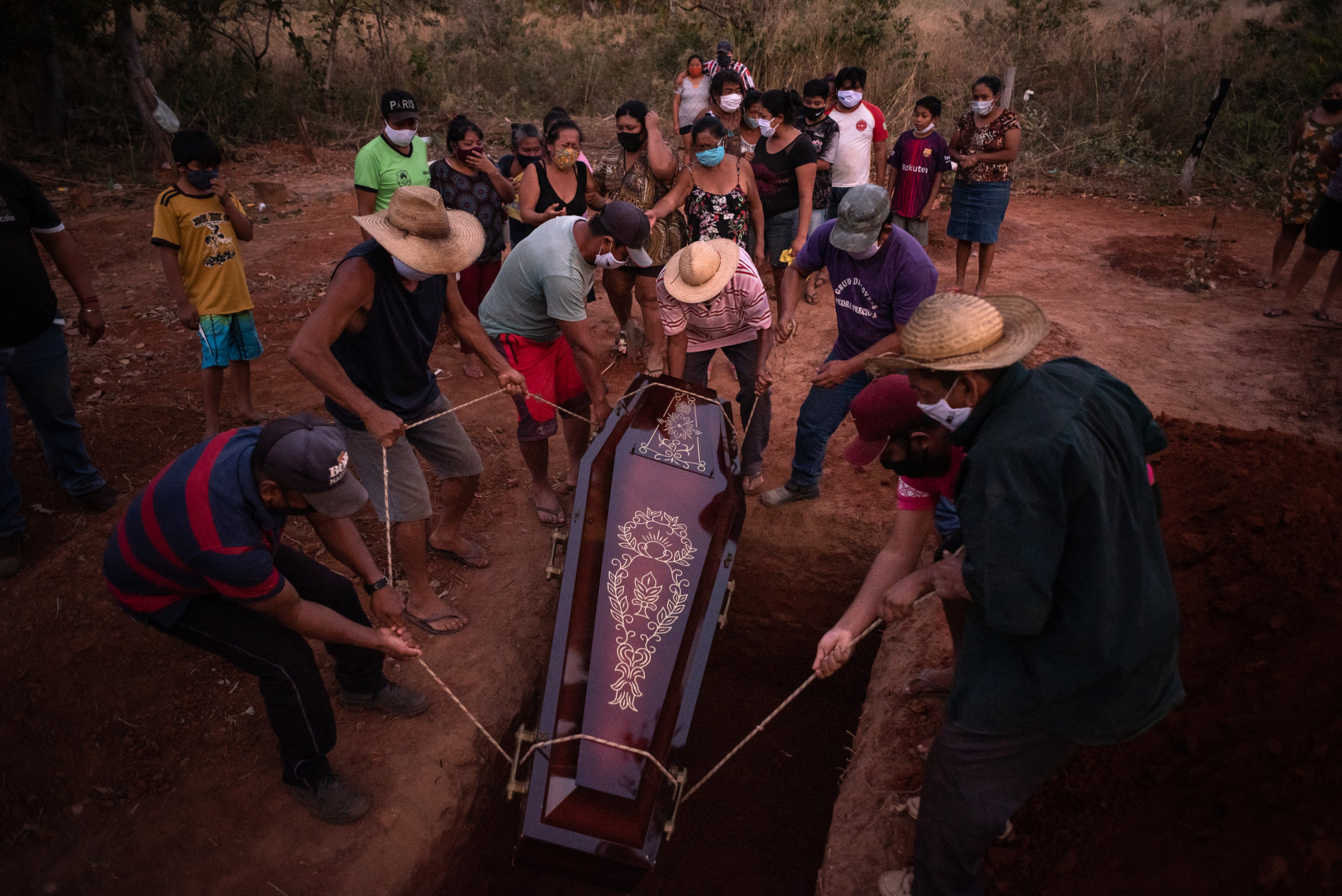
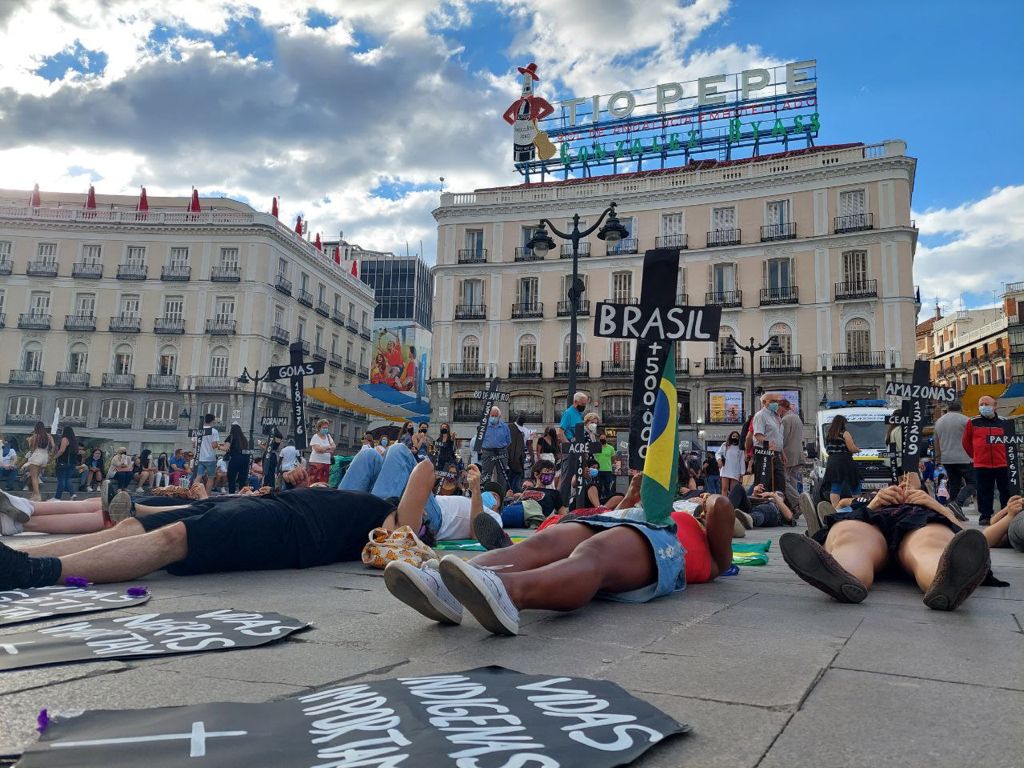

Even when an anti-science president such as Bolsonaro rails against vaccines, there is almost no way for the population to avoid receiving inoculations. In August 2021 in the city of São Paulo, the campaign Virada da Vacina reported that 99 percent of the adults in the city had been vaccinated (Bolsonaro won approximately 45 percent and 60 percent of the vote here in the run offs and general election respectively).12Isabella Menon and Paulo Eduardo Dias, "São Paulo Approaches 99% of Adults with the First Dose of the Covid Vaccine," Folha De S.Paulo, August 15, 2021, https://www1.folha.uol.com.br/equilibrioesaude/2021/08/sao-paulo-se-aproxima-de-99-dos-adultos-com-a-primeira-dose-da-vacina-contra-a-covid.shtml; "See the Calculation Map of all Cities in Brazil," Fohla De S.Paulo, October 7, 2018, https://www1.folha.uol.com.br/poder/eleicoes/2018/veja-o-mapa-de-apuracao-de-todas-as-cidades-do-brasil/?#/cargo/presidente/local/sao-paulo/turno/1/mapa/estadual/municipio/sao-paulo/3550308. Six-hundred locations dispersed the vaccine; sixteen of these were open for walk-in or drive-up around the clock. The state provided DJs, dancing, bands, and artists on stilts to create a carnivalesque atmosphere for those waiting hours in line.
Vaccine culture in Brazil is about accessibility. Locals become part of the campaign. That means you are likely to know and have some regard for the person who comes to you in the name of immunization—in the metro stations, on street corners, or in the park. Public displays boost the vaccine's image. It is harder to retreat into spaces of disinformation when the people you know, or even don't know, seem open to receiving a vaccination. A 2021 study showed that even among vaccine-hesitant individuals in Brazil (10.5 percent of the sample), only 2.5 percent did not intend to vaccinate at all.13Daniella Campelo Batalha Cox Moore, Marcio Fernandes Nehab, Karla Gonçalves Camacho, et al. "Low COVID-19 Vaccine Hesitancy in Brazil," Vaccine 39, no. 42 (2021): 6262–6268. Still, a June 2022 report from The Lancet found that municipalities that supported Bolsonaro in the 2018 elections were those that had the worst COVID-19 mortality rates, especially during the second epidemic wave of 2021.

As of June 2022, 87.3 percent of Brazilians have received at least one dose of COVID-19 vaccine and 79 percent have been fully vaccinated, compared with 79.8 percent of US citizens having received one dose and 67.5 percent being fully vaccinated.14COVID-19 Vaccination Tracker, Reuters, last updated July 15, 2022, https://graphics.reuters.com/world-coronavirus-tracker-and-maps/vaccination-rollout-and-access/. While these numbers are not vastly different, it is of note that Brazil President Bolsonaro remains in power, regularly flouting vaccine regulations and bragging about his unvaccinated status, whereas since 2021 in the United States, President Joe Biden has worked tirelessly to get vaccines in arms, bolster public health, and eliminate health disparities.15Rodrigo Pedroso, "Brazil's Bolosnaro Says He Will Not be Vaccinated Against Covid-19," CNN, October 13, 2021, https://www.cnn.com/2021/10/13/americas/bolsonaro-no-vaccine-intl/index.html; Chuck Todd, Mark Murray and Carrie Dann, "Biden is True to a Key Promise: Getting More Shots in Arms," NBC News, March 19, 2021, https://www.nbcnews.com/politics/meet-the-press/biden-true-key-promise-getting-more-shots-arms-n1261531; HHS Press Office, "Biden-Harris Administration Provides $121 Million in American Rescue Plan Funds to Support Local Community-Based Efforts to Increase COVID-19 Vaccinations in Underserved Communities," HHS, July 27, 2021, https://www.hhs.gov/about/news/2021/07/27/biden-harris-admin-provides-121-million-in-arp-funding-to-local-communities-for-covid-19-vaccines.html.
Early in his tenure, Biden proposed a $1.6 billion increase for the Centers for Disease Control and Prevention to improve core public health capacities in states and territories, modernize public health data systems, train new epidemiologists and other public health workers, and build global capacity to respond to future health threats. Some of these efforts have worked. By August 2021, Pew research reported that around three-quarters of US adults (73 percent) had received at least one dose of a COVID-19 vaccine.
Despite these efforts, too many Americans see vaccine mandates, not as a way toward building public safety, but as extreme government overreach. Republicans and Libertarians have called repeatedly and loudly for "personal freedom" to be prioritized over public safety. Before the Supreme Court blocked the Biden administration's vaccine-or-test requirement for large private businesses in January 2022, there was an outcry for #massnoncompliance. Some scholars have called this political resistance to vaccines based on the tenets of choice and liberty, a "uniquely American predicament."16Alana Wise, "The Political Fight Over Vaccine Mandates Deepens, Despite their Effectiveness," NPR, October 17, 2021, https://www.npr.org/2021/10/17/1046598351/the-political-fight-over-vaccine-mandates-deepens-despite-their-effectiveness. And while the oppositional forces of conservatism and science have been noted as phenomenon elsewhere, including Brazil, the lack of a dominant US culture that trusts and respects public health and expects that the state can and should deliver it can be attributed largely to decades of right wing ideologues across many forms of media.
To date, an Omicron subvariant (BA-5) is the newest variant of concern, threatening a wave of infections and reinfections. As we continue to navigate this global pandemic, we must pay attention to the true influencers of public health. In Brazil, the public health system has a strong history of emboldening citizenry with a message of governmental duty and obligation. We'll see how this may play out in the polls come October for upcoming elections in this country. In the United States, anti-vax politicians, many of whom have themselves received the vaccine for COVID-19, have spread misinformation and anti-government rhetoric about public health. Although conservatism and evangelical religiosity has led to vaccine hesitancy, a Pew Report shows us that most Americans who go to religious services say they would trust their clergy's advice on COVID-19 vaccines. Some advocates of public health have historically prioritized local partnerships with religious leaders and institutions acknowledging this very important sphere of influence.
We must continue to undertake hard conversations about the tensions between individual freedoms and population health much as we did when H1N1 struck our collective shores. As families like my own navigate the implications of a mutating virus that generated a global pandemic, we need trusted resources that are sensitive to historical experiences and the collective common good.
About the Author
Dr. Melissa S. Creary is assistant professor in the Department of Health Management and Policy, School of Public Health at the University of Michigan and the senior director for the Office of Public Health Initiatives at the American Thrombosis and Hemostasis Network (ATHN). She assists ATHN in finding ways to leverage public health research and policy to make a broader impact within the bleeding and blood disorders population. Dr. Creary's areas of specialization include race and racism, genetics, identity politics, health policy, and health equity. She worked for a decade as a health scientist at the Centers for Disease Control and Prevention in the Division of Blood Disorders, has done extensive field work in Brazil, and has more than twenty years of bench, public health, and social science research experience.
Public Health in the US and Global South is a collection of interdisciplinary, multimedia publications examining the relationship between public health and specific geographies—both real and imagined—in and across the US and Global South. These essays raise questions about the origin, replication, and entrenchment of health disparities; the ways that race and gender shape and are shaped by health policy; and the inseparable connection between health justice and health advocacy.
Beginning in 2022, the series expands to include 1000-word blog posts, as well as longer commentaries, essays, articles and media productions that address the public health and political implications of the COVID-19 pandemic from multiple viewpoints. The series editor for Public Health in the US and Global South is Mary E. Frederickson.
Commentary
An online search using the keywords "COVID-19" and "lessons" turns up an astonishing volume and assortment of information: thousands of commentaries, news stories, scholarly articles, book chapters, and monographs. The lessons are intended for vast expert and general audiences: from pediatricians, public health professionals, and other specialized communities of practice to ordinary people and political leaders across the planet. What has been, can be, and should be learned? More lessons loom. Expect a deep dive Congressional investigation and blue-ribbon probes. Storytellers are weighing in with fictional chronicles. Booker Prize winner Ian McEwan's novel, Lessons (New York: Alfred A. Knopf, 2022), is scheduled for September 2022.

From my perspective as a recently retired Centers for Disease Control and Prevention (CDC) branch chief who served in the agency's COVID-19 response from late March through June 2020, the profusion of "lessons learned" reflects the magnitude of the knowledge gaps that impaired America's readiness and undercut its efforts to grapple with a new pathogenic peril, one for which danger signs were long evident. Failures in foresight were followed by fitful attempts at comprehending a lethal contagion's spread and knowing what to do about it.1Cormac Bryce, Patrick Ring, Simon Ashby, and Jamie K. Wardman, "Resilience in the Face of Uncertainty: Early Lessons From the COVID-19 Pandemic," Journal of Risk Research 23, no. 7–8 (2020): 880–887.
The story of the nation's COVID-19 plight is as much an unfolding epistemological crisis as it is a once-in-a-century epidemiological catastrophe. Among the many lessons to be distilled are how and why ignorance in various forms and places accounts for so much of what went wrong. A thorough and wide-ranging exploration is needed, which calls for contributions from multiple disciplines and approaches. As historian of science Robert Proctor recommends: "We need to think about the conscious, unconscious, and structural production of ignorance, its diverse causes and conformations, whether brought about by neglect, forgetfulness, myopia, extinction, secrecy, or suppression."2Robert N. Proctor, "Agnotology: A Missing Term to Describe the Cultural Production of Ignorance (and Its Study)," in Agnotology: The Making and Unmaking of Ignorance, ed. Robert N. Proctor and Londa Schiebinger (Stanford, CA: Stanford University Press, 2008), 1–33. Further, as sociologist Scott Frickel suggests, we also need to focus on "how, where, and why ignorance, once produced, becomes institutionalized."3Scott Frickel, "Not Here and Everywhere: The Non-production of Scientific Knowledge," in Routledge Handbook of Science, Technology, and Society, ed. Daniel Lee Kleinman and Kelly Moore (New York: Routledge, 2014), 263–276. For example, studies of CDC's shambolic performance should include close scrutiny of institutional obliviousness, under a succession of agency directors and programmatic leaders, to basic gaps in readiness and responsiveness that became glaringly obvious during the pandemic and contributed to numerous missteps in the US response to COVID-19.
If the so-called Spanish influenza of 1918 was, in the words of historian Alfred W. Crosby, America's Forgotten Pandemic, then for the time being the bounty of lessons suggests that COVID-19 is America's Teachable Moment Pandemic.4Alfred W. Crosby, America's Forgotten Pandemic: The Influenza of 1918, Second Edition (New York: Cambridge University Press, 2003), 311–328. The largest public health cataclysm in a hundred years has put to the test assumptions, capacities, decisions, practices, and policies. In many ways, the United States has been found wanting, as evidenced by the exceptionally devastating and inequitable toll that COVID-19 has exacted, much of which was averted or more proficiently mitigated by other countries, including nations in the Global South. Vietnam is a prime example.

Events turned US exceptionalism on its head; the nation's heralded public health preeminence ran aground against a novel corona virus. Remarkably, four months before the World Health Organization declared the worldwide spread of COVID-19 a public health emergency, preparedness experts convened by the Nuclear Threat Initiative and Johns Hopkins University reported that the United States was at the top of the heap internationally in terms of its readiness to contend with a pandemic. Scoring 83.5 out of 100 possible points, the US was deemed "best prepared" in the world.5Elizabeth E. Cameron, Jennifer B. Nuzzo, Jessica A. Bell, et al, Building Collective Action and Accountability, GHS Index, October 2019, https://www.ghsindex.org/wp-content/uploads/2019/10/2019-Global-Health-Security-Index.pdf. Yet, when the virus began to spread throughout the nation, political and public health leaders overlooked or failed to respond promptly and effectively to signals of a mounting threat.
Myriad displays of ignorance in preparedness and response cast a spotlight on areas of knowledge, most visible in America's contributions to pathogen genomics and vaccine development, that were the rarity rather than the rule. As historian Peter Burke predicts, much will be said about ignorance when we look back on the pandemic.6Ana R. Rego and Marialva Barbosa, "Interview With Peter Burke: About Ignorance Nowadays," Revista Famecos—Midia, Cultura e Tecnologia 28 (2021): 1–7. The United States will provide many examples for review. "The coronavirus is very much under control in our country," President Donald Trump claimed without justification in February 2020.7"Trump Says Coronavirus Is 'Very Well Under Control' in U.S.," Bloomberg, February 25, 2020, Video, 1:26, https://www.bloomberg.com/news/videos/2020-02-25/trump-says-coronavirus-is-very-well-under-control-in-u-s-video. When cases and deaths surged, corporate America chimed in with commercials proclaiming "we are all in this together," a slogan that blithely disregarded systemic, inequitable differences in exposures, resources, and outcomes.8"Every Covid-19 Commercial is Exactly the Same," Microsoft Sam, April 15, 2020, YouTube video, 3:40, https://www.youtube.com/watch?v=vM3J9jDoaTA. As COVID-19 variants emerged and disease waves swelled, public health officials justified shifts in their response guidance with the catchphrase "follow the science," in effect denying knowledge gaps and glossing over judgment calls that informed their decisions.9Nason Maani and Sandro Galea, "What Science Can and Cannot Do in a Time of Pandemic," Scientific American, February 2, 2021, https://www.scientificamerican.com/article/what-science-can-and-cannot-do-in-a-time-of-pandemic/. Sports celebrities and other influencers joined in; some publicly declined vaccinations for spurious or unspoken reasons. In one widely publicized instance, a National Football League Most Valuable Player invoked vaccine misinformation to justify his decision to remain unvaccinated.10Ken Belson and Emily Anthes, "Scientists Fight a New Source of Vaccine Misinformation: Aaron Rodgers," New York Times, November 14, 2021, https://www.nytimes.com/2021/11/08/sports/football/aaron-rodgers-vaccine.html. These displays of ignorance, from the individual to the federal levels, almost certainly will be among the major topics covered when histories of America's recent past are written and discussed.
To a large extent, first drafts of our national COVID-19 history have been assembled, produced in near real-time amid an evolving pandemic. Among the lengthier accounts are books by Nicholas Christakis, Scott Gottlieb, Michael Lewis, Andy Slavitt, and Lawrence Wright.11Nicholas A. Christakis, Apollo’s Arrow: The Profound and Enduring Impact of Coronavirus on the Way We Live (New York: Little, Brown Spark 2020); Scott Gottlieb, Uncontrolled Spread: Why COVID-19 Crushed Us and How We Can Defeat the Next Pandemic (New York: HarperCollins, 2021); Michael Lewis, The Premonition: A Pandemic Story (New York: W.W. Norton, 2021); Andy Slavitt, Preventable: The Inside Story of How Leadership Failures, Politics, and Selfishness Doomed the U.S. Coronavirus Response (New York: St. Martin’s Press, 2021); Lawrence Wright, The Plague Year: America in the Time of Covid (New York: Alfred A. Knopf, 2021). Their narratives and additional reports, published across a wide variety of media platforms and outlets, recount a now familiar cascade of main events: warning signals missed or ignored. Contagion risks initially misunderstood or minimized. Testing bungled. Weaknesses in public health infrastructure and operations laid bare. Guidance delayed, shifted, and politicized. Mandates and masks applied, albeit unevenly. Healthcare stretched to the breaking point. Inequalities exposed. Supply chains disrupted. The economy slackened. Government spending skyrocketed, then dipped. Red-Blue divides widened. Vaccines produced in record time received mixed receptions. COVID-19’s impact surged, subsided, and swelled again—repeatedly. The pandemic dragged on and left its mark virtually everywhere and on everyone.
A bevy of initial accounts present a broad historical outline of what happened—to date. However, potential pitfalls arise when these first reports go beyond chronicling pandemic events and enter the realm of causal interpretations and lessons learned. There, the authors of quick-to-publication stories should tread particularly carefully, recognize uncertainties, and avoid unjustified or imbalanced explanations. Possible missteps include ignoring explanatory information or information sources and failing to acknowledge, or minimizing, the limits of their evidence. The risks of missing the mark are substantial. Causal interpretations skewed towards the unequivocal and unnuanced provide unreliable takeaway lessons and often obscure deeper etiologic factors. Revisions may be forthcoming, but inaugural versions can exert an outsized influence on what endures as the conventional understanding of what happened and why.

A case in point and cause for concern is Michael Lewis's bestselling The Premonition: A Pandemic Story (New York: W.W. Norton, 2021), a fast-paced narrative—a Hollywood movie version reportedly is on the way—that tells the tale of several outside experts who tried to spur CDC insiders to recognize and respond rapidly in early 2020 to signals of the brewing COVID-19 calamity. CDC's performance leaves little doubt that the agency was ill-prepared for the pandemic and made multiple mistakes in its response, including its botched diagnostic testing roll out, guidance fiascos, and acquiescence to political pressures from the White House. The open questions that Lewis takes on are what accounts for these failures and, more broadly, the poor showing by the United States compared with its lofty, pre-pandemic preparedness ranking. His answers are uncomplicated and unequivocal: the talents and recommendations of experts, represented by a small but heroic crew of scientists and physicians whom he profiles, were ignored, and the underlying cause was a lack of public health leadership, exemplified by the failings of the Trump-appointed CDC Director. According to Lewis, Donald Trump himself bears little responsibility for America's anemic response. "As one of my characters puts it," Lewis reports, "Trump was a comorbidity."12Michael Lewis, The Premonition: A Pandemic Story (New York: W.W. Norton, 2021), xiv.
I read Lewis's book closely, concentrating on his account of CDC's poor performance and the lessons to be learned. Notwithstanding his mystifying minimization of Trump's baleful role, Lewis's The Premonition offers a glimmer of hope for revelatory explanations and guidance. "After a catastrophic season, management always huddles up to figure out what needs to be changed," he suggests in his introduction, invoking a football analogy that promises a line of sight into the gap between reputation and results.13Lewis, xv. However, the front office managers are the target rather than the truth tellers in Lewis's narrative.

To tell his story, Lewis mainly relies on a small coterie of outside experts, most prominently a retired Sandia National Laboratories senior scientist who studied the effects of social distancing on mitigation of pandemic influenza, a former assistant director of the California Department of Public Health who warned state officials about the mounting COVID-19 threat during the pandemic's initial phase, and two physicians who helped write a national pandemic preparedness and response plan during the George W. Bush administration and raised early alarms about COVID-19's potentially devastating impact on the United States. High among their recommendations for thwarting a rapidly spreading contagion were school closures, which Lewis describes as one of the "truths" that his informants had discovered long ago.14Lewis, 211. Yet, considering the downsides of school shutdowns and remote learning, cleaving to that plan and putting it into practice in the COVID-19 pandemic was far from an unequivocal success, an important lesson that eludes Lewis and warrants much further attention.
Lewis doesn't make clear whether he sought or used information from CDC responders about the agency's performance. Notably, he doesn't mention any contact efforts or interviews with insiders about CDC's emergency operations. The enormously harmful effects of Trump and his minions were clear to me and many CDC colleagues, as were major internal weaknesses in the agency's response, which Lewis largely ignores. Some of CDC's shortcomings were due to acute managerial and resourcing problems, often recurring or persistent despite multiple attempts at remediation; others reflected longstanding internal and external assumptions, refuted by the agency's woeful performance, about institutional readiness, proficiency, and sustainability in a pandemic. We need fuller accounts of what went wrong and why, including contributions by CDC insiders, to correctly cull lessons and put them to good use.
More broadly, the flaws in Lewis's assessment serve as a reminder that knowledge claims presented as takeaway lessons do not necessarily undo our ignorance. Some "lessons learned" ignore or minimize more compelling understandings of what went wrong and obscure what we ought to know better. The epistemological crisis that compounded the epidemiological calamity threatens to continue in new forms with the writing of pandemic histories and production of Hollywood dramatizations. Still, COVID-19 has the potential to propel high-value learning and positive changes at the individual, organizational, and societal levels.
Among the nation's earliest and most important pandemic lessons is the immense toll that ignorance can take on human lives. As I write this conclusion, American COVID-19 deaths are fast approaching the one million mark, and untold numbers of people who survived the acute phase of their infections are affected by long-term sequelae. Perhaps we now know better the enormity and implications of what was missing in the national efforts to contend with the pandemic, and we will address collectively what science and technology scholar Manjari Mahajan aptly describes as the "complex political and social determinants that anchor a country's public health response and that are critical in ensuring the sustained well-being of a population."15Manjari Mahajan, "Casualties of preparedness: the Global Health Security Index and COVID-19," International Journal of Law in Context 17, no. 2 (2021): 204–214. COVID-19's impact also has been evident in other, more individual lessons and actions. For many Americans, the pandemic has prompted a personal reckoning and welcome revisions in how they take care of themselves and other people in their lives. However, many COVID-19 lessons and changes are likely to fade, including some that are well worth preserving. America's Forgotten Pandemic of 1918 is a prime example of the finite limits on attention spans and memories. In our time, military conflict and other crises or preoccupations are likely sources of competition for mindfulness, efforts at sense making, and shifts in priorities and routines. "Information is no longer a scarce resource," notes sociologist Sheldon Ungar, "attention and interest are."16Sheldon Ungar, "Ignorance as an Under-Identified Social Problem," British Journal of Sociology 59, no. 2 (2008): 301–326. As a result, America's COVID-19 lessons, including those that are forthcoming, are at risk of diminution or disappearance regardless of their value.
The pandemic is a uniquely teachable moment in our history; we can learn from our ignorance and act accordingly. As political scientist Eric Stern reminds us, despite the formidable obstacles to learning from a crisis, great benefits can accrue from lessons that are deeply reflective, methodologically sound, and highly pragmatic.17Eric Stern, "Bridging the Crisis Learning Gap: From Theory to Practice," in Organizing After Crisis: The Challenge of Learning, ed. Nathalie Schiffino, Laurent Taskin, Céline Donis, and Julien Raone (Brussels: P.I.E. Peter Lang, 2015), 257–272. COVID-19 has made ignorance and its negative consequences more visible in America. Fortuitously, at least for the time being, our lessons in ignorance also provide an impetus for new knowledge and, hopefully, momentum towards a more equitable society, stronger commitments to public health and healthcare, and a much greater responsiveness to planet-wide threats.
About the Author
After completing the CDC's Epidemic Intelligence Service training program in 1986, Daniel Pollock worked as a medical epidemiologist at the agency for 35 years. Dr. Pollock led the CDC unit responsible for national surveillance of healthcare-associated infections from 2004–2021, and he served in CDC's COVID-19 emergency response in the spring of 2020 as the Deputy Incident Manager for data and surveillance.
Public Health in the US and Global South is a collection of interdisciplinary, multimedia publications examining the relationship between public health and specific geographies—both real and imagined—in and across the US and Global South. These essays raise questions about the origin, replication, and entrenchment of health disparities; the ways that race and gender shape and are shaped by health policy; and the inseparable connection between health justice and health advocacy.
Beginning in 2022, the series expands to include 1000-word blog posts, as well as longer commentaries, essays, articles and media productions that address the public health and political implications of the COVID-19 pandemic from multiple viewpoints. The series editor for Public Health in the US and Global South is Mary E. Frederickson.
Preface
Digging Our Own Graves, first published in 1987, concluded with an ominous prediction: "Black lung disease awaits the younger generation of coal miners who are now at work underground." Would that I had been wrong! Today, not only do coal miners still suffer from this lethal but preventable lung disease, they do so at younger ages, some even in their thirties, and they are contracting the most advanced form of black lung at the highest rates ever recorded. More than fifty years after the US Coal Mine Health and Safety Act of 1969 imposed a respirable dust standard on the coal industry, designed to prevent black lung, why do such carnage and suffering persist? This updated version of the original book seeks answers to that question.
My own introduction to black lung began in the winter of 1971–1972, when I came to West Virginia to work for the Black Lung Association. I was barely twenty years old. Extraordinary political transformations were in the making: coal miners, miners' wives, and widows were challenging powerful institutions that had once commanded their acquiescence—the hierarchy of the United Mine Workers, the coal operators' association, county political machines, and the Social Security Administration.1The language of "miners' wives and widows" implies that all miners are male. However, since at the least the 1970s, women have worked in the mines, including underground, albeit in small numbers. I use the language of "wives and widows" because most black lung activists use this language in their organizing and their discussion of black lung compensation (e.g., "widows' claims"). For a young college student from the Midwest, these developments in the mountains of West Virginia beckoned with a romantic excitement. Besides, the mountains were my ancestral homeplace; now I could return to them, not on a summer vacation in the backseat of the family car, but on my own.
Working with the older coal miners and impatient young organizers who made up the Black Lung Association at that time was a formative political experience for me. Coming from a long line of southern subsistence farmers and circuit-riding preachers, I was instilled with a righteous, if vague, sense of populism that made me eager to join the struggles of "working people." But neither my political heritage nor my exposure to campus radicals prepared me for what I found in the coalfields of West Virginia: above all, the stark boundaries and clear perceptions of class antagonism. Virtually every coal miner over the age of sixty-five proudly claimed to have "fought in the battle of Blair Mountain with a machine gun" in 1921 to bring the union into southern West Virginia. They were up against the combined forces of coal company guards, the state police, county sheriffs and their deputies, aerial bombers, and, ultimately, the US Army. I was dumbfounded.
Fortunately, it didn't occur to me to write about any of these experiences until my age and the changing times helped to deepen my understanding of what they might mean. In 1978, more than six years after I had first worked for the Black Lung Association, I began the research for a dissertation on the black lung movement. The political atmosphere was altogether different. A reform movement in the United Mine Workers of America (UMWA) had arisen, succeeded in a special election for leadership of the union, then disintegrated; the black lung movement had seemingly disappeared; and a storm of reaction was sweeping the Appalachian coalfields. The setbacks were frightening, but they made possible a more sober and critical perspective on the earlier period of upheaval.

I began this book as a labor history, asking obvious questions that seemed most important at the time: Why did the movement end this way? What did it accomplish? How did it fail? Who or what was to blame? As I dug deeper into the history of the black lung movement, however, these apparently clear-cut questions about victories and defeats began to seem ambiguous, even misleading. The assessment of whether the movement had succeeded or failed depended a great deal on whose goals were used as the standard of measurement—and goals varied considerably among different participants. Moreover, what the larger political culture defined as the movement's greatest accomplishments often turned out to be mainly symbolic; they represented the visible outcomes of formal processes of reform (the passage of legislation, for example), but in and of themselves did not necessarily signify substantial and lasting change. The simplicity of my original questions faded as the labels of victory and defeat, success and failure, appeared more and more ephemeral. The central analytical problems increasingly seemed to involve the maddening complexity of social change itself, which prevented any person or group from controlling the course or outcomes of this movement.
As I delved further into the reforms sought and controversies engendered by the black lung movement, it became apparent that the movement was more than an important episode of labor resistance. At issue in the struggles over black lung, which have reemerged today, is not only how to prevent the disease or compensate those affected by it but also the very definition of black lung. Frequently, the most ideologically powerful opponents that miners have faced in their successive surges of activism are not coal operators or conservative politicians but physicians. At the center of the black lung controversy has been a profound power struggle between miners and physicians over who will control the definition of this disease.2See Daniel M. Fox and Judith F. Stone, "Black Lung: Miners' Militancy and Medical Uncertainty, 1968–1972," Bulletin of the History of Medicine 54, no. 1 (1980): 43–63, for an early framing of the black lung struggle as between miners and physicians over the definition of disease. Their emphasis on medical uncertainty differs from the analysis in my own article, which came out during the same time period: Barbara Ellen Smith, "Black Lung: The Social Production of Disease," International Journal of Health Services 11, no. 3 (1981): 343–359.
As a result of these and other shifts in emphasis, this book is a hybrid. It draws on diverse theoretical traditions in order to analyze not only the organization and development of the black lung movement, but also the history and conflict that underlie the brutal fact of coal miners' diseased bodies. Beginning with how and why black lung originates in the workplace, this book also explores the medical history of the disease and the conflicting meanings that miners and certain physicians, lawyers, and government administrators invest in black lung.
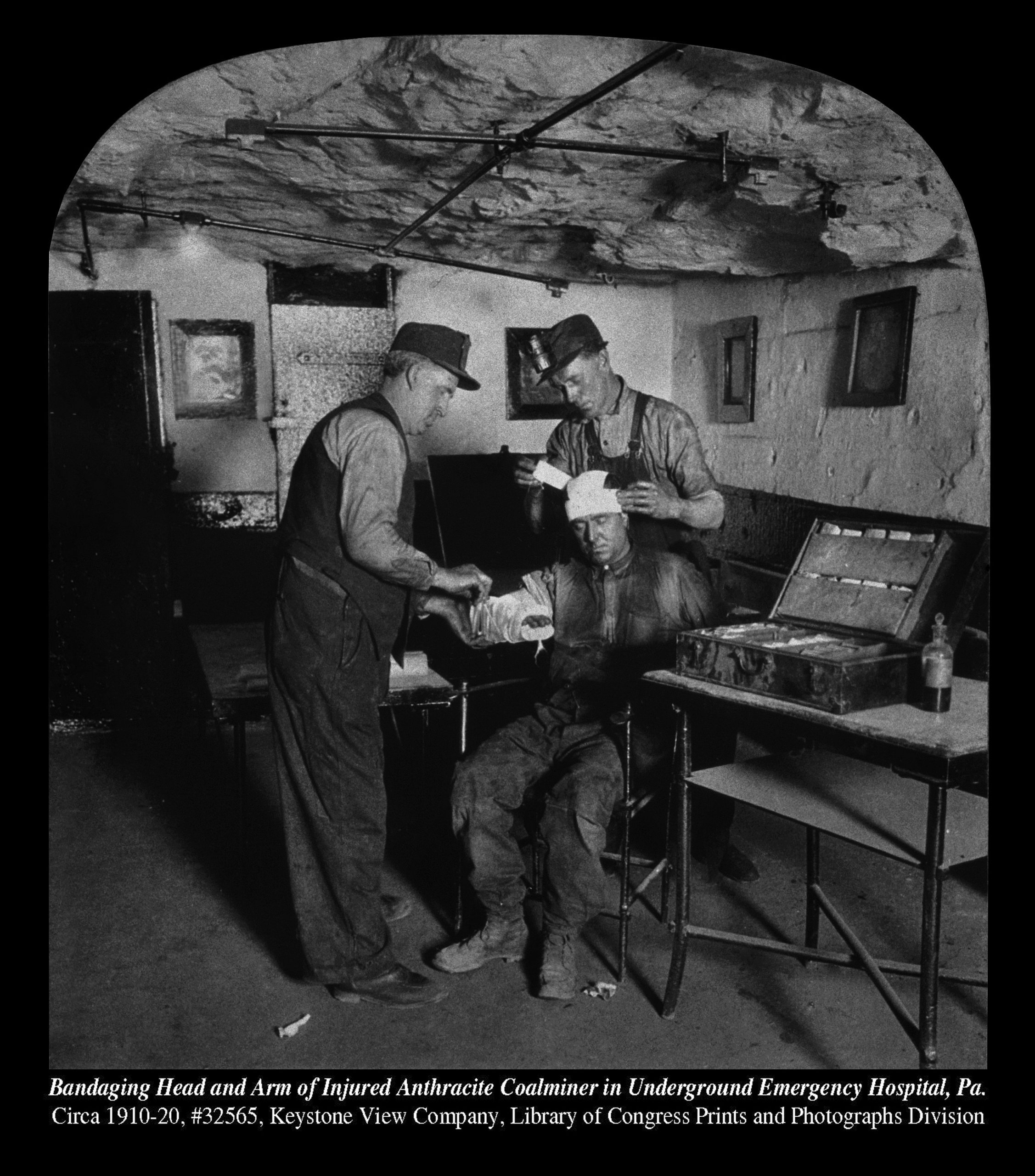
After moving away to a self-imposed exile some twenty-five years ago, I live once again in West Virginia. Contrasts with the 1970s heyday of working-class activism are evident throughout the rural landscape of abandoned gas stations, rusted coal tipples, and boarded-up union halls. The differences are personal as well: when I interviewed black lung activists in the 1970s, I was the age of their daughters and granddaughters; today, I am eligible for Medicare. As I conducted additional interviews in 2019, mostly with retired coal miners close to my age, their bodies as well as their words spoke the story of black lung disease and the physical toll of hard-labor jobs. Conditioned as a white woman to thinking of my embodiment primarily in terms of gender, I was struck again and again by how the privileges of class have shielded me from harm and become subsumed into my body. This updated and revised book, which includes two new chapters and a moving, evocative photo gallery by Earl Dotter, thus entails not only additional research into medical, legal, and economic materials relevant to black lung, but also historical reckonings both political and personal.
Today, as I write this preface, the power relations that miners experience on the job are dangerously asymmetrical, and their outcomes grim. Coal miners in southern West Virginia, once the stronghold of the UMWA in central Appalachia, where those who crossed a picket line invited ostracism if not assault, now work nonunion. Coal companies, facing shrinking domestic markets and in many instances bankruptcy, force workers, coal communities, and American taxpayers to bear the costs of their decline. Black lung can only be fully understood as part of this historical moment, when resistance, remarkably, persists. Digging Our Own Graves analyzes the dreadful resurgence of black lung within the long history of efforts to legitimate this disease and make it visible, prevent black lung in the workplaces where it is produced, and extend dignity and a measure of justice to those for whom prevention comes too late.
Conclusion: Class Power, Scientific Authority, and State Regulation
Nearly two centuries have passed since Dr. James Gregory opened up the lifeless body of John Hogg and hypothesized a connection between the miner's blackened lungs, his respiratory disability in later life, his occupation, and his death. For a time, physicians in Britain and the United States continued to investigate the relationship between occupational exposures and miners' respiratory distress. Toward the end of the nineteenth century, however, during a period of tight corporate control in the Appalachian coalfields and an increasingly restrictive scientific understanding of disease, black lung began to disappear from the medical literature of both countries. In the United States, coal miners eventually precipitated renewed medical attention to black lung by winning a union-controlled health care plan for themselves and their families. Even so, coal workers' pneumoconiosis—much less the broader ensemble of illnesses called black lung—was not accepted as a legitimate, occupationally related disease by the medical profession as a whole.3Journalistic and some scientific accounts equate coal workers' pneumoconiosis (CWP) with black lung. However, an essential component of the black lung movement was miners' and their families' struggle to broaden the definition, beyond CWP, of miners' disabling, occupationally related lung disease. Research by physicians and other scientists familiar with and sympathetic to miners and their health has validated this broader definition. See, for example, Edward L. Petsonk, Cecile Rose, and Robert Cohen, "Coal Mine Dust Lung Disease: New Lessons from an Old Exposure," American Journal of Respiratory and Critical Care Medicine 187, no. 11 (2013): 1178–85. Formal recognition required collective political intervention by coal miners themselves.
Even as social and economic factors have impinged on the medical construction of black lung, so have they shaped the actual production of disease. Black lung originates not simply from the physical presence of dust in coal mines, but from the relative power and respective actions of miners and operators, which influence conditions in the workplace. Miners' eventual success in unionization enhanced their collective power in the workplace, but, depending on UMWA leaders' priorities, unionism at times paradoxically undermined miners' capacity to make that workplace healthy and safe. In the years after World War II, the pact between larger operators and the UMWA produced unimpeded mechanization of the production process, high levels of unemployment, forced migration, and occupational death and disability from black lung. However, that industrial collaboration also produced massive rank-and-file upheaval and a successful effort to reform the union. In the present moment, union weakness and miners' lack of bargaining leverage in the workplace, combined with certain operators' endgame maneuvers to extract coal from thinner seams even while pressing for high levels of labor productivity, once again intensify the extent and severity of the disease.
The virulence of black lung today—fifty years after it was supposedly destined for elimination—does not diminish what coal miners, their families, and their allies accomplished in the past. Rather, it attests to the enduring realities of labor exploitation that the black lung movement episodically managed to contest. For its constituents, the movement achieved a unique and unprecedented federal compensation program. Approximately half a million miners and widows have received compensation under the federal black lung program; especially for those ineligible for a pension or other benefits, the monthly payments can mean the difference between destitution and modest survival.4This estimate of the number of black lung beneficiaries is extrapolated from data on the number of claims filed each year, changing approval rates, the annual total cost of claims, and, for some years, reports from the administering federal agency. See, for example, Social Security Administration, Annual Statistical Supplement to the Social Security Bulletin, 2016 (Washington, DC, 2017), Table 9. Beneficiaries who are miners and those who are widows, added together, do not equal the total number of miners judged disabled by black lung, as a widow may receive her husband's benefits after his death. Further, the number of beneficiaries is reported each year as a rolling total, and thus cannot be summed. The coronavirus interrupted my efforts to obtain more precise data. As of December 2018, an individual beneficiary is entitled to receive $660/month, which increases up to a maximum of $1,320 for those with three or more dependents. US Department of Labor, Division of Coal Mine Workers' Compensation, "Benefit Rates Under Part C, 1973–2018," accessed August 16, 2019, https://www.dol.gov/owcp/dcmwc/statistics/PastPartCBenefitRates.htm. The respirable dust standard and other disease prevention measures in the US Coal Mine Health and Safety Act of 1969 are also attributable to the black lung movement. As one element in a larger upheaval throughout the coalfields, the movement contributed as well to the rank-and-file takeover of the United Mine Workers of America and renewal of union leaders' critical attention to occupational safety and health.
Originally and essentially, however, the black lung movement was a struggle over the recognition and, more implicitly, causation of an occupational disease. What seemed at first a straightforward task— achieving legal inclusion of a "new" dust disease under the workers' compensation system—turned out to be a far more complex undertaking. Miners and other activists learned early on that "black lung," as refracted through the lens of scientific medicine, was quite different from the disease for which they sought recognition, compensation, and prevention. In a struggle that has lasted more than fifty years, activists have persistently challenged physicians, lawyers, and policymakers over the meaning of this disease; at different times, they have been able to replace the restrictive scientific construction of a rarely disabling coal workers' pneumoconiosis with their own definition of "black lung." Although focused on arcane disputes over diagnostic methods, disability standards, legal presumptions, and other issues, this conflict over the definition and causation of black lung is intensely political: it involves the ideological content of medicine's view of disease, including the technical perspective that narrows causation to the inhalation of dust, and the powerful role of physicians in labeling work-related disability as legitimate. On the outcome of such conflict rests financial liability for the coal industry that potentially ranges into billions of dollars. The legacy of black lung activism thus entails unsettling questions about the relationship between scientific and technical knowledge, state regulation, and the exercise of class power.
It should be stressed at the outset that not all physicians subscribe to a narrow or purely technical understanding of black lung: recall the role of three doctors (Buff, Rasmussen, and Wells) in the first black lung mobilization during 1968 to 1969 in West Virginia. Dr. Donald Rasmussen continued to work with and advocate for coal miner patients out of his pulmonary lab in Beckley, West Virginia, for five decades, up until his death in 2015.5Sam Roberts, "Dr. Donald L. Rasmussen, Crusader for Miners' Health, Dies at 87," New York Times, August 2, 2015, accessed September 29, 2019, https://www.nytimes.com/2015/08/03/health/research/dr-donald-l-rasmussen-crusader-for-coal-miners-health-dies-at-87.html. Rasmussen's mantle now falls on Dr. Robert Cohen, a pulmonologist who directs the occupational lung disease unit at Northwestern University and frequently testifies before Congress on miners' behalf.6Dr. Cohen testified during the hearings on black lung, "Breathless and Betrayed." See "What is MHSA Doing to Protect Miners from the Resurgence of Black Lung Disease?" YouTube video, 2:58:39, June 20, 2019, House Committee on Education and Labor, https://www.youtube.com/watch?v=sJUDcTf0a_g. Other physicians in the coalfields, such as Drs. Gregory Wagner and Brandon Crum, have devoted much of their professional lives to caring for coal miners with lung disease. After practicing medicine at a clinic on Cabin Creek (West Virginia), Wagner eventually came to direct Respiratory Disease Studies at NIOSH when that agency issued the criteria document that legitimated a broad definition of black lung, inclusive of COPD (chronic obstructive pulmonary disease), and recommended much lower limits on miners' exposure to coal dust and silica.7NIOSH, Criteria for a Recommended Standard: Occupational Exposure to Respirable Coal Mine Dust, publication no. 95–106 (Washington, DC: US Government Printing Office, 1995), xxii, https:// www.cdc.gov/niosh/docs/95-106/default.html. Crum, a radiologist—and, not coincidentally, former coal miner—was first to sound the alarm over black lung's escalating severity, which in 2014 he began detecting among his patients in eastern Kentucky. Four years later, the coal-industry-beholden state legislature responded by disqualifying him from reading X-rays for miners' workers' compensation claims.8Austyn Gaffney, "As Black Lung Strikes Younger Coal Miners, Kentucky Restricts Medical Benefits," NRDC, September 24, 2018, accessed September 29, 2018, https://www.nrdc.org/stories/black-lung-strikes-younger-coal-miners-kentucky-restricts-medical-benefits.
.jpg)


Apart from such individual physicians' political and medical predispositions, however, there remain epistemological tendencies within scientific medicine that militate against the understanding of disease advanced by black lung activists.9This summary of miners' perspectives on the origins of black lung and the role of physicians in advocating a restrictive view of work-related, compensable disease is based on the author's interviews and observations in southern West Virginia at different moments during the past five decades. Within the restrictive medical viewpoint that requires conclusive, scientific proof of occupational causation, black lung is in fact coal workers' pneumoconiosis, a single clinical entity, disabling only in advanced and, even today, relatively rare stages. The disease acquires legitimacy—indeed, effectively comes into existence—only when visible to trained personnel viewing objective diagnostic evidence, that is, X-rays, of an individual miner's lungs. The thousands of miners who believe themselves disabled by black lung yet exhibit no X-ray evidence of advanced CWP might legitimately be considered "disabled"—if the quantitative results of certain tests confirm such a condition. However, the origin of their disability is nonoccupational, above all their own cigarette smoking, or, if nonsmokers, other sources outside the workplace. Although this scientific definition of disease is quite different from physicians' earlier construction of a benign "miners' asthma," the result, in the eyes of many victims, is the same: black lung is trivialized. What many miners view as a collective problem becomes, from the perspective of scientific medicine, individual, quantifiable cases. What they experience as part of the shared social world of coal mining becomes occasional, biological events. What they attribute to their class relationship with the coal operators becomes the product of a single physical agent, dust. In sum, what is collective becomes individual, what is social becomes biological, what is produced by human action becomes the outcome of inert material.
Certain tendencies intrinsic to clinical medical practice are also at stake in the seemingly incommensurable perspectives of miners and certain physicians. Scientific medicine situates disease spatially, within the individual body, and temporally, at the point when signs, symptoms, or other physical alterations develop. Disease is ahistorical as well as asocial; it has no history except a "natural," that is, physical, history. It is said to exist when experienced by the individual and diagnosed by the physician, not at the point when it is being produced. The possibilities for prevention are thus constrained within the very definition of disease.10Howard S. Berliner and J. Warren Salmon, "The Holistic Health Movement and Scientific Medicine: The Naked and the Dead," Socialist Review 9, no. 1 (January–February 1979): 31–52.
Clinical medicine reflects this understanding of disease on a practical level: individual patients present the physician with their distinctive symptoms and complaints; they appear as random, disconnected "cases," and they are granted therapeutic treatment as individuals. There is no social meaning to disease in the sense of an internal relationship between social relations and the individual experience of ill health; primarily individual behaviors, such as diet, exercise, and smoking habits, command attention. Yet, in quantifying disability and allocating it to occupational or nonoccupational sources, physicians implicitly assess the conditions in which miners have lived and worked all their lives. That most physicians have never been in a coal mine (much less worked in one), and that some have never even been in the coalfields, serves to intensify the conflict between physicians and coal miners, who experience the superior legitimacy automatically granted scientific medical knowledge as a complex and powerful form of social control.
The authority of physicians to pronounce miners "healthy" or "disabled" carries important financial consequences. In the context of federal black lung compensation, doctors' assessments of coal miners' health can be decisive in the award or denial of financial benefits that are allocated in large part according to medical eligibility criteria. Doctors act as gatekeepers in a more generic sense as well: they control access to the "sick role," the sole avenue by which adults may legitimately escape the daily responsibilities of their class, race, and gender.11See Talcott Parsons, The Social System (New York: Free Press, 1951). Parsons's conceptualization of the sick role was neither class nor historically specific. For coal miners, as for other workers, the preeminent requirement of their class position is to perform wage labor. Medical criteria for assessing disability (and determining compensation eligibility) that take as the standard for health the functional capacity to work explicitly enforce this requirement. Even if damaged by work, coal miners still must provide medically sanctioned evidence of their "total disability"—i.e., complete inability to continue working—in order to receive financial compensation and legitimate relief from wage labor. In pushing against the limits of this compensation policy, miners and their families implicitly contest not only the ideological authority of physicians to define disease and assess disability; they ultimately threaten the economic power of coal operators by pressing for a broad definition of black lung and relaxed standard of disability that would provide unhealthy miners an alternative to labor in the mines.
This convergence between the restrictive scientific view of black lung and the economic interests of the coal industry is, for many miners and their families, an ultimate source of distrust and conflict with physicians. The narrow definition of disabling black lung as a relatively rare, complicated pneumoconiosis is highly functional to the industry: it circumscribes the scope of occupational lung disease and correspondingly diminishes both the cost of compensation benefits and the importance of prevention. In the context of policy formation, scientific medicine plays a mediating role between the interests of the coal industry and the actions of the state. It facilitates apparent distance between corporate power and public policy, and seems to ground political decision-making in the neutral, technical knowledge of a third party.
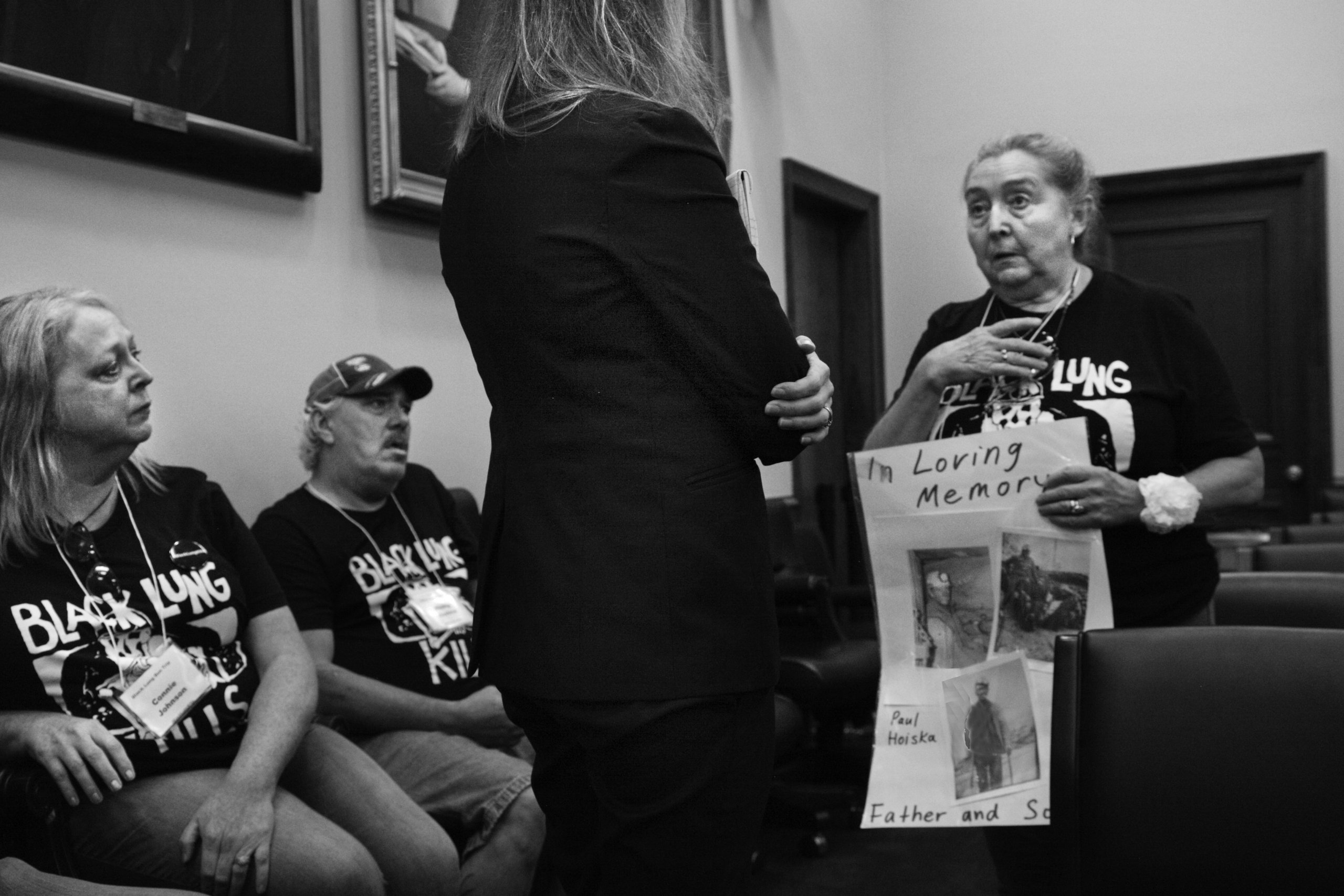
The lessons of the protracted struggle over black lung disease encompass both caution and inspiration, loss and hope. In an era of science denialism, when defense of factual truths and scientific knowledge seems obviously necessary, the case of black lung still stands as a warning about the presumed neutrality and appropriate scope of scientific and technical solutions: beware of technical fixes for problems that ultimately derive from economic exploitation and grossly unequal political power. Activists' original quest for redress through the workers' compensation system offers a related caution: the sprawling administrative machinery of the state, which presents the customary, sanctioned route for institutionalizing reform, entails embedded interests that can thwart activists' aims even as it seems to grant their demands. Finally, the long history of black lung suggests that effective prevention of occupational disease, injury, and death ultimately resides in the ever-changing power relations of the workplace and workers' collective, organized capacity to defend themselves. For these and many other reasons, victories are never secure, achieved once and for all; they must be defended, expanded, critiqued, and revised, as black lung activists have doggedly done for some five decades now.
Today, the industry that for more than a century has defined central Appalachia is dying. Those who would chart a post-coal future must grapple with the industry's legacy of incalculable human and environmental destruction, but they would do well to learn from the additional legacy of coal mining families' solidarity and resistance. Ever since the first investors laid claim to the coal of Appalachia, the people of this region have been revolting in various forms against the appropriation of their land, their labor, and even their lives. Those who fought in the black lung movement are both heirs and contributors to this long history of resistance. Today, many miners pay the cost of coal production in the currency of their very breath, but they also continue to resist. Danny Whitt: "We don't never give up. You know when I'll stop? When the last breath leaves my body."12Author's interview with Danny Whitt, Matewan, WV, September 4, 2019.
About the Author
Barbara Ellen Smith is professor emerita of women's and gender studies in the Department of Sociology at Virginia Tech. She has been active in and writing about movements for social and economic justice in Appalachia and the US South for more than 45 years. Her recent publications include a co-edited book with Stephen L. Fisher, Transforming Places: Lessons from Appalachia (University of Illinois, 2012) and Digging Our Own Graves: Coal Miners and the Struggle over Black Lung Disease (Haymarket Books, 2020).
]]>