Introduction
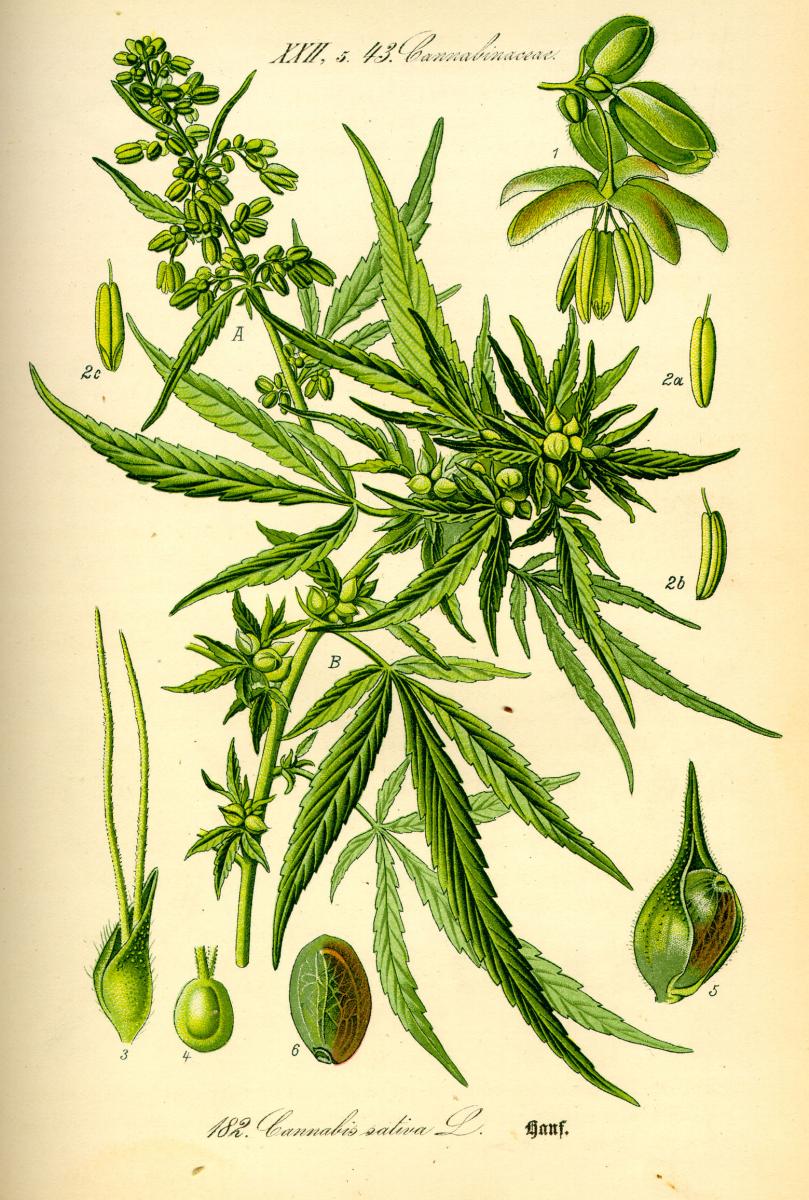
In August of 1920, Dr. Oscar Dowling, president of the Louisiana State Board of Health, alerted Governor John M. Parker about the increasing availability of a "powerful narcotic, causing exhilaration, intoxication, [and] delirious hallucinations." Dowling, later chairman of the American Medical Association's board of trustees, also wrote the US Public Health Service urging action to prohibit the spread of this drug throughout the country. Surgeon General Hugh S. Cummings replied to express his "complete agreement" with Dowling's concerns. Governor Parker, surprised to learn there was no federal law curbing the drug, wrote John F. Kremer, prohibition commissioner, and alleged, "two people were killed a few days ago by the smoking of this drug, which seems to make them go crazy wild."1David F. Musto, "The Marihuana Tax Act of 1937," Archives of General Psychiatry 26, no. 2 (February 1972): 102. For more on Dowling, see Richard J. Bonnie and Charles H. Whitebread, The Marijuana Conviction: A History of Marijuana Prohibition in the United States, Drug Policy Classic Reprint from the Lindesmith Center (New York: Lindesmith Center, 1999), 43–44. The drug was marijuana.2Though usually spelled "marijuana" today, "marihuana" was the most common spelling in the United States during the early twentieth century. Different spellings from that period also included: marajuana, mariguana, mariahuana, marahuana, marihuano, mariguana, in addition to other common names like "reefer" and "muggles." For consistency, I use "marijuana" throughout, unless directly quoting from sources with varied spellings.
Dowling and Parker's letters marked the early stages of the "marijuana menace"—a panic that coalesced around the alleged spread of marijuana use among criminals and school-age children in New Orleans between 1920 and 1930. In response, both the city and the state of Louisiana passed laws criminalizing the drug's use, sale, and possession. In the weeks that followed the passage of the city ordinance in 1923, police raided houses, restaurants, and soft drink stands to arrest suspected peddlers and users. Police and the press quickly dubbed users as "muggleheads," drawing on the street term for marijuana. A year later, following unanimous passage by the legislature, Governor Henry L. Fuqua signed a statewide law prohibiting marijuana. In the months and years that followed, civic groups and law enforcement officials in New Orleans launched more than one "muggles drive" and declared "war on dealers in marijuana."3For examples of these enforcement measures, see "Cops Make First Marihuana Raids," Times-Picayune (New Orleans), June 17, 1923; "Marijuana War Is Planned by Mrs. Gregson," Times-Picayune (New Orleans), November 30, 1924, sec. Three; "Ax Killer's Trial Set as 'Muggles' Drive Is Ordered," Times-Picayune (New Orleans), April 18, 1929; "Police Open New War on Dealers in Marihuana," Times-Picayune (New Orleans), October 26, 1930.
Previous studies of marijuana prohibition in the United States have given relatively little attention to city- and state-level events such as these, emphasizing instead developments that led to federal marijuana legislation in 1937.4For prominent examples, see Howard Becker, Outsiders: Studies in the Sociology of Deviance (New York: Free Press, 1963); Alfred Ray Lindesmith, The Addict and the Law (Bloomington: Indiana University Press, 1965); David Solomon, ed., The Marihuana Papers (Indianapolis: Bobbs-Merrill Co., 1966); Donald T. Dickson, "Bureaucracy and Morality: An Organizational Perspective on a Moral Crusade," Social Problems 16, no. 2 (Fall 1968): 143–56; Richard J. Bonnie and Charles H. Whitebread, "The Forbidden Fruit and the Tree of Knowledge: An Inquiry into the Legal History of American Marijuana Prohibition," Virginia Law Review 56, no. 6 (October, 1970): 971–1203; Michael Schaller, "The Federal Prohibition of Marihuana," Journal of Social History 4, no. 1 (October 1970): 61–74; Lester Grinspoon, Marihuana Reconsidered (Cambridge, MA: Harvard University Press, 1971); Musto, "The Marihuana Tax Act of 1937"; David F Musto, The American Disease: Origins of Narcotic Control (New Haven, CT: Yale University Press, 1973). The most influential and widely cited, Richard J. Bonnie and Charles H. Whitebread's The Marihuana Conviction (1974), acknowledges the importance of earlier state laws but offers a limited exploration of their origins or municipal counterparts.5Richard J. Bonnie and Charles H. Whitebread, The Marihuana Conviction: A History of Marihuana Prohibition in the United States (Charlottesville: University Press of Virginia, 1974). For instance, although Bonnie and Whitebread note New Orleans's influential role in fostering marijuana menace ideology, they provide only brief analysis on developments in the city and generally ignore passage of the city ordinance in 1923 and state law in 1924. Rather, they argue that until 1926, "very little . . . was done about the marihuana issue until the press seized upon it."6Bonnie and Whitebread, 44. Likewise, in assessing the city's marijuana users, Bonnie and Whitebread write that "use among black and lower-class white elements of New Orleans emerged along with the propensity toward use by youth."7Bonnie and Whitebread, 92. Moreover, younger users were "drawn from the same socioeconomic classes as the adult users."8Bonnie and Whitebread, 44. They offered little evidence for these claims, and believed New Orleans's officials responded to a general spike in crime during the 1920s by using marijuana as a "convenient scapegoat"—dismissing newspaper and law enforcement claims about the dangers of marijuana and its growing user population in the city as "propaganda."9Bonnie and Whitebread, 67, 71, 92. Bonnie and Whitebread's belief that the city's marijuana users came from fringe and minority groups served to bolster their broader argument that racism and xenophobia played a central role in driving marijuana prohibition nationwide. Despite its limited engagement with evidence drawn from the state and local level, this general interpretation has remained largely unchallenged.10For recent examples that draw heavily from Bonnie and Whitebread's interpretation, see Richard Davenport-Hines, The Pursuit of Oblivion: A Global History of Narcotics, 1st American ed. (New York: Norton, 2002); Martin Booth, Cannabis: A History, First U.S. Edition (New York: St. Martin's Press, 2004); Martin A. Lee, Smoke Signals: A Social History of Marijuana—Medical, Recreational and Scientific (New York: Simon and Schuster, 2013); Johann Hari, Chasing the Scream: The First and Last Days of the War on Drugs (New York: Bloomsbury Publishing USA, 2015). For three notable exceptions that have challenged aspects of Bonnie and Whitebread's conclusions and proved highly influential to my own research, see Jerome L. Himmelstein, The Strange Career of Marihuana: Politics and Ideology of Drug Control in America (Westport, CT.: Greenwood Press, 1983); Dale H. Gieringer, "The Forgotten Origins of Cannabis Prohibition in California," Contemporary Drug Problems 26, no. 2 (Summer 1999): 237–88; Isaac Campos, Home Grown: Marijuana and the Origins of Mexico's War on Drugs (Chapel Hill: University of North Carolina Press, 2012).
In contrast, this essay utilizes contemporary coverage from the Times-Picayune newspaper to analyze the impetus for marijuana prohibition and enforcement in New Orleans as well as the spatial and demographic characteristics of the marijuana users arrested. As one of the earliest urban markets for illicit marijuana use, New Orleans offers an excellent case study for testing prominent aspects of the existing historiography. Given what we now know about marijuana's effects, there is certainly much to critique about the often-hyperbolic commentary on its dangers during the 1920s. Nevertheless, contemporary newspaper coverage sheds light on the origins of those claims as well as the hundreds of marijuana arrests that took place in the city. Many of these reports provided information about the suspects, including their names and arrest locations, the quantity of marijuana seized, home addresses, race, and age. What follows is an examination of the sharp rise in commentary on the dangers of marijuana use alongside an analysis of 225 documented arrests during the first seven years of citywide prohibition. These arrests represent only incidents covered in some detail by the Times-Picayune and provide a valuable database for suggesting patterns and trends among the city's users.11Between May 1923 and December 1929, the Times-Picayune published at least three hundred stories with references to marijuana, roughly one per week. The number of articles mentioning marijuana more than doubled during the subsequent seven-year period. From 1930 through federal marijuana prohibition in 1937, the newspaper published more than six hundred and fifty pieces referencing marijuana, demonstrating the continued growth of public concern with the drug. When combined with an analysis of the simultaneous rise in commentary on marijuana's dangers, this essay and accompanying interactive digital map challenge previous interpretations, revealing both a rapid association between marijuana and crime as well as evidence for a predominately young, white user population that helped drive local concern and provided the impetus for legal prohibitions in New Orleans and beyond.
Youth, Crime, and "Marijuana War"
On February 18, 1922, the New Orleans Times-Picayune announced that a new drug habit was growing rapidly in the city. Citing Dr. Oscar Dowling, who first raised the alarm on marijuana some two years earlier, the newspaper reported the "passage of a drastic law to curb the constantly growing practice of selling and smoking marijuana, also known as muggles, will be sought at the next session of the Legislature." Federal assistance also appeared to be on the way. G. W. Cunningham, chief federal narcotic officer for Louisiana, asserted that, "a measure is to be introduced into Congress which would put marijuana in the same class with morphine, cocaine and opium." Cunningham also "rapped the popular impression that marijuana is not harmful"—suggesting its use may have already reached a critical mass in New Orleans. He believed marijuana "was as habit forming as morphine or cocaine" and that "constant smoking will ruin the health."12"New Drug Habit Rapidly Growing, Health Heads Say," Times-Picayune (New Orleans), February 18, 1922. Though a federal law targeting marijuana use would not pass for another fifteen years, the House Judiciary Committee held hearings on the "Prohibition of Peyote and Marijuana in Interstate Commerce" in 1922.
How much the public knew about marijuana is difficult to assess. In October 1921, a Times-Picayune reader wrote about the paper's recent "allusion to the narcotic preparation of a plant called 'marijuana.'" The reader hoped to learn "where it is grown; its effect on the human system and if it is injurious or otherwise." Such questions suggest a general lack of awareness surrounding marijuana in the early 1920s, but that appeared to be rapidly changing. The newspaper's editorial reply included a range of speculation and confusion alongside information on the effects of cannabis drawn from medical journals. It noted correctly that marijuana "consists chiefly of the flowering tops and tender leaves and stalks of the Indian hemp (Cannabis indica)." Yet, it speculated, "the name 'marijuana' is probably a corruption of the 'majoon' of Calcutta, the name given to the hashish made in that city."13"Questions and Answers," Times-Picayune (New Orleans), October 23, 1921, sec. Two. Furthermore, the editorial connected the word hashish with the etymology of the term "assassin"—an oft-cited legend stretching back to Marco Polo and the Crusades.14For extensive analysis of the link between hashish and Islamic assassins, see Jerry Mandel, "Hashish, Assassins, and the Love of God," Issues in Criminology 2, no. 2 (1966): 149–56; Farhad Daftary, The Assassin Legends: Myths of the Ismaʻilis (London: Tauris, 1994); Campos, "Cannabis and the Psychoactive Riddle," in Home Grown: Marijuana and the Origins of Mexico's War on Drugs, 7–38. Just prior to the passage of the federal Marihuana Tax Act, Harry J. Anslinger, first and long-time commissioner of the Federal Bureau of Narcotics, subsequently made this link famous in "Marijuana: Assassin of Youth," The American Magazine 124, no. 1 (July 1937). The Times-Picayune also included an assessment of the drug summarized from existing medical literature:
The effects differ according to the dose and the idiosyncrasy of the individual. One of the first appreciable effects of the drug is the gradual weakening of the powers of controlling and directing the thoughts. This is followed by dreams accompanied by errors of sense, false convertions [sic], and the predominance of one or more extravagant ideas. A minute may seem a year and an hour only an instant; sounds may be exaggerated, and the sense of duration of time and extent of space and the appreciation of personality are lost. Some individuals become pugnacious, while others fall into a state of reverie. After small doses there is a great tendency to causeless merriment. Although less certain in its action than opium, it is said to possess certain advantages over that drug—that it does not induce torpidity of the liver, create nausea or check the secretions, and it is less likely to occasion headache.15"Questions and Answers."
In short, the Times-Picayune editorial tied marijuana to more familiar forms of cannabis, namely eastern hashish, while ably summarizing some of the existing medical information of the drug.16On the heels of pioneering experiments with cannabis conducted in India by Dr. William Brooke O'Shaughnessy, American physicians began debating the potential merits and dangers of cannabis in the 1840s and regularly published their assessments in prominent medical journals. By the late nineteenth century, most agreed that cannabis could be both helpful and harmful and was therefore in need of legal regulation and medical oversight. Nonetheless, after the turn of the century, ongoing difficulty in standardizing medicinal preparations and occasionally frightening side effects in patients led to steady declines in medicinal cannabis use. For an example promptly assessing O'Shaughnessy's work with cannabis, see W.B. O'Shaughnessy, "New Remedy for Tetanus and Other Convulsive Disorders," The Boston Medical and Surgical Journal XXIII, no. 10 (October 1840): 153–55. On the evolution of American physicians' assessment of cannabis medicines, see Adam Rathge, "Cannabis Cures: American Medicine, Mexican Marijuana, and the Origins of the War on Weed, 1840–1937," (PhD diss., Boston College, 2017), http://hdl.handle.net/2345/bc-ir:107531. It was not a difficult leap to more frightful effects characterized by exhilaration, intoxication, and aggressiveness.
As marijuana moved into the public consciousness of New Orleans in the early 1920s, characterizations of its potentially dangerous effects took hold.17For examples, including comparisons between marijuana addiction and stamp collecting as well as a casual mention of marijuana smoking, see "Just What Is Dishonesty," Times-Picayune (New Orleans), July 1, 1923, sec. One-B; "Literature—and Less—Comments on the Books of the Day," Times-Picayune (New Orleans), July 15, 1923. In May 1922, the Times-Picayune proclaimed "'Muggles' Incites Orleans Youths to Crime" and cited Police Detective Paul R. Maureau who blamed the "Mexican drug" for rash of "outbreaks by boy addicts." Maureau claimed one fourteen-year-old automobile thief was a "member of a gang that was accustomed to smoke 'mirauana' or 'muggles' cigarettes, which are supposed to produce recklessness unrivaled by other 'dope.'" Likewise, a juvenile court judge declared that "several boys have admitted using 'mirauana' to 'get up their nerve' for theft and other offenses." One of the boys testified the drug was available as dried leaves or ready-made cigarettes, purchased for twenty-five cents each. Just one cigarette, claimed Detective Maureau, could "contain criminal inspiration for four or five youths." To solidify the link between marijuana use and crime, Maureau affirmed that a man "arrested recently for the murder of a woman was found to be under the influence of 'mirauana.'"18"Says 'Muggles' Incites Orleans Youths to Crime," Times-Picayune (New Orleans), May 29, 1922.
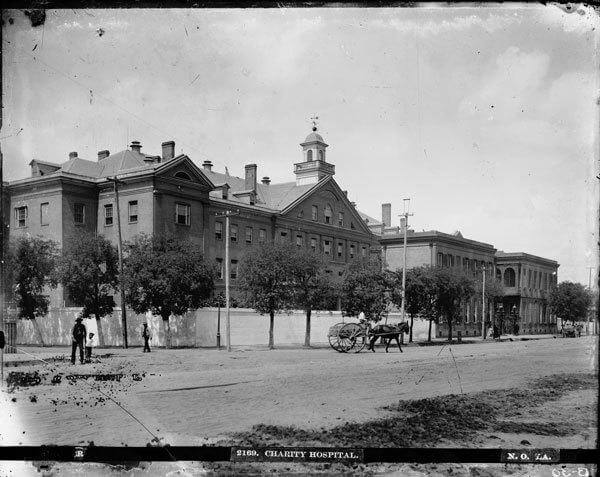
Stories of marijuana use bolstered fear of its spread, prompting a swift response by the city's commission council. On May 18, 1923, the Times-Picayune highlighted the hospitalization of Randall Sharp—"another victim of the Mexican dope, 'Marijuana.'" Physicians at Charity Hospital "declared there is an epidemic of smoking the contraband in New Orleans and that scarcely a day passes without two or three persons being sent there for treatment." The news story further noted an increase of marijuana "in the city within the last few months."19"Mary Warner Epidemic," Times-Picayune (New Orleans), May 8, 1923. Two days later, at the request of District Attorney Marr and a number of medical professionals, City Commissioner Maloney introduced an ordinance "to make illegal the sale of 'cannabis indica,' better known as 'Mari Juana' or the 'Mexican happy smoke.'"20"Council to Act on Sale in City of Mary Warner," Times-Picayune (New Orleans), May 20, 1923; "Use of Mexican Dope Forbidden by City Council," Times-Picayune (New Orleans), May 30, 1923. On May 29, the council officially prohibited possession and sale of marijuana in New Orleans, with violations punishable by a fine of up to $25 and thirty days of imprisonment.21"Use of Mexican Dope Forbidden by City Council"; "A Yarn of Many Threads," Times-Picayune (New Orleans), July 1, 1923, sec. One-B.
A number of factors contributed to the city's efforts to curb marijuana. The drug was frequently among those sold by street peddlers. Its presence alongside other drugs and alcohol seized during police raids bolstered its prominence.22For two examples, see "Police Capture Weed, Wine and Owners in Raid," Times-Picayune (New Orleans), August 26, 1922; "Drug Ring Hunt Seems to Score," Times-Picayune (New Orleans), December 24, 1922. Early reports on marijuana occasionally noted that it arrived in New Orleans via the city's many shipping docks, often tying the drug to Mexican seamen and foreign vessels.23For example, see "Narcotic Leaves Seized on Vessel," Times-Picayune (New Orleans), September 21, 1922. There was also a quick and clear characterization of marijuana's apparent dangers together with dire warnings about its growing use. Prominent physicians and government officials fostered and reinforced these characterizations, and the purported connections between marijuana use and criminal activity.
Nevertheless, the alleged use of marijuana by schoolchildren appears to have been the primary factor in driving city's prohibitory action. A Times-Picayune exposé entitled "The Victim" chronicled what many believed was happening to an alarming number of youthful users. In the parlor of a former mansion turned tenement, reporter Lyle Saxon sat with the mother of a young boy who wept as she said, "To think that this has happened to my little boy, only twelve years old, and a victim of drugs." Her son Seth and his fourteen-year-old brother had sold newspapers after school. All was well until she "began to notice that something was wrong" with Seth: he "would come home with his eyes wide open, staring, but he seemed half asleep. He would say strange things."24Lyle Saxon, "The Victim," Times-Picayune (New Orleans), June 3, 1923, 20. It is worth noting that while marijuana's effects are often widely varied, its use may have the exact opposite effect on a user's eyes—constricting rather than widening. Known as photophobia, this squint is now a common trope in pop culture references to marijuana use. Many of the tropes in this story appear drawn from the temperance movement. For an exploration of how "eyes wide open" was often used as a symbol of madness linked with marijuana use, see Campos, Home Grown, 155–80. Seth would "sleep like a log" and in the morning, his mother would be unable to wake him up for school. He began missing school entirely and bringing home less and less money from the newspaper sales that helped support the family. When asked, "he couldn't account for where it had gone."25Saxon, "The Victim," 20. Seth also began to "stay out all night," until one day he simply did not come home. Missing for three days, his father went in search of him, eventually "coming home with the boy in his arms, his little head hanging down like he was dead." When Seth's parents called the police, they said he "had been smoking marihuana," or "Muggles."26Saxon, 27.
Social workers, physicians, and local police often confirmed the spread of marijuana smoking among school-age children. The findings of Mrs. Emma B. Stanton, who conducted "an investigation among the small boys and youths of the city," escalated the belief that marijuana was widely available. Stanton claimed that she provided a seven-year-old boy with some money and sent him into a saloon. The boy emerged "a few moments later with a little packet of marihuana, rolled in a bit of newspaper—and with the information that a man inside had offered to roll the cigarettes for him because he was too little to roll them himself."27Saxon, 27. An investigation by Lazu Block, chief attendance officer of parish schools, also found evidence of marijuana use among school-age children. At this news, a collective of more than sixty-three affiliated parent-led education clubs (the President's Cooperative Club) met with the district superintendent and adopted "resolutions approving the efforts of the commission council and the chief of police to stop the sale of marihuana or 'muggles' cigarettes."28"Children Using 'Mary Warner,' Officials Fear," Times-Picayune (New Orleans), June 16, 1923.
In July 1923, the Times-Picayune described "Muggles" as the "boon of newsboys and school children who haven't the means to purchase a more expensive drug."29"A Yarn of Many Threads," Times-Picayune (New Orleans). Reporter Lyle Saxon characterized the situation as especially dire: "to curb the smoking of marihuana is an arduous task—as so many boys and men have acquired the habit, and they will brave almost anything in order to get their daily 'shot.'" Saxon believed "the tragedy of the situation is that this drug is striking at the very roots of society in attacking the children." Marijuana use was quickly "making them slaves, not only to the drug, but to those unscrupulous boys and men who find it to their advantages to 'dope' the children, taking from them their hard-earned pennies, gained by selling papers, shining shoes and so on, leaving the children sleeping in alleys, in gutters and in the streets."30Saxon, "The Victim," 27.
Professional medical opinions urged immediate social intervention and police enforcement, stressing the potential dangers of marijuana. "There is little difference in the effects of marihuana and hashish," said Dr. E. J. DeBergue, assistant city coroner. "When first used it produces a form of mild exhilaration. With constant use this exhilaration passes and one uses the drug simply to feel normal." When compared to "more powerful drugs," DeBergue added, "marihuana gives its addicts an appearance of listlessness, numbness, and a general lack of energy. . . . It produces protracted insomnia and may lead to temporary insanity." In short, marijuana was "intensely harmful."31"A Yarn of Many Threads." Dr. John M. Fletcher, professor of psychology at Tulane University, president of the Southern Society for Philosophy and Psychology, and later chairman of the Louisiana Educational Survey Commission, painted a similar picture of marijuana's dangers. Though not a medical doctor, Fletcher analyzed samples of the drug seized during police raids and summarized the existing, if conflicting, characterizations surrounding it. "In use for centuries as a narcotic stimulant," Fletcher noted the effects were "both mental and physical." Users showed "a gradual weakening of the thought processes, together with extreme errors of sense of time and space." Long-term use led to "indigestion, wasting of the body, cough, melancholy, impotence and dropsy." Eventually, Fletcher claimed, "its votary becomes an outcast from society, and his career terminates in crime, insanity and idiocy."32Saxon, "The Victim," 27.
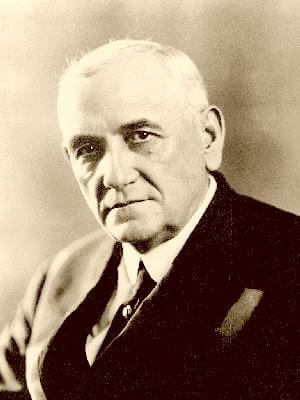
These grave assessments and the growing fear of marijuana's spread among children fueled calls for additional legislative action. In May 1924, newly elected representative Fred W. Oser, a former police reporter for the Times-Picayune and secretary to the commissioner of public safety in New Orleans, brought the city's desire for marijuana enforcement to the state legislature in Baton Rouge. Oser said he often "observed the evils of marijuana," and one of his first actions was to introduce statewide anti-marijuana legislation.33For Oser's quotes see "Red Sticks—Against Marijuana," Times-Picayune (New Orleans), May 14, 1925, 3; "Bills Introduced," Times-Picayune (New Orleans), May 15, 1924, 2. His proposal, which sought to forbid the sale and transportation of marijuana, carried mandatory provisions for a fine and imprisonment and prohibited the trial judge from suspending the sentence. In early June, the judiciary committee of the House favorably reported on the bill.34"Bill Outlaws Marijuana," Times-Picayune (New Orleans), June 4, 1924, 2. Little more than a week later, Oser presented the bill for a vote and insisted there should be no objection from his colleagues. His fellow representatives declared the bill was "splendid and badly needed," insisting, "such a law is absolutely necessary." Oser's bill swept through the chamber, "84 yeas to no nays."35"House Warms Up to Legislative Work," Times-Picayune (New Orleans), June 13, 1924, 4. On July 1, 1924, Governor Henry L. Fuqua signed the legislation into law. The measure allowed for limited sale of specific medically prescribed cannabis preparations, but otherwise prohibited possession, sale, and transportation.36The law restricted prescriptions to medicinal preparations containing a limited percentage of cannabis extract. "Marajuana Outlawed," Times-Picayune (New Orleans), July 2, 1924, 15; "Bills Signed by Governor Fuqua," Times-Picayune (New Orleans), July 13, 1924, sec. One-B, 5; "Orleans Parish Lawmakers to Tell About It at Dinner," Times-Picayune (New Orleans), July 28, 1924, 3.
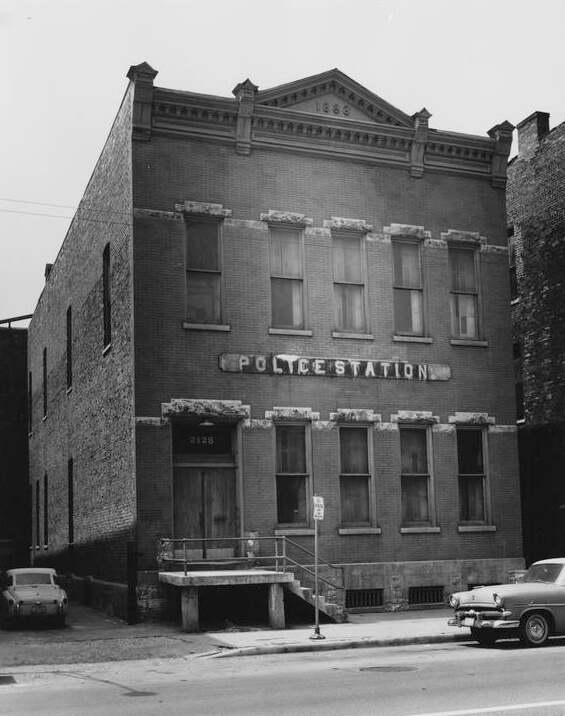
Backed by the city ordinance and state law, New Orleans law enforcement agents and civic clubs continued their efforts to curb marijuana use, especially among youth. In May 1925, New Orleans coroner, George F. Roeling urged "police cooperation with his department in endeavoring to trace the source from which persons under his care for observation obtain alcohol, habit-forming drugs and 'muggles.'"37"Mentality Tests for Speeders Urged by Coroner Roeling," Times-Picayune (New Orleans), May 31, 1925, 1. A meeting of the New Orleans Federation of Clubs in November included continued allegations of marijuana use by young children. "Marijuana is being sold in drug stores and candy stores throughout the city," declared Mrs. Emma Bell Stanton. "School boys are smoking this pernicious drug in cigarettes, and school girls, automobile riding at night, are becoming intoxicated by it."38"Women to Fight Marijuana Sale," Times-Picayune (New Orleans), November 25, 1924, sec. Part Two, 17. Mrs. Charles Gregson, chair of the Federation of Clubs committee on anti-narcotics, declared "Marijuana War." The first battle aimed to stop use of the marijuana cigarette—what Gregson called "a stepping stone" toward the "use of even more vicious and degrading narcotics."39"Marijuana War Is Planned by Mrs. Gregson." Gregson's use of the term "stepping stone" here may signal the origins of the "gateway drug" theory that ultimately proved highly influential in bolstering a prohibitory stance on marijuana throughout the second half of the twentieth century. Police Detective Henry Asset stressed that the effects of marijuana were "not so deadly in themselves, but in many instances they lead to the use of more powerful drugs."40"A Yarn of Many Threads," Times-Picayune (New Orleans). Mrs. Gregson planned to host a series of lectures for civic clubs and older children on the evils of the drug traffic, and called upon concerned citizens to notify her of places where marijuana cigarettes were sold.41For coverage of Gregson's announcement, see "Marijuana War Is Planned by Mrs. Gregson," 9; "No Man's Land," Times-Picayune (New Orleans), December 14, 1924, sec. Three, 15.
The Louisiana Board of Health called upon Dr. Carleton Simon, a narcotic expert, deputy police commissioner, and lecturer on criminology in New York, to conduct a survey of drug use in the state. Simon's investigation concluded that, "thousands of young men and women in Louisiana are addicted to the use of marijuana, known in underworld haunts as 'muggles' and 'moota.'"42"Thousands of State's Youth Marijuana Addicts, Survey by Criminologist Show," Times-Picayune (New Orleans), August 12, 1926, 6. School officials and parent groups reaffirmed Simon's assessment.43For examples, see "Women to Probe Drivers' License Issuance System," Times-Picayune (New Orleans), October 26, 1926, 3; "National Officer of School Clubs Will Visit," Times-Picayune (New Orleans), October 28, 1926, 5; "Public School Vice Quiz Opens Feb. 23," Times-Picayune (New Orleans), February 20, 1927; "School Alliance Holds Meeting—Stricter Legislation Towards Marijuana Sellers Is Urged," Times-Picayune (New Orleans), May 10, 1927; "School Children Smoke Muggles, Alliance Is Told—Startling Reports Made at Meeting by Mrs. J.G. Skinner," Times-Picayune (New Orleans), May 13, 1928. In January 1927, A. H. Seward, president of the Public School Alliance (PSA), charged that marijuana was "being sold to children in the grammar and high schools."44"Gambling in City Leaves Its Mark on School Boys," Times-Picayune (New Orleans), January 11, 1927, 2. By November, the PSA reported, "a slight increase in the number of marijuana, or 'muggles,' cigarettes sold to and smoked by grammar school children." Some of those children were "as young as those of the fourth and fifth grades" with "traces of this habit . . . seen as early as the third grade."45"More Children Smoke Muggles Alliance Hears," Times-Picayune (New Orleans), November 15, 1927, 2.
![Black newspaper-style text on a white background that reads, "(Sample--Warning card to be placed in R. R. Trains, Buses, Street Cars, etc.) Beware! Young and Old — People in All Walks of Life! This [image of marijuana joint] may be handed to you [image of smiling man and woman] by the friendly stranger. It contains the Killer Drug 'Marihuana' — a powerful narcotic in which lurks Murder! Insanity! Death! [Image of marijuana plant] WARNING! Dope peddlers are shrewd! They may put some of this drug in the [image of teapot] or in the cocktail or in the tobacco cigarette. Write for detailed information, enclosing 12 cents in postage—mailing cost. Address: The Inter-State Narcotic Association (incorporated not for profit) 53 W. Jackson Blvd. Chicago, Illinois, U. S. A."](https://southernspaces.ecdsdev.org/wp-content/uploads/2019/07/rathge_005_psa.jpg "Marijuana Warning Poster, ca. 1971. Poster by Inter-State Narcotics Association. Courtesy of the Wisconsin Historical Society.")
The PSA findings resulted in renewed calls for federal intervention.46Their efforts mirrored earlier attempts out of New Orleans urging federal action on marijuana, dating to Dr. Dowling's letters in 1920. For additional examples, see "We Want Walmsley for Congress," Times-Picayune (New Orleans), March 23, 1924, sec. One-B; "Women Endorse City Bond Issue—Federation of Clubs Will Ask Us Action Against Marijuana," Times-Picayune (New Orleans), November 23, 1926, 19. On the Public School Alliance, see "Alliance Seeks Government Ban on Marihuana," Times-Picayune (New Orleans), December 12, 1928, 37. In December 1928, W.O. Hart, PSA legislative committee chairman, began working with Louisiana Representatives James Z. Spearing and James O'Connor to amend the existing federal Harrison Narcotic Act to include marijuana.47The Harrison Narcotics Act of 1914 regulated and taxed the production, importation, and distribution of opiates and coca products as well as closely monitored the proscribing habits of registered physicians. Congressman Spearing was a longtime member, and two-time president, of the Orleans Parish School Board as well as a member of the Louisiana State Board of Education. "Despite the efforts of the alliance and of its private investigators," declared PSA president A. H. Seward, the traffic in this social leprosy still goes on" and would until Congress passed "suitable legislation, laws with teeth in them."48"Children Smoke Marihuana, Says Head of Alliance—Fight for More Severe Legislation to Be Carried On," Times-Picayune (New Orleans), January 15, 1929, 12; "Alliance Seeks Government Ban on Marihuana," 37. That New Orleans played a central role in raising the issue made news as far away as New York—where headlines seized on the city's "fight to save school children."49"War on Hashish Smoking Is Carried to Congress in Effort to Save School Children," The Brooklyn Eagle, December 20, 1928, 3; "Federal Agents Powerless to End Hashish Traffic," The Brooklyn Eagle, December 21, 1928.
The existence of Mrs. Gregson's "marijuana war," the efforts of civic clubs and the PSA, as well as consistent police enforcement demonstrate that prohibitory marijuana laws in New Orleans remained anything but "dormant."50See Bonnie and Whitebread, The Marijuana Conviction, 44. According to Bonnie and Whitebread, in the fall of 1926, New Orleans police suddenly "arrested more than 150 persons for violation of a law which had lain dormant for two years." It is unclear if they mean the city ordinance or the state law. Nevertheless, given the evidence shown here, there was obviously significant attention focused on marijuana for at least four to six years prior to that particular enforcement sweep in 1926. Contemporary reports clearly show continued enforcement and arrests for marijuana under both the city ordinance and state law throughout this period. There was significant and consistent activity aimed at curbing marijuana use in the city beginning in the early 1920s. For the period between June 1923 and December 1929—roughly the first seven years of enforcement for the city's ordinance—reporting from the Times-Picayune highlighted 225 documented marijuana arrests. The paper's reports shed light on the activities of law enforcement as well as the spatial and demographic characteristics of those arrested. Measuring the prevalence of marijuana use in New Orleans during this period remains difficult given the many source biases and limitations surrounding illicit substances. Examining these reports, however, reveals a user population with characteristics different from those often described by contemporary commentary and subsequent historical studies.
Marijuana Users in Time and Place
One of the most striking differences between the newspaper evidence and the existing historiography on marijuana prohibition is the size of the marijuana market. Most historical studies have suggested marijuana use in the 1920s was a highly regionalized, marginal practice confined to Mexican immigrants and fringe groups and likely exaggerated by contemporary sources.51For examples, see Musto, The American Disease; Bonnie and Whitebread, The Marihuana Conviction; John Helmer and Thomas Vietorisz, Drug Use, the Labor Market and Class Conflict (Washington: Drug Abuse Council, 1974); John F. Galliher and Allynn Walker, "The Puzzle of the Social Origins of the Marihuana Tax Act of 1937," Social Problems 24, no. 3 (1977): 367–76; Himmelstein, The Strange Career of Marihuana. The available evidence from New Orleans suggests otherwise.52The widespread digitization of newspapers and related online databases has undoubtedly made this evidence more accessible to researchers and reinforces the need to reevaluate earlier interpretations. Police activity in the city yielded arrests for possession of a single marijuana cigarette to seizures as large as forty pounds. In 1922, the Times-Picayune recorded three raids netting large quantities. In August, police raided the apartment of Genara Prugillo and Lorenzo Espinoza capturing twenty-one gallons of wine and one hundred and ninety packets of marijuana.53"Police Capture Weed, Wine and Owners in Raid," Times-Picayune (New Orleans). A month later customs officials searched a Mexican steamship moored in New Orleans and seized "two large packages of Mexican Marijuana leaves" valued at New Orleans retail prices exceeding $800.54"Narcotic Leaves Seized on Vessel," Times-Picayune (New Orleans). In December, New Orleans police and federal agents completed an undercover investigation they believed would "smash" a local "narcotic ring." The alleged ringleader was captured with "more than $9,000 of cocaine, morphine and mariahuana."55"Drug Ring Hunt Seems to Score," Times-Picayune (New Orleans). Little more than a year later, New Orleans police made a series of arrests that netted similarly large amounts of marijuana, including seizures of fifteen pounds, five pounds, forty pounds, and ten pounds.56"Marihuana Haul Made By Police," Times-Picayune (New Orleans), January 17, 1924; "American Craze for Marihuana Builds Industry," Times-Picayune (New Orleans), March 10, 1924; "Arrest Marihuana Seller," Times-Picayune (New Orleans), March 10, 1924, 14; "Marijuana Seized Valued at $3,000," Times-Picayune (New Orleans), April 20, 1924, sec. Five, 8; "Decision Upholds Recorder's Stand," Times-Picayune (New Orleans), May 1, 1924; "Alleged Ex-Convict Held, Drug Seized," Times-Picayune (New Orleans), May 31, 1924, 3.
Given such volume, it is hard to dismiss the situation in New Orleans as journalistic sensationalism or law enforcement propaganda although it is easy to criticize the contemporary assessment of the dangers posed by marijuana use given our present understanding. The size and frequency of seizures in New Orleans during the early 1920s attest to the scope of the city's marijuana market. Arrests for simple possession as well as large quantities occurred regularly. Street-level arrests and sting operations often yielded only a few marijuana cigarettes, while quantities seized at larger busts ranged from hundreds of pre-rolled cigarettes to many pounds of bulk marijuana.57For examples of large marijuana seizures, see "Woman Charged Under Drug Act," Times-Picayune (New Orleans), September 27, 1924, 2; "Marijuana Seized," Times-Picayune (New Orleans), July 17, 1925, 23; "Liquors and Drugs Seized by Agents," Times-Picayune (New Orleans), March 23, 1926; "Healy Launches Attack on Vice and Marihuana," Times-Picayune (New Orleans), October 17, 1926; "Marijuana Leads to Arrest of Four," Times-Picayune (New Orleans), January 16, 1927; "Marijuana Drugs Are Seized on Ship," Times-Picayune (New Orleans), February 10, 1927, sec. Part Two; "Woman Is Accused of Marijuana Sale," Times-Picayune (New Orleans), June 28, 1927, sec. Part Two; "Two Marijuana Loads Confiscated," Times-Picayune (New Orleans), October 8, 1927; "Agents on Trail of Large Liquor Smuggling Ring," Times-Picayune (New Orleans), November 11, 1927; "Marihuana, Rum Seized by Federal Officers on Ships," Times-Picayune (New Orleans), February 10, 1928; "$5000 in Marihuana Taken from Ship," Times-Picayune (New Orleans), February 29, 1928; "Marihuana Seized by Captain at Sea," Times-Picayune (New Orleans), March 22, 1929; "Customs Agents Seize Marihuana Valued at $7500," Times-Picayune (New Orleans), October 4, 1929, sec. Part Two. These stories signal a market environment with both large-scale peddlers and small quantity buyers.
The evidence also hints at the existence of a subset of repeat offenders. During the city's "first marihuana raids," for example, police arrested Antonio Bernade and his wife—owners of the Black Cat Restaurant—with "twelve packs of the weed."58"Cops Make First Marihuana Raids," Times-Picayune (New Orleans). Just a week later in a second restaurant raid, police arrested Bernade again, finding marijuana "concealed in a false window."59"Alleged Marihuana Seized," Times-Picayune (New Orleans), June 24, 1923. Less than a month later, police alleged that Mrs. Bernade absconded with the marijuana as officers arrived. Mr. Bernade was arrested a third time on charges of selling marijuana cigarettes to Dominick Potania—"a member of one of New Orleans' best families"—as Potania was leaving the restaurant, giving them reason enough to enter.60"Restaurant Man Sold Marihuana, Police Charge," Times-Picayune (New Orleans), July 8, 1923, 9. A report for this arrest gave a different restaurant address and a slightly differently spelling of his name—Antonio Bernabe. Potania seems to have continued his involvement in the illicit drug market. Six years later, a newspaper report chronicled his arrest alongside Carlo Giacona. According to police, Potania "attempted to conceal a packet of cocaine" while Giacona was "alleged to have had a marihuana cigarette."61"Cocaine, Marihuana Found, Two Jailed," Times-Picayune (New Orleans), May 24, 1929. Giacona was ultimately not tried for this offense, see "Records of the Day—Criminal Court," Times-Picayune (New Orleans), June 15, 1929. Two months later police arrested Giacona again following a raid on his boarding room, where detectives reportedly found "a pound of marihuana seeds."62"Police Nab Youth, Seize Marihuana," Times-Picayune (New Orleans), August 1, 1929. Another repeat offender, Sam Farace, faced criminal charges following his arrest with "a pillow slip containing ten pounds of raw marihuana weed." Just out of state prison, Farace was the proprietor of a "soft drink establishment" that city officials alleged was "a rendezvous for thieves and police characters."63"Alleged Ex-Convict Held, Drug Seized," Times-Picayune (New Orleans), 3. Three years later, during a raid on his family's restaurant, police arrested Farace's younger brother Joseph with two dozen marijuana cigarettes. During that incident, Sam Farace reportedly interfered with the police operation and was "arrested, and charged with disturbing the peace."64"Youth Is Taken in Marijuana Raid," Times-Picayune (New Orleans), April 3, 1927, 15.
The presence of repeat offenders suggests a substantial market for the drug with significant financial incentives. Both offenders and those pushing for stiffer penalties raised the idea that penalties for violation of the city's marijuana ordinance were too weak.65For examples, see "A Yarn of Many Threads," Times-Picayune (New Orleans); "Marihuana Peddler Fined," Times-Picayune (New Orleans), July 3, 1923; "American Craze for Marihuana Builds Industry," Times-Picayune (New Orleans); "Arrest Marihuana Seller," Times-Picayune (New Orleans), 14. Valdo Santos spoke with Times-Picayune reporters following his first arrest on marijuana charges and claimed, "It's not hard to get through. Most of it comes overland, through Texas. We pack it in a suitcase and when we sell out we go back for more. It's easy and a good business. Beats bootlegging and the fines are smaller."66"American Craze for Marihuana Builds Industry." For Santos, this apparently meant big rewards and small consequences. He was arrested again a year later with five pounds of marijuana and forty-eight pre-rolled cigarettes.67"Arrest Marihuana Seller," 14. Police Detective Henry Asset agreed that the punishments for marijuana were not a major deterrent and believed violators easily managed to pay the $25 fine. "Any good peddler," he argued, "can raise that amount."68"A Yarn of Many Threads."
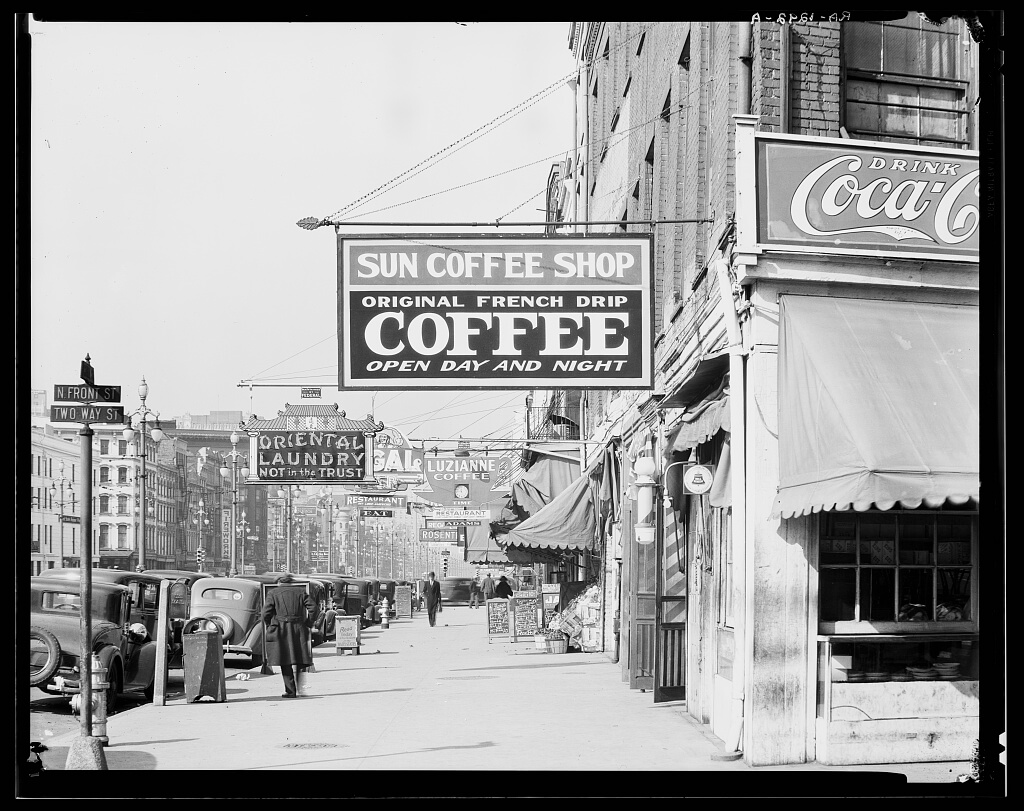
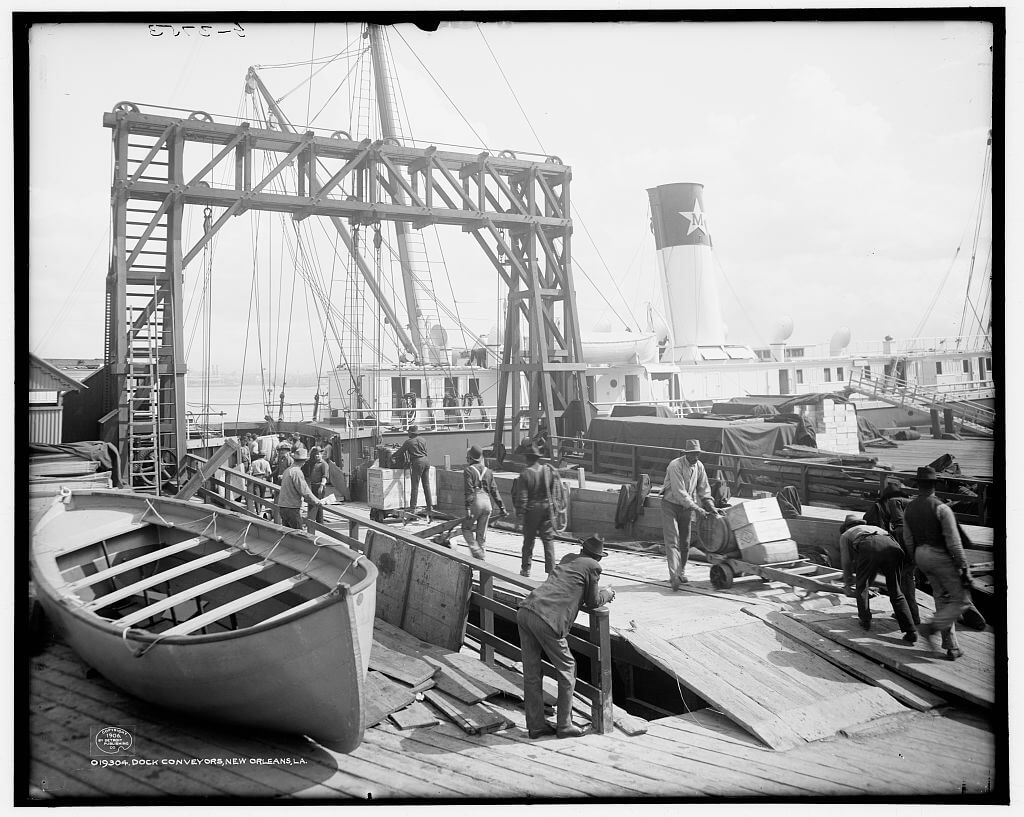
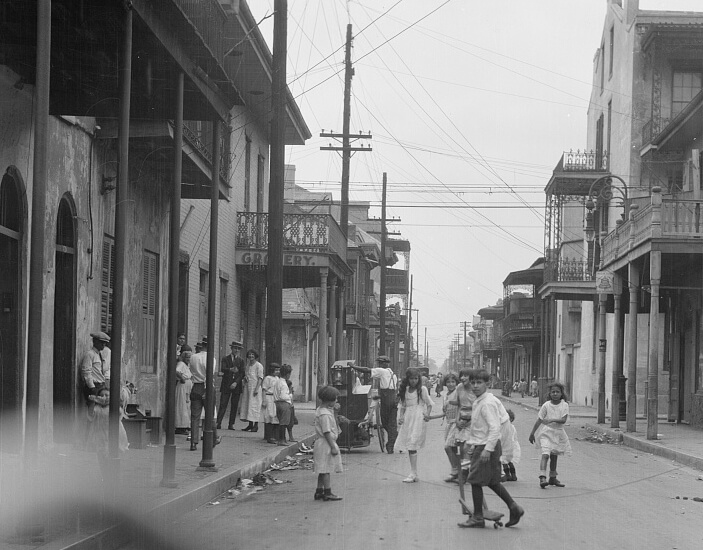
Evidence from the Times-Picayune offers some sense of the diversity of people, places, and situations involved in marijuana arrests. Police regularly targeted soft drink stands, groceries, and restaurants and often implicated them as sites of illicit activity, including the smoking and selling of marijuana.69"Liquor and Mary Warner Seized," Times-Picayune (New Orleans), June 5, 1924, 26. In April 1924, for instance, following an undercover purchase at the restaurant of Manuel Arredondo, New Orleans police confiscated some forty pounds of marijuana. Valued at nearly $3,000, the stash was "concealed in the rear of the place under a trapdoor."70"Marijuana Seized Valued at $3,000," Times-Picayune (New Orleans), 8. Police frequently made marijuana arrests on the streets and sidewalks, including eight young men found smoking in Coliseum Square.71For this instance and others, see "Alleged 'Muggles' Habitues Are Fined," Times-Picayune (New Orleans), July 29, 1923, 3; "More Patrolmen Are Transferred," Times-Picayune (New Orleans), September 10, 1923, 13; "Finds Marihuana in Martina's Store," Times-Picayune (New Orleans), October 17, 1923, 7. Though reports suggest police arrested men far more often, there were also female marijuana peddlers arrested.72The roles women have played in the business of drug trafficking is highly understudied. See Elaine Carey, Women Drug Traffickers: Mules, Bosses, and Organized Crime (Albuquerque: University of New Mexico Press, 2014). Mrs. Carrie O'Donnell was in her grocery store and place of residence when police "found thirty-seven marijuana cigarettes, which complainants said she kept for sale."73"Unable to Find Verboten Law," Times-Picayune (New Orleans), October 2, 1924, 7. Police arrested Mrs. Sadie Garden at home where detectives seized "several thousand marijuana cigarettes, bulk marijuana, a box of morphine and a quantity of grain alcohol."74"Woman Charged Under Drug Act," Times-Picayune (New Orleans), 2. In an era of alcohol prohibition, police frequently seized marijuana alongside liquor.75For just one example, see "Possession Is Charged," Times-Picayune (New Orleans), July 30, 1925, 16.
Reporting also linked marijuana seizures to the city's many ships and sailors. Often, federal customs agents were involved in these incidents. Though the Harrison Narcotic Act did not cover marijuana, a 1915 Treasury Decision banned the importation of cannabis if intended for other than medical purposes.76W. G. McAdoo, Treasury Decisions Under Customs and Other Laws, vol. 29 (Washington, D.C.: U.S. Government Printing Office, 1916), 257. In early 1925, two Mexican seamen faced marijuana charges. Police arrested Antonio Corres on the city docks with "a bag containing marijuana."77"Smuggler Sentenced," Times-Picayune (New Orleans), March 5, 1925, 12. In a separate incident, a customs official trailed Manual Gonzalez as he left the steamship Yuma, leading to his arrest for "possessing six pounds of marijuana."78"Marijuana Seized," Times-Picayune (New Orleans), 23. In a third incident, Juan Horgoros, a "Spanish Seaman," faced marijuana possession charges following his arrest by a customs official.79"Spanish Seaman Held," Times-Picayune (New Orleans), October 21, 1925, sec. Part Two, 17. Four years later, customs agents apprehended William Shanakan and Edward Busamente near the Desire street docks as "the pair attempted to land a small skiff underneath the wharf apron and smuggle ashore seven bags of marihuana." The two men obtained the drug from "unnamed members of the crew of the Honduran steamship Baja California." Shanakan and Busamente floated "with the current alongside the ship on the river side and the bags of the hasheesh weed had been let down from a port-hole to the skiff." Since customs agents could not implicate individual crewmembers, they levied a fine on the entire steamship for "unmanifested contraband."80"Pair Arrested Trying to Land with Marihuana," Times-Picayune (New Orleans), October 10, 1929, 1. Given the regularity with which police and customs agents seized large quantities of marijuana from ships and sailors, it appears the city's market for the drug was substantial and frequently supplied by boat.
Some of these arrests and large-scale smuggling cases lend credence to the belief that Mexican immigrants were responsible for bringing marijuana to the United States and that they made up a significant portion of users. The notion that marijuana use was "a casual adjunct to life" for many Mexican immigrants in the early twentieth century has gone virtually undisputed in the historiography on marijuana prohibition.81For the use of this phrase, see Bonnie and Whitebread, The Marijuana Conviction, 33–34. This broad narrative argues that immigrant Mexican laborers brought marijuana smoking into the United States where it spread to local populations in Texas, California, Colorado, and other states west of the Mississippi River.82Generally known as the "Mexican Hypothesis" or the "Mexican Vector model," this is the most prominent interpretation for marijuana prohibition in the United States. For more on these terms, see Himmelstein, The Strange Career of Marihuana; Campos, Home Grown. In this interpretation, anti-Mexican sentiment and blatant racism provided the impetus for many state and municipal level laws prohibiting marijuana. Recently this interpretation has faced a significant challenge. Historian Isaac Campos has shown that marijuana use in Mexico was anything but a regular habit of everyday life and was largely confined to soldiers, prisoners, and other marginalized groups. Most of the general population avoided the drug, believing it caused "madness, violence, and mayhem." Campos argues that rather than bringing marijuana smoking to the United States, Mexican immigrants relayed the idea that marijuana was an incredibly dangerous drug—"one that triggered sudden paroxysms of delirious violence."83Campos, Home Grown, 2, 5.
Contemporary newspaper coverage in New Orleans reveals evidence for many of these interpretations, but yields limited support for widespread use by Mexican immigrants. Rather, a small number appear disproportionately tied to the early distribution network. Many of the largest seizures of marijuana in the city had connections to steamships from Mexico. There were also reports of a few large seizures involving Mexican suspects and false-bottomed suitcases, neatly built for concealing drugs.84For examples, see "Seven Arrested and 36,000 Grains of Dope Seized," Times-Picayune (New Orleans), June 8, 1923; "Dope Swindle Exposed by Raid on Mexican Club," Times-Picayune (New Orleans), June 9, 1923; "Marihuana Haul Made By Police"; "American Craze for Marihuana Builds Industry," Times-Picayune (New Orleans); "Arrest Marihuana Seller," Times-Picayune (New Orleans), 14. Yet, of the 225 documented marijuana arrests in the Times-Picayune between 1923 and 1929, the newspaper identified only thirty-three total suspects by their ethnicity or race. Mexicans accounted for eleven of that thirty-three, and seven of those eleven came from a single seizure. The paper also identified two additional suspects of "Spanish" origin. Another nineteen suspects not explicitly identified by race or ethnicity did have a traditional Mexican or Spanish surname.85These names include: Martinez (five suspects) with one possible repeat offender, Gonzales (two suspects), Mendoza (two suspects), Busamente (one suspect), Rodrigues (one suspect), Ruiz (one suspect), Garcia (one suspect), Lopez (one suspect), Campos (one suspect), Belasques (one suspect), Torres (one suspect), Spinoza (one suspect), and Santos (one suspect). Those specifically identified as Mexican or Spanish by the Times-Picayune accounted for just five percent of the arrests reported between 1923 and 1929. Adding those with traditional surnames, but unidentified by race or ethnicity, yields twelve percent of documented arrests. The 1930 census data shows 717 citizens in New Orleans listed as "Mexican"—accounting for 0.1 percent of the city's 458,762 residents.
The arrival of Mexican immigrants smoking marijuana did not capture the attention of civic groups and law enforcement, nor did the Times-Picayune give much attention to marijuana use by Mexicans. Neither was anti-Mexican or racist sentiment central to the discussion of the New Orleans city ordinance or state law prohibiting marijuana. Given the city's prominence in launching the "marijuana menace" as a nationwide phenomenon, the absence of blatant anti-Mexican sentiment and the limited number of arrests undermines the intense emphasis on Mexican immigrants found in many histories of marijuana prohibition.86For the most prominent examples of the "Mexican Hypothesis," see Musto, "The Marihuana Tax Act of 1937"; Musto, The American Disease; Bonnie and Whitebread, The Marihuana Conviction.
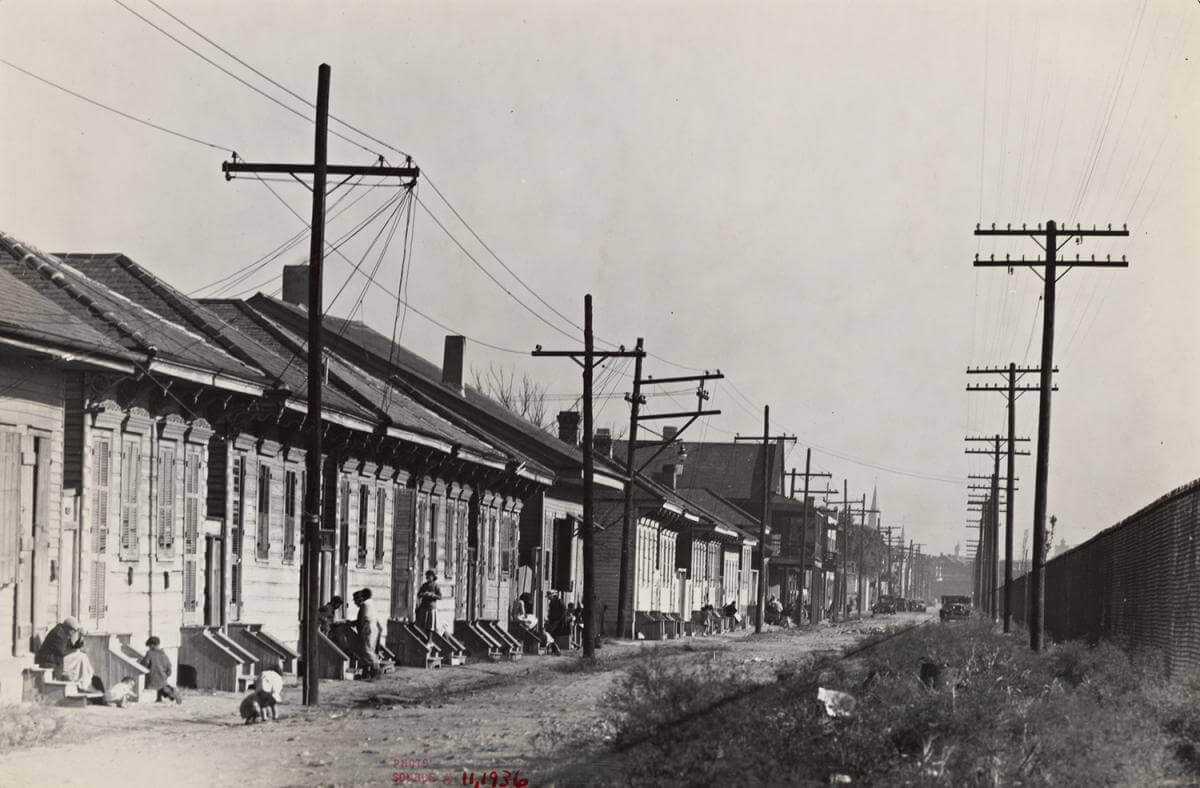
The same was true of African Americans—another group often associated with marijuana use during this period. Bonnie and Whitebread, for example, suggested that the main users of marijuana in New Orleans were "black and lower-class white elements."87 Bonnie and Whitebread, The Marijuana Conviction, 92. Likewise, in the mid-1930s, FBN Commissioner Harry J. Anslinger often proclaimed a connection between marijuana and black jazz musicians. There is indeed little doubt that marijuana played an influential role in the lives and artistry of many jazz musicians by the 1930s, as many popular songs eluded to marijuana in both implicit and explicit ways.88Bob Beach, "'That Funny, Funny Reefer Man': Reading Reefer Madness Through Jazz Music During the 1930s," Points: The Blog of the Alcohol & Drugs History Society, April 30, 2015, https://pointsadhsblog.wordpress.com/2015/04/30/that-funny-funny-reefer-man-reading-reefer-madness-through-jazz-music-during-the-1930s/. Yet, the arrest records featured in the Times-Picayune include almost no references to jazz musicians or African American marijuana users. Between 1923 and 1929, the paper explicitly identified just sixteen suspects as "negro."89This number accounts for about seven percent of the total arrests covered in this article. According to the U.S. Census Bureau, African Americans made up between 26 and 28 percent of the total population of New Orleans. For census data, see Campbell Gibson and Kay Jung, "Historical Census Statistics on Population Totals by Race, 1790 to 1990, and by Hispanic Origin, 1970 to 1990, for Large Cities and Other Urban Places in the United States" (Washington, D. C.: U.S. Census Bureau, 2005), https://www.census.gov/population/www/documentation/twps0076/twps0076.pdf. In the cradle of jazz, during a period defined by the use of racialized terms to distinguish and denigrate African Americans, the local newspaper evidence reveals little connection between these groups and marijuana use.
The lack of African Americans identified among those arrested for marijuana during this period appears especially stark given that the majority of those arrests occurred in and around today's French Quarter.90It is possible that newspaper reports from these areas simply implied the suspects were African American. That seems unlikely, however, given the frequent use of terms like "colored" and "negro" in other reporting by the paper, crime-related or otherwise. The nearby Storyville, Tango Belt, and Back o' Town neighborhoods were home to many African Americans and were prominently associated with vice, entertainment, and jazz. Storyville was the legendary tenderloin district, a sanctioned site of prostitution until 1917. At its peak, the Tango Belt housed one of the highest concentrations of commercial jazz venues in the city. The Back o' Town was the boyhood home of Louis Armstrong and known as the "colored red-light district."91The adjacent South Rampart Street corridor also had many African American businesses. See "Jazz Neighborhoods—New Orleans Jazz National Historical Park (U.S. National Park Service)," accessed September 4, 2016, https://www.nps.gov/jazz/learn/historyculture/jazz-map.htm. Armstrong left New Orleans in 1922, but apparently did not begin using marijuana until white musicians introduced him to the drug in Chicago later that decade. Armstrong was highly fond of marijuana; he recorded the song "Muggles" in 1928, faced jail time in 1930 for marijuana possession in Los Angeles, and reportedly smoked daily for most of his life. For more on Armstrong and marijuana, see Thomas David Brothers, Louis Armstrong, Master of Modernism (W. W. Norton & Company, 2014). Nevertheless, very few of the documented marijuana arrests in these areas identified jazz musicians or African Americans as the suspects. In May of 1925, for example, a Times-Picayune headline proclaimed, "Vice Squad Again Hits Tango Belt; Score Arrested." Of the fourteen men and six women arrested, only two faced marijuana charges, and neither was identified by the paper as African American.92"Vice Squad Again Hits Tango Belt," Times-Picayune (New Orleans), May 16, 1925.
Though most marijuana arrests occurred near North Rampart Street between Elysian Fields Avenue and Canal Street, there were also smaller pockets of arrests throughout the city, especially south of St. Charles Avenue along the Mississippi River. Interestingly, however, the available home addresses for marijuana suspects show a more even distribution throughout the city when compared with their arrest location. This was true of suspects from working-class areas nearer to the river, especially between Magazine Street and Tchoupitoulas Street, as well as suspects from more affluent areas of the city, including the Garden District and the Uptown/Carrollton area near Tulane University. Based on newspaper reports, the average distance between place of arrest and place of residence was 1.7 miles, with a median distance of 1.1 miles.93Distance data was drawn from 115 records that provided an address for both place of arrest and place of residence. Excluding records where the arrest and residence locations were the same, difficult to locate on a current map, or far outside New Orleans (Biloxi, MS, for example), left seventy-seven records for further analysis. Of those records, the average distance from arrest location to their residence was 1.7 miles, with a median distance of 1.1 miles. The maximum distance was 6.8 miles, the minimum less than 0.1 miles, with a mode of 0.3 miles. These patterns of arrest and home address suggest an illicit market, not unlike those of the present, where the sale of illicit drugs is often concentrated in specific areas of the city, but users regularly come from other neighborhoods to buy.
The dearth of documented arrests for African Americans and Mexicans in New Orleans during the 1920s calls into question long-held historiographic beliefs about the demographics of typical marijuana users.94Though it is difficult to draw firm conclusions, based on the available newspaper evidence it is likely that the vast majority of marijuana suspects were white. Contemporary newspapers generally identified non-whites as "Negro," "Colored," "Mexican," or other similar terms. Thus, when the paper did not provide a race or ethnicity, it seems likely the suspect was white. For another example of identifying and classifying race among arrest records in New Orleans, see Tanya Marie Sanchez, "The Feminine Side of Bootlegging," Louisiana History: The Journal of the Louisiana Historical Association 41, no. 4 (2000): 403–33. Indeed, the available arrest evidence from the Times-Picayune suggests the most common marijuana user in the city was a white male in his early twenties.95About 100 of the 225 documented arrests covered in this essay provided the age of the suspect. Of those with a reported age, the average age was 23.5 years old and the median age was 22.5 years old. Evidence from the Times-Picayune also sheds light on the contemporary concern with the use of marijuana by school age children. The belief that New Orleans youth were falling victim to the marijuana habit was a significant factor in the city's sustained efforts at prohibiting the drug and curbing its use. School officials and civic groups repeatedly claimed that children as young as third and fourth grade used marijuana.96For examples, see "Children Using 'Mary Warner,' Officials Fear"; "Gambling in City Leaves Its Mark on School Boys"; "More Children Smoke Muggles Alliance Hears"; "School Alliance Holds Meeting—Stricter Legislation Towards Marijuana Sellers Is Urged"; "School Children Smoke Muggles, Alliance Is Told—Startling Reports Made at Meeting by Mrs. J.G. Skinner"; "War on Hashish Smoking Is Carried to Congress in Effort to Save School Children"; "Children Smoke Marihuana, Says Head of Alliance—Fight for More Severe Legislation to Be Carried On." Despite the fact that little more than anecdotes supported these assertions, newspaper arrest reports do offer some clues. Of the approximately one hundred arrest reports that provided an age, some twenty-five percent were teenagers. Sixty percent were in their twenties, most under the age of twenty-four. The youngest documented arrest in the Times-Picayune was sixteen-year-old William Casey, seized alongside three other men in their twenties "smoking marijuana cigarettes in the rear room of a soft-drink shop."97"Marijuana Leads to Arrest of Four," Times-Picayune (New Orleans). Two police officers arrested seventeen-year-old Eddie Barker with marijuana cigarettes after he nervously ran away when they approached him on the sidewalk.98"Youth Is Arrested," Times-Picayune (New Orleans), January 15, 1929. Though it is difficult to draw sweeping conclusions from such limited data, there is nonetheless enough evidence here to support insight into the city's concern with youthful marijuana use.
Conclusion: Patterns and Precedents from the Big Easy
As one of the first significant metropolitan markets for marijuana, New Orleans offers fascinating insights into the user population and an excellent test case for existing historiography. Based on newspaper evidence there is little doubt that a thriving illicit market for marijuana existed throughout the 1920s and continued long into the 1930s, as arrests for violation of city and state ordinances continued apace. So, too, did a stern resolve among numerous civic groups, local officials, and law enforcement to curb marijuana use.99For an excellent contemporary summary of various high points in the New Orleans anti-marijuana campaign during the 1920s, see "Crime Trail Widens as Marihuana Fume Descends Upon City," Times-Picayune (New Orleans), April 21, 1929, 22, 24. New Orleans played an outsized role as the "hypodermic needle feeding the entire Middle West with drugs" and as a clear nexus of the "marijuana menace" paradigm.100"Port Termed Hypodemic Needle Feeding Entire Middle West with Drugs," Times-Picayune (New Orleans), March 6, 1926, 1. Locally, two common themes informed the characterization of marijuana as dangerous—a link between the plant and crime alongside a perceived threat to its growing use by young people. The existing historiography offers minimal city- or state-level research on marijuana markets during these years, often dismissing claims of rising use as sensational journalism, police propaganda, and xenophobia. Previous studies have often perpetuated the belief that marijuana use was most prominent among African American musicians and Mexican immigrants, which prompted a racist backlash against the drug that led to its criminalization.101See Himmelstein, "The Rise of the Killer Weed," in The Strange Career of Marihuana, 49–75. Though subsequent scholars have largely ignored his conclusions, Jerome Himmelstein remains a notable exception to this dominant interpretation. In 1983, Himmelstein emphasized the importance of youthful marijuana use in prompting federal action on marijuana in the mid-1930s. Though this essay lends credence to that finding, it also shows the specter of marijuana use among children originated in New Orleans more than a decade earlier. Without discounting the role of overt racism in early marijuana legislation across the United States, the evidence from New Orleans shows a more complicated picture as the demographic and spatial nature of the city's marijuana market contrasts with those common depictions in the existing literature.
New Orleans is perhaps the best place in the United States to witness the emergence and consolidation of anti-marijuana sentiment, serving as the epicenter for what became broadly known as the "marijuana menace." Events that transpired in the Big Easy during the 1920s and 1930s influenced and previewed what emerged at the federal level. The ways in which media coverage, law enforcement, and civic concerns in New Orleans coalesced and reinforced a negative characterization of marijuana repeated themselves elsewhere across the country. The city's concern with youthful marijuana use and the drug's alleged criminogenic effects proved highly influential in the push for federal marijuana legislation. New Orleans produced a tight coterie of local law enforcement, public health, and social welfare officials who carried their anti-marijuana campaign to the federal level. So much so that when Commissioner Anslinger and the FBN launched the now infamous "reefer madness" campaign in the mid-1930s, they drew on existing depictions of marijuana gathered from sources across the country—especially the "muggleheads" of New Orleans. 
Acknowledgments
Many thanks to Southern Spaces staff members Stephanie Bryan, who helped create the digital maps published here, and Hannah C. Griggs, who copyedited the map database spreadsheets.
About the Author
Adam R. Rathge holds a PhD in American history from Boston College. His dissertation and book manuscript, "Cannabis Cures: American Medicine, Mexican Marijuana, and the Origins of the War on Weed, 1840–1937," charts nearly a century of medical discourse, social concern, and legislative restrictions surrounding the drug, demonstrating that the origins of our nation's prohibitions on marijuana are much older and more complicated than previous studies have suggested. He is currently Director of Enrollment Strategies at the University of Dayton, where he also teaches undergraduate courses as part-time faculty in the department of history.
]]>Review
In 1931, an all-white jury in Birmingham, Alabama, sentenced Willie Peterson to death for a mysterious attack that left two white women dead and a third critically injured. The lone survivor identified Peterson, a black ex-miner crippled by tuberculosis, as the assailant, but many in Birmingham—black and white—doubted that Peterson could have committed the crime. Just months after launching a national campaign to save the Scottsboro Boys from a similar fate, a loose coalition of southern radicals, civil rights activists, and white liberals fought to save Peterson from the electric chair.
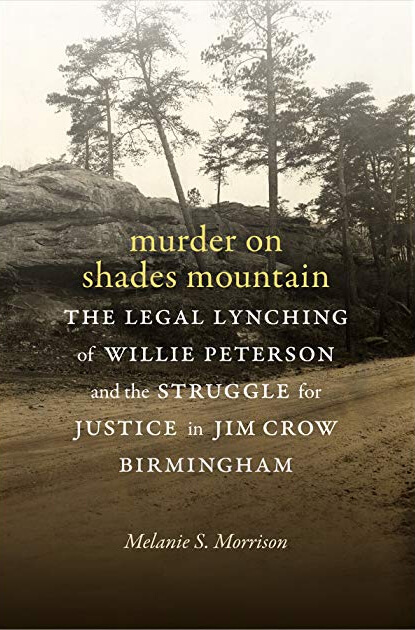
In Murder on Shades Mountain, Melanie S. Morrison recovers the Peterson case from the shadow of Scottsboro—arguably the most significant and certainly the most chronicled miscarriage of justice in the Jim Crow South. A social justice educator with a doctorate in theology, Morrison reveals her family connection to the case. Her father, a progressive minister born into Birmingham's upper crust, was courting Genevieve Williams when her two sisters—Nell and Augusta—were attacked on Shades Mountain, approximately nine miles south of downtown Birmingham. Augusta, along with her friend Jennie Wood, died on the mountain, while Nell survived. Truman Morrison sat on the grieving family's porch and listened to Dent Williams, the girls' brother, brag about visiting the jail after Peterson's arrest and shooting the suspect at point-blank range. Peterson barely survived to face trial, but Dent Williams dodged conviction "by reason of temporary insanity" (118).
Another form of insanity—the racial pathologies laid bare by the Peterson case—compelled Truman Morrison to break off the courtship and break rank with his wealthy family. Inspired by her father's life of activism, Melanie Morrison seeks to make sense of the stories he told her and to reconstruct the social and political world of Depression-era Birmingham. This is not an unfamiliar world for historians, as Alabama has provided the setting for a number of influential studies on race, labor, and radicalism in the Jim Crow South. Yet in shifting attention from Scottsboro's sleepy courthouse square to Birmingham's industrialized and highly stratified terrain, Morrison offers fresh perspective on the structural violence that undergirded white supremacy.
Place matters in Murder on Shades Mountain, and Morrison vividly reconstructs the social geography of Jim Crow Birmingham in the book's opening sections. Founded after the Civil War by investors intent on creating a southern industrial mecca, Birmingham was a city "rooted in racial apartheid" (26). Its barons resigned black workers to the lowest rungs of the labor ladder and confined the city's booming black population to racially zoned neighborhoods that lacked basic services. Meanwhile, whites with means moved upward and outward from the city's industrial core. The higher ground surrounding Birmingham also provided space for white leisure, including the overlook on Shades Mountain where the 1931 attack occurred. As Morrison points out, the rigidly segregated geography of Jim Crow Birmingham fueled doubts about the nature of the attack and the identity of the attacker. The notion that a black man would roam around this white enclave, in broad daylight and armed with a loaded gun, defied the spatial logic of segregation. Yet Jim Crow fueled an illogical counterpoint, where the threat of lust-crazed black men lying in wait demanded constant vigilance and swift vengeance.
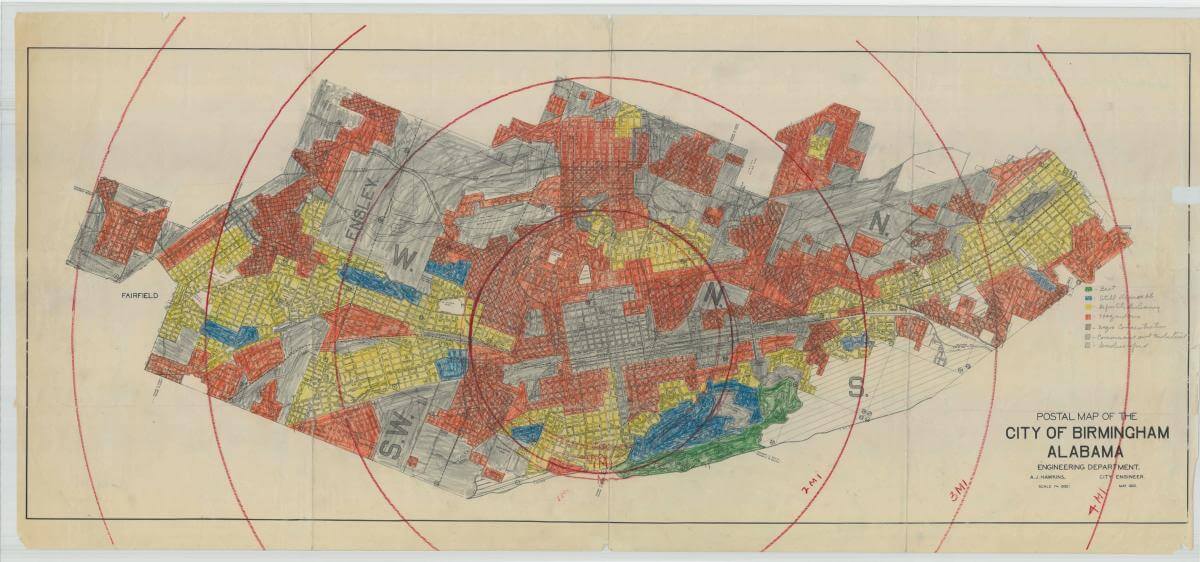
The imperative that a black man must pay for the crimes committed on Shades Mountain underscores just how much Jim Crow blurred the line between legal and extralegal punishment. Angelo Herndon, a black communist and labor organizer later imprisoned in Georgia for his political activity, recounted his brutal detainment in the wake of the Shades Mountain attack. Birmingham police, he wrote in his 1937 autobiography Let Me Live, chained him to a tree and beat him with a rubber hose before charging him with vagrancy when he refused to confess to the crime. He estimated that lawmen and vigilantes killed as many as seventy black men and women in the "reign of terror" that swept him up (41–43).
For Herndon and his comrades, the arrest and prosecution of Willie Peterson marked the culmination of this broader campaign of violence and intimidation. The leftist activists who rushed to Peterson's defense blasted his conviction as a "legal lynching"—a term that Morrison embraces but which begs further interrogation given the complex and contentious history of "legal lynching" as a conceptual and rhetorical product of anti-lynching activism. Depression-era radicals were not the first to draw the connection between Jim Crow justice and extrajudicial violence, although they made these arguments vividly and forcefully. Although Morrison does not plumb this history, she rightly notes the role of US communists and allied labor radicals in promoting the argument, as the Southern Worker contended, that "the police, the courts, and the 'law enforcing' machinery are preparing to stage a legal lynching of [Peterson] as part of their campaign of terror against the entire Negro working class population of Birmingham" (84).
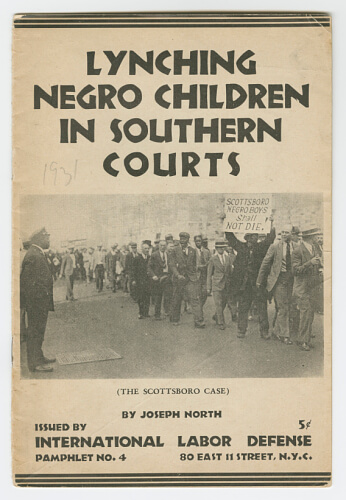
The rhetoric deployed in defense of Peterson echoed arguments popularized in the Scottsboro Case, through pamphlets with titles like Lynching Negro Children in Southern Courts. Published by the International Labor Defense (ILD), the communist legal aid organization that defended the Scottsboro Boys and later attempted to represent Peterson, the pamphlet typified a structural critique of Jim Crow as irredeemably violent and repressive. The ILD fought legal lynchings in the courts; its supporters—numbering several thousand in Alabama alone by the early 1930s—argued that the real fight was in the streets. Only "mass protest" would save those convicted, pamphlet author Joseph North argued, and moderates who counseled "faith in the lynch loving courts in Alabama and the South" were complicit in "hand[ing] them over to the executioner."1Joseph North, Lynching Negro Children in Southern Courts (New York: International Labor Defense, 1931).
The ILD aimed these barbs at its primary rival, the National Association for the Advancement of Colored People (NAACP), which had attempted unsuccessfully to wrest control of the Scottsboro Boys' legal defense from the radicals. That "wake-up call," Morrison notes, compelled the NAACP to intervene more quickly on Peterson's behalf (88). She characterizes the case as a moment of truth for the organization, which had struggled to regain its footing and credibility as more radical groups mobilized in response to economic crisis and white supremacist repression. The NAACP's new leader, Walter Francis White, had completed dozens of daring undercover lynching investigations, but he balked at any cooperation or association with communists on "legal lynching" cases. Nevertheless, Morrison emphasizes the NAACP's strategic flexibility and increasing emphasis on legal advocacy. Charles Hamilton Houston, the Howard University Law School dean who would become the NAACP's first special counsel in 1935, traveled to Birmingham to interview Peterson's wife, Henrietta (his notes from that encounter provided the source base for one of Morrison's most gripping passages), and advocated for the NAACP to expand its legal defense work.
Murder on Shades Mountain illuminates how the paths of some of the most significant figures and organizations in the black freedom struggle ran through Birmingham in the weeks and months after Peterson's arrest. Of course, the connections between mob violence and "legal" lynching run deeper than this slim volume conveys. While the antipathy between the NAACP and ILD infused both the Scottsboro and Peterson campaigns, the notion that racial violence represented only the most brutal expression of an oppressive system was not limited to radical organizations. "Lynching and mob violence are only methods of economic repression," the NAACP's William Pickens argued in 1921. "To attack lynching without attacking this system is like trying to be rid of the phenomena of smoke and heat without disturbing the basic fire."2William Pickens, Lynching and Debt Slavery (New York: American Civil Liberties Union, 1921). While the NAACP attempted to cooperate with southern white officials willing to speak out against lynching, including Alabama ex-governor Emmet O'Neal, they understood that such officials frequently talked down mob violence by doubling down on state-sanctioned execution. For these "law and order" officials, capital punishment offered reassurance to anxious whites that the state would dispose of black aggressors—real or imagined—without inviting negative publicity or outside scrutiny.
Peterson's death sentence offered no panacea to the Depression-era mob mentality. From the manhunt, roundups, and brutal interrogations that preceded Peterson's arrest to Dent Williams's assassination attempt on his sisters' accused attacker, the lynching spirit hovered over the case. While Peterson languished in prison, police in nearby Tuscaloosa handed over black teenagers to a lynch mob in the summer of 1933. Morrison's account reminds us that whatever divisions separated black activists, the campaign against lynching and related abuses remained a tactical and legal imperative. White reformers and civil rights activists argued over the criminal definition of lynching and the liability of local and state officials who failed to prevent it, while largely eschewing the language of "legal lynching." Even as the number of documented cases declined during the 1930s, the NAACP reported in 1940 that lynching had not disappeared but gone "underground," and warned that these secretive killings relied more than ever on the collusion of local officials.3Lynching Goes Underground: A Report on a New Technique (New York: National Association for the Advancement of Colored People, 1940), 7.
The same year that the NAACP warned that lynching had entered "a new and altogether dangerous phase," the legal lynching of Peterson ran its course.4Lynching Goes Underground: A Report on a New Technique, 7. Six years after Alabama's governor commuted his death sentence, Peterson died in the state prison infirmary from complications related to tuberculosis. Morrison describes the Peterson case as an "incomplete victory"—both in its attempt to save the man's life and in its broader challenge to white supremacy (192). Murder on Shades Mountain does not expend many pages tracing the links between this case and the more familiar Birmingham stories of the civil rights era, sparing readers of metaphors about the roots and seeds of movements to come. However, Morrison makes a point worth repeating—that "the 1930s are rife with historical antecedents to the uprisings, protests, and campaigns manifest in the 1950s and 1960s, which continues today." Despite the autobiographical bookends, in which Morrison reveals her personal connection to Birmingham's white liberal community, she emphasizes that the local movement was "led by black people" (194). Because of the historians Morrison acknowledges, and a few more she does not, we know many of these activists' names. We will never know them all, but thanks to Morrison's vivid rendering of Willie Peterson's life and witness, we know more.
About the Author
Jason Morgan Ward is acting professor of history at Emory University, where he teaches modern United States history. He is the author of Hanging Bridge: Racial Violence and America's Civil Rights Century (New York: Oxford University Press, 2016) and Defending White Democracy: The Making of a Segregationist Movement and the Remaking of Racial Politics, 1936–1965 (Chapel Hill: University of North Carolina Press, 2011).
]]>Review
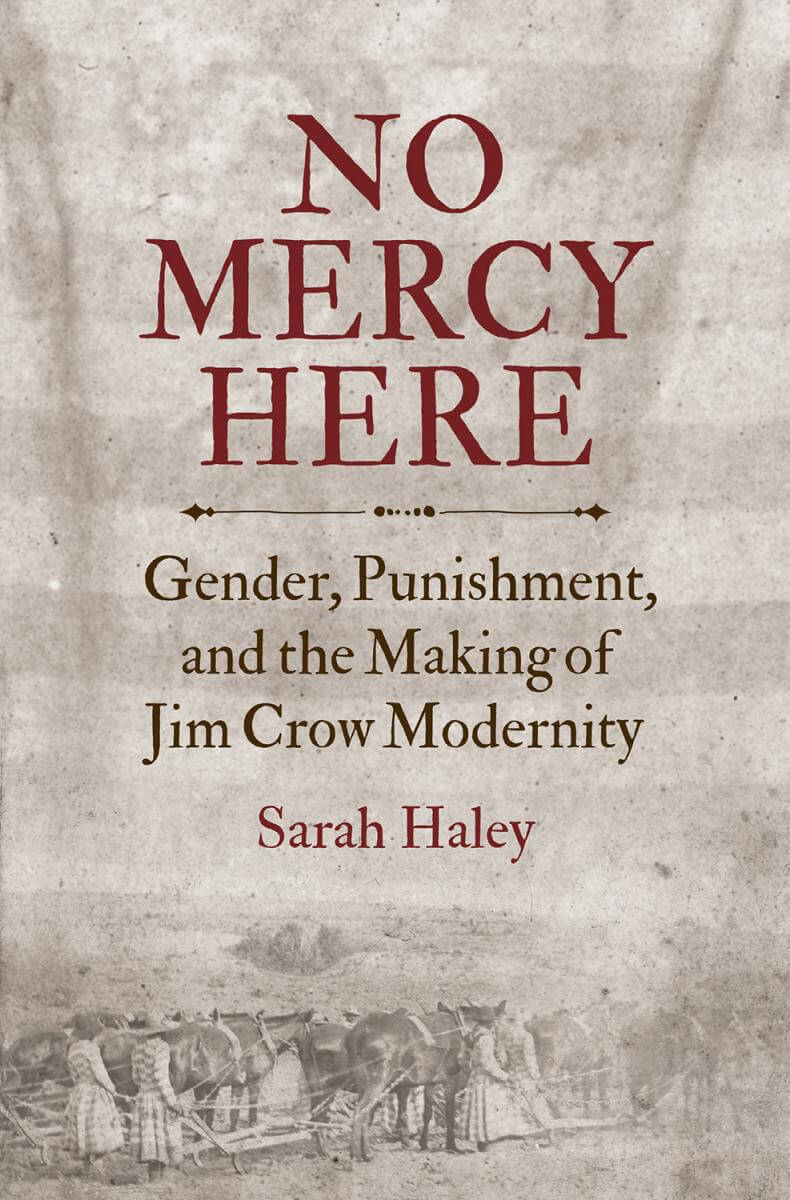
There's a gripping scene in Arthur Jafa's award-winning film, Dreams Are Colder Than Death, in which he pairs the image of a small group of African American boys acrobatically diving into a swimming pool with a haunting narration from literary scholar Hortense Spillers. Without equivocation, Spillers warns, "I know that we are going to lose this gift of black culture unless we're careful." Here, she defines "culture" not as a particular art form or creative expression, but as a "special insight that connects us to something human."1Arthur Jafa, Dreams Are Colder Than Death, 2013. Over the course of Jafa's documentary, Spillers, Fred Moten, Kara Walker, and Saidiya Hartman, among others, meditate on the African American condition, the future of blackness, and the fate of the US democratic experiment. Commissioned by the German television station ZDF as part of the fiftieth anniversary of the March on Washington, Dreams Are Colder Than Death engendered a great deal of conversation among scholars in Black Studies. The buzz centered not just on its stellar cast of intellectuals but also on its formal qualities. Shunning talking heads, Jafa recorded audio and visual components separately and then paired them together during post-production. Such an approach allows for "an extended freedom in both sound and image" where subjects do not produce "survival modalities," defined by Jafa as "the ways that black people have been conditioned to act or appear in film—to sit, stare, or talk in a certain way, or to be assessed by a white gaze."2See Nijla Mumin, "LAFF Review: Arthur Jafa Conducts Multilayered Exploration of Blackness in 'Dreams are Colder than Death,'" Indiewire.com, June 19, 2014, http://www.indiewire.com/2014/06/laff-review-arthur-jafa-conducts-multilayered-exploration-of-blackness-in-dreams-are-colder-than-death-159613/.
Although two years have passed since my first viewing of Jafa's Dreams, Spillers's provocative statements, along with the film's powerful bridging of the lyrical and the sonic, have refused to loosen their grip. The film's formal qualities open up important questions regarding the future of black culture and Black Studies (entering its fifth decade). What are the aesthetic, intellectual, and political challenges confronting scholars in the field? How have the formal qualities of our work advanced? What separates us from other interdisciplinary fields of inquiry and practice?
Jafa's daring formalism whetted my appetite for bold, ambitious scholarship in which "forms, techniques, and ideas coalesce into an indigenous or vernacular tradition while remaining opportunistically open to influence and radical vision."3Marlon Ross, "Introduction" to Houston Baker's speech at the University of Virginia in the spring semester of 2012, https://blackfireuva.com/2012/03/.
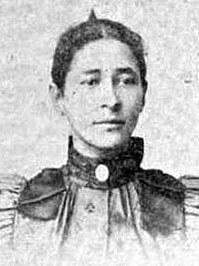
Selena Sloan Butler, ca. 1899. Photograph. Courtesy of Wikimedia Commons. Image is in public domain.
Such a work is Sarah Haley's provocative No Mercy Here: Gender, Punishment, and the Making of Jim Crow Modernity. Haley's meticulously researched, beautifully crafted, and cogently argued first book contributes immensely to US southern, economic, gender, and political history. Examining the experiences of black female convicts in Georgia between emancipation and the 1920s, No Mercy Here enriches our understanding of the importance of African American women—particularly those ensnared in the South's penal system—in the making of New South modernity. It demonstrates the centrality of the carceral regime in the production of gender categories. And it deepens our knowledge of the trajectory and genealogy of black intellectual work around the US prison regime through Haley's highly sophisticated reading of Mary Church Terrell, Selena Sloan Butler, Bessie Smith, and other African American women thinkers and artists. No Mercy Here also breaks new ground in the field of Black Studies through its innovative play with form and structure. Bessie Smith shares theoretical space with Fred Moton, the blues function as not just an explanatory tool but as literary inspiration, and short yet powerful sentences pierce with the intensity of Miles Davis's horn.
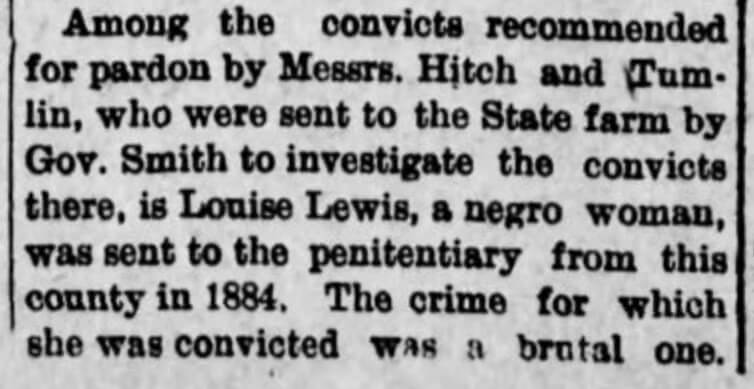
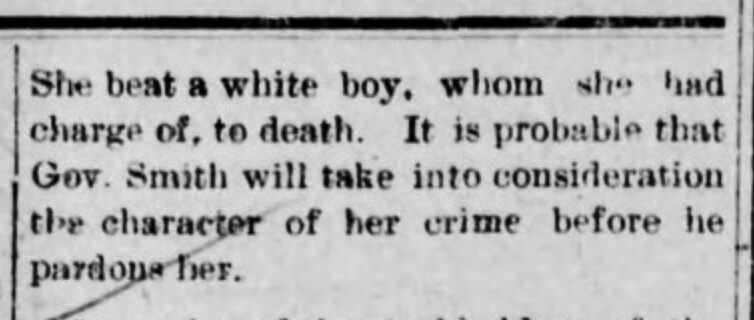
The brutality of Georgia's convict system and its central role in the construction of gender categories are the two themes considered early in No Mercy Here. With clarity and imagination, Haley reconstructs the lives of African American women such as Eliza Cobb, who at the age of twenty-two was arrested and convicted for infanticide, a charge she vehemently denied. Legal authorities ignored her declaration of innocence, as well as evidence that her pregnancy was the result of rape. Cobb was first sent to work in a sawmill before being transferred to Milledgeville State Prison. Laboring and living in horrific conditions, Cobb submitted three clemency requests between 1907 and 1910. Suffering from a variety of maladies, including a large growth on the back of her neck, her crippled body could no longer withstand the workload which included tilling the land, planting and harvesting cotton, corn and other crops, cooking and cleaning for other inmates and the employees.
Although African American women rarely received clemency, several white officials intervened on Cobb's behalf. Most notably, the coroner who had testified for the state in her infanticide trial reversed himself, declaring that Cobb had not committed infanticide and that her child had more than likely been stillborn. Guards and administrators submitted letters attesting to Cobb's exemplary behavior at Milledgeville. In 1910, prison administrators included a photograph of Cobb to provide evidence of her physical defects (particularly the large growth on her neck) and to prove "her mind was not as strong as the average negro's." Their framing of Cobb was intentional. "Her description," writes Haley,
as a 'horrible-looking person' may have been attributed to an accident, but it was part of a larger pattern of female representation. Black women's bodies were similarly portrayed in letters from convict guards and overseers as well as in journalistic descriptions and cartoons. Perceived ugliness was one attribute that defined black women's deviance from the category 'woman' and justified their imprisonment and assault during the nadir of American race relations, from the end of Reconstruction through the Progressive era.
Only as an "imbecilic, monstrous body" could Cobb be rendered "legible to white authorities."4 Sarah Haley, No Mercy Here: Gender, Punishment, and the Making of Jim Crow Modernity (Chapel Hill: University of North Carolina Press, 2015), 19-20. Their strategy of portraying Cobb as monstrous worked, as governor Joseph M. Brown commuted her sentence in September 1910.
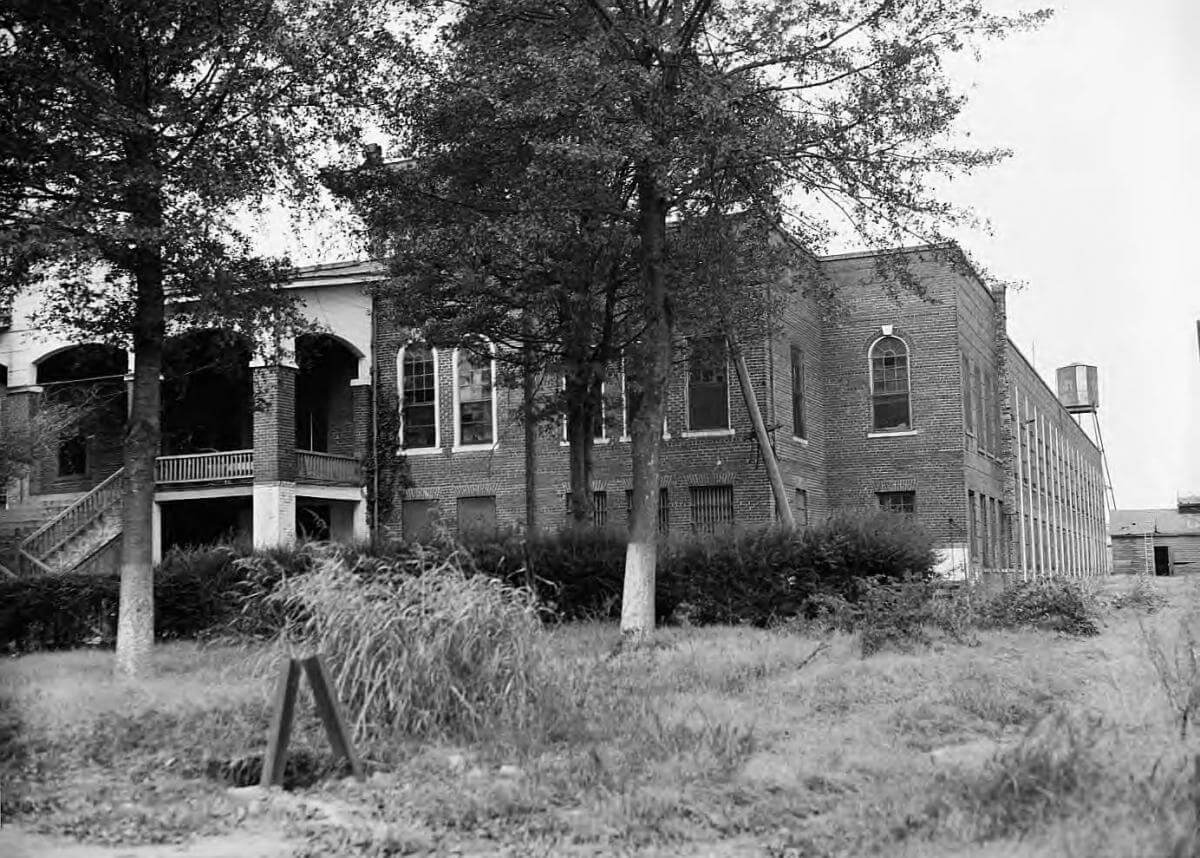
Milledgeville and Tattnall Prisons, Georgia State Prison Farm, Milledgeville, Georgia., 1940. Photograph by Lane Brothers Commercial Photographers. Courtesy of Georgia State University Library, Photographic Collection, Special Collections and Archives, Lane Brothers Commercial Photographers Photographic Collection, 1920-1976, digitalcollections.library.gsu.edu/cdm/ref/collection/lane/id/4891.
Equally intriguing is Haley's examination of a clemency petition involving Martha Gault, a white woman charged and convicted in 1923 of assault with the intent to murder. Gault and a male accomplice had stolen a car and brutally beaten the driver, "a deliberate and wanton offense" so grave the judge believed it was "impossible for the human intelligence to entertain any idea of clemency or even leniency after reading the record in this case" (21). Two years into her sentence, Gault petitioned for clemency on the grounds of her transformed character. A victim of her environment, particularly the bad influence of an older man, Gault had been rehabilitated and in the words of prison officials could make "a splendid woman and good citizen" (22). Again, Haley relies on photography to help us understand the racial logics of normative womanhood in the white Georgia imagination. She demonstrates how the presence of white women in Milledgeville destabilized gender categories and created moments of crisis in the state's efforts of racial and gender control.
While the photograph accompanying Eliza Cobb's clemency papers presents her as lacking the "essential traits of personhood and normative femininity," the photograph attached to Martha Gault's papers presents an image of "unassailable femininity."
"Her likeness," Haley notes, "is clear, and her smile is apparent. The partial figure of a companion situated her sentimentality within the realm of feminine friendships and her proximity to a pet reinforced, through distinction, Gault's humanity. Although the photograph was taken at the state farm, the shot makes it difficult to ascertain whether she is inside or outside of the prison, an ambiguity that signaled her fitness for freedom" (22). Fusing the narratives of Gault and Cobb, Haley addresses the racial logic of gender construction, specifically how Cobb's deviant body was required to "make Martha Gault's idealized body real, to give it political, cultural, and social meaning" (23). Here lies one of No Mercy Here's most important interventions: the illumination of carceral institutions as central sites for the making of New South gender identities.
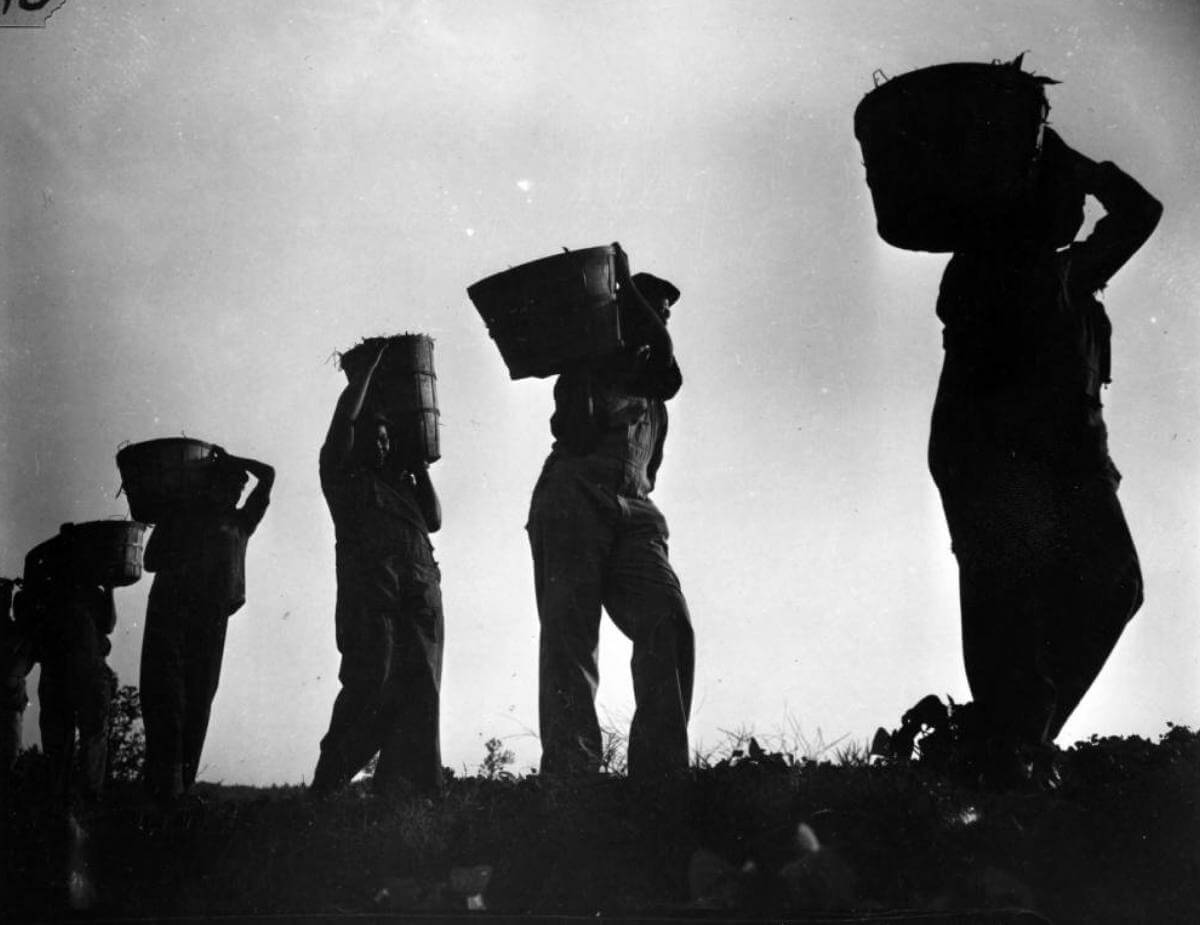
African-American women carry hampers of beans, Georgia's prisons, Georgia, November 3, 1940. Copyright Atlanta-Journal Constitution. Courtesy of Georgia State University Library, Photographic Collection, Special Collections and Archives, Atlanta Journal-Constitution Photographic Archives, digitalcollections.library.gsu.edu/cdm/ref/collection/ajc/id/611/rec/53.
Turning to the brutality of Georgia's penal system, Haley depicts the physical and mental anguish inflicted upon black female convicts and their families. Drawing upon Spillers, Saidiya Hartman, and Angela Davis, she depicts the southern convict camp as a theater of black female abjection, "part of an archipelago of pornotropical sites in which black female bodies were rendered flesh for the production of value: the ideological value of the continued relegation of black people to things and, inextricably, carceral value for southern racial capital through the use of such objects for labor" (87). Rituals of torture against African American women enacted a spectacle of daily violence that haunted black female convicts. Haley also tackles the silence of the archives as representing the "likely belief among black women that they had no claims to femininity that would legitimize assertions of rape" (104). Although prison records provide numerous instances of African American women giving birth to children conceived during their imprisonment, Haley finds no record of a prison guard being investigated for the sexual violation of convicts.
No Mercy Here builds upon and expands insights of convict lease scholars such as Mary Ellen Curtin, David Oshinsky, Talitha LeFlouria, and Alex Lichtenstein. Haley's work also complements that of Khalil Muhammad, Cheryl Hicks, and Kali Gross, who have documented how African American activists and reformers grappled with state-sanctioned punishment in the Progressive Era. Her analysis of the criticisms of convict leasing put forth by Selena Sloan Butler and Mary Church Terrell reminds us that powerful rebuttals of state violence emanated from African American women, who far too often are discussed only in terms of respectability politics and uplift strategies. Haley details how Butler (The Chain-Gang System) condemned the South as an antimodern state formation, rescued African American women from the margins of criminal discourse on punishment, and pushed the National Association of Colored Women to confront the brutalization of black convicts.
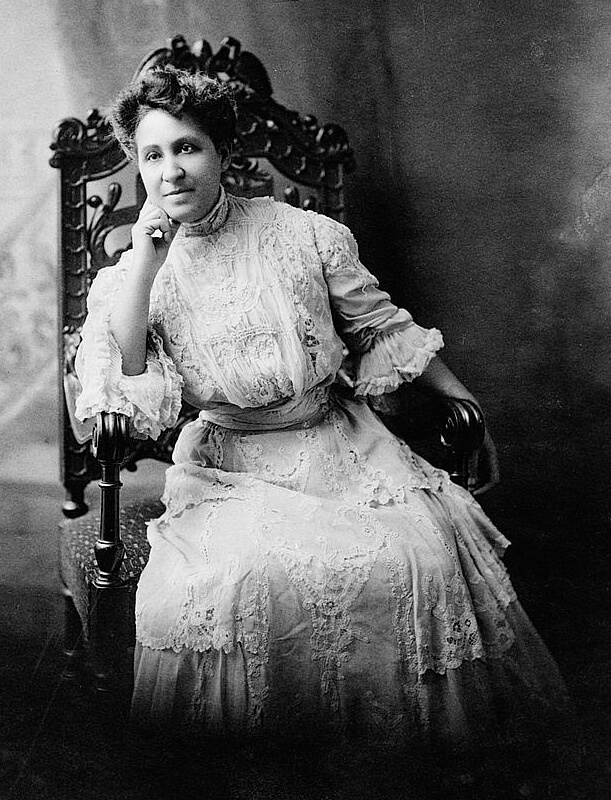
Mary Church Terrell, three-quarter length portrait, seated, facing front, ca. 1880–1900. Photograph. Courtesy of the Library of Congress, Prints and Photographs Division, loc.gov/resource/cph.3b47842.
Equally impressive was the intellectual work of Mary Church Terrell, who in 1907 published "Peonage in the United States: The Convict Lease System and Chain Gangs," one of the most thorough critiques of the system. Anticipating scholars who would treat convict leasing as slavery by another name, Terrell's essay provides a powerful critique of African American female criminalization, positions the chain gang system as a form of debt peonage, and highlights the deep relationship between the carceral regime and economic oppression. Haley also delves into the work of white Progressive Rebecca Latimer Felton. In contrast with Terrell and Sloan, Felton viewed African American women as an inherently and irredeemably deviant group that, like African American men, posed an "all-consuming threat to the white supremacist moral fabric of southern life, including white femininity and womanhood" (151).
No Mercy Here provides a rare portrait of black women's experiences in the parole system, which the Georgia General Assembly established in 1908. Private companies and individuals could conscript recently paroled African Americans to work for at least one year, even if they had served their minimum sentence. Under parole, "black women were forced to labor as domestic workers for white families, giving new meaning to the concept of the prison of the home. They were subject to constant surveillance and the threat of return to the prison camp for any transgression; private individuals, many of whom were now white women, continued to serve as police and warders" (158). This new situation of black women's servitude "differentiated them from men but did not place them closer to normative femininity, since the relation of servant to employer also worked to expose black women's difference from the white women for whom they worked" (176). In this context, Haley discusses how the inclusion of black women on the chain gang, a Progressive penal "reform," also contributed to the codification of women as white. Though the General Assembly stipulated that the chain gangs were for men only, more than two thousand black women were sentenced to this form of hard labor.

Top, Cover to the album compilation Jailhouse Blues featuring artwork by Romare Bearden, Mississippi Department of Archives and History, Rosetta Records, 1987. Bottom, Portrait of Bessie Smith, February 3, 1936. Photograph by Carl Van Vechten. Courtesy of the Library of Congress, Prints and Photographs Division, loc.gov/item/2004663572.
Extending the work of Clyde Woods, Angela Davis, and Ted Gioia, the concluding chapter of No Mercy Here illuminates the blues as an archival source for African Americans' critique of the US carceral regime. "Blues creations," Haley argues, "render an imaginative world of carceral dismantling, not by merely recounting the terror of gendered regimes of imprisonment but by challenging the very foundations of ideologies justifying carceral control" (214). Through music from Bessie Smith, Victoria Spivey, and Herbert Halpert's 1939's Women's A Capella Songs from the Parchman Penitentary5Various artists, Mississippi Department of Archives and History presents Jailhouse Blues: Women's a cappella songs from the Parchman Penitentiary Library Of Congress field recordings, 1936 and 1939. Rosetta Records RR1316, 1987, vinyl., she demonstrates how black women blues artists contested a principal claim of Western liberalism: "the ability to govern through universal tenets of reasonability and the legitimacy of legal actors' decisions and actions" (217). Black women destabilized hegemonic categories of crime and forged codes for living and navigating Jim Crow America. The blues became a vehicle through which "black women protected themselves from negative perceptions by constructing and disseminating a nuanced image of themselves as simultaneously sexual and spiritual, dangerous and vulnerable, heartbroken and strong" (243).
Critiquing the limits of reform discourse, Sarah Haley shows how historical writing can inform as well move us, taking literary risks and imaginative leaps to find meaning in the seeming silences of the archives.
About the Author
Claudrena N. Harold is an associate professor of African American and African Studies and History at the University of Virginia. In 2007, she published her first book, The Rise and Fall of the Garvey Movement in the Urban South, 1918–1942 (New York: Routledge, 2007). In 2013, the University of Virginia Press published The Punitive Turn: New Approaches to Race and Incarceration (Charlottesville: University of Virginia Press, 2013), a volume Harold coedited with Deborah E. McDowell and Juan Battle. Her latest book is New Negro Politics in the Jim Crow South (Athens: University of Georgia Press, 2016).
]]>Introduction
Thomas Mullen is the author of four novels, including The Last Town On Earth (2006), which received the James Fenimore Cooper Prize and was recognized by USA Today as the best debut novel of the year. Mullen's books are notable for the range and variety of their historical settings and influences. Last Town on Earth is set in a mill town in the Pacific Northwest during the 1918 flu epidemic. The Many Deaths of the Firefly Brothers (2010) is a Depression-era story following two brothers who gain notoriety due to their bank-robbing exploits. Even his novel The Revisionists (2011), although set in a dystopian future, examines historical agency.
Mullen's newest book, Darktown (2016), is set in the racially polarized, crime-ridden underworld of Atlanta in 1948. The city is on the cusp of a civil rights movement that will transform it politically, socially, and spatially. By following the travails of two African American policemen who were among the first men to desegregate the Atlanta police force, Mullen's novel offers an original perspective on the city's history.
Mullen, a resident of Decatur, Georgia for nearly a decade, came upon this episode in Atlanta's history while researching a magazine article. In this exclusive Southern Spaces interview, he speaks with Joseph Crespino about the sources that informed his fiction, the history that underlies Darktown, and the uses of history and fiction in understanding place and time.
Interview
About the Interviewer
Joseph Crespino is Jimmy Carter Professor of American History at Emory University, specializing in southern history since Reconstruction. He is the author of Strom Thurmond's America (New York: Hill & Wang, 2012) and In Search of Another Country: Mississippi and the Conservative Counterrevolution (Princeton, NJ: Princeton UP, 2007) and co-editor, with Matthew Lassiter, of The Myth of Southern Exceptionalism (Oxford: Oxford University Press, 2010).
]]>Review
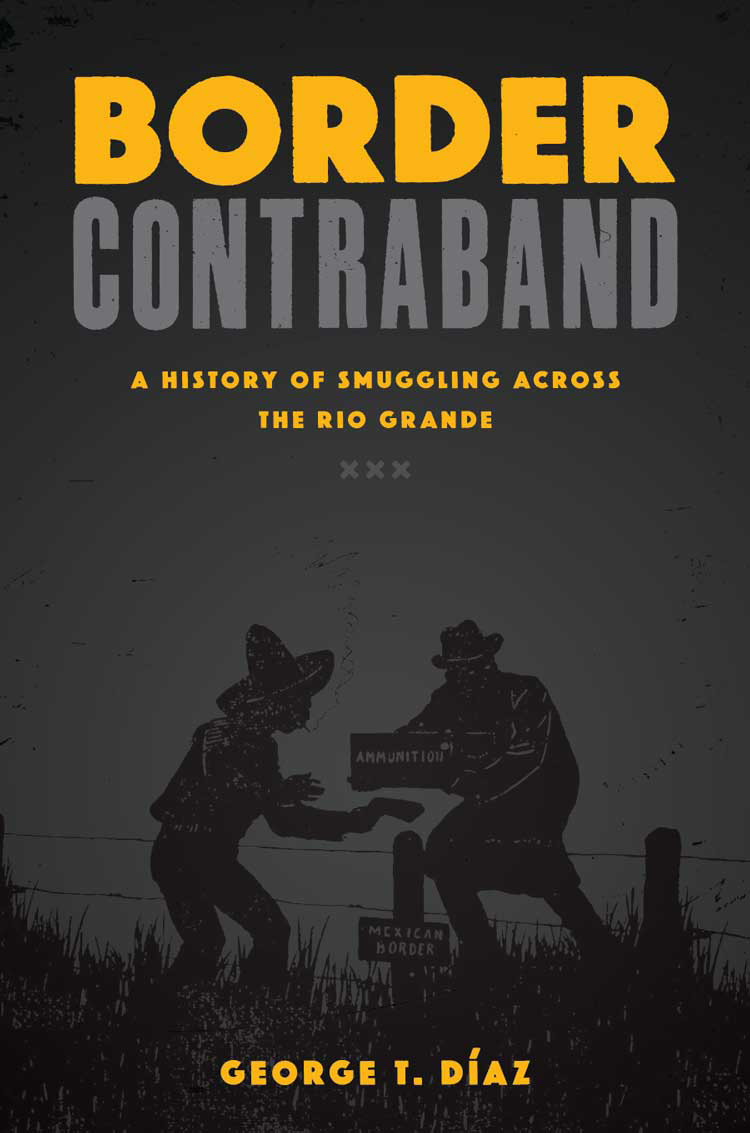
In Border Contraband: A History of Smuggling across the Rio Grande, George T. Díaz addresses the US-Mexico borderland's tawdry reputation, recently refueled by unsubstantiated stories about cocaine packed into infant corpses and live human organ trafficking (141–144). Díaz, who teaches at the University of Texas Rio Grande Valley, calls this the "black legend" of the border. These grotesqueries are part of a popular narrative about the most recent drug war in Mexico, which on its surface appears to be driven by mindless violence. From a historical perspective, however, the drug war in Mexico displays the predictable symptoms of previous drug wars from Southeast Asia to Colombia, including law enforcement's preoccupation with "kingpins," a strong government preference for criminal justice and military responses, and an underlying and seemingly tireless US obsession with psychoactive substances.1Alfred McCoy identifies five distinct drug wars since Richard Nixon's inauguration of the "War on Drugs" in the late '60s and early '70s in Alfred McCoy, The Politics of Heroin: CIA Complicity in the Global Drug Trade, Afghanistan, Southeast Asia, Central America, Colombia (Chicago: Chicago Review Press, 2003), 387–460. Kathleen Frydl thinks the drug war started earlier, in conjunction with the Cold War in the '40s and '50s, and traces the preoccupation with "kingpins" to domineering figures like Harry Anslinger, the director of the Federal Bureau of Narcotics from 1930–1962 in Kathleen Frydl, The Drug Wars in America, 1940–1973 (New York: Cambridge University Press, 2013), 59–119. In the very interesting case of marijuana prohibition, Isaac Campos makes the convincing argument that Mexican elites actually beat the United States to the punch by regulating it first, though typically U.S. politicians, reformers, and society at large have been unusually concerned about mind-altering substances compared to other nations. See Isaac Campos, Home Grown: Marijuana and the Origins of Mexico's War on Drugs (Chapel Hill: The University of North Carolina Press, 2014), 203–223.
In light of all this mayhem and confusion, Díaz draws on a rich variety of sources to make a most important point about the longer history of contraband: non-violent amateurs have been responsible for the majority of smuggling across the US-Mexico border. Further, most contraband consists of consumer goods, not illegal drugs. Smugglers tend to be regular people seeking to avoid taxes and tariffs on clothing, electronics, fruits, and vegetables. Díaz goes so far as to refer to these border transgressors as a "contrabandista community" (2), united in their unwillingness to pay extra for common merchandise to fill the coffers of US and Mexican treasuries.
![Los charros contrabandistas, Juego de dados [The cowboy smugglers, Dice game], ca. 1890–1910. Etching by José Guadalupe Posada. Courtesy of the Library of Congress Prints and Photographs Division, loc.gov/pictures/resource/ppmsc.03448.](https://southernspaces.ecdsdev.org/wp-content/uploads/2019/07/alvarez-002-contrabandistas.jpg "Los charros contrabandistas, Juego de dados [The cowboy smugglers, Dice game], ca. 1890–1910. Etching by José Guadalupe Posada. Courtesy of the Library of Congress Prints and Photographs Division, loc.gov/pictures/resource/ppmsc.03448.")
In the late nineteenth century, before either the US or Mexican government began policing drugs in earnest, most smuggling was banal and low stakes. There were women who concealed lace, kid gloves, and silk hose under their garments to avoid taxes (51), men who smuggled rawhides (33), and a young boy caught by US Customs agents for trying to bring across undeclared doilies, napkins, and handkerchiefs (52). Even Mariano Reséndez—lionized in Mexican folk ballads as one of the few nineteenth-century smugglers to raise his gun against government agents—mainly smuggled calico (51).
Los Alegres de Terán, a Norteño singing duo, perform a version of the popular corrido "Mariano Reséndez." Screenshot by Southern Spaces, June 7, 2016.
Díaz unearths dozens of similar examples from historical archives in Texas, Mexico, and Washington. Beneath them all lies a deeper reality—local people decided for themselves what laws were just and what laws were unjust, and behaved accordingly. In Díaz's analysis, this is how most smuggling worked, and in many ways this is how it still works. Sometimes border people felt they should not have to pay extra for ordinary goods that were so close at hand, and sometimes they objected to how the tariffs were spent by the US or Mexican governments (29).
Certainly, not all smugglers were accepted as part of the "moral community" of border people. Some worked intentionally to evade criminal sanction, not revenue collection. Cattle rustlers in the late nineteenth century, along with bootleggers and drug runners of the 1920s and later, often met with sharp and widespread disapproval in border societies (22, 41, 113–114). There are critical distinctions, as Díaz notes, between amateur smuggling and professional trafficking, non-violent and violent smugglers. He implies that "crime" is a meaningful category of analysis only within a political and juridical context. What counts as criminal activity changes over time, depending on a government's interest or willingness to police or prohibit.2The best examination of this concept I've found is in Eric Monkkonen's history of police, which stands to this day as one of the most sophisticated historical studies of law enforcement in the U.S. See Eric H. Monkkonen, Police in Urban America, 1860–1920 (New York: Cambridge University Press, 1981). Nevertheless, Díaz also adopts many of the categories and characterizations of "criminality" generated by government policing agencies.3The historian Paul Gootenberg calls this "talking like a state," which he believes can be an intellectual and political pitfall because it can obscure the fact that criminality itself is always politically and culturally constructed. See Paul Gootenberg, "Talking About the Flow: Drugs, Borders, and the Discourse of Drug Control," Cultural Critique, no. 71 (2009), 13.
![A sign at the humble ferry station for the hand-pulled Los Ebanos Ferry or El Chalan [...] that travels across the Rio Grande River, Los Ebanos, Texas, March 3, 2014. Photograph by Carol M. Highsmith. Courtesy of the Library of Congress Prints and Photographs Division, loc.gov/pictures/resource/highsm.27608/.](https://southernspaces.ecdsdev.org/wp-content/uploads/2019/07/alvarez-005-riosign.jpg "A sign at the humble ferry station for the hand-pulled Los Ebanos Ferry or El Chalan [...] that travels across the Rio Grande River, Los Ebanos, Texas, March 3, 2014. Photograph by Carol M. Highsmith. Courtesy of the Library of Congress Prints and Photographs Division, loc.gov/pictures/resource/highsm.27608/.")
What if we were to assess "criminality" along the same lines as the smuggling of consumer goods? In other words, as behavior generated by the notion that some laws are unjust and should be resisted? How should we understand the points of overlap between social mores and government proscription, and how should we understand the ways in which they do not converge? These questions require a nuanced definition of the "state," which Díaz does not supply. Like many authors, he uses "state" as a relatively interchangeable term that can refer to law enforcement organizations, federal and local governments, federal bureaucracies, and to the manifestation of the unified "will" of "the United States" or "Mexico," as if the nation-state itself could embody desire and aspiration. He describes how some smugglers posed a "threat" to the state and "national security" (45, 113), and makes several references to the "power" of the state without considering the underpinnings of such assertions (82, 103).
The questions of what exactly constitutes the "state," where its power resides, and how that power is expressed are particularly relevant in the study of black markets along international borders. There is a robust and growing literature that understands the "state" as simultaneously holding a monopoly on the legitimate use of force and as a heterogeneous constellation of bureaucracies and agencies that often work at cross-purposes and even in opposition to one another.4Building on Michael Mann's work, William Novak has helped elucidate the difference between "strong" and "weak" states. See William J. Novak, "The Myth of the 'Weak' American State," American Historical Review 113, no. 3 (2008) and Michael Mann, The Sources of Social Power: The Rise of Classes and Nation States, 1760–1914 (New York: Cambridge University Press, 1993). Several other key texts, both old and new, engage directly with the problem of state capacity and expansion. See Stephen Skowronek, Building a New American State: The Expansion of National Administrative Capacities, 1877–1920 (New York: Cambridge University Press, 1982), Charles Maier, Leviathan 2.0: Inventing Modern Statehood (Cambridge, MA: The Belknap Press of Harvard University Press, 2012), and James Sparrow, Warfare State: World War II Americans and the Age of Big Government (New York: Oxford University Press, 2013). For the Mexican side of the equation, see Alan Knight, "The Modern Mexican State: Theory and Practice," in The Other Mirror: Grand Theory through the Lens of Latin America, ed. Miguel Angel Centeno and Fernando López-Alves (Princeton, NJ: Princeton University Press, 2000). These works tend to ignore the border, and histories of the border tend to ignore this kind of political theory, to the detriment of both bodies of scholarship.
One of Díaz's strengths lies in his sensitivity to local color. Geography matters to him, and to the subjects he writes about. Most of the examples in Border Contraband come from Texas, an unusual state that began in early modernity as a fringe province on the edges of the vast Spanish empire, was transformed into a Mexican state during the age of revolution, converted once again to a secessionist stronghold as an "independent" republic, annexed as a slave state of the rebel South, and finally incorporated into the restored Union. All the while, the area most people think of as "Texas" was home to Comanches, Kiowas, Apaches, and other indigenous peoples. Their histories overlap and compete with the grand political narrative.5See Pekka Hämäläinen, The Comanche Empire (New Haven, CT: Yale University Press, 2009).
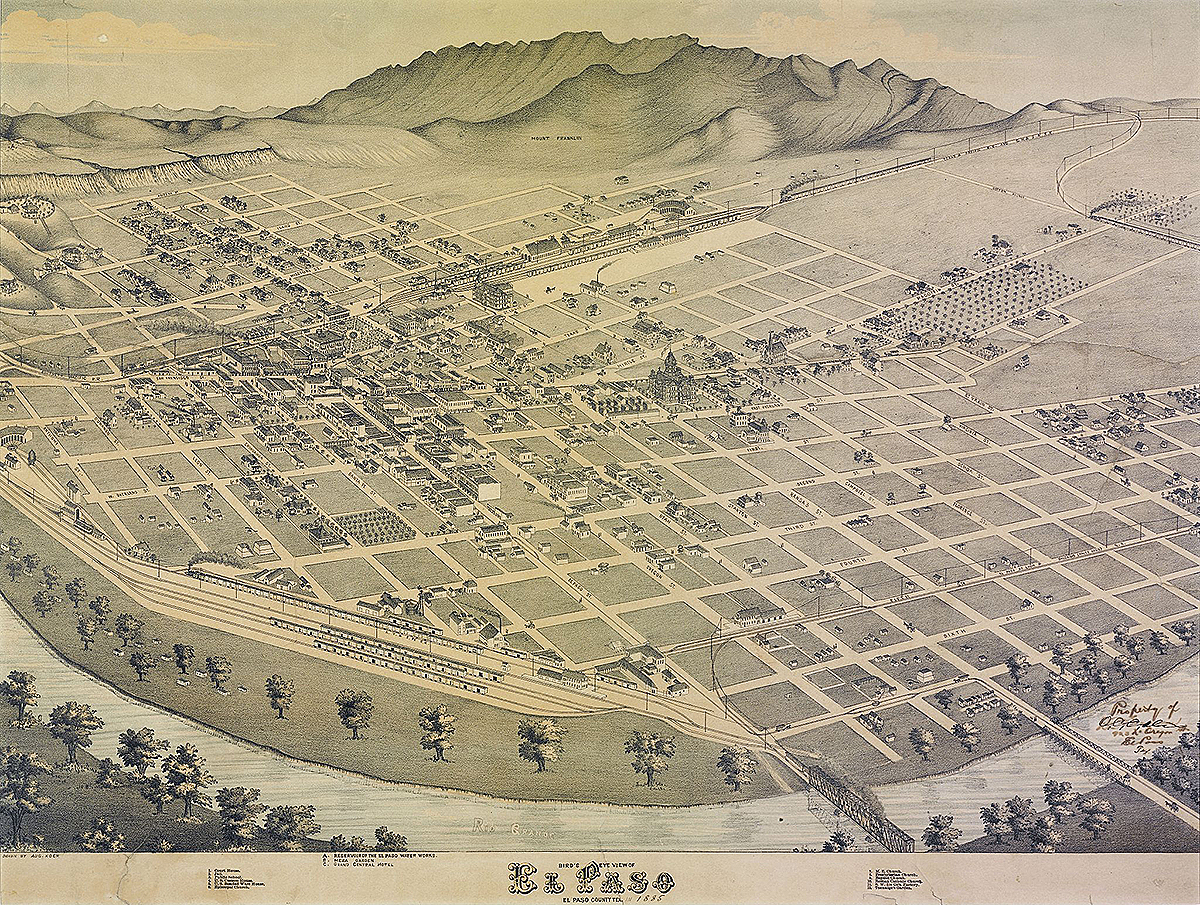
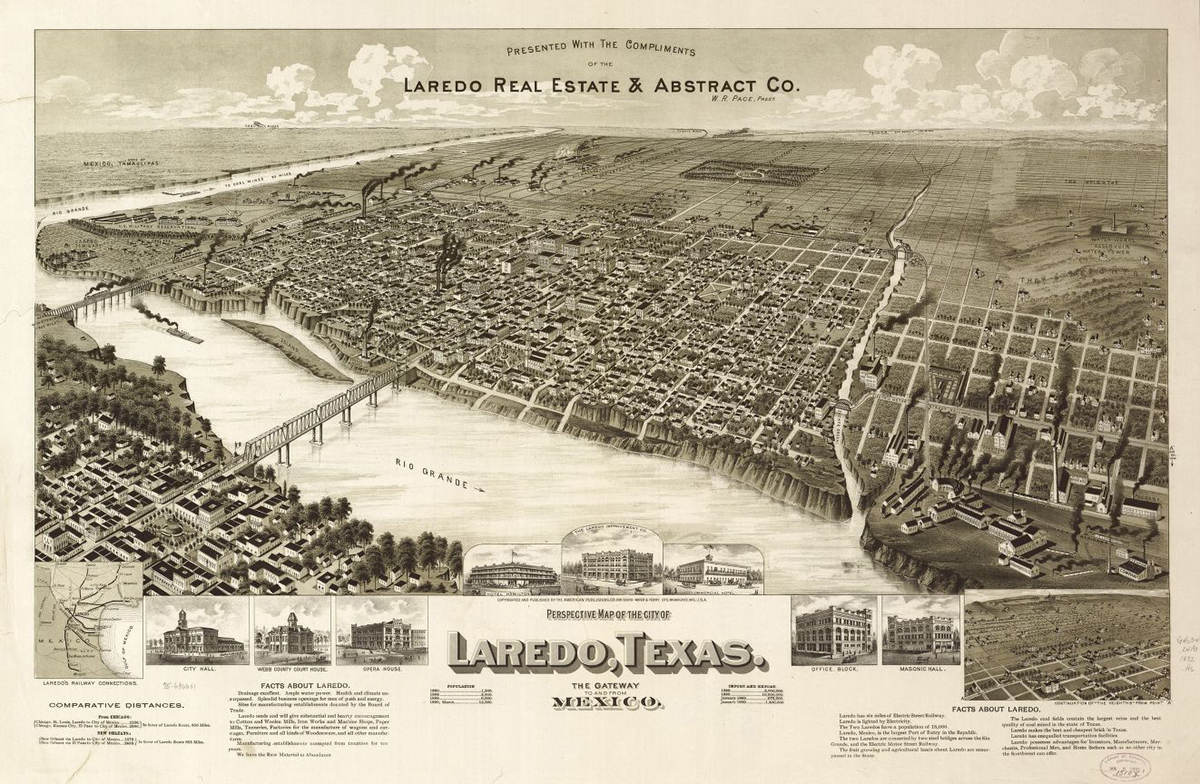
Every phase of this circuitous history reveals the extent to which Texas is embedded in continent-wide and global processes. Ever since railroads fused the two nations in the late nineteenth century, a significant percentage of US-Mexico trade passes through the mega-ports of El Paso and Laredo. This incessant pulse of capital circulation, worth hundreds of billions of dollars a year, forms the backbone of the US-Mexico economic colossus. By examining the transshipment of oil and gas, light and heavy manufacturing, and agribusiness, we can begin to see a nexus that stretches out to touch nearly every part of US and Mexican territory and society. Contraband is an inevitable, irrepressible, and "normal" feature of this complex economic interdependence. Police attempts to facilitate legal business while trying to surgically excise illicit trade not only miss the point of the larger system logic, but tend to increase the professionalism and violence of criminal syndicates. Díaz shows us the historical roots of this phenomenon (39, 93, 114).
Despite the deep interconnectedness of the United States and Mexico, as well as the major political and social questions this interdependence engenders, narratives of US-Mexico relations have yet to become required reading among American intellectuals.6Journalists like Alma Guillermoprieto, Laura Carlsen, Francisco Goldman, Alfredo Corchado, and others have been working tirelessly to address this problem by writing excellent articles in the New York Review of Books, The New Yorker, The Nation, and elsewhere. Books like Border Contraband can help correct this myopia by reminding us that black markets do not exist outside the "state," but rather in symbiotic relation to it. We can go further by joining the empirical expertise of historians like Díaz to conceptual analyses of state power, advanced capitalism, and criminal justice in order to better understand the world we live in today.7Saskia Sassen has written a particularly provocative book using the logic of "expulsion" to understand the vicissitudes of the current mode of globalization, and David Garland makes a compelling argument about the rise of what he calls "expressive justice" since the 1980s. Both these works could work symbiotically with books like Border Contraband to generate more precise answers to today's most important questions. See Saskia Sassen, Expulsions: Brutality and Complexity in the Global Economy (Cambridge, MA: The Belknap Press of Harvard University Press, 2014) and David Garland, The Culture of Control: Crime and Social Order in Contemporary Society (Chicago: University of Chicago Press, 2001).
About the Author
C.J. Alvarez is assistant professor in the department of Mexican American and Latina/o Studies at the University of Texas at Austin and an affiliate of the Teresa Lozano Long Institute of Latin American Studies and the Center for Mexican American Studies.
]]>Review
"Lynching of Negroes is growing to be a southern pastime," declared the Reverend D. A. Graham of the A.M.E. church in a sermon preached in Indianapolis, Indiana, as part of a nationwide protest against the practice, organized by the National Afro-American Council in 1899.1Rev. D. A. Graham, "Some Facts About Southern Lynching," Indianapolis Recorder, June 10, 1899, reprinted on BlackPast.Org: An Online Reference Guide to African American History, accessed October 9, 2013, http://www.blackpast.org/1899-reverend-d-graham-some-facts-about-southern-lynchings. In the late nineteenth century and through the twentieth century, Rev. Graham's perception of lynching as a southern problem was a common one. After all, the overwhelming majority of the over five thousand lynchings in this period happened in the states of the former Confederacy, where terror served to enforce legalized segregation and disenfranchisement and lynching stood as the most visible and brutal signifier of Jim Crow apartheid. For these reasons, when historians began writing the history of this violence in the 1970s and 1980s, they focused their attention on its causes and effects in the South.
 |
More recently, historians have come to reconsider this sectional focus, as it gives the impression that lynching was a uniquely southern practice. In fact, lynchings happened in almost every state in the nation. (Graham's quote notwithstanding, many observers at the time recognized this; civil rights activist Ida B. Wells, for instance, called lynching not a southern, but a national pastime).2Ida B. Wells, "Lynch Law in America," January 1900, accessed October 9, 2013, http://www.blackpast.org/1900-ida-b-wells-lynch-law-america. Some scholars, myself included, have studied lynching as part of a wider national consciousness through its representation in popular culture or the work of nationally-situated writers and activists. Others, as exemplified in Lynching Beyond Dixie, have researched lynching outside the South. Historians of the West have long studied vigilantism, but new scholarship on lynching draws connections between the "rough justice" of the West and other areas and southern lynchings in the Jim Crow era in part to challenge the notion that southern lynchings were categorically distinct from other vigilante practices. An emphasis on this widespread practice beyond the US South was critical to Michael Pfeifer's previous two books on lynching, and remains central in this new edited volume.
This comparative approach that examines lynching across sectional boundaries is a welcome addition. The ten essays that comprise Lynching Beyond Dixie examine lynching practices, as well as acts of resistance in the West, the Midwest, and the Northeast. This approach makes a worthy contribution to a broader historiography that seeks to undermine "the myth of southern exceptionalism," or the notion that the history of the South stands separate from that of the rest of the nation, its values disconnected from American ideals.3See, for example, Matthew D. Lassiter and Joseph Crespino, eds., The Myth of Southern Exceptionalism (New York: Oxford University Press, 2009). It is through this myth that non-southerners have projected national sins, particularly racial sins, upon the South. As Brent Campney notes in his essay on Reconstruction-era violence in Kansas, if non-southerners "inflicted less violence" in the aggregate than southerners, "they did not do so because their racism was "less deep" but because conditions differed so greatly between the sections" (101).
Lynching Beyond Dixie also has the laudable effect of bringing otherwise forgotten lives back into the historical narrative. True, the vast majority of lynching victims were southerners, but, as Sundiata Keita Cha-Jua notes in his addition to the collection, while only three percent of African Americans were lynched outside the South, "that three percent mattered" (169); as did the lives of the hundreds of Mexicans, Native Americans, Chinese, and whites who were lynched across the country. In his essay on race riots in Springfield, Ohio, Jack S. Blocker points out that from the perspective of African Americans, life was no less dangerous outside the South, since violence tended to occur in proportion to population size.
Yet, if the goal of Lynching Beyond Dixie is to challenge the distinctiveness of southern lynchings or, as Pfeifer writes, to "compel us to rethink the geography, chronology, and social relations" of lynching practices (7), it does not quite succeed. The best essays examine lynchings and responses to lynchings outside the South, not to obscure geographic (or chronological) boundaries, but to demarcate and comprehend them. What we learn is how much the practice of lynching and its effects were bound by space and place, as Campney's quote makes clear. Campney's finely-crafted essay explores Reconstruction-era racial violence in Kansas to overturn presumptions that a relative degree of interracial harmony existed there after the Civil War. That illusion of harmony was due to the influence of the state's Radical Republicans, who called for black social and legal equality out of principle or, in the case of moderates, out of a pragmatic adjustment to social reality and law. Campney, however, examines incidents of racist violence after the Civil War that reveal the attitudes of a "great mass of silenced white Kansans" (83)—a silent majority. He, importantly, shifts our conception of Reconstruction away from a series of bloody events confined to the South. Yet, his essay also shows the political forces that made those Kansans "silenced" compared to their counterparts in the South. Similarly, William Carrigan and Clive Webb's essay on the lynching of Mexicans in Arizona explores the reasons why lynching in that state ended after a 1915 lynching of two Mexican outlaws. That particular lynching spurred a strong reaction from political authorities concerned about the credibility of their new state with the rest of the nation and with business investors. Both essays underscore how drastically conditions in these two states differed from those in the South.
Two essays provide interesting case studies of local African American activism against lynching, a vastly understudied topic. Cha-Jua's offers an illuminating account of local black resistance to an 1893 lynching in Decatur, Illinois. Dennis Downey examines local responses to a 1903 lynching in Wilmington, Delaware, of a black laborer, George White, accused of assaulting a young white woman. Specifically, the lynching spurred African Americans in the city to stage a public protest led by the minister and activist Montrose W. Thornton. These essays bring to light stories of black empowerment and allow the reader to glimpse ways in which acts of protest influenced national civil rights activities. Yet, again, these essays ultimately reinforce sectional differences. Scholars of southern lynchings have found a dearth of successful public black protests in the South, not because they have not looked for them, but because the repercussions for African Americans who acted openly against lynching in the South were swift and brutal. The essays beg us to consider the conditions in northern localities that allowed protests to occur. Racial animosity might have been as deep outside the South, and certainly many citizens had equal desires for "rough justice," but countervailing forces existed in many of these non-southern states to mitigate the effects of that animosity and propensity for vengeance. Pfeifer shows as much in his essay on lynching in Michigan, where only seven people were lynched in the history of the state, due to both the "preponderance of Yankee settlers" who were more likely to reject vigilantism and accept racial equality, and the relative paucity of immigrants from the South. Ultimately, Lynching Beyond Dixie, including Pfeifer's own essay, reinforces the very geographical distinctions it was meant to challenge.
Considering this implicit conclusion, the accusatory tone in Pfeifer's introduction and in some of the essays is puzzling. In making the case for the significance of his approach, Pfeifer dismisses the value of other approaches to the topic—an unfortunate, but all too common, academic habit. In particular, Pfeifer discredits any study that takes neither a national or a comparative view as lacking and reproaches those scholars who have focused on southern lynchings for their "parochialism" (2), as if there were not legitimate reasons to study southern lynchings, many of which become apparent in reading the volume. Even more unfortunate is Cha-Jua's claim that those who have not addressed the topic of his essay—local black collective resistance to racial violence—are guilty of racism and "academic lynching" (166). Scholars of national anti-lynching efforts or other, less visible, forms of black resistance are no less guilty of this crime, in his view. This sort of scholarly one-upmanship should have been edited out.
 |
The second book under review here, Swift to Wrath, pairs well with Lynching Beyond Dixie, as it expands the study of lynching even farther, taking it not just out of the South, but beyond US borders. (The collection is the second in the last two years to take a global perspective, a recent trend in the field.)4Manfred Berg and Simon Wendt, eds. Globalizing Lynching History: Vigilantism and Extralegal Punishment from an International Perspective (New York: Palgrave MacMillan, 2011). Rather than challenge the exceptionalism of southern lynching, the editors of this collection, William Carrigan and Christopher Waldrep, two esteemed and prolific scholars in the field, want to "refute the popular notion" that lynching was "unique or exceptional to the United States" (1). Yet, as with Lynching Beyond Dixie, the collection undermines its own goal. The first section of the volume consists of five essays on various practices of collective violence that stretch geographically and chronologically from the ancient Near East to Europe in the sixteenth and seventeenth centuries to Northern Ireland in the 1970s and 1980s. Another essay, by Joël Michel, surveys various forms of collective violence in France and its colonies from the nineteenth century forward, offering various comparisons to US violence. Carrigan's contribution with co-author Clive Webb on the decline of mob violence against Mexicans in New Mexico, though a strong essay that presents a similar argument to that made in Lynching Beyond Dixie, seems out of place here. The editors do not claim that these essays provide comprehensive coverage of the topic, nor should they, but the selection of topics in this section feels somewhat disjointed and random.
I am also not convinced that it is conventional wisdom that mob violence is unique to the United States. That acts of vengeance, vigilantism, witch hunting, and other forms of collective, extra-legal violence have long histories in many cultures around the globe is surely well-known. Instead, scholars have posited that the term "lynching" was specific to the United States and has its own complicated history. As Waldrep has shown in previous work, in the United States, from the late eighteenth century through most of the nineteenth, lynching referred to acts of popular justice.5 Christopher Waldrep, The Many Faces of Judge Lynch: Extralegal Violence and Punishment in America (New York: Palgrave MacMillan, 2002). From the late nineteenth century to the present, however, lynching was primarily associated with mob violence aimed at controlling racial minorities, primarily African Americans, and it lost its positive connotations. In most of the essays in the first section of Swift to Wrath, titled "The Practice of Lynching: From the Ancient Middle East to Late Twentieth-Century Northern Ireland," the authors seem to impose the term "lynching" on various acts of mob violence throughout history, but it is not clear what is gained by doing so. This is particularly perplexing since another stated goal of the collection is to consider lynching as a discursive act. Precisely because the word "lynching" has a fraught history, as the editors are careful to point out, to label "a violent act a lynching is often a political act" (7). What does it mean, then, for these historians to use the term to discuss historical acts of violence that participants and observers at the time did not call "lynching"? This approach is also confounding, since, in their introduction, the editors warn against using the term "lynching" to describe all acts of mob violence, thereby erasing historical context and making claims for "a universal human behavior that can be objectively understood outside time and space" (7). Unfortunately, this section of Swift to Wrath falls into the trap the editors hoped to avoid by presenting a series of essays on collective violence that imply trans-historical, trans-geographical behaviors. Any comparisons that these essays draw to lynching in the United States that could highlight historical particularities remain underdeveloped.
 |
| An issue of Soviet magazine Bezbozhnik, depicting the lynching of an African American, 1930. Courtesy of Wikipedia. |
A more interesting question, which Michel's essay touches upon, is how the term "lynching" arrives in other societies, many of which use the word to describe certain acts of mob violence as a means to frame those acts politically. This is a question that Swift to Wrath takes up in its second section, which explores the discursive and representational uses of US lynchings in various contexts. The four essays in this section redeem the collection as a whole. Each is analytically sharp and nuanced, but together cohere to illuminate the wide ripple effects of lynching within and beyond US borders. Robert Zecker discusses the ways in which newspapers in Slovak immigrant communities in northern cities reported on mob violence against African Americans at the turn of the twentieth century. This coverage, which repeated the tropes and imagery of pro-lynching newspapers, schooled Slovaks in American racism, a process that furthered their Americanization and their self-conception as white citizens. Sarah Silkey provides a rich understanding of the ways in which lynching operated as a "flexible rhetorical construct" (161) in her essay on British responses to American lynchings. By conceiving of lynchings as barbaric acts of extra-legal violence—something that Americans do—British citizens were able to perceive of themselves as civilized, even as they used state violence to assert racial control over colonial subjects in Africa and India. Essays by Meredith Roman and Fumiko Sakashita examine Soviet and Japanese uses of US lynching in state propaganda during the 1930s and World War II. Both the Soviets and the Japanese, in condemning American lynchings, were able to deflect international attention from their own totalitarian abuses and imperial designs, positioning themselves as enlightened.
Notably, the foreign subjects in these essays make no real distinctions between geographies within the United States; once the coverage of lynching moves beyond US borders, "southern exceptionalism" recedes, and the goal of viewing lynching as a US rather than a southern phenomenon is achieved. Notably, "lynching" has been used to condemn acts of extralegal violence through its association with American racism. Swift to Wrath, a volume meant to move beyond a kind of US-centrism, ultimately places US racial violence at its center. Nevertheless, both these collections represent the most recent trends in the study of lynching, and, as such, they lay important groundwork and should spur further comparative studies, both within the United States and across the globe.
About the Author
Amy Louise Wood is an associate profesor of history at Illinois State University. She is the author of Lynching and Spectacle: Witnessing Racial Violence in America, 1890–1940 (Chapel Hill: University of North Carolina Press, 2009), which examines visual representations of lynching and the construction of white supremacy in the Jim Crow era. Lynching and Spectacle won the Lillian Smith Book Award and was a finalist for the Los Angeles Times Book Award in History. Wood was co-guest editor with Susan V. Donaldson of Mississippi Quarterly's 2008 "Special Issue on Lynching and American Culture," and the editor of the volume on violence for the New Encyclopedia of Southern Culture (Chapel Hill: University of North Carolina Press, 2011).
]]>Review
 |
| Rowan County Court House and Jail, Salisbury, North Carolina, circa 1905-1915. Courtesy of the Durwood Barbour Collection of North Carolina Postcards, North Carolina Collection, University of North Carolina at Chapel Hill. |
On an August evening in 1906, a white mob stormed the county jail in Salisbury, North Carolina, seeking six black prisoners indicted that day for the brutal murder of four members of a local white farming family, the Lyerlys. The judge overseeing the case had called in a local military company to protect the jail and restrain the mob, but the soldiers did little to prevent the raid, refusing to fire their guns. Once inside, the mob freed all the white prisoners, roughed up and "interrogated" the suspects, and then absconded with three of them—Jack Dillingham, Nease Gillespie, and his son John. They marched them to a field, hanged them from a tree, molested and tortured their bodies, and riddled them with bullets. It was the first triple lynching in the state since 1888, and the second lynching in Rowan County in just four years. In 1902, the county had drawn national attention when a mob lynched James and Harrison Gillespie (of the same Gillespie family), aged eleven and thirteen, for allegedly murdering a young white woman as she hoed corn on her family's farm. Troubled Ground is a captivating retelling of these brutal events and a judicious meditation on their larger significance for the history of racial violence in America.
 |
| Map showing Salisbury, North Carolina, 2012. |
So many local or case studies of Jim Crow-era lynchings have been published during the past twenty years, that they now comprise their own subgenre of the larger field of lynching studies. Their appeal is obvious: they recount dramatic stories of crime, revenge, and violence, set against the backdrop of the era's political and social turmoil. But they have a larger importance. Case studies provide corroboration for macro studies that attempt to generalize about lynching, its causes and effects. They bring much needed texture and intimacy to our understanding of racial violence. Moreover, they remind us of how much the practice of lynching was contingent upon local factors and the specificities of time and place. Every lynching or near-lynching played out and was responded to in a slightly different way, depending on the circumstances, the people involved, and the local and state political climate. Case studies also remind us of how similar lynchings were across time and geography. We find patterns—the composition of mobs, the rituals they engaged in, the rhetoric used to defend the violence, and the tragic resonance of the violence. Pieced together, these local studies provide a mosaic that illustrates the tragedy of lynching in this country. Up close, each story is unique and particular, but as we pull back, the larger picture emerges.
 |
| Cover of Troubled Ground: A Tale of Murder, Lynching, and Reckoning in the New South, 2010. |
Troubled Ground is an excellent addition to this subgenre. Beautifully narrated, it is rich in detail and nuance, while also attentive to the larger context surrounding the story. Its author, Claude Clegg, grew up in Rowan County, providing an added personal dimension. He was drawn to this story because neither he nor his parents knew anything of these lynchings, which had attracted national attention, despite the fact that his family had lived in the area for generations. A significant purpose of this book was to "excavate" (p. xv) this story from the "troubled ground" in which it had been buried and to restore it to public consciousness.
In telling these hometown stories as history, Clegg makes the case that Rowan County was an exceptional place, with "its own internal dynamics and unique history" (54), and a typical place, characterized by factors and patterns that made it fertile ground for racial violence. Throughout, Clegg emphasizes themes that illuminate the wider history of Jim Crow lynching. He reaffirms how the Rowan lynchings served to support the implementation of segregation and disenfranchisement at the turn of the century by creating an atmosphere of terror for local blacks and hardening the boundaries between whites and blacks. As other historians have done, Clegg also situates these lynchings within a process of modernization that was occurring in the county. Salisbury, the county seat, was a rural town, but, not unlike other localities in which lynchings occurred, it was undergoing a process of change into a "New South" city. In the late nineteenth century, the population had grown alongside new factories, mills, and other industrial businesses. The town experienced the development of new public works and utilities, restaurants and hotels, schools and churches. Replete with ambiguity and tension, Salisbury's urbanization did not preclude racial oppression.
 |
| Main Street, Salisbury, North Carolina, circa 1910. Courtesy of the Durwood Barbour Collection of North Carolina Postcards, North Carolina Collection, University of North Carolina at Chapel Hill. |
Clegg calls attention to the ways in which civic and political leaders were implicated in the practice of lynching. Through the complicity of these elites, the violence of lynching became "institutionalized" (p. xvi). He highlights the roles of New South politicians Charles Aycock and Robert Glenn, elected as Democratic governors in 1900 and 1904. Throughout, Clegg skillfully maneuvers between telling the stories of these lynchings as they were experienced by members of white and black communities, and from the top down—from the perspective of Aycock and Glenn. Both governors came to power by engaging in rabid pro-lynching race-baiting to stamp down the cross-racial alliances created by the Fusionists in North Carolina, the coalition between the Republican and Populists Parties that in previous elections had undermined Democratic hegemony. Once in power, Aycock and Glenn adopted progressive goals and sought to elicit northern investment into the state by making white supremacy respectable. This led them to decry the kinds of racial violence they had fomented when running for office. Clegg brings out the irony of this dynamic nicely as the public responses to the 1902 and 1906 lynchings played out in surprising ways that "amended the conventional lynching script" (137).
Although, here and there, Clegg might have credited his reliance upon other scholars more fully, he tells a suspenseful story while engaging in sharp analysis. Troubled Ground is a masterful work of local history.
Review
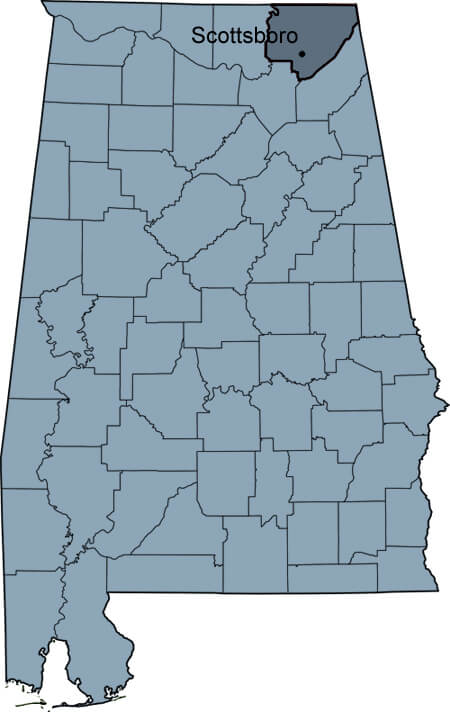 |
| Scottsboro, Alabama |
2011 marks the first public commemoration in Scottsboro of the anniversary of the arrests that irrevocably linked the town’s name with Jim Crow. The stories of the nine young black men riding through Alabama on the Depression-era rails from Chattanooga to Memphis in search of work are often obscured today and absent altogether from many high school textbooks. But nearly every major US newspaper covered the events of March 1931 in northeast Alabama. The news of successive Scottsboro trials reverberated globally, prompting demonstrations from Cape Town to Delhi. Then, nearly as suddenly, the cause dropped from view, displaced by a war to extend democratic rights the Scottsboro nine did not enjoy.
The nine young men falsely accused of rape—Haywood Patterson, Clarence Norris, Charley Weems, Olen Montgomery, Willie Roberson, Ozzie Powell, Eugene Williams, and brothers Andrew and Roy Wright—collectively served more than one hundred and thirty years in prison for a crime that did not occur. With a defense team led by the International Labor Defense (ILD), a close affiliate of the US Communist Party, in contentious association with the NAACP, the trials led to landmark Supreme Court decisions. Powell v. Alabama affirmed a defendent's right to competent counsel, and Norris v. Alabama challenged the exclusion of African Americans from jury pools.1Powell v. Alabama, 287 US 45 (1932); Norris v. Alabama, 294 US 587 (1935).
 |
| Carol M. Highsmith, Scottsboro Boys Museum and Cultural Center, Scottsboro, Alabama, 2010. Courtesy of the Library of Congress. |
The eightieth anniversary of the arrests brought an unlikely collection of people to Scottsboro: a federal district judge from Detroit; a Broadway producer; a high school teacher from Chicago; the local Jackson County, Alabama, Commission Chair; the state of Alabama’s tourism director; and nearly one hundred fifty more. Each person had a compelling reason for attending, their presence straining the capacity of a local courtroom and a nearby church. Their shared mission in Scottsboro: a commitment to remembrance, a belief that the injustice done the nine young men should not be forgotten. Moreover, as many expressed, remembering Scottsboro could promote racial healing today, still a pressing need.
The commemorative events centered on the Scottsboro Boys Museum and Cultural Center, a new museum that honors the nine defendants, housed in a former African American church. That the Center exists at all is due largely to the persistence of one extraordinary woman. Shelia Washington, who grew up in Scottsboro, had worked for this day ever since her father snatched a book she was reading out of her hand. The forbidden book: defendant Haywood Patterson’s Scottsboro Boy. Washington campaigned for more than seventeen years to build a suitable memorial to the Scottsboro Boys in her home town. In April 2010, the Scottsboro Multicultural Foundation secured a permanent home for the museum, the former Joyce Chapel United Methodist Church, whose congregation had dwindled. Just a few blocks from the city square, the two-thousand square foot brick sanctuary dates from the late nineteenth century. The wooden pews remain. The pastor’s study has become an office and a small annex off the nave now houses documents, memorabilia, and artifacts relating to the trials.
Punctuated by train whistles and the noise of freight cars rolling past—along the same route that carried the young men in search of work in 1931—compelling moments occurred throughout the commemorative day. At the Scottsboro courthouse, county commission chair Sadie Bias welcomed federal district court judge from Detroit, the Honorable Victoria A. Roberts, herself a pathbreaker as a federal judge and the first African American woman to lead the Michigan Bar Association. From the bench where segregationist Judge Alfred E. Hawkins issued the first convictions, Judge Roberts spoke movingly about the continued need for adequate legal counsel.
 |  | |
| Ellen Spears, Historian David Carter, Jane Carter, historian Dan Carter, and director Shelia Washington, Scottsboro, Alabama, 2011. | Ellen Spears, Aggie Kapelma announcing the donation of David Scribner's papers, Scottsboro, Alabama, 2011. |
New Yorker Aggie Kapelma presented the museum with documents revealing her father David Scribner’s role in a little known chapter of the Scottsboro story. Scribner was arrested after responding to a ruse designed to entrap the defense team. One of the accusers, Ruby Bates, had recanted her original testimony and had even spoken out at Scottsboro Boys’ defense rallies. Representatives of Victoria Price—who had also accused the nine of rape—enticed members of the defense team working with ILD attorney Samuel Leibowitz to meet with Price in Nashville, implying that she also might recant. Upon their arrival in Nashville, however, Scribner and another junior lawyer were arrested on charges of “attempted bribery,” Kapelma said. Extradited to Alabama to stand trial, the two men were later released.
Also present was Catherine Schreiber, one of the producers of the Broadway musical The Scottsboro Boys, which opened in October and ran until mid-December 2010. The production was simultaneously acclaimed (the play garnered Tony nominations in a dozen categories, including Best Musical) and critiqued as racist for presenting black actors in blackface and retelling the story through the vehicle of the minstrel show. “The actors actually deconstruct the [minstrel show] device in front of the audience, and in the end, rebel against it,” director Susan Stroman explained in response to Freedom Party protests outside New York’s Lyceum Theater during the run.2Patricia Cohen, “‘Scottsboro Boys’ is Focus of Protest,” New York Times, November 7, 2010, accessed May 26, 2011, http://artsbeat.blogs.nytimes.com/2010/11/07/scottsboro-boys-is-focus-of-protest/. Co-producer Schreiber and cast members extended significant support to the new museum and used the musical’s high visibility to focus attention on the history of the unjust prosecutions.
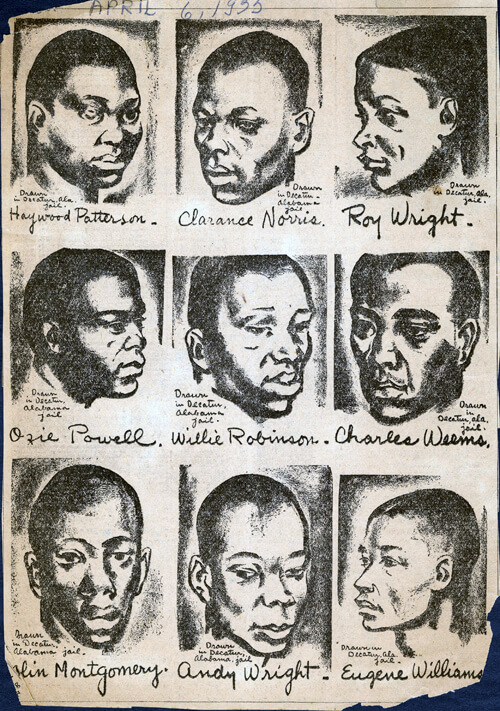 |
| The Daily Worker, Drawing of the Scottsboro Boys, 1935. Courtesy of Emory University's Manuscript, Archives, and Rare Book Library. |
Local speakers acknowledged the racial injustice done to the nine teenagers. With a powerful statement, the Benson family, white residents of Jackson County, donated the plot of land that stretches from behind the church to the railroad tracks as a park. Benson Park will extend a view from the museum to the train route. Speaking for the Benson family, John David Hall told those gathered that prominent Scottsboro citizens John Bernard and Elma Kirby Benson “shared, with these tragic young men we remember here, a common humanity and, also, a common sense that justice has not always been done!” Expressing a desire for reconciliation, Hall said, “In their later years, ‘Dad and Mama’ Benson shared with their family and friends their sense that wrongs done by us and others must be corrected and that lessons learned must be shared and passed on.”
“Rights are still being righted,” said Alabama state representative John Robinson, whose district includes several north Alabama counties.
Dozens of young people took part. Dr. Eric Arnall brought video messages—original songs and spoken word performances—from his students at Westcott Elementary School in Chicago. “As an African American young man,” wrote one seventh grader, about the age of the youngest Scottsboro defendant, twelve-year-old Roy Wright, “I could be bitter or better.” The nearly all-black gospel choir from Alabama A&M in Huntsville, rocked the church with “I’ve Been Buked and I’ve Been Scorned;” the nearly all-white choir from Scottsboro High followed. To close out, local musician Franklin McDaniel channeled the wail of the train horn through his harmonica as he played “Amazing Grace.”
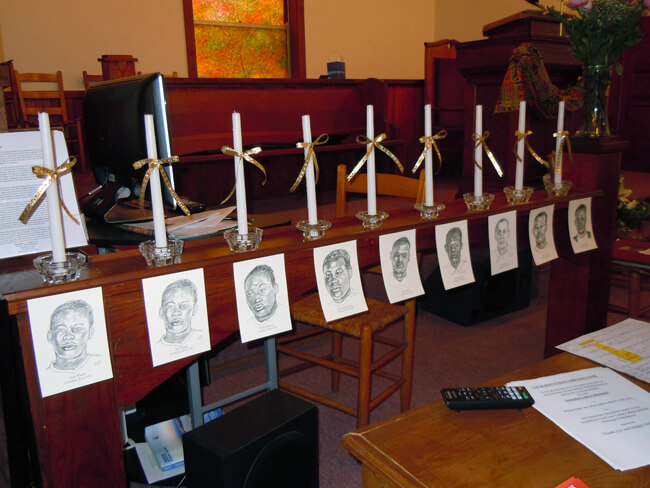 |
| Tom Reidy, Pam Farmer's sketches of the nine Scottsboro defendants, Scottsboro, Alabama, 2011. |
Historical memories are complicated. The narratives projected at civil rights heritage tourism sites can be fraught with triumphalism that fails to acknowledge either the full weight of the past or the far-from-fulfilled demands of the present.3Owen J. Dwyer and Derek H. Alderman, Civil Rights Memorials and the Geography of Memory (Chicago: Center for American Places at Columbia College Chicago: Distributed by the University of Georgia Press, 2008); Renee Christine Romano and Leigh Raiford, The Civil Rights Movement in American Memory (Athens, GA: University of Georgia Press, 2006). Until now, the main tourism attraction in Scottsboro has been Unclaimed Baggage, bargain mecca for a reported one million tourists each year, plugged on TV by Oprah Winfrey, which sits a block from the new museum. Blending historical interest and expressions of commitment to racial equality with heritage entrepreneurship, Alabama tourism officials are acknowledging the state’s rich concentration of civil rights sites. The marking of physical space in Scottsboro makes memories tangible. Donations of artifacts related to the cases are drifting out of closets and attics—scrapbooks of the trials, intriguing photographs, a juror’s chair, a metal table that came from the old Scottsboro jail, at which the defendants may have taken their meals.
The recovery of memory and of places so long obscured is a material and emotional challenge for the fledgling museum. Physically, many of the sites touched by the multiple trials no longer stand, erased from the cultural geography of north Alabama: the Paint Rock station where the teenagers were pulled from the train and arrested; the old Scottsboro jail where the young men spent their first night in fear of a lynch mob, protected only by Jackson County Sheriff M.L. Wann’s threat to use his pistol on anyone who approached; the Decatur courthouse where Judge James E. Horton made his crucial ruling reversing the verdict against Haywood Patterson (ending any hope of continuing his career as a judge in north Alabama).
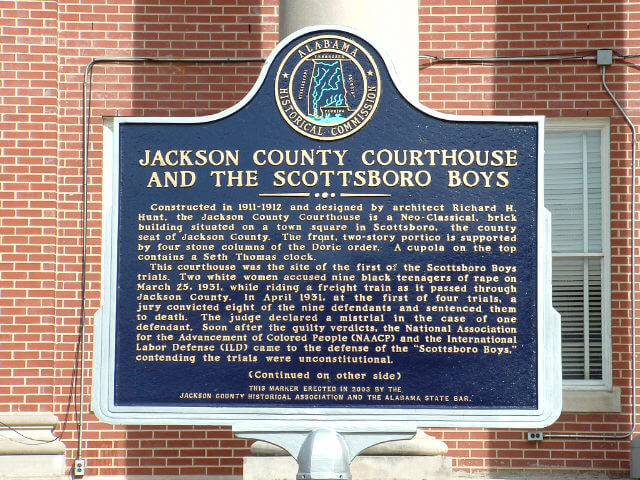 |
| Commemorative marker, Scottsboro, Alabama, 2006. |
Beyond the physical challenges, amassing the resources to construct and display a robust collection can meet local objections from people who would just as soon forget injustices. While resistance to remembering the trials is still palpable in Jackson County, the Scottsboro Boys Museum and Cultural Center seeks to be a place of unity and healing from racial wounds. A reconciliation model requires truth-telling, but the history of local responses to the Scottsboro cases was only hinted at on this day. “[G]enuine healing requires a candid confrontation with our past,” wrote historian Timothy Tyson in his 2004 book Blood Done Sign My Name.4Timothy B. Tyson, Blood Done Sign My Name: A True Story (New York: Crown Publishers, 2004), 10. The museum’s founders aim not simply to memorialize the past, but also to embrace a broader mission promoting equity.
Dan T. Carter, who wrote Scottsboro: A Tragedy of the American South, the definitive account of the trials, sounded a similar theme in his keynote address, urging those present to link the struggles of the Scottsboro Boys to the high rates of incarceration of young African American men and other persons of color today. Despite the civil rights revolution, disparities in sentencing in US criminal courts have become more marked, not less. In the 1930s, black Americans were three times as likely as whites to face jail or prison; by the 1990s, the incarceration rate had more than doubled, making African Americans seven times as likely as whites to do jail time.5Christopher J. Lyons and Becky Pettit, “Compounded Disadvantage: Race, Incarceration and Wage Growth,” Social Problems 58, no. 2 (May 2011): 258.
The handling of the Scottsboro cases kept nine falsely accused young men in the grip of the courts and jails, some for long periods of their lives. In the 1930s, as mass pressure was forcing an end to public lynching, the treatment of the nine defendants foreshadowed a reworked system of social control. Eighty years later, through a network of penal institutions, parole or probation, the criminal justice system oversees one-third of African American men in their twenties.6Dorothy E. Roberts, “The Social and Moral Cost of Mass Incarceration in African American Communities,” Stanford Law Review 56, no. 5 (2004): 1272. The lessons the museum has to draw on are rich, highlighting formative moments in the long black freedom movement that are strongly linked with today's unfinished work.
About the Author
Ellen Griffith Spears is assistant professor in New College and American Studies at the University of Alabama. She is also working with a team of University of Alabama students and a statewide university consortium in partnership with the Scottsboro Boys Museum and Cultural Center, with the support of the National Trust for Historic Preservation and the Ford Foundation, to further develop educational programming, multi-media exhibits and promotional materials.
]]>Introduction
 |
This multimedia essay complements the 2007 Appalshop film Morristown: in the air and sun. Written by independent filmmaker Anne Lewis, the director of Morristown, and Fran Ansley, a Tennessee law professor who served as principal humanities adviser on the project, this essay presents aspects of the Morristown story that we were unable to include in the one-hour documentary: additional context and perspectives for considering factory flight, international labor migration, and the organized demand for economic justice.
 |
| Workers at Toyoda/TRW Plant in Morristown, Tennessee, from Morristown: in the air and sun (2007). |
Filmed between 1991 and 2006 and based primarily in the mountains of east Tennessee, Morristown explores the lived experiences of workers from Tennessee and Mexico who speak about their lives, work, disappointments, and hopes. These conversations are combined with scenes in Tennessee factories, fields, union halls, Mexican-owned stores, workers’ homes, city parks, and employment agencies. The documentary travels to factories and locations in Ciudad Juárez, Chihauhau, and Los Martínez, Guanajuato, Mexico. Morristown concludes with a stunning union victory in 2005-2006 among immigrant workers at a large poultry processing plant.
Although Morristown puts workers’ experiences at its center, it makes space for representatives of business and civic elites in Tennessee and Mexico. In separate interviews, Jack Fishman, the head of the Chamber of Commerce in Morristown, and Roberto Urea, the head of a manufacturers' association in Ciudad Juárez, put forth their opinions about economic development.
 | Jack Fishman: "If your wage rates are excessively high, then you won't attract quality industry and quality jobs." |  | Roberto Urea: "Whether you'd like to pay people more, or you don't want to pay people more, the driving force is not our heart." |
The resulting impression of globalization that Morristown offers is internationalist in its search for class solidarity across borders, but local in its place-based perspectives. The film encourages audiences to question their own assumptions about what they are seeing. It depicts conflict and contradiction among its subjects’ opinions about immigration, labor, and the impacts of globalization.
We are proud of Morristown, and pleased with its reception in the United States and Mexico. We are somewhat frustrated, however, by the constraints that accompany filmmaking. Independent documentaries typically have at least a fifty-to-one shooting ratio—that is, for a finished work that is one hour long, acquired footage is usually more than fifty hours.1See Lance Compa, “Think Globally, Film Locally,” Cornell International Law Journal 41.1 (Winter 2008): 139-142; and Monica Hernandez, “Film Review,” in Ark Magazine, National Organizers Alliance, Issue 24, Fall 2007. Morristown: in the air and sun had an even larger shooting ratio. This raw footage is stored in Appalshop’s archives and made accessible to the occasional scholar or interested individual, but the opportunity for public use is limited.2Appalshop is an organization located in Whitesburg, a small town in the coal fields of eastern Kentucky. In the center’s own words, it is “a non-profit multi-disciplinary arts and education center in the heart of Appalachia producing original films, video, theater, music and spoken-word recordings, radio, photography, multimedia, and books.” The group’s substantial multimedia archive is a national treasure.
Footage was not the only thing that had to be left out of the film. Making Morristown took years and involved a long-term process of building trust with workers and worker organizations on both sides of the US–Mexico border. At times these workers created their own records: union factory women in Tennessee made a scrapbook they hoped to share with fellow factory workers across the border; the film project helped exchange experiences and ideas through interviews that we called Morristown Video Letters.
Other materials were not included because they would detract from the need for a simple narrative line. For instance, the great risks taken by workers while crossing the border are covered very briefly and illustrated with an image of a family running. In this essay we are able to add a first-hand account. Similarly, factual information about the industries where immigrants found employment in east Tennessee was left out of the film. Here we include a chart.
This web-based format gives more freedom to readers, viewers, and listeners. They can interact with the story in different ways—choosing their own pace and sequence, making selections, deciding when to pause, go deeper, or move on.
Although the formats of the film and multimedia essay are different, their politics are the same. Largely without narration, Morristown proceeds through the voices of working class people. As active members of the labor movement ourselves, we know the film itself was possible thanks to the efforts of labor and community organizers, cross-border work by grassroots internationalists, engaged scholarship, and the willingness of working class people in the Southeastern United States and Mexico to share their lived experiences with us. Across many years, miles, and differences, we worked to build relationships of trust outside the boundaries of filmmaking.
In our discussion of the making of Morristown, we offer a linked series of sections. "Going South" takes up the mobility of industrial capital, reporting efforts by Tennessee workers in the 1990s to exert counter-pressure on employers who moved production overseas, and describing a series of cross-border exchange trips that took place between factory workers from Mexico and Tennessee. In "Coming North," we examine reasons for the recent mass migration out of Mexico and what the northward journey means, both for unauthorized migrants entering the country and for families and communities left behind. "Arriving in Morristown" focuses on the arrival of Mexican and Central American immigrants in new interior destinations such as Morristown and their reception by native-born residents. In "Organizing a Southern Industry," we recount the story of a successful organizing drive among immigrant workers at a poultry processing plant in Morristown, a victory that suggests how much all workers stand to gain if the right of immigrants to organize on the job and to function as engaged citizens of the global economy is honored and respected. "Looking Back and Ahead" offers our conclusion.
Going South: A Trip to the Maquiladoras
The movement of industrial capital in search of cheaper labor is nothing new for Tennessee or for the US South. East Tennessee has experienced life at both poles of this dynamic. In the 1960s and earlier, labor-intensive industries such as clothing, textiles, auto parts, and consumer electronics moved their plants from northern cities such as Detroit and Chicago to Morristown, Knoxville, and other cities and small towns along the Interstate 40/81 corridors. They moved to escape union contracts, to minimize their duties under state regulation, and to profit from the incentive programs that have always accompanied industrial recruitment in various versions of the “New South.”
Beginning in the 1980s, many of those same industries moved further still, across the national boundary line and into the global South. Although the nation’s attention was focused predominantly on job loss in northern states like Michigan and Ohio, plant closings brought much of the same personal hopelessness, public neglect, and structural unemployment to the South as they had to the Rust Belt.3On deindustrialization in the United States, see Barry Bluestone and Bennett Harrison, The Deindustrialization of America, (New York: Basic Books, 1984). On deindustrialization in the South, see John Gaventa, Barbara Ellen Smith and Alex Willingham, eds., Communities in Crisis: Appalachia and the South (Philadelphia: Temple University Press, 1990) and Eve Weinbaum, To Move a Mountain: Fighting the Global Economy in Appalachia (New York: New Press, 2004).
Union contracts eroded along with wages and benefits. Social relationships changed. Workers were thrown into competition with other workers, often of different race and national origin. In 1991, Luvernel Clark, then president of Local 1742 of the Amalgamated Clothing and Textile Workers Union, testified before the Office of the United States Trade Representative about the effects of deindustrialization on one enterprise:
 |
A dozen years ago, our factory at Allied was a big, busy place. There were over 3,000 workers employed there. We had contracts with GM, Ford, and other big car manufacturers. But in the early eighties, Allied started shutting down parts of our operation and transferring them to a non-union facility south of here in Alabama. The jobs did not stay in Alabama long. Soon we learned that the work had been moved from there down to a place called Agua Prieta, Mexico. That was the first that a lot of us had heard about all these factories moving to Mexico. We had no idea what really was happening. I am still working now, but I never feel secure.4For Luvernel Clark’s full testimony at the hearing see Frances Lee Ansley, “North American Free Trade Agreement: The Public Debate," Georgia Journal of International and Comparative Law 22 (1992): 392-394.
It was no accident that multinational corporations looking for favorable terms and cheap labor identified Mexico as a favored destination. Launched by the Mexican government in 1964, the Border Industrialization Program (BIP) created the legal infrastructure for a bilateral state-promoted export-processing zone of factories known as maquiladoras (maquilas for short). US-based companies were allowed to produce goods or portions of goods in Mexico that were admitted back into the United States without tariffs as long as production took place within one hundred kilometers of the border.
Conceived as a way to provide jobs for agricultural workers who were returning to Mexico at the end of the “bracero” program that for decades had brought Mexican men to work in US fields, the BIP was slow in getting off the ground. By 1986, there were only 865 maquila plants employing some 227,900 workers along the border. As corporate strategies for globalizing production intensified during the eighties and early nineties, the number of factories at the border steadily grew. After passage of the North American Free Trade Agreement (NAFTA) in 1994 and the immediate drop in the value of the peso, maquiladora employment soared, and the bi-national legal arrangements that underpinned the maquilas were no longer restricted to the border. By 1998, 3,051 Mexican maquilas employed 1,035,957 workers. What had begun as a border-specific exception to Mexico’s relatively nationalist rules on foreign investment and trade became the new neoliberal norm.5William C. Gruben, "Was NAFTA behind Mexico's high maquiladora growth? - Statistical Data Included,” Economic & Financial Review July 2001: 11-21.
As Tennessee felt the impact, groups scrambled to understand what was happening and searched for ways that workers in the increasingly insecure, globalized economy might best respond. In 1989, a coalition of labor unions, religious groups, and community organizations came together to create the Tennessee Industrial Renewal Network (TIRN). Fran Ansley was present at the group’s large founding meeting in Chattanooga as were several factory workers and organizers who later contributed important interviews and insight to the Morristown documentary.6The energy and new relationships that were opened up by TIRN’s founding meeting encouraged Fran to make plant closings the focus of her legal research in the early nineties. See Standing Rusty and Rolling Empty: Law, Poverty and America's Eroding Industrial Base, 81 Geo. L. J. 1757-1896 (1993).
Particularly disturbed by how easy it was for many Tennessee workers to blame the closings on Mexican workers who were “stealing” their jobs, TIRN leaders began looking for ways to promote a more accurate economic understanding in local communities. Drawing on lessons learned by the Highlander Center about the importance of peer education, TIRN sought direct contact between workers in east Tennessee and workers in Mexico.
TIRN reached out to several border groups that were working to expose and address maquila realities: the Border Committee of Women Workers (in Spanish, the Comité Fronterizo de Obreras, or CFO—a grassroots group of women employed in maquiladoras) ; the Border Project of the American Friends Service Committee, a group that partnered with the CFO; and the Coalition for Justice in the Maquiladoras, a network that brought together labor and community activists from the United States and Mexico.7Joe Bandy, "Paradoxes of Transnational Civil Societies under Neoliberalism: The Coalition for Justice in the Maquiladoras," Social Problems 51:3 (August 2004): 410-431. TIRN proposed a two-way worker-to-worker exchange between Tennessee and Mexico, and the CFO and its supporting groups agreed to collaborate.
In July 1991, after TIRN hosted a visit to Knoxville from two maquila workers active in the CFO, a delegation of nine women from TIRN, including Fran, a staff organizer, and seven east Tennessee factory workers, traveled to Mexico.
Anticipating a television series on the future of US manufacturing, a crew from WGBH-Boston filmed the trip. TIRN had agreed to this accompaniment with the understanding that the organization would receive the raw footage after the PBS broadcast. Many months later, staff members approached Anne at nearby Appalshop in Kentucky to ask if she could take the raw tapes and, with worker input, produce a short video.8At the time, Anne was making a film that explored notions of community justice during the mineworkers strike against Pittston Coal, Justice in the Coalfields (Appalshop, 1995). Anne agreed, and the resulting film, From the Mountains to the Maquiladoras, became a key resource for TIRN and for a number of other groups that were then organizing about the loss of US manufacturing jobs, the process of globalization, and emerging US trade policy.9From the Mountains to the Maquiladoras is available in DVD from the Highlander Research and Education Center
Women from Tennessee saw first-hand the transformed operations of companies well known to them, but now in the maquiladora context unfettered by the rules of home. They witnessed the living conditions of people employed in the maquilas and living in makeshift shacks without electricity or running water. Workers shed tears, revealed anxieties, and expressed shock and disorientation. During a visit to a settlement outside of Reynosa, Shirley Reinhardt, a displaced worker from Morristown, stepped aside for a moment to regain her composure.10Like Luvernel Clark, mentioned above, Shirley Reinhardt later gave testimony at a hearing on NAFTA organized by the Office of the US Trade Representative. For her full written testimony submitted to the hearing panel, see Frances Lee Ansley, “North American Free Trade Agreement: The Public Debate," in Georgia Journal of International and Comparative Law, 22 (1992): 388-392. Parts of their oral testimony are also captured in From the Mountains to the Maquiladoras. She said to Fran, “I feel ashamed. I feel ashamed for our government, for our people. I feel so ashamed.”
Returning home, Reinhardt and other TIRN travelers spoke to labor unions, policy-makers, and community groups about why they believed the maquila model and its NAFTA embodiment were a bad deal for workers on both sides of the border.11For more on TIRN’s exchange trips and the work that grew out of them see, Kristi Disney, “Building a Movement on Both Sides of the Border,” in The Global Activist's Manual: Local Ways to Change the World , ed. Mike Prokosch and Laura Raymond, (New York: Thunder’s Mouth Press/Nation Books, 2002), 12-19; Fran Ansley, “Putting the Pieces Together: Tennessee Women Find the Global Economy in Their Own Backyards,” in Women Working the NAFTA Food Chain: Women, Food & Globalization, ed. Deborah Barndt (Toronto: Sumach Press, 1999), 141-160; Fran Ansley and Susan Williams, “Southern Women and Southern Borders on the Move: Tennessee Workers Explore the New International Division of Labor,” in Neither Separate Nor Equal: Women, Race and Class in the U.S. Southeast, ed. Barbara Ellen Smith (Philadelphia: Temple University Press, 1999), 207-244; Fran Ansley, "The Gulf of Mexico, the Academy, and Me," Soundings 78 (1995): 68-104. They organized a car caravan through downtown Morristown to protest NAFTA. They gathered petitions, called on legislators, went to conferences, wrote letters and op-ed pieces for their local papers, and organized rallies.

Eventually the organization sent a delegation to the Seattle demonstrations of 1999 against the World Trade Organization, protests that joined “Teamsters and turtles” to challenge the ambitions of those promoting a free trade agenda.12TIRN’s delegation to Seattle included Barbara Knight, a displaced Philips worker who also became an important contributing voice to Morristown: in the air and sun.
 |
TIRN found that despite its commitment to building cross-border solidarity, it was difficult to maintain active ties with host groups and individuals in Mexico. In 1997, a committee decided to experiment with a scrapbook exchange between women factory workers in east Tennessee and women maquila workers in Juárez. Another worker-to-worker exchange idea resulted in a popular education tool, Morristown Video Letters, an edited selection of interviews with Tennessee and Mexican workers, with voice-over translation into both English and Spanish. TIRN hoped these letters might serve to support on-going dialogue.13Morristown Video Letters is available on DVD, in English and Spanish versions, from the Highlander Research & Education Center.
Coming North: The Long Hard Crossing
TIRN’s video From the Mountains to the Maquiladoras examined the movement of capital—plant closings and conditions in maquila locales where those plants had moved. It did not focus on immigration. In 1991, when the earliest footage was shot, most east Tennessee residents were not aware of the growing numbers of Latino immigrants. But some of the women on the trip—the ones from Morristown—did point out that there were “new people” from Mexico showing up back home. Demographic change in Tennessee was soon evident even to casual observers.
The movement of industrial capital from the United States to the maquilas and the movement of low-wage workers from Mexico to the United States were intimately related. The impacts of NAFTA and related neo-liberal policies were felt throughout Mexico. Resulting pressures fed northward streams of migration. An estimated two million Mexican farmers and farm workers lost their livelihoods as cheap US agricultural products, especially corn, flooded Mexican markets.14Monica Campbell and Tyche Hendricks, “Mexico's Corn Farmers See Their Livelihoods Wither Away: Cheap U.S. Produce Pushes Down Prices Under Free-trade Pact,” San Francisco Chronicle July 31, 2006. The loss was further exacerbated by the sudden devaluation of the peso in December 1994. In one week, the peso went from 4 pesos to 7.2 pesos to the US dollar.15Gary C. Hufbauer and Jeffrey J. Schott, "NAFTA Revisited: Achievements and Challenges," International Institute of Economics, 2005, at p. 10.
The peso devaluation meant many more US factory jobs moved to Mexico where everything from services to utilities to wages had become much cheaper for international investors. Meanwhile, the wages companies offered were worth even less. It became impossible for many working class Mexican communities to survive. The forces that took jobs away from factory workers in east Tennessee forced Mexican workers across the international border. For several Mexican states, human beings became the major export.
Although these changes increased local opportunities for cross-national coalition building, they also triggered resistance. If feelings had been intense about distant Mexicans taking far away factory jobs, local responses were volatile when new people, marked by differences of race, ethnicity and language, began moving next door in a region which had not experienced significant immigration for generations. Workers returning from later TIRN exchange trips found themselves in arguments with friends and neighbors—not only about corporate responsibility and factory flight, but also about the rights and wrongs of immigration.
To tell the story of the new east Tennessee immigrants, we decided that Morristown should follow the migrant stream out of Mexico, across the border, and into the United States, beginning with scenes and narratives about the journey north. We wanted space for Mexicans to tell about making the journey north from their own perspective. What impels such a costly and risky trip? How does an exodus of this scale affect those who stay behind?
 |
Rudy Marquez was one of our first sources. At the time we interviewed him, he lived on a farm outside Morristown, paid for his board with labor, and studied at a community college. Rudy was born in Mexico City. He described his travels after crossing the border years earlier. He and his father picked strawberries in Santa Ana, California, grapes and tomatoes in Fresno, and green beans in Florida. Searching for lower living costs, wider opportunities, and higher pay, they ended up in east Tennessee where they picked tobacco. Although working tobacco was harder, Rudy could earn $350 a week as compared with $150 working other crops.
Another interviewee, Claro Negrete Almeida, spoke with Anne and a Mexican film crew from his home in the state of Guanajuato. He came across the border illegally for the first time in 1972. He had spent many years working in orchards in North Carolina, and he told stories about poor treatment he had received from employers who took advantage of his fears and uncertainties. Thanks to the amnesty program passed during Ronald Reagan's administration in 1986, Claro adjusted his immigration status.16The Immigration Reform and Control Act of 1986 (IRCA). As a result, he was able to move freely across the border, spending seven to nine months of the year in North Carolina and three to five months at home in Guanajuato with his family.
Since there is presently no pathway to legal status available to workers who enter the country without authorization, Claro’s pattern of annual “circular migration” is not an option for an undocumented person today. The costs and dangers of crossing the border continue to mount as federal dollars have poured into its militarization and rates of deportation have soared. Despite the relative freedom of movement Claro's legal status provides, he continues to experience loneliness, dislocation, and bad treatment during his long work stays away from home. “Even if the bars are made of gold,” he says, “it’s still a prison.”
Despite the current burdens of migration, entire villages like Los Martínez, deep in the mountain interior of Mexico, have lost men and boys to the migrant stream. Sixteen-year-old Rosario Duran Camarilla—also from Los Martínez—spoke about how she imagines the United States:
 |
I think it’s very big, many people, I think it’s pretty. My father has always gone there. My brother, this is the first time he’s gone. Neither has papers. They cross the river and you don’t know how they are.
Many boys here say, “How I’d like to go north. We’ll have a good time.” I think it’s very pretty there, but - . . . my father once spent almost three years there. I have a little sister. He left when she was months old and returned when she was three. She asked, “Who is this man?” When he comes back, we don’t know how to talk with him. It’s still very good when he comes. What’s hard is that he spends very little time here and goes back there. He’s back there again.
While describing some of the economic benefits for families who have sent someone north, Rosario’s older neighbor, Isidra Duran De Negrete, talked about what life is like for the women left behind:
 |
It’s very hard for the mother or the wife when the child or the husband goes and they don’t know what’s going to happen. It makes them feel sad. It’s very hard for the wife when the children are hungry and no money comes in from over there.
Now there are people who have trucks, tractors, land, cattle, milk cows, and they live much more easily than before. But this is not everyone, only the ones who go north.
As the words of Olga, Claro, Rosario and Isidra suggest, the forces of contemporary mass labor immigration are complex and include “pushes” from countries of origin, “pulls” from countries of destination, past colonial legacies, and present projects of empire. In the United States, immigration reform is hotly contested and badly needed, but as the interviews in Juárez and Los Martínez suggest, immigration reform can do little to control the huge social currents that have put so many people into motion around the world.
Over the course of the 1990s and into the first decade of the new century, despite ever-increasing attempts to fortify the border, migrants from Mexico and Central America continued to come to the United States. Increasing numbers found their way, as Rudy did, to the Southeast. Migrants did not disperse evenly, but settled in clusters and hot spots. The new Latino migration represented a major and unprecedented demographic change.
The Pew Hispanic Center recently reported on results of the 2010 Census, observing that “states with the largest percent growth in their Hispanic populations include nine where the Latino population more than doubled, including a swath in the southeast United States—Alabama, Arkansas, Kentucky, Mississippi, North Carolina, Tennessee and South Carolina.” A chart linked to Pew’s report shows that Tennessee’s Hispanic population increased from 124,000 in 2000 to 290,000 in 2010, and now constitutes 4.6% of the state’s total. The chart also ranks Tennessee third in the nation in the rate at which its Hispanic population grew between 2000 and 2010—a rate of 134%, smaller only than South Carolina’s 148% and Alabama’s 145%.17“Census 2010: 50 Million Latinos, Hispanics Account for More Than Half of Nation’s Growth in Past Decade,” Pew Hispanic Center Report, March 24, 2011, p. 2. (Rate of change is not the only relevant measure, of course. Although Tennessee is third in the nation in the rate of growth of its Hispanic population, it is 27th in the total number of resident Hispanics, and 37th in the percentage of its overall population that Hispanics now represent.)
Observers have offered various reasons for why many areas of southern states became favored destinations for Latinos.18See, e.g., Fran Ansley and Jon Shefner, eds, Global Connections and Local Receptions: Latino Immigration to the Southeastern United States, (Knoxville: University of Tennessee Press, 2009); Heather Smith and Owen Furuseth, eds., Latinos in the New South: Transformations of Place, (Burlington, VT: Ashgate Publishing Company, 2006); Rakesh Kochhar, Roberto Suro and Sonya Tafoya, The New Latino South: The Context and Consequences of Rapid Population Growth (Washington DC: Pew Hispanic Center, 2005); A.D. Murphy, C. Blanchard, and J. A. Hill, eds., Latino Workers in the Contemporary South (Athens: The University of Georgia Press, 2001). Housing costs lower than those in traditional gateways are one factor, as is the preference of some immigrants for small-town life. For a time, immigration enforcement was patchier in the interior of the country. The availability of paid work is the single strongest determinant. Anita Drever, a University of Tennessee geographer, found that the ten locations in the state with the largest percentage of Latinos in 2000 were all small towns or cities where a particular industry (or a single employer) could easily be identified. Census data are notoriously soft when it comes to measuring Latino populations, so the specific numbers must be viewed with caution, but for comparative purposes the data is quite instructive. Here is a chart showing the results of Drever’s research.
Table 1: Ranked list of towns (census places) with the highest percentages of Latinos in Tennessee and the largest employer of Latinos in these areas
| Rank | City | % Latino | Total | Major Employer of Latinos |
| 1 | Bells | 22.8% | 2,171 | Pictsweet Vegetables (packaging plant) |
| 2 | Monterey | 16.3% | 2,717 | Perdue Farms (chicken processing) |
| 3 | Shelbyville | 14.6% | 16,105 | Tyson Foods (chicken processing) |
| 4 | Morristown | 10.4% | 24,965 | Koch Foods (food processing) |
| 5 | Collegedale | 7.7% | 6,514 | McKee Foods (makers of Little Debbie Snacks) |
| 6 | Springfield | 6.9% | 14,329 | Electrolux Appliance (manufacturing) |
| 7 | McMinnville | 6.8% | 12,749 | Wholesale Nursery Industry |
| 8 | Clarksville | 6.0% | 103,455 | Fort Campbell Military Base |
| 9 | Lenoir City | 6.0% | 6,819 | Monterey Mushrooms |
| 10 | Lewisburg | 5.2% | 10,413 | Walker Die Casting |
Source: Calculations from the US Census 2000, Author’s interviews with the employees of the Chambers of Commerce in the above cities.
Since labor migration was the flip side of plant closings and another aspect of the neo-liberal development model that NAFTA represented, seeking justice for immigrant workers seemed a natural extension of TIRN's work. Labor rights activists struggled for decades to attack the ways that racial division debilitated the southern labor movement.19The literature on this subject is vast. Some starting points: Michael Honey, "The Labor Movement and Racism in the South: An Historical Overview," in Racism and the Denial of Human Rights: Beyond Ethnicity, M. Berlowitz and R. Edari., eds. (Minneapolis: Marxist Educational Press, 1983), 77-96; Eric Arnesen, Waterfront Workers of New Orleans: Race, Class and Politics, 1863-1923 (Oxford: Oxford University Press, 1991); Robert L. Lewis, Black Coal Miners in America: Race, Class and Community Conflict, 1780-1980 (Lexington: University of Kentucky Press, 1987). The increasing presence of Latinos in the workforce and the extreme vulnerability of undocumented immigrants represented a dramatic new turn in an old story.
Immigration raised the possibility of a new kind of labor organizing that might bring together multi-racial coalitions capable of advancing broad demands for social justice in the workplace and beyond. Whether this prospect would be realized was far from certain. But as immigrant workers continued to settle, their responses to the conditions they found began to attract allies, generate campaigns, and demonstrate powerful potential.
Arriving in Morristown: New Kinds of Borders
The US–Mexico maquiladora zone that TIRN delegations had once traveled for days to reach now appeared in Tennessee. Native Tennesseans could meet their Mexican counterparts by visiting any local restaurant kitchen or construction site. And yet differences of race, language, and nationality often separated people as profoundly as physical distance or a geo-political boundary.
Immigrants arriving in Tennessee were entering locales where racial history was at work and racial hierarchies were in place. During slavery and Jim Crow, race was a structural feature of labor markets backed by the full force of law. Although the civil rights movement succeeded in discrediting old racist ideologies and breaking down some barriers to equal opportunity, gross disparities between whites and blacks in the labor force persisted and black unemployment remained at levels far beyond that of whites. These patterns worked to naturalize racial subordination.
Undocumented Latinos disrupted and complicated the existing black-white framework. New political and social alignments seemed likely, though exactly who would align with or against whom was hard to say.20These developments are still too new to assess in any but the most provisional way. Early reports are beginning to sketch a complex and far from homogeneous picture. See, e.,g., Halimah Abdullah, "Hispanic Population Growth Could Realign South's Politics," Miami Herald, April 25, 2011; Mary Odem & Elaine Lacy, eds., Latino Immigration and the Transformation of the U.S. South, (Athens, GA: University of Georgia Press, 2009); Paula D. McClain, Niambi M. Carter, Victoria M. DeFrancesco Soto, Monique L. Lyle, Jeffrey D. Grynaviski, Shayla C. Nunnally, Thomas J. Scotto, J. Alan Kendrick, Gerald F. Lackey, and Kendra Davenport Cotton, “Racial Distancing in a Southern City: Latino Immigrants’ Views of Black Americans,” Journal of Politics 68, no. 3 (August 2006): 571-584. See also Jennifer Gordon and R.A. Lenhardt, “Conflict and Solidarity between African American and Latino Immigrant Workers,” Working Paper #6 of the Series on Immigration of the Chief Justice Earl Warren Institute on Race, Ethnicity and Diversity, 2007.
It was striking to witness the emergence of “brown collar jobs” and the racial reorganization of work.21See Leticia Saucedo, “The Browning of the American Workplace: Protecting Workers in Increasingly Latino-ized Occupations,” Notre Dame Law Review 80 (2004): 303; Lisa Catanzarite, “Dynamics of Segregation and Earnings in Brown-Collar Occupations," Work & Occupations 29 (2002): 300. In east Tennessee, Latino workers were warmly welcomed by many employers. They moved into construction trades previously dominated by white men, but also into occupational categories such as farm work, the laundry industry, hotel housekeeping, and personal service—long coded as labor for blacks or the bottom ranks of working class whites.
Factory job loss and shrinking opportunities in the public sector hit Tennessee's black minority hard. The civil rights movement’s victories, as significant as they were, failed to translate into economic well-being for the black population as a whole. Meanwhile, many Latino immigrants who entered the country without authorization found themselves in low-wage, dirty, and dangerous jobs, where too often their “illegality” justified thinking of them as criminals and treating them as people without rights.22On some of the ways Latino workers fit into employer goals of “flexibilizing” work to their advantage, see David H. Ciscel, Barbara Ellen Smith and Marcela Mendoza, “Ghosts in the Global Machine: New Immigrants and the Redefinition of Work,” Journal of Economic Issues 32 (2003): 333.
Table 2 (below) suggests the income inequality by race and ethnicity in Tennessee, with whites earning dramatically more than blacks or Latinos. While these disparities are echoed at a national level, Tennessee whites, blacks, and Latinos all earn less in absolute dollars than their racial and ethnic counterparts in the US, with Tennessee whites experiencing the greatest difference from the national average.23Table reprinted from Anita Drever, “Tennessee: A New Destination for Latino Migrants,” in Global Connections and Local Receptions: Latino Immigration to the Southeastern United States, Fran Ansley and Jon Shefner, eds. (Knoxville: University of Tennessee Press, 2009). Of course this chart does not allow readers to tease out the working class segments of each racial group, and we suspect the situation of white working class people is more effectively obscured in these statistics, since they are likely a smaller proportion of their racial/ethnic group than are blacks or Latinos. Nevertheless we consider the gross figures worth contemplation.
Table 2: Media Per Capita Earning by Population Group in Tennessee Relative to the United States as a Whole
| Population Group | Median per capita income | % of national per capita income for this group |
| African Americans | $15,117 | 91% |
| Whites | $23,994 | 83% |
| Latinos | $12,688 | 88% |
Source: 2005 American Community Survey
Whatever the racial disparities, economic restructuring meant that working class people in east Tennessee faced economic insecurity during the years when Latino immigration was increasingly evident. It is not hard to imagine that US-born workers in places like Morristown perceived Latino immigrants to be interlopers and competitors rather than potential allies. After all, white workers in the South have repeatedly missed opportunities to act in solidarity with black workers. When the new immigrants arrived in Morristown, racism and xenophobia surfaced.
In 2002, Berkley Bell, the district attorney for Tennessee’s third judicial district, was asked about the impact of Latino workers in the area. He began pleasantly and politely enough, volunteering that the new immigrants were “hardworking Christian people,” and noting that his exposure to immigrants had forced him to modify an earlier preconception that Mexican men were lazy and that Mexican women did all the work. Bell went on, however, to make sweeping assertions that cast the entire Hispanic population as a major source of crime, social pathology, and violence.
In light of Bell’s remarks about "a lot of homicides" among Latinos, we asked a sociology professor at the University of Tennessee about murder in Hamblen County where Morristown is located. Based on Tennessee Bureau of Investigation information, he found such comments as Bell's unsupported.24Thanks to Dr. Ben Feldmeyer of the University of Tennessee Sociology Department for this helpful piece of local research. A large body of scholarship indicates crime rates among Latino immigrants are no higher, and are often lower, than among the native-born population.25For one example of such scholarship, see Robert J. Sampson, “Rethinking Crime and Immigration,” Contexts, Winter 2008, American Sociological Association.
Several elected officials in Morristown showed a similar tendency to blame immigrants for social problems. Hamblen County commissioners told a Knoxville television reporter that undocumented Hispanics were costing Hamblen County “serious money,” and that they might “have to raise property taxes by a million dollars to cover increase[d] costs in schools to hire bilingual teachers." Commissioner Larry Baker was quoted as blaming the property tax increase on too many Hispanics in juvenile court.26"Commissioner: ‘Taxes May Go Up Due to Hispanics,’ ” WVLT Volunteer TV, Knoxville, TN, May 6, 2005.
As tensions between residents and Latino immigrants increased, local leadership did nothing to help citizens understand immigration, much less to address the economic problems facing this small industrial town.
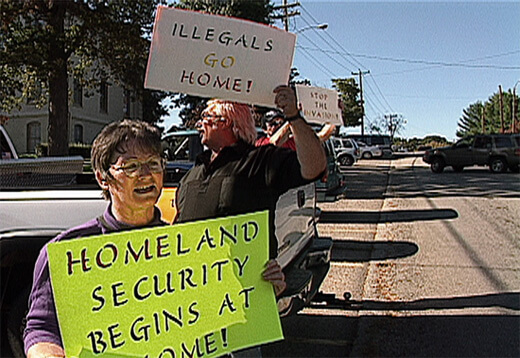 |
| Counter-protesters during a rally for immigrants' rights and against racial profiling in Morristown, 2003, from Morristown: in the air and sun (2007). |
In spite of the reception they received, the number of Latino workers continued to grow, along with demand for their labor. Workers and their families were becoming part of the local scene–a visible presence in spaces like public parks and soccer fields. But they also maintained close ties with those at home. At Adriana’s Video Mexican Store in Morristown, workers regularly sent dollars back to their families in Mexico where their purchasing power was many times more.
Only someone with a job can send home such remittances, and for Latino immigrants newly arriving in Morristown, work was ordinarily a first priority. In order to secure employment, they turned to various networks and strategies.27For a detailed account of how Latinos came to populate one Tennessee workplace during this period, see Steve Striffler, “Immigration Anxieties: Policing and Regulating Workers and Employers in the Poultry Industry,” in Global Connections and Local Receptions: Latino Immigration to the Southeastern United States, Fran Ansley and Jon Shefner, eds., (Knoxville: University of Tennessee Press, 2009). One channel was a set of specialized temp agencies that opened in Morristown. These agencies functioned as the formal employers of immigrant workers who were then contracted out to places where they labored but were not formally employed. The temp agency protected client companies from worries about liability related to the workers’ legal status and documentation. The agencies generally charged companies twice as much as they paid out to the workers themselves for hourly wages and benefits.
Maximino Garcia, originally from San Antonio, Texas, owned one of the largest of these hiring enterprises. He also ran a loan company, a car lot, an asbestos removal business, and built an evangelical church that ministered to his Latino workforce. “The number one is that we’re always trying to point them to the cross," said Garcia. "We’re always trying to tell them about the Lord.”
Garcia, who was later convicted of illegal trafficking and money laundering, compared Latino workers with black and white native-born workers:
 |
I don’t believe that the Hispanic race is coming in and taking American jobs. I believe that they’re taking jobs that the Americans don’t want and the ones who are griping and complaining are usually the ones that are lazy and don’t want to work. I think that that’s what a lot of the companies look at when they see Hispanics is that these are hard workers. They’re coming in and they’re not going to give us no lip. They’re not going to talk back to us. They’re not going to do nothing. They’re basically going to come in and work, do their jobs.
Garcia's perspective was not the only one voiced by people in Morristown.28On the power—and the inadequacy—of competition as a framework for understanding the relationship between immigrant and native-born workers, see Barbara Smith, “Market Rivals or Class Allies? Relations between African American and Latino Immigrant Workers in Memphis,” in Global Connections and Local Receptions: Latino Immigration to the Southeastern United States, Fran Ansley and Jon Shefner, eds., (Knoxville: University of Tennessee Press, 2009). Shirley Reinhardt, a displaced General Electric worker and TIRN member whose experiences in Mexico were mentioned above, shared a different understanding:29For more about Shirley’s work in Morristown, including a campaign directed at the temp agencies that had burgeoned there as early as the 1980s to broker the labor of native-born factory hands, see Chapter 5 of Eve Weinbaum, To Move a Mountain: Fighting the Global Economy in Appalachia (New York: The New Press, 2004).
 |
It’s a lot like when people in Tennessee went to Michigan to work. The young boys that went north to work, worked for probably a lot less than what the people there would work for.
Farmers say they can’t hire anybody to do the job. Well they can’t hire a slave. They can’t hire a slave and that’s what they’re after. They’re after somebody that’ll work twelve to fourteen hours a day, don’t take any breaks, and work like your life depends on it. And the Mexicans go out there and they work like slaves.
So the Americans say, “Oh boy we’ve got us a good worker here.” Well you’re working them like dogs, and we don’t seem to think there’s anything wrong with that in this country, we think that’s okay.
We want paper towel employees. You just use them as long as it’s beneficial to you and then you throw them away. And you get some more and start all over.
It was not only immigrants who were treated as disposable. Delmas Malone who worked at Berkline Furniture, an old-time Morristown factory, had his wages cut from $12.43 an hour to $6.41. He took early retirement and was given a recliner for his twenty-six years with the company. His wife Betty, a TIRN member, earned $8.88 an hour making televisions at Philips. Betty's pension plan had been terminated and her job appeared to be hanging by a thread. Worried about how they were going to make it, Betty and Delmas mortgaged their farm to go into the chicken-growing business. They assumed all the risk of loss and all the responsibility for waste disposal in a vertically integrated contract that bound them exclusively to the poultry processing plant in Morristown.30For more about east Tennessee poultry growing, see Fran Ansley, “Putting the Pieces Together: Tennessee Women Find the Global Economy in Their Own Backyards,” in Women Working the NAFTA Food Chain: Women, Food and Globalization, Deborah Barndt, ed. (Toronto: Sumach Press, 1999), 141-160.
Organizing in a Southern Industry: Immigrants Step Up
The Morristown Chamber of Commerce, long proud of its highly successful industrial recruitment program, constructed Morristown’s third industrial park with federal and state grants. Soon they began to fill it with companies like Koch Foods, one of the nation’s largest poultry producers and processors. Koch had acquired Morristown’s older, family-owned poultry business and was now looking to expand.
 |
| Street signs, new industrial park, Morristown, Tennessee, from Morristown: in the air and sun (2007). |
Koch’s facility was sparkling and bright on the outside, but there were major problems inside. According to reports of workers at the plant, the speed of the line was brutal, wages were minimal, worker health and safety were regularly put at risk, and the relationship between workers and their supervisors was disrespectful and degrading.31Unfortunately, Koch Foods was not unusual in this respect. For more on the poultry industry, see Steve Striffler, Chicken: The Dangerous Transformation of America's Favorite Food (New Haven: Yale University Press, 2005); William Kandel & Emilio A. Parrado, “Industrial Transformation and Hispanic Migration to the American South: The Case of the Poultry Industry,” in Hispanic Spaces, Latino Places: A Geography of Regional and Cultural Diversity, ed. Daniel D. Arreola, (Austin: University of Texas Press, 2004); and Lance A. Compa, Blood, Sweat and Fear: Workers’ Rights in U.S. Meat and Poultry Plants (New York: Human Rights Watch, 2004). In the face of these conditions, the work force had become predominantly Latino, many of them undocumented. Workers made several attempts to change their conditions, including a targeted strike where all the workers walked off the line and proceeded to the bathroom as a group in protest over the chronic refusal of line supervisors to allow reasonable bathroom breaks. They won verbal concessions whose results were short-lived.
Eventually, a Koch Foods worker contacted a lawyer from Southern Migrant Legal Services in Nashville about the problem of access to bathroom breaks. Other workers stepped forward to point out problems with health and safety practices. They held meetings, documented grievances, and took their concerns to management. When several leaders were fired in retaliation in front of an assembled group, workers reacted with indignation and reached out for support.
In early 2005, after being contacted by workers at the poultry plant, doing preliminary research, and observing workers' energy and resolve, the United Food and Commercial Workers Union (UFCW) launched an organizing drive. The UFCW local that the workers would join was based primarily in grocery stores, a labor force whose work environment and demographics were dramatically different from those of the poultry workers. At a national level the UFCW had substantial membership in meatpacking and poultry plants, and the organization was aware that inclusion of immigrants was crucial to its survival and strength.
The UCFW sent J.R. Richardson, an African-American from Alabama, to be the lead organizer in Morristown. He was accompanied by David Ceballos, a Spanish-speaking union staffer from Arizona. They set up shop in Morristown and began holding meetings with workers.
A few weeks into the campaign, accompanied by the Morristown film crew, union organizers visited workers in their homes who talked about what they had encountered in the plant and why they needed a union. Some of this video testimony was eventually used by the union to help win an agreement with corporate executives in Chicago that the corporation would not interfere in the union election process.
The union drive attracted allies. An affiliated UFCW local in the area had once represented a workforce of several thousand chemical workers whose plant was closing and shipping its equipment overseas. Randy Alexander, president of that local, opened the doors of his tattered union hall to the organizing drive and welcomed the workers from Koch Foods who held meetings there as well as a large rally that attracted supporters from throughout east Tennessee.32This part of the story moved a Houston reporter who visited Morristown that season. Kim Cobb, “On Common Ground in a Common Struggle,” Houston Chronicle, October 24, 2006.
 |
| Worker Rights Board Hearing Organized by Jobs with Justice of East Tennessee, from Morristown: in the air and sun (2007). |
Jobs with Justice of East Tennessee (JwJET), an all-volunteer group headquartered in Knoxville, generated civic, church, and labor union support. They convened a Worker’s Rights Board that heard testimony about the right to organize and about the failure of US labor law to adequately protect that right. Jim Sessions, co-chair of the chapter, introduced the panel of witnesses:
The right to organize is a human right and it’s a democratic right and it’s the law. But the law’s not obeyed very much on this matter in this country. That’s what we want to talk about tonight. And we’ll hear how difficult, also the aspirations of people who aspire to that democracy in the work place in our area.
One of the workers who testified was Artemio Jimenez, who had been fired while attempting to organize a Monterrey Mushroom plant in east Tennessee. Although Artemio brought a lawsuit over his firing, he was never allowed to present his facts in court. As an “agricultural worker,” he was expressly excluded from the National Labor Relations Act (NLRA) and its protections.33The exclusion of both agricultural workers and domestic workers from coverage under the NLRA dates back to the New Deal compromise struck with Dixiecrats in order to get that major piece of labor legislation through Congress. This was a race-linked compromise still only partly remedied today. For more information on the great range of workers who have been excluded in different ways from the protection of our present labor laws, see Excluded Workers Congress, “Unity for Dignity: Expanding the Right to Organize to Win Human Rights at Work,” Dec. 2010.
The union campaign at Koch Foods was well organized and highlighted the rights of workers while building understanding among coalition members about immigration, racism, and xenophobia. JwJET involved churches, other unions, and activists throughout east Tennessee including nearby native-born, factory workers who had been part of TIRN.
These support efforts were important, but the workers made the biggest difference in the success of the election drive. Despite threats of firing and deportation, leaders from the factory floor made house calls to recruit fellow workers and gather signed cards. Organizers anticipated employer behavior and explained the election process and US labor law. Morristown workers showed how effectively immigrants could mobilize when their basic trust was earned.
When the NLRB election day finally arrived, organizers were cautiously optimistic, but no one was sure what was going to happen. Fran remembers standing outside the plant with other supporters, waiting for the vote count:
Standing along the highway that morning, together with our JwJET delegation from Knoxville, there were black, white, and Latino organizers and union members from the UFCW, and a couple of guys from the Nashville local union to which the Morristown chicken plant workers would be attached if the election went for the union. There was a faithful young intern from the Highlander Research and Education Center whose highly skilled interpreting and translating services had been integral to the organizers’ efforts and workers’ comprehension, involvement, and morale. There was a union painter from Morristown who had learned about the election at a recent Labor Day event in Knoxville who showed up at the factory gates to lend his support. There was an Appalshop film crew diligently working the crowd for interviews and impressions. There was the president of a dying union local at a soon-to-close chemical plant in Morristown who throughout the organizing drive had opened the doors of his aging union hall to the workers from the chicken plant, welcoming its use for meetings, rallies, child care, buffet suppers, and workshops, and who had now come to stand with them on this fateful day.
The wait seemed interminable, but at last we made out the sound of cheering. Spilling down the hill toward our waiting group came an elated crew of union-designated election watchers. “Ganamos! We won! Ganamos!”
The workers had scored not a mere victory, but a landslide. The margin was 465 to 18.34Fran Ansley, “Labor Rights and Immigrant Workers in East Tennessee: Talking Union in Two Languages,” in Transforming Places: Lessons in Movement Building from Appalachia eds. Steve Fisher and Barbara Ellen Smith (Champaign: University of Illinois Press, forthcoming).
Looking Back and Ahead
The moment of victory was sweet. When Anne was editing the film, it became the apex of Morristown. Winning a union election, however, is no guarantee that workers will build a functioning union with workplace strength. A crucial “first contract” must be achieved. US companies, advised by batteries of management-side lawyers, have refined their ability to stall, delay, and undermine the negotiating process to such a degree that winning a first union contract after a successful organizing campaign has often proven an insurmountable hurdle.
In Morristown, after the pro-union vote, the UFCW and Koch Foods talked for months without reaching agreement. Finally the company declared there was nothing left to discuss and submitted its “last best offer,” a poor set of proposals testing union resolve. Unanimously the workers turned down the company’s offer. A month later, after further bargaining, they approved a union contract that included eye protection, bathroom breaks, health insurance, and higher wages.
Meanwhile, in the spring of 2006, immigrants all over the country poured into the streets by the hundreds of thousands to protest a virulent bill that had passed the US House of Representatives. They demanded reform that would provide a pathway to citizenship for many undocumented immigrants and make reasonable provision for immigrant entry in the future. The workers’ victory in Morristown had been powered by some of the same currents of discontent and determination that had fed the mobilizations for immigration reform.
The Tennessee Immigrant and Refugee Rights Coalition, founded in Nashville in 2001, hired its first organizer for east Tennessee in November, 2005.35For more about the origins of the Tennessee Immigrant and Refugee Rights Coalition, see Fran Ansley, “Constructing Citizenship Without a License: The Struggle of Undocumented Immigrants in the U.S. for Livelihoods and Recognition,” in Inclusive Citizenship: Meanings and Expressions ed. Naila Kabeer (London: Zed Books, 2005),199-215. In April 2006, the Coalition organized rallies all over the state for immigration reform, and they put out the word across east Tennessee for immigrants to join the action planned for Knoxville.
As Fran stood with thousands of other demonstrators in front of the federal building in Knoxville, she saw the members of the workers’ organizing committee from Koch Foods. Delighted at the size and spirited mood of the crowd, the workers announced they had achieved final agreement on a contract and that the company had shut down the plant for the day to allow workers to attend the Knoxville rally!
Neither the Knoxville march nor the signing of the contract resolved all the problems that led Koch Food workers to mobilize for union recognition and for immigration reform. But both of those achievements—and their remarkable joining in the streets of Knoxville on that day—suggest the potential power of strategies that include and unite.
Today the union at the Morristown chicken plant survives but faces tough challenges. Many poultry processing plants remain unorganized, and standards across the industry are low, even at unionized plants. Congress failed to pass federal labor law reform that would have made victories like the one at Koch Foods less of a rarity.36The particular bill that was proposed was known as the Employee Free Choice Act, and it would have made it substantially easier for workers in unorganized workplaces already covered by the National Labor Relations Act to win union recognition. The bill left many important issues unaddressed and many needy workers uncovered by its protections, but it would have been one important step toward changing the rules that are presently slanted so strongly in favor of employers and against workers who seek collective representation.
The movement for immigration reform faces similar challenges. Despite the mass mobilizations of 2006 and much campaigning since, federal reform is currently stalled. Beginning in December of 2006, immigrant workers at places like Koch Foods endured a long brutal season of workplace raids under the administration of George W. Bush.37For a paper on the 2008 immigration raid on a poultry plant in Chattanooga, see Karla Mari McKanders, “The Unspoken Voices of Indigenous Women in Immigration Raids” (November 22, 2010). University of Tennessee Legal Studies Research, Paper No. 133. Under the Obama administration these high-profile raids on immigrant-heavy workplaces have largely ceased. The end of these raids was a welcome improvement. Unfortunately, ICE raids at workplaces have been replaced with beefed-up audits and record-checking procedures that often result in mass firings of immigrant workers. Meanwhile, through other programs of immigration enforcement, rates of detention and deportation have risen to record levels across the country.
At the state level, jurisdictions such as Arizona have pioneered approaches that target immigrants and their families, charge local authorities with enforcing federal law, and effectively turn the criminal justice system into an immigration dragnet. Given that undocumented people cannot obtain a driver’s license, “driving while brown” becomes an activity inviting racial profiling and is punishable by banishment and family separation. Such measures push undocumented people into the shadows, make them even more vulnerable to abuse, and discourage immigrants from turning to local law enforcement when they need help or could offer assistance in the investigation of serious crimes.38See Major Cities Chiefs, “M.C.C. Immigration Committee Recommendations For Enforcement of Immigration Laws By Local Police Agencies” (2006).
At this writing in spring 2011, several states in the Southeast, including Tennessee, Georgia, and Alabama, are actively considering versions of the Arizona anti-immigration legislation.39During the spring 2011 session, Tennessee legislators proposed a bundle of bills modeled on Arizona’s. An example was HB 1380 that sought to require every law enforcement officer in the state—every time he or she “makes a lawful stop”—to question the person's immigration status, contact federal agents if there is "reasonable suspicion" an immigration violation has occurred, and transport the person to a federal holding facility. State and local jurisdictions have also entered into arrangements that more tightly integrate local policing and jails with federal immigration enforcement.40See Melissa Keaney and Joan Friedland, ‘Overview of the Key ICE ACCESS Programs: 287(g), the Criminal Alien Program and Secure Communities,” National Immigration Law Center (2009). Described as targeting “criminal aliens,” these enforcement agreements have led to the deportation of large numbers of undocumented people with no record of serious crime.41See Aarti Kohli and Deepa Varma, Borders, Jails and Jobsites: An Overview of Federal Immigration Enforcement Programs in the U.S., Chief Justice Earl Warren Institute Race, Ethnicity and Diversity (Feb. 2011). The impact on immigrant families and communities is severe.42See, e.g., Elena Lacayo, “The Impact of Section 287(g) of the Immigration and Nationality Act on the Latino Community,” National Council of La Raza Issue Brief No. 21 (2010) (includes case study of Nashville); Andrea Danit Guttin, “Criminals, Immigrants, or Victims? Rethinking the ‘Criminal Alien Program,’" (master’s thesis, University of Texas at Austin, 2009). (case study of Houston); Michael J. Wishnie, “State and Local Enforcement of Immigration Laws,” Journal of Constitutional Law, Vol. 6, No. 5 (May 2004), 1084-1115.
In the workplace, the threat of deportation injects additional fear for immigrant workers considering whether to press for better treatment on the job, fight back against the epidemic of wage theft that plagues today’s immigrant-heavy industries, or join in forming unions. Organizers and advocates report that employers threaten workers with deportation if and when workers complain about conditions or treatment on the job.43See Rebecca Smith, Ana Avendano and Julie Martinez Ortega, ICED Out: How Immigration Enforcement Has Interfered with Workers’ Rights, published by the AFL-CIO, the National Employment Law Project, and American Rights at Work (2009).
After years of working on Morristown and walking with the movements that it traces, we remain convinced that labor rights and immigrants’ rights are mutually dependent and inextricably intertwined. Campaigns and organizations that integrate both kinds of claims create spaces where workers can learn from each other and identify shared interests.44 For more on the intersection of these two movements, see Frances Ansley, “Doing Policy from Below: Worker Solidarity and the Prospects for Immigration Reform,” Cornell International Law Journal, Vol. 41, No. 1 (Winter 2008), 101-114; and Fran Ansley, “Local Contact Points at Global Divides: Labor Rights and Immigrant Rights as Sites for Cosmopolitan Legality,” in Law and Globalization from Below: Towards a Cosmopolitan Legality, Boaventura de Sousa Santos and Cesar A. Rodriguez-Garavito eds. (Cambridge: Cambridge University Press, 2005). However, serious obstacles to building class solidarity across divides of race and nation remain. Exclusionary whiteness runs deep, as does an exclusionary kind of Americanism. Anti-immigrant backlash is alive and well around the United States, and that backlash can be found among working class people and union members as among other segments of the population. But as Morristown documents, there are also working class southerners, both black and white, who can and do respond differently to immigration and to the question of immigrants’ rights, workers who express solidarity and see a basis for common ground. Shirley Reinhardt suggested something like this when she spoke with us before the Koch Foods election about what a victory would mean:
You’re saying to all the others from Mexico, they don’t have to treat you worse than anybody else. You can organize. That’s exactly what you’re saying. Not only are you saying that to the people from Mexico but you’re saying that to the people of Hamblen County, too.
While Morristown is on the side of workers like Shirley Reinhardt, it asks open-ended questions, tolerates ambiguity in the answers received, and intends to leave viewers with plenty to think about. Anne asked US-born people what they thought about the idea of “open borders.” Certainly our idea of a just global order would require something far more complex than that phrase conveys. In fact a good part of TIRN’s work on the question of plant closings and capital flight had urged the need for building and honoring boundaries within which democratic decision-making can take place and within which economic ground rules can be established and enforced. But a just global order is so far from what we have now, would require such profound reorientation of present realities, and is so seldom discussed in the public debates to which most working people in the United States have reasonable access, that simple and unsettling questions seemed the right place to open the kinds of conversations that lead toward global justice.45Fran has argued elsewhere that the problem of “immigration” is really a problem of “development.” See Fran Ansley, “Toward a Just and Humane Immigration Policy,” in Global Connections and Local Receptions: Latino Immigration to the Southeastern United States, Fran Ansley and Jon Shefner, eds. (Knoxville: University of Tennessee Press, 2009). For a fascinating suggestion that labor mobility across borders should be conditioned on labor solidarity and commitment to minimum standards, see Jennifer Gordon, “Transnational Labor Citizenship,” Southern California Law Review, Vol. 880 (2007), 503. When Anne put the question to attorney Mike Whalen, a criminal defense lawyer in Knoxville and local ally of the Latino population, he replied:
Open the borders? (Laughing) That’s what they should do! In the European Economic Community, if you’re British, you can go to France and work. You don’t have to ask anybody’s permission. Here we want economic pacts which allow goods and services and profits and money to cross borders freely but not human beings, because we want some of them to be slaves for the rest of us. We should be talking about that. We should be talking about open border. Don’t hold your breath.
When asked a similar question, factory workers expressed concerns about the impact of unrestricted migration both on wages and on their ability to unionize, but their concerns were tempered with other insights and emotions. Betty Malone talked about what she thought her employer and other powerful supporters of “free trade” were after:
I think basically they would like for our living standards to come down. And they are. They really are. But we’re far from the shape they’re in in Mexico.
They’re just as good as I am. They’re here and I don’t blame them. I’d come across the border every chance I got whether I was legal. If I was illegal that’s just fine too, I’d still come across.
Or as a union painter put it when he stood in front of the chicken plant on the day of the union election:
They’re exploiting too many people around this town. Morristown’s famous for that. [I’m here] for human rights, that’s all. And they deserve it as well as you or me.
]]>Residual Objects at the Border and Immigrant Trajectories
Material leftovers and abject residue are signs of the peculiar transformations . . . perversely, they show us that meaning has been made.
–Sophie Gee, Making Waste: Leftovers and the Eighteenth Century Imagination, p. 17
The photographs are a means of making “real” (or “more real”) matters that the privileged or the merely safe might prefer to ignore.
–Susan Sontag, Regarding the Pain of Others, p. 7
Susan Harbage Page photographs objects found at the international border (objects trouvés), in the Rio Grande Valley, near Brownsville (USA) and Matamoros (Mexico). The photographs, part of her Border Project, depict no immigrants, only the dried out clothes that they left behind after making it across the river. The photographs do not depict guards either, but they show bullet casings and detention gloves that remain.
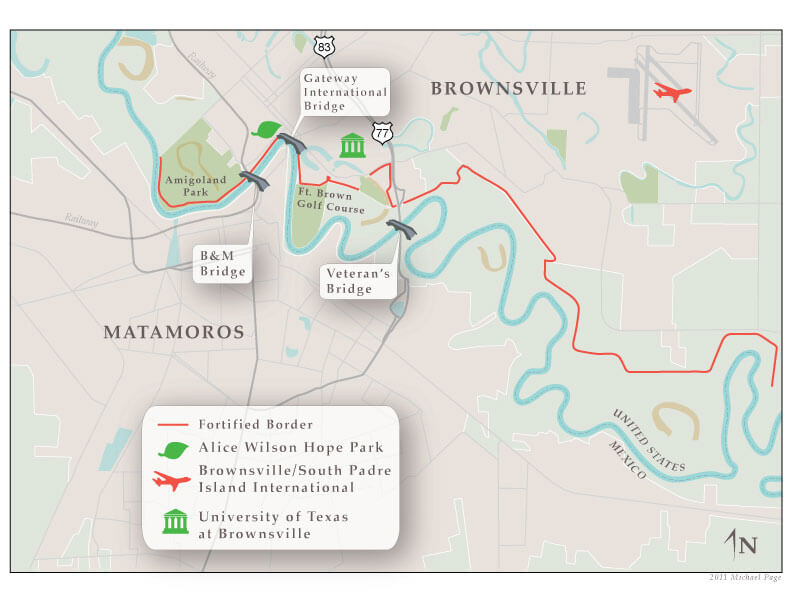
Harbage Page’s photographs concentrate on the beginning that the border represents and are suggestive of the trajectories that immigrants followed afterwards. The residues depicted in these photographs speak tentatively of a successful journey into the United States but also reflect the fate of those for whom the crossing meant imprisonment and deportation. Photographs taken at the border hint at the lives that migrants started in the United States, or suggest journeys truncated by border enforcement violence.1All photographs: Susan Harbage Page, Chapel Hill, North Carolina. Copyright © 2009 and 2010. All rights reserved.

Susan Harbage Page, Path into the United States from the Rio Grande, 2008.
This essay offers an interpretation of the Border Project’s intervention on the immigration public debate. By photographing the border area and the physical remnants of crossings that are not sanctioned by the law, the photographer highlights the institutions of coercion that characterize border control. The photographs offer a critical account of the danger and potential violence involved in the border crossing and, through that critique, suggest the need to come up with new imagined geographies of the border. By concentrating on the border, the photographer illuminates dimensions of this space that are hardly ever considered in a conversation that revolves around fortification, fencing, and security. The objects depicted can be identified as residues of border coercion—evidence that even tightly fenced borders offer, on closer inspection, unrounded edges, gaps, and traces. I suggest that the highlighting of these residues acts as a powerful sign of the unfinished status of even the most secured border, and by extension the possibility of changing the existing terms of the debate and ultimately the shape of the border and the options offered to migrants upon arrival.

Susan Harbage Page, Path into the United States from the Rio Grande, 2008.
Engaging with the space of the border through its openings and the residues of crossing and policing it disrupts the narrative of security that justifies an unending fencing. The fortification of the border is predicated on the dangers of the outside, justifying the extension of immigration policing within border spaces and into domestic areas.
The photographs do not portray the migrants; instead, they show objects such as single shoes that stayed behind, self-fashioned flotation devices, and identity cards. They do not impose identities on the migrants, but suggest their journeys and arrivals into the United States. They do not show encounters between Border Patrol officers and migrants, but they depict the rubber gloves and bullet casings. They do not follow immigrants into detention, but register the residue—detention bracelets and boxes with Department of Homeland Security tags. The objects are suggestive of the men and women who passed through the border; those who were detained, on the run, or abused in the United States; and those who sometimes returned across the border. Some of the items speak of the violence their owners went through, and their sight tells of pain and suffering produced by fortified borders.
Susan Harbage Page, Looking across the Rio Grande to Mexico, near Brownsville, Texas, 2010.
The clothing and personal belongings are muddy, and sometimes need to be unearthed from layers of mud and dirt. This layering and the different stages of shredding and decomposition of the clothing suggest chronologies.
Susan Harbage Page, Clothing left behind on the US bank of the Rio Grande, Brownsville, Texas, 2008.

Susan Harbage Page, Buried comb, Brownsville, Texas, 2010.
Susan Harbage Page, Argyle sock, Brownsville, Texas, 2007.
The photographs portray wet clothing left behind only a few hours before, as well as worn out pieces of clothing. The ground of the border is partly constituted through the accumulation of leftover clothes and personal objects and the repeated transit through the “safest” pathways. Immigrants who cross the river must change into dry clothes once they arrive on the northern side, to conceal the marks of their crossing. They carry a dry set of clothes in a sealed plastic bag, sometimes found empty and tied to the tires used as flotation devices. The actions of thousands of immigrants crossing the border are not inimical to the border but, through their passage, leave behind worn out paths and newly layered border geographies. Just as a fenced border constructs immigrants as dangerous trespassers, Harbage Page’s depiction of a layered and complex border space humanizes them.
Susan Harbage Page, Clothes and bottle, Brownsville, Texas, 2010.
Objects found and photographed are often private and reveal the identity of border crossers. Some have actual identifying potential, as they contain the border crossers’ DNA.
The portrayal of everyday objects makes migrants present. In contrast to prevalent images of immigrants as outlaws, the recognition of their journeys through the border and the difficulties involved are suggestive of their pain and open the possibility of a different kind of welcoming. The photographs change the framing of the border away from a security-maximizing stance and towards a depiction of immigrants as subjects. The conventional focus on the material strength of the fence and the inviolability of the border excludes immigrants as subjects of concern and of violence, preventing sympathy from those on the inside towards border crossers’ journeys. The security obsession of the immigration debate makes immigrants’ lives not grievable, not valuable. The photographed objects and the image of the border as a populated space and port of entry evoke humanity.2Judith Butler, Frames of War. When Is Life Grievable (London: Verso, 2009), 25.
Susan Harbage Page, Yellow toothbrush, Brownsville, Texas, 2007.
The populated border conveyed by the photographs contrasts with images and acts of humiliation.The law SB1070 in Arizona and, before that, the procession of immigrants dressed in prisoner outfits paraded by Sheriff Arpaio on the streets of Phoenix, offer photo opportunities for the news media.3Arizona Senate Bill 1070, signed into law on April 23, 2010, controversially makes it a misdemeanor to be an alien in Arizona without carrying registration documents and requires law enforcement officials to determine a person's immigration status if there is "reasonable suspicion" that the person is an "illegal alien." It also establishes penalties for harboring or transporting an undocumented immigrant and allows law enforcement to arrest any individual without warrant if they believe this person is “removable from the United States." The quantification of the “success” of enforcement in number of immigrants deported and the imposition of detention quotas on immigration police also dehumanizes immigrants.4Spencer S. Hsu and Andrew Becker, "ICE Officials Set Quotas to Deport More Illegal Immigrants," The Washington Post, March 27, 2010. The tires dragged by Border Patrol vehicles shown in the next photograph are used to erase tracks and identify fresh footprints. The erasure of the traces of border crossing maintains the image of fortification while marking immigrants as trespassers.

Susan Harbage Page, Tires dragged along roads by the Border Patrol to see fresh footprints left by immigrants, Brownsville, Texas, 2010.
The photographs of tagged Department of Homeland Security boxes represent the end of the immigrant journey. They single out the detritus of detention and deportation—traces of immigrants who have been denied spaces to live in the United States.

Susan Harbage Page, Department of Homeland Security boxes, Matamoros, Mexico, 2010.

Susan Harbage Page, Department of Homeland Security box with label, Matamoros, Mexico, 2010.
Personal belongings boxes labeled by the Department of Homeland Security still contain the information and pictures of the detainees and appear piled as trash in the street near the southern side of the Matamoros-Brownsville international bridge.5The practice of formally detaining border crossers (as opposed to simply returning them across the border) has become more prevalent since the implementation of Operation Streamline in 2005. See ACLU and National Immigration Forum, "Operation Streamline Fact Sheet," (Washington, DC: National Immigration Forum, 2009).

Susan Harbage Page, Department of Homeland Security box with contents, Matamoros, Mexico, 2010.

Susan Harbage Page, Garbage can with evidence bags, Matamoros, Mexico, 2010.
Instead of focusing on immigrants detained, policed, fenced, and deported, Harbage Page shows the border as a populated space, whose shape is indebted to the people who pass through. The photographs suggest welcoming, represented in the small Guía del Migrante (Migrant Guide) prepared by Grupos de Protección al Migrante (Migrant’s Protection Groups) and distributed in border towns, whose back cover can be seen below. The leaflet, found on the Mexican side, tells a story of hope for safe passage.
Susan Harbage Page, Migrant Guide, Brownsville, Texas, 2010.
Clothes and objects left behind are as much traces of the identities of migrants as ID cards that non-Mexicans are keen to drop at the border to avoid being returned to more distant countries. This is the transition to a life of invisibility that the existing immigration regulations impose upon migrants without documents. Clothes left behind remind what the inauguration of immigrants’ presence in this country involves. Wet clothes are discarded as immigrants mix with the overwhelmingly Mexican-American population of border towns. The items in the photographs represent first actions taken by border crossers to hide their identity, practices that will continue to characterize their lives as undocumented immigrants in the United States.
The violence involved in border control is narrated through its residues, bullet casings, and detention gloves. Department of Homeland security boxes grant new identities to migrants who were detained—preventing their legal entry for years to come, expediting their deportation if they were to enter again.
Susan Harbage Page, Bullet casings, Brownsville, Texas, 2010.
The photographic evidence of official coercion—bullet casings, gloves, and detention bracelets—disrupt the impressions of fortitude, inviolability, and certainty that the border fence presents.

Susan Harbage Page, Medical glove, Brownsville, Texas, 2008.
The photographs question the assertion of territorial borders. Picturing these objects, tying them to narratives of the travelers who left them behind, and opposing them to the certainty of sovereign borders challenges the rules that seek to hide hesitancy, space for contestation, or room for debate.
Susan Harbage Page, Department of Homeland Security Baggage Check tag, Brownsville, Texas, 2010.
The addition of a map produced by an immigrant that traces her family’s trajectory adds to the welcoming stance of this project by incorporating immigrants as narrating subjects and by recognizing their journeys.6The map traces the journeys into the United States of members of an adult ESL course Harbage Page taught with Lauren McGrail and Dani Moore called Project Focus. It was a collaboration between Voices and Casa Multicultural and was funded by the North Carolina Community College System and the Durham Arts Council, 2000. The image is a page from an alphabet book produced in class. The maps are Polaroid images of a large map in the classroom where each student marked their journey from their home country to Durham, North Carolina with string. The writing was done by Guillermina Flores Godinez. According to the latest census data, among the top ten states in terms of growth in immigrant population between 2000 and 2009, eight were southern states.7Migration Policy Institute, “States Ranked by Percentage Change in the Foreign Born Population” Migration Policy Institute Data Hub (Migration Policy Institute, 2011). These figures explain why the South has been identified as one of the “new” immigration destinations, areas that, unlike California, Florida, New York, and Texas, were not traditional “immigrant states” until the last two decades. Jamie Winders refers to the US South as one of the “nontraditional” destinations for the Latino immigrant population, whose rates of growth have reached up to 500% in certain cities between 1990 and 2005. Jamie Winders, "Changing Politics of Race and Region: Latino Migration to the U.S. South," Progress in Human Geography 29, no. 6 (2005): 683-4. The 2010 census reflects this phenomenon, showing that those “areas that had been home to the most immigrants” show a flat growth in “foreign born population” while some rural and suburban areas with less than 5% of immigrant population in 2000 show increases of more than 60%. Sabrina Tavernise and Robert Gebeloff, "Immigrants Make Paths to Suburbia, Not Cities," in The New York Times (New York: 2010). Even in terms of the absolute increase in foreign-born population, three out of the top ten states, excluding traditional destinations Texas and Florida, are southern: Georgia, Virginia, and North Carolina.8Migration Policy Institute, “States Ranked by Numeric Difference in the Foreign Born Population” Migration Policy Institute Data Hub (Migration Policy Institute, 2011). The Pew Hispanic Center 2010 census tabulations of growth in Hispanic population (i.e., not necessarily foreign born) show that South Carolina, Alabama, Tennessee, Kentucky, Arkansas, North Carolina, and Mississippi figure among the top ten states. Immigrants from Mexico, the Caribbean, Central America and South America constitute approximately 53% of the total foreign born population. In Georgia, Virginia, and North Carolina they make up 54.5%, 36.1%, and 57.3%, respectively. See Tables 3 and 13 in Pew Hispanic Center “Statistical Portrait of the Foreign Born Population in the United States, 2009” in Pew Hispanic Center February 17 (Pew Research Center, 2011). The increase in the immigrant and—in particular—Latino population adds a new dimension to the troubled racial history of the South. These individuals fill the ranks of agricultural and construction workers and face discrimination, vulnerability in the workplace, and racially-targeted immigration enforcement.9Nicholas De Genova, "The Legal Production of Mexican/Migrant "Illegality"," Latino Studies 2, no. 2 (2004), Guillermina Gina Núñez and Josiah McC. Heyman, "Entrapment Processes and Immigrant Communities in a Time of Heightened Border Vigilance," Human Organization 66, no. 4 (2007); Inés Valdez, "Sovereignty and the City: Raiding, Detaining, and Domestic Immigration Policing" (paper presented at the Annual Meeting of the Western Political Science Association, San Francisco, April 3-5 2010); Mathew Coleman, "The "Local" Migration State: The Site Specific Devolution of Immigration Enforcement in the US South," Law & Policy forthcoming (2011).
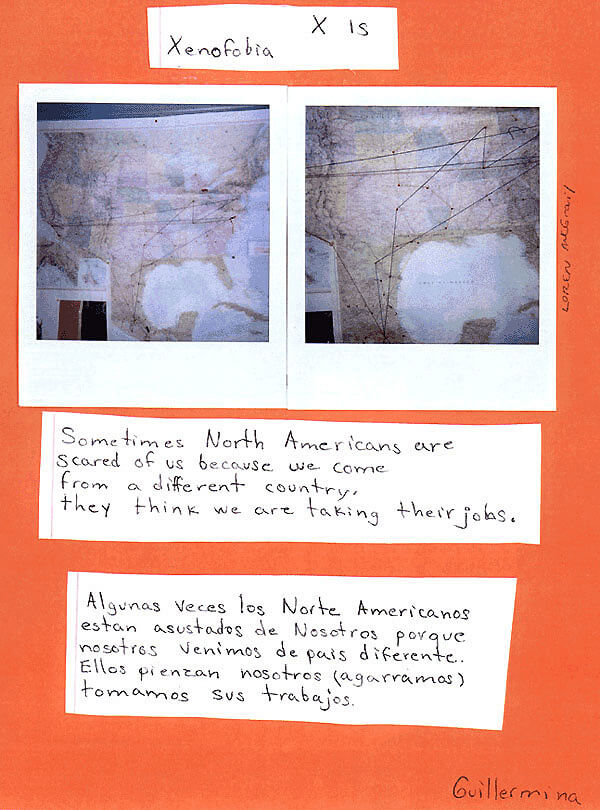
Susan Harbage Page, Map and page from Alphabet Book tracking the journeys of adult ESL students into the United States, Durham, North Carolina, 2001.
Museums and the Upsetting of the Narrative of the "Nation of Immigrants"
If we were to rely on museum collections, we might get an impression of a much richer level of material wealth than truly was the case. This is because most museums save the unusual and the valuable object, and individuals now and in the past consign commonplace objects to the dump.
–James Deetz, Small Things Forgotten: An Archeology of Early American Life
When the objects found at the border are re-photographed in the artist’s studio their narratives are complicated by a new frame suggesting that the items now form parts of an exhibition. The stories they tell are neither confined to the past nor officially sanctioned. The objects contest the invisibility on which border coercion relies and challenge the discourse of fortification. In these images, Harbage Page chose background colors for their similarity to the palette that she encountered in her excursions in the Rio Grande Valley.
At the start of a decade that became characterized by anti-immigrant legislation, the Ellis Island Immigration Museum opened in 1990. Even as the museum celebrated the twelve million immigrants who went through its doors between 1892 and 1954, the US Congress passed restrictive immigration legislation and attached anti-immigrant provisions to crime, welfare, and anti-narcotics legislation.10Desmond King and Inés Valdez, "From Workers to Enemies. National Security, State Building and America’s War on Illegal Immigrants," in Narrating Peoplehood in Plural Societies: The United States, Canada and Denmark in Historical Experience and Theoretical Perspective, ed. Michael Bøss (Aarhus: Aarhus Academic Press, 2011). Ellis Island, as a space of memory, resulted from a complex interaction of actors and perspectives, including the Immigration History Society, the National Park Service, the Statue of Liberty-Ellis Island Foundation, as well as corporate actors in charge of the architecture, oral history recollection, and the catering and gift shop concession.11President Reagan launched the project of the museum on occasion of the centennial of the Statue of Liberty in 1986. He moved Ellis Island to the purview of the National Park Service, merged it with the Statue of Liberty and created a public-private partnership that was led by Lee Iacocca, himself the son of an immigrant and the American dream come true. Luke Desforges, "Front Doors to Freedom, Portal to the Past: History at the Ellis Island Immigration Museum, New York," Social & Cultural Geography 5, no. 3 (2004). In spite of the diverse interpretations of the narratives that the Ellis Island Immigration Museum puts forward, the immigration experience of Western Hemisphere migrants and, in particular, of Mexicans is only marginally acknowledged. Moreover, the identification of 1965 as the definitive end of unjust immigration regulation (through the abandonment of the national origin quotas) obscures the fact that the Hart-Celler Act is the same law that for the first time has limited immigration from Mexico and Latin America.12De Genova, "The Legal Production of Mexican/Migrant 'Illegality.'", Judith Smith, "Celebrating Immigration History at Ellis Island," American Quarterly 44, no. 1 (1992): 85.
Museums, and their inclusions and exclusions of artifacts, play a central role in the “production and legitimation of historical knowledges and social identities” and in the United States’ narrative as a “nation of immigrants."13Desforges, "Front Doors to Freedom, Portal to the Past: History at the Ellis Island Immigration Museum, New York," 437.
Setting aside the question of whether the Ellis Island Immigration Museum is able to critically tackle issues of politically-motivated detention and deportation, or even the racism of popular culture in the early twentieth century, it fails to make explicit connections to the role of race, detention, and deportation in contemporary America. Its narrative carves in stone a “good immigrant” story, while evading critical awareness about the management of current immigration flows.14A wall with over 700,000 names (at the time of writing) exists in Ellis Island. Individuals or families can add their names for a fee of $150. Entries are received for all ports of entry and years of arrival, with the common element being the “celebration of American migration” (see the museum’s site for the wall of honor). The opening of the “wall” to all immigrants is significant and worthy of praise, yet the story that is portrayed by the museum is still devoted to the earlier migratory wave, one restricted in time and not predominantly originating in the Western Hemisphere.
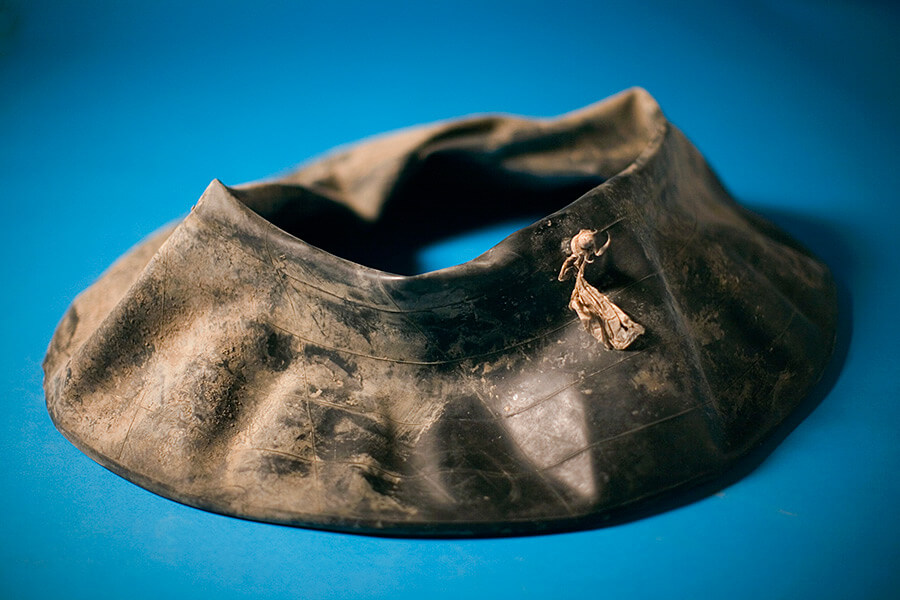
Susan Harbage Page, Archive photo, Tire, 2010.
Invoking the Ellis Island Immigration Museum vis-à-vis Harbage Page’s photographs of the “residues of border control” highlights the connections between nostalgic narratives of a nation of immigrants and the disavowal of contemporary stories of immigration taking shape at the US–Mexico border. The re-staging of the objects picked up in the border interpelates museums and exhibitions that omit these stories. The bullet casings and detention bracelets tagged and photographed in the studio defy (and make retrospective) the inclusionary bent of the “nation of immigrants” narrative. The staging of these objects as if they belonged to an archive or a museum collection plays with the fact that these items would not be granted entry to these realms.15The photographs in fact represent the physical archive that is being created and kept by Harbage Page.
In putting together the archive, the photographer asserts the importance of a marginal area and of seemingly marginal objects. The Border Project’s mundane objects do not passively back up a rehearsed story but convey the continuous flow of individuals, the encounter between border crossers and Border Patrol officers, and the deployment of state power over this liminal space. The photographs and the physical archive prompt conversation that is about the present and imagined futures.
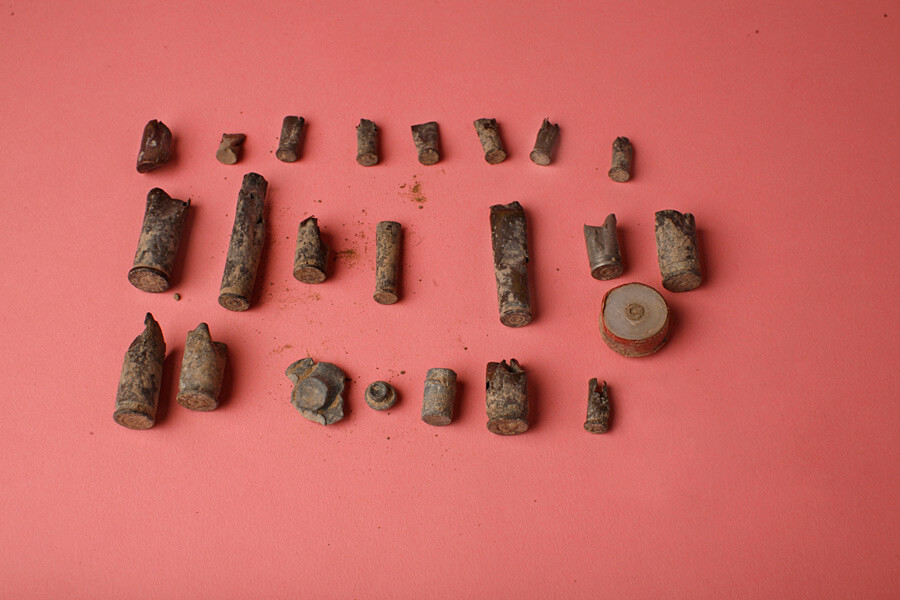
The Border Project insists that immigrant identity is continuously transformed through successful and truncated journeys, newcomers, and settlement. Resisted by the mechanisms of border coercion and fortification, immigrant identity is remade by the individuals who leave their traces along the border.
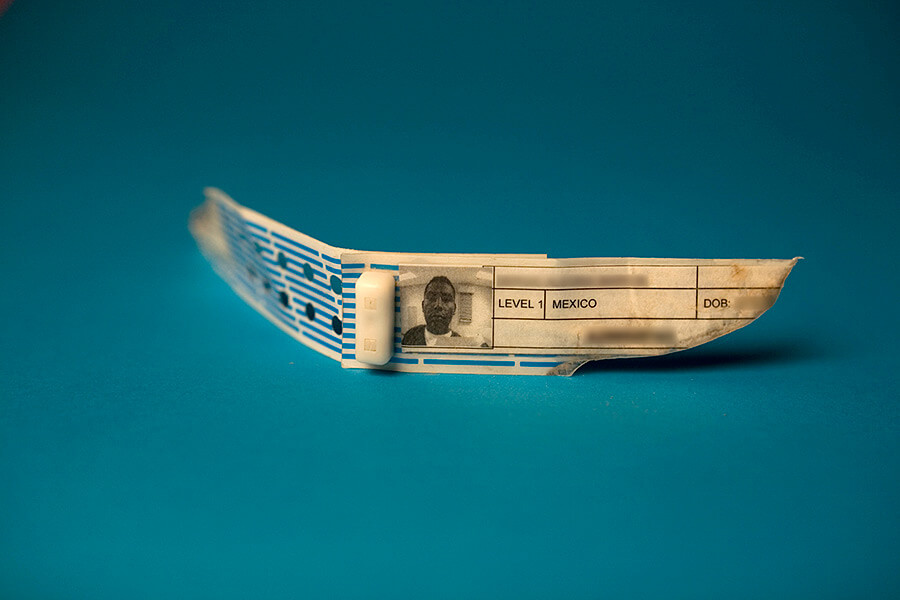
Susan Harbage Page, Archive photo, Detention Center bracelet, 2010.
Susan Harbage Page’s photographs are welcoming not only of the individuals who are evoked through personal objects, but also of new narratives of migration and newly acquired identities. Because these photographs are too closely intertwined with the present and convey urgency, they refuse to memorialize a tightly packaged story of immigration and nationalism. By showing the residues of border crossing and the traces of coercion, these photographs invite a rethinking of the ways immigration is discussed.
About the Authors
Susan Harbage Page is an instructor in the Department of Art and an affiliated faculty member in Women's Studies at the University of North Carolina at Chapel Hill. In 2004, she received her M.F.A. in Photography from the San Francisco Art Institute. Her work has been displayed in over one hundred exhibitions, at venues including the Corcoran Museum of Art in Washington DC and the Boulder Museum of Contemporary Art in Colorado. Susan's research has been supported in part by a faculty research grant from the Center for the Study of the American South at the University of North Carolina (2007) and a North Carolina Arts Council Fellowship Grant (2010).
Inés Valdez will receive her PhD in Political Science at the University of North Carolina at Chapel Hill in the summer of 2011. She has been awarded a Max Weber Postdoctoral Fellowship at the European University Institute in Italy. Her research, forthcoming in the journal Political Studies, examines questions of sovereignty, immigration and democratic theory.
Acknowledgements
The authors thank the editorial staff at Southern Spaces and anonymous reviewers for helpful criticism and guidance.
]]>