Introduction

The catfish didn't miss the current. They'd never known it. They lapped the pond all day like pace cars. At feeding time, they thrashed for their share of pellets. The farmers bred them for size and taste and texture and profit. They swam around in that little man-made lake and waited for the chopping block and the flash-frozen package. Their bodies were bullion. There were others of them, wild ones, who lived in the open waters of the river to the west. They sometimes got caught on the trotlines of grizzled river rats. Mostly they grew big as they pleased and swam deep into the crevices of the underwater earth. Fisherman told stories. "Whiskers big as bullwhips." They saw fleeting visions of this barnacled ghost ship. If you caught and ate it, they said, you'd gain all the wisdom of a century. It was part whale. Too big for the line. You could tell by the waves it made breaching the surface.
A white plantation owner in Money, Mississippi, pointed a shotgun at his father's head and threatened to blow it off, Ed Scott Jr. told me in 2013. This happened in the 1920s, when Scott was a boy. Three decades before the murder of Emmett Till put Money on all the wrong maps. The death threat was because Scott's father—who had brought his wife and children to the Delta in 1919—dreamed of being a black landowner instead of a sharecropper.
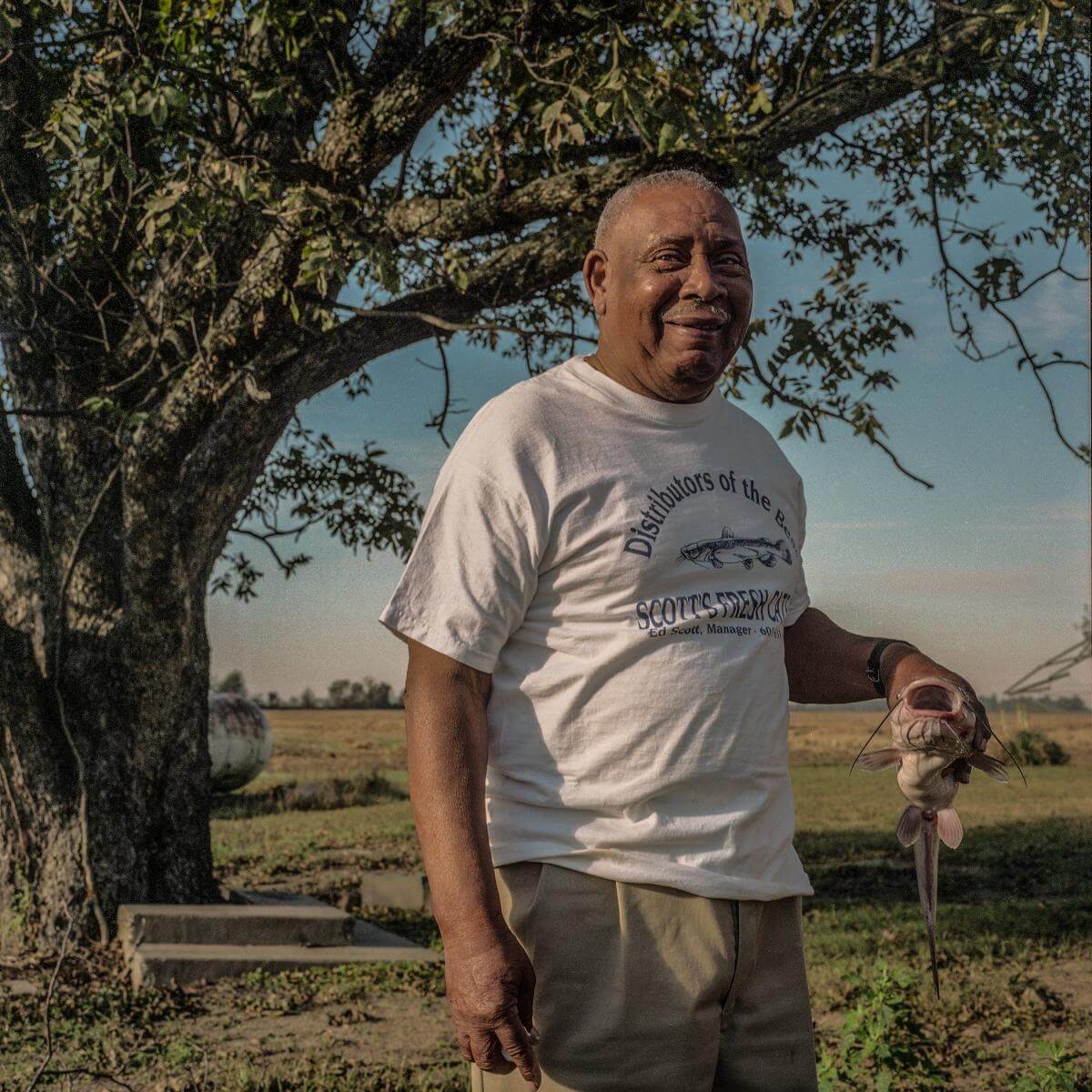
Ed Scott Jr. and I sat together in the cool-dark A/C. I sat on a stool, he reclined in an electric wheelchair. It was my first visit with him. He recounted more to me, of his tours in World War II ducking Nazi sniper fire with General Patton. How his return home to racism in Mississippi was, as James Baldwin wrote, like "a certain hope had died."1James Baldwin, "Letter from a Region in My Mind," New Yorker, November 17, 1962, https://www.newyorker.com/magazine/1962/11/17/letter-from-a-region-in-my-mind.
"[The people back home] didn't care about us no way," Scott said, speaking of whites' reception of black veterans. "They didn't want to see you with that uniform on back then. I was proud of that uniform, but I wasn't proud of Mississippi. Wasn't proud of Mississippi at all."
On the plight of the black soldier, Baldwin writes that he was "almost always given the hardest, ugliest, most menial work to do."2Baldwin, "Letter from a Region." After the war, Ed Scott stayed on the farm to help his father, who had then amassed hundreds of acres of Delta farmland. Scott's dream was not that the work wouldn't be ugly, or hard, or even menial. But that it would be his own work. That he would be his own master.
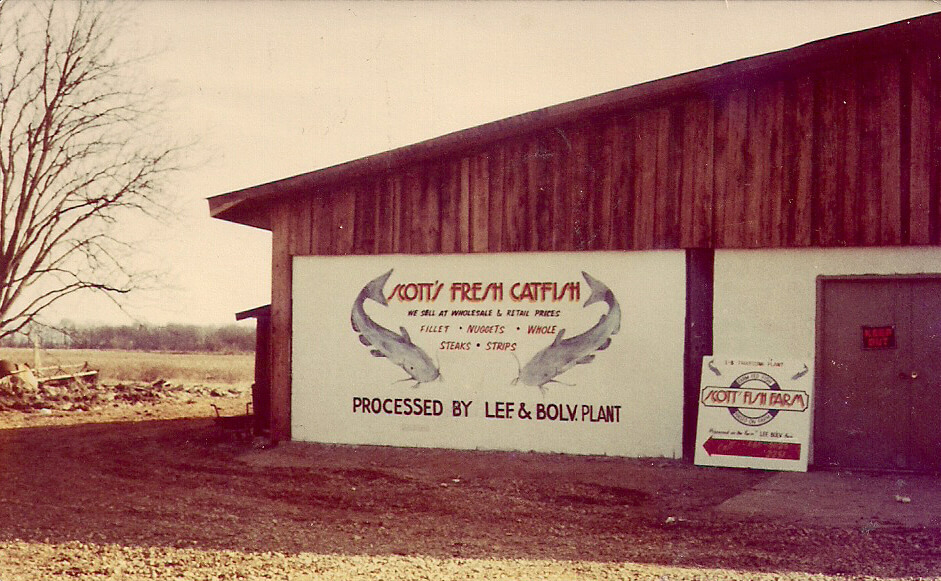
Scott made miracles in the cotton field, not far from Fannie Lou Hamer's visionary Freedom Farm. He carried food, prepared by his wife Edna and their children, to civil rights marchers and followed Dr. King to Selma and across the storied Edmund Pettus Bridge. He cleared a million dollars in rice in 1978. In 1983, at the height of his climb, Scott became the first ever non-white owner and operator of a catfish plant in the nation's history. It was a dream fulfilled. It was an act of necessary resistance against an industry, a government, and a society whose very identities seemed predicated on the subservience of black laborers.
"My motto is don't stop chasing your dream," Scott liked to say. "And that was my dream. To grow these catfish. Which I did."
From that first meeting with Ed Scott in 2013, I knew I wanted to write a book about his life. Over the course of the next several years, I would interview Scott, his family, his contemporaries, his lawyer. The Scott odyssey is now told in the pages of Catfish Dream: Ed Scott's Fight for His Family Farm and Racial Justice in the Mississippi Delta (University of Georgia Press, Southern Foodways Alliance Studies in Culture, People, and Place series).
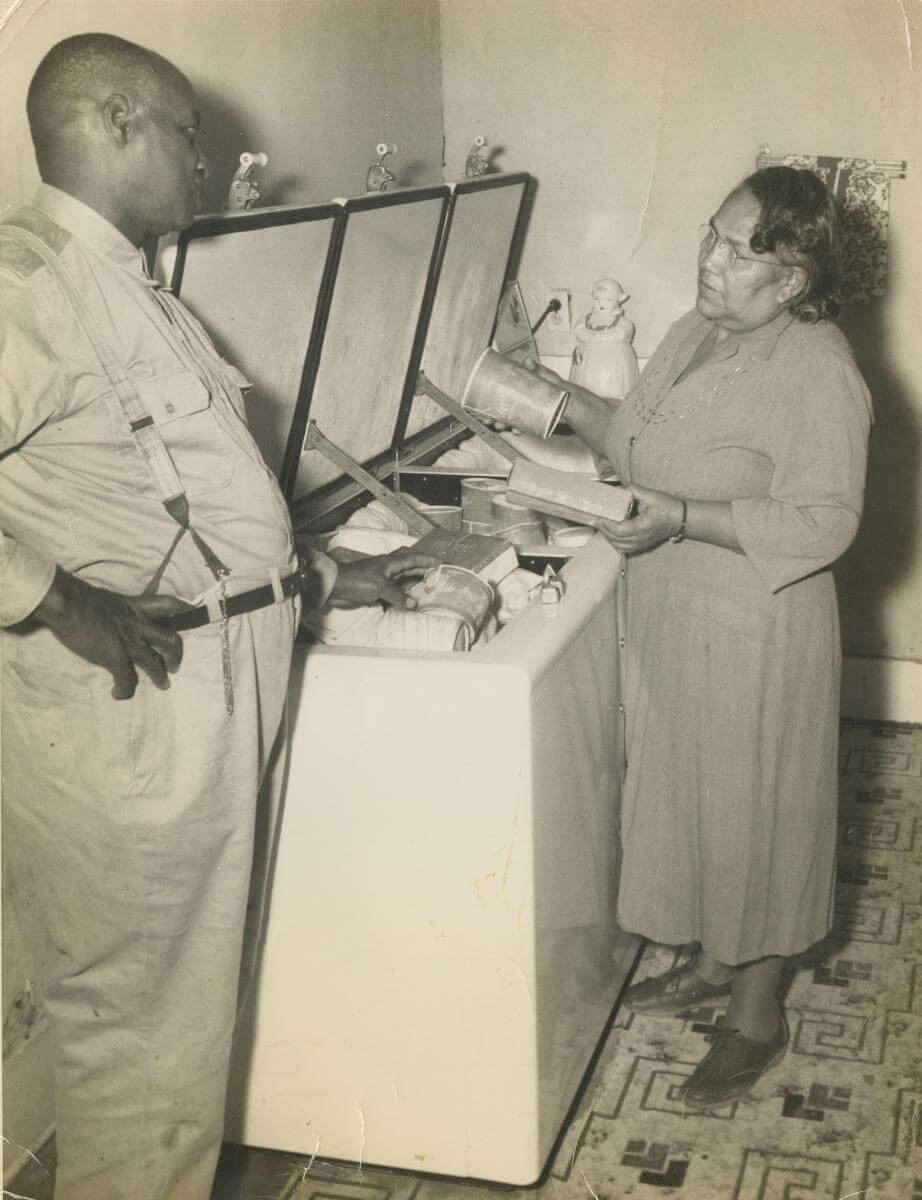
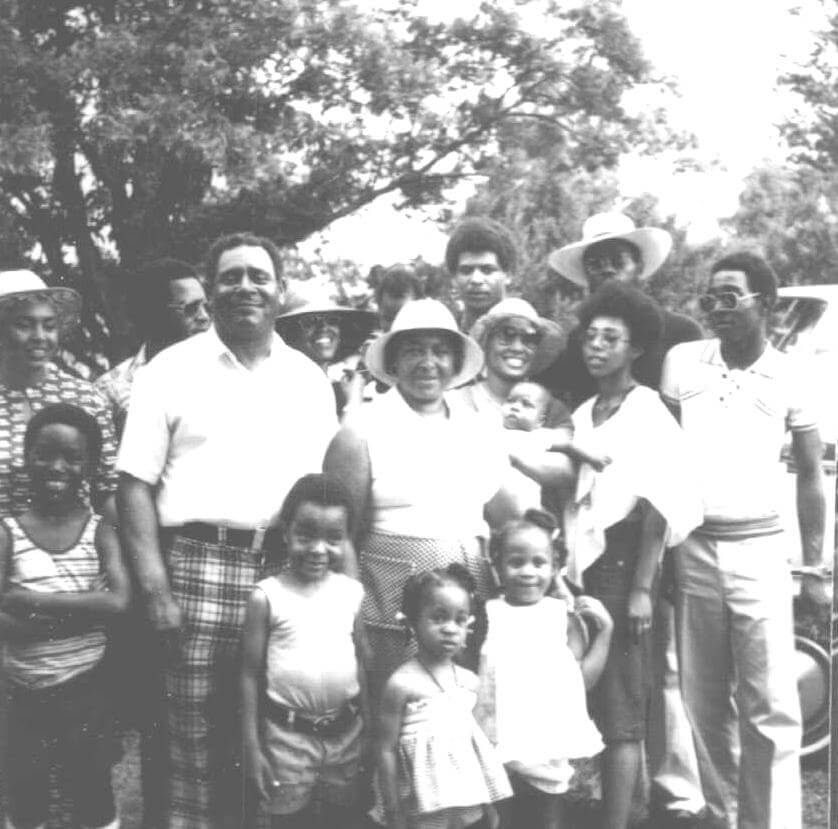
Ed Scott was not alone on the journey. He modeled himself after his father, Edward Scott Sr., a sharecropper-turned-landowner who brought the family from Alabama to Mississippi in 1919. (When Scott's mother, Juanita, pleaded to Edward Senior for a return home, away from Mississippi meanness, Edward Senior replied, resolutely, "I believe I could stay in Hell one year if I knew I could move out the next.") Ed Scott took the reins of the farm and joined forces with his wife, Edna Ruth Scott, whose own father was a community organizer and prodigious farmer in nearby Mound Bayou. He partnered with his siblings and children and extended family and neighbors—including the group of black women nicknamed "the Dependables" who served as his catfish special forces. The Scotts' roots run deep. They believe in legacy and namesake.
"You never know why God let that last child be named Edward," said Rose Marie Scott-Pegues, Ed Scott's eldest daughter. "He was more like his father than any of [the other] children. [His] thing is, 'I don't want you to sell any of my land. Ever.' And I'm looking at this a million years from now. . . . This land will still be Scotts' land.
I exited the Scott home after my first visit with the Scotts, into the Delta heat as if from a sheltered cave. The orator's cadence had slowed and warped time. It had felt like days, or decades, or all time. As I drove away, these are the things I was thinking about.
1990
Worms ain't got no feets. A page in a handmade book. A caption to a hand-scrawled illustration. An earthworm with four legs and Converse. Drawn by Annette, my afternoon babysitter, a high school senior, a young black woman who chewed her gum only until the sugar ran out. This in blink-and-you'll-miss-it Shaw, Mississippi, not far from where I would later sit with Ed Scott and hear him unfurl his tale. Out of the dirt and onto the page, through the dreamy veil of imagination, the worm with feets came. My first acknowledgement of mythmaking.
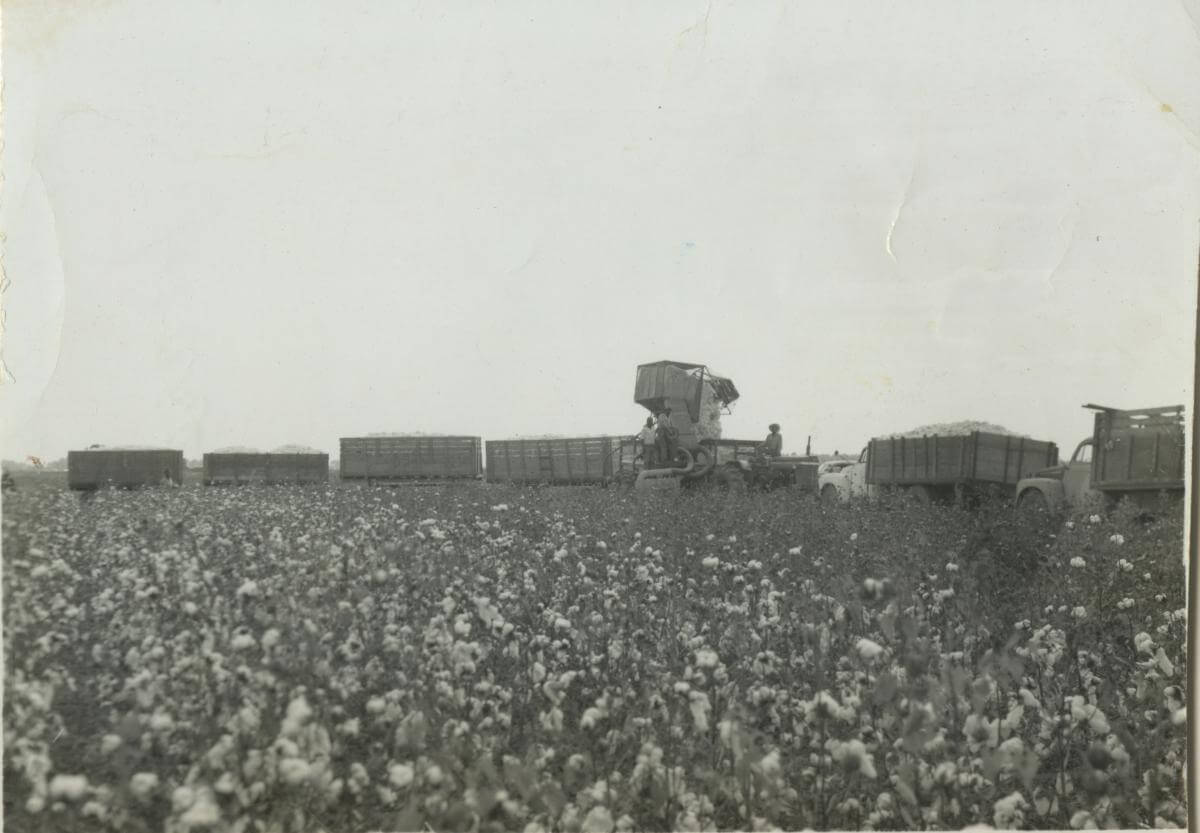

What does the Delta grow? Cotton, yes, the empire of it. The stalks like phalanxed soldiers and the bolls their thorny white heads. Propagated in postcards and genre paintings as widely as it was ginned and shipped. That is to say, all over the globe. Then rice, which Comet and Uncle Ben's came down to bid on. It, mostly white, too. Soybeans came. And corn. More than you could haul. Then catfish; out of the muddy river and into the aerated pond. But Mississippi's fertile crescent grows more than its commodities. It spawns paradox and polemic. Starkness and cacophony. Plenty and need. And of course, black and white.
My childhood home backed up to the Shaw High School practice field. For most of the hours of the day, it was quiet, until the band marched out to play. They stomped the earth and cut divots in the grass with their heels and rattled my existence. To me, their appearance was alchemy. Like rolling thunder shaped into flesh and bone. Fulfilling the latent potential of the field.
Other things the Delta grew then and still does. One-of-a-kind stores, forever "un-chained," with esoteric signs. Autocrats, plutocrats, democrats. Ramblers and gamblers. Day laborers, night laborers, nightcrawlers. Cottonmouths. Plantation houses on Indian Mounds. Jukes. Blues. Open roads. Dark and lonely cells. Government assistance. Government neglect. Lots not yet vacant but long past occupied. Ribs, bibs, bibles. Sunday dinner. Roadside eats. Potato logs on a hot tray under a heat lamp. Lessons. Teachers. Strong women—mothers and daughters, activists and administrators—who hold it all together. It spawns proximity, to the sinful roots of the nation and to graveyards and to ghosts. And also distance, an elusive recalcitrance to ever being pinned down or fully made sense of or tied neatly together. Undone shoelaces swinging on a tuba player in a marching band stampede. The notion that worms ain't got no feets coupled with the inkling that in the Delta, they probably do.
I was thinking about these things on the day after I first spoke with Ed Scott. Because in 1990, when my eyes were opening to the whole wide world, the Scotts were fighting it just a few counties away. Using a catfish as a club and barely hanging on. And I'd had no idea.
2013
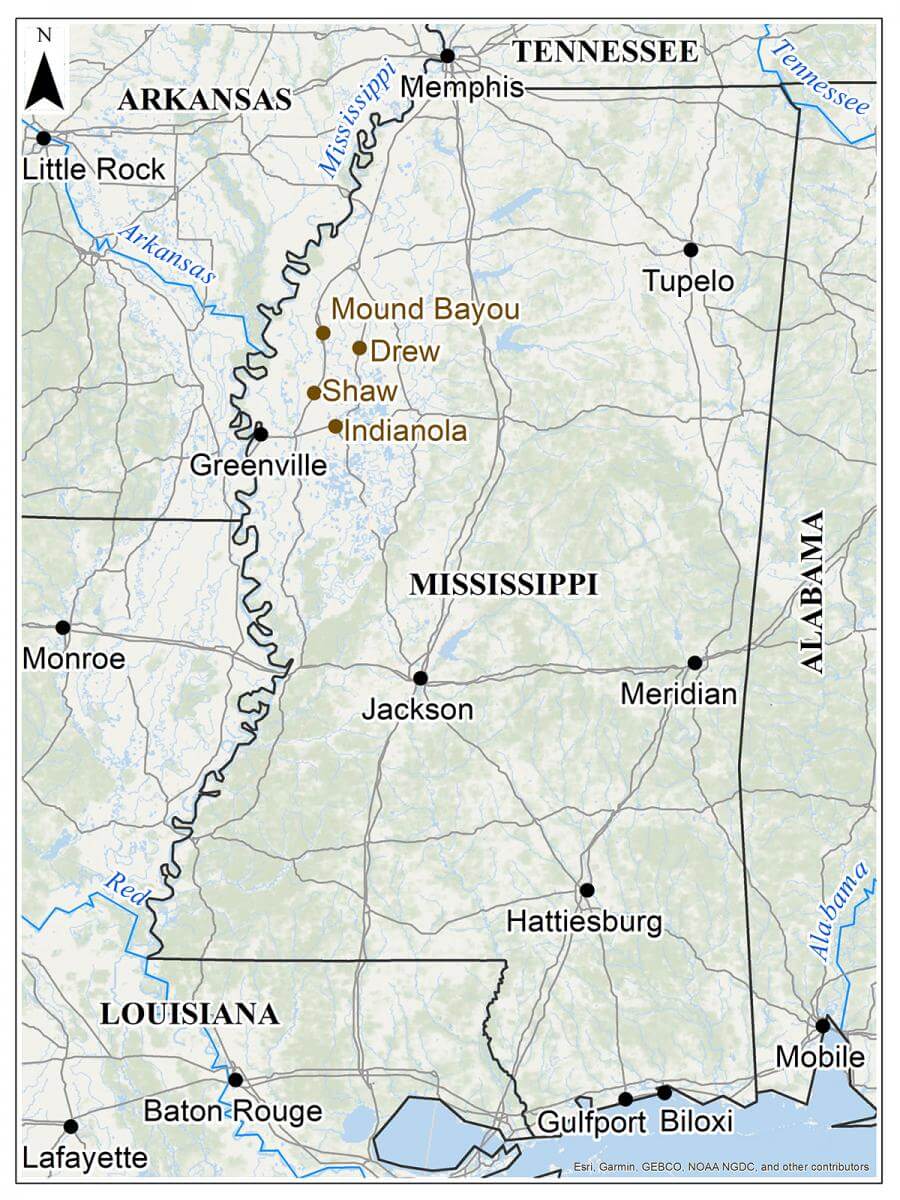
Ed Scott's grandson, Daniel Scott, took me through the ruins of the catfish plant. It had opened in 1983 to fanfare with a ribbon cutting and music and a contest to see which of the workers could hand-filet fish the fastest. Commissioner of the Mississippi Department of Agriculture and Commerce Jim Buck Ross looked on in his cowboy hat. He later said in a press release that "an operation with this early success is certainly a credit to our people, creating new employment at a time it is most needed."3"Mississippi Boasts First Black-owned Catfish Plant in U.S.," Mississippi Department of Agriculture and Commerce press release, March 3, 1983.
This plant shouldn't have existed. It had been an old tractor shed, and Scott built his crowning achievement atop the bones after the local white processor refused to sell him stock so that he could process his crop like all the other farmers. When he found this out, he set up a tour of that Indianola, Mississippi plant. On the way through, the tour guide asked Scott whether he had stock in the plant or a relationship with any live haulers who would take his fish. "Nope," Scott said.
"Well, what the hell you going to do with your fish, eat 'em?!"
"Something like that," Scott told the man. "I'm down here now seeing what you're doing. I'm going to clean my own fish."
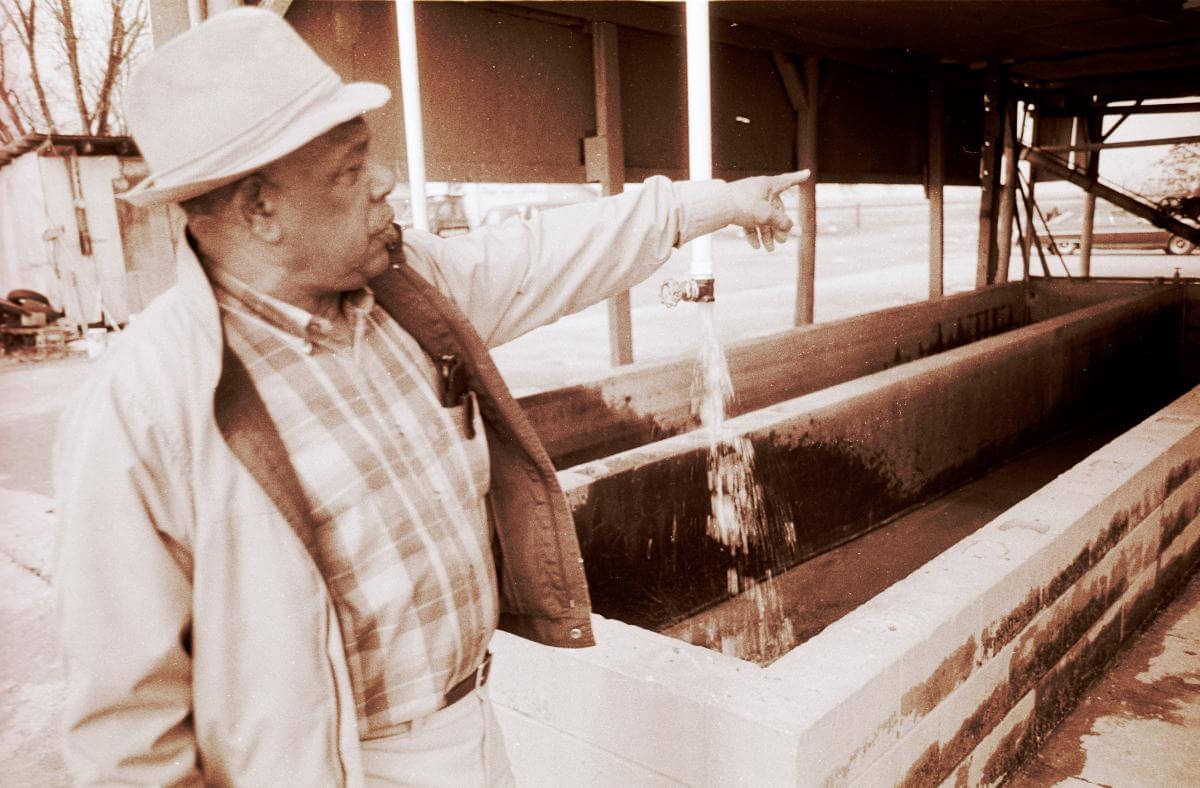
To tour the plant was to be forced to imagine what was and what might have been. Paint had faded, beams had fallen. An old television sat on the floor beneath a ceiling that was no more. Handwashing and "employees only" signs refused to budge, even while the rest of the building slowly reverted back to Delta wild. The plant closed around 1990, surviving even after the government foreclosed on the land and snatched the fish from the ponds. And in tandem with the white-dominated industry, the government constricted the flow of catfish that Scott had been buying, cash, to process and take to market himself. The plant closed at a time when national chains like McDonald's and Church's Chicken were experimenting with catfish on the menu. There was great promise for the Scotts nationally, coupled with great resistance against them locally. Under the pressure, the Scotts lasted for as long, and longer, than anyone could have imagined.
"And it was real sad because people was trying to get him out of business," said plant worker Lillie Watson-Price. "Oftentime he didn't get the finances that he need to continue to grow his own fish. . . . So what he started doing is buying the fish. Or getting it on credit. And that only lasts for so long. And they would come, and bring the fish and bring the fish and bring the fish. It was good, for a while. . . ."
"Watch your step, too," Daniel Scott told me on the way through the plant site. "That was like a storage room. That was the break room. They would change clothes, the workers."
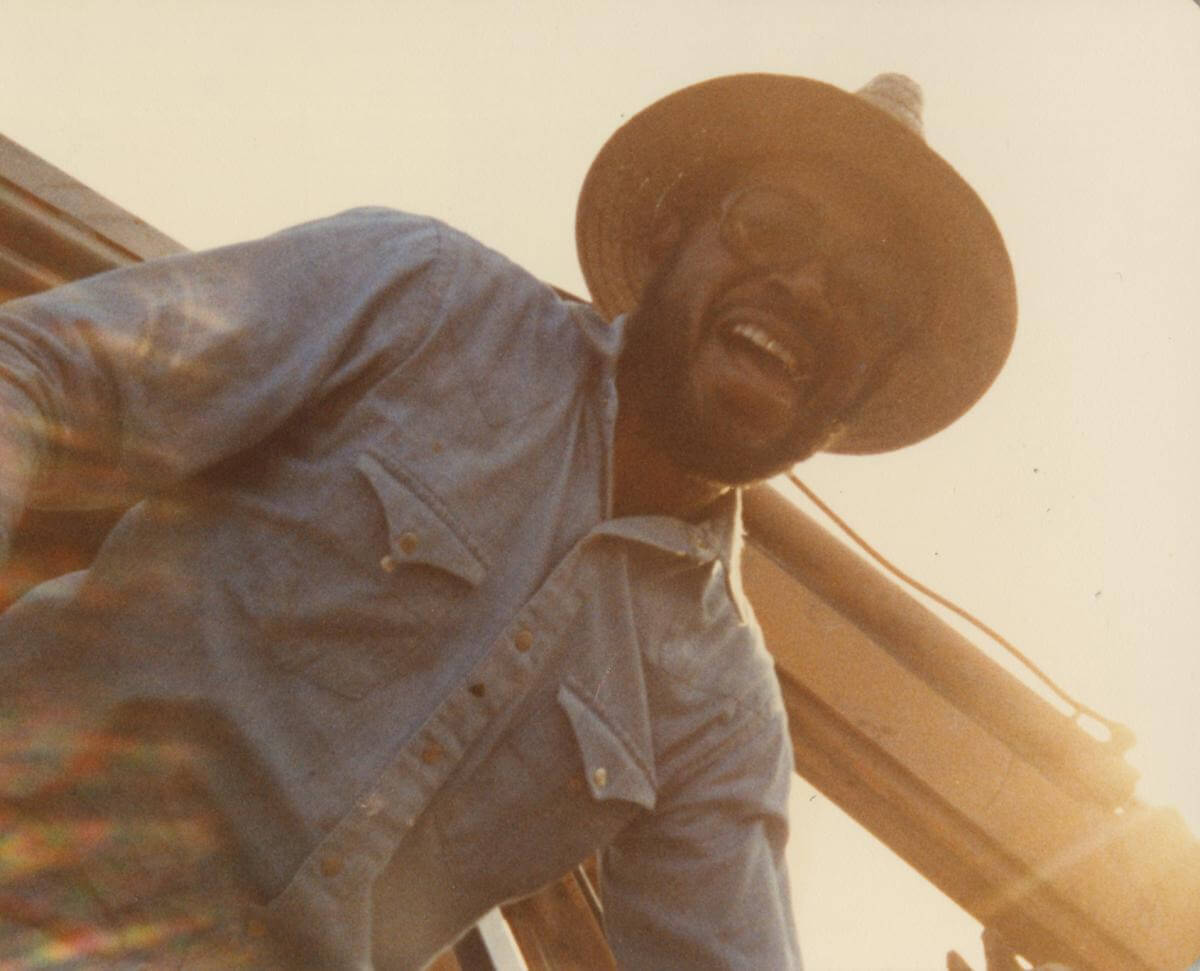
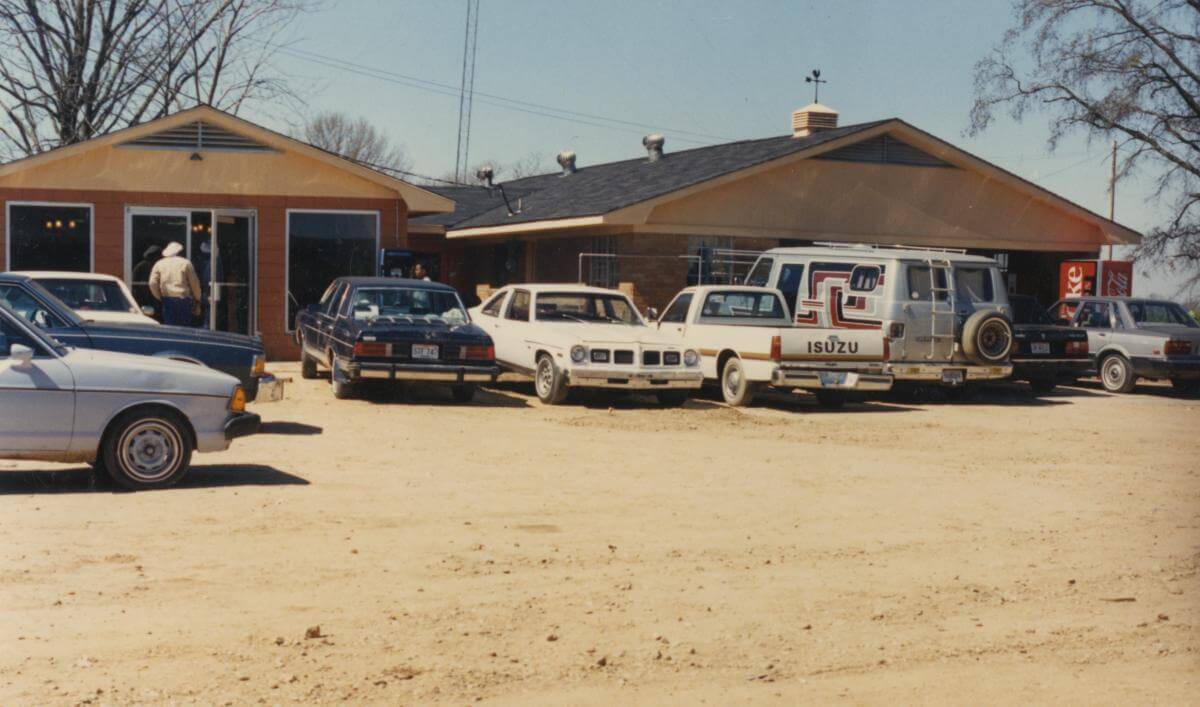
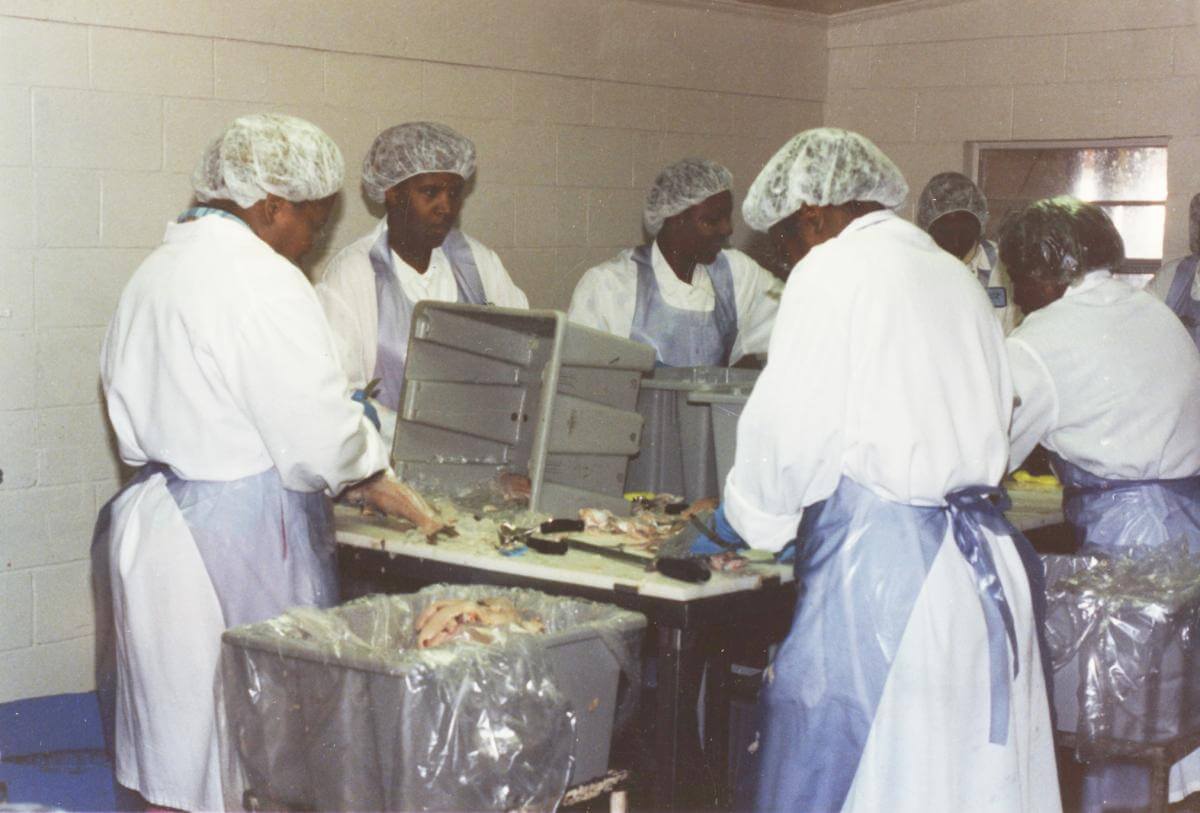
Daniel recalled his time at the plant as a teenager. He was working the skinning line and lost a fingernail. Snatched right off. Another time, he nearly cut off his finger on the bandsaw. If I could have gone back to 1990, in the plant's final days, I would have seen the Dependables processing tens of thousands of pounds of fish a day. I would have heard them laughing, seen them grinning, felt their pride at working a dignified job, however odious and blood-soaked it may have been. The workers were almost exclusively African American, as they were at the other processing plants. There, carpal tunnel and sexual assault was rampant. But here, Scott's workers prospered. I could have peeked around a corner and seen them joshing between shifts, throwing cubes of ice, concealed in their pockets, at each other's backsides. At lunchtime, I would have walked a hundred feet across the gravel parking lot to the Scotts' home to eat, where Edna Scott had opened her own kitchen and cafeteria to feed the workers and surrounding farmers with fried fish and the bounty from her garden patch.
James Baldwin, reluctant optimist, spoke about the gap between dreams and reality. "Until the moment comes, when we, the Americans, we, the American people, are able to accept the fact . . . that on that continent we are trying to forge a new identity, that we need each other, that I am not a ward of America, I am not an object of missionary charity, I am one of the people who built the country—until this moment comes there is scarcely any hope for the American dream."4James Baldwin, Debate: Baldwin vs. Buckley, the Cambridge Union Society, Cambridge, UK, February 18, 1965, broadcast by the National Educational Television Network, https://www.youtube.com/watch?v=VOCZOHQ7fCE.

When I was small, I heard much about problematic patriarchs. They littered my history books and struck smart poses. In civics class, we studied rhetorical structure and theoretical justice. I heard tell of trickle-down economics and bootstraps. There was an absence. All the people left out of this scheme.
Within the unfair system, there are outliers like the Scotts who make strides against the odds. Their summits are worth celebrating, even as they remind us that such climbs are precarious. They illustrate what the American dream should mean. A parcel of land, hard won, that endures across the generations. An enterprise, built through collaboration, with wealth that flows outward and downstream. A system made not solely by patriarchs but by extended families who share in the labors and define their collective futures.
"Those bees are back," said Daniel Scott, pointing to the rafters of the disintegrating processing plant. "You hear them. I thought they was gone. It's crazy, ain't it? How time will do shit?"
Ed and Edna Scott's children—especially Isaac Scott and Willena Scott-White—have restored the lost acreage, gone for thirty years to unjust foreclosure. The overgrown fields have been disked and re-planted with rice and soybeans, steadfast crops of twenty-first century Mississippi. Isaac Scott, who learned to farm from his father, now employs GPS on his combine. Willena Scott-White has plans for the Delta Farmers Museum and Cultural Learning Center in Mound Bayou to keep the stories of black farmers alive. The Scotts taught me that America's story is still being written, and all are authors of it.
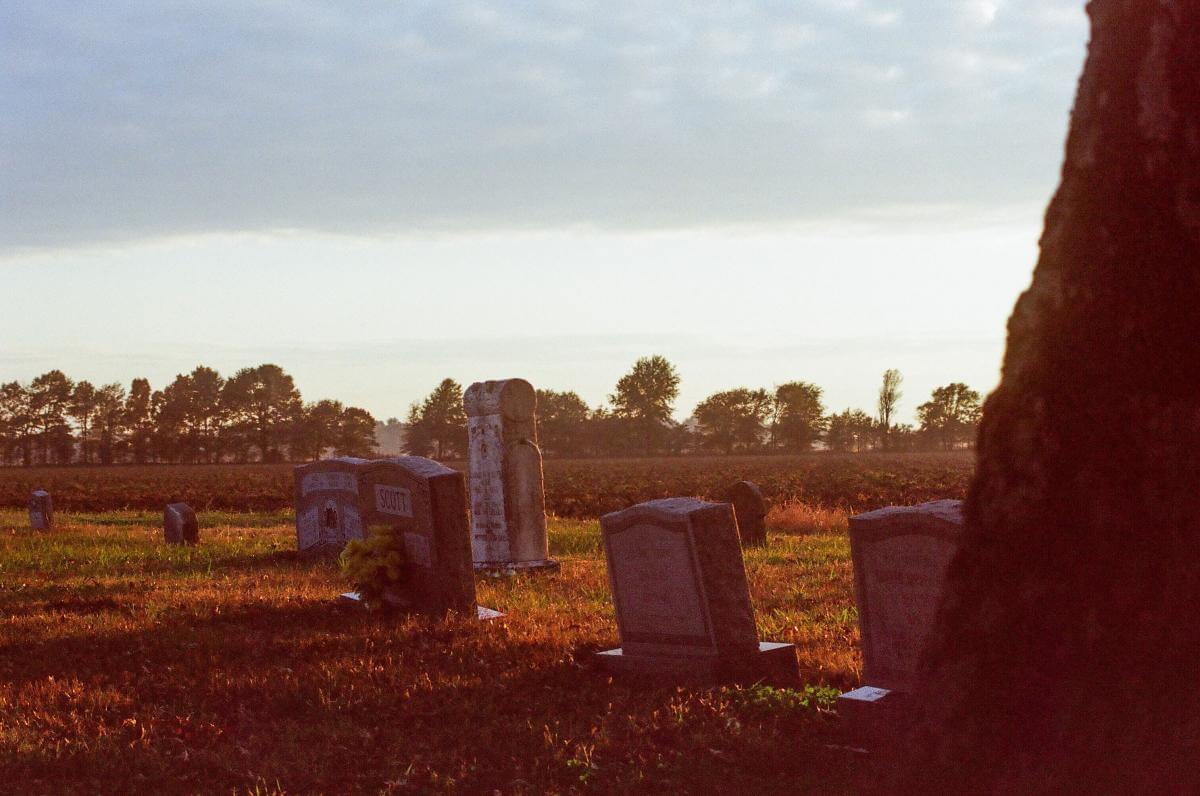
Though many of the Scotts have passed on, the land remains. Near the ruins of the plant, a handful of gravestones occupy a shaded plot, in various degrees of wear. Edward Senior is buried here. He died in 1957 but looked on as his son made history. Ed Scott and Edna Scott, who passed in 2015 and 2016, are buried here too. The family cemetery is well-manicured and regularly visited. The pioneers who rest in the earth are rooted still. On Scott family land. Always, Scott family land. 
About the Author
Julian Rankin is the founding director of the Center for Art & Public Exchange at the Mississippi Museum of Art in Jackson, Mississippi. He is the recipient of the Southern Foodways Alliance's first annual residency at Rivendell Writers' Colony.
]]>Greetings from Austin

In July of 2011 Bon Appétit named Franklin Barbecue of Austin, Texas, the best barbecue restaurant in America. As one of the flagship businesses in an area of the city undergoing significant redevelopment Franklin (which began as a food truck three years earlier) had recently moved into a building on East Eleventh Street, adjacent to downtown across Interstate 35. Franklin Barbecue helped enhance the city's wider reputation while locally it helped the reputation of the central Eastside. The white-owned Franklin took the former space of Ben's Long Branch Barbecue, an African American–owned business operating since the 1980s; African Americans had served barbecue at this site since at least the early 1960s. The corridor, formerly the hub of black commerce and social life during the era of segregation, fell into blight and disrepair in the 1970s and sunk into deeper trouble by the 1980s as residents of means and local businesses fled. In the 1990s the Austin Revitalization Authority (ARA) was formed as a non-profit to assist in the commercial development of the neglected neighborhood as well as to renew historic buildings and homes to maintain architecture consistent with the area's heritage. In 1997 the ARA declared the area a slum, making it eligible for Section 108 Community Development Block Grants (CDBG) from the US Department of Housing and Urban Development (HUD).1Much of the early history of the ARA was marred by questionable real estate practices and stacking of the ARA board by councilman Eric Mitchell and his group of connected developers and politicians. Mitchell did not include any neighborhood representatives on the first ARA board. See A. D., "ARA Board Member Helps Himself," Austin Chronicle, January 12, 1996, http://www.austinchronicle.com/news/1996-01-12/530368/; Mike Clark-Madison, "The ARA Myth: Empty Promises on the Eastside," Austin Chronicle, June 20, 1997, http://www.austinchronicle.com/news/1997-06-20/529133/. After completing the Central East Austin Master Plan, which called for 140,000 square feet of mixed-use development, the ARA and the city acquired over $9 million in CDBGs to initiate revitalization. Almost all development took place along the Eleventh Street corridor.2Crone Urban Design Team, "New Visions of East Austin: Central East Austin Master Plan," Report, 1999, courtesy AHC.
Although development in the East Eleventh Street corridor began slowly, by the mid-2000s the area's importance to the city's Eastside efforts and to the downtown was apparent. Eleventh Street is one of only two downtown streets that bridge I-35, the physical barrier between minority and Anglo neighborhoods since its completion in 1962. People coming from downtown to East Eleventh do not have to pass underneath the highway. Signs displaying the East End slogan "Local Spoken Here" invite consumption along the corridor. A gateway arch laden with the Texas Star welcomes traffic from downtown. The cityscape here appears more modern, newer, and cleaner than much on the Eastside. Multiple use zoning allows for architecture consistent with New Urbanism: higher density, mixed use, better public transport and bike lanes, historic districts, and heritage-based public spaces. The area has undergone significant demographic change as middle class whites and upscale businesses have moved in.3Ryan Robinson, "Top Ten Demographic Trends in Austin, Texas," http://www.austintexas.gov/page/top-ten-demographic-trends-austin-texas, accessed December 18, 2014. Robinson is the city's demographer.
New Urbanism became the architecture of gentrification and redevelopment in Austin.4For theories of New Urbanism, see Peter Katz, The New Urbanism: Towards an Architecture of Community (New York: McGraw-Hill, 1994); Congress for the New Urbanism, Charter of the New Urbanism (New York: McGraw-Hill, 2000); Andres Duany, Jeff Speck, with Mike Lydon, The Smart Growth Manual (New York: McGraw-Hill, 2010); Andres Duany, Suburban Nation: The Rise of Sprawl and the Decline of the American Dream (New York: North Point Press, 2001). Since the late 1990s, two trends are evident. First, there is new interest in urban space, lifestyles, and consumption preferences in a city long defined by suburbanism. Second, municipal leaders and real estate developers recognized the potential for significant increases in exchange values—and property taxes—by refurbishing parts of the neglected urban core. Since the 1980s, many US cities have become more entrepreneurial in attracting investment and stimulating development in areas deemed undervalued.5David Harvey, "From Managerialism to Entrepreneurialism: The Transformation of Urban Governance in Late Capitalism," Geografiska Annaler 71. no. 1, Series B (1989): 3–17; Jason Hackworth, The Neoliberal City (Ithaca: Cornell University Press, 2007); Gerald Dumenvil and Dominique Levy, Capital Resurgent: Roots of Neoliberal Revolution, trans. Derek Jeffers (Cambridge: Harvard University Press, 2004). In Austin, gentrification and rising rents have forced displacement in neighborhoods that for decades housed the city's highest concentrations of African American and Latino residents.
The most deleterious outcome of gentrification is its effect on existing social cohesion, which is much more important for vulnerable and historically segregated neighborhoods of color where residents have fewer relocation options and are more dependent on the neighborhood for social structure than are residents of middle class neighborhoods.6John Betancur, "Gentrification and Community Fabric in Chicago," Urban Studies 48, no. 2 (2011): 383–406; Mark Davidson, "Spoiled Mixture: Where does State-led 'Positive' Gentrification End?," Urban Studies 45, no. 12 (2008): 2385–2405; Neil Smith, The New Urban Frontier: Gentrification and the Revanchist City (London: Routledge, 1996). Poorer minorities are more vulnerable to rent hikes and increased costs and are more dependent on place for community than wealthier groups. They also tend to understand community in terms of place, especially in historically segregated locations.7John R. Logan and Harvey Molotch, "Homes: Exchange and Sentiment in the Neighborhood," in Urban Fortunes: The Political Economy of Place (Berkeley: University of California Press, 1987): 99–146; David Harvey, "Flexible Accumulation through Urbanization: Reflections on 'Post-Modernism' in the American City," in Post-Fordism: A Reader (Oxford: Blackwell, 1995): 361–386; Cynthia Horan, "Community Development, Racial Empowerment, and Politics," Annals of the American Academy of Political and Social Science 594 (2004): 158–170. Although gentrification is in some sense a function of market changes, political and economic disparities in the allocation of municipal capital undergird the relationship between gentrification and spatial justice in Austin. While the city uses public money to attract investment, subsidize more expensive development in East Austin, and generate tax revenue, it does not adequately invest to provide subsidies for affordable housing for long-term and disadvantaged neighborhood residents, many of whom have been forced out of Central East Austin or have lost friends and family to displacement.


The Austin example augments existing research on gentrification which seeks either to explain and critique the process or tell stories of change from residents' perspectives.8Important recent on gentrification process include Jason Hackworth and Neil Smith, "The Changing State of Gentrification," Journal of Economic and Social Geography 92, no. 4 (2001): 464–477; Rowland Atkinson and Gary Bridge, eds., Gentrification in a Global Context: The New Urban Colonialism (New York: Routledge, 2005); Loretta Lees, "Gentrification and Social Mixing: Towards an Inclusive Urban Renaissance?" Urban Studies 45, no. 12 (2008): 2449–2470. Studies emphasizing residents' perceptions include Japonica Brown-Saracino, A Neighborhood that Never Changes: Gentrification, Social Preservation, and the Search for Authenticity (Chicago: University of Chicago Press, 2009); Lance Freeman, There goes the 'Hood: Views of Gentrification from the Ground Up (Philadelphia: Temple University Press, 2006). The literature on gentrification in Austin links the city's emphasis on environmental sustainability as a competitive advantage to externalities that displace vulnerable groups and generate or exacerbate socioeconomic inequality.9Eliot M. Tretter, "Contesting Sustainability: 'SMART Growth' and the Redevelopment of Austin's Eastside," International Journal of Urban and Regional Research 37, no. 1 (January 2013): 297–310; Joshua Long, "Constructing the Narrative of the Sustainability Fix: Sustainability, Social Justice, and Representation in Austin, Texas," Urban Studies (December 2014): 1–24; Eugene J. McCann, "Inequality and Politics in the Creative City-Region: Questions of Livability and State Strategy," International Journal of Urban and Regional Research 31, no. 1 (March 2007): 188–196; Elizabeth J. Mueller and Sarah Dooling, "Sustainability and Vulnerability: Integrating Equity into Plans for Central City Redevelopment," Journal of Urbanism: International Research on Placemaking and Urban Sustainability 4, no. 3 (2011): 201–222; Emily Skop, "Austin: A City Divided," in The African Diaspora in the United States and Canada at the Dawn of the 21st Century, ed. John Frasier, Joe T. Darden, and Norah F. Henry (New York: Academic Publishing, 2009); Eric Tang and Chunhui Ren, Outlier: The Case of Austin's Declining African American Population (Austin: University of Texas Institute for Urban Policy Research and Analysis, 2014). Austin's experience also calls into question several recent studies which argue that gentrification has fewer negative outcomes on poor or minority neighborhoods than previously assumed.10Ingrid G. Ellen and Katherine M. O'Regan, "Gentrification and Low Income Neighborhoods: Entry, Exit, and Enhancement," Regional Science and Urban Economics 41, no. 2 (March 2011): 89–97; Jacob P. Vigdor, "Is Urban Decay Bad? Is Urban Revitalization Bad Too?" Journal of Urban Economics 68, no. 3 (2010): 277–289; J. Peter Byrne, "Two Cheers for Gentrification," Howard Law Journal 46, no. 3 (2003): 405–432. In this article, my approach draws from traditional perspectives: the production side, which understands gentrification as part of the larger forces of capital that transform and restructure urban physical landscapes11Foundational works on production side gentrification include Neil Smith, "Towards a Theory of Gentrification: A Back to the City Movement by Capital, not People," Journal of the American Planning Association 45, no. 4 (October 1979): 538–548; "Gentrification and Uneven Development," Economic Geography 58, no. 2 (April, 1982): 139–155; and The New Urban Frontier: Gentrification and the Revanchist City (New York: Routledge, 1996).; and the consumption side, that views consumer preference as the driving force.12David Ley, "Alternative Explanations for Inner-City Gentrification: A Canadian Assessment," Annals of the Association of American Geographers 76, no. 4 (December, 1986): 521–535; and The New Middle Class and the Remaking of the Central City (Oxford: Oxford University Press, 1996). Middle class consumers, developers, and planners view New Urbanism as environmentally-friendly architecture that reflects sustainable urban lifestyles. Longtime residents, most of whom are minorities and many of whom are economically disadvantaged, regard New Urbanism as producing new urban spaces that undermine the sustainability of their neighborhoods. While the former group focuses on how the built landscape enhances sustainability by lessening pollution and energy use and moving development away from pristine natural areas, the latter group seeks to explain gentrification’s deleterious socioeconomic effects on vulnerable populations.
Studying locally or regionally specific aspects of gentrification uncovers correlations between spatial reorganization, urban political economy, and historical experience. Two circumstances particular to Austin are important. Compared to most US cities, Austin historically had a much less fluid racial geography: de facto segregation was more intense and less driven by exchange values in the era before gentrification began. Furthermore, gentrification in Austin was initiated in the 1990s by the municipal government as a response to increased regulation of development on the city's western periphery, formerly a main area of growth, at the behest of the city's environmental movement. In 2000, Central East Austin had a poverty rate over 45 percent and over 95 percent of residents were black or Latino.13Elizabeth Sobel, "Austin, Texas: The East Austin Neighborhood" (Report of the Federal Reserve Bank of Dallas, 2007).
New Urbanism plays a symbolic role in neighborhood change with some of its proponents viewing gentrification uncritically or positively. Long-term residents of the central Eastside often linked New Urbanism's architecture and zoning changes with potential gentrification, requiring neighborhood groups to act defensively rather than as agents of positive social change. Once gentrification began, the already meager neighborhood resources available increasingly went to defend against demographic change and upscale development. New Urbanism can mean one thing for Austin residents who are likely to be displaced as property values and taxes rise, but something else for Austin's middle class residents and consumers.14Andres Duany, one of the principle architects of New Urbanism and perhaps its most famous proponent, celebrates gentrification. See Duany, "Three Cheers for Gentrification!: It Helps Revive Cities and Doesn't Hurt the Poor," American Enterprise (April 2001): 38–39; Martin Boddy, "Designer Neighborhoods: New Built Residential Development in Non-Metropolitan UK Cities—the Case of Bristol," Environment and Planning A 39, no. 1 (January 2007): 86–105.
Beginning with a discussion of the East Eleventh Street corridor as it exists today, this essay moves into a brief history of racial geography in Austin before addressing the political and economic factors that drove investment. Engaging with architectural theory, a subsequent section examines how New Urbanism and historical preservation altered the cityscape. Following Tom Slater's call to study working class displacement and resistance to gentrification, the essay concludes by asking how Austin residents and neighborhood groups approached gentrification, its symbols and causes, and its relationship to political and economic drivers of urban transformation.15Tom Slater, "A Literal Necessity to be Replaced: A Rejoinder to the Gentrification Debates," International Journal of Urban and Regional Research 32, no. 1 (March 2008): 212–223; and "The Eviction of Critical Perspectives from Gentrification Research," International Journal of Urban and Regional Research 30, no. 4 (December 2006): 737–757.
New Urbanism and the Symbolic Economy on East Eleventh Street


Pragmatically, producing urban space depends on the deployment of capital and labor. But city building also requires symbols and signs indicating who is accepted in a place and who is not, what should be visible and what should not. Developers used New Urbanism on Eleventh Street and along the Eastside to signal middle class consumption space. Producing a sense of local history and diversity was also important to the Austin Revitalization Authority's effort. The city lowered taxes for the redevelopment of historical structures. The earliest projects redeveloped buildings such as two structures dating from the late nineteenth century, the Haenhel Building and the Arnold Bakery, which were refurbished and rented to businesses. The next projects were larger live-and-work facilities featuring retail on the ground floor with living spaces above and taking advantage of zoning variances intended to increase density and public activity along the corridor. The tallest buildings were only four stories.16Brant Bingamon, "Old Homes=New Yuppies," Austin Chronicle, July 19, 2002. For symbolic economy, see Sharon Zukin, The Culture of Cities (New York: Blackwell, 1995).
While the ARA used New Urbanism to reinvigorate an urban corridor, the outcome was a new space for private investment catering to middle class, mostly white, tastes. Designating buildings for preservation zoning within New Urban developments hastened neighborhood change. A number of scholars have criticized New Urbanism's complicity with capital in creating exclusionary spaces and "geographies of otherness," which reinforce or replicate spatial divisions.17K. Till, "Neotraditional Towns and Urban Villages: The Cultural Production of a Geography of 'Otherness.'" Environment and Planning D: Society and Space 11, no. 6 (1993): 709–732; Peter Marcuse, "The New Urbanism: The Dangers so Far," disP: The Planning Review 36, no. 140 (2000): 4–6; Eugene McCann, "Neotraditional Developments: The Anatomy of a New Urban Form," Urban Geography 16, no. 3 (1995): 210–233; Robyn Dowling, "Neotraditionalism in the Suburban Landscape: Cultural Geographies of Exclusion in Vancouver, Canada," Urban Geography 19. no. 2 (1998): 105–122. In general, these studies examine New Urban developments on open space or in suburban locations rather than in urban cores undergoing transformation. Although they generally point to the exclusionary architecture and high prices associated with New Urbanism, they do not link it to gentrification. Austin's urban corridor development demonstrates this connection.
According to the ARA, Eleventh Street's understated design "reflects the way the street was originally developed," incorporating local history into the corridor.18Crane Urban Design Team and Austin Revitalization Authority, "New Visions of East Austin: Central East Austin Master Plan," (Austin: Austin Revitalization Authority, 1999). Public space is incorporated over a three-block span. Wider sidewalks encourage pedestrians. Federal funds went to build bus stops and bike lanes and widen streets to promote public transportation. The most symbolic public spot in the corridor is Urdy Plaza, an open, art-decorated space that honors the African American heritage of the district and longtime Austin African American leader, Charles Urdy. Local African American artist John Yancy and his team created a tile mural called "Rhapsody" depicting African American jazz musicians (a nod to the cultural history of the street as part of the chitterling circuit), as well as a scene that appears to be taken from the neighborhood's interracial origins in the late nineteenth century. The historical Ebenezer Baptist Church, organized in 1875 and built in 1885 on the Eastside, takes its place in the background. While the mural is emblematic of a proud African American history in central East Austin, it also evokes a present in which African Americans have a much smaller presence here. In census district one, which includes Central East Austin as well as a large portion of historically African American East Austin, the number of African American residents declined by 3,711 (14.5 percent) from 2000 to 2010.19City of Austin, "District 1 Demographic Profile," http://www.austintexas.gov/sites/ default/files/files/Planning/Demographics/District_1_demographic_profile_2000_2010.pdf, accessed March 18, 2015. Core areas closer to downtown experienced more intense African American population loss.20City of Austin, "Changing African American Landscape—Eastern Core," http://www.austintexas.gov/sites/default/files/files/Planning/Demographics/ afam_change00_10_eastern_core.pdf, accessed March 18, 2015. The area is marketed as historically relevant in accord with Austin's new urban tastes, yet the new neighborhood reflects starkly different demographics and consumer preferences. The past is not problematized by the public art; heritage representations aim to fix identity and promote a sense of pride rather than acknowledge the problems of memorializing social domination. As older residents and businesses leave, the segregationist past seems less relevant while the happy representations of jazz and interracial community remain.
As with other urban spaces made safe for revitalization, condominiums and upscale shops in the Eleventh Street corridor use the language of new urbanity. Because Austin lacks the industrial infrastructure common to many gentrified neighborhoods in older cities, there is little nostalgia about urbanity here and few structures representing a vibrant past. Rather, the emphasis falls upon the consumption preferences of new dwellers. The recently-built East Village Lofts suggests a neighborhood in New York City. Equally important is the imagined "village in a city," where the idealized community of a small village is incorporated with the amenities and excitement of urbanity. The ARA centered this concept in its master plan for Central East Austin in 1999, imagining the corridor as an "urban village," "a place for higher intensity mixed-use development that can build on the present and historical strengths of the corridor" to revitalize the area.21Crane Urban Design Team and Austin Revitalization Authority, "New Visions of East Austin: Central East Austin Master Plan." This village-in-a-city identity is also found in the slogan used on a now-defunct aggregate living development called Paloma Austin: "The Pinnacle of 'boutique urban living.'"


Urban boutique suggests a neighborhood of exclusive shops and trendy condos, the antithesis of suburban tract housing and big box stores, but requiring a clearing of undesirables. Making urbanity trendy has meant the removal of what was once considered urban: working class minority populations and the shops and stores which served them, homeless people, and ugly structures, all lumped together as blight. Urban boutique replaces existing stores and services that cater to poorer consumers—which encourages them to move.22For a recent analysis of "boutiquing" in New York see Sharon Zukin et al., "New Retail Capital and Neighborhood Change: Boutiques and Gentrification in New York City," City and Community 8, no. 1 (March 2008): 47–64. In a city where historical urbanity connoted segregation and poverty, there was little about the neighborhood deemed worthy of retaining.
The ARA has also adopted a language reflecting the commercial character of the corridor as well as new urban consumption preferences featuring local chains of production, images of community, and environmental sustainability. In conjunction with the Austin Independent Business Alliance, the ARA adopted the slogan "Local Spoken Here" as its theme for its East Eleventh Street small businesses. The slogan attempts to attract urban consumers interested in the sustainability associated with locality and local economic vitality. But it also changes what is "local," bringing in businesses catering to newer residents. Wine shops, trendy restaurants, designer stores, and the like mark the neighborhood for upscale consumption. The ARA also began promoting a new moniker for the area. Instead of "Eastside," the product of eighty years of segregation, the ARA calls the corridor the "East End," signifying a continuum between downtown and a more general coming together of the central city. The East End also has historical significance as the name of the multiethnic neighborhood in the early twentieth century before institutional segregation took hold.
The symbolic reclamation of the East End as a viable part of the city's fabric signaled demographic changes that affected a much larger portion of the central Eastside. The goal of the ARA's public-private development was to increase investment. The Eleventh Street corridor opened up the area to grassroots gentrification, new single-family homes, condominiums, apartment complexes, and other commercial developments on the central Eastside. Between 2000 and 2010 formerly African American neighborhoods experienced intense demographic and economic changes. All four census tracts north of Seventh Street and south of Manor Road adjacent to I-35 experienced between 18 and 31 percent increases in white population between 2000 and 2010.23"Change in the White Percentage of Total Population, 2000 to 2010," (map), http://www.austintexas.gov/sites/default/files/files/Planning/Demographics/ travis_t2000_change_whit_core.pdf, accessed August 11, 2015. The same area experienced heavy African American outmigration, averaging 15.6 percent loss across the four tracts.24City of Austin, "Tract Level Change, 2000 to 2010, Total Population, Race and Ethnicity," spread sheet, http://www.austintexas.gov/sites/default/files/files/Planning/Demographics/ Tract_level_2000_to_2010_change.xlsx, accessed August 11, 2015. Along with increased development, the Anglo inmigration has had dramatic effects on property taxes. In the five years between 2000 and 2005, property taxes in the 78702 zip code, which covers the entire central Eastside from I-35 to Airport Boulevard and the Colorado River to Martin Luther King Jr. Boulevard, increased by over one hundred percent.25"Single Family Taxable Value: Percent Change, 2000 to 2005," (map), http://www.ci.austin.tx.us/demographics/downloads/sf_tax_perc.pdf, accessed September 27, 2011. The overall population on the central Eastside has also grown significantly younger, and the size of households has decreased dramatically as younger people without children have replaced families.26Ryan Robinson, "The Top Ten Big Demographic Trends in Austin, Texas," City of Austin, Planning and Zoning Department, http://www.austintexas.gov/demographics/, accessed August 11, 2015.
Race, History, and Geography in Austin

Austin's 1928 city plan imagined an urban space integrated with pastoral landscapes, the pristine University of Texas campus, and the state capitol grounds. Planners strongly discouraged industry, preferring to highlight features characteristic of a city whose primary activities were government and education: pleasant climate, natural beauty, cultural opportunities, and a relatively educated population. The primary function of the 1928 plan was to spatially segregate as much of the urban-industrial city as possible.27Koch and Fowler Consulting Engineers, "A City Plan for Austin, Texas," report, 1928. Courtesy of Austin History Center (AHC).
More significantly, and like other southern urban planning initiatives of the Jim Crow era, the plan also segregated racial minorities.28The chamber of commerce recommended engineers Koch and Fowler because of their success in instituting de facto segregation in the Dallas plan. See "John E. Surratt to Mr. W. E. Long," November 5, 1926/Long (Walter E.) Papers/Box 19/Folder, "City Plan Sept. 1926-Oct. 1927"/AHC; Kessler Plan Associates, "Needed City Planning Legislation," n.d./Long (Walter E.) Papers/ Folder, "City Plan Sept. 1926–Oct. 1927"/AHC; E. A. Wood, Dallas Morning News, August 8, 1926. As de jure segregation was illegal in Texas, planners used zoning and "separate but equal" legislation. They also simply removed African American services—schools, parks, and libraries—from neighborhoods designated as "white." The master plan bluntly stated that "there has been considerable talk in Austin, as well as other cities, in regard to the race segregation problem. This problem cannot be solved under any zoning law known to us at present. Practically all attempts at such have proved unconstitutional."29Koch and Fowler, "A City Plan," 58. At the time, according to plan, African Americans lived in small pockets throughout all the city's neighborhoods, with concentrations in Wheatville and Clarksville,30Clarksville, the first colony of free African Americans in Texas, remained unincorporated by the City of Austin and almost entirely African American well into the 1970s as the city literally grew around it. Much of the neighborhood remained without municipal services well into the 1970s as well, and streets were not paved. Since then, Clarksville has gentrified and is now one of Austin's most expensive neighborhoods. just northwest of downtown, and in the area east of East Avenue adjacent to downtown. To sidestep the constitutional issues posed by de jure segregation, consulting engineers Koch and Fowler recommended that the city relocate segregated facilities to one district and cut off facilities to minorities in all other parts of the city. By locating African American schools, parks, and municipal necessities in just one area, the "segregation problem" would take care of itself. They referred to this method of forced relocation as "an incentive to draw the negro population to this area."31Quoted in Koch and Fowler, "A City Plan," 57. While de facto segregation was already well underway and racially restrictive covenants were common in Austin's middle class subdivisions, the plan institutionalized racial segregation. The area became known as the Eastside.
The policy implementations were swift and effective. City records demonstrate that almost all African Americans were relocated to the Eastside by 1940. The African American school in Wheatsville, operating for sixty years, closed in 1932, and black population dropped from 16 percent of the census tract in 1930 to less than 1 percent by 1950. Residents who remained in Clarksville, the oldest free African American community in Texas, had no access to municipal facilities and the city made no improvements there until well into the 1970s. Although the plan did not mandate Latino segregation, similar forces coalesced to push the majority of Austin's Mexican American population into the neighborhood just south of the African American one. In 1939, the city of Austin built some of the first public housing units in the United States: the Santa Rita Courts designated for Latinos. Chalmers Court for whites and Rosewood Courts for blacks were similarly built in largely segregated neighborhoods.32Austin completed the first federally-funded public housing projects in the United States in 1938—one each for whites, Mexican Americans, and African Americans. Latinos did, however, remain more dispersed throughout areas in South Austin and on the outskirts of the city, but very few lived in white West Austin. Racially restrictive covenants and federally-sponsored mortgage discrimination kept both African Americans and Mexican Americans out of West Austin neighborhoods.33For restrictive covenants, see Eliot M. Tretter, Austin Restricted: Progressivism, Zoning, Private Racial Covenants, and the Making of a Segregated City (Report to the Institute for Urban Policy and Research Analysis, 2011); "Digital HOLC Maps," Urban Oasis, http://www.urbanoasis.org/projects/holc-fha/digital-holc-maps/, accessed November 15, 2013.
Despite segregation and unequal services, most accounts of African American and Latino life in Austin from the 1930s through the 1950s portray a generally positive period marked by high levels of community cohesion and a relatively vigorous economic life defined by small businesses and networks of familial and neighborhood support. Despite municipal negligence in nearly every aspect of life, segregation brought minority populations together and kept relatively high levels of economic diversity in Eastside neighborhoods.34See, for example, an interview with former Austin City Council member Charles Urdy in "East Austin Gentrification," Austin Now, KLRU, http://www.klru.org/austinnow/archives/gentrification/index.php, accessed August 31, 2011; Ben Wash, interview with the author, March 30, 2007; "Ben's Long Branch Bar-B-Q," Southern Foodways Alliance Southern BBQ Trail, http://www.southernfoodways.org/interview/bens-long-branch-bar-b-q/, accessed August 12, 2015; Anthony Orum, Power, Money and the People: The Making of Modern Austin (Austin: Texas Monthly Press, 1987), 184–186; "East Austin: Gentrification in Motion,"/Street (Oliver) Papers/Box 1/Folder 5/AHC. In 1951, there were over fifty black-owned businesses in the African American commercial corridors along Eleventh and Twelfth Streets.35J. Mason Brewer, A Pictorial and Historical Souvenir of Negro Life, Austin, Texas, 1950–1951: Who's Who and What's What (Austin, TX, 1950), courtesy BCAH, University of Texas at Austin.


Adding incentives to force minorities to the Eastside, the city improved segregated facilities during the 1930s, including funding a large public park, building a library, and improving all-black Anderson High School.36Orum, Power, Money, and the People, 192–194. Although public housing in Austin was strictly segregated and not intended to house the city's poorest residents, it was welcomed by minorities.37Ibid., 132–135. Yet major disparities in quality of life existed between East and West Austin. Minority residents were consistently subject to poorer, more dangerous living conditions, had less access to jobs and education, less mobility, were far more vulnerable to health problems, and were not considered part of mainstream economic, political, or social life in Austin.38Andrew M. Busch, "Building 'A City of Upper-Middle Class Citizens': Labor Markets, Segregation, and Growth in Austin, Texas, 1950–1970," Journal of Urban History 39, no. 5 (September 2013): 975–996.
Urban renewal projects dramatically altered the Eastside landscape during the 1960s. Until that point, the city held almost all power to determine the quality of structures, neighborhoods, or public facilities, providing Eastside residents with little input into the fate of their neighborhood. Language and images distributed by the Austin Urban Renewal Agency (AURA) assuaged what little opposition to urban renewal remained among Anglo Austinites.39Austin Urban Renewal Authority, "Slum Districts," (n.d., pamphlet)/Vertical File, "Austin, Texas—Industry (Cities)/BCAH; Elsworth Mayer, "5 Areas up for Urban Renewal," Austin in Action 7, no. 8 (March 1966); "Rx for Cities: Urban Renewal," (n.d., pamphlet)/Vertical File, "Austin, Texas—Industry (Cities)/BCAH. AURA simply needed to declare fifty percent of the structures in any given area "dilapidated beyond reasonable rehabilitation" or otherwise blighted in order to condemn the entire area. As the municipal government did not historically consider zoning important in East Austin, and since it was extremely difficult for minorities to acquire loans to buy or improve property, a large number of structures on the Eastside were deemed substandard.40Joe R. Feagin and Robena Jackson, "Delivery of Services to Black East Austin" (report to the University of Texas, n.d.); City of Austin Human Rights Commission, "Housing Patterns Study of Austin, Texas" (report, 1979), 123–171. All five major urban renewal projects in Austin affected the Eastside, and two focused exclusively on the Central Eastside neighborhoods of Kealing and Glen Oaks. The University of Texas used eminent domain laws to secure land in East Austin for a physical plant and new athletic facilities while dispossessing dozens of African American families. Large tracts of the central Eastside were razed; it is unclear exactly how many acres were redeveloped or residents dislocated, but as of June 1966, nearly one thousand acres were scheduled for clearance or rehab in East Austin; at least 250 of those acres were in central East Austin, a majority African American neighborhood.41"W. W. Collins to J. J. Pickle," June 7, 1966/Folder, "Urban Renewal Administration—Department of Housing and Urban Development"/Box 95-112-66/Papers of J. J. Pickle/BCAH. Well over one thousand residents were dislocated during this 1960s expansions, and many more were later relocated during the UT expansion in the 1980s.42Rudolph Williams, "Now is the Time for Justice!" Austin Chronicle, letter to the editor, June 12, 2007.
Most Eastside properties were not zoned residential; industry and commercial spaces were often interspersed with residential homes. Properties often had multiple uses, which also lowered their values. Absentee landlords often took advantage of weak municipal zoning and building code enforcement to let rental houses fall into disrepair. Infrastructure on the Eastside was practically non-existent; most residential streets remained unpaved into the 1960s and 1970s, and flooding remained a major concern well after that. Municipal investment was also scant. East Austin had far less park space than any other area of the city, as well as problems with street lights, garbage collection and informal dumps, and poor sidewalks.43Elizabeth J. Mueller & Sarah Dooling, "Sustainability and Vulnerability: Integrating Equity into Plans for Central City Redevelopment," Journal of Urbanism: International Research on Placemaking and Urban Sustainability 4, no. 3 (2011): 201–222. Page 208 discusses the difficulty of receiving loans for East Austin residents. See also City of Austin Human Rights Commission, "Housing Pattern Survey of Austin, Texas" (report, 1979); "The Life and Legacy of Mr. Oliver B. Street"/Street (Oliver) Papers/Box 1/Folder 1/AHC; Dale Carrington, "Mrs. Zamarripa say East Austin 'Victim of Poor Zoning,'" La Fuerza, April 11, 1974. For infrastructure see Carolyn Babo, "Land Owners Get 30-day Deadline to Clear Debris," Austin American, September 19, 1973; Brenda Bell, "Progress Moves Slowly," Austin Citizen, July 30, 1974; Patricia Yznaga, "East Austin: Let Me Show You the Streets," Daily Texan, November 21, 1979; Carrington, "Mrs. Zamarripa."
In the decades after urban renewal, the central Eastside endured a sharp and concentrated rise in poverty and crime, as residents of means moved further east and northeast. Although the neighborhood's central location gave residents access to many other areas, the central Eastside actually became more economically and socially segregated from the rest of the city after de jure segregation ended. A decade after urban renewal, poverty was still endemic to historically minority neighborhoods in central East Austin. In 1970, the central Eastside had a poverty rate of 37.5 percent. In 1977, 87 percent of central East Austin was deemed "low income" by the Community Development Block Grant application for that year.44City of Austin, "1977 Third Year Housing and Community Block Grant Application" (report, 1977), 32. By 1990, the rate of poverty had grown to 52 percent—in a city with one of the highest rates of economic growth in the United States during the 1980s and 1990s.45City of Austin Department of Planning, "Strategies for the Economic Revitalization of Central Austin," 25; 2007 Federal Reserve Bank of San Francisco Study of East Austin, "Austin, Texas: the East Austin Neighborhood," accessed on October 4, 2010, http://frbsf.org/cpreport/docs/austin_tx.pdf. Stats appear to be taken from census data. In 1988, for example, INC. magazine named Austin the best city for business in the United States; Census Information, "Changing African American Landscape—Eastern Core," http://www.austintexas.gov/sites/default/files/files/Planning/Demographics/ afam_change00_10_eastern_core.pdf, accessed August 12, 2015, demonstrates almost no concentrations of African American population in central Austin (between the Colorado River and US 183) of Interstate Highway 35 in 1990 or 2000. See for example, the neighborhood group East Austin Survival Task Force, "E.A.S.T Force: Urban Removal," which estimates drops in Latino residents in the neighborhood south of First Street beginning in the 1950s and continuing throughout the 1970s/Folder 27/Subject File, "Neighborhood Groups N1900"/AHC.
A steady increase in crime and poverty in central East Austin, especially in African American neighborhoods, was accompanied by an outmigration of minority citizens to other areas around the city. Between 1970 and 1976, Census Tract 8 in central East Austin, which was 97 percent minority, lost 1,976 residents and 446 families, a 14.8 percent decline in both categories.46City of Austin Department of Planning, "Strategies for the Economic Revitalization of Central Austin," (Preliminary Report, 1978), 19–20. Outmigration continued steadily throughout the 1990s as African Americans moved north and east from central East Austin. African American inmigration was almost non-existent in West Austin through 2000.47Census Information, "Changing African American Landscape—Eastern Core," demonstrates almost no concentrations of African American population in central Austin (between the Colorado River and US 183) of I-35 in 1990 or 2000. http://www.austintexas.gov/sites/default/files/files/Planning/Demographics/ afam_change00_10_eastern_core.pdf, accessed August 12, 2015. Real estate values in central Eastside neighborhoods also declined relative to the city as a whole. Even though overall values appreciated, in 1970 the median value of an owner-occupied unit in Census Tract 8 was 67 percent of the city average; by 1976 the median value was just 51 percent of the city average.48City of Austin Department of Planning, "Strategies for the Economic Revitalization of Central Austin," (Preliminary Report, 1978), 32. Finally, family income in central East Austin declined both in real dollars and relative to the city average between 1970 and 2000. In 1970 central East side median household income was 54 percent of the city's median household income. By 2000, the figure was down to 32 percent.49City of Austin Department of Planning, "Strategies for the Economic Revitalization of Central Austin," (Preliminary Report, 1978), 25; 2007 Federal Reserve Bank of San Francisco study of East Austin, "Austin, Texas: the East Austin Neighborhood," http://frbsf.org/cpreport/docs/austin_tx.pdf, accessed October 4, 2010.

Demographic and economic data, as well as qualitative surveys, suggest that living conditions in central East Austin declined between 1970 and the 1990s.50K. Anoa Monsho, "From East Austin to East End: Gentrification in Motion," The Good Life (November, 2004)/Folder, "Text Materials"/Box 3/Austin Revitalization Authority Papers/AHC. Already a marginalized area, central East Austin underwent a process where residents of means, many local businesses, and jobs moved out; other residents were displaced; and little investment occurred. Austin's racial geography cut central Eastside residents off from jobs and equal education opportunities even as task forces and community development groups were funded by the city. By the mid-1990s, however, patterns of investment began to shift based on Austin's new focus on environmental sustainability and infill development. The city's business and political elites had encouraged suburban development to attract high tech white collar workers for decades and began efforts to claim central urban space under the same high tech banner in the 1990s.
Political Economic Transformation and the Reintegration of the East End
From the 1920s to the 1990s, the Eleventh Street Corridor and most of the central Eastside was essentially a city within a city, largely separate from greater Austin. As one journalist wrote in 1998, "it's the typical Eastside story, the reflex of a town that's been trained for years to see East Austin as a vast, one-dimensional alien ghetto from highway to horizon."51Mike Clark-Madison, "New Urban Sagas," Austin Chronicle, October 16, 1998. By the mid-1990s, however, political economic forces encouraging central city redevelopment in Austin proved too difficult for city leaders and development interests to ignore, and they sought to shift the geography of investment and development to central Austin in an effort to expand profit. Environmental and overdevelopment pressures, new international planning discourse, large perceived rent gaps, and the emergence of a policy dedicated to the cognitive-cultural economy52Allen J. Scott, "Capitalism and Urbanization in a New Key? The Cognitive-Cultural Dimension," Social Forces 85, no. 4 (June 2007): 1465–1482. Scott describes the cognitive cultural economy as one found in cities and defined by leading diverse sectors in high tech, neo-artisanal manufacturing industries, service functions, and cultural-products industries. This is one way Austin leaders and some scholars describe the city, and policies to nurture these sectors are prevalent in Austin. led Austin leaders to transform the urban landscape.
Austin developed rapidly during the postwar era of suburbanization's apogee. Lacking large industrial production facilities, the city's leading economic activities related to state government, the University of Texas, and increasing research and development, all of which employed a mostly white collar, middle class labor force. Because of zoning, ample space on the periphery, a paucity of public transportation, and perceived social benefits, development was almost exclusively suburban. Low density, single-use tract developments in the western and northern portions of the metro region dominated the housing market. Larger businesses that emerged during this period tended to locate in agglomerations on this urban periphery, including a science and research cluster anchored by the university's Balcones Research Center nine miles northwest of downtown. A series of regional shopping malls as well as smaller strip malls emerged. With the arrival and emergence of high tech firms, Austin's pace of growth increased markedly in the 1970s and 1980s.
Grassroots environmental groups emerged in the 1970s to promote responsible development as the built environment spread rapidly across outer Austin and over the Barton Creek Watershed and Edwards Aquifer, two important sources of drinking water, as well as leisure sites. In the following decade the citywide Save Our Springs Alliance (SOS) coalesced from numerous smaller neighborhood groups and the Austin Tomorrow public planning initiative. Outer suburbs were taking municipal resources away from more centrally-located middle class Anglo neighborhoods, and a new expressway threatened central western neighborhoods. The SOS Alliance sought to slow what they perceived to be rampant and environmentally damaging residential and commercial development in much of western Austin.53William S. Swearingen, Environmental City: People, Place, Politics, and the Meaning of Modern Austin (Austin: University of Texas Press, 2010).


Throughout the 1980s and 1990s, SOS fought bitterly with developers, and often the city, especially about proposed developments over the Edwards Aquifer Recharge Zone (EARZ), which fed Barton Springs and supplied much municipal drinking water. Contention grew to the extent that one journalist wrote, "since the beginning of the fight over water quality this town has been a battleground between real estate developers and those who would rather swim than shop."54Kayte VanScoy, "Bonding over the Bonds: Council's Dreams come True," Austin Chronicle, May 8, 1998, http://www.austinchronicle.com/news/1998-05-08/523430/. Suburban tract developers saw the land over the aquifer as prime because of its natural beauty, location on the edge of the Hill Country region, and proximity to Austin's information technology agglomeration to the northwest. Following referendums forced by SOS in 1991, the city passed a series of zoning ordinances making development over the aquifer more difficult. Battles between environmentalists and developers, led by the Real Estate Council of Austin, ensued over the next five years. By 1997, the city had elected the "Green Council," made up of longtime Austin environmentalists, with Kirk Watson as mayor. Austin environmentalist and author William Swearingen sees this election as the moment when quality of life advocates finally and convincingly dispatched the development-oriented growth coalition, saving the city's sense of place from destruction while ensuring responsible growth.55Swearingen, Environmental City, 164–174.
Mayor Watson and his city council began a campaign for "smart growth," an urban planning movement endorsed by President Clinton that encouraged blending quality of life with environmental protections and economic development initiatives. The smart growth movement in city and regional planning was an attempt to create policies that promoted and rewarded the implementation of New Urban designs: pedestrian-friendly, mixed use, transit-oriented, filled with open spaces, and humanly scaled.56Andres Duany, Jeff Speck, and Mike Lydon, The Smart Growth Manual (New York: McGraw-Hill, 2010). The American Planning Association adopted its principles following the UN Conference on Environment and Development in 1992. In Austin, smart growth was understood as a means to protect the environment as a place of beauty and recreation while mitigating, but not destroying, economic and demographic growth by directing it into already-existing areas.57In the 1970s the public planning initiative Austin Tomorrow designed a development plan that attempted to funnel growth to the north and south of the existing city rather than expand east and west. The plan was never adopted into law.
The most immediate concern for Watson was protecting undeveloped land in the hills west of Austin, which would preserve Barton Springs, control development over the aquifer, and assuage concerns from environmentalists. With development curtailed along much of city's western periphery, the council outlined a Smart Growth Initiative (SGI) to transform the central Eastside using New Urbanist principles. As part of the new Desired Development Zone (DDZ), a centrally located section of the city that was already largely built and could manage higher levels of density, the central Eastside would benefit from tax breaks, subsidies, and infrastructural improvements designed to make development more attractive and promote investment. The incentives were a boon for developers who now had less access to the upscale western suburbs.
The central Eastside also had economic advantages associated with the geography of gentrification, large discrepancies (called rent gaps) between the existing and potential value of property. The idea of a rent gap was proposed by geographer Neil Smith in 1979 to explain why gentrification occurs. Smith proposed that once ground rents (or real estate prices) get low enough in an area relative to potential ground rents, developers, profit-seeking individuals, and real estate interests will purchase land in that area and perhaps refurbish the property to close the rent gap. Since areas close to city centers have relatively high potential ground rents and very low existing ground rents, the potential for profit is high in centralized, dilapidated neighborhoods where property is cheap. Municipalities often incentivize redevelopment in such areas because they can collect more taxes from property that is worth more; this is significant in Austin where valuable, centrally-located property is occupied by the state government and university—entities that pay no property tax.58Neil Smith, "Towards a Theory of Gentrification: A Back to the City Movement by Capital, not People," Journal of the American Planning Association 45, no. 4 (October 1979): 538–548
In the late 1990s and into the new millenium, Austin political leaders devised a growth strategy to attract the "creative class," knowledge workers that would be attracted to the amenities, cultural opportunities, and lifestyles associated with the urban core.59Carl Grodach, "Before and After the Creative City: The Politics of Urban Cultural Politics in Austin, Texas," Journal of Urban Affairs 34, no. 1 (2012): 81–97. For more on the creative class, see Richard Florida, The Rise of the Creative Class: And how it's Transforming Work, Leisure, Community, and Everyday Life (New York: Basic Books, 2002). The city passed a $712 million bond package in 1998, most of which was directed at improving infrastructure, flood control, and creating economic incentives for businesses relocating to the DDZ.60Mike Clark-Madison, "Bonds Election Cliffs Notes," Austin Chronicle, October 23, 1998; "Naked City," Austin Chronicle, November 13, 1998; Jenny Staff, "Speed Up with Downtown," Austin Chronicle, December 11, 1998. By early 1999 the city approved two large scale high tech relocations to the downtown area; the city also approved plans for a live-work-play condominium complex adjacent to one of the office and research facilities and initiated a cultural facelift by fast tracking new bars, restaurants, shops, and clubs. The new downtown would cater to the urban tastes of the creative class.61Dulan Rivera and Bill Bishop, "High Tech Companies Leading the Charge Downtown," Austin American Statesman, March 3, 2000/Vertical File, "Austin, TX—Neighborhoods and Neighborhood Groups (2—misc.)"/BCAH; Kevin Fullerton, "If You Build it . . . What Dreams May Come," Austin Chronicle, February 5, 1999. Smaller high tech firms used incentives to relocate to the central Eastside near the Eleventh Street corridor as well, and a number of small multi-use condo complexes arose on the Eastside south of Eleventh Street from 2000 to 2006. Real estate values, ground rents, and property taxes spiked adjacent to these new developments, and property values were affected dramatically in the entire neighborhood.62Barbara Wray, "Developers, Builders now Look to East Austin," Austin Business Journal, December 3, 2000; Welles Dunbar, "How Not to Gentrify: HRC Asks for Eastside Moratorium," Austin Chronicle, November 4, 2005; Diana Welsh, "Naked City," Austin Chronicle, April 8, 2005; Ryan Robinson, "Income and Neighborhood Planning Areas," 2006, http://www.ci.austin.tx.us/demographics/downloads/income_npas_collection.pdf, accessed December 18, 2014.
New Urbanism and New Urbanity in Austin
New Urbanist architecture and its legal accouterments—mixed use zoning and historical preservation—projected Austin's new urbanity, catering mostly to white, upper middle class preferences and erasing aspects of the older urbanity. Sharon Zukin has argued that the urban "symbolic economy" operates by making certain groups feel unwelcome in some spaces while appealing to the taste of others.63Zukin, The Culture of Cities, 3–15. Symbols of change can force community groups to focus more on defending their neighborhoods than on improving them. Why was New Urbanism such a potent symbol of gentrification for residents in East Austin, and why did it mark space for upscaling and demographic transformation?


New Urbanism has drawn criticism for reproducing elite landscapes even as it articulates the importance of mixed income developments. Prototypical new urban "towns," such as Seaside and Celebration (both in Florida), evoke traditional architectural styles that reflect social and economic exclusion by reproducing a romanticized version of the traditional human-scale town of the late nineteenth century: walkable, denser than single-use suburbs, and with lots of public space. But they tend to be socioeconomically exclusive and racially homogenous.64Celebration, Florida, for example had a median family income of $92,334 and was 1.5 percent African American in 2010. "Celebration CDP, Florida," accessed March 18, 2015, http://quickfacts.census.gov/qfd/states/12/1211285.html. According to Neil Smith, New Urbanist architectural style located in certain public spaces can both create and mimic sanitized suburban aesthetics.65Neil Smith, "Which New Urbanism? The Revanchist 90s," Perspecta 30, Settlement Patterns (1999): 98–105. Residents do not have to drive to upscale malls to shop; the same boutiques are accessible by foot.
At its core mixed use zoning is an aesthetic change. Unlike older neighborhoods, where properties were developed and redeveloped independently over time, New Urban developments are usually comprehensively planned and developed in the same style. They give the appearance of being dropped into an existing landscape because they are built all at once. In a sense they are removed from their surroundings, not a part of the urban fabric as much as an island within it. "Within the design concepts and site plans of new urbanism," argues Smith, "the world can be made safe for a self-conscious liberalism."66Ibid., 104. New Urbanism allows predominately white residents to feel progressive, urbane, and environmentally friendly while providing the security and exclusivity associated with suburban living.
New Urbanism in Austin focused on redevelopment and increased economic activity, functioning in the city's larger gentrification narrative to influence decisions about what needs to be removed and what can stay or be redeveloped. "Urban decline, street crime, and 'signs of disorder,'" continues Smith, "are here galvanized into a single malady." The entire landscape must be "sanitized."67Ibid., 100. Unattractive buildings, criminals, homeless people, and poor residents are all subject to erasure. In Austin, new urbanity has included a strong increase in the policing of homeless populations, particularly downtown and on the central Eastside. While crime has dropped dramatically in the East Eleventh Corridor since redevelopment began, the range of people who have access to public space there has also been severely curtailed. Who can consume in upscale boutiques and restaurants given the average income level of long-term neighborhood residents? Redevelopment often expresses revanchist notions of race and class associated with urban renewal in cities like New York and Los Angeles.68Ibid; Neil Smith, The New Urban Frontier: Gentrification and the Revanchist City (New York: Routledge, 1996); Mike Davis, City of Quartz: Excavating the Future in Los Angeles (New York: Vintage Books, 1992). One Eastsider summed up the tone by writing that supporters of New Urbanism had "put droves of Austin 'people' on the 'endanger/extinct' list" by forcing them from targeted areas.69Rick Hall, letter to the editor, "Economic Cleansing," Austin Chronicle, April 2, 1999.
The increasing price of real estate and land in the developed areas and adjacent properties constitutes perhaps the most obvious way New Urbanism sets gentrification in motion. A recent study by the Urban Land Institute found that New Urban design alone can raise real estate prices dramatically.70Mark J. Eppli and Charles, C. Tu, Valuing the New Urbanism: The impact of the New Urbanism on Prices of Single Family Homes (Washington, DC: Urban Land Institute, 1999). Property taxes also rise too quickly and dramatically for marginalized residents to endure. In 2004 a Human Rights Commission study found that approximately 70 percent of foreclosures in Austin occurred on the Eastside and recommended a ninety-day moratorium on new projects.71In 2000 approximately 15 percent of Austin residents lived on the Eastside; less than half of those lived on the central Eastside. Dunbar, "How Not to Gentrify." A University of Texas study found that land values in one Eastside neighborhood, which housed a high concentration of the city's New Urban projects, rose 400 percent between 1998 and 2004. Property taxes increased by 123 percent.72Dunbar, "How Not to Gentrify." The average housing cost in the central Eastside rose 250 percent between 2000 and 2007, from $77,000 to $195,000.73 Katherine Gregor, "Developing Stories," Austin Chronicle, November 9, 2007. Even housing deemed affordable in transitional neighborhoods often excluded working class Eastside families. In 2005, the affordable housing baseline was set at $56,000, 80 percent of Austin's median household income; the average household income among minorities in Austin was roughly half that in 2000.74Amy Smith, "Eddie on the East Side: HB 525," Austin Chronicle, March 4, 2005. Racial change was obvious as real estate values and property taxes increased; between 2000 and 2010 the proportion of minority residents declined by at least 15 percent in every neighborhood on the central Eastside. "Austin's Smart Growth planning is a land grab," protested a letter writer to the Austin Chronicle, "a purge of lower income Austinites" from their traditional neighborhoods.75Rick Hall, "Austin's War on the Poor," Austin Chronicle, December 29, 2000.
Long term residents of the central Eastside were keenly aware that New Urbanism would likely fracture their neighborhoods, and they often pointed to existing examples of displacement. As precedent, Rudolph Williams, president of the Organization of Central East Austin Neighborhoods (OCEAN) discussed the appropriation of East Austin space by the University of Texas in the 1980s. He pointed to the "development of high-rent condos and townhomes encircling our neighborhoods" as evidence of the forces that were pushing the "minority community" further east.76Rudolph Williams, letter to the editor, "Now is the Time For Justice!" Austin Chronicle June 12, 2007. Latina activists also associated new urban architecture with gentrification. People in Defense of Earth and her Resources (PODER) leader Susana Almanza had a similar understanding of the new condominium/retail complexes characteristic of New Urbanism: "PODER and generations of Mexican-American residents did not ask for the development of new condos or lofts" on the Eastside. Residents in Eastside neighborhoods signed petitions against new zoning measures that allowed for commercial mixed use zoning characteristic of New Urbanist development.77Susana Almanza, letter to the editor, "Speaking Up," Austin Chronicle, December 2, 2005. Other Eastsiders felt the new businesses represented transformation and displacement. One wrote that, "Most of these projects cater to affluent, white, young professionals. The housing units (aka condos and lofts) are overpriced, and the small coffee shops and businesses (art galleries) don't appeal to us because they were not made to serve us."78Ana Vilalobos, letter to the editor, "In Favor of PODER," Austin Chronicle, December 2, 2005. "Smart Growth equals gentrification," wrote another. "If it didn't it wouldn't work!"79David Smith, letter to the editor, "Grow Up Austin," Austin Chronicle, October 22, 1999. Activists identified consumption opportunities as a key aspect of gentrification and recognized that new businesses were not intended to serve long-term residents.

Local commentators recognized that zoning rules allowing for New Urban development and historic preservation were essential aspects of urban transformation and the greatest threat to neighborhood cohesion.80Welles Dunbar, "Zoned Out," Austin Chronicle, February 8, 2008. They were also the city's best tools for creating a lucrative redevelopment landscape. By 2004, Austin had the most generous subsidies for historically zoned (H-Zoning) properties of any US city, offering large tax abatements for residential and commercial properties.81Mike Clark-Madison, "New Rules for Old Buildings: The Historic Tax Force," Austin Chronicle, April 2, 2004. PODER leaders and neighborhood residents understood historic preservation zoning as a strategy that favored buildings over people and linked tax abatements to intensified gentrification. Anita Quintanilla pointed to the irony of her former neighborhood becoming nicer and the building of a Mexican American Culture Center occurring "at the same time that the Mexican community is being torn apart and pushed out due to gentrification."82Anita Quintanilla, "Cultural Center of their Own," Austin Chronicle, December 2, 2005. Almanza's work persuaded the city to create a task force which found that H-Zoning engendered gentrification by increasing values and costs, but it forestalled gentrification by preventing demolition of buildings and preserving neighborhood character. By imagining gentrification as primarily affecting buildings, the task force made Almanza's point more obvious.83Brant Bingamon, "PODER vs. H-Zoning: Ready for Round Two?" Austin Chronicle, November 1, 2002; Brant Bingamon, "Old Homes = New Yuppies?"Austin Chronicle, July 19, 2002.
Residents also felt that Vertical Mixed Use (VMU) zoning changes became instruments of gentrification. The key zoning type the city developed as part of the Smart Growth Initiative was VMU, which legalized mixed use condo/retail/office space in areas of the desired development zone. As Austin planning commissioner Ben Heismath announced in 1999, "'density' isn't the bad word it was five years ago." But in most of Austin, Heismath claimed, "urbanity in building is against the law."84Mike Clark-Madison, "Mapping the Future," Austin Chronicle, December 3, 1999. Suburban style subdivisions with neighborhood associations in West Austin made mixed-use illegal. Here neighborhood plans kept density levels low to ensure a preponderance of single family homes in single use residential neighborhoods. But in central East Austin rezoning property was key to increasing density and property taxes. PODER leaders were acutely aware of the relationship between increased density, mixed use zoning, and gentrification, and they fought against zoning changes that allowed for densification at every opportunity.
Spatial Justice, Sustainability, and the Possibilities for Inclusive Neighborhood Development
Municipally-sponsored gentrification in Austin must be understood as the latest manifestation of spatial injustice rather than as a new phenomenon. Since the early twentieth century racial segregation and the control of minority populations through land use has characterized much policy and practice. Municipal authorities moved minorities around the city in ways that benefitted white citizens, the University of Texas, and the interests of capital accumulation. The social segregation of the early twentieth century gave way to institutionally-motivated segregation and removal in the post-WWII decades. Over the last two decades gentrification has created a third type of segregation, characterized by displacement rather than containment and by accumulation through dispossession rather than though social and institutional discrimination. Neighborhoods suffering from socioeconomic as well as spatial discrimination are fracturing as they become too expensive for longtime residents. Austin has heavily invested in remaking the Eastside for private investment but has done little to mitigate the negative externalities that undermine neighborhood cohesion and support structures for vulnerable residents.

The return of capital to the Eastside reflects an Austin image propagated by developers, environmentalists, and city officials, each with distinct but related reasoning. The concept of sustainability has become a driving force in Austin's development and is related to its increasing prominence as a livable, prosperous, and desirable metro region in an era of increasing competition for investment. Recent city planning literature has pointed to sustainability as a hallmark of Austin's attractiveness and as an important part of quality of life for residents—so much so that "'sustainability' [is] the central policy direction of the ImagineAustin Comprehensive Plan."85See for example, page seven of the Imagine Austin Comprehensive Plan, adopted by the Austin City Council on June 15, 2012. The plan acknowledges Austin's racial history (not racial geography), but views sustainability primarily as an environmental/resource issue. The inner city is marketed as prime recreational and commercial space for younger adults and creative workers, and spaces of consumption are more upscale and varied. The region's robust business and demographic growth, even during recent global downturns, speaks to its sustainability as an emerging metropolis. For environmentalists, sustainability indicates an increasing quality of life via protected natural spaces and water, as well as the related effort to increase density and green building in the urban core. They are also invested in Austin's image and in the benefits of having a larger number of natural spaces integrated into the urban fabric or a short distance away. The Austin Recreation Commission slogan signals this ideal: "Cultural Places, Natural Spaces."
The new spatial arrangements in Austin do not account for the needs of all neighborhoods and populations, however. Gentrification is about much more than housing. It is the leading edge of a municipally-sponsored new urbanity, where the central city is remade to attract people who consume more, pay more taxes, and desire urban lifestyles. New Urbanism provides a complementary architecture imagined as environmentally sustainable and properly dense, walkable, reliant on mass transit, and close to downtown. Issues of sustainability, however, are rarely imagined as applying to poor and working class populations of Austin.
Since the 1970s the federal government has moved towards privatized, market-based models to meet the demand for low income housing. Little federally-subsidized public housing has been built.86Edward G. Goetz, New Deal Ruins: Race, Economic Justice, and Public Housing Policy (Ithaca, NY: Cornell University Press, 2013). Historically, private developers have failed to meet market demands for low income housing in Austin.87Busch, "Building 'A City of Upper-Middle Class Citizens.'" Cities are increasingly forced to create solutions to shortages but are also dedicating more resources to attracting investment than ever before. Gentrification is often an outcome of this entrepreneurial urban policy. So, how can the city protect and empower those threatened by rising costs associated with gentrification? How can it create more equitable housing policies and subsidize low income participation? What can be learned from other cities? In New York City, rent stabilization and vouchers have helped to mitigate the negative effects of gentrification.88Elvin Wyly, Kathe Newman, Alex Schafran, and Elizabeth Lee, "Displacing New York," Environment and Planning A 42, no. 11 (2010): 2602–2623. In Portland, community forums give voice to vulnerable residents coping with gentrification and provide a space for dialogue between long-term residents and newcomers.89Emily M. Drew, "Listening through White Ears: Cross Racial Dialogues as a Strategy to Address the Racial Effects of Gentrification," Journal of Urban Affairs 34, no. 1 (2012): 99–115.
In Austin, the city offered to subsidize developers who included lower cost units in their buildings, but the subsidies failed to match the profit developers could make by charging full price for each unit.90Mike Clark-Madison, "Naked City," Austin Chronicle, July 30, 2000, http://www.austinchronicle.com/news/2000-06-30/77787/; Dunbar, "How Not to Gentrify." In some new Eastside developments the city has subsidized low income residents with taxes on big box stores, but those rarely help the poorest residents. Perhaps the city should take a more direct approach to managing dislocation. What if it froze property taxes for qualified residents in areas undergoing rapid appreciation? Gentrification has greatly increased tax revenues on the Eastside, but the city as a whole has seen nearly 40 percent average increases in property taxes since 2008.91James Quintero, "Austin Homeowners See Continued Property Tax Increases" (report for the Texas Public Policy Foundation, August 12, 2014), http://www.texaspolicy.com/center/local-governance/blog/austin-homeowners-see-continued-property-tax-increases. Austin is also one of the fastest growing US cities, with 3 percent population growth and a staggering 6.3 percent growth in its economy in 2012, the best among the 102 largest US markets.92See, for example, Morgan Brennan, "America's Fastest Growing Cities," Forbes, January 23, 2013. Forbes named Austin its fastest growing city in 2012. See also Greg Barr, "Austin's Economy Named No. 1 in the Country," Austin Business Journal, October 24, 2013. This rate of growth puts the city in a position to assist vulnerable residents with tax freezes, rent control measures, or subsidies for rental assistance.

African Americans have lost population share in Austin every decade since 1920 and experienced decline from 2000 to 2010, even as the city as a whole grew by 20 percent. Austin is one of the few metro regions in the US with a higher percentage of African Americans in suburbs than in the central city—and poverty in Austin's suburbs rose by 143 percent between 2000 and 2011, the second fastest increase in the US. Urban African American household incomes continue to lag, averaging only half the household income of whites. The city as a whole has a poverty rate of around 23 percent; a majority of those in poverty are people of color. In some Eastside neighborhoods, poverty is 2000 percent greater among African Americans than among whites.93"Austin, Texas (TX) Poverty Rate Data: Information about Poor and Low Income Residents," http://www.city-data.com/poverty/poverty-Austin-Texas.html, accessed July 15, 2013. For suburban poverty, see "Study: Poverty in Austin Suburbs Rises Sharply," accessed July 15, 2013, http://www.keyetv.com/template/cgi-bin/archived.pl?type=basic&file=/news/features/top-stories/stories/archive/2013/05/45blYPXT.xml#.UeQgg5Z32ZQ. These statistics indicate that, despite economic growth and an overall strong quality of life, Austin is not a particularly sustainable place for its historically disadvantaged residents. Socioeconomic bifurcation results from historical discrimination and a political geography that aligned minorities with undesirable urban functions and spaces. As urbanity becomes popular in Austin, the people long associated with negative urbanism are forced out. Austin's politicians, planners, and business elites must recognize that preserving and sustaining disadvantaged communities, and not just their buildings and spaces, needs to be central to any meaningful sustainability agenda. Unless policy changes it is likely that significant displacement will continue.
About the Author
Andrew M. Busch is visiting assistant professor of American studies at Miami University (Ohio). In 2011, he received his PhD from the University of Texas at Austin. His current project, "City in a Garden: Race, Progressivism, and the Environment in Making Modern Austin, Texas," investigates the development of Austin, Texas, and the ways that ideologies of the natural and the urban shaped the race and class geography of the city. The manuscript is under contract with the University of North Carolina Press. His future projects include a study of the relationship between urban renewal and gentrification and a book on environmental inequities in the American South.
]]>Review
 |
What are "spatial humanities"? Depending on whom you ask, this evolving term can refer to humanistic research that is explicitly geographical, or based on spatial databases, or uses digital methods to visualize the spatial aspects of human experience. The most complex formulation of spatial humanities comes from historian David Bodenhamer and his collaborators, historian John Corrigan and GIScientist Trevor Harris. They see the spatial humanities as a fusion of traditional humanistic attention to nuance, voice, experience, close reading, text, and image, with the systematic, analytical approaches of spatial science, computer modeling, virtual reality, and GIS (geographic information systems, computer software that places information according to its geographic location).1For a summary of this view of spatial humanities and its desiderata, "deep mapping," see David J. Bodenhamer, "The Potential of Spatial Humanities," in The Spatial Humanities: GIS and the Future of Humanities Scholarship, ed. David J. Bodenhamer, John Corrigan, and Trevor M. Harris (Indianapolis: Indiana University Press, 2010), 14–30. Toward Spatial Humanities is the fifth book in the Spatial Humanities series that Bodenhamer, Corrigan, and Harris edit for Indiana University Press. I serve on the editorial board and have a volume in the series, Geographies of the Holocaust (see Resources).
Toward Spatial Humanities shares Bodenhamer and company's aspirations. While the spatial branch of the digital humanities has received less attention than corpus linguistics, text mining, and topic modeling (methods developed by linguists and literary scholars), historical GIS (HGIS) has developed on the sidelines for just as long, beginning with mid-1980s projects such as David W. Miller's Great American History Machine. Editors Ian N. Gregory and Alistair Geddes argue that HGIS has reached a stage of maturity that will make it more interesting and influential to non-GIS users. Like a caterpillar emerging from its chrysalis, HGIS scholars who labored for years to develop methodologies and construct databases are now producing books and articles that offer significant new interpretations of the past.
The shift from empirically focused HGIS to the more general concept of spatial history is crucial, the editors argue, if scholarship based on GIS is to make a lasting contribution to the humanities. For many years, scholars working in HGIS tended to write more about what their databases had potential to achieve than about actual results. Some critics took the long gestation of HGIS as a sign that such projects would yield little, and that funding agencies were wasting their money. Now, Gregory and Geddes report, we are getting what we have craved: fresh descriptions of the past, revelations of previously unperceived patterns, and convincing causal explanations. Another sign of the maturity of historical GIS is its adoption by scholars in disciplines other than history and geography. A third indication is that humanists are using GIS more creatively by applying it to a wider range of sources and research problems. These ideas provide the loose organizational structure for the book. Part 1 offers three essays that exemplify spatial history. Part 2 adds three more essays that broaden GIS by applying it to new sources and disciplines.
 |  | |
| Catholics in Northern Ireland as a percentage of the population 1km grid square, 2001. From Troubled Geographies: A Spatial History of Religion and Society in Ireland, 2013. Courtesy of Niall Cunningham. | Protestants in Northern Ireland as a percentage of the population by 1km grid square, 2001. From Troubled Geographies: A Spatial History of Religion and Society in Ireland, 2013. Courtesy of Niall Cunningham. |
The individual chapters are very good examples of historical research based on GIS. Robert M. Schwartz's years of research on railways' influence on agriculture in late nineteenth-century Britain and France exemplifies exactly the trend toward interpretive maturity that the editors describe. Schwartz and Thomas Thevenin offer a fascinating analysis of railways' differing penetration of the French and British countryside, carefully noting what their GIS analysis reveals and leaves unexplained about farmers' choices to grow commercial crops or livestock as their neighborhoods became better connected to urban markets. This piece is classic social science history shaped by spatial visualization and tempered by the nuanced observations of contemporary writers. Andrew A. Beveridge, long a leader in GIS-based demographic history, uses mapping deftly to show patterns of residential segregation in American cities, 1880–2010, and then draws on statistical measures to probe those patterns further. While it is not surprising to learn that racial segregation intensified in Chicago, it is striking and disturbing to see the trend worsen steadily over so many decades. Niall Cunningham also takes a social-scientific approach to Irish religious history, mapping the changing concentration of Catholics and Protestants in Northern Ireland and the Republic of Ireland through the twentieth century, then diving down to the streets of Belfast and parishes in the North to plot concentrations of paramilitary and military deaths during the Troubles. Each of these chapters describes conditions and trends that help one understand how phenomena differed from place to place. Only Schwartz and Thevenin's, however, offers the beginning of a new interpretation—a revisionist history that Schwartz has addressed in a series of recent articles and will, one hopes, pull together in a book that explains connections between two huge sectors of the European economy.
Elijah Meeks and Ruth Mostern's excellent chapter on the politics of territory in Song Dynasty China (960–1276 CE) also reaches historiographic conclusions, though it has been positioned in Part 2 as an example of extending the use of GIS into new directions. Explaining database structure and methods can be the kiss of death for historical writing that aims to reach a non-technical audience. Yet Meeks and Mostern make the technical basis of their research interesting and pertinent to understanding their conclusions about spatial renovation (a wonderful term for the reorganization of political units) and political responses to catastrophic floods along the Yellow River. I would only recommend that Mostern and Meeks seek design assistance to make their maps easier to read.
 |
| Mortality rate from lung disease among men aged 45–64, 1861 to 1870. From the Great Britain Historical Geographic Information System, 2012. Courtesy of Humphrey Southall. |
Humphrey Southall argues that scholars should try to apply HGIS beyond the Academy more often. Southall's chapter in Toward Spatial Humanities highlights his recent work as an academic entrepreneur who has been unusually resourceful in finding ways to make GIS databases socially useful. For example, he provided the demographic content of the Great Britain Historical GIS to medical researchers to give their studies greater historical depth, and he helped develop a neglected source of historical land use data to inform government agencies' efforts in environmental management.
"Mapping the City in Film" is an interesting effort by Julian Hallam and Les Roberts at locating sites represented in films and of film production, in and around Liverpool, England. The maps are fairly rudimentary, as efforts by relative newcomers to GIS often are, but they prove their value by prompting new spatial questions. In disciplines such as film and media studies, where scholars tend to be "ambivalent towards the use of empirical methods," (147), GIS poses epistemological challenges. Its embedded insistence on precise location (the one inescapably positivistic quality of GIS, as Gregory and Geddes note) raises questions for cultural studies of all kinds. Hallam and Roberts's dissatisfaction with the reductionist simplicity of using points to represent location in films led them to try more meaningful approaches, such as embedding "video and audio files of interviews, oral histories, and other ethnographic-based materials on the GIS platform" (154).
 |
| Comparative smooth surface—places mentioned. This comparative map uses the 'smooth surface' technique to contrast all of the regional places mentioned by Gray and Coleridge as recorded in their respective texts. Image from Mapping the Lakes: A Literary GIS. Courtesy of Ian Gregory. |
Ian N. Gregory, a protean force in shaping the discourse and the adoption of GIS in history and the social sciences, is now extending his reach into the humanities. In addition to writing, co-writing, and editing definitive books and articles on historical GIS, he has taught several hundred scholars in his faculty workshops, all the while remaining a perceptive critic of the inherent limitations of GIS. He is now probing those limits in collaborations with humanists, such as in a notable study with David Cooper, mapping the rambles of Romantic writers in the Lake District as a first step toward understanding how they perceived and wrote about the region. Gregory is also developing methods for combining text mining with GIS, an idea that holds much promise for broadening HGIS beyond spatial history.
In sum, Toward Spatial Humanities is a good gateway into the evolving sub-discipline of historical GIS. Gregory and Geddes's introduction, conclusion, and endnotes give excellent summaries and references for further exploration. The case study chapters provide good examples of applying GIS to particular historical periods, places, and questions. We can never have too many cases for inspiration and guidance, for so much history remains unexamined from a geographical point of view.
About the Author
Anne Kelly Knowles is Professor of Geography at Middlebury College. Her recent books are Mastering Iron: The Struggle to Modernize an American Industry (Chicago: University of Chicago Press, 2013) and Geographies of the Holocaust (Indianapolis: University of Indiana Press, 2014). Both make extensive use of GIS.
]]>The Vanished World of the New Orleans Longshoreman
A popular tourist attraction in New Orleans today is the "Moonwalk," a brick-paved promenade stretching along the Mississippi riverfront from the Covention Center in the city's Central Business Disrict to the Governor Nicholls Wharf at the downriver end of the French Quarter. Along its length, one finds the Aquarium of Americas, the Steamboat Natchez, and grassy Woldenberg Park. Sitting here on a blanket on a sunny April afternoon during French Quarter Fest, it would be easy to miss that only forty years ago this entire recreational complex was an industrial landscape of wharves and warehouses. Other than witnessing the constant parade of cargo vessels plying the river or driving past the looming cranes of the Nashville Avenue terminal, it is almost impossible to come into visual contact with port activity in New Orleans. This is true despite the fact that the American Association of Port Authorities ranks it as the nation's fifth largest port in terms of total tonnage.1Statistics on port volume available at American Association of Port Authorities, accessed March 4, 2014, http://www.aapa-ports.org. Automation has transformed global shipping in the last four decades and divorced port activity from the daily lives of the city's inhabitants, a separation that fundamentally altered the social, economic, and cultural landscape of New Orleans. Life on the docks governed the city's tempo for its first two-and-a-half centuries, yet by the next generation, few people will have firsthand memory of the culture of labor and commerce that once thrived along the water's edge.
 |
| Mississippi River Moonwalk, New Orleans, Louisiana, 2011. Photograph by Derek Bridges. Courtesy of Derek Bridges. |
The scale and speed with which the New Orleans waterfront and its adjacent neighborhoods metamorphosized from blue-collar semi-industrial spaces into upper middle class zones occupied by white-collar professionals, tourists, or self-styled bohemians not only signaled a historical break in New Orleans, it mirrored transformations in modern port cities all over the globe. Ever since humankind began sending bulk goods by sea, the systematic loading and unloading of cargoes depended upon a stable and sizable portside workforce, whether Egyptian laborers in Alexandria stowing sacks of grain bound for fourth-century Rome or New Orleans longshoremen hauling bales of cotton destined for the looms of nineteenth-century England. Automated cargo systems invented in the 1950s ultimately severed this ancient continuum and ushered in what the historian John Lewis Gaddis terms a moment of "punctuated equilibrium" in which "processes that led to particular structures took a distinctive, or abnormal, or unforeseen course."2John Lewis Gaddis, The Landscape of History: How Historians Map the Past (Oxford, New York: Oxford University Press, 2002), 99–100. By 1990, most ports needed only a fraction of their former workforce to handle the growing volume of global seaborne commerce. We live in the dawning of a new era in the way the world sends and receives goods. To document life on the docks as recently as the early 1960s is to record the final chapter of a story that reaches into antiquity. Today's port cities are writing the opening pages of their unknowable future.
Legacy of Labor
Before the first container ship sailed into the port of New Orleans, bringing with it the incipient automation of cargo handling of the 1970s, over eight thousand longshoremen worked along the New Orleans riverfront. Hauling everything from bales of cotton and rubber to armored vehicles, this small army of men ensured the steady flow of commerce between the Mississippi River and the rest of the world. This was the era of "breakbulk" cargo, when goods came in sacks, barrels, and bales. Ships were smaller and built differently, requiring cargoes to be stowed and unloaded by hand in between irregularly shaped bulkheads. This job had to be done quickly and carefully so as to maximize storage capacity and maritime safety. Hundreds of men organized into gangs of twenty often worked day and night to unload a single ship.
Unionization of the port workforce reached back to the late nineteenth century. The market for physical labor in New Orleans had always been biracial, and it was no different along the waterfront, where black and white cargo handling unions competed for work along the busy river. In 1935, during the labor-friendly Roosevelt administration, the International Longshoremen Association built on this segregated, sometimes contentious, but often cooperative past, by establishing Local 1418 for white dockworkers and Local 1919 for their black counterparts. For most of the twentieth century, labor divided equally between the black and white unions, and while they often performed difficult and dangerous work, both black and white longshoremen enjoyed steady employment at a decent wage. Life as a longshoreman also offered a degree of freedom and social status that most wage earners envied. "You're hired and fired every day," explained retired longshoreman Robert Blake. Once a ship was fully loaded or unloaded, it meant finding more work at the hiring offices of shipping lines that used to be located at the foot of Canal Street, where Harrah's Casino now stands. At first blush, this suggests employment uncertainty, but the opposite was true. With over 150 shipping companies operating during the midcentury heyday of breakbulk cargo, work was plentiful.
The population of New Orleans was at its peak in 1960 with just under 630,000 inhabitants, or almost twice that of the present-day total, all contained within a smaller footprint. With large tracts of the Orleans Parish suburb of Lakeview and virtually all of New Orleans East undeveloped at that time, the population density was double that of today. The city's wharves extended upriver from beyond the Jefferson Parish line at Southport to St. Bernard Parish, which lay far downriver, and the oldest residential neighborhoods in the city concentrated along this "sliver by the river." Dockworkers dominated the first several blocks in from the waterfront where they lived in the ubiquitous "shotgun double" house, situated within hailing distance of the ships' horns. All along the streets that run parallel to the Mississippi River, from Tchoupitoulas above Canal Street to New Levee in the Central Business District and Decatur Street in the French Quarter, one could find seaman's bars and corner joints that catered to the around-the-clock work routine of the docks. This working man's seaport atmosphere originated during the city's founding in the Age of Sail and spread up and down the city's waterfront with every advance in waterborne transportation. The city's explosive growth in the 1820s and 1830s followed the introduction of riverine steam power, while its rise as a produce and grain hub emerged with the advent of steel oceangoing screw steamers in the 1880s. Incremental innovations on the docks improved the pace and efficiency of cargo handling.
 |
| Let's Make New Orleans a Safe Port of Departure, 1941–1943. Poster by John McCrady. Courtesy of the Library of Congress, Prints and Photographs Division, LC-USZC2-1591. |
Motorized conveyor belts replaced human shoulders in the unloading of bananas in the 1920s, just as gas-powered forklifts took the place of mules and carts after World War II. By 1960, the basic guiding logic of loading and unloading cargoes had not changed fundamentally since the late nineteenth century, and it still required a large workforce.
The Sinking Ship
It did not take long for port cities everywhere to feel the impact of the invention of the standardized twenty-foot steel shipping container. Introduced in 1956, this innovation not only rendered much of the world's cargo fleet obsolete, it redefined the basic building block of global commerce. With containers, a crane operator and a dozen skilled loaders might do the job of hundreds of longshoremen in a fraction of the time and cost with substantially less damage to the cargo.3For a detailed treatment of how containerization revolutionized global shipping and commerce see Marc Levinson, The Box: How the Shipping Container Made the World Smaller and the World Economy Bigger (Princeton, NJ: Princeton University Press, 2006). Although competing cities grasped the implications of this new technology and implemented sweeping infrastructure improvements, the Port of New Orleans, hobbled by a dock board populated by political appointees who possessed no useful knowledge of the shipping industry, proved slow to adopt facilities capable of handling "the box," choosing instead to bank on its historical geographical advantages in grain, petrochemicals, coffee, and other bulk commodities.4The New Orleans Times-Picayune ran an influential eight-part series on the decline of the port in 1982. See Christopher Drew, "Flagship of Area's Economy Losing Out to Hustling Rivals," The Times-Picayune, June 13, 1982. Containers first appeared in New Orleans at an inadequate facility built on the Industrial Canal in 1973, but proved an overall failure. Gantry cranes, designed to lift containers from a ship's deck, did not enter service until 1998. Although the net value of shipping continued to increase during this period due to trade in grain and petroleum, the number of people required to operate the port declined sharply. Meanwhile, more valuable cargoes went increasingly to other cities with better rail infrastructure. As geographer Richard Campanella observes, "great ports no longer really needed great port cities."5Richard Campanella, Bienville's Dilemma: a Historical Geography of New Orleans (Lafayette: Center for Louisiana Studies, University of Louisiana at Lafayette, 2008), 232. Even bananas, the most emblematic cargo of the once powerful New Orleans–based United Fruit Company, left for Gulfport, Mississippi in the 1970s. By 1980, the declining Locals 1418 and 1919 finally integrated, forming the ILA Local 3000, due to both the legally untenable nature of segregated memberships and the poor prospect of survival in the face of declining numbers.
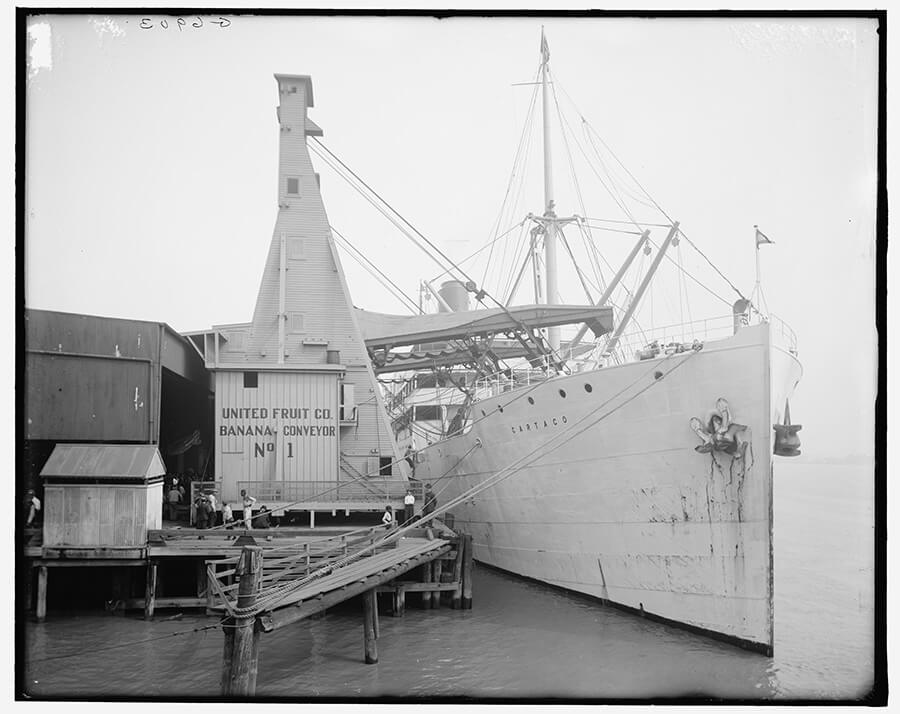 |
| United Fruit Company banana conveyors, New Orleans, Louisiana, 1910. Courtesy of the Library of Congress, Prints and Photographs Division, LC-DIG-det-4a19873. |
"I Just Liked to Be in that Number": The Longshoremen Remember
The transformative impact of the port's automation upon the history, culture, economy, and demographics of New Orleans became a topic of conversation in the spring of 2012 between Justin Nystrom, the director of Loyola University New Orleans's new Documentary and Oral History Studio, and Mark Ellis, who served as the secretary-treasurer of the ILA Local 3000 for twenty-eight years. With the support of union president Kenneth Crier, Nystrom structured an oral history project aimed at recording stories of those men who belonged to the last generation of longshoremen to participate in the centuries-old system of breakbulk cargo. The Loyola Documentary and Oral History Studio fuses traditional oral history methodology with the high production value recording found in modern documentaries. These recording procedures afford flexibility in dissemination. Archived as both transcript and ten-bit digital video, interviews serve as source material for textual scholarship and documentary features.
 |
| Justin Nystrom and students Kyleah Frederic, Eric Buras, and Kaleigh Macchioand prepare equipment for a recording session, Loyola University, New Orleans, Louisiana, October 29, 2012. Photograph by Harold Baquet. Courtesy of Harold Baquet and Justin Nystrom. |
Longshoremen interviews began in the fall of 2012 as part of Nystrom's senior seminar in oral history taught at Loyola University New Orleans. Nine students each recorded and transcribed one full interview and took turns aiding with technical production during the recording sessions by setting up lighting, microphones, and camera equipment. Successful interviews required students to bridge significant differences in age, economic background, gender, and education between themselves and the interviewees. Students also assembled research folios on the life of New Orleans longshoremen using historical newspapers and other textual sources in order to prepare informed questions for their interview subjects, in addition to more general questions about life on the docks. Other challenges included scheduling. As Mark Ellis observes, longshoremen always worked by the job, not the clock. At the semester's conclusion, the class had recorded six hours of interview footage. A final class project tasked students with identifying themes from the collective body of interviews and editing thematically-linked footage into a focused narrative. This documentary short reflects some of the selections made during their coursework.
A recurring theme in the interviews for On The Waterfront: Conversations with New Orleans Longshoremen is a fond, if nostalgic, memory of life on the docks. "They had a lot of mens, and everything, and I just liked to be in that number," explains longshoreman John McSwain, who came to New Orleans from rural Alabama in 1959 at the age of nineteen to work on the river. James McCleland started at eighteen in 1949, drawn by the atmosphere of the docks where his father spent fifty years. "He wanted me to go to college, and I was hard headed and wouldn't go to college," recalls McCleland, "and he didn't want to bring me on the waterfront, but his boss did, and between them they worked it out." McCleland's father echoes the wishes about college that his son would later express to his own children.
On the Waterfront: Conversations with New Orleans Longshoremen, 2014. Produced by the Loyola Documentary and Oral History Studio.
Stories of accidents also figure prominently in longshoremen's memories. "I mean you can hear a strange noise in the middle of a conversation and hear that noise and everyone knows to just start running," observes Chris Hammond. "Because we know that that noise is something breaking, like a cable snapping." On his first day on the job, John McSwain suffered two broken feet when a crane lowered a "household box" onto them. Later, as a foreman, he witnessed a major collision on the river: "They had a ship collided with a oil barge. And twenty-six mens went down with the ship. Up under the bridge, out there . . . by the Crescent City Connection. . . . Yeah, was Easter Sunday night, we were working out there. Sure was at Julia Street. Julia Street Wharf."
The Longshoremen tell of the tedium of loading 250-pound sacks, the oppressiveness of the heat working inside a ship's hold in the summer, and the relentless pace. But they also tell of the camaraderie of life on the docks, steady work, good wages, and a responsive union. One recalls when Martin Luther King came to speak at the Local 1919 union hall on Claiborne Avenue in 1961, while others remember overcoming fears of snakes and spiders sleeping among the refrigerated bananas. Each expresses keen awareness that the world in which they worked is gone.
The transcribed interviews from this project, along with their accompanying video files, are deposited in the Loyola Archives and Special Collections, to be made available to scholars online through the LOUISiana Digital Library. Additionally, student workers in the Documentary and Oral History Studio are building a Zotero database that will enable other Zotero users to search full-text transcripts and view video files.
The "Sliver by the River"
Today, New Orleans's working riverfront carries on behind a concrete sea wall, cordoned off from the neighborhoods whose rhythms once moved to the steady arrival and departure of cargo ships along the docks. This modern complex has its own rail line and semi-truck express lane, while the cranes and gantries that pluck containers from the decks and hulls of oceangoing vessels employ fewer than five hundred skilled longshoremen. This comparatively compact, efficient, and heavily automated modern port facility replaced the miles of open wharves, which continue to rot and tumble into the river.
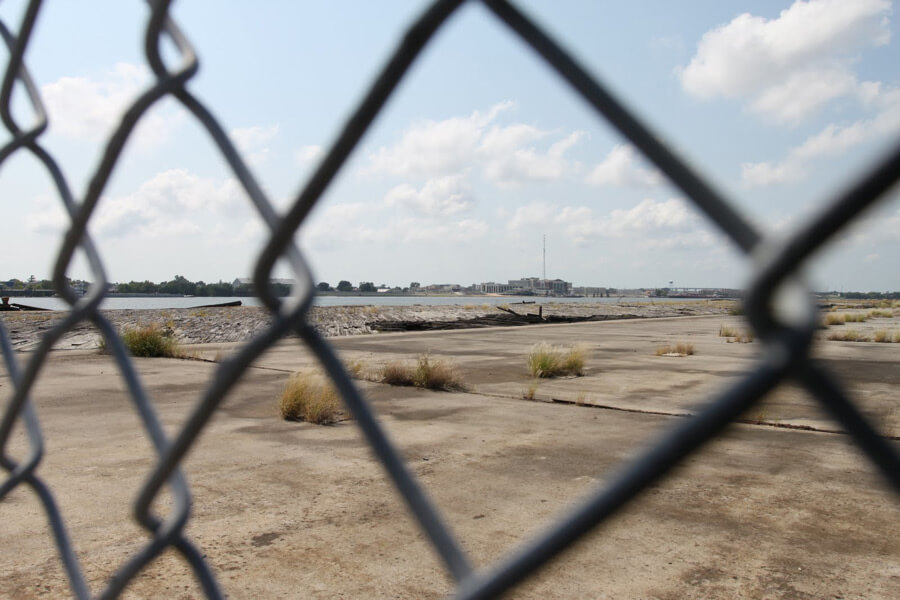 |
| Decaying wharves, Felicity Street, New Orleans, Louisiana, 2010. Photograph by Justin Nystrom. Courtesy of Justin Nystrom. |
Their decay passes unnoticed in a labor market that has shifted toward the service industry, technology, and tourism, while college-educated professionals convert the shotgun doubles lining the streets that radiate perpendicularly from the river's crescent like the ribs of a fan into stylish single-family homes. Located on the historical high ground, a combination of aesthetics, demographics, and FEMA flood map designations have rendered this "sliver by the river" the most expensive real estate in the postdiluvian city. The transition taking place here is not unlike the sort of gentrification unfolding in the urban centers of other US cities, but the architecture and street grid still bear the imprint of the once relationship between land and river.
About the Author
Justin Nystrom is Assistant Professor of History, Co-Director of the Center for the Study of New Orleans, and Director of the Documentary and Oral History Studio at Loyola University New Orleans.
]]>Presentation
Part 2: Frank provides an overview of the Stanford Spatial History Project
Part 3: Frank discusses creating visualizations that evoke patterns and varieties of spatial mobility, consciousness, and power
Part 4: Frank demonstrates the possibilities of HGIS using visualizations from his Terrain of History project
About the Author
Zephyr Frank is associate professor of Latin American History at Stanford University, the director of the Spatial History Project, and the principal investigator on the Terrain of History project. He teaches modern Brazilian history, with an emphasis on urban life, economic development, and cultural change in 19th-century Rio de Janeiro. He is the author of Dutra's World: Wealth and Family in Nineteenth-Century Rio de Janeiro and co-editor of From Silver to Cocaine: Latin American Commodity Chains and the Building of the World Economy.
]]>Review
 |
Understanding the creation of social spaces in an unfamiliar landscape is, according to Robert Paulett, a productive way to account for eighteenth-century developments in the American Southeast, particularly in Georgia. In his interesting but not entirely successful study of non-Native participants in the southeastern deerskin trade, Paulett uses the word "mapping" to convey their processes of coming to know and create ways to live in a particular place, a process that included imagination and adaptation as well as habitation.
Paulett finds that the geography of place varied with those who conceptualized, created, and utilized the "small spaces" they inhabited in the geography of the deerskin trade. The participants of his analysis are the British who bought and marketed deerskins and the boatment who transported trade goods in the American colonies. As a study of the trade from the perspective of non-Natives, the book provides a useful comparison to the work of ethnohistorians such as Kathryn Holland Braund and Claudio Saunt who focus on the Native American side of colonial contests over space. Moreover, while Saunt and Braund examined the contested spaces of houses and farms, Paulett looks at an entire river system, the Savannah, and its surrounding landscape.
In Paulett's study, the British traders, white and African boatmen, and colonial town merchants who shared the landscape of the deerskin trade created geographies that overlapped and were similar but not identical. Those connected to the trade conceptualized and developed a system of linked places that persisted through the upheavals of the eighteenth century and continually challenged British notions of order and control. Paulett asserts that incompatible mapping between British ideals and colonial reality led to the recurring pattern of misunderstanding and conflict that continually threatened the deerskin trade. His study threads its way through an era of turmoil, war, negotiation, environmental destruction, and English incursion on Native lands by concentrating on one arena where various populations charted their own courses.
Paulett's study area is the trade route from Charles Town (now Charleston, South Carolina) up the Savannah River through Augusta, past several Creek Indian towns, and ending in the Chickasaw towns of present-day north Mississippi and west Tennessee. Temporally, the book covers most of the 1700s, beginning with the settlement of the Georgia colony and concluding with the aftermath of the American Revolution.
The empire of the book's title is a predominantly British vision of orderly settlements on the land of colonial Georgia, an imagined place that implied the English longing for control of lands and economies. The empire is also a landscape of commerce that developed locally and largely eluded British control at the hands of merchants, traders, and boatmen. By the end of the American Revolution the old geography had given way to what Paulett calls an "Empire of Liberty," a space imagined by white settlers who tried to redefine the region for themselves.
Each of the five chapters, as well as the introduction and conclusion, opens with a character sketch of a participant in the trade, providing immediacy, reinforcing the role of imagination in the creation of social space, and bringing the reader into the historical moment. Paulett begins with a consideration of James Oglethorpe on the banks of the Savannah River visualizing the possibilities of trade and concludes with a group of Augusta leaders eyeing the fencing on a former trader’s land. The sketches skillfully illustrate the power of spatial imagination while introducing the concept Paulett uses to organize his narrative.
 |
| Edw. Crisp, Detail of A compleat description of the province of Carolina in 3 parts, the west part by Capt. Tho. Nairn, 1711. Library of Congress Geography and Map Division, 2004626926. |
 |
| Henry Popple, A map of the British Empire in America with the French and Spanish settlements adjacent thereto, 1733. Library of Congress Geography and Map Division, 2009582407. |
 |
| John Mitchell, A map of the British and French dominions in North America, with the roads, distances, limits, and extent of the settlements, 1755. Library of Congress Geography and Map Division, 74693187. |
Referencing literal as well as metaphorical maps and mapping, Paulett's first chapter persuasively establishes the tension between imperial efforts to control trade and local resistance expressed by the participants' point-to-point network of small places, a tension between the ideal and real. With no defined boundaries between southeastern occupants, Europeans drafted manuscript maps that reinforced imagined empires with drawings of a land whose features they did not know. In contrast to European spatial and static maps, those conceived and experienced by local Indians and traders were processional geographies of connected places. The book's cover presents an image of such geographies: the early-1700s Chickasaw map of friends and enemies denoted by a series of separate but linked circles. Although the eight other maps and two cartouches in the chapter are neither large nor clear enough to augment Paulett's discussion, they demonstrate that the early manuscript maps reveal the ambitions of the builders of American trade empires. He successfully repositions European maps as texts about power rather than information, and local maps as geographies of relationships.
In the following four chapters Paulett expands his argument to examine four arenas central to the deerskin trade: the Savannah River, the town of Augusta, trading paths connecting Augusta to Indian towns, and houses built by traders in Indian communities. Like blank parchments carefully inked by European cartographers, these venues were also spaces onto which various participants in the trade inscribed their maps. Each chapter looks at the competing and overlapping spatial concepts of the English, traders, merchants, and African American laborers, with some attention to Creek Indians. His review of diverse groups, settings, and activities highlights the everyday and personal elements of a global economy.
Paulett's spatial analysis is particularly illuminating when he examines a location, such as the trade town of Augusta, or discrete elements, such as maps. His discussion of Augusta details the ways English traders shaped a space to suit their needs rather than conforming to the imperialist vision of an orderly, fortified town. In contrast to other southern settlements, Augusta lacked town walls because the traders required an open town with easy and rapid communication among buyers and sellers, providers and purchasers. Individual trade houses were fortified and spaced a mile or so apart, which emphasized the dominance of trade rather than government or religion, and shaped the town in a unique configuration. As Paulett effectively shows, Augusta was a traders' space that articulated their economic, physical, and social authority.
 |
| Archibald Campbell, Sketch of the northern frontiers of Georgia, extending from the mouth of the River Savannah to the town of Augusta, 1780. Library of Congress Geography and Map Division, 73694481. |
When addressing more fluid locations, Paulett's use of spaciality as an analytical framework is less effective. His chapter on the Savannah River, for example, seems unnecessarily encumbered by frequent assertions of space creation by the English, the traders, and the white and African boatmen. Certainly the corridor of water that was so essential to the deerskin trade carried different meanings to the trade's participants. Relying on his spatial paradigm, Paulett claims the English viewed rivers as empty spaces to be occupied and managed but could not accommodate their vision to the realities of the uncontrollable Savannah. Merchants relied on the river as a connector to one another and a link to the European world but experienced it only as infrequent, transitory visitors.
In contrast to both groups, according to Paulett, the white and enslaved African boatmen considered the Savannah a singular space in which they acted independently and experienced a measure of freedom. While his documentation and discussion of cross-cultural experiences expands our understanding of trading history, Paulett's imposition of spatial mapping onto the minds and experiences of African boatmen is not persuasive. Perhaps a boatman's momentary experience of freedom from plantation slavery inevitably led to his creation of a unique cultural space, but we have no evidence of his attendant development of identity derived from and expressive of that creation. Here, as in the chapter on the trading path, additional evidence is necessary to support the author's provocative assertions about the ways individuals conceptualized their experiences.
The book concludes with an overview of the American Revolution's dissolution of the trade that led to revised concepts of American geography. With little or no deerskin trade, new generations of Georgians could abandon the old trade geography to imagine a new, homogeneous kind of space with farms, settlements, and no Native Americans. Richly conceived and well expressed, the chapter documents the rise in upcountry newspaper articles about geographical boundaries, the growing public and academic interest in atlases and maps, and an increased frequency in use of the term "neighborhood" as indicators of Georgians' evolving American geography.
Robert Paulett has given us a refreshing consideration of life in the eighteenth-century deerskin trade. His focus on disparate groups occupying the same arena but living different experiences challenges us to reimagine the complexities of life among multiple cultures and changing landscapes. Reliance on a spatial framework enables him to shift his gaze and lead ours to see the agency of those groups in their effort to imagine, conceptualize, and shape their place in a shared world. Although Paulett's argument does not always succeed, his work adds new information and a different perspective to studies of the American South.
Review
 |
| Kelly Yandell, Foodways Texas oyster tasting at Gaido's Restaurant, Galveston, Texas, 2011. |
On a late February Saturday night in Galveston, Texas, I stood shoulder to shoulder with a hundred fellow conspirators, tasting two thousand oysters from all along the Gulf Coast. It was the first symposium hosted by Foodways Texas, an organization dedicated to preserving, promoting, and celebrating the state’s diverse food cultures. We took over a room at Gaido’s, a century-old restaurant that has served its share of succulent oysters. As revelers drank and cheered, Mardi Gras parade floats, barely visible through the early spring fog, advanced noisily down the seawall. Our targets—a consideration of oyster appellations and a revaluing of fish previously dismissed as trash—intermittently floated up through the thick fog of history, ocean, and industrial/scientific rhetoric, raising as many questions as answers. Sweet, fat, briny, buttery, and luscious, the oysters were a phenomenon of excess and local flavor, a bacchanalia fitting the surrounding party.
 |
| Kelly Yandell, Elm Grove oysters, Galveston, Texas, 2011. |
Mad Island, Elm Grove, Todd’s Dump, Possum Pass, Bayou Cook, Pepper Grove, and Ladies Pass. The sheer number of oysters in one place was notable, however the history came from the laminated nametags accompanying each sampling of oysters. Rather than numeric codes in fine print designating the bed from which oysters were harvested, rather than a tag lumping all together as from the Gulf, for one night the oysters stopped being generic. The Texas oyster beds got their names back. We compared the taste of Mad Island versus Pepper Grove. We debated the salinity of Possum Pass versus Bayou Cook. We found the provenance, and we located and glimpsed the history in the names. Who was Todd and what did he dump? What Ladies gave their legacy to Ladies Pass? Where are the elms that inspired Elm Grove?
 |
| P. J. Stoops, Sorting the "trash," Houston, Texas, 2010. |
Ribbonfish, Almaco Jack, Big Eyes, Rainbow Runners, and Drills. Oysters were not the only food to regain their names at the Foodways Texas Gulf Coast gathering. A panel took on monocultural fishing practices driven by market forces, practices that value one product and dismiss everything else that comes up in the nets or on the line as “trash.” If Redfish are selling, then Ribbonfish get trashed, along with Rainbow Runners. But if we rename the trash as by-catch, and find someone like P. J. Stoops, a walking encyclopedia of the names and qualities of Gulf species, then we might compare the Almaco Jack with the Big Eyes and not throw either away. By restoring the names and the balance, we also might find similarities between predators such as oyster drills and delicacies such as escargot, and discover that devotees of snails in butter and delicate herbs also may like oyster drills—kissing cousins to the land snails—prepared the same way. Such practices could help protect the oyster beds from at least one threat.
 |
| P. J. Stoops, Oyster drills, Houston, Texas, 2010. |
Anahuac, Lonesome, Desperation, Moses Gate, Resignation, Mary’s, Slim Jim, Frenchy’s. For this North Carolina native, Texas provides a fascinating geographic shift from which to examine questions of cultures, landscapes, and artifacts. On this particular evening, though, it was my perspective as a humanities scholar that was most engaged. We could locate oysters and restore nineteenth-century reef names because food historians such as Robb Walsh found maps and newspaper stories from before the beds were scientifically coded and classified by number. We heard the poetry in old names used by local fishermen and women perhaps because Stoops’ background includes an English degree, making him inclined to favor the vernacular over the Latin in by-catch names. The long history of erasure of the local by nationalizing or industrializing scientific rhetoric took a small step back. Even if we do not know how Lonesome, Desperate, or Resigned some early oystermen and women were, we glimpsed stories of families and lives memorialized by names. From the restoration of narratives came a challenge to homogeneity and a celebration of heterogeneity of cultures, people, and places. Could it be that Tejano and Mexican fishing practices joined Cajun, Anglo, and African American ones at the Anahuac (or center) with Frenchy, Jim, and Mary coming along? We might feel an investment in terroir—what food scholar Amy Trubek calls the "taste of place" and the connections of flavors, foods, and cultures—if later we hear that Moses and his Gate are threatened, more than we might if unnamed and generalized reefs are said to have declined.
 |
| P. J. Stoops, Triggers, Squirrelfish, Rosebuds, Almacocs, and Porgies, Houston, Texas, 2010. |
Confederate, Dollar, Gaspipe, Dryhole, Snake Island, Redfish. Names and narratives can be fraught and dangerous. We can use them to romanticize an untroubled past, one without Gas pipes draining into the bay waters and without traces of civil war and its racial divides carved into the coast. We can use nostalgia to forget our responsibilities in the present. Dollars seem quaint rather than profoundly influential on a working bay. Oyster and fish names can stand in place of the names of the many men, women, and children who historically worked in the canneries and factories, on the boats, and in the crews—often for little pay, in brutal conditions. Efforts to restore histories and cultures can fetishize products, price them out of their blue-collar roots, and harvest them out of a healthy balance in the ecosystem.
Lonetree, Little Bird, Eagle Point, Buckshot. Amid contemporary habits of quantifying and generalizing, perhaps the fondness for storytelling demonstrated on that February weekend in Galveston addresses a gap. If food and drink can be thoughtfully combined with narratives and bonding across experiences, then names may make a difference. If we root ourselves and our foods in places, connect people and time, and reflect on cultural exchanges, we might build new commitments and political alliances.
 |
| Kelly Yandell, Freshly cooked oyster drills, Galveston, Texas, 2011. |
Did the oyster appellation experiment cut through the night’s soupy fog? Does the by-catch renaming transform our relationship with the seas? Do I now know a truth about oysters, an essential worth of fish not discarded? I am not sure. I do know that since the gathering a few Texas restaurants have begun hosting tastings organized by appellation. A by-catch booth at a Houston farmers’ market twitters lists of species and possibilities—and followers flock in. Perhaps restoring narratives to products previously obscure, unfailingly fresh, and newly valued will strengthen the connections between stories, oysters, fish, and cultures, and even create space for stories untold. That might be worth a celebratory parade.
About the Author
Elizabeth Engelhardt, associate professor of American Studies and Women’s and Gender Studies at the University of Texas, Austin, writes about food, gender, race, and class in the US South. She is lead author of Republic of Barbecue: Stories Beyond the Brisket (2009) and author of the forthcoming A Mess of Greens: Southern Gender and Southern Food (Fall 2011). Engelhardt is also co-editing (with John T. Edge and Ted Ownby) a forthcoming volume about southern food methodologies. Originally from western North Carolina, she has followed in the footsteps of generations who traveled from the mountains of Appalachia to live in and write about Texas.
]]>Introduction
 |
This multimedia essay complements the 2007 Appalshop film Morristown: in the air and sun. Written by independent filmmaker Anne Lewis, the director of Morristown, and Fran Ansley, a Tennessee law professor who served as principal humanities adviser on the project, this essay presents aspects of the Morristown story that we were unable to include in the one-hour documentary: additional context and perspectives for considering factory flight, international labor migration, and the organized demand for economic justice.
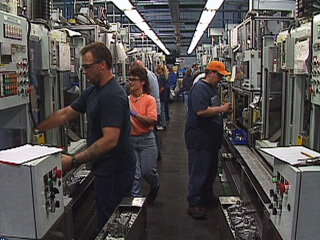 |
| Workers at Toyoda/TRW Plant in Morristown, Tennessee, from Morristown: in the air and sun (2007). |
Filmed between 1991 and 2006 and based primarily in the mountains of east Tennessee, Morristown explores the lived experiences of workers from Tennessee and Mexico who speak about their lives, work, disappointments, and hopes. These conversations are combined with scenes in Tennessee factories, fields, union halls, Mexican-owned stores, workers’ homes, city parks, and employment agencies. The documentary travels to factories and locations in Ciudad Juárez, Chihauhau, and Los Martínez, Guanajuato, Mexico. Morristown concludes with a stunning union victory in 2005-2006 among immigrant workers at a large poultry processing plant.
Although Morristown puts workers’ experiences at its center, it makes space for representatives of business and civic elites in Tennessee and Mexico. In separate interviews, Jack Fishman, the head of the Chamber of Commerce in Morristown, and Roberto Urea, the head of a manufacturers' association in Ciudad Juárez, put forth their opinions about economic development.
 | Jack Fishman: "If your wage rates are excessively high, then you won't attract quality industry and quality jobs." |  | Roberto Urea: "Whether you'd like to pay people more, or you don't want to pay people more, the driving force is not our heart." |
The resulting impression of globalization that Morristown offers is internationalist in its search for class solidarity across borders, but local in its place-based perspectives. The film encourages audiences to question their own assumptions about what they are seeing. It depicts conflict and contradiction among its subjects’ opinions about immigration, labor, and the impacts of globalization.
We are proud of Morristown, and pleased with its reception in the United States and Mexico. We are somewhat frustrated, however, by the constraints that accompany filmmaking. Independent documentaries typically have at least a fifty-to-one shooting ratio—that is, for a finished work that is one hour long, acquired footage is usually more than fifty hours.1See Lance Compa, “Think Globally, Film Locally,” Cornell International Law Journal 41.1 (Winter 2008): 139-142; and Monica Hernandez, “Film Review,” in Ark Magazine, National Organizers Alliance, Issue 24, Fall 2007. Morristown: in the air and sun had an even larger shooting ratio. This raw footage is stored in Appalshop’s archives and made accessible to the occasional scholar or interested individual, but the opportunity for public use is limited.2Appalshop is an organization located in Whitesburg, a small town in the coal fields of eastern Kentucky. In the center’s own words, it is “a non-profit multi-disciplinary arts and education center in the heart of Appalachia producing original films, video, theater, music and spoken-word recordings, radio, photography, multimedia, and books.” The group’s substantial multimedia archive is a national treasure.
Footage was not the only thing that had to be left out of the film. Making Morristown took years and involved a long-term process of building trust with workers and worker organizations on both sides of the US–Mexico border. At times these workers created their own records: union factory women in Tennessee made a scrapbook they hoped to share with fellow factory workers across the border; the film project helped exchange experiences and ideas through interviews that we called Morristown Video Letters.
Other materials were not included because they would detract from the need for a simple narrative line. For instance, the great risks taken by workers while crossing the border are covered very briefly and illustrated with an image of a family running. In this essay we are able to add a first-hand account. Similarly, factual information about the industries where immigrants found employment in east Tennessee was left out of the film. Here we include a chart.
This web-based format gives more freedom to readers, viewers, and listeners. They can interact with the story in different ways—choosing their own pace and sequence, making selections, deciding when to pause, go deeper, or move on.
Although the formats of the film and multimedia essay are different, their politics are the same. Largely without narration, Morristown proceeds through the voices of working class people. As active members of the labor movement ourselves, we know the film itself was possible thanks to the efforts of labor and community organizers, cross-border work by grassroots internationalists, engaged scholarship, and the willingness of working class people in the Southeastern United States and Mexico to share their lived experiences with us. Across many years, miles, and differences, we worked to build relationships of trust outside the boundaries of filmmaking.
In our discussion of the making of Morristown, we offer a linked series of sections. "Going South" takes up the mobility of industrial capital, reporting efforts by Tennessee workers in the 1990s to exert counter-pressure on employers who moved production overseas, and describing a series of cross-border exchange trips that took place between factory workers from Mexico and Tennessee. In "Coming North," we examine reasons for the recent mass migration out of Mexico and what the northward journey means, both for unauthorized migrants entering the country and for families and communities left behind. "Arriving in Morristown" focuses on the arrival of Mexican and Central American immigrants in new interior destinations such as Morristown and their reception by native-born residents. In "Organizing a Southern Industry," we recount the story of a successful organizing drive among immigrant workers at a poultry processing plant in Morristown, a victory that suggests how much all workers stand to gain if the right of immigrants to organize on the job and to function as engaged citizens of the global economy is honored and respected. "Looking Back and Ahead" offers our conclusion.
Going South: A Trip to the Maquiladoras
The movement of industrial capital in search of cheaper labor is nothing new for Tennessee or for the US South. East Tennessee has experienced life at both poles of this dynamic. In the 1960s and earlier, labor-intensive industries such as clothing, textiles, auto parts, and consumer electronics moved their plants from northern cities such as Detroit and Chicago to Morristown, Knoxville, and other cities and small towns along the Interstate 40/81 corridors. They moved to escape union contracts, to minimize their duties under state regulation, and to profit from the incentive programs that have always accompanied industrial recruitment in various versions of the “New South.”
Beginning in the 1980s, many of those same industries moved further still, across the national boundary line and into the global South. Although the nation’s attention was focused predominantly on job loss in northern states like Michigan and Ohio, plant closings brought much of the same personal hopelessness, public neglect, and structural unemployment to the South as they had to the Rust Belt.3On deindustrialization in the United States, see Barry Bluestone and Bennett Harrison, The Deindustrialization of America, (New York: Basic Books, 1984). On deindustrialization in the South, see John Gaventa, Barbara Ellen Smith and Alex Willingham, eds., Communities in Crisis: Appalachia and the South (Philadelphia: Temple University Press, 1990) and Eve Weinbaum, To Move a Mountain: Fighting the Global Economy in Appalachia (New York: New Press, 2004).
Union contracts eroded along with wages and benefits. Social relationships changed. Workers were thrown into competition with other workers, often of different race and national origin. In 1991, Luvernel Clark, then president of Local 1742 of the Amalgamated Clothing and Textile Workers Union, testified before the Office of the United States Trade Representative about the effects of deindustrialization on one enterprise:
 |
A dozen years ago, our factory at Allied was a big, busy place. There were over 3,000 workers employed there. We had contracts with GM, Ford, and other big car manufacturers. But in the early eighties, Allied started shutting down parts of our operation and transferring them to a non-union facility south of here in Alabama. The jobs did not stay in Alabama long. Soon we learned that the work had been moved from there down to a place called Agua Prieta, Mexico. That was the first that a lot of us had heard about all these factories moving to Mexico. We had no idea what really was happening. I am still working now, but I never feel secure.4For Luvernel Clark’s full testimony at the hearing see Frances Lee Ansley, “North American Free Trade Agreement: The Public Debate," Georgia Journal of International and Comparative Law 22 (1992): 392-394.
It was no accident that multinational corporations looking for favorable terms and cheap labor identified Mexico as a favored destination. Launched by the Mexican government in 1964, the Border Industrialization Program (BIP) created the legal infrastructure for a bilateral state-promoted export-processing zone of factories known as maquiladoras (maquilas for short). US-based companies were allowed to produce goods or portions of goods in Mexico that were admitted back into the United States without tariffs as long as production took place within one hundred kilometers of the border.
Conceived as a way to provide jobs for agricultural workers who were returning to Mexico at the end of the “bracero” program that for decades had brought Mexican men to work in US fields, the BIP was slow in getting off the ground. By 1986, there were only 865 maquila plants employing some 227,900 workers along the border. As corporate strategies for globalizing production intensified during the eighties and early nineties, the number of factories at the border steadily grew. After passage of the North American Free Trade Agreement (NAFTA) in 1994 and the immediate drop in the value of the peso, maquiladora employment soared, and the bi-national legal arrangements that underpinned the maquilas were no longer restricted to the border. By 1998, 3,051 Mexican maquilas employed 1,035,957 workers. What had begun as a border-specific exception to Mexico’s relatively nationalist rules on foreign investment and trade became the new neoliberal norm.5William C. Gruben, "Was NAFTA behind Mexico's high maquiladora growth? - Statistical Data Included,” Economic & Financial Review July 2001: 11-21.
As Tennessee felt the impact, groups scrambled to understand what was happening and searched for ways that workers in the increasingly insecure, globalized economy might best respond. In 1989, a coalition of labor unions, religious groups, and community organizations came together to create the Tennessee Industrial Renewal Network (TIRN). Fran Ansley was present at the group’s large founding meeting in Chattanooga as were several factory workers and organizers who later contributed important interviews and insight to the Morristown documentary.6The energy and new relationships that were opened up by TIRN’s founding meeting encouraged Fran to make plant closings the focus of her legal research in the early nineties. See Standing Rusty and Rolling Empty: Law, Poverty and America's Eroding Industrial Base, 81 Geo. L. J. 1757-1896 (1993).
Particularly disturbed by how easy it was for many Tennessee workers to blame the closings on Mexican workers who were “stealing” their jobs, TIRN leaders began looking for ways to promote a more accurate economic understanding in local communities. Drawing on lessons learned by the Highlander Center about the importance of peer education, TIRN sought direct contact between workers in east Tennessee and workers in Mexico.
TIRN reached out to several border groups that were working to expose and address maquila realities: the Border Committee of Women Workers (in Spanish, the Comité Fronterizo de Obreras, or CFO—a grassroots group of women employed in maquiladoras) ; the Border Project of the American Friends Service Committee, a group that partnered with the CFO; and the Coalition for Justice in the Maquiladoras, a network that brought together labor and community activists from the United States and Mexico.7Joe Bandy, "Paradoxes of Transnational Civil Societies under Neoliberalism: The Coalition for Justice in the Maquiladoras," Social Problems 51:3 (August 2004): 410-431. TIRN proposed a two-way worker-to-worker exchange between Tennessee and Mexico, and the CFO and its supporting groups agreed to collaborate.
In July 1991, after TIRN hosted a visit to Knoxville from two maquila workers active in the CFO, a delegation of nine women from TIRN, including Fran, a staff organizer, and seven east Tennessee factory workers, traveled to Mexico.
Anticipating a television series on the future of US manufacturing, a crew from WGBH-Boston filmed the trip. TIRN had agreed to this accompaniment with the understanding that the organization would receive the raw footage after the PBS broadcast. Many months later, staff members approached Anne at nearby Appalshop in Kentucky to ask if she could take the raw tapes and, with worker input, produce a short video.8At the time, Anne was making a film that explored notions of community justice during the mineworkers strike against Pittston Coal, Justice in the Coalfields (Appalshop, 1995). Anne agreed, and the resulting film, From the Mountains to the Maquiladoras, became a key resource for TIRN and for a number of other groups that were then organizing about the loss of US manufacturing jobs, the process of globalization, and emerging US trade policy.9From the Mountains to the Maquiladoras is available in DVD from the Highlander Research and Education Center
Women from Tennessee saw first-hand the transformed operations of companies well known to them, but now in the maquiladora context unfettered by the rules of home. They witnessed the living conditions of people employed in the maquilas and living in makeshift shacks without electricity or running water. Workers shed tears, revealed anxieties, and expressed shock and disorientation. During a visit to a settlement outside of Reynosa, Shirley Reinhardt, a displaced worker from Morristown, stepped aside for a moment to regain her composure.10Like Luvernel Clark, mentioned above, Shirley Reinhardt later gave testimony at a hearing on NAFTA organized by the Office of the US Trade Representative. For her full written testimony submitted to the hearing panel, see Frances Lee Ansley, “North American Free Trade Agreement: The Public Debate," in Georgia Journal of International and Comparative Law, 22 (1992): 388-392. Parts of their oral testimony are also captured in From the Mountains to the Maquiladoras. She said to Fran, “I feel ashamed. I feel ashamed for our government, for our people. I feel so ashamed.”
Returning home, Reinhardt and other TIRN travelers spoke to labor unions, policy-makers, and community groups about why they believed the maquila model and its NAFTA embodiment were a bad deal for workers on both sides of the border.11For more on TIRN’s exchange trips and the work that grew out of them see, Kristi Disney, “Building a Movement on Both Sides of the Border,” in The Global Activist's Manual: Local Ways to Change the World , ed. Mike Prokosch and Laura Raymond, (New York: Thunder’s Mouth Press/Nation Books, 2002), 12-19; Fran Ansley, “Putting the Pieces Together: Tennessee Women Find the Global Economy in Their Own Backyards,” in Women Working the NAFTA Food Chain: Women, Food & Globalization, ed. Deborah Barndt (Toronto: Sumach Press, 1999), 141-160; Fran Ansley and Susan Williams, “Southern Women and Southern Borders on the Move: Tennessee Workers Explore the New International Division of Labor,” in Neither Separate Nor Equal: Women, Race and Class in the U.S. Southeast, ed. Barbara Ellen Smith (Philadelphia: Temple University Press, 1999), 207-244; Fran Ansley, "The Gulf of Mexico, the Academy, and Me," Soundings 78 (1995): 68-104. They organized a car caravan through downtown Morristown to protest NAFTA. They gathered petitions, called on legislators, went to conferences, wrote letters and op-ed pieces for their local papers, and organized rallies.

Eventually the organization sent a delegation to the Seattle demonstrations of 1999 against the World Trade Organization, protests that joined “Teamsters and turtles” to challenge the ambitions of those promoting a free trade agenda.12TIRN’s delegation to Seattle included Barbara Knight, a displaced Philips worker who also became an important contributing voice to Morristown: in the air and sun.
 |
TIRN found that despite its commitment to building cross-border solidarity, it was difficult to maintain active ties with host groups and individuals in Mexico. In 1997, a committee decided to experiment with a scrapbook exchange between women factory workers in east Tennessee and women maquila workers in Juárez. Another worker-to-worker exchange idea resulted in a popular education tool, Morristown Video Letters, an edited selection of interviews with Tennessee and Mexican workers, with voice-over translation into both English and Spanish. TIRN hoped these letters might serve to support on-going dialogue.13Morristown Video Letters is available on DVD, in English and Spanish versions, from the Highlander Research & Education Center.
Coming North: The Long Hard Crossing
TIRN’s video From the Mountains to the Maquiladoras examined the movement of capital—plant closings and conditions in maquila locales where those plants had moved. It did not focus on immigration. In 1991, when the earliest footage was shot, most east Tennessee residents were not aware of the growing numbers of Latino immigrants. But some of the women on the trip—the ones from Morristown—did point out that there were “new people” from Mexico showing up back home. Demographic change in Tennessee was soon evident even to casual observers.
The movement of industrial capital from the United States to the maquilas and the movement of low-wage workers from Mexico to the United States were intimately related. The impacts of NAFTA and related neo-liberal policies were felt throughout Mexico. Resulting pressures fed northward streams of migration. An estimated two million Mexican farmers and farm workers lost their livelihoods as cheap US agricultural products, especially corn, flooded Mexican markets.14Monica Campbell and Tyche Hendricks, “Mexico's Corn Farmers See Their Livelihoods Wither Away: Cheap U.S. Produce Pushes Down Prices Under Free-trade Pact,” San Francisco Chronicle July 31, 2006. The loss was further exacerbated by the sudden devaluation of the peso in December 1994. In one week, the peso went from 4 pesos to 7.2 pesos to the US dollar.15Gary C. Hufbauer and Jeffrey J. Schott, "NAFTA Revisited: Achievements and Challenges," International Institute of Economics, 2005, at p. 10.
The peso devaluation meant many more US factory jobs moved to Mexico where everything from services to utilities to wages had become much cheaper for international investors. Meanwhile, the wages companies offered were worth even less. It became impossible for many working class Mexican communities to survive. The forces that took jobs away from factory workers in east Tennessee forced Mexican workers across the international border. For several Mexican states, human beings became the major export.
Although these changes increased local opportunities for cross-national coalition building, they also triggered resistance. If feelings had been intense about distant Mexicans taking far away factory jobs, local responses were volatile when new people, marked by differences of race, ethnicity and language, began moving next door in a region which had not experienced significant immigration for generations. Workers returning from later TIRN exchange trips found themselves in arguments with friends and neighbors—not only about corporate responsibility and factory flight, but also about the rights and wrongs of immigration.
To tell the story of the new east Tennessee immigrants, we decided that Morristown should follow the migrant stream out of Mexico, across the border, and into the United States, beginning with scenes and narratives about the journey north. We wanted space for Mexicans to tell about making the journey north from their own perspective. What impels such a costly and risky trip? How does an exodus of this scale affect those who stay behind?
 |
Rudy Marquez was one of our first sources. At the time we interviewed him, he lived on a farm outside Morristown, paid for his board with labor, and studied at a community college. Rudy was born in Mexico City. He described his travels after crossing the border years earlier. He and his father picked strawberries in Santa Ana, California, grapes and tomatoes in Fresno, and green beans in Florida. Searching for lower living costs, wider opportunities, and higher pay, they ended up in east Tennessee where they picked tobacco. Although working tobacco was harder, Rudy could earn $350 a week as compared with $150 working other crops.
Another interviewee, Claro Negrete Almeida, spoke with Anne and a Mexican film crew from his home in the state of Guanajuato. He came across the border illegally for the first time in 1972. He had spent many years working in orchards in North Carolina, and he told stories about poor treatment he had received from employers who took advantage of his fears and uncertainties. Thanks to the amnesty program passed during Ronald Reagan's administration in 1986, Claro adjusted his immigration status.16The Immigration Reform and Control Act of 1986 (IRCA). As a result, he was able to move freely across the border, spending seven to nine months of the year in North Carolina and three to five months at home in Guanajuato with his family.
Since there is presently no pathway to legal status available to workers who enter the country without authorization, Claro’s pattern of annual “circular migration” is not an option for an undocumented person today. The costs and dangers of crossing the border continue to mount as federal dollars have poured into its militarization and rates of deportation have soared. Despite the relative freedom of movement Claro's legal status provides, he continues to experience loneliness, dislocation, and bad treatment during his long work stays away from home. “Even if the bars are made of gold,” he says, “it’s still a prison.”
Despite the current burdens of migration, entire villages like Los Martínez, deep in the mountain interior of Mexico, have lost men and boys to the migrant stream. Sixteen-year-old Rosario Duran Camarilla—also from Los Martínez—spoke about how she imagines the United States:
 |
I think it’s very big, many people, I think it’s pretty. My father has always gone there. My brother, this is the first time he’s gone. Neither has papers. They cross the river and you don’t know how they are.
Many boys here say, “How I’d like to go north. We’ll have a good time.” I think it’s very pretty there, but - . . . my father once spent almost three years there. I have a little sister. He left when she was months old and returned when she was three. She asked, “Who is this man?” When he comes back, we don’t know how to talk with him. It’s still very good when he comes. What’s hard is that he spends very little time here and goes back there. He’s back there again.
While describing some of the economic benefits for families who have sent someone north, Rosario’s older neighbor, Isidra Duran De Negrete, talked about what life is like for the women left behind:
 |
It’s very hard for the mother or the wife when the child or the husband goes and they don’t know what’s going to happen. It makes them feel sad. It’s very hard for the wife when the children are hungry and no money comes in from over there.
Now there are people who have trucks, tractors, land, cattle, milk cows, and they live much more easily than before. But this is not everyone, only the ones who go north.
As the words of Olga, Claro, Rosario and Isidra suggest, the forces of contemporary mass labor immigration are complex and include “pushes” from countries of origin, “pulls” from countries of destination, past colonial legacies, and present projects of empire. In the United States, immigration reform is hotly contested and badly needed, but as the interviews in Juárez and Los Martínez suggest, immigration reform can do little to control the huge social currents that have put so many people into motion around the world.
Over the course of the 1990s and into the first decade of the new century, despite ever-increasing attempts to fortify the border, migrants from Mexico and Central America continued to come to the United States. Increasing numbers found their way, as Rudy did, to the Southeast. Migrants did not disperse evenly, but settled in clusters and hot spots. The new Latino migration represented a major and unprecedented demographic change.
The Pew Hispanic Center recently reported on results of the 2010 Census, observing that “states with the largest percent growth in their Hispanic populations include nine where the Latino population more than doubled, including a swath in the southeast United States—Alabama, Arkansas, Kentucky, Mississippi, North Carolina, Tennessee and South Carolina.” A chart linked to Pew’s report shows that Tennessee’s Hispanic population increased from 124,000 in 2000 to 290,000 in 2010, and now constitutes 4.6% of the state’s total. The chart also ranks Tennessee third in the nation in the rate at which its Hispanic population grew between 2000 and 2010—a rate of 134%, smaller only than South Carolina’s 148% and Alabama’s 145%.17“Census 2010: 50 Million Latinos, Hispanics Account for More Than Half of Nation’s Growth in Past Decade,” Pew Hispanic Center Report, March 24, 2011, p. 2. (Rate of change is not the only relevant measure, of course. Although Tennessee is third in the nation in the rate of growth of its Hispanic population, it is 27th in the total number of resident Hispanics, and 37th in the percentage of its overall population that Hispanics now represent.)
Observers have offered various reasons for why many areas of southern states became favored destinations for Latinos.18See, e.g., Fran Ansley and Jon Shefner, eds, Global Connections and Local Receptions: Latino Immigration to the Southeastern United States, (Knoxville: University of Tennessee Press, 2009); Heather Smith and Owen Furuseth, eds., Latinos in the New South: Transformations of Place, (Burlington, VT: Ashgate Publishing Company, 2006); Rakesh Kochhar, Roberto Suro and Sonya Tafoya, The New Latino South: The Context and Consequences of Rapid Population Growth (Washington DC: Pew Hispanic Center, 2005); A.D. Murphy, C. Blanchard, and J. A. Hill, eds., Latino Workers in the Contemporary South (Athens: The University of Georgia Press, 2001). Housing costs lower than those in traditional gateways are one factor, as is the preference of some immigrants for small-town life. For a time, immigration enforcement was patchier in the interior of the country. The availability of paid work is the single strongest determinant. Anita Drever, a University of Tennessee geographer, found that the ten locations in the state with the largest percentage of Latinos in 2000 were all small towns or cities where a particular industry (or a single employer) could easily be identified. Census data are notoriously soft when it comes to measuring Latino populations, so the specific numbers must be viewed with caution, but for comparative purposes the data is quite instructive. Here is a chart showing the results of Drever’s research.
Table 1: Ranked list of towns (census places) with the highest percentages of Latinos in Tennessee and the largest employer of Latinos in these areas
| Rank | City | % Latino | Total | Major Employer of Latinos |
| 1 | Bells | 22.8% | 2,171 | Pictsweet Vegetables (packaging plant) |
| 2 | Monterey | 16.3% | 2,717 | Perdue Farms (chicken processing) |
| 3 | Shelbyville | 14.6% | 16,105 | Tyson Foods (chicken processing) |
| 4 | Morristown | 10.4% | 24,965 | Koch Foods (food processing) |
| 5 | Collegedale | 7.7% | 6,514 | McKee Foods (makers of Little Debbie Snacks) |
| 6 | Springfield | 6.9% | 14,329 | Electrolux Appliance (manufacturing) |
| 7 | McMinnville | 6.8% | 12,749 | Wholesale Nursery Industry |
| 8 | Clarksville | 6.0% | 103,455 | Fort Campbell Military Base |
| 9 | Lenoir City | 6.0% | 6,819 | Monterey Mushrooms |
| 10 | Lewisburg | 5.2% | 10,413 | Walker Die Casting |
Source: Calculations from the US Census 2000, Author’s interviews with the employees of the Chambers of Commerce in the above cities.
Since labor migration was the flip side of plant closings and another aspect of the neo-liberal development model that NAFTA represented, seeking justice for immigrant workers seemed a natural extension of TIRN's work. Labor rights activists struggled for decades to attack the ways that racial division debilitated the southern labor movement.19The literature on this subject is vast. Some starting points: Michael Honey, "The Labor Movement and Racism in the South: An Historical Overview," in Racism and the Denial of Human Rights: Beyond Ethnicity, M. Berlowitz and R. Edari., eds. (Minneapolis: Marxist Educational Press, 1983), 77-96; Eric Arnesen, Waterfront Workers of New Orleans: Race, Class and Politics, 1863-1923 (Oxford: Oxford University Press, 1991); Robert L. Lewis, Black Coal Miners in America: Race, Class and Community Conflict, 1780-1980 (Lexington: University of Kentucky Press, 1987). The increasing presence of Latinos in the workforce and the extreme vulnerability of undocumented immigrants represented a dramatic new turn in an old story.
Immigration raised the possibility of a new kind of labor organizing that might bring together multi-racial coalitions capable of advancing broad demands for social justice in the workplace and beyond. Whether this prospect would be realized was far from certain. But as immigrant workers continued to settle, their responses to the conditions they found began to attract allies, generate campaigns, and demonstrate powerful potential.
Arriving in Morristown: New Kinds of Borders
The US–Mexico maquiladora zone that TIRN delegations had once traveled for days to reach now appeared in Tennessee. Native Tennesseans could meet their Mexican counterparts by visiting any local restaurant kitchen or construction site. And yet differences of race, language, and nationality often separated people as profoundly as physical distance or a geo-political boundary.
Immigrants arriving in Tennessee were entering locales where racial history was at work and racial hierarchies were in place. During slavery and Jim Crow, race was a structural feature of labor markets backed by the full force of law. Although the civil rights movement succeeded in discrediting old racist ideologies and breaking down some barriers to equal opportunity, gross disparities between whites and blacks in the labor force persisted and black unemployment remained at levels far beyond that of whites. These patterns worked to naturalize racial subordination.
Undocumented Latinos disrupted and complicated the existing black-white framework. New political and social alignments seemed likely, though exactly who would align with or against whom was hard to say.20These developments are still too new to assess in any but the most provisional way. Early reports are beginning to sketch a complex and far from homogeneous picture. See, e.,g., Halimah Abdullah, "Hispanic Population Growth Could Realign South's Politics," Miami Herald, April 25, 2011; Mary Odem & Elaine Lacy, eds., Latino Immigration and the Transformation of the U.S. South, (Athens, GA: University of Georgia Press, 2009); Paula D. McClain, Niambi M. Carter, Victoria M. DeFrancesco Soto, Monique L. Lyle, Jeffrey D. Grynaviski, Shayla C. Nunnally, Thomas J. Scotto, J. Alan Kendrick, Gerald F. Lackey, and Kendra Davenport Cotton, “Racial Distancing in a Southern City: Latino Immigrants’ Views of Black Americans,” Journal of Politics 68, no. 3 (August 2006): 571-584. See also Jennifer Gordon and R.A. Lenhardt, “Conflict and Solidarity between African American and Latino Immigrant Workers,” Working Paper #6 of the Series on Immigration of the Chief Justice Earl Warren Institute on Race, Ethnicity and Diversity, 2007.
It was striking to witness the emergence of “brown collar jobs” and the racial reorganization of work.21See Leticia Saucedo, “The Browning of the American Workplace: Protecting Workers in Increasingly Latino-ized Occupations,” Notre Dame Law Review 80 (2004): 303; Lisa Catanzarite, “Dynamics of Segregation and Earnings in Brown-Collar Occupations," Work & Occupations 29 (2002): 300. In east Tennessee, Latino workers were warmly welcomed by many employers. They moved into construction trades previously dominated by white men, but also into occupational categories such as farm work, the laundry industry, hotel housekeeping, and personal service—long coded as labor for blacks or the bottom ranks of working class whites.
Factory job loss and shrinking opportunities in the public sector hit Tennessee's black minority hard. The civil rights movement’s victories, as significant as they were, failed to translate into economic well-being for the black population as a whole. Meanwhile, many Latino immigrants who entered the country without authorization found themselves in low-wage, dirty, and dangerous jobs, where too often their “illegality” justified thinking of them as criminals and treating them as people without rights.22On some of the ways Latino workers fit into employer goals of “flexibilizing” work to their advantage, see David H. Ciscel, Barbara Ellen Smith and Marcela Mendoza, “Ghosts in the Global Machine: New Immigrants and the Redefinition of Work,” Journal of Economic Issues 32 (2003): 333.
Table 2 (below) suggests the income inequality by race and ethnicity in Tennessee, with whites earning dramatically more than blacks or Latinos. While these disparities are echoed at a national level, Tennessee whites, blacks, and Latinos all earn less in absolute dollars than their racial and ethnic counterparts in the US, with Tennessee whites experiencing the greatest difference from the national average.23Table reprinted from Anita Drever, “Tennessee: A New Destination for Latino Migrants,” in Global Connections and Local Receptions: Latino Immigration to the Southeastern United States, Fran Ansley and Jon Shefner, eds. (Knoxville: University of Tennessee Press, 2009). Of course this chart does not allow readers to tease out the working class segments of each racial group, and we suspect the situation of white working class people is more effectively obscured in these statistics, since they are likely a smaller proportion of their racial/ethnic group than are blacks or Latinos. Nevertheless we consider the gross figures worth contemplation.
Table 2: Media Per Capita Earning by Population Group in Tennessee Relative to the United States as a Whole
| Population Group | Median per capita income | % of national per capita income for this group |
| African Americans | $15,117 | 91% |
| Whites | $23,994 | 83% |
| Latinos | $12,688 | 88% |
Source: 2005 American Community Survey
Whatever the racial disparities, economic restructuring meant that working class people in east Tennessee faced economic insecurity during the years when Latino immigration was increasingly evident. It is not hard to imagine that US-born workers in places like Morristown perceived Latino immigrants to be interlopers and competitors rather than potential allies. After all, white workers in the South have repeatedly missed opportunities to act in solidarity with black workers. When the new immigrants arrived in Morristown, racism and xenophobia surfaced.
In 2002, Berkley Bell, the district attorney for Tennessee’s third judicial district, was asked about the impact of Latino workers in the area. He began pleasantly and politely enough, volunteering that the new immigrants were “hardworking Christian people,” and noting that his exposure to immigrants had forced him to modify an earlier preconception that Mexican men were lazy and that Mexican women did all the work. Bell went on, however, to make sweeping assertions that cast the entire Hispanic population as a major source of crime, social pathology, and violence.
In light of Bell’s remarks about "a lot of homicides" among Latinos, we asked a sociology professor at the University of Tennessee about murder in Hamblen County where Morristown is located. Based on Tennessee Bureau of Investigation information, he found such comments as Bell's unsupported.24Thanks to Dr. Ben Feldmeyer of the University of Tennessee Sociology Department for this helpful piece of local research. A large body of scholarship indicates crime rates among Latino immigrants are no higher, and are often lower, than among the native-born population.25For one example of such scholarship, see Robert J. Sampson, “Rethinking Crime and Immigration,” Contexts, Winter 2008, American Sociological Association.
Several elected officials in Morristown showed a similar tendency to blame immigrants for social problems. Hamblen County commissioners told a Knoxville television reporter that undocumented Hispanics were costing Hamblen County “serious money,” and that they might “have to raise property taxes by a million dollars to cover increase[d] costs in schools to hire bilingual teachers." Commissioner Larry Baker was quoted as blaming the property tax increase on too many Hispanics in juvenile court.26"Commissioner: ‘Taxes May Go Up Due to Hispanics,’ ” WVLT Volunteer TV, Knoxville, TN, May 6, 2005.
As tensions between residents and Latino immigrants increased, local leadership did nothing to help citizens understand immigration, much less to address the economic problems facing this small industrial town.
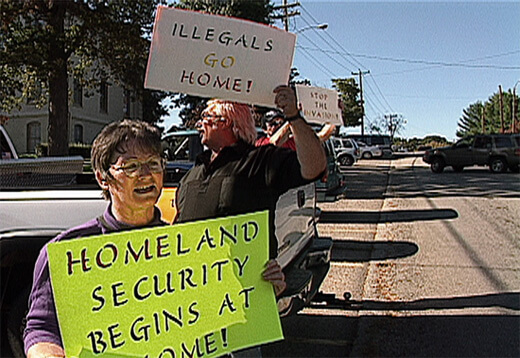 |
| Counter-protesters during a rally for immigrants' rights and against racial profiling in Morristown, 2003, from Morristown: in the air and sun (2007). |
In spite of the reception they received, the number of Latino workers continued to grow, along with demand for their labor. Workers and their families were becoming part of the local scene–a visible presence in spaces like public parks and soccer fields. But they also maintained close ties with those at home. At Adriana’s Video Mexican Store in Morristown, workers regularly sent dollars back to their families in Mexico where their purchasing power was many times more.
Only someone with a job can send home such remittances, and for Latino immigrants newly arriving in Morristown, work was ordinarily a first priority. In order to secure employment, they turned to various networks and strategies.27For a detailed account of how Latinos came to populate one Tennessee workplace during this period, see Steve Striffler, “Immigration Anxieties: Policing and Regulating Workers and Employers in the Poultry Industry,” in Global Connections and Local Receptions: Latino Immigration to the Southeastern United States, Fran Ansley and Jon Shefner, eds., (Knoxville: University of Tennessee Press, 2009). One channel was a set of specialized temp agencies that opened in Morristown. These agencies functioned as the formal employers of immigrant workers who were then contracted out to places where they labored but were not formally employed. The temp agency protected client companies from worries about liability related to the workers’ legal status and documentation. The agencies generally charged companies twice as much as they paid out to the workers themselves for hourly wages and benefits.
Maximino Garcia, originally from San Antonio, Texas, owned one of the largest of these hiring enterprises. He also ran a loan company, a car lot, an asbestos removal business, and built an evangelical church that ministered to his Latino workforce. “The number one is that we’re always trying to point them to the cross," said Garcia. "We’re always trying to tell them about the Lord.”
Garcia, who was later convicted of illegal trafficking and money laundering, compared Latino workers with black and white native-born workers:
 |
I don’t believe that the Hispanic race is coming in and taking American jobs. I believe that they’re taking jobs that the Americans don’t want and the ones who are griping and complaining are usually the ones that are lazy and don’t want to work. I think that that’s what a lot of the companies look at when they see Hispanics is that these are hard workers. They’re coming in and they’re not going to give us no lip. They’re not going to talk back to us. They’re not going to do nothing. They’re basically going to come in and work, do their jobs.
Garcia's perspective was not the only one voiced by people in Morristown.28On the power—and the inadequacy—of competition as a framework for understanding the relationship between immigrant and native-born workers, see Barbara Smith, “Market Rivals or Class Allies? Relations between African American and Latino Immigrant Workers in Memphis,” in Global Connections and Local Receptions: Latino Immigration to the Southeastern United States, Fran Ansley and Jon Shefner, eds., (Knoxville: University of Tennessee Press, 2009). Shirley Reinhardt, a displaced General Electric worker and TIRN member whose experiences in Mexico were mentioned above, shared a different understanding:29For more about Shirley’s work in Morristown, including a campaign directed at the temp agencies that had burgeoned there as early as the 1980s to broker the labor of native-born factory hands, see Chapter 5 of Eve Weinbaum, To Move a Mountain: Fighting the Global Economy in Appalachia (New York: The New Press, 2004).
 |
It’s a lot like when people in Tennessee went to Michigan to work. The young boys that went north to work, worked for probably a lot less than what the people there would work for.
Farmers say they can’t hire anybody to do the job. Well they can’t hire a slave. They can’t hire a slave and that’s what they’re after. They’re after somebody that’ll work twelve to fourteen hours a day, don’t take any breaks, and work like your life depends on it. And the Mexicans go out there and they work like slaves.
So the Americans say, “Oh boy we’ve got us a good worker here.” Well you’re working them like dogs, and we don’t seem to think there’s anything wrong with that in this country, we think that’s okay.
We want paper towel employees. You just use them as long as it’s beneficial to you and then you throw them away. And you get some more and start all over.
It was not only immigrants who were treated as disposable. Delmas Malone who worked at Berkline Furniture, an old-time Morristown factory, had his wages cut from $12.43 an hour to $6.41. He took early retirement and was given a recliner for his twenty-six years with the company. His wife Betty, a TIRN member, earned $8.88 an hour making televisions at Philips. Betty's pension plan had been terminated and her job appeared to be hanging by a thread. Worried about how they were going to make it, Betty and Delmas mortgaged their farm to go into the chicken-growing business. They assumed all the risk of loss and all the responsibility for waste disposal in a vertically integrated contract that bound them exclusively to the poultry processing plant in Morristown.30For more about east Tennessee poultry growing, see Fran Ansley, “Putting the Pieces Together: Tennessee Women Find the Global Economy in Their Own Backyards,” in Women Working the NAFTA Food Chain: Women, Food and Globalization, Deborah Barndt, ed. (Toronto: Sumach Press, 1999), 141-160.
Organizing in a Southern Industry: Immigrants Step Up
The Morristown Chamber of Commerce, long proud of its highly successful industrial recruitment program, constructed Morristown’s third industrial park with federal and state grants. Soon they began to fill it with companies like Koch Foods, one of the nation’s largest poultry producers and processors. Koch had acquired Morristown’s older, family-owned poultry business and was now looking to expand.
 |
| Street signs, new industrial park, Morristown, Tennessee, from Morristown: in the air and sun (2007). |
Koch’s facility was sparkling and bright on the outside, but there were major problems inside. According to reports of workers at the plant, the speed of the line was brutal, wages were minimal, worker health and safety were regularly put at risk, and the relationship between workers and their supervisors was disrespectful and degrading.31Unfortunately, Koch Foods was not unusual in this respect. For more on the poultry industry, see Steve Striffler, Chicken: The Dangerous Transformation of America's Favorite Food (New Haven: Yale University Press, 2005); William Kandel & Emilio A. Parrado, “Industrial Transformation and Hispanic Migration to the American South: The Case of the Poultry Industry,” in Hispanic Spaces, Latino Places: A Geography of Regional and Cultural Diversity, ed. Daniel D. Arreola, (Austin: University of Texas Press, 2004); and Lance A. Compa, Blood, Sweat and Fear: Workers’ Rights in U.S. Meat and Poultry Plants (New York: Human Rights Watch, 2004). In the face of these conditions, the work force had become predominantly Latino, many of them undocumented. Workers made several attempts to change their conditions, including a targeted strike where all the workers walked off the line and proceeded to the bathroom as a group in protest over the chronic refusal of line supervisors to allow reasonable bathroom breaks. They won verbal concessions whose results were short-lived.
Eventually, a Koch Foods worker contacted a lawyer from Southern Migrant Legal Services in Nashville about the problem of access to bathroom breaks. Other workers stepped forward to point out problems with health and safety practices. They held meetings, documented grievances, and took their concerns to management. When several leaders were fired in retaliation in front of an assembled group, workers reacted with indignation and reached out for support.
In early 2005, after being contacted by workers at the poultry plant, doing preliminary research, and observing workers' energy and resolve, the United Food and Commercial Workers Union (UFCW) launched an organizing drive. The UFCW local that the workers would join was based primarily in grocery stores, a labor force whose work environment and demographics were dramatically different from those of the poultry workers. At a national level the UFCW had substantial membership in meatpacking and poultry plants, and the organization was aware that inclusion of immigrants was crucial to its survival and strength.
The UCFW sent J.R. Richardson, an African-American from Alabama, to be the lead organizer in Morristown. He was accompanied by David Ceballos, a Spanish-speaking union staffer from Arizona. They set up shop in Morristown and began holding meetings with workers.
A few weeks into the campaign, accompanied by the Morristown film crew, union organizers visited workers in their homes who talked about what they had encountered in the plant and why they needed a union. Some of this video testimony was eventually used by the union to help win an agreement with corporate executives in Chicago that the corporation would not interfere in the union election process.
The union drive attracted allies. An affiliated UFCW local in the area had once represented a workforce of several thousand chemical workers whose plant was closing and shipping its equipment overseas. Randy Alexander, president of that local, opened the doors of his tattered union hall to the organizing drive and welcomed the workers from Koch Foods who held meetings there as well as a large rally that attracted supporters from throughout east Tennessee.32This part of the story moved a Houston reporter who visited Morristown that season. Kim Cobb, “On Common Ground in a Common Struggle,” Houston Chronicle, October 24, 2006.
 |
| Worker Rights Board Hearing Organized by Jobs with Justice of East Tennessee, from Morristown: in the air and sun (2007). |
Jobs with Justice of East Tennessee (JwJET), an all-volunteer group headquartered in Knoxville, generated civic, church, and labor union support. They convened a Worker’s Rights Board that heard testimony about the right to organize and about the failure of US labor law to adequately protect that right. Jim Sessions, co-chair of the chapter, introduced the panel of witnesses:
The right to organize is a human right and it’s a democratic right and it’s the law. But the law’s not obeyed very much on this matter in this country. That’s what we want to talk about tonight. And we’ll hear how difficult, also the aspirations of people who aspire to that democracy in the work place in our area.
One of the workers who testified was Artemio Jimenez, who had been fired while attempting to organize a Monterrey Mushroom plant in east Tennessee. Although Artemio brought a lawsuit over his firing, he was never allowed to present his facts in court. As an “agricultural worker,” he was expressly excluded from the National Labor Relations Act (NLRA) and its protections.33The exclusion of both agricultural workers and domestic workers from coverage under the NLRA dates back to the New Deal compromise struck with Dixiecrats in order to get that major piece of labor legislation through Congress. This was a race-linked compromise still only partly remedied today. For more information on the great range of workers who have been excluded in different ways from the protection of our present labor laws, see Excluded Workers Congress, “Unity for Dignity: Expanding the Right to Organize to Win Human Rights at Work,” Dec. 2010.
The union campaign at Koch Foods was well organized and highlighted the rights of workers while building understanding among coalition members about immigration, racism, and xenophobia. JwJET involved churches, other unions, and activists throughout east Tennessee including nearby native-born, factory workers who had been part of TIRN.
These support efforts were important, but the workers made the biggest difference in the success of the election drive. Despite threats of firing and deportation, leaders from the factory floor made house calls to recruit fellow workers and gather signed cards. Organizers anticipated employer behavior and explained the election process and US labor law. Morristown workers showed how effectively immigrants could mobilize when their basic trust was earned.
When the NLRB election day finally arrived, organizers were cautiously optimistic, but no one was sure what was going to happen. Fran remembers standing outside the plant with other supporters, waiting for the vote count:
Standing along the highway that morning, together with our JwJET delegation from Knoxville, there were black, white, and Latino organizers and union members from the UFCW, and a couple of guys from the Nashville local union to which the Morristown chicken plant workers would be attached if the election went for the union. There was a faithful young intern from the Highlander Research and Education Center whose highly skilled interpreting and translating services had been integral to the organizers’ efforts and workers’ comprehension, involvement, and morale. There was a union painter from Morristown who had learned about the election at a recent Labor Day event in Knoxville who showed up at the factory gates to lend his support. There was an Appalshop film crew diligently working the crowd for interviews and impressions. There was the president of a dying union local at a soon-to-close chemical plant in Morristown who throughout the organizing drive had opened the doors of his aging union hall to the workers from the chicken plant, welcoming its use for meetings, rallies, child care, buffet suppers, and workshops, and who had now come to stand with them on this fateful day.
The wait seemed interminable, but at last we made out the sound of cheering. Spilling down the hill toward our waiting group came an elated crew of union-designated election watchers. “Ganamos! We won! Ganamos!”
The workers had scored not a mere victory, but a landslide. The margin was 465 to 18.34Fran Ansley, “Labor Rights and Immigrant Workers in East Tennessee: Talking Union in Two Languages,” in Transforming Places: Lessons in Movement Building from Appalachia eds. Steve Fisher and Barbara Ellen Smith (Champaign: University of Illinois Press, forthcoming).
Looking Back and Ahead
The moment of victory was sweet. When Anne was editing the film, it became the apex of Morristown. Winning a union election, however, is no guarantee that workers will build a functioning union with workplace strength. A crucial “first contract” must be achieved. US companies, advised by batteries of management-side lawyers, have refined their ability to stall, delay, and undermine the negotiating process to such a degree that winning a first union contract after a successful organizing campaign has often proven an insurmountable hurdle.
In Morristown, after the pro-union vote, the UFCW and Koch Foods talked for months without reaching agreement. Finally the company declared there was nothing left to discuss and submitted its “last best offer,” a poor set of proposals testing union resolve. Unanimously the workers turned down the company’s offer. A month later, after further bargaining, they approved a union contract that included eye protection, bathroom breaks, health insurance, and higher wages.
Meanwhile, in the spring of 2006, immigrants all over the country poured into the streets by the hundreds of thousands to protest a virulent bill that had passed the US House of Representatives. They demanded reform that would provide a pathway to citizenship for many undocumented immigrants and make reasonable provision for immigrant entry in the future. The workers’ victory in Morristown had been powered by some of the same currents of discontent and determination that had fed the mobilizations for immigration reform.
The Tennessee Immigrant and Refugee Rights Coalition, founded in Nashville in 2001, hired its first organizer for east Tennessee in November, 2005.35For more about the origins of the Tennessee Immigrant and Refugee Rights Coalition, see Fran Ansley, “Constructing Citizenship Without a License: The Struggle of Undocumented Immigrants in the U.S. for Livelihoods and Recognition,” in Inclusive Citizenship: Meanings and Expressions ed. Naila Kabeer (London: Zed Books, 2005),199-215. In April 2006, the Coalition organized rallies all over the state for immigration reform, and they put out the word across east Tennessee for immigrants to join the action planned for Knoxville.
As Fran stood with thousands of other demonstrators in front of the federal building in Knoxville, she saw the members of the workers’ organizing committee from Koch Foods. Delighted at the size and spirited mood of the crowd, the workers announced they had achieved final agreement on a contract and that the company had shut down the plant for the day to allow workers to attend the Knoxville rally!
Neither the Knoxville march nor the signing of the contract resolved all the problems that led Koch Food workers to mobilize for union recognition and for immigration reform. But both of those achievements—and their remarkable joining in the streets of Knoxville on that day—suggest the potential power of strategies that include and unite.
Today the union at the Morristown chicken plant survives but faces tough challenges. Many poultry processing plants remain unorganized, and standards across the industry are low, even at unionized plants. Congress failed to pass federal labor law reform that would have made victories like the one at Koch Foods less of a rarity.36The particular bill that was proposed was known as the Employee Free Choice Act, and it would have made it substantially easier for workers in unorganized workplaces already covered by the National Labor Relations Act to win union recognition. The bill left many important issues unaddressed and many needy workers uncovered by its protections, but it would have been one important step toward changing the rules that are presently slanted so strongly in favor of employers and against workers who seek collective representation.
The movement for immigration reform faces similar challenges. Despite the mass mobilizations of 2006 and much campaigning since, federal reform is currently stalled. Beginning in December of 2006, immigrant workers at places like Koch Foods endured a long brutal season of workplace raids under the administration of George W. Bush.37For a paper on the 2008 immigration raid on a poultry plant in Chattanooga, see Karla Mari McKanders, “The Unspoken Voices of Indigenous Women in Immigration Raids” (November 22, 2010). University of Tennessee Legal Studies Research, Paper No. 133. Under the Obama administration these high-profile raids on immigrant-heavy workplaces have largely ceased. The end of these raids was a welcome improvement. Unfortunately, ICE raids at workplaces have been replaced with beefed-up audits and record-checking procedures that often result in mass firings of immigrant workers. Meanwhile, through other programs of immigration enforcement, rates of detention and deportation have risen to record levels across the country.
At the state level, jurisdictions such as Arizona have pioneered approaches that target immigrants and their families, charge local authorities with enforcing federal law, and effectively turn the criminal justice system into an immigration dragnet. Given that undocumented people cannot obtain a driver’s license, “driving while brown” becomes an activity inviting racial profiling and is punishable by banishment and family separation. Such measures push undocumented people into the shadows, make them even more vulnerable to abuse, and discourage immigrants from turning to local law enforcement when they need help or could offer assistance in the investigation of serious crimes.38See Major Cities Chiefs, “M.C.C. Immigration Committee Recommendations For Enforcement of Immigration Laws By Local Police Agencies” (2006).
At this writing in spring 2011, several states in the Southeast, including Tennessee, Georgia, and Alabama, are actively considering versions of the Arizona anti-immigration legislation.39During the spring 2011 session, Tennessee legislators proposed a bundle of bills modeled on Arizona’s. An example was HB 1380 that sought to require every law enforcement officer in the state—every time he or she “makes a lawful stop”—to question the person's immigration status, contact federal agents if there is "reasonable suspicion" an immigration violation has occurred, and transport the person to a federal holding facility. State and local jurisdictions have also entered into arrangements that more tightly integrate local policing and jails with federal immigration enforcement.40See Melissa Keaney and Joan Friedland, ‘Overview of the Key ICE ACCESS Programs: 287(g), the Criminal Alien Program and Secure Communities,” National Immigration Law Center (2009). Described as targeting “criminal aliens,” these enforcement agreements have led to the deportation of large numbers of undocumented people with no record of serious crime.41See Aarti Kohli and Deepa Varma, Borders, Jails and Jobsites: An Overview of Federal Immigration Enforcement Programs in the U.S., Chief Justice Earl Warren Institute Race, Ethnicity and Diversity (Feb. 2011). The impact on immigrant families and communities is severe.42See, e.g., Elena Lacayo, “The Impact of Section 287(g) of the Immigration and Nationality Act on the Latino Community,” National Council of La Raza Issue Brief No. 21 (2010) (includes case study of Nashville); Andrea Danit Guttin, “Criminals, Immigrants, or Victims? Rethinking the ‘Criminal Alien Program,’" (master’s thesis, University of Texas at Austin, 2009). (case study of Houston); Michael J. Wishnie, “State and Local Enforcement of Immigration Laws,” Journal of Constitutional Law, Vol. 6, No. 5 (May 2004), 1084-1115.
In the workplace, the threat of deportation injects additional fear for immigrant workers considering whether to press for better treatment on the job, fight back against the epidemic of wage theft that plagues today’s immigrant-heavy industries, or join in forming unions. Organizers and advocates report that employers threaten workers with deportation if and when workers complain about conditions or treatment on the job.43See Rebecca Smith, Ana Avendano and Julie Martinez Ortega, ICED Out: How Immigration Enforcement Has Interfered with Workers’ Rights, published by the AFL-CIO, the National Employment Law Project, and American Rights at Work (2009).
After years of working on Morristown and walking with the movements that it traces, we remain convinced that labor rights and immigrants’ rights are mutually dependent and inextricably intertwined. Campaigns and organizations that integrate both kinds of claims create spaces where workers can learn from each other and identify shared interests.44 For more on the intersection of these two movements, see Frances Ansley, “Doing Policy from Below: Worker Solidarity and the Prospects for Immigration Reform,” Cornell International Law Journal, Vol. 41, No. 1 (Winter 2008), 101-114; and Fran Ansley, “Local Contact Points at Global Divides: Labor Rights and Immigrant Rights as Sites for Cosmopolitan Legality,” in Law and Globalization from Below: Towards a Cosmopolitan Legality, Boaventura de Sousa Santos and Cesar A. Rodriguez-Garavito eds. (Cambridge: Cambridge University Press, 2005). However, serious obstacles to building class solidarity across divides of race and nation remain. Exclusionary whiteness runs deep, as does an exclusionary kind of Americanism. Anti-immigrant backlash is alive and well around the United States, and that backlash can be found among working class people and union members as among other segments of the population. But as Morristown documents, there are also working class southerners, both black and white, who can and do respond differently to immigration and to the question of immigrants’ rights, workers who express solidarity and see a basis for common ground. Shirley Reinhardt suggested something like this when she spoke with us before the Koch Foods election about what a victory would mean:
You’re saying to all the others from Mexico, they don’t have to treat you worse than anybody else. You can organize. That’s exactly what you’re saying. Not only are you saying that to the people from Mexico but you’re saying that to the people of Hamblen County, too.
While Morristown is on the side of workers like Shirley Reinhardt, it asks open-ended questions, tolerates ambiguity in the answers received, and intends to leave viewers with plenty to think about. Anne asked US-born people what they thought about the idea of “open borders.” Certainly our idea of a just global order would require something far more complex than that phrase conveys. In fact a good part of TIRN’s work on the question of plant closings and capital flight had urged the need for building and honoring boundaries within which democratic decision-making can take place and within which economic ground rules can be established and enforced. But a just global order is so far from what we have now, would require such profound reorientation of present realities, and is so seldom discussed in the public debates to which most working people in the United States have reasonable access, that simple and unsettling questions seemed the right place to open the kinds of conversations that lead toward global justice.45Fran has argued elsewhere that the problem of “immigration” is really a problem of “development.” See Fran Ansley, “Toward a Just and Humane Immigration Policy,” in Global Connections and Local Receptions: Latino Immigration to the Southeastern United States, Fran Ansley and Jon Shefner, eds. (Knoxville: University of Tennessee Press, 2009). For a fascinating suggestion that labor mobility across borders should be conditioned on labor solidarity and commitment to minimum standards, see Jennifer Gordon, “Transnational Labor Citizenship,” Southern California Law Review, Vol. 880 (2007), 503. When Anne put the question to attorney Mike Whalen, a criminal defense lawyer in Knoxville and local ally of the Latino population, he replied:
Open the borders? (Laughing) That’s what they should do! In the European Economic Community, if you’re British, you can go to France and work. You don’t have to ask anybody’s permission. Here we want economic pacts which allow goods and services and profits and money to cross borders freely but not human beings, because we want some of them to be slaves for the rest of us. We should be talking about that. We should be talking about open border. Don’t hold your breath.
When asked a similar question, factory workers expressed concerns about the impact of unrestricted migration both on wages and on their ability to unionize, but their concerns were tempered with other insights and emotions. Betty Malone talked about what she thought her employer and other powerful supporters of “free trade” were after:
I think basically they would like for our living standards to come down. And they are. They really are. But we’re far from the shape they’re in in Mexico.
They’re just as good as I am. They’re here and I don’t blame them. I’d come across the border every chance I got whether I was legal. If I was illegal that’s just fine too, I’d still come across.
Or as a union painter put it when he stood in front of the chicken plant on the day of the union election:
They’re exploiting too many people around this town. Morristown’s famous for that. [I’m here] for human rights, that’s all. And they deserve it as well as you or me.
]]>