Introduction
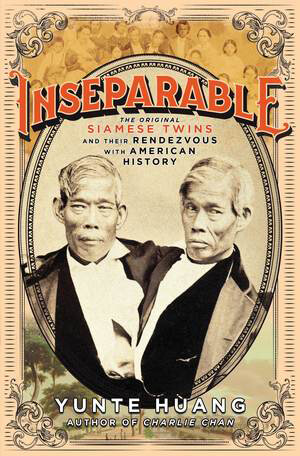
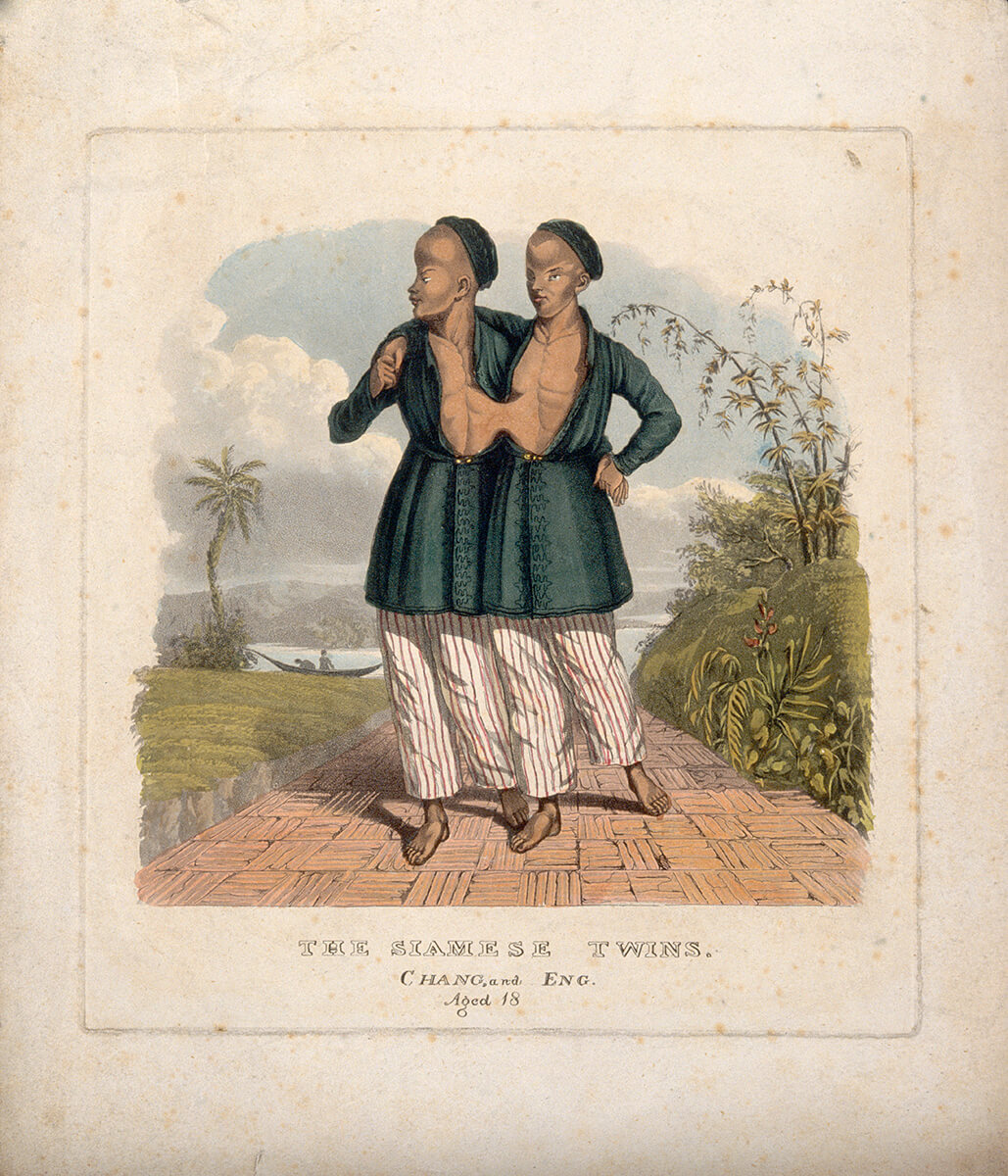
Born in 1811 on a riverboat in Siam, Chang and Eng, the original Siamese Twins, were brought to America in 1829 for a touring exhibition as freaks. They soon broke free from their enslaving masters and ran the show by themselves. Having made a fortune in a decade, they retired to western North Carolina, bought land, built houses, married two white sisters, and owned slaves. Yunte Huang's new book, Inseparable: The Original Siamese Twins and Their Rendezvous with American History, tells the gripping story of how Chang and Eng, an odd pair, beat impossible odds, living their conjoined life with grit and gusto. In this excerpted chapter, "Mount Airy, or Monticello," Huang investigates the history, implications, and contradictions of Chang and Eng's ownership of African American slaves.
Excerpt: Mount Airy, or Monticello
"She was a slave, and salable as such."
—Mark Twain, The Tragedy of Pudd'nhead Wilson
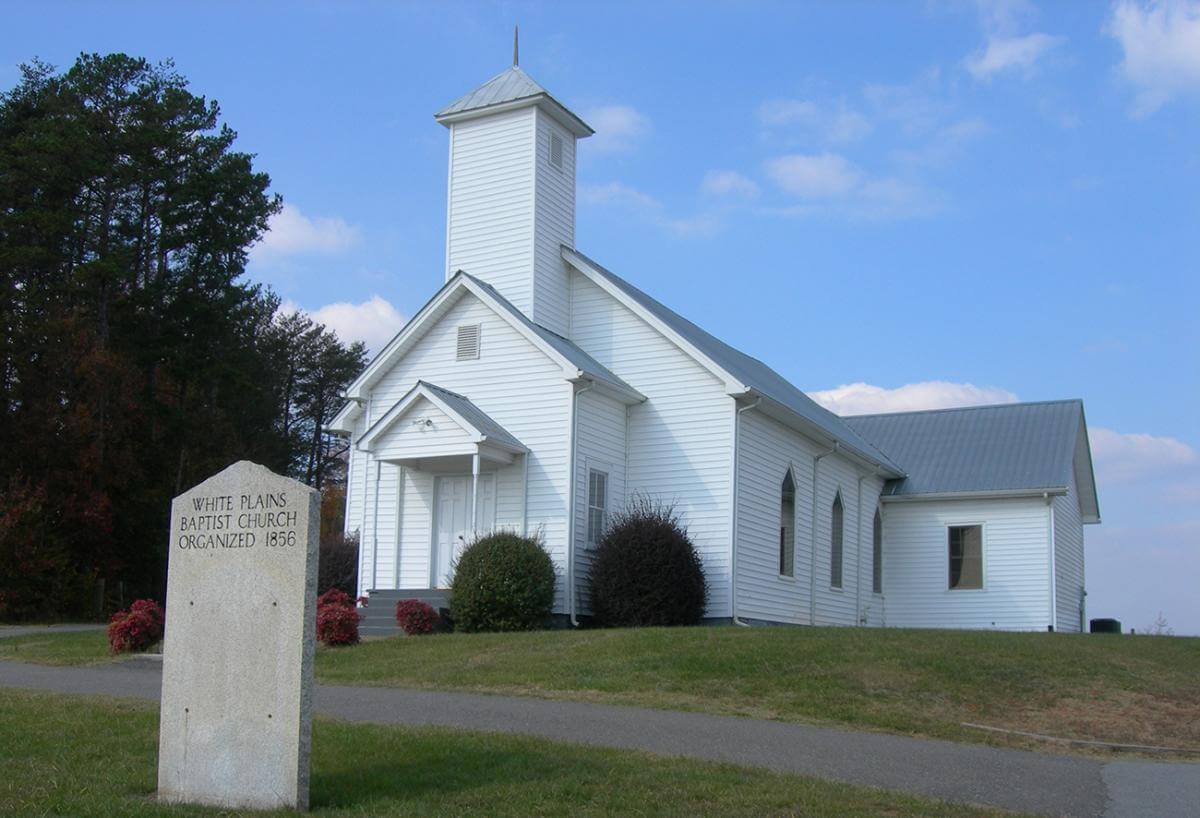
Allow me to fast forward 160 years in our story and describe an event of which the seed, like everything else, was sown in the past. In July 2003, about a hundred descendants of the Siamese Twins congregated in Mount Airy, North Carolina, for their Bunker reunion. A tradition that began years ago, the annual gathering is always held on the last weekend of July, at the White Plains Baptist Church, which the twins had helped build with their bare hands on a hill adjacent to the farmland that still belongs to the family. By some estimates, there are about fifteen hundred Bunker descendants today, spread throughout the world, although most of them have stayed close to their ancestral haunt in North Carolina.
Like most family reunions, the festivities consist of a potluck buffet, speeches, and updates on the clan news. One year, they even watched a show about their illustrious ancestors, the Burton Cohen play, The Wedding of the Siamese Twins, which had premiered on Broadway in March 1988. A field trip to the twins' original homestead, now retooled as Mayberry Campground to attract from all over the world diehard fans of Sheriff Andy and Deputy Fife (more on that later), is also on the program. Journalists from the local media, following a tradition that began with the twins' arrival in this area in 1839, are usually in attendance. Sometimes, researchers and historians are also present as honored guests. The Bunkers are a convivial, welcoming bunch.
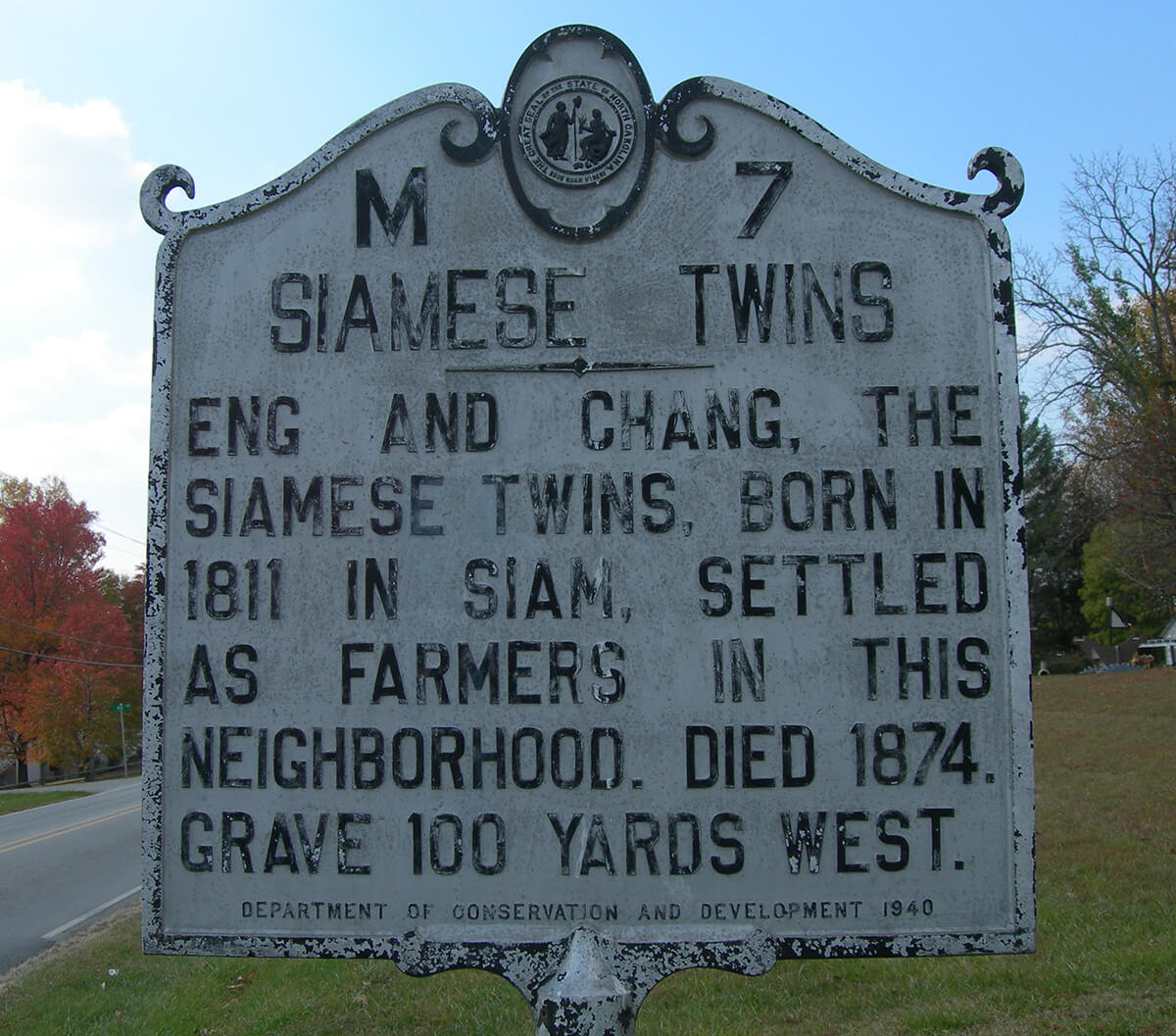
At the family jamboree in 2003, however, something unexpected happened. An African American named Brenda Ethridge stepped up to the microphone. She introduced herself as a descendant of Aunt Grace, the first slave owned by Chang and Eng. Ethridge had learned of her connection to the famous twins through stories passed down in her own family but had never been able to verify the details. Nor did she know much about her distant ancestor, who is buried in the same cemetery as Chang and Eng, along with generations of their offspring. According to Cynthia Wu, a Chinese-American historian who was present at this reunion, the sudden appearance of an African American in their midst hit a nerve. While Ethridge was a welcome presence for most on that occasion, a flurry of exchanges ensued among several concerned Bunkers, museum curators, and DNA experts. Only six years had elapsed since the official confirmation that Thomas Jefferson had fathered children with his slave Sally Hemings, and that subject was still hanging in the air. Across the state line, it seemed, the ghost of Monticello lingered in Mount Airy.1Cynthia Wu, Chang and Eng Reconnected: The Original Siamese Twins in American Culture (Philadelphia: Temple University Press, 2012), 163–65.
To understand how we arrive at this juncture, or how the conjoined brothers could have spawned thousands of offspring, and why a black woman would challenge the veracity of their genealogy, we need to return to the mountain wedding in 1843, to the quiet house that today still stands in Traphill, where the Bunker clan, as a quintessentially American, multiracial family, was just getting started.
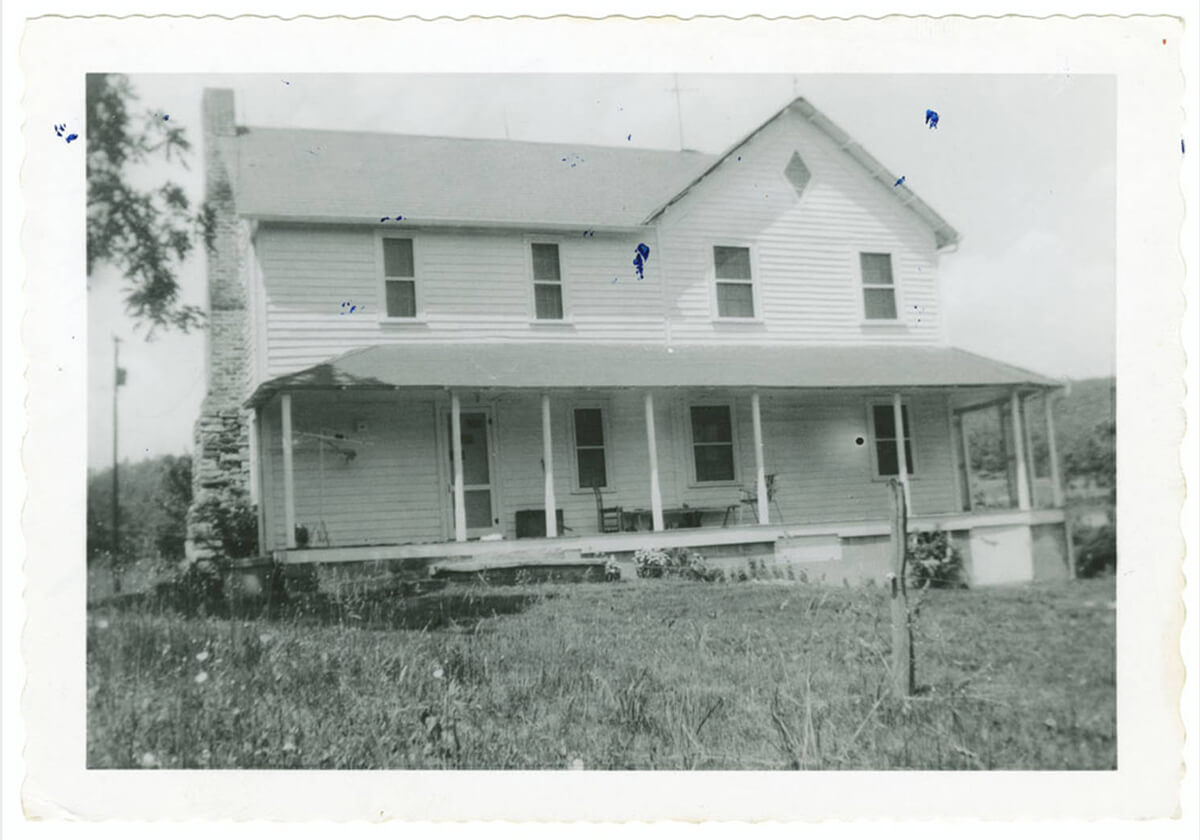
At the time of the twins' wedding, some local folks wagered over how long the marriage could last and whether such a "freakish union" would produce any offspring. In their mind, bestiality was godforsaken, unnatural, and surely doomed to infertility. They also wondered how long the Yates sisters could stand the ignominy of having to bed two swarthy Asian freaks. James Hale predicted that unless the twins were separated, the marriage would not stand a chance. "Depend upon it," he wrote to Charles Harris, "the result will be, a desire to attempt a surgical operation upon themselves."2James Hale, letter to Charles Harris, July 27, 1843, North Carolina State Archives.
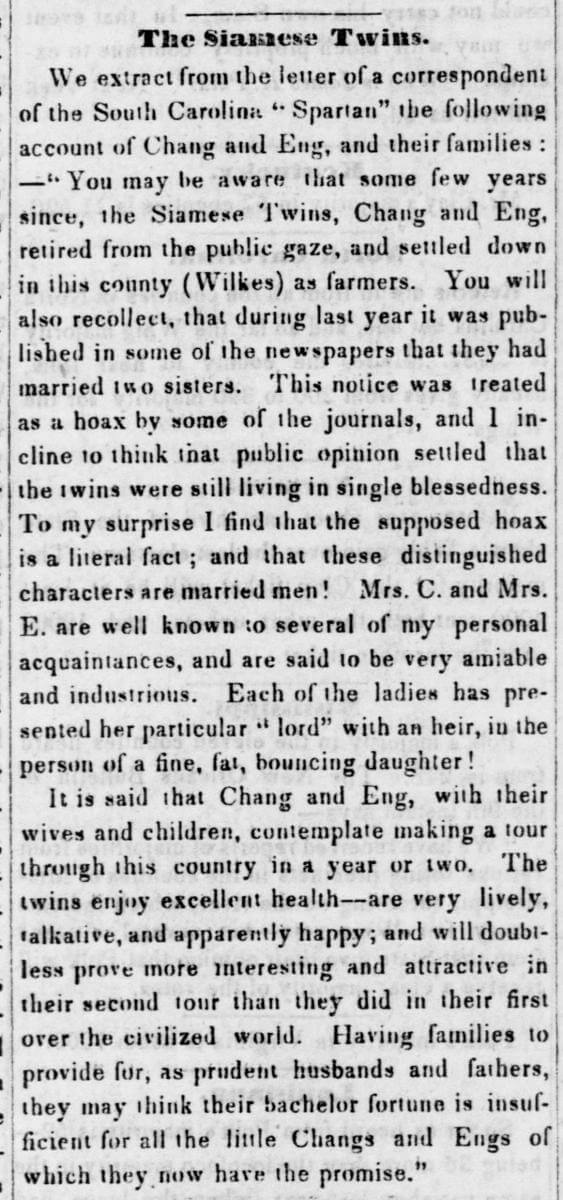
Those skeptics might have been surprised to know that the twins had indeed considered surgically untying themselves so that they could lead "normal" lives with their respective wives. It was their wives, however, who vehemently opposed such a move. According to some biographers, the twins, prior to their wedding, had consulted with physicians in Philadelphia and were ready to go under the knife. Aghast at the news, Sarah and Adelaide begged the men not to follow through with the dangerous procedure and reassured the men that they would be happy to marry them "as they were."
The skeptics must have been even more surprised when they heard, ten months after the wedding, that each couple had produced a "fine, fat, bouncing daughter." On February 10, 1844, Sarah and Eng became proud parents of a baby girl named Katherine; only six days later, Adelaide and Chang welcomed into the world a baby girl named Josephine. If there was any lingering doubt about the procreative aspect of the unions, there would be even more evidence to put the matter to rest: In their lifetime, the two couples would produce twenty-one children in total, with Eng and Sarah claiming eleven and Chang and Adelaide, ten. Out of these twelve daughters and nine sons, two would die at young ages from accidents, while two were deaf and mute. There were no twins, let alone conjoined twins or babies with any other discernible deformity.
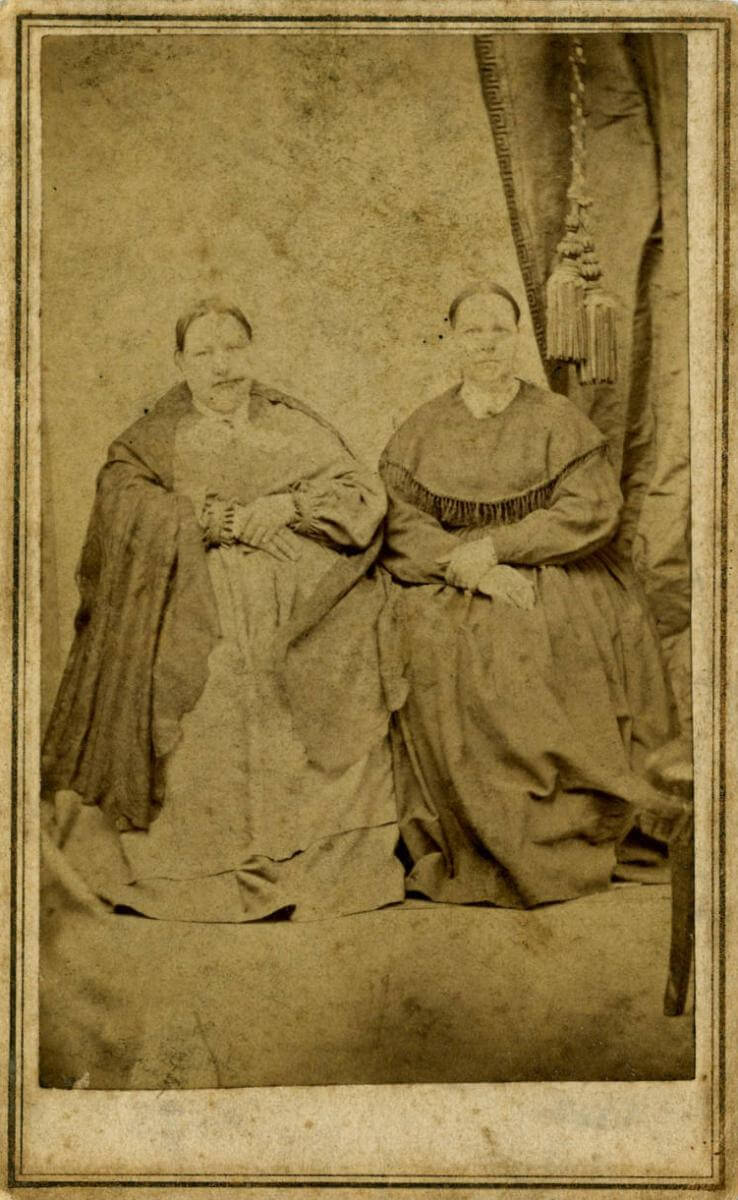
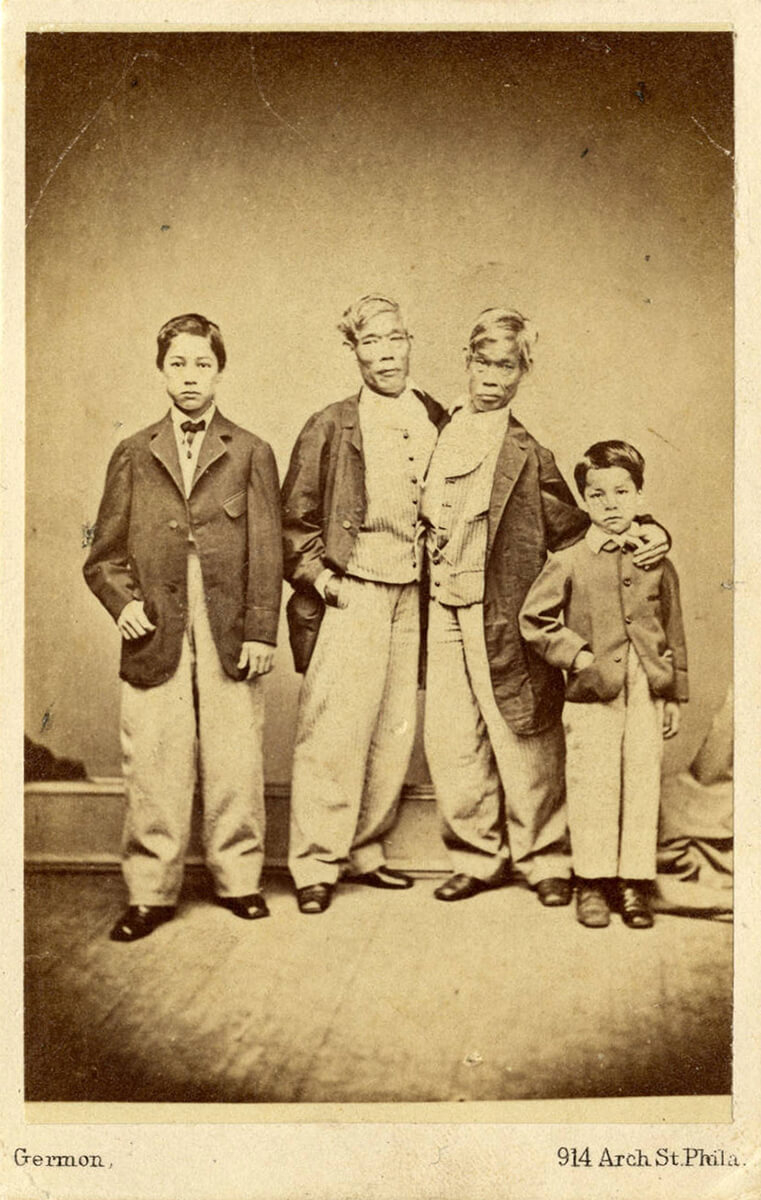
Twenty-one children for two couples may seem extraordinary and could possibly feed into some of the prevailing stereotypes that portrayed primitive "Orientals" engaging in bestial sex and breeding like animals. Thomas de Quincey, if we remember, called the Asian continent the "workshop of men." Herman Melville, hardly conventional in his choice of bedfellows, imagined in Moby-Dick that those ghostly aboriginals "of earth's primal generations" in insulated Asia "engaged in mundane amours."3Herman Melville, Moby-Dick, ed. Harrison Hayford, Hershel Parker, and G. Thomas Tanselle (Evanston, IL: Northwestern University Press and Newberry Library, 1988), 231. In reality, however, it was not unusual for a couple living in the Appalachians during this era to have a score of children. Visiting the area in 1828, Dr. Elisha Mitchell, the geologist who had earlier given us the on-the-ground account of the lay of the land in Wilkes and neighboring counties, was struck by the "swarms" of children he encountered everywhere—a phenomenon confirmed by studies of demographics and birth rates. As Martin Crawford points out, "Families with ten or more offspring were common in this period." One couple from northwestern North Carolina produced eighteen children in the decades straddling the Civil War, while another couple had seventeen. One woman, Jane Richardson, "was reported in 1855 as possessing no less than 174 living children, grandchildren, and great-grandchildren."4Martin Crawford, Ashe County's Civil War: Community and Society in the Appalachian South (Charlottesville: University Press of Virginia, 2001), 2.
A year after the birth of their first children, the twins and their wives celebrated the arrival of two more additions to the brood, born again only about a week apart: a baby girl named Julia for Eng and Sarah on March 31, 1845, and the first boy, named Christopher, for Chang and Adelaide on April 8. As the family grew, the house in Traphill became too small for them. In the spring of that year, Chang and Eng purchased a farm in nearby Surry County for $3,750. Straddling bubbling Stewart's Creek outside the village of Mount Airy, this 650-acre farmland would become their Xanadu—or, more pertinent and closer to home, their Monticello.
On this new land, Chang and Eng—two brothers formerly sold into indentured servitude and treated no better than slaves—began farming by using black slaves. Here our story takes a significant turn, entering what Primo Levi called "the gray zone" of humanity, a treacherously murky area where the persecuted becomes the persecutor, the victim turns victimizer.
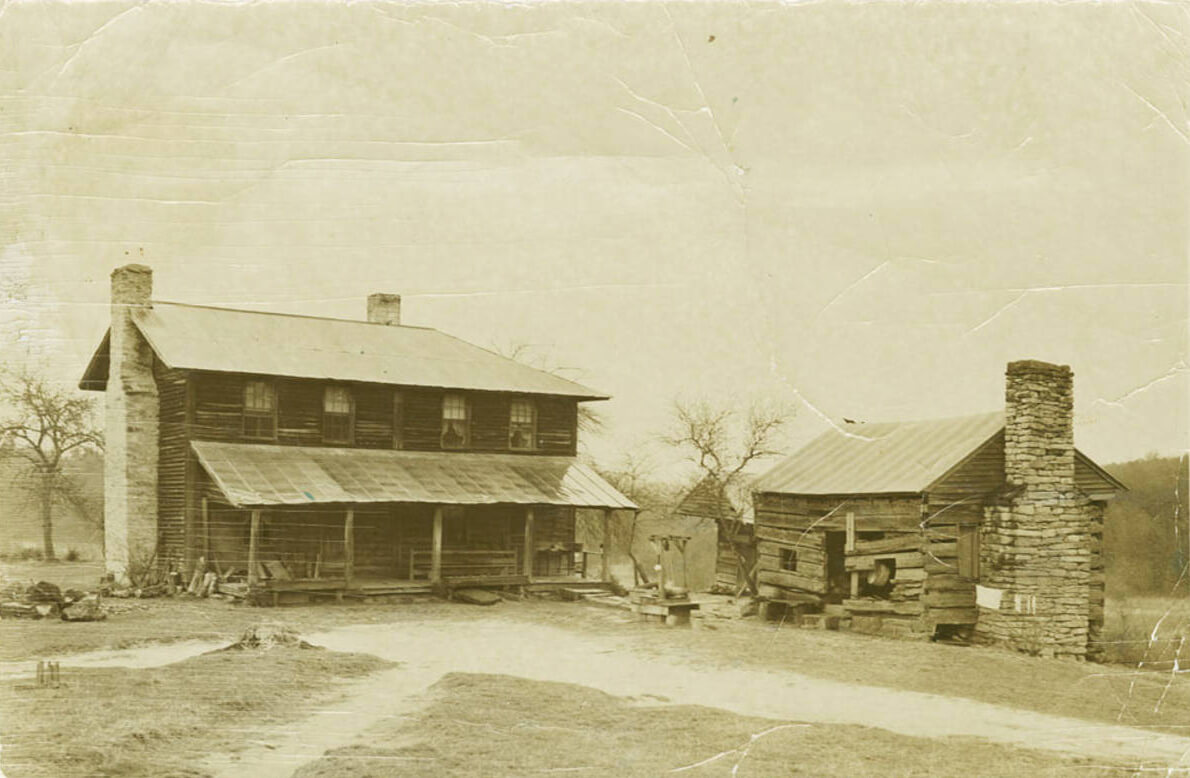
The first slave Chang and Eng owned, as mentioned earlier, was Aunt Grace, the ancestor of Brenda Ethridge, who attended the 2003 Bunker reunion. Legally known as Grace Gates, and born a slave in Alabama around 1790, Aunt Grace was sold to North Carolina at a young age and became the property of David Yates. Chang and Eng received her as a "wedding gift," the same way that the nameless black servant standing behind Alabama circuit judge Sidney Posey, presiding over the assault case against the twins years earlier, had been a wedding present from the young judge's in-laws. Known for her exceptionally large feet, Grace would assume the slave–nanny role and exert a large influence in the twins' family, nursing all of the Bunker children as well as her own.
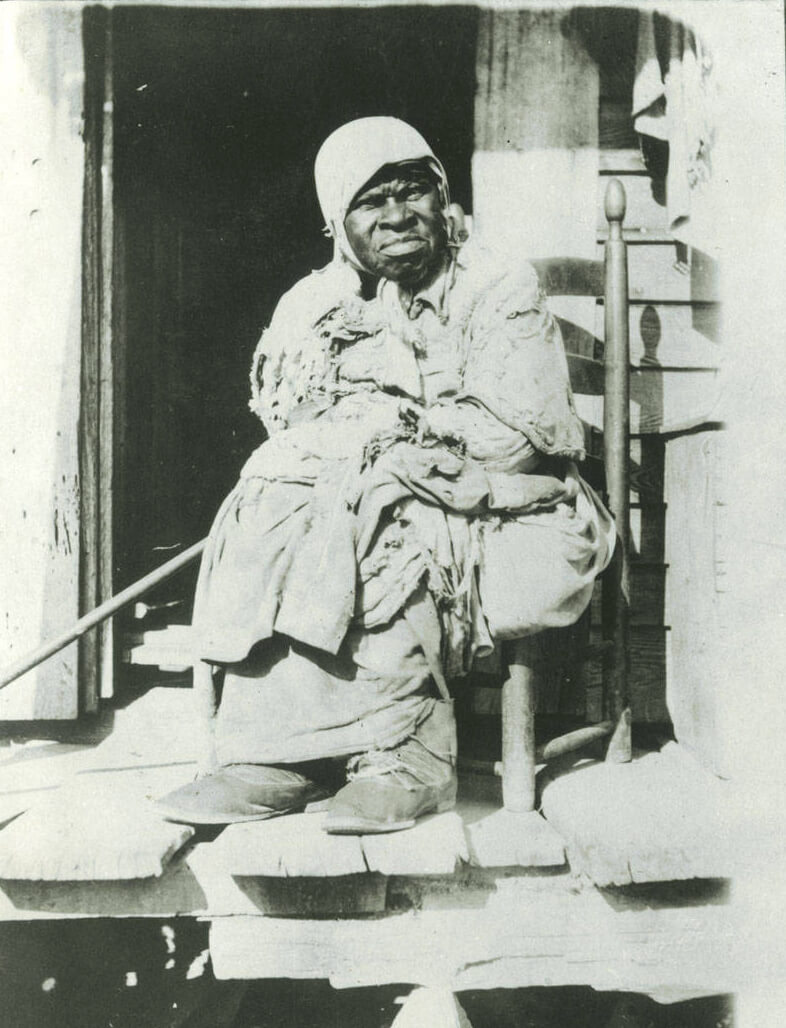
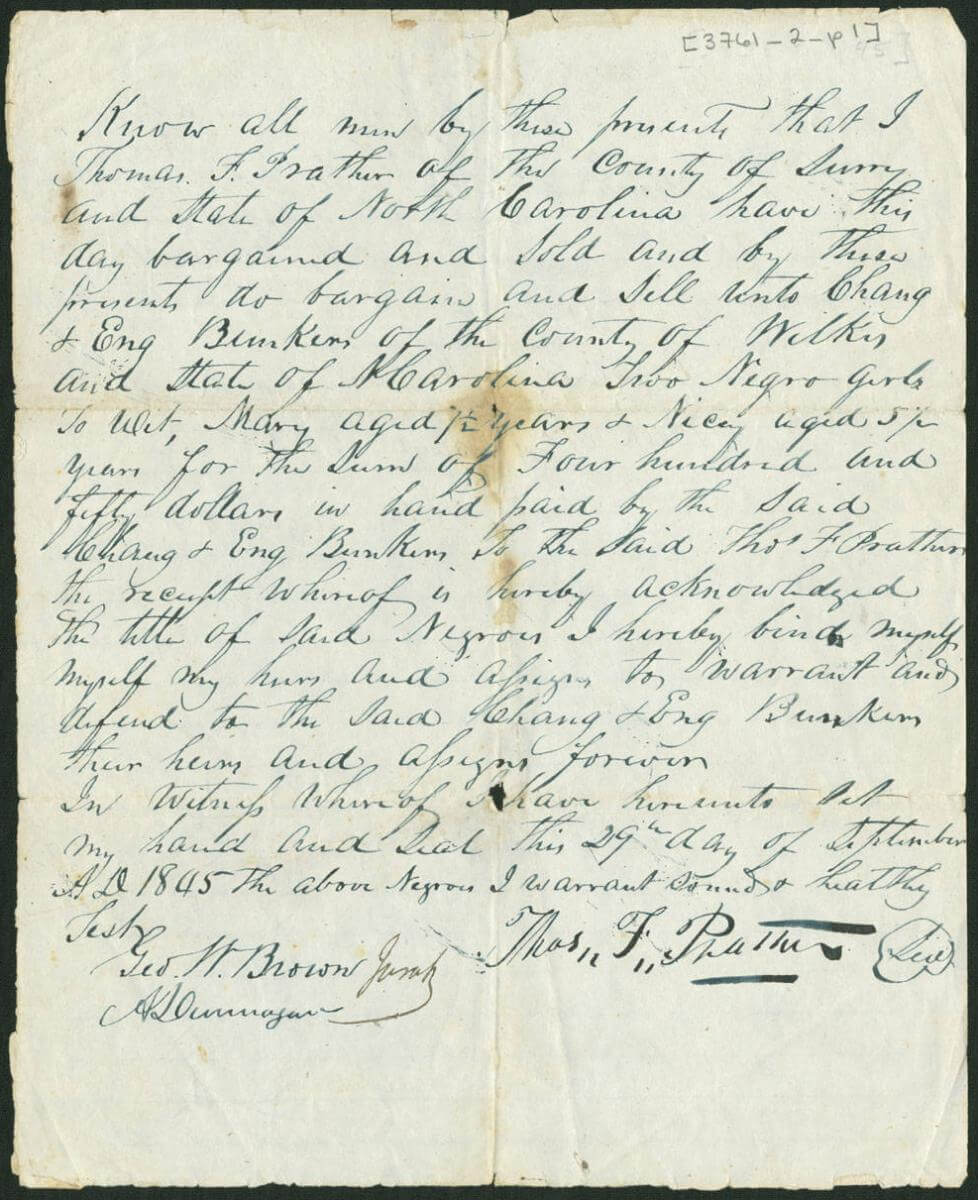
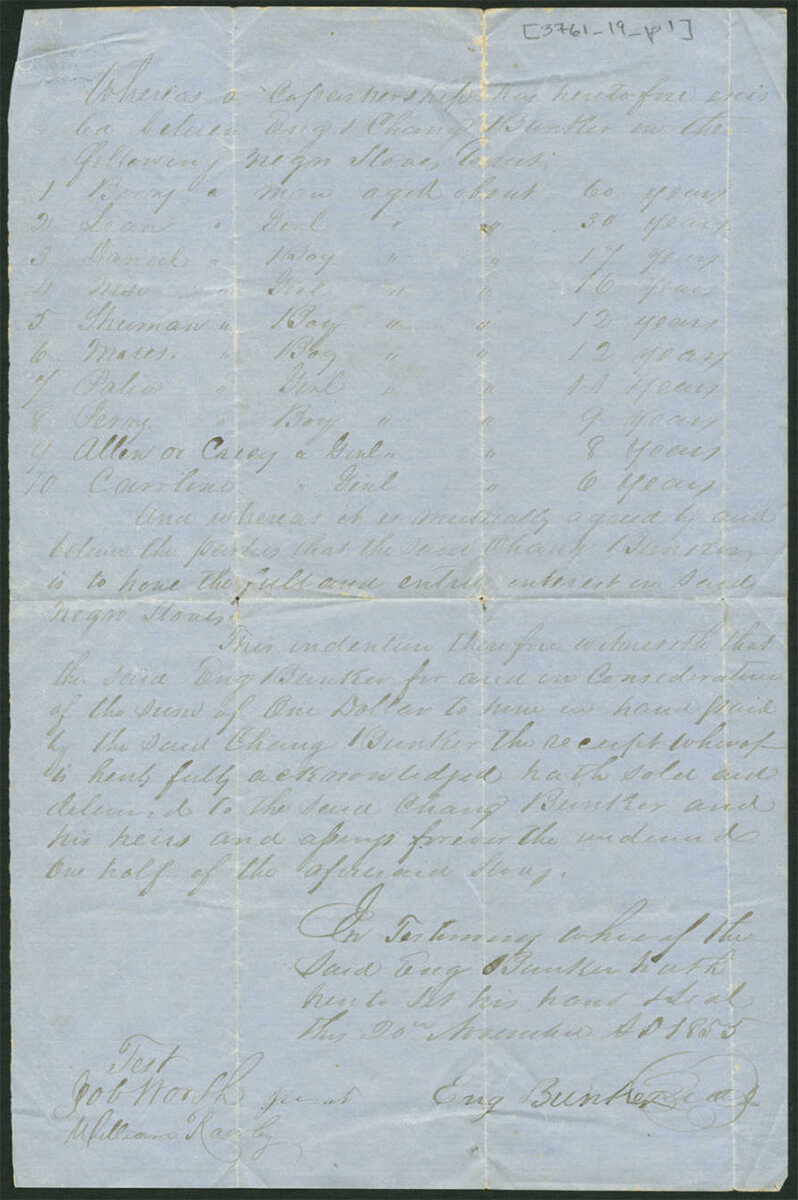
Soon after their relocation to Surry County, the twins began to purchase more slaves and even engage in slave trading. What is unquestionably clear is that the twins by this time had adopted the mindset, in all its permutations, of the oppressor class, the whites who owned slaves. In September 1845, they bought from Mount Airy planter Thomas F. Prather two black girls, aged seven and five, for $450, and from another neighbor a three-year-old boy for $175. Within just a few years, they had eighteen slaves. Out of these eighteen, according to the 1850 census, more than half were younger than eight years old. As Judge Graves admitted candidly, "Some few of their slaves were valuable to them for their present ability to labor; but much the greater number of them were an absolute burden but very valuable on account of the marketable price and prospective usefulness."5Jesse Franklin Graves, "The Siamese Twins as Told by Judge Jesse Franklin Graves," unpublished manuscript, North Carolina State Archives, n.d., 22. According to the twins' descendant Melvin Miles, Chang and Eng would buy slaves younger than eight, keep them, and work them until they were in their early twenties, when they would be sold or traded for younger ones to carry on the work. With very few exceptions, they would not keep a male slave older than twenty-five, because "the twins thought that by then the male slaves were of the mindset of trying to escape or rebel against their owners."6Melvin M. Miles, Eng and Chang: From Siam to Surry (self-published, CreateSpace, 2013), 65. Perhaps the twins remembered the horror of the Nat Turner revolt in 1831. Female slaves, by contrast, would be kept for as long as needed, because they were less likely to run away or to rebel, and they would bring additional value when they had babies—the so-called increase. Aunt Grace, for instance, gave birth to nine children, three of whom—Jacob, Jack, and James—survived and became the property of her masters.7Evelyn Scales Thompson, Around Surry County (Charleston, SC: Arcadia Publishing, 2005), 14. In fact, Grace's three sons all assumed the Bunker name, according to the 1870 census.
Living in squalid cabins, the slaves were divided into "house slaves" and "field slaves." The former, including Aunt Grace, worked mostly around the houses, helping to cook, clean, sew, nurse babies, and do other domestic chores. The field slaves would rise before dawn and work in the field till sunset. How the twins treated their slaves was a contentious topic both during their lifetimes and after their deaths. There were accounts that portrayed them as humane and kind, while others described them as "severe taskmasters." According to Judge Graves, whenever the twins took long trips, they would always bring gifts for each member of the family, "not even forgetting the colored servants down to the youngest."8Graves, "The Siamese Twins," 23. In the field, they also patiently taught the slaves some of the new farming techniques they had learned from agricultural magazines. The twins were allegedly among the first farmers in North Carolina to produce "bright leaf" tobacco, and they taught the slaves how to use their newly acquired press to make "plug" chewing tobacco. Possum-hunting being one of their favorite sports, the twins would frequently take some of the slaves out with them on early mornings for expeditions, which were recreational to them but not necessarily to the slaves.
These descriptions of the so-called harmonious relationship between masters and slaves, suggesting that the twins "did not drive their slaves but supervised them," were complicated by allegations to the contrary.9Joseph Andrew Orser, The Lives of Chang and Eng: Siam's Twins in Nineteenth-Century America (Chapel Hill: University of North Carolina Press, 2014), 127. The first of these negative reports appeared in a newspaper article published in the Greensborough Patriot in 1852. The author of the article, who signed himself merely "D.," did a profile of the twins, describing them as shrewd and industrious businessmen with belligerent and fiery dispositions. He claimed that the twins had once split "a board into splinters over the head of a man who had insulted them" and were "fined fifteen dollars and costs...Woe to the unfortunate wight who dares to insult them." This prelude led to a more devastating revelation: "When they chop or fight, they do so double-handed; and in driving a horse or chastising their negroes, both of them use the lash without mercy. A gentleman who purchased a black man a short time ago from them, informed the writer that he was 'the worst whipped negro he ever saw.'"10Greensborough Patriot, October 16, 1852.
Such an unflattering depiction of them as cruel masters drew an immediate response from the twins, who were acutely aware of the importance of public image. They shot off a long letter to the newspaper, defending their own character and integrity and objecting vehemently to the article's claims:
The portion of said piece relating to the inhuman manner in which we had chastised a negro man which we afterwards sold, is a sheer fabrication and infamous falsehood. We have never sold to any man a negro as described, except to Mr. Thos. F. Prather, who denies the truth of said accusation, or of ever having told any person that which the author of said communication says he heard. We are well aware that to some who have not seen us, we are to some extent an object of curiosity, but that we were to be objects of such vile and infamous misrepresentation, we could not before believe.
Along with the letter, the twins attached an endorsement by thirteen local citizens and neighbors attesting to the truthfulness of their statement, signatories who included Thomas Prather, from whom the twins had made their first purchase of young slaves and to whom they had now sold an older one.11Greensborough Patriot, October 30, 1852.
Then there were other stories about often-poisoned relations between the twins and their slaves. One, reported years later, tells of a black slave who one day appeared at the front door of the twins' house and wanted to see them on business. While the Southern custom dictated that a "colored" man would have to use the back door of a white man's home, this black man might have thought the rule would not apply to two tawny Asians with slanting eyes. "When the Twins saw the negro standing in the front door," as the story goes, "they instantly made for him with a malignant air and the negro lost no time in taking himself away. After that he knew his place."12J. E. Johnson, "Siamese Twins," in Mount Airy News, January 3, 1956.
Another story, reported in the Mount Airy News, is about a slave who had "developed into a desperado and was considered dangerous":
He usually was a pest, for the hand of every man was against him. There was no law to protect such slaves and it was considered the proper thing to do to kill him on sight. This bad negro, the property of Chang, was reported one night to be in the negro cabins of a slave owner near Mount Airy. The citizen went with his gun to investigate and the negro ran from the cabin and as he ran the citizen red his gun intending to shoot him in the legs. But as luck would have it he aimed too high and killed the negro.
There was no law to punish him for his deed; but he saw a big bill facing him in the way of pay for the value of the dead slave. At once he went to the home of the Twins hoping to make the best settlement possible. Imagine his surprise when the Twins refused to accept a cent and expressed their satisfaction that the negro was out of the way.13Ibid.
In the antebellum South, such tragic events were certainly not rare occurrences. Nor would such conduct by a slave master raise any eyebrows. The twins themselves were said to be fond of bragging about how they had bet on slaves at card games, treating them as disposable property, no better than livestock:
One time, when they were traveling in Virginia with a neighbor, they were urged by some gamblers to join in a game of cards. They did not engage in gambling games, and so they refused. However, they agreed to back the neighbor, who was "handy with cards." The neighbor won royally, and the gamblers, in their desperation, bet "a negro." The twins won him, and then sold him back to the unlucky gamblers for $600.14Irving Wallace and Amy Wallace, The Two: A Biography (New York: Simon and Schuster, 1978), 193.
Stories like the above, both the positive and the disparaging portrayals of people treated as subhuman, starring two Asian freaks consorting with two white women and lording over a squad of black slaves, certainly had much traction in the antebellum South. They became perfect fodder for scandal-starved newspapers and readymade material for Southern Gothic, with its endless obsession with sexual peccadilloes, racial violence, deranged cravings, and morbid humor. The following profile, led in early 1850 by a curiosity-seeking journalist and featured in a publication aptly entitled The Southerner, would require very little touchup for it to fit into a plantation pastoral with decidedly racist undertones:
When we got off the stage at Mt. Airy we were told by the townspeople that the Twins were moody, sulky people and often refused to see anyone who called on them.
After a few glasses of ale and a meal at the Blue Ridge Inn in Mt. Airy we felt more in place in calling on the Twins. It was an extremely warm day and the driver gave the horses plenty of time, in addition to taking the long way around. After having arrived we drove up into a shade of a large cottonwood tree. Everything seemed quiet except a colored boy doing some metal work in a shop nearby. There was a large male peafowl strutting across the yard. Then the twins appeared in the doorway dressed in rough cotton. Each had a quid of tobacco in his mouth, each was barefooted. They stood in the doorway a minute or so, then waved good naturedly. They approached our carriage and asked how they could serve us. . .
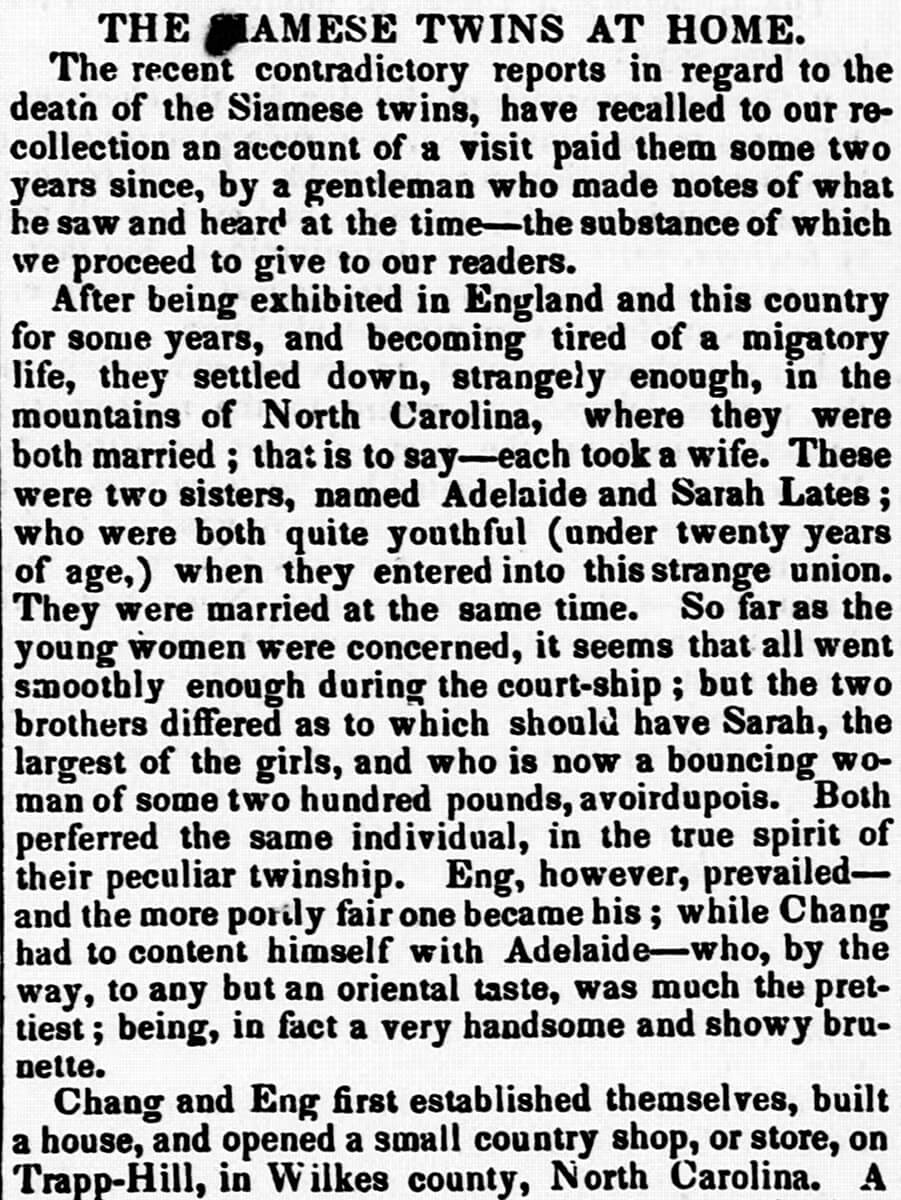
They led us into the living room which contained a bed and other necessities. We found them to be extremely interested in farming as well as moderate conversationalists, often speaking in unbroken English. One would talk awhile then the other would take over and talk for a few minutes. A colored boy was instructed to bring in some fresh cider, which we really enjoyed.15"The Siamese Twins at Home," in Southerner, reprinted in Trumpet and Universalist Magazine, November 2, 1850.
What might otherwise pass as a run-of-the-mill antebellum encounter, in which landed Southern gentry were being served by domestic slaves while hosting visitors, was complicated by the fact that the masters in question were, simultaneously, Asian and freakish. The journalistic preamble about the twins being moody and sulky, the gothic setting of an exotic bird milling around and a "colored boy" doing handiwork nearby, and finally the dramatic entry of the real exotic bird, the conjoined twins, in the doorway, clad in coarse cotton, chewing tobacco, like some ominous creature, barefoot no less—as if reprising a scene from 1001 Arabian Nights, the most popular contraband book in colonial America—busting out of a cage, all combined to suggest something bestial, crude, scandalous.
Nineteenth-century Americans were not new to the scandal or outrage of nonwhite men luxuriating in the privilege of the slaveholding class. Prior to the arrival of the Europeans, many Native American tribes had owned slaves, though none exploited slave labor on a large scale. With the introduction of African slavery, Indian nations also participated in the practice. At the time of Chang and Eng's settlement in North Carolina, the Cherokee Nation possessed a few thousand black slaves. The wealthy family of the Cherokee chief, James Vann, owned more than a hundred in 1835.16Tiya Miles, The House on Diamond Hill: A Cherokee Plantation Story (Chapel Hill: University of North Carolina Press, 2010), 87. What magnified the scandal of Chang and Eng as slave masters was their perceived monstrosity and miscegenation.
It would be hard to overestimate the enormous impact these perceptions had on the populace, both the wealthy and the poor, who lived in the vicinity of the twins' homestead and in the surrounding areas. The rich white unquestionably begrudged having to share class and status with two Asians; just consider the reaction of the twins' closest associates when Chang and Eng expressed their wishes to live the normal lives of country squires. The poor white was especially resentful and envious, his place on the social ladder suddenly at risk. Local rumor mills churned out endlessly salacious stories about the foursome that was going on by Stewart's Creek, on farmland owned by two "colored" men with slanting eyes, masters to a bunch of Negroes. The résumé of a local boy, who would later become a leading voice in explosive national issues such as abolitionism and the anti-Chinese campaign, might give us a rare glimpse into how the unusual lifestyle of the twins as slaveholding landed gentry had affected the American heart and soul.
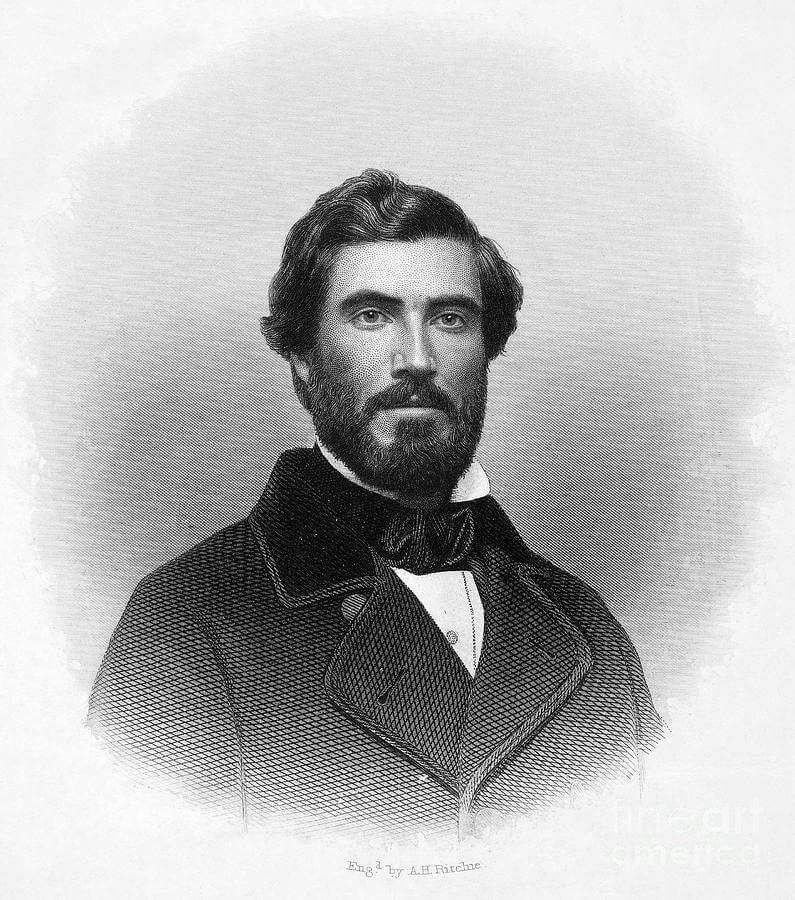
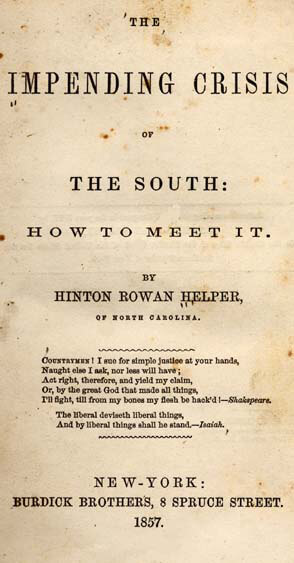
Born the same year as Chang and Eng's arrival in America, Hinton Rowan Helper (1829–1909) was the son of a struggling North Carolina farmer who owned a small plot of land and a family of four slaves in Mocksville, about sixty miles south of Mount Airy. When Helper was less than a year old, his father died from mumps, leaving his widow and seven children near poverty. Living under his mother's care until he was a teenager, Helper graduated from Mocksville Academy in 1848 and went to California in 1851 to seek his fortune. He was utterly disappointed, because he had difficulty finding a job in a region flooded with non-Caucasian immigrants such as Mexicans and Chinese. Disillusioned with his California experience, he turned to writing to vent his resentment and to prescribe a cure for what he thought had afflicted the nation. Drawing upon his three years of drifting in the Wild West, Helper's first book, The Land of Gold (1855), exposed the California dream as a hoax perpetrated by greedy financiers and inept politicians. He was particularly alarmed by the state's estimated forty thousand Chinese, whose presence offended his strong Anglo-Saxon prejudice. In a sensational chapter titled "California Celestials," he waged an all-out war against the Chinese, mocking their appearances, dismissing their habits, and condemning their immorality. "I cannot perceive," he wrote, "what more right or business these semi-barbarians have in California than flocks of blackbirds have in a wheat field." But no worries, he reasoned, because fate was against the Chinese. "No inferior race of men can exist in these United States without becoming subordinate to the will of the Anglo-Saxons," as it had been with the Negroes in the South, whose enslavement stood as the central issue in his subsequent book, The Impending Crisis of the South (1857).17Hinton Rowan Helper, The Land of Gold: Reality versus Fiction (Baltimore, H. Taylor, 1855), 75. Combining statistical charts and provocative prose, the new book attacked the evils of slavery and its devastating effects upon the people to whom the book was officially dedicated, "The Nonslaveholding Whites of the South." Enjoying popularity exceeded by no antebellum publication other than Uncle Tom's Cabin, this abolitionist tome argued that slavery ruined the South by preventing economic development and industrialization, and that it hurt the Southern whites of moderate means, who were oppressed by a small aristocracy of wealthy slaveholders.
Although there was no direct evidence linking Helper's animus toward both the Chinese and the slaveholding aristocracy to his in-person experience with the Siamese Twins, it is not inconceivable that, as Robert G. Lee suggests, "the young Hinton Helper, in addition to sharing the salacious but almost universal fascination with the imagined sexual practice of the twins and their wives, resented the fact that the Siamese twins were land owners of substance and slaveholders to boot, while Helper's own family found itself in reduced financial circumstances on its small farm as the result of his father's early death."18Robert G. Lee, Orientals: Asian Americans in Popular Culture (Philadelphia: Temple University Press, 1999), 42. When the twins gave one of their last performances in the summer of 1839 in Statesville, ten-year-old Helper was but a few miles away. Spending his formative years in Mocksville, Helper, if he did not live within a stone's throw of Chang and Eng's domicile, certainly came of age within the earshot of all those ribald rumors that rippled through the hills and hollows of western North Carolina.
There are at least two central motifs in Helper's writings that can assist us in detecting the invisible but discernible presence of the Siamese Twins in his racial imagination. First, he was obsessed with the Chinese in California "as a deterrent to the immigration of respectable white women and thus a barrier to 'normal' family development."19Ibid. To Helper, nothing would be more abnormal as a family unit, both racially and structurally, than the abominable union of the Asian twins and their white wives. Second, Helper's belittling descriptions of Chinese people made them seem like freaks, evoking the eerie monstrosity of the conjoined twins:
[John Chinaman's] feet enclosed in rude wooden shoes, his legs bare, his breeches loosely flapping against his knees, his skirtless, long-sleeved, big-bodied pea-jacket, hanging in large folds around his waist, his broad-brimmed chapeau rocking carelessly on his head, and his cue [sic] suspended and gently sweeping about his back! I can compare him to nothing so appropriately as to a tadpole walking upon stilts.20Helper, The Land of Gold, 71.
What offended Helper's Anglo-Saxon sensibility was not just the freakish, exotic appearance of the Chinese but also the strange phenomenon that the Chinese all looked alike to him. "All their garments look as if they were made after the same pattern out of the same material and from the same piece of cloth. In short, one Chinaman looks almost exactly like another, but very unlike anybody else."21Ibid., 70. We know for sure that in mid-nineteenth-century America, no two Chinese men looked more alike than Chang and Eng, who in fact always wore clothes "made after the same pattern out of the same material and from the same piece of cloth." As Helper wandered around the city square or walked down Telegraph Hill in San Francisco, where the Chinese thronged the "cow-pens" and "human stables," as he put it, his mind might have easily been tricked by the memories of the Siamese Twins, who had undoubtedly haunted his childhood.22Ibid., 70, 55–56.
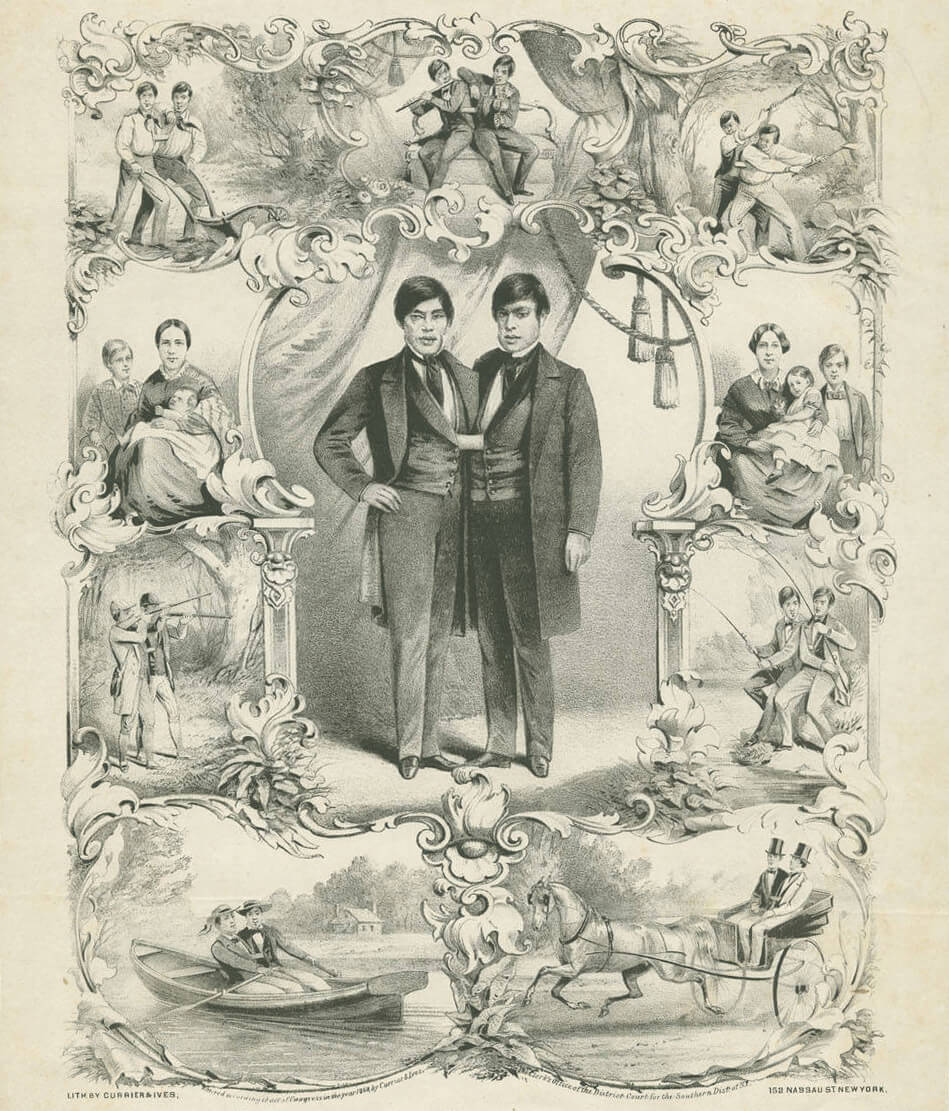
In the early 1850s, when Helper returned from the California nightmare to his humble homestead in North Carolina to nurse his injured sensibility while writing his first two books, the gentrified life of Chang and Eng in the next county was just getting more complicated. Since 1844, each twin and his wife had increased their brood at a steady pace of one child a year. The crowded house led to more tension. The two sisters squabbled, spurring the twins to set up two households within a mile of each other on their farm outside Mount Airy. Since they could not go separate ways as ordinary men would, they alternated three days at each home and each conjugal bed—a rigid routine they would follow religiously till their last breath. While the fear of miscegenation between black and white had remained the driving force behind Helper's abolitionist rhetoric, the union between Asian and white, let alone the abnormal kind, would only intensify racial anxiety. In fact, white supremacists like Helper rallied under the banner of abolitionism not with the purpose of saving blacks from the injustice of slavery but with the goal of protecting the purity of the white race from the menace of miscegenation. In this regard, Chang and Eng might have disturbed the racial paradise as imagined by the ilk of Helper not only through their marriage to two white women but also through their possible relations with their slave women.
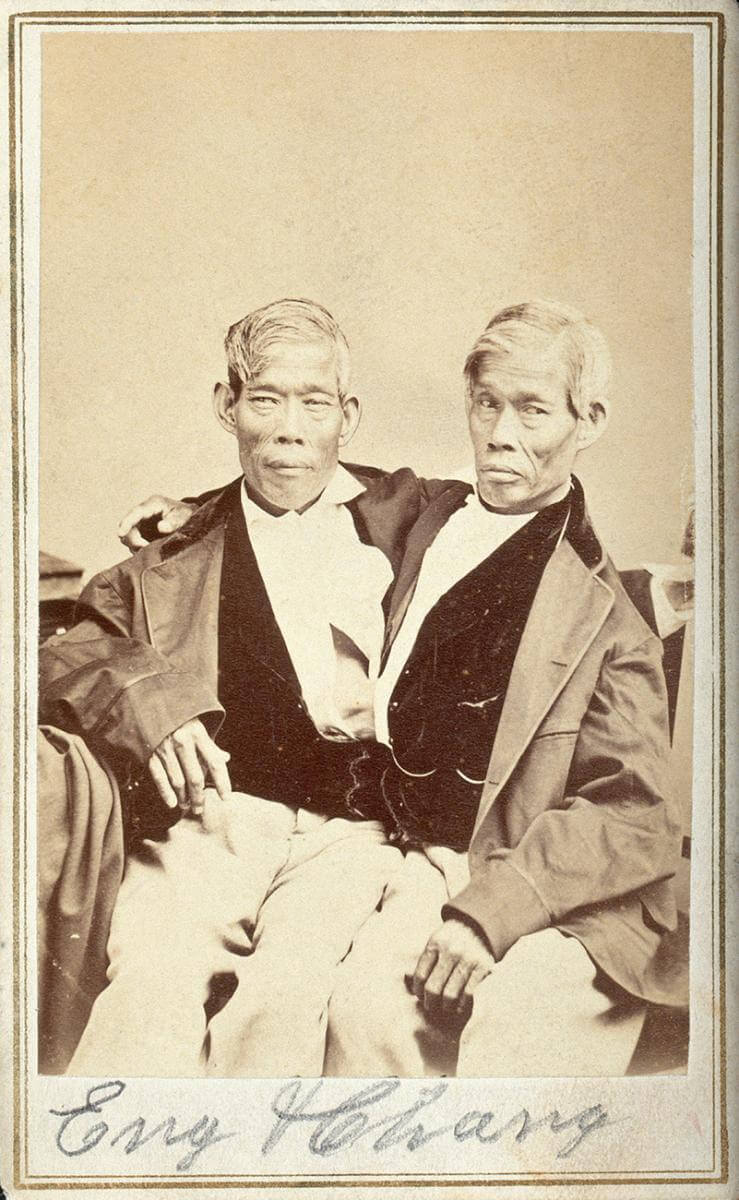
Now—back to the Bunker reunion in 2003. It was a grand occasion of celebration, a gathering of people who were products of a union unthinkable to most. The Bunker descendants certainly proved how wrongheaded Helper and other nineteenth-century racial apologists were, or how unfounded their crackpot racial theories were. Contrary to the fear of racial contamination and degradation, the Bunker progeny were all respectable citizens. Many of them were highly educated, smart, savvy; some were army generals, presidents of major corporations, and elected government officials. In the midst of this multiracial harmony, however, the appearance of a black woman with a claim on the proud Bunker genealogy wreaked no small havoc. Subsequent steps taken by some of the Bunker descendants indicated how sensitive the matter was, or how unbearably haunting family history can be.
Even before the 2003 reunion, some Bunker descendants, perhaps motivated by the Jefferson/Hemings controversy, had made inquiries in May of 2002 to the staff at the College of Physicians of Philadelphia, where the autopsy of Chang and Eng had been conducted in 1874 and where the fused liver of the twins is still preserved. These descendants had asked about "the possibility of testing hair trapped in the plaster of Chang and Eng's body cast to confirm anecdotes about hereditary lineages that issued from their slaves." Although there was no extant record or newspaper report on such a matter during or after the twins' lifetime, these descendants had grown up with family stories about how Patrick Bunker, Eng's son, "used to play with his half-sisters and half-brothers who were enslaved." Now that a descendant of a Bunker slave woman had surfaced, the issue took on added urgency and interest. Gretchen Worden, the curator of the Mütter Museum, who received the inquiry from the Bunker descendants, contacted a forensic scientist at George Washington University about the possibility of "obtaining DNA from either Chang and Eng's hair or liver." The expert replied and affirmed the feasibility of conducting such a test if nuclear DNA was available in the hair root, "if any part of it came away from the follicle when it was pulled away by the plaster."23Wu, Chang and Eng Reconnected, 165–66.
There was, however, no follow-up to this flurry of inquiries. There is no definitive conclusion. Unlike the Jefferson/Hemings situation, in which DNA results brought clarity to a past that many of Jefferson's white descendants had denied for centuries, most Bunker family secrets remain shrouded in the fog of time. However, even without scientific corroboration, family lore still endures, such as the following about the twins:
They attended the local shooting matches, where a turkey or beef was the reward for the best marksman, and Chang and Eng acquired reputations as crackshots with rifles or pistols. It was the object of much curious speculation on the neighbor's part how two men tied together could be so adept, often more adept than a single man.
The farmers in Surry County were frequently plagued by wolves, who wreaked havoc among their livestock. There existed one particularly notorious wolf, christened "Bob-Tail," because he had lost part of his tail in a trap. This wolf did not merely limit his dinings to sheep and cattle, but was believed to have eaten a negro baby who wandered into the woods. Bob-Tail made trouble for three years, and no one was able to trap him, until one night when Chang and Eng were awoken by noises coming from among their livestock. They ran out, taking with them a gun and a slave carrying a lantern. It was Bob-Tail, and the wolf breathed his last at the twins' hands. This coup gave Chang and Eng considerable prestige in the community, especially as no more negro babies were ever known to be stolen or eaten.24Quoted in Wallace and Wallace, The Two, 194–95.
This family vignette, passed down orally through generations, seems to be about the twins' remarkable marksmanship and heroic deed of ridding the community of a dangerous pest. But a more discerning and curious reader, mindful of the genealogical intricacy of a slave-owning household in the antebellum South like that of the twins, might rightly ask, "Negro babies? Whose Negro babies?" 
About the Author
Yunte Huang is a poet and professor of English at the University of California–Santa Barbara. Huang is the author of many books and translations, including the bestselling Charlie Chan: The Untold Story of the Honorable Detective and His Rendezvous with American History (W. W. Norton & Co., 2010), which won the Edgar Award and was a finalist for the National Book Critics Circle Award. His articles have been published in the New York Times, Chicago Tribune, Daily Beast, and others.
]]>Introduction
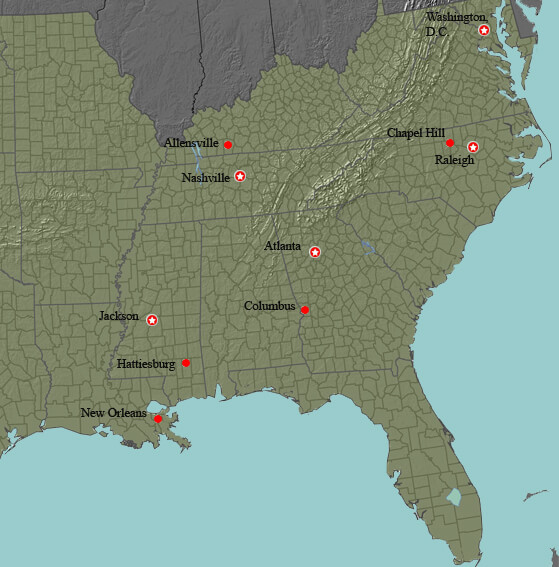 |
| Map of Yoshio Koya's destinations, 2011. |
From February to April 1950, the head of the Institute of Public Health in Tokyo, Yoshio Koya, was sent by the US-led Occupation Army to the US South to study public health, specifically birth control services. US officials were alarmed at the rapid increase in population in postwar Japan. They feared that population pressure and economic instability could once again push the nation into aggressive expansionism, possibly resulting in another war. Advancing communist forces in Asia further aggravated such concern. The southern states were the first in the United States to incorporate birth control as part of public health programs targeting the poor and racial minorities before the war. Koya’s mission was to learn how to launch effective and mass-scale, state-sponsored birth control programs in remote, low-income locales in Japan.
Drawing from his travel accounts and memoirs, this essay follows Koya’s trip to several states in the US South—Louisiana, Mississippi, Tennessee, Kentucky, Georgia, and North Carolina—and explores his observations of race relations in the United States with regard to public health.1Koya did not travel with an interpreter and his English skills were sufficient, if not fluent. All of Koya's books and journals were published in Japanese, with the exception of a few academic journals published in US journals. The translation that appears in this article is by the author. Koya linked the relative increase of black population to the white Americans’ eugenic and economic fears about differential fertility, interracial mixture, and job competition, which ultimately led to the southern states’ efforts to disseminate birth control practices among the rural blacks. Koya applied what he learned in the South to his own birth control experiments in rural Japan: specifically, the field-trial method to disseminate easy, simple, and free contraceptives; the use of nurses as social case workers to directly visit “needy” women for birth control consultation; and the operation of governmental offices to effectively provide these services to the poor. This essay reveals the process through which discriminatory and semi-coercive "public health" practices in the US South were transplanted into birth control programs in postwar Japan and other “overpopulated” areas in the world. By using Japan as a model for global population control, US leaders sought to establish the legitimacy of birth control programs both at home and abroad. I show the reach of eugenic and racist philosophy at work in these "scientific" field experiments and "public health" activities before and after World War II, as well as the spread of these ideas beyond national borders.
I also analyze images and illustrations associated with Koya’s travel accounts, which include drawings, photographs, and maps of the towns and areas he visited. I argue that these images, along with his texts, reveal Koya’s idealized view of American democracy, modernity, and pragmatism. They indicate that Koya identified with white (male) leaders and public health officials rather than with African American women and the rural poor targeted for birth control.
Background
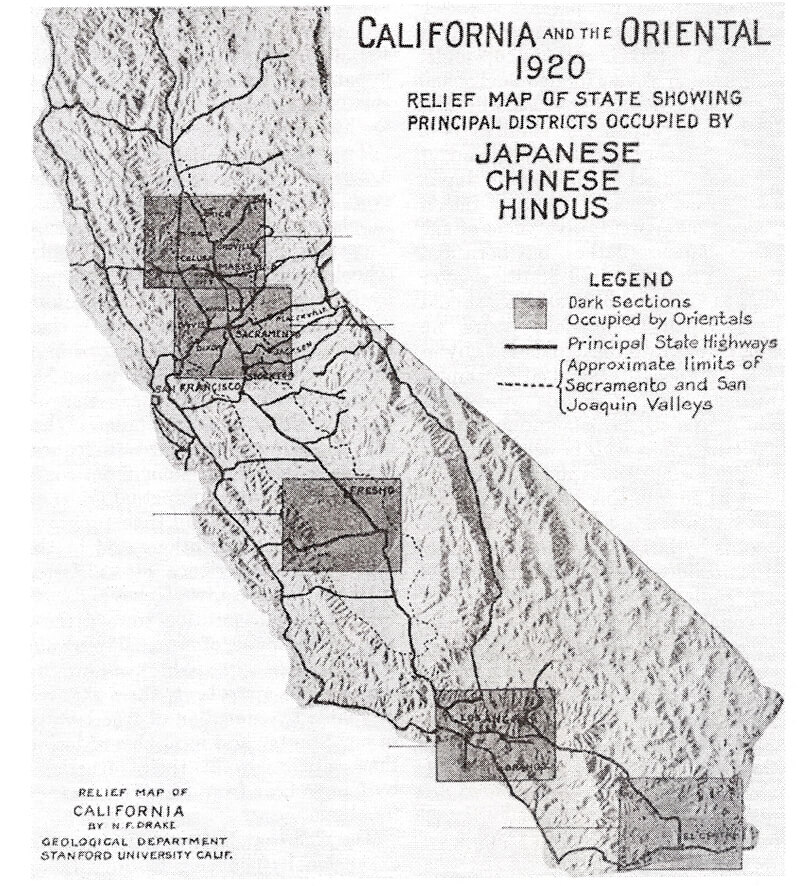 | 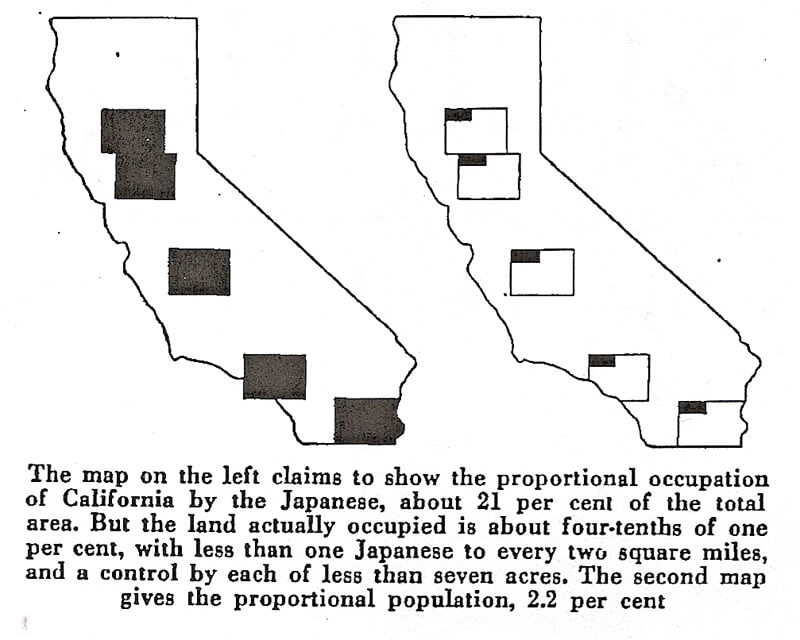 | |
| Earl S. Parker, Map of the "Oriental" population of California in "The Real Yellow Peril," The Independent 105 (May 7, 1921): 476. | Marshall De Motte, Maps of the Japanese population, in "California: White or Yellow?" The Annals of the American Academy 93 (January 1921): 21. |
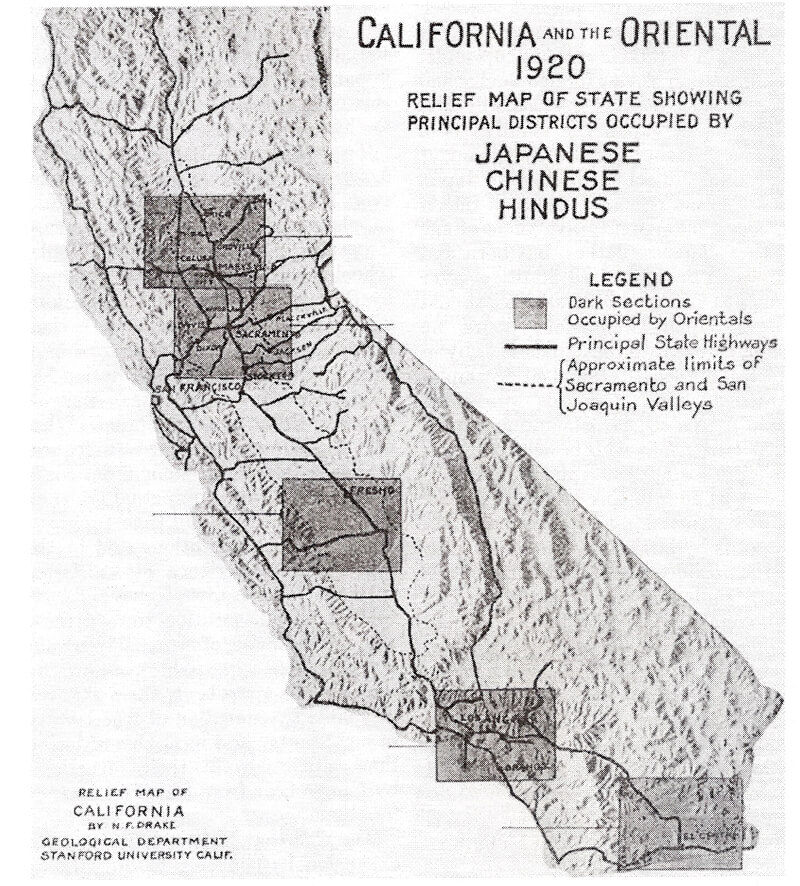
US intellectuals and the general public had been debating the increasing Japanese population since the early-twentieth century. Japan's population increased steadily during the late-nineteenth century as the nation embraced policies influenced by modernization and Westernization. However, Japanese population growth alarmed many Americans only after military expansion entered the equation. After winning the first modern war against China in 1895, Japan shocked the international powers with its victory over a Western nation, Russia, in 1905. Meanwhile, the increasing flow of non-Western immigrants, particularly those from China and Japan, heightened anti-immigration sentiments among the residents on the US West Coast.2The debates over “race suicide” in the United States from the 1890s to the 1930s were deeply linked to the supposed fecundity of Asian immigrants, especially the Japanese. See, Laura L. Lovett, Pronatalism, Reproduction, and the Family in the United States, 1890-1938 (Chapel Hill: The University of North Carolina Press, 2007), 78-108. Popular books written by eugenicists such as Madison Grant’s 1916 The Passing of the Great Race and Lothrop Stoddard’s 1920 The Rising Tide of Color Against White World-Supremacy incited anxiety among white Americans that the United States was deteriorating from within—through immigration from Southern Europe and from Asia. Stoddard alarmingly declared: “the introduction of even a small group of prolific and adaptable but racially undesirable aliens may result in their subsequent prodigious multiplication, thereby either replacing better native stocks or degrading these by the injection of inferior blood.”3Lothrop Stoddard, The Rising Tide of Color Against White World-Supremacy (New York: Scribner, 1920), 252. These fears provoked by eugenicists, coupled with anti-immigration sentiments among residents on the East and West Coasts, contributed to the passage of the Immigration Act of 1924. The law banned further Japanese immigration and was a culmination of previous laws and campaigns targeting Asian immigrants.
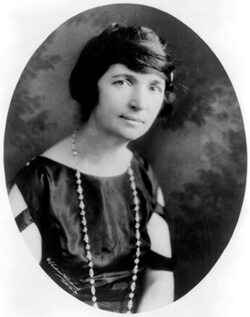 |
| Underwood & Underwood Photography, Margaret Sanger, 1922. Courtesy of the Library of Congress. |
The immigration law did not quell American concerns about the “swarming” people, as the Japanese government appeared to resort to even more violent means to acquire outside territory and resources to sustain their growing domestic population.4Although many Americans imagined that Japan would send its surplus population abroad, in reality the Japanese government was sending its leaders for colonial ruling, wary of the job competition with low-wage indigenous laborers. While leading US scholars such as Warren Thompson were aware that the Japanese government was not actually sending its people abroad on a massive basis, Japan’s lack of natural resources and their quest for foreign markets nonetheless made them a serious threat to Western imperial powers. See, Warren Thompson, Danger Spots in World Population (New York: A.A. Knopf, 1929), 17-48. By the 1930s, population studies emerged as an “objective” scientific field, replacing the “value-ridden” approaches of previous eugenic research. In reality the two fields shared much in common, including their primary interest in differential fertility between classes, races, and nations. Sociologist Warren Thompson’s 1929 book, The Danger Spots in World Population, for example, prominently featured the overpopulation problem in Japan as a primary threat to world peace. These male scholars provided scientific credibility to political campaigns such as immigration restriction and anti-expansionism, while stigmatizing female fertility as a cause of chaos and war. As international relations deteriorated, even feminist activists such as Margaret Sanger, who initially envisioned birth control as a means of female liberation across national borders, started to use the same language of population control in the name of world peace under US leadership. Citing Thompson’s work that named Japan, along with Germany and Italy, as a major "danger spot" of the world, she denounced these fertile nations as "destroyers of our civilization through their ruthless method of waging arrogant warfare against innocent, peaceful peoples."5"News from Margaret Sanger," 6 September 1937, reel 19, Margaret Sanger Papers, Library of Congress, Washington DC
The US Occupation and the Population Problem in Postwar Japan
The United States' preoccupation with Japan's population growth continued after World War II, when the war-torn country faced renewed problems with the return of soldiers from overseas, increasing birth rates, and food shortages. In reality, actual birth rates had started to fall after 1947, and many US officials were aware of those numbers. Nonetheless, US leaders who visited postwar Japan retained the impression that masses of people who were poorly dressed and homeless, including orphans and starving children, roamed about in destroyed towns and cities. This impression led Americans to intervene in solving the “big question” of population growth.6Crawford F. Sams, “Medic”: The Mission of an American Military Doctor in Occupied Japan and Wartorn Korea (Armonk, NY: M. E. Sharpe, 1998), 30, 183; National Academy of Sciences, “Conference on Population Problems held at Williamsburg Inn, Williamsburg, VA,” morning session, June 20, 1952, folder 720, box 85, series 1.5, RG 5, John D. Rockefeller III Papers, Rockefeller Archive Center, Sleepy Hollow, New York (hereafter, RAC); Deborah Oakley, “The Development of Population Policy in Japan, 1945-1952, and American Participation,” PhD dissertation (University of Michigan, 1977), 278. Moreover, in the context of the Cold War Japan represented an important foothold for the United States' further political influence in Asia.7For the conservative drift in the US Occupation policies, see John W. Dower, Embracing Defeat: Japan in the Wake of World War II (W. W. Norton & Company, 1999), 525-526. Social and economic instability caused by overpopulation, the Americans warned, could leave Japan and the rest of Asia vulnerable to communism, which in turn would threaten a reduced "free world." Communist China became an embodiment of this threat.8See, for example, Kingsley Davis, “The Other Scare: Too Many People,” New York Times, March 15, 1959, p. SM13. The leader of Planned Parenthood Federation of America, William Vogt, warned that the loss of Japan and India to communism would indeed be a “serious breach in western defense.”9“Ripe for Reds: World Birth Growth Held Top Problem,” Los Angeles Times, February 29, 1952, p. C1.
Japan Today. Newsreel by Ed Herlihy, 1946.
The US-led Occupation government (the Supreme Command for the Allied Powers, or SCAP) was in a complicated situation in dealing with population growth abroad. After giving a statement to the press endorsing birth control—along with industrialization and urbanization—as a key solution to Japan’s population problem, Crawford F. Sams, head of the Public Health and Welfare Section (PHW) of SCAP, received a series of protests from US Catholics.10Deborah Oakley, “The Development of Population Policy in Japan, 1945-1952, and American Participation,” PhD dissertation (University of Michigan, 1977), 173; Tenrei Ota, Nihon Sanji Chōsetsu Hyakunenshi (One Hundred Years of Birth Control in Japan) (Tokyo: Shuppan Kagaku Sogo Kenkyujo, 1976), 359. Criticism from US Catholics was particularly a concern for General Douglas MacArthur, head of SCAP, who had an ambition to run for a presidential campaign after his duty in Japan; losing a large Catholic constituency would be devastating for his campaign. MacArthur needed to remind Sams about SCAP’s official position to stay clear of the issue of birth control. Oliver R. McCoy diary, May 16, 1949, box 83, record group 12.1, Rockefeller Foundation Archives (hereafter, RFA), RAC, Sleepy Hollow, New York. In addition, Sams feared that a conspicuous population reduction policy by a military conqueror could invite criticism from communist countries as conducting genocide against other races.11Roger Evans, “Rough Notes on RF Mission Conference with General Sams,” October 1, 1948, folder 6, box 1, series 600, record group 1.2, RFA, RAC. Consequently, SCAP decided to assume an official position of “benevolent neutrality” regarding population policy in Japan, meaning that they would neither endorse nor oppose efforts made by the Japanese.
Despite this outward position, US officials maintained an active interest in controlling birth rates in Japan and used less visible methods to guide the Japanese toward effective population policies. To give at least a semblance of Japanese initiative, SCAP members searched for an appropriate Japanese leader to carry out population reduction policies on their behalf. The Institute of Public Health in Tokyo (IPH), established in 1939 with the assistance of the Rockefeller Foundation, was working alongside the PHW to carry out health reforms in postwar Japan. After expelling the IPH’s wartime leader, SCAP appointed Yoshio Koya as its new director.12SCAP feared that under Keizō Nobechi’s directorship, whom they suspected as “engaging in subversive propaganda,” the IPH could revert to a nationalistic organization after the termination of US Occupation. The forced resignation of Nobechi, however, left a negative impression about Sams among the Japanese in the IPH. Balfour to George K. Strode, January 31, 1947; R. B. Watson to Strode, September 12, 1947, folder 18, box 3, series 609, record group 1.1, RFA, RAC; Yoshio Koya, Kōgakukyū no Techō kara (From An Old Man’s Diary) (Tokyo: Nihon Kazoku Keikaku Kyōkai, 1970), 72-73. Through Koya, Sams and his consultant from the Rockefeller Foundation, Oliver R. McCoy, ensured that concrete provisions on birth control instruction were included in the Eugenic Protection Law, a law that legalized therapeutic abortion in 1948.13McCoy diary, March 23, Apr. 16, 1949. Sams further ordered the IPH to carry out training programs for doctors and medical officers on the use of contraceptive methods.14McCoy diary, March 12, 15, May 12, July 27, August 1, 5, 9, 15, 1949, March 10, 1950.
Yoshio Koya was a leading medical scientist in Japan, working closely with the government on racial hygiene and population policies since the prewar years. After graduating from the prestigious Medical School of the Tokyo Imperial University, he spent a year studying at the Kaiser Wilhelm Institute in Berlin-Darlem, Germany in 1926. During his professorship at the Kanazawa Medical University in Japan, he focused on biostatistics and anthropometry: specifically, research on tuberculosis among the rural Japanese and the racial composition of the Ainu people in northern Japan. Together with his colleagues, he started the periodical Minzoku Eiseigaku Kenkyū (Racial Hygeine Research) in 1936. He was also vice president of the Japanese Association of Racial Hygiene (Nihon Minzoku Eisei Kyōkai), established in 1930. Koya's reputation for tuberculosis research earned him a position in the Ministry of Health and Welfare (MHW) in 1939. While maintaining this position, he also began working in the IPH in 1941, and was appointed head of the Division of Welfare Science the following year. Investigating population statistics and the health and hygiene of Japanese subjects were the major tasks of the IPH, which was taken over by the military government during the war. These studies became particularly important after the Manchurian invasion in 1931, as the military government demanded research into the practical matters of colonial ruling, namely the matter of race relations between the Japanese and the colonial subjects.
Notwithstanding his wartime research supporting the government’s pronatalist policies, Koya found a smooth transition to a new advocacy for population restriction after the war. Koya’s core position had not changed at all: he consistently aimed to protect the quality of the Japanese population, and the issue of quantity was only a secondary concern. Koya’s wartime endorsement of pronatalism stemmed from his concern about the declining birth rates and physical condition of urban and “educated” people, as his own research demonstrated. This trend, he argued, was causing a “reverse selection” in Japan, in which the lower socio-economic classes were outnumbering the higher ones. After the war, Koya merely changed his emphasis from encouraging “educated” people to have more children to discouraging the rural poor from having as many.15Yoshio Koya, “Shin-Marusasu Shugi no Shinjun no Kiki” (The Danger of Spreading Neo-Malthusianism) Yūseigaku (Eugenics) 7, no. 8 (1930): 2-5; Koya, Kōgakukyū, 67; “Minzoku Tōtaron” (Racial Extinction Theory) Kagakuken (The Science Sphere) 3, no. 9 (1948): 10.
Koya’s reconnaissance mission to the United States, supported by the US Government Appropriations for Relief in Occupied Areas (GARIOA) fund, represented a major step toward implementing a US-designed population policy in Japan. Koya did not know where he would go until he was given a detailed schedule after landing in San Francisco. From there, he was told, he would head south via Los Angeles, change trains at New Orleans, stay in Mississippi (Jackson, Hattiesburg) for about a month, then in Georgia (Atlanta, Columbus) for a few weeks, and gradually head north through North Carolina (Chapel Hill, Raleigh), before joining the rest of the group in Washington DC16Kōgakukyū, 101; Koya, Tengoku Amerika, Jigoku Amerika (Heaven America, Hell America) (Tokyo: Deido Shuppansha, 1951), 41. Among the eleven Japanese officials representing the MHW, Koya and another official were the only ones taking the “southern route” into the Deep South.
Koya offered a couple of reasons why he was excited to travel the to South. He was aware that the southern states were the first in the United States to include birth control services in state-sponsored public health programs. Having studied the relationship between the Japanese and such neighboring Asian ethnic groups as the Koreans during the war, he was interested in US race relations, where the two most “distinct” races—blacks and whites—cohabited on the same continent. Finally, he wished to learn about the “American spirit” that he associated with the frontier in the West and the South. Having visited Berlin, Paris, Vienna, and Rome before the war, Koya wanted a different experience. He had expressed his feelings to Rockefeller Foundation's McCoy and believed that SCAP officials had taken them into consideration.17Tengoku, 34; Kōgakukyū, 78. Whether or not that was actually the case, Koya’s desires coincided with SCAP’s active—albeit implicit—role in promoting birth control through state-initiated public health services in Japan.
Public Health and Birth Control in the South
In the prewar decades, birth control was a controversial subject in the United States, associated with sexual radicalism and political propaganda as represented by Margaret Sanger’s activism. In the 1920s and 1930s, however, medical professionals, eugenicists, and other birth control advocates—including Sanger—sought to establish birth control as a legitimate medical issue. Clarence J. Gamble, heir of the industrial giant Proctor & Gamble, played a key role in efforts to incorporate contraceptive services into public health programs targeting poor and “needy” women, especially in the South.
At Princeton Graduate School, Gamble worked under Edwin Grant Conklin, a leading biologist and eugenicist, who “laid the intellectual foundation for [his] interest in the quality and quantity problems of human life.”18Doone Williams, Every Child a Wanted Child: Clarence James Gamble, M.D. and His Work in the Birth Control Movement (Boston: Harvard University Press, 1978), 25. After graduating from Harvard Medical School in 1920, Gamble continued his medical research at the University of Pennsylvania. In 1924, he met physician Robert Dickenson, who urged him to “take up the work” of establishing birth control as a legitimate medical practice.19Williams, vii. While working in health clinics in Philadelphia and Cincinnati, Gamble became convinced that it was more effective to give money to prevent babies than to care for them through relief programs once they were born. He also speculated that the diaphragm, which had a relatively high success rate of preventing pregnancies, was not suitable for poor women, since it depended on correct use, foresight, initiative, and will power, habits that Gamble felt they lacked. Based on his experience in hospitals, Gamble initiated programs to test cheap and easy methods of contraception, such as spermicidal jelly and foam powder, among women in remote areas in West Virginia, Kentucky, and Tennessee in the 1930s. In these experiments, he sent public health nurses to visit women’s houses and provide birth control instruction. Gamble’s birth control crusade saw a major breakthrough in 1937, when he gave financial support to George M. Cooper, an assistant director of North Carolina’s state board of health, making it the first state to officially incorporate birth control into public health services. South Carolina, Virginia, Georgia, Mississippi, and Alabama soon followed. Both Gamble and Cooper strongly influenced Koya’s birth control programs in Japan in the 1950s.
Economic and eugenic factors attracted many white birth control advocates and health officials to promote birth control among southern blacks. Birth control, these authorities believed, would reduce the number of those on relief and/or those deemed inferior and undesirable. The so-called “Negro Project” of the Birth Control Federation of America (BCFA), launched in 1938 by Margaret Sanger and Clarence Gamble, specifically aimed to reduce the birth rates of blacks in the rural South.20Linda Gordon, Woman's Body, Woman's Right: A Social History of Birth Control in America (New York: Grossman, 1976), 330-334; Johanna Schoen, Choice and Coercion: Birth Control, Sterilization, and Abortion in Public Health and Welfare (Chapel Hill: University of North Carolina Press, 2005), 47-49; Carole R. McCann, Birth Control Politics in the United States, 1916-1945 (Ithaca: Cornell University Press, 1994), 160-164. To avoid being “misunderstood by Negroes” as a white conspiracy to trigger black “race suicide,” Gamble assured that the program should “appear to be of, by and especially for the colored race.”21For more on "race suicide," see Lovett, 2007. Clarence J. Gamble to Mrs. Rinehart, November 1, 1939, Folder 3, Box 39; Division of Negro Service, PPFA [Planned Parenthood Federation of America], June 23, 1942, Folder 8, Box 39, Margaret Sanger Papers (unfilmed), Sophia Smith Collection, New Hampton, MA. Jessie Rodrique demonstrates that black communities actively took part in the BCFA’s Division of Negro Services in Tennessee and South Carolina with their own agenda and concerns in mind.22Jessie M. Rodrique, “The Black Community and the Birth Control Movement,” in Passion and Power: Sexuality in History, ed. Kathy Peiss and Christina Simmons (Philadelphia: Temple University Press, 1989), 146-149. Nonetheless, as Johanna Schoen argues, the “Negro Project” resembled a kind of “social science laboratory,” as they accepted Gamble’s advice to focus on establishing “demonstration clinics” over Sanger’s suggestion for a grassroots educational campaign.23Schoen, 48. State-supported birth control programs in the South undeniably had in mind the presumed high birth rates of African Americans, often disregarding the fact the birth rates of southerners in general, including whites, were quite high and that infant mortality rates were significantly higher among blacks than whites.24Comparisons of birth rates, death rates (including infant mortality rates), and population by race, state, and county/city are available in Forrest E. Linder and Robert D. Grove, Vital Statistics Rates in the United States, 1900-1940 (Washington DC: US Government Printing Office, 1943), 704-823; Robert D. Grove and Alice M. Hetzel, Vital Statistics Rates in the United States, 1940-1960 (Washington DC: US Government Printing Office, 1968), 114-115, 214-235, 150-162, 800-850; Wilson H. Grabill, Clyde V. Kiser, and Pascal K. Whelpton, The Fertility of American Women (New York: John Wiley & Sons, 1958), 60-67. Regardless of the actual demographic trends of southern blacks, the preconceived idea of white southerners being overwhelmed by fertile blacks was enough for George Cooper and his supporters to successfully persuade reluctant county health officials in North Carolina to establish birth control clinics.25Don Wharton, “Birth Control: The Case for the State,” Atlantic Monthly (1939): 465; “Birth Control: South Carolina Uses It for Public Health,” Life (May 1940): 67.
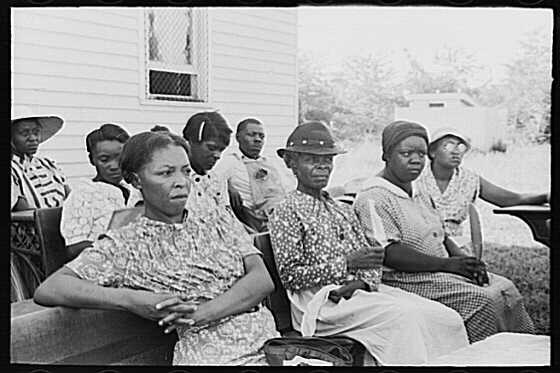 |
| Lee Russell, Audience at Farm Security Administration listening to a speech by a visiting public health official, La Forge, Missouri, 1938. Courtesy of the Library of Congress. |
Along with the discovery of the germ theory and other scientific knowledge, medical experts and eugenicists pathologized the African American body by linking race to susceptibility to certain diseases. Under the name of “public health,” ordinances and programs backed by these new “scientific” theories helped justify Jim Crow segregation and racial discrimination in the southern states. In particular, campaigns against tuberculosis and syphilis established a powerful model for eugenically-informed public health initiatives in the Deep South during the 1920s and 1930s. These prewar public health programs served to solidify the image of the black body as carrier of disease and agent of contamination, thereby instigating social fears about differential fertility and racial mixture between blacks and whites.26See, JoAnne Brown, “Purity and Danger in Color: Notes on Germ Theory and the Semantics of Segregation,” in Heredity and Infection: The History of Disease Transmission, ed. Jean-Paul Gaudillière and Ilana Löwy (New York: Routledge, 2003), 101-131; Tera W. Hunter, “Tuberculosis as the ‘Negro Servants’ Disease,’” chapter 9 in To ‘Joy My Freedom: Southern Black Women’s Lives and Labors after the Civil War (Cambridge, MA: Harvard University Press, 1997), 187-218; Paul A. Lombardo and Gregory M. Dorr, “Eugenics Medical Education, and the Public Health Service: Another Perspective on the Tuskegee Syphilis Experiment,” Bulletin of the History of Medicine 80 (2006): 291-316; Melbourne Tapper, “An ‘Anthropathology’ of the ‘American Negro’: Anthropology, Genetics, and the New Racial Science, 1940-1952,” Social History of Medicine 10 (1997): 263-289.
If universities and research institutes in the northeast were the epicenter of knowledge production, the southern and western states were the testing grounds to apply these “scientific” theories. The eugenics and disease eradication campaigns in the US South and West were also informed by colonial experiences in tropical medicine and disease control abroad, namely the Philippines, Cuba, Puerto Rico, Hawaii, and the Panama Canal. In many ways, the southern states followed the Californian example, as white leaders of both regions shared the racial anxieties about job competition as well as miscegenation. The delayed introduction of public health services in the southern states, particularly those targeting African Americans, meant that most of the eugenic programs in the South were not as organized and institutionalized as their Californian counterparts. It was after most other states in the United States had abandoned these discriminatory programs after World War II that the southern states rigorously adopted eugenic programs of disease and population control that disproportionally targeted African Americans.27Alexandra Minna Stern, Eugenic Nation: Faults and Frontiers of Better Breeding in Modern America (Berkeley: University of California Press, 2005), 5-7, 21; Edward J. Larson, Sex, Race, and Science: Eugenics in the Deep South (Baltimore: Johns Hopkins University Press, 1995), 32-34; John Ettling, The Germ of Laziness: Rockefeller Philanthropy and Public Health in the New South (Cambridge, MA: Harvard University Press, 1981), 29-30, 125, 187.
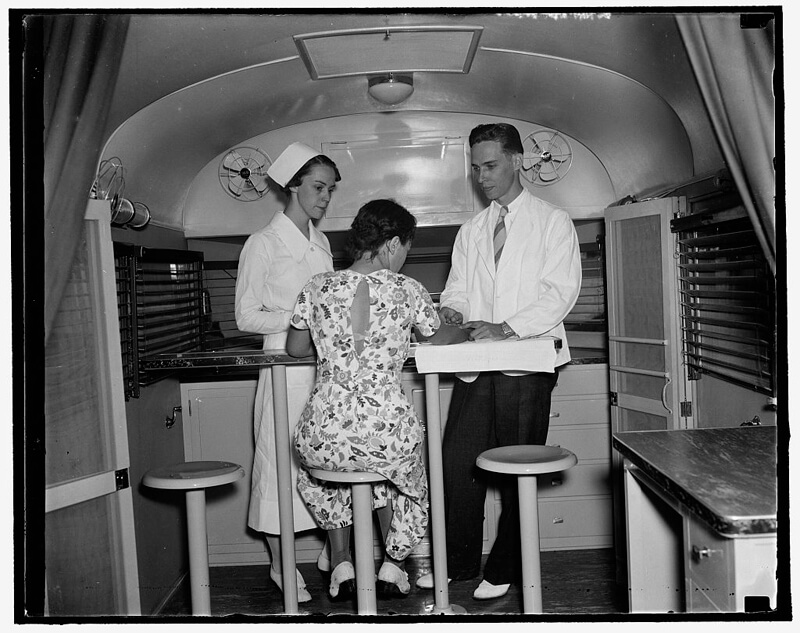 |
| Harris and Ewing, Travelling syphilis laboratory, Washington, DC, 1937. Courtesy of the Library of Congress. |
The development of public health programs in the South remained rudimentary until the first half of the twentieth century. Early endeavors, such as the Rockefeller Sanitary Commission for the Eradication of Hookworm Disease (1909–1914), failed to actually eradicate diseases, although they did stimulate a “public-health awakening” in the South.28After the Rockefeller Sanitary Commission closed down, the International Health Board took over its role. For the Rockefeller Foundation’s public health projects in the South, see John Ettling, The Germ of Laziness; John Farley, To Cast Out Disease: A History of the International Health Division of the Rockefeller Foundation (1913-1951) (Oxford: Oxford University Press, 2004). Linda Gordon argues that the absence of large Catholic constituencies combined with racism accounted for the pioneering roles of southern states in birth control services despite the general lag of other social-service programs.29Gordon, 330. Nonetheless, before the nationwide anti-poverty campaigns of the 1960s, public health services for African Americans were severely limited as funds were scarce and the primary concern for most southerners was to uplift poor whites.30Larson, 93; Schoen, 44. The targets of prewar eugenics/birth control programs, including sterilization, were mainly white immigrant women, with the purpose of protecting white female sexuality and motherhood. See, Wendy Kline, Building a Better Race: Gender, Sexuality, and Eugenics from the Turn of the Century to the Baby Boom (Berkeley: University of California Press, 2001), 59. Most health officials did not dare to dabble in the controversial subject of birth control and found it unnecessary to provide any services to African Americans. White professionals who sponsored birth control services for blacks repeatedly changed their minds and terminated financial support without any continuous follow-up programs. Gamble and Cooper’s programs failed to consistently provide contraceptive advice to poor women and to measure the effectiveness of contraceptive methods offered. Although North Carolina established clinics in more than sixty counties over three years, after Gamble ended his financial support in 1940 many county health officials struggled to secure funds to continue the program.31Williams, 146-148; Schoen, 60.
The development of birth control programs and other public health endeavors in the Deep South before the war had powerful effects even if they were not implemented immediately. The scientific rhetoric supporting racial boundaries and social hierarchies, regardless of the actual etiology or statistical data, influenced many other programs beyond national borders and changes in social and political contexts. What Koya observed in the US South included these sporadic birth control programs targeting African Americans. Oblivious to the fact that blacks were underserved in public health programs, Koya would reach an opposite conclusion about the white officials’ treatment of blacks—that they had “thoroughly taken good care of” this population—based on a trip to the South carefully arranged by the US government.32Tengoku, 88.
Louisiana – Mississippi: An "Exhibition of Races"
As a governmental researcher during the war, Koya wrote prolifically on race relations between the Japanese and neighboring ethnic groups in the Japanese-led empire, the so-called Greater East Asia Co-Prosperity Sphere (Dai Tōa Kyōeiken).33His major publications include: Minzoku Seibutsugaku (Race Biology) (Tokyo: Kōyō Shoin, 1938); Kokudo, Jinkō, Ketsueki (National Land, Population, and Blood) (Tokyo: Asahi Shinbunsha, 1941); Tōa Shokuryō Seisaku (Food Policies in East Asia) (Tokyo: Shūkan Sangyōsha, 1941); Kindaisen to Tairyoku, Jinkō (Modern Wars, Stamina, and Population) (Tokyo: Sōgensha, 1944); Nihon Minzoku Konseishi (A Comprehensive Study of the Japanese Race) (Tokyo: Nisshin Shoin, 1944). To back up the wartime government’s pronatalist position, Koya insisted that the Japanese needed to increase their population in order to effectively rule their Korean colony.34Koya, Kindaisen to Tairyoku, Jinko, 188. He warned that the birth rate of Japanese women in Korea was “far below” that of local women and reiterated the common eugenic argument that “lower” races typically outnumbered the “advanced” ones, as the latter adopted modern practices of birth control. Koya argued that a misguided interpretation of Western individualism and liberalism had led the Japanese to a “hedonistic” lifestyle, in which personal pleasure took precedence over their social duty to produce future citizens. To illustrate this point, one of his studies showed that the birth rate of Japanese in Korea declined upon emigration as a result of their elevated status as colonizers and increased material wealth.35Koya, “Zaijū Yonjūnenkan no Naichi Nihonjin Hanshokuryoku” (Fertility of Japanese Migrants after Forty Years) in Minzoku Kagaku Kenkyu (Race Science Review) vol. 1, ed. Haruo Hayashi and Yoshio Koya (Tokyo: Asakura Shoten, 1943), 183-184; Koya et. al., “Chōsen ni Okeru Naichijin Ijūsha oyobi Chōsenjin no Shusseiryoku ni tsuite” (The Fertility of Japanese Migrants to Korea and the Fertility of Koreans), 201-202. Koya also expressed concern about the flow of Koreans as laborers into mainland Japan and its effect on the survival of the Japanese race. Considering the problem of wartime labor shortages, Koya insisted that foreign laborers should be introduced with caution, after “elevating” the cultural practice and living standards of these foreigners to a level similar to those of the Japanese.36Koya, Kokudo, Jinkō, Ketsueki, 131.
In addition to differential birth rates, the prospects of racial mixture between the Japanese and other Asian ethnic groups worried Koya and eugenicists in the Ministry of Health and Welfare during the war. Because of their warnings about the harmful effects of race crossing, the colonial government’s assimilation policy in Asia remained largely ineffective in practice. These scholars considered the Japanese to be a distinct race—separate from other Asian races—despite its “hybrid” origin. Koya's beliefs represented typical thought among Japanese intellectuals concerning race, in which they simultaneously affirmed and ignored the dynamic process of racial formation. Even as they conceded that different ethnic groups contributed to the original formation of the “Japanese race,” they either dismissed or rejected further racial mixture once the Japanese had achieved a “superior patriarchal race.”
This was a convenient ideology to support the idea of Japan’s inherent leadership role in the Greater East Asia Co-Prosperity Sphere. “Even though we love the peninsular Japanese [i.e. Koreans] as brothers,” Koya recommended, “Japanese intermarriage with Koreans should proceed gradually,” accompanied with deliberate research on the long-term effects of intermixture. He insisted that some Asians with strong “assimilating power,” such as the Chinese Kan race, should be avoided altogether.37Koya, Kokudo, 179-182; Minzoku Seibutsugaku, 71. For more on the Japanese scholars’ ideas on “race” during the war, see Yuehtsen Juliette Chung, Struggle for National Survival: Eugenics in Sino-Japanese Contexts, 1896-1945 (New York: Routledge, 2002), 147-152; Atsushi Nobayashi, “Physical Anthropology in Wartime Japan,” Wartime Japanese Anthropology in Asia and the Pacific, ed. Akitoshi Shimizu and Jan van Bremen (Osaka: National Museum of Ethnology, 2003), 146-147; Eiji Oguma, A Genealogy of ‘Japanese’ Self-Images, trans. David Askew (Melbourne: Trans Pacific Press, 2002), 203-236.; Cullen Tadao Hayashida, “Identity, Race, and the Blood Ideology of Japan,” PhD dissertation (University of Washington, 1976), 24-29.
Through his wartime investigation into the relationship between the core “Japanese race” and other Asians in a multi-ethnic Japanese empire, Koya was keen to learn how another multi-racial country, the United States, handled its differential birth rates between races and interracial mixture. Koya struggled between the official ideal of brotherhood with other Asian groups and the emotional repulsion toward living with them. Aware of racial discrimination toward blacks in the United States, he wondered how white Americans were still able to maintain an ideal of "democracy."
Koya first encountered the living experience of race relations in New Orleans, where he changed trains on his way to Mississippi. As his guide gave him a quick tour across town, he immediately noticed the strict residential segregation. The group first walked through the “Creole district,” where he saw many people with “typical Mediterranean features.” Then, gradually as they exited the area, he saw more “northern European types” with blond hair and blue eyes. It was not until Koya got on the bus and crossed the outskirts of the city that he came across a black residential area. Once the group came back to the city center, they went to a Mardi Gras parade. More than the parade itself, Koya was keen to observe the racial composition of the performers. He noticed many “Latin types” with dark skin, and a fewer number of “northern European types.” What struck him was that, according to his observation, there were very few performers who appeared to be a mix of both types. The city of New Orleans, which seemed to him “like an exhibition of races,” showed him the intolerance of people against the “mixture of different blood” even as they lived side by side. His impression of race relations there conformed to his wartime recommendation against intermarriage between the Japanese and the Koreans.38Kōgakukyū, 118-120.
Arriving at his first major destination, Jackson, Mississippi, Koya probed further into race relations. He spent the first week in the reference room of the city hall studying demographic material and statistics, particularly those that concerned the black population. The data indicating the gap in birth rates between blacks and whites captured his attention. Koya wondered, “What is the US government’s response to this problem?” He found his answer in the budgetary records, in which an “unusually high budget,” according to his judgment, was allocated to housing and public health projects. Because African Americans lived in poor, rural areas which required social development and the improvement of health services, he assumed, the state must have created this “large budget” to deal with the “black problem” of population growth.39Kōgakukyū, 124-125. Koya's was fallacious reasoning, as the US government spared minimal money for public health and welfare services for African Americans before the 1960s.
Koya built upon his assumption through his experience in the “field.” He spent a week researching health and sanitation services by following white public health nurses visiting black communities surrounding Hattiesburg, Mississippi, a booming small city near Jackson. Koya was impressed by the subtle way in which the nurses offered guidance on family planning to black mothers without evoking the larger population question. After general health instruction, a nurse would ask “How many children do you have?” “Are your children all in healthy condition?” “Are they going to school?”—all of which led to: “Do you want more children?” If the mother answered in the negative, the nurse would promptly schedule an appointment at the health center, telling the mother that she would receive free contraceptives.40Kōgakukyū, 124-126.
In one memorable moment at the clinic in Hattiesburg, Koya saw a black mother in the waiting room with a white baby. The woman was breastfeeding the baby, which suggested to him that the child was biologically hers. Surprised by the scene, he talked about it to the director of the clinic. The doctor answered uncomfortably, “I don’t know how that happened, either. But I see these things sometimes in this area.” “But even more disturbing,” he added, “is the opposite case: when a white lady bears a black child. That indeed is a big problem, and can cause a lot of tragedy.”41Tengoku, 91-92; Kōgakukyū, 129. While Koya believed that these stories of race crossing were rare, he perceived the emotional aversion among whites to biologically mixing with blacks. He recalled the words of a white scholar he respected [name unknown]: “We can tolerate intermarriage with American Indians, but we cannot stomach the idea of marrying a Negro. Every white person would choose to marry an enemy, rather than a slave.”42Tengoku, 93; Kōgakukyū, 130-131. This experience confirmed Koya’s impression that birth control programs in the South were partly driven by eugenic concerns among whites about interracial mixture with blacks.
Koya explained that white efforts to control the black population were also linked to pressing economic problems, including job competition between the races. During his research in Mississippi, he came across information on black migration presented by Thomas Jackson Woofter, a scholar on race relations in the South.43Thomas Jackson Woofter was the author of numerous books on the “Negro problem,” including: Negro Migration: Changes in Rural Organization and Population of the Cotton Belt (New York: W. D. Gray, 1920); Negro Problems in Cities: A Study (New York: Negro Universities Press, 1928); The Basis of Racial Adjustment (Boston: Gunn and Co., 1925). Woofter's work showed that the percentage of black farmers in the southern “cotton belt” had decreased from 71.3 % in 1860 to 39.7 % in 1930, while the number of cotton farmers increased from around a million to more than two million. This was not an indication of the net decrease of black population, but instead suggested the large-scale black migration to the North and West.
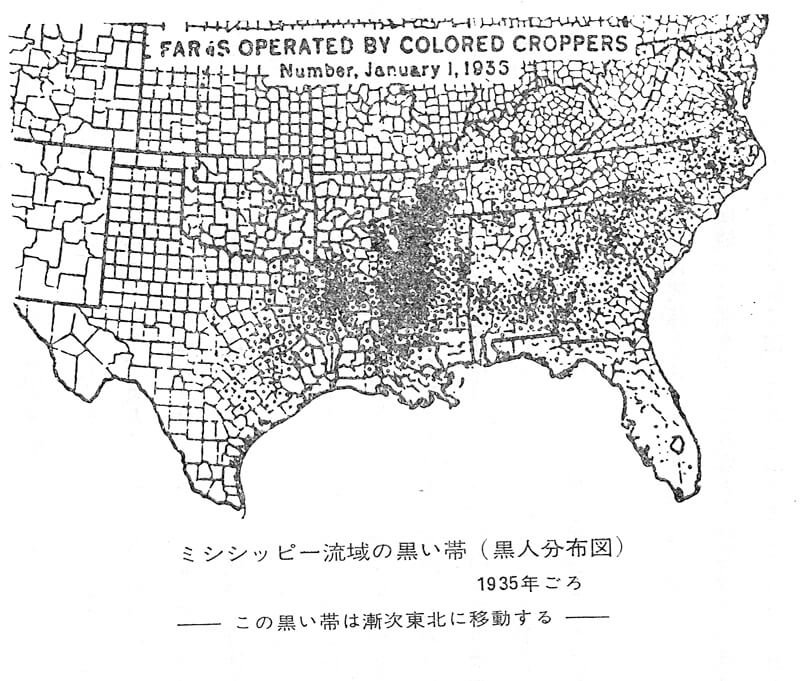 |
| Yoshio Koya, A map of the "Black Belt" around the Mississippi River basin (1935), Tengoku Amerika, Jigoku Amerika, 95. |
To visualize the “threat” of black migration, Koya carried a map of the “Black Belt,” indicated by a concentration of “black dots”—representing the black population—in the Mississippi Delta region. He added a comment to the map that the “Black Belt” was gradually moving northward every year. Koya also found from Woofter’s study that many of the blacks who stayed in the South had shifted job types, indicated by the decrease of day laborers (29%) and the increase of black sharecroppers (58%) and landholders (13%). “All of these black landowners and sharecroppers are descendents of slaves,” Koya wrote, then mistakenly added, “while the ancestors of the present-day white sharecroppers and day laborers were slave owners.”44Kōgakukyū, 126-128; Tengoku, 93-94. Koya used these numbers to support his supposition about the pressing need for white Americans to control the fertility of blacks.
Through his experience and research, Koya detected the fundamental dilemma motivating birth control initiatives in the United States—between an ideal of democracy versus the reality of racial discrimination. Behind any ideal of a “color-blind” society, Koya had perceived the “strong objection among whites to mixture of different blood,” which he justified as a natural biological reaction.45Kōgakukyū, 128-130. White efforts to control the growing black population, he concluded, were a reflection of their negative emotions about living in close physical contact with African Americans.
Mississippi – Tennessee – Kentucky: American Democracy and the Southern Pioneers
Koya was not critical about white US leaders’ attitudes toward black citizens. On the contrary, he was impressed by their “democratic spirit” that led them to provide various public health services and education to this poorest part of the population despite their discriminatory feelings. He was surprised to find that the death rate of blacks in Mississippi (9.1% in 1946), a state known for its low living standards was still below that of Japan (11.9% in 1949). Koya believed that the relatively low death rate was a reflection of the southern states’ efforts in public health. He praised white southerners for taking good care of blacks, even defending them against the criticism from northern liberals about racial segregation in the South. He argued that black population growth occurred by and large as a result of white efforts’ to improve the living standards of blacks.46There is a striking similarity between Koya’s thinking and the logic of US population control advocates in Asia, who claimed that their earlier public health endeavors to reduce death rates there “were contributing to the creation of this population problem.” See, for example, statement by Marshall C. Balfour in National Academy of Sciences, “Conference on Population Problems.”He thought the southern states had gracefully handled the population problem by educating blacks about family planning and providing them with modern contraceptive methods. He concluded that the resulting birth rate of blacks in Mississippi (28.2% in 1946) was lower than that of the Japanese (33.9% in 1949).47Tengoku, 87-89. What Koya did not mention, however, was that the birth rate in Japan in 1946 was actually 23.6%, lower than the number he cited for blacks in Mississippi the same year, and that the numbers were already starting to fall after peaking at 34.6% in 1947.
Koya further speculated that the generosity of white Americans was reflected in the “happy and complacent” attitude that he perceived in the lives of blacks. He believed that blacks were innately “a racial group content to live an easy life despite their poverty.” Of course there were exceptions, he noted, but those blacks had moved to the North or the West, some of them even becoming professionals. He felt that the majority of blacks who stayed in the South were enjoying “a very primitive life” that many of those living a modern life had lost in the process of civilization. As he crossed the cotton fields and wheat fields, he saw many small shacks lived in by blacks. “Even though they know they could live in better houses if they worked harder,” Koya commented, “it seems that they do not find it worth the trouble.”48Tengoku, 94-96. As part of his research on “race biology” during the war years, Koya had investigated the scientific studies on race by Western eugenicists, including the notorious American Charles Davenport.49Minzoku Seibutsugaku, 73; Kokudo, 137-138. In accepting racist and biologically-determinist theories about the “nature” of African Americans, Koya concluded that white Americans provided the black population with more than they actually desired. He contended that it was their own choice, not the perpetuation of social injustice, that accounted for their low status.
Koya’s identification with white American leaders is evident in the images carried during his travel accounts. Most of them were distant, bird’s-eye views of cities and buildings, illustrating American modernity and orderliness: a photograph of downtown New Orleans and his drawing of downtown Jackson.
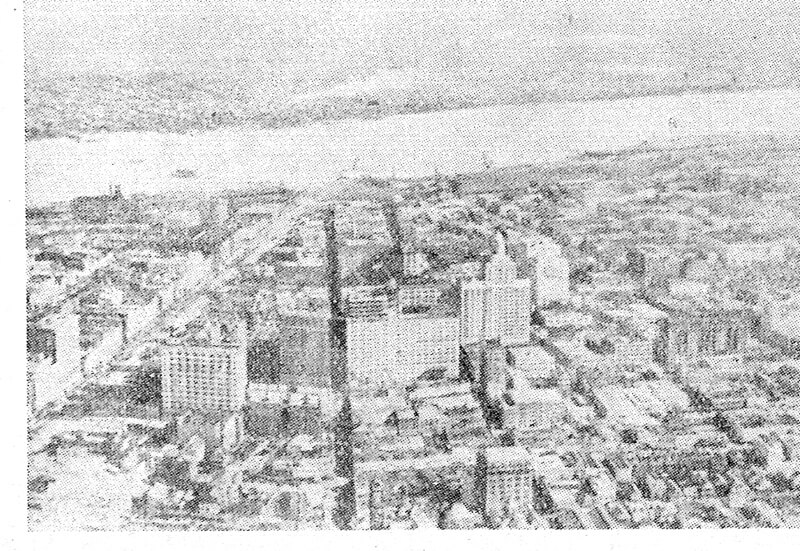 | 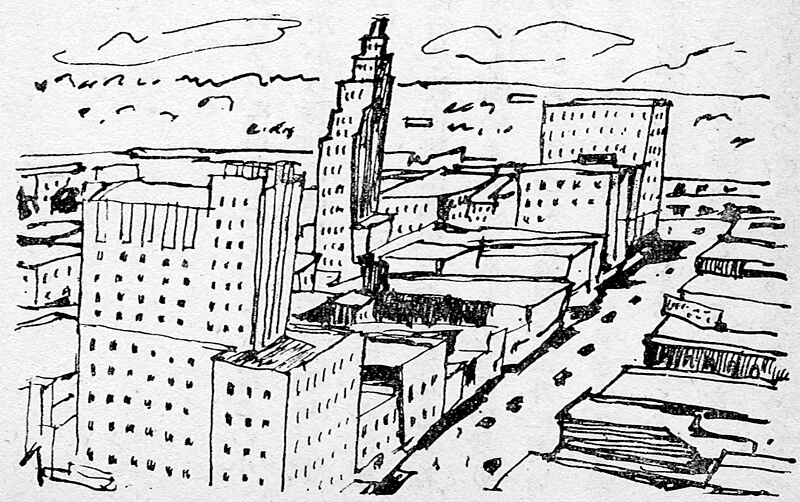 |
| Yoshio Koya, Photograph of the Mississippi River and New Orleans, in Tengoku Amerika, Jigoku Amerika, 68. | Yoshio Koya, Drawing of Downtown Jackson, Mississippi, in Tengoku Amerika, Jigoku Amerika, 82. |
Koya’s drawing of a Mardi Gras parade in New Orleans showed the event and the crowd from a window of a building. Despite his description of the diversity of races in the parade, he reduced the people in the picture to indistinguishable dots.The only image with “real” people that Koya carried was a photograph taken at a Kiwanis Club gathering among white local elites in Los Angeles, before heading to the southern states.
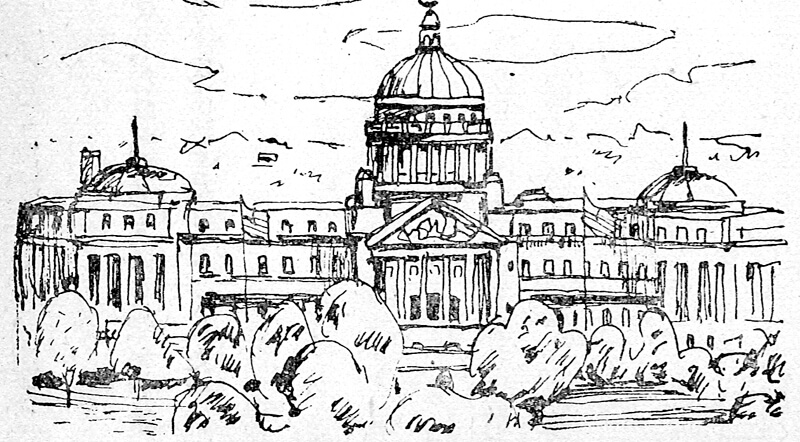 | 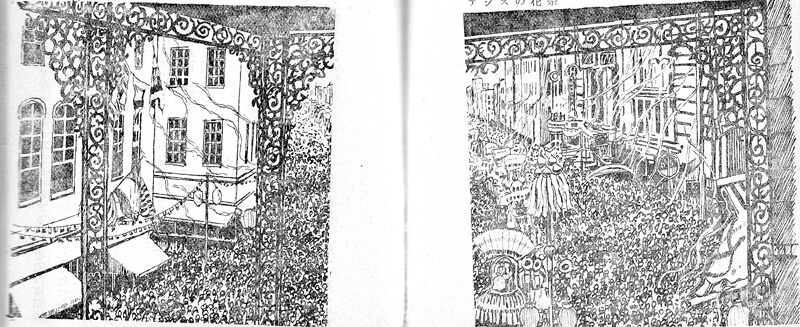 |
| Yoshio Koya, Jackson, State Capitol Building, in Tengoku Amerika, Jigoku Amerika, 85. | Yoshio Koya, Carnival parade in New Orleans, in Tengoku Amerika, Jigoku Amerika, 72-73. |
These illustrations and photographs together indicate Koya’s own relationship to US society and his approach to social issues as a public health leader; he represented a view of a national leader interested in bringing order and modernity to society. While Koya confessed that the uniformity of the buildings’ architecture was confusing—and even boring—for a traveler, because it made all the cities he visited appear the same, he certainly saw it as a measurement of modernity and progress. When one of his hosts took Koya in front of the building where the state’s health department was located, the host proudly asked him, “Isn’t this a magnificent building? Does Japan have anything like this?” Koya was surprised by the man’s “ignorance about [the progress of] Japan.” In other words, he felt pride that the state of Japanese science and technology was not as backward as Americans assumed, if not more advanced than the level of the United States at the time.50Tengoku, 84-85.
 |
| Photographer unknown, Kiwanis Club meeting in Sun Valley, Los Angeles, in Tengoku Amerika, Jigoku Amerika, 59. |
The images suggest how Koya's top-down approach to social problems reduced ordinary citizens to indistinguishable “subjects” and data. Despite spending weeks in rural Mississippi, Koya provides few details of his experience among the black population, except for his descriptions of public health activities in Hattiesburg. There are no descriptions of any interactions with blacks; he seems to have merely observed them from a distance and interpreted them from the perspectives of white officials and scholars. Most of his observations came from the window of a vehicle that carried him between his primary white destinations.
Koya’s description of his rural experience was devoted almost exclusively to his admiration for the hospitality and generosity of his white hosts. He excitedly imagined himself among a modern-day version of rustic life in the “frontiers.” As a Christian, he was deeply impressed by their professions of democracy and Christian love. He found that his main destination, Mississippi—whose capital Jackson was named for Andrew Jackson—was an ideal place to learn this “American spirit.”51Kōgakukyū, 122. The rural America he saw with yearning eyes was not that of of blacks or poor whites; it was his own imaginary world inhabited by wealthy white southerners.
One major character portrayed quite sympathetically in Koya's accounts was the old director of the health center in Hattiesburg, referred to as “Mr. Blackwelder” and described as a man with “fortitude and a beautiful personality—unique qualities of the descendents of the southern frontier people.” Koya stayed at Blackwelder’s place for a week while he visited black communities in the area. One day, as they rested in a field, Blackwelder told Koya: “I have been doing this for thirty years. I know I’d be able to earn a lot of money if I quit this job and start my own practice. But I cannot do that because I realize how important my work at the health center is for our community.” When he examined a skinny white boy at a local school, Blackwelder joked, “We should take good care of him, too. You never know; he might become our future president.”52Tengoku, 97-99.
Koya was also moved by the “frontier spirit” in Tennessee and Kentucky. The opportunity to visit these states came unexpectedly when he had trouble finding a hotel room for the last few nights in Jackson. After returning from rural sites in Mississippi, Koya found the hotel fully booked. He decided to take a short trip to Nashville to see an acquaintance, Robert Nail, a church elder and school principal. Nail took Koya to his hometown of Allensville in Kentucky, where his family welcomed the special guest from Japan. Koya felt “at home” sharing this visit with his friend's family, landowners, whom he compared to “the wealthy farmers in Tsarist Russia that [he] often read in novels.” Such families, Koya wrote, represented the “backbone of America.”53Tengoku, 104-112, 131; Kōgakukyū,141.
In Nashville Koya recalled an incident in which he felt racial hatred directed toward the Japanese. Randomly entering a movie theater, he saw a Japanese soldier on the screen in a movie about World War II. The soldier was torturing an American POW. Koya was shocked, writing, “The American viewers must imagine the Japanese to be such a violent race.” He had left the theater and was wandering aimlessly in the dark when a man came up and asked whether he was Japanese. The man told him that he had been in Okinawa during the war and that he was happy to see a Japanese person again.54Kōgakukyū, 134-5. Koya believed that while the war had created negative images between Japanese and Westerners, Japan's leaders had been treated with respect. As the historian Yukiko Koshiro observes, many postwar Japanese leaders entertained the idea of Japanese as “honorary whites”—racially Asian, but culturally closer to Westerners.55Yukiko Koshiro, Trans-Pacific Racisms and the U.S. Occupation of Japan (New York: Columbia University Press, 1999). The remainder of Koya's southern journey further confirms his identification with white leaders, especially those in state offices and universities.
Georgia – North Carolina: State Initiatives in Public Health
Koya passed a week in Atlanta, Georgia, attending seminars at the Communicable Disease Center (CDC, now the Centers for Disease Control and Prevention) of the US Public Health Service.56The CDC was originally founded in 1942 as the Office of National Defense Malaria Control Activities. Atlanta was chosen as the location because malaria was considered endemic in the US South. The organization was renamed as “Communicable Disease Center” in 1946, and underwent several name changes before adopting its present title “Centers for Disease Control and Prevention” in 1992. The CDC now operates under the Public Health Service of the Department of Health and Human Services. While the topics of the lectures, such as pest control and cancer prevention campaigns, did not directly relate to his expertise, Koya was keen to learn about the organization and operation of state public health services. He was impressed by the CDC’s goal of “applying new scientific technologies and information to governmental services.”57Tengoku, 115; Kōgakukyū, 146-147. While much of Koya’s wartime research on how to improve Japanese racial fitness did not go beyond desk theory, in the postwar period, with the help of the US Occupation officials and other birth control supporters, he would immediately apply the “new technologies” of contraception to field trials and programs. Koya appreciated the efficiency and practicality of these US governmental services.
In North Carolina, his final destination in the South, Koya talked with scholars and officials specializing in population studies and public health. In Chapel Hill, Koya met with Harold J. Magnuson, a scientist famous for his syphilis experiments. Rupert B. Vance, regional geographer and authority on population demography, happened to be out of office during Koya’s visit. In Raleigh, Koya visited George Cooper, who with the help of Clarence Gamble, had incorporated an emphasis on black population control into the state’s public health services. Over the age of seventy, he was still working at the state’s public health department. Koya was excited to have an in-depth conversation about how to launch birth control programs in Japan. The two doctors talked about the training courses for medical professionals on contraception offered at the Institute of Public Health (IPH) in Tokyo. Assuming that most women did not voluntarily visit clinics for birth control instruction, Cooper advised that IPH initiatives should be followed by even more active measures such as deploying public health nurses as social case workers, a Gamble strategy. Cooper also suggested that Koya should—in the beginning--offer contraceptive devices and drugs for free. Koya was in complete agreement. Despite the inclusion of birth control instruction in the Eugenic Protection Law, few people—usually urban and educated—visited health clinics for birth control consultation in Japan; the most “needy” people in rural, working-class areas showed little interest.58Tengoku, 126-8; Kōgakukyū, 148-150. For Koya, these rural Japanese with high fertility rates corresponded to African Americans in the South.
Koya’s brief conversation with Cooper, whom he credited for “set[ting] up [his] mind about family planning,” had a crucial impact on population policies in postwar Japan.59Williams, 211. Koya would incorporate many of Cooper’s suggestions into legal reforms and birth control programs: specifically, the strategies of directly sending visiting nurses and providing easy and simple contraceptive devices for free to poor families. Cooper likewise counted on Koya to make these birth control reforms in Japan on a national level through official avenues, whereas in the United States, at least until the 1950s, birth control programs lacked uniformity, remained underfuned, and failed to expand beyond the South due to various political pressures and cultural opposition.
"Pioneering in Family Planning"
Koya wasted no time carrying out what he learned in the US South. While many Japanese leaders were alarmed at the growing population in a devastated postwar economy, there were others who continued to support the government’s wartime pronatalist position, which equated national power (military) to population size (number of soldiers). SCAP’s position of “benevolent neutrality” on population issues further deterred the Japanese government from allocating any significant budget for birth control programs. Major US non-governmental organizations, such as the Rockefeller and the Ford Foundations, which later played vital roles in global population control, were hesitant to openly engage this controversial field.
Personal donations from Clarence Gamble first bankrolled Koya’s project. Gamble found the opportunity to extend his birth control cause to Japan in 1949 after his conversation with Frank W. Notestein, director of the Princeton University Office of Population Research. Notestein had headed the Rockefeller Foundation’s 1948 reconnaissance mission in Asia, starting with Japan, to assess population questions. Gamble contacted SCAP officials to find ways to finance birth control programs in Japan and was soon introduced to Koya.60Williams, 207, 211. Venturing into population control in Japan was a continuation of Gamble’s prewar activities in the US South, but (excepting Puerto Rico) it also represented his first project abroad.
In September 1950, with Gamble’s assistance, Koya started the “Three Village Study,” designating three model villages, where he offered free samples of different methods of contraception to find out which method was most effective and easiest to use. In late 1951 Koya assigned public health nurses and midwives to the role of case workers to disseminate birth control information and techniques in rural areas.61Y. Koya, “The New Population Phenomenon and Its Countermeasures: A Study of Three Rural Villages,” Japanese Medical Journal (Nov. 24, 1951). The Three Village Study became the most successful birth control program organized among a rural population before the advent and spread of more “modern” methods of contraception such as the IUD and the pill. Koya published his studies in academic journals in the United States and Japan, including the Milbank Memorial Quarterly and Eugenical News.62See for example, Koya, “The Program for Family Planning in Japan,” Eugenical News 38, n. 1 (March 1953): 1-3; “A Study of Induced Abortion in Japan and Its Significance,” The Milbank Memorial Fund Quarterly (MMFQ) 32, n. 3 (July 1954): 282-293; “A Survey of Health and Demographic Aspects of Reported Female Sterilization in Four Health Centers of Shizuoka Prefecture, Japan,” MMFQ 33, n. 4 (October 1955): 368-392; “Five-Year Experiments on Family Planning among Coal Miners in Joban, Japan,” Population Studies 13, n. 2 (November 1959): 157-163. With the support of the Population Council, he compiled and published his findings in 1963 as Pioneering in Family Planning: A Collection of Papers on the Family Planning Programs and Research Conducted in Japan.
The significance of Koya’s experiments among leaders in family planning was not measured only by the lowered number of births; what mattered most were the people his programs targeted. Koya’s work received favorable responses from US and British eugenicists and demographers, including C. P. Blacker, Irene Taeuber, and Dorothy Nortman.63Ironically, C. P. Blacker advocated for population policies in developing countries out of eugenic concerns about having “too many Asians, too many Arabs” in the world. He believed that the Western leaders in global population control needed to use a strategy he called “crypto-eugenics”—fulfilling the aims of eugenics without mentioning the word. Matthew James Connelly, Fetal Misconception: The Struggle to Control World Population (Cambridge, MA: Harvard University Press, 2008), 163. Nortman, in her review of Koya’s Pioneering in Family Planning, claimed that that his experiments proved that even “marginal people”—rural people, coal miner workers, and people on public relief—could be turned into “contraceptors” in a relatively short period of time through field trials of cheap, simple, and suitable methods of contraception. His results indicated that the “large masses of illiterate people” in the rest of Asia could “restore the balance between births and deaths before achieving Japan’s degree of literacy, economic development, urbanization, and modernization [emphasis added].”64Dorothy Nortman, introductory review to Koya, Pioneering in Family Planning: A Collection of Papers on the Family Planning Programs and Research Conducted in Japan (Tokyo: Japan Medical Publishers, 1963). Before the war, most demographers agreed that birth rates would naturally decline after transitioning from a predominantly agricultural state to an industrialized, urban society. Faced with the “urgency” of overpopulation in Asia, however, Western demographers revised this “transition theory” by arguing that state-sponsored, top-down birth control programs could bring about a rapid decline in birth rates without awaiting the long and tedious process of industrialization. See Simon Szreter, “The Idea of Demographic Transition and the Study of Fertility Change: A Critical Intellectual History,” Population and Development Review 19, no. 4 (1993): 659-701. Nortman’s comments represented the general approach of US leaders to global population control in Third World countries in the decades that followed: education, economic development, and the promotion of health were all secondary to the perceived urgency to bring down birth rates by disseminating cheap and easy contraceptives. The same eugenic and economic concerns that Koya perceived among white leaders in the South also motivated the US-led population programs abroad. Koya’s travel accounts reveal the hypocrisy and racism behind birth control programs in the US South, programs expressive of eugenic ideology that he reproduced in Japan.
Conclusion
Population control in Japan in the early post-World War II years, represented by Yoshio Koya’s activities, served as a testing ground for mass-scale, state-sponsored programs initiated by the United States in Third World countries in the following decades. Japan’s seeming success in bringing down birth rates and achieving peaceful recovery after the war helped establish the efficacy of such programs. The publicity about “successful” population control projects abroad, in turn, brought renewed attention to birth control programs in the US South. In 1960, Charlotte, North Carolina inaugurated its birth control program under the state’s public welfare department; similar experiments followed across the country, but especially in the South, as part of the national “War on Poverty” campaign.65For description of successful federal-funded contraceptive programs in North Carolina and Louisiana led by social welfare agents and health officials, see Schoen, 63-70; Thomas Littlewood, The Politics of Population Control (Notre Dame, IN.: University of Notre Dame Press, 1977), 88-106. The increased funding expanded poor women’s access to birth control services, but at the same time increased the potential for abuse and coercion. Some health officials took advantage of new funding sources and used them to test new, but often unapproved and dangerous, contraceptive devices. By focusing on battling poverty, birth control projects diverted public attention from issues of women’s health and rights.66Sterilization abuses occurred in the 1970s and 1980s in many southern states, including Mississippi and North Carolina. The governors of Virginia, Oregon, North Carolina, South Carolina, and California expressed public apologies to these abuses in 2002-2003. Semi-coercive birth control programs for racial minorities and the poor through public relief and welfare continued in this region in the 1990s, as evidenced by the marketing of new contraceptive hormones for temporary sterilization such as Norplant and Depo-Provera. See Larson, 119-169; Schoen, 75-138; Littlewood, 79-132; Nancy Ordover, American Eugenics: Race, Queer Anatomy, and the Science of Nationalism (Minneapolis: University of Minnesota Press, 2003), 179-194.
Through its focus on Yoshio Koya, this essay has traced some of the ideological roots of these global population control projects—which neglected the needs and concerns of actual women—to public health programs in the US southern states. Public officials, foundation executives, and birth control advocates frequently shared a eugenic logic that resulted in the transplanting of birth control experiments in the rural South to national- and international-scale population control projects in Japan and elsewhere. By testing the techniques and strategies of birth control abroad as a form of development aid, US advocates of birth control and population control were able to evade the moral and political opposition at home. The consequent development of birth control methods and expansion of funding brought reproductive freedom to many, but often at the expense of the reproductive rights of others, especially economically and racially marginalized women.
]]>Introduction
The city of Atlanta has a reputation of promise and opportunity in the American ummah (the Islamic brotherhood and sisterhood), particularly for African American Muslims. Indeed, many leave cities such as Chicago and Philadelphia to join the Atlanta ummah, known for its African American Muslim professionals, its progressive African American mosque communities, and its Muslim private schools.
The educated class of African American Muslims in Atlanta makes it an interesting and important city to analyze in a study of ethnic relations in the American ummah. Given the popular image of a substantial number of prosperous black Atlantans, we might imagine that African American Muslims are more likely to live in Atlanta than in Chicago in the same neighborhoods or share the same professional networks with affluent South Asian Muslims. To a slight degree, they are. But African American and South Asian Muslims in Atlanta are more segregated than integrated, and much of this is attributed to the city's history of racial residential patterns. As it did decades ago, race more than class still determines where African Americans live in Atlanta.
As Atlanta's black population grew in the 1950s and 1960s, city officials became concerned about "the prospect of a Negro majority in the city."1In May 1966, "the Atlanta Journal noted that 'civic leaders have registered concern that the non-white population inside city limits is increasing so rapidly that Negroes may constitute a majority within perhaps six years. To civic leaders the prospect of a Negro majority in the city holds serious sociological and political implications.'" See Ronald H. Bayor, Race and the Shaping of Twentieth-Century Atlanta (Chapel Hill: University of North Carolina Press, 1996), 87. In response, they pushed African Americans into concentrated areas and situated roads and highways as barriers to the north neighborhoods into which whites fled. Consequently, Atlanta has since developed into a metropolis of "two separate cities": its north side, predominantly white and thriving with new businesses, and its south side, majority black and struggling for economic gains. Although income does play a role in residential patterns, it is more in terms of dividing poor and middle-class blacks than integrating blacks and whites.2Larry Keating, Atlanta: Race, Class, and Urban Expansion (Philadelphia: Temple University Press, 2001), 8.
The widening gap between poor and middle-class blacks reveals the persistence of race and class inequalities in the city. In 2004, Atlanta's poverty rate was 27.8 percent, placing it among the five US cities with the highest poverty rates. Moreover, its child poverty rate was 48.1 percent, leading all other cities. The overwhelming majority of its poor residents are African American; Atlanta's black poverty rate was 35 percent in the 1990s.3US Census Bureau, "Places within Unites States: R1701. Percent of People below Poverty Level in the Past 12 Months (For Whom Poverty Status is Determined): 2004," http://factfinder.census.gov/ (accessed July 16, 2007); US Census Bureau, "Places within the United States: R1701. Percent of Children under 18 Years Below Poverty Level in the Past 12 Months (For Whom Poverty Status is Determined): 2004," http://factfinder.census.gov/ (accessed July 16, 2007); Mark McArdle, "Poverty, Concentrated Poverty, and Urban Areas," National Urban League Policy Institute, May 19, 2006, http://www.nul.org/publications/policyinstitute/factsheet/PovertyFactSheet.doc (accessed July 16, 2007); Patricia J. Mays, "Middle Class Blacks Head to Atlanta," Associated Press, December 7, 1998, http://www.coax.net/people/lwf/ATL.HTM (accessed July 16, 2007); David L. Sjoquist, "The Atlanta Paradox: Introduction," in The Atlanta Paradox: A Volume in the Multi-City Study of Urban Inequality, ed. David L. Sjoquist (New York: Russell Sage, 2000), 2. The mismatch between the alarming poverty rates and the perceptions of Atlanta as a thriving city for African Americans reflects what social scientists call the Atlanta paradox: "the poverty of its public housing versus the sprawling riches of its suburbs." Even though African Americans have made major economic advancements in the city, whites as a whole have made far more, and many African Americans have made no gains in education or employment. Black unemployment is more than three times higher than that of whites, with the removal of jobs from African American areas partly contributing to this disparity.4Sjoquist, "The Atlanta Paradox," 1; Keating, Atlanta, 40, 34.
Increasingly, African Americans in Atlanta live in the suburbs and, in recent years, the north suburbs. In 1980, 82 percent of Atlanta's black population lived on the city's south side or in the black south suburbs, and only 9.4 percent lived in the north suburbs. Then, in the 1990s, Atlanta's residential patterns noticeably shifted. By 1996 the percentage of African Americans living in the north suburbs of Atlanta had risen to 25.2 percent.5Truman A. Hartshorn and Keith R. Ihlanfeldt, "Growth and Change in Metropolitan Atlanta," in The Atlanta Paradox: A Volume in the Multi-City Study of Urban Inequality, ed. David L. Sjoquist (New York: Russell Sage, 2000), 38–39. In Atlanta, high-income African Americans have a greater, though still limited, access to residence in traditionally white suburbs. In 2000, Atlanta ranked first of all US metropolises in the percentage (87.2 percent) of African American households with annual incomes above $40,000 living in suburbs.6Marc V. Levine, "The Two Milwaukees: Separate and Unequal," Center for Economic Development, University of Wisconsin-Milwaukee, April 2003, http://www.uwm.edu/Dept/CED/pdf/two_milwaukee.pdf (accessed July 18, 2007). Still, the outstanding majority of African American suburbanization in Atlanta occurs in majority-black neighborhoods.
Ethnic Spaces and Flows in the Atlanta Ummah
Atlanta's African American and South Asian Muslims tend to live and worship in separate spaces. But important features of the Atlanta ummah landscape have facilitated some encounters and interactions between the two groups: (1) the close proximity between Atlanta's major immigrant mosque and the city's foremost African American mosques and neighborhoods and (2) the growing number of suburban mosques in neighborhoods in which both African Americans and South Asians live. Mosques stand out as the most vital nodes of Muslim networks in the Atlanta ummah. Mosque communities, both urban and suburban, provide a helpful window into understanding how Atlanta Muslims negotiate ethnic spaces.
 |
Ethnic spaces in the Atlanta ummah reflect the Atlanta paradox. A substantial number of African American Muslims, perhaps more than 50 percent, are middle income and live in suburbs throughout the city. However, the two oldest African American mosques in Atlanta, the Atlanta Masjid of Al-Islam and the Community Masjid of Atlanta, are located in the south inner city, in areas known for black poverty. More recently, though, these areas have been experiencing economic growth as a result of urban renewal and gentrification.
The Atlanta Masjid of Al-Islam is the city's largest congregation of African American Muslims. My childhood mosque, the Atlanta Masjid, was originally a Nation of Islam temple. In 1974, the Black Muslims bought a funeral home and transformed it into a temple and, a year later, into a WDM-affiliated [W.D. Mohammed] mosque, replacing pews with green carpet. Located southeast of downtown Atlanta, the new mosque stood half a mile from the East Lake Meadows public-housing project, a community so rampant with crime, drugs, and violence that it became known as "Little Vietnam." In the early 1990s, the Atlanta Masjid, determined to help revitalize the area through Muslim community life, purchased and renovated property on an abandoned lot across form East Lake Meadows, moving our mosque site even closer to Little Vietnam. I remember walking during my teen years through the streets of East Lake Meadows with community members, holding signs with slogans against violence and drugs. A few years after we embarked on this project, Tom Cousins, a white local real estate developer and philanthropist, led plans for major urban renewal in the area, which led to the demolition of East Lake Meadows in 1995 and the construction of quality mixed-income town homes, apartments, a YMCA, and a charter school. Urban renewal and gentrification have substantially changed the racial landscape of East Atlanta as more whites move into the area, displacing many of the original residents.
As Atlanta Masjid Muslims find themselves in the midst of a gentrified community after initiating their own efforts to transform the black inner city, so have members of the second oldest African American Atlanta mosque. The Community Masjid of Atlanta, established in 1976, sits southwest of downtown, eight miles west of the Atlanta Masjid, in an area known as the West End. As an upwardly mobile community, West End Muslims also live the paradox of economic growth alongside urban blight in Atlanta. As Nadim Ali, a committed member of the Community Masjid mosque, told me, "We live in the West End because we chose to live there. I could have easily lived somewhere in the suburbs, but it is best to go to the depressed areas to bring Islam."
The way in which a substantial number of middle-income African American Muslims remain connected to mosques in inner-city areas and to the struggles of surrounding neighborhoods reflects the Atlanta paradox of upward mobility against sustained poverty. The persistence of race and class inequalities in Atlanta is evident also in the tendency of South Asian Muslims to have higher incomes than middle-income African Americans.7In his study of Asian Indian immigrants in Atlanta in the 1980s, John Fenton found that Atlanta Indians reported incomes "much higher" than the avergae ($24,993) for all Indian families in the United States in the 1980s. During a time when the median income for American families was estimated as $19,917 (US Census 1980), 52 percent of the Asian Indians in his survey "reported annual family incomes of $40,000 or more, and 32.8 percent stated their income to be $50,000 or more. Nationally, the Census indicated that only 11.3 percent of Asian Indians earn over $50,000; but in Atlanta 12.4 percent in the survey reported family incomes over $75,000." The author notes that these figures are remarkable, especially given that "almost half had been in America five years or less at the time of the Census." See John Y. Fenton, Transplanting Religious Traditions: Asian Indians in America (New York: Praeger, 1988), 31. The majority of South Asians live in Atlanta's white north suburbs, where African American Muslims have begun to move only since the 1990s. The major South Asian mosque in Atlanta, Al-Farooq Masjid, is located downtown, less than nine miles from both the Atlanta Masjid and the Community Masjid. Although majority South Asian, Al-Farooq mosque officials boast that Muslims from more than fifty countries around the world worship there. The close proximity of all three communities signifies the possibility for African American and immigrant interaction against the backdrop of race and class divisions.
The first majority-immigrant mosque in Atlanta, Al-Farooq Masjid, was established in 1980 in a neighborhood called Home Park, not far from the campus of the Georgia Institute of Technology, which a number of Muslim immigrants attended. Many of them lived in the city, near campus, but by the late 1980s, most of these families began moving outside the central city to Atlanta suburbs.8"Indians who have been in America for some years tend to change residences from apartments in central Atlanta to homes in suburbia. In 1988 these families typically live in very new homes in new developments outside the interstate perimeter highway." Fenton,Transplanting Religious Traditions, 32. At the same time, new immigrant families were moving to the Atlanta region, from places such as Chicago and New York, and also buying homes in the suburbs. To keep pace with this suburban growth, various immigrant mosques have been established in the north suburbs since the 1990s. Yet many suburban South Asian Muslims still have strong ties with Al-Farooq as "the first masjid," as one Indian woman described it, and continue to attend there on occasion, particularly for 'eid prayers and to maintain ties with family friends. For others with no mosque in their suburban neighborhood, Al-Farooq remains the closest.9 These two trends support the 2000 American mosque survey findings: "Approximately 40% of mosque participants travel more than 15 minutes from their home to get to the mosque." Ihsan Bagby, Paul M. Perl, and Bryan T. Froehle, The Mosque in America: A National Portrait, a Report from the Mosque Study Project (Washington DC: Council on American-Islamic Relations, 2001), 16.
 |
Urban Atlanta will remain a major center for suburban South Asian Muslims, owing to Al-Farooq's "New Masjid Project." Since demolishing the original Al-Farooq building in November 2003, builders have begun constructing a grand mosque to cost $5.8 million. The Al-Farooq New Masjid Project is the first Atlanta mosque built on this scale, complete with a main floor, a basement, a mezzanine, a parking deck, a musalla (prayer area), and a library. The grand-scale construction of Al-Farooq comes at the same time that the city of Atlanta has opened one of its finest developments, Atlantic Station, only blocks away from the Al-Farooq site. The finished mosque, with its prominent golden dome and minarets, will fit in perfectly with Atlanta's upscale complex of shops, offices, and townhouses, attracting some of the city's wealthiest residents. Indeed the urban renewal in all three major urban mosque locations indicates the flow of various racial, ethnic, and class groups in and around ummah spaces and represents the continued possibility for an urban ummah across ethnic lines.
Mosques as Ethnic and Gendered Spaces
I interviewed women connected with several Atlanta mosques, but I spent most of my time at the Atlanta Masjid and Masjid Rahmah, a north suburban mosque established in the 1990s.10Masjid Rahmah is a pseudonym. During the month of Ramadan, I went to one of these two mosques almost every night for iftar and night prayers. I focused on the Atlanta Masjid because it is the largest African American mosque, and Masjid Rahmah because it is representative of the suburban South Asian mosque experience.
Mosques are not only ethnic spaces, they are also gendered spaces. Men greatly outnumber women in most American mosques because, according to majority fiqh rulings, only men are obligated to attend the Friday congregational prayer (jum'ah). But the jum'ah prayer is only one index of women's mosque attendance.
Mosques also are gendered spaces in the way in which men and women are separated within them. Men and women worship in separate sections to avoid physical contact between male and female bodies, as congregational prayer requires that worshipers stand, bow, and prostrate in tight lines as if they were one unit. Arms, thighs, and feet necessarily touch, a condition of prayer expected to engender a sense of solidarity among worshippers. This symbol of unity, however, could easily cause discomfort if genders were mixed in the prayer lines, women's thighs touching those of male strangers. Many Muslim women and men offer this rationale in their defense of gender separation.
But on the question of how mosques should observe gender segregation, American Muslim perspectives vary, as do those of the mosques that they attend. In some mosques, men and women share the same prayer hall without any partition or curtain dividing them. In this case, women usually pray in a section behind the men. Most hadith reports indicate this as the gender practice that the Prophet Muhammed endorsed in his own mosque in Medina. Many mosque participants support this practice not only because of the reported sunnah but also because they view a separate women's section in the rear as the most logical gender arrangement. Instead of viewing women's position in the rear as a symbol of men's supremacy over women, as many non-Muslim visitors interpret it, many Muslim women prefer this arrangement because it prevents men from gazing at their elevated rear parts when they prostrate.
A second arrangement, however, removes this appearance of gender hierarchy. In this less common setup, men and women pray alongside each other, men on one side of a curtain or divider and women on the other side. Women occupy the front, middle and rear prayer rows on their side, as men do on theirs. Supporters of women's rights increasingly advocate these two possibilities: (1) women worshipping behind men in a shared prayer space or (2) women praying next to men in an adjacent section. A minority supports a third possibility, mixed-gender prayer lines, but none of the women I interviewed expressed a desire for this system.
Makeshift mosques like stores, office spaces, and houses converted into mosques find it especially difficult to accommodate worshipers. The smaller women's presence means that women are relegated to the smaller areas, and in makeshift mosques, this often means small corners or bedrooms. But even in the plans for newly designed mosques, built from the ground up, smaller spaces continue to be set aside for women. On the one hand, it makes sense to allocate less space to women if they are not attending the mosque. On the other, designating less space for women reinforces the expectation that they not attend, marginalizes them so that they will not attend, and perpetuates the excuse that they do not attend.
American Muslim women, however, are making it harder for mosque officials to use the "sisters do not attend" excuse. At the first jum'ah prayer of a newly built mosque in Atlanta, women overfilled their prayer space. It was one-fourth the size of the men's . Women are reclaiming their place in mosques, including times besides jum'ah.11When we account for women's mosque attendance beyond jum'ah, the percentage of women's participation is higher than the jum'ah percentage. According to the American mosque study, 13 percent ofjum'ah participants in immigrant mosques are women; however, women make up 23 percent of total participants "associated" with the mosque. In WDM mosques, women represent 24 percent of Friday worshippers but 36 percent of participants associated with the mosque. In non-WDM African American mosques, they make up 17 percent of Friday participants but 25 percent of overall mosque participants. Actual women's participation is possibly higher given that criteria for "association and how survey respondents measured it are unclear. Bagby, "A Profile of African-American Masjids," 216. They attend the mosque not only for worship but also for social networks and "for pedagogy and learning." They serve as "teachers, study group leaders, fund raisers, community leaders, social activists, and active participants in mosque worship."12The increase in women's mosque participation is not limited to the United States: "In recent times, Muslim women in a variety of contexts and settings are engaged in redefining their roles and presence in mosque based Islam." Shampa Mazumadar and Sanjoy Mazumadar, "In Mosques and Shrines: Women's Agency in Public Sacred Space." Journal of Ritual Studies 16, no. 2 (2002), 169; also see Saba Mahmood,Politics of Piety: The Islamic Revival and the Feminist Subject(Princeton, NJ: Princeton University Press, 2005). By choosing to participate in public worship, women must negotiate both ethnic spaces and the gender practices that often mark mosques as immigrant or African American.
Although women do not dominate either mosque spaces or the board meetings that determine their layout, they have increasingly asserted themselves in mosques, negotiating and transforming gender arrangements and norms. In considering the ways in which Muslim women in Atlanta carry out Islamic feminist practices as they negotiate ethnic spaces, we must continue to keep open our notions of agency, since women assert themselves in the context of multiple speaking positions. As they move and act based on various experiences, desires, and intentions, American Muslim women negotiate several manifestations of gender lines that compromise their full participation in the ummah and not just the mosque partition but also gender norms related to dress, voice, marital roles and responsibilities, divorce, and women's work.
About the Author
Jamillah Karim is associate professor of religious studies at Spelman College in Atlanta. American Muslim Women: Negotiating Race, Class, and Gender within the Ummah (New York University Press, 2009) is her first book. This essay is abridged from chapter five "Negotiating Gender Lines: Women's Movements across Atlanta Mosques". Dr. Karim's current research involves second-generation African American Muslims.
]]> ]]>
]]>In early 1943, John Yoshida escaped from the American concentration camp at Jerome, Arkansas.1This essay is adapted from John Howard, Concentration Camps on the Home Front: Japanese Americans in the House of Jim Crow (Chicago: University of Chicago Press, 2008).
It was easy to get out; people did it all the time. With a day pass, you could catch a bus into town and go shopping. Even without a pass, many Japanese Americans sneaked out to go fishing or to take a walk in the woods. But unlike the shoppers and the hikers, John Yoshida had no intention of coming back.
Some time after noon on Sunday, January 17, he slipped past the barbed wire fence encircling the Jerome camp. Though US military police were positioned atop guard towers and at the gates, outfitted with Springfield rifles, they either failed to notice Yoshida or failed to bother. On Monday afternoon, the father and stepmother of the twenty-three-year-old reported him missing to the authorities. A search of Jerome, as well as the neighboring camp at Rohwer, where Yoshida's sister lived, thirty miles away, yielded nothing. Not a clue.
 |
| John Howard, Cemetery at Rowher, Arkansas, concentration camp, 2004. |
A full day after he'd gone AWOL, John Yoshida had gotten little further than a mile. He eventually made his way to the railroad tracks, focusing on that potent symbol of Japanese American imprisonment. It was by train that Yoshida and his family had been shipped, shades drawn, to this sparsely populated southern flatland—a grueling four-day journey from the Pacific Coast to the banks of the Mississippi River. Shunted into the plywood and tarpaper barracks, they had already encountered a cold winter, a fuel shortage, and the countless indignities of confinement. Worse, the war now seemed protracted, the end far from sight. And in the dead of night, the trains—carrying troops, carrying weapons, carrying perhaps the stuff of a once ordinary life—rolled by, measuring the fitful sleep of the 17,000 at Jerome and Rohwer. The far off chunk-chunk of wheels over tracks grew ever louder and closer, drowning out the crickets, then again faded away, the whistle crying out another hour of captivity.
Of the ten camps built for detaining 120,000 Americans of Japanese descent, these two in Arkansas were set up right alongside the vital supply line. So these trains had become an infuriating reminder of the injustice of incarceration. By day, boys pelted the locomotives and boxcars with rocks. By night, there was no fighting it—except in dreams and in thoughts of release. Now, in the dark morning of 19 January 1943, a train was about to pass. John Yoshida was ready.
Yoshida took off his overcoat and folded it neatly. He took off his hat. He double-checked the folded pieces of paper, then stacked them all next to the tracks. He crouched down as the train approached.
The conductor didn't see him. The big machine passed, as usual, through the dewy Delta cottonfields' pre-dawn haze, continuing on its course without stopping. Meanwhile, the fugitive had laid down on his stomach, perpendicular to the track, and placed his chin just over the first rail. When the train rolled over that stretch, just a mile and a half north of the Jerome, Arkansas, concentration camp, it severed John Yoshida's head from his body.
 |
| John Howard, John Yoshida suicide site, Jerome, Arkansas, 2004. |
Resistance to oppression comprises a range of behaviors, from the seemingly smallest acts of everyday dissent and insubordination to the most weighty deed of all—the taking of one's own life. If we make choices, but not in a world of our choosing, then this one option—taken under what for some were unendurable circumstances—can be interpreted as a final act of will. An important concept in social history, agency is generally conceived as the ability to think, to ascertain available courses of action, and to then act in one's best interest. When that interest runs counter to that of one's captors—who here wanted docile acceptance of incarceration—then the human agency of suicide can constitute struggle and can be equated with resistance.
In the continuing, complex relationship between reportage and resistance in the concentration camps of World War II Arkansas, administrators and their most compliant Japanese American journalists utilized silence to minimize the ill effects, as they saw them, of resistance, to downplay the worst conceivable outcomes of incarceration. They often covered up or ignored acts of defiance, downplayed them in the pages of the camp newspaper. These silences, apparent absences in our historical sources, nonetheless must be assessed and deciphered. In looking back at this time, if we allow a gap in the record to stand in as an absence or a historical lack, then we will have lost the powerful stories of lives lived against the grain of official history, against the will of white oppressors.
About the Author
John Howard teaches American Studies at King's College London and studies photography at Central Saint Martins College of Art. See Prof. Howard's Southern Spaces presentation: "The Same Language: A Memoir by Ben Duncan."
]]>