Introduction
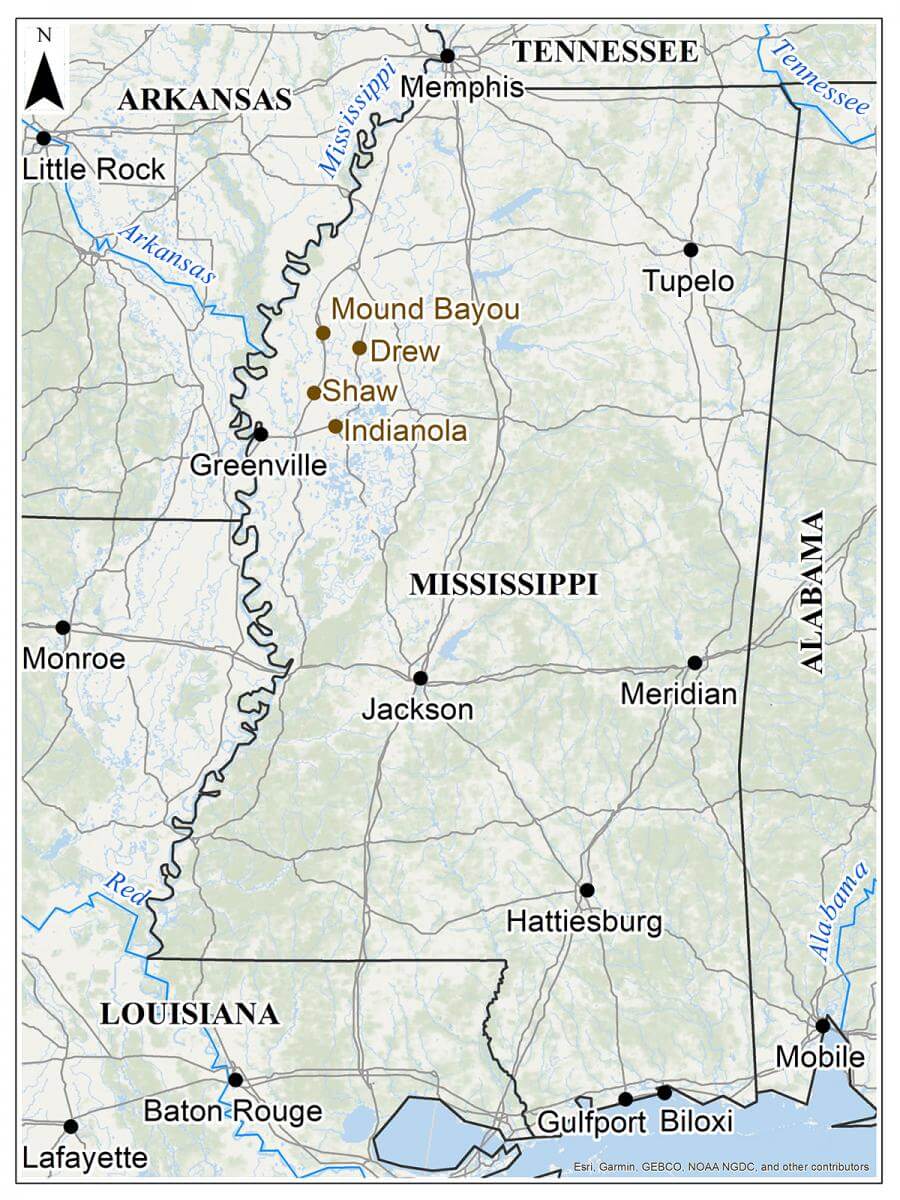
The soil in the Mississippi Delta has everything a planter needs. Rooted in shallow soils, elm, cottonwood, and pecan trees line the hilly landscapes of eastern and southern Mississippi. In the bottomland, where the soil is formed by flooding, the endless striations of light and dark colored sediment create moist, rich, and nutrient-dense dirt in which cash crops like corn, soybeans, and cotton thrive. The Mississippi River and all its branches flow over the boundaries of its own banks, flooding the soil and adding new sediment, giving it new life. On the banks of the Mississippi between Coahoma and Sunflower counties, sits Bolivar County and the city of Mound Bayou. Founded in 1887 near Chickasaw burial grounds by a trio of formerly enslaved cousins, Mound Bayou emerged in the Reconstruction era as a burgeoning example of what African American autonomy could become in the dissolution of slavery.1Joel Nathan Rosen, “Mound Bayou,” Mississippi Encyclopedia, July 11, 2017, https://mississippiencyclopedia.org/entries/mound-bayou/. At its height, Mound Bayou, the “Jewel of the Delta,” housed successful Black businesses, a public school system, and a community-run hospital.2Rosen, “Mound Bayou.” Seen as a safe haven from the physical and political interference of white people and power structures, Mound Bayou fought to maintain its autonomy, eventually succumbing to mismanagement and political in-fighting. By the 1960s, while attention was on the southern United States in the fight for civil rights and political enfranchisement, Mound Bayou, like many other Black towns in the twentieth century, languished under the threat of anti-Black, state-sanctioned violence and economic inequity. While historians often place voting rights at the heart of the civil rights movement, in Mississippi, for Black farmers, sharecroppers, and their families, the gut of the matter was food.
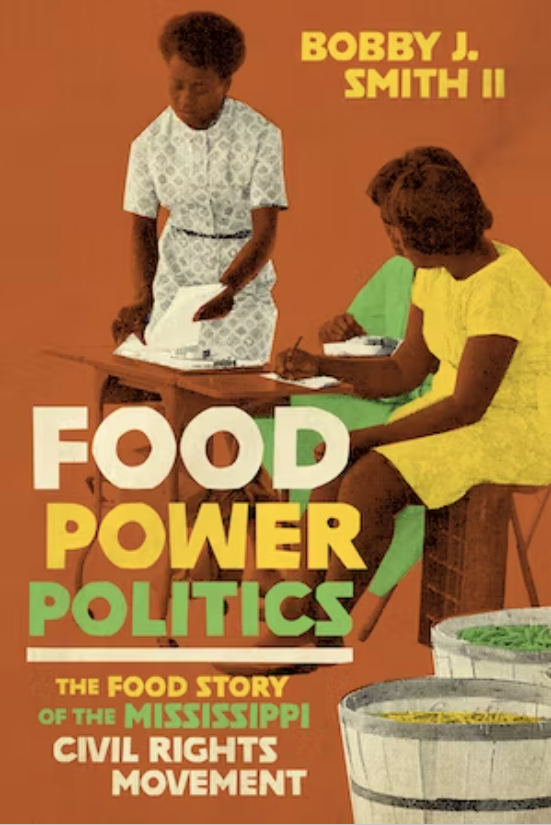
A contribution to critical food studies, Bobby J. Smith II’s 2023 Food Power Politics: The Food Story of the Mississippi Civil Rights Movement, details the role of plantation politics, food scarcity, and Black autonomy across the Delta from the mid-1960s through the early 1980s. In addition to thinking about power, equity, and accessibility, Smith’s work deals specifically with the experiences of Black communities in the Delta—places such as Leflore, Sunflower, and North Bolivar counties—and builds on recent scholarship covering the pinnacles and nadirs of the civil rights movement. According to Smith (a professor of African American Studies at the University of Illinois), the emphasis of scholarship on voting rights and education in the civil rights era neglects the more fundamental problem of subsistence. The primary critical intervention Smith presents in Food Power Politics is his insistence that the subject of food equity allows readers to “identify social, political, and economic blind spots...at the core of social protest and power struggles” both past and present.3Bobby J. Smith, Food Power Politics (Chapel Hill: University of North Carolina Press, 2023), 9. Smith aims to “expand the civil rights story” by illustrating how the lack of access to nutritional food and nourishment motivated sharecroppers, farmers, and rural working-class families on the periphery of Black life in the US to “[pave] the way for new articulations of civil rights activism.”4Smith, Food Power Politics, 142. Examining food access and equity shifts attention to the environmental and psychological vulnerabilities of Black bodies.
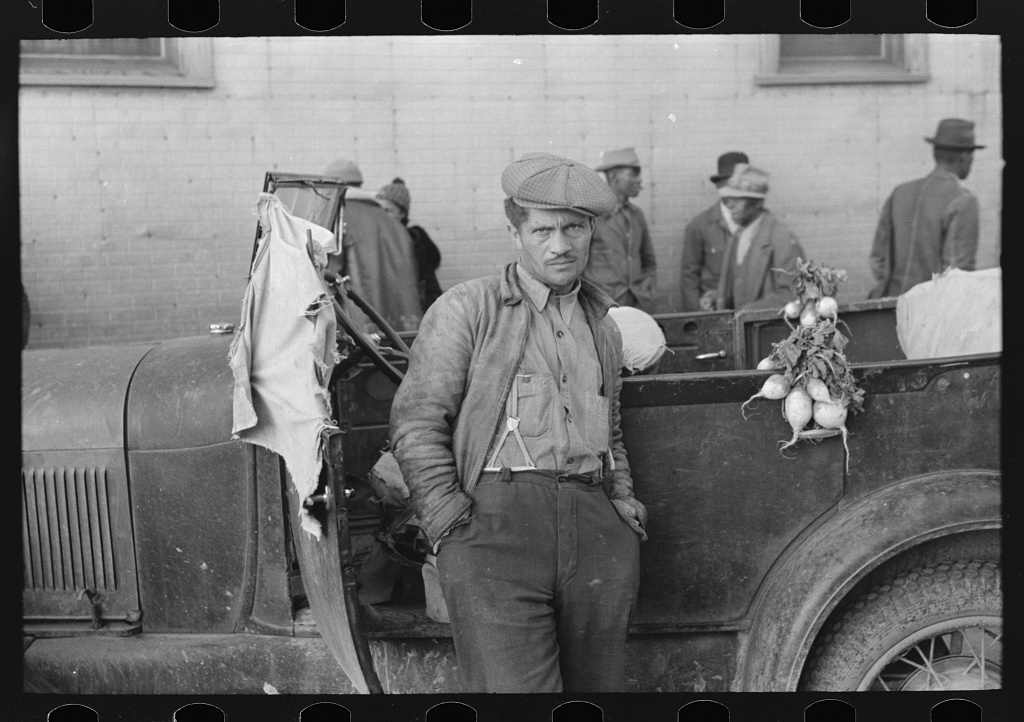
The social, political, and biological aftershocks of the plantation system in and after the era of “King Cotton” are too massive to quantify. As Mikko Saikku reminds us, despite the “great personal fortunes” cultivated across the 19th and 20th centuries through the "biological productivity" of the Mississippi Delta, "[for] most of the people involved in the transformation of the Delta bottomlands, especially black slaves, sharecroppers and agricultural workers, economic gain and social mobility remained severely limited.”5Mikko Saikku, "Bioregional Approach to Southern History: The Yazoo-Mississippi Delta," Southern Spaces, January 28, 2010, https://southernspaces.ecdsdev.org/2010/bioregional-approach-southern-history-yazoo-mississippi-delta/. As a response and challenge to these limitations, Smith constructs the food story of Mississippi by drawing on civil rights era archives and ethnographies. Examining documents from Tougaloo College Civil Rights Collection, the Mississippi Department of Archives and History, and the Mississippi Council on Human Relations, alongside local newspaper reportage, Smith also draws upon a diverse range of print media and correspondence, including personal letters from civil rights activists such as Medgar Evers and Fannie Lou Hamer. He also conducted interviews with activists and agricultural workers active in the 1960s and today in north Bolivar County.
Key to Smith’s analysis are the concepts of food power and emancipatory food power. Food power, most often deployed when describing international wars and political conflict, gestures towards moments where, within “a hierarchical world system” access to food or food related autonomy is “weaponized...as a form of control between nations” to influence outcomes.6Smith, Food Power Politics, 2. Food power guides the first two chapters of Smith’s book through an examination of the 1962 Greenwood Food Blockade and the Lewis Grocer Company’s campaign for a federal food stamps program in Mississippi. State and local government, as well as private corporations, wielded food power against Black farmers, sharecroppers, and working-class people to continue the racist inequities of the antebellum plantation system.
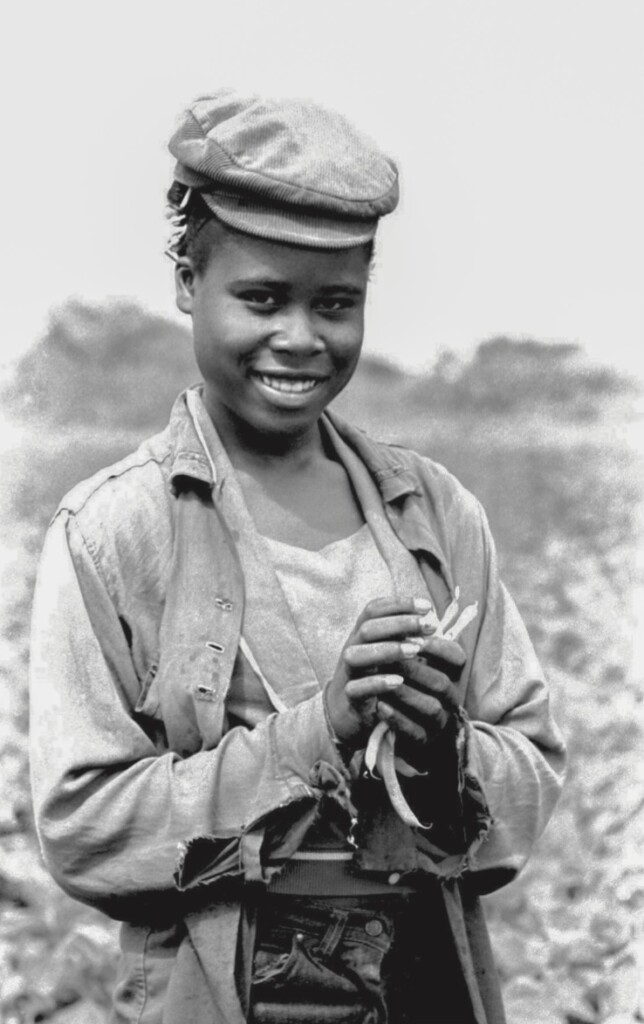
The second half of Food Power Politics illustrates emancipatory food power—ways that Black activists, citizens, and farmers restructured the power dynamics imposed on them by the white plantation class through the creation of an autonomous food economy in service to the needs, desire, and tastes of Black rural people. Smith writes extensively about the North Bolivar County Food Cooperative (NBCFC), founded in 1967, and its contemporary iteration, the North Bolivar County Good Food Revolution (NBCGFR), a predominantly youth-led food justice movement that emerged in 2017. Here, the line between food power and emancipatory food power is not conceptual or theoretical. The emancipatory power of Black food autonomy depends on economic independence fueled, in part, through land ownership, as well as food literacy, agricultural education, and the material labor of Black people. While Smith’s project is rooted in the geographies and spatialities of the Delta, it also surveys other places often minimized or misunderstood through standard histories of the civil rights years.
Food Power Politics asks that we consider the space of the plantation not only as a physical landscape of endless rows of cotton stalks but also as spaces constructed by and in service to white social and economic domination over Black people. The attitude of the plantation can be found in the white-owned grocery store as much as in the field. In considering Black women as mothers, planters, laborers, and activists, Smith asks us to consider Black domestic space, represented iconically in the kitchen table, as the launching pad for political revolution.
Debt, Plantations, and Black Hunger: On Food Power
During and after Reconstruction, the sharecropping system continued to support the hierarchy and politics of the plantation ruling class in the Deep South. While millions of formerly enslaved persons flowed north and west during the Great Migration, those who remained had limited options for employment. Many Black farmers and agricultural workers found themselves working for the descendants of former slave masters on the same plantations where their ancestors labored in bondage. Food access was negotiated through small gardens on plots of land leased from plantation owner. These “truck patches” supplied subsistence nourishment. Additionally, many sharecropper households traded homestead goods with other families, creating networks of care and support. Many also depended upon New Deal era federal food programs. Similar to the exploitative credit system that forced Black farmers to lease land and equipment from plantation owners at outrageous interest rates, access to food in Mississippi during the 1960s was deeply entwined with the afterlife of the plantation system. The fiscal and social politics of the plantation era made itself known through the converged interests of plantation owners and private white grocers such as the Lewis Grocer Company, which conspired to suppress Black political and economic autonomy through the twinned threats of food scarcity and political disenfranchisement.
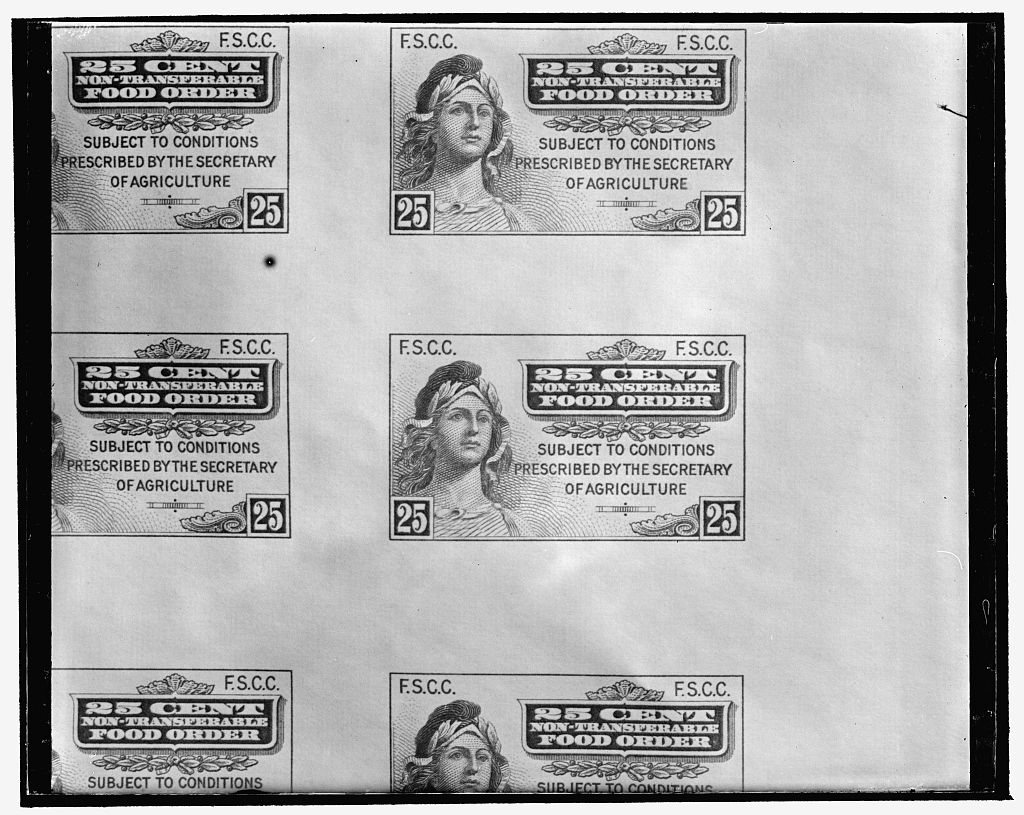
Three factors shaped the proliferation of food-centric oppression for the Black rural and working class in Mississippi during the 1960s: the mechanization of the plantation system, the transition from government-sponsored surplus goods programs to that of the federal Food Stamp Program, and the change in minimum wage laws surrounding farm workers and sharecroppers in the Delta. In the era of “King Cotton,” the means of cultivating and harvesting this cash crop became more dependent on government-leased technology, machinery, and chemicals, and less dependent on manual labor. The sudden decline of job opportunities, the shift from daily to hourly wages for plantation labor, and the emergence of a food stamp system which deepened sharecroppers’ dependence on systems of credit were major forces of oppressive food power wielded over Black farmers and their families by white capitalist elites in the Delta. The triangulation of these events forced sharecroppers and their families into structural over-dependency and debt, creating seemingly inescapable cycles of poverty.
Among these dire systemic restrictions, food scarcity was also strategically deployed by white government officials in LeFlore County through the 1962–1963 Greenwood Food Blockade. The county board of supervisors’ decision to pull out of the federal surplus commodities program, a major food source for Black sharecroppers and farm workers, further spurred food scarcity. Similar strategies of food suppression were deployed in Tennessee in 1960 and in nearby Sunflower County in 1962. These actions aimed not only to starve out the Black rural class and keep them further under the control of credit systems deployed by plantation owners and grocers but also to intimidate the burgeoning rise of Black voter registration taking place across the South. The Food for Freedom program, created by the Student Nonviolent Coordinating Committee (SNCC) and Council of Federated Organizations (COFO) just a few weeks after the start of the blockade, addressed the needs of Black people in Greenwood by providing food, aid, and support through local and regional systems of distribution. With the help of local activists, as well as public figures such as Martin Luther King, Jr. and comedian Dick Gregory, the Food for Freedom program brought attention and material support to those in need and helped to end the blockade in March 1963. In this process, SNCC was able to make a concerted effort to explicitly connect food and activism to highlight the “relationship between food, everyday Black resistance, white supremacy, and state sanctioned violence during the civil rights era.”7Smith, Food Power Politics, 42. Smith illustrates in detail how plantation owners and grocers strategically displaced Black food autonomy with debt-centric practices, which forced Black sharecroppers and farmers to depend on the state for access to food. This history is painfully ironic, given the current political rhetoric in Mississippi that centers public welfare programs as a threat, best exemplified by Mississippi Governor Tate Reeves’s (R) refusal to participate in a federally funded program aimed at supporting food access for children in the summer months. Gov. Reeves's rejection of the program, justified by his dedication to not “expand the welfare state,” illustrates how inequitable practices of food power remain active in Mississippi.8Gloria Oladipo, “Mississippi Quits Child Food Program amid Republican ‘Welfare State’ Attack,” The Guardian, January 13, 2024, https://www.theguardian.com/us-news/2024/jan/13/mississippi-child-school-food-program-welfare-state.
Autonomy and/as Collard Greens: On Emancipatory Food Power
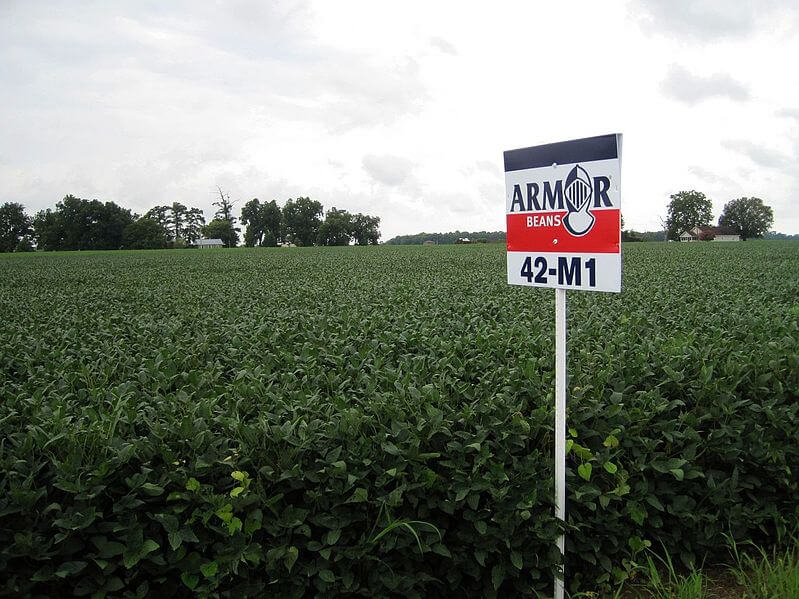
The Food for Freedom program is one of three examples of emancipatory food power that Smith highlights in his book. The most expansive is the NBCFC, a Black-owned and operated food cooperative founded in 1967 with the goal of becoming an autonomous food economy in Mississippi. Spearheaded by activist L.C. Dorsey, with the help of other Black mothers and community members, this cooperative began as a garden project for low-income families. At its peak, the NBCFC operated a farming operation across almost 1,500 acres (owned and leased) to cultivate crops for the poorest families in Bolivar. Pushing against the monocrop culture that had rendered many Black sharecroppers jobless, the NBCFC grew crops that would meet nutritional needs: protein-rich nuts, peas and beans, vitamin-dense greens and okra, as well as staple carbohydrates like rice, potatoes, and corn. During the summer, watermelon vines as well as peach orchards and pecan trees were prioritized for local enjoyment. The NBCFC illustrated how Black autonomy functions beyond the strictures of capitalistic profit.
While land acquisition was central to NBCFC’s vision of food autonomy, so were labor practices and education. The cooperative dedicated over 70% of its labor budget to employing local members, bringing jobs to more than three hundred families. It partnered with the Department of Horticulture at Mississippi University alongside agricultural educators from Atlanta University, Iowa State, and Michigan State to offer courses in farm management, soil conservation, and food production. Food literacy was a primary goal of outreach, instructing Black mothers on how to prepare the foods distributed to them through the cooperative in ways that would support the health and wellbeing of the household. Land acquisition, farm production, and agricultural education centered the NBCFC’s vision of emancipatory food power. That workers were able, even for a short period, to labor in a system that would feed and train them to become more self-sufficient—financially and politically—on the land where they lived, worked, and sought to thrive was a radical feat reshaping what freedom could envision.
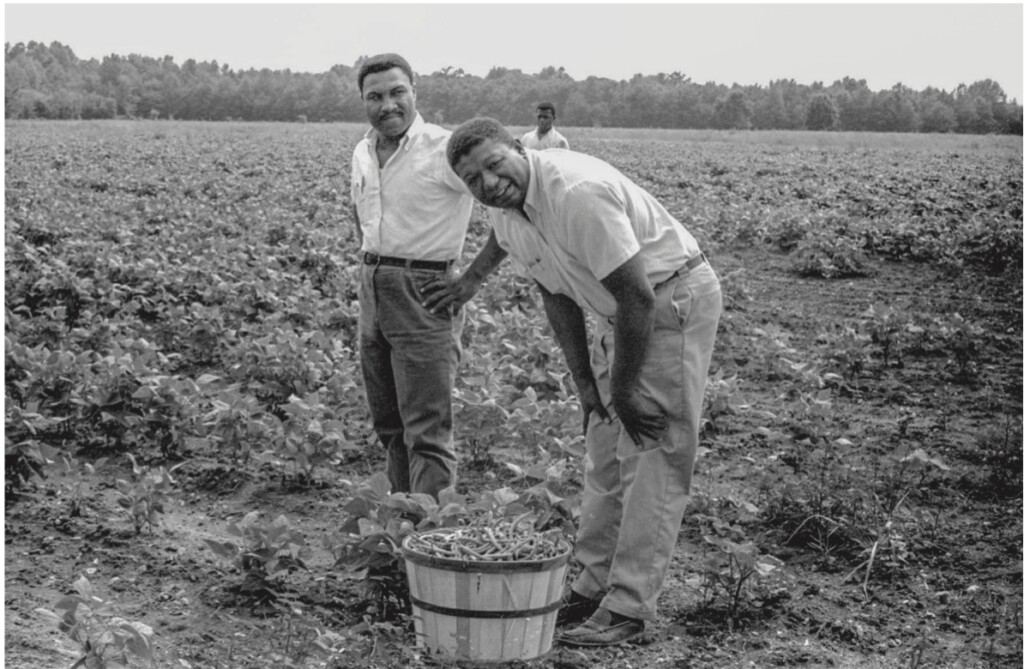
After five years of operation, the NBCFC began a decline in the 1970s due to leadership infighting, disagreements, and the loss of grant funding. The organization was unable to complete its long-term goals of creating an on-site canning operation for national distribution of NBCFC foods and developing a Black-owned and operated farm supply store that might further offer farmers the opportunity to cultivate their own land without interference from white plantation owners. Still, Smith narrates their journey in this unique and palpable moment. The legacy of the NBCFC is alive in the youth-run North Bolivar County Good Food Revolution (NBCGFR).
The joy of Food Power Politics comes in its gesturing towards civil rights beyond voting and government, in expanding understanding of what Black autonomy can be. The most striking cultural memories of the civil rights era, often exemplified by photographic images of Black bodies in pain and duress, contribute to a taste for spectacle that continues. The exploration of hunger as a threat fueled and facilitated by white supremacy is a subject requiring more attention.
Food Power Politics explores spaces and places often overlooked by civil rights historians. Smith explores the Delta from the soil up, balancing a long history of food injustice, narrating the story with an avid appetite for meticulous detail. If any dimension is slighted, it’s the missed opportunity to fully explore the role of Black women activists and their influence on emancipatory food power. Smith is deft to note that, while Black women were and remain active participants in the NBCFC and NBCGFR, the question of how to emancipate Black people from food scarcity, while also emancipating Black women from the invisible labor of the domestic space, remains underdeveloped. While Smith mentions the work of well-known Black food activists such as Fannie Lou Hamer, and other important figures such as Dorsey, Unita Blackwell, and Marian Wright, he and other food studies scholars should further articulate what a Black Feminist approach to food equity might consist of. Such an endeavor would take seriously how Black women’s material and political labor has been intentionally miscategorized and rhetorically devalued within historical narratives. It would also acknowledge the murky history of Black patriarchal structures that relegate, and obscure, the nurturing networks of care constructed by Black women activists to the realm of the domestic and private. In this, we can better understand how a Black Feminist approach to food equity would address an equity of labor and care within the Black domestic space irrespective of gender, class, or sexuality.
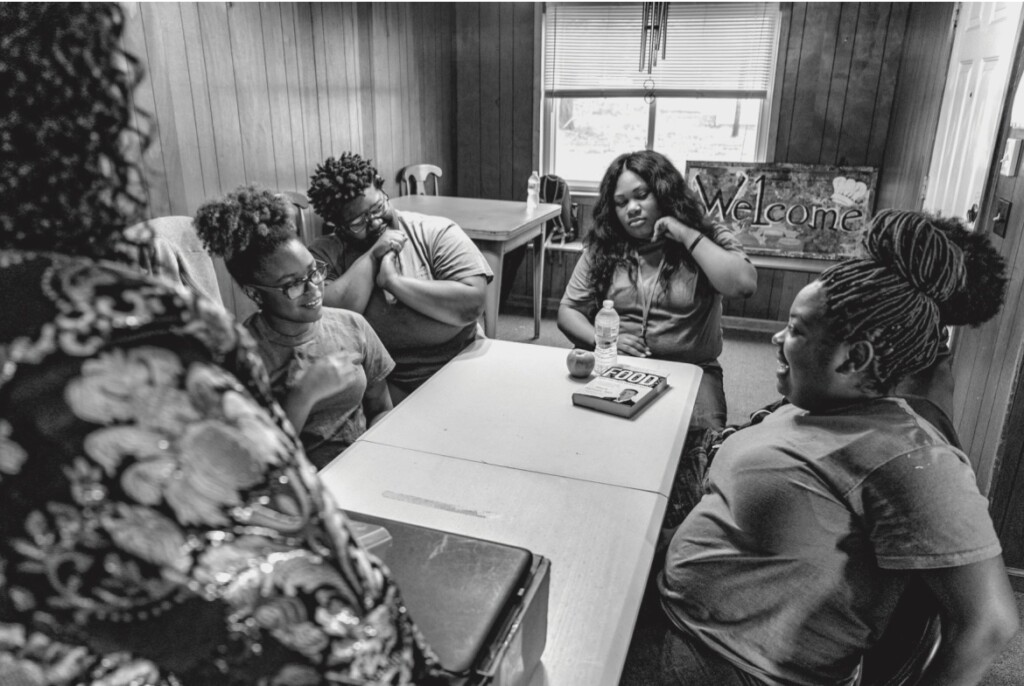
The core aim of Food Power Politics is to construct an alternative history of food power in the Delta, and in that, Smith succeeds. Further, Smith’s text places into perspective the long history of community organizing, direct action, and educational activism that rural and working-class Black Americans have relied on in the face of economic and social dispossession. Instead of debating the legitimacy of trickle-down activism from hyper-visible politicians and celebrities, Smith reminds us that, historically, political victories and social justice reform sprouts from the bottom up. 
About the Author
Ariel Lawrence is a PhD candidate in the English Department at Emory University. Her research focuses on Black women-authored lifewriting across multiple genres, and the articulation of ethical reading practices in and beyond the page.
]]>Introduction
The catfish didn't miss the current. They'd never known it. They lapped the pond all day like pace cars. At feeding time, they thrashed for their share of pellets. The farmers bred them for size and taste and texture and profit. They swam around in that little man-made lake and waited for the chopping block and the flash-frozen package. Their bodies were bullion. There were others of them, wild ones, who lived in the open waters of the river to the west. They sometimes got caught on the trotlines of grizzled river rats. Mostly they grew big as they pleased and swam deep into the crevices of the underwater earth. Fisherman told stories. "Whiskers big as bullwhips." They saw fleeting visions of this barnacled ghost ship. If you caught and ate it, they said, you'd gain all the wisdom of a century. It was part whale. Too big for the line. You could tell by the waves it made breaching the surface.
A white plantation owner in Money, Mississippi, pointed a shotgun at his father's head and threatened to blow it off, Ed Scott Jr. told me in 2013. This happened in the 1920s, when Scott was a boy. Three decades before the murder of Emmett Till put Money on all the wrong maps. The death threat was because Scott's father—who had brought his wife and children to the Delta in 1919—dreamed of being a black landowner instead of a sharecropper.
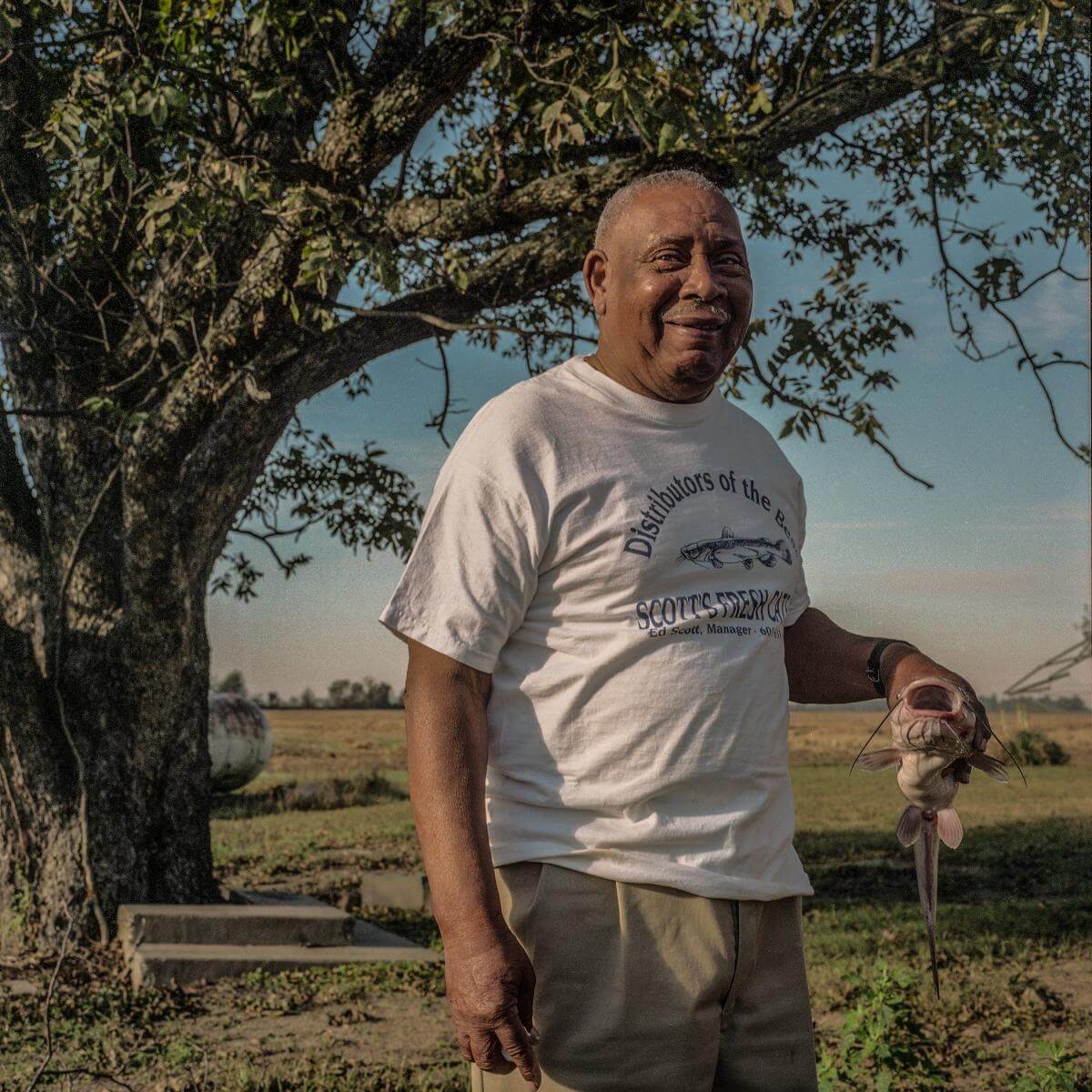
Ed Scott Jr. and I sat together in the cool-dark A/C. I sat on a stool, he reclined in an electric wheelchair. It was my first visit with him. He recounted more to me, of his tours in World War II ducking Nazi sniper fire with General Patton. How his return home to racism in Mississippi was, as James Baldwin wrote, like "a certain hope had died."1James Baldwin, "Letter from a Region in My Mind," New Yorker, November 17, 1962, https://www.newyorker.com/magazine/1962/11/17/letter-from-a-region-in-my-mind.
"[The people back home] didn't care about us no way," Scott said, speaking of whites' reception of black veterans. "They didn't want to see you with that uniform on back then. I was proud of that uniform, but I wasn't proud of Mississippi. Wasn't proud of Mississippi at all."
On the plight of the black soldier, Baldwin writes that he was "almost always given the hardest, ugliest, most menial work to do."2Baldwin, "Letter from a Region." After the war, Ed Scott stayed on the farm to help his father, who had then amassed hundreds of acres of Delta farmland. Scott's dream was not that the work wouldn't be ugly, or hard, or even menial. But that it would be his own work. That he would be his own master.
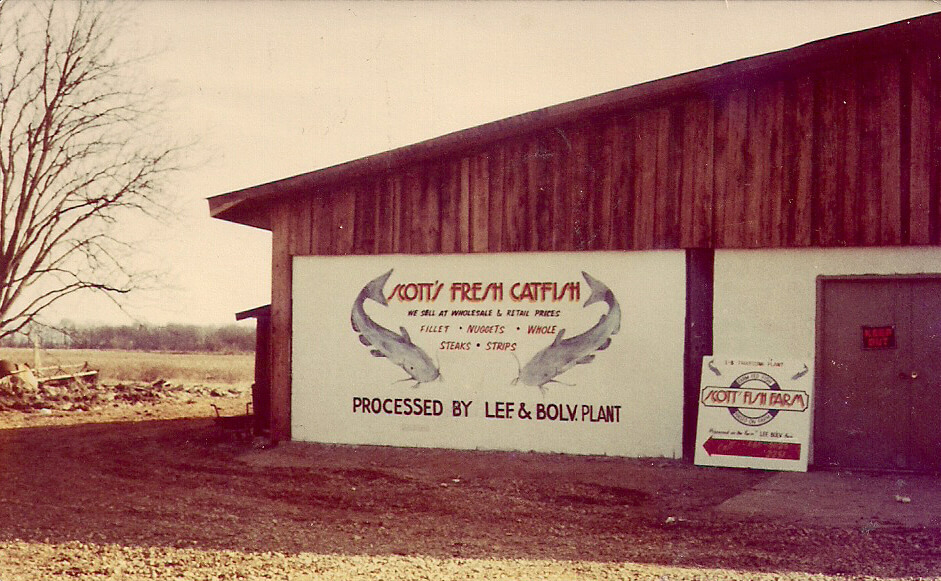
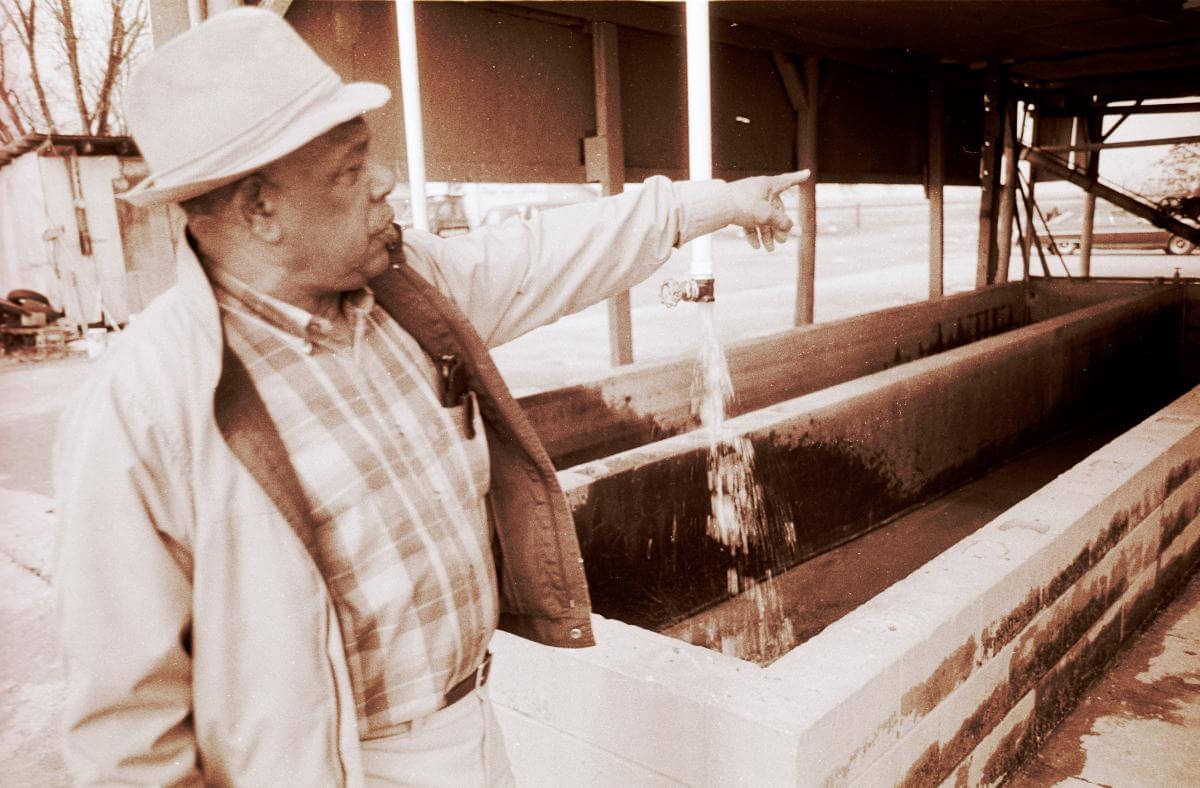
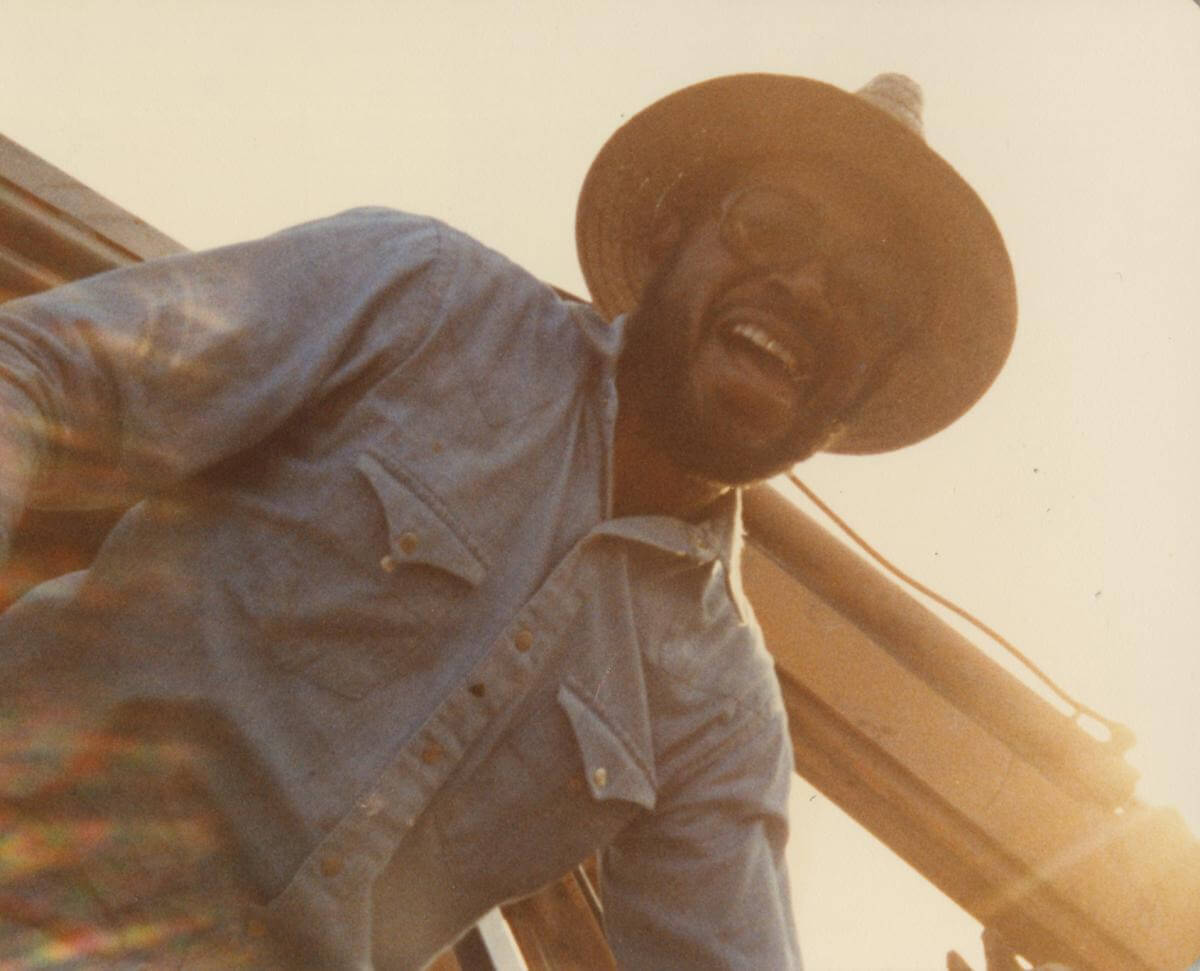
Scott made miracles in the cotton field, not far from Fannie Lou Hamer's visionary Freedom Farm. He carried food, prepared by his wife Edna and their children, to civil rights marchers and followed Dr. King to Selma and across the storied Edmund Pettus Bridge. He cleared a million dollars in rice in 1978. In 1983, at the height of his climb, Scott became the first ever non-white owner and operator of a catfish plant in the nation's history. It was a dream fulfilled. It was an act of necessary resistance against an industry, a government, and a society whose very identities seemed predicated on the subservience of black laborers.
"My motto is don't stop chasing your dream," Scott liked to say. "And that was my dream. To grow these catfish. Which I did."
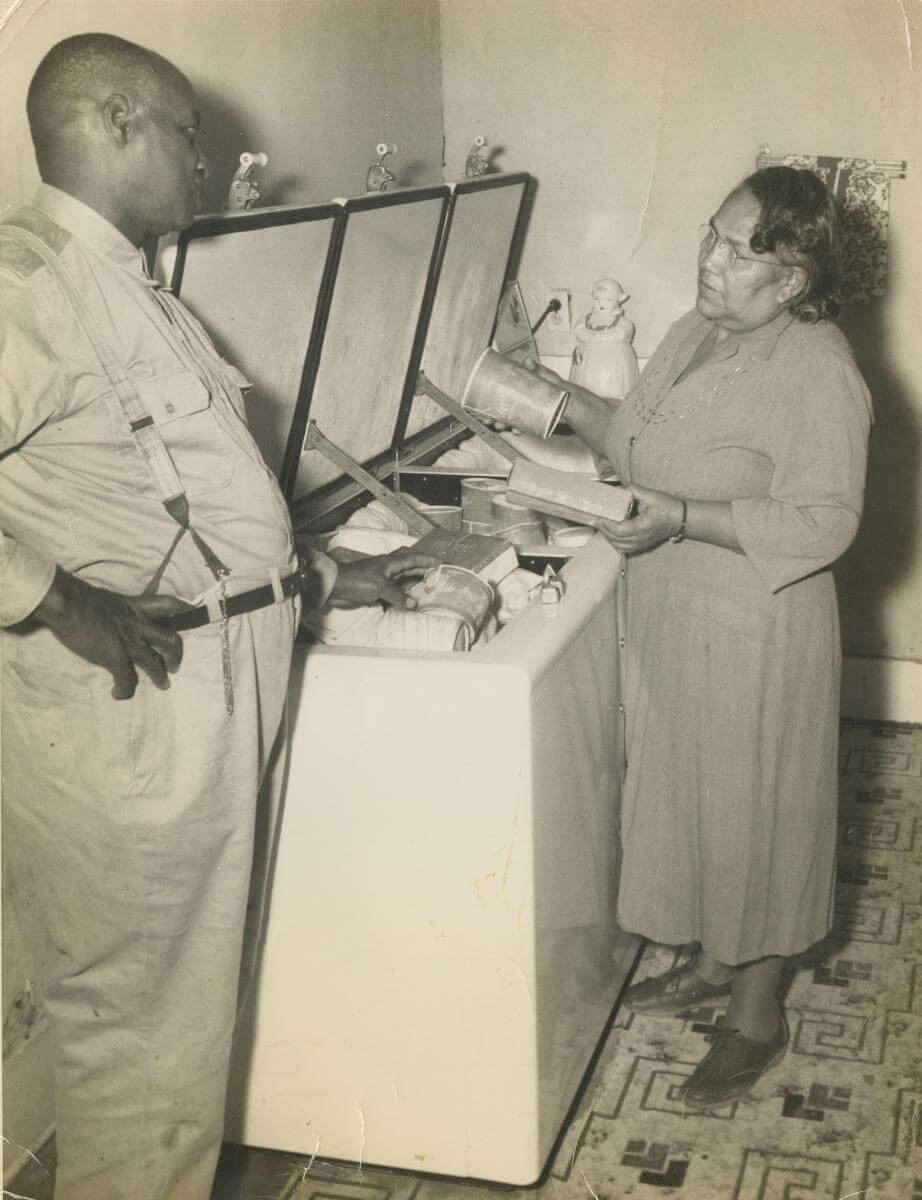
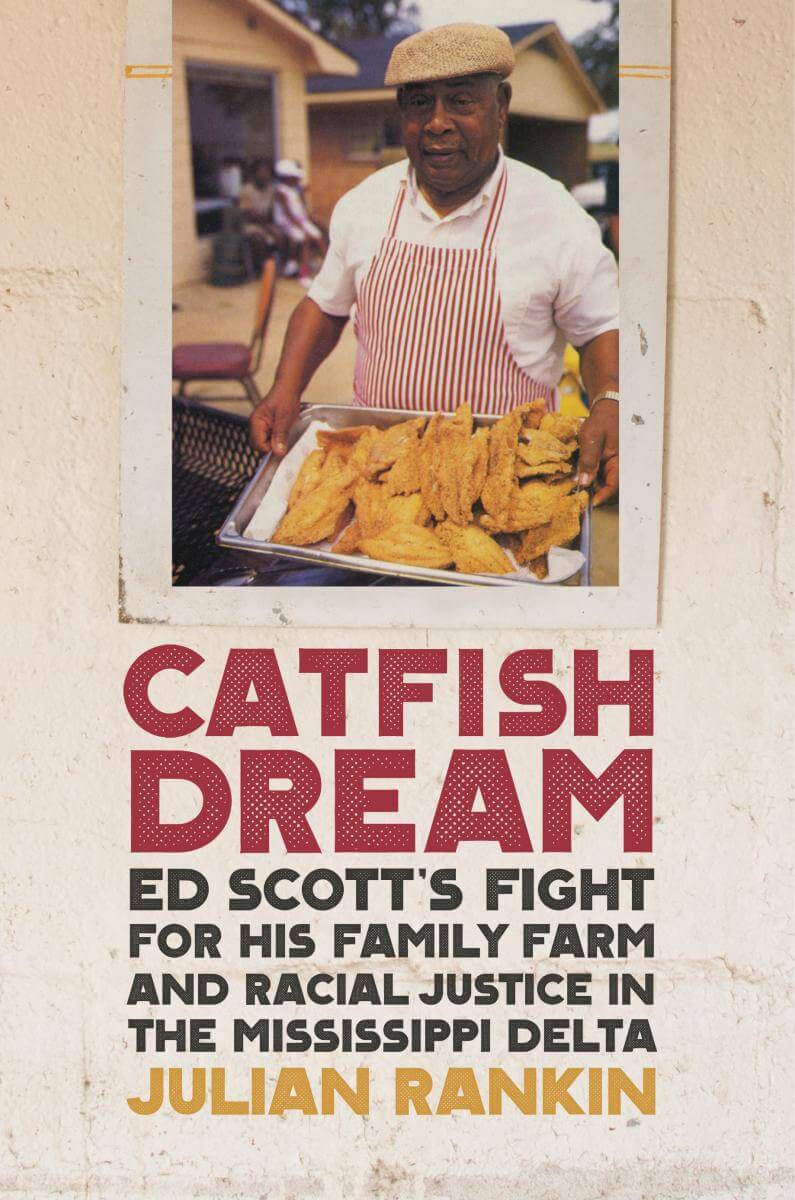
From that first meeting with Ed Scott in 2013, I knew I wanted to write a book about his life. Over the course of the next several years, I would interview Scott, his family, his contemporaries, his lawyer. The Scott odyssey is now told in the pages of Catfish Dream: Ed Scott's Fight for His Family Farm and Racial Justice in the Mississippi Delta (University of Georgia Press, Southern Foodways Alliance Studies in Culture, People, and Place series).
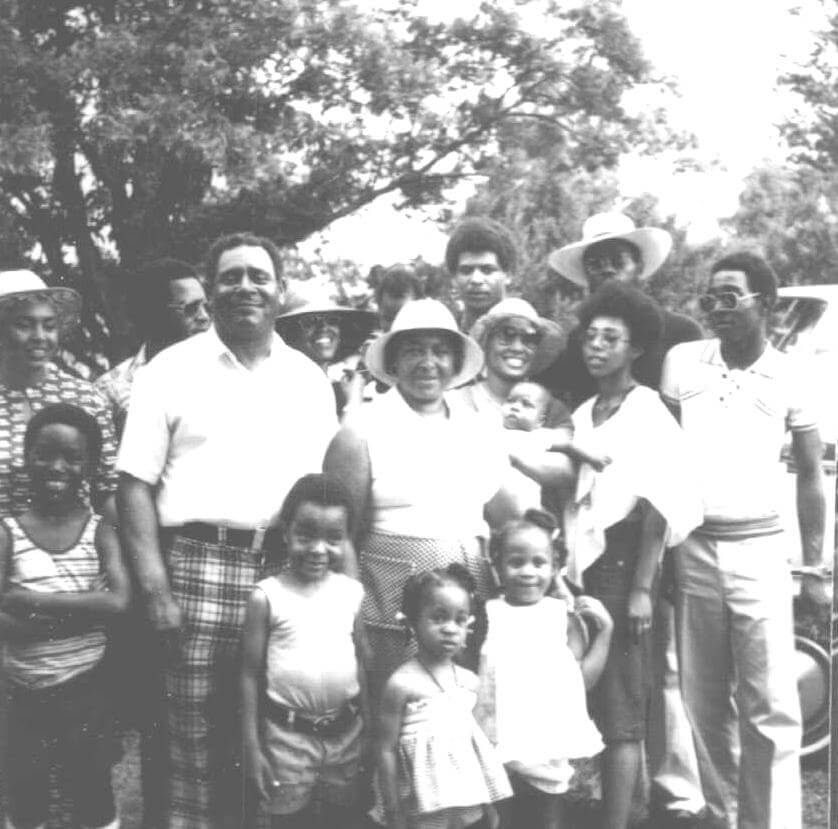
Ed Scott was not alone on the journey. He modeled himself after his father, Edward Scott Sr., a sharecropper-turned-landowner who brought the family from Alabama to Mississippi in 1919. (When Scott's mother, Juanita, pleaded to Edward Senior for a return home, away from Mississippi meanness, Edward Senior replied, resolutely, "I believe I could stay in Hell one year if I knew I could move out the next.") Ed Scott took the reins of the farm and joined forces with his wife, Edna Ruth Scott, whose own father was a community organizer and prodigious farmer in nearby Mound Bayou. He partnered with his siblings and children and extended family and neighbors—including the group of black women nicknamed "the Dependables" who served as his catfish special forces. The Scotts' roots run deep. They believe in legacy and namesake.
"You never know why God let that last child be named Edward," said Rose Marie Scott-Pegues, Ed Scott's eldest daughter. "He was more like his father than any of [the other] children. [His] thing is, 'I don't want you to sell any of my land. Ever.' And I'm looking at this a million years from now. . . . This land will still be Scotts' land.
I exited the Scott home after my first visit with the Scotts, into the Delta heat as if from a sheltered cave. The orator's cadence had slowed and warped time. It had felt like days, or decades, or all time. As I drove away, these are the things I was thinking about.
1990
Worms ain't got no feets. A page in a handmade book. A caption to a hand-scrawled illustration. An earthworm with four legs and Converse. Drawn by Annette, my afternoon babysitter, a high school senior, a young black woman who chewed her gum only until the sugar ran out. This in blink-and-you'll-miss-it Shaw, Mississippi, not far from where I would later sit with Ed Scott and hear him unfurl his tale. Out of the dirt and onto the page, through the dreamy veil of imagination, the worm with feets came. My first acknowledgement of mythmaking.
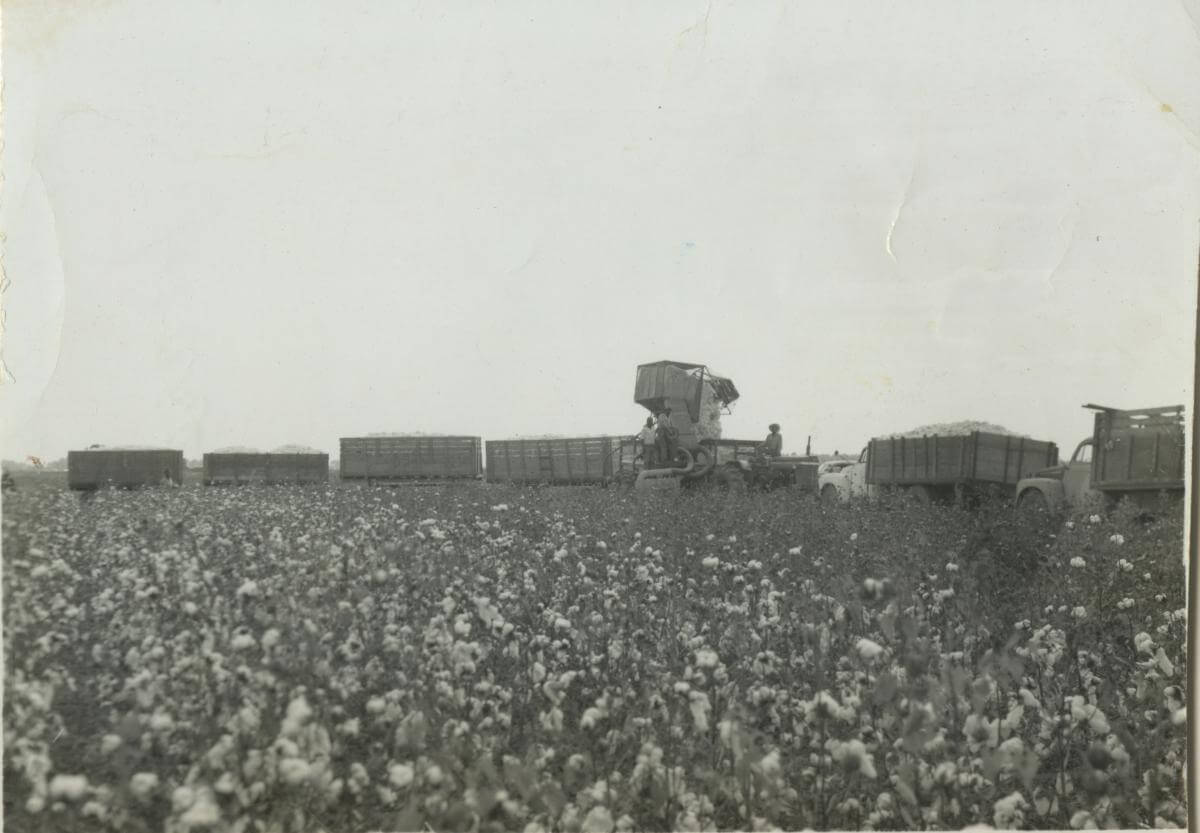
What does the Delta grow? Cotton, yes, the empire of it. The stalks like phalanxed soldiers and the bolls their thorny white heads. Propagated in postcards and genre paintings as widely as it was ginned and shipped. That is to say, all over the globe. Then rice, which Comet and Uncle Ben's came down to bid on. It, mostly white, too. Soybeans came. And corn. More than you could haul. Then catfish; out of the muddy river and into the aerated pond. But Mississippi's fertile crescent grows more than its commodities. It spawns paradox and polemic. Starkness and cacophony. Plenty and need. And of course, black and white.
My childhood home backed up to the Shaw High School practice field. For most of the hours of the day, it was quiet, until the band marched out to play. They stomped the earth and cut divots in the grass with their heels and rattled my existence. To me, their appearance was alchemy. Like rolling thunder shaped into flesh and bone. Fulfilling the latent potential of the field.
Other things the Delta grew then and still does. One-of-a-kind stores, forever "un-chained," with esoteric signs. Autocrats, plutocrats, democrats. Ramblers and gamblers. Day laborers, night laborers, nightcrawlers. Cottonmouths. Plantation houses on Indian Mounds. Jukes. Blues. Open roads. Dark and lonely cells. Government assistance. Government neglect. Lots not yet vacant but long past occupied. Ribs, bibs, bibles. Sunday dinner. Roadside eats. Potato logs on a hot tray under a heat lamp. Lessons. Teachers. Strong women—mothers and daughters, activists and administrators—who hold it all together. It spawns proximity, to the sinful roots of the nation and to graveyards and to ghosts. And also distance, an elusive recalcitrance to ever being pinned down or fully made sense of or tied neatly together. Undone shoelaces swinging on a tuba player in a marching band stampede. The notion that worms ain't got no feets coupled with the inkling that in the Delta, they probably do.
I was thinking about these things on the day after I first spoke with Ed Scott. Because in 1990, when my eyes were opening to the whole wide world, the Scotts were fighting it just a few counties away. Using a catfish as a club and barely hanging on. And I'd had no idea.
2013
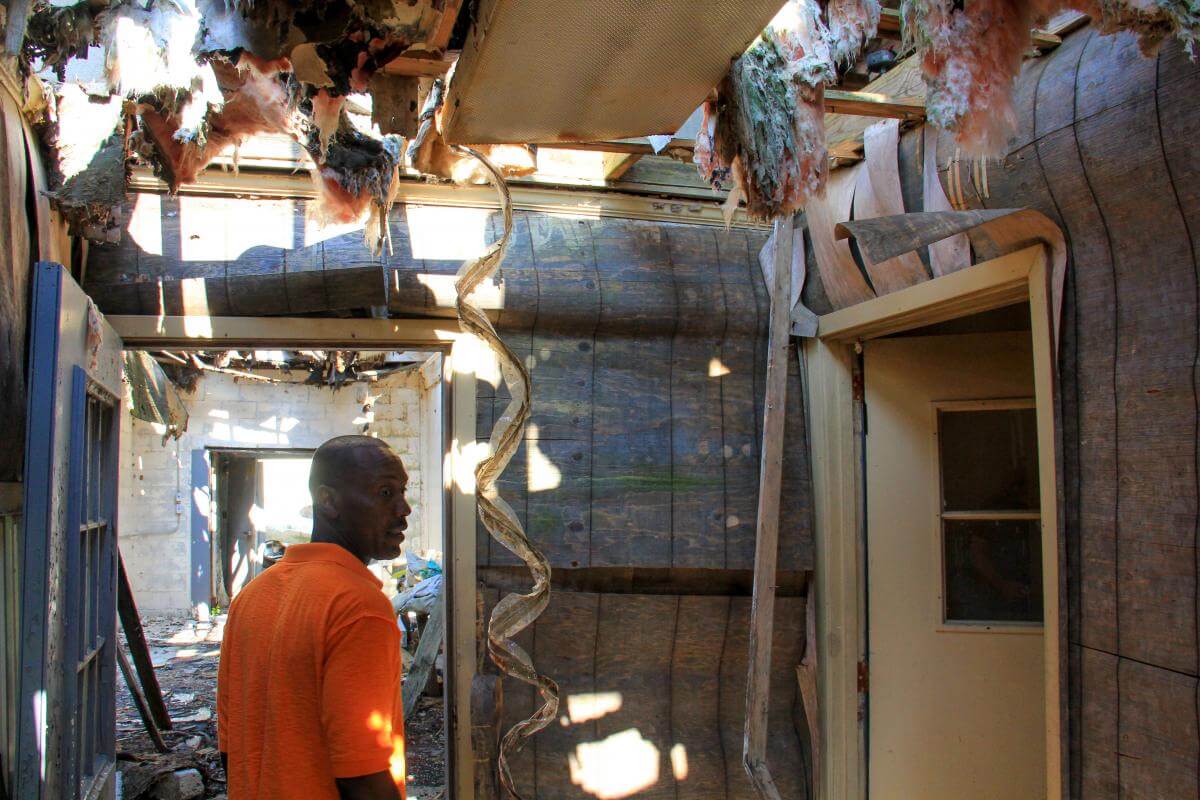
Ed Scott's grandson, Daniel Scott, took me through the ruins of the catfish plant. It had opened in 1983 to fanfare with a ribbon cutting and music and a contest to see which of the workers could hand-filet fish the fastest. Commissioner of the Mississippi Department of Agriculture and Commerce Jim Buck Ross looked on in his cowboy hat. He later said in a press release that "an operation with this early success is certainly a credit to our people, creating new employment at a time it is most needed."3"Mississippi Boasts First Black-owned Catfish Plant in U.S.," Mississippi Department of Agriculture and Commerce press release, March 3, 1983.
This plant shouldn't have existed. It had been an old tractor shed, and Scott built his crowning achievement atop the bones after the local white processor refused to sell him stock so that he could process his crop like all the other farmers. When he found this out, he set up a tour of that Indianola, Mississippi plant. On the way through, the tour guide asked Scott whether he had stock in the plant or a relationship with any live haulers who would take his fish. "Nope," Scott said.
"Well, what the hell you going to do with your fish, eat 'em?!"
"Something like that," Scott told the man. "I'm down here now seeing what you're doing. I'm going to clean my own fish."
To tour the plant was to be forced to imagine what was and what might have been. Paint had faded, beams had fallen. An old television sat on the floor beneath a ceiling that was no more. Handwashing and "employees only" signs refused to budge, even while the rest of the building slowly reverted back to Delta wild. The plant closed around 1990, surviving even after the government foreclosed on the land and snatched the fish from the ponds. And in tandem with the white-dominated industry, the government constricted the flow of catfish that Scott had been buying, cash, to process and take to market himself. The plant closed at a time when national chains like McDonald's and Church's Chicken were experimenting with catfish on the menu. There was great promise for the Scotts nationally, coupled with great resistance against them locally. Under the pressure, the Scotts lasted for as long, and longer, than anyone could have imagined.
"And it was real sad because people was trying to get him out of business," said plant worker Lillie Watson-Price. "Oftentime he didn't get the finances that he need to continue to grow his own fish. . . . So what he started doing is buying the fish. Or getting it on credit. And that only lasts for so long. And they would come, and bring the fish and bring the fish and bring the fish. It was good, for a while. . . ."
"Watch your step, too," Daniel Scott told me on the way through the plant site. "That was like a storage room. That was the break room. They would change clothes, the workers."
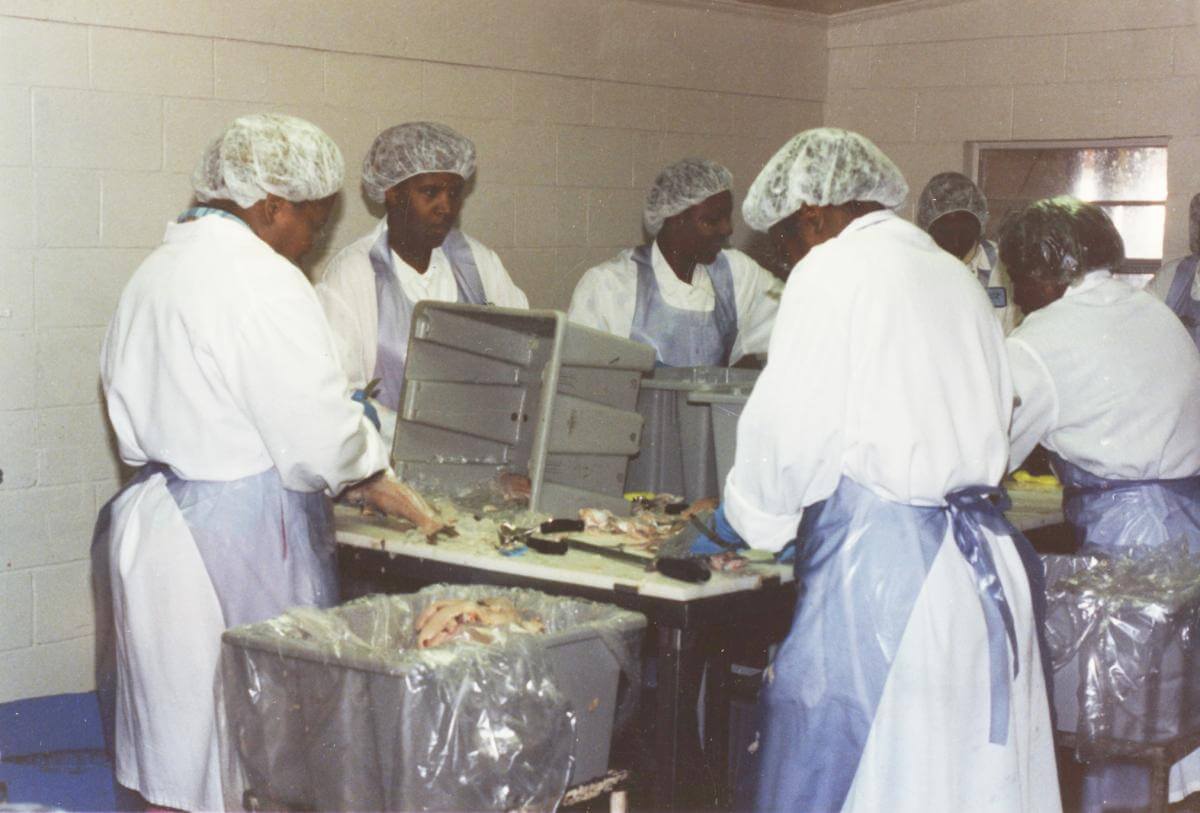
Daniel recalled his time at the plant as a teenager. He was working the skinning line and lost a fingernail. Snatched right off. Another time, he nearly cut off his finger on the bandsaw. If I could have gone back to 1990, in the plant's final days, I would have seen the Dependables processing tens of thousands of pounds of fish a day. I would have heard them laughing, seen them grinning, felt their pride at working a dignified job, however odious and blood-soaked it may have been. The workers were almost exclusively African American, as they were at the other processing plants. There, carpal tunnel and sexual assault was rampant. But here, Scott's workers prospered. I could have peeked around a corner and seen them joshing between shifts, throwing cubes of ice, concealed in their pockets, at each other's backsides. At lunchtime, I would have walked a hundred feet across the gravel parking lot to the Scotts' home to eat, where Edna Scott had opened her own kitchen and cafeteria to feed the workers and surrounding farmers with fried fish and the bounty from her garden patch.
James Baldwin, reluctant optimist, spoke about the gap between dreams and reality. "Until the moment comes, when we, the Americans, we, the American people, are able to accept the fact . . . that on that continent we are trying to forge a new identity, that we need each other, that I am not a ward of America, I am not an object of missionary charity, I am one of the people who built the country—until this moment comes there is scarcely any hope for the American dream."4James Baldwin, Debate: Baldwin vs. Buckley, the Cambridge Union Society, Cambridge, UK, February 18, 1965, broadcast by the National Educational Television Network, https://www.youtube.com/watch?v=VOCZOHQ7fCE.
When I was small, I heard much about problematic patriarchs. They littered my history books and struck smart poses. In civics class, we studied rhetorical structure and theoretical justice. I heard tell of trickle-down economics and bootstraps. There was an absence. All the people left out of this scheme.
Within the unfair system, there are outliers like the Scotts who make strides against the odds. Their summits are worth celebrating, even as they remind us that such climbs are precarious. They illustrate what the American dream should mean. A parcel of land, hard won, that endures across the generations. An enterprise, built through collaboration, with wealth that flows outward and downstream. A system made not solely by patriarchs but by extended families who share in the labors and define their collective futures.
"Those bees are back," said Daniel Scott, pointing to the rafters of the disintegrating processing plant. "You hear them. I thought they was gone. It's crazy, ain't it? How time will do shit?"
Ed and Edna Scott's children—especially Isaac Scott and Willena Scott-White—have restored the lost acreage, gone for thirty years to unjust foreclosure. The overgrown fields have been disked and re-planted with rice and soybeans, steadfast crops of twenty-first century Mississippi. Isaac Scott, who learned to farm from his father, now employs GPS on his combine. Willena Scott-White has plans for the Delta Farmers Museum and Cultural Learning Center in Mound Bayou to keep the stories of black farmers alive. The Scotts taught me that America's story is still being written, and all are authors of it.
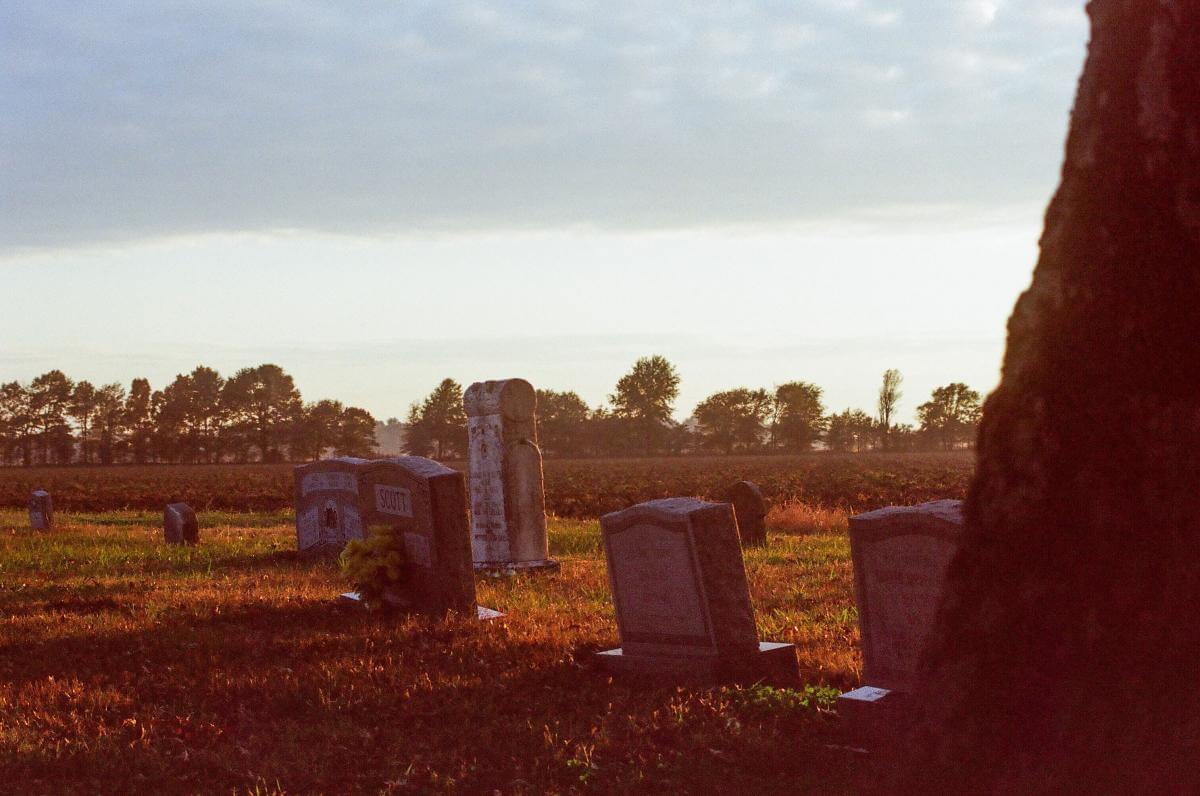
Though many of the Scotts have passed on, the land remains. Near the ruins of the plant, a handful of gravestones occupy a shaded plot, in various degrees of wear. Edward Senior is buried here. He died in 1957 but looked on as his son made history. Ed Scott and Edna Scott, who passed in 2015 and 2016, are buried here too. The family cemetery is well-manicured and regularly visited. The pioneers who rest in the earth are rooted still. On Scott family land. Always, Scott family land.
About the Author
Julian Rankin is the founding director of the Center for Art & Public Exchange at the Mississippi Museum of Art in Jackson, Mississippi. He is the recipient of the Southern Foodways Alliance's first annual residency at Rivendell Writers' Colony.
]]>Review
The yeoman farmer is a central figure in debates over the historical dispossessions that created the place we now call Appalachia. For historians like Ron Eller, these self-sufficient small landholders dominated the agrarian past, and first became exploited as residents of company towns when coal, timber, and other corporate interests began in the late nineteenth century to appropriate the land and wealth of the mountains for their own profit.1See Ronald D. Eller, Miners, Millhands, and Mountaineers: Industrialization of the Appalachian South, 1880–1930 (Knoxville: University of Tennessee Press, 1982). During the 1960s and 1970s, activists promoted a related golden-age vision of egalitarian pastoralism in pre-industrial Appalachia, which they contrasted with the ugliness of strip mining, black lung disease, and other contemporary depredations to amplify their calls to "save the land and people." Then, in 1996, Wilma Dunaway swept aside romantic visions of the Appalachian past with prodigious quantitative research, an earlier historical timeline (back to 1700), and the perspective of world systems theory. "On the eve of the Civil War," she concluded, "Appalachians were much more likely than other Americans to be impoverished, illiterate, and landless."2Wilma A. Dunaway, The First American Frontier: Transition to Capitalism in Southern Appalachia, 1700–1860 (Chapel Hill: University of North Carolina Press, 1996), 21.
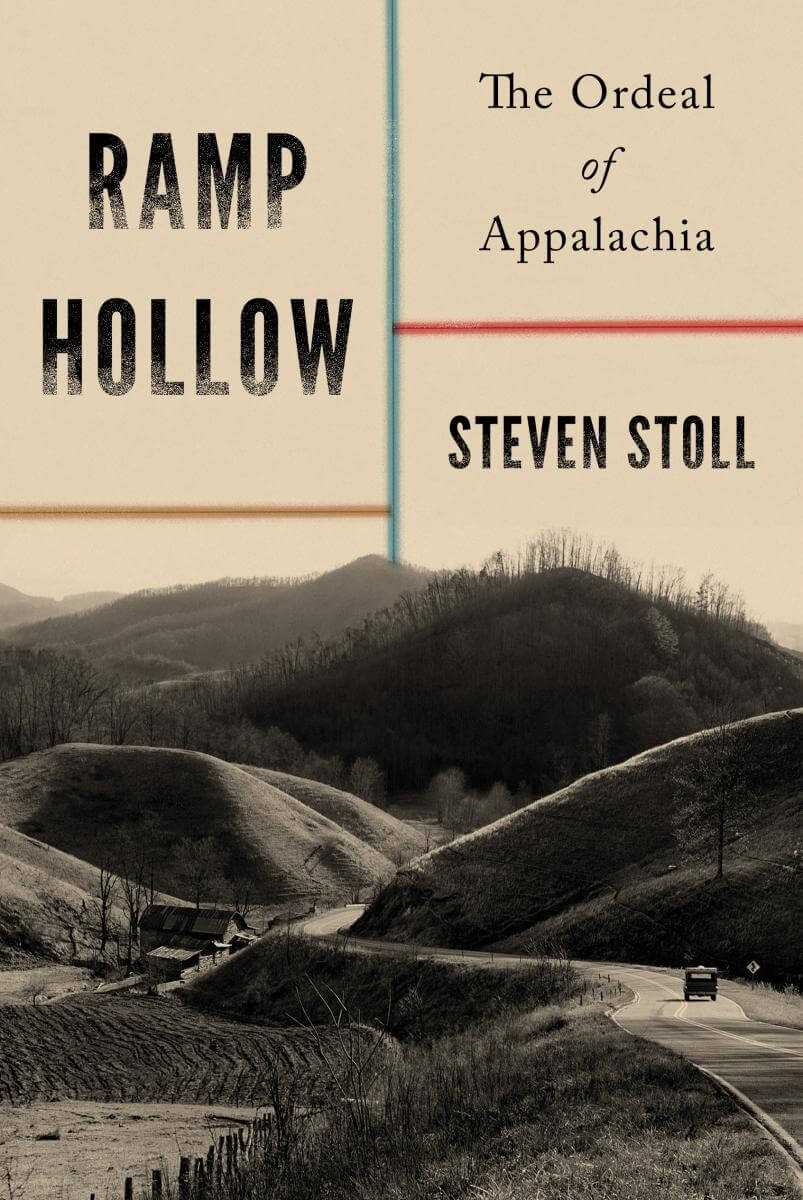
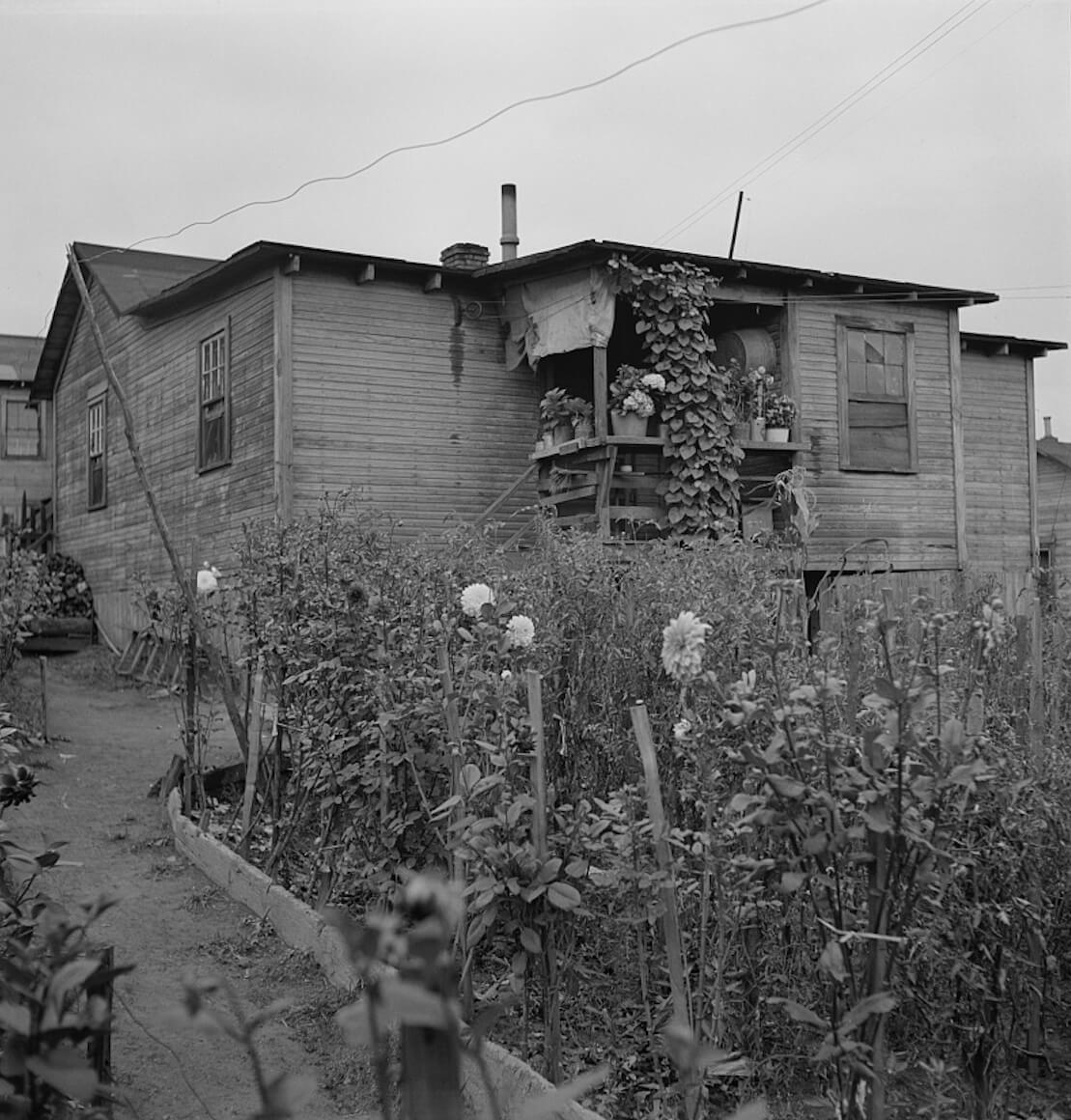
Steven Stoll's Ramp Hollow intervenes in these and related debates by recasting the nature of agriculture and the meaning of land ownership among the European colonialists and their descendants who settled the Appalachian frontier. Stoll likens Appalachia's early settlers to peasants all over the world, who depend on access to a common "ecological base." In the Appalachian instance, this "base" is the forest: "This is a vast renewable fund of resources that provides spaces for fields, food for gathering, fodder for cattle, and habitat for wild game. The base gives everything but costs nothing" (33). Through the practice of swidden, sometimes pejoratively called slash-and-burn agriculture, settlers cleared portions of the forest and cultivated crops, but their clearings were limited; more importantly, they utilized the forest as a source of wild plants, game, and mast for their free-ranging livestock. Although their economy was "makeshift," without extensive surplus or accumulation, these early settlers rarely starved, Stoll asserts, and they should not be considered poor.
As the western edge of European settlement, the mountainous backcountry of eighteenth-century Appalachia briefly represented a space of relative freedom from state enforcement of property rights. Although elites gained formal title to millions of mountainous acres through grant or purchase, they tended to view the land as "wilderness" and unworthy of investment or even much attention, according to Stoll. A chaos of competing land claims emerged, as well as, in effect, the practice of "land to the tiller." Use-rights prevailed. Squatters and small landholders utilized the vast forest without regard to absentee elites and their abstract legal instruments, which went unenforced, thereby irrelevant, and they engaged in a vigorous barter economy with one another.
Although historians and activists have focused largely on the land-grabbing actions of coal companies in the late nineteenth century as the definitive dispossession of Appalachia, Stoll takes us back to the federalism of Alexander Hamilton in the early republic. Taxation—an obligation that could only be fulfilled in legal currency—was the means to force subsistence agrarians toward a cash economy and extend the administrative reach of centralized government into the recesses of the mountains. "Taxation does not merely fund the state," Stoll observes, echoing the arguments of James C. Scott and other anti-statist anarchist scholars. "It creates its territorial and financial power" (122).3See James C. Scott, The Art of Not Being Governed: An Anarchist History of Upland Southeast Asia (New Haven, CT: Yale University Press, 2009). Armed resistance to Hamilton's tax on distilled spirits, which did not distinguish between commercial and household production, arose from the high value of whiskey in barter exchanges and the onerous compulsion to send money from a cash-poor economy to a distant central government—all on the heels of a war for "independence." Although the Whiskey Rebellion succeeded in discontinuing the excise tax, the coercive extension of a sovereign state—with a unified system of land ownership, property rights, law, currency, taxation, and administrative regularity—would eventually facilitate destruction of the ecological base and subsistence practices of Appalachian agrarians.
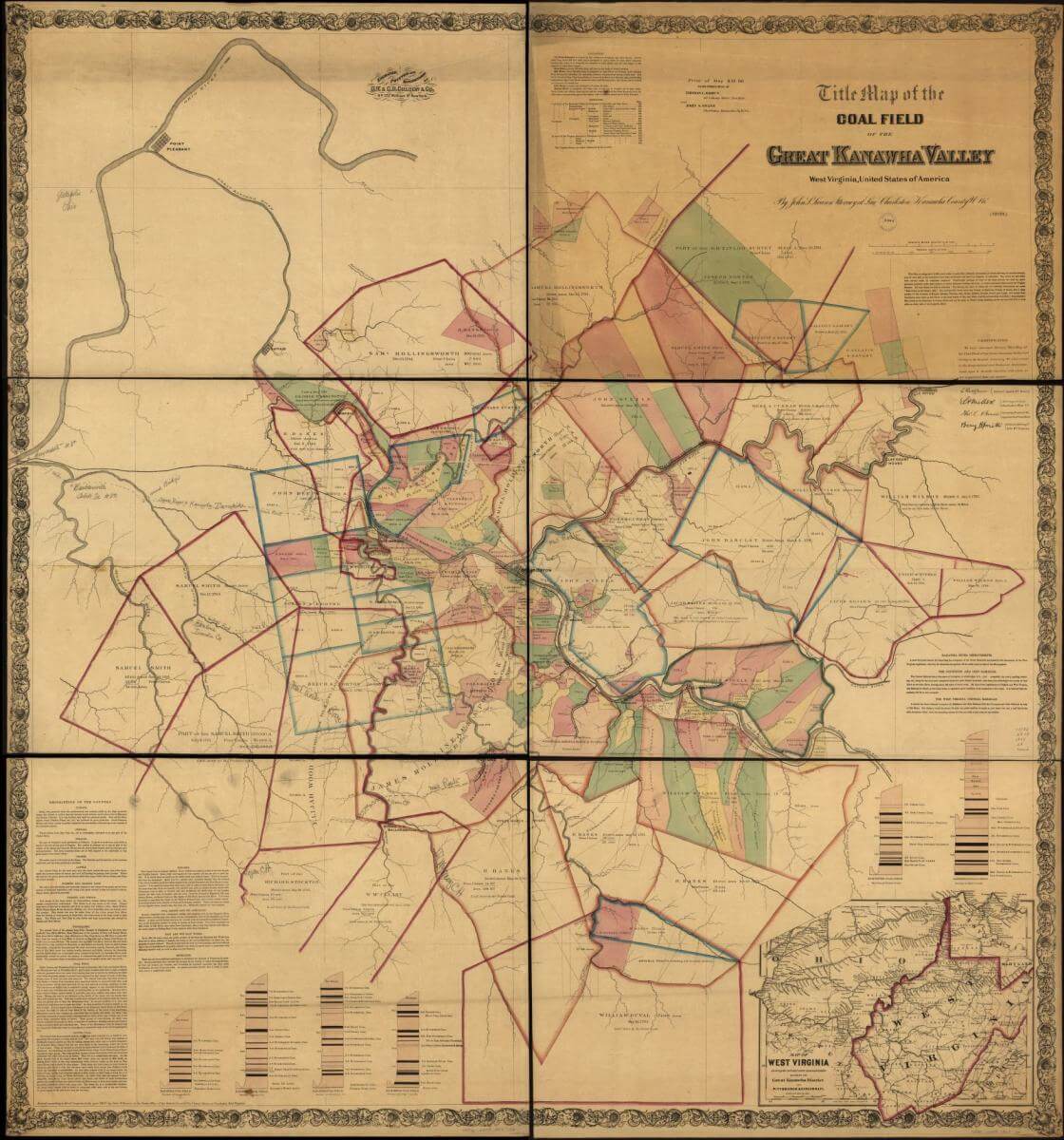
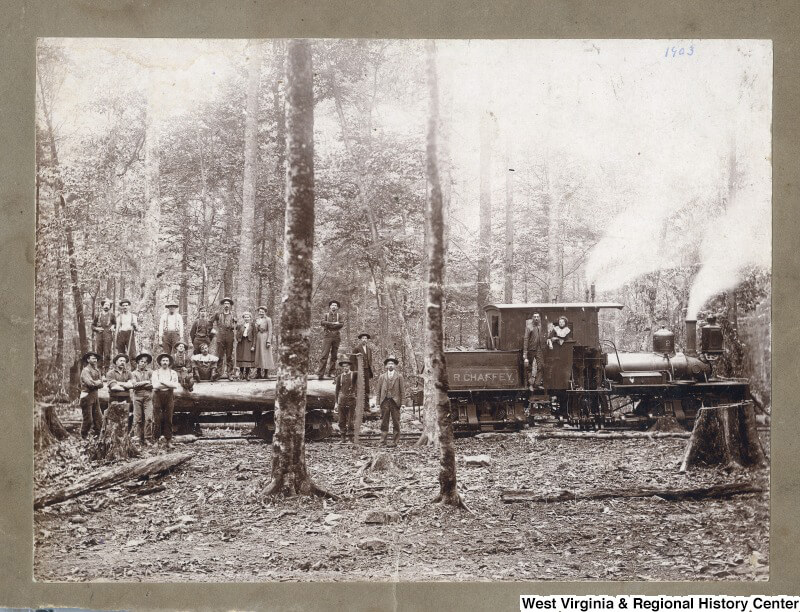
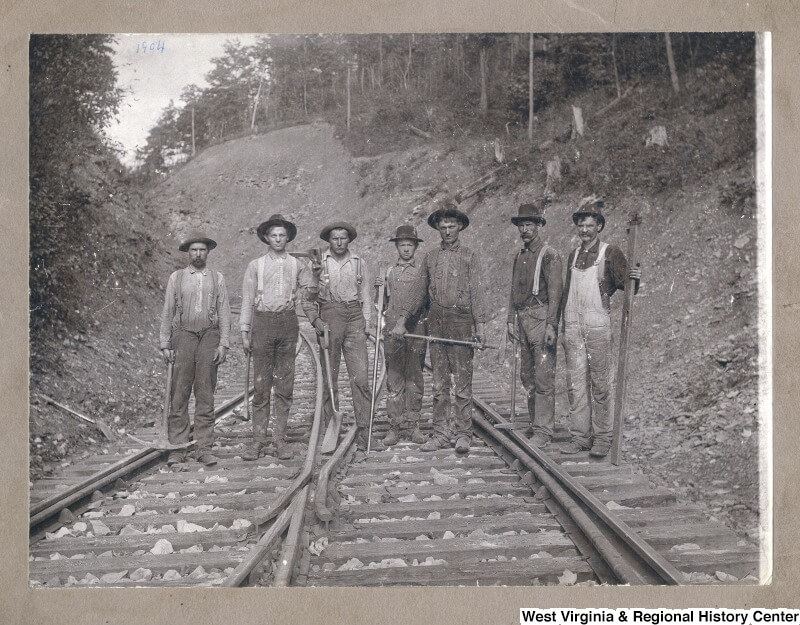
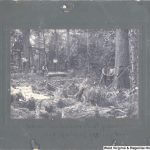
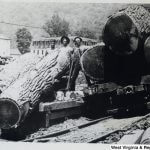
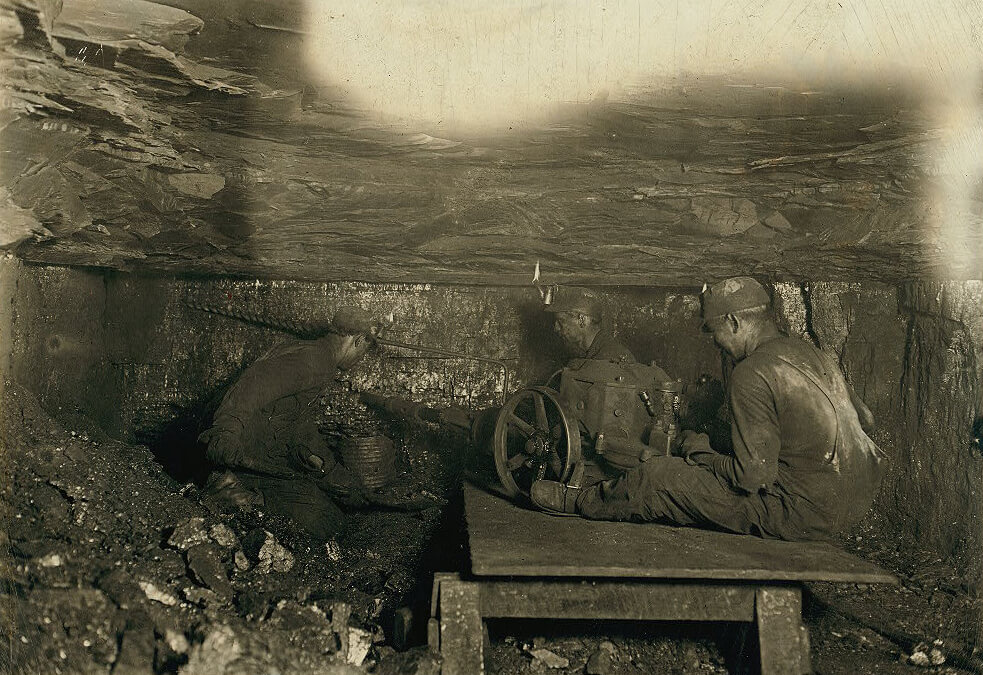
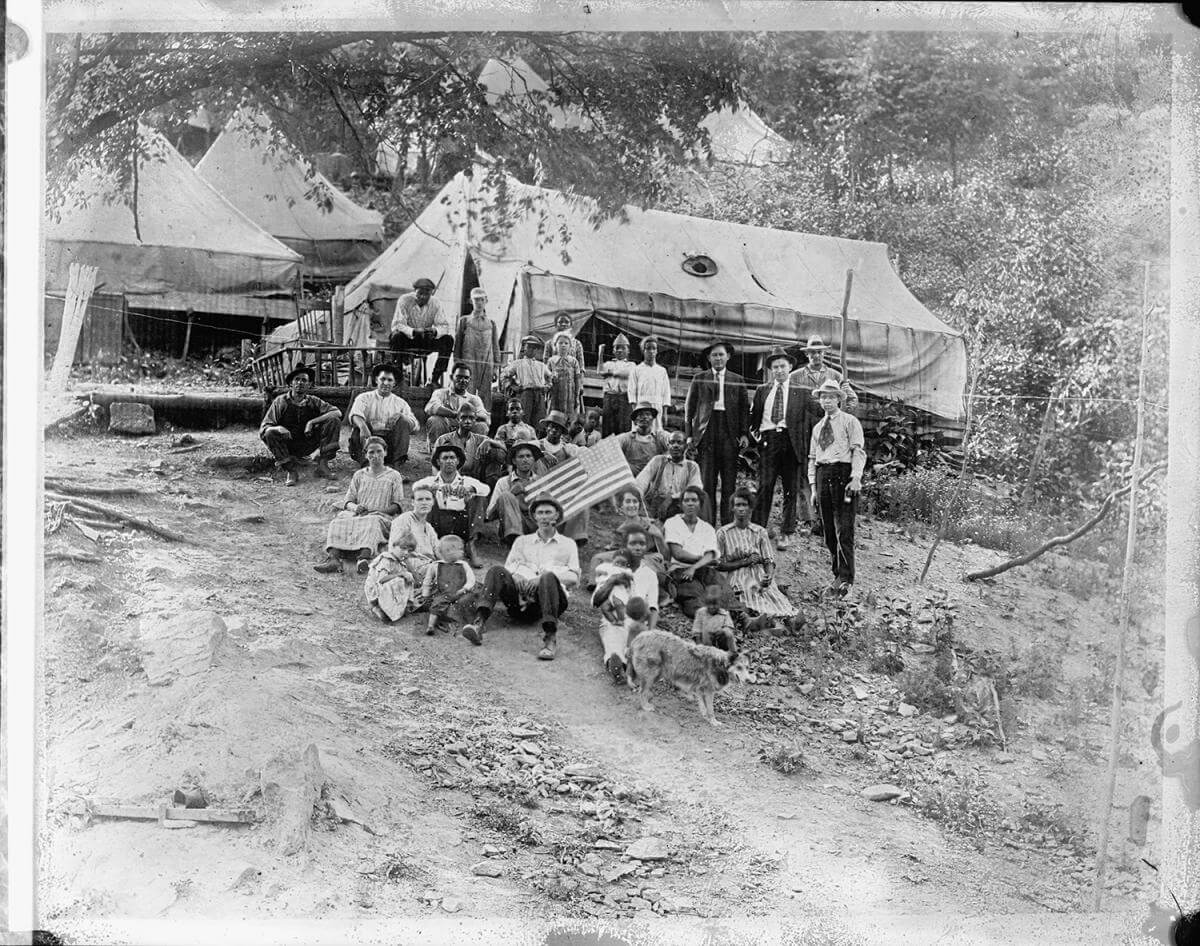
Stoll's tale of rural industrialization in the second half of the nineteenth century focuses on what became West Virginia, and is familiar to scholars and many residents of central Appalachia: extension of the railroads into southern West Virginia, corporate acquisition of mineral rights and vast landholdings, opening of the "billion dollar coalfields," growth of company towns and the exploitative trap of scrip (non-legal tender in which miners received wages), company stores, occupational death, the mine guard system of private security thugs. True to his emphasis on subsistence agrarians, however, Stoll builds on work by Ron Lewis to emphasize the wholesale timbering of the mountains, which accompanied coal mining and devoured the ecological base of the forest.4See Ronald L. Lewis, Transforming the Appalachian Countryside: Railroads, Deforestation, and Social Change in West Virginia, 1880–1920 (Chapel Hill: University of North Carolina Press, 1998). Combined with the contradiction of a growing population seeking sustenance from a shrinking base of land (analyzed in detail by Dwight B. Billings and Kathleen M. Blee), these multiple dispossessions spelled an end to the makeshift agrarian economy.5See Dwight B. Billings and Kathleen M. Blee, The Road to Poverty: The Making of Wealth and Hardship in Appalachia (Cambridge: Cambridge University Press, 2000).
Stoll directs special attention—and some of his most blistering critique—to the ideologues of capitalist modernity, those self-interested promoters of the benefits of wage labor, efficiency, discipline, and "productive" (i.e., profitable for them and their kind) use of the land. Declaring makeshift agricultural practices a miserable, impoverished throwback that impeded the self-evidently desirable processes of modernization, "Atlantic elites" gradually appropriated the means of subsistence of mountain farmers, then pronounced them miserable and poor. This critique of dominant ideology forms an important bridge toward Stoll's larger purpose in Ramp Hollow, which is to defend the integrity of peasants and the viability of their agricultural practices—when not disrupted by various "development" schemes—all over the world. Indeed, the book begins in West Virginia and ends in West Africa, where Stoll decries the contemporary enclosure movement whereby governments are dispossessing entire peasant villages by transferring "idle" common lands to corporations that produce agricultural commodities for global markets.
Reviewers typically feel an obligation to register a complaint or two about a book, and I am no exception. I was disappointed by Stoll's lack of attention to gender relations and the gendered division of labor, especially in view of his definition of the makeshift agricultural economy as a household mode of production. Although he acknowledges that the agrarian household was a "coercive institution" (216), what he means by that is the authority of patriarchs over their children, who "owed their families a certain term of labor before gaining the right to strike out for themselves" (216). Neither patriarchal authority over wives nor the fact that daughters never gained "the right to strike out for themselves" seems to occur to him. Consistent with his Marxist analytic (and neglect of Marxist-feminism), Stoll focuses exclusively on class relations; in the context of coal camps, this includes analyzing the contradictory role of the household garden as a means to lower the cost of miners' and their families' social reproduction (and thus wages) as well as potentially sustain them during strikes. The labor in those gardens, as in social reproduction more generally, remains unexplored.
To its great credit as a work of history, Ramp Hollow is unusual in its direct relevance to contemporary politics. This is true for not only areas of the world where land grabs and enclosures proceed apace, but also central Appalachia, where the struggle to envision and create post-coal—and potentially "post-capitalist"—futures is ongoing. In his final chapter, Stoll offers a "thought experiment" in the form of "The Commons Communities Act" (272–274), which proposes publicly-owned commons, complete with a variety of incentives and protections for those who live there, each with an ecological base sufficient to sustain residents through "hunting and gathering, cattle grazing, timber harvesting, vegetable gardening, and farming" (272). Although his proposal is understandably crafted for rural contexts, given Stoll's concerns throughout the book, the commons is not necessarily so. Indeed, the argument that different forms of public commons may be key to the reinvigoration of civic life and the prospects for democratic, place-based economies seems to be spreading.6See Herbert Reid and Betsy Taylor, Recovering the Commons: Democracy, Place, and Global Justice (Urbana and Chicago: University of Illinois Press, 2010); Kathryn Newfont, Blue Ridge Commons: Environmental Activism and Forest History in Western North Carolina (Athens: University of Georgia Press, 2012); and George Monbiot, Out of the Wreckage: A New Politics for an Age of Crisis (New York: Verso, 2017). Regardless of the specifics of such proposals, they reinforce Stoll's overarching argument: capitalist hegemony is not inevitable, and collective access to land is key to the future of Appalachia.
About the Author
Barbara Ellen Smith is professor emerita at Virginia Tech and a member of the editorial board of Southern Spaces. She has long studied and participated in economic justice movements in Appalachia.
]]>Introduction
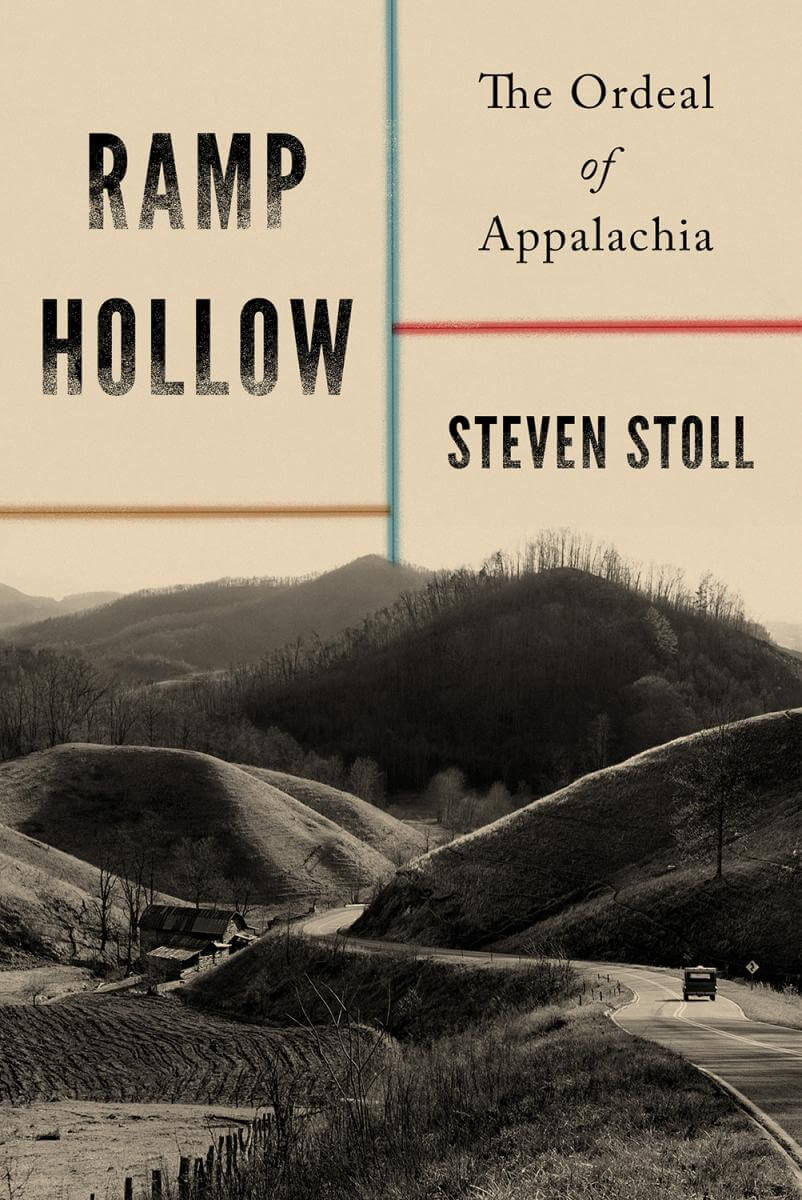
At present, the people of Appalachia continue to endure the contraction and retreat of extractive industry with little more than big-box retail for employment. They work for local hospitals and county governments at a time when both depend on a withering tax base. Many residents hunt, fish, and garden to make up the shortfall in their household incomes. The Appalachian Regional Commission has not come up with a solution; neither has the leadership of the United States. It seems unlikely, though I would not say impossible, that corporations will show up in southern West Virginia or eastern Kentucky and open factories and offices. I wrote the Commons Communities Act after months of thinking about how the people of the southern mountains might find work with dignity, working for themselves and their families without owing their existences to corporations. I thought that government could help to solve this problem and do what it should do: stand between citizens and the power of capital.
It is difficult to find anything Appalachians have gained by voting for Republicans. Yet a majority in every county in West Virginia voted for Donald Trump in 2016. His promise to revitalize the coal industry lacks a footing in reality. Sensing this, one voter gave him a desperate endorsement, saying, "He's the only shot we got." If Trump studies West Virginia's congressional delegation, he might conclude that he doesn't need to do very much. But the people can do better than that. They can make their representatives justify the trust placed in them. They can demand more of their government. They can assert a right to land and livelihood and reparations from the corporations that used and abused them for so long. Maybe that can be the basis for a positive political identity.1For an argument in favor of collective identities in the service of an ethical politics, see Critchley, Infinitely Demanding. I have especially learned from David Whisnant's "Developments in the Appalachian Identity Movement," which though published in 1980 still resonates. "At its worst . . . regional identification is an isolationist impulse." He deconstructs an essentialist mountain identity. And yet, "The political value of regional identity lies in its usefulness as a basis for broad solidarity and coalition." Whisnant, David. "Developments in the Appalachian Identity Movement: All is Process." Appalachian Journal 8, no. 1 (1980): 41–47.
I favor democratic socialism and a reinvention of the nation-state as a conduit for meeting human needs rather than for accumulating capital. I also favor a realm of democratic autonomy, and that might have more political traction. If Congress and the president can cooperate, such a realm can exist as a function of the United States itself. But it can also exist outside of centralized government, sponsored by West Virginia or Kentucky or Tennessee. Or people can do it themselves, by squatting on abandoned land and defending their right to the commons.2In the words of two historians, "Making visible activities that neoliberalism renders invisible expands the range of ideas for producing social livelihoods and economic development." Amanda Fickey and Michael Samers, "Developing Appalachia: The Impact of Limited Economic Imagination," in Studying Appalachian Studies: Making the Path by Walking, ed. Chad Berry, Phillip J. Obermiller, and Shaunna L. Scott (Urbana: University of Illinois Press, 2015), 123.
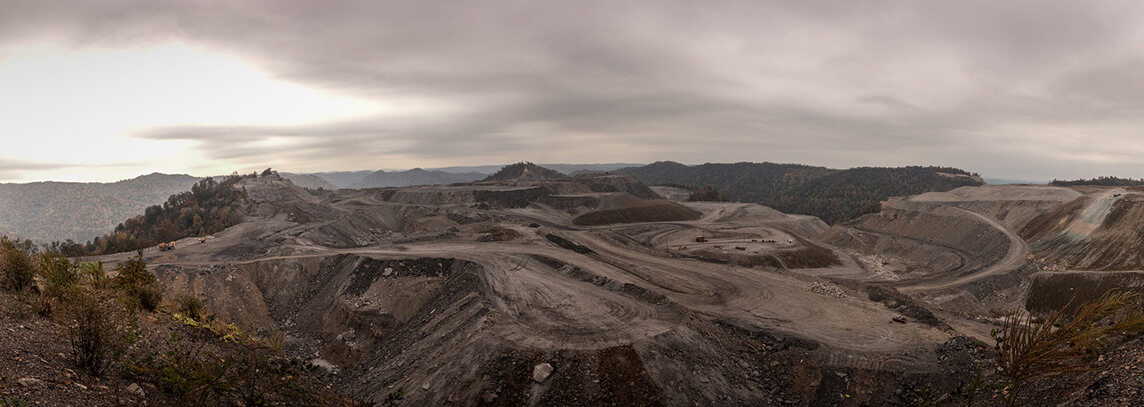
There is talk and some action regarding returning land. Various organizations have held public meetings to elicit policies directly from citizens. Even Congress is thinking along these lines. In 2016, Representative Harold Rogers, a Kentucky Republican, introduced the Reclaim Act. The law would empower the Department of the Interior to distribute funds to states and Indian nations aimed at developing land in communities "adversely affected by coal mining." I would push this thinking toward creating a reconstituted commons. What if people who wished to do so lived by hunting and gardening as part of a social project that encouraged political participation? What if citizens possessed use-rights over a sustaining landscape?
Historians don't often write legislation. My attempt is consistent with the argument of this book. Consider it more a thought experiment than a ready-made policy. Any actual solution would require the knowledge of people who live in the mountains and the sponsorship of organizations and activists working on these questions. The following owes something to the New Deal economist Milburn Wilson, the geographer J. Russell Smith, the historian Lewis Cecil Gray, the Kentucky farmer and writer Wendell Berry, and also to Mahatma Gandhi, Lewis Mumford, and E. F. Schumacher.3Appalachian Voices is one such organization. The Reclaim Act is H.R. 4456, 114th Congress. Introduced in the House in February 2016. I call it . . .
THE COMMONS COMMUNITIES ACT
Whereas coal mining is diminishing in the southern mountains, leaving thousands unemployed, and whereas coal contributes to climate change and the disruption of human societies all over the world; whereas a rural policy should incorporate ecological principles with food production on a small scale, and whereas the United States once included millions of households engaged in production for subsistence and exchange; whereas when people take care of landscapes, landscapes take care of them,
SECTION 1. The United States shall create a series of commons communities, each designed to include a specified number of households within a larger landscape that will be managed by them, the residents. This landscape will provide the ecological base for hunting and gathering, cattle grazing, timber harvesting, vegetable gardening, and farming. The ecological base will be owned as a conservation easement or land trust under the authority of the states and/or counties where each community resides.
SECTION 2. Commons communities would be organized according to the design principles developed by the economist Elinor Ostrom, who was awarded the Nobel Prize in Economic Sciences in 2009 for her work on the economic governance of common resources. Each community shall include well-defined boundaries and members. Each will devise rules for appropriation suitable to the environment, along with sanctions and penalties for those who violate the rules and take too much or otherwise abuse the resource. Each must establish a means of conflict resolution and governance. In the event that residents need to sue the community or other residents, they would use the county, state, or federal courts.4Ostrom (1933–2012) shared the Nobel Prize with Oliver E. Williamson. The act would rely on Ostrom's Governing the Commons: The Evolution of Institutions for Collective Action (Cambridge: Cambridge University Press, 1990). For design principles, see pages 90–101.
SECTION 3. Commons communities will not be limited to Appalachia but could be established anywhere a sufficient ecological base exists, including the outskirts of cities and suburbs. This law must not be construed to favor one location or ethnic group.
SECTION 4. Social services and education will be paid for by an income tax on the top one percent of household incomes in the United States and an Industrial Abandonment Tax, attached to any corporation that closed its operations in any city or region of the United States within the last twenty years of the date of this Act and moved elsewhere, leaving behind toxic waste and poverty.
SECTION 5. Resident households with incomes under $50,000 a year will pay no federal income tax. Residents will own their own homes, paying for them with low-interest mortgages and a $1.00 down payment.
SECTION 6. No nonresident, trust, or corporation is permitted to purchase property in a commons community.
SECTION 7. The organization of commons communities will proceed through the Department of Agriculture. The Department will initiate the identification of suitable lands for condemnation by eminent domain or land already owned by counties, states, or the United States. The Department will determine how much land is needed to sustain a given number of residents.
SECTION 8. Allied Programs.
SUB-SECTION A. Income tax incentives will encourage teachers and medical doctors to live in commons communities and work in the schools and nearby hospitals.
SUB-SECTION B. College-age members of any commons household may apply for free tuition at their state university. Tuition shall be paid for by the Industrial Abandonment Tax.
SUB-SECTION C. Commons communities will receive special programs intended to link them to the Internet. Cooperation between communities will incorporate schools, artists and writers in residence, and scientists engaged in the study of the environment. This Act provides funds for the publication of a journal or magazine of commons life to be written and published by the residents of the various communities.
SUB-SECTION D. Another program will link gardeners with markets for their produce, including grocery stores and restaurants. Proceeds from this Market Garden Initiative will not be subject to state or federal income tax.
SUB-SECTION E. University experiment stations in every state where commons communities exist will send representatives to teach the latest methods of garden production, with the approval and consent of residents.
SECTION 9. If the members of a commons community no longer wish to be associated with the federal government, they may become independent at any time with a majority vote consisting of two-thirds of adult residents, at which time all federal programs associated with this Act will cease. Ownership of the commons would not change and residents would keep their homes.
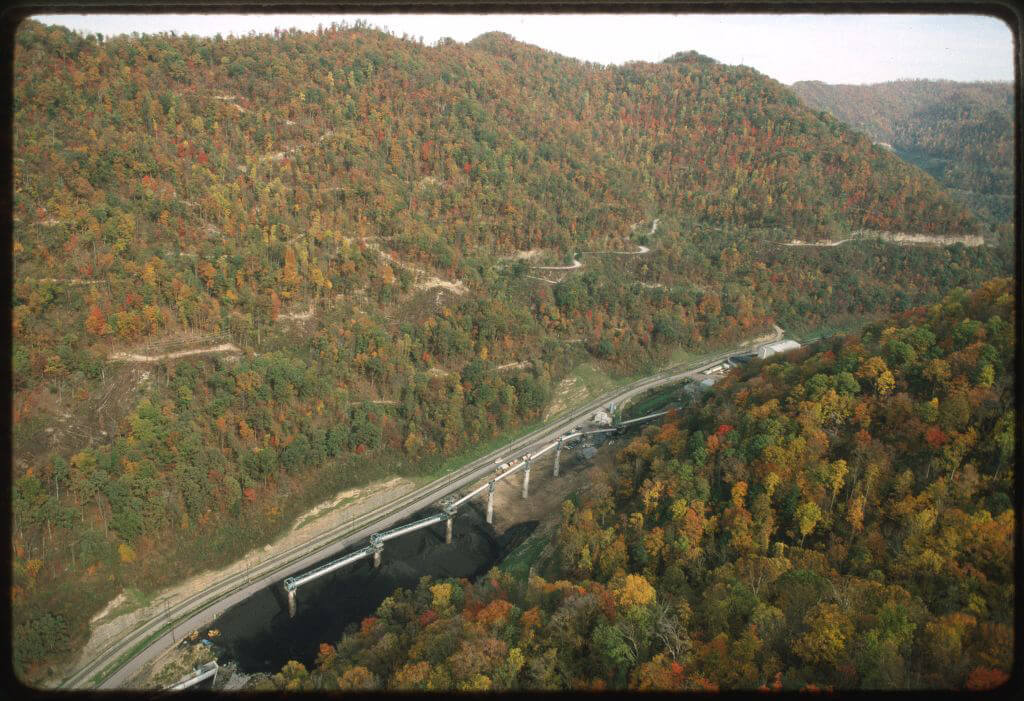
The act might look like Arthurdale and the Division of Subsistence Homesteads all over again. But it has no factory, no originating debt, and no presumption that people must subsist entirely from gardens. It emphasizes scientific conservation, cultural expression, entrepreneurship, and democracy. It would not prevent any resident from earning money in any job or profession. Some within Appalachia might object to the participation of the federal government. But government can do things that communities cannot by themselves, like purchase land, relieve taxes on citizens and levy them on corporations, advance citizen participation, and pay for college. Government can help the residents of commons communities remain connected to the wider world of economic opportunity and political participation. But the act allows for its own dissolution. Residents would have the authority to end the government's participation and keep their gains.5On corporate subsidies, Niraj Chokshi, "The United States of Subsidies," Washington Post, March 18, 2015, www.washingtonpost.com/blogs/govbeat/wp/2015/03/17/the-united-states-of-subsidies-the-biggest-corporate-winners-in-each-state/?utm_term=.314361798972.
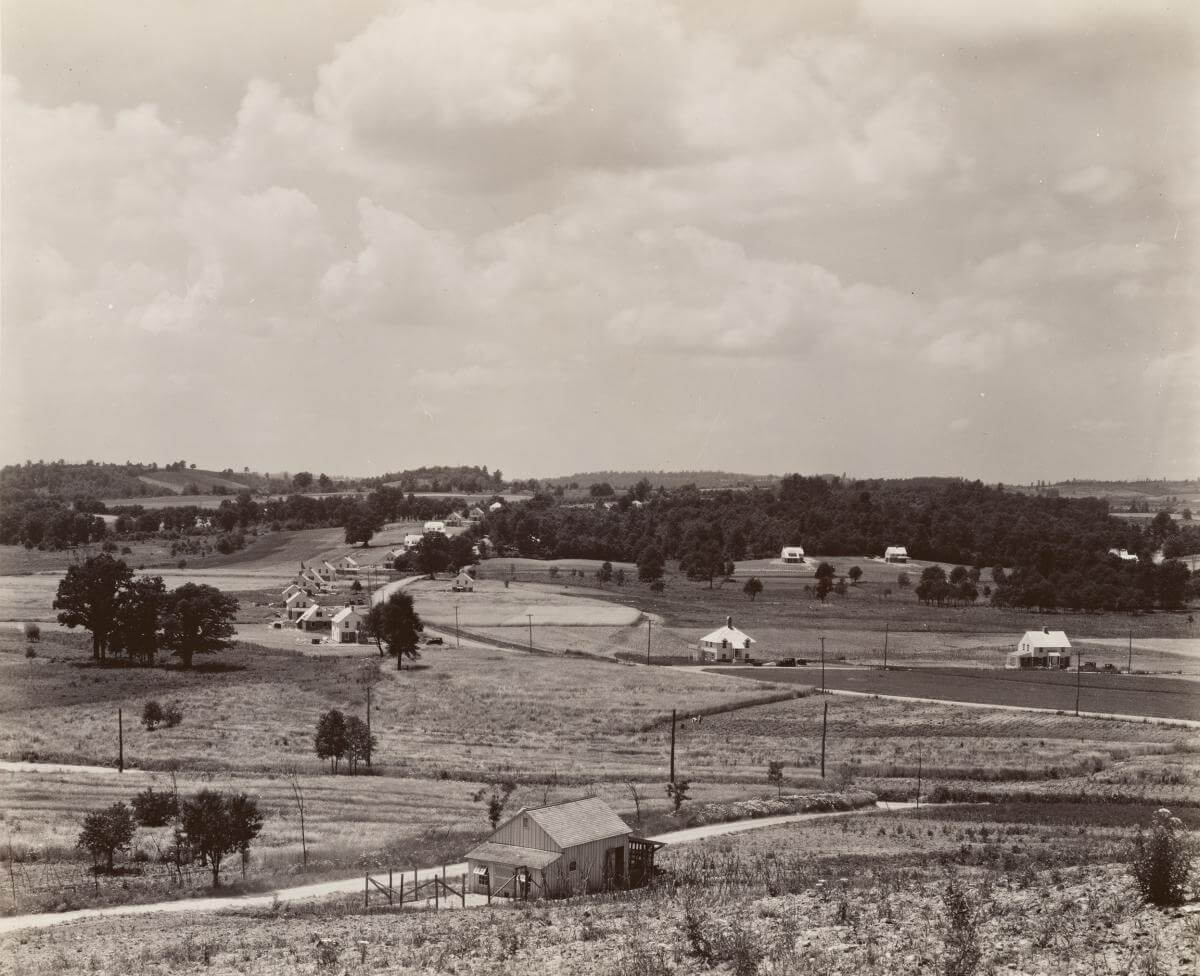
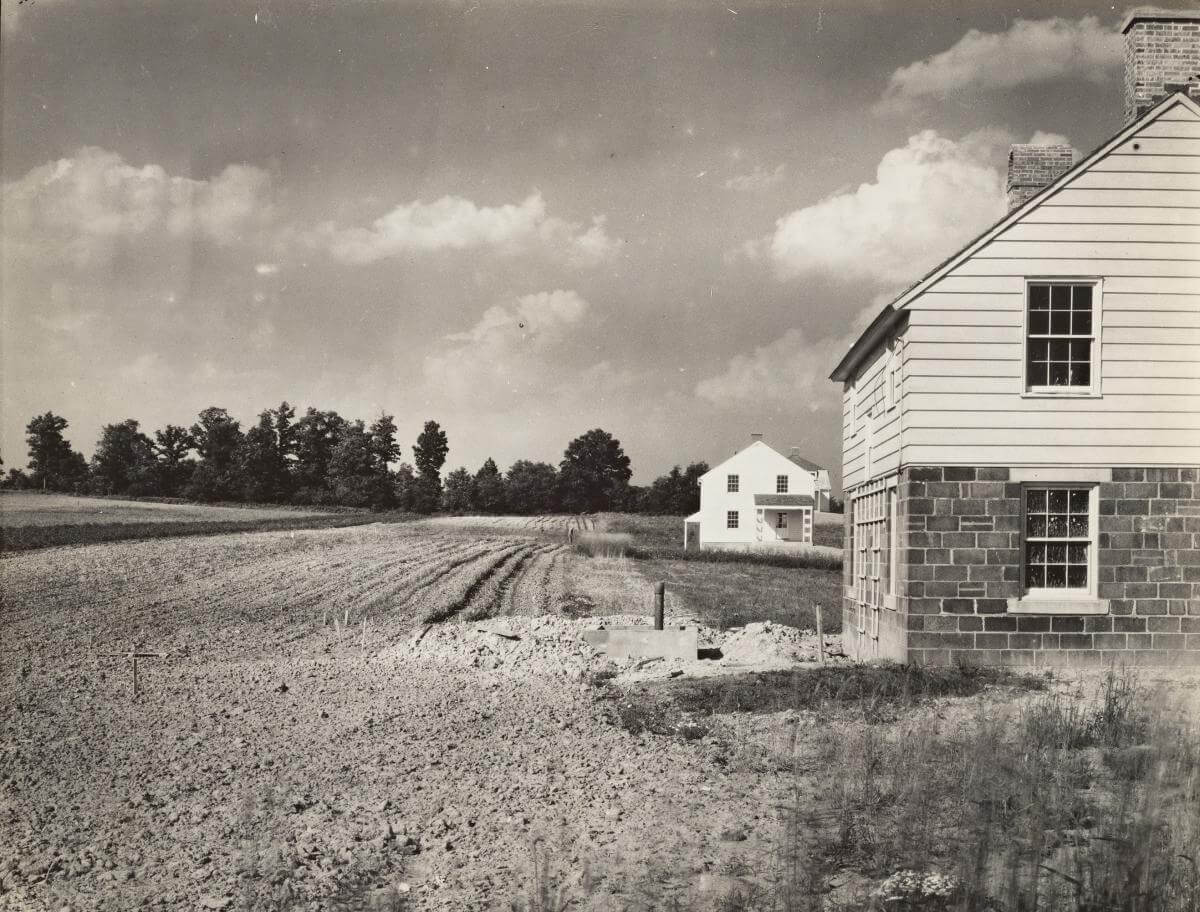
Top, View of Arthurdale project, Reedsville, West Virginia, 1935. Photograph by Walker Evans. Courtesy of the New York Public Library Miriam and Ira D. Wallach Division, digitalcollections.nypl.org/items/96818680-baca-0132-6504-58d385a7b928. Bottom, Homes and land cultivation, Arthurdale project, Reedsville, West Virginia, 1935. Photograph by Walker Evans. Courtesy of the New York Public Library Miriam and Ira D. Wallach Division, digitalcollections.nypl.org/items/94ba4f90-baca-0132-01de-58d385a7b928.
The act seeks to preserve and encourage a makeshift economy that has been practiced for two centuries among mountain farmers, as well as among people in other parts of the United States. Readers in New York, Chicago, or Los Angeles might not appreciate the extent to which rural Americans depend on forests and other environments for food and cash. In the 1980s, Timothy Lee Barnwell photographed and interviewed Appalachians who practiced agrarian economy. Charlie Thomas of Bush Creek, North Carolina, said, "Even when I was growing up we raised almost everything we ate. You'd buy a little coffee if you wanted it, but we never drank it, and buy or trade for what sugar you needed, and we used honey for that. We've always kept bees for our own honey." A series of interviews conducted in southern West Virginia during the 1990s is now part of the Library of Congress. "People around here . . . on Coal River, just about every one of them does the same thing," explained Dave Bailey. "They pick the grains, they pick the black berries, they fish, they hunt . . . they get the molly moochers [the morchella or morel mushroom] . . . They do that, their kids is going to do it, their grandkids is going to do it, and that's the way it is on Coal River." Others interviewed detailed their extensive knowledge of trees and plants. None of these West Virginians need the Commons Communities Act to continue living as they always have, from whatever forested commons they can still find. The act is meant to promote this social ecology. By combining land and livelihood—by fostering possession against a history of dispossession—it would reconnect communities and landscapes in a structure for sustaining both.6Tim Barnwell, The Face of Appalachia: Portraits from the Mountain Farm (New York: W. W. Norton, 2003), 121, 122, 126. The project is Tending the Commons: Folklife and Landscape in Southern West Virginia in cooperation with the Coal River Folklife Project and the American Folklife Center at the Library of Congress. Dave Bailey interviewed by Mary Hufford on April 12, 1996 (AFC 1999/008), http://hdl.loc.gov/loc.afc/afccmns.104007; Virgil Jarrell interviewed by Mary Hufford on May 23, 1996 (AFC 1999/008), http://hdl.loc.gov/loc.afc/afccmns.117004.
The political economy of the act combines private and communal property. Residents may buy and sell their homes, pass them to the next generation, and do anything else with them permitted by local law. They would act differently in their role as managers of common woods and waters. Economists have rarely understood the logic of collective use. The most common argument says that every user has an incentive to cut every last tree, shoot every last large-bodied mammal, and let his cattle graze every last acre of wild meadow, leaving nothing for anyone else. The forest is reduced to stumps; the high meadow is overrun with thistle. This is the misleading parable of the "Tragedy of the Commons," most famously described by the biologist Garrett Hardin in 1968.7Garrett Hardin, "The Tragedy of the Commons," Science 162 (December 13, 1968): 1243–48.
Hardin based his model on a self-serving conception of human nature. His essay has nothing to do with how actual people govern actual shared resources, cases that Hardin seems to have known little about. His first mistake was to think that a commons is a free-for-all. No such set of resources is open to everyone, but only to members, defined in various ways. Consider the forests of New England in the nineteenth century. Colonial towns owned them and controlled access, allowing some to cut trees and others to hunt and fish with permission. Lobster fishermen in Maine operate according to their own rules and institutions, with little government involvement, resulting in one of the most successful fisheries in the world. But they decide who can and cannot benefit. Thus everyone who depends on common property has an incentive to maintain it. This is not to say that everyone is always satisfied. Community management requires governance to mediate disagreement and limit the consequences of conflict. The point is that it's simply not true that common property always degenerates into scarcity.8According to Richard Judd, "These local common resource regimes established two central principles for the emerging New England conservation tradition: communities bore collective responsibility for managing their resources in a productive fashion, and they were to allocate these resources equitably." Judd, Common Lands, Common People: The Origins of Conservation in Northern New England (Cambridge, MA: Harvard University Press, 1997), 7–8, 41–45; James Acheson, Capturing the Commons: Devising Institutions to Manage the Maine Lobster Industry (Hanover, NH: University Press of New England, 2003), 206; Allan Greer, "Commons and Enclosure in the Colonization of North America," American Historical Review 117, no. 2 (April 2012): 365–86.
But Hardin cannot be dismissed altogether. His fable reasonably describes resources that no group can manage, like the open ocean and the atmosphere. And not all collective uses of land have succeeded. (In fact, we know very little about how the functional forest commons fared in West Virginia, how well users governed themselves.) Without regulations and penalties, without clear borders and firm institutions, they can result in devastation. This is why Elinor Ostrom studied them—to figure out why some failed and others thrived.9Kathryn Newfont, Blue Ridge Commons: Environmental Activism and Forest History in Western North Carolina (Athens: University of Georgia Press, 2012), 276.
We all live in communities. In a sense, no one really lives in the United States but in neighborhoods, towns, and counties. Strengthening those bonds within environments that allow for economic autonomy seems like a way of creating space between people and the nation-state. It might also offer a way to endure during times of climate disruption, when the United States might not be capable of compensating for any number of possible disasters. The Commons Communities Act proposes land reform and collective governance. It proposes nothing new, but rather something very old, a sense of ownership without the enclosure and the abuse of power characteristic of private property.10Ibid.
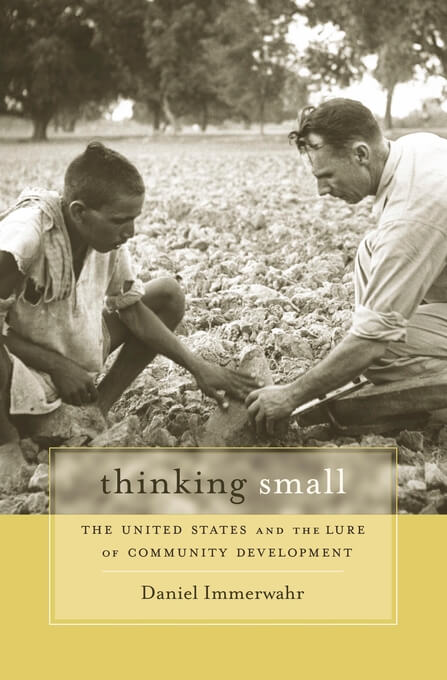
And yet, I have my own objections to the Commons Communities Act. Small-scale development programs appeared decades ago, with mixed results. The same reformers and intellectuals who rediscovered the small town and the Indian pueblo during the New Deal urged communitarian approaches all over the world. But these schemes harbored certain false assumptions, well described by the historian Daniel Immerwahr. Development agencies believed that the members of a village acted from shared principles and that local elites would fairly apportion money entrusted to them. But villages in the Philippines and India turned out to be more complicated—and divided—than the sanguine Americans had thought. Immerwahr suggests another problem. When a nation-state invests in a community, where does its influence end? What role would the United States play in a commons community?11Daniel Immerwahr, Thinking Small: The United States and the Lure of Community Development (Cambridge, MA: Harvard University Press, 2015).
The act might also be criticized for shunting the problem of industrial abandonment onto the poor, just like the Division of Subsistence Homesteads. In this way, it seems like a neoliberal policy intended to reduce the cost of state services and lower taxes on the rich. And while under the act the corporations that caused so much human and ecological ruin would be required to pay for houses and schools, this doesn't change or challenge a political economy in which humans and environments serve as inputs in the circulation of capital. For corporations, compensating for social destruction is merely part of the cost of doing business. Eliminating these contradictions so that citizens benefit would require a government and a set of laws dedicated to human welfare.
The act includes scholarships so that the children of Appalachian households might attend college, but it does not come close to addressing the larger cultural problem of why high school kids in Appalachia often don't apply. In Hillbilly Elegy (2016), J. D. Vance eloquently explains why it's so difficult for Appalachians to find a way out of unemployment and improve the quality of their lives. Some see themselves as different from those outside their families or counties. People in other parts of the country view them harshly, with many of the same racialized stereotypes present a century ago. All of this makes geographic and social mobility difficult. Vance's own story suggests that a strong mentor with the capacity to see beyond limited local opportunities can overcome self-defeat. Vance's mentor was his grandmother. "She didn't just preach and cuss and demand. She showed me what was possible . . . and made sure I knew how to get there." Her home provided Vance stability and peace, "not just a short-term haven but also hope for a better life."
Vance got out. He graduated from Ohio State University, the Marines, and Yale Law School before joining a Silicon Valley investment firm. But his very success implies the depth of the problem he confronted. The most unsettling currents in Hillbilly Elegy lie in the necessity of leaving and in its emphasis on a strong and uncompromising grandmother. If meaningful work and a decent occupation only exist elsewhere, then most Appalachians will be abandoned. If escape depends on someone who rises above despair and abuse, then most will be stuck. The role of public policy and a political solution to poverty is to attempt to help everyone in the same situation rather than rely on extraordinary circumstance and plain luck to produce successful individuals. Vance's book is inspiring as a memoir, but it might be construed as saying that the tragedy of Appalachia is the sum of its individual failings or the insularity of its families.12J. D. Vance, Hillbilly Elegy: A Memoir of a Family and Culture in Crisis (New York: Harper Collins, 2016): 148–49, 206. Domestic violence, drug abuse, and hopelessness on such a scale have social causes. They require solutions that do not place the burden on the sufferers themselves to transcend their circumstances.
About the Author
Steven Stoll is a professor of history at Fordham University and the author of The Great Delusion (Hill and Wang, 2008) and Larding the Lean Earth (Hill and Wang, 2002). His writing has appeared in Harper's Magazine, Lapham's Quarterly, and the New Haven Review.
]]>Introduction

Early in 1949, Dottie Colson wrote to the National Health Council in New York City for advice on how to start a "real health movement" in her hometown. Colson believed that use of the pesticide DDT in her rural community outside of Claxton, Georgia, was causing grave harm, and that she and her neighbors had a right to be spared its effects. She described her own sensitivity to the chemical, her daughter's unyielding sore throat, the illness that had struck the family's dairy cows, and the loss of their baby chicks and honeybees. The harm to livestock, fowl, and bees, along with an endless stream of doctors' bills, threatened the family with financial ruin. In Colson's telling, DDT was destroying their lives.1Letter from Mrs. H.J. Colson to The National Health Council, January 31, 1949, Folder: T-47: Toxicology–Economic Poisons–Insecticides–Mrs. Plyler & Colson, Box 3, Record Group 26, Subgroup 4, Series 21, Georgia Archives. More than that, as one of her neighbors put it, DDT was destroying a way of life, as it made small farms unsustainable and eroded the good health and cooperative spirit that were the backbone of rural communities such as theirs.2Letter from Mrs. B.C. Plyler to Hon. Herman Talmadge, August 17, 1950, Folder: Plyler and Colson, Box 3, Record Group 26, Subgroup 4, Series 21, Georgia Archives.
Colson's crusade against DDT began in 1945, the same year the pesticide emerged from the Second World War as an American miracle. First synthesized by an Austrian chemist in the late-nineteenth century, DDT's powers as a pesticide weren't discovered until World War II. By the time the war ended, it was credited with saving millions in Europe and the Pacific theater from insect-borne diseases, and the US Army proclaimed it the "war's greatest contribution to the future health of the world."3"DDT Seen for Public by Spring," Atlanta Journal, August 6, 1945, 18. Just a few months after the war's end in Europe, DDT became commercially available in the US. It was quickly and enthusiastically deployed in liquid and powder form against insect pests across the country, especially in the South, where health departments and agricultural interests hailed it as an authentically American "wonder drug" poised to bring the "magic" it had worked against diseases such as malaria and typhus abroad back home.4"Seminole Uses Wonder Drug to Fight Malaria," Atlanta Journal, March 13, 1945; "Danger – DDT," Georgia's Health 25, no. 4 (1945): 4.
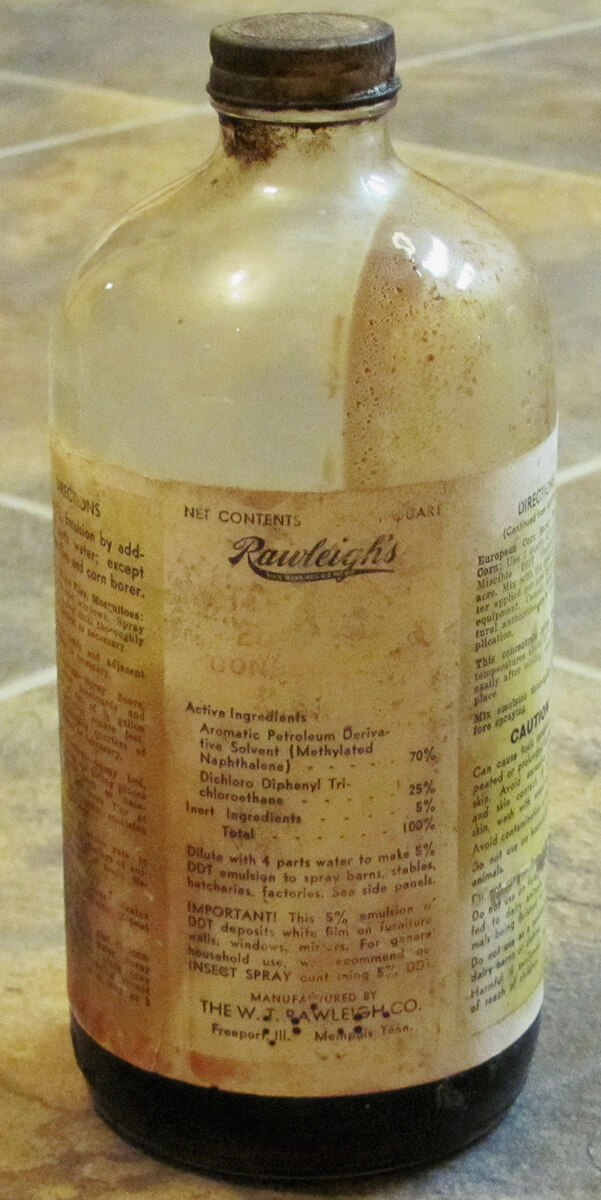
But a countervailing narrative of DDT also emerged. Local media warned of DDT's potential to kill not only harmful insects but "the innocent and beneficial" as well, and to upset "the complex balance of nature."5"Use Care With DDT, Farmers Are Warned," Atlanta Journal, August 1, 1945, 12. At the same time, citizens like Colson and her neighbors circulated complaints about their personal encounters with the chemical and fought to keep it off their land and out of their homes. As they contacted state officials, local and federal lawmakers, and the pesticide manufacturers, they decried the widespread use of DDT as an infringement on their right to property and livelihood, an un-Christian cause of human suffering based on an irresponsible ignorance of the chemical's harm.
This essay recounts the story of one community's fight against DDT in the years immediately after its introduction to the US market, in order, first, to demonstrate that DDT's reception in this period was more troubled than the chemical's historiography generally allows, and, second, to insert a more complicated story of local American values, beliefs, and ideas about health and environment into the often-told global histories of DDT during and immediately after World War II. The pesticide's use in peacetime raised health and environmental concerns not urgent during wartime. In this new context, scientific knowledge about the chemical's range of effects appeared fragmentary and difficult to synthesize, and varying assessments of DDT's hazards to people and environments became challenging to reconcile. Conversations about the chemical and its use pointed up tensions between the assessment of risk in wartime and in peace; among professionals responsible for individual and public health; and between a lightly regulated industry and the government bodies charged with mitigating the consequences of its products' various uses. As these conversations took place, DDT acquired a layered symbolism: it remained a wartime miracle to most, even as to others it became the tool of a government in service to big-capital interests. Additionally, DDT's widespread, national visibility—fostered by wartime media attention and postwar advertising and promotion—was critical to the symbolism the pesticide acquired, and had paradoxical consequences for its reputation and, potentially, for its persistence on the US market in the decades after the war.
The Problem with Claxton
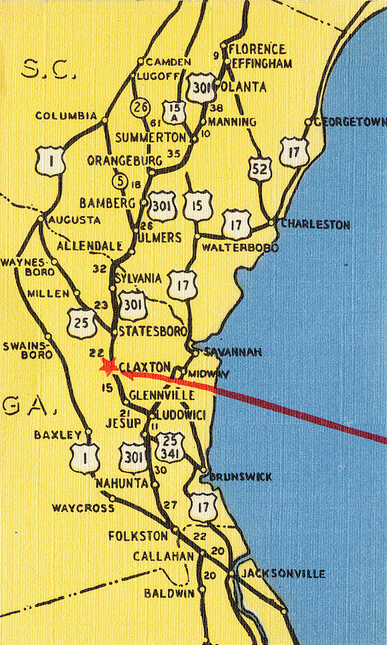
In the mid-1940s, Dottie Colson and her blacksmith husband Henry, along with daughters Hazel and Dorothy, lived on a small farm off newly paved Highway 280, which paralleled the railroad that ran from Savannah to Cordele. It was an ideal place to live; as Colson's neighbor—and sister—Mamie Ella Plyler put it, "No farm could be more conveniently situated, as we have paved highway outlets to all towns, are on Georgia Power line, mail delivery, telephone, [and] school bus and several passenger buses pass each way daily which take on or let off passengers at our door."6Letter from Mrs. B.C. Plyler to Prince Preston, September 7, 1950, Folder: T-47: Toxicology-Economic Poisons-Insecticides-Mrs. Plyler and Colson, Box 3, Record Group 26, Subgroup 4, Series 21, Georgia Archives. This folder of letters contains evidence that other Claxton residents shared the sentiments and experiences documented by Colson and Plyler. This evidence includes a petition signed by a group of Claxton residents and pesticide surveys completed by residents. This essay draws predominantly on the letters written by Colson and Plyler, however, as their letters, in particular about a half-dozen very lengthy ones, contain the most detailed accounts of the community's experience. The bulk of these letters are in the records of the Department of Health; very few are in the records of the Department of Agriculture. The existing letters, however, indicate that the Claxton residents wrote to multiple government agencies, at all levels, across the state and in Washington, DC. But the stretch of highway outside of Claxton was not their first choice of residence. In 1942, the US Army had bought the land they then lived on, roughly forty miles southeast of Claxton, to expand Camp Stewart for an antiaircraft artillery training center and prisoner of war facilities.7A. M. De Quesada, A History of Georgia Forts: Georgia's Lonely Outposts (Charleston, SC: History Press, 2011), 107–109. Plyler later wrote that they moved with "chin up" in service of their country, even as the place they relocated to "took advantage of this forced exile of families" with inflated land prices that ultimately came with added costs.8Letter from Mrs. B.C. Plyler to Prince Preston September 7, 1950.
For Plyler, the problem with Claxton became apparent in March of 1945, when she fell ill. She later recorded that she had developed severe sores in her mouth and throat and a persistent "irritation" of the head that didn't give way until fall. Plyler's husband "B.C." and daughters Betty and Martha suffered similarly. Before long, she noted that their symptoms were seasonal: they set in when the "big land owners" who owned the fields surrounding her home began "spraying" their crops at the end of winter, and they let up when the spraying season ended in October. The sprays and dusts coated everything on the Plyler farm: cow pasture, vegetable garden, fruit trees, chicken coops, open feed boxes and water pans, clothes and bedding hung out on the line, and everything and everyone in the house if the windows were open when the spraying began. Moreover, the Plylers' chickens were dying, and their livestock were sick, too.9Ibid.
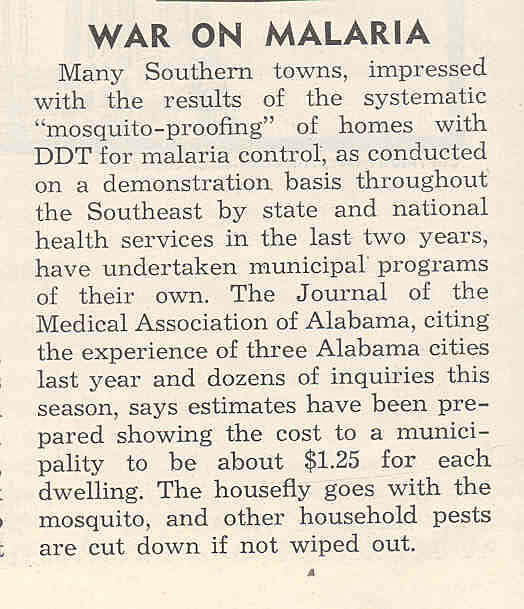
At first neither Plyler nor Colson knew what was being sprayed over the fields adjacent to their farms. But their suspicion quickly landed on DDT. During the war, DDT had earned fame for its ability to bring epidemics to a dramatic halt or prevent them entirely. It had saved war-torn Naples from typhus, soldiers in the Pacific from malaria, and troops in every theater from bed bugs, lice, and more.10Edmund Russell, War and Nature: Fighting Humans and Insects with Chemicals from World War I to Silent Spring (New York: Cambridge University Press, 2001), 127–129, 155. National news outlets carried the word that the "magic insect powder" was "one of the greatest scientific discoveries" of the war and nothing short of a "miracle."11"DDT," Washington Post, August 1, 1945, 6; "DDT," Time, June 12, 1944; "Doubts DDT Caused Bay Fish Deaths," Washington Post, August 23, 1945, 3. In Plyler and Colson's home state, local papers echoed the message, calling DDT a "wonder insecticide" and the "Chemical That Saves Millions."12"DDT May End Malaria When War Needs End," Atlanta Constitution, May 13, 1945, 5B; Frank Carey, "Chemical That Saves Millions," Augusta Chronicle, December 4, 1944, 7.
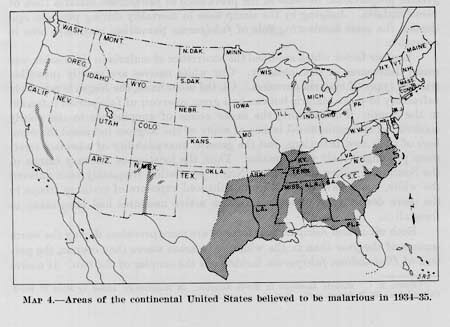
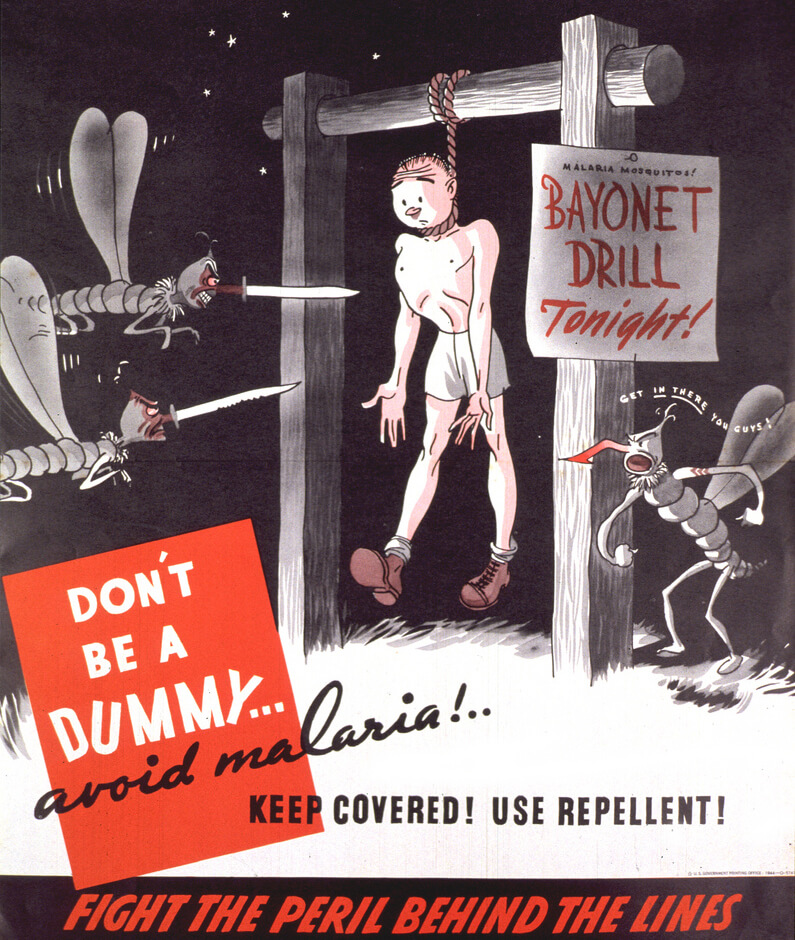
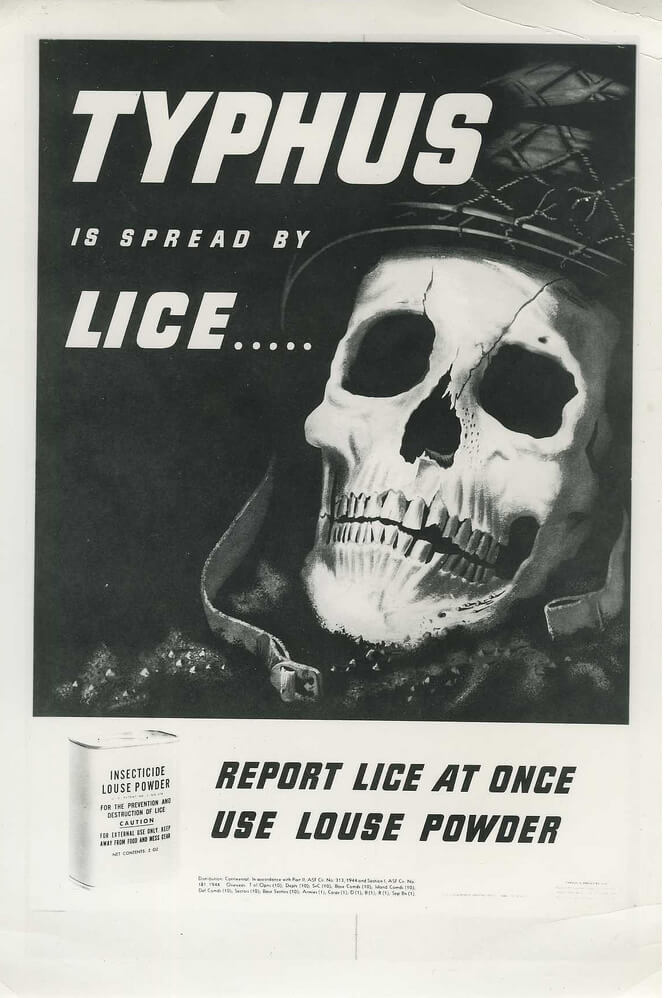
Colson and Plyler did not hear about DDT solely in dispatches from abroad. Before the war was over, DDT had been put to use in the Southeast's malaria belt, which included their home state.13Despite the fact that malaria rates were at historic lows in the early 1940s, the war had, according to historian Margaret Humphreys, brought new attention to the devastation wrought by the disease abroad, "and the crisis climate spread to the American South." Margaret Humphreys, Malaria: Poverty, Race, and Public Health in the United States (Baltimore, MD: Johns Hopkins University Press, 2001), 140. In 1942, the federal government had established the Malaria Control in War Areas (MCWA) agency, headquartered in Georgia and tasked with creating malaria-free zones around military sites. Two years later, the agency's head convinced Congress to authorize an expansion of their programming; the agency's "Extended Program" wouldn't focus solely on war areas, but on all malaria-prone areas across a dozen southern states. The program's main tool in rural areas was DDT, and in its first year, MCWA sprayed more than half a million homes. In Georgia, the health department boasted that only Arkansas had deployed more DDT.14"Mosquito Proofing," Georgia's Health 26, no. 8 (1946): 2; "Danger - DDT," Georgia's Health 25, no. 4 (1945): 4. The success helped inspire a second DDT-driven campaign in Georgia, against typhus; the state had among the highest rates of the disease in the nation.15The Department of Health's anti-typhus campaign was multi-pronged: it involved extermination, elimination of food sources, and rat-proofing of buildings. However, the dusting of rat runs with DDT took center stage in the department's dispatches about the effort. See for example, "DDT's Typhus Role," Georgia's Health 26, no. 8 (1946): 1; "Typhus Takes a Tumble," Georgia's Health 26, no. 5 (1948): 1; "5 Tons of DDT Received Here," Augusta Chronicle, November 21, 1945, 10; "Health Officers Will Spray DDT," Augusta Chronicle, December 2, 1945, 7. Soon, Georgia was also spraying and dusting rat "runs," municipal dumps, dairies, abattoirs, freezer-locker plants, sausage-manufacturing facilities, and more with DDT, all in a continued effort to eliminate the array of insects suspected of carrying infectious disease.16Communicable Disease Center Technical Development Division, Savannah, Georgia, "Summary of Activities," No. 12, October–December 1947, Headquarters and Branch Reports, Box 2, Record Group 442, The National Archives at Atlanta; Georgia Malaria Control in War Areas Carter Memorial Laboratory Savannah, "Summary of Activities," May 1945, Folder: MCWA Carter Memorial Lab; Savannah, GA 1946, 1945, Historical Files, Box 2, Record Group 442, National Archives at Atlanta.
Surviving health department records do not indicate that Claxton was among the towns where homes or businesses were sprayed as part of the Extended Program, although Claxton residents did record seeing DDT delivered to the local health office (and health officers' own letters confirm this). Surviving records of the state's Department of Agriculture document that Claxton and neighboring Evans County were sprayed with DDT sometime before the end of 1947, likely in an effort to control the white-fringed beetle, a nursery and crop pest.17Maps Index Cards, DDT Spray Program, March–November 1947, Record Group 13, Subgroup 2, Series 41, Box 1, Department of Agriculture, Georgia Archives; Hal Allen, "Air War Set in Macon Area on White-Fringed Beetle," Macon Telegraph, July 15, 1946, 1; "Battle against Beetle Mapped: Middle Georgia Counties Are Put under Quarantine," Macon Telegraph, Sept 25, 1946, 1. In the years after the war, DDT's uses rapidly evolved from predominantly public-health oriented to predominantly agricultural. In the wetlands and wildlife refuges to the east of Claxton, between Claxton and Savannah, the MCWA's Technical Development Branch laboratory (along with the US Fish and Wildlife Service and the US Department of Agriculture) carried out extensive tests on DDT's toxicity to animals in the wild and in the lab.18United States Public Health Service Malaria Control in War Areas Carter Memorial Laboratory, "Work Project Outlines," 1946, Headquarters and Branch Reports, Box 2, Record Group 442, National Archives at Atlanta; Summary of Activities No. 7, Communicable Disease Center Technical Development Division, Savannah, Georgia, July–September 1946, Headquarters and Branch Reports, Box 2, Record Group 442, National Archives at Atlanta. In the mid-1940s, then, Claxton residents would have been very familiar with both news and sight of DDT spread in and around their communities, whether as a dust or spray, by hand or by plane.
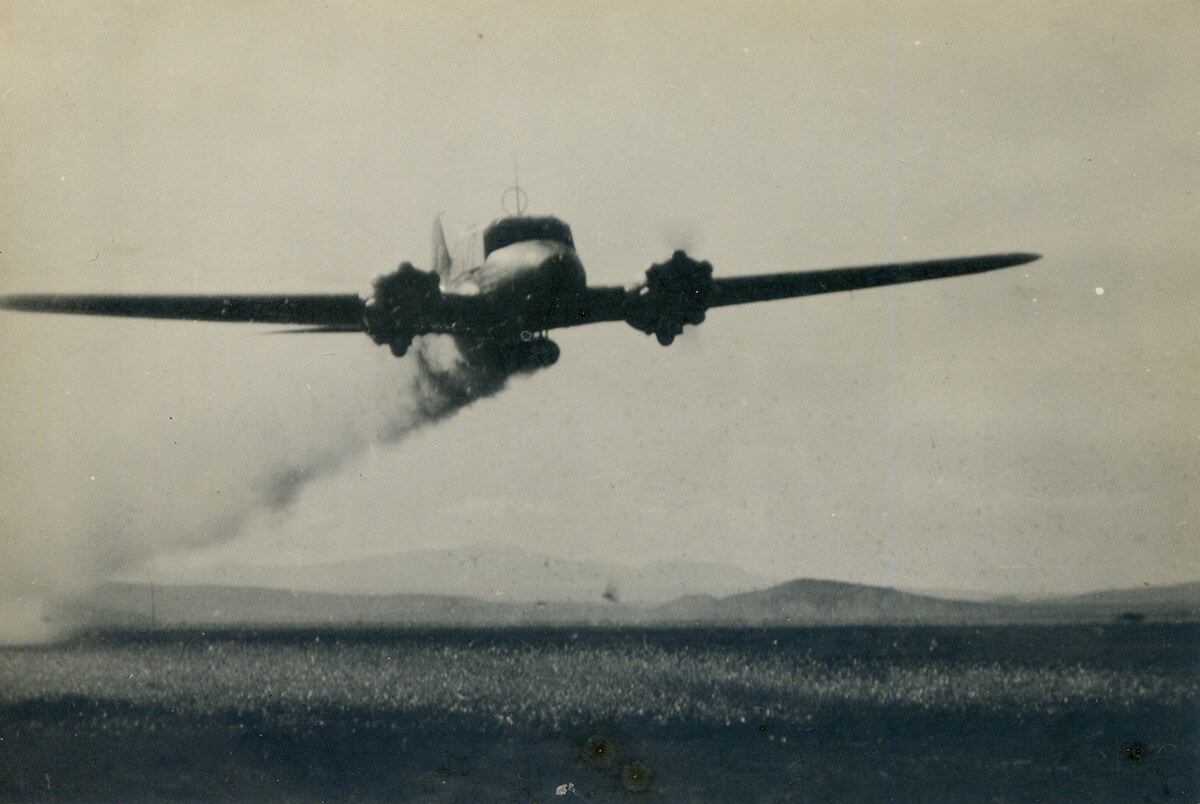
It was airplane application that proved so troubling to the residents of Claxton. As Pete Daniel describes in Toxic Drift, aerial pesticide application in the Deep South first began in the 1920s, when World War I aircraft were retrofitted with dispensers and cranks. Over the course of that decade, using planes to spread insecticides such as calcium arsenate and Paris green became more and more common on big cotton plantations.19Pete Daniel, Toxic Drift: Pesticides and Health in the Post-World War II South (Baton Rouge: Louisiana State University Press in association with Smithsonian Institution, Washington, DC, 2005), 48–50. Two decades later, the Second World War similarly—and further—propelled the practice as chemical warfare fogging tanks fitted to the bomb racks of fighter planes were filled with DDT emulsions and sprayed over southern Europe, North Africa, and Asia, sometimes dosing entire islands.20See for example Frank M. Snowden, The Conquest of Malaria: Italy, 1900–1962 (New Haven, CT: Yale University Press, 2006), 199. After the war, some US farmers bought surplus planes, rigged them with spraying equipment, and coated their crops—sometimes with older pesticides, and sometimes with the new, synthetic ones developed for the war effort, including DDT.21Russell, War and Nature: Fighting Humans and Insects with Chemicals from World War I to Silent Spring, 162; "DDT Available for Civilian Use Early Next Week," Washington Post, July 27, 1945, 1. When Claxton residents saw rigged planes loading pesticides on Highway 280 (which the planes often used as a landing strip), and when they saw the planes flying low to coat the neighboring fields of tomatoes, peanuts, tobacco, and other crops owned by the "big land owners" who lived in town, they quickly concluded the planes were spreading DDT. They had no direct proof that the spray was DDT, but what else, as Plyler put it, could "come over like big clouds of billowy smoke from a locomotive, so dense it casts a shadow as it passes between us and the sun"?22Letter from Mrs. B.C. Plyler to Prince Preston, September 7, 1950.
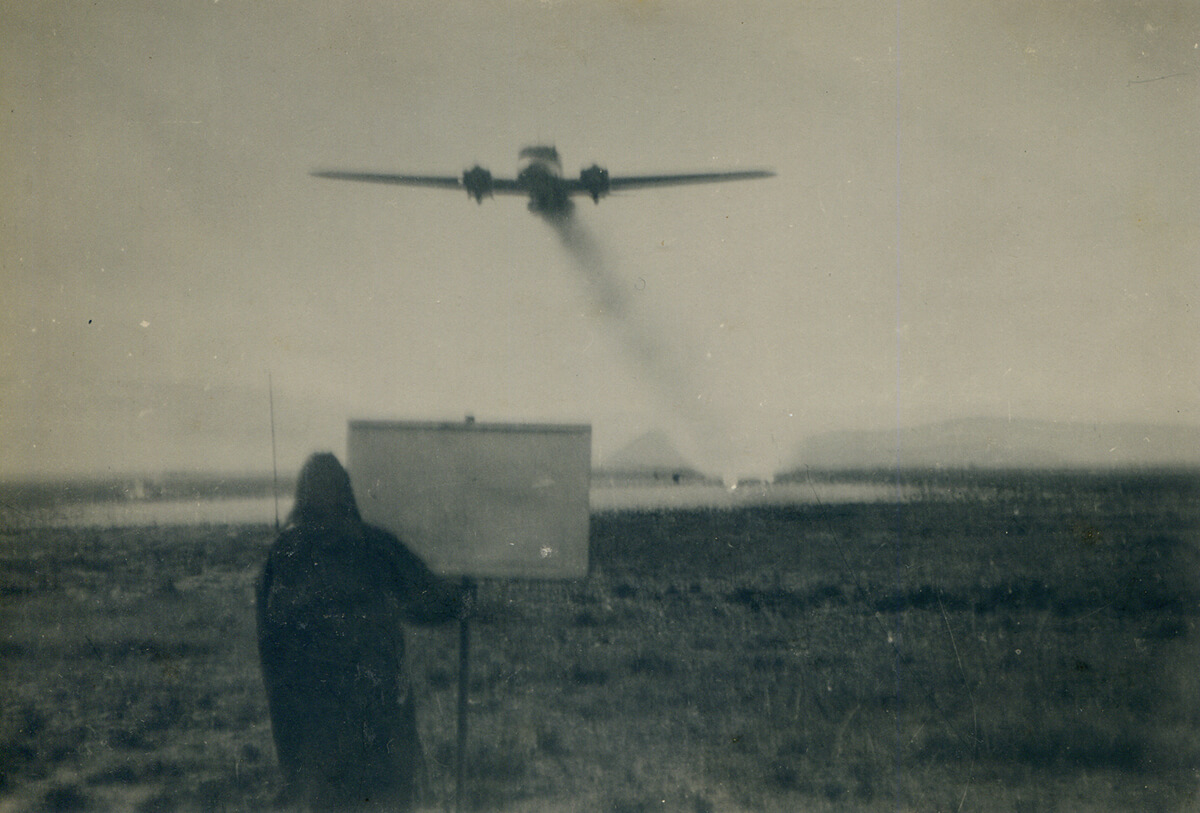
In a petition sent to the director of Georgia's Department of Health, the governor, both Georgia senators, and their congressman, a dozen Claxton residents recalled a time "when all the dusting and spraying was done by the shaking of dusts by hand from a flour sack held over plants, or a hand operated sprayer, or an implement mule drawn." Such methods, they added, insured that the "insecticides stayed in the area they were being applied on." But in the new era of farming, they wrote, more and more farmers, especially the wealthier ones who lived in town and cultivated their hundreds of acres from afar, treated their fields using aerial crop dusters and sprayers. With "any breeze blowing," the sprays and dusts blew into small farmers' homes and onto their vegetables, pastures, chicken yards, and laundry lines. This practice, the residents argued, was causing "poisoning of humans" and "endangering life."23Petition submitted to Georgia Department of Public Health, October 24, 1950, Folder: T-47: Toxicology–Economic Poisons–Insecticides–Mrs. Plyler & Colson, Box 3, Record Group 26, Subgroup 4, Series 21, Georgia Archives. And they were powerless to stop it.
The petition called on the health department to exercise its "authority" to restrict "the uses of, and methods of applying, insecticides in residential areas," based on the fact that the chemicals caused "distressing symptoms, acute suffering and even death in humans and other warm blooded farm animals and fowl."24Ibid. This last charge was not based on personal observations alone, although Colson and Plyler in particular listed such observations in great detail in years' worth of letters to state and federal officials. Rather, it relied just as much on the group's—and especially Colson's and Plyler's—dogged investigations into DDT and other "economic poisons" (as insecticides were called) of the postwar era.25Insecticides in the pre- and immediate postwar period were dubbed economic poisons for the fact that they were known poisonous substances used for economic benefit. The ubiquity of DDT in wartime and postwar news reports and advertising, along with its enthusiastic and widespread use in postwar state public health and agricultural programs, initially focused the Claxton residents' suspicion on DDT as a cause of their suffering. When they began to look into expert literature on the chemical more closely, they easily found evidence that appeared to prove it was harming their health—and they didn't have to dig very deep to find it.
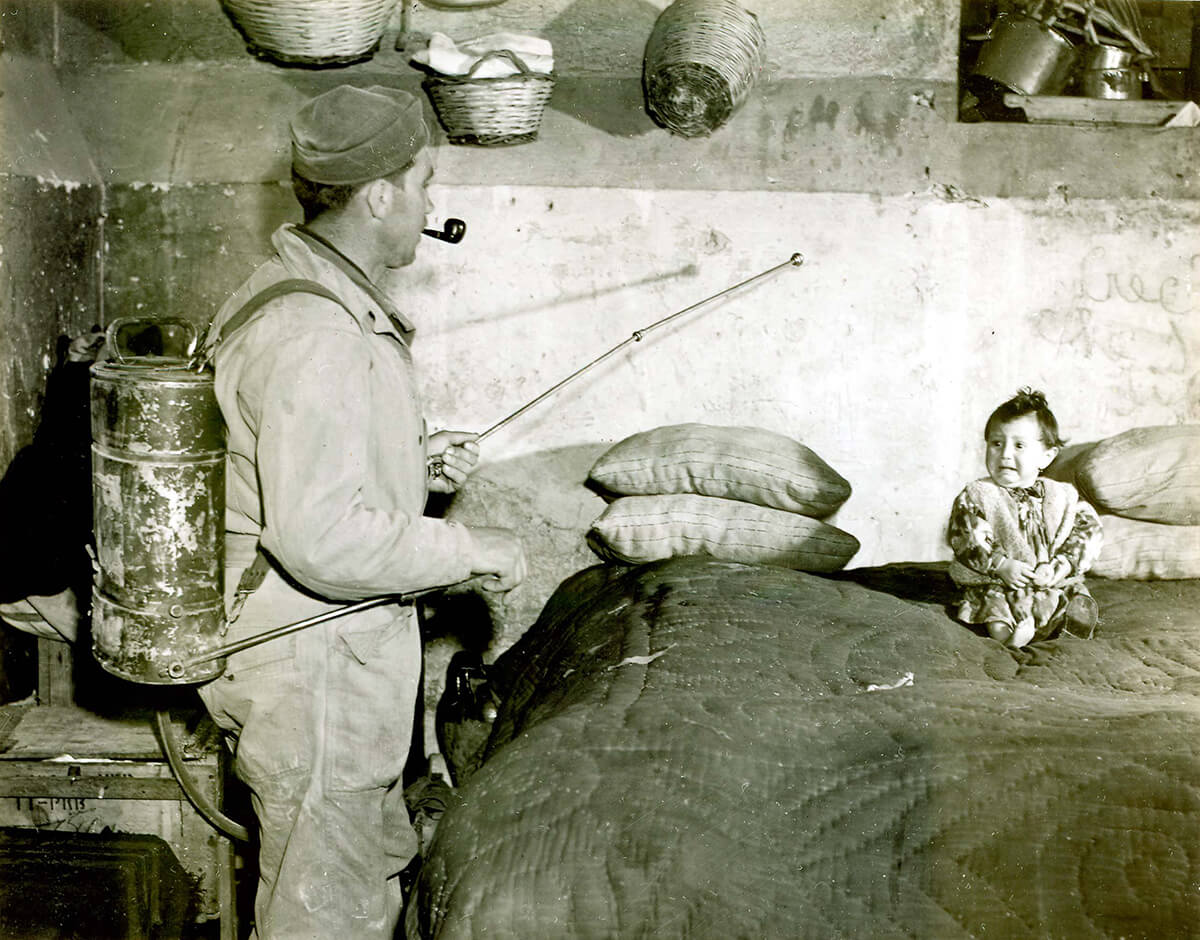
Spraying interior of Italian houses with 10% DDT and kerosene for malaria control, 32nd Field Hospital, Unit B Installation, February 26, 1945. Image by Flickr user Otis Historical Archives National Museum of Health and Medicine. Creative Commons license CC BY 2.0.
Before drafting the petition with her neighbors, but after failed attempts to enlist the Department of Commerce, the Highway Patrol, and the Civic Aeronautics Administration to halt the aerial spraying of DDT on her land, Dottie Colson had reached out to Lester Petrie, the Director of Industrial Hygiene at the Georgia Department of Public Health.26Dottie Colson's first meeting with Lester Petrie is mentioned in a letter she wrote to him later, in the summer of 1948. Letter from Mrs. Henry J. Colson to Lester Petrie, June 30, 1948, Folder: T-47: Toxicology–Economic Poisons–Insecticides–Mrs. Plyler & Colson, Box 3, Record Group 26, Subgroup 4, Series 21, Georgia Archives. I have found reference to contact with the transportation and trade agencies listed here, but I have not found the letters themselves. Colson hoped that Petrie could analyze samples of soil from her property, so that she could prove, once and for all, what had been sprayed on it—and what was making her sick. Her first letter to him betrayed a clear sense of frustration, as well as the assumption that despite DDT's reputation as a "wonder drug," it and the other economic poisons were not being sprayed for her health, but were certainly harming it. "I have tried to be very nice to all who are interested in using these poisons in an effort to save crops," she told Petrie, "yet when I find they are affecting the health of myself and my family, I feel I am justified in wanting to know more about them.27Letter from Mrs. H.J. Colson to Lester Petrie June 30 1948, Folder: T-47: Toxicology–Economic Poisons–Insecticides–Mrs. Plyler & Colson, Box 3, Record Group 26, Subgroup 4, Series 21, Georgia Archives.
In ensuing correspondence, Petrie shared department bulletins and press releases with Colson, and Colson, in turn, shared state laws and information she collected from scientific journals, private physicians, insecticide manufacturers, and "reliable farm papers."28Letter from Mrs. H.J. Colson to Dr. G.D. Lunsford, July 12, 1948, Folder: T-47: Toxicology–Economic Poisons–Insecticides–Mrs. Plyler & Colson, Box 3, Record Group 26, Subgroup 4, Series 21, Georgia Archives. Petrie engaged in an ongoing pursuit of detailed information on the toxicity of the new economic poisons, DDT included, as evidenced by the countless letters he wrote to manufacturers and federal scientists asking for safety data. Despite this shared cause, however, Petrie very quickly reached the limits of his patience with Colson's demands—not only for information, but for antidotes, investigations, and state enforcement of safer spraying practices. To Colson, it was the health department's duty to protect the health of every Georgia resident. To Petrie, his duty was to preserve the health of the state by encouraging practices and policies based on the most recent scientific evidence. And there simply was no evidence of a threat to the state's health.
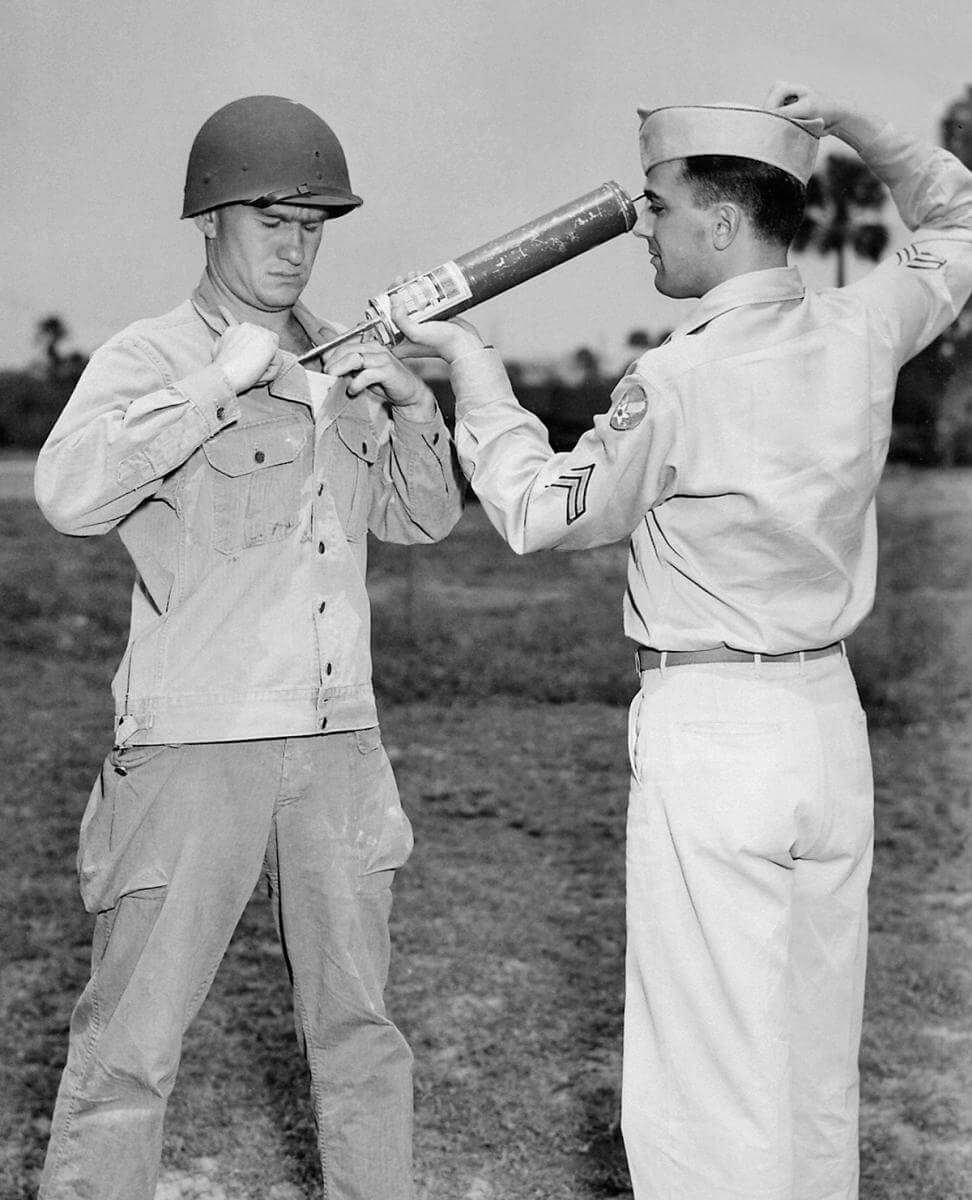
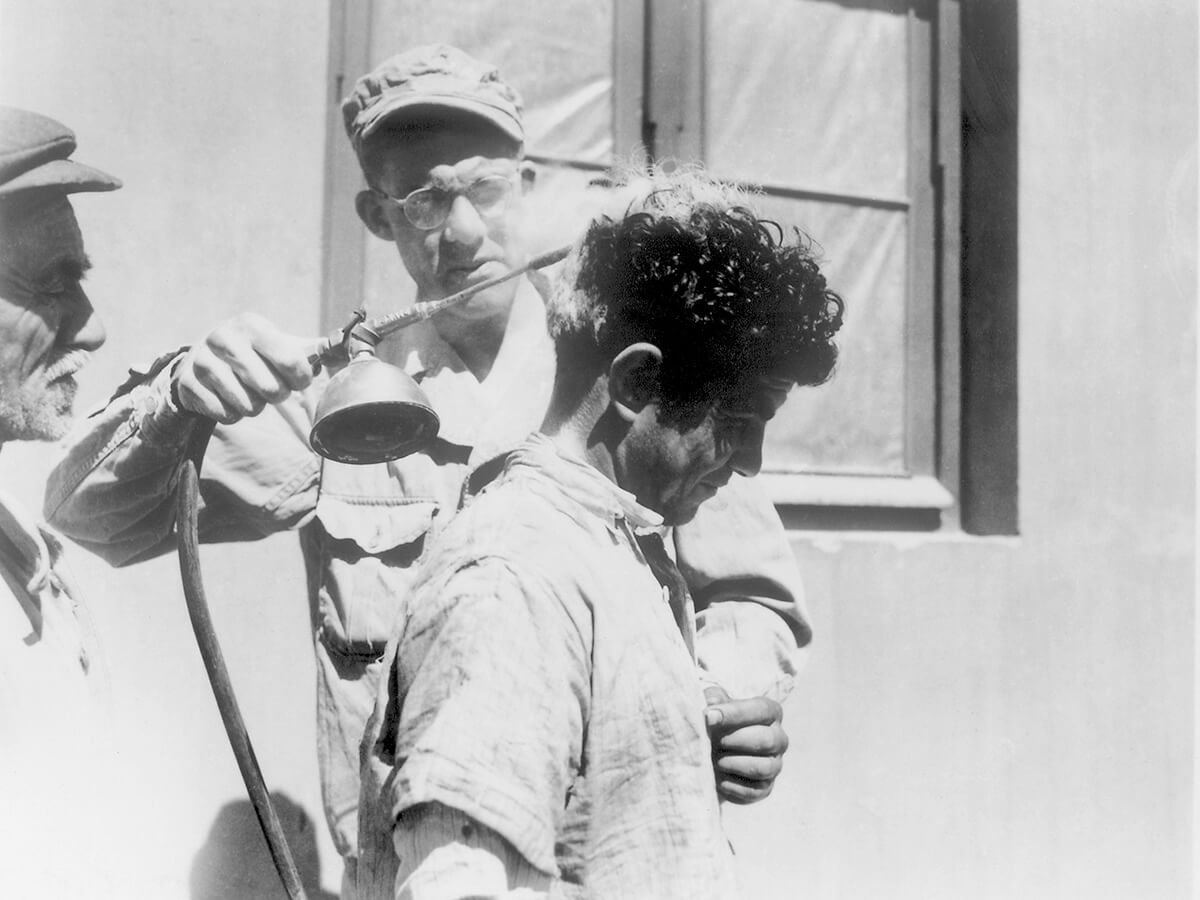
However, in the case of individual complaints about the newer economic poisons, Petrie found himself vexed. The chemicals' rapid commercial release after the war and the confidential nature of their wartime development meant that he had limited access to information about their safety and use; moreover, most of the information he did have access to, on DDT in particular, reflected the health and safety standards of military, not civilian use. He certainly had no antidotes, and he had only limited powers of enforcement over insecticide use.29These were provided in the "Economic Poisons Act," adopted in 1950 to regulate the sale, distribution, and transportation of new insecticides and application devices and enforced by the Department of Agriculture. He did have the power to investigate health threats, but aside from the Claxton complaints, no evidence suggested anything to investigate. Neither wartime research nor DDT's extensive use in the campaigns against malaria and typhus in Georgia had indicated any harm to health. The sole evidence comprised a series of case reports of DDT poisonings and deaths published across a range of US and European medical journals and all attributed to extraordinarily high doses of the insecticide. In one report, a group of starving war prisoners mistook DDT for flour and baked bread with it; those who ate the most bread suffered lasting neurological damage, but all survived.30Richard M. Garrett, "Toxicity of DDT for Man," Journal of the Medical Association of Alabama 17, no. 2 (1947): 74-76. Petrie could find no specific evidence that an incidental, ongoing, exposure like that faced by the residents of Claxton should cause any individual harm—even as Colson and Plyler assured him that the many physicians they consulted were sure that insecticides were behind their ill health.
"I have a great deal of sympathy for Mrs. Colson because of her alleged problems with regard to the killing of her bees, her personal hypersensitiveness to some of the dusts," Petrie wrote to a colleague in Washington, DC, but he found it suspicious that the "only" other complaint about DDT came from her sister.31See for example Letter from Lester Petrie to H.N. Graning, March 4, 1949, Folder: T-47: Toxicology–Economic Poisons–Insecticides–Mrs. Plyler & Colson, Box 3, Record Group 26, Subgroup 4, Series 21, Georgia Archives. Department of Health files indicate that this was not true. To Petrie, the Claxton health problems were "all in their own minds."32Letter from Dr. L. Petrie to Dr. G.G. Lunsford, August 19, 1948, Folder: T-47: Toxicology–Economic Poisons–Insecticides–Mrs. Plyler & Colson Box 3, Record Group 26, Subgroup 4, Series 21, Georgia Archives. Over and over, state officials dismissed Colson's and her neighbors' claims about DDT and other insecticides. And yet the complaints the Claxton residents made echoed the DDT cautions and warnings expressed in news coverage of the chemical, and throughout government and scientific reports, documents, and publications on DDT. As one news clipping service noted, "not a few" of the tens of thousands of DDT-related articles published just after the war "cautioned the public against its sinister and unknown dangers."33H.H. Stage, "Facts and Fallacies About DDT," Mosquito News 6, no. 1 (1946): 1. Many of these admonitions came from official sources and carried the message that DDT was a toxic chemical potentially destructive of nature and harmful to humans.
"Double-Edged Sword"
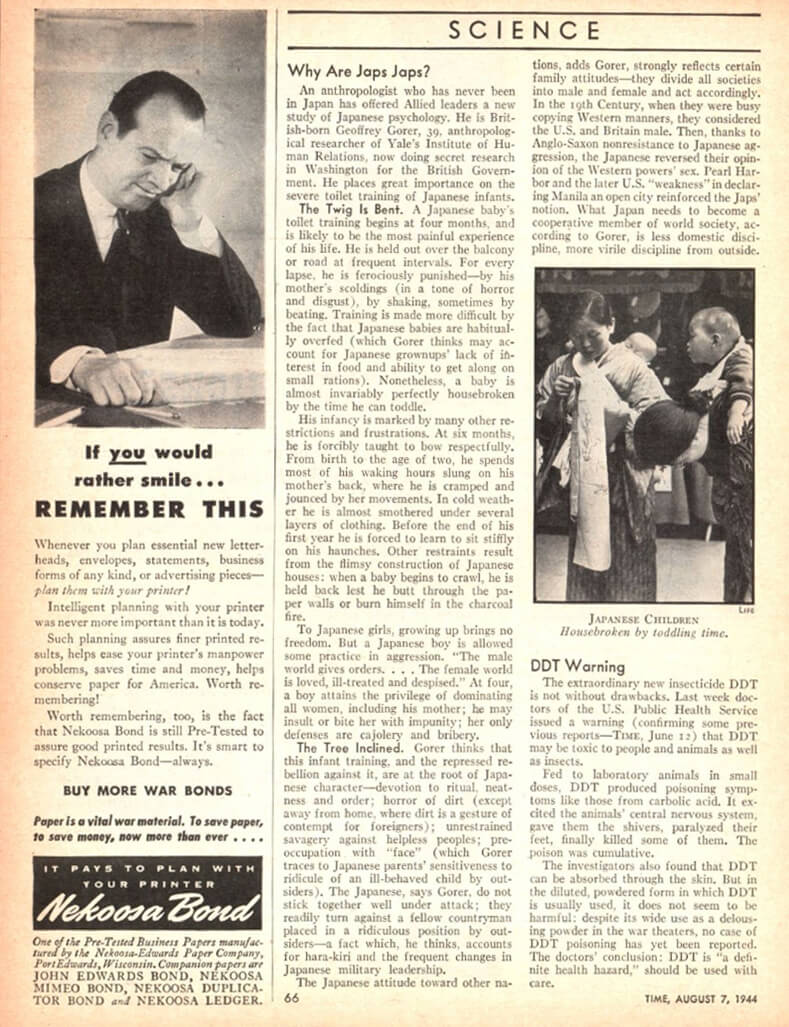
DDT Warning, August 7, 1944. Scan by Time magazine archive. Originally published in the August 7, 1944, issue of Time magazine, page 66.
Such concerns were not hidden. When the Washington Post announced, on its front page, the US Army War Production Board's decision to allow the sale of surplus DDT to civilians in 1945, the article's first sentence informed readers that the Board "warned against 'use of it to upset the balance of nature.'"34"DDT Available for Civilian Use Early Next Week," Washington Post, 1. The second sentence spoke of hazards to users and risks associated with DDT residues on products (even as the article then went on to promise the chemical's future use in paints, plaster, and construction materials to make homes insect-proof). A month after Time magazine enumerated DDT's "amazing" properties, it ran an article, "DDT Warning," describing the "poisoning symptoms" produced in laboratory animals in "small doses"—shivers, paralysis, and occasionally death—along with evidence that the poison was "cumulative." DDT, the article concluded, "is 'a definite health hazard.'"35"DDT Warning," Time, August 7, 1944. The "double-edged sword" served as a popular metaphor for DDT, a weapon that would "rid your home of mosquitoes, flies, and vermin, but the price may turn out to be high in human health and life."36Jane Stafford, "Insect War May Backfire," Science News Letter, August 5, 1944, 90; Bob Jones, "DDT: Handle with Care," Better Homes and Gardens, November 1945, 10.
Local coverage did not always mirror the national news outlets. The Atlanta Journal, Atlanta Constitution, and Augusta Chronicle openly discussed DDT's risks and benefits, but the Macon Telegraph did not report on DDT until it was used against the White Fringed Beetle. The Savannah Morning News largely limited its coverage to developments in DDT research at the local MCWA branch. Nonetheless, many of the cautionary themes found in national reporting appeared in local media, including the double-edged sword. An Augusta Chronicle editorial compared DDT to the atomic bomb, not to convey its impressive nature (as DDT ads often did), but to emphasize that it "kills the innocent and beneficial as well as the obnoxious…and kills a lot of things which we do not want to kill."37Editorial, "Use DDT Intelligently," Augusta Chronicle, August 24, 1945, 4. Other reports made DDT's threat to nature even clearer. News reports in Georgia and neighboring states warned that "a single concentrated application destroys birds"; "even dilute applications are dangerous to fish"; and that, since the pesticide might be killing Georgia's wrens, robins, and mocking birds, "perhaps it would be just as well to leave DDT on probation for a while."38"DDT Available for Home Use within 30 Days, Agencies Say," Atlanta Journal, August 22, 1945, 5; Editorial, "Poisoning the Birds," Atlanta Journal, November 14, 1946; "DDT and Fish," Augusta Chronicle (Reprint from The Columbia (S.C.) State), July 12, 1947, 4. Papers quoted the Tennessee Valley Authority's health director saying that DDT's "potentialities" to cause "biological imbalance are very considerable."39"DDT May End Malaria When War Needs End," Atlanta Constitution; "DDT Insecticide Destroys Pests," Augusta Chronicle, June 3, 1945, 5B.
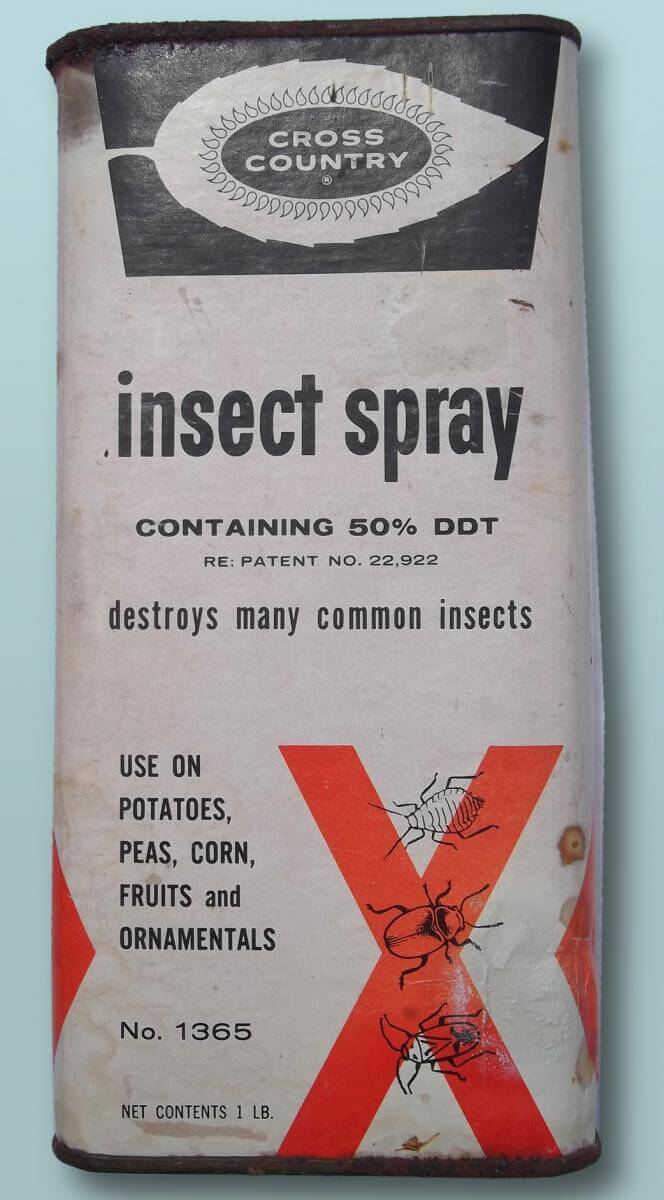
Channing Cope, farm editor and columnist for the Atlanta Constitution, vividly captured ambivalence toward DDT's release. When he brought home his first containers of the poison, Cope spread an emulsion on his home's doors, windows, walls, cracks, and crevices; on the shoulders of his cat Dinty; the back of his pig Pinky; the throats and legs of his mules; and the walls of his milking barn. As a final test, he coated his Scotch terrier with DDT dust. The next morning he was convinced: DDT was a wonder, but it also frightened him. For "we must remember, too, that DDT will kill the bees and that means that it will kill the clover (which means, too, that it will kill off our livestock). It will destroy the fruit crops which are dependent on the bee for pollenization! It will kill of most of the flowers for the same reason and will wipe out many of our vegetables." It's a great "tool for our betterment," he concluded, but it "has the power to ruin us."40Channing Cope, "DDT Experiment Proves Successful," The Atlanta Constitution, August 29, 1945, 7. This was no minor warning from the great popularizer of the insidious kudzu vine. Derek H. Alderman, "Channing Cope and the Making of a Miracle Vine," Geographical Review 94, no. 2 (2004): 157–177.
Cope's worries about pollinators formed part of a common refrain about DDT. "Farmers, truck growers, and victory gardeners," advised a Georgia health department engineer, should "wait and see" what agricultural experts ultimately decided about DDT's "potential to destroy…bees and other pollen carriers," before using it on their own land.41Steed, "Play Safe with DDT," Atlanta Journal Magazine, November 4, 1945, 22–23. The state entomologist ran notices that DDT "might have a deadly effect on Georgia's bee industry."42"Use Care with DDT, Farmers Are Warned," Atlanta Journal, August 1, 1945. Atlanta papers reported complaints of Florida beekeepers about DDT spray programs—and that Georgia beekeepers were "disturbed" that "DDT kills bees as readily as roaches."43Steed, "Play Safe with DDT," Atlanta Journal Magazine, 22–23; "Macdill to Test DDT for Mosquitoes," Atlanta Journal, August 5, 1945, 12. Such warnings, crucial to Georgia agriculture, were far from buried: "DDT Kills Bees, Other Insects, Helpful to Man," ran an Augusta Chronicle front-page headline in August of 1945.44A.P., "DDT Kills Bees, Other Insects Helpful to Man," Augusta Chronicle, August 28, 1945, 1.
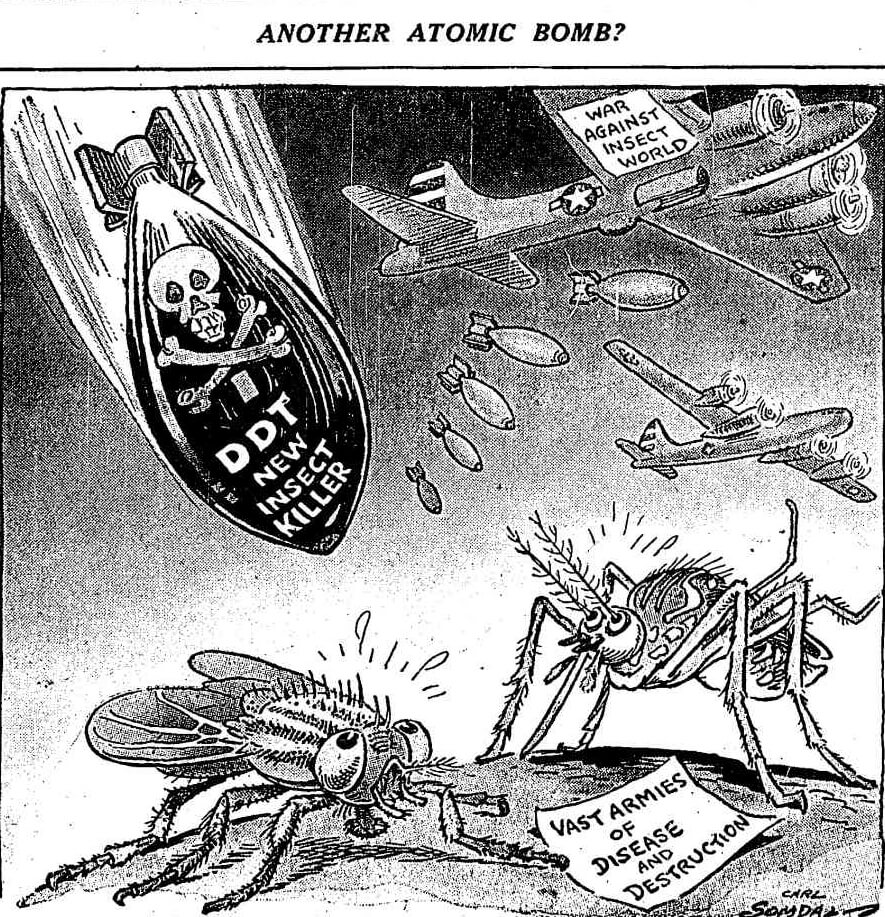
Another Atomic Bomb?, Chicago, Illinois, 1945. Cartoon by Carl Somdal. Originally published in Chicago Daily Tribune (August 24, 1945). Courtesy of Chicago Tribune Archives.
Writing to Petrie from her home in Claxton, Plyler said she had read that the Georgia Beekeepers Association's vice president attributed the death of his bees to insecticides sprayed on a field near his home.45Letter from Mrs. B.C. Plyler to Lester Petrie, December 4, 1950, Folder: T-47: Toxicology–Economic Poisons–Insecticides–Mrs. Plyler & Colson, Box 3, Record Group 26, Subgroup 4, Series 21, Georgia Archives. The loss was bad enough, but Plyler also saw something more egregious embedded in DDT's harm to beneficial insects: a form of economic injustice. It simply wasn't right, in her view, "to kill one man's bees to make another man's peanuts."46Ibid. Colson didn't need proof from the papers to argue that the poisoning of bees had far-reaching implications. "Half" of her family's bees had died since the neighboring landowners began spraying DDT, and because of bees' dual roles as honey producers and pollinators, the Colsons' ability to make a living was compromised.47Letter from Mrs. H.J. Colson to Lester Petrie, June 30, 1948; Letter from Mrs. H.J. Colson to The National Health Council. Colson, too, saw something more egregious and injurious to livelihood in DDT's insect-killing powers. She had become certain, through her own illness, that "any poison strong enough to kill or damage honey bees is surely strong enough to affect people who are susceptible to such things."48Letter from Mrs. H.J. Colson to Lester Petrie, June 30, 1948. And, noted Plyler, "How about the honey after the insecticide was blown all over it? Somebody ate it."49Letter from Mrs. B.C. Plyler to Lester Petrie, December 4, 1950.
Federal DDT experiments conducted at the Savannah River Migratory Wildlife Refuge a few years earlier had focused expressly on the chemical's effects on bees (along with other insects, reptiles, and birds).50"Work Project Outlines 1946," United States Public Health Service Malaria Control in War Areas Carter Memorial Laboratory, Headquarters and Branch Reports, Box 2, Record Group 442, National Archives at Atlanta. Bees warranted special attention because they were, as one MCWA bulletin reflecting on the Extended Program put it, "so vitally concerned in the pollination of so many commercial crops."511944–45 Malaria Control in War Areas, Federal Security Agency, US Public Health Service, Headquarters and Branch Reports, Box 2, Record Group 442, National Archives at Atlanta. Even DDT-maker Monsanto expressed reservations about the chemical's "shadowy side"—meaning its detrimental effects on bees.52"Monsanto Makes DDT," Reprint from Monsanto Magazine, DDT, Vol. 1, September 1944, Folder: DDT Reports Vol 1 & 2, Box 3, Record Group 442, National Archives at Atlanta. Despite citizens' letters as well as government scientists' and manufacturers' acknowledgements of the problem, Georgia's health department responded with Machiavellian reassurances. To a Georgia man concerned about consuming honey in a region where cotton plants had been sprayed "following heavy poisoning schedules," Petrie replied that he had nothing to worry about—but not because the poisons weren't harmful.53Letter from Oscar E. Cole to State Department of Health, August 29, 1949, Folder: Toxicology – TEPP, DDT, ETC. Economic Poisons, Box 3, Record Group 26, Subgroup 4, Series 21, Georgia Archives. The plants were likely sprayed with DDT or benzenehexachloride and sulphur, Petrie responded, and the DDT in particular was so toxic to honey bees that the bee feeding on such plants "does not even get back to the hive."54Letter from Lester Petrie to Oscar E. Cole, August 29, 1949, Folder: Toxicology – TEPP, DDT, ETC. Economic Poisons., Box 3, Record Group 26, Subgroup 4, Series 21, Georgia Archives. The public didn't have to worry about consuming the toxic spray carried by bees, that is, precisely because the spray's extreme toxicity to bees acted as a safety barrier protecting humans from consuming the same poison.
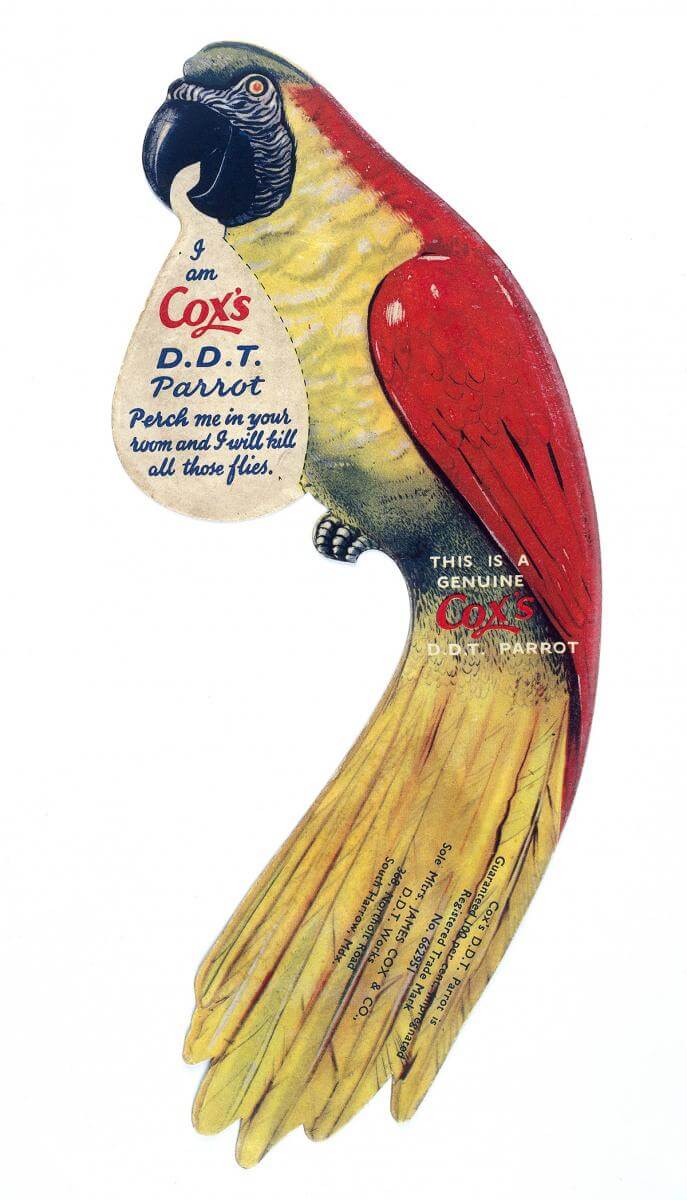
Such twisted reassurances had little effect on Colson and Plyler, both of whom saw themselves (and in Colson's case, her daughters) as uniquely susceptible to DDT-induced illness. From existing letters, it's unclear if this is how they felt from the start, or whether they developed this idea in response to official dismissals of their claims, or in response to what they read in the DDT-related literature they acquired. As local health director W.D. Lundquist put it, by 1949 they had amassed "volumes of articles, pamphlets and practically all information available on the subject of D.D.T.," likely giving them better access to information than he had.55Letter from Dr. W.D. Lundquist to Dr. L. Petrie, June 25, 1949, Folder T-47: Toxicology–Economic Poisons–Insecticides–Mrs. Plyler & Colson Box 3, Record Group 26, Subgroup 4, Series 21, Georgia Archives. When Lundquist met with Claxton residents and reviewed their collected materials, he found himself in the same information vacuum that posed such a problem for Petrie. He noted that while most of the articles and reports in Colson's and Plyler's possession stated that DDT was dangerous, and could be uniquely harmful to those who were sensitive, "none of them actually point out [specific] instances nor can I find what D.D.T. is supposed to do in the way of symptoms in the sensitive."56Ibid. The contents of Colson's and Plyler's collected materials can be reconstructed from their letters, and included articles from the Progressive Farmer, other farm papers, Georgia newspapers, pamphlets from manufacturers, government releases and bulletins, and journal articles.
The scientific literature contained frustratingly oblique references to individual variability in susceptibility to DDT: experiments demonstrated that the pesticide killed some rat ectoparasite species but not others, and studies on lab rodents had shown that individuals of the same species could be susceptible to DDT while others were not.57"Program Information," n.d. (1950–1953), Headquarters and Branch Reports, Box 3, Record Group 442, National Archives at Atlanta; Manuscript: Acute and Subacute Toxicity of DDT, June 21, 1944, Folder: Woodard, G., Nelson, AA., and Calvery, H.C., "Acute and Subacute Toxicity of DDT," A1 10, Box 12, Record Group 88, National Archives at College Park. Such studies offered little guidance to Lundquist and Petrie, precisely because they had emerged from a scientific paradigm developed to ensure the safety of industrial workers exposed to chemicals in high, ongoing workplace doses; their conclusions were a puzzle when applied "outside of the factory," as historian Linda Nash has observed.58Linda Lorraine Nash, "Purity and Danger: Historical Reflections on the Regulation of Environmental Pollutants," Environmental History 13, no. 4 (2008): 651–658. Industrial hygiene, or toxicological, experiments on animals sought to determine the chemical level a species safely "tolerated" without causing debilitating or permanent injury or death; they left no room for individual-level intolerance, apart from allergies. Evidence determined lethal doses and carcinogenic doses—not, necessarily, a chemical's more subtle or rare effects, which were of little interest to a profession responsible for ensuring workers' productivity.
Protection for Health and Property
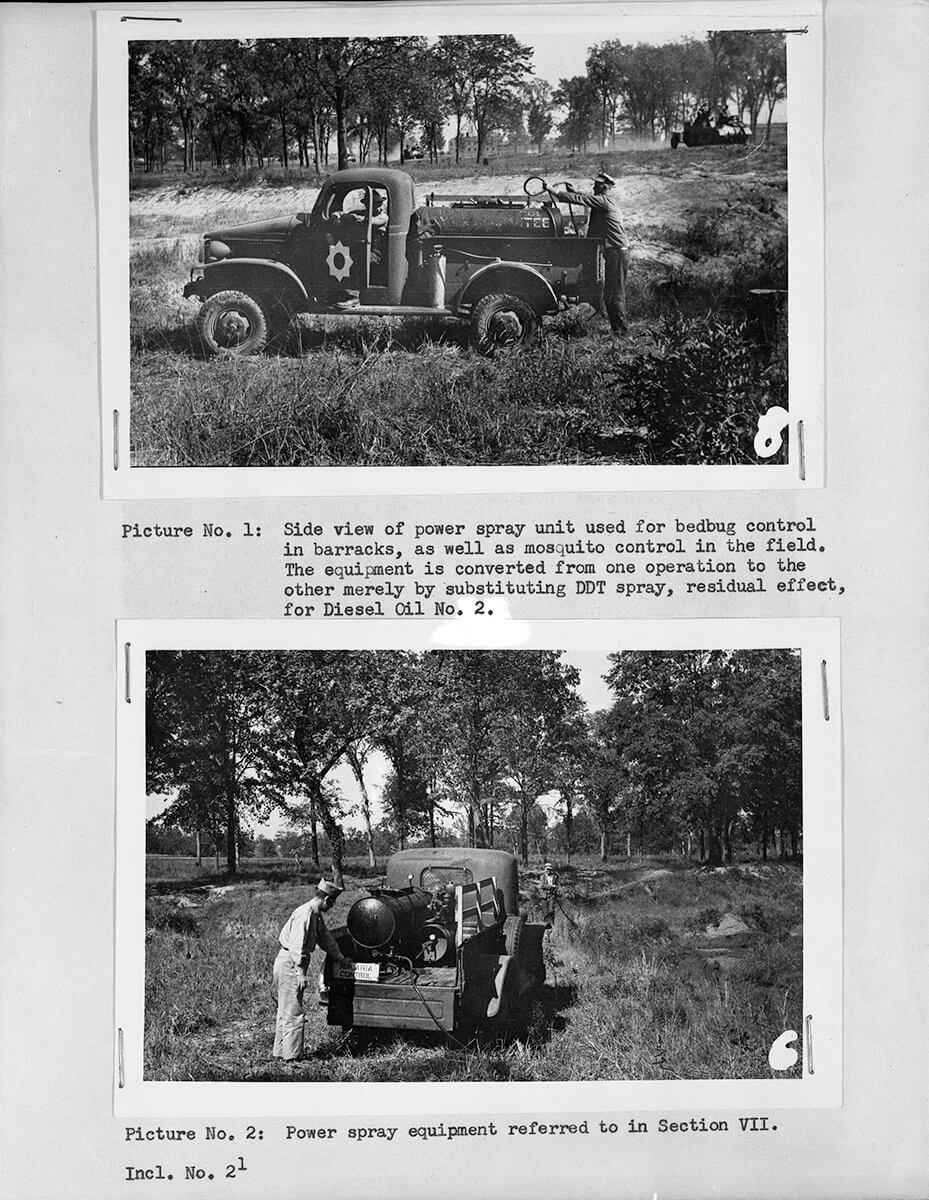
In disbelief that government health workers could know so little about the chemicals that were their charge, Plyler pointed Lundquist and Petrie directly to literature from DDT makers that stated that "repeated exposure may without warning cause prolonged susceptibility to very small doses or exposures."59Letter from Mrs. B.C. Plyler to Dr. L. Petrie, December 14, 1950, Folder: T-47: Toxicology–Economic Poisons–Insecticides–Mrs. Plyler & Colson Box 3, Record Group 26, Subgroup 4, Series 21, Georgia Archives. Lundquist replied that he "sincerely believed" that insecticide dusts could irritate "some people," but his doubt that Claxton residents had received high enough doses to "poison" them reflected his allegiance to the tenets of industrial hygiene, a profession responsible for, but without answers to, the problem of the public's chemical exposures.60Letter from Dr. W.D. Lundquist to Dr. G.G. Lunsford, July 17, 1948, Folder: T-47: Toxicology–Economic Poisons–Insecticides–Mrs. Plyler & Colson Box 3, Record Group 26, Subgroup 4, Series 21, Georgia Archives. Instead, Lundquist and others resorted to character judgment—and misogyny. The health department's director of local operations, Guy Lunsford, attributed Colson and Plyler's symptoms to their "overanxious" nature and believed that Colson in particular was motivated by money, since she had reportedly spoken with a lawyer who suggested she had a winnable case.61Ibid. Lundquist nonetheless questioned all the local doctors he could find, in a quest to uncover and confirm other reports of "hypersensitive" individuals—but he found none.62Ibid. He wrote to Petrie in frustration in August 1948: "I wish that the State Department could have these cases tested for sensitivity to these chemicals so as to prove or disprove once and for all their claims and convictions."63Letter from Dr. W.D. Lundquist to Dr. L. Petrie, August 13, 1948, Folder: T-47: Toxicology–Economic Poisons–Insecticides–Mrs. Plyler & Colson Box 3, Record Group 26, Subgroup 4, Series 21, Georgia Archives. But such tests did not exist, and there was nothing in the literature, as the health experts saw it, to prove or disprove Colson's and Plyler's claims.
In fact, the lack of substantive and applicable evidence about the harmful effects of exposure to the new economic poisons was consuming a sizable portion of health department energy. Petrie may have dismissed Colson's and Plyler's claims in correspondence with his colleagues, but his files indicate that his division of the state health department was engaged in an ongoing, though often fruitless, campaign for clues and data about insecticide toxicity from other state health departments and from insecticide manufacturers themselves. He wrote to the US Army's Industrial Hygiene lab for help with the "problem of poisoning caused by organic insecticides," figuring that since so many of them were developed as war gas poisons the Army could share its experience "combating and investigating" them. (The organic insecticides included the organochlorines, such as DDT, and the organophosphates, which included parathion.) Petrie asked the USDA for every piece of information on labeling guidelines. He wrote to chemical companies, asking them to add tracers to their insecticides so state health officers could figure out which sprays were causing which illnesses—and which deaths. A response from Monsanto's medical director summed up the reason why the companies would never do this: it would cost too much.64Letter from R. Emmett Kelly to Dr. L. Petrie, August 4, 1950, Folder: Toxicology Economic Poisons-General-1951, Box 3, Record Group 26, Subgroup 4, Series 21, Georgia Archives.
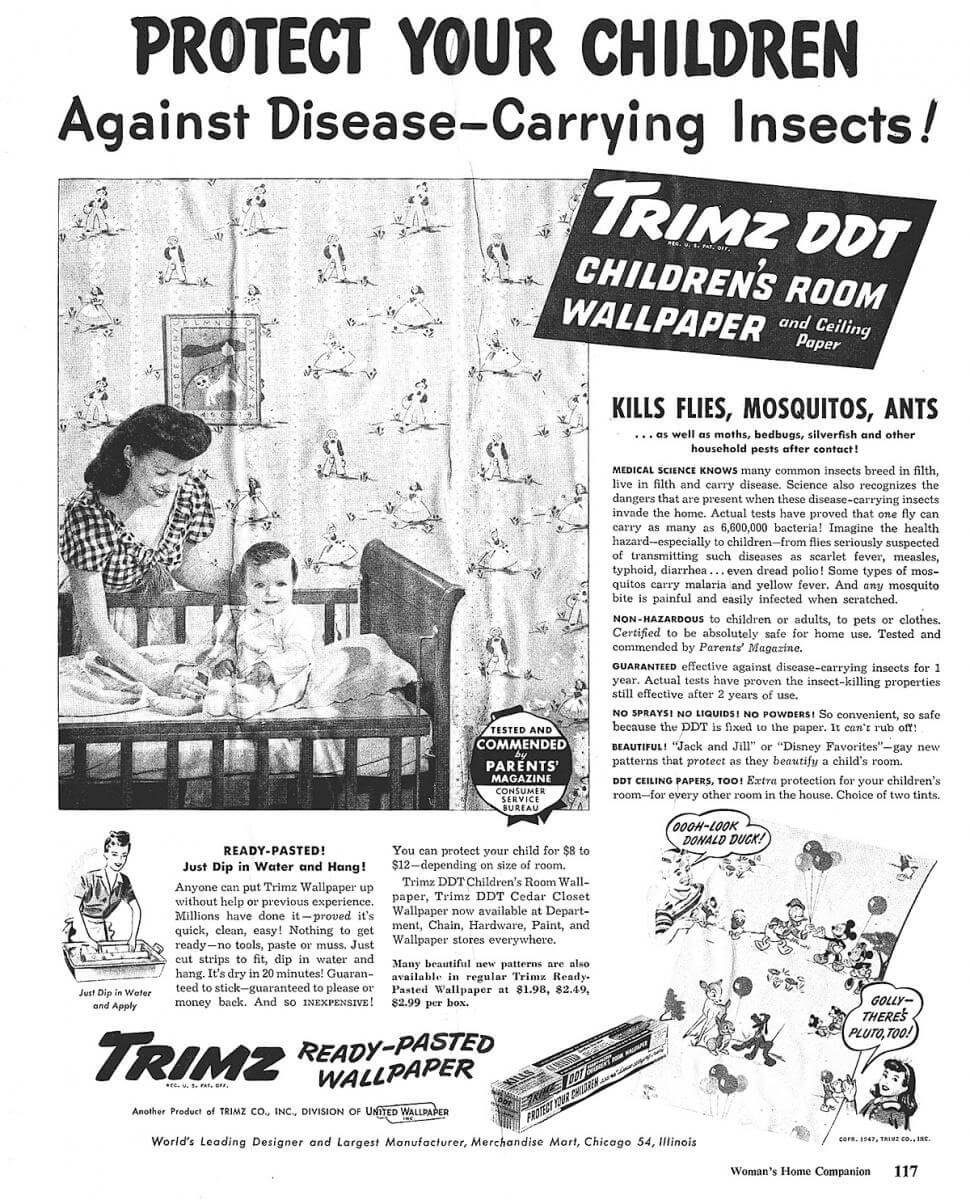
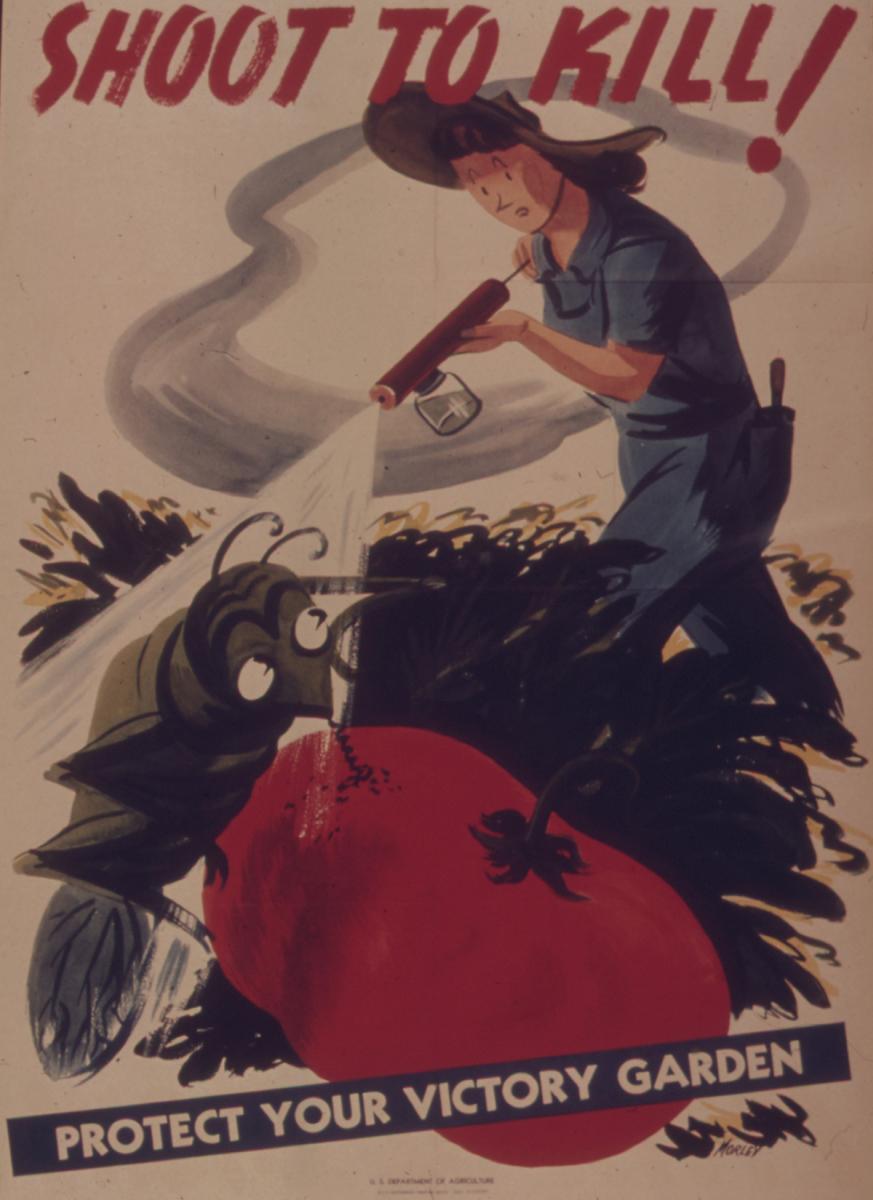
Petrie also wrote to other state health departments to collect information on poisonings and related laws. The result was a collection of harrowing stories of insecticide poisonings that he kept in his files: the woman who died within hours after eating blackberries bordering a recently sprayed cotton field; the deaths of pilots who flew cotton-dusters; the tenant farmer found collapsed in a sprayed tobacco field; the ten-year-old boy who died after swigging from a whiskey bottle he found in the crotch of a tree, not knowing it contained pesticide; the two children who died after making mud pies with "fruit spray"; the six-year-old boy who died when "plant spray" spilled on his leg; and many others.65News clipping: "Spray Poison Kills Two Tots," March 17, 1954, Folder: Toxicology-General, Box 3, Record Group 26, Subgroup 4, Series 21, Georgia Archives; News clipping: "Poisonous Spray Kills Boy 6," n.d., Folder: Toxicology-General, Box 3, Record Group 26, Subgroup 4, Series 21, Georgia Archives.
The sprays in these cases were sometimes identified, sometimes not. Those most often responsible for the worst poisonings didn't contain DDT, but parathion and TEPP (tetraethyl pyrophosphate). The latter insecticides emerged, like DDT, from wartime research, but they belonged to a different class of far more acutely toxic chemicals; toxicity tests showed that a single drop of TEPP in the eye could be fatal. Spared the fanfare of DDT, their harms went largely unnoticed by the public—and appear to have been mapped onto DDT instead. When Petrie sent a safety bulletin to local health departments and county agents with detailed warnings about the "new insect sprays," the resulting local news stories carried headlines such as "Farmers Warned DDT is Harmful"—but rarely referred to the other insecticides by name.66News Clippings: "Economic Poisons Bulletin," November 1950, Folder: N-16: Newspaper Clippings-Insecticides, Box 3, Record Group 26, Subgroup 4, Series 21, Georgia Archives. News items based on Petrie's bulletin ran in the Covington News, Quitman Free Press, Polk County Times, Millen News, Cobb County Times, Hawkinsville Dispatch and News, Jesup Sentinel, Dalton News, Early County News, Cedartown Standard, Morgan County News, Abbeville Chronicle, Daily Tifton Gazette, Carroll County Georgian, and elsewhere. When the other insecticides were mentioned, they often were described in comparison to DDT: one percent of parathion was described as more potent than a five percent DDT preparation; toxaphene was described as sixteen times as toxic as DDT.67News Clipping: "Despite Warnings of Government Agencies Deadlier Chemicals for Insecticides Are Released Each Year," Durham Herald, NC, October 20, 1949, Folder: N-16: Newspaper Clippings-Insecticides, Box 3, Record Group 26, Subgroup 4, Series 21, Georgia Archives. As a household name, DDT became the touchstone for the new class of synthetic economic poisons, which had paradoxical implications for its reputation: the worst traits of more acutely toxic insecticides were projected onto it even as it was described as relatively safe among the new insecticides.
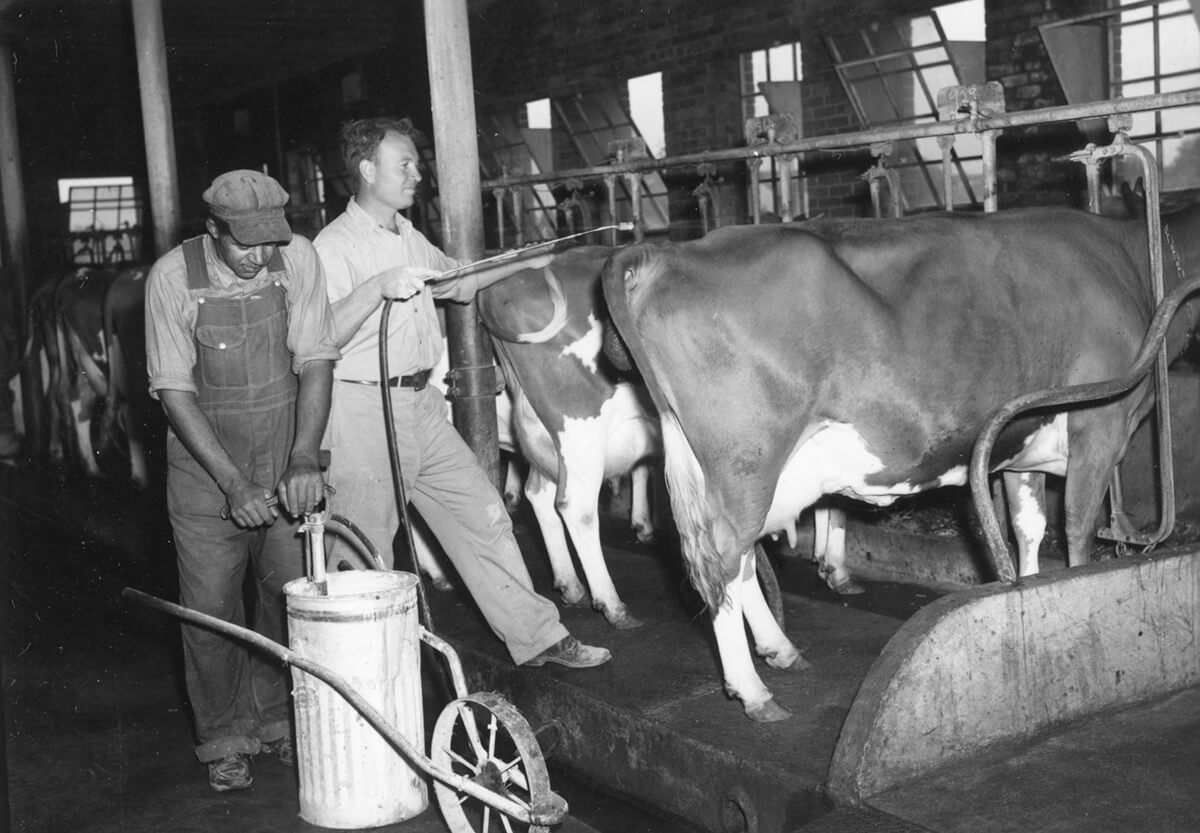
Petrie's preoccupation with the acutely poisonous organophosphate insecticides offered another reflection of the professional norms of industrial hygiene. The pesticides causing rapid onset of symptoms and death captured the attention of the state health department—especially since some had the capacity to be fatal in strikingly small doses. DDT caused few deaths, and while toxic to the nervous system, required a very large dose before symptoms of poisoning set in. Yet unlike the organophosphates, DDT accumulated in bodies, building up in fat tissue and leading to scientific concerns that its toxic effects compounded with accumulation. This property was known, and publicized, from early on: Time had notified readers in 1944 that DDT's "poisoning" properties were "cumulative."68"DDT Warning," Time. The Atlanta Journal Magazine, too, warned readers against getting DDT dust or solution on their hands precisely because the insecticide's toxic effects to humans "may be cumulative."69Steed, "Play Safe with DDT," 22–23. As studies of lab rodents and dogs had shown, DDT also was passed along in milk. Colson told Petrie these properties had her very worried. From what she read, she knew the farm's eggs and milk contained DDT.70Letter from Mrs. H.J. Colson to Lester Petrie, January 29, 1949, Folder: T-47: Toxicology–Economic Poisons–Insecticides–Mrs. Plyler & Colson, Box 3, Record Group 26, Subgroup 4, Series 21, Georgia Archives. From what she experienced, she knew DDT had the capacity to cause illness, because of the days when insecticide blew into her sister's cow lot while her children milked. When they drank the milk, their mouths and throats "burned, hurt, and swelled."71Letter from Mrs. B.C. Plyler to R.H. Fetz, April 27, 1951, Folder: T-47: Toxicology–Economic Poisons–Insecticides–Mrs. Plyler & Colson, Box 3, Record Group 26, Subgroup 4, Series 21, Georgia Archives.
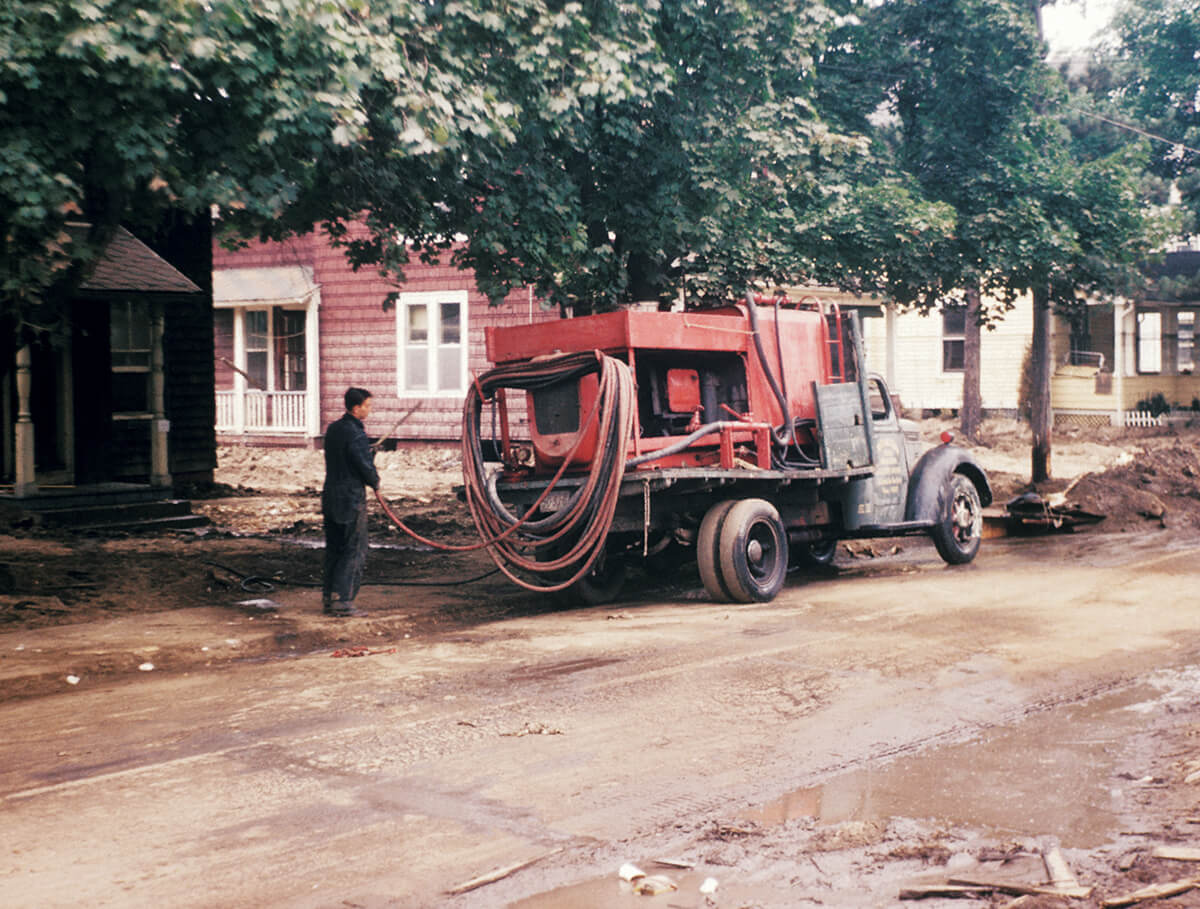
Representing the professional norms of industrial hygiene and employing the rationale of proven-benefits-to-the-many outweighing reported-risks-to-the-few, state health officials responded to Colson and Plyler. Regional medical director Lundquist said that he had had the opportunity to "closely observe the effects of DDT in five different counties" and had never heard of anyone saying that DDT made them sick. Spraying had occurred in fifty other Georgia counties, affecting "hundreds of thousands of people," commented Lundquist, and "several hundred men in the State" worked as sprayers, "who are thoroughly covered or soaked with the chemicals at the end of each day's operations."72Letter from Dr. W.D. Lundquist to Mr. G.O. Hohwer August 19, 1948, Folder: T-47: Toxicology–Economic Poisons–Insecticides–Mrs. Plyler & Colson, Box 3, Record Group 26, Subgroup 4, Series 21, Georgia Archives. If DDT hadn't made them sick, it couldn't make anyone sick. Petrie, to prove the same point, sent Colson an article from the Journal of the American Medical Association describing the hundreds of thousands of lives saved when the US Army dusted the people of Naples in 1943. "There were no serious cases of impaired health," he told her, "nor any deaths reported as being attributed to DDT as a result of this experience." The same message was conveyed in a Federal Security Agency release he shared with her, issued after a 1949 national scare about DDT in milk, which reminded Americans that DDT had "contributed materially to the general welfare of the world" without "ever" causing human sickness due to the DDT itself.73Federal Security Agency Public Health Service, Washington, DC Memorandum, April 1, 1949, Folder: T-47: Toxicology–Economic Poisons–Insecticides–Mrs. Plyler & Colson Box 3, Record Group 26, Subgroup 4, Series 21, Georgia Archives. Generally, federal documents on the pesticide, such as this one, attributed DDT-related illnesses to the solvents used to emulsify it, and not the DDT itself. Colson's and Plyler's assertions of individual risk were invalidated by state and even global benefit, and by the fact that so many people had withstood high-dose exposures seemingly without incident.
For Colson, however, there were a few problems with this reasoning. Population statistics and the experiences of spray operators that suggested DDT was safe meant nothing in the case where someone was uniquely sensitive to the chemical—as Colson believed she and her daughters were. "It is unfortunate indeed," Colson told Petrie, "to be one of the proven few that DDT is so very poisonous to."74Letter from Mrs. H.J. Colson to Lester Petrie, January 29, 1949. Without directly articulating it, she expressed a sentiment then circulating among experts discussing DDT's widespread use after the war: as the chemical's deployment shifted from military to civilian use, its benefits and risks needed weighing anew, but all too often, this calculation was not done.75Russell, War and Nature: Fighting Humans and Insects with Chemicals from World War I to Silent Spring, 158–164. Risks tolerable in wartime were often intolerable in times of peace, and she counted her own insecticide sensitivity among the latter. Moreover, as one of the "few," Colson felt she was being asked to sacrifice her health for the convenience and wealth of others. She and her family had readily given up their former home and moved to Claxton to make room for Camp Stewart's expansion. But by failing to stop the spread of insecticides over her land, her government, she felt, was remiss in its duty to guarantee all a "reasonable amount of protection for health and property," she wrote. "I believe the Constitution gives us this much."76Letter from Mrs. H.J. Colson to Mr. J.G. Townsend, August 20, 1949, Folder: T-47: Toxicology–Economic Poisons–Insecticides–Mrs. Plyler & Colson, Box 3, Record Group 26, Subgroup 4, Series 21, Georgia Archives.
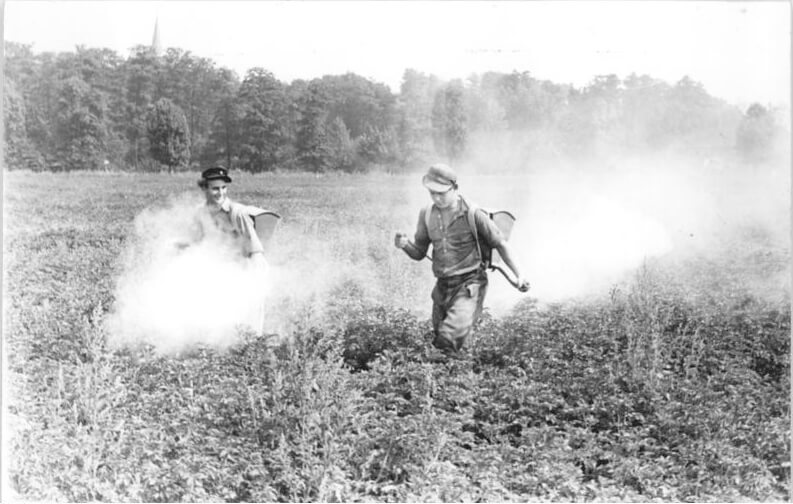
Plyler, meanwhile, voiced an additional objection to health department dismissals. In years of protest against DDT, she had consulted with countless doctors, written to agencies in Washington, visited with representatives of chemical companies, and interviewed people all over southeastern Georgia.77Letter from Mrs. B.C. Plyler to Prince Preston, September 7, 1950. Her inquiries turned up plenty of stories of DDT skepticism and harm: to the boy who died from eating sprayed berries; the pastor and the farmer whose cows were killed; the cotton farmer who refused to use it anymore; the merchants who said insecticides made them sick; and the war veteran who told her that DDT "might not have hurt the guy putting it out but sure hurt the ones who had to live in it."78Memorandum, Evans County, by Guy G. Lunsford, n.d., Folder: T-47: Toxicology–Economic Poisons–Insecticides–Mrs. Plyler & Colson, Box 3, Record Group 26, Subgroup 4, Series 21, Georgia Archives; Letter from Mrs. B.C. Plyler to Lester Petrie, December 4, 1950. Not every story Plyler cited contained a clear reference to DDT, but DDT was the only chemical mentioned by name in any story. Not every story Plyler collected contained a clear reference to DDT, but it was the sole insecticide she mentioned by name. She came to doubt the assertion that hundreds of thousands of people had been exposed to DDT "without having registered any complaint."79Ibid. Instead, she believed their complaints simply hadn't been registered.
A Form of Economic Injustice
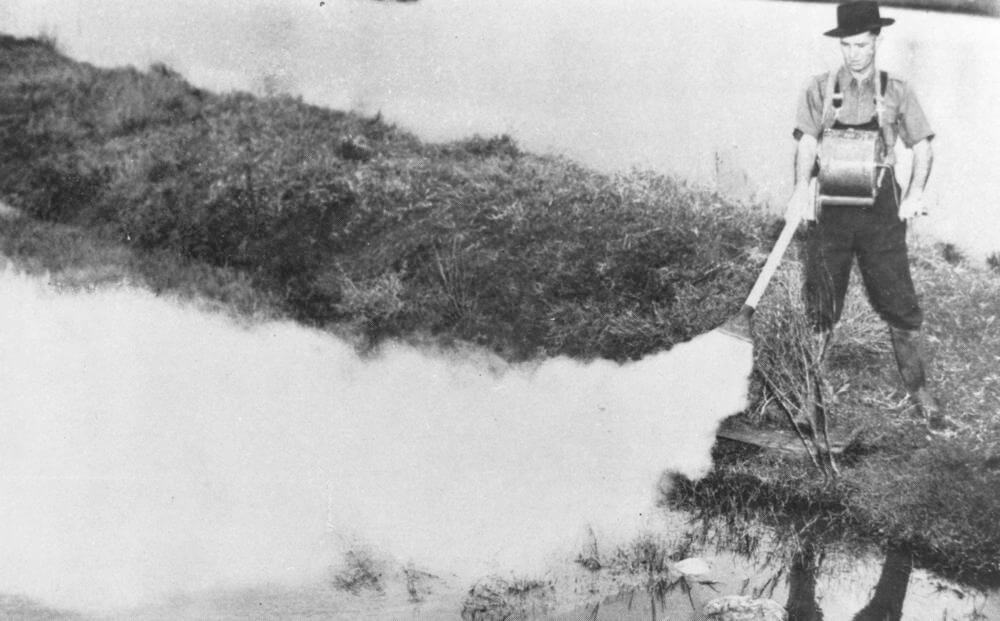
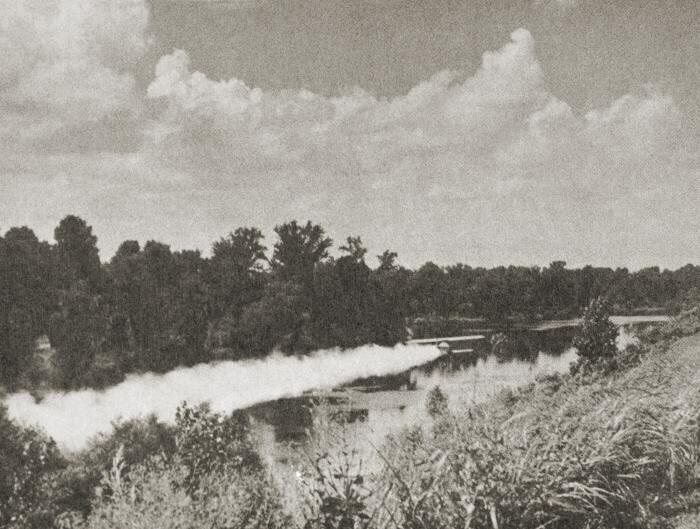
Over the course of their five years of letter writing, Plyler became increasingly invested in publicizing not just the harms of DDT, but the tragedy of postwar shifts in the economy and governance that her fight against the chemical had revealed. The economic poisons may have protected crops, but this agricultural advantage came at a significant cost to the health of livestock and people. When a small land owner felt this effect, she argued, he abandoned the hazardous substances. The "big land owner," by contrast, lived in town, never felt the effects and shielded himself from insecticide-related losses. "He sends out a crop dusting plane…he doesn't even risk a mule in it. If his mule got sick or died, he would be the loser, but if the negro or poor white man is made sick" he never has to pay the bill. Georgia, it was clear to her, had three classes—"the rich man, his hands, and the little land owner"—and only the first of these stood to survive. The others would "soon be extinguished if they and all their possessions are covered with insecticides beginning in March and continuing into October every year."80Letter from Mrs. B.C. Plyler to Lester Petrie, December 4, 1950. Plyler hoped someday to tell this story in a series of articles for national publication. She had already decided on a title: "This Is Georgia."81Letter from Mrs. B.C. Plyler to Prince Preston, September 7, 1950. I have no evidence that Plyler wrote professionally, but according to the 1940 census, she completed two years of high school. Her activism—and that of her sister—may be a function of their Southern Methodist upbringing: ancestry records accessible online suggest that their paternal grandfather was married in the Sand Hill Methodist Church in Tattnall, GA. On Southern Methodist women's tradition of involvement in social reform movements, see Paul Harvey, Freedom's Coming: Religious Culture and the Shaping of the South from the Civil War through the Civil Rights Era (Chapel Hill: University of North Carolina Press, 2005), 75–77; Samuel S. Hill and Charles H. Lippy, Encyclopedia of Religion in the South (Macon, GA: Mercer University Press, 2005), 845.
In a letter to Georgia governor Herman Talmadge in 1950, Plyler wrote that her battle against DDT had convinced her that her government had abandoned its "Christian" duty to its citizens. Families were being "herded out of God's open country"—in her case, first to serve the war effort, and now to suit big landowners. She described a cooperative way of life that existed only on small farms, and that depended on conditions that allowed parents, children, cows, pigs, chickens, and vegetable and flower gardens to thrive. Agents of the state had abetted big landowners in eliminating the "happy experiences of comradeship from which many of the fundamentals needed in the making of happy, useful citizens have their beginning," she told Governor Talmadge. "Can we hope to enjoy good health in Georgia and have this happiest opportunity?" she asked. Or must we "be poisoned to death in our own homes?"82Letter from Mrs. B.C. Plyler to Hon. Herman Talmadge, August 17, 1950. Underline in original.
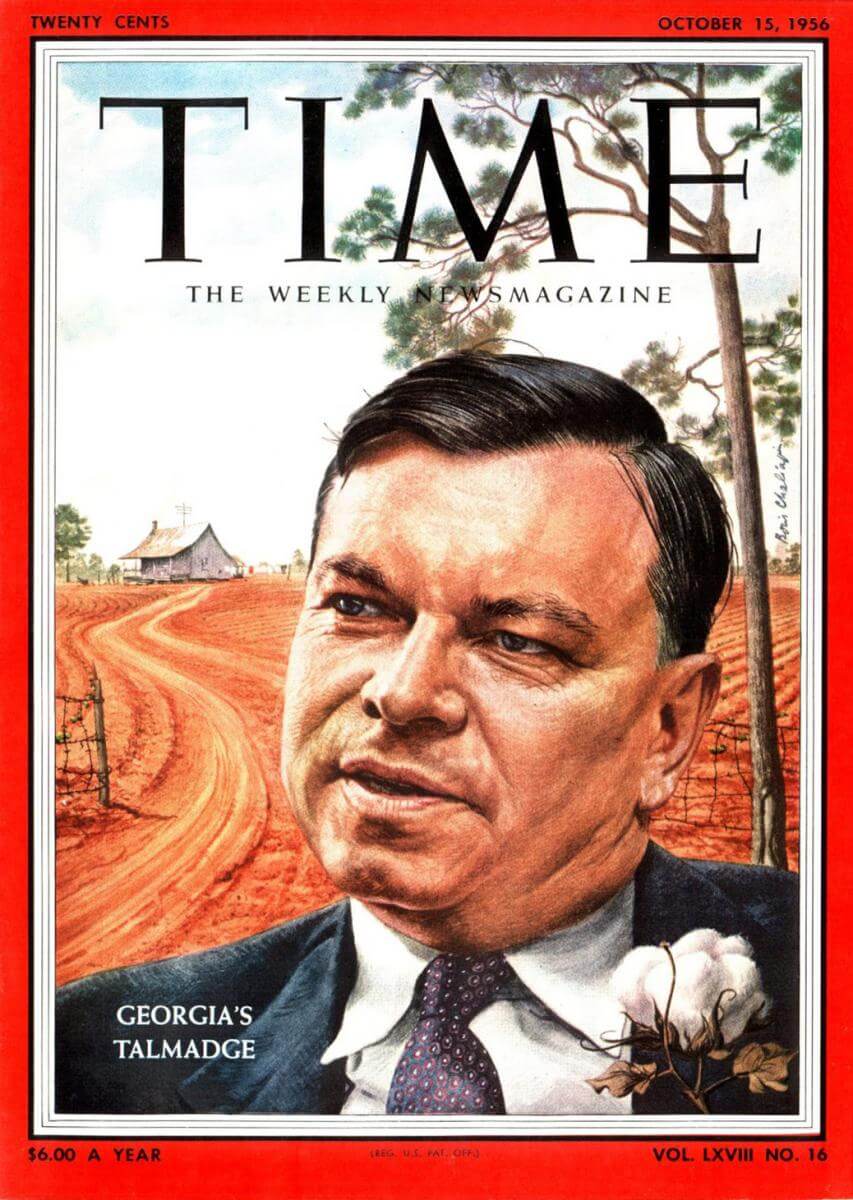
Plyler's letter spoke to larger changes. Drawn by abundant natural resources and state governments promising low-wage and non-unionized labor and cheap (or free) land, military installations sprang up and expanded, and a host of industrial operations migrated into the South.83James C. Cobb, Selling of the South: The Southern Crusade for Industrial Development, 1936–90 (Chicago: University of Illinois Press, 1993). Rural population declined while the farms that remained grew larger.84Christopher J. Bosso, Pesticides and Politics: The Life Cycle of a Public Issue (Pittsburgh, PA: University of Pittsburgh Press, 1987), 23. The new economic poisons accelerated the shift to monoculture farms, a trend that came with the promise that industrial agriculture was the best way to feed the nation—and the world.85Ibid., 26–30. Plyler longed for a sense of neighborliness that she felt was the hallmark of small farms. As Christopher Bosso notes, pre-war biological pest control depended upon a cooperative ethos among farmers and an "active government role." In the postwar era, chemical pest control favored a farmer's "individualized mastery of his particular chunk of nature, a mastery requiring little, if any, government meddling."86Ibid., 32. By spraying, each farmer had no need to think beyond the borders of his or her own land. Plyler perceived a flaw in this logic: as new chemicals promised benefits for the many, they introduced threats into the shared physical environment in a cultural setting which exhorted everyone to think only of themselves. Plyler hoped for a government that would act as a check on these transformations, as there was no law or regulation protecting individuals from sprays that drifted, unwanted, onto their own land. When Congress passed the Federal Insecticide Fungicide and Rodenticide Act (FIFRA) in 1947, however, it simply placed government in the role, as Bosso has put it, of "authoriz[ing] the manufacture, sale, and use of products carrying potential hazards to the public health and environment."87Ibid., xii. Plyler certainly would have agreed with the characterization that DDT poisoned people in their own homes and that government sanctioned the practice instead of stopping it.
Not all the "billowing clouds" blowing over the small farms of Claxton were DDT. By the time Plyler wrote her plea to Governor Talmadge, she and her neighbors had confirmed that neighboring property owners were using DDT—but they were also using pesticides containing parathion, copper, and arsenic. Plyler's most recent doctor's visit had led to a diagnosis of arsenic poisoning.88The Claxton residents had found a label from an insecticide container that a local merchant claimed to have sold to the "big land owners;" it contained 20% DDT, but the merchant also reported selling the owners other sprays, too. Letter from Mrs. B.C. Plyler to Prince Preston, September 7, 1950. The health department responded to the diagnosis by launching an investigation involving clinical and laboratory testing—something the Claxton residents had requested all along. Petrie's office sampled well water and urine, testing parents, children, and neighbors. The tests came back negative.
Later in that fall of 1950, Colson experienced her old symptoms on a visit to the Claxton health office, and a neighbor told her that she had seen a leaking container of DDT and chlordane—another new economic poison (and relative of DDT)—on the office's back porch. Colson's conviction that DDT was at the root of her community's problems returned. So did Plyler's, after a similar experience visiting a shop in a nearby town. Their conviction was about more than symptoms. To the Claxton residents, DDT was not just a health threat, but a symbol of a changed nation, a distant entity that did not have their small-farming community's best interests in mind, cared nothing for the sacrifices it had made during the war, and now prioritized big-capital interests over those of hardworking citizens, in the process destroying a way of life.
An Unexplored Archive
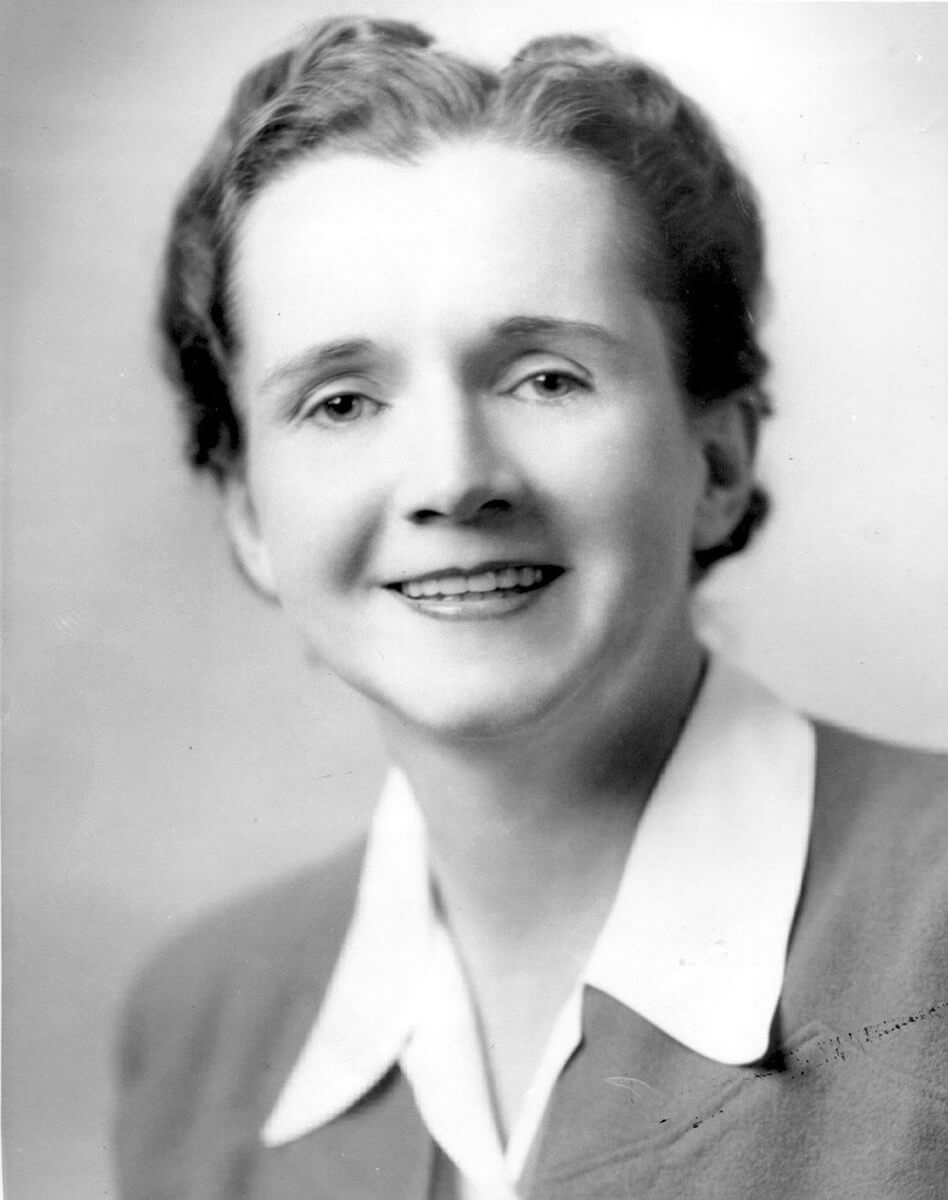
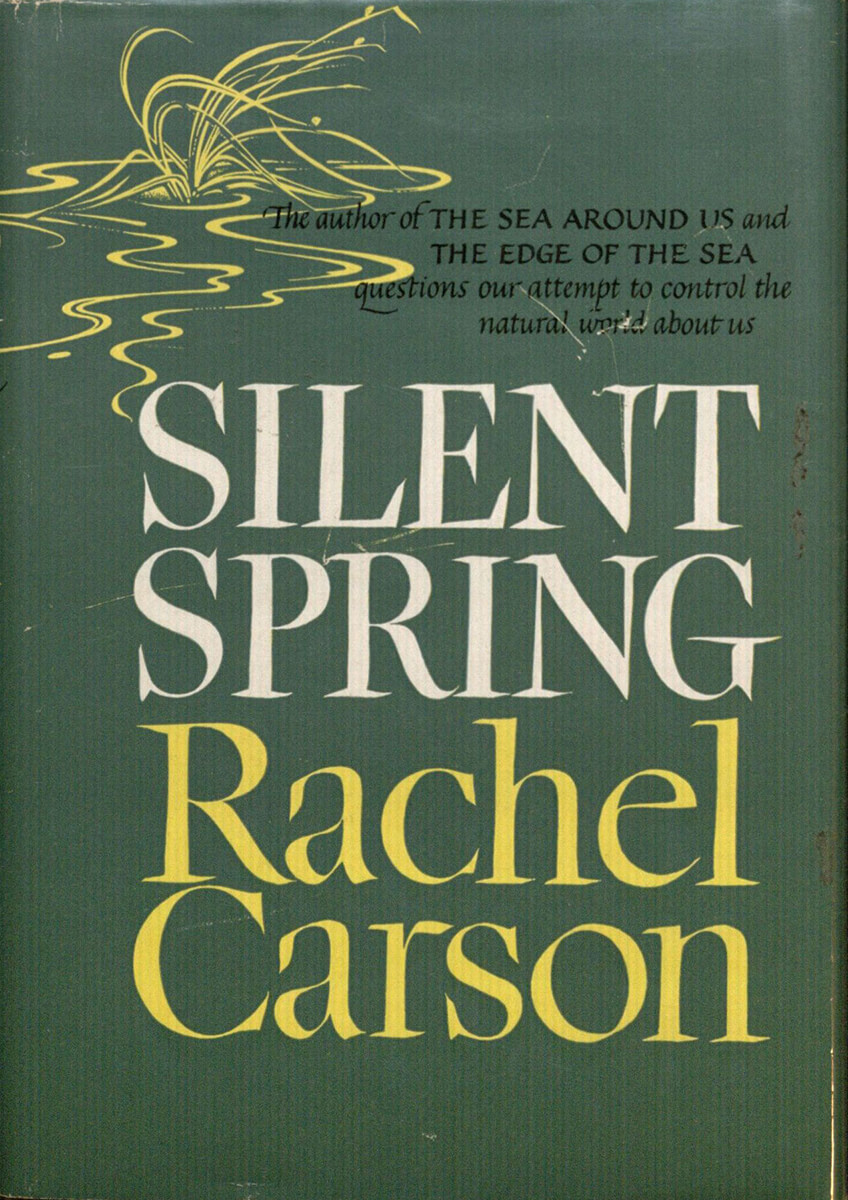
Early in 1945, before DDT had become available to the American public, The Saturday Evening Post ran an article on its discovery, battle victories, and inherent dangers, written by Brigadier General James Stevens Simmons, chief of preventive medicine for the US Army. It was Simmons who called DDT "the War's greatest contribution to the future health of the world," and while he wrote that its myriad possible benefits were "sufficient to stir the most sluggish imagination," he also described the chemical's "alarming" toxicity and its potential to "disturb vital balances in the animal and plant kingdoms."89James Stevens Simmons, "How Magic Is DDT?," Saturday Evening Post, January 1, 1945, 18–20. Despite its tempered tone, Simmons' article has been cited repeatedly by historians, as well as other scholars and writers, as evidence of the American public's wholehearted reception of DDT as the US emerged from the war—and for the better part of the two decades that followed.90See for example James Whorton, Before Silent Spring: Pesticides and Public Health in Pre-DDT America (Princeton, NJ: Princeton University Press, 1974), 248; Russell, War and Nature, 124; Thomas Dunlap, DDT, Silent Spring, and the Rise of Environmentalism (Seattle: University of Washington Press, 2008); Will Allen, The War on Bugs (White River Junction, VT.: Chelsea Green Publisting, 2008), 171. As historian William Cronon has written, "Until 1962"—the year Rachel Carson's pesticide exposé Silent Spring was published—"Americans were far more inclined to regard DDT as a miracle than as a menace."91Dunlap, DDT, Silent Spring, and the Rise of Environmentalism, x.
Several historians who have studied DDT's story in depth, including Thomas Dunlap, Edmund Russell, and David Kinkela, acknowledge the ambivalence of Simmons's account.92Russell, War and Nature, 125; Dunlap, DDT, Silent Spring, and the Rise of Environmentalism, x; David Kinkela, DDT and the American Century: Global Health, Environmental Politics, and the Pesticide That Changed the World (Chapel Hill: University of North Carolina Press, 2011), 31. And yet, the historiographic conclusion that has emerged from analyses of DDT discourse in the postwar years is that early DDT cautions and warnings were quickly abandoned in light of the pesticide's promise as a tool of technological modernization in the context of postwar exuberance.93Kinkela, DDT and the American Century, 7. Dunlap claims that for a decade after DDT came on the commercial market, "only two groups paid much attention to it: the economic entomologists who recommended sprays and the public health officials who regulated residues on food."94Dunlap, DDT, Silent Spring, and the Rise of Environmentalism, 29. And Russell argues that debates among experts about how best to weigh the benefits and risks of DDT as it moved from military to civilian use were hidden from view of the public.95Russell, War and Nature, 158–164.
The letters written by the residents of Claxton, Georgia, suggest that this was not the case. There's no doubting the enthusiasm displayed for DDT immediately after the war, when headlines called it "dynamite" and "magic"; popular writers dreamed of a day without "roaches in the cupboard" and "ants in the sugar"; and drugstores sold out of their stock before the chemical even arrived.96John K. Terres, "Dynamite in DDT," New Republic, March 25, 1946, 415–416; Simmons, "How Magic Is DDT?."; Truman McMahan, "DDT," Colorado County Citizen (TX), September 27, 1945; "Small Amount of DDT Put on Sale Here," Washington Post, August 18, 1945, 2. But cautiousness and circumspection abounded, too. Warnings about the risks DDT posed to humans, animals, and nature appeared repeatedly and prominently in the national and local press. Although historian James Whorton, among others, has argued that early warnings about DDT were "generally dismissed as hysteria," when the historical record broadens beyond expert and institutional sources, it does not uniformly support this view.97Whorton, Before Silent Spring, 250. A notable fraction of reporters, county agents, and farmers took early warnings seriously. And the letters of Claxton residents indicate that warnings were within easy reach of the self-described "housewife" of a blacksmith, the "housewife" of a small farmer, and their neighbors in a locale with direct exposure to DDT.
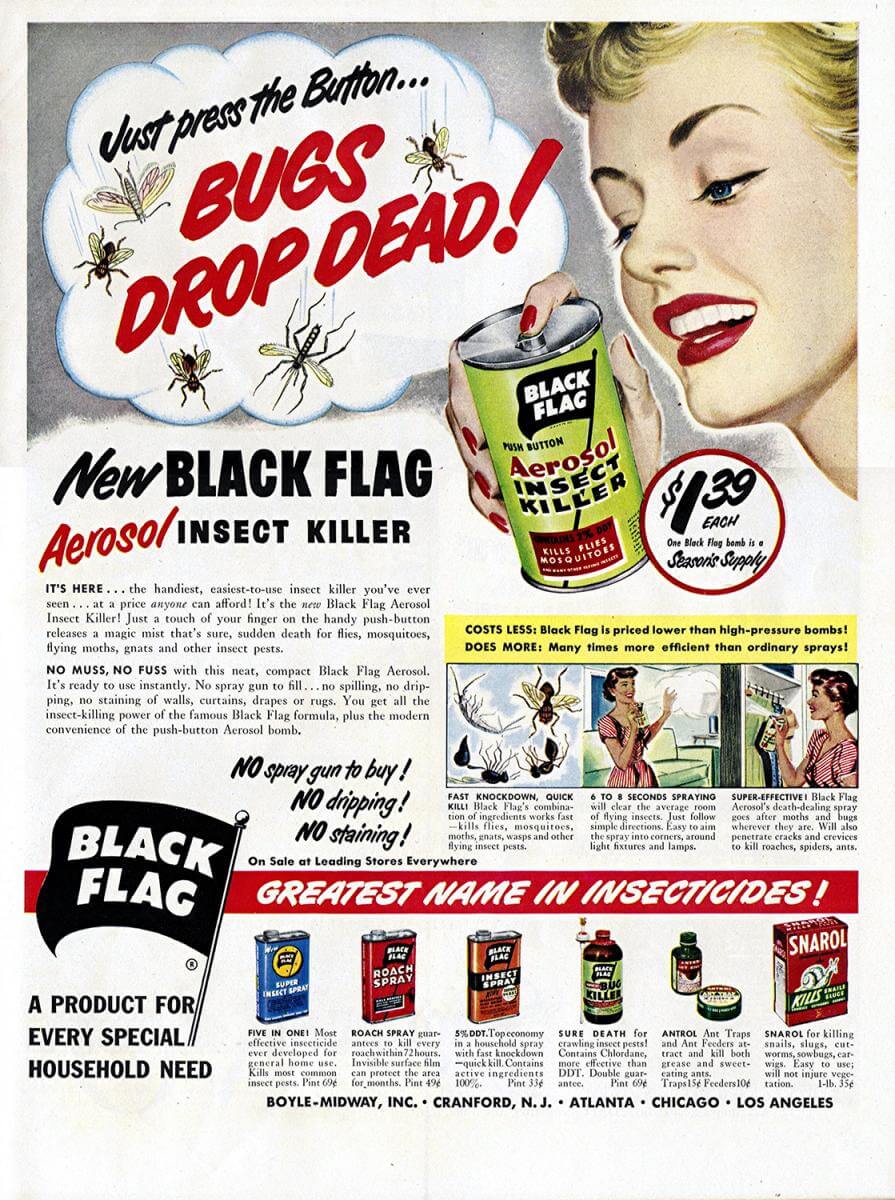
Black Flag Insect Killer advertisement from the June 19, 1950 issue of Life magazine. Scan by Flickr user clotho98. Creative Commons license CC BY-NC 2.0.
The Claxton letters may turn out to be unique. They may also turn out to be the tip of an unexplored archive. Colson, Plyler, and their neighbors did not (as far as I have found) publish letters to the editor in local or national papers. The extant record of their correspondence with state and federal health and agricultural officials and politicians is also fragmentary. But its existence indicates that the experience of individuals who encountered DDT may shift historical thinking about the chemical's storied dramatic change of fortune between the mid 1940s and the late 1960s. It also indicates that it's worth looking for and at more obscure sources yet to find the voices of spray operators, farm hands, migrant agricultural workers, merchants, and small farmers like the Colson and Plyler families, who may have received DDT, and its class of postwar chemicals, with as much ambivalence and precaution as many privileged experts did, if not more. Lastly, this record supports—and sheds light on—otherwise offhand references to popular resistance to DDT spraying operations in government and other expert sources. MCWA records of the Extended Program of malaria eradication, for instance, mention "occasional refusals to having houses sprayed" in South Carolina and Arkansas.98See for example Malaria Control in War Areas, Federal Security Agency, US Public Health Service. They say nothing of refusals in North Carolina, even though that state's health journal reported that some householders were "dubious" of DDT spray teams and that ten percent of homes turned away the teams on their first visit.99Jens A. Jensen, "The DDT Residual Spraying Program for Malaria Control in North Carolina," The Health Bulletin 60, no. 10 (1945): 12–14. Opposition to DDT existed from the start, but its extent, contours, and meanings as yet remain unexamined.
In part, this open question remains because much of the historiography of DDT assumes what experts in the 1940s (and some historians of later decades) assumed: that early objections to DDT represented "hysteria," a word itself suggesting dismissal of DDT objections because of the identity of the individuals voicing them. Colson and Plyler were accused of being "overanxious," and the DDT problems they perceived "all in their minds," even as male newspaper columnists, county agents, beekeeper association heads, and scientific authors who raised identical concerns were not similarly accused. Of course, Colson and Plyler's DDT critique went further than theirs. Many of DDT's critics worried that the insecticide could adversely affect health and nature; Colson and Plyler expressed certainty that it did. They also tied the chemical's use, and the laws and regulations supporting its use, to larger problems they perceived in the postwar political and economic order. For this, they faced gendered character attacks. Their experience presaged the orchestrated opposition that Rachel Carson encountered after the publication of Silent Spring, and that other female activists striving to draw a connection between environmental contaminants and human ill health faced in the decades that followed.100Linda J. Lear, Rachel Carson: Witness for Nature, 1st ed. (New York: H. Holt, 1997), 430; Elizabeth D. Blum, Love Canal Revisited: Race, Class, and Gender in Environmental Activism (Lawrence: University Press of Kansas, 2008), 54–55.
Colson and Plyler were literate, educated, and empowered enough to voice their objections to DDT and all that it symbolized to them. They were also white. Well before DDT drifted over their homes, however, it was sprayed inside the homes of black families in rural Georgia and Arkansas' cotton country and in a village of sugarcane laborers in Puerto Rico. The spraying was part of a set of federal experiments (for which little record seems to exist) upon which broader use of DDT in the war and afterward was based. An article on the Arkansas experiments describes the "field site" as a place where "ninety-five percent of the houses are of tenant or sharecropper type, shotgun-construction, newspaper lined, and inhabited by Negroes making only a marginal living."101"DDT May Control Malaria," Science News Letter, December 30, 1944, 418. A report on the Georgia experiments notes that DDT left "negligible" markings on the walls, in homes that were so "crowded" with furniture and belongings it was difficult to spray.102Letter from S.W. Simmons to Porter A. Stephens, DDT Reports, Vol. 1, July 4, 1944, Folder: DDT Reports Vol. 1 & 2, Historical Files, Box 3, Record Group 442, National Archives at Atlanta. The decision to test the spray in their homes was undoubtedly supported by the observation that in the South, blacks had a higher prevalence of malaria than whites—not that justifications were needed in a time when blacks were routinely experimented on without consent. This differential value of lives troubled Plyler about the use of DDT after the war, when landowners subjected poor and black hands to the spray but wouldn't "risk a mule" in it. And this differential makes it all the more important to seek new sources on the nation's response to DDT during and after the war.
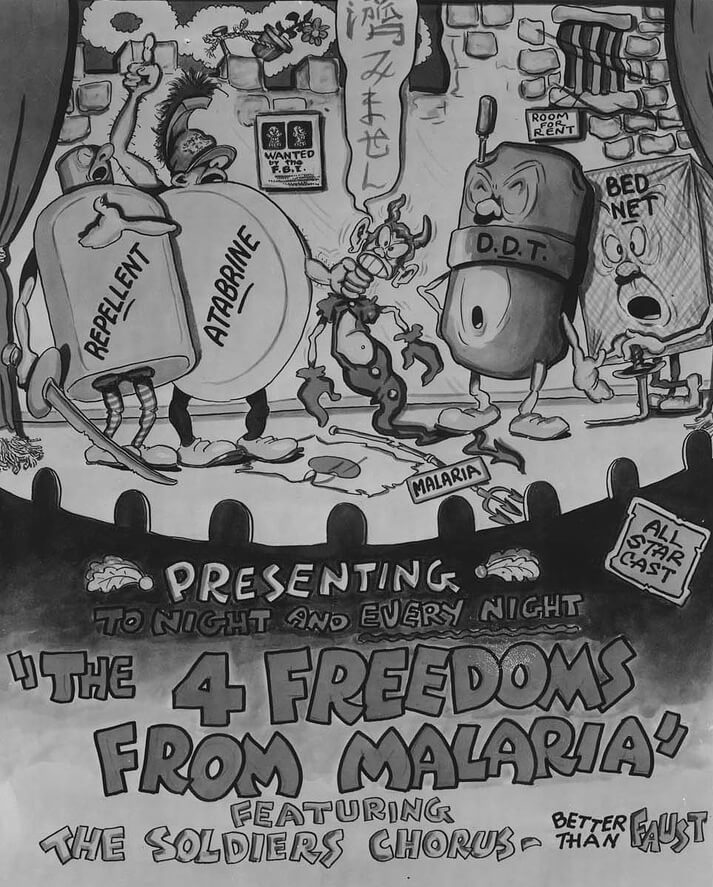
The second time North Carolina's spray teams passed through the communities targeted by the MCWA's Extended Program, just one percent of homes turned them away. Margaret Humphreys, in her study of malaria in the South, takes this as evidence of overwhelming popular acceptance of DDT, and as an indication that DDT's effectiveness put a shine on its reputation and paved the pesticide's way.103Humphreys, Malaria, 148. Passing references to resistance in the historical record often get read this way, as nothing more than proof that the American public happily doused itself in DDT in exchange for a pest-free existence. But lay resistance to DDT, even if official sources suggest it affected "just" one percent of the population, is worth further examination for two reasons. First, resistance may not have been as minor as recorded. Even if DDT doubters comprised a minority of Americans, such small numbers may belie important differentials along lines of race, income-level, gender, or occupation. Experiences of illness through chemical exposure eroded Colson's and Plyler's acceptance of DDT, but so did their feelings of frustration over what they perceived as a new relationship between citizen wealth and power and the government's failure to check imbalances in that power in the postwar years. Small numbers also say little to nothing about how acceptance took root across lines of race, class, and other factors, and whether it was secured not solely through jingoism and faith in technology, but through historically determined traditions of subservience to institutions of power. DDT's acceptance, of course, was built not just on its performance in war, but on the basis of the preliminary tests in "negro shacks" and plantation workers' homes.104Malaria Control in War Areas, Federal Security Agency, US Public Health Service; Letter from S.W. Simmons to Porter A. Stephens, DDT Reports, Vol. 1, July 4, 1944, Folder: DDT Reports, Vol. 1 & 2, Historical Files, Box 3, Record Group 442, National Archives at Atlanta.
Second, even if the opinions expressed in the Claxton letters (and embedded in the actions of people who turned DDT-wielding health officers away from their homes) represented a minority view, they retain value yet. For they offer insight into a transformative moment in American society, government, medicine, and public health—and insight into how that transformation was experienced in at least one corner of the South.105Historian Michael Willrich makes a similar argument about Progressive Era anti-vaccinationists in Michael Willrich, Pox: An American History (New York: Penguin Press, 2011). The Claxton residents' letters reveal a group of citizens disaffected by new patterns of wealth, the behavior of industry, and the growing distance of government, and frustrated by science's promises combined with lack of answers. Their push-back against technological developments, frustration with public health experts, and demand that government exercise greater authority to protect its citizens supports the argument that DDT debates of the 1940s presaged debates and events of the 1960s.106Russell makes the argument that expert debates about DDT did just this. See Chapter 8 in War and Nature: Fighting Humans and Insects with Chemicals from World War I to Silent Spring. Such sentiments formed a bridge between older forms of social activism and organized movements that led to the banning of DDT in the US later in the twentieth century.
Acknowledgments
Emory University's University Research Committee, the Chemical Heritage Foundation, the National Endowment for the Humanities, and the Emory University History Department supported the research and writing of this essay. The author thanks Carrie Crawford, Terrence Greer, Abigail Li Holst, Hays Hopkins, and Abigail Meert for invaluable research assistance and the anonymous reviewers for comments and suggestions.
About the Author
Elena Conis is a faculty member in the Graduate School of Journalism at the University of California, Berkeley and the Department of Anthropology, History, and Social Medicine at the University of California, San Francisco and author of Vaccine Nation: America's Changing Relationship with Immunization (Chicago: University of Chicago Press, 2015). She is currently working on a book about the history of DDT.
]]>Public Health Crossings
Top, Colonel Bailey K. Ashford, ca. 1893. Courtesy of Wikimedia Commons. Image is in public domain. Bottom, William H. Hunt, Governor of Puerto Rico, 1901–1904. Courtesy of Wikimedia Commons. Image is in public domain.
Nearly a year before Finlay's mosquito theory was finally confirmed in Cuba, a US physician discovered in Puerto Rico the source of the pervasive anemia that had afflicted the population for more than a century. On August 10, 1899, Bailey K. Ashford, then a young post surgeon of the US Army, revealed that hookworm caused the mysterious weakness and extreme pallor that he had observed in peasants for nearly a year.1The broad term "peasant" includes the diverse farmers and laborers of Puerto Rico's mountainous coffee region. This operational definition is not meant to override social and property distinctions within the region. See Sidney Mintz, "A Note on the Definition of Peasantries," Journal of Peasant Studies 1 (1973): 91–106. See also Frederick Cooper, Allen F. Isaacman, Florencia E. Mallon, William Roseberry, and Steve J. Stern, Confronting Historical Paradigms: Peasants, Labor, and the Capitalist World System in Africa and Latin America (Madison: University of Wisconsin Press, 1993). Ashford was not the first fascinated by the mysterious affliction; for decades physicians and intellectuals in Puerto Rico had made it the central concern of essays and novels. Unlike yellow fever in Cuba, hookworm was not characterized by dramatic seasonal outbreaks in port cities. Instead, it was a sluggish disease endemic in the island's mountainous interior. Whereas in Cuba most yellow fever victims were nonimmune Spanish immigrants, in Puerto Rico most hookworm victims were peasants—commonly known as jíbaros—whose families had harbored the disease for generations. Moreover, whereas the control of yellow fever required killing the mosquito vector and eliminating its breeding places, the control of hookworm disease required direct medication of patients.
Like many young physicians of the era, Ashford was intensely curious about tropical diseases—a fixation that led him to link anemia to hookworm after he examined the stool sample of a jíbaro in the microscope.2Bailey K. Ashford, A Soldier in Science: The Autobiography of Bailey K. Ashford (San Juan: Editorial de la Universidad de Puerto Rico, 1998 [1934]), 3. Aware of the historical consequences of his discovery, he rushed his patient to the "local photographer to immortalize him," turning the Puerto Rican jíbaro into the "prototype of anemic millions all over the Caribbean, all over the tropical belt that girdles the portly belly of Mother Earth."3Ibid., 5.
If Ashford's photographic record connected the jíbaro to hookworm sufferers around the world, at a local level public and financial support for initiating an anti-hookworm campaign was far from secure. After several years of frustration seeking support, Ashford finally found a sponsor in Governor William H. Hunt, one of the leading figures in organizing the new civil government of Puerto Rico. In 1904, his administration allocated funds to establish the Puerto Rico Anemia Commission, launching the first large-scale campaign to study and treat hookworm disease in the hemisphere.4William H. Hunt, Message of the Honorable William H. Hunt to the Second Legislative Assembly (San Juan: Bureau of Printing and Supplies, 1904), 20–21. With its emphasis on testing for hookworm, preventing soil pollution, and offering pharmaceutical control, the commission rendered visible the vast population suffering from hookworm disease. As the campaign gained popularity, anemia ceased to be a disease in its own right; instead, it became a symptom of what doctors referred to as hookworm disease, or uncinariasis. As the architect of the campaign, Ashford recruited prominent Puerto Rican doctors, including Pedro Gutiérrez Igaravídez, Francisco Sein, Agustín Stahl, and Francisco del Valle Atiles, to collaborate with the commission. Through their efforts thousands of peasants were introduced into the realm of medicine and institutional health care.
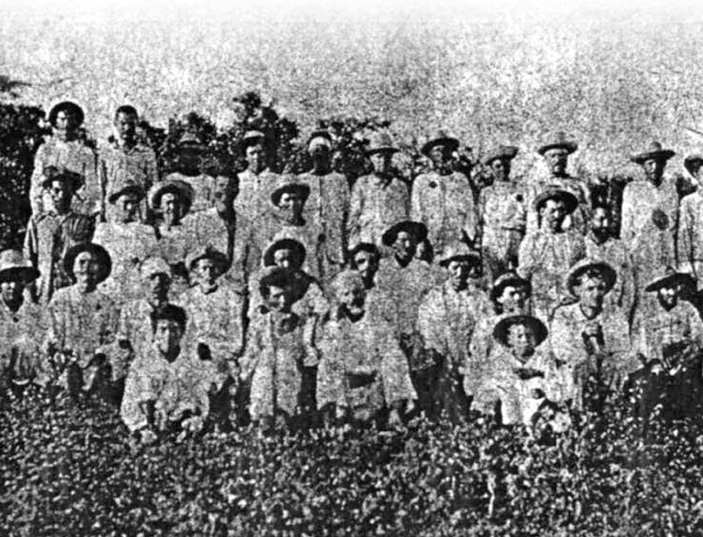
Bailey K. Ashford immortalized his first hookworm patients in a photograph. The caption reads: "Photograph of a number of natives of Puerto Rico, showing pernicious anemia due to Ankylostoma duodenale." Source: Bailey K. Ashford, "Report to the Surgeon General," December 22, 1899, Otis Historical Archives, National Museum of Health and Medicine, RG 2.3, box 10. Originally published in José Amador's Medicine and Nation Building in the Americas, 1890–1940 (Nashville, TN: Vanderbilt University Press, 2015). Courtesy of Vanderbilt University Press.
Despite the crucial significance of Puerto Rico in the development of US public health, the place that this campaign occupies in the history of US tropical medicine and international philanthropy has been underappreciated.5One notable exception is Nicole Trujillo-Pagán, Modern Colonization by Medical Intervention: US Medicine in Puerto Rico (Boston, MA: Brill, 2013). For hookworm disease in Puerto Rico, see Francisco A. Scarano, "Desear el jíbaro: Metáforas de la identidad puertorriqueña en la transición imperial," Illes i imperis 2 (1999): 65–74; José Quiroga, "Narrating the Tropical Pharmacy," in Puerto Rican Jam: Essays on Culture and Politics, edited by Frances Negrón-Muntaner and Ramón Grosfoguel (Minneapolis: University of Minnesota Press, 1997), 116–26; and Fernando Feliú, "Rendering the Invisible Visible and the Visible Invisible: The Colonizing Function of Bailey K. Ashford's Antianemia Campaigns," in Foucault and Latin America: Appropriations and Deployment of Discursive Analysis, edited by Benigno Trigo (New York: Routledge, 2002), 153–68. Despite its contribution, this literature focuses mostly on imperial discourses and practices, not on the popular responses to the hookworm campaign or its transnational implications. In many ways, Ashford's accomplishments have been overshadowed by the yellow fever work of Carlos Finlay, Walter Reed, and William C. Gorgas in Cuba. Moreover, relative to the historical understanding of hookworm campaigns in the US South, Costa Rica, Brazil, the Philippines, and Mexico, the campaign in Puerto Rico has earned little more than a footnote in standard accounts of US public health history.6On hookworm eradication in the US South, see John Ettling, The Germ of Laziness: Rockefeller Philanthropy and Public Health in the New South (Cambridge, MA: Harvard University Press, 1981); and Matt Wray, Not Quite White: White Trash and the Boundaries of Whiteness (Durham, NC: Duke University Press, 2006), 96–132. On Costa Rica, see Steven Palmer, From Popular Medicine to Medical Populism: Doctors, Healers, and Public Power in Costa Rica, 1800–1940 (Durham, NC: Duke University Press, 2003), 155–82. On Brazil, see Gilberto Hochman, A era do saneamento: As bases da política de saúde pública no Brasil (São Paulo: Editora Hucitec, 1998). On Mexico, see Anne-Emanuelle Birn, Marriage of Convenience: Rockefeller International Health and Revolutionary Mexico (Rochester, NY: University of Rochester Press, 2006), 61–116. On the Philippines, see Warwick Anderson, Colonial Pathologies: American Tropical Medicine, Race, and Hygiene in the Philippines (Durham, NC: Duke University Press, 2006), 104–29. Yet this campaign, like no other, was the first that raised public awareness about the disease and served as a model for hookworm eradication campaigns worldwide. To date, too few have paid close attention to the haphazard process that helped build this campaign, the people who sought treatment, and the role of Puerto Rico in launching Rockefeller philanthropic public health initiatives. Integrated into one history, these public health crossings illuminate overlapping stories of colonial agency and imperial rule, of peasants and physicians coming to understand hookworm disease in view of each other, and of the transformation of the Puerto Rico campaign as a model for stemming the disease in the rest of the tropical world.
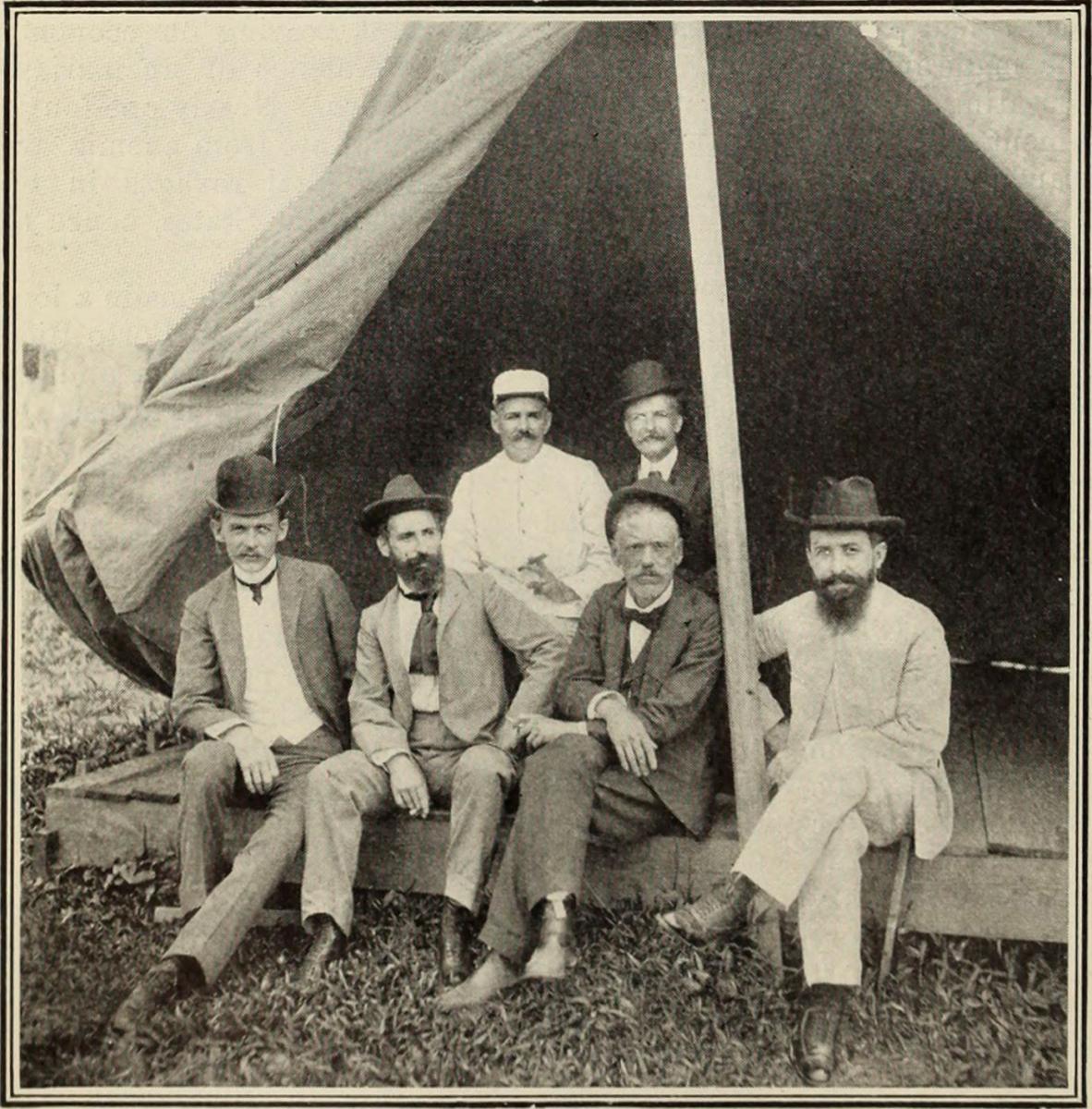
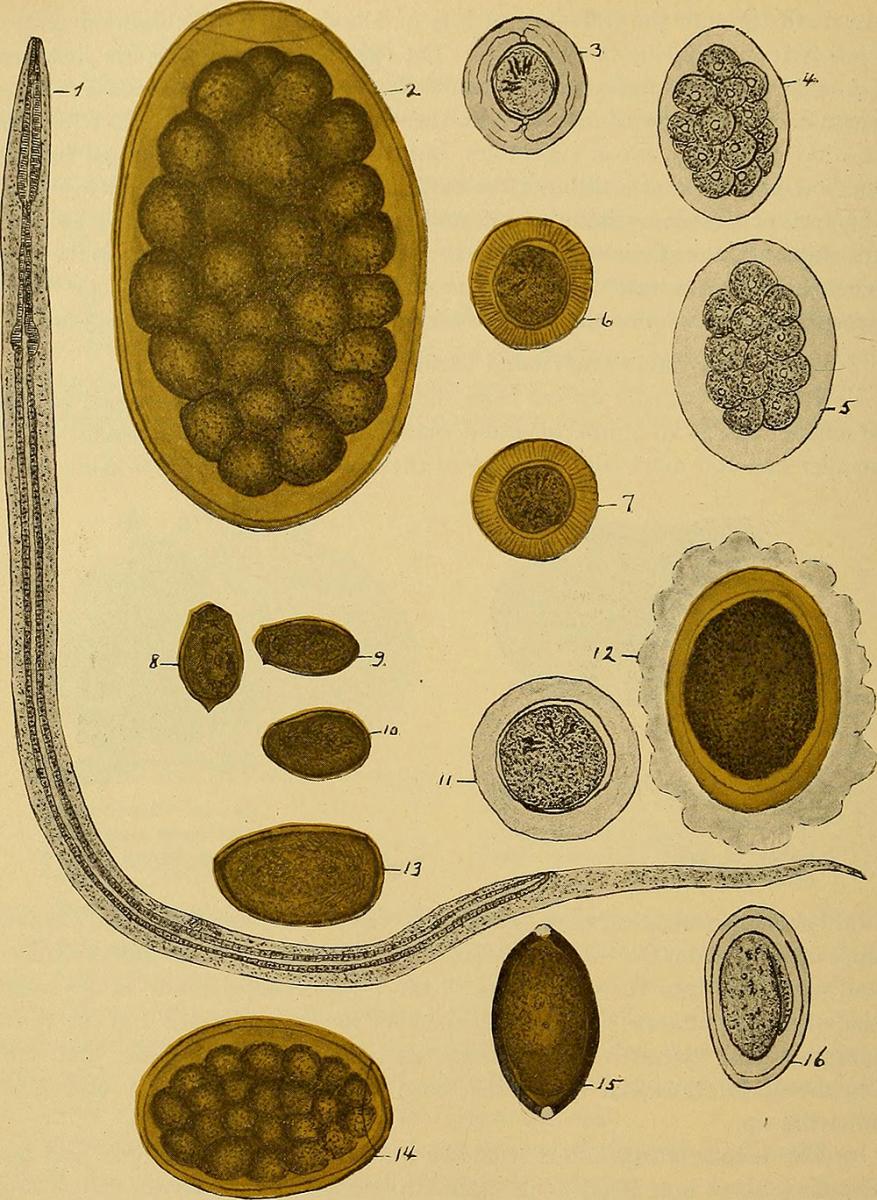
Top, Group of United States Government and Native Physicians, including Dr. Bailey K. Ashford, Puerto Rico, ca. 1890. Image courtesy of Flickr user Internet Archive Book Images. Image is in public domain. Bottom, Medical Illustration of uncinaria Americana. Illustration originally published in Diagnostic methods, chemical, bacteriological and microscopical: a text-book for students and practitioners (Philadelphia: P. Blakiston's Son & Co., 1909), 192. Image uploaded by Flickr user Internet Archive Book Images. Image is in public domain.
That the story of Ashford and Puerto Rico's hookworm campaign remains mostly hidden is hardly surprising considering the place they occupy in the history of imperial medicine. Four factors in particular explain this lack of attention. First, the battle between Ashford, the physician, and Charles W. Stiles, the zoologist, to identify and name the intestinal parasite that causes the disease was won by Stiles. Working with a hookworm specimen provided by Ashford, in 1902 Stiles found that the parasite belonged to a new species, Uncinaria americana, although later he changed the name to the more sensational Necator americanus (American Killer).7For the nomenclature dispute between Ashford and Stiles, see Ettling, Germ of Laziness, 29–33. Second, Ashford's life does not fit the traditional historiography of empire since he was not the conventional emissary of the white man's burden or US imperialism.8José Rigau, "Bailey K. Ashford, más allá de sus memorias," Puerto Rico Health Sciences Journal 19, no. 1 (2000): 51–55. On the contrary, in 1899, the same year he "discovered" the cause of anemia, he married María Asunción López, daughter of the island's first newspaper publisher, and from then on devoted himself to curing the afflicted. He spoke and wrote fluently in Spanish, and, despite the paternalistic tone of his words, he frequently and genuinely praised the work, wits, and moral compass of the peasants he treated. He raised his children in Puerto Rico, and remained on the island off and on until his death in 1934. Third, while Puerto Rico was indeed a colonial laboratory, in the early decades of the twentieth century the island was represented as a docile counterexample to Cuba and the Philippines, and today it remains politically linked to the United States; these facts have tended to make historians of imperial medicine less interested in the campaign. Finally, shortly after the Rockefeller Sanitary Commission took up Ashford's ideas for eradicating hookworm, a new rhetoric of public health efficiency and rigor declared the Puerto Rican model expensive and unreliable. Hence, to rediscover the significance of the campaign initiated in the colonial periphery, it is first necessary to restore the influence that the Puerto Rican campaign once enjoyed.
Paying close attention to the development of the Puerto Rican campaign in the context of expanding US imperial medicine highlights its significance beyond its local success. The campaign came into existence through the interactions of new colonial administrators, US and Puerto Rican health specialists, and the inhabitants of the mountainous coffee region. As Paul A. Kramer has pointed out, "colonial dynamics are not strictly derivative of, dependent on, or respondent to metropolitan forces," but are instead part of a dense network of forces that continuously remake each other.9Paul A. Kramer, "Race, Empire, and Transnational History," in Colonial Crucible: Empire in the Making of the Modern American State, edited by Alfred W. McCoy and Francisco A. Scarano (Madison: University of Wisconsin Press, 2009), 199–209. While many Puerto Rican elites participated actively in building the infrastructure envisioned by the commission, others oriented their efforts toward civic organizations disseminating hookworm information or toward opposing the campaign based on their political alliances. In addition, popular participation often pushed municipal and colonial officials to establish treatment stations, rather than simply to respond to the US disciplinary strategies. Peasants, for example, appropriated specific elements of colonial rule that most directly benefited their health interests, and rejected those that did not. Across the Atlantic, US physicians followed closely events unfolding in Puerto Rico to assess the political and medical impact of this health intervention among the white rural poor. In this field of exchanges and possibilities where new ideas about the disease and its cure emerged, the boundaries between colonial possession and the imperial state blurred, and new medicalized stereotypes about populations were forged, transformed, and contested.
Hookworm (Extract from Review of Program presented to Scientific Directors), 1942. Memo by Rockefeller Foundation. Courtesy of the 100 Years: The Rockefeller Foundation website, Rockefeller Archive Center, Rockefeller Foundation.
This chapter interprets the back-and-forth flow of new medical knowledge from US military doctors through local physicians to hookworm patients and from Puerto Rico to the United States as evidence of two significant public health crossings. The first crossing illustrates the extent that physicians and patients shaped, and were shaped, by the hookworm campaign. This campaign is remarkable because its complete novelty to the medical community and the mountainous dweller led to creative interactions that shaped the flow of information and popular expectations.10For the interplay of elite and popular responses to the United States, see Eileen J. Suárez Findlay, Imposing Decency: The Politics of Sexuality and Race in Puerto Rico, 1870–1920 (Durham, NC: Duke University Press, 1999), 110–34. The second crossing demonstrates the linkages between colonial medicine and US public health philanthropy. Years of exchanges between colonial officials, physicians, and journalists made Puerto Rico a constant point of reference among the US physicians and the public at large. When in 1909 the Rockefeller Foundation decided to undertake the hookworm program in the US South, the image of tens of thousands of redeemed Puerto Ricans was not too far from the minds of its staff. Their focus would be to adapt the lessons of the colonial laboratory to the United States.
Hookworm in the Coffee Region
During the second half of the nineteenth century, the increased cultivation of coffee in Puerto Rico's central mountain range generated favorable conditions for hookworm infestation. By the 1870s, the coffee grown in the highlands had become the island's principal agricultural export, surpassing the sugar produced in the coastal zones. In the next two decades, coffee production nearly tripled, accounting for more than 75 percent of the value of Puerto Rico's gross export. The expansion of large coffee estates in the highlands and the attendant impoverishment of small landholders resulted in an increased number of landless families. Peasants in turn were forced to become renters or agregados (service tenants), joining the growing number of wage laborers on coffee plantations. Fueled by the coffee boom, highland migration soared and for the first time the central mountainous region displaced the coast as the most densely populated area of Puerto Rico.11For the coffee boom in nineteenth-century Puerto Rico, see Laird W. Bergad, Coffee and the Growth of Agrarian Capitalism in Nineteenth-Century Puerto Rico (Princeton, NJ: Princeton University Press, 1983), especially chapter 4. By the time the United States invaded Puerto Rico in 1898, 63 percent of its 953,243 inhabitants were peasants living in the coffee region.12Irene Fernández Aponte, El cambio de soberanía en Puerto Rico: El otro '98 (Madrid: Editorial Mapfre, 1992).
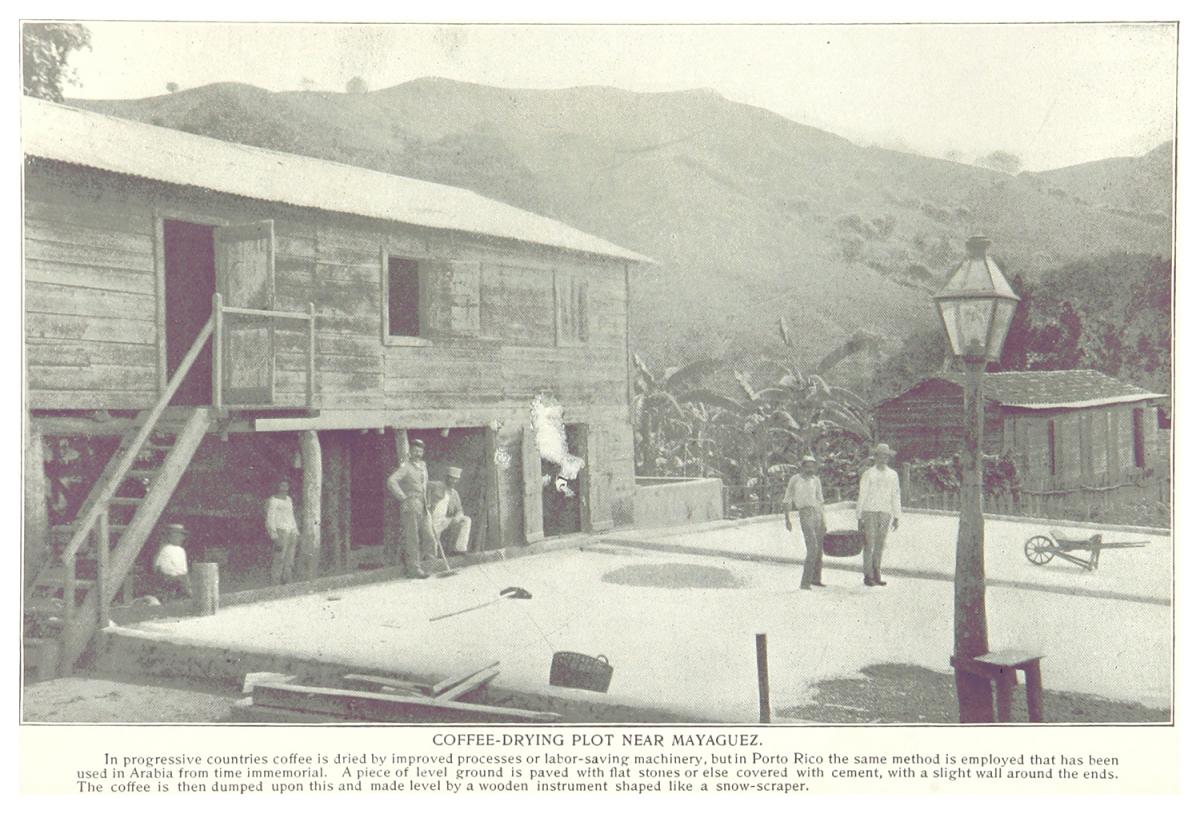
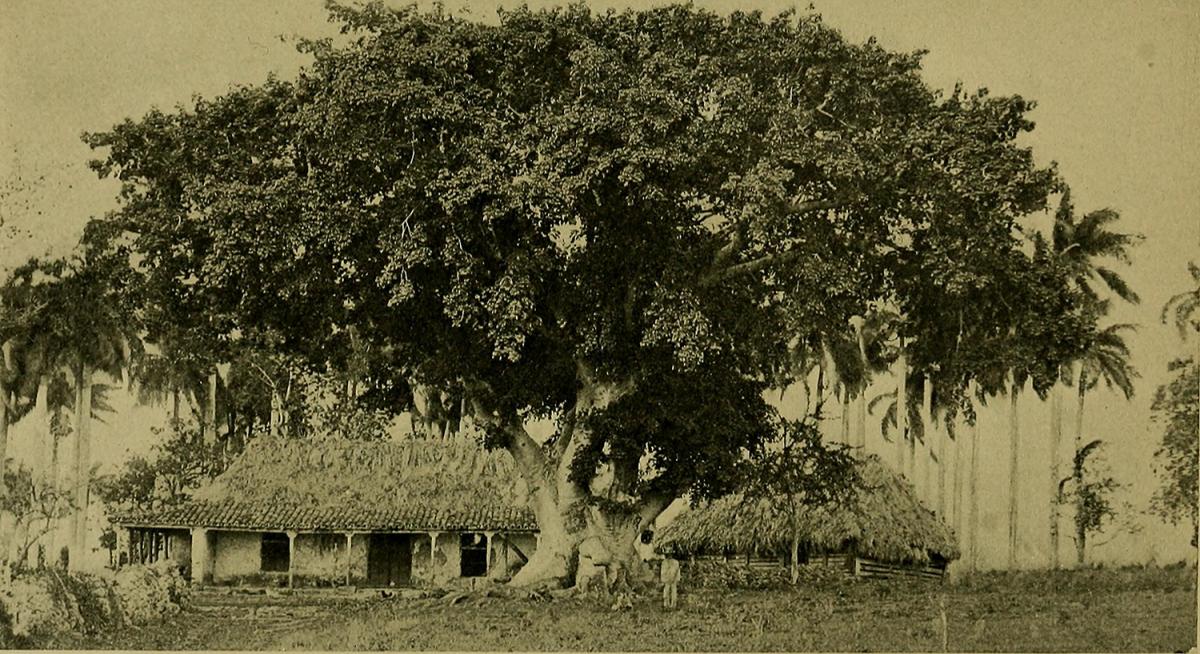
Top, Coffee-Drying Plot near Mayaguez, Puerto Rico, 1899. Courtesy of Wikimedia Commons. Image is in public domain. Middle, Botanical illustration of coffea arabica, 1794. Courtesy of Wikimedia Commons. Image is in public domain. Bottom, Coffee Plantation, Puerto Rico, 1899. Originally published in Frederick A. Ober, Puerto Rico and Its Resources (New York: D. Appleton and Co., 1899). Photograph uploaded by Flickr user Internet Archive Book Images. Image is in public domain.
The generalized misery of landless peasants and the cyclical nature of work in coffee plantations favored hookworm infestation. Coffee picking generally began during the rainy season, the period between the months of June and November. Migrant laborers frequently harvested coffee under pouring rain, moving from plantation to plantation looking for work as the bean matured in different localities. The hookworm larvae, like the coffee variety grown in the region (Coffea arabica), thrived on rain, humidity, and protection from direct sun. It was under the shade of trees such as guamá, moca, capá prieto, and the búcare that the laboring men, women, and children picked the matured bean, and their bare feet would come into contact with soil polluted by feces, which harbored hookworm larvae. The larvae then entered between the soft skin of the toes, passed through the bloodstream to the lungs, and traveled from there to the throat, stomach, and finally to the intestines, where it colonized the intestinal lining. As the day passed, the worker would experience an itching sensation between his or her toes, and by the next day, an unbearable dermatitis—commonly known as mazamorra—would develop. Once in the intestinal lining, the hookworm could live for up to ten years. The female parasite in the intestines reproduced rapidly, releasing thousands of eggs through the feces to hatch in the moist soil and reinitiating the infection cycle. The simple harboring of the worms, however, did not immediately provoke symptoms. Symptoms were directly proportional to the intensity of the infection. In normal adults, a moderate infection might cause pallor, nausea, and anemia, whereas a severe infection entailed a series of digestive and nervous disorders that could lead to death. In children, moderate to severe infections could impair mental and physical development.13James J. Plorde, "Hookworms," in Sherris Medical Microbiology: An Introduction to Infectious Diseases, edited by Kenneth J. Ryan and C. George Ray (Norwalk, CT: Appleton and Lange, 2010), 844–46.
Years of seasonal labor and shifting patterns of migration resulted in a hookworm epidemic that mostly afflicted the population of the coffee region. The intensity and scope of hookworm infestation depended on the contingent forces of poverty and environmental vulnerability. The virtual absence of public health infrastructure and the lack of outhouses on coffee plantations contributed to the situation. "Uncinariasis has its great breeding place in the coffee plantations of Porto Rico," the two leading doctors of the eradication campaign reported, "and here a barefooted people pollute the soil and are infected and reinfected by it until the life of every man, woman, and child is punctuated by a vast number of reinfections."14Bailey K. Ashford and Pedro Gutiérrez Igaravídez, Uncinariasis in Porto Rico: A Medical and Economic Problem (Washington, DC: Government Printing Office, 1911), 11. Ashford's diagnosis in 1899 laid the groundwork for a new colonial pact that increasingly made the state responsible for the protection and well-being of the population in the coffee region. Public health advocates invoked the figure of the jíbaro to move beyond the relief work of private charity to develop a centralized public health infrastructure.15On nineteenth-century charity work, see Teresita Martínez Verge, Shaping the Discourse on Space: Charity and Its Wards in Nineteenth-Century San Juan, Puerto Rico (Austin: University of Texas Press, 1999).
This centralizing goal built on an ideology of excess and discipline that connected the anemic peasant to other social maladies. As noted in Chapter 1, in the second half of the nineteenth century, narratives of caution linked the disease's symptom to an endless number of excesses—from alcohol abuse to a lack of work ethic to sexual promiscuity—that enervated the human body and paved the way for the feebleness so common among the inhabitants of the highlands. Doctors, writers, and journalists popularized the idea that the widespread feebleness of peasants was not only the result of inadequate nutrition, poor housing, and lack of hygiene, but also of racial mixing and the tropical environment. Francisco del Valle Atiles, for example, wrote a lurid sociological tract about the reprehensible lives of peasants, warning about the possibility of social dissolution. In El campesino puertorriqueño (The Puerto Rican Peasant; 1887), he complained that Puerto Rico's path toward progress was hindered by the "lack of vitality" of the jíbaro and an overabundance of "incapable arms" in agricultural enterprises.16Francisco del Valle Atiles, El campesino puertorriqueño: Sus condiciones físicas, intelectuales y morales, causas que determinan y medios para mejoralas (San Juan: Tipografía de González Font, 1887), 8. The mobilization of these narratives served in part to forge consensus about the need to transform the peasant population into a citizenry capable of hygienic regulation and regimented work before it could be included as part of a broad political base.17See Astrid Cubano-Iguina, "Political Culture and Male Mass-Party Formation in Late-Nineteenth-Century Puerto Rico," Hispanic American Historical Review 78, no. 4 (1998): 631–62.
Hookworm Treatment broadside, Durham, North Carolina, ca. 1913. Broadside by Durham County Board of Commissioners. Published by E.M. Uzzell & Co. Courtesy of Documenting the American South, University Library, University of North Carolina at Chapel Hill.
After the discovery of hookworm in Puerto Rico, physicians and their patients began to transform the understanding of peasant malaise. While the ways peasants described their symptoms were not radically different from those of the preceding generation, their understanding of the disease and their efforts to combat it dramatically changed. For one, under US rule, anemics seeking treatment became hookworm patients. If Ashford and the many doctors who joined his crusade were central in introducing these new ideas, so too were the people who ventured for the first time into dispensaries. Campaign officials used reports, pamphlets, posters, brochures, newspapers, and photographs to disseminate medical information, but peasants too spread the word about medical professionals, treatment protocols, and their own pursuit of health. In other words, the new colonial context mediated the emergence of distinct forms of what medical anthropologist João Biehl calls "biomedical citizenship" among peasants mobilizing to demand treatment.18João Biehl, "The Activist State: Global Pharmaceuticals, AIDS, and Citizenship in Brazil," Social Text 22, no. 3 (2004): 105–32. Despite the island's high rate of illiteracy and low rate of schooling, peasants flocked to hookworm stations and municipal offices, requesting access to physicians and medicines. For instance, by 1910 Ashford and Gutiérrez Igaravídez estimated that over 272,000 people had received treatment through the Anemia Commission, and another 30,000 through private physicians. This explosion in popular participation and mobilization of popular expectations in the pursuit of health is one of the most enduring—albeit less recognized—consequences of the campaign. Peasants were more than colonized subjects; they were actors who defined part of the terms under which the campaign developed.
Top, The results of the hurricane, 1899. Originally published in George W. Davis's Military Government of Porto Rico from October 18, 1898, to April 30, 1900 (Washington DC: US Government, 1902), 612. Courtesy of the Library of Congress Hispanic Division, loc.gov/rr/hispanic/1898/sanciriaco.html. Bottom, Path of Hurricane San Ciriaco over the island of Puerto Rico, 1899. Originally published in George W. Davis's Military Government of Porto Rico from October 18, 1898, to April 30, 1900 (Washington DC: US Government, 1902), 612. Courtesy of the Library of Congress Hispanic Division, loc.gov/rr/hispanic/1898/sanciriaco.html.
The origins of this campaign began not in an unpolluted scientific laboratory but amid the devastation left by a terrible hurricane that transformed all aspects of life in the coffee region, and set in motion waves of migrants who sought relief by moving to coastal towns. Some of them would become the first hookworm patients. In time, the development of the campaign in Puerto Rico would provide inspiration for the initial hookworm efforts of the Rockefeller Foundation, a private philanthropic organization founded by John D. Rockefeller in 1913, in the US South and Brazil. But we begin with a poetic rendition of the hopelessness felt after the hurricane.
The Whirlwinds of Health
The verses of the canción "La invasión Yanqui" reveal the deep sense of despair felt by people living in the coffee region after Hurricane San Ciriaco hit the island in August 1899. In a few hours, the coffee crop was swept away and the farms that produced it were reduced to half their value. In the town of Jayuya, whole coffee plantations slipped down the mountains into the river. Over 2,700 deaths were registered and 500 more people disappeared.19On the impact of San Ciriaco, see Stuart Schwartz, "The Hurricane of San Ciriaco: Disaster, Politics, and Society in Puerto Rico, 1899–1901," Hispanic American Historical Review 72, no. 3 (1992): 303–45. Capturing this devastation, the canción conveys the generalized scarcity and destitution the poor suffered:
El café se va a perder (The coffee will spoil)
no queriendo el extranjero; (if the foreigners don't want it;)
entonces, ¿con qué dinero (so with what money)
nos vamos a sostener? (will we support ourselves?)
Después de esta invasión (After this invasion)
vendrán los días peores; (the worst days will come;)
tendremos que ir desfilando. (we'll have to run off.)20Anonymous, "La invasión Yanqui," in La poesía popular en Puerto Rico, edited by María Cadilla (San Juan: Sociedad Histórica de Puerto Rico, 1999), 322.
After critiquing the unwillingness of the United States to provide a secure foreign market for coffee, the narrator asks, "¿A dónde diablos los pobres / tendremos que dir rodando?" (Where the hell will we poor folk go?) In asking this question, the poetic voice—or rather, the voices in the communal register of this composition—portrays the US military intervention as an added catastrophe for the very poor.21On the importance of 1898 in Puerto Rico, see Francisco A. Scarano, "Liberal Pacts and Hierarchies of Rule: Approaching the Imperial Transition in Cuba and Puerto Rico," Hispanic American Historical Review 78, no. 4 (1998): 583–602; Silvia Álvarez Curbelo, Mary Frances Gallart, and Carmen Raffucci, eds., Los arcos de la memoria: El '98 de los pueblos puertorriqueños (San Juan: Postdata, 1998); Fernando Picó, 1898: La guerra después de la guerra (Río Piedras, PR: Ediciones Huracán, 1987); and Lillian Guerra, Popular Expression and National Identity in Puerto Rico: The Struggle for Self, Community, and Nation (Gainesville: University Press of Florida, 1998).
But hidden in the canción's political commentary was the migration of destitute coffee dwellers from the highlands to the coast to look for aid. Among them, a lucky few found food and shelter in the town of Ponce, where the surgeon general placed Ashford in charge of a large field hospital to care for the "sick poor drifting down."22Bailey K. Ashford, "Report to the Surgeon General," December 22, 1899, Otis Historical Archives, National Museum of Health and Medicine, RG 2.3, box 10. Abundant food, however, failed to reduce the high incidence of anemia. Local physicians suggested that these migrants were suffering from malaria, diarrhea, or an obscure fever, but their histories and symptoms did not match those claims. After reviewing a copy of Patrick Manson's Tropical Diseases, Ashford examined the feces of the patients with a microscope, found eggs, and established that an intestinal worm was the cause of the disease.23British physician Patrick Manson (1844–1922) published the first manual of tropical diseases in 1898. While he recognized that the term "tropical disease" defined ailments linked but not exclusively confined to the tropical latitudes, he inaugurated a new medical specialty that associated the tropics with specific diseases. See David Arnold, "'Illusory Riches': Representations of the Tropical World, 1840–1950," Singapore Journal of Tropical Geography 21, no. 1 (2000): 6–18. Following Manson's guidelines, he gave them a thymol-derived vermifuge to expel the worms from their bodies. Ashford reported to the US surgeon general that while it was "not probable that those degraded to the level of people whose life is bounded by the tropical plantation, enjoying little beyond cutting cane and picking coffee, [could] have a high standard of personal cleanliness," hookworm was caused by direct contact with soil polluted with human feces "while at work." Ashford, unlike many physicians of the time, not only believed that anemia was caused by hookworm, but recognized that the poor working conditions in plantations sustained the life cycle of the intestinal parasite.
A 'Hammock Case' at the Utuado Station in 1904, Puerto Rico, 1911. Originally published in Bailey K. Ashford and Pedro Guitérrez Igaravidez's Uncinariasis (Hookworm disease) in Porto Rico: a medical and economic problem (Washington DC: US Government Print Office, 1911). Photograph uploaded by Flickr user Internet Archive Book Images. Image is in public domain.
The medication of poor patients was quite rare in turn-of-the-century Puerto Rico. Throughout the nineteenth century, health care was limited to private charities, institutionalized philanthropy, and individual municipalities, and the extent of medical assistance was largely arbitrary. In a 1900 letter to the US civilian governor, Dr. Fawcett Smith, the director of the Superior Board of Health of Puerto Rico, complained that the "sanitary condition" of the island was "primitive, disgraceful, and dangerous to the public." To compound matters, municipal physicians were political appointees who, besides being "scandalously maltreated" and "absurdly" remunerated, were always at risk of losing the favor of the town mayor. The new bureaucracy established by the colonial state did not help, either. According to Smith, the fact that the Superior Board of Health occupied a "subordinate position as a Bureau of the Department of Interior" of the United States led to a "radically defective" administration.24Fawcett Smith to Charles Allen, November 26, 1900, Fondo Fortaleza, Archivo General de Puerto Rico, box 74. Smith's conclusions were as dismal as the failed attempts of US authorities to improve the health of Puerto Ricans. In the following years, despite the imposition of new sanitary measures by the colonial government, diseases continue to increase the mortality rate. After five years of US rule, the average death rate per thousand had increased from 28.9 percent in 1898 to 33.48 percent in 1903.25Bailey K. Ashford and Pedro Gutiérrez Igaravídez, Summary of a Ten Years' Campaign against Hookworm Disease in Porto Rico (Chicago: American Medical Association, 1910), 3.
This dire statistic not only challenged the alleged benevolence of US rule on the island, but also became a source of public embarrassment for supporters of imperialism in the United States. A successful hookworm campaign in Puerto Rico could counter the image of a failing imperial project back in the mainland. Despite the desire of US imperialists to turn the image of Puerto Rico around as soon as possible, attempts to establish the hookworm campaign throughout the island developed gradually and unevenly. In broad terms, the Puerto Rican campaign took place in three distinct phases: an extensive survey in 1903; two subsequent campaigns carried out by the Puerto Rico Anemia Commission in 1904 and 1905; and campaigns under the direction of the Anemia Dispensary Service of the Department of Health, Charities, and Corrections from 1906 to 1909. As institutional structures for hookworm control developed throughout the highlands, the interest in redeeming the jíbaro was both renewed and redefined.
A Typical 'Severe Case', Arecibo, Puerto Rico, 1909, contributed by Dr. Roses Artau. Originally published in Bailey K. Ashford and Pedro Guitérrez Igaravidez's Uncinariasis (Hookworm disease) in Porto Rico: a medical and economic problem (Washington DC: US Government Print Office, 1911). Photograph uploaded by Flickr user Internet Archive Book Images. Image is in public domain.
Convinced that more information was needed to garner the support of the colonial government and medical profession, Ashford and Dr. Walter W. King of the Marine Hospital Service conducted a survey of one hundred cases in Ponce in 1903. While nearly every patient had to overcome the fear of their first medical examination, most of them felt relief after the first treatment. A combination of a thymol-derived vermifuge and salts purged the intestinal worms from patients, relieving patients from anemic exhaustion—the most common symptom of the disease—in about twenty-four to 48 hours. The benefits of taking the medicine must have freed them from their initial apprehension, making the risk associated with the novel treatment worthwhile and easy to promote. In September 1903, Ashford and King published their results in American Medicine. They noted that 30 percent of the deaths charged to "anemia" were caused by hookworm and estimated that the disease affected approximately 90 percent of the rural population.26Bailey K. Ashford and Walter W. King, "A Study of Uncinariasis in Porto Rico," American Medicine 6 (1903): 391–92. In the following issue, the journal editors endorsed a massive eradication campaign on the island. A month later, Governor Hunt promised Ashford that he would take measures to "stop the inroads of this terrible disease." To combat the general skepticism expressed by local physicians, Hunt urged Ashford to publish the principal findings in "the Spanish language" to promote their "circulation over the island" before requesting the doctors' support.27William H. Hunt to Bailey K. Ashford, October 9, 1903, Colección Ashford (hereafter CA), Universidad de Puerto Rico, Recinto de Ciencias Médicas, book 1. This approach required the translation and recognition of colonial knowledge about hookworm to win over Puerto Rican physicians.
Portrait of Col. William Crawford Gorgas, ca. 1916. Photograph by Farnham Bishop. Courtesy of Wikimedia Commons. Image is in public domain.
Anxious to gain momentum for the campaign, Ashford also initiated lobbying efforts abroad to rally the support of Puerto Rican physicians. In December 1903, he made public a letter from Colonel William C. Gorgas, now the US chief surgeon of the Department of the East, which endorsed the "vital necessity of combating [hookworm] disease" on the island.28William C. Gorgas to Bailey K. Ashford, December 3, 1903, CA, box 6; Gorgas to Ashford, January 22, 1904, CA, box 6; Ashford to Gorgas, January 28, 1908, CA, box 6. Ashford's work in promoting outside support, especially the validation from the person responsible for the yellow fever eradication in Cuba, proved effective. Later that month, Ashford delivered a speech in Spanish to the members of the Asociación Médica de Puerto Rico (Puerto Rico Medical Association). He framed the eradication campaign as a patriotic duty that would benefit the "whole population." Ashford called on the "well-to-do, refined, educated class" to join the campaign and "lead gently in our sanitary reform.29Bailey K. Ashford, "First Announcement of the Causes of Anemia in Porto Rico to the Medical Profession of the Island," CA, box 1, document 5. His presentation must have been persuasive. Following the event, the Puerto Rican Medical Association committed itself to the crusade against hookworm in order to uplift the "enervated and atrophied spirit of our race."30Manuel Quevedo Baez to Bailey K. Ashford, December 16, 1903, CA, box 5. William P. Craighill, a member of the US Corps of Engineers who was present at the event, was "proud" to witness the command and eloquence that Ashford demonstrated while addressing the "enlightened and progressive members of the medical profession."31William P. Craighill to General O'Reilly, March 14, 1904, Papers of the Office of the Adjutant General, National Archives and Records Administration, RG 97, box 478, document 65329.
Although the medical community in Puerto Rico began to promote the hookworm campaign, not all Puerto Ricans welcomed Ashford's efforts. Sharp political disputes meant that it took longer than expected to dispel the widespread belief that the anemia was caused by hunger. Conservative politicians aligned with pro-Spanish forces claimed that the narrow focus on the disease would distract attention from the terrible malnutrition and devastated economy created by the United States' arrival.32On the pauperization of the Puerto Rican population, see Guerra, Popular Expression, 19–45. "We believe that to deal with this malady neither medicines nor physicians are of value," the editors of the Heraldo Español complained. "Anemia in our country does not mean anything other than hunger."33El heraldo español, June 15, 1904, 1, CA, box 6. Emphasis in the original. See also Bailey K. Ashford, Walter W. King, and Pedro Gutiérrez Igaravídez to Beekman Winthrop, September 23, 1904, CA, box 6. Similar criticism also came from organized labor. Leaders of the Federación Libre de Trabajadores (Free Federation of Workers) claimed that the anemia suffered in Puerto Rico "was occasioned by the lack of sufficient and nourishing food."34See "Puertorican Labor Conditions," CA, box 6, document 175a. During his 1904 visit to Puerto Rico, Samuel Gompers, the president of the American Federation of Labor, blamed greedy employers for the general conditions of poverty, pointing out that the miserable wages did not allow workers to buy enough food.35"Samuel Gompers Aclamado en CA, box 6, documents223a–e.
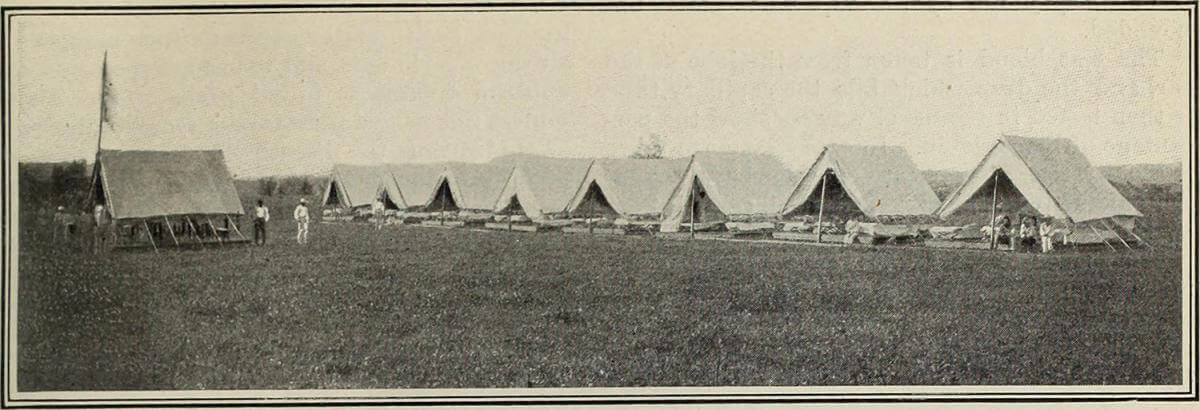
The American camp at Bayamon, Puerto Rico, 1890. Photograph uploaded by Flickr user Internet Archive Book Images. Image is in public domain.
For several years Puerto Rico's newspapers debated the existence of hookworm disease and its treatment, but the intensity of the debate gradually subsided when the colonial government initiated a concerted effort against hookworm. In January 1904, Governor William Hunt asked the legislature of Puerto Rico to allocate $5,000 to "begin an effective campaign" against hookworm disease.36Hunt, Message, 20–21. Within a month, the Puerto Rico Anemia Commission, composed of Drs. Ashford, King, and Gutiérrez Igaravídez, set up a provisional field hospital in Bayamón, a town where Gutiérrez Igaravídez—the only Puerto Rican member of the commission—had secured the support of Dr. Agustín Stahl, one of the most prominent physicians on the island. Stahl offered his services at no cost and allowed the commission to erect the facilities on the grounds of the municipal hospital. The commission reported an "immediate betterment in the patients" after the expulsion of the parasites, and regarded the follow-up treatments of returning patients as proof of the campaign's value. In two weeks, the commission reported, 1,254 patients had been examined and treated, which relieved many doubts among local doctors. "Many physicians," the commissioners observed, "visit the scene of our work and express their conviction that uncinariasis is an extensive epidemic in Puerto Rico."37Bailey K. Ashford, Walter W. King, and Pedro Gutiérrez Igaravídez to Beekman Winthrop, n.d., CA, box 1, document 132. When the Bayamón field hospital closed on April 1904, the San Juan News reported that Ashford was publicly praised for "valuable services and efforts on behalf of the poor sick from anemia." In a farewell ceremony, Stahl "presented the doctor with a distinction, and in a few well-chosen words told him that the 150 signatures attached thereon represented the whole community."38On May 1, 1904, Agustín Stahl held a public ceremony at the Bayamón hospital to commemorate Ashford. See "Dr. Ashford Is Honored," San Juan News, May 3, 1904, 1. After the commission's departure, Stahl continued treating patients until June 15, when the existing medicines ran out.
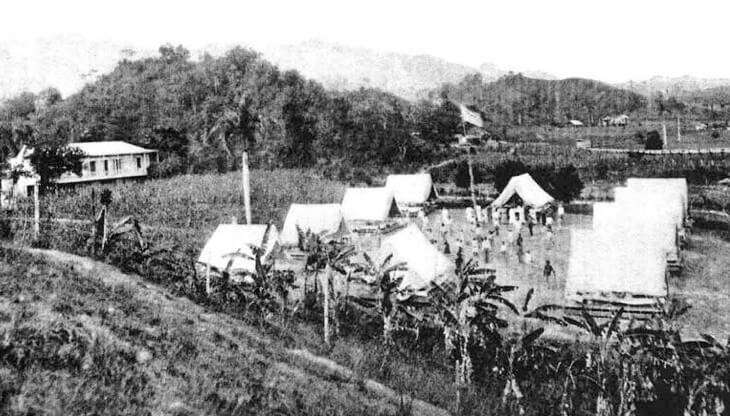
Field Hospital at Utuado, Puerto Rico, 1911. Originally published in Bailey K. Ashford and Pedro Guitérrez Igaravidez's Uncinariasis (Hookworm disease) in Porto Rico: a medical and economic problem (Washington DC: US Government Print Office, 1911). Image is in public domain.
The dispensary camp proceeded to Utuado, a coffee town still suffering from the devastation left by San Ciriaco. After a couple days of delay, the provisional hospital located on high grounds across the Viví River was opened to the public on May 9. The commission believed that with a population of forty thousand, the remote town provided a sufficiently confined environment to study the disease and its treatment. Immediately after the first cases of anemia were treated, a ripple effect drew thousands of men, women, and children to the field dispensary. "Beginning with 10 to 20, by the latter part of July, we were receiving from 125 to 150 new patients daily," Ashford and Gutiérrez Igaravídez reported. "The rate continued to increase, and these, with the old patients returning, made our clinic from 300 to 600 per day."39Ashford and Gutiérrez Igaravídez, Uncinariasis in Porto Rico, 106. As word about the free medical treatment spread, many hookworm patients traveled—some by foot, the severely ill in hammocks—from remote areas to the dispensary.40Bailey K. Ashford, Walter W. King, and Pedro Gutiérrez Igaravídez, Report of the Commission for the Study and Treatment of "Anemia" in Porto Rico (San Juan: Bureau of Printing and Supplies, 1904), 14–15. Those too ill to return to their houses were admitted to the tent hospital.
Top, Interior of Hospital Tent, Puerto Rico, 1911. Originally published in Bailey K. Ashford and Pedro Guitérrez Igaravidez's Uncinariasis (Hookworm disease) in Porto Rico: a medical and economic problem (Washington DC: US Government Print Office, 1911). Photograph uploaded by Flickr user Internet Archive Book Images. Image is in public domain. Bottom, the Activity of the Larva of Nectoramericanus, Puerto Rico, 1911. Originally published in Bailey K. Ashford and Pedro Guitérrez Igaravidez's Uncinariasis (Hookworm disease) in Porto Rico: a medical and economic problem (Washington DC: US Government Print Office, 1911), 159. Photograph uploaded by Flickr user Internet Archive Book Images. Image is in public domain.
Profiting from the experience in Bayamón, patient treatment at Utuado became systematized. Patients arrived early in the morning, some of them after walking for several days on the road, to be examined before noon. After filling out a medical form, they submitted fecal samples for microscopic examination. Once their clinical history was recorded, each patient received a brief lecture on hookworm and an identification card with their case number.41"Comisión de la Anemia de Puerto Rico: Manera de tomar las medicinas," CA, box 5; Bailey K. Ashford, Walter W. King, and Pedro Gutiérrez Igaravídez, Preliminary Report of the Commission for the Suppression of Anemia in Porto Rico (San Juan: Bureau of Printing and Supplies, 1906), 8. They also learned about the use and construction of latrines to prevent the spread of the disease. With much of the money spent, on June 15 the commission ceased to accept new patients, and on August 15 ended the treatment of all patients. In a little over four months, 4,482 patients had been treated in Utuado and its laboratory staff had examined a deluge of over 17,564 fecal specimens.42Ashford, King, and Gutiérrez Igaravídez, Report of the Commission, 93. As they had in Bayamón, the commissioners left a stockpile of medicines with the town doctor before leaving.
Their efforts, however, did not go unnoticed by local residents, the media, or high-ranking officials. The Utuado dispensary was visited by the director of health, charities, and correction; the supervisor of health; Puerto Rican congressional delegates; and Governor Hunt. The pages of La democracia noted that the commission had left a "general current of affection and gratitude" among the people of Utuado. Upon the commission's departure, "a crowd assembled around the kind guests to give them their last goodbye." Within hours, the "spontaneous" farewell had turned into an enthusiastic caravan parading down the town streets. A procession of cars led by various town notables "accompanied [the Anemia Commission] some kilometers outside the town."43"Los verdaderos americanos en Puerto Rico," La democracia, August 31, 1904, 1. Ashford, King, and Gutiérrez Igaravídez later reported that the "former scepticism as to the curability of the disease by medicine" had given way to belief.44Ashford, King, and Gutiérrez Igaravídez, Report of the Commission, 14–15.
The Dispensary Frenzy
In 1905, the commission had an opportunity to develop a more extensive eradication program based on their success in Bayamón and Utuado. Officials quickly learned that the "cured jíbaro" was the "most potent weapon" for convincing skeptics and promoting the campaign.45Bailey K. Ashford to Agustín Stahl, April 18, 1905, CA, box 5. The commission requested continued funding from Governor Beekman Winthrop for this "methodic and scientific organization." It also encouraged the cooperation of "municipalities and their charitable institutions" in transforming a tentative initiative into a centrally coordinated campaign.46Ashford, King, and Gutiérrez Igaravídez, Report of the Commission, 100–101. Governor Winthrop agreed, and the legislature appropriated $15,000 to expand the commission's work. Relative to the magnitude of the enterprise, the sum was quite modest, but it helped transform the experimental and localized initiative into an island-wide campaign focused on the coffee region.47Ashford, King, and Gutiérrez Igaravídez, Preliminary Report, 6.
After several months of repairs and renovations, the commission's headquarters opened on the crest of a hill near the central plaza of Aibonito, a coffee-growing town close to a major thoroughfare. This location facilitated communication with other municipal "substations" opening around the region. Ashford and Gutiérrez Igaravídez served as coordinators in Aibonito, training doctors, evaluating petitions, and corresponding with colonial officials.48Ibid., 8–9. They wrote to plantation owners, encouraging them to construct latrines, instruct their workers about soil pollution, and send hookworm-afflicted individuals to the treatment station. Their pleas, however, did not have the expected results. Plantation owners were rarely willing to incur the added expense of building latrines and, during the picking season, most of them refused to allow workers to visit a treatment station or to walk away from the fields to relieve themselves.49Agustín Stahl, "La uncinariasis y La Liga," Boletín de la Asociación Médica de Puerto Rico 3, no. 4 (1905): 7.
The Entrance to the Dispensary, Aibonito, 1905. Originally published in Bailey K. Ashford and Pedro Guitérrez Igaravidez's Uncinariasis (Hookworm disease) in Porto Rico: a medical and economic problem (Washington DC: US Government Print Office, 1911). Photograph uploaded by Flickr user Internet Archive Book Images. Image is in public domain.
In spite of increased financial resources and hopes of centralization, the commission did not follow a standard procedure as it decided where to extend the campaign. Since the commission responded to individual requests from municipal governments, the establishment of additional dispensaries varied greatly, depending on a town's location, the initiative of its officials, and available resources at the time of the request. The process frequently began with a letter from a town's mayor or municipal doctor to either Ashford or the governor of Puerto Rico. Each town negotiated the extent of the fiscal and administrative responsibilities it would assume, which sometimes determined the outcome of their request. A keen awareness of public health developments in other nations also shaped how some of the petitions were framed. Dr. Martin O. de la Rosa, a physician from the town of Comerio, insisted that "the government of the island, in keeping with the practices of other nations, [was] obligated to finance" a hookworm station in his town.50"Informe del Dr. Martín O. de la Rosa a los Doctores Ashford, King y Gutiérrez, miembros de la 'Puerto Rico Anemia Commission,'" CA, box 4.
As word about the new dispensaries spread from one town to another, the pressure on municipal officials intensified. Municipal doctors did what they could to provide treatment, and hookworm sufferers to demand it, even before many of the petitions for local population stations were submitted to the commission. From January to March 1905, the doctor of the town of San Sebastián improvised a modest treatment facility in his municipality. After over six hundred patients overwhelmed municipal officials with their "requests for medicine," in May the town mayor begged the US governor to provide him with the "necessary medicines to cure our anemics."51Agustín Font to William H. Hunt, May 26, 1905, CA, box 4. The commission awarded San Sebastián medical supplies on the condition that the town doctor travel to Aibonito to receive training at headquarters.52A. H. Frazur to Alcalde de San Sebastián, June 9, 1905, CA, box 4. Similarly, Francisco Sein, the doctor for the town of Lares, organized a rudimentary treatment program after facing increased pressure from peasants. Sein already had experience promoting the control of hookworm. At his own expense, he had published a booklet urging coffee planters, schoolteachers, and neighborhood commissioners to ask people to construct outhouses to "banish the pernicious habit" of soil pollution. He saw the publication as a first step for the "benevolent, worthy, and necessary undertaking" of a "more extensive anti-anemic campaign" in the future.53Francisco Sein, La anemia: Medidas que deben observarse para evitar su propagación (Lares, PR: Tipografía de Bergas, 1905), 3, 7–8. Two months later, the commission supported opening the substation in Lares.54A. H. Frazur to Alcalde de Lares, June 15, 1905, box 4, CA.
Municipal petitions and popular demand thus brought the campaign into remote regions of the coffee highlands. After accepting a town's request, the commission provided medical supplies, laboratory equipment, and, if possible, a field technician. More importantly, it trained the town's doctor to standardize the administration of medicine and to record patient data. The municipality, in turn, provided the service facilities and staff. By the end of the 1905–1906 campaign, ten municipalities had established stations through this process. At four of these stations, the arrangement was for the town to bear all expenses and the physicians to offer their services at no cost as long as the commission furnished the medicines.55The other six towns that provided physicians and facilities were Barros, Coamo, Comerio, Guayama, Moca, and Utuado. List of towns, CA, box 4. The volunteers included prominent physicians such as Agustín Stahl and Enrique Rodríguez González of Bayamón, Isaac González Martínez and Pedro Malaret of Mayagüez, Francisco Sein y Sein of Lares, and Tulio López Gaztambide and Miguel Roses Artau of Arecibo.56Ashford, King, and Gutiérrez Igaravídez, Preliminary Report, 8–9. Through the efforts of Puerto Rican physicians, 18,865 patients had their fecal samples examined, a prescription dispensed, and their medical condition recorded. The commission registered a total of 76,410 visits, including those of patients who returned to the stations for second and third treatments.
Not to be outdone by the efforts of the colonial state, in 1905 the Puerto Rico Medical Association created the Liga de Defensa contra la Anemia (Defense League against Anemia) to complement the work of the commission. The inaugural session was held at the Ateneo Puertorriqueño (Puerto Rican Athenaeum), the meeting place of the island's intellectual elite. The league called on "patriots" of "all classes and social conditions" to recognize the urgent need to fight the disease, hoping that the campaign would turn around Puerto Rico's reputation as an unwholesome and sickly place. One speaker called hookworm a "cruel illness that mercilessly depopulates our fertile landscape."57Mariano Ramirez, José Carbonell, Pedro del Valle, and González Martínez to Bailey K. Ashford, July 19, 1905, CA, box 5. For league members, the solution to this problem was not simply treating hookworm patients, but also curtailing the problem of disposing of human feces. To combat the habit of soil pollution, the league proposed disciplinary measures that included requiring individuals to construct latrines in residences and agricultural fields and fining anyone who polluted the soil.58"Liga de Defensa contra la Anemia," Boletín de la Asociación Médica de Puerto Rico 3, no. 32 (1905): 116–18. On August 6, 1906, league members ratified eight other articles that recommended provisions for the "most complete extirpation" of hookworm disease. Among the most relevant was the compulsory construction of outhouses in every house and provisional latrines for those working in the agricultural fields, as well as the imposition of fines on anyone who defecated on the soil. A month after these measures were ratified, the colonial government approved the proposed sanitary ordinances.59Circular no. 2398, September 25, 1905, CA, box 1.
Medical and civic discourses overlaid each other in the league's crusade. Strict enforcement of the rules of personal hygiene promised to stop disease transmission and cultivate self-discipline among peasants. Reformers appealed to planters by linking hookworm disease to the workers' lack of productivity and the wasted agricultural potential of the land, arguing that hookworm treatment would resurrect the waning coffee economy. The members of the league were motivated not only by a sense of civic duty that marked their professional and moral superiority, but also by the success of the yellow fever campaigns in Havana and in New Orleans. "How we would judge, and how science and the medical world would judge," wrote Agustín Stahl, "if in the last epidemic of yellow fever in New Orleans the doctors had limited themselves to assisting and treating the sick, giving merely secondary attention to exterminating the generating germ of the disease."60Agustín Stahl, "Difusión de la uncinaria y Liga de defensa contra la anemia," Boletín de la Asociación Médica de Puerto Rico 3, no. 5 (1905): 160. In their efforts to expand the hookworm campaign, public health advocates referred to the eradication of yellow fever for their own interests while continuing to develop a transnational ethos of disease eradication that linked the work of physicians from Puerto Rico and the United States.
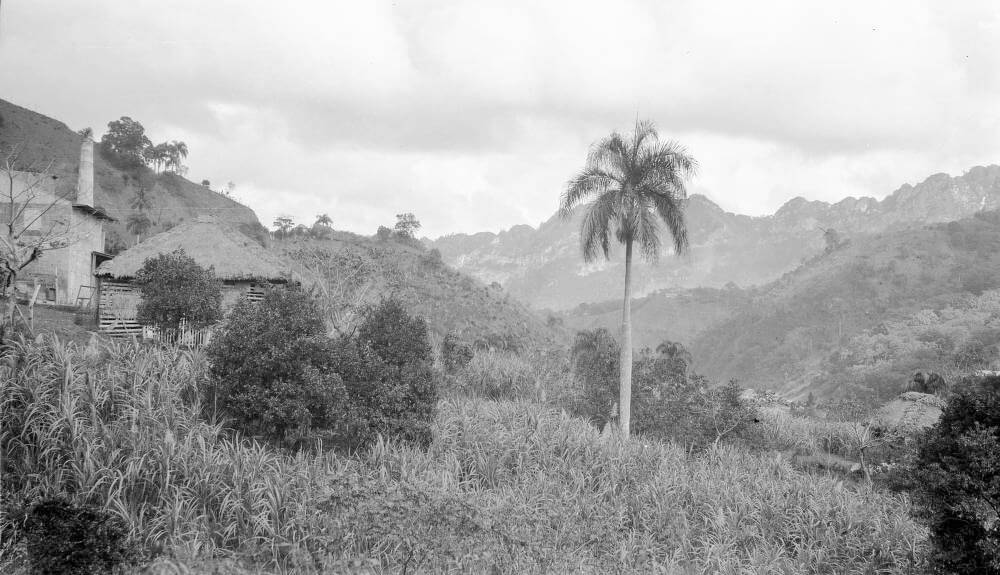
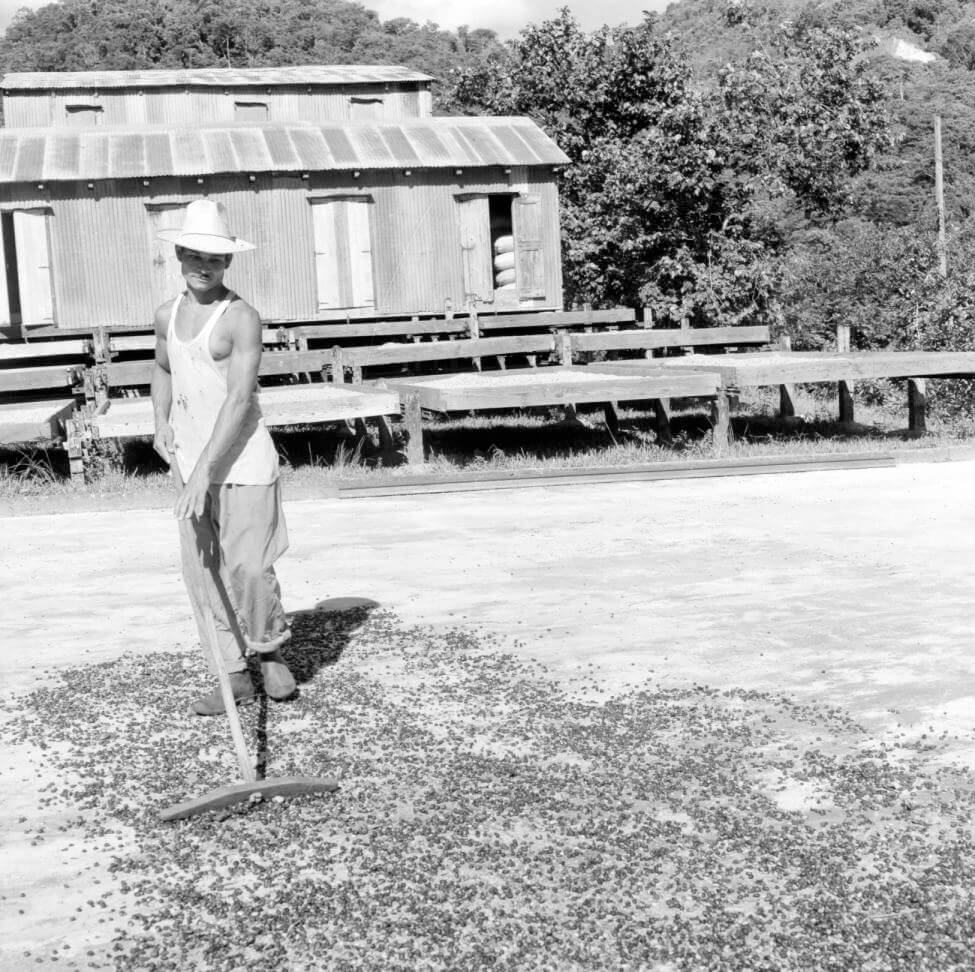
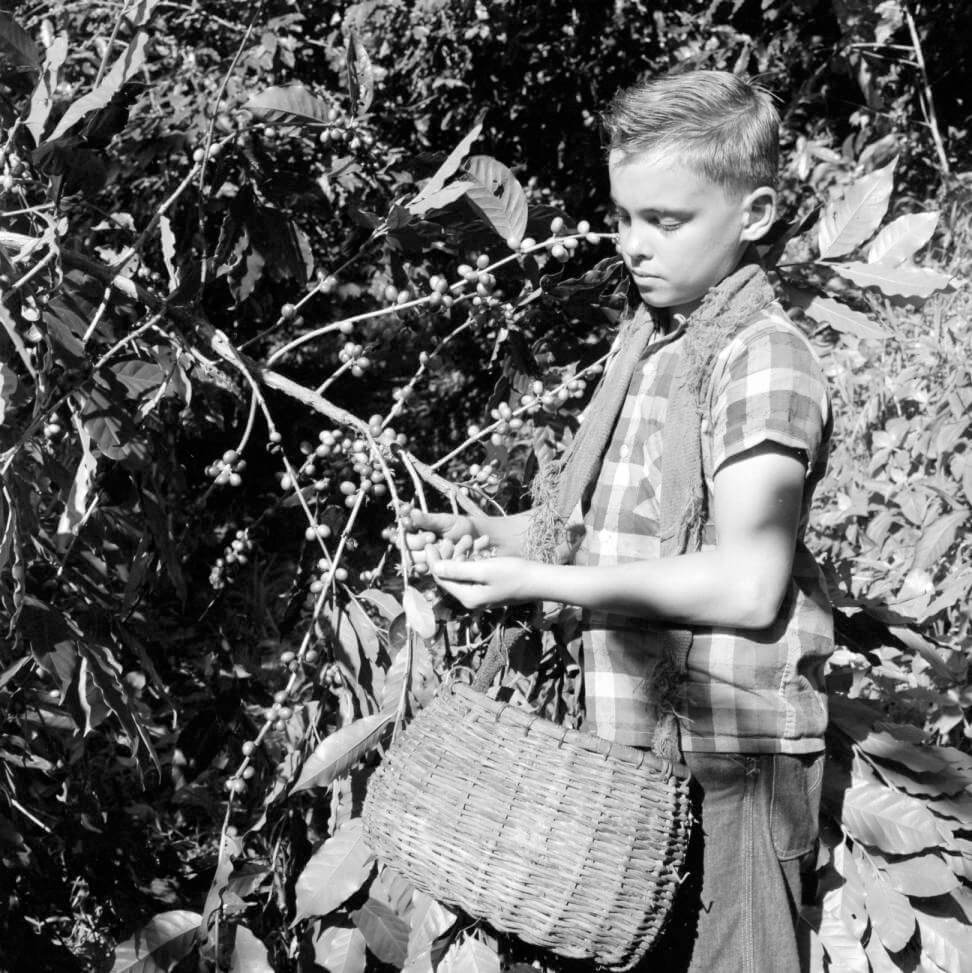
Top, Utuado (Puerto Rico), coffee processing facility near sugar cane and orange trees, January 25, 1922. Photograph by Robert S. Platt. Center, Puerto Rico, man raking coffee beans on plantation in Utuado, between 1934 and 1969. Photograph by Clarence Woodrow Sorensen and Eugene V. Harris. Bottom, Puerto Rico, boy harvesting coffee beans on plantation in Utuado. Photograph by Clarence Woodrow Sorensen and Eugene V. Harris. Top, center, and bottom photographs courtesy of the American Geographical Society Library, University of Wisconsin-Milwaukee Libraries.
For most of the campaign, it was assumed that soil pollution was the most significant vehicle of infection. It is hardly possible to assess the short-term impact of the crusade in preventing this practice. The fact that the campaign did not manage significantly to stop the rate of hookworm reinfestation is telling of the difficulty the campaign encountered in changing everyday habits, but it is also telling of the dire economic situation in the coffee region after the hurricane. Growers, seeing their profits rapidly decline, were unwilling or unable to provide latrines for workers. They preferred to invest in replenishing their fields or finding new markets. For most peasants, it was simply impossible to carry out the campaign's directions. They worked all day in fields without service facilities. They could not afford to wear shoes, and much less to construct outhouses. This did not mean, however, that the knowledge that peasants had gained about hookworm was not accepted or widely disseminated. Like that of any other process encouraging people to initiate or change behavior, the reception of the anti-soil pollution message was determined by customary practices, environmental conditions, material limitations, social mimicry, moral enforcement, and repetition.
After two years, the commission's work was to become a permanent, island-wide undertaking. In 1906, the legislative assembly passed a law to "create a permanent commission for the suppression of uncinariasis." By "permanent," colonial authorities meant a four-year commission appointed by and under the direct supervision of the governor. At this point, Ashford and King returned to their military service (although both remained honorary members), Gutiérrez Igaravídez became the director of the commission, and Isaac González Martínez of Mayagüez and Francisco Sein of Lares became the other two members. The island was divided in three districts, with one "central" station in the town of Río Piedras and two district stations in the towns of Lares and Mayagüez. Each of these three stations had a similar number of substations under its supervision, but all depended on the central station to collect data and approve budgets. Work began in July 1906 with the opening of six stations. Five towns required stations with hospital service, while six town physicians provided their services free of charge. In the town of Aibonito, the Puerto Rico American Tobacco Company paid the salary of the physician. By the end of the fiscal year, a total of thirty-five stations had examined 89,233 patients and recorded 425,131 visits. During fiscal year 1907–1908, the commission made no essential changes: thirty-five stations remained open and a total of 81,375 patients were treated.
In the following fiscal year, the colonial government made budgetary provisions for continuing the campaign against hookworm. A 1908 law disbanded the commission, and it was replaced by the "Anemia Dispensary Service," a sub-bureau of the Department of Health, Charities, and Corrections, with Gutiérrez Igaravídez retained as its director. During the next two years, the dispensary service increased the number of stations to fifty-five. The campaign had become the first public health service to provide treatment to the majority of the population of the island. In a summary of the ten-year campaign, Ashford and Gutiérrez Igaravídez noted that by November 1910, 272,256 people had received treatment, and they estimated that another 30,000 had been privately treated. In other words, in ten years nearly 30 percent of the population of over one million had been treated for hookworm.61Ashford and Gutiérrez Igaravídez, Summary, 14–15. According to these estimates, 300,000 persons were treated in a population of approximately 1,118,012.
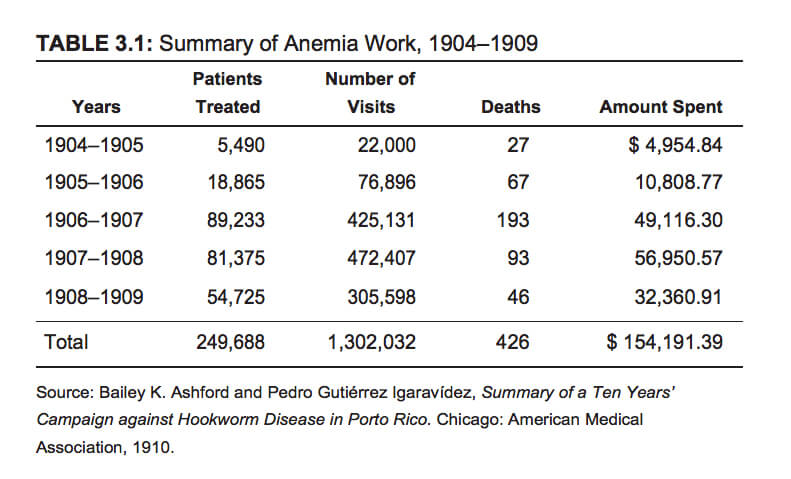
Summary of Anemia Work, 1904–1909, originally published in José Amador's Medicine and Nation Building in the Americas, 1890–1940 (Nashville, TN: Vanderbilt University Press, 2015). Courtesy of Vanderbilt University Press.
Although the campaign enjoyed success in terms of numbers of patients treated, the results were not exactly what had been intended. The rate of reinfestations remained high because the serious issues of social inequality were not considered. In the 1920s, Ashford regretted the misplaced confidence arising from the systematic purge of the hookworms in patients. He lamented that by concentrating solely on medication, the hookworm crusade "totally lost sight of our enemies' allies, poverty and malnutrition."62Bailey K. Ashford, The War on the Hookworm (New York: Chemical Foundation, 1926), 29. What was lacking in those early years was a will to decrease the levels of isolation and poverty. Medical treatment alone, in short, was incapable of alleviating poverty's most disturbing manifestations: the reappearance of an easily preventable disease.
The Pursuit of Health
Typical Facial Expression of the Sufferers, Puerto Rico, 1911. Originally published in Bailey K. Ashford and Pedro Guitérrez Igaravidez's Uncinariasis (Hookworm disease) in Porto Rico: a medical and economic problem (Washington DC: US Government Print Office, 1911). Photograph uploaded by Flickr user Internet Archive Book Images. Image is in public domain.
Unlike physicians, politicians, and journalists, who could circulate different opinions about the campaign in the public sphere or print media, the people who visited the dispensaries and took the medicines had few arenas in which to speak. Yet traces of their immensely varied lives persist, however fleetingly and fragmented, in the archival record produced by those in power. Who were those initial patients who overcame the fear of their first medical examination? How do fragmented accounts provide texture and depth to the actions of peasants pursuing hookworm treatment? What meanings did they give to their pursuit of health? The answers to these questions, tentative as they may be, pose several methodological challenges regarding the use of institutional documents to register popular experiences, especially because, although the campaign produced extensive written records, it did not spark any serious struggle that generated judicial case files or trial transcripts. It is possible, however, to partly recover people's experiences, even within the codified structure of institutional sources, by overlapping journalistic accounts, medical records, and photographs, and asking for important details about individual agency.
The case histories of sixty-one "special" patients treated in 1904 in the town of Utuado were preserved in the first Anemia Commission report. As condensed biographies, they provide a limited but invaluable portrait of who these patients were, where they came from, and how they responded to the campaign. Their life stories demand attention because they reveal the realities of a sick and poor population whose voices were often muted in official accounts. These special patients suffered from hookworm disease, but so did many of their parents and siblings. Of the sixty-one cases, twenty-six reported that they had at least one other family member sick with "anemia," and of that number seven had more than three family members who were hookworm sufferers. Twenty-nine cases reported that at least one family member had died of the disease, and in ten of those cases, three or more family members had died of it. Their work opportunities were limited, but they struggled to make ends meet. More than two-thirds of these patients worked on coffee plantations; some of them were women and others were as young as eleven years old. Other patients were cattle herders, tobacco and banana pickers, domestic workers, and washers. Most of these patients lived in the highlands. Many were itinerant workers who moved from plantation to plantation as the coffee matured. Some of them migrated from the coast for the seasonal harvest. They were not homeless, for the most part, but they lived in dilapidated housing. Some patients lived in Utuado, but most had traveled by foot or in hammocks from distant barrios or towns. These patients arrived at the dispensary pale, emaciated, feeble, hopeful, and afraid. All wanted something: to get relief from the disease weakening them.
Method of Bringing in Very Ill Patients with a Hammock Case, Puerto Rico, 1911. Originally published in Bailey K. Ashford and Pedro Guitérrez Igaravidez's Uncinariasis (Hookworm disease) in Porto Rico: a medical and economic problem (Washington DC: US Government Print Office, 1911). Image is in public domain.
It would be a mistake to read these case histories, which are both official and personal in scope, as transparent windows into popular attempts to negotiate public health. Yet they leave little doubt of the broad spectrum of experiences of those taking advantage of the first campaign that made their health a crucial political project. Six case studies illustrate their labor patterns, family histories, and health pursuits. M. G., an emaciated sixteen-year-old, could not work in the fields because of the disease. He reported that three of his family members had died from hookworm. Like many other patients, he had suffered from mazamorra and took iron pills to fight against his anemic state. After three months of treatment, he brought five other family members as patients.63Ashford, King, and Gutiérrez Igaravídez, Report of the Commission, lii. F. M. was a forty-year-old woman who, prior to being hospitalized, had worked as a laundress and a coffee-picker to help support her husband and seven children. After a week, she regained enough strength to walk and to return to her family responsibilities.64 Ibid., xvii. J. C. S., a twelve-year-old coastal migrant, had been treated previously by Ashford in the coastal town of Ponce, where he sold candies as a street vendor. He was re-infested with the parasite when seasonal harvesting brought him to a coffee plantation in the neighborhood of Arenas. After regaining his strength, J. C. S. ran away to seek work elsewhere.65Ibid., xxiii. L. R., a twelve-year-old girl from the distant town of Jayuya, was brought to the dispensary completely emaciated after traveling on a hammock for five days. She died twelve days later in the field hospital.66Ibid., xxxviii. M. T. was a single woman in her twenties who, like her three brothers, came to the clinic weakened by the disease. After her recovery, she was hired as a laundress in the field hospital.67Ibid., xlv. J. M. B., a thirty-year-old field laborer and the father of five, arrived at the dispensary "profoundly convinced that he was sick, but deeply suspicious and prepared for the worst." After a month of treatment, he was sent home, where he resumed his work.68Ibid., lii.
The presence of the commission in Utuado took on a personal immediacy for some of its patients. V. B, a married coffee and banana laborer, "had a small farm on his own until he became too sick to work it. Sold it for a small sum and moved to town to obtain treatment for his sickness." After his recovery, he "proudly boasted that he was able to support his family and no longer begged."69Ibid., xii. V. B. may or may not have seen work as a social responsibility or a symbol of moral worth, but his action does demonstrate that he viewed recovering from his sickness as important enough to sell his belongings and move to town. Once he regained his health, he touted his ability to care for his family. The commission's cases also capture some of the struggles prevalent in the coffee region after devastation of San Ciriaco. One case involved a fourteen-year-old boy whose father, after losing everything in the hurricane, was interned in an insane asylum. Five years later, the boy remained orphaned, barefoot, and sick. "This is one case," noted the report, "in which poor food, hard knocks, and abandonment broke down what might have been originally a strong resistance."70Ibid., xviii.
Typical Face, Boy, Puerto Rico, 1911. Originally published in Bailey K. Ashford and Pedro Guitérrez Igaravidez's Uncinariasis (Hookworm disease) in Porto Rico: a medical and economic problem (Washington DC: US Government Print Office, 1911). Courtesy of Wikimedia Commons. Image is in public domain.
None of these patients' stories are unequivocal, and medical and popular expectations cannot be entirely separated. Yet there is no doubt that most peasants felt better after the treatment, and some even experienced dramatic transformations in their bodies. Myriad scattered sources buttress this point. In one case history after another, the report used phrases such as "good color," "gained much weight," and "improved appearance" to describe the patient's transformation. The commission noted, for example, that a thirteen-year-old coffee picker had "so completely changed as hardly to be recognizable by his friends."71Ibid., xxvi. Similarly, in another case, this time of a seventeen-year-old tobacco picker, it reported that "his facial expression and color has so much changed that his acquaintances did not recognize him on his return home."72Ibid., xxxiii.
Whether by word of mouth or as direct testimony, these stories, like those of the thousands of other patients, must have traveled up and down rivers and trails to family, friends, and neighbors. Peasants in the highlands heard stories that connected the hookworm campaign to family health, household economies, seasonal labor, missing children, sudden deaths, new employment, treatment measures, and physical transformations. Their acts and responses illustrate the multiple ways in which the campaign influenced crucial aspects of daily life. Given that most coffee pickers harbored the parasite for years, their newfound vitality must have transformed their relationship with their bodies and surroundings. These patients incorporated biomedical language in their vocabulary as they recognized the benefits to their own health. As Luis González, the station physician from the town of Humacao, reported to the commission in 1907:
A few days ago a jíbaro presented himself at the station carrying his feces to be examined but the examination was negative, and I said to him: "You have no anemia," to which he replied: "That is a mistake, Doctor; I caught mazamorra the other day, and I must have it." I had to sit down and explain to the patient that he would have to return later, when his mazamorras should have reached his stomach. He did so, and I found the eggs. The country people around here speak very frequently of the necessity of using shoes, of the "microbe" of uncinariasis, of mazamorra in the stomach.73Ashford and Gutiérrez Igaravídez, Uncinariasis in Porto Rico, 219.
González's words cannot be taken entirely at face value, given the report's emphasis on celebrating the campaign. They reveal not only his enthusiasm for the campaign's mission, but also the reach of medical knowledge among peasants who pressured authorities for information and treatment. Moreover, the actions of Puerto Rican physicians and patients in the campaign strengthen the link between public health and the colonial state, regardless of whether or not they actually welcomed the presence of the United States on the island. The physician from the town of Arecibo, for example, celebrated the US presence in the most unabashed terms: "The most beautiful work, the most transcendental and humanitarian that has been effected under the American flag has been, without the slightest doubt, the campaign against uncinariasis."74Ibid., 217. At the very least, the doctor knew that the colonial government wanted to be regarded as generous and paternalistic and that it might be willing to back up this image with concrete help.
The spectacular response to the campaign sprang from those directly benefiting from hookworm dispensaries. Juan Román, one of the patients treated in Utuado, wrote to Ashford in 1904. His two letters are the only correspondence from an ordinary Puerto Rican found in the Colección Ashford (Ashford Collection) at the University of Puerto Rico. The handwriting, spelling, and grammar are unclear, but there is no mistaking his point. Román stated that he would be "eternally thankful" to Ashford and Gutiérrez Igaravídez for their "success" with his illness. Deferential and proud, he wrote, "I want you to see that, although poor I always have gratitude for those who treated me like you have." It was no small matter to write such a letter. The composition itself was a struggle, but the letter also carried the possibility of personal mobility. Before leaving the station, Ashford had promised Román a position in the insular police. Román reminded Ashford of his promise and that he was now able to serve on the force.75 Juan Román to Bailey K. Ashford, September 23, 1904, CA, box 5, document 321. Writing and sending this letter was more than an act of gratitude. It asserted that health without work is not worth much.
Román was not alone in his desire to move on with his life once he recovered. Francisco Viruet, a fourteen-year-old orphan from Utuado, appeared on the doorstep of Ashford's home in San Juan. According to La correspondencia, the boy said to Ashford, "You have cured me, and I have come to your house so you can educate me or place me." Like many others in the coffee zone, the treatment had clearly shaped the boy's future expectations. Having overcome extraordinary physical weakness, he was now ready to continue his education and improve his social standing, given the opportunity. The paper announced that Francisco was interested in finding a "North American or Puerto Rican protector" to educate him. If this was not possible, Francisco was "willing" to be part of the domestic service in any family willing to take him.76"Como aumenta la clientela del doctor Ashford," La correspondencia, August 31, 1904, 1. Francisco understood the position Ashford occupied in society, and sought the doctor's help in pursuing his own uplift after he recuperated.
In Aibonito, Joaquín Sánchez, who had been cured the previous year at the Utuado dispensary, became a town policeman. Eager to contribute to the campaign, he also volunteered as a sanitary inspector. Sánchez "made reports on the construction of latrines, the conditions in the barrios, and assisted very ill patients to reach the hospital."77Ashford, King, and Gutiérrez Igaravídez, Preliminary Report, 8. He even inspected many of Aibonito's more distant neighborhoods and some nearby municipalities. That Sánchez went beyond the line of duty points to one of the most overlooked consequences of the campaign. Like others who benefited from the treatment, Sánchez took an interest in the campaign not out of a desire to civilize or discipline others, but as a person moved by the campaign's core promise of health. Sanchez's experience instilled in him a heightened sense of civic responsibility that, in the face of widespread illness, prompted him to reach out to members of his own community.
Map of Puerto Rico showing distribution of crop lands, 1899. Map by Herbert M. Wilson. Courtesy of the Library of Congress Geography and Map Division, loc.gov/item/98687184/.
On the ground, however, very few people benefited from the visits of sanitary inspectors. Only in the 1906 campaign was an inspection service formally established, and even then it was limited to the towns of Rio Píedras, Mayagüez, and Lares. During that fiscal year the number of houses visited totaled 5,556 compared to the 89,233 patients treated in stations and the 425,131 total dispensary visits. These numbers demonstrate that, while the campaign was part of an imperial project, neither colonial authorities nor public health officials broke down doors or coerced people into visiting the dispensaries; highland residences were too remote and too dispersed for such actions to be possible. In addition, state presence and infrastructure were nonexistent. Instead, hundreds of thousands of coffee workers walked to the dispensaries in the pursuit of health. Photographic evidence in the town of Utuado shows this much. In some cases, when hookworm stations were not available, the ill marched to the offices of their local physician or town mayor to ask for treatment. The mass experience of receiving a free medical diagnosis, a medicine specific to the disease, and a rapid and effective cure inaugurated a new understanding of the role of people, health care, and the colonial state.
Colonial Circuits
The US campaign against hookworm began on a colonial possession, but its effects soon began to be felt outside Puerto Rico's shores.78In a recent study of US public health in the colonial Philippines, Warwick Anderson argues that colonial administrators transferred and adapted models of public health management back to the United States. See Warwick Anderson, "Pacific Crossings: Imperial Logics in the United States' Public Health Programs," in Colonial Crucible: Empire in the Making of the Modern American State, edited by Alfred W. McCoy and Francisco A. Scarano (Madison: University of Wisconsin Press, 2009), 277–87. Information about the Puerto Rico campaign typically flowed from Ashford to various intermediary agents—journalists, physicians, and other military officials—across the ocean through various media, including oral communications, personal correspondence, and printed texts. For North Americans seeking understanding of the new colonial possession, the images of uplift not only provided a means of justifying an imperial project overseas, but also served to make and maintain US imperial identity at home. This essentialist mode of understanding made Puerto Ricans seem uncivilized, poverty-stricken, preindustrial, and dirty, unlike the civilized, affluent, industrious, and clean residents of United States. Readers of the sensationalistic New York Herald learned that Puerto Rican peasants were "hopelessly ignorant," with weak "bodily structures and facial expressions." The author feared that freed from the restraints of hookworm disease, and without the necessary political education to adequately exercise their right to vote, peasants would jeopardize the progress Puerto Rico had achieved under US rule.79L. L. Seaman, "Disease Perils Beset Natives of Puerto Rico," New York Herald, January 3, 1905, 2. Hookworm disease thus became an integral part of constructing the opposition between colonizer and colonized, although this stark distinction would erode once the eradication of hookworm disease in the US South became a national priority.
American Imperialism. A Thing Well Begun is Half Done, 1899. Illustration by Victor Gillam. Courtesy of Wikimedia Commons. Illustration is in public domain.
Establishing that Puerto Rico was in fact a sick colony prior to the US arrival had great explanatory power in the continental United States. By bringing this representation into the confines of the white man's burden, US accounts located the campaign within a familiar imperial narrative that extended beyond the confines of the island. "In Puerto Rico that 63 per cent of the population are engaged in agriculture has an important bearing on economic conditions, and the prevalence of uncinariasis is a matter of vital concern," the American Monthly Review of Reviews reported in a 1904 illustrated article. "Near one-fourth of the deaths in the island are from anemia," it added, "and the same disease causes fatal ravages in the Philippines and the Southern States, hence all Americans are concerned."80Adam Haeselbarth, "The Puerto Rican Government's Fight with Anemia," American Monthly Review of Reviews 30, no. 174 (1904): 57. The control of hookworm in these locales was an integrative force. It also served to reinforced imperial comparisons of colonial legitimacy. In 1907, William H. Taft, then secretary of war, boasted of the success of US public health efforts in Puerto Rico by comparing the United States to other imperial powers in the region. "Without fostering benevolence," he told an audience in Saint Louis, "this island would be as unhappy and prostate as are some of the neighboring British, French, Dutch, and Danish islands."81William H. Taft, "Some Recent Instances of National Altruism: The Efforts of the United States to Aid the People of Cuba, Puerto Rico, and the Philippines," National Geographic Magazine 18, no. 7 (1907): 433–34. Hookworm was a common disease, prevalent in other colonies in Caribbean, but only the United States cultivated public health benevolence.
Communications that began as a lobbying mechanism for the hookworm campaign in Puerto Rico shifted emphasis based on the intended audience. Recall that Ashford's immediate response after first discovering hookworm eggs was to take the patient to a photographer to immortalize his image. He understood early on that his professional career would advance and that the campaign would enjoy more support if his work achieved international recognition. His correspondence often painted a picture of poverty- and disease-ridden peasants benefiting from the altruism of US imperialism. But Ashford also felt compelled to acknowledge how much his work on the campaign had changed his relation to the island and its people. After two years of working with the commission, he returned to military service. In one of his first trips back to the United States, Ashford confided to his mother: "I leave this lovely island with a host of dearly and beloved friends, and with the keen appreciation that the five or six years of toil for the good of the Puerto Rican peasant is beginning to be felt among the people at large."82 Bailey K. Ashford to Mrs. Francis Ashford, March 4, 1906, CA, box 6.
Top, Victor Heiser. Courtesy of The New York Community Trust. Bottom, Ronald Ross, date unknown. Courtesy of Wikimedia Commons. Creative Commons license CC BY 4.0.
Ashford was fortunate to find in William C. Gorgas a sponsor willing to disseminate his findings to as many physicians as possible. Gorgas had worked with poor rural whites without knowing the cause of their anemia. "When you first pointed out in Puerto Rico that tropical anemia was due to ankylostamiasis," Gorgas wrote to Ashford, "I recognized the fact that the tropical anemia I have been treating for years in Pensacola, Fla., were many cases of that disease."83William C. Gorgas to Bailey K. Ashford, December 3, 1903, CA, box 6. Gorgas acted as a broker of information by passing news about the disease in Puerto Rico on to other colleagues and asking the editors of medical journals in the US South to reproduce Ashford's articles. In one of those requests, Gorgas admitted that because he had seen first-hand the suffering of "poor whites" and the "cracker class" of "our southern states," he was committed to spreading information about the campaign among physicians "who practice among such people."84William C. Gorgas to the editor of the New Orleans Medical and Surgical Journal, January 22, 1904, CA, box 6. Ashford also capitalized on his mounting professional status to broadcast his work. He distributed reports to doctors across the globe, including prominent physicians like Victor G. Geiser in the Philippines and Ronald Ross in England. At the same time, he received requests for hookworm literature from doctors living in distant places such as Ecuador and Hawaii.
Because physicians soon found evidence that the disease that afflicted Puerto Rican peasants was also widespread among poor whites in the US South, calls to launch a similar anti-hookworm program on the mainland swelled. "Since Ashford first showed the prevalence [of hookworm] in that island," the New York Herald noted, "physicians roused to investigation have discovered cases in many of the southern states."85L. L. Seaman, "Puerto Rico Ravaged by Disease that Threatens to Annihilate Natives," New York Herald, December 31, 1904, 2. Initially, the endemic presence of hookworm provided considerable justification for accounts that portrayed both places as benighted and backward. The distinction between the sickly inhabitants of the Puerto Rico and US South blurred, making the jíbaro a mirror image, and not a contrasting one, of poor rural whites. A popular new moniker for hookworm that linked the "cracker class" in the US South to other populations appeared repeatedly in major US newspapers and magazines. In 1902, after listening to Charles W. Stiles present in the first meeting of the Pan American Sanitary Bureau, a New York Sun reporter published his story with the headline "Germ of Laziness Found? Disease of the Crackers and of Some Nations Identified." The reporter emphasized that while the "germ of laziness" affected primarily poor whites in the South, it might also explain the "backward condition" of the people in South America. The author also declared Stiles the "discoverer of uncinariasis or hookworm disease."86Irving Norwood, "Germ of Laziness Found? Disease of the Crackers and of Some Nations Identified," New York Sun, December 5, 1902. See also Ettling, Germ of Laziness, 35–38; and Wray, Not Quite White, 104–108.
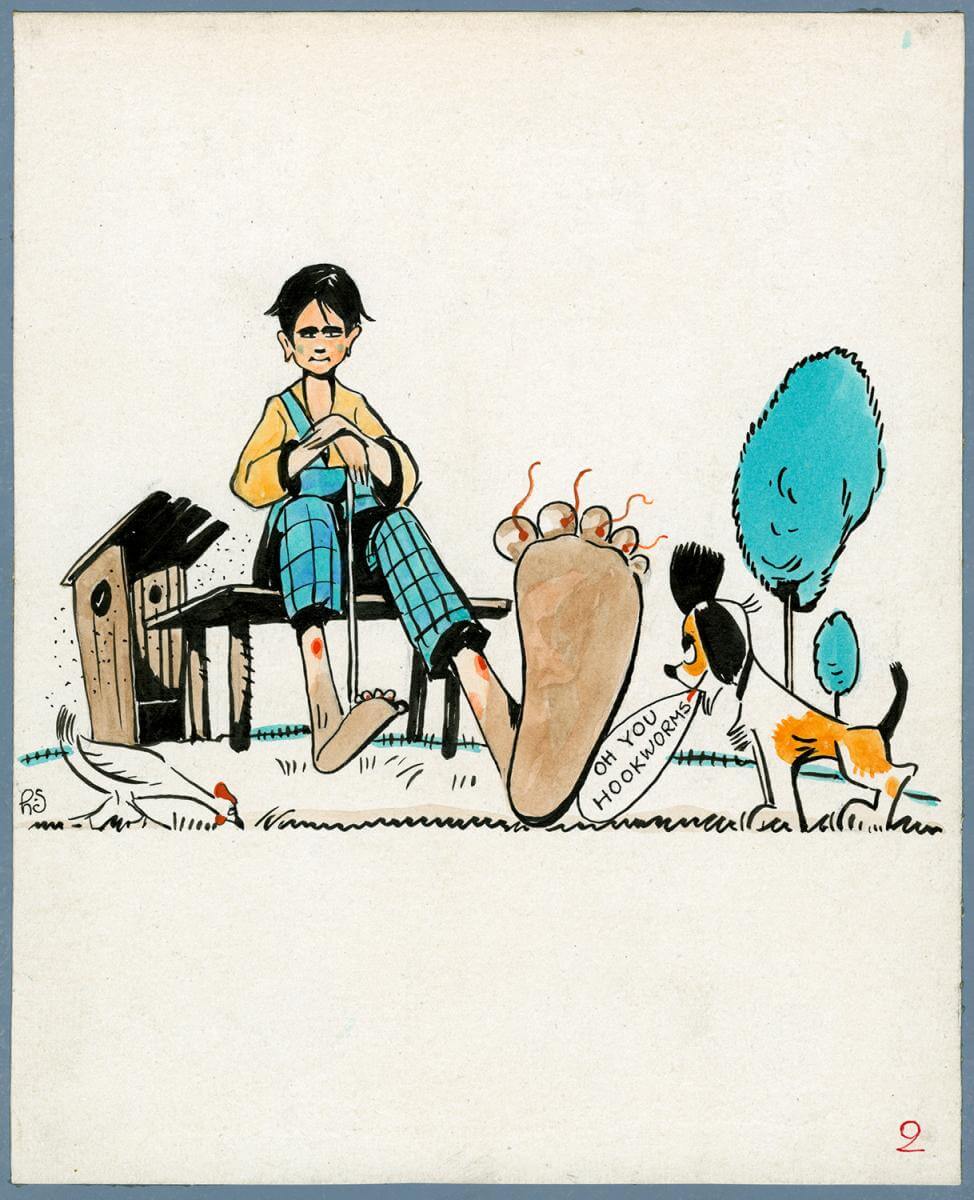
Cartoon #2. Illustration by B. Stephany. Courtesy of 100 Years: The Rockefeller Foundation website, Rockefeller Archive Center, Rockefeller Foundation.
Ashford never embraced the term "germ of laziness," perhaps because he associated it with his rival, Stiles, or because he knew well the struggles of the peasants who visited hookworm stations. Still, the "germ of laziness" helped to reconfigure the racial geography of hookworm disease through associations that connected and crossed regional and colonial distinctions. Newspapers and magazines in the United States reiterated associations between peasants in Puerto Rico and poor whites in the South with banner headlines such as "An Epidemic of Laziness: A Whole Region in Puerto Rico Afflicted with the Lazy Worm," "Getting Tired of Laziness: Puerto Ricans Eager for Treatment to Cure the Disease Caused by the 'Lazy Worm,'" "War on Lazy Worm: Good Effects of the Campaign in Puerto Rico," and "Wiping Out Lazy Disease: Already Nearly 10,000 Cures in Puerto Rico."87"An Epidemic of Laziness, A Whole Region in Puerto Rico Afflicted with the Lazy Worm," New York Times, June 23, 1905; "Getting Tired of Laziness: Puerto Ricans Eager for Treatment to Cure the Disease Caused by the 'Lazy Worm'" New York Herald, June 24, 1905; "War on Lazy Worm: Good Effects of the Campaign in Puerto Rico," Star, September 15, 1905; and "Wiping Out Lazy Disease: Already Nearly 10,000 Cures in Puerto Rico," Philadelphia Reword, September 15, 1905. A photo essay singled out the Puerto Rican campaign to ease existing preoccupations about race and labor in the US South by emphasizing the rehabilitating role of medical science: "Photographic Illustrations of the Campaign Which Has Changed a Lazy Race into One of Energetic Workers."88"Laziness Banished from the Island of Puerto Rico," New York Herald, June 24, 1905. Imperial prejudices about colonial subjects and northern prejudices about poor whites inflected one another through the textual and visual juxtapositions. Yet the fact that the "germ of laziness" was an intestinal parasite that could be purged from the body, and not an intrinsic manifestation of laziness, propelled progressive reformers in the United States to aggressively call for a public health campaign.
The association or conflation of hookworm images in Puerto Rico and in the US South was not exclusive to the print media in the United States. Newspapers in Puerto Rico also joined in public discussion about the hookworm campaign developing in the US South. Much to the dismay of Ashford, who had led hookworm efforts since 1899, La correspondencia published in 1909 "Los pálidos del sur" (The pale ones of the South) a cover story whose illustrations included a picture of Stiles with a caption that claimed that he was the discoverer of hookworm. Compounding the offense, the photos grouped around Stiles's image had been taken by Ashford himself: one was of a boy named Juan Serrano, taken in the Utuado field hospital, and another was of an intestinal cross-section showing the presence of worms.89René Bauch, "Los pálidos del sur," La correspondencia, November 5, 1909. The piece provoked Ashford to voice his "outraged sense of justice." Ashford told the director of La correspondencia that "Puerto Rico alone awakened the continent of the United States to a realization that the disease . . . was responsible for the present epidemic in the United States of the Union." Besides pointing out that his campaign had spearheaded recent public health efforts in the South, he denounced the piece as an example of collective and personal calumny. "Instead of showing to the United States another occasion in which this island we say we love had been of enormous utility to the American people," Ashford complained, "you deliberately permit a writer of your columns to give priority to a man [Stiles] whose inspiration has come from this very island."90Ashford to the director of La correspondencia, November 7, 1909, CA, box 6. Ashford wanted to clarify the record about his scientific and public health achievements as well as to establish the trailblazing role of Puerto Rico in inspiring the efforts of the Rockefeller Sanitary Commission. He was aware that, without the media and financial resources that Rockefeller had to disseminate this information, the origins of the campaign could be forgotten not only on the US mainland but in Puerto Rico as well.
By the time John D. Rockefeller, who sought to redeem his reputation as a robber baron, created the Sanitary Commission for the Eradication of Hookworm, the networks of knowledge exchange that connected Puerto Rico to the United States were well established. To be sure, the guarantee of one million in funding over five years made a crucial difference in the southern campaign. Frederick T. Gates headed the commission, but its administrative and scientific secretaries were educator Wickliffe Rose and zoologist Stiles. Although Stiles knew more than anyone about hookworm disease, he had no on-the-ground experience in directing a public health campaign. On May 29, 1910, Rose sailed to Puerto Rico, where he turned to Ashford for advice about how to carry out a hookworm campaign.91See Ettling, Germ of Laziness, 125–30; William Link, "'The Harvest Is Ripe, but the Laborers are Few': The Hookworm Crusade in North Carolina, 1909–1915," North Carolina Historical Review 67 (1990): 1–27; and J. D. Woody, "The Hookworm Campaign in North Carolina," North Carolina Medical Journal 53, no. 2 (1992): 106–9. Rose spent three weeks traveling the island with Ashford, who provided him with the contact information of hookworm experts in Oxford, London, Liége, Madrid, Brussels, and Cairo. Rose came away from the visit thoroughly impressed, hoping to reciprocate by assisting Puerto Rico with its own efforts against the disease.92Wickliffe Rose to Bailey K. Ashford, June 23, 1910, Rockefeller Sanitary Commission Collection (hereafter RSC), Rockefeller Archive Center. Governor George Colton and Ashford had made it clear that they would not be adverse to financial assistance. At Rose's invitation, Ashford later visited the United States to give a series of lectures on hookworm. Despite their friendly exchanges, Rockefeller's gift was specifically earmarked for the US South. As a result, the commission did not see fit to fund hookworm efforts in Puerto Rico.93Bailey K. Ashford to Wickliffe Rose, October 24, 1911; August 18, 1912; and April 21, 1914, RSC.
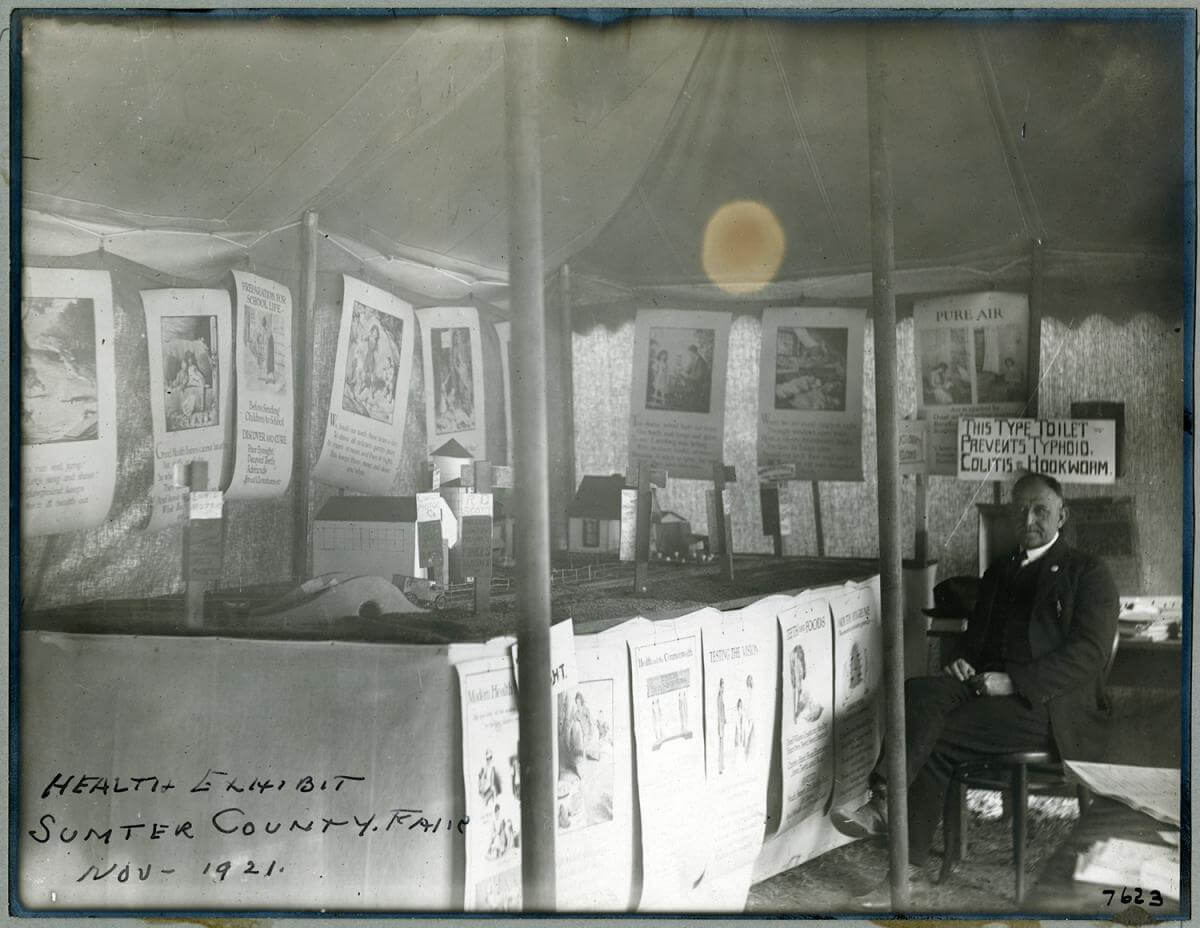
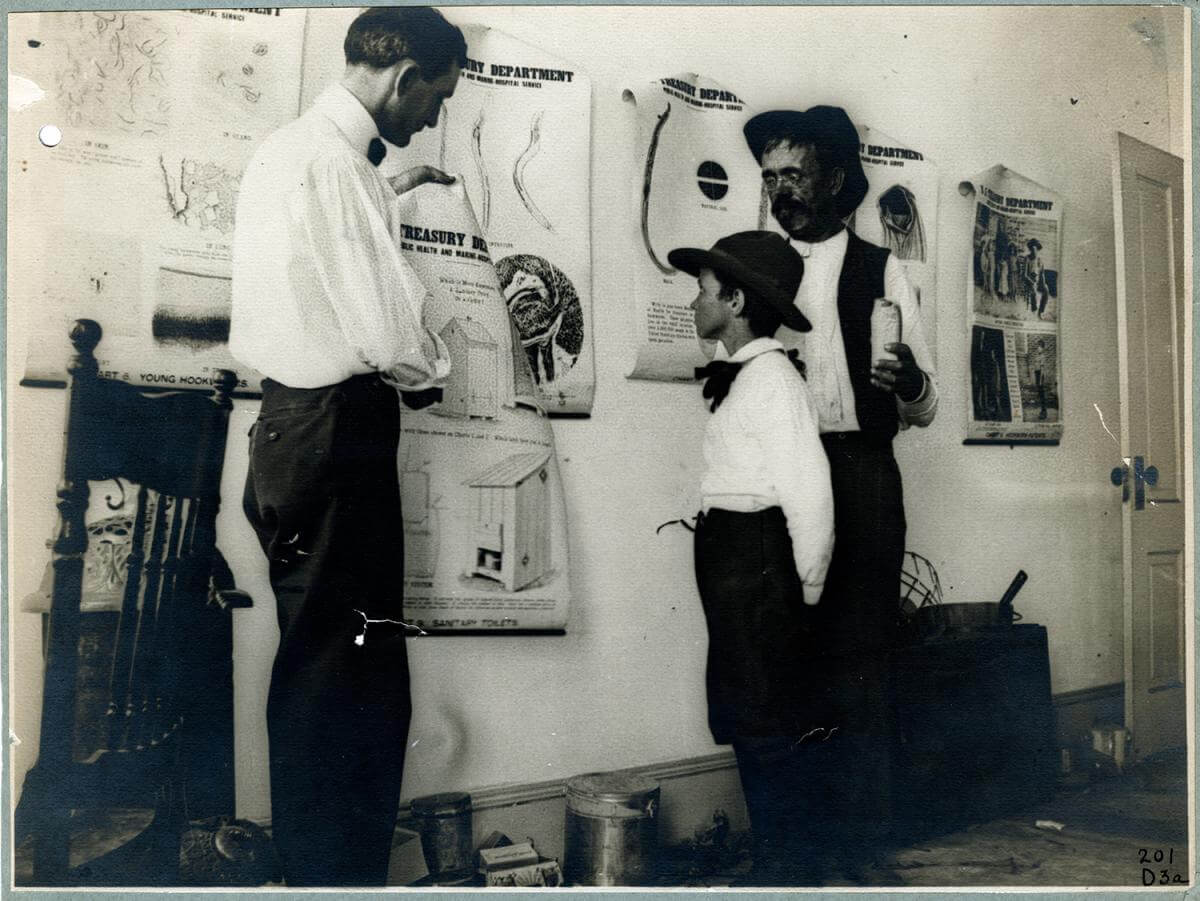
Top, Health Exhibit, Sumter County Fair, November 1, 1921. Courtesy of the 100 Years: The Rockefeller Foundation website, Rockefeller Archive Center, Rockefeller Foundation. Bottom, Dispensary scene, teaching by lecture and demonstration, Dr. Caldwell. Courtesy of the 100 Years: The Rockefeller Foundation website, Rockefeller Archive Center, Rockefeller Foundation.
As the impetus for a hookworm eradication campaign in the US South gained popularity on the mainland, the limited effectiveness of establishing parallels between Puerto Rican jíbaros and poor whites became apparent. In the 1900s, as pointed out earlier, US perceptions of Puerto Rico often suffused racializing discourses of southern particularity. Yet, as Matt Wray has argued, because the hookworm campaign in the US South was established at the moment when the legal apparatus of Jim Crow attacked the participation of blacks in politics and the economy, "drawing too many parallels between the poor white inhabitants and other colonized populations posed a problem" for advocates of the New South. Since hookworm promoters wanted "to persuade elites about the racial purity of poor whites, then it would weaken their argument to suggest that poor whites had much in common with colonized, racially inferior people."94Bailey K. Ashford to Wickliffe Rose, October 24, 1911; August 18, 1912; and April 21, 1914, RSC. Hookworm activists had little interest in casting any doubt among wealthy elites about the possibility of turning poor whites into productive white workers by associating them with Puerto Rican peasants. This calibration redefined the process of racial formation to appease fears that the transformation of jíbaros and poor whites by the campaign would make the two populations too similar, rather than help maintain the two populations as distinct.
The networks of hookworm exchanges that Ashford helped create only grew as the decade progressed. In fact, they grew so unwieldy after the Rockefeller Foundation launched its international eradication program that Ashford's significance in them faded over time. Moreover, Ashford eventually began to reconsider eradication as a realistic goal, although his experience in Puerto Rico showed that, at least in the short run, treatment and careful organization of resources could bring dramatic health results to people. He knew that wearing shoes minimized contact with the ground and that using privies broke the transmission route between the soil and the gut. Eradication was attainable, but it was by no means a simple objective. At its root was poverty. In Puerto Rico, as in the US South, and across the "tropical belt," the disease's severity depended on economic circumstances. Limited resources had to address not simply a debilitating ailment, but also structural layers of afflictions.
Conclusion
To historicize the crossing of Puerto Rico's hookworm campaign complicates our understanding of both the men and women who embraced it and its profound impact in the United States. The basic assumptions that have guided scholarly interpretations of this campaign have focused principally either on the medical construction of the peasant or on the campaign as a derivative project of US imperialism. These assumptions have been informed by the most influential source on the campaign: the 418-page autobiography of Bailey K. Ashford. Yet, Ashford's pristine narrative of achievements is disrupted by a wealth of archival evidence, much of it collected by Ashford himself, that shows the ways Puerto Rican doctors and peasants sought opportunities for themselves. Giving attention to these sources opens up interpretations that transcend the imperial gaze and illuminate both on-the-ground responses and interactions between peasants and medical authorities.
Moreover, although the hookworm campaign was part of the post-1898 expansion of American military medicine in the tropics, the campaign in Puerto Rico, in contrast to the public health work in Cuba, took place in a colonial setting under US civilian, not military, rule. Hookworm disease, unlike yellow fever, was not a high-priority disease affecting US commerce, nor was it tied to elite anxieties about white immigration. In Puerto Rico there was no figure like Carlos Finlay who could claim misappropriation of scientific recognition and generate nationalist sentiment. Instead, the campaign was spearheaded by a US military physician who was denied due credit by a US zoologist. Yet not unlike yellow fever in Cuba the meanings of the hookworm campaign extended beyond the so-called object-lessons of colonial administrators. Unequal imperial structures shaped part of the conflicts, negotiations, and compromises that constituted the hookworm campaign, but did not overdetermine its outcomes.
Ramón Frade, El pan nuestro (Our bread), oil on canvas, c. 1905. The painter Ramón Frade elected to represent the Puerto Rican peasant or jíbaro as a dignified figure. The mountainous landscape in the background highlights the hard work of the peasant. From the Collection of the Instituto de Cultura Puertorriqueña (Institute of Puerto Rican Culture), San Juan, Puerto Rico. Originally published in José Amador's Medicine and Nation Building in the Americas, 1890–1940 (Nashville, TN: Vanderbilt University Press, 2015). Courtesy of Vanderbilt University Press.
The campaign did lead to a profound reassessment of the poor peasants. Hookworm activists, rather than portraying them as victims, portrayed them as a source of medical—and paternalist—uplift. Through their efforts the figure of the jíbaro entered the national imaginary in a new way. But what does the redeemed jíbaro look like? One year after the first campaign against hookworm campaign ended in Utuado, Ramón Frade completed a painting thematically opposite to the cautionary tales of the nineteenth century. In Pan nuestro (Our bread; c. 1905), Frade, a painter from the tobacco- and coffee-growing town of Cayey, endowed the Puerto Rican peasant with a hopeful, dignified future. While the painting was clearly influenced by European aesthetic currents, it represented the sublime beauty of the peasant by emphasizing his forward movement. Within the canvas, the majestic mountain and the luminous sky pull back as the peasant walks toward the viewer, carrying in his hand the fruits of his labor.95For a comprehensive biography of Frade, see Osiris Delgado, Ramón Frade León, pintor puertorriqueño (1875–1954): Un virtuoso del intelecto (San Juan, Puerto Rico: Centro de Estudios Avanzados de Puerto Rico y el Caribe con la colaboracion del Instituto de Cultura Puertorriqueña, Academia Puertorriqueña de la Historia, 1989). For an overview of Puerto Rican art, see José Torres Martinó, "Puerto Rican Art in the Early Twentieth Century," in Puerto Rico—arte e identidad, edited by Hermandad de artistas gráficos de Puerto Rico (San Juan: Editorial de la Universidad de Puerto Rico, 1998), 83–88. The visual vocabulary of Frade's painting struck a powerful chord among Puerto Ricans because it was validated by the context in which it was produced. The image of a moving peasant, while idealized, was not far-fetched. After the hookworm campaign started, tens of thousands of coffee workers visited the provisional dispensaries in the pursuit of health. When hookworm facilities were not available, they marched again to the offices of the local physicians and mayors to ask for the treatment they now expected the state to provide. Similarly, when employment opportunities were not available in the highlands, thousands of mountain dwellers moved to the coastal plains or urban centers in search of jobs. These claims produced new anxieties about the stability of social hierarchies, which eventually facilitated the nostalgic construction of the jíbaro as a national icon.
Similarly, personal, institutional, and political interests converged to generate multiple, and at times contradictory, images of the hookworm campaign in Puerto Rico. In the United States, the media's fascination with the campaign reflected its quest to justify US imperial rule. Ironically, in establishing a parallelism between Puerto Rican peasants and poor southern whites, media accounts not only attempted to advocate for a campaign in the US South similar to the one initiated in the colony, but also established an equivalence that distanced both groups from US elite white men. When emissaries from the Rockefeller Foundation set out to undertake the hookworm program in the South, tens of thousands of diseased Puerto Ricans had already been treated. Poor whites became as redeemable as Puerto Rican peasants. This association changed the ways many US residents, especially in the North, thought about the bodies of poor whites and the US South. By bringing their civilizing mission back "home," Rockefeller officials, just like the hookworm advocates had done in Puerto Rico, redefined the stereotype of the poor rural dweller through medicalized images.
In the years following the Puerto Rico campaign, hookworm eradication became a prominent public health issue in other nations. Like the yellow fever campaign in Cuba, the hookworm campaign inspired public health administrators in Brazil. Their efforts to translate the campaign engendered new debates about state power, national identity, and US empire. As the hookworm campaign model reached other corners of the globe, the terms of these debates would shift and transform. They would need to be readjusted before working in distinct, but increasingly entangled, national contexts.
Acknowledgments
Southern Spaces thanks Vanderbilt University Press for their permission to reprint this chapter in its entirety.
About the Author
José Amador is associate professor of Global and Intercultural Studies (Latin American, Latino/a, and Caribbean Studies) at Miami University. His first book, Medicine and Nation Building in the Americas, 1890–1940 (Vanderbilt University Press, 2015), was awarded the Norman L. and Roselea J. Goldberg Prize for best project in the area of medicine. He is also the co-editor of Historia y memoria: sociedad, cultura y vida cotidiana en Cuba (Centro de la Cultura Cubana Juan Marinello, 2003). He has published essays on Puerto Rican Afro-diasporic music and on the founder of the Cuban journal Pensamiento crítico.
]]>Video
Charles D. Thompson, Los Rostros del Tiempo: Faces of Time, 2014.
Reflection
My border odyssey began in 1985 on a farm near Pittsboro, North Carolina. On a hot summer afternoon I walked out of my farm field to meet five men from Mexico. They drove into my driveway in an old beat up blue Impala, got out in the bloodied knee-length white coats and black rubber boots they'd worn that day in the nearby chicken processing plant, and said they had heard I needed help harvesting blackberries on my farm. As I reached to shake their hands, I felt a powerful sense of relief wash over me. I felt like crying.
I had been successful enough with my farm marketing that there was no way I could pick everything I could sell. Orders had piled up, and the farmers' market was just a few days away. The small group of helpers I'd found for one or two days a week earlier in the summer—three high school students and occasionally one of their grandmas who drove them to the farm—had drifted away to other jobs, from fast food work to babysitting. My wife worked off the farm. My neighbors were all either too old or too busy. I had no extended family nearby. Interns hadn't yet started searching for opportunities on farms. I was doing most everything alone, and there just weren't enough hours of sunlight to get all of the two acres of ripe berries harvested. Soft small bramble fruits are especially vulnerable to heat and they weren't going to wait.
 |
I'd already known that Mexican people, men mostly, had started coming to central North Carolina. I knew many of them processed hogs or poultry, and that others worked on dairy or tobacco farms nearby. I'd even gone to Mexico once the year before. But I never dreamed when I went into small-scale organic farming that I'd ever hire laborers to help me, let alone foreign workers.
Yet, on that hot afternoon thirty years ago, I joined the thousands of farmers and other business owners who have hired people who have traveled some three thousand miles and crossed a desert or a river to save their day and ours. They would only work a few hours two or three times a week for me, but they made it possible for me to salvage my blackberry crop, some of my most important income of the year. Choosing to be paid by the flat, they earned pretty good money, too. They literally ran to the fields that day to get started filling the pints as I carried them empty flats and returned with filled ones to the cooling shed.
Over the coming weeks and months we often worked side-by-side. I took a dictionary to the field and began learning Spanish. Already a lover of stories, I wanted to know how they had traveled from their homes and what it was like to cross the border. I learned firsthand about their harrowing journeys and of the risk to provide money for their families. I also learned that every one of those five men were farmers with families still on their land trying to hold on and grow crops in their absence.
We had a love of farming in common. But it hit me hard when I realized that one huge chasm between us was my freedom to stay in place and their need to leave home to keep their farm alive. I was a beginning farmer hiring seasoned agriculturalists from another country to help make my piece of land more profitable. The disparity began to weigh on me.
 |
Thirty years later, I look back to the day the border first crossed me. That day I began to learn that I was caught up in a globalizing system of economic exchange and interdependency. That day I became part of the process too many have dismissed and not enough acknowledge. Since then, I've studied Spanish formally, gone to graduate school, engaged in fieldwork in Mexico and Central America, written about farmworkers, and made films about immigration and agriculture. The borderlands overtook me personally and professionally. I cannot escape their meaning—not just down at the southern line below the United States, but the little borders everywhere in our lives, the borders especially between the people we depend on in so many ways and the policies that vilify them. I now teach and write about all of this, traveling extensively so I can learn and teach others. My own farm is but a memory.
My latest book, entitled Border Odyssey: Travels Along the U.S./Mexico Divide, is a memoir, a travelogue, an ethnography, history, and, as one reviewer put it, a jeremiad about the border. I chronicled every mile of it from the mouth of the Rio Grande in Texas to the Pacific Coast in California. The website and book featured here are my effort to forge better understanding. And the project is also my tribute to Eusebio, Librado, Faustino, Juan, and Jesus, the five who drove in my driveway, saved my blackberry crop, and changed me forever.
About the Author
Charles D. Thompson, Jr. is Professor of the Practice of Cultural Anthropology and Documentary Studies at Duke University. An author and filmmaker, Thompson's latest works are Border Odyssey: Travels along the U.S./Mexico Divide (University of Texas Press, 2015), the films Faces of Time and Brother Towns/Pueblos Hermanos, and the book Spirits of Just Men: Mountaineers, Liquor Bosses, and Lawmen in the Moonshine Capital of the World (University of Illinois Press, 2011).
]]>The Dispossession
What happened in rural America during the quarter century after 1950 has been eclipsed by the Cold War, the civil rights movement, the war in Vietnam, and growing concern over pesticides, nuclear testing, and other environmental issues. During these years, 3.1 million farmers left the land, over one half million of them African Americans. American agriculture transformed from labor-intensive to capital-intensive operations and, spurred by United States Department of Agriculture (USDA) subsidies, expensive machines and chemicals dominated remaining farms. Black farmers were often unable to obtain credit, information, or other federal benefits, and county USDA offices purposely squeezed black farmers out of farming. Paradoxically, the flight of African Americans from the land coincided with the civil rights movement, a time of hope for an end to segregation and discrimination. It also coincided with rising national popularity of blues and country music, much of which originated in the rural South. Although southern rural music expressed the hopes, aspirations, failures, and hardships of rural people, farming culture remained invisible to most listeners. The work culture that produced the music—farmers plowing, planting, cultivating, and harvesting crops; weekend singing and dancing both to the devil and to the Lord; and the family, schools, churches, juke joints, honky tonks, country stores, and smells of the earth—has been neglected or romanticized.
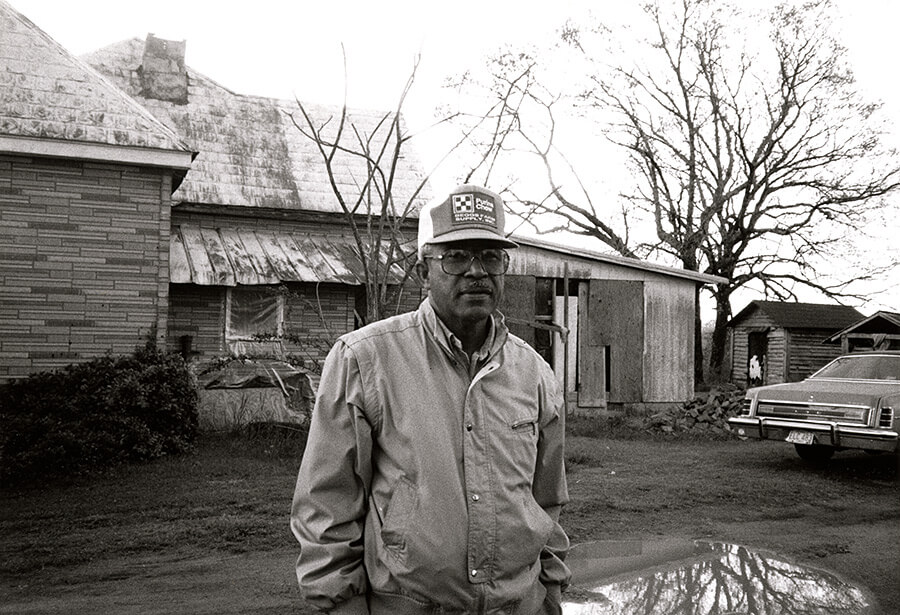 |
| Welchel Long, Dewey Rose, Georgia, 1987. Photograph by Lu Ann Jones. Courtesy of National Museum of American History, LJ 87-17112-2. |
In my recent book, Dispossession: Discrimination Against African American Farmers in the Age of Civil Rights, I analyze the forces that combined to drive black farmers from the land as well as the stubborn resistance of black farmers and their supporters.1Pete Daniel, Dispossession: Discrimination Against African American Farmers in the Age of Civil Rights (Chapel Hill: University of North Carolina Press, 2013). The Student Nonviolent Coordinating Committee's initiative to open federal programs to African Americans in the mid-1960s, especially its efforts to elect black farmers to Agriculture Stabilization and Conservation Service (ASCS) county committees, has been largely overlooked by historians. The class action suit, Strain v. Philpott, that defeated the Alabama Cooperative Extension Service's discriminatory policies has been relegated to a footnote. Welchel Long and Timothy Pigford challenged the Farmers Home Administration and revealed remarkable prejudice, and the Pigford v. Glickman class action suit is a remarkable civil rights initiative that documented discrimination. Such efforts to oppose USDA discrimination have been buried, and constitute an invisible residue of the civil rights movement.
The history of African American farmers created a remarkable trajectory. African slaves brought farming knowledge with them to the New World, and planters relied upon slaves' farming expertise. After Emancipation, former slaves made remarkable progress in acquiring farms, and by 1910, African Americans held title to some sixteen million acres of farmland. By 1920 there were 925,000 black farmers, their acquisition of land and tenure coming during some of the country's harshest racial discrimination and violence.2Bruce J. Reynolds, "Black Farmers in America, 1865–2000: The Pursuit of Independent Farming and the Role of Cooperatives," USDA Rural Business Cooperative Service, Research Report 194 (October 2002), table 3, "Farm Operators in the US by Race, 1900 to 1997," 24. During the 1920s this ownership arc peaked and turned downward, influenced by the march of science and technology across the land, by government programs that favored wealthier farmers, and by USDA discrimination. African Americans had continually moved out of the South to escape violence, gain access to better schools, and find jobs, and the volume of their migration increased during World War I as jobs opened in northern industries.
As I discussed in Dispossession, three USDA agencies offer insight into its encompassing discrimination. The Agricultural Stabilization and Conservation Service handled allotments, referring to the amount of a crop a farmer could grow, and managed numerous subsidy programs. The Federal Extension Service (FES) offered advice on the latest farming techniques, organized 4-H clubs for rural youth, and established home demonstration clubs for rural women. The Farmers Home Administration (FHA, later FmHA) offered loans to farmers unable to secure credit from private sources. These three powerful pseudo-democratic agencies became repositories of prejudice as they hired office staffs, selected extension and home demonstration agents, controlled information, adjusted acreage allotments, disbursed loans, adjudicated disputes, and, in many cases, looked after family and friends. County administrators had enormous discretion in how programs were carried out and who benefited from them. Land grant university curricula and research focused on farmers who could invest in science and technology.
 |
| How Members of the ASCS County Committee Are Chosen, 1965. Diagram by the Student Nonviolent Coordinating Committee. Courtesy of the Student Nonviolent Coordinating Committee Papers. |
Although never providing equal services to blacks, USDA offices increased discrimination after the 1954 Brown v. Board of Education decision, sometimes using policy to punish activists, and more often simply excluding black farmers from equal participation in programs. While the USDA discriminated against all poor farmers, southern USDA officials focused on black farmers. The dramatic events of Freedom Summer in 1964 eclipsed an important SNCC initiative to elect black farmers to ASCS county committees. Civil rights activists focused on federal programs that discriminated against African Americans, and they discovered that each county had, among numerous other federal offices, an ASCS office, an elected three-man committee (comprised entirely of white men), and an office manager that executed the programs. Since farmers elected the county committees, civil rights workers enlisted black farmers to both vote and stand for election, to gain a voice in deciding how acreage and other benefits were distributed. Hastily prepared challenges in 1964 provoked white resistance that ranged from issuing confusing information on county maps to intimidation and violence. Only a handful of black farmers won seats to community committees, the bodies that met to elect the powerful county committees. For several years black farmers and their supporters battled subterfuge, fraud, and intimidation in Mississippi, Alabama, Georgia, and Louisiana but won only a few seats despite having a majority of voters in many counties. As the civil rights movement cooled in the late 1960s, the ASCS claimed that it, not civil rights workers, launched the voting initiative and that civil rights organizations had little or no impact on black voting. The ASCS hoped to white out the powerful civil rights challenge, but documentation resulted in three chapters of Dispossession devoted to efforts of black farmers and their supporters to end ASCS discrimination.
During the civil rights movement, the press primarily covered major civil rights demonstrations and violent incidents and neglected the transformation in the rural South. A wave of science and technology broke across the land, consisting of tractors, self-propelled combines, picking machines, hybrid seeds, improved fertilizers, and synthetic chemicals such as DDT and parathion. USDA policy encouraged farmers to invest in machines and chemicals and bent policy to aid wealthy farmers. The crop cycle increasingly required farmers to purchase seeds and fertilizer at planting time, chemicals to fight weeds, and often emergency funds for machine repairs, and, of course, tractors and picking machines, on credit. Many poorer farmers were content to raise crops each year and clear enough to do it all over again, and they were cautious in buying into the capital-intensive treadmill. While prosperous farmers could borrow from banks, struggling farmers often turned to the FHA, the lender of last resort. County FHA supervisors had absolute control over which farmers received loans, and their discriminatory treatment of African Americans (and women, Indians, and Hispanics) is richly documented.
A pattern emerged across the South in FHA offices during the 1950s and 1960s. Sometimes the supervisor simply refused to give a black farmer an application, denied the request outright, or stated that money for that program had been spent. At other times the farmer would receive a loan only large enough to start the crop cycle but not enough to finish it, leading to crop failure. In still other cases the loan was so large that it was impossible to pay off, resulting in foreclosure. Loan officers seldom extended or adjusted loans for black farmers. The situation was precarious, for while farmers required funds to plant, cultivate, and harvest, that same FHA loan made them vulnerable to foreclosure. The FHA program was increasingly corrupt, and loans went to more wealthy farmers.
Consider the example of Georgia farmer Welchel Long. After his father died when he was thirteen, the family moved from a nearby farm to Athens where Long's first job was delivering wine to University of Georgia students. He served in the army during World War II, and then graduated Tuskegee University on the G.I. Bill. When historian Lu Ann Jones interviewed Long in the mid-1980s, his mind flooded with dozens of cases of FHA discrimination. For example, he observed that, since he moved to Elbert County in 1952, the number of black farmers fell from four hundred to two; he then corrected the number to one since he was no longer farming. In addition to teaching agriculture in high school, Long farmed, and he told Jones of his numerous confrontations with FHA county supervisor Thomas K. Wilson. When a black farmer asked about a loan, Wilson would say there was no money for that kind of loan, and when a black farmer found a farm to purchase, Wilson found fault with it. One year Long received a $12,500 loan, using $3,000 to plant five hundred acres of soybeans, but when he asked for the remainder for herbicides and machinery repairs, the FHA impounded the money. At the National Archives and Records Administration, there is a thick file on Welchel Long. His case was supported by the Allis-Chalmers farm implement dealer as well as a staff member in the business office at the University of Georgia. One year, two members of the county FHA committee supported a loan, but Wilson denied it. During the first years of the Richard M. Nixon Administration, most complaints were either tossed in the trash or filed with no investigation. In 1978, after Wilson had left the county, a surprised Long was asked to serve on the FHA committee. The county supervisor, he told Lu Ann Jones, had enormous power, and the supervisor or state office could overrule the committee. Wilson's tactics to discourage African American loans epitomized those throughout southern FHA offices and are well documented.3Welchel Long, interview by Lu Ann Jones, April 16, 1987, Elbert County, Georgia, box 5559, Farm Credit 1-2, General Correspondence, 1906–1976, Records of the Secretary of Agriculture, Record Group 16, National Archives and Records Administration, Oral History of Southern Agriculture, Archives Center, National Museum of American History.
Challenges to Discrimination: Strain and Pigford
 |
| The Negro Farmer Closes Shop, June 1965. Courtesy of the National Agricultural Library. |
The Federal Extension Service distributed the latest scientific information to farmers and organized 4-H clubs for children and home demonstration clubs for women. The segregated Negro Extension Service operated out of African American land grant universities and was supervised by white land grant schools. Still, African Americans eked out spheres of independence that offered opportunities and careers. In 1965 the Negro Extension Service was integrated into white land grant schools, and black county agents and demonstration agents were assigned secondary positions, always under white supervisors. The autonomy provided by segregation disappeared. Willie Strain had edited The Negro Farmer at Tuskegee University until 1965 when he moved to Auburn University, where he was given an office, no duties, and was shunned by the white staff. He spent his time reading in the library. After several years, he returned to graduate school. Back at Auburn, he was passed over to head the publications department despite his qualifications. He sued. The class action suit, Strain v. Philpott, revealed the duplicity of the Alabama Cooperative Extension Service's integration plan. Judge Frank M. Johnson's September 1971 decree not only illuminated the degree of discrimination throughout Alabama's extension service, but also prescribed remedies to correct it. Similar cases challenged extension service discrimination in most southern states. White land grant universities also resisted federal employment guidelines and insisted that counties should have control over hiring, an obvious ploy to avoid integration. In a larger view, land grant universities focused on research that favored more affluent farmers.4Pete Daniel, interview with Willie L. Strain, Tuskegee Institute, Alabama, February 21, 2007, Southern Oral History Collection, Chapel Hill, NC; Hoyt M. Warren, "Actions Associated with Implementation of the Civil Rights Act of 1964," in the Cooperative Extension Service, Auburn University, December 1972 (administratively confidential), copy in Archives and Manuscripts Department, Auburn University; Willie L. Strain v. Harry M. Philpott, 331 F. Supp. 836 (1971).
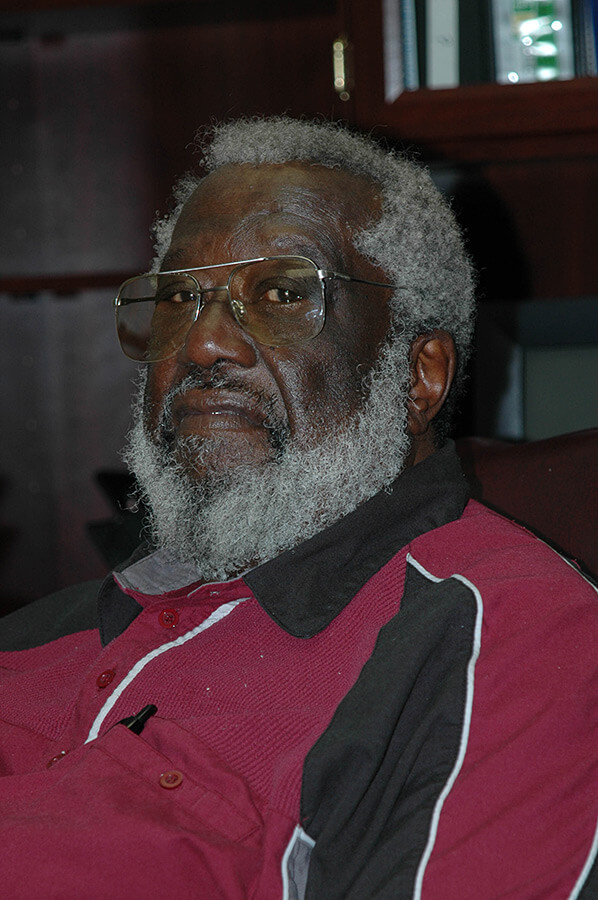 |
| Willie Strain, 2007. Photograph by Pete Daniel. Reproduced by permission of Pete Daniel. |
Despite numerous studies by the US Commission on Civil Rights and Congressional hearings that revealed patterns of discrimination, USDA bias continued. In 1984, Timothy Pigford testified before a House subcommittee and recounted his experiences in eastern North Carolina. After attending the University of North Carolina at Wilmington for several years in the late 1960s, he worked fulltime at the Hercules Chemical plant and started renting land to farm. "It has always been my dream to own and farm my own land," he testified. When he found a farm for sale, the FHA office denied his application and continually gave him flawed farming advice. Pigford took extension courses, expanded his rented land, attempted to buy again and again, and finally became active in farmer groups that challenged discrimination.5House Subcommittee on Civil and Constitutional Rights, Hearings on Civil Rights Enforcement Record of the Department of Agriculture, 98th Cong., 2nd sess. (Washington, 1984), statement and testimony of Timothy Pigford, 63–81; Pigford v. Glickman, 185 F.R.D., 82 (D.D.C., 1999). Black farmers took advantage of an internal USDA study conducted by a Civil Rights Action Team (established by Secretary of Agriculture Dan Glickman) that revealed continuing discrimination. African American farmers staged a demonstration in Washington and brought about a class action suit, Pigford v. Glickman.6"Civil Rights at the United States Department of Agriculture: A Report by the Civil Rights Action Team" (Washington, 1997). On April 14, 1999, Judge Paul L. Friedman began his decision with that familiar Civil War and Reconstruction era rhetoric: "Forty acres and a mule." Here Friedman connected emancipated slaves' struggles for property ownership with black farmers who struggled—and continue to struggle—for ownership in the twentieth- and twenty-first centuries. He estimated that only 18,000 black farmers survived.7Pigford, 185 F.R.D. at 85–86. The judge established an elaborate process to determine damages and prevent fraud. He established 1981, the year the USDA's civil rights office stopped investigating discrimination complaints and threw many in the trash, as the cut-off date for damages. Dispossession focused on the years before 1981, and evidence of discrimination appeared in, among other sources, USDA records, the US Commission of Civil Rights Papers, the National Association for the Advancement of Colored People (NAACP) Papers, the National Sharecroppers Fund Papers, records of land grand universities, and in legal literature.
An April 25, 2013 New York Times article entitled "U.S. Opens Spigot After Farmers Claim Discrimination" virtually ignored the discrimination that led to the lawsuits, and instead unduly focused on fraud in settlements under the Pigford decision and in cases involving women, Indian, and Hispanic farmers. Sharon LaFraniere, the author of the article, neglected to explain the exacting legal process that Judge Friedman established for documenting discrimination. Instead, LaFraniere preferred statements such as, "career lawyers and agency officials who had argued that there was no credible evidence of widespread discrimination."8Sharon LaFraniere, "U.S. Opens Spigot After Farmers Claim Discrimination," The New York Times, April 25, 2013, http://www.nytimes.com/2013/04/26/us/farm-loan-bias-claims-often-unsupported-cost-us-millions.html. USDA officials repeatedly denied discrimination, even in the face of multiple reports from the US Commission on Civil Rights (beginning in 1965 with Equal Opportunity in Farm Programs: An Appraisal of Services Rendered by Agencies of the United States Department of Agriculture); Washington Post reporter Ward Sinclair's series of articles in the early 1980s; and, of course, the extensive documentation housed in repositories across the country.9John A. Hannah, Eugene Patterson, Frankie M. Freeman, Erwin N. Griswold, Theodore M. Hesburgh, and Robert S. Rankin,Equal Opportunity in Farm Programs: An Appraisal of Services Rendered by Agencies of the United States Department of Agriculture (Washington, DC: US Government Printing Office, 1965). The Federation of Southern Cooperatives/Land Assistance Fund found at least ten factual errors in the article; The New York Times published executive director Ralph Paige's letter to the editor, along with another letter from ten scholars of rural life.10Federation of Southern Cooperatives/Land Assistance Fund, "'Sharon LaFraniere Got it Wrong': Response to the Coverage of the Pigford Settlement in the April 26, New York Times," http://www.federationsoutherncoop.com/pigford/Response%20to%20Pigford%20NYTimes%20Coverage[2].pdf; Ralph Paige and Rachel Slocum, "Letters: Bias and a Settlement With Black Farmers," The New York Times, May 3, 2013, http://www.nytimes.com/2013/05/04/opinion/bias-and-a-settlement-with-black-farmers.html. Even after black farmers won their case proving discrimination, some USDA staff perpetuated the myth that there had been no bias. USDA staff seemed anxious to once again erase the historical record, mirroring the role they played in denying civil rights efforts to win ASCS elections in the 1960s.
African American farmers and their supporters have fought a protracted battle against USDA perfidy. It was a fight that recorded few victories but that set important precedents. Willie Strain's case against the Alabama Extension Service created a pathway for similar suits in other states, and the Pigford case opened an avenue for women, Indians, and Hispanics to contest USDA discrimination. The legal records from these cases offer historians the opportunity to delve further into USDA discrimination.
Timothy Pigford graduated from the University of North Carolina at Wilmington in May 2013 and was awarded the Hoggard Medal of Achievement for academic excellence. One of his professors, Monica Gisolfi, offered remarks at the graduation ceremony to contextualize his career. "Most likely you do not know that your classmate, Mr. Pigford, is one of the most important civil rights activists of the last thirty years," she began. "He is an individual who has fought for freedom at great personal sacrifice, who has bettered the lives of tens of thousands of American farmers, who has fought for justice and equality, and who—like all great Americans—has challenged his government to protect, defend, and insure the rights of its citizens."11Monica Gisolfi e-mail message to author, June 4, 2013. Timothy Pigford personifies the enduring legacy of black farmers who fought USDA discrimination, and his achievements should encourage a thoughtful look at the history of USDA discrimination and its incalculable damage.
About the Author
A professor of history and a public historian, Pete Daniel is author of seven books, including Dispossession: Discrimination Against African American Farmers in the Age of Civil Rights (Chapel Hill: University of North Carolina Press, 2013). Daniel is the past president of the Organization of American Historians and the Southern Historical Association.
]]>Red Mountain Garden
 |
| Location of Smith's house, Birmingham, Alabama. Copyright GoogleMaps, 2013. |
My backyard garden is sited on the steep north slope of Red Mountain in Birmingham, Alabama, about sixty vertical feet down from the ridgeline and about 250 feet above downtown.1We now live in North Vancouver, British Columbia, but—since we moved during the Great Recession—we were unable to sell our Birmingham house. I have opted, therefore, to continue using the present tense and referring to the place as "our house," especially because we own no other: in North Vancouver, we are renters. In front of our home extends a suburban landscape of half–century-old houses. There is not a front porch in my entire neighborhood; whether despite or because of this, the homes—which I might generously describe as "midcentury modern"—exude a remarkable kind of 1950s optimism not ordinarily associated with the South, and from every window in the front of our house we can see, on a clear fall day, between five and fifteen miles. (Even in the post-bubble Los Angeles real estate market, this would be a multimillion-dollar view. We bought the place in 2003 for $137,000.) In the winter, when the leaves have finally fallen from the white oaks, the view includes the modern downtown skyline. Behind and above us, however, Red Mountain is too steep to build on, so there's nothing but second-growth hardwood forest and a few limestone outcrops between us and the condominiums at the top of the ridge. Through the woods just behind our lot, about twenty feet above the house, runs the old grade for the Birmingham Mineral Branch of the Louisville and Nashville Railroad, which carried iron ore from the mines that still angle down into the narrow seam of ore-bearing sandstone that runs along the ridge. Today, it's a footpath that intersects, three-tenths of a mile to the east, a paved section called the Vulcan Trail, which itself runs, closed to motor vehicles, exactly a mile to the base of the Vulcan statue. In 1924, when America's leading landscape architecture firm, Olmsted Brothers, put together their proposal A System of Parks and Playgrounds for Birmingham, they recommended this area be part of a "radical expansion" of Green Springs Park (now George Ward Park) at the base of the mountain.2Olmsted Brothers, A System of Parks and Playgrounds for Birmingham: Preliminary Report upon the Park Problems, Needs, and Opportunities of the City and its Immediate Surroundings (Birmingham: Park and Recreation Board of Birmingham, 1925), 12. Reprinted by the Birmingham Historical Society, 2005. "It is worth while," they wrote, "also to provide parks of the mountain type—places where people can climb, can enjoy the wild woods, and can enjoy that sense of freedom and expansion, in contrast to the restrictions of a city, which comes with the contemplation of distant and spacious views, even though in detail these views may be largely over urban districts. Because of its height and its nearness to the city, the Red Mountain ridge is particularly fitted to this purpose."3Ibid., 20. Because the iron mines were still running at full tilt, Olmsted Brothers realistically anticipated the land would be difficult to obtain. They were right. Our neighborhood, initially Lebanese, was built shortly after the mines shut down; the city purchased the steepest section, a strip about two hundred feet wide, less because of civic foresight than because real estate developers couldn't use it. Fortuitously, that strip is today poised to become part of an extensive network of linear parks across the metropolitan region.
 |
| Birmingham skyline through the white oaks. Birmingham, Alabama, March 21, 2008. Photograph by Jon Smith. |
The site is thus classically liminal, on the threshold between city and forest, automobile grid and curving mountainside. Deranged by the mountain, parallel grid lines converge here: below our house, Twenty-second Avenue intersects Twenty-first. We float on red Alabama clay between service and industry, between Birmingham's present skyline of banks and hospitals and its past mine railroad, between midcentury modern houses and neighborhood and second-growth woods that seem much older. More: Red Mountain is almost the last ridge of the great Appalachians running nearly the length of the eastern United States. Topographically if not quite culturally, Birmingham sits where the post-plantation Deep South in which I lived and worked from 1995 to 2010 meets the Appalachian South near which I grew up. When in Absalom, Absalom!, Faulkner's Thomas Sutpen falls Miltonically from the (West) Virginia mountains into the Virginia tidewater, "descending perpendicularly through temperature and climate," the landscape he plummets through on his way down—the Piedmont Virginia of Thomas Jefferson, James Madison, and James Monroe, all of whom would have been alive as he passed through—looks surprisingly like Birmingham's.4William Faulkner, Absalom, Absalom! In William Faulkner, Novels 1936–1940, ed. by Joseph Blotner and Noel Polk (New York: Library of America, 1990), 111.
Edward O. Wilson claims we are hardwired to want to live in places like this one. Across cultures, he argues, "people prefer to look out over their ideal terrain from a secure position framed by the semi-enclosure of a domicile. Their choice of home and environs, if made freely, combines a balance of refuge for safety and a wide visual prospect for exploration and foraging."5Edward O. Wilson, The Future of Life (New York: Vintage, 2003), 135. Yi-fu Tuan phrases the balance more elegantly: "Place is security, space is freedom: we are attached to the one and long for the other."6Yi-Fu Tuan, Space and Place: The Perspective of Experience (Minneapolis: University of Minnesota Press, 1977), 3.
 |
| Start of the raised vegetable bed, with Virginia bluebells lining the path, Carolina silverbell and wildflower patch with Trillium cuneatum in foreground, Alabama snow-wreath left of the bench, and Rhododendron 'Maxecat' at bottom left corner. Birmingham, Alabama, March 30, 2008. Photograph by Jon Smith. |
From the start, and quite unavoidably (given the glory of the site), I imagined my garden as site-specific art, a celebration of both place and space. What I wanted—my wife, far the more experienced gardener, ceded the yard to me, as I was obviously obsessed with it—was a seamless transition from the retro-modern ambience of the house to the woodlands above: a garden that would understand and embody "seeming oppositions as sustaining relations."7Miwon Kwon, One Place After Another (Cambridge: MIT Press, 2002), 166. The hardscape of the yard made achieving this goal much easier: near the house rose a series of whitewashed terraces, their walls still in good condition, with a set of concrete steps heading up toward the gate in the chain link fence. But the steps stopped about two-thirds of the way up; here there were still terraces, but separated by slopes rather than walls, and the path curved around to the right before angling back up the slope to the gate. Outside the gate, the natural curves of the hillside had remained, and we discovered a lush, level area with a limestone outcrop just below the footpath. When we moved in, all of this was overgrown with vines and all the invasive (sometimes botany employs political discourse, too) non-native species mentioned above—mercifully minus kudzu but plus mimosa. Our discovery that the fence even had a gate was the result of an almost archaeological investigation.
Unlike my midwestern in-laws, my parents (a North Carolinian and a New Yorker) were not gardeners; to follow my "family recipe" would have been to plant a few flowering dogwoods (classic understory plants) in full Virginia sun, fail to water them enough, and watch them "mysteriously" die.8Apparently they were not alone. As the leading book on dogwoods puts it: "Take a typical understory plant like C. florida that thrives in the partly shady wood with nice rich organic soils all moist and acidic. Once the plant leaves the nursery for that long trunk ride to its new home, the game is just about over. Despite all encouragement and direction, most homeowners run right home and find the sunniest, driest, and nastiest site with the poorest excuse for soil available to them." See, Paul Cappiello and Don Shadow, Dogwoods (Portland, OR: Timber Press, 2005), 32. Instead, I spent hours and hours online and poring over books checked out from the Birmingham Botanical Gardens library. When I started, I had four or five general ideas, each of which stayed with me through the process, and which I hoped to weave into a seamless whole. I wanted some plants that were native to this area, chiefly to blur the boundary between the public park behind the house and our yard, but also to begin to diversify the ecosystem in the woodland park since even the native species that had recolonized that area over the past half century were still far less diverse than what had once been there. (I also wanted plausible deniability since I was, in a few places, planting on city property, practicing what David Tracey and Richard Reynolds, among others, call "guerrilla gardening.") I wanted to attract and sustain birds, butterflies, and other wildlife, and I had a certain fantasy, drawing on German Schrebergärten and English garden allotments, of the kind of public European footpath that people garden right up to. Second, I wanted plants that reminded me of Appalachian and Piedmont Virginia as much as the site itself did: the classic exile's garden.9For what is quite possibly the definitive treatment of diasporic gardening, see Sarah Casteel's remarkable recent book Second Arrivals (Charlottesville: University of Virginia Press, 2007). Third, since the house, with its wide eaves and long, low midcentury-modern form, drew on a vaguely East Asian stylistic language, near it I wanted plants with a Chinese or Japanese provenance—daphnes, gardenias, camellias, lacecap hydrangeas. (While there were several evergreen azaleas already on the property, however, I was not tempted to add to their number.) Fourth, somewhere under the power-line easement out back where I could see it from my study window, I wanted a small, tropical-looking area full of huge leaves and bright color all summer. Part of this was my nod to the more irreverent and ebullient traditions of African American southern gardening and yard art; part, too, was my nod to global warming, since, defying stereotypical notions of unchanging "place," Birmingham has rather firmly moved in the past fifteen years from USDA Zone 7 to Zone 8.10On December 19, 2006, the National Arbor Day Foundation—hardly a political organization—published, based on the past fifteen years' climate data, its independent revision of the USDA's 1990 map of climate hardiness zones (arborday.org/media/zones.cfm), reinforcing what gardeners had been experiencing—"on the ground," as it were—for some time. I have invested a significant part of my career arguing for certain shared features of the United States and global Souths, and in addition I did want a small eruption of Martha Schwartz-y "artificiality," even if only in the form of decidedly "out of place" shrubs and perennials, since, for example, the bright-orange plastic garden bench in the Design Within Reach catalog was, for two Alabama college professors, not within reach at all. Hence cannas, Formosa lilies, ginger lilies, Hydrangea aspera, a bougainvillea experiment, lobelias, a deciduous Ashe's magnolia—the latter two, native but tropical-looking, to tie the tropical and native areas together. I even put in a couple of Sabal 'Birminghams,' a hardy cultivar one of whose ancestors is almost surely the cabbage palm (Sabal palmetto), the state tree of Florida and South Carolina. (Since I could only afford young plants, they simply look, even now, like large gladioli.) In the drought that ran from 2006 to the end of 2008, the worst in recorded history, when plants native to central Alabama themselves struggled, I learned to overcome my resistance to yuccas, several of which—some native to Alabama, others introduced from Mexico, whose climate we may have begun to borrow—now lend their strikingly sculptural presence to key focal points of the garden. In the late summer of 2007, I installed by my downspouts six rain barrels. Half an inch of rain yields 330 gallons, which, hand-carried up the slope, can keep my ornamental shrubs alive from two to four weeks.
 |
| Young hedge of Rhododendron 'Maxecat,' piedmont azaleas to the left of the hedge. Birmingham, Alabama, April 8, 2008. Photograph by Jon Smith. |
Insofar as the garden abutted a public pedestrian thoroughfare, what I wanted, too, was a sense of surprise for those pedestrians who happened upon it. Though polemical, Lucy Lippard's definition of public art as "accessible art of any species that cares about, challenges, involves, and consults the audience for or with whom it is made, respecting community and environment" is helpful here.11Lucy Lippard, The Lure of the Local: Senses of Place in a Multicentered Society (New York: The New Press, 1997), 264. Frankly, as a modernist I'm not much concerned with accessibility, and, at the risk of sounding overly literal about it, most people seeing the garden from that direction will have had to walk at least half a mile to do so. My garden—small-scale art for the long haul, as Lippard would say—is inevitably about motion too. For now, the footpath behind it serves as an unmarked spur of the paved Vulcan Trail. Precisely because at present the trail doesn't "go" anywhere, many of the people on it are first-timers. Six hundred yards from the paved section, after a shady stretch through invasive English ivy behind our neighbors', the curious come across the spray of native rhododendrons that is slowly forming a flowering evergreen screen between the trail and our property. A break in the row reveals three stone steps (edged in spring with Virginia bluebells) descending into a small garden with mountain laurel, deciduous native azaleas, bottlebrush buckeyes, Alabama snow-wreath, smooth and oakleaf hydrangeas, American beautyberry, a sourwood and a silverbell tree, atamasco lilies defining the curve of a limestone outcrop, Stokes' aster, foamflower, Indian pinks, a few trilliums (T. cuneatum) that were already on the site, and a host of other small native flowers gleaned from Jefferson County's annual landfill digs. Closer to the terraces are my wife's rosebushes (increasingly shaded out as the woods behind continue to grow) and a pair of fastigiate Graham Blandy boxwoods mock-pretentiously guarding the gate in the chain-link fence. In future years, I'd hoped to make the footpath truly pass through, instead of just alongside, a subtly landscaped area, with redbuds, dogwoods, red buckeyes, and, someday, American chestnuts all brightening the woods above the trail. Ideally, people would not realize the area is landscaped at all.12Louise Wrinkle's Mountain Brook garden, often cited in works like Sally Wasowski with Andy Wasowski, Gardening with Native Plants of the South (Boulder, CO: Taylor Trade, 1994), is a model here, or was until she paved her creekside walkway with asphalt. (In some cases, creating such an illusion is not difficult because people are not always very observant. In 2004, a group of non-neighborhood-residents calling themselves "Friends of the Vulcan Trail," on an annual and officious "trail-clearing" mission, veered several yards off the trail to destroy two of my rhododendrons, not to mention a small tree belonging to one neighbor and a mahonia belonging to another.) But the real impulse behind this sort of restorative gardening is what Ken Druse calls "giving back" in The Passion for Gardening: Inspiration for a Lifetime (New York: Clarkson Potter, 2003), 97–143. It's a different aesthetic and ethic from Schwartz's, which I deploy elsewhere in the garden. (Why choose?) Schwartz, notes Tim Richardson, "does not try to manipulate the natural landscape in a subtle way, bending it to her ends by using nature's own palette of trees, shrubs, and flowers. For Schwartz, such an approach is lazy or even dishonest, since her argument is that even the notion that unsullied 'nature' exists out there is patently false," see Tim Richardson, ed., The Vanguard Landscapes and Gardens of Martha Schwartz (New York: Thames and Hudson, 2004), 7. Like most dogmatism, such orthodox postmodernism can overstate its point. Habitat restoration, subtly aestheticized or not, isn't about pretending unsullied nature exists, it's about ameliorating some of the sullying.
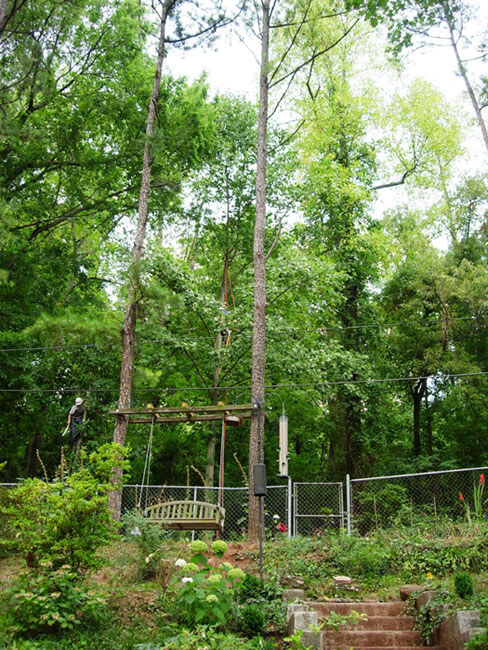 |
| Workers clearing powerline easement, Hydrangea arborescens 'Annabelle' in foreground. Birmingham, Alabama, July 5, 2007. Photograph by Jon Smith. |
Two steps inside the gate in the fence, just where the natural curves of the mountainside give way to the terraced slopes planted with hydrangeas and brugmansia, hellebores and ginger lilies and crested iris, a previous owner—I could never have done this—had bolted through the trunks of two young pine trees to create a frame for an outdoor swing, though when we moved in no swing hung from the 4x4s fixed there. We purchased by mail and assembled one made of—globalization strikes again—sustainably harvested teak. And it is here at night, especially in winter when the mosquitoes are gone and the view is unobstructed by oak leaves, that we will sit and look out over the city of a million people in which we live. Often I can see the glow of my computer monitor through the study window; from the roof above it, the DSL connection over which most of the plants in this garden were researched and ordered runs up the telephone line to the row of poles behind us. This is where I most want to sit, the most liminal place in the whole liminal site. My physical pleasure—visual, auditory, and tactile—in the urban space is inseparable from my pleasure in the place from which I view it. And this latter pleasure is complex.13Partly because of gardening's perceived distance from urban youth subcultures and electronic media, no scholarly cultural studies treatment of its pleasures exists, and the afterword below is not intended to fill that void. For an impressionistic meditation intended to "inspire" other gardeners, see Druse, The Passion for Gardening. Like the bodily pleasure of swing dancing noted by V. Vale, it's been partly the pleasure, after hours each week in front of that monitor (and of students!), of hauling eighty-pound chunks of sandstone to make steps, of spreading compost, of planting and tending mountain laurel and silky stewartia (the latter, I confess, unsuccessfully).14V. Vale, Swing! The New Retro Renaissance (San Francisco: RE/Search Publications, 1998). Yet it is not and, unlike swing dancing, has never been, hip, and while I tend to buy my plants not from big-box chains but from smaller local nurseries or places like Woodlanders in South Carolina (for southeastern native plants), or Greer Gardens in the Pacific Northwest (for rhodies), or several of the edgier nurseries run by globetrotting "plant hunters" (Plant Delights, Yucca Do, or Heronswood when it was run by Dan Hinkley), it isn't consumption as protest. In fact, despite a significant cash outlay, it's not really reducible to consumption, any more than the pleasure of running is reducible to the pleasure (or hassle) of buying running shoes. And though I have consulted gardening books from the 1940s, 1950s, and early 1960s, even laying out a garden incorporating plant combinations and design philosophies favored in those decades does not feel like wearing vintage. As separate, living organisms (i.e., as the Real), all but the most ancient individual plants resist the artifactuality, perhaps even the implicit narcissism, of a skinny tie or, for that matter, a postwar Danish credenza.15"I wonder," asks Tom Rooks, a landscape designer in Michigan extensively quoted by Druse, "what do people do who are in love with things that are completely man-made? Like people who are in love with cars? What we're in love with is so complex and so never-ending, you can never feel you've done everything or learned everything about it." Druse, The Passion for Gardening, 22. Druse's own metaphor that nature is "the senior partner in this collaboration" is schmaltzy but accurately depicts the basic ontological sense that gardening can resist fetishism. Ibid., 232.
Even ten years ago, most critics of southern culture—ignoring the DSL connection and the urban setting—would have discussed my garden labors, if pressed, as evidence of my southern "sense of place," my "attachment to the land," and so on. Confusing me, perhaps, with Walker Percy, others might alternately have read all this as tragically "post-southern": removed from the land of my ancestors, thrust into a world of postmodern space, I desperately attempt to reestablish connection, to re-create place. Conversely, many postmodern geographers, still under the spell of what Edward Soja happily calls "the Edge City maxim, that every American city is growing in the fashion of Los Angeles," would have simply ignored the site, and potentially all Birmingham's parks as well, considering Birmingham, if at all, as a kind of poor man's or proto-Atlanta, itself a kind of poor man's or proto-Los Angeles of simulacra and abstract capitalist space.16Edward W. Soja, Postmetropolis: Critical Studies of Cities and Regions (Madden, Massachussetts: Blackwell, 2000), 401. For the classic postmodern-geography treatment of Atlanta, see Charles Rutheiser, Imagineering Atlanta: The Politics of Place in the City of Dreams (New York: Verso, 1996). Neither approach suffices.
Afterword: The View from British Columbia
In 2010, my wife and I moved to North Vancouver, British Columbia. By 2012, our Birmingham garden was no more. We had been unable to sell the house in the depressed US market, and the folks to whom we were able to rent it were lovely people but in no sense gardeners. (Nor could we have expected them to be.) Scores of plants, including virtually all the rhododendrons, died from lack of watering; others were shaded out by weeds. To make matters worse, sometime in early 2012, a crew from the city of Birmingham came down the trail with a backhoe on some sort of trail widening mission, got the backhoe stuck, and destroyed many more plants in the process of extricating it. For no apparent reason, they also went twenty feet out of their way to cut down my sourwood tree, which had gotten about twelve feet tall. A few plants—generally, those native not simply to "the South" or Alabama, but to Jefferson County in particular—do still thrive back there. The Alabama snow-wreath I planted by the limestone outcrop likes the location so much it has suckered all over the place, almost blocking access to the path. The Piedmont azaleas, bottlebrush buckeyes, oakleaf hydrangeas, and three cultivars of Hydrangea arborescens are all still there, if you know where to look. But for the most part, the garden has been swallowed back up into the mix of invasive plants and second-growth forest that was there before I started the project. Inside the fence, meanwhile, most of the non-native hydrangeas are gone. In fact, when we do put the house on the market next year, we've been told we will have to do considerable work just to restore its "curb appeal."
Part of me wants to interpret all this metaphorically, to read my desiccated, neglected garden as a slightly accelerated version of the Deep South as a whole, whose fate in fifty years as a result of anthropogenic global warming is on track to be, in a single word from NASA climatologist James Hansen, "desertification." After all, how easy it would be—and, I argue in Finding Purple America, how unethical—to fall into pleasant, moralizing tears over my garden as a figure for such a loss, to adapt old southern studies' endlessly replicable melancholia to yet another Lost Cause! Conversely, how easy to lay, from the safe distance of western Canada, the problem at the feet of "the South," so that the whole mess could be attributed to those pickup-driving, coal-burning yahoos, the exception to some putatively eco-virtuous blue-state nation? Both narratives, however, represent their own kinds of obvious mythmaking, their own fantastic "jukeboxes" (in the terms of the book).
Instead, as soon as we got to North Vancouver, I started another garden. Among the more conventional roses, peonies, dahlias, and crocosmia, it contains what may be the only longleaf pine seedling in British Columbia.
About the Author
Jon Smith is associate professor of English at Simon Fraser University. He is the coeditor with Deborah Cohn of Look Away! The US South in New World Studies (Duke University Press, 2004) and the author of Finding Purple America: The South and the Future of American Cultural Studies (University of Georgia Press, 2013). He has been a certified master gardener in Alabama and is currently one in British Columbia.
]]>Video and Essay
Searcy County is a sparsely populated area in the Ozark region on US Highway 65 between Little Rock, Arkansas, and Branson, Missouri. Ninety-six percent white, the county is demographically similar to northern Arkansas and southern Missouri counties, home to a declining population predominantly employed in farming. Searcy's population has declined by nearly fifty percent since 1910. The county had over one thousand farms in 1963; five decades later it has fewer than six hundred.
Now closed, the Searcy County Livestock Auction sat just south of Marshall, the county seat. Tony Bratton, a local farmer, opened the auction in 1947. Jack Simpkins bought it in 1955 and ran it until its closure in 2009. Operating once a week, it attracted both local and out-of-state buyers. Initially, the auction sold both cattle and hogs, gaining a reputation as one of the country's premier sites for the purchase of fat hogs, ready for slaughter. But as the pork industry integrated vertically, fewer local farmers bred pigs, and eventually the auction house sold only cattle—as many as three thousand steers a day from up to a hundred miles away. As business dwindled—and only months after I documented it in 2009—Simpkins decided to close. Increasingly, online sales and the growth of cattle factory farms are rendering live auctions irrelevant.
While I am not from Searcy County, my connections to the place stretch back to 2003. Originally from Brookline, Massachusetts, I moved to Arkansas in 2003, where I taught high school for two years in the Mississippi Delta, the eastern part of the state. One weekend, on a whim, I attended a music festival in the Ozarks and befriended a Searcy County couple selling food there. Visiting with them, I became interested in the county's landscape and political economy. I have continued to return almost every year as I work on my dissertation about Mexican guest workers who plant trees for reforestation companies owned by aging hippies in the Arkansas Ozarks.
Entering the livestock auction house for the first time, I was immersed in a world of unfamiliar gestures, rituals, and languages. I was particularly struck by the pathos of the animals themselves. I brought my camera one afternoon and, after producing evidence that I wasn't working for PETA, was granted permission to record. The sounds of the place transfixed me, and I created a video piece that centers on the audio of this auction house.
About the Author
Noam Osband is a filmmaker and PhD student in anthropology at the University of Pennsylvania. His dissertation, which looks at Mexican H-2B workers performing reforestation in the US South, will be the first documentary film presented for a dissertation at the University of Pennsylvania.
]]>