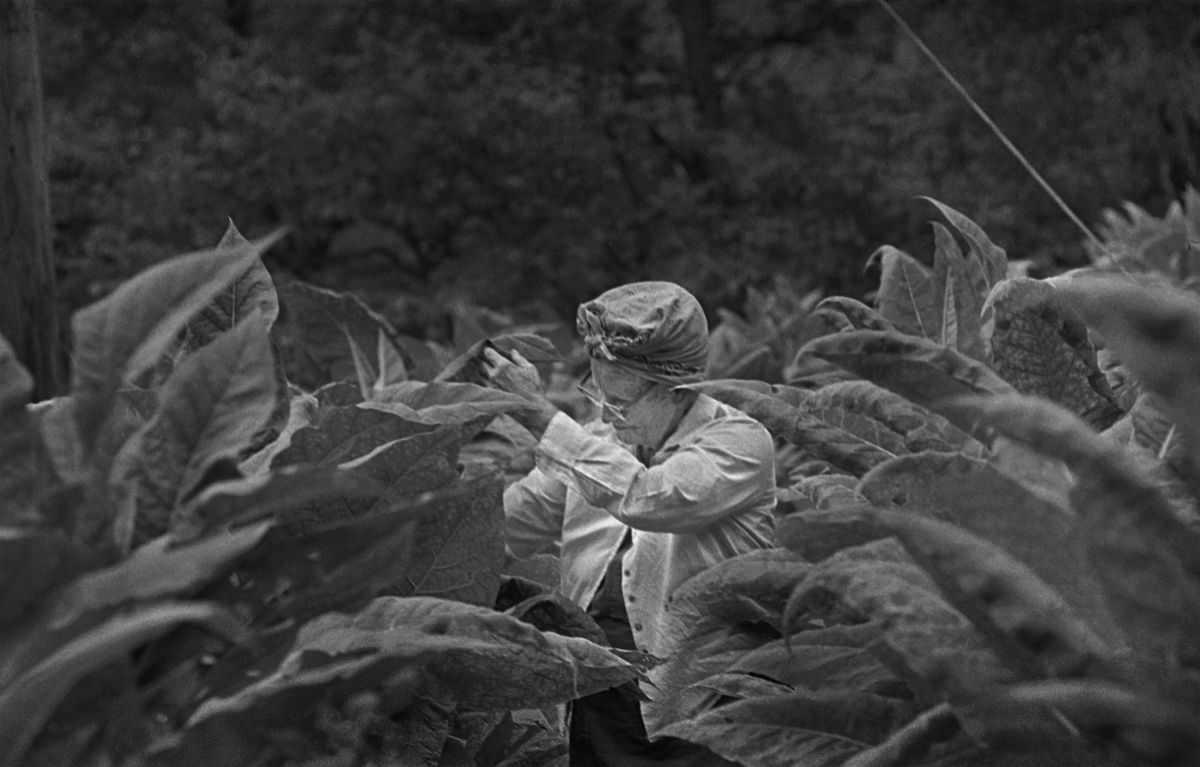
Renowned documentary photographer Rob Amberg presents in Little Worlds an inventive and utterly immersive portrait of a place, the last in a trilogy that feature his longtime home. An expansive, rural, and dramatically beautiful locale buttressed in the mountains of southern Appalachia, Madison County sits just thirty miles north of cosmopolitan Asheville, but retains a feeling of being slightly wild, even after decades of change have brought more infrastructure, modern technology, and newcomers, like myself, into its fold. Amberg traded his middle-class, suburban upbringing in D.C. for the allure of a life lived closer to the land, however difficult, uncertain, and foreign it may have seemed upon his arrival in 1973. The place enthralled him. So did the people. Two years after moving to the mountains, Amberg met Dellie Norton, a tobacco-growing, ballad-singing woman with deep ties to the area and a friendly curiosity for outsiders. That fortuitous meeting grew into a long-lasting friendship and set Amberg on a course of documenting the people and places of Madison County that he has continued, diligently.
We learn about Amberg’s introduction into Madison County in his first book, Sodom Laurel Album (2002). “Photographs can teach us to look at the very texture and feeling of life around us,” he writes and then skillfully reveals.2Rob Amberg, Sodom Laurel Album (Chapel Hill: University of North Carolina Press, 2002), xii. Through intimate photographs of Dellie, her family and neighbors, as well as the land she tended, Amberg portrays a people and a way of life awash in riptide of change. In the twenty-five years between the beginning of that project to the time it was published, most people of Dellie’s generation had passed on. People in Madison County, for the most part, no longer grew tobacco, milked cows, or gathered at country stores to socialize. Yet plenty continued to sing ballads, play instruments, and raise gardens. The culture that Dellie Norton represents, Amberg claims, “has not so much vanished as continued to evolve in new and unexpected ways.”3Rob Amberg, Sodom Laurel Album, xxii.
Amberg offers a complex depiction of Sodom Laurel and Madison County, an approach that, he admits, also evolved over time. Initially he was intrigued by the old-timers exclusively, people whose connection to the land seemed stoic and stubbornly rooted in the past. Newcomers, many former suburbanites like himself, did not interest him. Nor did he want to depict anything negative he witnessed, for fear that he would perpetuate well-worn tropes of dangerous or deranged holler-dwellers. Once he came to know Dellie Norton and her broader community more intimately, his own “preconceptions …about romantic mountaineers” faded away, and he began to tell stories of real people and places that hold lightness and darkness simultaneously, an approach that remains consistent throughout all of his work.4Rob Amberg, Sodom Laurel Album, xx.
In Sodom Laurel Album, for instance, we see an especially disturbing photograph that Amberg made during a Ku Klux Klan meeting in 1976. Madison County was—and remains—a strikingly white place, and this image depicts a subset of the community that sought to keep it that way. Although the Klan did not have a lot of success in the mountains, Amberg learned, they occasionally held recruitment rallies, like one where a group of children appear in the center of the frame as the sought-after recruits. When Amberg shared his experience with Dellie Norton, she responded, ‘That’s them damn Rebels, ain’’t it?’ and followed up with a story about how her own grandmother’s life had been threatened, and her uncle’s life taken, by some Rebels years before because of their Unionist affiliations.
Norton’s reaction reveals one of the many divisions that existed within the cultural terrain of Madison County, which linger into the present day. Just a few months ago, for example, I encountered the twisted legacy of the Klan in conversation with a community member whose family has deep roots to this place. He shared that his grandfather had been a Wizard in the local chapter, but believed that his ancestor’s mission was fueled less by racism than by a desire to uphold American values and protect their women. I wonder how Dellie Norton, or her grandmother who dodged the Rebels’ bullets, would have responded to his interpretation, which manages to erase both violence perpetrated against women as well as animosity directed toward racial minorities. Amberg’s decision to include the photograph, however shameful it may have been to some of his contemporaries who held more egalitarian views, portrays Madison County as a place where some condone violence, or the threat of it, to preserve whiteness as the norm. At the same time, through the accompanying stories about Dellie Norton, he reveals two competing mentalities that he saw co-existing within the culture: fear of the racialized "other" and curiosity toward the incoming "outsider."
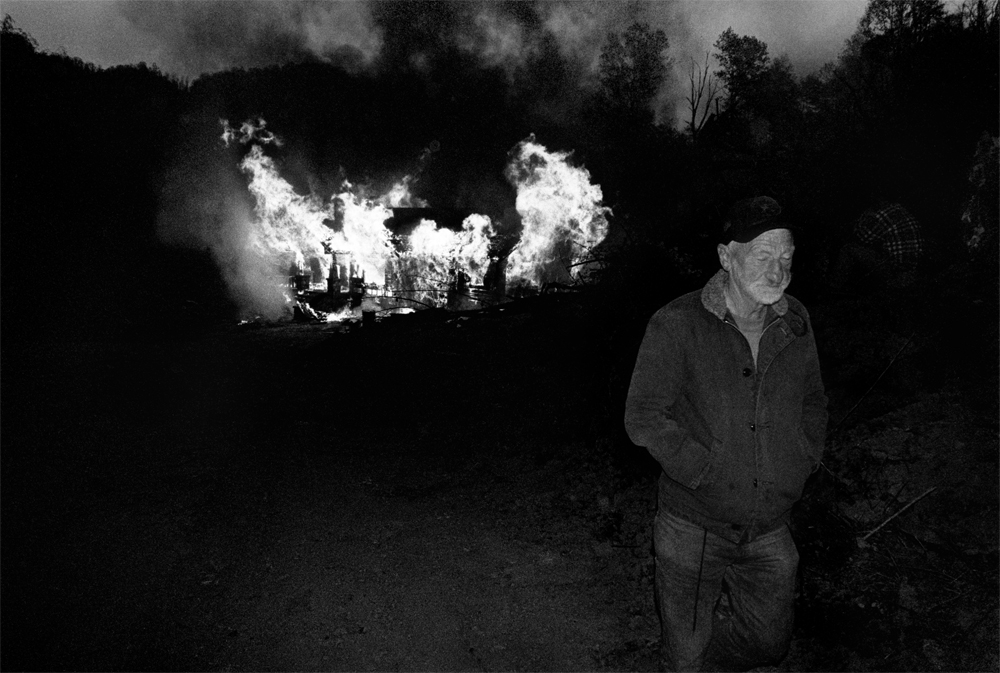
In Amberg’s second book, The New Road (2009), he continues to explore the complexity of place by delving deeper into themes of transformation and progress. What imprints are left when a mountain is pummeled to build an interstate highway, he asks. At this point in Amberg’s life, he had lived in Madison County for over three decades and had become embedded there. He was one of the residents, not simply an observer making photographs of it. The images and stories within the book depend upon his connections and the trust he had developed with neighbors. He interviewed more than thirty people about their opinions of the I-26 corridor that cut through their county, exposing complicated feelings and contradictory implications of development. Through Amberg’s images, we see a governor, a beauty queen, and a group of veterans celebrate the highway upon its completion at a new Visitor’s Center, hopeful for the convenience and access that will accompany it. We also learn of Howard and Lucille Babbitt, an elderly couple, who pick apples from their old family orchard for the last time before it is bulldozed to make room for the road. In perhaps the most heartbreaking photo of the book, JD Thomas walks away from the house where he was raised, his eyes gazing downward as flames engulf the old structure. “Bye, bye, old home place,” Amberg heard him utter.5Rob Amberg, The New Road (Chicago: Center for American Places at Columbia College, 2009), 31.
The New Road ends with Amberg’s own nuanced, yet ultimately troubled perspective of the changes he had witnessed over the decades: “all in all, Madison County has been able to find and maintain an acceptable balance between old and new….But some of what has come in the highway’s wake—the gated communities, the steep-slope development, the loss of wildness, the acres of land being bulldozed and paved, and the speed with which these things are happening—are real and symbolic evidence of a massive upheaval in our community. For me, they link us to the wider world I chose to leave behind years ago, and they are representative of a place out of balance.”6Amberg, The New Road, 175.
Fifteen years later, in Little Worlds, Amberg considers what the future may hold for a place unsteadied by perpetual growth, divided by fears (real and imagined), and occasionally ravaged by natural disasters. The book is a tribute to a life lived in a region in flux. It is a colorful collage of stories layered one over another, distinct moments of time feeding into each other, leading one to wonder where the lines between reality and fiction, or past and present, reside. Its structure follows Amberg’s previous works in its reliance on the interplay of words and images to tell a rich tale about a complicated place. But, otherwise, it takes a different approach. As Amberg told me, “I really wanted to break out of the documentary model…to break completely away from any pretense of objectivity.”7Amberg interview with Maia Surdam, March 13, 2025. He succeeds.
The storyteller’s imprint is everywhere. Amberg includes decades-old journal entries, filled with recollections of his daily life; there are vulnerable memories of divorce, remarriage, and building a life with his second wife Leslie; we see his son and daughter’s childhood photographs. Even the fictional story woven throughout was fashioned from a tale he once told his daughter Kate as part of their bedtime ritual. And, in one of the most touching final scenes I have encountered in a book, Rob Amberg depicts his future death. He has chosen a peaceful place for himself—under a shady tree in the Lost Cove, “holding [a] box of stories and memories close,” gazing at the night sky and listening for the sounds of an owl in the darkness.8Amberg, Little Worlds, 174. More than a photography book, it is a dramatic culmination of Amberg’s long-term commitment to document Madison County with insight, specificity, and imagination.
Though Little Worlds completes Amberg’s trilogy, it stands firmly on its own, offering contributions to multiple genres. History lovers, especially those of us interested in the transformation of rural life, have much to learn from Amberg’s recollections of fifty years of life in Appalachia. His work at the Rural Advancement Fund, which allowed him to travel throughout and document the rural South in the ‘80s, gave him a greater understanding of these complex changes. We feel the emotional blow of losing one’s farm when we look at his powerful photograph of a farmer holding a painting of an old farmhouse during an estate auction. We sense the massive impact that the building of the Marshall bypass had on one community’s social and spatial customs. We consider the innovation of rural people who repurpose old buildings in new ways, giving inspiration to those trying to remake small towns suited to the twenty-first century. And we see the risk of a fractured society when newcomers isolate themselves from local residents or culture, whether out of fear, indifference, or false assumptions of superiority.
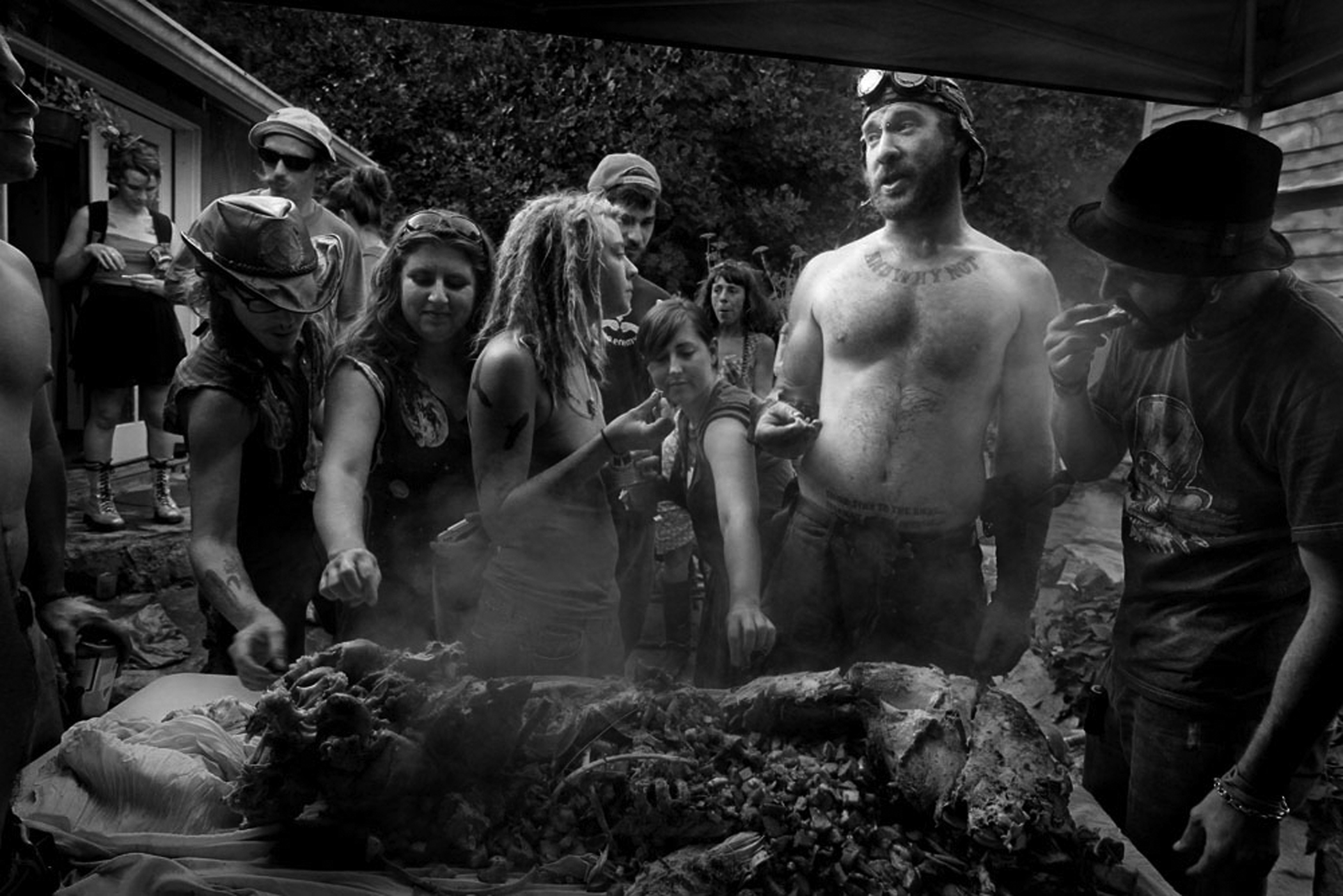
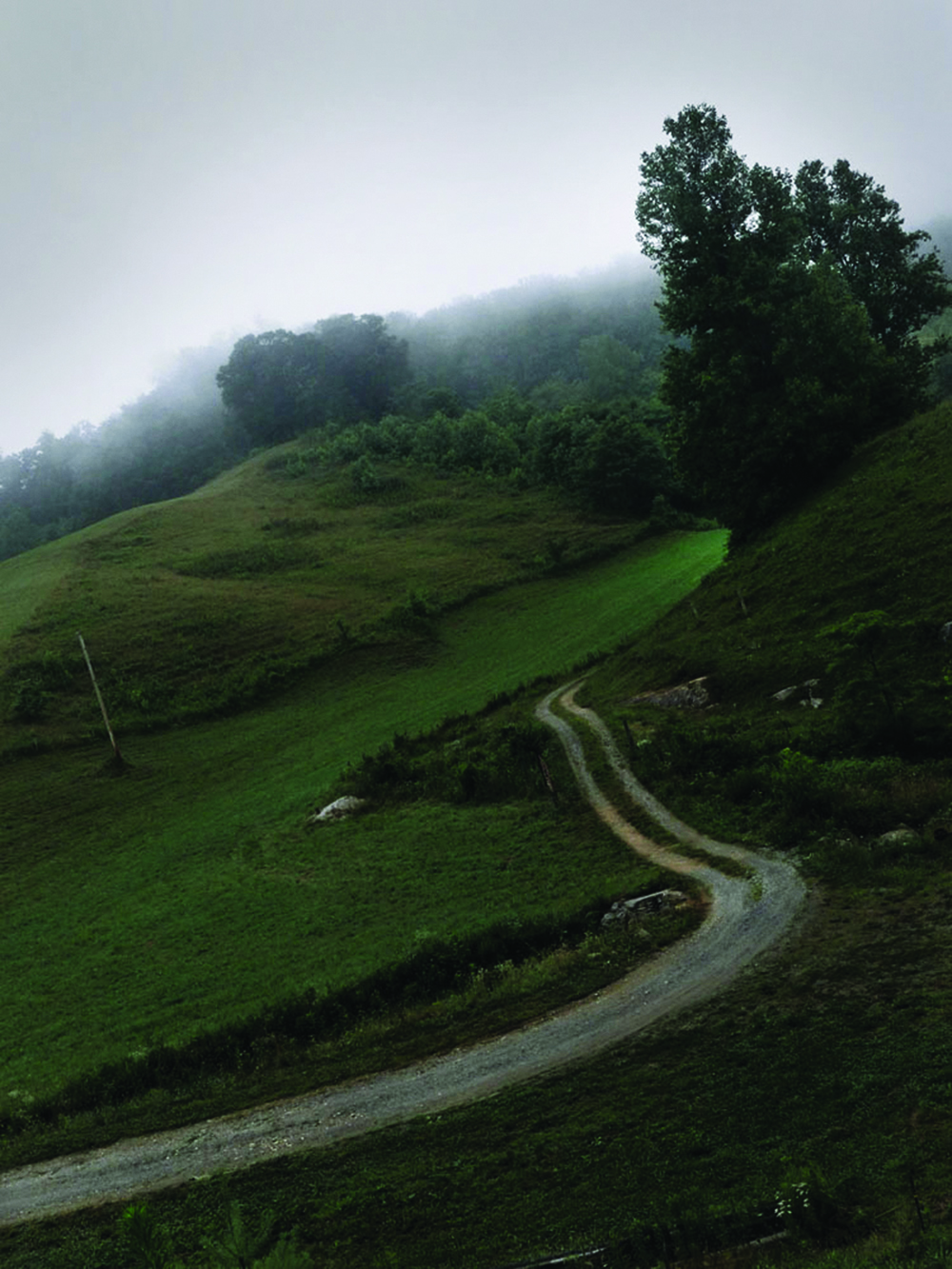
Students of visual art will appreciate how Amberg continues to use photography to convey the “texture and feeling of life.” Landscape photos signify Madison County as Appalachian, yet evoke a different scale of time. A two-track road disappearing into a foggy mountain curve. A soft green valley, edged with trees and textured with the interplay of light and shadow. A thick forest blanketed with snow, peaceful and cold. We see moments of people’s daily lives that reveal the vitality of the human existence, no matter how ordinary. Dancers stomp their feet as fiddlers strum their bows. Young, hungry party-goers pull pieces of meat from a roasted hog. A woman proudly displays her jar of canned vegetables, suggesting the great effort it took to bring forth this food.
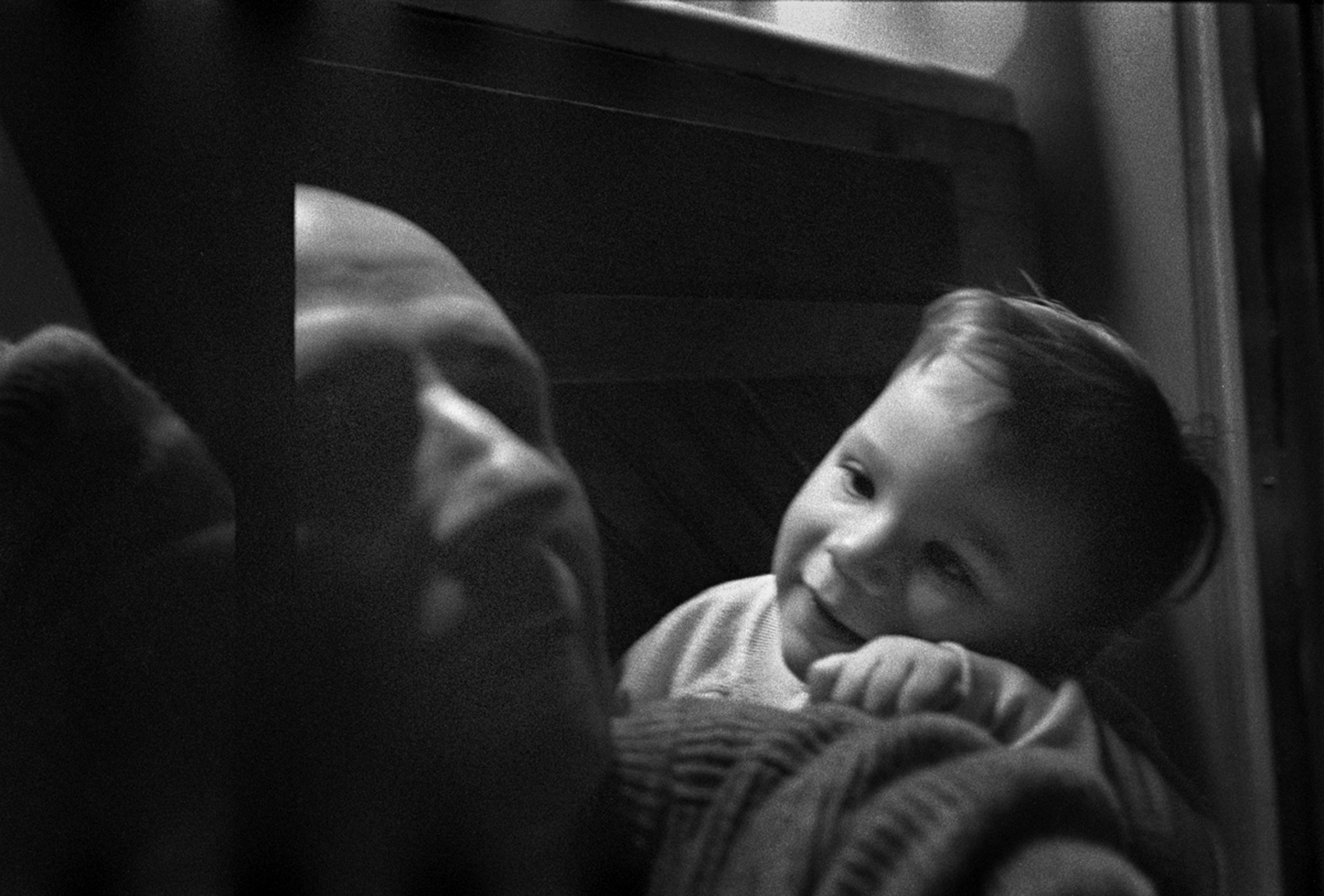
Other photographs deliberately show the passage of time, like the portraits of his daughter, which begin each chapter and show her grow from an infant into a young woman. As Amberg explained to me, “I wanted to remind the viewer that this was a story I was telling Kate…And, number two…she was my muse for years and I’ve got all these incredible photographs of her.”9Amberg interview with Maia Surdam, March 13, 2025.We sense, then, not only the evolution of a daughter listening to a bedtime story, but the changing seasons of an artist who has found creative freedom in the latter part of his career to include photographs that reveal tender moments of his parental journey. In this way, Little Worlds feels like a family heirloom, a loving gift from father to child, a collection of poignant photos and cherished memories.
As a writer and storyteller, Amberg ambitiously ventures into the realm of fiction, but this is no ordinary bedtime story. Readers will find interspersed in Little Worlds a compelling tale set in a dystopian future, reminiscent of Cormac McCarthy’s The Road or Octavia Butler’s Parable of the Sower. In this imagined world, Amberg’s descendants seek refuge in a place similar to Dellie Norton’s early days, both physically and socially, when people walked across dense mountains on foot and neighbors worked the land together out of necessity. With much of the world plagued by urban violence, incessant climate disasters, and systemic social decay, the characters in Amberg’s story, a blend of old-timers and newcomers, look to the past to build a better future in the mountains. They have a lot to learn.
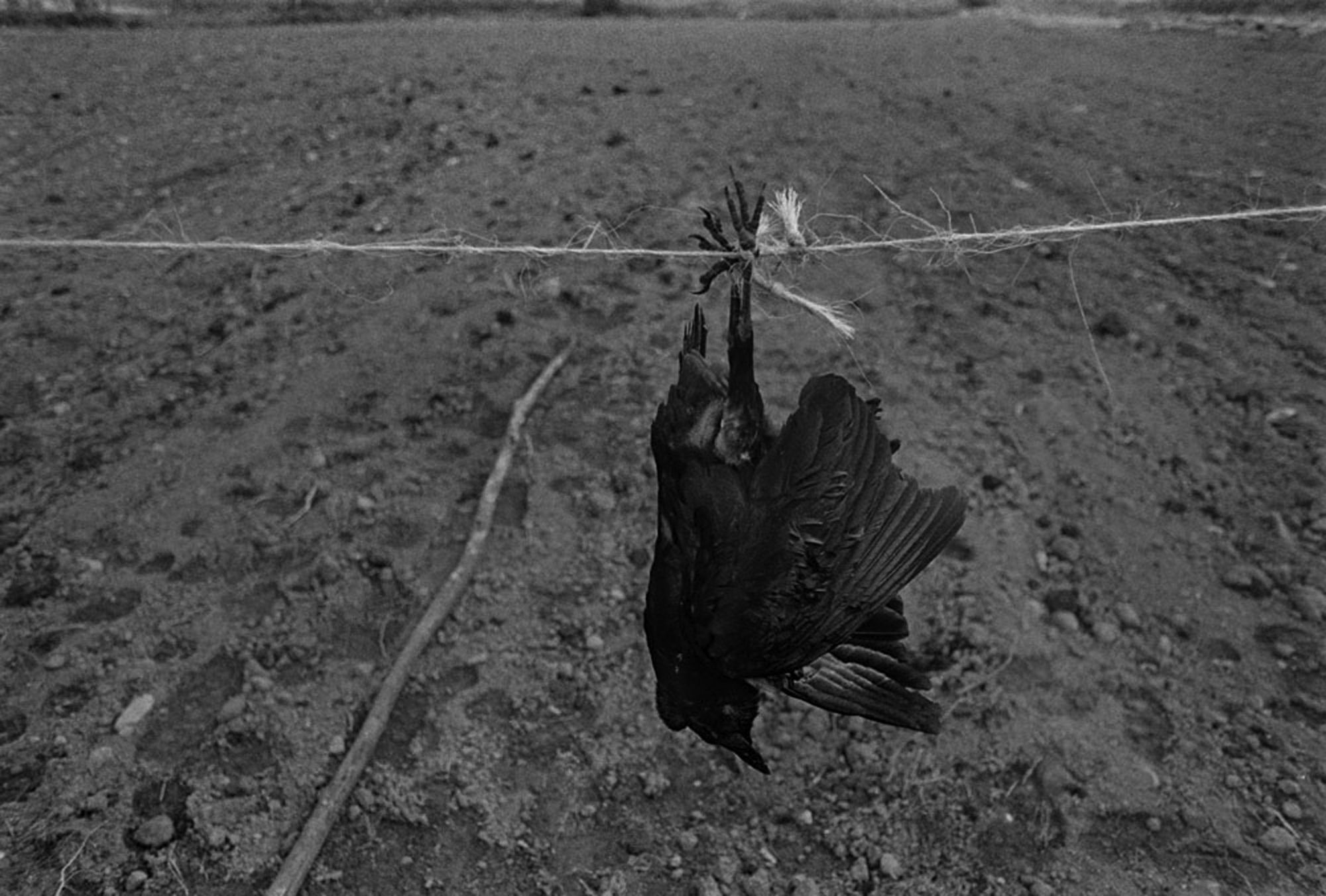
Amberg includes a plethora of images that counter the familial ones of his daughter, and, at first glance, appear as disturbing as the chilling future he imagines. We see children playing with knives, a bow and arrow, and guns, à la Lord of the Flies. We see an animal skull attached to a pickup truck. We see a rebel flag displayed prominently on Main Street; a spooky religious figure surrounded by antlers; a row of disembodied squirrel tales hanging on a wall; and a bench lined with bloody sheep heads. Surely, the stories behind these individual photos would reveal details that forgo a simple, dire understanding (animals must be slaughtered before they are consumed, of course) but, collectively, they acknowledge the “hard and harsh” aspects of Madison County. Or, as he observed in his first book, “the meanness of the place was hard to ignore.”10Amberg, Sodom Laurel Album, 35.
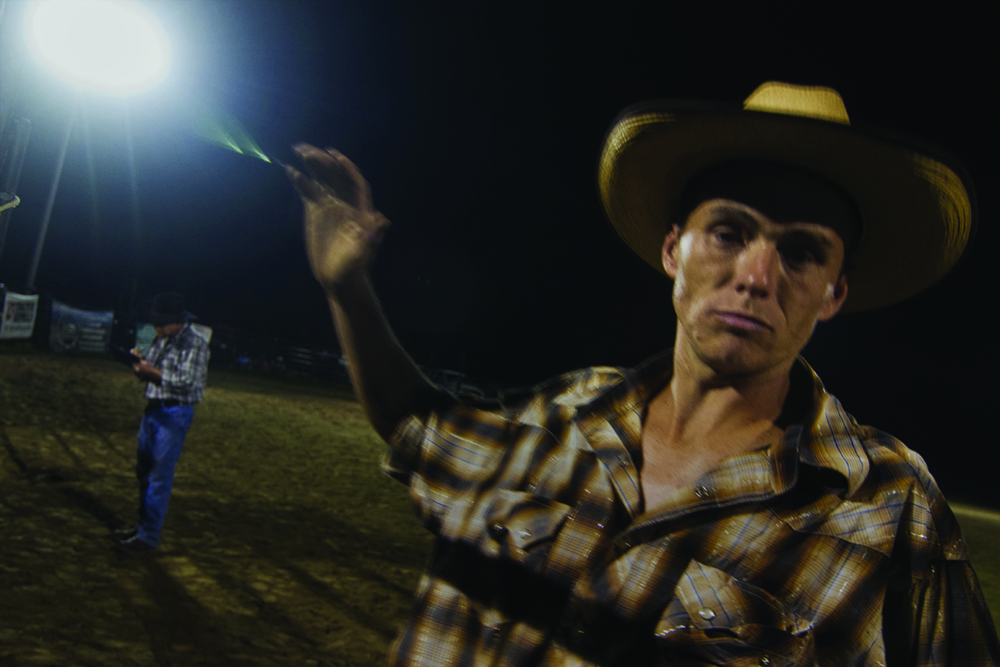
In a clever narrative move, Amberg inserts himself within the fictional tale by having his imaginary descendants, Frank and Wright, discover a trunk of his writings and photographs inside their abandoned ancestral homeplace. In their search for peace and stability, the trunk and its precious contents provide evidence of the society that had existed before their world fell into chaos. To readers, these contents are Amberg’s personal memoirs and documentation of life in Madison County that spans over fifty years, with some overlap of what we have seen in his previous two books. To Frank and Wright, they are a treasure map that helps them connect a distant past, filled with its own set of challenges, to a future that might still be salvageable from their dismal present. Up until that point, their lives had been plagued by fear, distrust, and isolation. Environmental disaster, especially floods and wildfires, made life more uncertain. Perpetual migration became an act of survival for most. Within the time capsule left by their ancestor, they consider a different path forward. They see photographs of handmade quilts made for newborn babies. There is evidence of a vibrant social life, where people gathered for parties, town hall meetings, rodeos, and even something called a Mermaid Parade. Many photographs show people working on their land to produce food to eat, supplies to use, or commodities to trade. Their initial reaction to the trunk, and its stories of a functional community rooted in place, is hopeful.
Later in the story, as the numbers of refugees grow and the community becomes more racially and culturally diverse, tensions rise as well. The characters grapple with humanity’s shadowy sides. “There are those among us holding onto the past, as divisive as that old world had been,” one person observes. “They want to exclude those different from themselves and have threatened violence if they don’t get their way.”11Amberg, Little Worlds, 165. By weaving together fictional and historical storylines—and photos that range from beautiful to ordinary to provocative to downright unsettling—Amberg once again rejects notions of a romanticized Appalachian past where everyone lived in harmony. Through his personal entries, Amberg’s descendants learn that divisiveness and violence had been a consistent part of the landscape. “In Madison County,” Amberg writes, “the divides have always been sharp, but they’ve mostly stayed beneath the surface.”12Amberg, Little Worlds, 164. As the fictional settlers consider how to respond to ruptures in their new community, Amberg’s memoir laments the virulent political culture that is taking root in his longstanding one, especially with the rise of the first Trump presidency. With a president that explicitly “encourag[es] violence and anger,” old norms of civility seem to be rotting away on the local level too. “Neighbors—people I’ve known and liked for forty years are suddenly distant and angry. It’s as if my outsider status and points of view make me an enemy.”13Amberg, Little Worlds, 164.
The narrative arc in Little Worlds is a circuitous one, as the story ends close to where it begins, with the revelation of Amberg’s trunk and documentary contents. The experience of reading this book feels appropriate for our times. It is bewildering. Are we looking backward or forward? Where are the lines between reality and fiction? Madison County, like many rural places in the US, remains mostly, but not entirely, white, a demographic fact reflected in Amberg’s visual record. Today, there are few Black people living here, around 1% of the population, but there is a rising population of Latino immigrants, as well as more people who identify as bi- or multi-racial.14Around 3.5% of the county's population identifies as Latino or Hispanic, and 5% as “two or more races.” https://data.census.gov/profile/Madison_County,_North_Carolina?g=050XX00US37115#race-and-ethnicity Politically, this county votes predominantly, but not entirely, Republican, thus supporting the fear-based ideology of Trump that feeds on division, champions a narrative of white superiority, and enacts policies that are anti-immigrant.15For a decades’ long perspective on the shifting political climate of the western North Carolina county of Transylvania, see Dan T. Carter, “Good-Bye to All That,” Southern Spaces, December 19, 2014. And like the Madison County we glimpsed in Amberg’s earlier works, we continue to witness contradictory reactions by those in the racial majority, with anti-"other" fears and animosity (with threats of ICE raids targeting Latinos as the most alarming example), as well as acts of neighborly benevolence. As far as our physical environment, which has seen dramatic transformation due to direct and indirect human interventions, including the recent climate-change-related disaster, Hurricane Helene16See Amberg’s “Hurricane Helene Visits Marshall, North Carolina,”August 11, 2025.,we are grappling with questions of how to rebuild. In the immediate wake of natural disasters, divisions may fade in lieu of pressing needs for collective survival. But how can we remake ravaged places that will sustain us in the long run if we live divided from our neighbors, whether out of custom, ignorance, or fear? How do we heed lessons from the past without being tethered to its stubborn foundation of inequality and extraction? Though Little Worlds does not answer these questions, it extends them for our contemplation as we move toward the future.

Amberg’s personal narrative is winding, too, and somewhat ambivalent. He has journeyed from outside observer to resident photographer to “an enemy” among neighbors to a man digging his imaginary grave in the beloved mountains he calls home. As he explains it, Little Worlds “spelled a story of me moving here, being here, becoming part of this place [and] leaving my own footprint here…But recognizing at the same time that I really ain’t from around here.”17Amberg interview with Maia Surdam, July 12, 2025. His is an uneasy position, but one that he occupies bravely and honestly. Little Worlds is an expansive rendering that portrays a multidimensional place where various, opposing elements coexist, however uncomfortably. As such, his story presents no clear directions on how to avoid the catastrophic future he imagines. What Amberg does give is the insight that thriving societies must cultivate vulnerability among its people. As he models for us, we must courageously share our stories, in their most truthful forms, however ambiguous, and graciously receive and reflect on those shared by others. This lesson is part of Rob Amberg’s legacy, applicable to us all, no matter what little worlds we inhabit. 
About the Author
Maia A. Surdam earned a Ph.D. in US History from the University of Wisconsin-Madison. An independent scholar of underrepresented histories of rural America, she recently contributed essays to Affrilachia: Testimonies (University Press of Kentucky, 2024). Surdam resides in the mountains of western North Carolina and serves as the Programs Director for Partnership for Appalachian Girls' Education (PAGE).
Banner image: Carnival on the Island, Marshall, 1983. All photos copyright © Rob Amberg and used by permission.
]]>The first trailer park I ever spent much time in was the Simonton Street Trailer Park, located off upper Simonton Street not far from the Southernmost Point. It was the 1990s, and drunk tourists would stagger past the humble hand-painted sign at the entrance, unaware that within the grove of Australian pines lived the working poor of South Florida. Few residents owned cars, so bicycles were locked to fences and posts, a common sight on the island. The forty-four single-wide trailers seemed to be indiscriminately scattered as if someone had tossed them into the air to see where they’d land.
Here was the last vestige of the Key West that Jimmy Buffet immortalized. Here were today’s pirates and renegades, misfits and malcontents looking for a shaker of salt—and a place to crash. But the island troubadours were now singing a sad song: rents in Key West were higher than those in New York. Keeping a roof over your head was no small matter.
I had a friend who lived in the trailer court, and I was worried about his domestic bliss. “Roommates” seemed to proliferate in number and their names changed in dizzying flux. He’d let one person crash on his sofa, and then that person would bring over three or four other people. In addition to free rent, he’d “lend” them money—money he didn’t have, money they made him fork over, or else.
My friend was a dishwasher at a local restaurant. He couldn’t read or write. He was a victim of unspeakable childhood trauma. He allowed people to stay in his trailer because he wanted to think he was helping others who needed assistance. He himself had no bank account, no savings, and was barely hanging on.

I’d stop by when I could, and usually there’d be a crowd in the trailer of people I’d never seen before. People who had nowhere else to go. The trailer court was the last resort, a de facto shelter but it was just as doomed as the people who lived there.
Don’t look for the Simonton Street Trailer Park these days. It closed in 2019, taken over by a developer who somehow evaded the city ordinance that would’ve required him to build affordable housing units. “Gentrify” doesn’t begin to describe what’s happened in certain communities of South Florida. The average home price in Key West sits at $1 million.1“Key West, FL Housing Market,” https://www.zillow.com/home-values/52767/key-west-fl/, accessed August 24, 2025.
Not many dishwashers–aka “pearl divers”–can swing a mortgage as hefty as that. Instead, they squat within mangrove islands, live aboard derelict vessels, or sleep in parked cars. Many work several jobs, but none of them add up to enough. At one point, a tent city sprang up along the Bridal Path of Smathers Beach. Affordable housing isn’t some kind of policy abstraction in South Florida: it’s a problem that pits dream against reality.
Or as Jeep, a local banjo player, told the Key West City Council when they were deciding the fate of the trailer court: “Somehow, maybe, you guys can figure out how to keep people like me and others in this community.”2Arnaud and Naja Girad, “The Gentrification of Simonton Street Trailer Park,”Key West The Newspaper,” November 4, 2019. https://thebluepaper.com/gentrification-simonton-street-trailer-park/,accessed August 24, 2025.
The erasure of the Simonton Street Trailer Park contains a pointed message about place and identity that forms the intellectual core of Sunset Colonies: A Visual Elegy to South Florida’s Mobile Home Communities. The book centers on the photography of Diego Alejandro Waisman, an Argentine by birth but a resident of Miami for over two decades, where he has established himself as a visual artist dedicated to the discontinuities and disfigurements caused by the sybaritic excess of South Florida. Waisman writes of using the “vernacular” of place to inform his work, and in the vanishing trailer parks of Miami, he has found a trove of distinctive tones.
The data is clear: the mobile home as a mode of domicile has decreased in Florida over the past decade, falling from 9.2 to 8.2% of all housing in the state. Yet unlike Tampa or St. Petersburg, the trailer park was never a defining feature of Miami, with just 1.3% of housing units being mobile homes–a figure that has remained stable over the years.3“Mobile Homes (Census ACS), FLHealthCHARTS, https://www.flhealthcharts.gov/ChartsDashboards/rdPage.aspx?rdReport=NonVitalIndRateOnly.Dataviewer&cid=0408, accessed August 24, 2025.
Waisman’s work directly takes on a persistent stigma that has plagued mobile homes from the beginning: the concept of “trailer trash,” a term that dates back to the 1950s as a way to condign residents of trailers to the ashbin of humanity. It’s certainly easy to bulldoze down a trailer park if conventional wisdom has it that the place was filled with lowlife scum.4 Harold H. Martin, “Don't Call Them Trailer Trash,” The Saturday Evening Post, August 2, 1952, Vol. 225, No. 5.
But Waisman is looking for “evidence” that even within these marginalized places, meaning and purpose can take on a multitude of forms and shapes. The photographs themselves come from his collection, For I Shall Have Already Forgotten You, a line taken from “If You Forget Me” by Pablo Neruda, a poem that appears in reprint like a miracle after the last photograph and thus lands like a thunderclap of grim profundity. Seldom has a title, poem, and art flowed together with such urbane felicity.
While Neruda in the poem might’ve been referring to a lover or to his native Chile, it’s clear that Waisman is fueled by the poem’s pervasive feeling of loss and longing. It begins: “I want you to know one thing.” Waisman takes up that same charge and then uses his camera to capture “everything that exists” within the vanishing world of Miami’s trailer parks.

The unique geometry of Waisman’s work flows from his use of juxtaposition, the constant tension between old and new that in Miami sees skyscrapers arising next to thousand-year-old Tequesta sites. Waisman’s eye for such incongruity takes many forms in his collection. One arresting image features in the foreground a well-tended double-wide of white planks and blue trim while in the background a monstrous banality of rebar rises as if to devour the trailer in one rapacious gulp. Given the demise of the Simonton Street Trailer Park, it’s reasonable to conclude that in time too this landscape will get subsumed by the "predatory capitalism” described as the casus belli of gentrification by anthropologist Louis Herns Marcelin in his fine Afterword.
Other works also play with the tension between old and new. Sometimes the reference juts into the composition like an interloper (below), such as how he centers a “Now Leasing” sign jabbing like a dagger into the belly of a home—this work reads like an act of violence, a needless and wanton gesture of dominance.
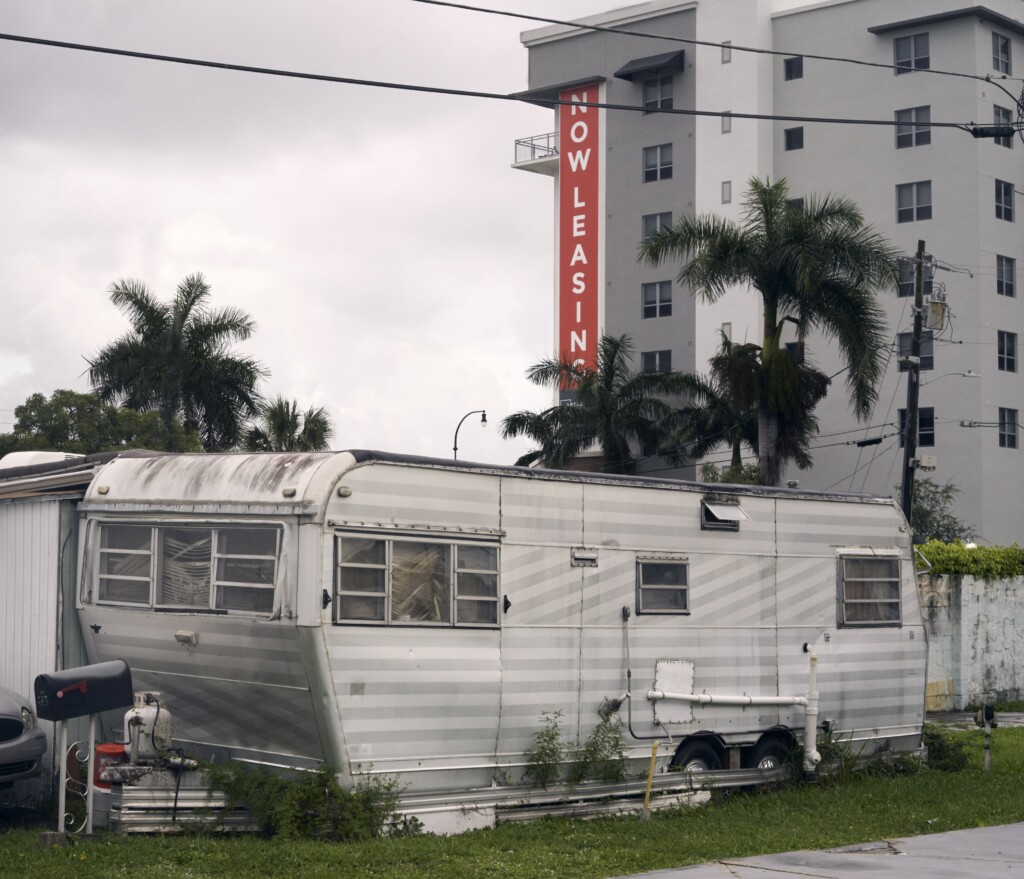
In another, the new building remains to the far right edge, rising up into the sky with a defiance that borders on mockery. The helpless trailers can do nothing but accept this fate, a finality rooted in a dream of Florida that is in open conflict with the grinding truth.
Then, in works that are somber and soulful, Waisman follows the fervid logic of Growth to its deflating conclusion: a scattering of pieces just depict the new environment with the trailer parks completely gone. Another condo project is taking shape, and on the fence surrounding it hangs a festoon of fiction, happy older couples frolicking care-free. The condo being built has no personality, no sense of self, and stands in stark contradiction to the very idiosyncratic decorations of trailers, no two of which are the same.
Waisman explores lines with great precision, finding unique ways to capture how segments can align to produce meaning. For example, in one photograph, the horizontal lines of jalousie windows stand perpendicular to the vertical lines of a metal post and door frame. Both then seem to merge with criss-cross lattice, as a clearly delineated triangle of shade falls across the trailer. The “evidence” here is of the evanescent sort: as South Florida booms, the most vulnerable places must stand in quiet opposition, affirming their own nuance in subtle ways that Waisman’s camera can singularly capture. He has spoken of his photographs as a way of slowing down the gathering decimation of these communities. His work forces us to stop, look, and ponder where exactly the American experiment is headed.

Beyond the geometry is a pulsing humanity that suggests the work of Andres Serrano, whose Residents of New York series from the 1990s conveyed the enduring spirit of Gotham’s unhoused. Waisman’s trailer park dwellers are certainly housed, but in effect his portraits are a kind of memento mori, a moment in time that will not last.
The man holding the cigarette, how long can he make it before the wrecking ball comes for the entire park? And when it’s gone, where will he go? The lattice here serves more like a net that the subject is caught in–that has ensnared all of us. His expression, though, speaks to a consanguinity, a softness that belies the other ravages the man has endured. Here Waisman is playing with juxtaposition again, but this time the viewer must enter this conversation, must hear the man out. There’s no turning away.

And the trailers . . . Waisman has assembled a wide array of examples, using an expansive color palette to capture the distinctive hues of the region. Lime greens, cerulean blues, and cherry reds all speak to the allure of South Beach, yet without the glitterati and glam. Some of the trailers have been lovingly landscaped, while others sit on bare concrete. Some are in pristine condition, and others display repairs that have accreted over time, in clunky layers of rust. Many have their hurricane shutters drawn shut, as if the corrugated metal can’t bear to witness the impending doom.
In addition to the trailers and the people in them, Waisman has added a wrinkle: photographs of ads that ran in newspapers during the 1960s and 70s, all of which extol the virtues of these communities. This is yet another kind of juxtaposition, this one ironically cultural. Waisman rightly views the backstory of trailer parks with a raised eyebrow. Why did so many people work so hard to attract retirees to Florida only to castigate and then obliterate these very communities when they are needed the most? Waisman’s splashes of history are bracing, cold water applied to smug faces. He is suggesting that there used to be a world where lower-income people could live in affordable housing–and a world where Florida led the way in pioneering an alternative to gaudy McMansions. It wasn’t even that long ago, and yet Waisman demands us to answer: what happened?
Waisman isn’t on the prowl for good guys and bad guys. He’s not offering an answer, because artists don’t answer questions, but ask them. And the question is often some variation of Thales: why is there something rather than nothing? What huge forces are shaping the landscape? The key to this collection resides in the title: it’s an “elegy,” visual lament to the dead, the dearly departed cut down by a market-driven mania to maximize profits at the expense of the unfortunate. But Waisman lifts these dead upwards so that we can celebrate the dignity these hardscrabble people display.
Three other essays complete Sunset Colonies. Amy Galpin’s helpful Introduction establishes an academic perspective for assessing Waisman’s collection. Her essay serves as a kind of map that adds context to the photographs that follow. Without Galpin, Waisman’s pieces might come off as a random assortment that could be befuddling.

But what Waisman is doing, very cleverly, is exploring the dynamics of “trailer trash” that has tarnished this community from the beginning. He is exploding this framework by offering a deeply human look at the “trash” whose lives are imperiled by the rampant development that caters to the well-off. The portraits of the residents and their homes speak to the enduring struggle to maintain even as the world seems to be crumbling around them. One image haunts, that of broken sidewalk tile, an apt metaphor for what Waisman has catalogued: the bombardment of a community that will end in permanent exile.
About the Author
Lee Irby's peer-reviewed publications include works of history, fiction, and poetry. His study of "trailer-trash" culture has received numerous awards, and his novel 7,000 Clams (Doubleday, 2005) was named by the Tampa Bay Times as one of the "10 Books Every Floridian Should Read."
]]>
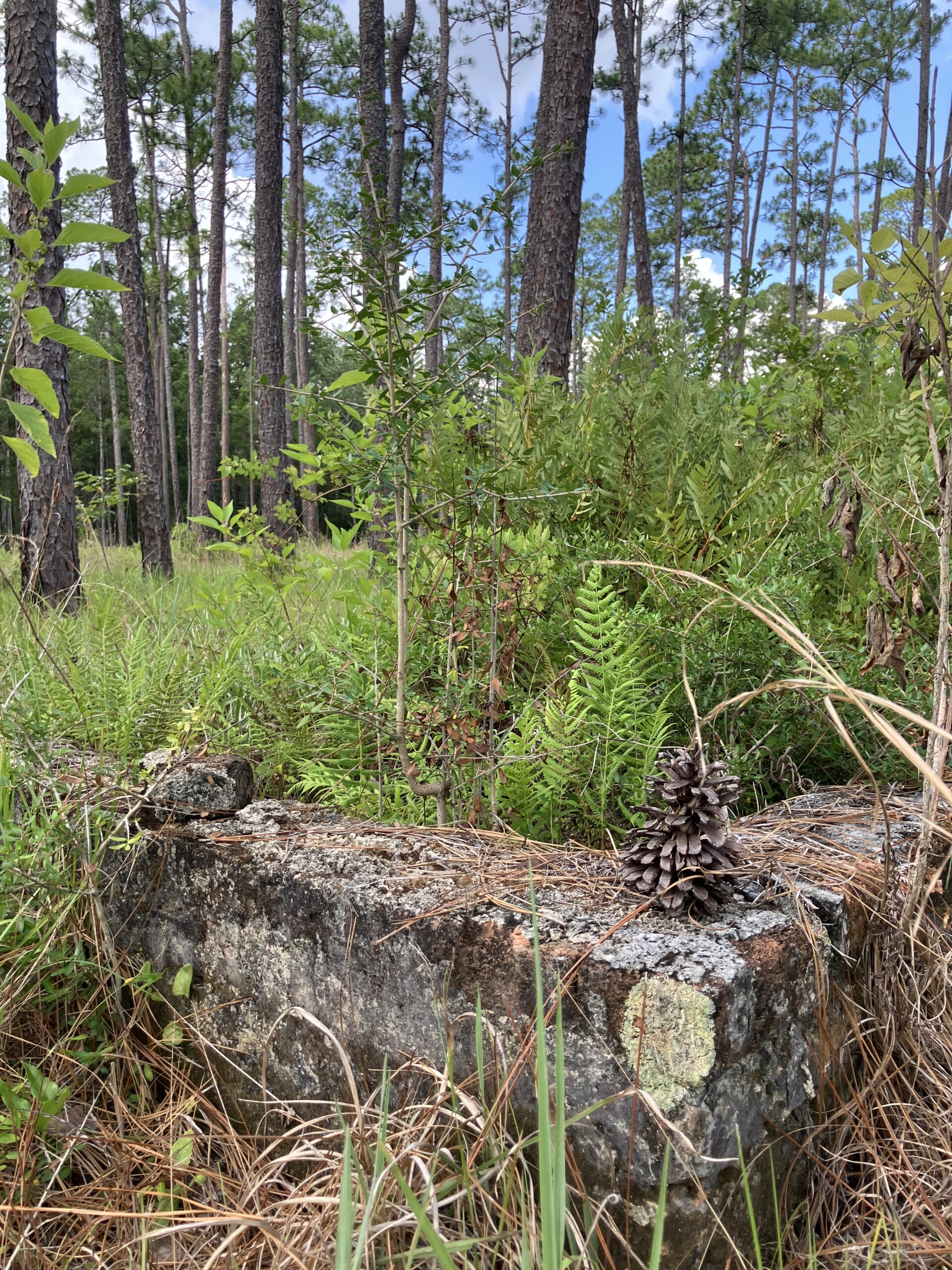
Prospect Bluff is one of the more remote historic sites you may ever visit. Perched upon the banks of Florida's Apalachicola River, the old fort is roughly an hour by car from Tallahassee. To get there, drive due west from the Florida capital, down Highway 20. Hang a left at SR65, south towards the Gulf, passing Dollar General towns like Telogia, Wilma, and Sumatra. Cross endless rows of slash pine, and rare red cockaded woodpecker habitat, then make a right at Gadsden Road. Technically the site is closed. Hurricanes shut down the federally protected landmark in 2023, and a gate blocks the dirt road that leads to the fort, though you can walk the remainder. Bring insect repellant. Any discomfort is rewarded by sylvan beauty and the sheer significance of the place. Here, during the long freedom struggle, self-emancipated Blacks organized as a semi-autonomous society, forging community in the piney woods by a stunning blackwater river, joining the British military in the wake of the combined 1812/Creek War. They met opposition, of course. Anxious to stop the flow of enslaved people from the southern borderland, Andrew Jackson ordered Edmund Pendleton Gaines to attack. In 1816, a hot cannonball struck the magazine, not too far from the Apalachicola, and the wooden fort went down in flames. Many of the survivors died, while others stole back into Florida's swampy frontier.
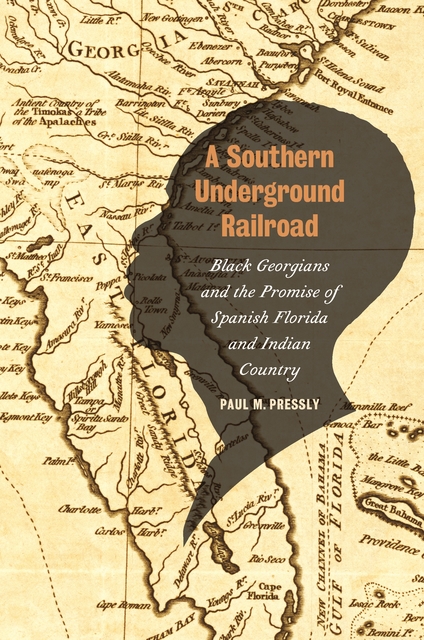
The attack on Prospect Bluff holds center stage in the ninth and final chapter of Paul M. Pressly's impressive study, A Southern Underground Railroad, a heroic effort to recover the nuances of a rich yet impossibly complicated subject — the "southern underground railroad" of eighteenth- and nineteenth-century Florida. Former director of the Ossabaw Island Education Alliance, on coastal Georgia, Pressly understandably starts his study from the Atlantic barrier islands. While Gullah-Geechee people have long been cast as archetypes of preservation, as isolates holding African traditions alive, Pressly emphasizes mobility and freedom, telling a story of routes rather than roots. People of African descent, held captive in Georgia, worked through networks of communication and navigated braided channels of freedom across the St. Mary's River. Pressly teases out stories that largely occurred off-record, against the tangled status of liminal and contested landscape. A Southern Underground Railroad, in short, undertakes an extremely difficult task: to recover the stories of people who left a sparse written archive, from sources kept by those who sought to suppress them, from a milieu that typically falls outside the standard historiographic narrative of the early republic.
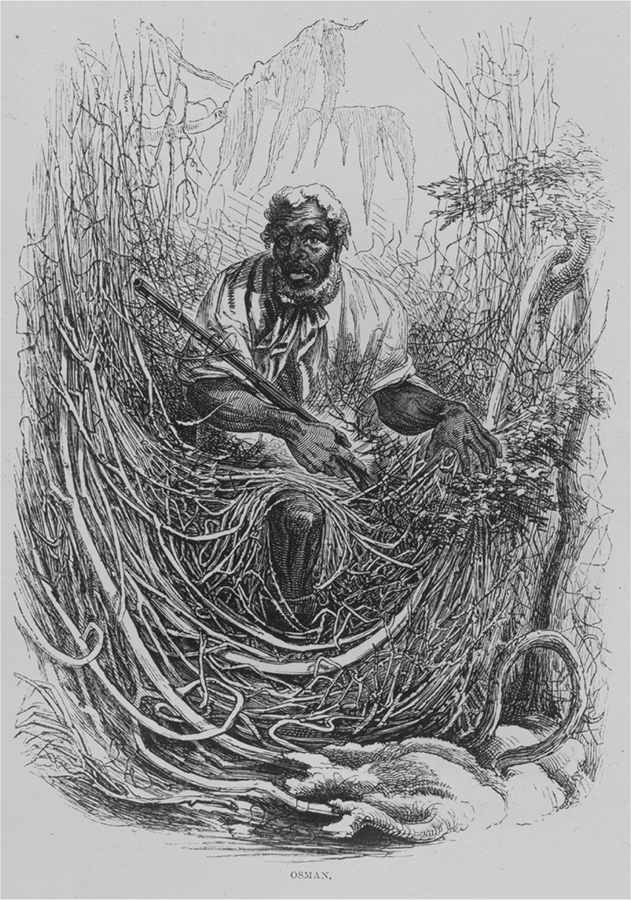
You have to work to get to this place. Whether academically or physically, we must actively recover the centrality of early Black Florida — because we know the stories are out there, even as the history hides in plain sight. All too often, scholars defer to default citation of Jane Landers, Black Society in Spanish Florida (1999), acknowledging past research without pushing the narrative forward. Others might recognize Kenneth W. Porter or Canter Brown, Jr. But the "southern" or "saltwater" underground railroad has never been secret. Joshua Giddings chronicled the Black roots of the Seminole War in his overlooked classic, The Exiles of Florida (1858), while Albery Allson Whitman twinned the two themes in an underappreciated epic, The Rape of Florida (1885). As early as the 1560s, with the founding of St. Augustine, Pedro Menéndez de Avilés would partly justify the invasion la Florida as halting a means to the flight of enslaved Caribbean people here. So why the gaps? Stories of self-emancipated people reach us today from the edges of the historical record, overshadowed by a nationalist narrative in the US, and almost always coming from the documentation left by enslavers and oppressors — not by those who found freedom themselves. These stories must be sought out.
Pressly's exceptionally well researched study works largely from examples. He begins in 1781, with nine individuals on a dock at Ossabaw Island. Led by an expert seaman known as Hercules, the nine freedom-seekers sailed one-hundred miles south to St. Augustine, where they found protection under the British military. Pressly pieces together this story from notices in the Georgia Royal Gazette. By situating a single granular case against broader trends, then alongside corroborating scholarship from elsewhere, Pressly completes a patchwork recovery. The remainder of the book moves chronologically, from the mid-eighteenth century to the Seminole War, when the United States' invasion of a weakened Spanish Florida brought a close to this still-overlooked "underground railroad."
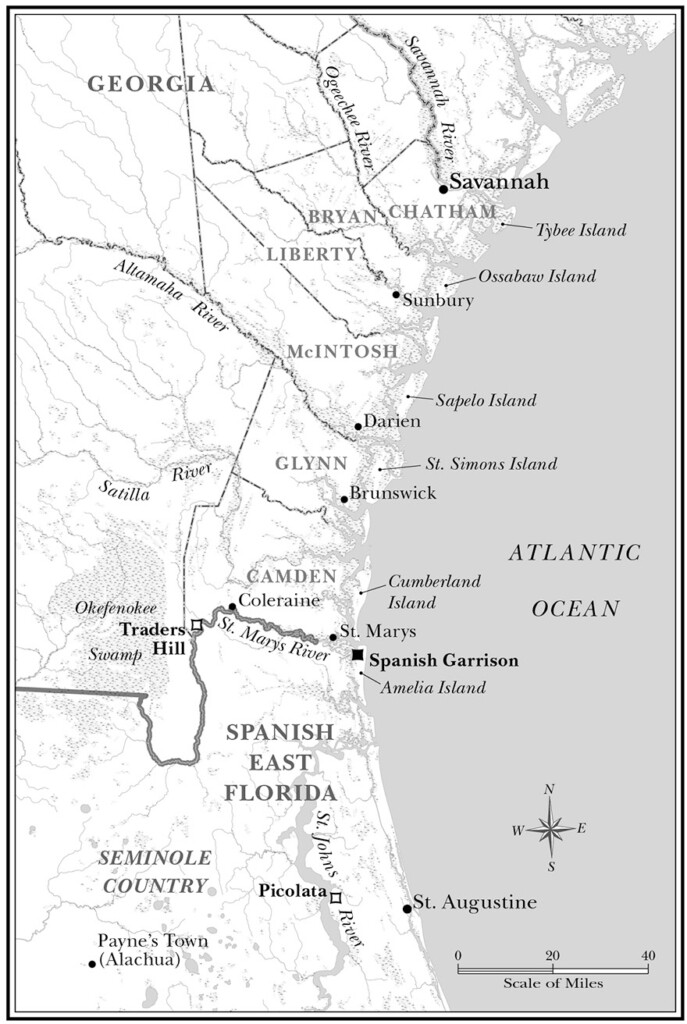
Pressly sets up a tale of two cities, Savannah and St. Augustine, separated by the mazy floodplain of the St. Mary's River. He emphasizes that in negotiating their southern path to freedom, individuals and groups asserted their liberty both apart from white intervention and with full knowledge of broader political movements. "Far from passive individuals," Pressly writes, "they were well aware of the geopolitical landscape, and the enslaved people were ready to seize the moment when the time seemed ripe to make a break for the freedom offered by Spanish Florida to fugitives from British colonies" (12). In chapter two, "The Journeys of Mahomet," Pressly uses the life of an African-born and (presumably) Muslim individual of that name "as a measure of the type of man" (35) who chose maroonage, as well as the "noteworthy presence of women" in a flight that "underscores their determination and courage" (47). Pressly returns to the example of Hercules, who "offers a map for navigating the full spectrum of the landscape for Black people in revolutionary Savannah" (54). Hercules faced any number of options during the Revolutionary conflict, though amidst the disruption, he and other Black fugitives laid the groundwork that would provide freedom for decades to come.
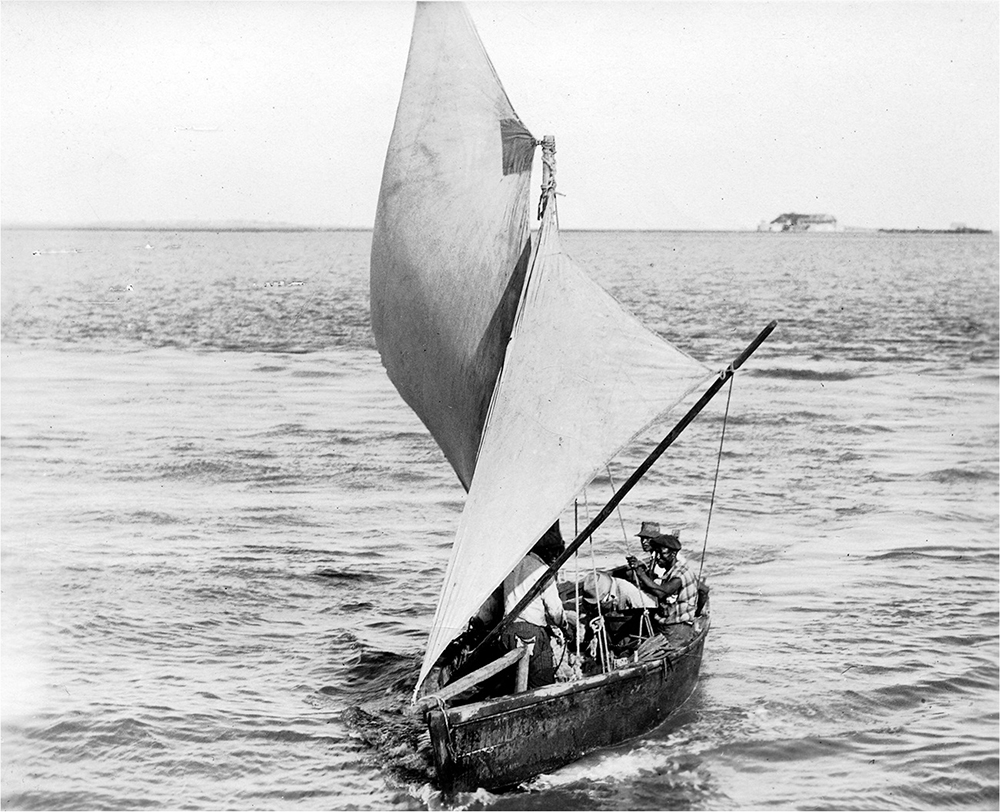
"Entangled Borders" revisits the colonial boundary line of the St. Mary's River during Florida's second Spanish period (1783-1821), when "East Florida and southern Georgia evolved into one large zone of transition," in which "weak central authority" opened the space for "fugitives to find a path forward toward a new life" (76-77). Those escaping bondage often did so in groups, led by a skilled waterman over international boundaries, and the effort required careful planning and fortitude. The Spanish crown had long granted a modicum of rights to free Blacks, and the draw of a more liberated and permeable Florida generated anxiety in what is now the southern United States. Pressly’s chapter, "A Maroon in the Revolutionary South," recounts the "exploits of a man named Titus," whose choices "illuminate several faces of maroonage on the Georgia and Florida coasts and the fluidity of the borders" between them (94). These choices were exceedingly complicated; Titus was a "dancer" (102), having fled Georgia's Ossabaw Island yet remaining close to family and on the fringes of the plantation. His story illustrates a central theme of A Southern Underground Railroad: freedom amidst connection, runaways who were "connected with the realities of the Atlantic world" (111). This should come as no surprise, yet it bears restating: maroonage was complex.
These complexities are visible in the careers of two white men who thrived along the boundaries — John (or Juan) McQueen and William Augustus Bowles. Son of a Charleston merchant, schooled in England, and returning to South Carolina as a sea captain, McQueen swapped sides as economic needs suited him; in 1791, he emigrated to Florida and declared allegiance to Catholic Spain, taking 280 enslaved people with him. An even more bizarre episode involved William Augustus Bowles, a Loyalist who schemed to establish an Indian-British State of Muskogee. The conditions for boundary crossing lead Pressly to one of the more vexing problems of the book, the status of free Blacks among Native people.
In these intercultural cases especially, readers of a certain age may find in Pressly's monograph a southern version of Richard White's Middle Ground (1991). As with White's Ohio Valley, new and provisional identities were forged on an unstable borderland, where no single imperial power held control; on a still-contested frontier, individuals acted upon surprising possibility — then, in the decades after the War of 1812, the middle ground closed. A Southern Underground Railroad draws out the impossibly complicated intersections between chattel slavery and Native American life. After the Revolution, Creek conceptions of slavery shifted from kinship to commodification. Who, then, was a war captive and who was a slave? When Native people attacked a plantation, on which side would captive Blacks fight? Responses varied. Many Black Georgians "were horrified at the thought" of entering "a new form of slavery" among the Creeks (139); yet where most "Black people resisted capture," others "saw the arrival of warriors as an opportunity to break out of their oppressive condition" (140, 141). This historical landscape defies pat explanations. Drawing from an archive that is decidedly committed to perpetrators, Pressly unpacks stories still "wrapped in mystery" (145), reconstructing negotiations that escaped not only "the most determined [white] planters" (149), but no doubt the historian himself! An achievement of this book is threading a coherent narrative from this documentary labyrinth.
Pressly turns the study further south, to Florida, where Black Georgians saw "their best hope for securing freedom" among Seminole "migrants who trickled in from different spaces and for different reasons" (156). In defining the relationship between Black and Native life, Pressly must concede to an historiographic aporia: the impossibility of generalizing any one kind of relation, particularly from documentary evidence left mostly by whites. Would people of African descent on the Florida frontier be classified as freedom seekers, Black Seminoles, or as maroons? Scholars have "puzzled over" what terms to use (158), and the years from 1803 to 1812 especially, defined by a "diversity of conditions," must be understood with a "delicate balance" (175).
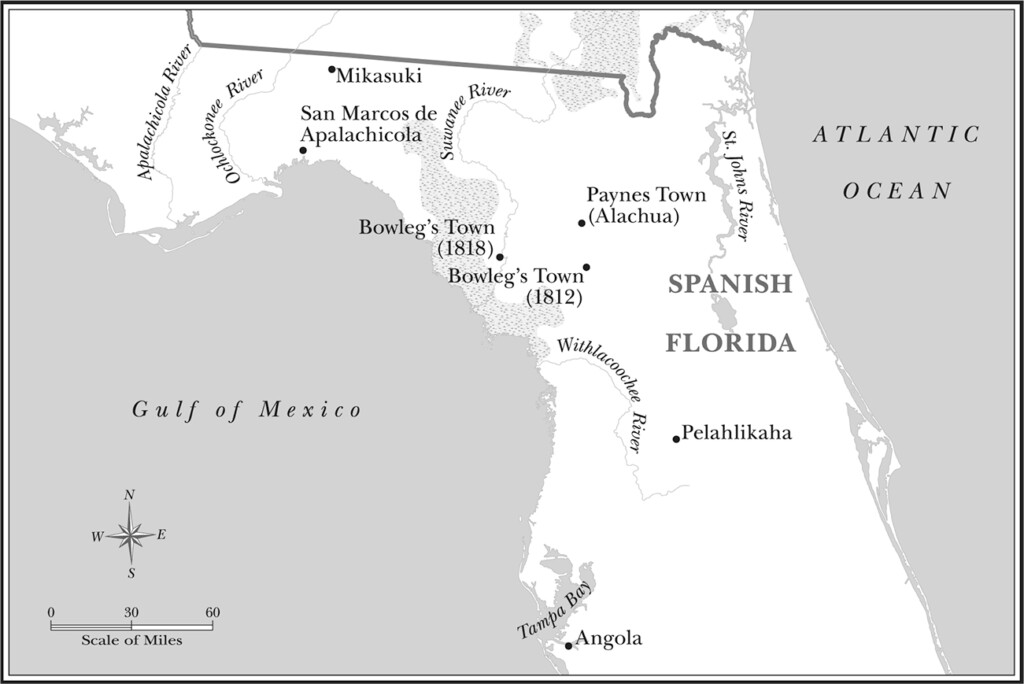
This "distinctly unsettled moment" (180) comes to a close with the US war against the Seminoles, the conflict that brings Pressly to Prospect Bluff. The book’s final chapter reviews the beginnings of this four-decade conflict (roughly, 1812 to 1858). Among the many stories, Pressly traces the fate of freedom seekers (or Black Seminoles, or maroons — any one term is not fully correct) from the Florida Panhandle, to encampments along the Suwannee River, to the "Angola" colony along Tampa Bay. Pressly’s brief Conclusion traces the closing of this southern middle ground, noting that while "the taming of a troublesome borderland for white Southerners was far from complete," the "outcome [was] no longer in doubt." (205). This four-page ending to a such a remarkably detailed study signals something of a disappointment. A Southern Underground Railroad collects case studies, rarely diving into methodology in any overt way, and as the book's short closing note reveals, Pressly rarely points to methodological concerns.
Coming at it from the perspective of a literary critic, and not a historian, I found this book about sandy Florida to be a bit theory-poor. The Conclusion belies that weakness. Keeping within an entrenched narrative, Pressly explains how the Southeast "offers a vital link" between Black Emancipation and the American Revolution. The story of Black Floridians "marks the passing of the torch of liberty from the generation of the Revolution to those who belonged to the era of the Underground Railroad, a grand connecting arc that stretches over a forty-year period" (208).
But I would have liked a stronger takeaway. The default to a national narrative feels unsatisfying precisely because conventional methodologies and storylines fail to cohere. The first problem is evidentiary. How does one reconstruct events from escaped people, while relying upon documents by their captors? What other source materials can one consider — oral traditions, art, non-sequential histories? Or, if the documentary record leaves the historian bereft, why not lean into speculation? Pressly's more satisfying moments are when he settles on "puzzling." And lastly, where does a study such as this one lead us today? Following a far more visible trail of print sources, historians of slavery rightly trace a storyline from national liberty to a literature of social reform to Emancipation. But as Langston Hughes wrote, in different context: "I wonder if it's that simple." When, in the United States, will we let the margins define the center? As we remain a nation prone to sliding backwards, where past gains have proven to be far from definitive, would it not be far more effective to take the half-steps, ambiguities, and blended allegiances as normative? These are, as Pressly documents, far more difficult pockets of ambiguity to unpack. They exist off the usual tourist map. They take us down county routes and dirt roads, not to well-marked interstate exits. The many stories of Black Floridians during this period remain to be written. It will take continued efforts, such as A Southern Underground Railroad, to draw them out.
About the Author
Thomas Hallock received his PhD from New York University. He is the author of From the Fallen Tree: Frontier Narratives, Environmental Politics and the Roots of a National Pastoral, 1749–1826 (Chapel Hill: University of North Carolina Press, 2003) and the co-editor of Early Modern Ecostudies: From the Florentine Codex to Shakespeare (New York: Palgrave Macmilian, 2008), William Bartram, the Search for Nature's Design: Selected Art, Letters and Unpublished Manuscripts (Athens: University of Georgia Press, 2010), and Travels on the St. Johns River: John and William Bartram (Gainesville: University of Florida Press, 2016). He recently published a series of travel and place-based essays that explain why he loves teaching the American literature survey, A Road Course in Early American Literature: Travel and Teaching from Atzlán to Amherst (Tuscaloosa: University of Alabama Press, 2022). In 2023, Southern Spaces published Hallock's multi-media article, "Draining Paradise: A Tour of Salt Creek in St. Petersburg, Florida."
]]>
Introduction
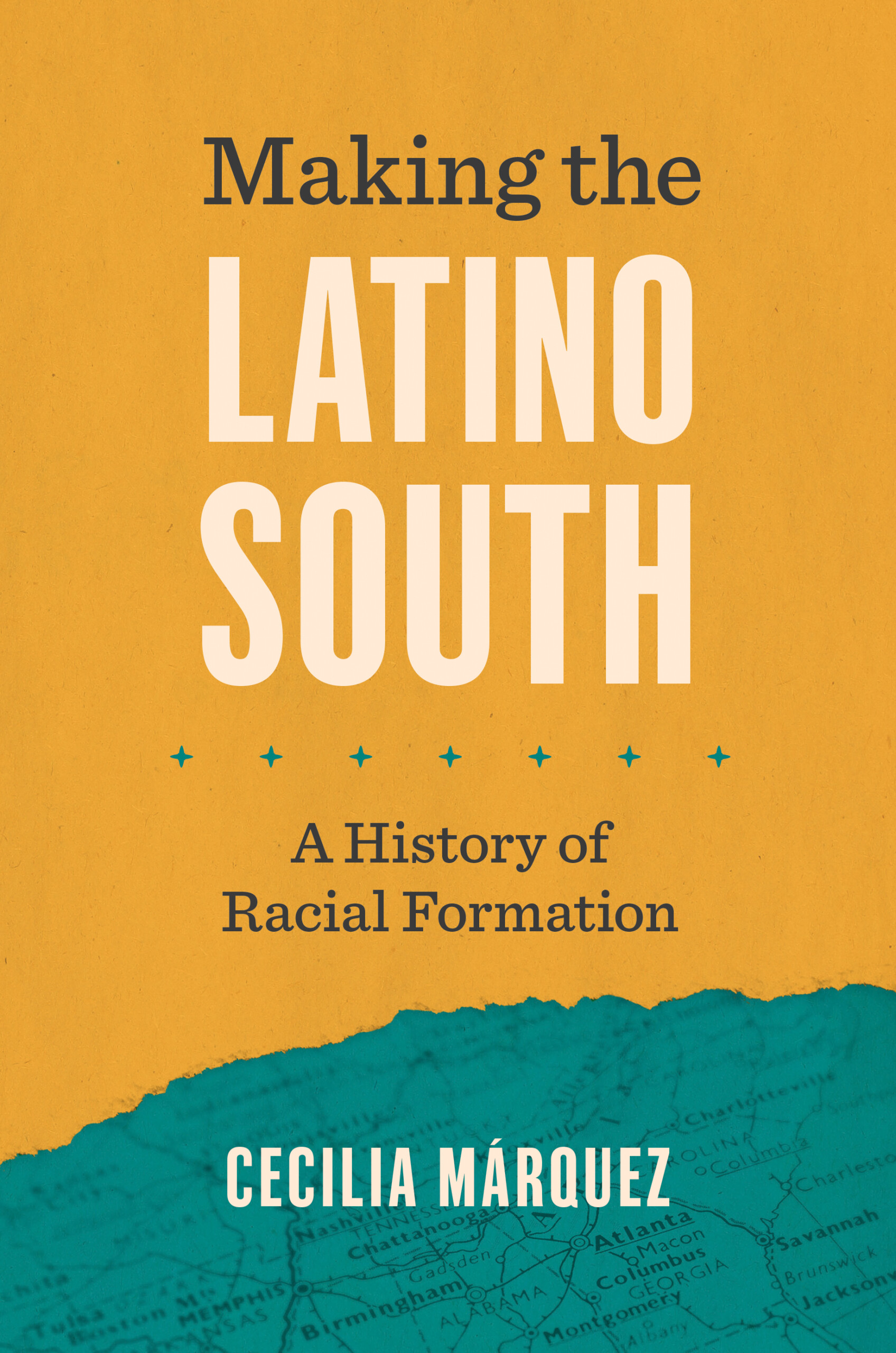
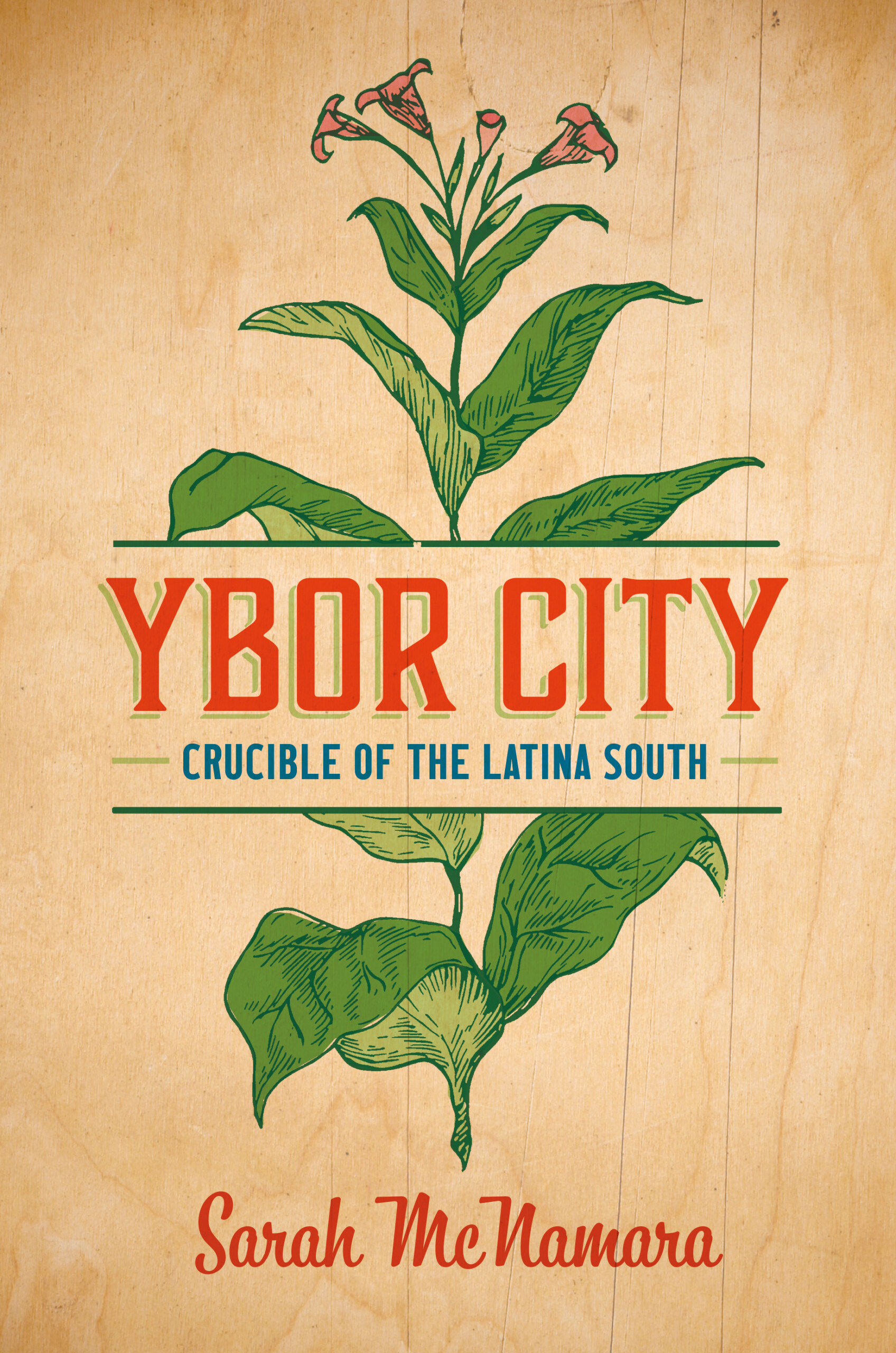
In 2003, Raymond Mohl’s description of the “latinization” of the late twentieth century US South (the “Nuevo New South”) helped set the stage for an expanding body of cross-disciplinary research on Latinx migration, settlement, and everyday experiences.1Raymond Mohl, “Globalization, Latinization, and the Nuevo New South,” Journal of American Ethnic History 22, no. 4 (2003): 31–66. While scholarly writing such as Mohl’s documenting this demographic shift offered important insights into the labor and settlement experiences of migrants, there was often little work done to use the geographical imaginary of a “Nuevo South” critically. Rather, as historian Perla Guerrero would later write: “in many instances the term ‘Nuevo South’ is used as if it were self-explanatory, or, in some of the more egregious cases, the word ‘nuevo’ is used simply in an exoticizing manner—Latinas/os are moving to the South and they speak Spanish, so we can now refer to the South as the ‘Nuevo South.’”2Perla Guerrero, Nuevo South: Latinas/os, Asians, and the Remaking of Place (Austin: University of Texas Press, 2017), 8. Guerrero makes a compelling argument for the use of “Nuevo South” as an important political economy and historical framework for understanding racial formations. As the field has continued to grow, however, new works are bringing a critical and longer historical perspective to southern Latinx populations, communities, and experiences. This includes two recent books by historians Cecilia Márquez—Making the Latino South: A History of Racial Formation (2023)—and Sarah McNamara—Ybor City: Crucible of the Latina South (2023).
Importantly, the idea of “southern” Latinx history being a new phenomenon is not a driving force in either book. Rather, these works contribute a longer understanding of the Latinx migrations to/through US southern spaces that have contributed to shaping racial hierarchies, labor landscapes, and diverse migrant communities. As two books concerned with individual and collective experiences within a shifting racial hierarchy, Making the Latino South and Ybor City significantly historicize and spatialize Latinx presence in the US South prior to the late twentieth century. Together, Márquez and McNamara call on readers to reject a monolithic definition of latinidad, specifically by paying attention to histories and politics of ethnicity, race, gender, labor, geography, and generational cohorts.
Shifting Racial Hierarchies
In Making the Latino South, Márquez places Latinos at the center of a history that lays bare the ways in which anti-blackness and white supremacy have shaped questions about culture, education, identity, and labor as experienced by Latinos living and working in various locations across the US South. “The history of Latino people offers a new and complex way of understanding the history of race in the South,” writes Márquez. “It is not a monolithic past, and it is one that refuses simple narratives about race.”3Cecilia Márquez, Making the Latino South: A History of Racial Formation (University of North Carolina Press, 2023), 17. Between the 1940s through early 2000s, Márquez places questions about Latino racialization at the center of historical investigations into matters of culture, education, identity, and labor. Across five chapters that illuminate localized Latino histories in Alabama, DC, Georgia, Mississippi, North Carolina, and South Carolina, Márquez shows how the racial position of Latinos shifted at the turn of the century. At the center of Making the Latino South is the necessary understanding that “Latino” functions as a constructed category shaped by spatial histories and understandings of race, all of which impact Black and non-Black Latinos in distinct manners.
Marquez’s first three chapters demonstrate how some Latinos benefited from a “provisional whiteness” as they attended white schools, used white facilities, and enjoyed greater overall mobility in the Jim Crow era. She begins in Washington, DC, with Karla Galarza and her family. Galarza’s experiences in seeking education within the city’s segregated school system highlight how “non-Black Latino people were understood through a mosaic of racial categorizations,” with varying characteristics (i.e. skin color, language usage, citizenship status) used to demarcate Latinos’ “proximity or distance from Blackness.”4Márquez, 21.
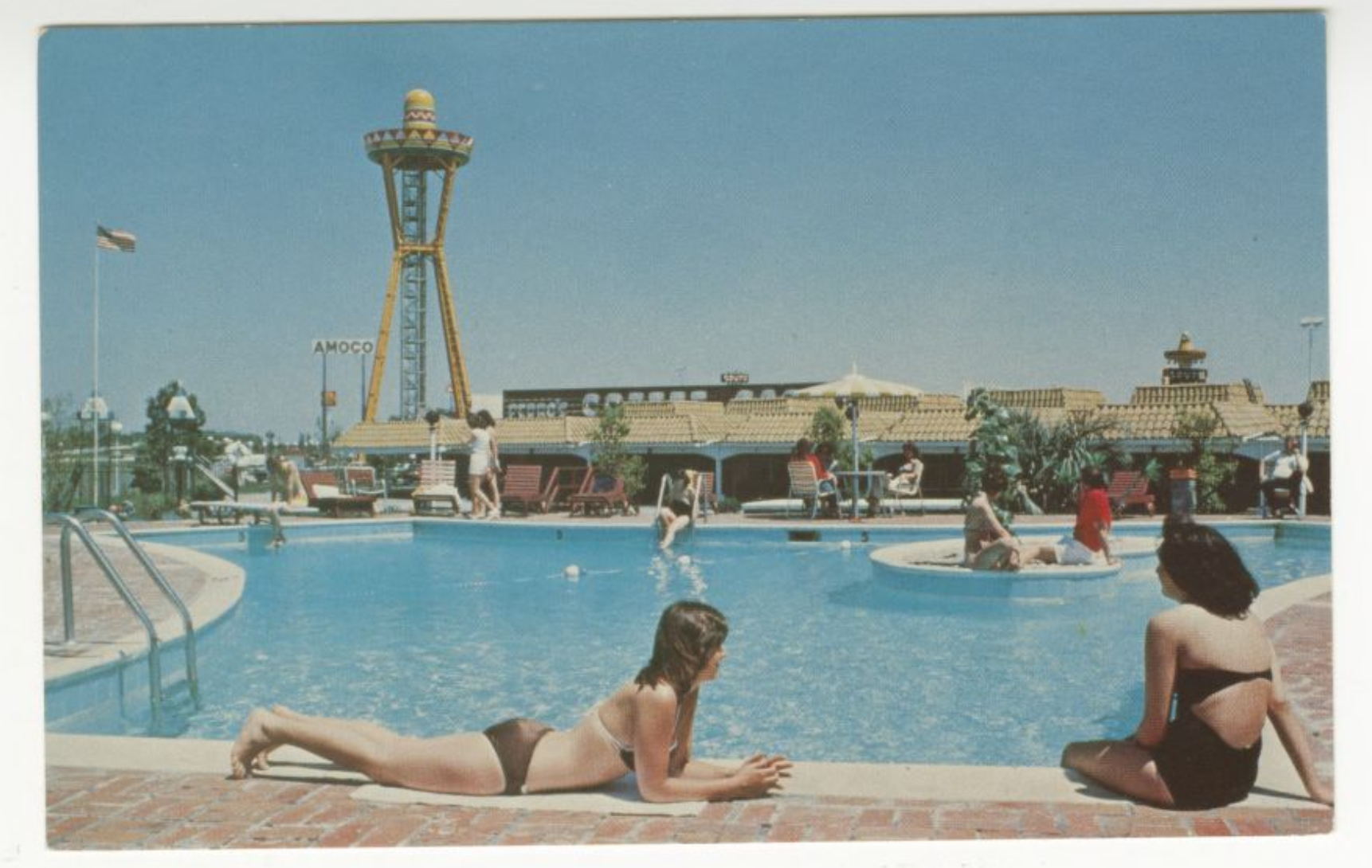
Next, Marquez moves from individual Latino experiences to the ways white southerners imagined and used “Latinoness” to negotiate their anxieties over a shifting racial landscape amid growing civil rights activism. In telling of the infamous South of the Border roadside attraction in South Carolina, Márquez shows how the tourist destination’s racialized figure—or, rather, mascot—“Pedro” illuminated white imaginations about racial hierarchies that increasingly included Latinos. Even with the absence of Latinos in upcountry South Carolina between 1945 to 1965, a “fantasized mexicanness” proved fruitful for a business class that sought to give an escape to white consumers seeking to “revel in the pleasures of racial subjugation.”5Márquez, 16.
The third chapter of Making the Latino South delves into the Civil Rights Movement, as Márquez excavates the experiences of Latino activists who traveled to the South to work with the Student Nonviolent Coordinating Committee. Between 1960 through 1970, non-Black Latino activists Elizabeth “Betita” Mártinez, Maria Varela, and Luis Zapata lent their support to the movement. As first-time travelers to/through this section of the US, these Latino activists encountered Jim Crow in ways that illuminated their proximity to whiteness. It was, in other words, their “Latinidad” and “non-Blackness” that shaped their experiences with SNCC, including the expulsion of non-Black members in 1966. “The expulsion,” Márquez explains, “recast in light of the history of Latino people in the South, highlights the regional nature of SNCC’s racial vision.” Both white and Black southerners’ understanding of Latino racialization, however, would shift as the 1970s and 1980s saw an increase in migration of working-class, undocumented, darker-skinned Latinos.
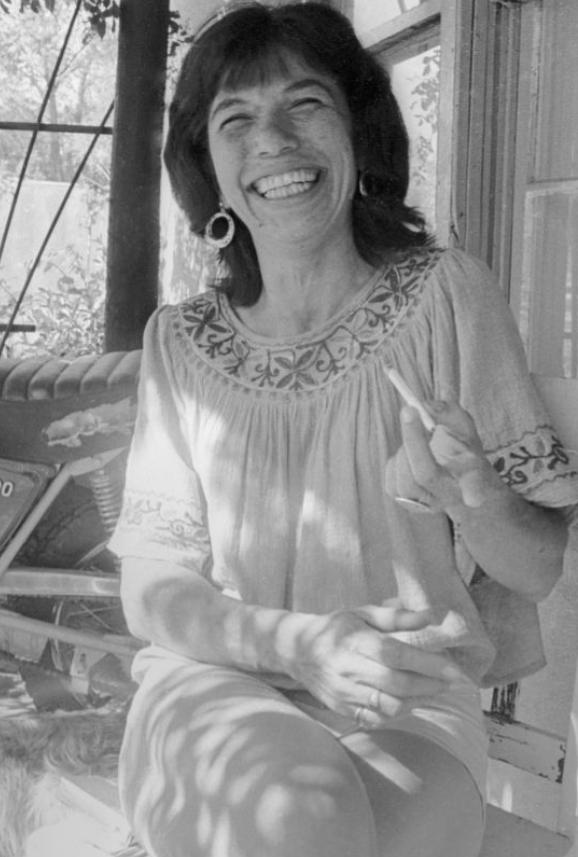
Márquez captures the shift that occurred in the late twentieth century as a larger non-white Latino population settled into southern destinations and were racialized both favorably and negatively as “hardworking” and “illegal.” A pivotal point arrives in the 1980s when Latino racialization shifted from a provisional whiteness to a distinct marginalized group that, on the surface, received a warm welcome. Márquez brings important attention to Dalton, Georgia, an industry town known for carpet manufacturing and for its seemingly positive embrace of Mexican arrivals. Here, industry leaders and other local actors cast Latinos as “hardworking,” which allowed white elites to “participate in what they saw as racially progressive ideology” while maintaining an exploitable laboring class.6Márquez, 149. The celebration, and exploitation, of the “hardworking” Latino narrative gave way to a new racial script after 9/11. Márquez traces how anti-immigrant sentiments that began in the 1990s contributed to the casting of Latinos as “illegal” by the early 2000s. While Latino remained a racially diverse category that included Black and non-Black people, “citizenship, race, class, color, and other identities continued to structure how Latino people” were racialized and marginalized.7Márquez, 180.
Racial categorization shifted between the 1940s through 2000s for Latinos, and Márquez reminds us that, “What is shared across the broad time period is a racialization defined, in large part, by Blackness. It is anti-Blackness and white supremacy that have defined the contours of Latinidad in the South.”8Márquez, 184. This is a critical insight that, as the author notes, opens more questions than it offers answers on the experiences of Black Latinos. There is much more work to do in recording and understanding aspects of living and working in southern spaces for Black Latinos. Falling outside the scope of Marquez’s particular project, Making the Latino South also does not contend with the question of indigeneity as it relates to the population and the (re)shaping of racial hierarchies. The book’s strengths lie in its centering of Blackness, an emphasis that will continue to shape the field’s attention to race as it relates to a diverse Latino population.
While Márquez draws readers’ attention to the role that gender plays in shaping Latino experiences, it is not central to her book. For that, we can look to Sarah McNamara’s recent work that not only highlights gender in this southern history, but rather makes it a central framework for understanding community making processes in an unequivocal Latino borderland—Tampa, Florida’s Ybor City.
Gender, Labor, & Generational Politics
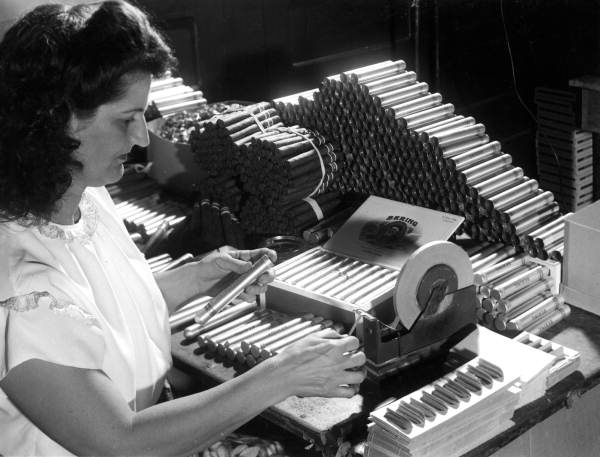
McNamara’s Ybor City: Crucible of the Latina South offers an exciting multi-scale history told from a local vantage point that attends to the realities of diasporic life in a southern “transnational, multi-racial borderland” that was shaped, in large part, by Latinas who worked and organized around the cigar industry. Women, she argues, shaped the trajectory of the Latina/o community and the subsequent ways it would be celebrated and remembered well after the cigar companies and families moved out of Ybor City. Across four chapters that examine three generations of Latinas/os “who struggled, worked, and dreamed in Ybor City and Tampa, Florida,” Sarah McNamara introduces individuals and families who built the first sustained Latina/o community in Florida.9Sarah McNamara, Ybor City: Crucible of the Latina South (Chapel Hill: University of North Carolina Press, 2023), 10.
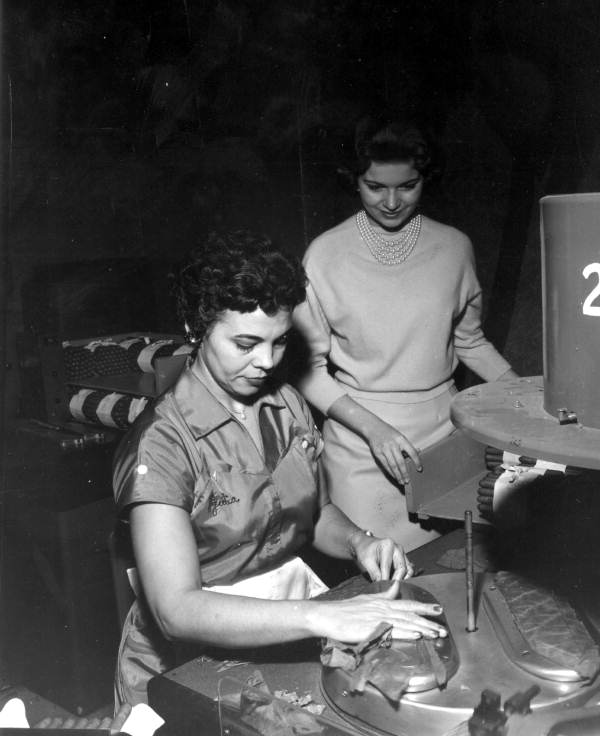
Ybor City begins by attending to the ways that categories of gender and race intersected with Latina and Latino labor, politics, and understandings of community and nation. McNamara situates Tampa as a “an international borderland where people and ideas competed for authority” over the meaning of space and place since the sixteenth century. It was not until the 1880s that Tampa, or the neighborhood of Ybor City, became a truly transnational city with the increased arrival of Latina/o laborers, who were primarily Cuban. Examining these early years of placemaking, McNamara unravels the everyday experiences and relationships that animated the establishment of a Latina/o city and shows how the “cigar factory floor was [both] a refuge and a revolutionary space.”10McNamara, 29.
Next, McNamara takes up the leftist, anti-fascist, and transnational revolutionary politics of Latinas who worked and organized within the cigar industry and their communities in the early twentieth century. She expertly weaves renowned labor organizer Luisa Moreno’s work in Florida with the experiences of Latinas who worked and lived in Ybor City, showing how “the women [that Moreno] organized influenced her even more than she influenced them.”11McNamara, 61. Latinas’ fights for labor and human rights, as well as complex questions about ethnic and racial identities, in Ybor City highlighted the struggle of organizing in a place “where one’s sense of self was fluid and in constant negotiation with anti-radical and anti-immigrant powers within the US South and politically leftist ideologies” that animated Latina/o transnational networks of solidarity.12McNamara, 82. Leftist struggles, however, would come increasingly under question as the late 1930s saw the rise of anti-radical sentiments and politics.
Alongside critical attention to gender and the ways it shaped laboring, organizing, and community spaces for Latinas in Ybor City, McNamara points readers to another important social positionality that shaped people’s politics—generational cohorts. She depicts the shift from a leftist radical laboring Latina/o population, to one that “fought to survive in a shifting world where public perception mattered.”13McNamara, 106.While capturing the varying ways Black and white Cubans navigated social, cultural, and educational institutions during the Jim Crow era, McNamara also shows how “Cuban” became a category deemed undesirable (often cast as a group of un-American “foreign subversives”) within Tampa’s Anglo population. US-born Latinas/os who witnessed the marginalization of their elders developed their own practices to demonstrate patriotism (or Americanness), which included Latinos enlisting in the army and Latinas engaging in volunteer and community advocacy work. In the shifting labor and racial landscape of the 1940s, Latinas continued to advocate for themselves, their families and community members “in Anglo-controlled spaces by laying claims to their right…to belong.”14McNamara, 137.
As the war ended and young Latinas/os returned to everyday life, many saw their futures as lying outside of Ybor City’s cigar industry. McNamara follows the ways in which Latinas/os with roots in Ybor City navigated questions about memory, community, and belonging. She argues that the process of “remaking” the community in the postwar era necessitated obscuring the “radical leftist past” of Ybor City, to make way for a “moderate, yet progressive, present” that Latinas/os could use to enter mainstream politics.15McNamara, 140. Delving into three distinct political moments between 1948 through 1970 (the Henry Wallace campaign; the Cuban Revolution; urban renewal), McNamara highlights Latinas’ presence—and, at times, absence—in shaping local political mobilizations and responses to deindustrialization and urban renewal. She shows how, more than just a capital for cigar manufacturing, Ybor City was a place made, and remade, by distinct generations of Latinas/os who had varying approaches to negotiating issues of race, ethnicity, gender, and labor, all of which informed the ways the community would be remembered for years to come, whether through local museums or at family dinner tables.
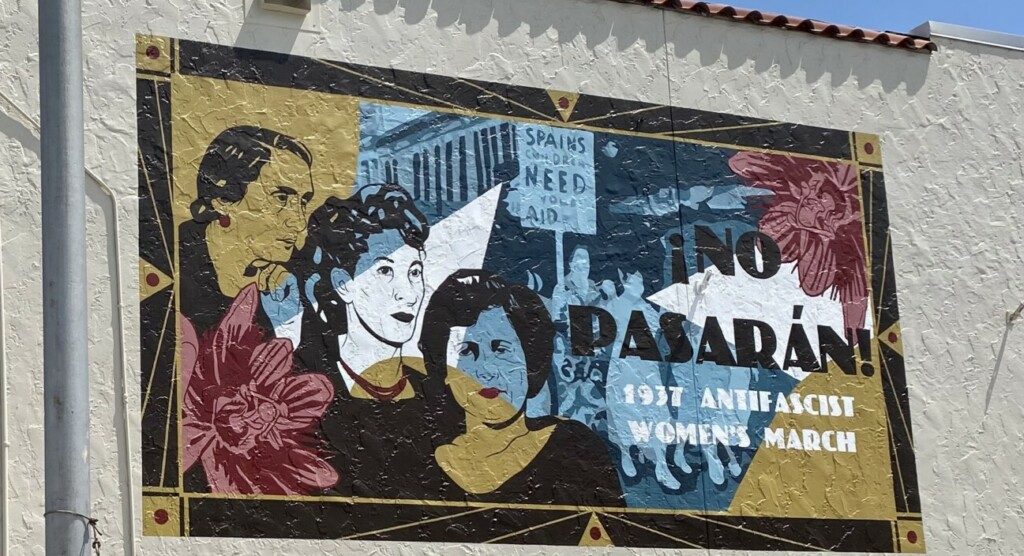
With her multi-generational analysis that shows change over time through the experiences of those whose lives intersected with and/or shaped Tampa and Ybor City, McNamara asks readers to “rethink what it means to be of Cuban descent, live in Florida, survive in the South, and advocate for visibility and representation within the United States."16McNamara, 13. Like Márquez, she is attentive to the racial diversity of the population, writing that “U.S.-born Latinas and Latinos disavowed radical, leftist politics and defined themselves against Blackness to transform their image from foreign subversives to acceptable U.S. citizens.” She continues by noting that this resulted in a “the creation of a new ethnic, non-Black identity as well as proximity to Anglo society and the gain of political power.”17McNamara, 10. There is some attention to the specific experiences of Afro-Cubans throughout the book, especially as related to the organization of mutual aid societies in the early decades of the twentieth century.
It is McNamara’s specificity that makes Ybor City a key contribution to the postwar, place-based histories of Latinas/os living and working in the various regions of the South. “Too often,” she writes, “Ybor City, and even Florida, is seen as an exception – a place where latinidad is everywhere and has always existed and is therefore unnecessary for inclusion in broader and more expansive understandings of Latinas/os within the South and the nation.”18McNamara, 15. By examining this “exception,” Sarah McNamara offers a hemispheric history that informs how Latinas/o lived experiences are shaped by time and place. Another important dimension of Ybor City is its serious consideration of the individual and familial histories. As more Latinx scholars who are born and/or raised in southern spaces record our own histories, McNamara’s book will serve as a model for how to balance individual, familial, and communal histories with attention to (trans)national historical processes.
When and Where You Are Latinx Matters

With attention to matters of ethnicity, race, migration, transnationalism, class, labor, gender, and generational cohorts, Cecilia Márquez and Sarah McNamara offer us important critical readings. Making the Latino South and Ybor City highlight the intersections of race, gender, and place, constructed categories that have historically informed hierarchies of desirability and belonging. They show the diversity of identities and experiences that shaped Latina/o life between the late nineteenth through early twenty-first centuries.
These scholars also raise important questions about scale. Márquez’s book is less a history of specific Latino communities and more a story of how this diverse group came to be described, or rather racialized, as “Latino.”19Márquez, 4. Geography and racial hierarchies are at the center of her investigations into racialization processes in Alabama, DC, Georgia, and the Carolinas. On the other hand, McNamara begins with her familial roots in Ybor City’s radical Latina history, and extends her analysis to encompass Ybor City as a node within a borderlands where the Caribbean and US South meet and shape each other. These books model balancing of the multitude of voices of everyday Latinx historical actors.
Márquez and McNamara held a roundtable discussion at the 2023 Southern Historical Association meeting in Charlotte about the shifting terrain of Latinx history. Márquez made a key aspect of Latinx history clear: “when and where you are Latino matters.” Later in the same session McNamara added that, along with generational cohorts, “migration patterns matter.” With the various Latinx migrations to/through southern spaces since the late nineteenth at top of mind, the discussion highlighted the nuances of writing Latinx history from a southern vantage point. The conversation illuminated Chicana historian Vicki Ruiz’s argument that “region is intricately tied to Latina identity.” With attention to geographic and temporal specificities, Márquez’s Making the Latino South and McNamara’s Ybor City each demonstrate how Latina/o/x individuals, families, and communities navigated, understood, and claimed southern spaces over time. With their critical attention to the importance of regional racial formations, histories of racial capitalism, and the varied dimensions (racialized, gendered, generational) of Latinx identities and community formations, Márquez and McNamara have each made contributions that enrich more than two decades of scholarship.
About the Author
Iliana Yamileth Rodriguez (“Yami”) is a historian of US Latinx communities. With a research emphasis on the US South, Rodriguez’s scholarship examines Latinx experiences in relation to culture, race, ethnicity, labor, and migration. Her current book project, “Mexican Atlanta: Migrant Place-Making in the Latinx South,” traces the history of Metro Atlanta’s ethnic Mexican community formation and broader Latinx connections beginning in the mid-twentieth century.
Cover Image Attribution
"A bit of Old Spain as seen at Ybor City, Tampa, Florida," ca. 1930–1945. Postcard. Courtesy of the Tichnor Brothers Postcard Collection, Boston Public Library.
]]>Introduction
One night in the spring of 2006, I found myself on the edges of Richmond, Virginia’s Shockoe Bottom neighborhood with a group of reluctant adolescents from my church youth group, Holga camera in hand. Prone to light leaks thanks to its plastic body, the Holga was a toy camera that allowed me to shift from 35mm to medium format 120mm film. What I liked most about the Holga was its less-than-automatic approach to winding through the frames. With a half turn, one could capture images on top of each other, creating a visual palimpsest of moody, blurred, and imperfect scenes. Walking along the James River, I could see ripples of water over my right shoulder while sounds of cars racing along the highway crept into my left ear.

Our local historian tour guide took us down the river path while detailing the experiences of the enslaved. She spoke about how they emerged from the hull of the ship in complete darkness, after months at sea, disoriented, terrified, and unable to communicate with their captors and, in some cases, with each other. She asked us to close our eyes and imagine what it would be like to stand there, chains rubbing away at our wrists and ankles, as we were dragged along towards an unfathomable fate. The next week I developed the film in the dark room at school. My favorite image, which I submitted to workshop that week, was a shot of my tour guide, looking off into the distance, the nearly barren branches of trees etched uncannily across her face. Her body and the natural world merged into one.
How do you represent the horrific legacy of slavery without the bodies of the enslaved? Historically, abolitionist writers and editors built their political critiques on these vulnerable bodies. This manifested as a hyper-focus on the enslaved body as a site/sight of physical domination under the various machinations of white terror. This representation of Black pain, suffering, and duress proliferated with the spread of photography. From the images of lynched bodies in the post-emancipation era, to the photos of civil rights activists being beaten by police in the 1960s, to our contemporary moment of hyper-surveillance and police brutality, US society can view Black suffering’s ever-mounting evidence.
Photographer and visual artist Dawoud Bey explores the history of slavery through landscape photography in his exhibition Elegy which I visited in January 2024 at the Virginia Museum of Fine Arts. Elegy features three photographic collections and two short films that address the legacy of chattel slavery across landscapes in Virginia, Louisiana, and Ohio.
Born in 1953 in Queens, New York, Dawoud Bey, ever drawn to sound, aspired to be a musician before he became a photographer. Bey received his BFA in Photography from Empire State College in 1990, but his career began in New York in the 1970s where he developed a distinct street style featuring predominately Black subjects in everyday life. Influenced by James Van Der Zee and Roy DeCarava, Bey spent much of his career photographing Black faces. Looking through images from collections such as Harlem USA, Class Pictures, or The Birmingham Project, it feels as if you are inundated by the unrelenting gaze of Bey’s subjects staring directly into the camera. Such a dynamic inverts expectations; the subjects are looking at us, into or through us, with as much intention and discernment as we direct towards them.
Compared to his previous work, the large-scale landscape photography featured in Elegy asks viewers to see, and hear, the haunting presence of slavery projected against the landscape without the anchoring presence of Black bodies or Black faces. Bey’s most recent work allows us to recontextualize nature photography by eschewing the innocence of the pastoral scene in order to understand how the bodies of the enslaved, fugitive in their varying trajectories, maintained complicated relationships with nature on American soil. Elegy also contends with the legacies of slavery in the landscape when historical revisionism and erasure has paved over the evidence.
“Stony the Road We Trod” & “350,000”
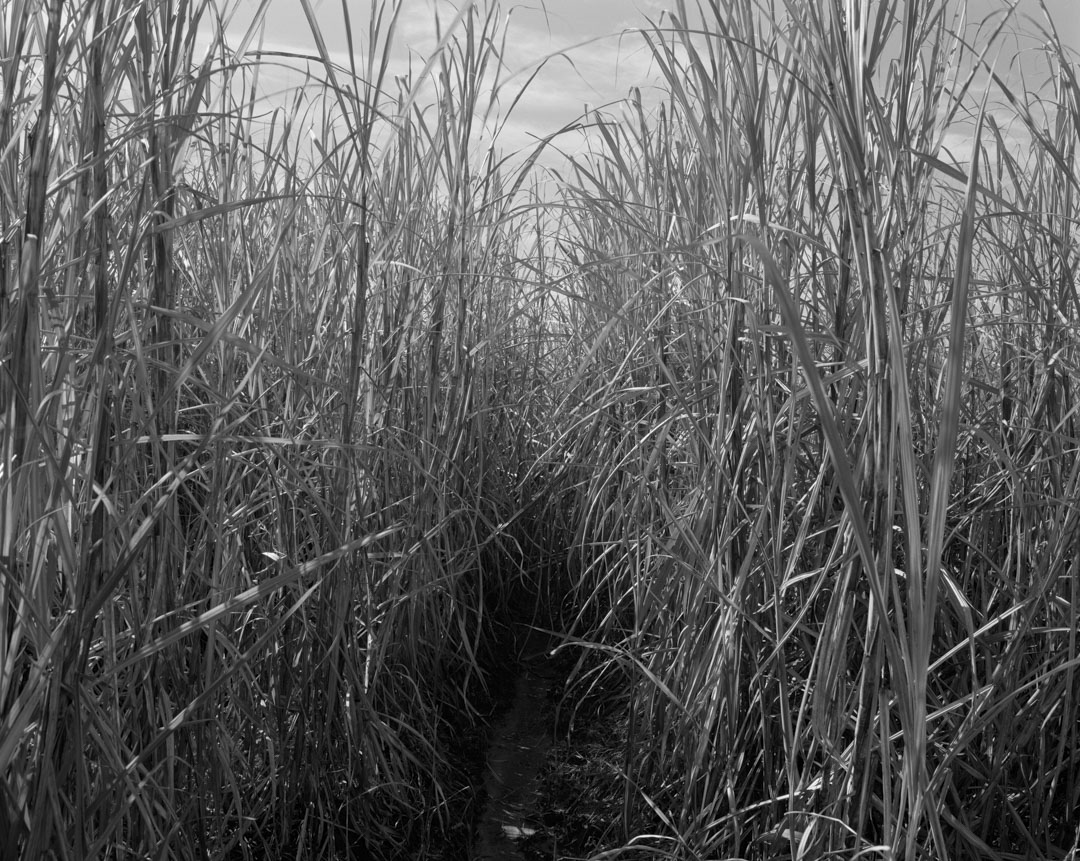
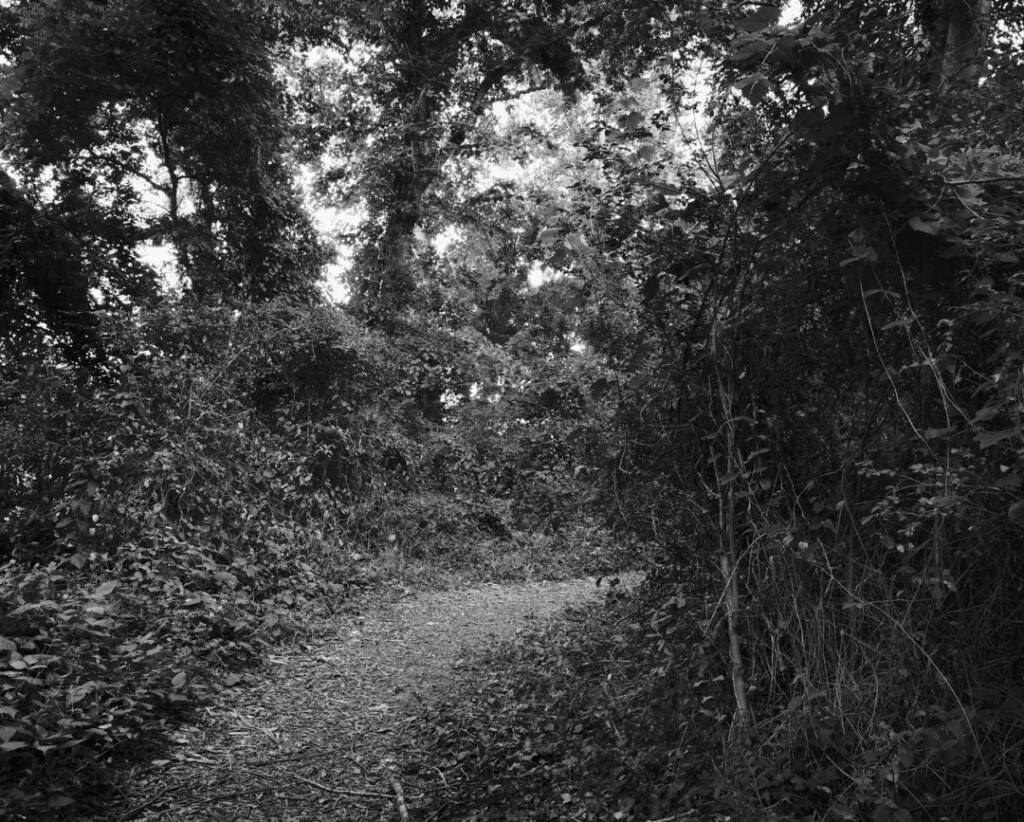
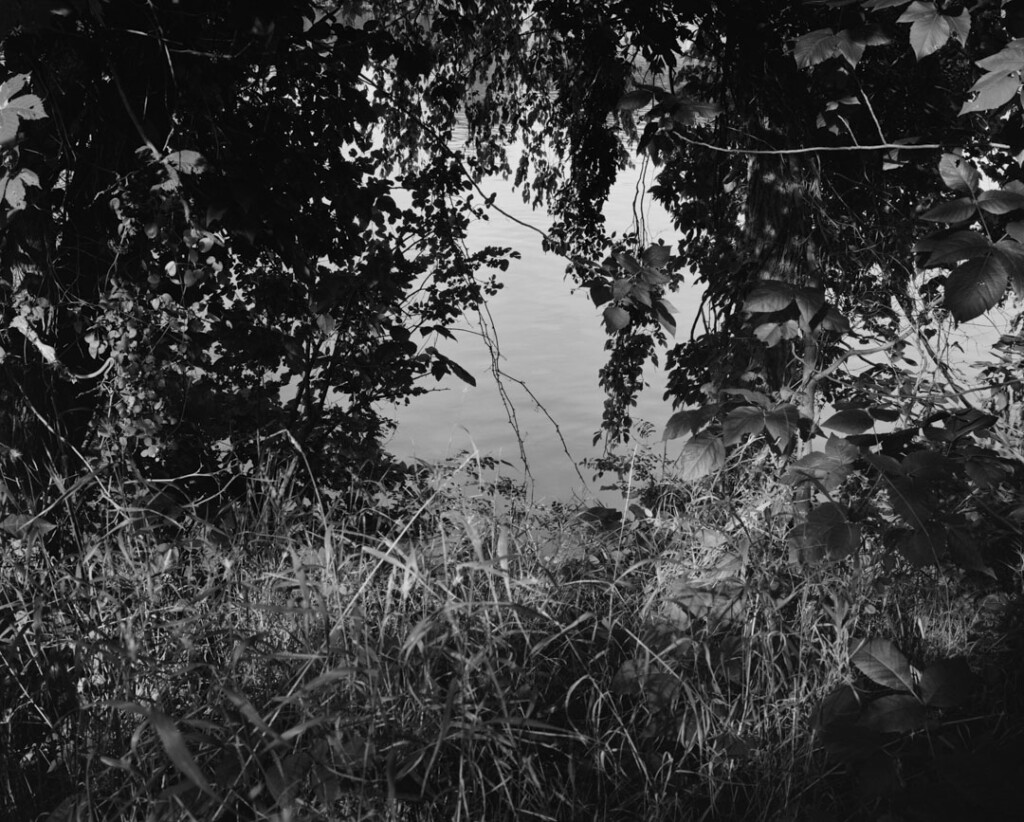
The first section of Bey’s Elegy, “Stony the Road We Trod,” (a lyric from James Weldon Johnson’s “Lift Every Voice and Sing”), features large-scale gelatin silver prints of the slave trail in Richmond. Tracking the route the enslaved took from Manchester Docks to Shockoe Bottom, Bey examines the landscape along the James River with a botanist’s eye. Each image presents the trail from different perspectives, each shot painted in varying tones of light and shadow that create depth and texture. You imagine the tall stalks of grass prickling your calves, the creeping vines of the foliage wrapping themselves around your ankles, and the overhanging branches grazing the sides of your face; you concede to the invasive nature of the landscape. To see the landscape this closely, one would have to get dirty and bend to the level of the soil. There is no way to keep yourself clean. When the camera pulls back, the fullness of the path feels almost endless. The light peeks through the trees, promising a new twist or turn, but there is a sense that it may never stop.
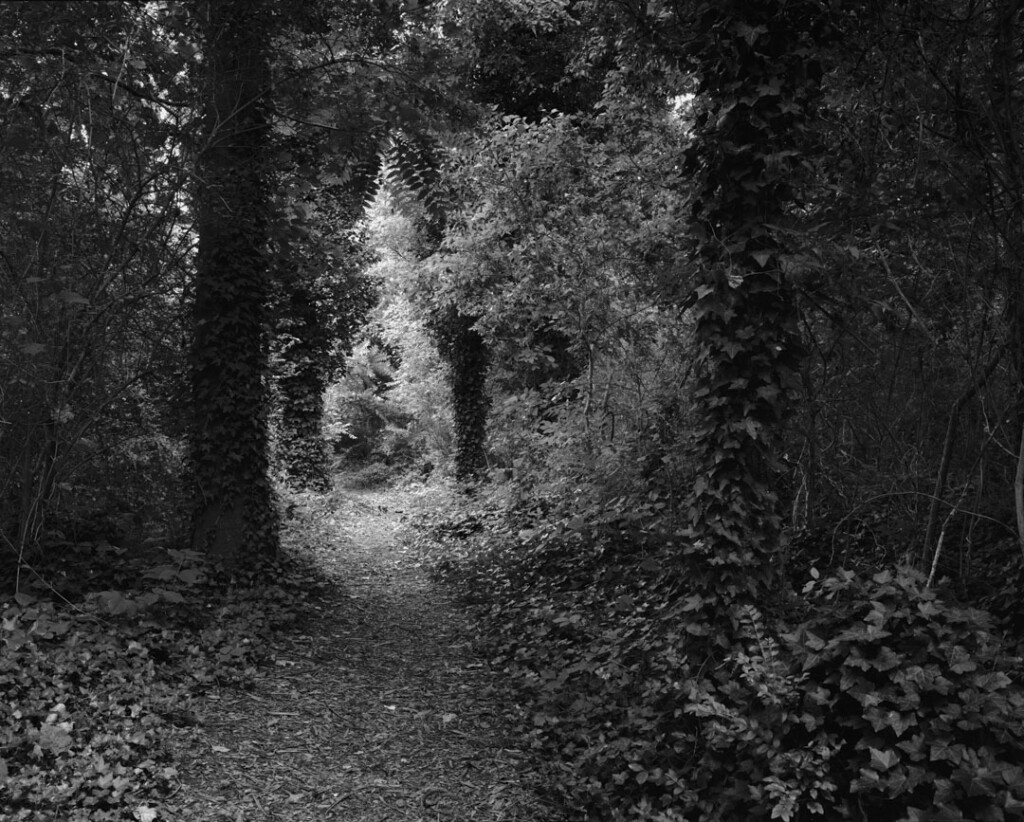
The first of Bey’s two short films, “350,000,” realizes this interminable momentum by offering the perspective of thousands of enslaved persons who traveled along the trail from the middle passage into bondage. Entirely in black and white, “350,000” is presented as a single extended tracking shot which relies on a haunting soundscape to situate the audience within the sensory experience of bondage. The film begins as it ends: with breath, not calm, but a sharp and sudden gasp, like the sound of a drowning body finally breaking through the line between water and air. This sound echoes Christina Sharpe’s concept of aspiration or “keeping and putting breath back in the Black body” within the “hostile weather” of an anti-Black climate, an act both “violent and life-saving.”1Christina Sharpe, In the Wake: On Blackness and Being (Durham, NC: Duke University Press, 2016), 113. The trail is covered in fallen leaves and enshrouded by the endless overhang of trees transitioning from late summer to autumn. Tree limbs refuse to stand upright, but bend inward from left and right, curving into an asymmetrical spiral of light, shadow, and texture. There is some semblance of shade for bodies unseen, but also a sense of being enclosed or entrapped.
As the camera leads viewers down the winding path, there are slow pans to the left and right, from water to thicket, always searching for stability or familiarity in a strange and dangerous landscape. Even with the constant momentum, there are moments of stillness. The sounds of horse hoofs or rattling chains hover. The camera points upward, lingering on the daylight breaking through the shadows of branches and looming patches of grey-white sky. Photographed in a manner often reserved for flashback or dream sequences, the edges of the screen remain soft and blurred. The lack of any discernable body is disorienting, unmooring, echoing the experience of those trapped for months in the hull of a slave ship. Sound is the only anchor: audible labored breathing; guttural exhalations and moans slipping into a rhythmic chanting; the rattling of chains that resemble windchimes.
Bey collaborated with dance and movement scholar E. Gaynell Sherrod to choreograph “350,000”and sound designer Paul Bruski at the In Your Ear Studio in Richmond. The soundscape uses Foley techniques as dancers perform, sometimes barefoot, walking across dirt and gravel while holding large metal chains. While dancers often train to stifle or quiet the sound of their breath, Sherrod makes the labored breath of the dancers more audible, in the absence of their physical form.2Dawoud Bey, Gaynell Sherrod, and Imani Uzuri, “Soundings: Collaborations with Dawoud Bey” (Conversation/Panel, Virginia Museum of Fine Arts, Richmond, VA, February 9, 2024). Dancers’ bodies disappear and reform through sound, pulling viewers along slowly and reluctantly through the terrain.
“In This Here Place” & “Evergreen”
Elegy returns to the photographic on the remains of defunct plantations in Louisiana. “In This Here Place” presents a collection of images from the Evergreen, Oak Alley, and Whitney Plantations along the Mississippi River between New Orleans and Baton Rouge, capturing the slave quarters, some still intact and others commandeered by trees and wild shrubs. These antiquated cabins seem familiar. Looking at Bey’s 2019 “Overgrowth and Fence,” the barely visible cabin swallowed by the bare branches of invasive trees and tall weeds, I am reminded of many neglected houses, once owned in predominately Black neighborhoods in the Deep South, now abandoned on the outskirts of towns.
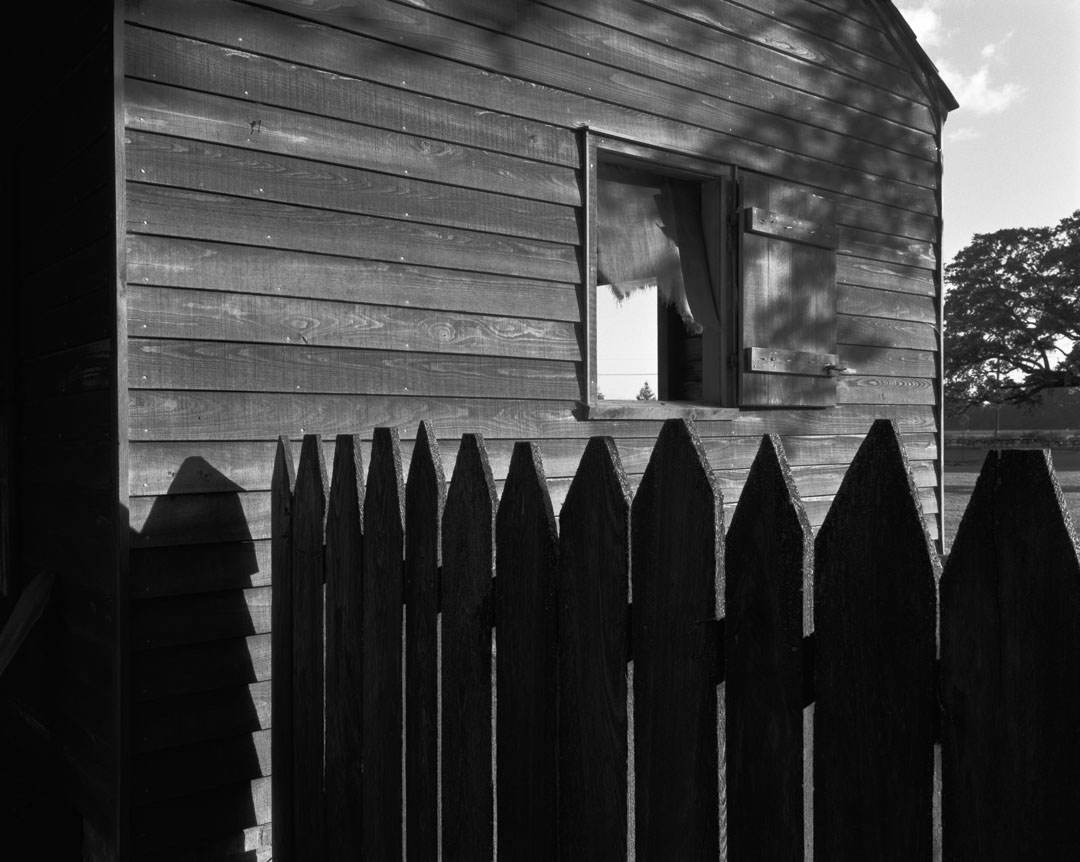
Many of the images have a spectral quality: each cabin houses the absent-presence of the enslaved. In “Cabin and Benches” the structure is surrounded by long, wooden, unoccupied benches, each shaded by large trees outside the frame. On one side, a rickety wooden shutter is swung open, revealing a small rectangular window blocked by a white curtain pulled back ever so slightly to reveal a tall, thin, black rhombus of darkness. I was convinced that at any point, bodies might emerge from the grey foreground mist, walk towards me, and sit down for some well-deserved rest. In “Cabin and Palm Trees,” the side of the cabin is almost completely obscured by varying leaves of the palm trees—some broad and flat, others a starburst of dense spikes. The window, this time unveiled from the domestic softness of the white curtain, reveals a tall black square, a void from which it felt like someone, shrouded in darkness, could be looking directly at me.

“In This Here Place” takes its name from Baby Suggs’ sermon in the clearing of Toni Morrison’s novel Beloved. Baby Suggs implores Black children to become and be seen, Black mothers to laugh, and Black fathers to dance for their children and their wives. She reminds the members of her community, many who sought their freedom by way of fugitive paths, to love themselves, fully and deeply, precisely because of the white world outside the safety of the woods. “[They] ain’t in love with your mouth,” Baby Suggs announces to the crowd, “they will see it broken and break it again. What you say out of it they will not heed. What you scream from it they do not hear.”3Toni Morrison, Beloved (New York: Vintage Books, 1987), 82. Apt then that “Evergreen,” the second of Bey’s short films featured in Elegy, presents a scream that cannot be ignored.
While “350,000” guides viewers to a single, unbroken shot on one screen, “Evergreen” is a colorful triptych that inundates with multiple shifting visual perspectives. On one screen, the camera hovers over the tops of the trees, moving slowly, as if floating, revealing the rust-tinted tin rooftops of the cabins of the enslaved. Another screen drops to ground level, cutting back and forth between close ups of the lush green grass and sharp stalks of sugarcane leaves piercing from the dirt towards the sky. On a third screen, the camera slowly pans from left to right, one cabin after another, their exterior walls stained with dark copper strokes of rust and oxidation, each one precarious on crumbling brick pillars. As soon you take in one shot on any screen, it switches. The vast perspective of “Evergreen” is awe-inspiring and, at times, overwhelming. I sat through multiple showings, trying to take in one screen at a time, but left feeling there was more to absorb.
The visual palate of “Evergreen”—red-yellow leaves across the ground, brown-blue-green of moss and mold on trees and cabins, and the bright/dull greens of grass and rusty rainwater pooling on the ground and in metal basins—blurs the pastoral and architectural decay. The soundscape intensifies the experience. Bey worked with vocalist and composer Imani Uzuri to articulate the narrative perspective of “Evergreen” where the camera does not reflect a human experience, but that of the disembodied spirits of the enslaved floating and hovering above and across the land.4Dawoud Bey, Gaynell Sherrod, and Imani Uzuri, “Soundings: Collaborations with Dawoud Bey” (Conversation/Panel, Virginia Museum of Fine Arts, Richmond, VA, February 9, 2024). Whispered words, familiar to those who grew up in the Black church, emerge from everywhere and nowhere: come by here, somebody’s praying, just like a dream, there is peace in the valley for me. Unmoored sounds of hands clapping or a tambourine beating echo throughout. Suddenly, a single extended utterance bursts forth, bending between a scream and a wistful soprano note quickly shifting back into a wail. In “Evergreen,” sounds and words intertwine, crashing into each other at an abrupt speed which approaches and dodges the legibility of music and voice. Uzuri offers us Black sound, harmonious and cacophonous, that refuses categorization; musicality stretched to the furthest comprehension.
The final shot on the center screen of “Evergreen” is, again, one long tracking shot along the center path of the plantation, this time pulling backwards. Viewing the cabins from this vantage, I was struck by the stark architectural uniformity. Each cabin, equidistant and perfectly mirrored, reminds us that this space, these structures, were not only a landscape of suffering, but a community filled with a legally and culturally vulnerable population. Comparing this shot to images such as “Conjoined Trees and Field” and “Irrigation Ditch,” I notice how Bey deploys center composition to create symmetry and balance that emphasizes a single focal point, usually the subject, in an image. Bey often forces the eyes on a central path, a safe space to visually travel along a hostile territory. Both of these photographs and the last shot in “Evergreen” acknowledge and interrogate the linearity of history. While “350,000” moves viewers forward, assuming some level of literal and conceptual “progress,” we also understand that, for the enslaved, a predatory path unfurled. Pulled backward across the center at "Evergreen," we ask, what force carries us and to what end?
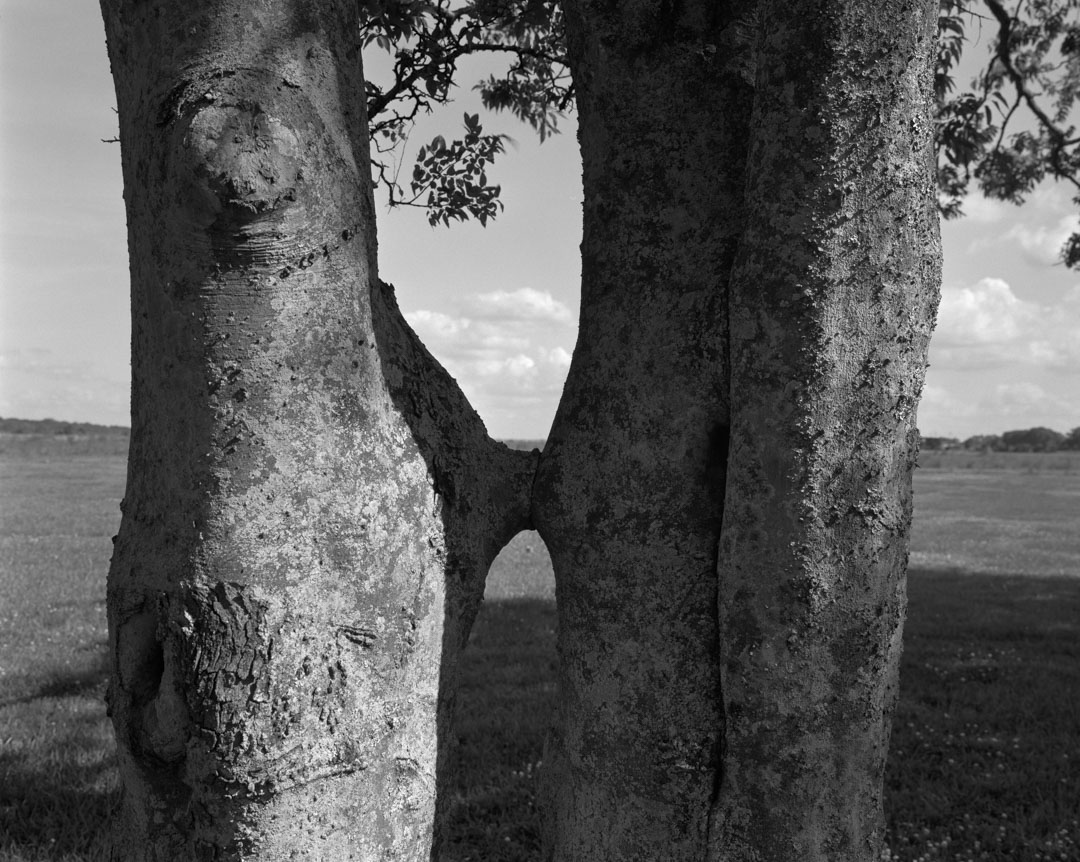
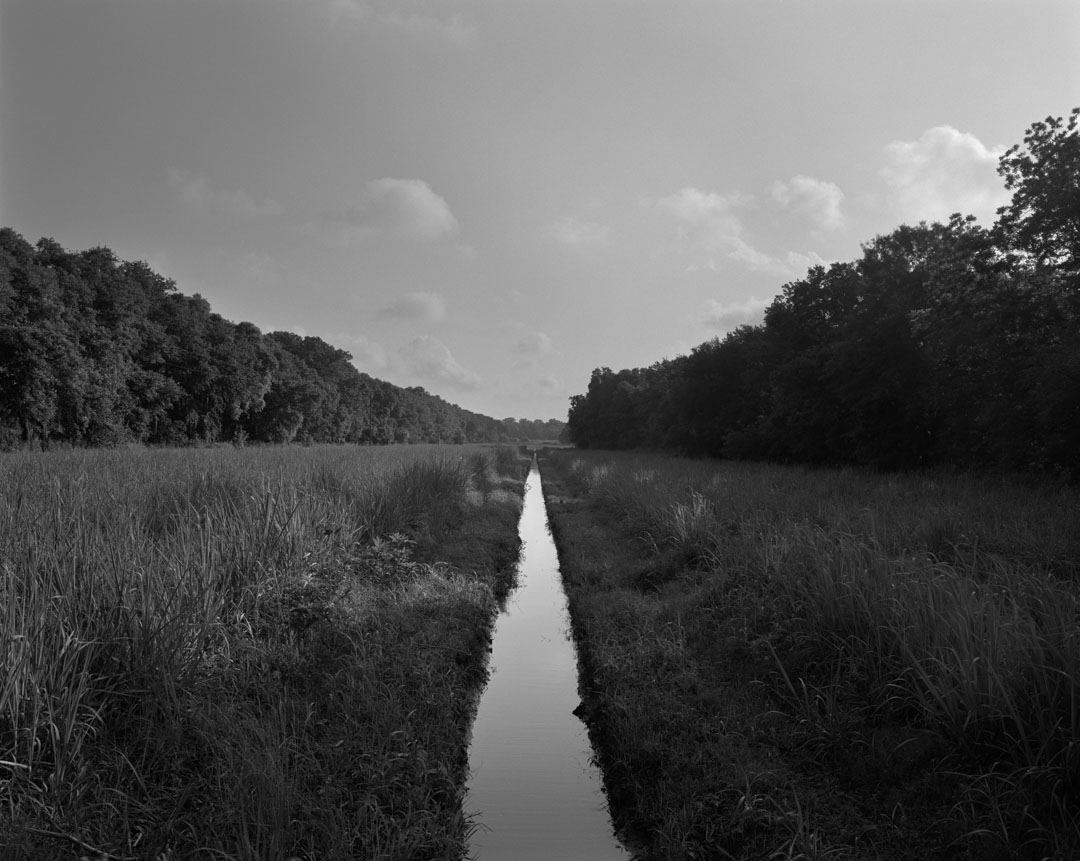
“Night Coming Tenderly, Black”
The title of my review comes from a line in Saidiya Hartman’s Scenes of Subjection where she argues for the “opacity” of “black song” as a phenomenon that “troubles the distinctions between joy and sorrow and toil and leisure."5Saidiya Hartman, Scenes of Subjection: Terror, Slavery, and Self-Making in Nineteenth-Century America, Revised and Updated Edition (New York: W.W. Norton, 2022), 54. In this, Hartman eschews the “overdetermined reading of the sounds of slavery”6Hartman, Scenes of Subjection, 30. prescribed by twentieth century Black thinkers such as W. E. B. Du Bois, and directs our ears to the more powerful, and at times less legible, “wild notes” of the enslaved, composed in part by the “screams lodged deep inside” that “confound simple expression . . . of black enjoyment.”7Hartman, Scenes of Subjection, 55.
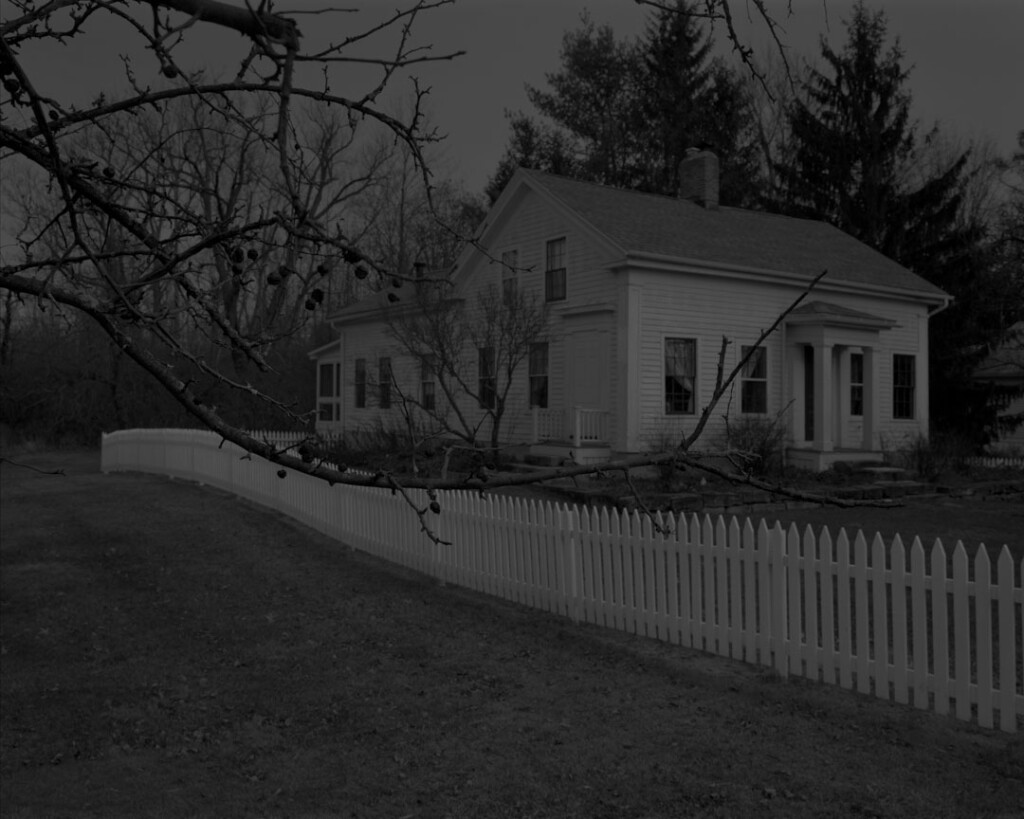
In the almost 160 years since the legal dissolution of slavery in the United States, photography and film have articulated the overdetermined image and, eventual sound, of slavery within the imagination. In both “350,000” and “Evergreen,” Bey’s exclusion of Black bodies forces viewers into a complicated simulacrum of enslaved embodiment. His films interrupt our culturally sedimented expectations not only of what slavery looks and sounds like, but also how it should be experienced. There are no clear heroes or villains in these films, no sense of a triumphant victory of good over evil, not even a sense of who, if anyone, we are following. However, in the midst of this disorientation, we remain anchored by the density of Black sound; we continue to listen through the cacophony to make sense of the experience, not through historical logic, but through a bodily reaction to what unfolds on the screen.
Coming down from “Evergreen,” I entered the final section of Elegy: “Night Coming Tenderly, Black,” its title taken from the last lines of Langston Hughes' poem, “Dream Variations.” This series of photos explores landscapes near Lake Erie in Ohio and Canada and traces the fugitive experience of enslaved persons who liberated themselves, often in the cover of night, from the bondage in southern states. Paying homage to photographer Roy DeCarava, these low-light prints hone the conflicting experiences of fugitivity, wherein a vast, beautiful, open landscape signals exposure and vulnerability while the claustrophobic cover of tree branches means safety and protection. On my way out, I was struck by the last photograph positioned to the right of the exit: a dim shot of Lake Erie, its grey waves rolling into the horizon.

Within the full context of Elegy, viewers can understand the impact of this scene. The slow march from the Manchester docks, from Virginia through the Carolinas, Georgia, Alabama to the plantations of Louisiana, and the perilous journey from the Deep South to the northernmost parts of this country, has prepared us for this sight. If “350,000” began with a painful, sharp gasp, this shot of Lake Erie gestured towards a cathartic exhalation.
Leaving Bey’s exhibit, my mind was abuzz: What ethics, if any, are applicable to the ways that we consume the visual lexicon of slavery? Can the cacophony of Black sound that Bey so intricately deployed bring audiences to understand not only Black pain, but Black humanity? Mostly importantly, returning to the image Lake Erie, can any one photograph, detached from its critical context, represent the history of slavery so often erased and buried? When looking at non-descript images of a nature trail or even sugarcane stalks, do we need to hear the density of Black sound to understand what we are looking at? Elegy is, across all five sections of the exhibit, a fully immersive sensory experience which asks audiences to find in the American landscape a history that time and “progress” has obfuscated. As I exited, I could not shake the thought that, to an untrained or inexperienced eye, the difference between the waves of the James River and the waves of Lake Erie—let alone the currents of the Atlantic as seen from the hull of a slave ship—might be difficult to discern. In which direction does the water flow towards freedom?
About the Author
Ariel Lawrence is a PhD candidate in the English Department at Emory University. Her research focuses on Black women-authored lifewriting across multiple genres, and the articulation of ethical reading practices in and beyond the page.
]]>Introduction
The soil in the Mississippi Delta has everything a planter needs. Rooted in shallow soils, elm, cottonwood, and pecan trees line the hilly landscapes of eastern and southern Mississippi. In the bottomland, where the soil is formed by flooding, the endless striations of light and dark colored sediment create moist, rich, and nutrient-dense dirt in which cash crops like corn, soybeans, and cotton thrive. The Mississippi River and all its branches flow over the boundaries of its own banks, flooding the soil and adding new sediment, giving it new life. On the banks of the Mississippi between Coahoma and Sunflower counties, sits Bolivar County and the city of Mound Bayou. Founded in 1887 near Chickasaw burial grounds by a trio of formerly enslaved cousins, Mound Bayou emerged in the Reconstruction era as a burgeoning example of what African American autonomy could become in the dissolution of slavery.1Joel Nathan Rosen, “Mound Bayou,” Mississippi Encyclopedia, July 11, 2017, https://mississippiencyclopedia.org/entries/mound-bayou/. At its height, Mound Bayou, the “Jewel of the Delta,” housed successful Black businesses, a public school system, and a community-run hospital.2Rosen, “Mound Bayou.” Seen as a safe haven from the physical and political interference of white people and power structures, Mound Bayou fought to maintain its autonomy, eventually succumbing to mismanagement and political in-fighting. By the 1960s, while attention was on the southern United States in the fight for civil rights and political enfranchisement, Mound Bayou, like many other Black towns in the twentieth century, languished under the threat of anti-Black, state-sanctioned violence and economic inequity. While historians often place voting rights at the heart of the civil rights movement, in Mississippi, for Black farmers, sharecroppers, and their families, the gut of the matter was food.
A contribution to critical food studies, Bobby J. Smith II’s 2023 Food Power Politics: The Food Story of the Mississippi Civil Rights Movement, details the role of plantation politics, food scarcity, and Black autonomy across the Delta from the mid-1960s through the early 1980s. In addition to thinking about power, equity, and accessibility, Smith’s work deals specifically with the experiences of Black communities in the Delta—places such as Leflore, Sunflower, and North Bolivar counties—and builds on recent scholarship covering the pinnacles and nadirs of the civil rights movement. According to Smith (a professor of African American Studies at the University of Illinois), the emphasis of scholarship on voting rights and education in the civil rights era neglects the more fundamental problem of subsistence. The primary critical intervention Smith presents in Food Power Politics is his insistence that the subject of food equity allows readers to “identify social, political, and economic blind spots...at the core of social protest and power struggles” both past and present.3Bobby J. Smith, Food Power Politics (Chapel Hill: University of North Carolina Press, 2023), 9. Smith aims to “expand the civil rights story” by illustrating how the lack of access to nutritional food and nourishment motivated sharecroppers, farmers, and rural working-class families on the periphery of Black life in the US to “[pave] the way for new articulations of civil rights activism.”4Smith, Food Power Politics, 142. Examining food access and equity shifts attention to the environmental and psychological vulnerabilities of Black bodies.
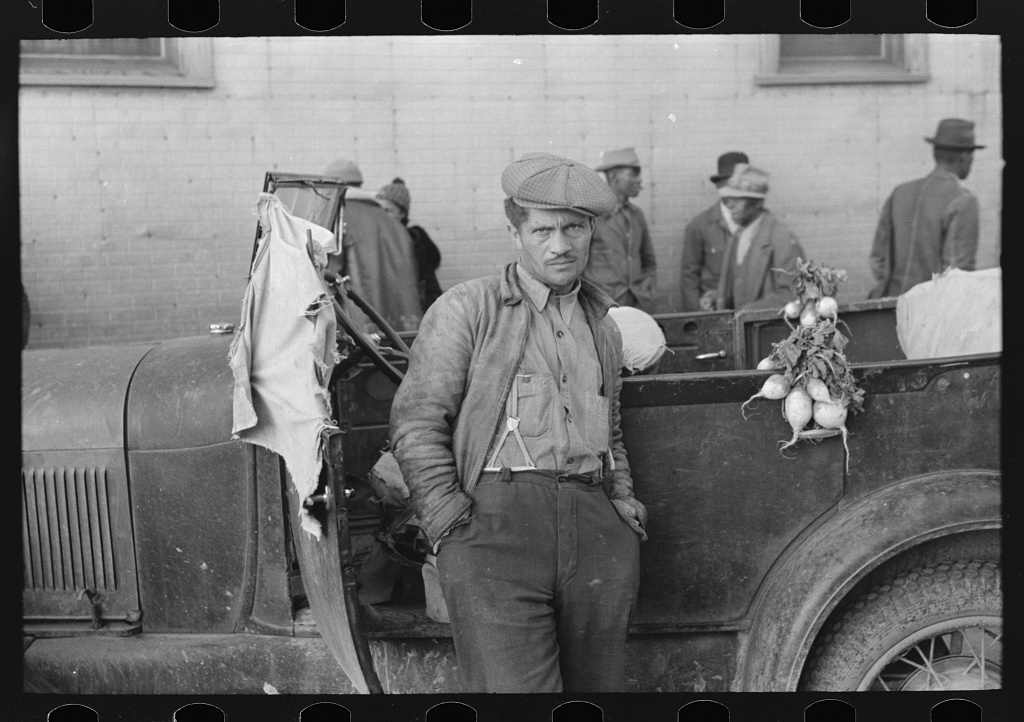
The social, political, and biological aftershocks of the plantation system in and after the era of “King Cotton” are too massive to quantify. As Mikko Saikku reminds us, despite the “great personal fortunes” cultivated across the 19th and 20th centuries through the "biological productivity" of the Mississippi Delta, "[for] most of the people involved in the transformation of the Delta bottomlands, especially black slaves, sharecroppers and agricultural workers, economic gain and social mobility remained severely limited.”5Mikko Saikku, "Bioregional Approach to Southern History: The Yazoo-Mississippi Delta," Southern Spaces, January 28, 2010, https://southernspaces.ecdsdev.org/2010/bioregional-approach-southern-history-yazoo-mississippi-delta/. As a response and challenge to these limitations, Smith constructs the food story of Mississippi by drawing on civil rights era archives and ethnographies. Examining documents from Tougaloo College Civil Rights Collection, the Mississippi Department of Archives and History, and the Mississippi Council on Human Relations, alongside local newspaper reportage, Smith also draws upon a diverse range of print media and correspondence, including personal letters from civil rights activists such as Medgar Evers and Fannie Lou Hamer. He also conducted interviews with activists and agricultural workers active in the 1960s and today in north Bolivar County.
Key to Smith’s analysis are the concepts of food power and emancipatory food power. Food power, most often deployed when describing international wars and political conflict, gestures towards moments where, within “a hierarchical world system” access to food or food related autonomy is “weaponized...as a form of control between nations” to influence outcomes.6Smith, Food Power Politics, 2. Food power guides the first two chapters of Smith’s book through an examination of the 1962 Greenwood Food Blockade and the Lewis Grocer Company’s campaign for a federal food stamps program in Mississippi. State and local government, as well as private corporations, wielded food power against Black farmers, sharecroppers, and working-class people to continue the racist inequities of the antebellum plantation system.
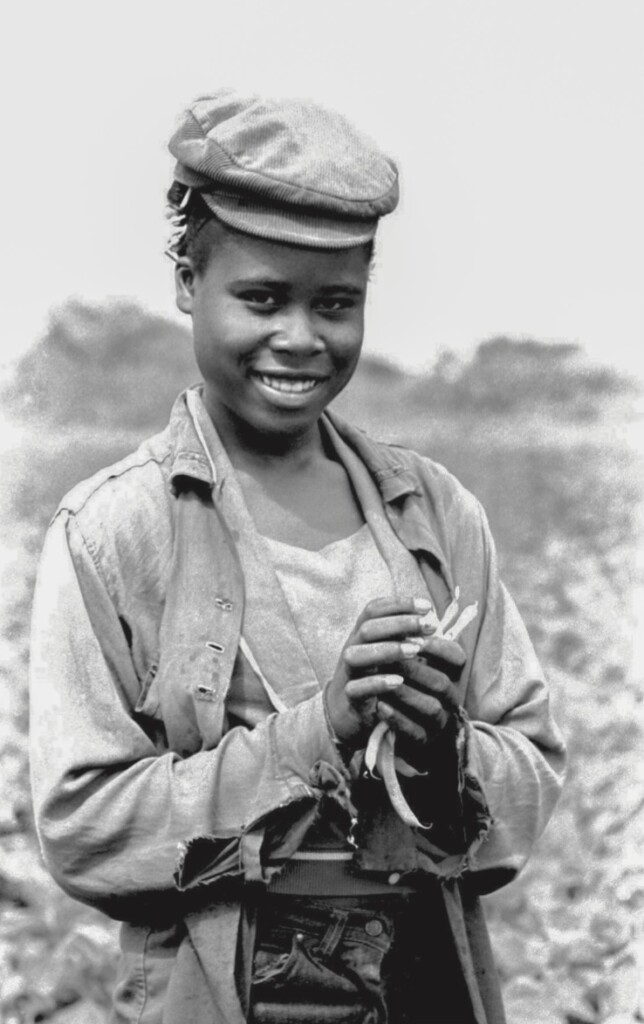
The second half of Food Power Politics illustrates emancipatory food power—ways that Black activists, citizens, and farmers restructured the power dynamics imposed on them by the white plantation class through the creation of an autonomous food economy in service to the needs, desire, and tastes of Black rural people. Smith writes extensively about the North Bolivar County Food Cooperative (NBCFC), founded in 1967, and its contemporary iteration, the North Bolivar County Good Food Revolution (NBCGFR), a predominantly youth-led food justice movement that emerged in 2017. Here, the line between food power and emancipatory food power is not conceptual or theoretical. The emancipatory power of Black food autonomy depends on economic independence fueled, in part, through land ownership, as well as food literacy, agricultural education, and the material labor of Black people. While Smith’s project is rooted in the geographies and spatialities of the Delta, it also surveys other places often minimized or misunderstood through standard histories of the civil rights years.
Food Power Politics asks that we consider the space of the plantation not only as a physical landscape of endless rows of cotton stalks but also as spaces constructed by and in service to white social and economic domination over Black people. The attitude of the plantation can be found in the white-owned grocery store as much as in the field. In considering Black women as mothers, planters, laborers, and activists, Smith asks us to consider Black domestic space, represented iconically in the kitchen table, as the launching pad for political revolution.
Debt, Plantations, and Black Hunger: On Food Power
During and after Reconstruction, the sharecropping system continued to support the hierarchy and politics of the plantation ruling class in the Deep South. While millions of formerly enslaved persons flowed north and west during the Great Migration, those who remained had limited options for employment. Many Black farmers and agricultural workers found themselves working for the descendants of former slave masters on the same plantations where their ancestors labored in bondage. Food access was negotiated through small gardens on plots of land leased from plantation owner. These “truck patches” supplied subsistence nourishment. Additionally, many sharecropper households traded homestead goods with other families, creating networks of care and support. Many also depended upon New Deal era federal food programs. Similar to the exploitative credit system that forced Black farmers to lease land and equipment from plantation owners at outrageous interest rates, access to food in Mississippi during the 1960s was deeply entwined with the afterlife of the plantation system. The fiscal and social politics of the plantation era made itself known through the converged interests of plantation owners and private white grocers such as the Lewis Grocer Company, which conspired to suppress Black political and economic autonomy through the twinned threats of food scarcity and political disenfranchisement.
Three factors shaped the proliferation of food-centric oppression for the Black rural and working class in Mississippi during the 1960s: the mechanization of the plantation system, the transition from government-sponsored surplus goods programs to that of the federal Food Stamp Program, and the change in minimum wage laws surrounding farm workers and sharecroppers in the Delta. In the era of “King Cotton,” the means of cultivating and harvesting this cash crop became more dependent on government-leased technology, machinery, and chemicals, and less dependent on manual labor. The sudden decline of job opportunities, the shift from daily to hourly wages for plantation labor, and the emergence of a food stamp system which deepened sharecroppers’ dependence on systems of credit were major forces of oppressive food power wielded over Black farmers and their families by white capitalist elites in the Delta. The triangulation of these events forced sharecroppers and their families into structural over-dependency and debt, creating seemingly inescapable cycles of poverty.
Among these dire systemic restrictions, food scarcity was also strategically deployed by white government officials in LeFlore County through the 1962–1963 Greenwood Food Blockade. The county board of supervisors’ decision to pull out of the federal surplus commodities program, a major food source for Black sharecroppers and farm workers, further spurred food scarcity. Similar strategies of food suppression were deployed in Tennessee in 1960 and in nearby Sunflower County in 1962. These actions aimed not only to starve out the Black rural class and keep them further under the control of credit systems deployed by plantation owners and grocers but also to intimidate the burgeoning rise of Black voter registration taking place across the South. The Food for Freedom program, created by the Student Nonviolent Coordinating Committee (SNCC) and Council of Federated Organizations (COFO) just a few weeks after the start of the blockade, addressed the needs of Black people in Greenwood by providing food, aid, and support through local and regional systems of distribution. With the help of local activists, as well as public figures such as Martin Luther King, Jr. and comedian Dick Gregory, the Food for Freedom program brought attention and material support to those in need and helped to end the blockade in March 1963. In this process, SNCC was able to make a concerted effort to explicitly connect food and activism to highlight the “relationship between food, everyday Black resistance, white supremacy, and state sanctioned violence during the civil rights era.”7Smith, Food Power Politics, 42. Smith illustrates in detail how plantation owners and grocers strategically displaced Black food autonomy with debt-centric practices, which forced Black sharecroppers and farmers to depend on the state for access to food. This history is painfully ironic, given the current political rhetoric in Mississippi that centers public welfare programs as a threat, best exemplified by Mississippi Governor Tate Reeves’s (R) refusal to participate in a federally funded program aimed at supporting food access for children in the summer months. Gov. Reeves's rejection of the program, justified by his dedication to not “expand the welfare state,” illustrates how inequitable practices of food power remain active in Mississippi.8Gloria Oladipo, “Mississippi Quits Child Food Program amid Republican ‘Welfare State’ Attack,” The Guardian, January 13, 2024, https://www.theguardian.com/us-news/2024/jan/13/mississippi-child-school-food-program-welfare-state.
Autonomy and/as Collard Greens: On Emancipatory Food Power
The Food for Freedom program is one of three examples of emancipatory food power that Smith highlights in his book. The most expansive is the NBCFC, a Black-owned and operated food cooperative founded in 1967 with the goal of becoming an autonomous food economy in Mississippi. Spearheaded by activist L.C. Dorsey, with the help of other Black mothers and community members, this cooperative began as a garden project for low-income families. At its peak, the NBCFC operated a farming operation across almost 1,500 acres (owned and leased) to cultivate crops for the poorest families in Bolivar. Pushing against the monocrop culture that had rendered many Black sharecroppers jobless, the NBCFC grew crops that would meet nutritional needs: protein-rich nuts, peas and beans, vitamin-dense greens and okra, as well as staple carbohydrates like rice, potatoes, and corn. During the summer, watermelon vines as well as peach orchards and pecan trees were prioritized for local enjoyment. The NBCFC illustrated how Black autonomy functions beyond the strictures of capitalistic profit.
While land acquisition was central to NBCFC’s vision of food autonomy, so were labor practices and education. The cooperative dedicated over 70% of its labor budget to employing local members, bringing jobs to more than three hundred families. It partnered with the Department of Horticulture at Mississippi University alongside agricultural educators from Atlanta University, Iowa State, and Michigan State to offer courses in farm management, soil conservation, and food production. Food literacy was a primary goal of outreach, instructing Black mothers on how to prepare the foods distributed to them through the cooperative in ways that would support the health and wellbeing of the household. Land acquisition, farm production, and agricultural education centered the NBCFC’s vision of emancipatory food power. That workers were able, even for a short period, to labor in a system that would feed and train them to become more self-sufficient—financially and politically—on the land where they lived, worked, and sought to thrive was a radical feat reshaping what freedom could envision.
After five years of operation, the NBCFC began a decline in the 1970s due to leadership infighting, disagreements, and the loss of grant funding. The organization was unable to complete its long-term goals of creating an on-site canning operation for national distribution of NBCFC foods and developing a Black-owned and operated farm supply store that might further offer farmers the opportunity to cultivate their own land without interference from white plantation owners. Still, Smith narrates their journey in this unique and palpable moment. The legacy of the NBCFC is alive in the youth-run North Bolivar County Good Food Revolution (NBCGFR).
The joy of Food Power Politics comes in its gesturing towards civil rights beyond voting and government, in expanding understanding of what Black autonomy can be. The most striking cultural memories of the civil rights era, often exemplified by photographic images of Black bodies in pain and duress, contribute to a taste for spectacle that continues. The exploration of hunger as a threat fueled and facilitated by white supremacy is a subject requiring more attention.
Food Power Politics explores spaces and places often overlooked by civil rights historians. Smith explores the Delta from the soil up, balancing a long history of food injustice, narrating the story with an avid appetite for meticulous detail. If any dimension is slighted, it’s the missed opportunity to fully explore the role of Black women activists and their influence on emancipatory food power. Smith is deft to note that, while Black women were and remain active participants in the NBCFC and NBCGFR, the question of how to emancipate Black people from food scarcity, while also emancipating Black women from the invisible labor of the domestic space, remains underdeveloped. While Smith mentions the work of well-known Black food activists such as Fannie Lou Hamer, and other important figures such as Dorsey, Unita Blackwell, and Marian Wright, he and other food studies scholars should further articulate what a Black Feminist approach to food equity might consist of. Such an endeavor would take seriously how Black women’s material and political labor has been intentionally miscategorized and rhetorically devalued within historical narratives. It would also acknowledge the murky history of Black patriarchal structures that relegate, and obscure, the nurturing networks of care constructed by Black women activists to the realm of the domestic and private. In this, we can better understand how a Black Feminist approach to food equity would address an equity of labor and care within the Black domestic space irrespective of gender, class, or sexuality.
The core aim of Food Power Politics is to construct an alternative history of food power in the Delta, and in that, Smith succeeds. Further, Smith’s text places into perspective the long history of community organizing, direct action, and educational activism that rural and working-class Black Americans have relied on in the face of economic and social dispossession. Instead of debating the legitimacy of trickle-down activism from hyper-visible politicians and celebrities, Smith reminds us that, historically, political victories and social justice reform sprouts from the bottom up.
About the Author
Ariel Lawrence is a PhD candidate in the English Department at Emory University. Her research focuses on Black women-authored lifewriting across multiple genres, and the articulation of ethical reading practices in and beyond the page.
]]>
In 1971, a Walker Evans retrospective at the Museum of Modern Art inspired critic Hilton Kramer to reflect on the Evan's enduring influence: "For how many of us, I wonder, has our imagination of what the United States looked like and felt like in the nineteen-thirties been determined not by novel or play or a poem or a painting or even by our own memories, but by a work of a single photographer, Walker Evans."1Kramer quoted in Tom Rankin, "'The Injuries of Time and Weather,'" Southern Cultures 13, no. 2 (2007): 9. Swap out "the United States" for "the US South," and insert some of Evans's contemporaries, including Dorothea Lange, Jack Delano, Ben Shahn, Marion-Post Wolcott, and Margaret Bourke-White, and Kramer's point becomes even more apt. They all photographed a diverse cross section of the United States for various publications and New Deal programs, such as the Farm Security Administration, but the small-town, rural South was the site and subject of their most recognized work. The vivid immediacy of their photographs—and their ubiquity in magazines, books, and exhibits—has made it possible to think of them as surrogates for personal experience and memory. As a cultural imaginary, a "Documentary South," has often served as "the thing itself," a persuasive counterpoint to popular culture ventriloquisms. As Margaret Bourke-White wrote of You Have Seen Their Faces, her 1930s photo-text book about rural poverty, it "may not be the South of song and story, but it is the South that you bring back on sheets of Panchromatic film."2Jonathan A. Silverman, For the World to See: The Life of Margaret Bourke-White (New York: Viking Press, 1983), 80.
The reality is that up until about 1971, if residents of southern cities, towns, or farms thought about the role of photography, most would not have considered (or known of) Bourke-White or Evans. However, they may have been aware of locals who pursued photography as a profession, a passion, or perhaps both by creating snapshots made with Brownies and other Kodaks. Many of these photographers owned their own studios or made photographs for local publications and other purposes. Their portraits and photographs of street scenes, church services, rural life, and landscape often resembled an album whose intended audience was also its subject. Each town and city seemed to have its acknowledged "picture man" or woman, people such as Mike Disfarmer of Heber Springs, Arkansas; Paul Kwilecki of Decatur County, Georgia; Hugh Mangum of Durham, North Carolina; J. W. Otts of Hale County, Alabama; O. N. Pruitt of Columbus, Mississippi; Paul and Layfette Buchanan of western North Carolina; Sam F. Vance, Jr. of Kernersville, North Carolina; Bayard Wooten of New Bern and Chapel Hill, North Carolina; T. R. Phelps of southwest Virginia; Rufus W. Holsinger of Charlottesville, Virginia; and many others.
Black community photographers in the South, including P. H. Polk of Tuskegee, Alabama, Richard Samuel Roberts of Columbia, South Carolina, and Rev. Lonzie Odie Taylor of Memphis, Tennessee, played particularly important roles during the Jim Crow era when Black photographers were largely excluded from the staffs of national magazines and many New Deal agencies, including the FSA. Gordon Parks was the FSA's only Black photographer during the agency's eight-year existence between 1935 and 1943, serving as a Rosenwald fellow for one year in 1942. Black photographers documented aspects of Black life, particularly middle-class life, that white photographers ignored or could not access. Their photographs ultimately transcended their local purposes and created what bell hooks has called "a counterhegemonic world of images" that rebutted the racist caricatures found in popular culture and in the work of some white photographers.3bell hooks, Art on My Mind: Visual Politics (New York: The New Press, 1995), 57.
For most Black and white community photographers, local demands and conventions of circulation limited the reach of their images. That has changed in recent years thanks to the work of some dogged historians and archivists. Knowledge about local photographers has grown since the 1970s when scholars, partly under the influence of new social history and ethnographic movements, began retrieving and saving photographers' archives from oblivion and writing life histories. More recently, libraries have digitized some of these archives, making them more accessible to scholars and the public. Presses have published exquisite books about local photographers that combine beautiful layouts with insightful scholarship. The "Documentary Arts and Culture" series of University of North Carolina Press presents stunning books that chronicle the lives and work of a few of these photographers: One Place: Paul Kwilecki and Four Decades of Photographs from Decatur County, Georgia edited by Tom Rankin; Where We Find Ourselves: The Photographs of Hugh Mangum, 1897–1922 edited by Margaret Sartor and Alex Harris; O. N. Pruitt's Possum Town: Photographing Trouble and Resilience in the American South by Berkley Hudson.4Examples of books and articles on some of the local photographers mentioned in this review essay include, Julia Sully, Disfarmer: The Heber Springs Portraits, 1939–1946 (Danbury, NH: Addison House, 1976); Ann Hawthorne, The Picture Man: Photographs by Paul Buchanan (Chapel Hill: University of North Carolina Press, 1993); David Moltke-Hansen, "Seeing the Highlands: Southwestern Virginia through the Lens of T. R. Phelps," Southern Cultures 1, no. 1 (1994): 23–49; Belena S. Chapp, et al, Through These Eyes: The Photographs of P. H. Polk (Newark, DE: University Gallery, University of Delaware, 2001); Ralph E. Lentz, II, W. R. Trivett, Appalachian Pictureman: Photographs of a Bygone Time (Jefferson, NC: McFarland & Company, Inc., Publishers, 2001); Rob Amberg, Sodom Laurel Album (Chapel Hill: University of North Carolina Press, 2002); Rah Bickley, "Sam F. Vance, Jr. 'Character-Taker': The Faces of Small-Town and Rural North Carolina, 1930s–1940s," Southern Cultures 13, no. 2 (2007): 78–94; Tom Rankin, One Place: Paul Kwilecki and Four Decades of Photographs from Decatur County, Georgia (Chapel Hill: University of North Carolina Press, 2013); Margaret Sartor and Alex Harris, Where We Find Ourselves: The Photographs of Hugh Mangum, 1897–1922 (Chapel Hill: University of North Carolina Press, 2018); James T. Campbell and Elaine Owens, Mississippi Witness: The Photographs of Florence Mars (Jackson: University Press of Mississippi, 2019); Thomas L. Johnson and Phillip C. Dunn, A True Likeness: The Black South of Richard Samuel Roberts, 1920–1936 (Columbia: University of South Carolina Press, 2019); Berkley Hudson, O. N. Pruitt's Possum Town: Photographing Trouble & Resilience in the American South (Chapel Hill: University of North Carolina Press, 2022).
Decades in the making, Hudson's extraordinary book explores the life and work of Otis Noel Pruitt (1891–1967), a white Mississippian who between the 1920s and 1950s served as the "de facto documentarian" for Lowndes County, Mississippi, its seat, Columbus (nickname Possum Town), and surrounding towns and countryside in the northeastern part of the state. An emeritus professor of journalism at the University of Missouri, Hudson grew up in Columbus in the 1950s and knew Pruitt as the "picture man." Pruitt photographed important family gatherings at the "rambling, two-story Victorian filled with Pekingese and antiques" where Hudson's grandmother lived. His photographs adorned the walls of Hudson's childhood home. In the 1970s, as a student journalist and photographer, Hudson began working with friends from Columbus—including photographer Birney Imes, photographer and folklorist Mark Gooch, David Gooch, and Jim Carnes—to track down and acquire Pruitt's archive of 88,657 negatives and 2,000 glass plates, which they donated to the Wilson Library at the University of North Carolina, Chapel Hill in 2012.5Hudson, O. N. Pruitt's Possum Town, 2–5.
Hudson selected nearly two hundred images from Pruitt's sprawling archive to feature in O. N. Pruitt's Possum Town. They are thoughtfully sequenced to tell a coherent and dichotomous story of "Trouble & Resilience." On their own, Pruitt's evocative and deeply disturbing photographs make this a remarkable book, but it's Hudson's poignant writing and his personal connections to Pruitt, Columbus, and its people that make the book especially valuable.
In a series of short interspersed essays, Hudson tells a history of Columbus and Lowndes County, Mississippi and reveals narratives behind some of the photographs Pruitt made. Hudson weaves his research and memories with the memories of others he or his colleagues interviewed, including people featured in the photographs or their descendants, as well as Pruitt's. These voices bring life and death into the photographs. With emotional resonance, they turn abstractions (race, class, gender, place) into a nexus of experiences and relationships. They prod us to reconsider interpretations of photographs we think we know.
Born on a farm in south central Mississippi, O. N. Pruitt came of age while Eastman Kodak was popularizing photography. The introduction of affordable and portable box cameras, such as the Brownie, around the turn of the century transformed "one of the most envied accompaniments of high birth"—family portraits—into an almost common possession.6"Old Photographs," The Living Age, 279, December 13 (1913): 689. Pruitt bought his first camera to make pictures of his young children. Before long he was using his Brownie 122 to photograph timberland for landowners looking to sell. By 1915, he was a full-time photographer. To hone his craft and make himself more marketable, he studied for a year at the Illinois School of Photography in 1916. When he returned to Mississippi, he opened his own studio in the town of Newton near his birthplace. Three years later, he and his family moved ninety miles northeast to Columbus where he began working at the studio of a German immigrant named Henry Emil Hoffmeister. In 1921, Pruitt bought out his boss and began establishing himself as the area's premier photographer.7Hudson, O. N. Pruitt's Possum Town, 9.
As a businessman, Pruitt made studio portraits of Black and white people while the police and insurance companies paid him for photographs of homicide and lynching victims, car accidents, and damage and deaths from natural disasters. Pruitt roamed the area's streets and backroads on his own as a documentary artist. He had an expansive eye and a knack for recording habits and rituals from cradle to grave. He photographed infants in his studio and the dead in their caskets, baptisms and executions, fox hunts and "freak" shows, cotton farmers and Klan rallies, Black Sunday School classes, and Kiwanis Club members in blackface. "His photographs," writes Hudson, "capture scenes of the ordinary graces of everyday life, ethnic identity, and race relations as well as brutal power, full of excruciating suffering." They offer a vivid "photobiography of a time and place" from the perspective of a white photographer living in the Jim Crow South.8Hudson, O. N. Pruitt's Possum Town, 1, 9–11. What these photographs document most of all, however, is the pervasive situation of racial segregation and white domination.
Irony and contradiction saturate Pruitt's persona and his depiction of Lowndes County's segregated society. A member of "the white male Columbus power structure," he was a gregarious man who said and wrote nothing about his photographic interests or inspirations; he faithfully attended Sunday school and enjoyed telling "smutty jokes"; he was a good ole' boy who loved to hunt and fish and who used his camera to cross the color-line by making beautiful, sometimes intimate, portraits of Black clients, including the president of the local NAACP. Even the use of his most widely recognized photograph was paradoxical. Some whites turned his 1935 image of two Black lynching victims into postcards, while the Chicago Defender published it under the caustic heading "White Civilization." Three decades later, the Student Nonviolent Coordinating Committee (SNCC) used the same photo in a voting rights poster.9Hudson, O. N. Pruitt's Possum Town, 10–11, 13.
Columbus sits astride two recognized ecoregions: the last undulations of Appalachia, known in the area as the Tombigbee Hills, roll north and east of town while a band of fertile Black Belt prairieland spreads south and west. Between 1920 and 1960, the years Pruitt photographed there, the town's population grew from 10,501 to 24,771, all the while having an almost equal number of Black and white residents. The guidebook published by Mississippi's Federal Writers' Project in 1937 romanticized Columbus as "a comfortable old-tree shaded town" with homes "characteristic of the lavish ante-bellum period in which they were built. It is the junction of the Old South with the New, with gracious lines of Georgian porticos forming a belt of mellowed beauty about a modern business district." On the northside of town, the "Negro section," sat "low-roofed, red frame houses . . . festooned with wisteria and shaded by umbrella chinaberry trees and tall, brightly colored sunflowers."10Hudson, O. N. Pruitt's Possum Town, 19. The everyday inequalities and racist terror missing in the guidebook descriptions can't help but edge their way into the photos of Pruitt.
Hudson acknowledges that his study of the conservative Pruitt, who photographed him in the segregated world of his youth, helped him find "connections to my life—unknown, unconscious, or purposefully hidden. With this project, I learned heartrending stories I wish someone had told me long ago." From the photographs, Hudson "learned about executions and lynchings that my mother and father knew about but never mentioned. I learned about baptisms in the 1920s and 1930s in the Tombigbee River where Black and white church groups gathered in a measure of biracial Christian harmony. As children, my mother and my uncles went to these on Sunday afternoons near their home and a few blocks from where I one day would live."11Hudson, O. N. Pruitt's Possum Town, 5 and 7.
Despite his personal ties and long work on the project, Hudson avoids turning his study of Pruitt's images into an awakening memoir. As he writes in the opening chapter, "The stories embedded here do not simply belong to me. . . . I alone cannot tell the stories of Pruitt's photographs. That requires a collective effort of reflection and conversations among all kinds of people with all kinds of backgrounds and beliefs."12Hudson, O. N. Pruitt's Possum Town, 5. The power of O. N. Pruitt's Possum Town comes from the interplay and juxtaposition of Hudson's own stories of Pruitt's photographs with those of people whose backgrounds and experiences are, or were, unlike his own.
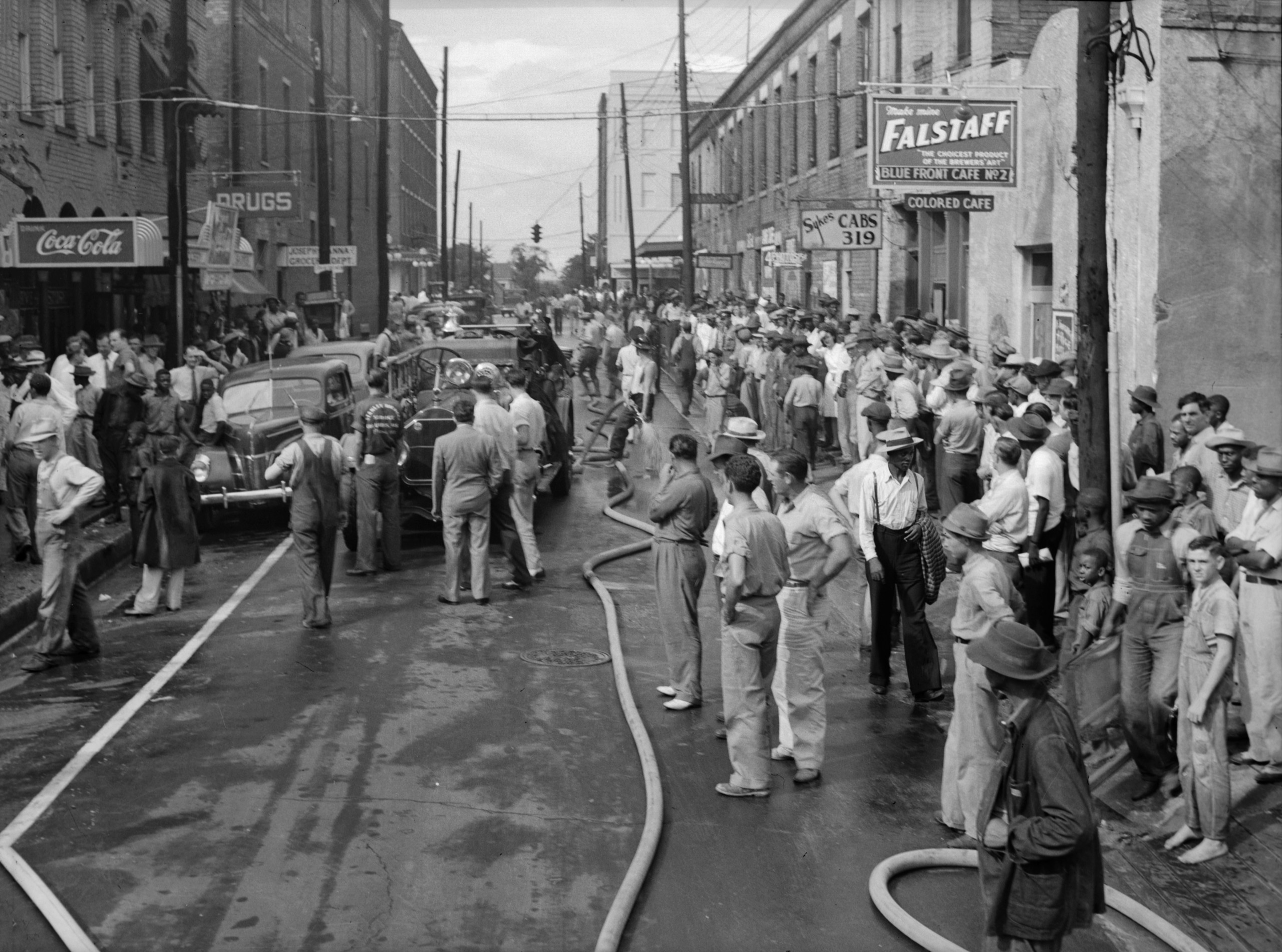
In the essay "Catfish Alley Fire," which accompanies Pruitt's book-cover photograph of the same title, Hudson braids his history of Columbus's former "one-block-long strip of flourishing Black businesses," with the memories of Black and white residents. The effect turns the photograph into a palimpsest of overlapping and competing stories. Although a Black business district, white men visited Catfish Alley to play poker, eat fish and barbeque, and drink illegal whiskey. Some later romanticized it in their memories, portraying it as a place redolent of fried fish and moonshine where the proprieties of middle-class life could be left behind. "Drink whiskey and eat fish," one white man remembered, "That's about all it was to it." But for Black businessman Edward C. Bush, Catfish Alley was a place of Black economic and cultural independence, a refuge from the worst of Jim Crow's indignities.13Hudson, O. N. Pruitt's Possum Town, 110–111.
Pruitt's "Catfish Alley Fire" photograph represents some small portion of the tension between these two sets of memories. Taken about 1940, it shows people congregating on the street to watch the fire department respond to a blaze that's out of view. It's an allusive image, a "tableau of street theater," Hudson writes, that corrals the contradictions of Jim Crow into one city block. Black and white, mostly men, stand in the vicinity of a sign for a "Colored Café" and stare at the fire looming beyond the left frame. It's the rare event that breaks the everyday, but in their proximity, Black and white are distanced, alienated, from each other. The fire hoses snaking along the street form cordons and ligatures, markers of segregation and the ties that bound Black and white together despite it.14Hudson, O. N. Pruitt's Possum Town, 110–111.
The hose can also be read as a rope, a symbol of the white supremacist violence—real and threatened—that runs through Pruitt's photographs in this book. Possum Town opens with a series of beautiful portraits of Black and white sitters and images that illuminate the landscape. Then, abruptly, Hudson presents a photograph of a Black boy with a bloodied nose and blood-stained shirt. He stares straight at Pruitt, wounded but impassive or perhaps stunned to see a camera pointing at him. The white boy over his left shoulder holds a nearly clinched left fist that correlates with the blood dripping from the Black boy's right nostril. The white boy's face conveys a mixture of satisfaction and reluctance as if the white men who stand behind him had goaded him into the fight for their more evident pleasure. The Black bystanders seem variously engaged and uneasy, perhaps tempering their deeper feelings about the bloodshed because of the presence of white men and because they know that this fight, even involving youths, is a species of the violence whites used to maintain power. Hudson's decision to juxtapose this image with a pastoral photograph of two white men standing in a field of oats on the opposite page suggests how suddenly "trouble" can shatter the façade of tranquility and how quickly some want to forget it.15Hudson, O. N. Pruitt's Possum Town, x.
Hudson's book includes two photographs that frame white killings of Black men. The first, on a left-facing page, from 1934, shows James Keaton, a Black man, standing at the gallows with white officials who will soon carry out his execution by hanging. On the opposite page appears one of Pruitt's 1935 photographs of the bodies of Bert Moore and Dooley Morton hanging from a tree following their lynching by a mob. These images are preceded by two photographs of different blackface minstrel shows performed by white youths and Kiwanis Club members and one image of the Klan marching at night through Columbus and passing in front of the photographer's studio. By placing these photographs immediately before the images of executions, Hudson suggests how ritualized theatrical and physical violence conspire, how one enables the other in white racism's bloody crucible.16Hudson, O. N. Pruitt's Possum Town, 149–161.
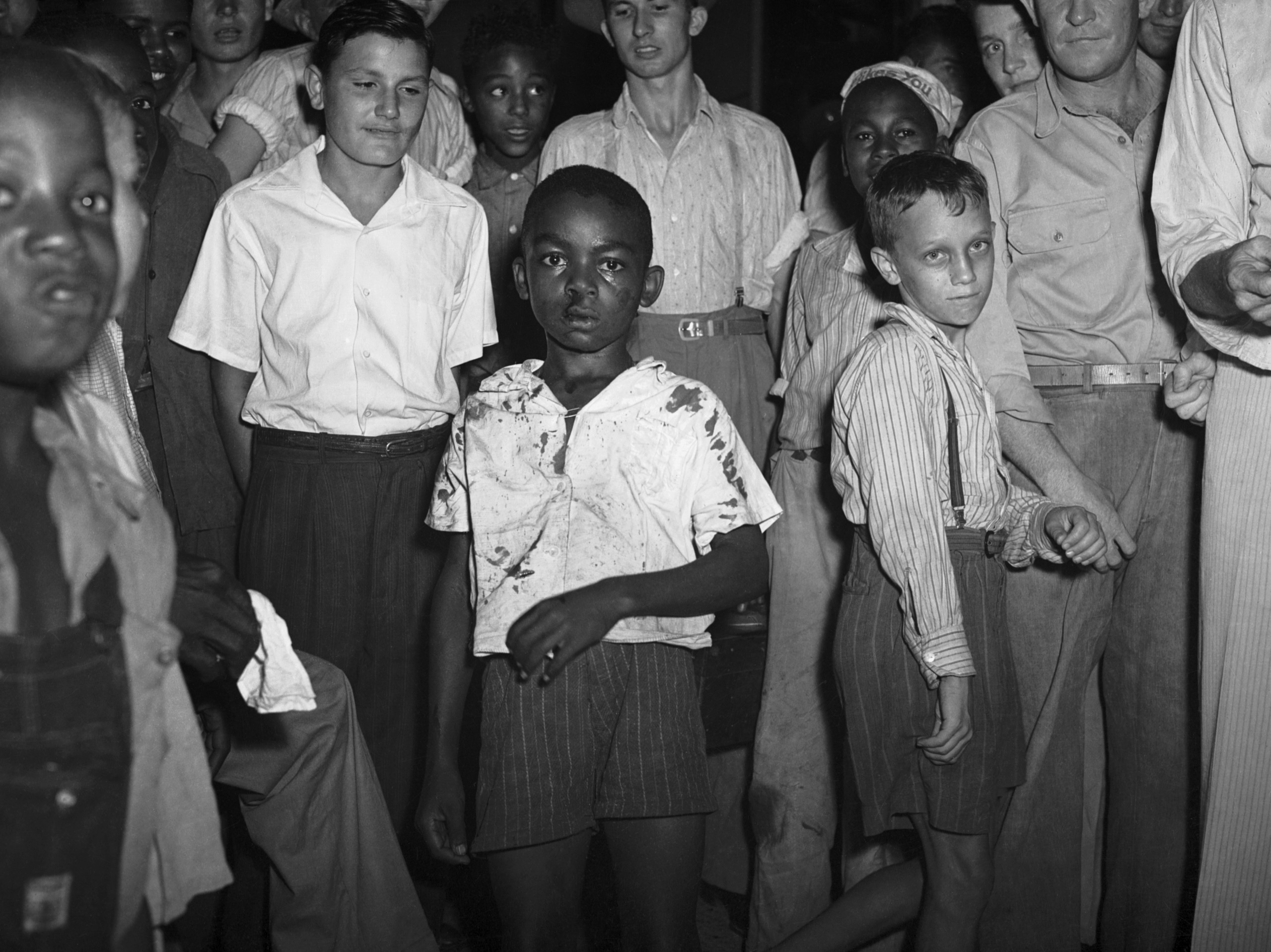
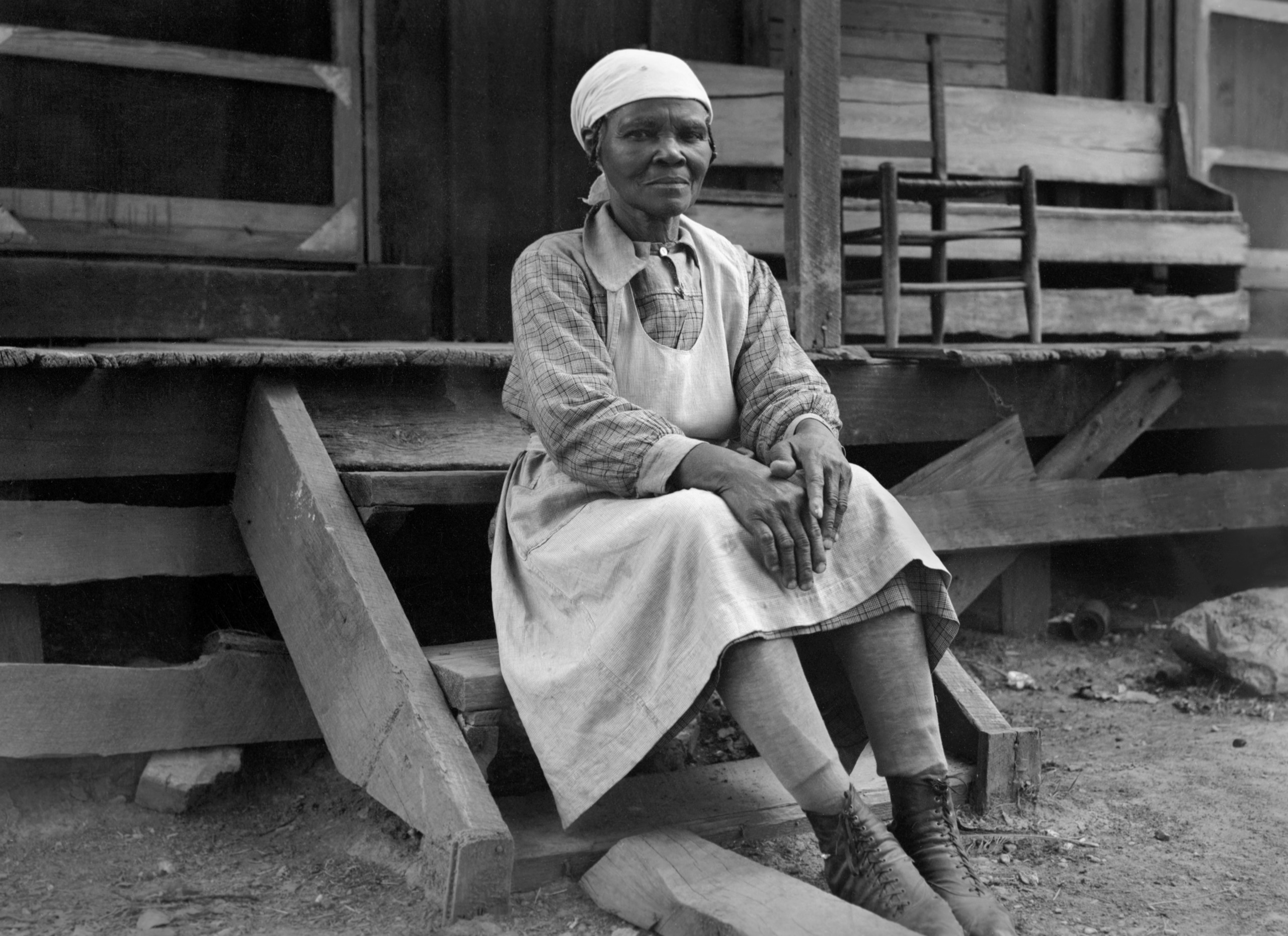
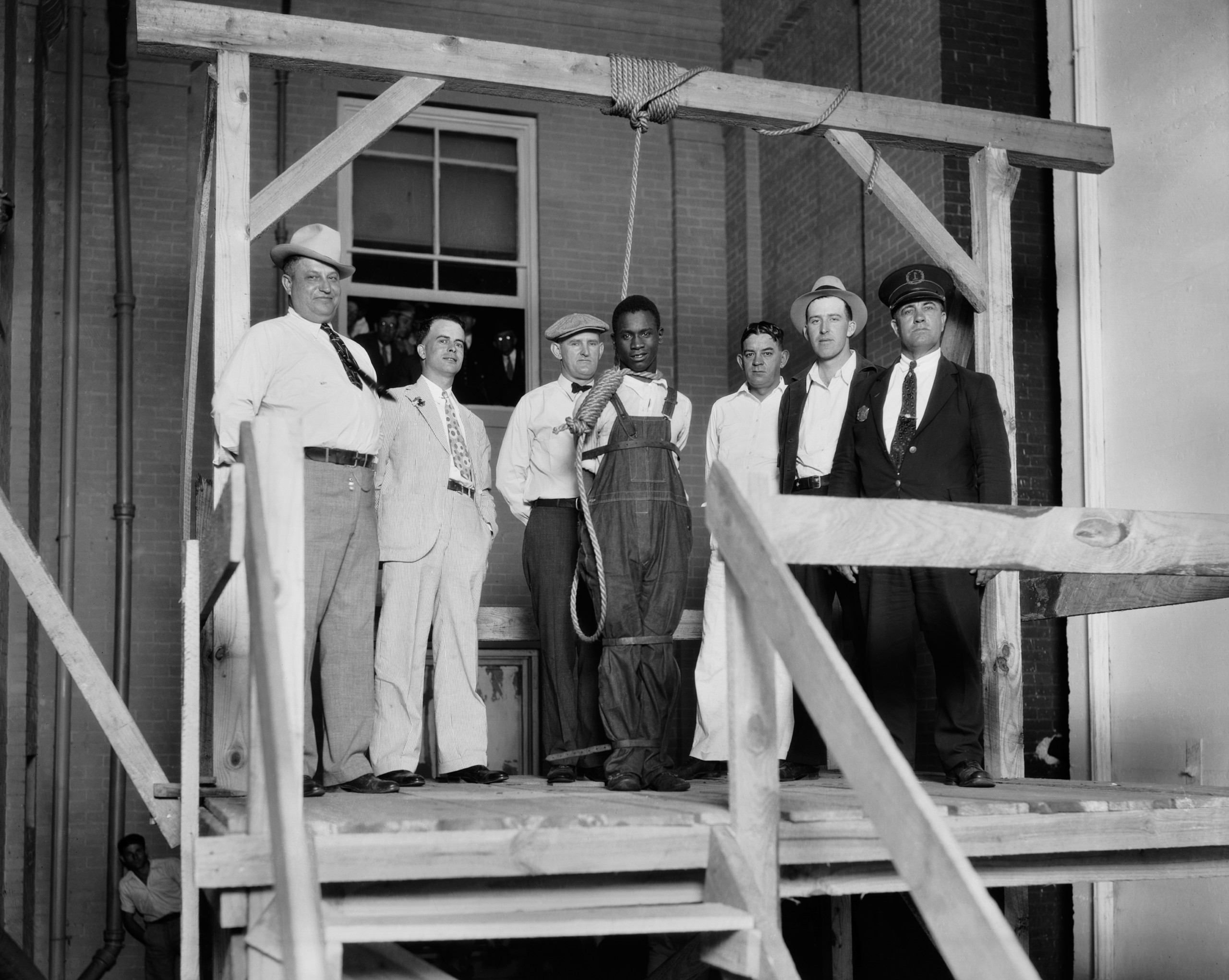
Hudson's accompanying essay to these photos provides another layer of context. In a section on Keaton's execution, Hudson explains the historical significance of Pruitt's photograph: it was the last time officials carried out a "legal" execution by rope hanging in Mississippi. An all-white, all-male jury convicted Keaton of killing a white gas station owner, although a white woman who worked nearby said he was innocent and that she knew who the actual killer was. Keaton, it turns out, was prosecuted by future US Senator and arch segregationist, John Stennis, who implored the jury to convict and "help advance civilization by removing this cancer."17Hudson, O. N. Pruitt's Possum Town, 152–153.
Pruitt's photograph of Keaton at the gallows looks like a re-creation of a scene from some macabre play, which, of course, it is in a sense. Most of the men, including Keaton, feign grins except for the official on the far right who stares at Pruitt's camera with stern self-importance and smugness. Spectators peer from below and behind the scaffold, including through a courthouse window where, in one case, the camera's flash caused a man's eyes to emit a spectral glow. Hudson calls this a "tableau vivant, a living picture, at the death's moment," though it's also a tableau mort, one Pruitt took in service of white supremacy. Though not pictured, Black people, including preachers, writes Hudson, were present outside the courthouse when Pruitt made the photograph at 2 a.m. on May 25. "On the courthouse lawn for hours before the execution, they had sung spirituals through the night." Hudson's sentence evokes the Black presence while stressing their physical absence from a cropped and sanitized image.18Hudson, O. N. Pruitt's Possum Town, 152–153.
Just over a year later, in July 1935, Pruitt, at the request of the sheriff, photographed Bert Moore and Dooley Morton hanging from an oak tree after a white mob lynched them in a churchyard eight miles south of Columbus. Unlike the Keaton execution image, only one white man appears here and he kneels with his back to the camera, "gathering their pant legs into a grasp," Hudson writes, "apparently to keep the bodies steady for the photograph."
The photograph remains Pruitt's most recognized and widely circulated, and its divergent uses have mirrored the contradictions of its creator. White supremacists made it into postcards, while Nazis used or referenced it as propaganda to expose American barbarism, as did the Black press, including the Chicago Defender, Jet, and Afro World. In the 1960s, SNCC used the photograph on posters to promote voting rights in Mississippi. More recently, it was used in the 2016 documentary, I Am Not Your Negro, by Raoul Peck based on an unpublished James Baldwin manuscript, and in a 2021 CNN special about Marvin Gaye's song, "What's Going On."19Hudson, O. N. Pruitt's Possum Town, 155 and 213.
Thanks to Hudson's book, the public can now see and interpret this photograph in light of Pruitt's broader archive, or at least a portion of it. The extraordinary range of Pruitt's photographs, and the vivid stories Hudson tells about them, offers readers a unique opportunity to see the relationship between the quotidian habits and brutal horrors of life in a Mississippi Black Belt town during the depths of Jim Crow. Seen alongside the work of contemporary Black community photographers such as Richard Samuel Roberts and Rev. L. O. Taylor, Possum Town can also shed light on how whiteness and the strictures of segregation result in an archive that obscures as much as it reveals. So far, librarians at UNC, Chapel Hill, where Pruitt's work is located, have only been able to digitize a small portion of Pruitt's massive collection. As more images become available for public access in the future, other curators can build their own chronicles of Pruitt's work on Hudson's remarkable foundation.
About the Author
Scott L. Matthews is a professor of history at Florida State College at Jacksonville. He is author of Capturing the South: Imagining America's Most Documented Region (Chapel Hill: University of North Carolina Press, 2018) and "John Cohen in Eastern Kentucky: Documentary Expression and the Image of Roscoe Halcomb During the Folk Revival."
]]>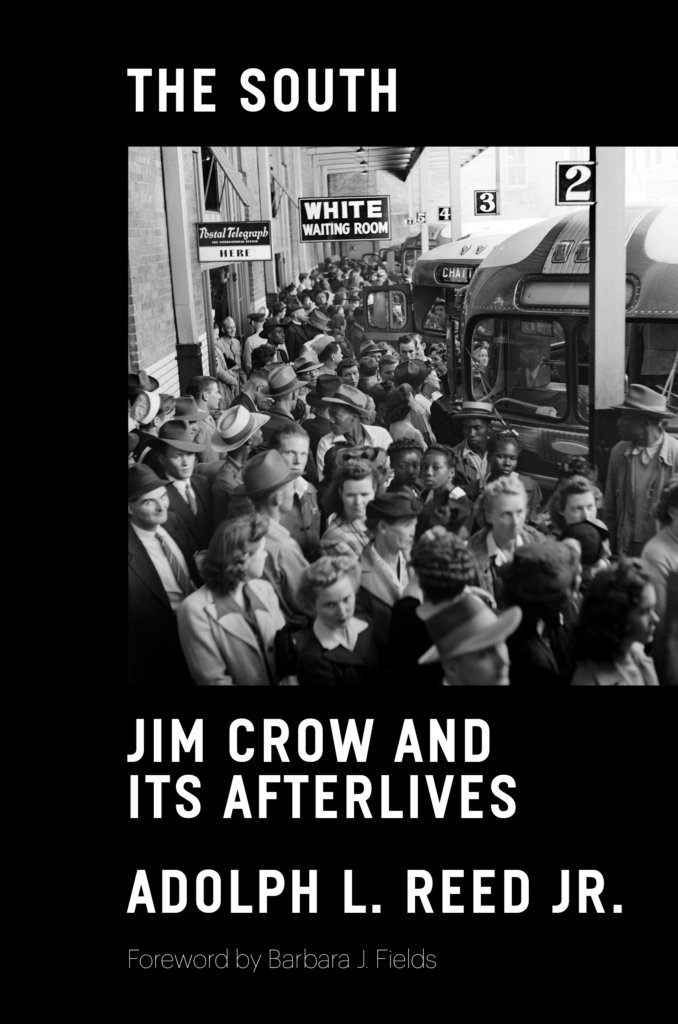
In this short book, distinguished political scientist Adolph L. Reed, Jr. offers remembrances from his early life below the Mason-Dixon line as a member of the last African American generation who came of age during Jim Crow. Reed writes with a purpose—not to chronicle his own pivotal events, hardships, or personal demons, nor to proclaim general truths. Instead, he aims to prevent misconceptions he fears are taking root about the uniform nature of the segregated South and forestall mistaken present-day lessons that ignore the role of class in the racial order of the Jim Crow South.
Reed considers himself a southerner with "a small asterisk."1Reed, Adolph L. Jr., The South: Jim Crow and Its Afterlives (New York: Verso Books, 2022), 9. Born in the Bronx, he was in grammar school in Washington DC, in 1954 when the Supreme Court handed down Brown v. Board of Education. Later, his parents, natives of the Arkansas Delta and New Orleans, moved back to the South where he grew up in Pine Bluff, Arkansas,and the Crescent City. Reed attended college in Chapel Hill, North Carolina and Atlanta and traveled the region while doing summer jobs. He taught at colleges and universities in Atlanta and worked in the city government during the second term of its first Black mayor, Maynard Jackson. He then returned north where he has spent most of the last forty years—primarily at Yale, Northwestern University, and the University of Pennsylvania—teaching and writing about the importance of the working class and the role of class in racial politics.
Although entitled The South, Reed's book illuminates how he and others experienced several different "Souths," where culture, class, ideology, and the laws emerging from segregation varied by geography in practice and form. Reed came to understand that Black people of all ages had to learn differing local white rules of Jim Crow if and when they moved to new places across the southern states—and even in the same city where rules applied differently store-by-store or block-by-block with varying degrees of racial humiliation. For example, one white-owned shop in New Orleans allowed Reed's family to try on clothes before purchase, but in others not shoes or not hats. Some stores permitted no Black person to try the fit of any merchandise. Mistakes in knowing a local "calculus of tolerance" could involve much more than indignity for old or young. "Fourteen-year-old Emmett Till," Reed writes, "was murdered in nearby Mississippi on a family visit from Chicago in 1955 because he unknowingly violated a local rule of subordination in a way that was interpreted as 'getting fresh' with a white woman."2Reed, 12.
"If bristling at Jim Crow's injustices were especially prominent in my consciousness," Reed writes, "it was partly because, as a result of moving around, I was always struggling to learn the local rules and grammar of subordination and how to craft a normal kid's and adolescent's life within them." As the son of well-educated Black teachers, Reed adds, "Where I lived and my family's class position also made it easier to cultivate and express indignation." 3Reed, 13.
The pervasive but varying conditions of white supremacy meant that the places where Black people could be their own free selves, away from everyday racial dangers and indignities, lay within their own segregated communities—especially in Black churches and schools where few whites often entered. As a child living in Pine Bluff, Arkansas, Reed had contact with hardly any white persons because his middle-class father taught at the local historically Black college and his parents kept him close to home near the campus.
Black families deployed a variety of defenses. Traveling on a ferry boat with his grandmother, Reed asked her why chicken wire had been strung between the segregated seating areas. "Well, you see," she stage-whispered, "a lot of crazy people ride this ferry, and they have to sit on the other side."4Reed, 11–12.
Reed's vignette echoes forms of sly resistance, such as that recalled by Mississippi civil rights leader Aaron Henry, growing up under Jim Crow a generation earlier. As a boy, Henry repeatedly complained to his mother that the local white children were able to attend school for seven months but he could only go to school for five. "Aaron," his mother finally responded, "you my boy—and you don't need but five. The rest of them jokers they got to have seven." "Hell, I been cocky ever since," Henry insisted.5Worth Long, "Aaron Henry from Clarksdale," Southern Changes, 5, no. 5 (1983): 9–12. https://southernchanges.digitalscholarship.emory.edu/sc05-5_001/sc05-5_007/.
Passing as white occupies a full chapter as Reed explores the making of racial identities. During his teenage years in New Orleans, passant blanc was often accepted in the Black community as a personal choice, not so much a betrayal of the race. Reed remembers that in the city's Seventh Ward, a family of first cousins with the same surname occupied two sides of a duplex house. "The family on one side lived as black; that on the other side lived as white, and they all acknowledged one another."6Reed, 92–93. In his own family, an adult with light skin color occasionally posed as white to get some prized local delicacy or quicker service from an all-white restaurant, or to momentarily avoid a racial indignity.
Some white leaders openly acknowledged what a large number of various skin complexions meant in the real life of a society where a "one-drop rule" about race-mixing was used to demarcate the presumption of racial inferiority. Reed remembers the legendary Huey Long's brother, Earl, observing in 1960 that a single serving of red beans and rice would be enough to feed all the people in south Louisiana who were truly white (without any mixed ancestry). Alabama's two-term populist governor, James "Big Jim" Folsom, said as much in 1962, after noting the presence of a large number of light-skinned African Americans in his audience. "There's a whole lot of integratin' goin' on at night" in the state's Black Belt, he declared.7Carl Grafton and Anne Permaloff, Big Mules & Branchheads: James E. Folsom and Political Power in Alabama (Athens: University of Georgia Press, 1985), 68.
In concluding his chapter on "The Obsolescence of 'Passing,'" Reed remembers he came to understand at the New Orleans Jazz and Heritage Festival during the 1990s how much the vagaries of race and identity had changed with the end of Jim Crow, especially for young middle class people whose status allowed them to mingle as one at such shared events. "People who may have identified as Cubans and Hondurans, South Asians, Italian (largely Sicilian) Americans, Isleños from the Canary Islands, and other nominal whites formed a physically and behaviorally indistinguishable blur with whoever may have been (Black) Creoles."8Reed, 103.
Throughout The South, Reed investigates continuities and changes in racism and race relations that took place as he experienced the last phases of Jim Crow and the emergence of a second "New South" in Atlanta. His recollections end around 2017 as New Orleans begins removing its most prominent Confederate statues at a time when he was often in the city due to the illness and death of his mother. As if paying tribute to his mother's generation, Reed writes a full-throated analytic attack on the mythology and symbols of the Lost Cause, ripping apart their defenders' rationale for honoring enslavers who undertook a "criminal insurrection."9Reed, 123.
Reed is quick to warn that dwelling on the modern defenders of the erstwhile slave society (touting "heritage not hate") or lingering on "explicit racial hierarchies that defined Jim Crow era" should not replace a "deep examination of the discrete processes that ground and reproduce inequality in the present."10 Reed, 110. The segregationist system of white supremacy not only was more complex and opaque than popularly portrayed today but also was not "merely about white supremacy for its own sake," Reed writes. "It was the instrument of a specific order of political and economic power that was clearly racial but that most fundamentally stabilized and reinforced the dominance of powerful political and economic interests."11Reed, 137. In other words, because "the core of the Jim Crow order was a class system," Reed insists that "a simple racism/antiracism framework isn't adequate for making sense of the segregation era . . . or challenging the forms of inequality and injustice that persist."12 Reed, 140.
This part of Reed's book is not surprising for those who know his career. As a scholar and activist who spent most of his professional life teaching and writing about race and political thought in the United States, Reed has uplifted the importance of class in understanding the dynamics of racial disparities and for dismantling structures of inequality and exploitation. However, most of his remembered experiences with Jim Crow in this book do not directly support his enduring thesis. His argument about the central role of class in The South serves as a coda to his fifty years in advancing the working class as a subject of academic study and political agenda more than a conclusion revealed from the book's remembrances.
In some respects, Reed didn't need to make a case for the importance of class in the life of the South's Jim Crow. It had been done before by himself and others, some of whom he cites in his concluding chapter. One source he did not reference but surely knows is Dr. Martin Luther King, Jr. On March 25, 1965, at the end of the Selma-to-Montgomery march, King delivered a powerful address to the nation—one overshadowed in popular culture by his 1963 Lincoln Memorial "I Have a Dream" speech. In front of the first capitol of the Confederacy, King delivered a speech that included a popular history lesson.
Citing C. Vann Woodward's The Strange Career of Jim Crow, King told the crowd that "the segregation of the races was really a political stratagem" of the South's elite "to keep the southern masses divided and southern labor the cheapest in the land. You see," he explained, "it was a simple thing to keep the poor white masses working for near-starvation wages in the years that followed the Civil War."
King recalled the South's Populist movement when its leaders "began awakening the poor white masses and the former Negro slaves to the fact that they were being fleeced" and "began uniting the Negro and white masses into a voting bloc that threatened" to dislodge elite white control of the South's political power. "To meet this threat, the southern aristocracy began immediately to engineer this development of a segregated society" that became "the roots of racism and the denial of the right to vote," King told thousands who had marched with him for voting rights. "Through their control of mass media, they revised the doctrine of white supremacy. They saturated the thinking of the poor white masses with it." They established segregated laws often making it "a crime for Negroes and whites to come together as equals at any level. And that did it . . ."
"If it may be said of the slavery era," King proclaimed, "that the white man took the world and gave the Negro Jesus, then it may be said … that the southern aristocracy took the world and gave the poor white man Jim Crow."13"Address at the Conclusion of the Selma to Montgomery March," March 25, 1965, The Martin Luther King Jr. Research and Education Institute, Stanford University, Audio, 29:21, https://www.learnoutloud.com/Free-Audio-Video/History/American-History/How-Long-Not-Long/90591.
In remembering the Jim Crow he experienced, Adolph Reed has added nuance and insight to understanding the segregated South as it came to a formal end. In this book and others, Reed has placed himself in the company of southerners who came before him, scholars and activists alike, who devoted their life's work to the search for strategies and means to build a necessary interracial coalition to make democracy work in the nation—and to finally entomb Jim Crow with no chance for an afterlife.
About the Author
An adjunct with Emory University's Institute for the Liberal Arts, Steve Suitts is the author of Hugo Black of Alabama: How His Roots and Early Career Shaped the Great Champion of the Constitution (Montgomery, AL: NewSouth Books, 2017). Earlier in his career, Suitts served as the executive director of the Southern Regional Council, vice president of the Southern Education Foundation, and executive producer and writer of "Will the Circle Be Unbroken," a thirteen-hour public radio series that received a Peabody Award for its history of the civil rights movement in five Deep South cities.
]]>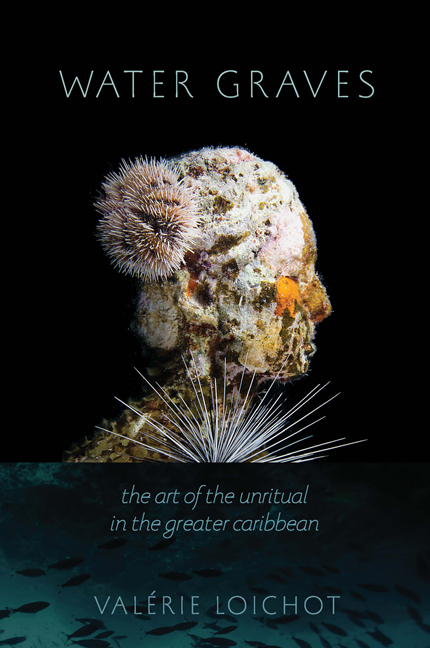
Water Graves investigates how contemporary writers and artists of the greater Caribbean (such as Jason deCaires Taylor) reinvest sites of racialized violence and environmental degradation—as so many manifestations of "unritual"—with a new sense of the sacred that allows for remembrance and re-humanization. Rituals—be they initiations, funerary rites, or collective acts of remembrance—confer "humanity" on those who practice them and sacredness on the places of these practices. The unritual comprises moments and spaces of desecration. Unritual occurs when rituals are ignored, violently suppressed or obstructed outright, and where so-called "natural" spaces are commodified, exploited, and profaned. Closely appended to Loichot's unritual are the notions of "undead" and "unrest"; the liminal zone of (non)being they demarcate emphasizes the unritual's alienating, unsettling, and dehumanizing effects before and beyond the grave.
Off the coast of Grenada, several meters below the Caribbean surface, stands Jason deCaires Taylor's Vicissitudes. It is an installation of statues which, at first glimpse, shows a group of men and women arranged in a large circle, holding hands as they gaze outward along the ocean floor. The figures bear bright red, pink, and violet protrusions of coral, undulating gossamers of seaweed, and the occasional sea star. The texture and topography of these statues' skin—their pores, wrinkles, and scars—provide the ideal environment for aquatic life to take root and repopulate this portion of ocean floor. Vicissitudes also offers another, more haunting kind of repopulation, this time by the specters of the Triangular Trade: the innumerable captives thrown overboard after dying in transit during the Atlantic crossing and condemned to perish, away from ancestral lands and families that could offer funerary rites or remembrance. As the installation confronts the degradation of coral environments, its underwater surroundings also beckon and materialize the (un)dead of the African Diaspora whose memory—likewise rarefied and threatened—inhabits these statues alongside the coral. Vicissitudes, a monument that explores the creative and memorial agency of Caribbean underwater spaces, serves as one of many objects that Valérie Loichot examines in her book, Water Graves: The Art of the Unritual in the Greater Caribbean.
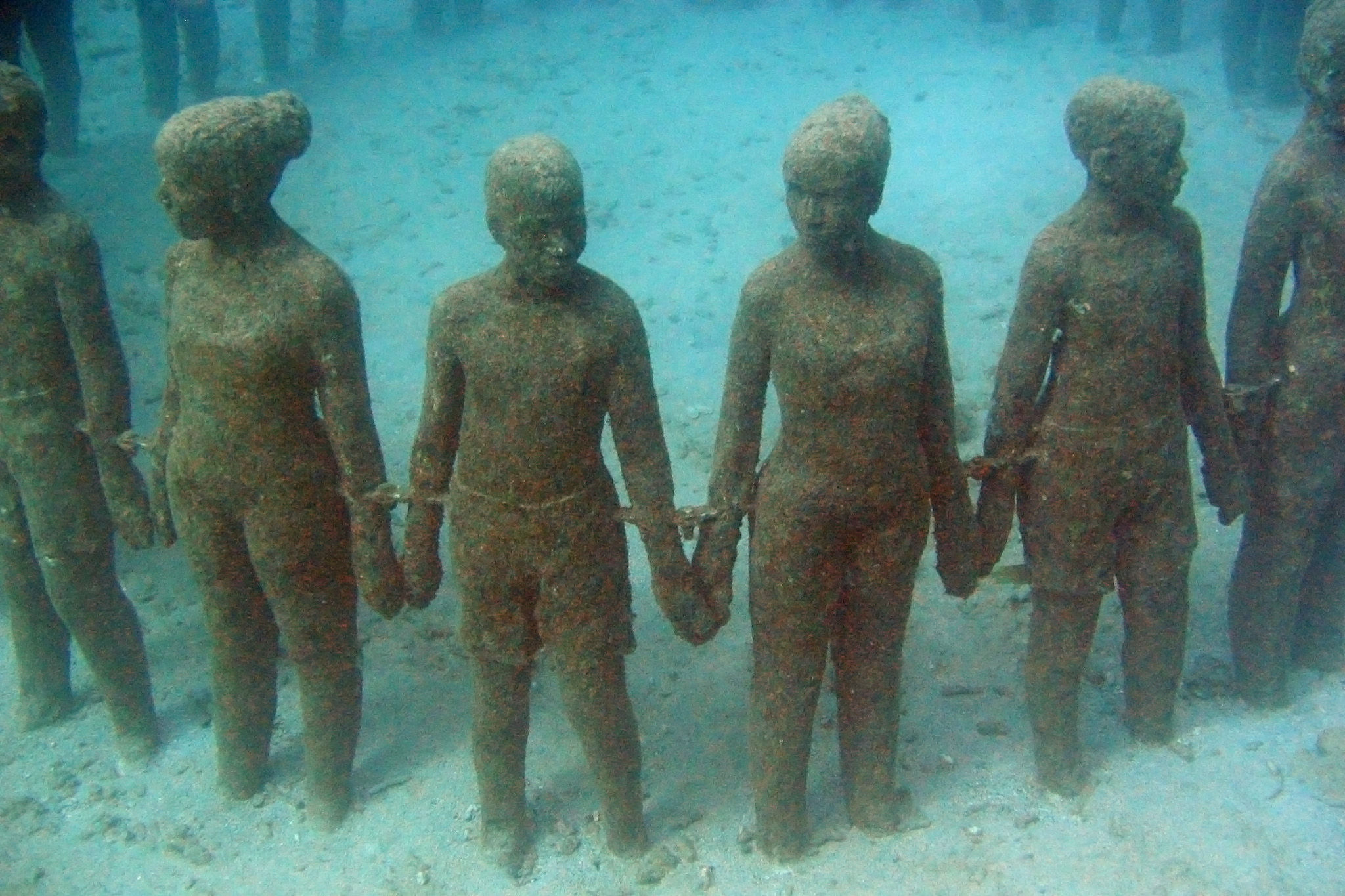
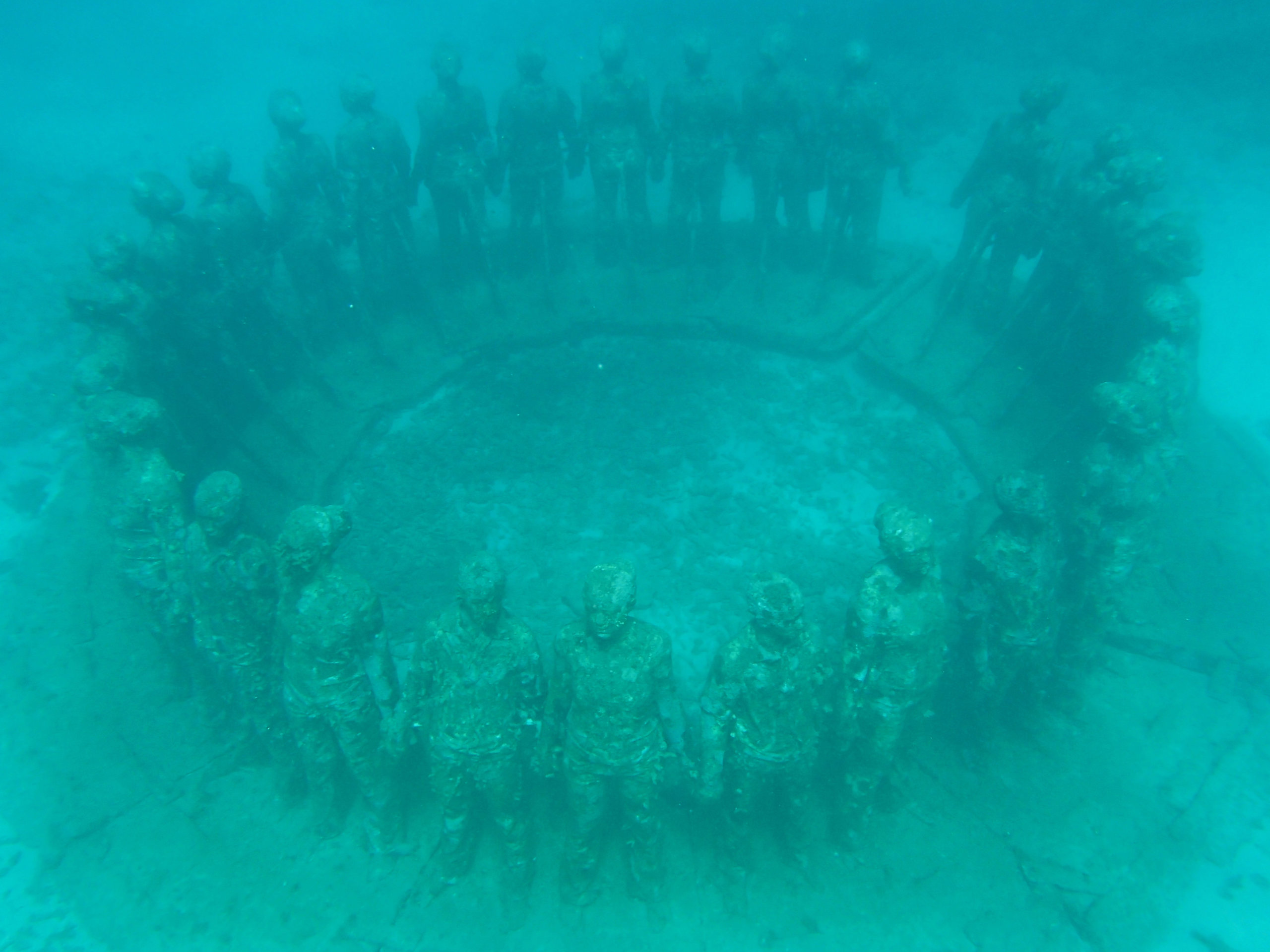




An interdisciplinary exegesis in the fields of Postcolonial Studies, Caribbean Studies, African Diaspora Studies and Ecocriticism, Water Graves investigates objects across many mediums that, like Vicissitudes, work through or heal the effects of unritual. The oeuvre of poet-philosopher Edouard Glissant serves as the opening and the theoretical springboard for the rest of the book. Here, Loichot engages the notion of "relational sacred," which draws heavily from Glissant's concepts of creolization, relaying, and entour or "surroundings."1As Loichot explains, "Entour signifies for Glissant the whole environment comprising the poem, human and nonhuman animals, vegetation, rocks, lavas, and 'nature' and 'culture.' The latter terms lose meaning since they exist in a continuum, not in a system of opposition" (28). For another in-depth look at Glissant's entour, see Carrie Noland, "Éduoard Glissant: A Poetics of the Entour," in Poetry After Cultural Studies, ed. Heidi R. Bean and Mike Chasar (Iowa City: University of Iowa Press, 2011), 143–172. This "relational sacred"—which extends the expressions of memory or ritual beyond religious confines—informs more specifically how the objects featured in Water Graves's chapters (objects of literature, music, film, visual arts, poetry, and photography) repair the effects of unritual.

Loichot's "Graves for Katrina" examines the work of mourning effected by visual artists in the wake of Hurricane Katrina. Featuring the photography of Eric Waters and the paintings and mixed-media exhibitions of Radcliffe Bailey and Epaul Julien, this chapter considers the (mis)use and subversion of frames as devices that circumscribe the spatial, temporal, and conceptual boundaries of a work. For instance, Bailey's installation, Windward Coast–West Coast Slave Trade (2009–18)—which is comprised of a large sea-like arrangement of salvaged piano keys from which emerges a lone, "African" head—eschews "framing" within a singular meaning or temporality. By evoking at once the "victims of the Middle Passage, Katrina, or [prophetically] the Haitian Earthquake" Bailey's installation goes beyond the temporal frames that would separate these events (101, 66). These overlapping and recursive temporalities, argues Loichot, prompt spectators to see similar logics of "unritual" at work in all of them, logics that signal the longue-durée effects of racialized slavery whereby Black people remain subject to violence and dehumanization.
As the objects of Bailey, Waters, and Julien spill out of conventional "frames" or conceptual boundaries, Loichot's analysis flows into the murky waters of Katrina and its racial and environmental violence in "Mami Wata the Formidable." Loichot wades through the ethical ambiguity of Kara Walker's exhibit/book, After the Deluge, and Beyoncé's visual album, Lemonade, which represent—and potentially reproduce—the violence of slavery and Katrina. Yet, in this representation and acknowledgement, Walker and Beyoncé—like Mami Wata, the titular voudou figure who grants life and death to those lost at sea—also sanctify the victims of the violence their objects traverse. Through Julia Kristeva's notion of "muck," Loichot shows the creative and "sacred" potential of Walker's and Beyoncé's portrayals of violence as the "abject substance [that] paradoxically—and horrifyingly—becomes the amniotic fluid of a new birth" (112).
"Drowned," delves further into fluid spaces—this time of the ocean floor—via Jason deCaires Taylor's Cancún Underwater Museum and Édouard Duval Carrié's paintings. These works, Loichot contends, project spectators into the space of the drowned while teasing out the links between environmental degradation, those thrown overboard during the Middle Passage, and the migrants who drown while crossing the Mediterranean today. From these underwater spaces of death, "Stone Pillow and Bone Water" turns to the "hard materiality of words" which are likened to the raw material that M. NourbeSe Philip and Natasha Trethewey shape into poetic "graves, stones, or monuments to the neglected, forgotten, or desecrated dead" (177). Loichot details how Philip deconstructs and reshapes the juridical/scientific language implicated in justifying racialized slavery: "As herself both a lawyer and a poet, Philip must rectify the law . . . by giving humanity and sacred back to the victims of the legalized unritual, through her poetic creation. Poetry—poiesis as act of making—relays a faulty even criminal, law" (204).
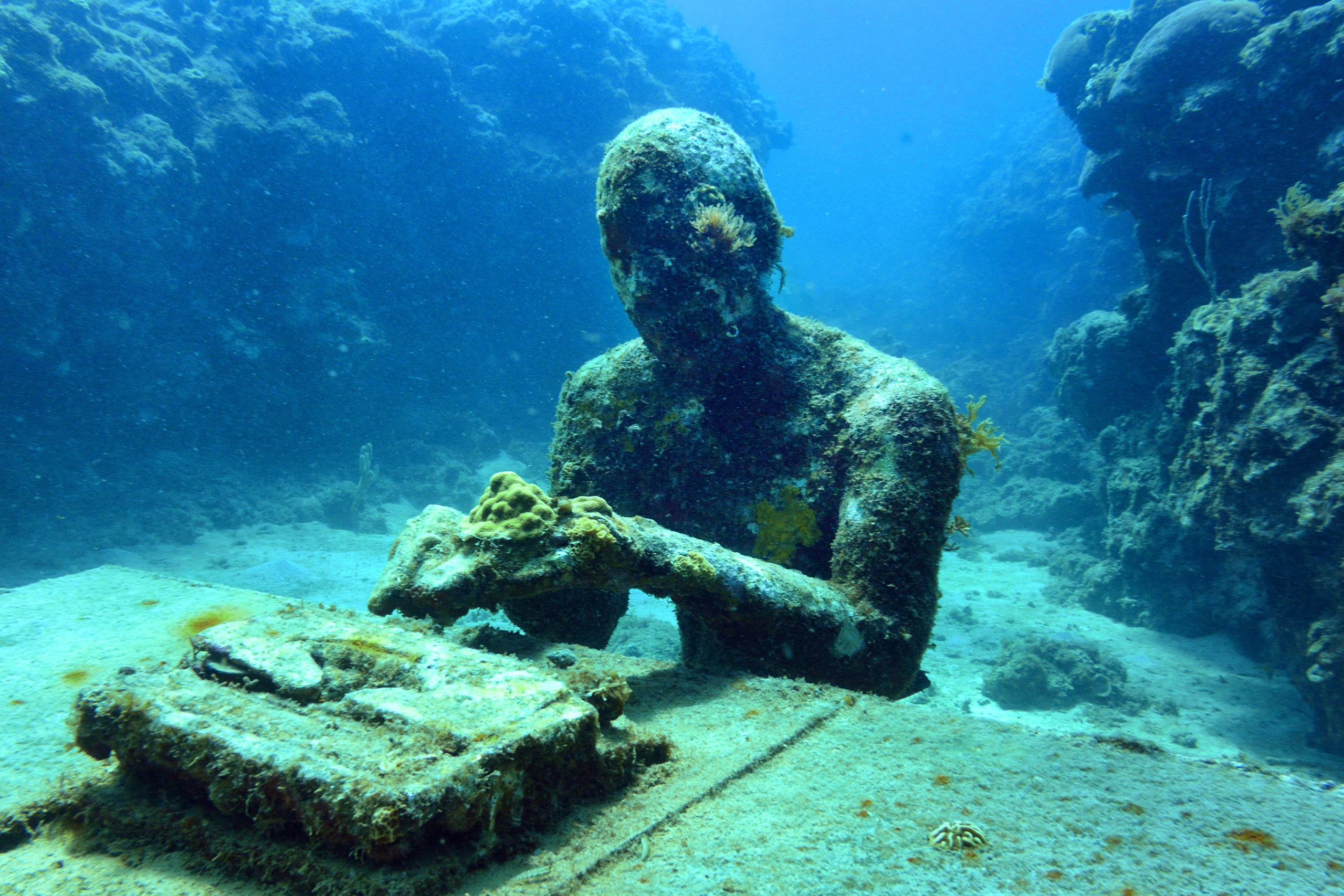
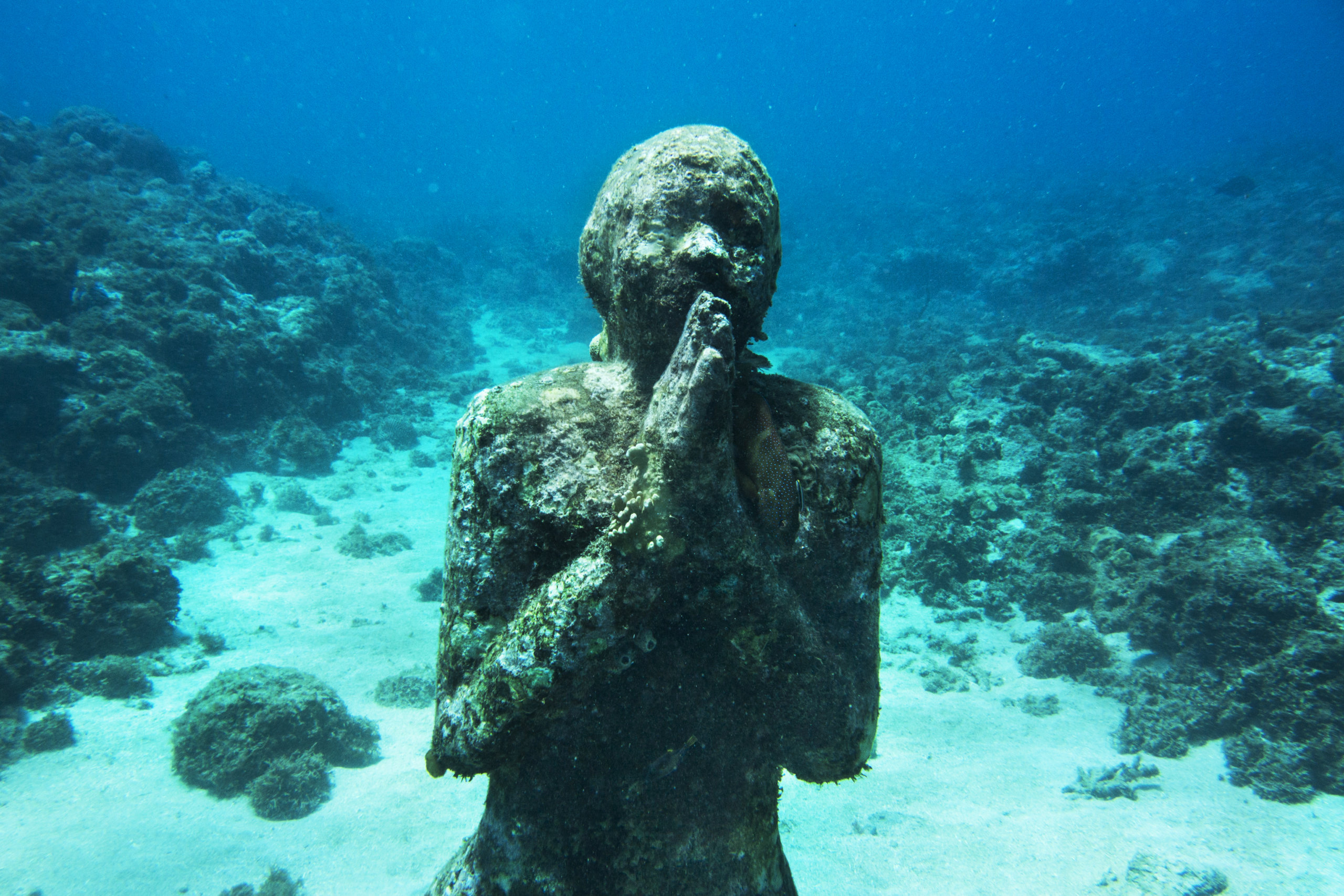
As the variety of objects featured in Water Graves indicates, Loichot's relational methodology echoes and enacts principles of Édouard Glissant's notion of "Relation," particularly that of "relaying" understood as: "an act of solidarity between those touched by the unritual, such as humans and their hurt ecologies. [Relaying] calls for disciplines like literary and artistic interpretation, history and science, to join forces where they meet the epistemological abyss of the unknown" (19). By bringing the notion of entour—which implicates so-called "natural" surroundings in "human" creativity and activity—to bear on its analyses, Water Graves effectively broadens the scope of the unritual to include the natural world, underlining connections between racial violence and environmental destruction. One of the strengths of this relational methodology resides in its juxtaposition of disparate objects. These juxtapositions not only highlight the connections among seemingly distinct historical phenomenon; they also bring into conversation creative works that confront the systems responsible for propagating the unritual. The hybrid figures in Beyoncé's Lemonade (lasiwène or the siren) and Jason deCaires Taylor's Vicissitudes, for example, challenge ontological boundaries that condition spaces of racialized violence and environmental degradation—boundaries between life and death, human and coral, sacred and profane, memory and oblivion. Loichot's treatment of these two objects—which come from different entours and mediums—reveals the poetical, creolizing, and memorial potential of underwater spaces in the Greater Caribbean. As Loichot puts it, "[t]he water is thus not a dividing line but a site of passage, flux, communication and confusion between . . . realms" (154).
Though my appraisal of Water Graves remains predominantly laudatory, I will signal two critiques in terms of its methods and conceptual vocabulary. Loichot's powerful juxtapositions showcase the poetic possibilities of creating a network of oeuvres motivated by the desire to heal and move beyond the unritual. But Water Graves's relational approach sometimes sidesteps the paradoxes highlighted by this kind of comparative work. As Shu-mei Shih proposes in her essay "Comparison as Relation," relating ostensibly dissimilar objects allows one to deconstruct boundaries (disciplinary or otherwise) erected by "certain interests" or "the workings of Power" (which Water Graves certainly does).2Shu-mei Shih, "Comparison as Relation," Comparison: Theories, Approaches, Uses, ed. Rita Felski and Susan Friedman (Baltimore: John Hopkins University Press, 2013), 79. Yet, it is equally important, Shih notes, to "evacuate and analyze" how these economic, national, or other interests nevertheless infuse the objects of comparison and their relations.3Shih, 84. That Beyoncé's album (and related concerts) garnered hundreds of millions of dollars within neoliberal capitalism—a socioeconomic system predicated on exploiting women, people of color, and vulnerable workforces in developing countries—constitutes an aporia that Water Graves acknowledges without exploring.4As indicated by the Pew Research Center, wage gaps continue to track along gender and racial lines in the U.S. Eileen Patten, "Racial, gender wage gap persists in U.S. despite some progress," Pew Research Center, July 1, 2016, https://www.pewresearch.org/fact-tank/2016/07/01/racial-gender-wage-gaps-persist-in-u-s-despite-some-progress/. Though Water Graves recognizes the album's imbrication with capitalist profit—casting Beyoncé as an embodiment of the capitalistic deity Mami Wata—it doesn't investigate how the economic "interests" underwriting her album inflect and/or constrain the work of healing or moving beyond the unritual.5bell hooks, "Beyoncé's Lemonade is capitalist money-making at its best," in The Guardian, May 11, 2016, https://www.theguardian.com/music/2016/may/11/capitalism-of-beyonce-lemonade-album. As bell hooks points out, both Beyoncé and Serena Williams are featured in the album wearing sports clothing, as Beyoncé's sports clothing line—Ivy Park—would appear the same year as Lemonade, thereby walking a fine line between dissident discourse and advertisement. This is not to say that Beyoncé's discourse is invalidated by this antagonism, nor that one can totally disengage from the "workings of Power," particularly in the era of globalization; rather, I mean to emphasize the importance of situating the discourse of a given object within its material conditions and outcomes, especially as these conditions and outcomes often constitute sites of unritual, which complicate our readings of these objects and the ways in which they relate to each other.

My second critique relates to the use of terms historically operationalized in colonial contexts to exclude non-European populations. Although its creolizing methodology works across disciplinary and cultural frameworks, Water Graves employs certain universalizing notions, notably "humanity," whose investment in a colonial epistemological tradition is not always fully interrogated. As the philosopher and novelist Sylvia Wynter writes in "Unsettling the Coloniality of Being/ Power/Truth/ Freedom," the term "humanity" has historically been invoked to exclude racialized persons from its prerogatives, and has, in fact, depended on the racialized "Other," relegated to a space of unritual in order to mark its boundaries. Indeed, Wynter tracks how the conceptions of "human" and "humanity" came to correspond with "reason" and "rationality" in Renaissance Europe (and continue to do so today), whereas the conditions of "subrationality" and uncivilization were used to characterize colonized populations.6Sylvia Wynter, "Unsettling the Coloniality of Being/Power/Truth/Freedom: Towards the Human, After Man, Its Overrepresentation—An Argument" in CR: The New Centennial Review 3, no. 3 (2003): 266, 301. In other words, under the guise of describing the entire "human race," the term "humanity" has come to reify and universalize Western values and ideals. Although Water Graves's introduction construes "humanity" in an inclusive way—proposing that rituals "of the sacred" writ large are "a defining mark of humanity"—the text leaves unattended its watermark of exclusion and eurocentrism (7). The uninterrogated use of "humanity," then, potentially constitutes a discursive site of "unritual"—what Loichot's objects and analysis strive to "heal"—as its eurocentric and exclusionary connotations of so-called "rationality" and "civilization" implicitly accompany its evocation. Explicitly deconstructing the history and usage of "humanity" while signaling a plurality of humanities would not only eliminate the tension created by the colonial baggage of this term, but would also dovetail with Glissant's conception of Relation which rejects universalizing concepts, while insisting on multitudinous humanities.
Water Graves is an important and compelling study for anyone interested in the Caribbean, Afro-Diasporic experiences, colonialism, and slavery, as it engages with the enduring aftereffects of their histories, including how artists reinscribe them with new meanings. Loichot's work merits praise for its epistemological and methodological originality as she extends Glissant's concepts of Relation and relaying. In literary, artistic, and musical objects from across the Caribbean, Loichot skillfully interweaves questions of (post)colonial legacies, environmental degradation, and social justice in order to explore these objects' often unexpected correspondences as well as their tensions. Ultimately, Loichot demonstrates how literary and artistic exegesis "relate" with its artistic objects in ways that not only explore the memory and trauma of the unritual and its resacralization, but that also engage new modalities and transdisciplinary vocabularies for comparing creative works across the broader Caribbean.
About the Author
Aaron Witcher is a PhD Candidate in French and Francophone Studies at The Pennsylvania State University.
]]>Christina Sharpe, scholar of English literature and Black studies, articulates the concept of "the wake" as a way of thinking about the long term impact of slavery upon African American life. In her work on symbolism in African American literature and visual culture, Sharpe argues that the wake symbolizes the "endurance of anti-Blackness . . . the on-going problem of Black exclusion from social, political and cultural belonging; our abjection from the realm of the human."1Christina Sharpe, In the Wake: On Blackness and Being (Durham, NC: Duke University Press, 2016). More than a metaphor, and sparing no spaces or institutions, the wake exemplifies the ways that white people have constructed African Americans as deviant, criminal, and pathological. As much as any professional group, medical practitioners have contributed to the construction of African Americans as physically, intellectually, and mentally inferior to white people.2Rana A. Hogarth, Medicalizing Blackness: Making Racial Difference in the Atlantic World (Chapel Hill: University of North Carolina Press, 2017); Christopher D. E. Willoughby, "Running Away from Drapetomania: Samuel Cartwright, Medicine and Race in the Antebellum South," Journal of Southern History 84, no. 3 (August 2018): 579–614; Sharla Fett, Working Cures: Healing, Health and Power on Southern Slave Plantations (Chapel Hill: University of North Carolina Press, 2002); Todd Savitt and James Harvey Young, Disease and Distinctiveness in the American South (Knoxville: University of Tennessee Press, 1988); Marli F. Weiner with Mazie Hough, Sex, Sickness, and Slavery: Illness in the Antebellum South (Urbana: University of Illinois Press, 2012). These attitudes continue to plague current approaches to health care, so that many African Americans live every day in the wake of racism that shapes their physical and mental health.
Recently historians have begun to consider the role of psychiatry in the making of these disparities, exploring the intersection of racism and mental health in Harlem, Pennsylvania, and Washington, DC.3Dennis Doyle, Psychiatry and Racial Liberalism in Harlem 1936-1968 (Rochester, NY: University of Rochester Press, 2016); Jay Garcia, Psychology Comes to Harlem: Rethinking the Race Question in Twentieth-Century America (Baltimore, MD: Johns Hopkins University Press, 2012); Martin Summers, Madness in the City of Magnificent Intentions: A History of Race and Mental Illness in the Nation's Capital (New York: Oxford University Press, 2019); Martin Summers, "'Suitable Care of the African When Afflicted with Insanity': Race, Madness and Social Order in Comparative Perspective," Bulletin of the History of Medicine 84, no. 1 (2010): 58–91; Matthew Gambino, "'These Strangers within Our Gates': Race, Psychiatry and Mental Illness among Black Americans at St. Elizabeth's Hospital in Washington DC, 1900-1940," History of Psychiatry 19, no. 4 (2008): 387–400; Gabriel N. Mendes, Under the Strain of Color: Harlem's Lafargue Clinic and the Promise of an Antiracist Psychiatry (Ithaca NY: Cornell University Press, 2015); Anne E. Parsons, From Asylum to Prison: Deinstitutionalization and the Rise of Mass Incarceration after 1945 (Chapel Hill: University of North Carolina Press, 2018). This scholarship builds on the work of psychiatrist and historian Jonathan Metzl. At the Ionia Asylum in Michigan, Metzl documented the ways that the diagnosis of schizophrenia began to skew disproportionately towards Black men in the wake of the Civil Rights movement. Metzl argues that this was an intentional act occurring at the same time as pharmaceutical advertising which cast the Black man as pathologically aggressive, rather than rightfully angry.4Jonathan M. Metzl, The Protest Psychosis: How Schizophrenia Became a Black Disease (Boston, MA: Beacon Press, 2010). Besides Peter McCandless's study of insanity in South Carolina,5Peter McCandless, Moonlight, Magnolia and Madness: Insanity in South Carolina from the Colonial Period to the Progressive Era (Chapel Hill: University of North Carolina Press, 1996). little scholarship has centered on southern states. Two recent books by Wendy Gonaver and Mab Segrest explore some of this missing history. Gonaver's The Peculiar Institution and the Making of Modern Psychiatry 1840–18806Wendy Gonaver, The Peculiar Institution and the Making of Modern Psychiatry 1840–1880 (Chapel Hill: University of North Carolina Press, 2018). traces the linked histories of the Eastern Lunatic Asylum and the Central Lunatic Asylum in Virginia in the context of slavery and emancipation. Segrest's Administrations of Lunacy: Racism and the Haunting of American Psychiatry at the Milledgeville Asylum7Mab Segrest, Administrations of Lunacy: Racism and the Haunting of American Psychiatry at the Milledgeville Asylum (New York, The New Press, 2020). deals with the first hundred years of Georgia's Central State Hospital in Milledgeville from its establishment in 1842.8This review uses the words for the mentally ill that are prevalent in the literature at the time which did not differentiate between the developmentally disabled and mentally ill in the same way we do today. Therefore, words like "Lunatic" and "Idiot" appear in both the names of asylums and in medical literature. They used here only in the ways they are used in the original sources. I consider these books together because they deal explicitly with the impact of racial thinking on psychiatric practices and seek to place state hospitals in the broader context of slavery and its consequences. They also present an intriguing comparison in their access and approach to sources. What we can know about the past is always limited by the silences of the archive, requiring the expertise of historians to read between the lines or seek hidden voices elsewhere.9Britt Peterson, "A Virginia mental institution for Black patients, opened after the Civil War, yields a trove of disturbing records," Washington Post, March 29, 2021, https://www.washingtonpost.com/lifestyle/magazine/black-asylum-files-reveal-racism/2021/03/26/ebfb2eda-6d78-11eb-9ead-673168d5b874_story.html. The challenges of the psychiatric archive are well demonstrated by the work in progress related to the Virginia asylums after the Civil War. Both of these books demonstrate the challenges and the potential of reading in and beyond the archives. Gonaver's The Peculiar Institution and the Making of Modern Psychiatry is an intimate and detailed telling of the multiple lives contained within a forty-year history of Virginia's institutions based on a discrete set of sources. Segrest's Administrations of Lunacy is a history of Georgia writ large, a weaving of scattered and disparate sources from official archives to newspaper reportage that demonstrate the pivotal role that the hospital at Milledgeville played in the state's history. Both authors seek to answer larger questions about the relationship between slavery and psychiatry, and the wake created as they trace the impact of racism on the lives of the mentally ill.
Gonaver's book is based on the kind of access to sources that historians dream of. The records from Eastern Lunatic Asylum in Williamsburg, Virginia (still operating as Eastern State Hospital) remained hidden in a storage closet in the patient library of the hospital. Gonaver undertook training as a volunteer to work in the hospital, where she was then given access to the records which she then organized and assembled into a coherent collection now housed at the Library of Virginia. The collection includes correspondence and drafts of reports but also, significantly, personal diaries and journals from both workers and patients—a rare find in the psychiatric archive. Gonaver supplements these materials with records from official state sources as she seeks to demonstrate the complex network of relationships between the asylum and its local antebellum community, and between its second superintendent, Dr. John M. Galt II, and the field of medicine. Gonaver arranges the book both topically and chronologically and in doing so demonstrates the way that debates about slavery, and about Black-white relations, track with the expansion of the asylum.
Established in 1773 as the first public institution for the mentally ill in the US, Virginia's Eastern Lunatic Asylum was initially a small institution that housed three hundred patients when John M. Galt became the superintendent in 1841. Gonaver starts her history of the asylum at this point because Galt took over at a time of reform in the care of the mentally ill and he sought to bring new ideas to the way he ran the institution. These ideas quickly placed Galt at the margins of American psychiatry, largely because of his attitude towards race. Before the Civil War, Eastern Asylum employed free Black and enslaved people as attendants and staff and admitted both Black and white patients. Gonaver explains Galt's approach to having an interracial clientele, in which "no peculiar strictness is observed" in terms of accommodations for Black and white patients.10Gonaver, The Peculiar Institution, 33. In an 1848 report Galt wrote that African Americans would always be a minority of patients anyway, and that he saw no detriment to their intermingling. This attitude reflected the entwined lives of Blacks and whites at that time, especially in settings of health and healing where there were small numbers of Black patients.11Fett, Working Cures. Gonaver warns us not to read Galt's attitude as any kind of emancipatory rhetoric, but as representing the practical reality of running an institution with limited space and funding.12See Summers, Madness in the City of Magnificent Intentions. In his work on St. Elizabeth's Hospital in Washington DC, for example, Martin Summers explains how segregation based on race rather than diagnostic category finally became untenable when the space would no longer hold.

Gonaver's goal is to show that ideas about race and slavery were central to the formation of American psychiatry. The existence of enslaved people as patients or as workers doesn't in itself tell us a great deal about how that process unfolded. To do that, we need to understand more about how psychiatry itself was evolving in the mid-1800s, and here Gonaver unpacks the contradictions in the therapeutic regimen at Eastern Asylum under Galt. The prevalent treatment practice in the more progressive institutions in Europe and the US at the time was known as moral therapy, which stressed the importance of clean air and physical activity for recovery. Drawing on the example of places such as the York Retreat in the UK, American reformers designed institutions set among acres of landscaped gardens and outdoor grounds.13Nancy Tomes, The Art of Asylum-Keeping: Thomas Story Kirkbride and the Origins of American Psychiatry (Philadelphia: University of Pennsylvania Press, 1984). For paying white patients, moral therapy usually meant walking or light gardening in outdoor spaces, or needlework or carpentry inside. For Black patients, "moral therapy" meant something else entirely, and it is here that we learn the way that mental institutions operated in the wake of slavery. Despite Galt's insistence on 'intermingling,' Gonaver shows that Black patients in Virginia's asylums were effectively separated from white patients through demarcations in labor posing as therapy along lines of race and gender. At Eastern Asylum Black female patients worked in the kitchen and the laundry and Black male patients worked in the fields and farm gardens. This was not work as occupational therapy; it was work as day-long, back-breaking labor without which the institution would not have existed, and the white patients would have gone unfed.
Gonaver describes how Galt used enslaved people to care for Black and white patients, again reflecting patterns of healing relationships that existed on the plantation.14Fett, Working Cures. While Galt did not believe that the African American was equal to the white person in terms of intelligence or emotion, he did defend the work of his Black staff who he felt were just as capable of providing excellent care to patients. This bought him into direct conflict with other psychiatrists, in particular Thomas Kirkbride, a Pennsylvania physician at the vanguard of a movement to reform and modernize the psychiatric institution.15Tomes, The Art of Asylum-Keeping. Kirkbride's large and rambling architectural designs were based on the segregation of patients by gender, race, and diagnostic category. He argued publicly with Galt that it was entirely unsuitable for Black patients to be housed alongside whites, or enslaved people to be used as carers.16Summers, "'Suitable Care of the African When Afflicted with Insanity': Race, Madness and Social Order in Comparative Perspective." Kirkbride's concern was for the reputation of the psychiatric institution. His mission was to sell his new asylum plans to potential buyers (i.e., state governments) concerned with white respectability—the Black patient or attendant was anathema to that idea.
As Galt gave up trying to convince psychiatry's professional bodies of his method's efficacy, Gonaver moves away from an exploration of race relations to include materials that demonstrate intersections with religion and gender. The science of the causes of mental illness in the nineteenth century was hardly precise. Gonaver explores how Galt and his contemporaries were concerned with, as they described it, sensory overstimulation, often taking the forms of excessive religious feeling or female "hysteria." Psychiatry's concern with religious excitement formed part of a large effort to establish scientific knowledge and expertise in place of folk belief (considered superstition), especially in the South in the wake of slavery. This played out in different ways for Black and white patients, and differently again for men and women. As Sharla Fett and other historians have shown, physicians throughout the US were keen to replace traditional healing practices of enslaved Africans as well as the Catholic religiosity of Irish immigrants with what passed for modern scientific rationale.17Fett, Working Cures; Willoughby, "Running Away from Drapetomania;" Deidre Cooper Owens, Medical Bondage: Race, Gender and the Origins of American Gynecology (Athens: University of Georgia Press, 2017). Those deemed excessively religious were barely delineated from the mentally ill in the 1800s and they were frequent admittees to Galt's asylum. His approach to women demonstrated the gender bias inherent to psychiatric and medical practices, where genuine problems such as domestic violence, unhappy marriages, and abandonment were too often read as problems of female hormones. Religious excess in women was considered particularly problematic, as it challenged both domestic and public male authority. Gonaver's discussion of gender speaks to the undercurrent of violence in the nineteenth-century South, the burden of which was borne primarily by Black women. She writes: "The asylum expressly denied women's authority in religious matters, paid inordinate attention to female reproductive organs as the cause of insanity, and promoted a racialized vision of healthy womanhood that ignored the trauma of abuse. In so doing, administrators fostered dependency or passivity in white women, and disproportionately characterized black women as recalcitrant imbeciles, laying the foundation for late nineteenth-century medical and political discourse that . . . portrayed black women as naturally promiscuous."18Gonaver, The Peculiar Institution, 113.


The final chapters of The Peculiar Institution and the Making of Modern Psychiatry deal with the impact of the Civil War on Eastern Lunatic Asylum, which was left vulnerable and chaotic when Galt died from suicide via laudanum overdose in 1862. Caught in the mayhem of Confederate and Union struggles over Richmond and Williamsburg, the asylum was ransacked by both sides. The fate of patients and enslaved workers gave way to broader concerns about the status of freed African Americans in postbellum Virginia. This moment coincided with the emergence of a mental health reform movement across the US. Dr. Kirkbride was assisted in his efforts to reform institutional settings by the work of philanthropic campaigner Dorothea Dix, who advocated for state spending for the construction of new asylums. Neither Kirkbride or Dix cared particularly for the African American patient, and it was in this context that Galt's ideas of an interracial institution came to an end. In 1869, the Freedmen's Bureau took over Howard Grove Hospital in Richmond, and the thirty-six African American patients at Eastern Asylum were moved to this facility. In 1870, it became "Central Lunatic Asylum" and was dedicated solely to the care of African Americans. As Gonaver explains, this was the trend across the country, marking the beginning of Jim Crow segregation in health care. The Peculiar Institution and the Making of Modern Psychiatry concludes with a discussion of how psychiatric discourses about Black patients at the end of the nineteenth century centered around false ideas about biological difference and inherent deviance, setting the scene for a century of neglect, underfunding, and abuse.
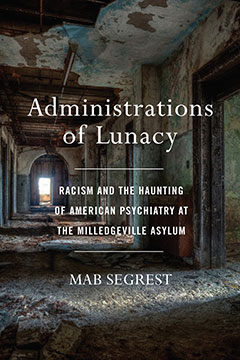
This idea that the Black patient was somehow less than human is also a central theme in Mab Segrest's Administrations of Lunacy: Racism and the Haunting of American Psychiatry at the Milledgeville Asylum. Segrest uses Sharpe's metaphor of the "wake of slavery" to explore how a place designed to treat the mentally ill inevitably manifested social relations that were shaped and haunted by the violence of slavery. This is a history that runs in blood and sweat down the walls of Milledgeville—which, as the state of Georgia used the asylum as a dumping ground for a multitude of social problems—housed more than 12,000 people by 1960.
When the Georgia State Asylum for Lunatics, Epileptics and Idiots (sometimes referred to as Milledgeville State Hospital) opened in 1842, racial segregation was central to its design and function. Unlike Galt in Virginia, Milledgeville's first superintendent, David Cooper, knew that racial segregation was essential. As Segrest documents in this vast and ambitious book, administrations of lunacy were also expressions of social relations rooted in dispossession, violence, and white supremacy. Segrest demonstrates the way that people are labelled "crazy" is a function of politics and ideology, in which the meaning of the "South" becomes the cause and symptom of the original disease.
Instead of Gonaver's intensive analysis of the institutional archive, Segrest's work is wider-ranging—due to the kinds of sources she has access to and her own interdisciplinary approach. As a historian, Gonaver strives to stay within the bounds of the archive she has uncovered, and contextualizes that archive with other formal archival sources. While she is theoretically informed and definitely interpretive, the style of writing is much more what we would expect from a "traditional" historian. As a literary scholar, Segrest takes a more creative approach. She builds on work she has written elsewhere about Milledgeville's place in the Georgia imagination—a symbol of the gothic and the grotesque.19Mab Segrest, "The Milledgeville Asylum and the Georgia Surreal," Southern Quarterly; Hattiesburg 48, no. 3 (2011): 114–150,158; Segrest, "Exalted on the Ward: 'Mary Roberts,' the Georgia State Sanitarium, and the Psychiatric 'Speciality' of Race," American Quarterly 66, no. 1 (2014): 69–94, https://doi.org/10.1353/aq.2014.0000. And she is in some ways forced to be so: the records she uses are limited, extending from the mid-1800s to the early twentieth century, and no longer available to the public. They are not systematic or comprehensive institutional records, but contain important fragments from the hospital that Segrest uses to great effect.
Segrest first sets the scene for the antebellum construction of the Georgia asylum, in the small town of Milledgeville that was the state capital at the time. As we saw with Gonaver's history of Eastern Asylum in Virginia, large estates removed from the hustle and bustle of city life were becoming the preferred place for institution-building in the context of moral therapy which stressed the importance of fresh air and clean living for recovery. Milledgeville State Hospital was built in the context of emerging concerns about the poor, indigent, and "feeble minded" as a threat to society. It also emerged at the intersection with new ideas about the capacity of medicine to "cure" the insane, rather than simply hold them in poorhouses.
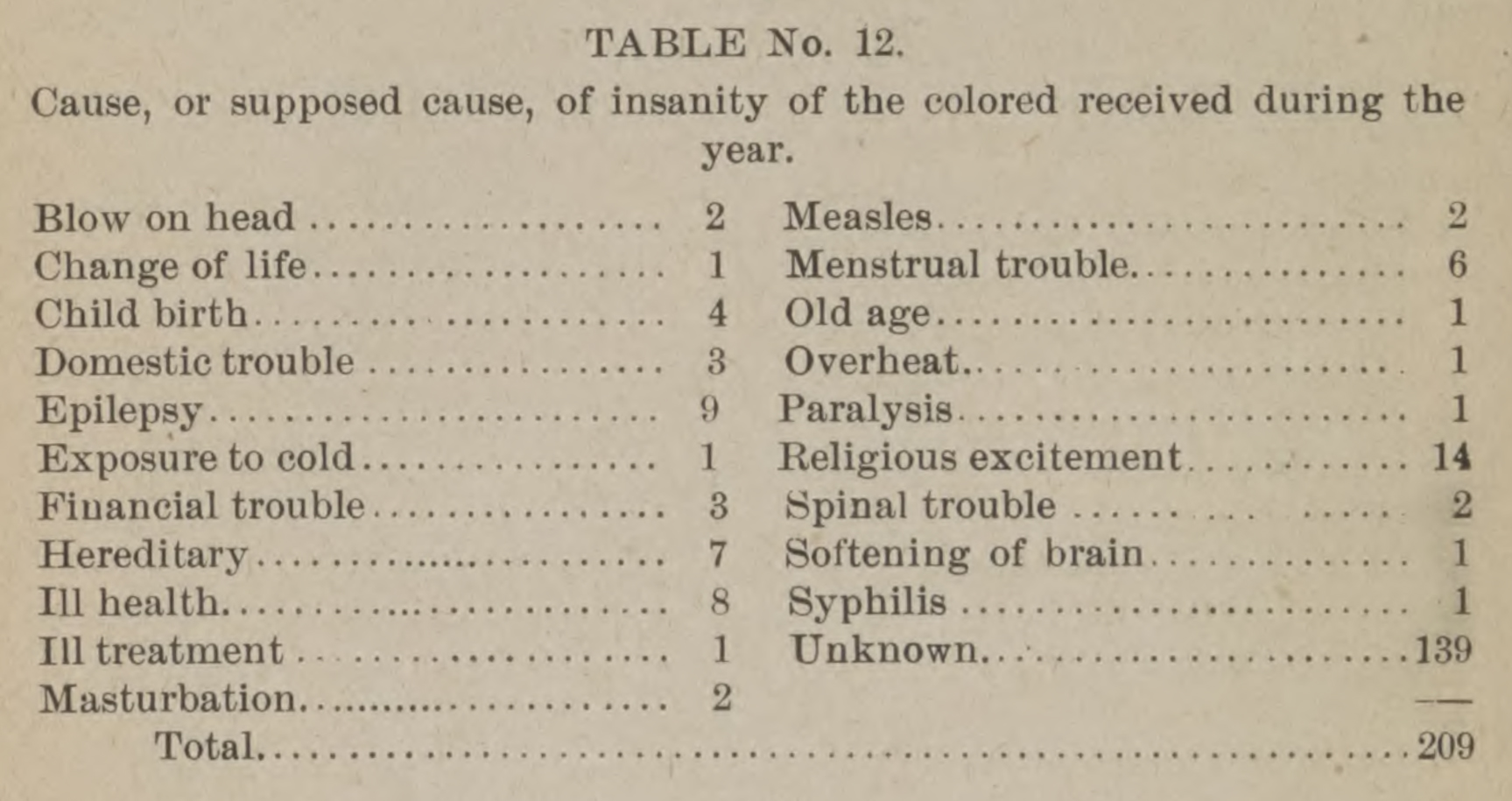



Any noble intentions in the establishment of Milledgeville were immediately undercut by the legislature's choice to eschew a Kirkbride-style facility complete with sweeping vistas and sculptured gardens, for the much cheaper single main building which housed all types of patients together, poorly constructed and badly ventilated. And much like Dr. Galt at Eastern Asylum in Virginia, Milledgeville's first superintendent, Dr. Cooper, was his own kind of eccentric. When he sent his first report for publication in the superintendents' association's journal, he made the mistake of telling the truth about his approach to treatment, which was highly aggressive, using all means of restraint at his disposal, and in a style of prose that his northern colleagues found excessive and unprofessional. He earned a severe scolding from the profession's leaders, which saw him removed within his first three years. But, valuable for Segrest, Cooper's report also included extensive case histories. She uses this "opening" to locate the patients he refers to and trace their own histories to tell us something about the lives that brought them to the insane asylum. Her intent is to read "patient narratives through and against the hospital records, newspaper accounts, literary texts, geographical journeys, and oral histories." Her goal is to overlay the history of one hospital with "the dense historical contexts that shaped its patients" and in so doing to write a "restorative history to its Georgia patients, from whose experiences and our own we can continue to understand slavery's afterlives and shape ecologies of sanity in these also turbulent times."20Segrest, Administrations of Lunacy, 10–11.
In order to show connections between the history of the South and the history of psychiatry, and between the past and the present, Segrest divides the book into five parts, from origins of the asylum to "modernity." Each centers around narratives of patients she identified in the records, and whom she traces with diligence through newspapers and census records to place them in their communities and families of origin. This approach serves to humanize the people whose lived experience was shaped by their contact with the Milledgeville Asylum, but it also shows how that asylum itself acted as a tool of social control in the context of white supremacy. The asylum provided substandard conditions for African American patients while it recreated plantation gender roles by putting Black female patients to work in the kitchen and laundry and Black men in the fields. Segrest points out the close relationship between the nearby Georgia Prison Farm. The word "Milledgeville" becomes synonymous with a multitude of ways in which Black bodies can be put to work in what Douglas Blackmon calls "slavery by another name."21Douglas Blackmon, Slavery by Another Name: The Re-Enslavement of Black Americans from the Civil War to World War II (New York: Anchor Books, 2008).
Segrest locates these practices in the context of psychiatric and medical science that itself descended from the plantation. The turn of the nineteenth into the twentieth century bought scientific obsessions with genetics, heritability, and the problem of the feeble-minded for racial purity. Drawing on writings from racist superintendents such as Doctors Green and Powell, Segrest shows how the attitudes about, and approaches towards, Black patients were "new science, old ideas." It is not simply that Black patients were routinely provided with less rations, less clothing, and inferior buildings, but that these conditions were supported by ideologies of eugenics and mental hygiene, justifying the long term confinement and reproductive sterilization of thousands of people whom the elected politicians of Georgia saw as little more than burdens on the state. Segrest demonstrates the impact of new tools such as the Binet IQ Test and the kind of surveys that put the average Georgian IQ at the bottom of national rankings and led to a rise in admissions and sterilizations numbering in the thousands. In this expansion of psychiatric technologies, the asylum acted as a catch-all for Georgia's disabled who were feared and shunned rather than cared for.

Administrations of Lunacy reaches across disciplines and sources making connections between people and institutions where records are often silent. At times Segrest's approach seems a stretch—she can only guess or hypothesize about motivations or connections that are not made explicit in the records. The book is at its best when Segrest stays grounded in the patient case files she is privy to, bringing to life some of Georgia's most forgotten and marginalized people. Because she is not a traditional historian of psychiatry, she glosses over various internal debates within the profession that shaped its mid-twentieth century approach, especially as a consequence of WWII. Her discussion of links to modernity can feel patched together from other sources, moving far beyond the walls of Milledgeville. But again, this is partly due to the limited records available.

Gonaver's primary source collection ends in 1880, Segrest's in the 1920s. While both authors attempt to make connections between their histories and the present situation in psychiatric and mental health care, neither are experts about the incredibly complex array of forces since the 1960s that have created the current set of disparities for minorities with mental illness.22Kylie M. Smith, "How bigotry created a Black mental health crisis," Washington Post, July 29, 2019. https://www.washingtonpost.com/outlook/2019/07/29/how-bigotry-created-black-mental-health-crisis. The community mental health movement of the 1960s led to the closing of massive institutions like the state asylums in Virginia and Georgia. The chronic lack of funding for alternative services has given way to what has been called "trans-institutionalization."23Bernard E. Harcourt, "From the Asylum to the Prison: Rethinking the Incarceration Revolution," Texas Law Review 84 (June 2006): 1751. Attitudes about racial differences continue to plague modern mental health services where Black and minority patients are over-diagnosed with psychotic disorders, underdiagnosed with depressive disorders, and continue to be underrepresented in service utilization data.24M. Alegria, et al., "Disparity in depression treatment among racial and ethnic minority populations in the US", Psychiatric Services, 59 no. 11 (2008): 1264–1272; D. M. Barnes and L.M. Bates, "Do racial patterns in psychological distress shed light on the Black-White depression paradox: A systematic review," Social Psychiatry and Psychiatric Epidemiology, 52 no. 8 (2017): 913–928; J. Breslau, et al., "Racial/ethnic differences in perception of need for mental health treatment in a US national sample," Social Psychiatry and Psychiatric Epidemiology, 52 no. 8 (2017): 929–937. These are national concerns. Many of the problems of Virginia and Georgia's state hospitals were endemic to all large institutions across the US. What Gonaver and Segrest's studies reveal is how the long history and peculiar institutions of Jim Crow segregation ripple through the decades, finding ways to reap themselves on the minds and bodies of Black Americans. Both books are more than partial histories of psychiatry. They are important studies of the ways that institutions such as psychiatric hospitals act as sites through which we can understand broader social relations particular to time and place. They reveal the multiple ways that the wake—the legacy of slavery—continues to shape our national society.
About the Author
Kylie Smith is an associate professor and the Andrew W. Mellon Faculty Fellow for Nursing and the Humanities in the Emory University School of Nursing. She is also associate faculty in the Department of History at Emory University. Her book Jim Crow in the Asylum: Psychiatry and Civil Rights in the American South will be published by the University of North Carolina Press in 2023.
]]>