Introduction
I remembered back to my coming-out days in San Antonio, Texas, in the early 1960s and realized that I had lived long enough and been out long enough to be historic.
— Carolyn Weathers
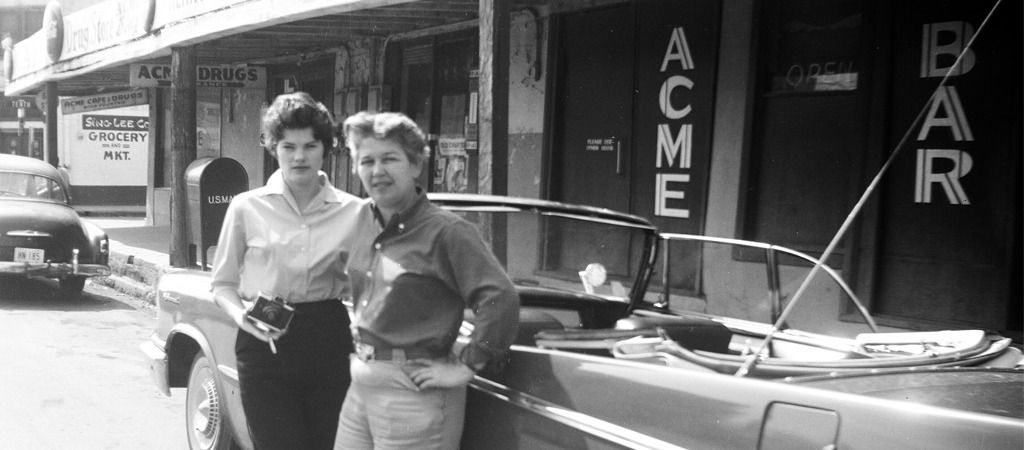
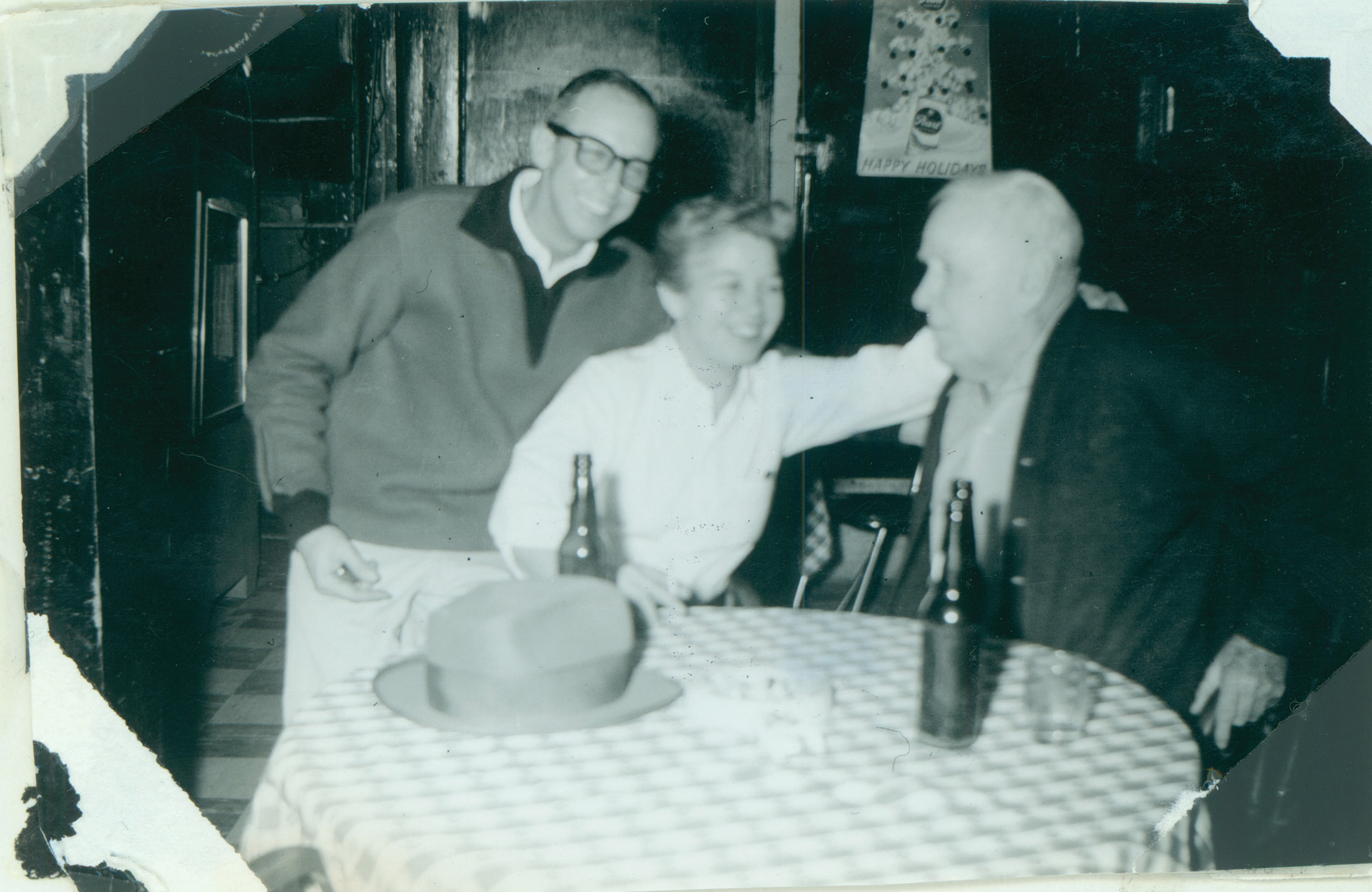
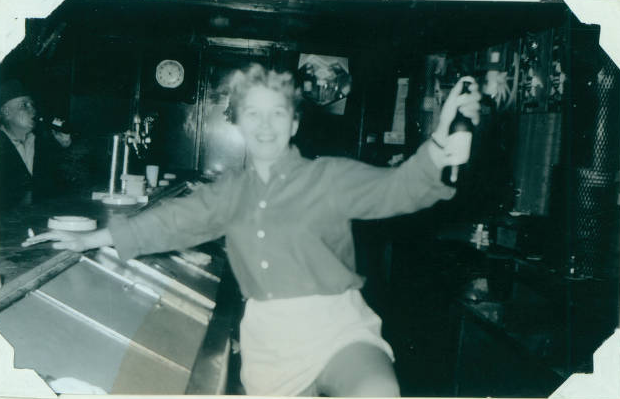
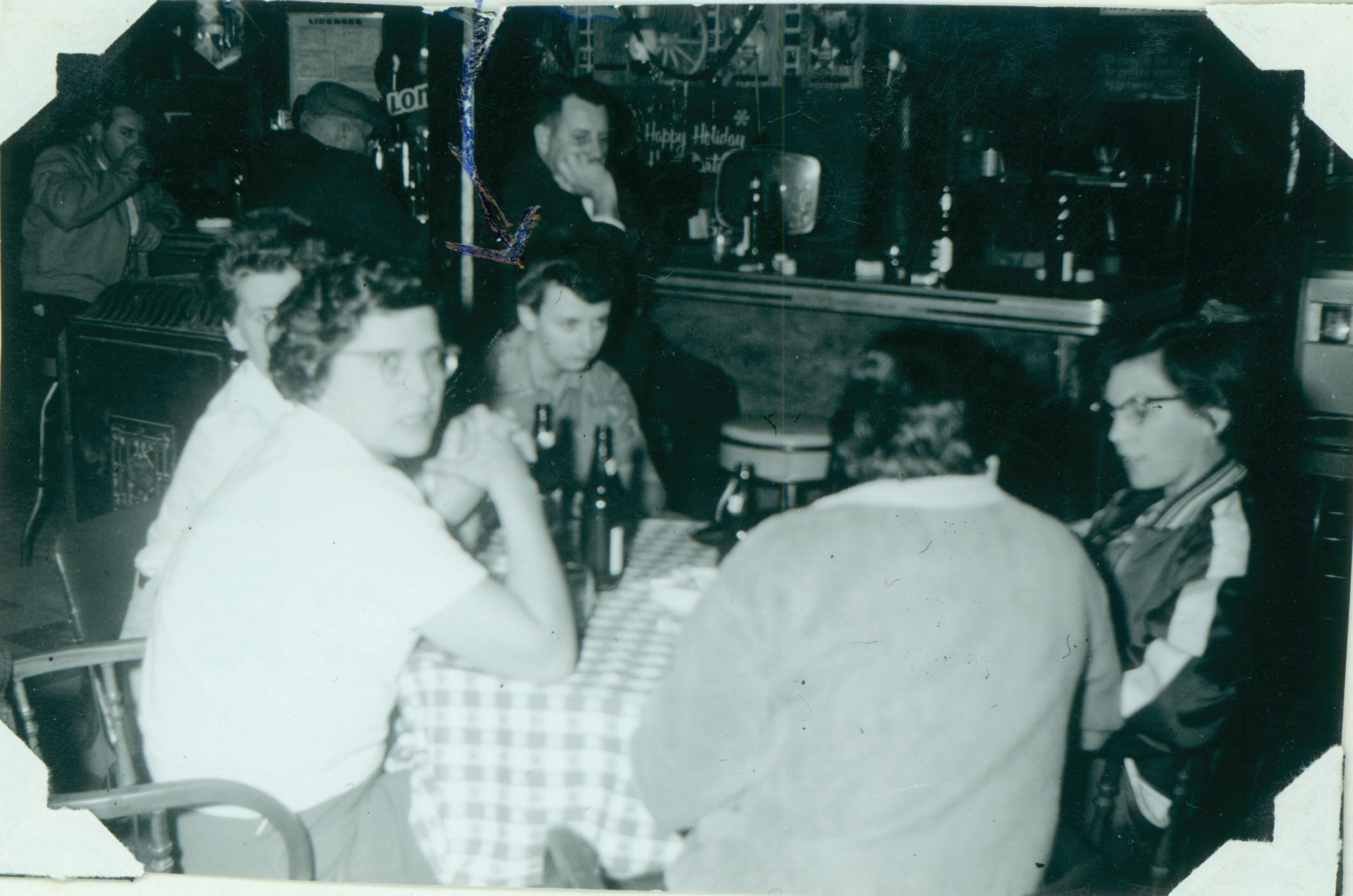
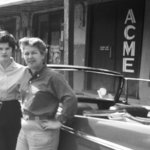
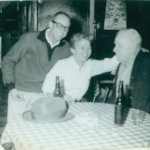
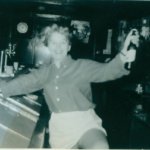
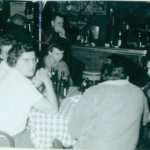
In October of 2015, I met with Carolyn Weathers in her condo in Long Beach, California. I had spent the past few weeks perusing her papers at the ONE National Gay and Lesbian Archives in Los Angeles mostly on a whim: she was one of the few individuals in the archive who hailed from the US South—Texas specifically—and as a queer southerner from Texas myself, I wondered what insights her collection might offer about LGBTQ+ experience in our home state. I never expected to come across photos of gay bars in pre-Stonewall San Antonio or a short story Weathers had written about her time in them. But as seasoned researchers already know and novices quickly learn, the archive is full of such surprises. Agreeing to an interview with me after an archivist put us in touch, Weathers and I spent a temperate, sunny southern California day together, lunching at a local café, walking the nearby boardwalk, and sitting down in her living room for a two-hour recorded interview. This essay combines information from that interview with the short story and photos from the Weathers Collection at ONE to develop a historical case study of LGBTQ+ experience in early 1960s San Antonio.
Structurally, I begin with a brief history of San Antonio to situate us in place before analyzing how Weathers narrativizes her experience in the city in her 1987 self-published short story "Cheers Everybody!" Next, I sketch four real historical bars that Weathers frequented: The Acme, Fernando's Hideaway, The Country, and Mary Ellen's Top Hat. I approach "Cheers" as a historical document that records how Weathers imaginatively used San Antonio to historicize and process her experience of the movement for LGBTQ+ rights. I develop the bar sketches primarily through my interview with Weathers—with occasional references to how she fictionalizes them in "Cheers"—and the archival photos from ONE. Together, these objects of analysis not only reveal the centrality of the gay bar to LGBTQ+ life in early 1960s San Antonio, but they also provide clues as to how the city's colonial and military history affected the formation of racialized gay space. In other words, although attentive to patron activities, demographics, and police encounters, the bar sketches investigate how these histories influenced the creation of gay space, which racialized subjects had access to gay space, and how that space was racialized or imbued with ideas about race as a consequence.1I follow Michael Omi and Howard Winant's definition of racialization: "the extension of racial meaning to a previously racially unclassified social relationship, social practice or group." Michael Omi and Howard Winant, Racial Formation in the United States (New York: Routledge, 2014), 111. Few studies—most of them unpublished dissertations and theses—about LGBTQ+ life in Texas during this period currently exist.2Besides the studies of San Antonio cited later in the essay, some relevant theses and dissertations of interest include: Kyle Edelbrock, "Taking it to the Streets: The History of Gay Pride Parades in Dallas, Texas, 1972–1986" (master's thesis, University of North Texas, 2015); Carl J. Stoneham, "How Prophecy Got Her Queer Back: (Re)discovering the Prophetic at the Rainbow Lounge, 40 Years and Eight Minutes Later" (master's thesis, Texas Christian University, 2010); and John D. Goins, "Confronting Itself: The AIDS Crisis and the LGBT Community in Houston" (PhD diss., University of Houston, 2014). As such, this essay is both a call to expand and further develop such research, as well as an example of how to make archival materials speak to the imbrication of LGBTQ+ identity and community formation within the colonial and racial formations that are central to the production of modernity.
To Historicize the Gay Bar
The origins of San Antonio's two nicknames—Alamo City and Military City, USA—lie in the city's history as a contested colonial space and as home to one of the largest concentrations of military bases in the United States. Founded by Spanish explorers and missionaries on the lands of the Payaya Indians in 1718, San Antonio de Béxar was capital of the Spanish and later Mexican colonial province called Tejas. After its 1821 independence from Spain, the newly established Mexican government began offering free land grants to Anglo-American settlers, who primarily took up residence in lands northeast of San Antonio. These Anglo settlers, who identified as Texians, and Hispanic settlers, who identified as Tejanos, fought against the Mexican Army led by President General Antonio López de Santa Anna during the Texas Revolution: the conflict from which the phrase "Remember the Alamo!" comes.3The actions of those fallen at the Alamo were glorified in Texas history and culture, and today, the Alamo commemorative monument and museum helps attract around 37 million annual visitors to San Antonio, whose tourism and hospitality industry generated an estimated 15.2 billion dollars in 2017.
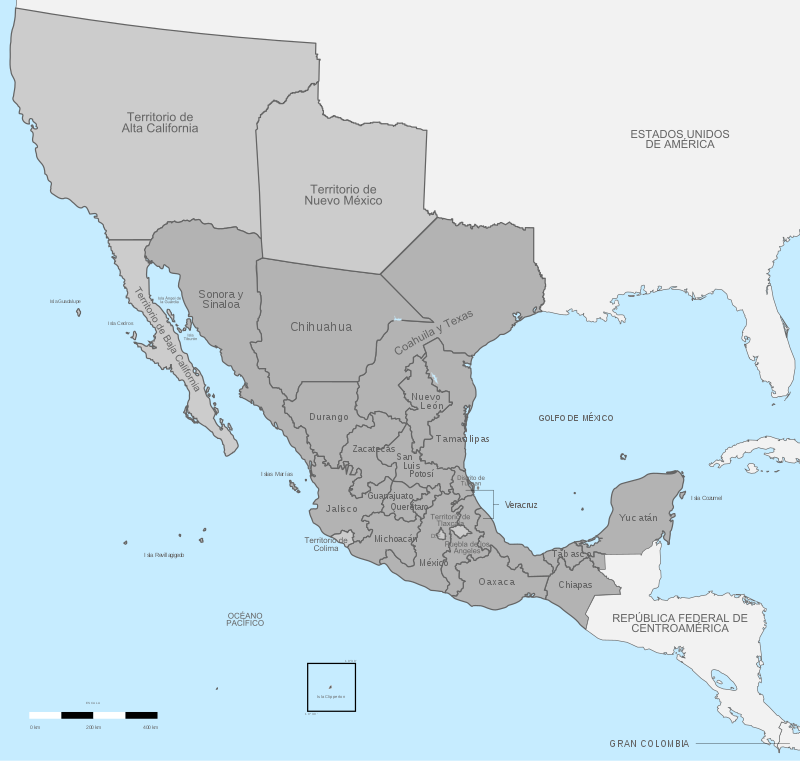
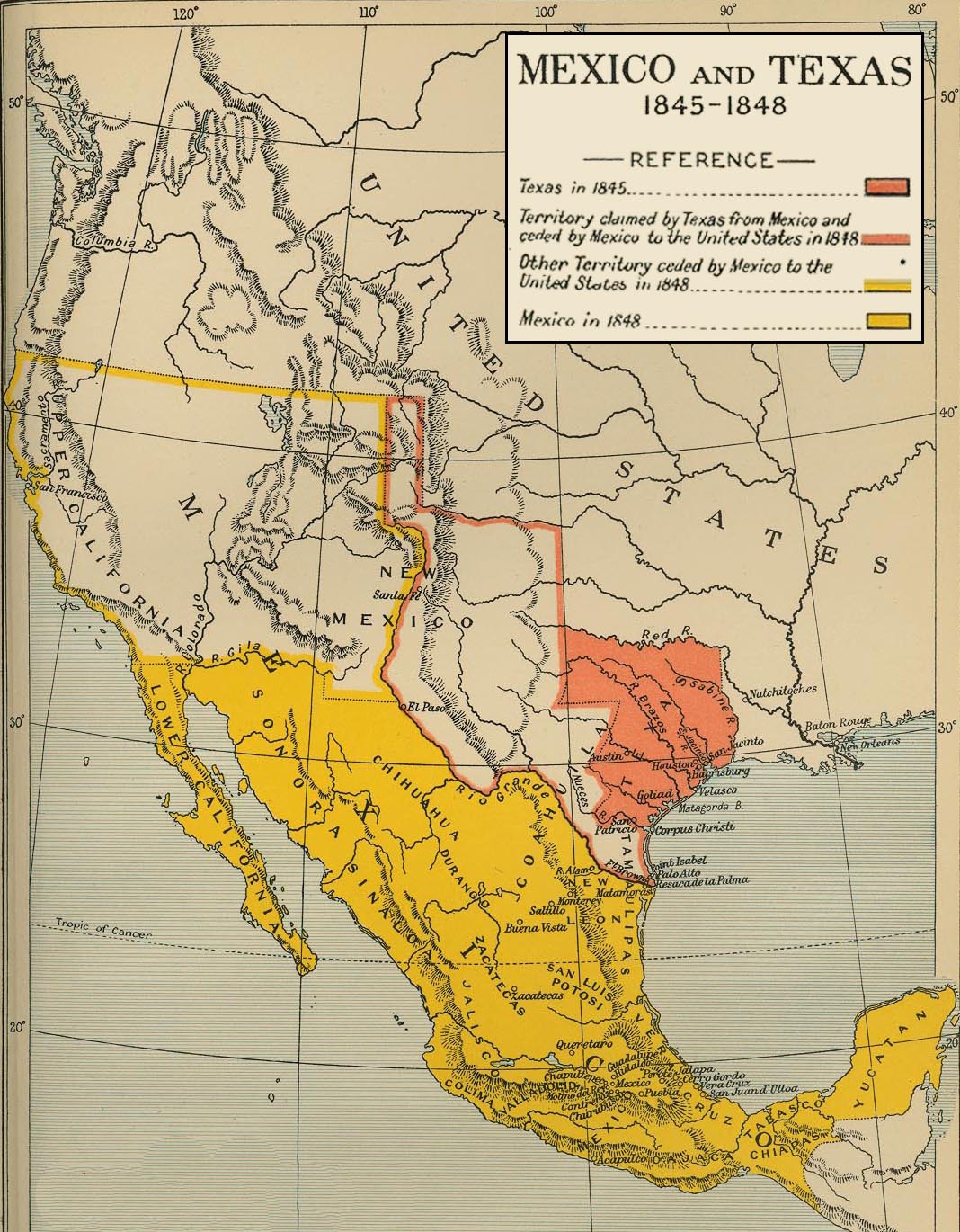
Sparked by the Battle of Gonzales on October 2, 1835, the Texas Revolution resulted from decades of rising tensions between Tejas residents and the Mexican government, ranging from the Mexican state's abolishment of slavery in 1829 to its prohibition of new Anglo settlers in 1830.4The newly independent Mexican government began as the First Empire of Mexico headed by Agustín de Iturbide (1822–1823) before transitioning into a federal republic, with the Constitution of 1824 officially establishing the First Mexican Republic (Primera República Federal), known as the United Mexican States (Estados Unidos Mexicanos). As the EUM sorted out its leadership and organizational structure, it failed to exert strong control and governance from Mexico City over the distant Tejas. Thus, the Mexican government's gradual steps towards abolishing slavery in 1829—which, in the eyes of many Anglo settlers, reneged on Iturbide's promise to let them practice chattel slavery in Tejas—and the prohibition of new Anglo settlers in the Law of April 6, 1830—which was precipitated by fears that the United States would annex Tejas and resulted in Mexican officials and troops being dispatched to enforce Mexican law in the province—encroached on the rights and privileges that settlers had grown accustomed to. The 1833 presidential election of Santa Anna only exacerbated these issues, as he threw out the Constitution of 1824, which allowed him to centralize control of the government by eradicating provincial or state governments, and also imprisoned Stephen F. Austin, the first empresario of Tejas and primary Texian representative, for a year. Less than a year later, on April 21, 1836, the Republic of Texas became official when Texians, Tejanos, and US volunteers defeated Santa Anna and his troops at the Battle of San Jacinto.5Randolph B. Campbell, Gone to Texas: A History of the Lone Star State (New York: Oxford University Press, 2018); David Montejano, Anglos and Mexicans in the Making of Texas, 1836–1986 (Austin: University of Texas Press, 1987). But San Antonio remained a contested colonial space for decades after the Texas Revolution. By 1845, Mexico still did not officially recognize the Republic of Texas, and US Annexation that same year led to the Mexican–American War and Treaty of Guadalupe Hidalgo, which forced Mexican cession of disputed Texas territory (see Figure 1) and its northern territories of Alta California and Santa Fe de Nuevo México (see Figure 2).6Campbell, Gone to Texas; Montejano, Anglos and Mexicans in the Making of Texas. As part of these war efforts, the US Army established its initial presence in San Antonio at Camp Almus, later consolidated as part of Fort Sam Houston in 1890 (the first permanent US military installation in the city). During World War I (1914–1918), the US War Department expanded the fort, with the additions of Camp Bullis, Camp Travis, and Camp Stanley, while laying the foundations for its fledgling aviation program. When the US Air Force gained autonomy after World War II (1939–1945) in 1948, the aviation infrastructure was divided into the Kelly Air Force Base, the Randolph Air Force Base, and the Lackland Air Force Base.7John Manguso, "Fort Sam Houston," Handbook of Texas, Texas State Historical Association, accessed April 1, 2019, https://tshaonline.org/handbook/online/articles/qbf43; Robert Wooster, "Military History," Handbook of Texas, Texas State Historical Association, accessed April 1, 2019, https://tshaonline.org/handbook/online/articles/qzmtg. While Kelly AFB closed in 2001, the other two bases, along with Ft. Sam Houston, currently make up Joint Base San Antonio (JBSA), which contributes around 49 billion dollars annually to the city's local economy.8"2015 Military Economic Impact Study" (San Antonio, TX: Department of Government and Public Affairs, accessed July 1, 2021), https://www.sanantonio.gov/Portals/0/Files/OMA/EconImpact/2015SanAntonioMilitaryEconomicImpact.pdf?ver=2017-02-15-142835-893.
Although contemporary San Antonio's diversified economy (financial services, health care, energy, oil, and gas) attracts international and domestic job seekers, recently earning San Antonio the title of fastest growing city in the United States, population growth in recent decades pales in comparison to the boom between 1940 and 1960, when the city's population more than doubled, rising from 253,854 to 587,718, as a consequence of mass military mobilizations during WWII and a growing military job sector.9The United States Census Bureau designated San Antonio the fastest growing city in the United States in 2018: United States Census Bureau, "Census Bureau Reveals Fastest-Growing Large Cities," release number CB18-78, May 24, 2018, https://www.census.gov/newsroom/press-releases/2018/estimates-cities.html; "Texas Almanac: City Population History from 1850–2000," Texas Almanac, accessed April 5, 2019, https://texasalmanac.com/sites/default/files/images/CityPopHist%20web.pdf. These mobilizations, according to scholars such as John D'Emilio, Allan Bérubé, and George Chauncey, were part of a historical phenomenon that facilitated the formation of urban gay subcultures in US cities.10See Allan Bérubé, Coming Out Under Fire: The History of Gay Men and Women in World War II (New York: Plume, 1991); George Chauncey, Gay New York: Gender, Urban Culture, and the Making of the Gay Male World, 1890–1940 (New York: Basic Books, 1994); and John D'Emilio, "Capitalism and Gay Identity" in The Lesbian and Gay Studies Reader, edited by Henry Abelove, Michèle Aina Barale, and David M. Halperin (New York: Routledge, 1993), 467–476. "Millions of young men and women," D'Emilio notes, "whose sexual identities were just forming," were placed into "sex-segregated institutions," providing them opportunities to explore same-sex sexual desire.11D'Emilio, "Capitalism and Gay Identity," 472. Post-WWII suburbanization, which caused property prices in urban cores to plummet, making it easier to purchase real estate and open gay bars and nightclubs, as well as the founding of homophile civil rights organizations, such as the Mattachine Society (1950–1969) and the Daughters of Bilitis (1955–1995), whose respective publications, the Mattachine Review (1955–1967) and the Ladder (1956–1972), reached readers across the United States, enabled the growth of gay and lesbian neighborhoods, reading publics, and social networks.
In San Antonio specifically, gay and lesbian culture "grew dramatically in the 1950s and 1960s," writes Amy L. Stone, "and built upon a tradition of local nightclubs that had attracted female impersonators . . . in the 1930s and 1940s."12Amy L. Stone, "Crowning King Anchovy: Cold War Gay Visibility in San Antonio's Urban Festival," Journal of the History of Sexuality 25, no. 2 (2016): 300. Also, see Melissa Gohlke's blog post about these nightclubs and female impersonators: "San Antonio's Drag Culture of the 1930s and 40s," The Top Shelf, October 22, 2012, https://utsalibrariestopshelf.wordpress.com/2012/10/22/san-antonios-drag-culture/. According to Melissa Gohlke, "by the early 1950s, San Antonio led the five-state Fourth Army area" (Texas, Louisiana, Arkansas, Oklahoma, and New Mexico) "in off-limits places with fifty-three establishments."13Melissa Gohlke, "Off-Limits and Out of Bounds, World War II and San Antonio's Queer Community," The Top Shelf, February 25, 2013, https://utsalibrariestopshelf.wordpress.com/2013/02/25/off-limits-and-out-of-bounds-world-war-ii-and-san-antonios-queer-community/. Products of the 1941 May Act, which gave military police the authority to surveil and restrict access to places associated with prostitution and homosexuality, these "off-limits" lists, composed and released by military officials, conversely resulted in giving gay bars more publicity and patronage. "All a GI or WAC need[ed] to do [was] read the list," notes Gohlke, "and head out for a night of same-sex recreation."14Gohlke, "Off-Limits." While the military did not standardize anti-homosexual policies until the creation of the Department of Defense in 1949, each branch prohibited and prosecuted homosexuality through psychological screenings and forms of military discharge prior to and throughout WWII.15For further specification on these procedures, see Bérubé, Coming Out under Fire; Chauncey, Gay New York; and Margot Canaday's The Straight State: Sexuality and Citizenship in Twentieth-Century America (Princeton, NJ: Princeton University Press, 2009). If discovered in such venues, military personnel faced certain punishment, if not discharge.16Gohlke, "Off-Limits."
A native white Texan and self-identified lesbian born in 1941, Carolyn Weathers entered the San Antonio gay scene in her early twenties, at a time of increased scrutiny and persecution as a consequence of "antigay laws, the medicalization of homosexuality, nationwide panics about homosexuality as contagion, and anti-Communist organizing against homosexuality."17Stone, "Crowning King Anchovy," 299. Born in the central Texas town of Eastland to a middle-class Baptist family, Weathers spent her early childhood in Cleburne before moving to Brownfield in the Panhandle. The second daughter of an educator, Alida Nabors Weathers, and a Baptist preacher, Jones Weathers, Carolyn followed the geographical trajectory of her only sibling and older sister by two and a half years, Brenda, moving to Dallas, San Antonio, and ultimately Southern California. Kicked out of Texas Women's University in Denton for "lesbianism" in 1957 at the age of seventeen, Brenda introduced her sister to the queer worlds that she discovered in Dallas and San Antonio of the late fifties and early sixties. Carolyn came out in 1961 while living with Brenda in San Antonio. She later joined Brenda in Los Angeles, where they were initially drawn by the countercultural movement of the sixties, ultimately participating in feminist and LGBTQ+ activism during the seventies and eighties. As members of the Los Angeles Gay Liberation Front (GLF-LA), Brenda founded the Alcoholism Center for Women (still in existence), and Carolyn was the first out lesbian on an Los Angeles television show, as well as a participant in the GLF raid of the American Psychiatric Association's 1970 convention in Los Angeles. Carolyn also contributed to the Women in Print Movement, creating Clothespin Fever Press in the mid-eighties with her partner at the time, Jenny Wrenn.18Weathers was featured on AM Los Angeles with Regis Philbin. In 1970, prior to the GLF raid of the APA's L.A. Convention, the GLF raided an APA convention in San Francisco. These raids were to protest the APA's classification of homosexuality as a mental illness. Having completed their post-secondary education in the late sixties, Brenda supported herself primarily through heading substance abuse centers and animal shelters, while Carolyn worked as a librarian for the Los Angeles Public Library. From the time Brenda and Carolyn came out throughout their years of activism, their parents remained supportive and maintained close relationships with each of them. Brenda passed from lung cancer in 2005, and Carolyn, a 2015 recipient of an LGBT Heritage Award by the City of Los Angeles, is currently retired in Long Beach.19Carolyn Weathers, interview by author, October 22, 2015, Long Beach, California, video recording. Biographical information is condensed from the interview.
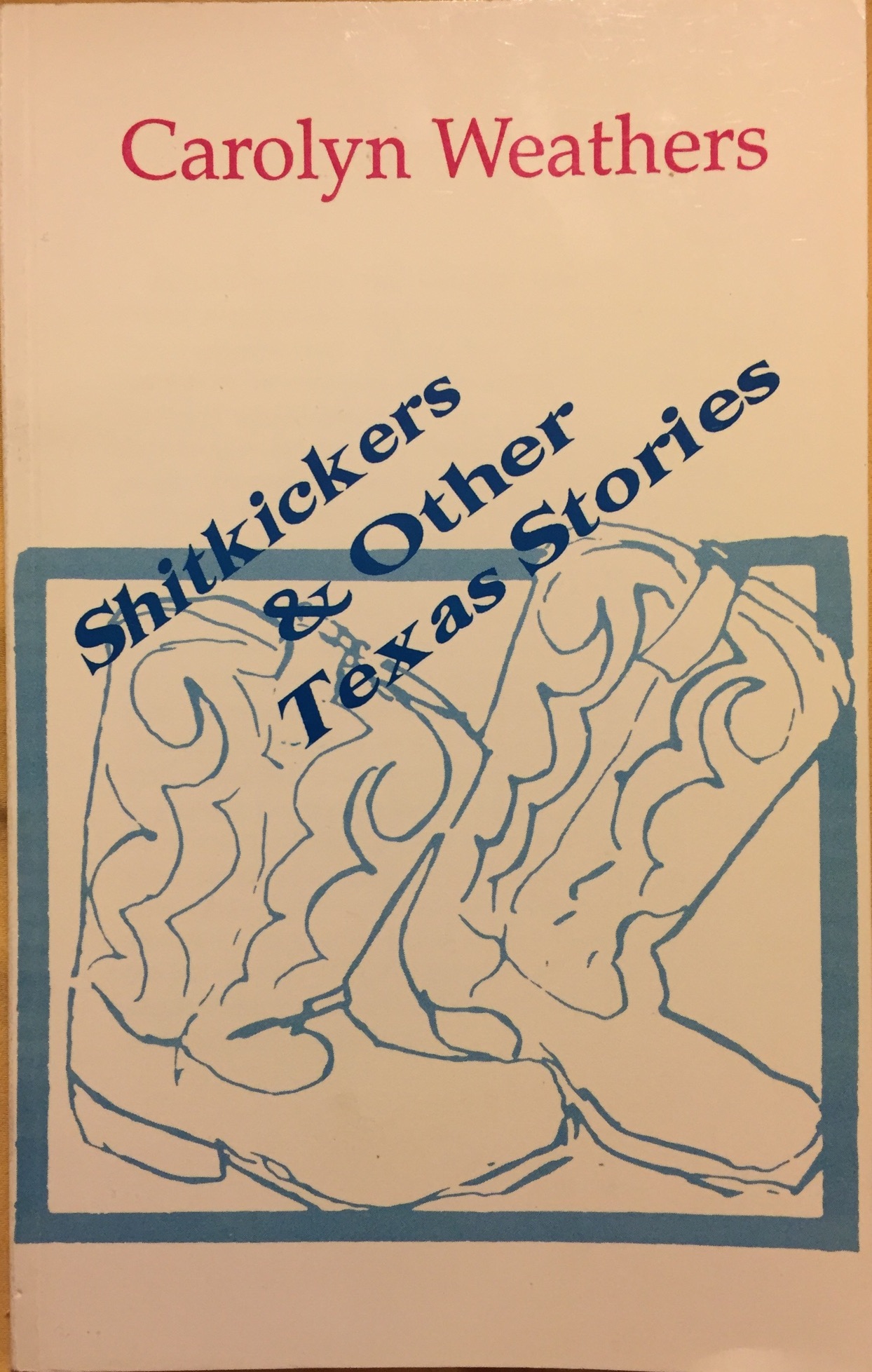
Both my 2015 interview with Weathers and an analysis of how she narrativizes her experience in San Antonio in a 1987 self-published short story, "Cheers Everybody!" reveal how the city's colonial and military history affected the formation of racialized gay space as well as how Weathers imaginatively used San Antonio to historicize and process her personal experience of the movement for LGBTQ+ rights. When Carolyn wrote "Cheers Everybody!" in the mid-eighties, she wanted to document and comment on her lived experience. As she relates in the 1989 preface to the second edition of her collection of short stories, Shitkickers & Other Texas Stories, "I remembered back to my coming-out days in San Antonio, Texas, in the early 1960s and realized that I had lived long enough and been out long enough to be historic."20Carolyn Weathers, Shitkickers & Other Texas Stories (Los Angeles: Clothespin Fever Press, 1989), 13. "Cheers," then, while a testament to Weathers's lived experience, is also a mid-eighties reflection on pre-Stonewall LGBTQ+ life that is inflected with historical analysis. Writing "Cheers" as a bildungsroman—or coming-of-age tale whose generic conventions and narrative structure consist of tracing a character's psychological growth from youth to young adulthood—allowed Weathers to depict the gay cultural milieu she experienced in pre-Stonewall San Antonio while offering didactic historical messages about LGBTQ+ community formation, substance and alcohol abuse, political organizing, writing, and representation. These messages—conveyed through the political awakening of the story's protagonist—ultimately culminate in the text's primary theme: while the gay bar should be celebrated as the foundation of gay sociality—in that it enables community, friendships, and intimate relationships—it should also be critiqued for its limited ability to psychologically and physically sustain community. Political organizations and influence, LGBTQ+ self-representation, and LGBTQ+-owned businesses and cultural spaces, among other forms of community building and cohesion, are needed to combat systemic oppression and enhance LGBTQ+ people's quality of life.
Written from the third-person perspective of an unnamed narrator, the twenty-nine-page narrative mimics the experience of gay bar hopping, following the partying trail of Jane Jones (the protagonist and Weathers's fictional self) as she moves from The Acme to The Country to Fernando's Hideaway (all actual historical bars).21I originally accessed "Cheers Everybody!" in the Weathers Collection at ONE. However, the collection of short stories in which "Cheers" is included—Shitkickers & Other Texas Stories—can occasionally be found in used bookstores or on Amazon. Peopled with representations of Weathers's sister Brenda and friends, the story intersperses bar scenes with house parties, dinner dates, and downtime with lovers and friends. But the narrative's constant return to the bar suggests its centrality to gay life and community formation in early 1960s San Antonio. Although cities such as Chicago, San Francisco, and Los Angeles were home to the burgeoning homophile movement during this time, which offered alternative, if similarly clandestine, spaces to those of the bar, scholars have neither discovered organized political activity associated with or inspired by organizations like the Daughters of Bilitis or the Mattachine Society in San Antonio, nor have individuals who participated in the pre-Stonewall San Antonio gay scene reported such activity.22As of publication, there are only two other academic studies of pre-Stonewall San Antonio: Melissa Gohlke's "Out in the Alamo City: Revealing San Antonio's Gay and Lesbian, World War II to the 1990s," (master's thesis, University of Texas at San Antonio, 2012); and Amy Stone's Cornyation: San Antonio's Outrageous Fiesta Tradition (San Antonio: Maverick Books, 2017)—from which her article, "Crowning King Anchovy," condenses information. While ONE, a monthly magazine published by ONE, Inc., a gay rights organization founded in Los Angeles in 1952, was available for purchase in San Antonio, Weathers remembers "coming out when there was absolutely nothing but the bars—no thought or hope that there would ever be anything else."23Stone, "Crowning King Anchovy," 300; Amy Stone and Craig Lofton, personal email, August 21, 2013. Stone writes, "Bars, coffee shops, and newsstands that sold ONE Magazine sprang up on the edges of Travis Park, a downtown green space known as a meeting place for gay men"; Weathers, Shitkickers, 13. In short, the gay bar was then the only established subcultural space for gay people to meet other gay people in San Antonio. These gay bars, as Weathers told me, serviced a mixed-gender crowd of men and women on a daily basis and were the source of friendships, hook-ups, and committed relationships. Throughout this essay, I consciously deploy the terms gay and gay women rather than lesbian when referencing patrons of these bars because Weathers specified that lesbian was not used in the gay San Antonio scene when she was there.
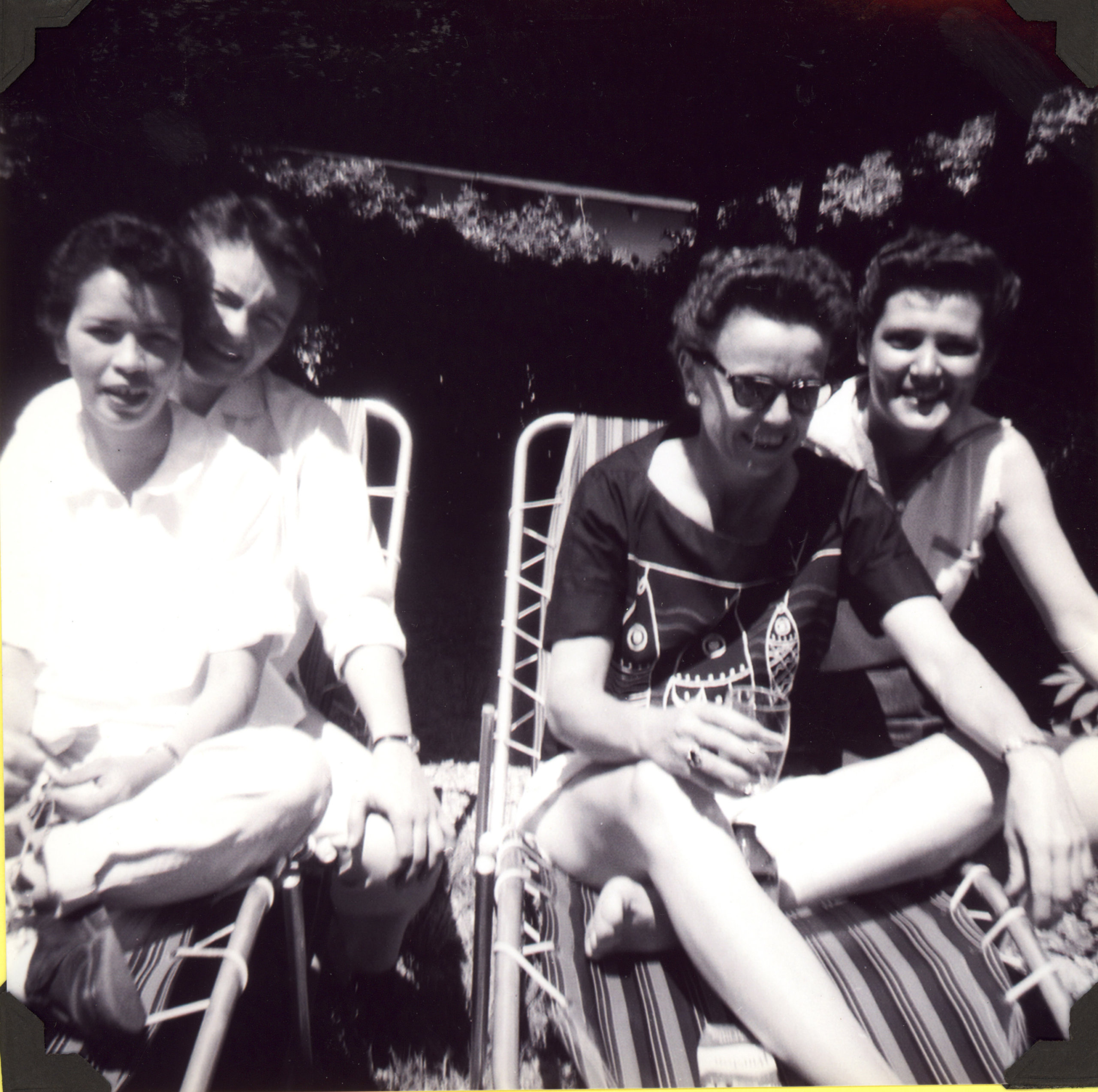
"Cheers" opens with the narrator describing Jane's giddy investment in absorbing and understanding the new gay world that her older sister, Diane, has introduced her to, highlighting Weathers's understanding of the gay bar as an important source of visibility, sociality, and community building in San Antonio:
Jane Jones took everything in. The Acme Bar was packed. Everyone knew most everyone, and she was learning. The Acme Bar was no rathole to her. It was an enchanted room, the first gay bar Diane and Maria took her to when she arrived in the colorful, picturesque city of San Antonio from West Texas two weeks earlier.24Weathers, Shitkickers, 19.
As Jane immerses herself in the gay bar scene, she experiences multiple complicated love affairs, establishes a network of friends, and transitions from the youthful exuberance of initially coming out—as depicted in this first scene—to a more critical and politicized approach towards gay life and experience. She learns how everyday homophobia and institutions such as law enforcement and the military affect gay livelihood.
"Cheers" features military personnel in civilian life through two primary characters, Nan Grinder and Maria, based, respectively, on a mutual friend of the Weathers sisters known as Liz and a lover of Brenda Weathers named Anita Ornelas.25Weathers, interview by author. Nan and Maria are enlisted as WACs (Women's Army Corps).26Founded in 1942 as the women's branch of the US Army, the Women's Army Corps existed until 1978, when it was disbanded as the Army implemented gender-integrated units. The former is notorious for her paranoia and alcoholism while the latter is characterized as a hard-working soldier who exudes "patriotism and earnestness."27Weathers, Shitkickers, 29. Weathers uses this character foiling to point to the precarious existence that all gay WACs, regardless of personalities or work ethic, faced in the homophobic armed forces. For instance, Maria's goal of attaining the Good Conduct Medal is quashed when she's late to guard duty after trying to cover for two gay women making out on base. The next day two gay WACs—Sergeant Rusty and Sergeant Scaggs—report Stacey, one of the women from the make out session, for homosexual activity. Rusty and Scaggs had been "fixtures at Nan Grinder's martini parties," which she would throw as a cover for herself each time she slept with a woman.28Weathers, Shitkickers, 30. Their actions result in Nan's becoming a reclusive shut-in as she fears that anyone, regardless of sexual identity, will potentially out her to military authorities and end her career. All of these experiences paint the military as a dead end for solidarity or long-term community building among gay women. And Weathers's depiction is not unfounded, as oral histories of WACs recorded by Allan Bérubé in Coming Out Under Fire, along with studies of the climate of fear and vast purging of homosexuals in the government and military during this period, such as David K. Johnson's The Lavender Scare, attest to the power dynamics and political tactics forced upon and performed by gay WACs as a means of survival.29David K. Johnson, The Lavender Scare: The Cold War Persecution of Gays and Lesbians in the Federal Government (Chicago: University of Chicago Press, 2009).
Alongside this bleak outlook on the possibility for gay women's community, Weathers includes descriptions of the WAC Shack, a bar for WACs only, to document historical experience while alluding to a future of lesbian bars that would fulfill desires for queer women's space. In "Cheers" and in her interview, Weathers frames the WAC Shack as a source of speculation and fantasy among civilian women who wondered what it must be like to patronize a bar full of women. Although the homosociality of the WAC Shack enabled women to potentially recognize their same-sex desire and offered a place of female bonding, its idealization by gay civilians negated the reality of gay WACs who had to navigate the space. While a place of sociality, the WAC Shack, more so than civilian gay bars, was also a place where patrons would worry that any homosexual behavior would be reported to military officials.
Desire for a queer future also appears when Jane fantasizes about positive cultural representations and access to LGBTQ+ writing. As one friend proudly shows off a book that pathologizes homosexuality and sings the praises of The Children's Hour, Jane asks, "Wouldn't it be something . . . if there were gay bookstores?"30Weathers, Shitkickers, 38. Based on Lillian Hellman's 1934 play of the same name, The Children's Hour (1961) was directed by William Wyler and featured Audrey Hepburn (Karen) and Shirley MacLaine (Martha). Falsely accused of lesbianism by a vindictive student, Karen and Martha, teachers at a private school for girls, get caught up in negative media coverage that isolates them. The film ends in Martha's suicide, as she realizes that she has loved Karen all along and feels responsible for their public humiliation and Karen's failed marriage engagement. "You mean," asks another friend, "bookstores with only gay books in them." "Yeah," Jane replies, "that said nice things."31Weathers, Shitkickers, 38. The group's response is partly cynical ("She wants the world"), partly optimistic ("You never know").32Weathers, Shitkickers, 39. Here, in a story set in the 1960s but self-published in 1987, Weathers invokes the Women in Print Movement, in which she was involved as a publisher and writer. From the late 1960s through the 1980s, feminist and lesbian-feminist print cultures flourished in numerous small towns and cities, with women-run collectives and presses churning out journals, newspapers, newsletters, magazines, novels, poetry chapbooks, etc. These artifacts, as well as their byways—or their sharing by word of mouth, conferences, meetings, feminist and lesbian-feminist bookstores, and the mail—make up what recent scholarship terms the Women in Print Movement (WIPM).33Jaime Harker, The Lesbian South: Southern Feminists, the Women in Print Movement, and the Queer Literary Canon (Chapel Hill: University of North Carolina Press, 2018), 17. For more histories of the WIPM, see Agatha Beins, Liberation in Print: Feminist Periodicals and Social Movement Identity (Athens: University of Georgia Press, 2017); Victoria Hesford, Feeling Women's Liberation (Durham, NC: Duke University Press, 2013); Kathryn Thoms Flannery, Feminist Literacies: 1968–75 (Champaign: University of Illinois Press, 2010); Julie R. Enszer, "A Fine Bind: Lesbian-Feminist Publishing from 1969 through 2009" (PhD diss., University of Maryland, 2013); and Kristen Hogan, The Feminist Bookstore Movement: Lesbian Antiracism and Feminist Accountability (Durham, NC: Duke University Press, 2016). The WIPM provided spaces for women to hone their fiction, poetry, and nonfiction writing, as well as sociopolitical analyses; it also generated connections between nodes of the movement throughout the United States, creating a feminist network with stronger organizing capabilities at local, state, and national levels.
These moments of political awakening in "Cheers" further character development within the narrative arc of the bildungsroman and help codify the story's primary theme, both of which are fully rendered in the final scene. In contrast to the opening scene, which depicts an elated novice Jane responding to The Acme, the final scene is contemplative, featuring recognition among Jane and her friends that something needs to change. Trying to figure out what to do on a sweltering San Antonio day, one friend suggests a scored game of throwing pebbles at birds, and Jane replies:
Nan used to . . . only she used rocks; come home from work and right away, after mixing up martinis, go out to her back porch and chonk rocks at the little birds; busted their little heads, too; never winced, never smiled, never nothing; just grim, grim, grim.
No one spoke for a time, just looked at one another and down at the ground. Jane felt there was surely something hanging in the oppressive air. It did not seem to be rain, but no one was sure. It had to break soon. They still did not know what to do.34Weathers, Shitkickers, 44.
This shared emotional response builds upon the story's central engagement with the day-to-day struggles of gay men and women and disenchantment that the story increasingly conveys through Nan, Jane, and her sister, Diane. By the story's end, Nan's mental and physical deterioration disturbs all of her former associates, particularly Jane, while Diane, bored and restless with the daily nine-to-five and happy hour at the bar, considers a move to California. Jane, aware of her own mortality while standing on a concrete ledge overlooking the San Antonio River, realizes that her reckless behavior—her cavalier tempting of death through hard drug abuse and an eating disorder—will eventually kill her. The sociality of the gay bar can neither change the homophobic military regulations that have impacted the mental and physical health of Nan Grinder, provide the environment Jane needs to get sober, nor give Diane the intellectual stimulation, political activism, and sense of purpose that she desires. But rather than gesture towards political organizations, therapy, or social networks beyond the gay bar, the group remains silent until Jane suggests that they go to the bar, which they do.35Weathers, Shitkickers, 44.
In early 1960s San Antonio, the bar remains a necessary distraction and needed escape. Weathers's prefatory words to the story resonate here: "I remember coming out when there was absolutely nothing but the bars—no thought or hope that there would ever be anything else."36Weathers, Shitkickers, 13. By the end of "Cheers," its narrator believes that "the something . . . hanging in the oppressive air" will "break soon."37Weathers, Shitkickers, 44. While historiographical and cultural tendencies to narrativize LGBTQ+ liberation as beginning with the 1969 Stonewall riots38This was a series of violent riots within the Greenwich Village neighborhood of New York City that was set off by a police raid of the Stonewall Inn on June 28, 1969. have come under critique for erasing previous LGBTQ+ activism or dismissing it as more assimilative than radical, Weathers's account in "Cheers" offers documentary testimony through the thin guise of fiction for how some queer people who did not have access to organized political groups understood their lived experience at one time (1960s) and place (San Antonio).39See, for instance, Elizabeth A. Armstrong and Suzanna M. Crage, "Movements and Memory: The Making of the Stonewall Myth," American Sociological Review 71, no. 5 (2006): 724–751; Craig A. Rimmerman, The Lesbian and Gay Movements: Assimilation or Liberation? (New York: Routledge, 2014).
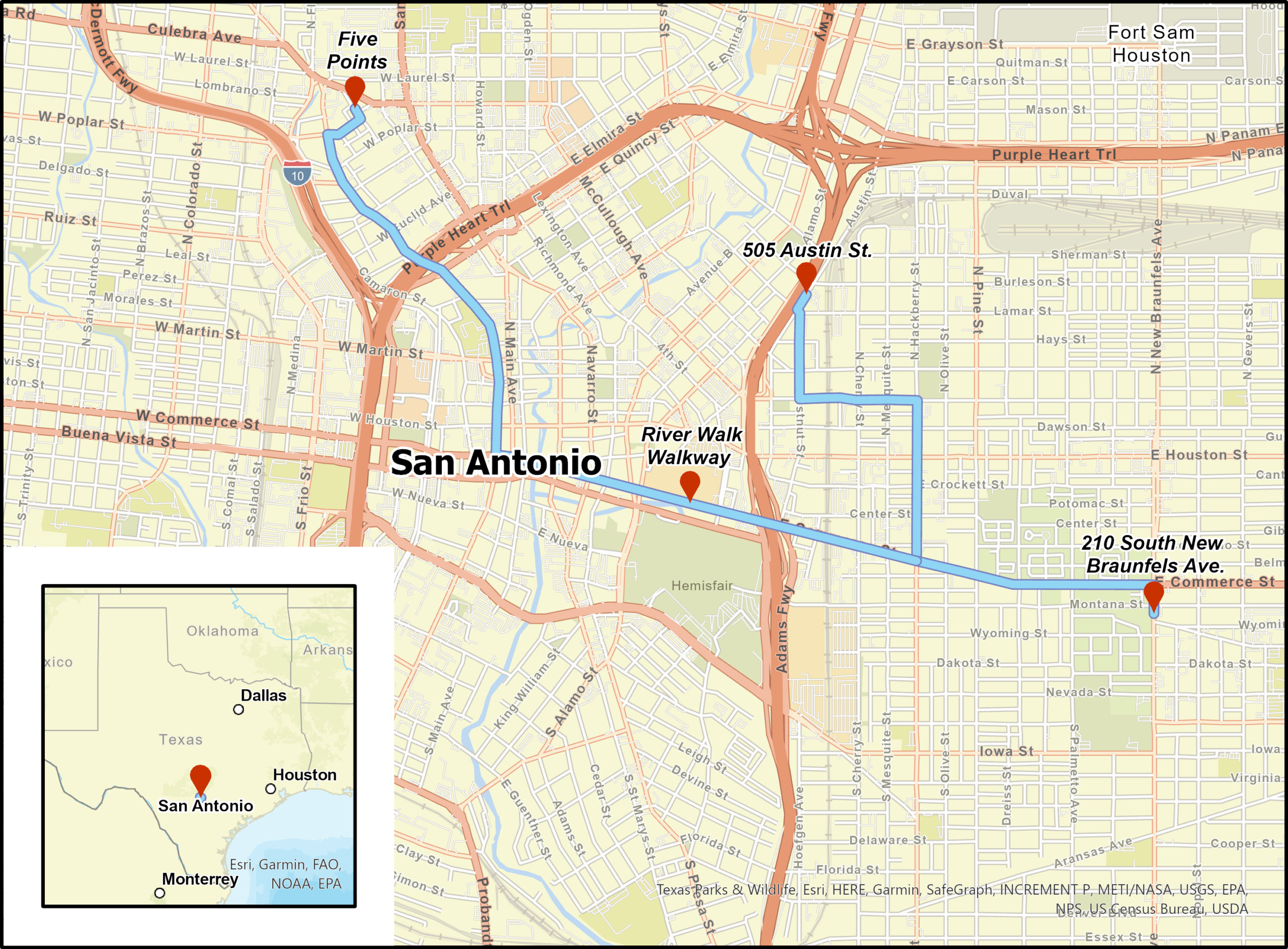
Although "Cheers" describes the centrality of bars to gay life in pre-Stonewall San Antonio, it reveals little about how issues of race and class inflected gay experience in the city at this time. Photographs of these gay bars that Weathers took as a patron hint at racial demographics, but further contextualization of these spaces provided by my interview with her shows that while fluid and mixed in terms of class demographics, these gay bars' racial demographics were very much pre- and over-determined by Jim Crow racial segregation. Of the bar sketches that follow, all of them but Mary Ellen's Top Hat—located at 210 South New Braunfels Avenue in Figure 3—appear in "Cheers," and each sketch will offer deeper insight (through the use of Weathers's personal reflections in our interview) into the racialization of San Antonio gay bars than is provided in Weathers's autobiographical short story. Figure 3 also notes locations for The Acme (505 Austin Street)—the first bar that Weathers entered when she moved to San Antonio and the bar "Jane" first encounters in "Cheers"—the River Walk, and Five Points. Fernando's Hideaway, as depicted in "Cheers" and told to me by Weathers, was located on the River Walk.40Weathers, interview by author. In her thesis, Gohlke locates Fernando's Hideaway at 2100 Frio City Road, but she provides no information about the bar beyond that. It is unclear whether this is a discrepancy in information or Fernando's moved locations at some point. Besides Fernando's Hideaway and The Country II, Gohlke's study does not document the bars that I discuss here. See Gohlke, "Out in the Alamo City." Five Points serves as visual orientation for Fredericksburg Road (to its immediate northwest), which led out to The Country (address now lost).
The Acme
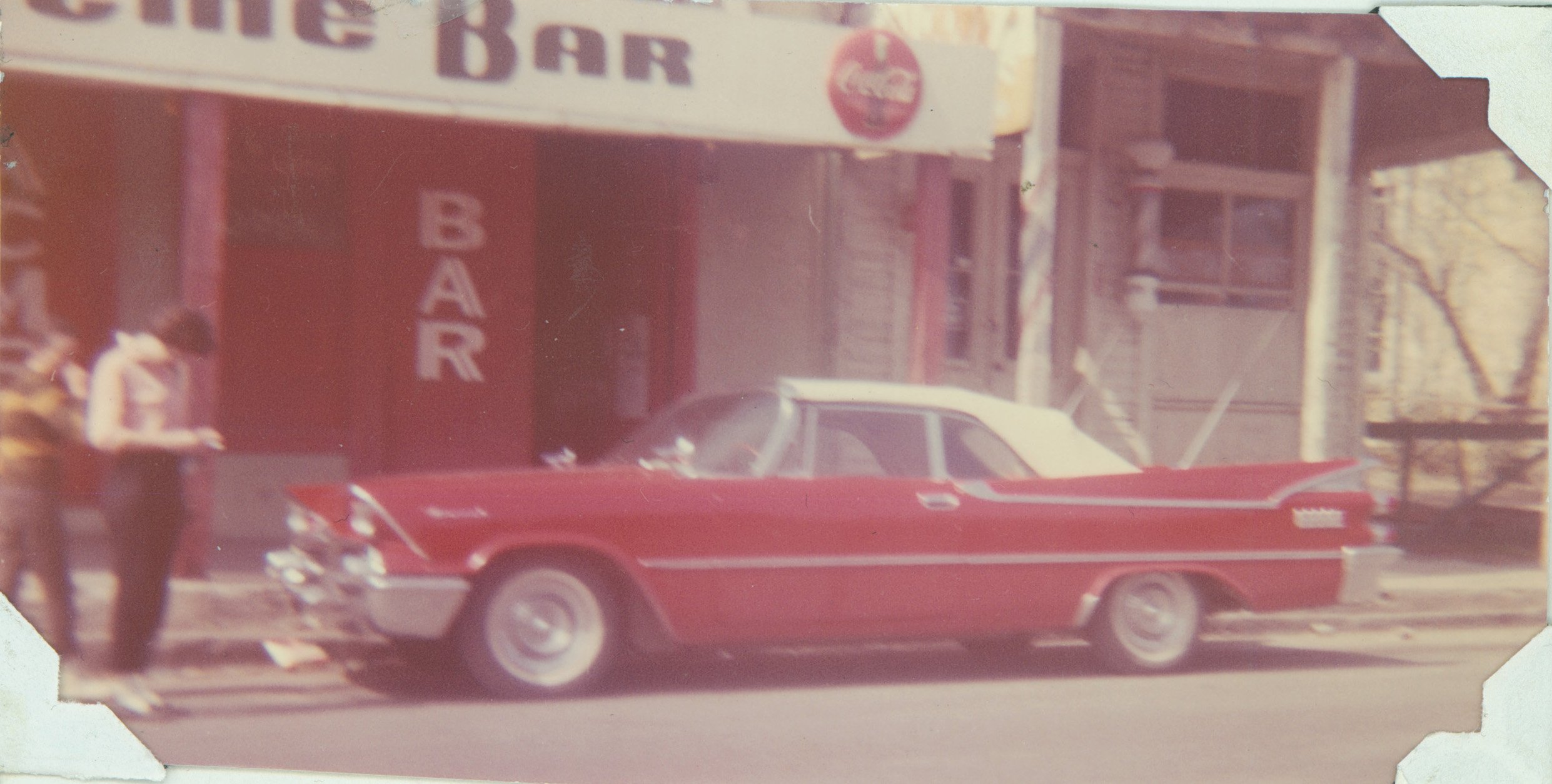
In "Cheers," the narrator describes the neighborhood where The Acme is located, at 505 Austin Street on the outskirts of downtown, as "an eerie area of locked warehouses and abandoned storefronts where life had left, as though an alien spaceship had beamed everyone else up during the night."41Weathers, Shitkickers, 15. A tiny little dive bar, or as Weathers called it, "a dump," The Acme was very popular, always "stuffed full of gay men and women." The co-owners, fictionalized as Ray Davis and Lila Tankersley in "Cheers," were an amiable white gay man and a white elderly woman who Weathers believes was asexual. "Lila" also owned a shop next door called The Acme Pharmacy and had a reputation for hassling patrons of the bar, insisting that they produce their IDs. Unsure of how these two became business partners, Weathers noted that the bar serviced a mixed crowd of civilian and military, working class and upper class, gay folk and occasionally heterosexual couples. For instance, a straight couple, the Rodriguezes, "would come in and join [them] for hamburgers and beers." When asked about the racial make up of the bars, specifically if they were interracial, Weathers specified that Mexican Americans and whites mingled in all San Antonio gay bars, but that this wasn't viewed as interracial mingling because Mexican American and Anglo cultures were heavily intertwined in San Antonio. The idea of race as something that marked Mexican Americans and Anglos as apart from or different from each other became more apparent to her when she moved to Los Angeles, where she was "surprised by how segregated Mexicans and whites were."42Weathers, interview by author.
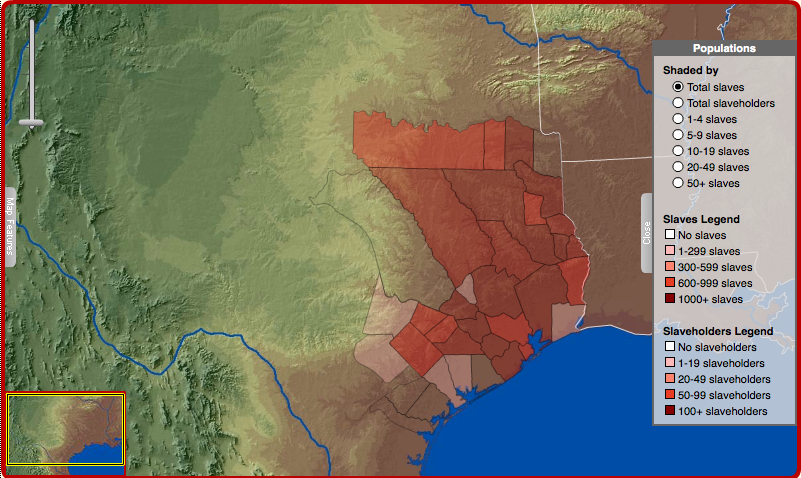
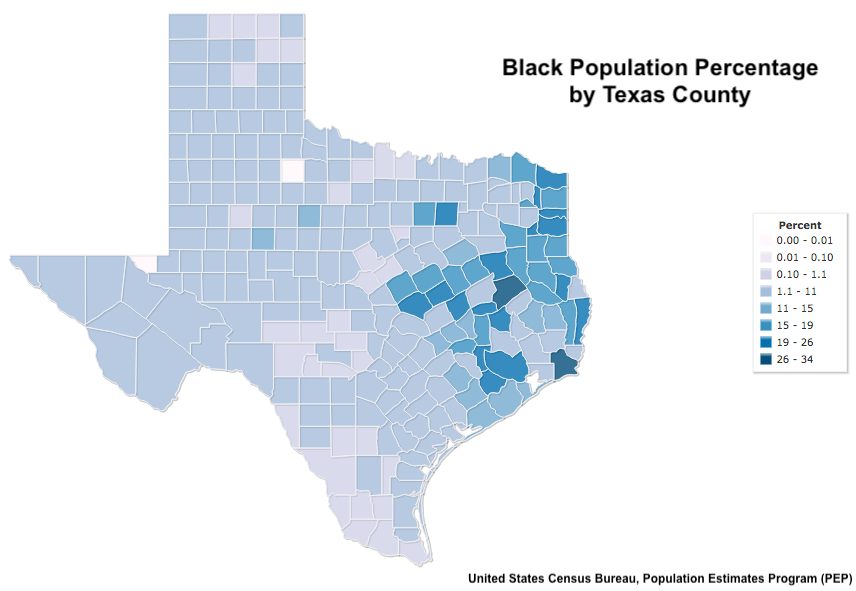
Given the long history of anti-Brown violence and political disenfranchisement in south, central, and west Texas, if my informant had been a Mexican American woman, then she would have likely told a different story about race. But Weathers's account offers insight into white experience of racial intimacy in San Antonio, while also alluding to potential Mexican American identification with whiteness as produced by San Antonio's colonial and military history. South, central, and west Texas—parts of which were included in the territory of the Republic of Texas and parts of which were considered contested territory between Mexico and Texas until US annexation and the Treaty of Guadalupe Hidalgo (refer back to Figure 1)—have traditionally homed the majority of the state's Latino demographic. Latino populations in north and east Texas have increased in recent years, particularly in Houston and the Dallas–Fort Worth Metroplex. However, because these areas were heavily settled post–Mexican Independence by Anglos practicing chattel slavery, they have been and continue to be home to most of Texas's Black demographic.43See "The Changing Population of the Texas and the Tyler Region," (Tyler: Texas Demographic Center, 2017), https://demographics.texas.gov/Resources/Presentations/OSD/2017/
2017_03_21_TylerCatalyst100.pdf. Figure 4 presents a map of Texas's Black enslaved population in 1845, and Figure 5 a map of Black demographics by Texas county as of 2020–2021. Consequently, the establishment of white supremacy in Texas, in its republic and later state forms, required regionally specific racialized policing practices. Whereas east Texas followed the rest of the US South in contending with white over Black, south, central, and west Texas had to contend with white over Black and Brown.44These regionally specific racialized policing practices are not transhistorical—although their afterlives or permutations of them are—and shift according to changing racial demographics. For instance, by the early 1970s, Houston had a significant Latino demographic in comparison to the rest of predominately rural east Texas. Consequently, as Guadalupe San Miguel Jr. documents in Brown, Not White: School Integration and the Chicano Movement in Houston (College Station: Texas A&M University Press, 2005), Houston Independent School District tried to avoid integrating white and Black students by classifying Latinos as white. That is, Latino and Black students would be integrated, while white students would attend separate institutions.
While the legal practice of chattel slavery meant whites maintained control over Black individuals throughout Texas in its various iterations as province, republic, and state, shortly after the Texas Revolution, alliances between Texians and Tejanos unraveled. Whites in south, central, and west Texas removed Tejanos from positions in government and public office and committed rapes, lynchings, and massacres as a means to assert dominance and instill fear. Although Tejanos enlisted and served in the Confederate Army during the Civil War, the emancipation of enslaved Black people and the white power grab post-Reconstruction to reassert social structures and hierarchies of old that enabled the monitoring and control of Black bodies necessitated the creation of Jim Crow laws, which in south, central, and west Texas were accompanied by Juan Crow laws. Not only intended to ensure Black and Brown disenfranchisement in such forms as voter suppression, racist housing policies, and underfunded educational institutions, Juan and Jim Crow instantiated tripartite racial segregation in an effort to explicitly convey white supremacy and racial difference from Mexican Americans and Black people while also deterring Black and Brown coalitions.45For further information, consult the following: Gloria Anzaldúa, Borderlands/La Frontera: The New Mestiza (San Francisco: Aunt Lute, 1987); William D. Carrigan and Clive Webb, Forgotten Dead: Mob Violence Against Mexicans in the United States, 1848–1928 (London: Oxford University Press, 2017); David Montejano, Anglos and Mexicans in the Making of Texas, 1836–1986 (Austin: University of Texas Press, 1987); and Nicholas Villanueva Jr., The Lynching of Mexicans in the Texas Borderlands (Albuquerque: University of New Mexico Press, 2018). Analyzing Mexican American and Black civil rights movements from the early to mid-twentieth century in Texas, Brian D. Behnken argues that Juan and Jim Crow were, by and large, effective in encouraging Black and Mexican Americans to "work against each other" politically.46Brian D. Behnken, Fighting Their Own Battles: Mexican Americans, African Americans, and the Struggle for Civil Rights in Texas (Chapel Hill: The University of North Carolina Press, 2014), 230. Political organizations such as the League of United Latin American Citizens (LULAC) "sought to include Mexican Americans on the white side of Jim Crow," and some Mexican Americans sought to prove their whiteness through anti-Black practices and violence, such as denying Black people service and setting off bombs in Black homes.47Behnken, Fighting, 68. Specifically, Behnken references a 1950 bombing in South Dallas, in which 15 bombs were detonated at the homes of Black residents who had integrated a white neighborhood. While there were multiple vigilantes involved, many of whom were never apprehended, two suspects were Mexican American men who felt threatened by the presence of Black residents in white neighborhoods. As Behnken elaborates, this political strategy wasn't successful in gaining Mexican Americans long-term equal rights, but many whites, including Texas governors of the period, did "[recognize] Mexican American whiteness," thus demonstrating the malleability of whiteness or how false promises of inclusion within white racial identity were deployed to further anti-Black and Brown sentiment while shoring up white supremacy.48Behnken, 40. Given these racial dynamics, Weathers's words about white and Mexican American mingling in San Antonio gay bars reflect Sharon Holland's thoughts on racial intimacy: rather than tamping down racist ideologies and practices, "proximity and familiarity" might actually "replicate the terms upon which difference is articulated and therefore maintained."49Sharon Patricia Holland, The Erotic Life of Racism (Durham, NC: Duke University Press, 2012), 19.
Fernando's Hideaway
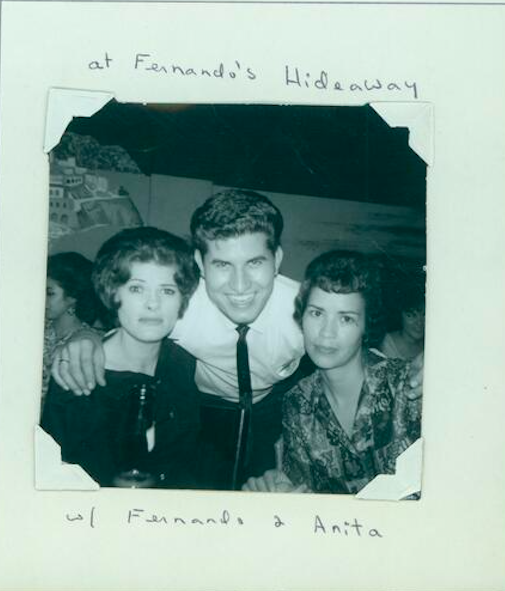
Inspired by the Mexican American bar owner's name and a popular song ("Hernando's Hideaway"), Fernando's Hideaway was in a historic building along the San Antonio River Walk. Construction on the River Walk began in the 1920s, when the city hired engineers to create a dam system that would address the frequent threats of disastrous flooding by the San Antonio River. Plans to convert the river and its banks into a storm sewer system resulted in the founding of the San Antonio Conservation Society, which successfully lobbied against this measure and was tasked with overseeing future development of the area. Delayed by the Great Depression, the River Project—plans to develop the river by adding restaurants, walkways, and shops—was initiated in 1939 through local tax and WPA (Works Progress Administration) funding. Initially headed by architect Robert H. Hugman and later J. Fred Buenz, construction on the River Project by WPA workers ended in 1940, with an opening dedication ceremony coinciding with the city's inaugural Fiesta River Parade in April of 1941. Throughout the forties and fifties, the River Walk featured a small sampling of restaurants, shops, and boating activities that drew in a fair number of locals and tourists alike but was generally considered an unsafe area at night due to crime. From the 1960s up until 2011, however, the face and reputation of the River Walk radically changed, as the city heavily invested in its further development and expansion in order to capitalize on tourism capabilities.50Consult these sources for a more detailed history and timeline: Lewis F. Fisher, "San Antonio River Walk [Paseo del Rio]," Handbook of Texas, Texas State Historical Association, accessed April 20, 2019, https://tshaonline.org/handbook/online/articles/hps02; "History of the River Walk," The San Antonio River Walk, accessed April 20, 2019, https://www.thesanantonioriverwalk.com/history/history-of-the-river-walk; City of San Antonio, "River Walk," accessed April 20, 2019, https://www.sanantonio.gov/CCDO/riverwalk.
Attentive to the River Walk milieu of Fernando's Hideaway, scenes of the bar in "Cheers" occur amid Fiesta San Antonio, an annual ten-day celebration of the city's history and culture, which started in 1891 to commemorate those fallen at the battles of the Alamo and San Jacinto. According to Weathers, Fernando's was much "fancier" than the other bars and not as "secretive," given its location in an area with heavy foot traffic. The racial, gender, and class make-up of the bar was like The Acme, with straight people often patronizing it as well. The bar's balcony that overlooked the river was a popular spot, and Weathers laughingly recalled a Fiesta memory of Navy men floating in a boat down the river as gay men catcalled "sea food" from the balcony.51Weathers, interview by author. The fact that gay men and women weren't discouraged from patronizing Fernando's despite its public visibility speaks to the assimilative capabilities of white and Mexican American gay bars in the downtown San Antonio district during this period. As Amy L. Stone's work on Cornyation (a mock debutante pageant organized and performed by gay men during Fiesta from 1951 to 1964) reveals, spaces and events associated with Fiesta often allowed for gay visibility within certain limits. "Attended by a public audience of thousands and reviewed in local newspapers," Cornyation, Stone argues, "rendered gay culture visible to some heterosexual observers and implicated gay men as urban citizens worthy of integration into the city," but "this legibility ultimately led festival organizers to ban Cornyation."52Stone, "Crowning King Anchovy," 298. Given Fernando's proximity to Fiesta activities held on and near the River Walk, as well as its accessibility to tourists, perhaps it's plausible to suggest that the general public did not necessarily recognize it as a gay bar and that its existence was contingent, in part, on it servicing a large heterosexual demographic.
The Country
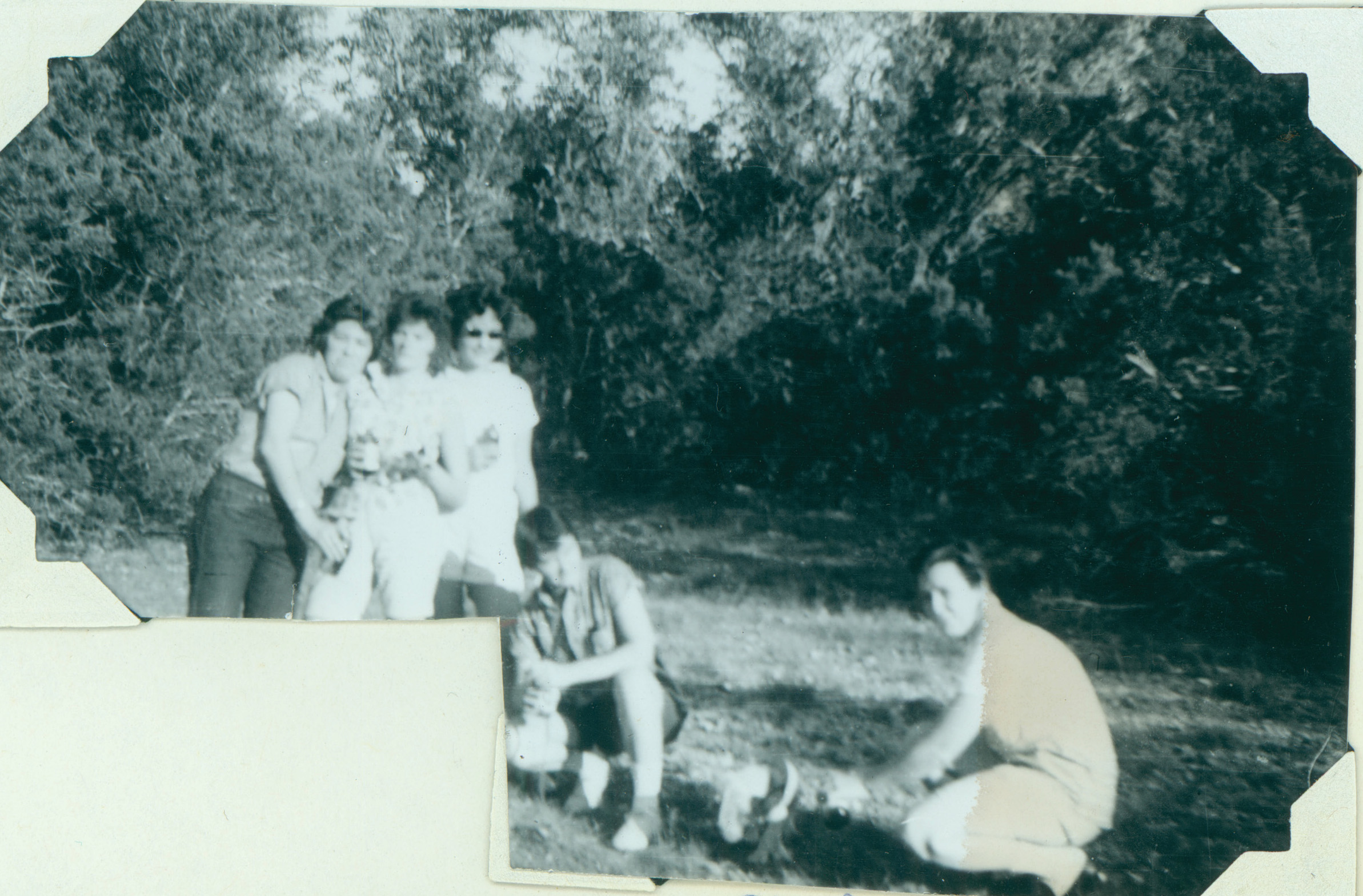
The Country featured in "Cheers" was located outside the city limits on Fredericksburg Road. It is also referred to as Stein's Bar in the short story, but the actual name for it—when folks did not invoke its nickname, The Country—was Kline's Bar. Two white elderly lesbians, Maybelle and Bee, operated The Country and had probably been together since the 1930s. Weathers described The Country as much "nicer" than The Acme: it "sat in some thickets" off the road and had "long tables" and a jukebox in its "cavernous dance hall." Moreover, there was a separate lounge room with a bar at the front of The Country where customers could relax on chairs and sofas while purchasing drinks. The racial, gender, and class demographics of The Country mirrored The Acme's, with many people frequenting both of these bars. This shared patronage was not just because The Country had more room and was the site of "a lot of drunkenness and singing loud to Patsy Cline," but also because gay couples could dance at The Country. Unlike urban gay bars, which didn't allow same-sex dancing due to their close proximity to police stations, The Country permitted same-sex dancing because its distance from police stations gave the bar owners and patrons time to warn each other and switch into heterosexual pairs.53Weathers, interview by author.
Military and Bexar County police occasionally raided The Country, and Weathers, having witnessed one of these raids, fictionalizes the method employed to alert patrons in a way that is very similar to the actual method she shared with me in person: Maybelle would walk around with her yellow bandana in her shirt pocket, which was a sign that cops were coming, and same-sex couples would immediately rearrange into heterosexual pairs. Another precaution included banning two people in the bathroom at once because if, for example, two women were in the ladies restroom during a raid, cops had probable cause to arrest them for homosexual behavior. When the cops entered the bar, "they would," according to Weathers, "go around the room looking for a woman's hand on another woman's knee" or any type of same-sex touching. I asked her if authorities persecuted gay men and women if they dressed in clothes typically associated with the opposite sex, as in, for example, Buffalo, New York, where butches were arrested for wearing less than three articles of women's clothing, and she said gay men and women in San Antonio wore the same casual dress clothes as heterosexuals: "jeans, t-shirts, Bermuda shorts."54An informant recounts this in Elizabeth Lapovsky Kennedy and Madeline D. Davis's Boots of Leather, Slippers of Gold: The History of a Lesbian Community (New York: Routledge, 1993). By her account, there weren't butch–femme pairings in the gay scene, and people didn't use those terms; instead, the only term used was fluff, which referred to more feminine women. Outside of this specification, Weathers's remarks also suggest that drag was not a common feature in these bars, nor was there a significant presence of people presenting as gender variant.55Weathers, interview by author.
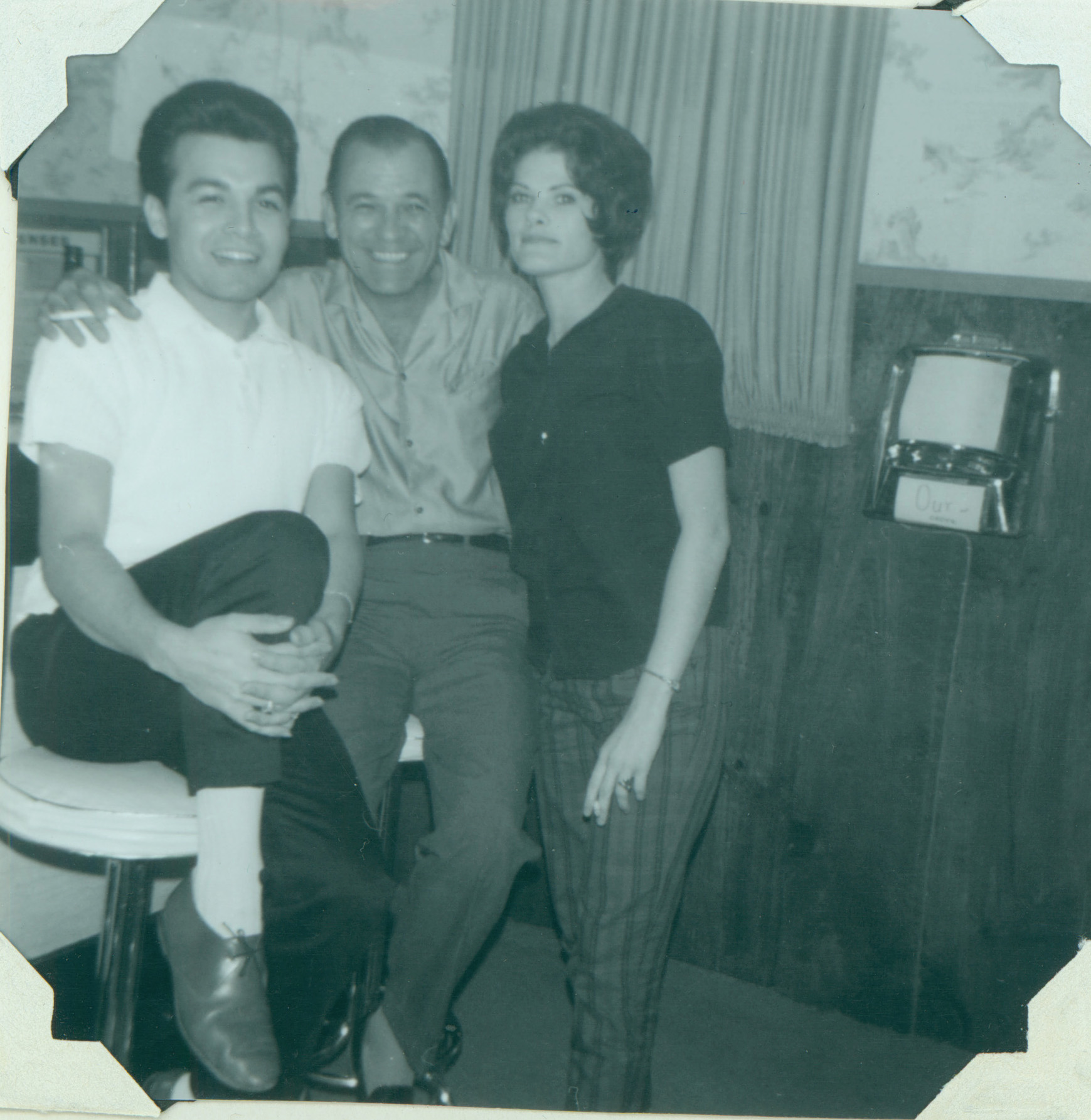
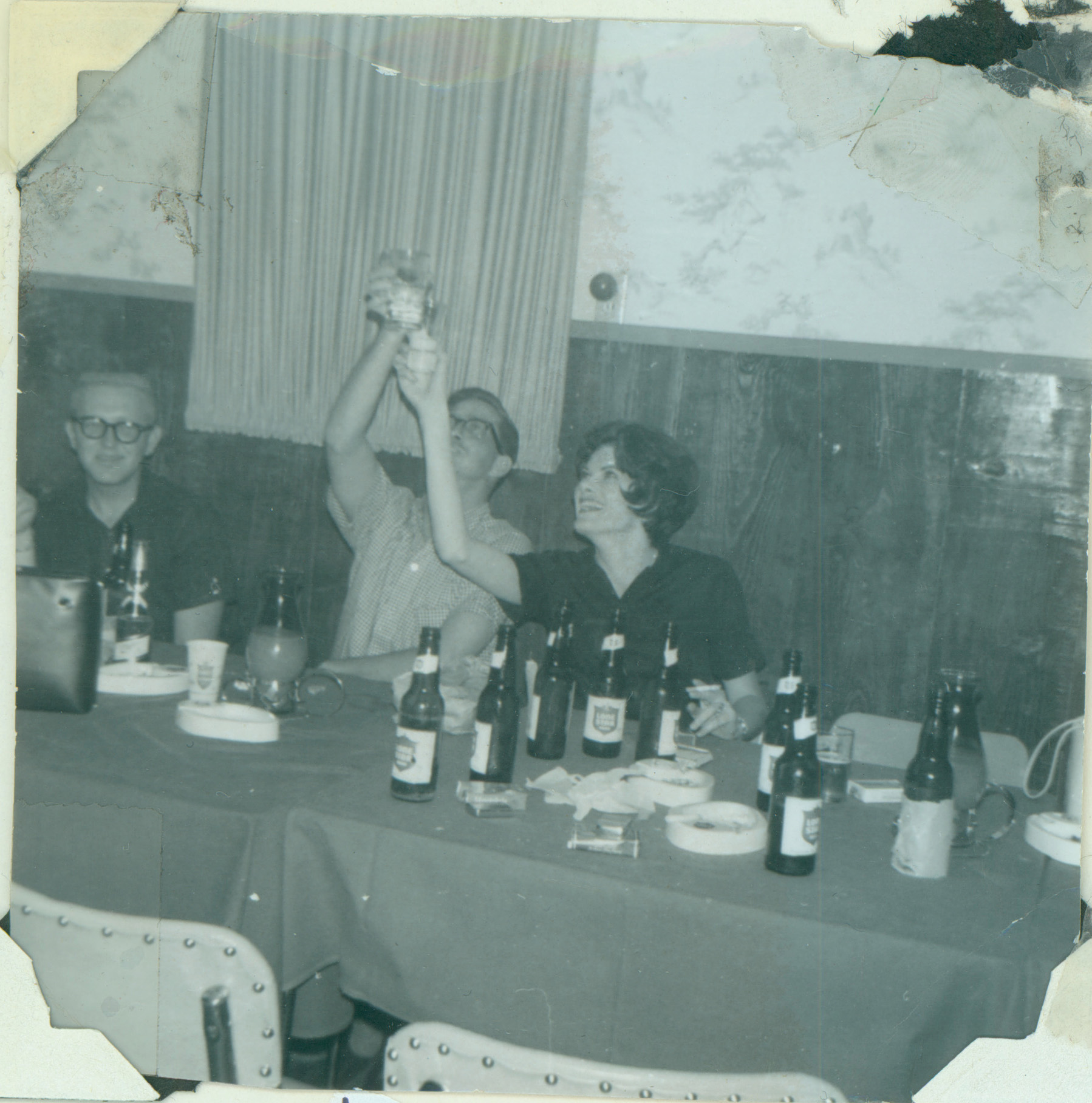
For reasons that Weathers can't remember, Maybelle and Bee ended up closing The Country. A white gay man and white bisexual woman with an arranged heterosexual marriage opened a similar venue called The Country II in a different location not long after.56Weathers, interview by author. In her study of San Antonio gay bars, Gohlke explains that like The Country, this bar was a queer gathering space that allowed for same-sex dancing and touching due to its location outside the city limits. The patrons and bar owners also employed their own technique for warning of incoming cops: flashing the lights on and off.57Gohlke, "Out in the Alamo City." Gohlke and Weathers have been in contact with each other, and Weathers told me that The Country referred to in Gohlke's thesis is, in fact, The Country II. The Country's function as a queer space on the city's periphery that gay people fluctuated between in the process of creating queer community resonates with John Howard's idea of circulating, which he uses to account for how gay men in Cold War Mississippi engendered queer experience and space by remaining in a state of flux.58John Howard, Men Like That: A Southern Queer History (Chicago: University of Chicago Press, 1999), 78.
Mary Ellen's Top Hat
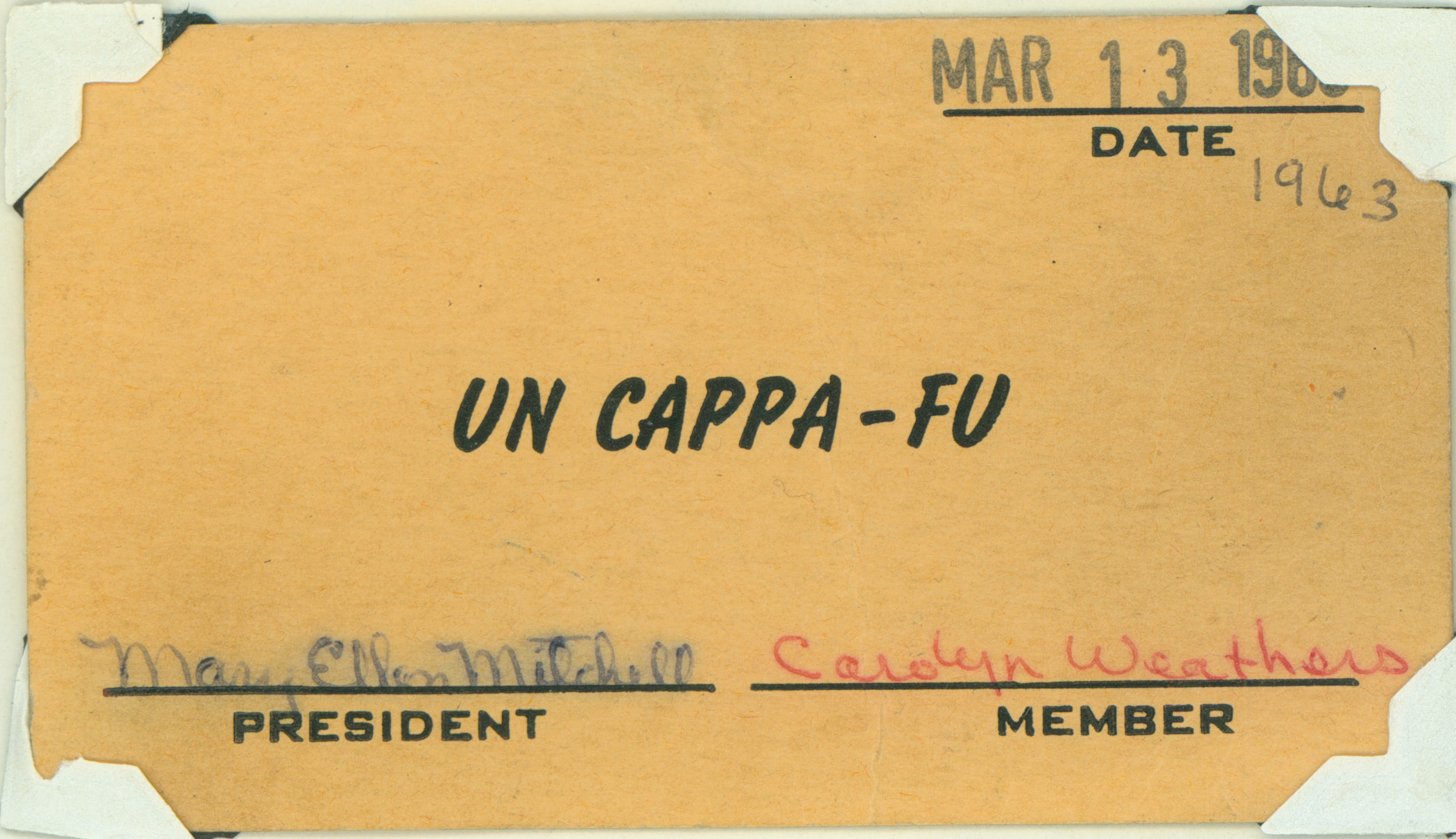
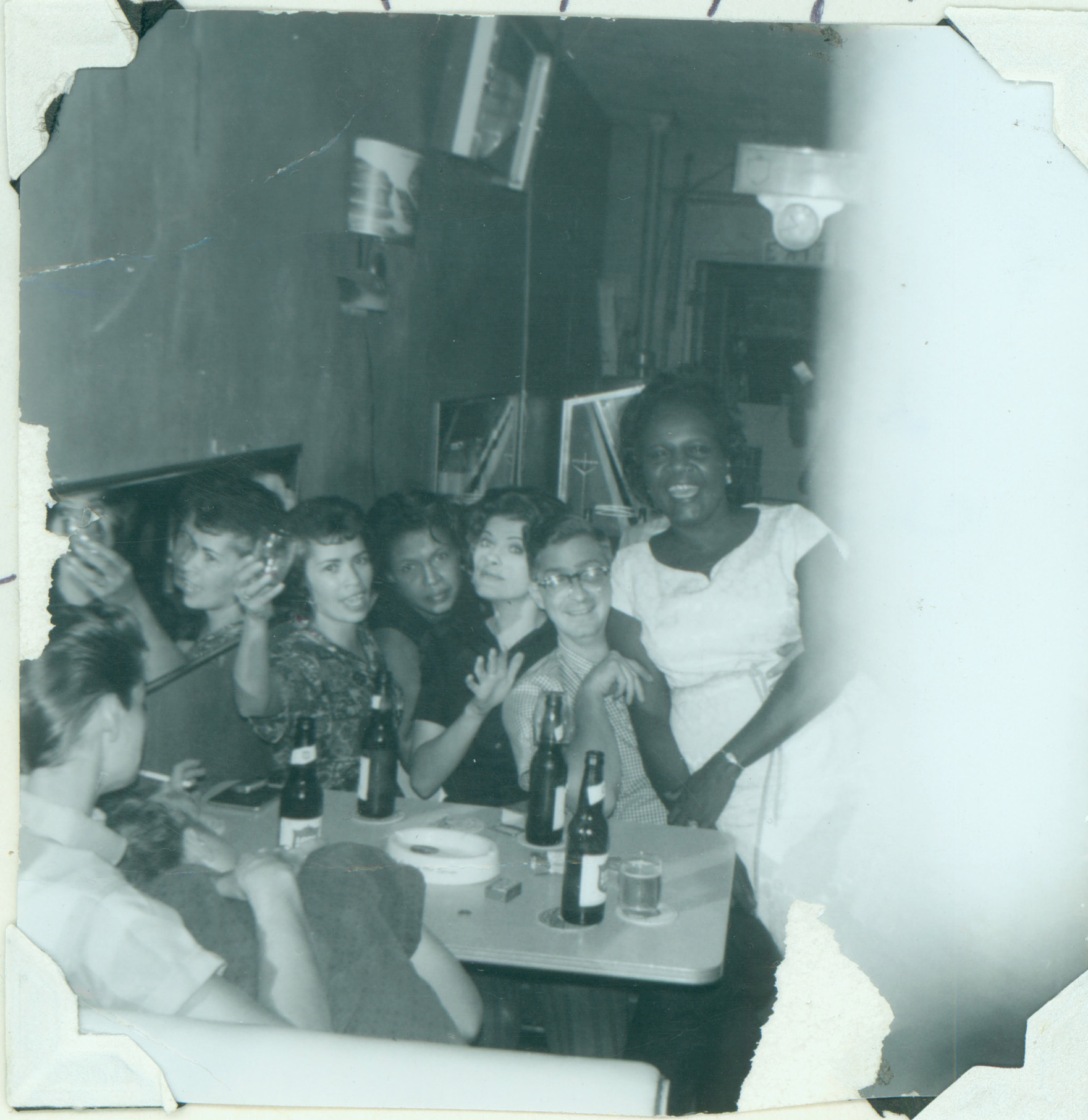
Located at 210 South New Braunfels Avenue on the city's east side, a traditionally Black neighborhood since formerly enslaved people began establishing Freedmen's Towns there after the Civil War, Mary Ellen's Top Hat is the final bar that Weathers remembers from her time in San Antonio.59For more information about Black history and experience in San Antonio, see Alwyn Barr, Black Texans: A History of African Americans in Texas, 1528–1995 (Norman: University of Oklahoma Press, 1996); Bruce A. Glasrud, ed., African Americans in South Texas History (College Station: Texas A&M University Press, 2011); Kenneth Mason, African Americans and Race Relations in San Antonio, Texas, 1867–1937 (New York: Garland Publishing, 1998). Owned by a heterosexual Black woman of the same name, Mary Ellen's was unique because it welcomed Black, Mexican American, and Anglo patrons. According to Weathers, during their revelry at the bar, Mary Ellen would sing Ray Charles songs and Weathers and her friends would act as Mary Ellen's chorus. The bar also had a beer-drinking club called UN CAPPA-FU—a play on "uncap a few." As an interracial space, Mary Ellen's heightened Weathers's awareness about Black experience in the United States through conversations she had with Mary Ellen, a Black male acquaintance nicknamed Mr. Elegance, and white and Mexican American friends and fellow patrons. Becoming noticeably emotional when discussing the racial dynamics of this bar, Weathers recalled that she, Mary Ellen, and Mr. Elegance decided to integrate The Country one night after a heated discussion over Black civil rights. However, they left in separate vehicles, and upon arriving at The Country, Weathers went in without waiting for them. She doesn't know if they were denied entrance or if they even showed up, and that lack of knowledge, as well as her failure to wait for them, is a source of strong regret today.60Weathers, interview by author.
Although heavy media coverage of the civil rights movement brought images of violence and struggle into the everyday lives of white people across the country, when Weathers entered the San Antonio gay bar scene in her early twenties, she was still ignorant and indifferent due to her race, youth, and regional upbringing. Recall that west Texas has always had a significantly smaller Black population in comparison to other parts of the state, which has influenced how anti-Black practices and ideologies manifest and circulate there. West Texas officials did not always enforce Jim Crow laws to the extent that they were enforced in more eastern parts of the state, and anti-Mexican sentiment often predominated among locals given the region's colonial history and significant Latino demographic.61William S. Osborn, "Curtains for Jim Crow: Law, Race, and the Texas Railroads," Southwestern Historical Quarterly 105, no. 3 (2002): 395. The small, predominately white town that Weathers grew up in, Brownfield, was no exception. She struggled to remember incidents of anti-Black violence and racism in her childhood, quickly adding, however, that she did notice anti-Mexican sentiment, especially in relation to the presence of imported Mexican agricultural workers in Brownfield. Weathers's experiences in Mary Ellen's Top Hat reveal that, in facilitating cross-racial dialogue, racially integrated gay bars in San Antonio were potential sites of racial consciousness raising, however limited, among patrons.62Weathers, interview by author.
Conclusion
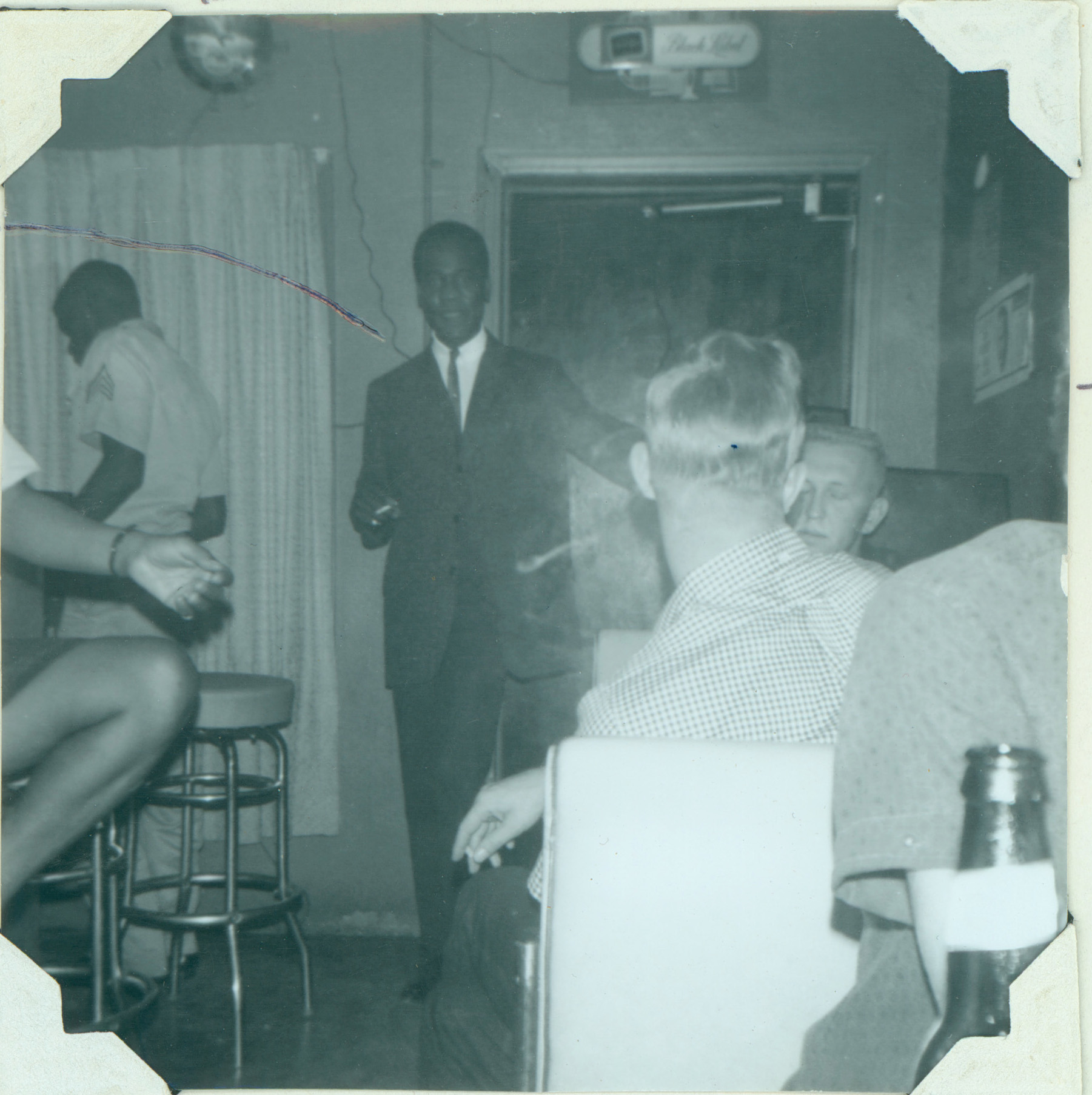
Absent in these bar sketches are the voices of people of color such as Anita, or Fernando, or Mary Ellen, or Mr. Elegance. What might a Black-owned gay bar have meant to someone like Mr. Elegance? What were his and Mary Ellen's thoughts about gay bars like The Country upholding anti-Black Jim Crow laws? Was Mary Ellen's Top Hat racially integrated because under Jim Crow, white people actually had access to all spaces, or was it a political statement on Mary Ellen's behalf? What did it mean to a Mexican American bar owner like Fernando to deny services to Black gay people and Black people generally? As a Mexican American woman, what was Anita's experience of racism and racialization as she moved from Mexican American-owned bars to white-owned bars to Black-owned bars? The Weathers Collection at the ONE Archives cannot answer these questions, but they should prompt us to consider what research approaches and archival practices are needed to adequately represent a fuller and more inclusive queer history of pre-Stonewall San Antonio and Texas. Now is the time to gather oral histories and create cross-reference lists of Texas queer experience in LGBTQ+, Black, Latino, and Asian American archives so that the research process is streamlined for academics and non-academics invested in interpreting and preserving this history.
Beyond this call to further curate and study Texas queer history, my analysis here does open up other questions that could be more thoroughly explored in future work with the Weathers Collection. For instance, how did military history influence racial dynamics in San Antonio? How might sexual dynamics be understood through the city's colonial history? What were common or popular understandings of gender in the gay community at the time? These are just a few provocations that readers might find in this essay. From this work, I hope readers will notice the gap in racial awareness when considering Weathers's "Cheers" short story and our later interview. That is, the short story itself does not discuss Jim Crow segregation or the different racialized experiences of characters. In fact, none of the characters are openly racialized. If it were not for my interview with Weathers, I could not have provided an analysis of racialized gay space in San Antonio at this time. Both text and context, story and oral history, work together to tell a richer, if still incomplete, version of pre-Stonewall gay life in San Antonio. This essay, then, might serve as an object lesson in how to work with racial silences that are often common in the archival materials of white subjects. And considering that one of the problems of archives—LGBTQ+ and otherwise—is the over-predominance of collections from white subjects, this is not an object lesson to easily cast aside. 
About the Author
Amanda Mixon is Assistant Professor of Instruction in the Center for Women's and Gender Studies at The University of Texas at Austin. Her research on US social movements has appeared in the Journal of Lesbian Studies and received support from the American Association of University Women, Duke University, the University of Virginia, and the University of California, Irvine Humanities Center.
]]>Introducción
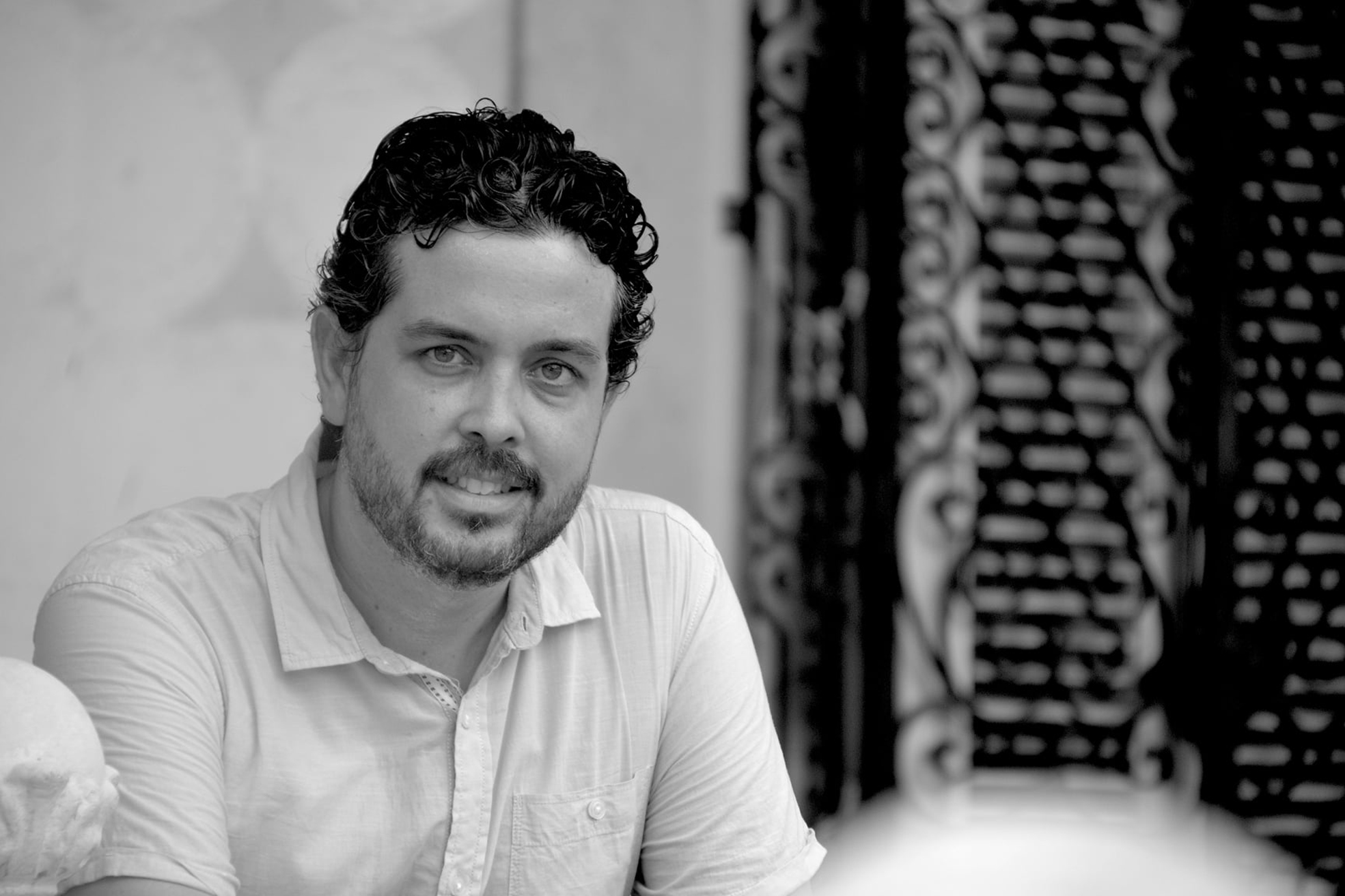
El dramaturgo Abel González Melo nació en 1980 en La Habana, Cuba, mismo año en que el Exodo del Mariel vio a aproximadamente 125,000 personas huir de su país, un evento que dramatiza en su obra de 2018 En ningún lugar del mundo. González Melo estudió Artes Teatrales en la Universidad de las Artes de Cuba. Ha recibido diversos premios y galardones por sus obras literarias y teatrales, entre ellos el Premio Primer Concurso de Dramaturgia de la Embajada de España (2005) por Chamaco, una de las obras más reconocidas de González Melo, y más reciente el prestigioso Premio Literario Casa de las Américas 2020 (enero).
Las obras de González Melo abarcan dos décadas y cubren múltiples temas sociales dentro de la vida cubana. Desde la complicada relación de Cuba con el Exodo del Mariel en En ningún lugar del mundo (2018) hasta la prostitución adolescente a principios de la década de 2000 en La Habana Vieja en su trilogía, Fuga de Invierno (2004–2009), sus obras sumergen al público en las calles que rodean el Capitolio de La Habana, en los parques, callejones y teatros que brindan espacios para la prostitución ilegal, en casas particulares que centran la importancia de la familia para los cubanos. La primera década de la escritura de González Melo problematiza la cultura juvenil cubana de principios de la década de 2000, una cultura a la vez gay y heterosexual, hambrienta y saciada, resistente y complaciente en un país donde la Revolución todavía se lucha a diario en las calles (aunque ahora rodeados por los "WiFi hotspots" aprobados). Mientras González Melo mantiene su identificación sexual privada, sus obras desafían la categorización, preguntan cuestiones de sexualidad y exploran la supervivencia, la mercantilización del cuerpo, el trauma mental intenso, el dolor de la historia y el amor profundo de la familia. Sus personajes se entretejen dentro y fuera de sus obras para demostrar esa complejidad: mientras algunas cosas han cambiado, otras siguen igual de siempre.
La obra más reciente de González Melo pasa a recuperar personajes literarios y episodios de la historia cubana con una perspectiva revisionista. Figuras históricas de la obra de González Melo incluyen la poeta feminista de principios del siglo XX María Luisa Milanés (de Bayamo, Cuba) en Bayamesa (2019), que ganó el premio Casa de las Américas de teatro en enero de 2020. En abordar el tema de la censura en el apogeo de la Revolución en Cuba, la obra más reciente de González Melo presenta personajes históricos cubanos. Fuera del juego dramatiza la experiencia de la figura cultural Heberto Padilla, un poeta venerado cuya obra criticó la Revolución y sus líderes en su momento, 1967–68, resultando en su arresto, tortura y exilio a los Estados Unidos en 1980. Padilla trabajó muchos años en varios puestos en el sistema universitario en los Estados Unidos, como Ohio State University, Bowdoin College y el Instituto de Humanidades de la NYU, antes de morir solo como poeta residente Auburn University en 2000. En su drama más reciente, Cádiz en José Martí (Festival de Teatro Iberoamericano de Cádiz, 2020), González Melo dramatiza al mítico héroe nacional de la isla, el revolucionario José Martí (1853–1895). González Melo lo sitúa en la ciudad española de Cádiz, el primer destino de Martí en su largo exilio y deportación política bajo el régimen colonial.
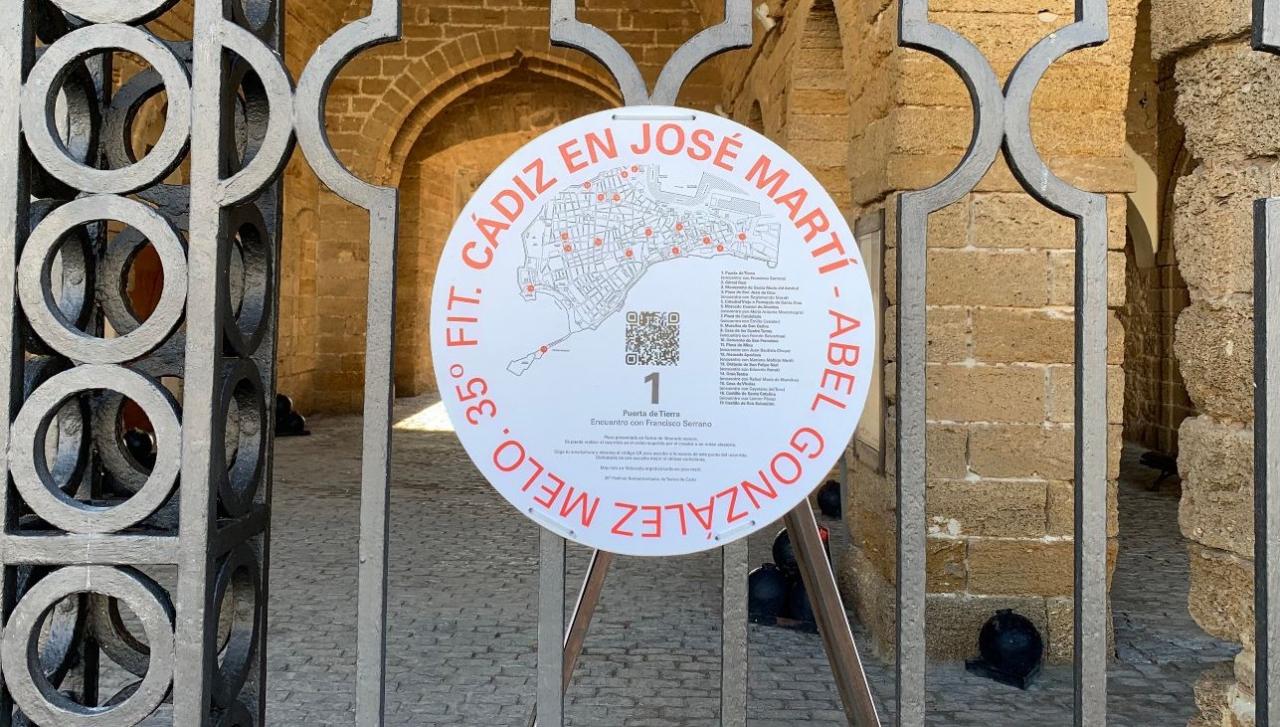
En esta conversación, González Melo explica su proceso creativo e inspiraciones, la experiencia de la migración cubana como material dramático y la idea de refundir la historia para nuevos públicos y tiempos. Habla de cómo se basó en la experiencia actual en La Habana para crear Fuga de invierno y cómo su obra reciente se sumerge profundamente en las preguntas de la comunidad y la familia durante algunos de los momentos más severos de Cuba. González Melo también reflexiona sobre las ligaduras singulares entre Estados Unidos y Cuba. Uno de estos vínculos es la conexión lingüística español-inglés, ya que muchos cubanoamericanos son bilingües. Por lo tanto, aunque esta conversación se llevó a cabo en español, hemos proporcionado traducciones al inglés. [Read the English translation of this interview here.]
Chamaco : El comienzo de todo, o el trabajo inicial de González Melo
Gunnels: ¿Por qué la dramaturgia? ¿Piensas que el teatro es el mejor vehículo para las historias que quieres contar?
González Melo: El teatro tiene algo maravilloso para un escritor: aleja a la literatura de la soledad. Propone la creación en equipo y el contacto directo con el espectador. Ambas cuestiones me resultan muy atractivas: la idea de que la escritura nunca cesa, siempre es reinterpretada en presente, necesita la comunión del director, los actores, los diseñadores, los técnicos, y precisa, indefectiblemente, la complicidad del público. Me deslumbra esa naturaleza inacabada de la escritura dramática, esa urgencia por impactar de modo inmediato. Disfruto escribir narrativa o ensayo, pero en ambos casos extraño el diálogo real con el ser humano. Será porque, cada vez más, la dramaturgia es en mí un proceso relacionado con un grupo humano concreto, una textura imaginada para gravitar sobre una cuerda floja.
Gunnels: ¿Sientes 'inacabada' esa naturaleza porque necesita de otros artistas para completarse, o porque, cada vez que se representa una obra, hay una nueva audiencia que tendrá reacciones distintas?
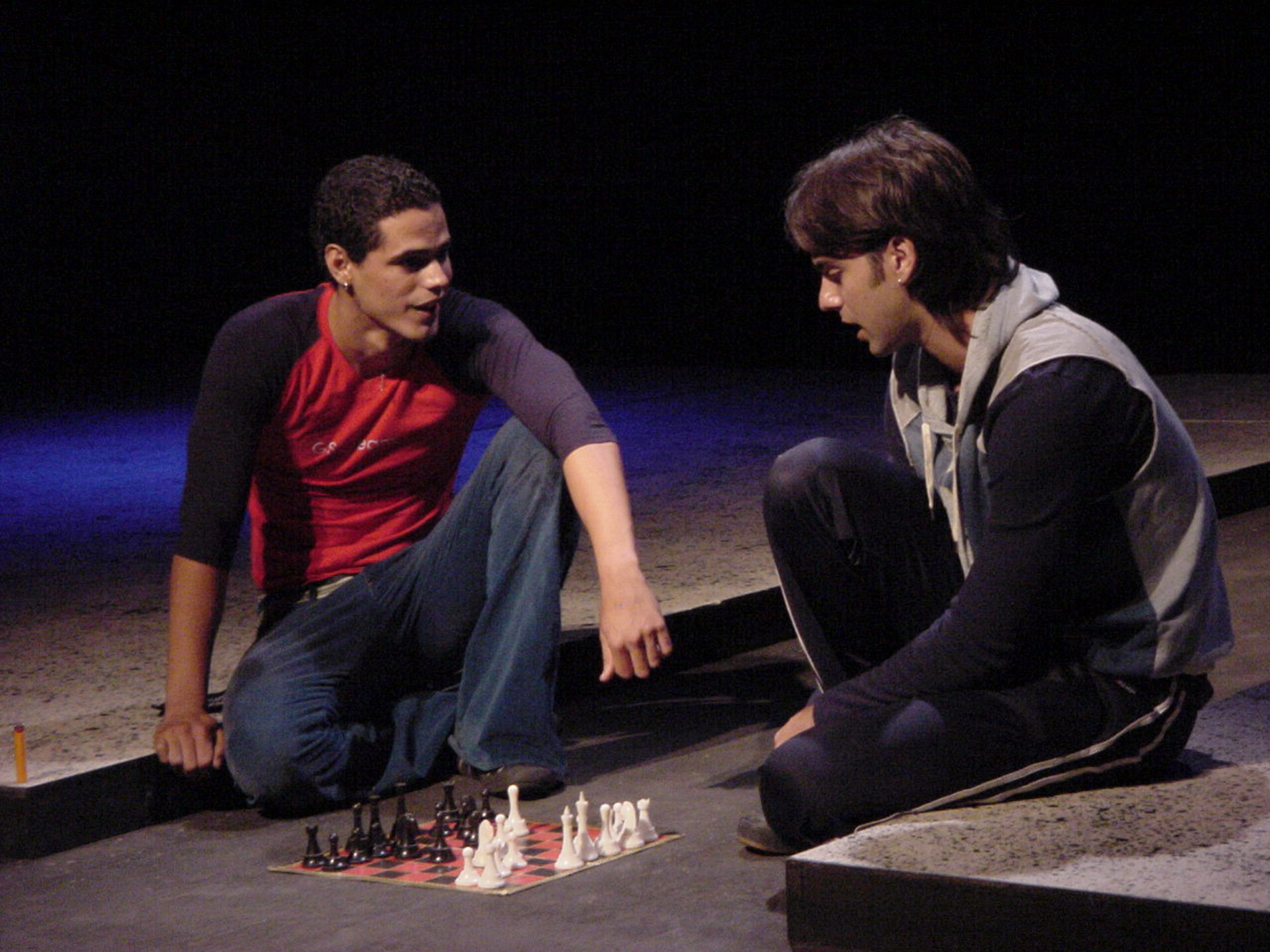
González Melo: El teatro lo hacemos entre todos, los artistas y el público. Basta recordar el origen griego de la palabra "teatro", que significa "mirar". Es decir, solo existimos porque alguien nos mira. Es uno de los mayores placeres de escribir dramaturgia: sentir que uno solo ofrece una guía de acotaciones y parlamentos sobre el papel, solo eso, pero que el personaje tendrá el cuerpo, la voz y el alma de quien lo encarne delante del espectador, que es quien terminará de construirlo en su proceso de recepción activa. ¿Por qué seguimos asistiendo una y otra vez a los estrenos de los clásicos? Pues porque su esencia, más que en el argumento, radica en cómo se cuenta hoy esa historia en el ágora pública: quiénes la ejecutan, por qué deciden hacerla, en qué contexto y ante quiénes, qué sentidos nacen de esa experiencia.
Gunnels: Quisiera pintar la escencia de la triología Fugas de invierno para la audiencia antes de que lo comentemos.
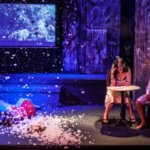
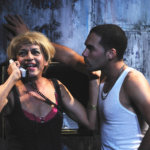
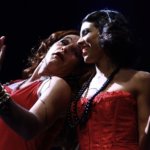
Chamaco (Kiddo, 2004, traducción al inglés de William Gregory) es la primera entrega de la trilogía.1Hay dos traducciones publicadas. William Gregory tradujo los dos Chamaco y Nevada; Yael Prizant tradujo la triología en versión bi-lingual con prensa distinta. Chamaco se ha representado a nivel mundial, desde el Teatro Argos en La Habana hasta Manchester, el Teatro HOME de Inglaterra, hasta la traducción más reciente al checo, con la producción en Praga programada para el otoño de 2021. La trilogía, que incluye Nevada y Talco (la segunda y tercera entrega), cubre un lapso de tres meses en un invierno tropical del descontento, como escribe la crítica de teatro y académica titular Lillian Manzor "the trilogy addresses concerns that are dear to the author and his generation, namely: the complex and contradictory ways in which homosexuality, sex, and migration from the countryside to the capital becomes means of survival in a society that has lost all sense of value."2Lillian Manxor and Austin Webber, "Ground Down to Nothing but Still Fighting." Hemispheric Institute of Performance and Politics. Accessed March 25, 2021. https://hemisphericinstitute.org/en/emisferica-82/manzor-webbert.html. Chamaco sumerge a los espectadores en la Nochebuena en La Habana, donde una hermana espera con inquietud que su hermano regrese a casa para una cena que nunca comerá, ya que sin saberlo ella, murió en una pelea con cuchillas. Nevada sigue a Lucía y su novio/chulo Rosnay cuando se encuentran con la realidad de vender sus cuerpos en el esfuerzo por salir o escapar, en este caso, al estado de Nevada, donde la prostitución es legal, y los "dulces vienen envueltos en papel de brillo". Talco, la última entrega, retrata una realidad cruda y sucia que se desarrolla principalmente en el baño de un antiguo cine utilizado para el tráfico y la prostitución, donde los caminos de cuatro personajes—Javi, Máshenka, Zuleidy y Álvaro—se entrecruzan en una batalla violenta y tensa de supervivencia. A la trilogía la siguen casi veinte obras más, muchas de las cuales han sido traducidas a varios idiomas y representadas tanto en Estados Unidos como en el extranjero. Abel, esta trilogía realmente centra la experiencia de la juventud cubana. Describe la importancia de dar voz a la gente joven cubana en las obras que has escrito.
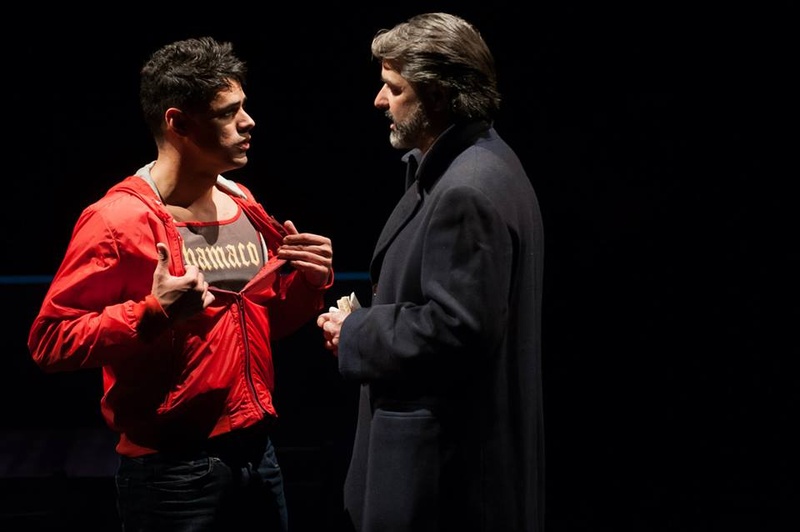
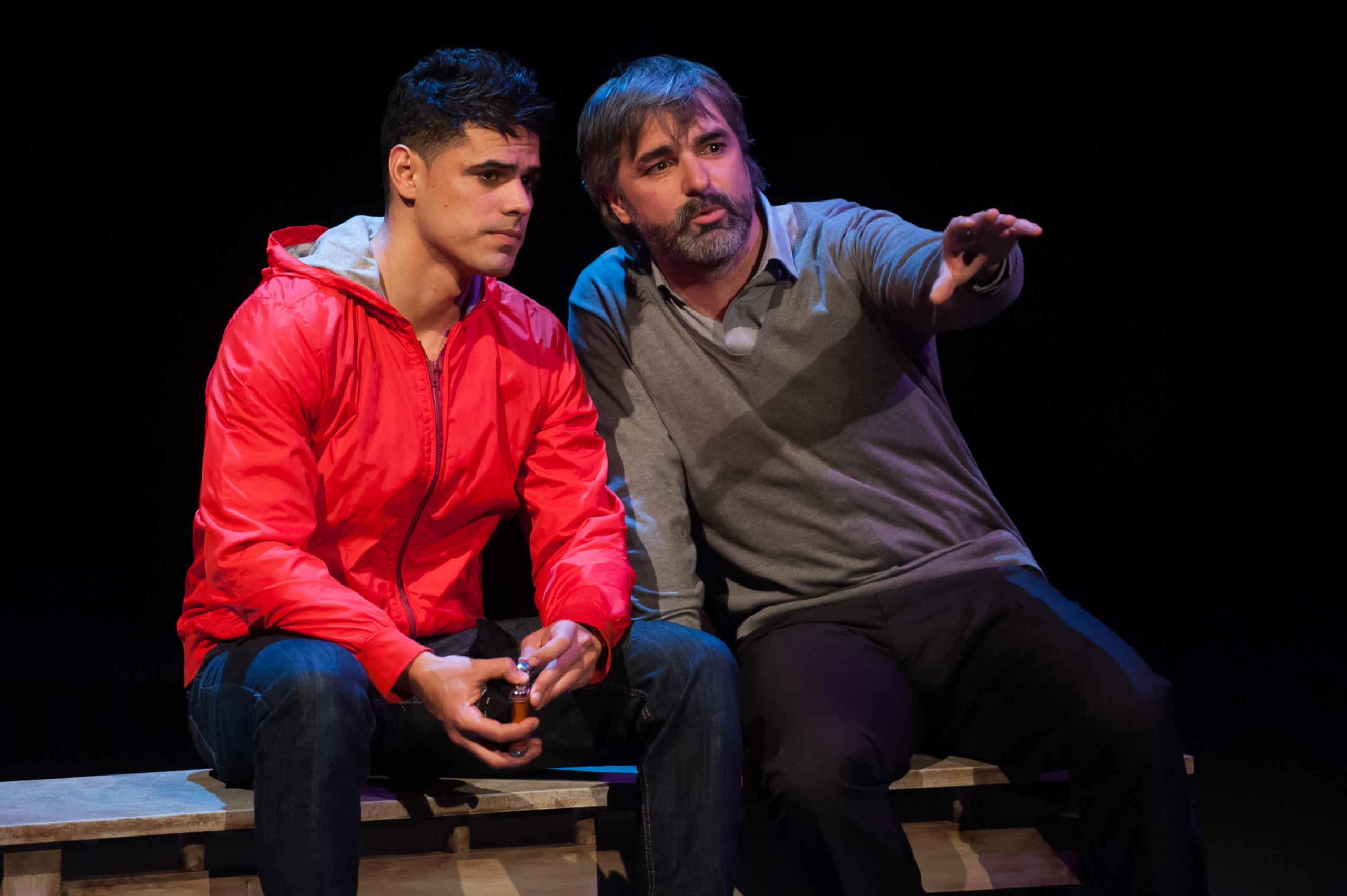
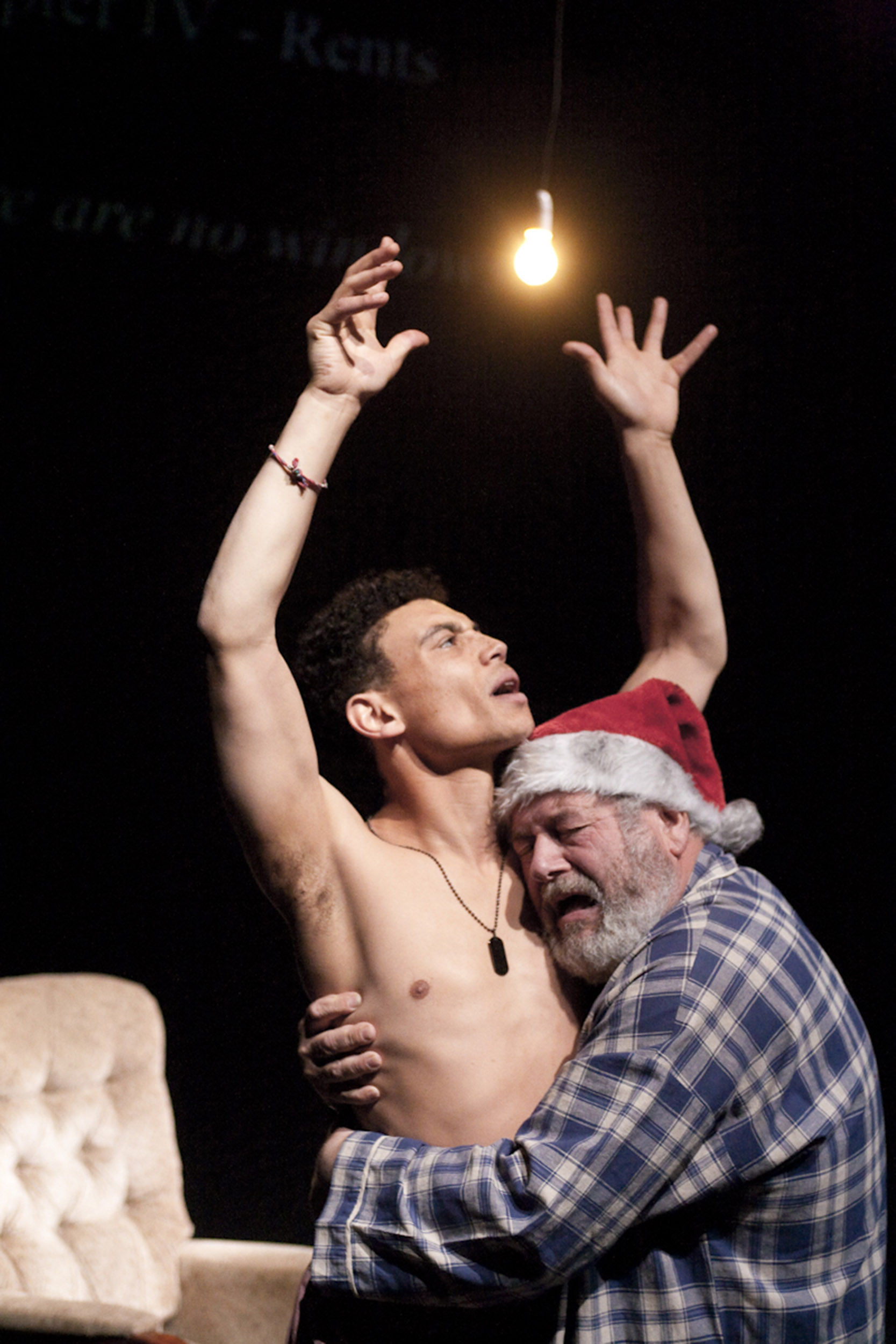
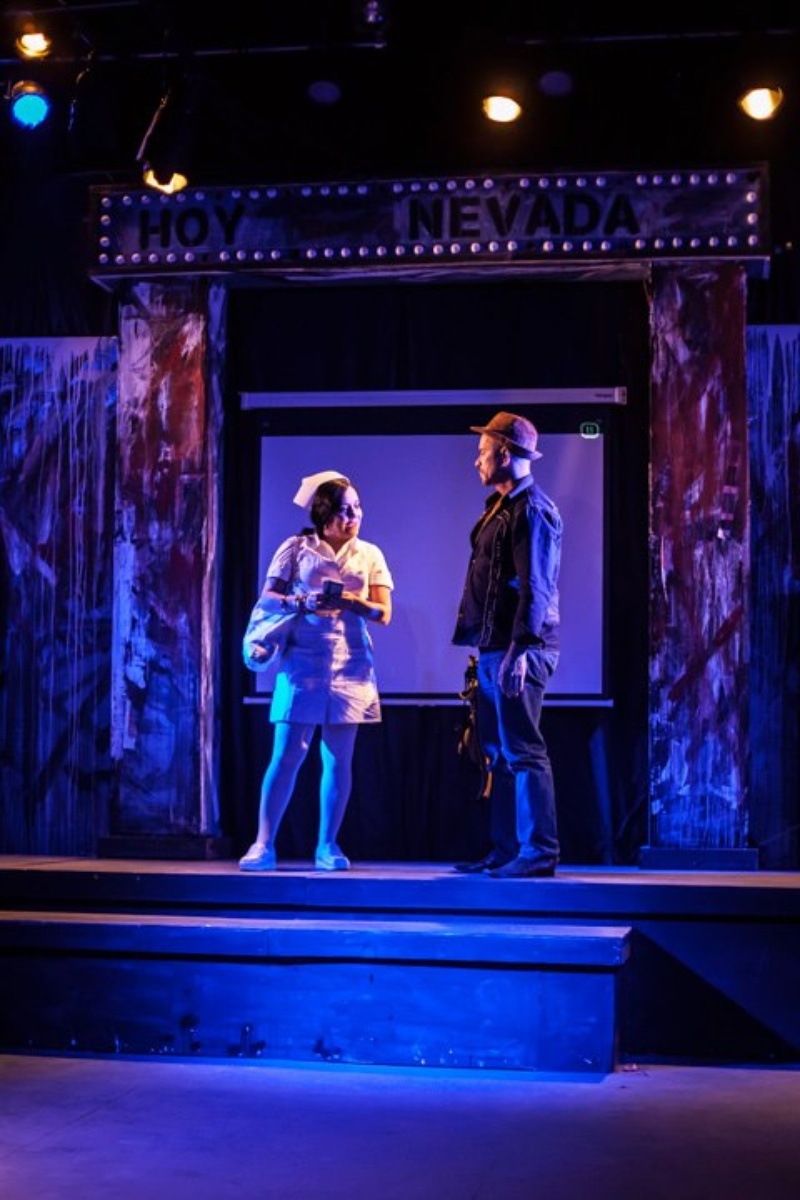
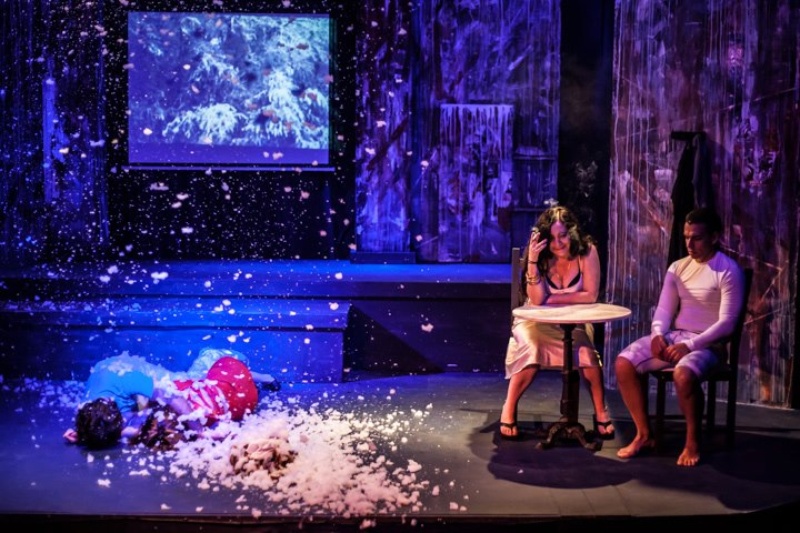
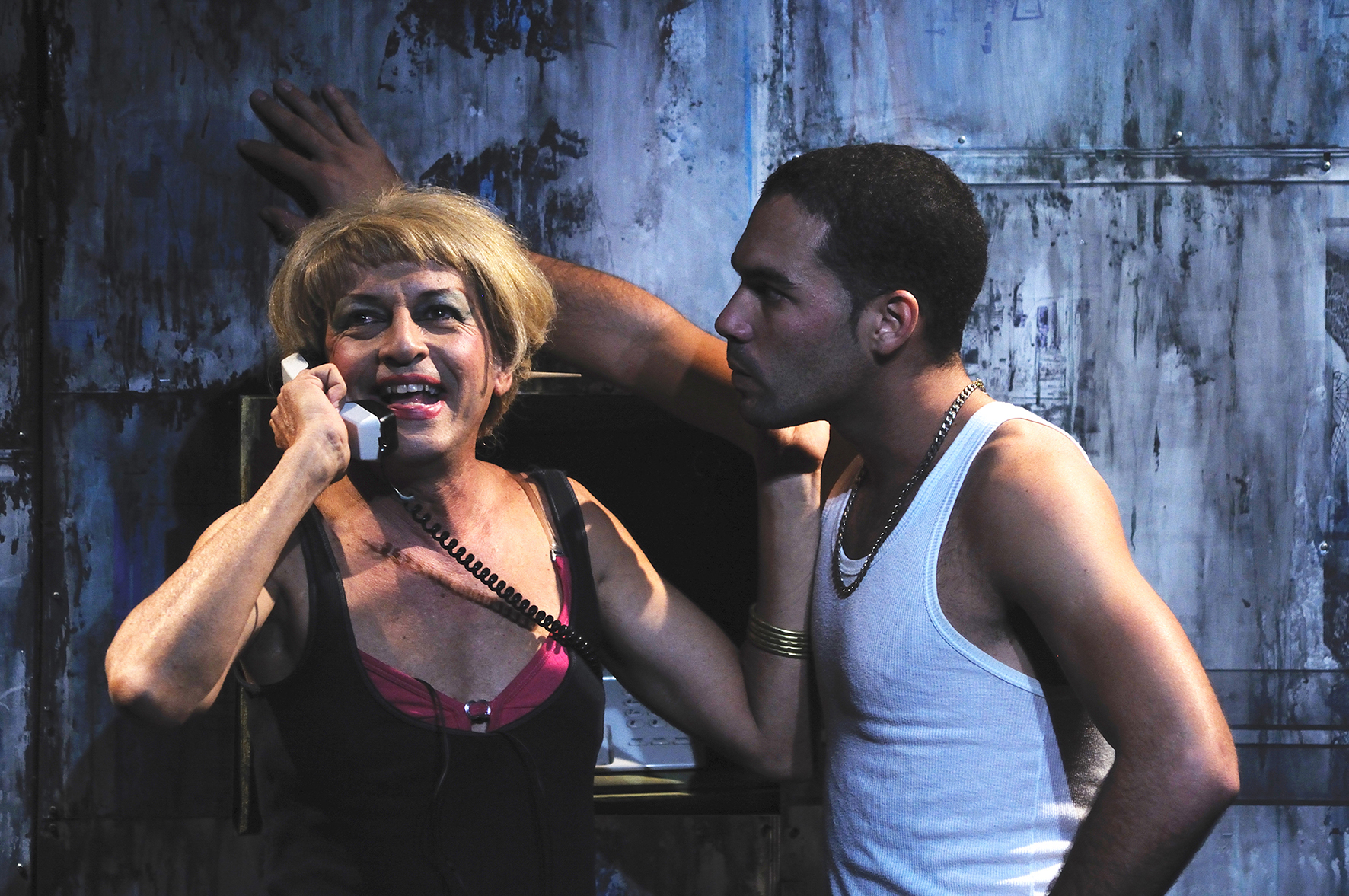
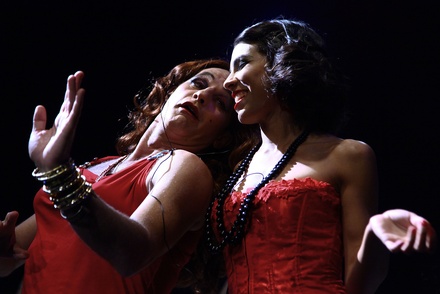

González Melo: Ahora que lo comentas, pienso que los protagonistas de mis obras han ido teniendo mi edad en el momento de escritura, y en cada texto van siendo mayores estos personajes porque crecen conmigo. He querido llenarlos de mis dudas, mis afectos, mis dolores. Son la imagen sublimada de mí mismo en medio del mundo en que he crecido: la Cuba de entresiglos, y desde hace algo más de una década también la España del XXI. Vivo a caballo entre los dos países y los observo a ambos con una mezcla de pasión y extrañeza. No puedo hablar de todos los jóvenes como una masa, eso no sé hacerlo, pero sí de mí en el paso de la adolescencia a la juventud: esas pulsiones son las que habitan mi teatro. Ojalá tengan que ver con las de otras personas.
Gunnels: Dime más sobre eso que llamas 'pasión y entrañeza.'
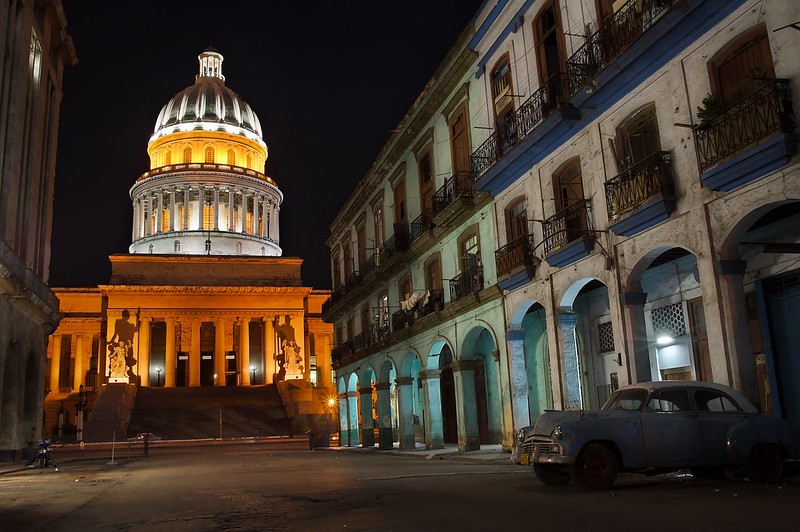
González Melo: Recuerdo que a principios de los 2000, cuando atravesaba en la noche la Habana Vieja rumbo a mi casa, me despertaban enorme curiosidad las decenas de adolescentes que aguardaban apoyados en las columnas, frente al Capitolio, o rondando el Parque Central, en medio de la zona turística. ¿Qué hacía toda esta gente aquí? ¿Quiénes eran? Poco a poco fui acercándome a ellos, muchos vivían clandestinamente en La Habana, habían emigrado desde el Oriente de la isla. Todos se prostituían, o aspiraban a hacerlo.3Una nota de González Melo: "Aquí estamos hablando, si hay que aclararlo, solo de cisgender masculinos. Yo no soy expert en estudios y terminology de género, pero los trans y las chicas están, como explico, en otras zonas de la ciudad." Supe de historias fascinantes, terribles. Irlos descubriendo a fondo no fue sencillo, ninguno iba a darme una entrevista sin más y contarme su vida. Me convertí en discreto cliente, ahorraba dinero y me iba con alguno de ellos a un cuartico de alquiler. En la fugacidad de ese rato de extraño placer me mantenía alerta: los escuchaba hablar de sus vidas, de sus hijos pequeños a quienes tenían que alimentar, de sus mujeres conscientes de que ellos se dedicaban a la cacería de extranjeros o cubanos que pudieran pagar por sexo. Mi investigación fue ampliándose, una cosa me llevó a la otra, fui componiendo el mapa de la marginalidad nocturna de la Habana Vieja: la zona de las prostitutas estaba en el cruce de las calles Monte y Cienfuegos; los travestis y transexuales aguardaban a sus clientes en el Parque de la Fraternidad; la droga se vendía en un cine abandonado, etc. Me sumergí de lleno. Hice cosas impensables durante aquellos años, cosas que hoy no haría. Pero por suerte me atreví a hacerlo: quería conocer a fondo a estas personas, sus lugares, sus razones, todo ese ambiente que la prensa oficial no publicaba. Tres o cuatro años de inmersión. Tras concluir Chamaco, tenía aún tanto material acumulado que nacieron Nevada y Talco. También en obras como Por gusto y Adentro hay huellas de este universo.
Gunnels: Por mi parte, Lucía de Nevada y María Luisa de Bayamesa me conmuevan por su necesidad de enfrentarse al mundo, al exterior hostil, pero con persistencia y amor por la familia. Son fuertes ejemplos feministas para cualquier generación. Y Lucía, con su vestido rojo, es singular para mí. ¿Hay un ángel en tu obra, un personaje que realmente te conmociona?
González Melo: No suelo partir de la emoción en los procesos de escritura. Soy bastante técnico, algo que aprendí con mi maestra Raquel Carrió (gran autora nuestra, fundadora en 1976 de la carrera de Dramaturgia en la Universidad de las Artes de Cuba): la tríada estructura-personaje-lenguaje es la base de la preparación de mis proyectos. Creo que la emoción llega (o no) en paralelo a (o luego de) la apreciación de la experiencia. La emoción estará entonces en el receptor. Pero para que eso pueda suceder, la construcción misma del texto o del espectáculo ha de ser precisa, nítida, no puede partir del deseo de emocionar, porque se desfigura. A veces siento que la emoción enturbia la objetividad de lo que ocurre: sucede mucho con los actores que actúan "emocionados" y, entonces, sobreactúan; o con los dramaturgos que se sobreemocionan con lo que están haciendo y pierden el rumbo de la acción, pierden síntesis.
Sí es verdad que alguna vez he tenido experiencias singulares, yo diría que místicas, durante la escritura misma, como me sucedió con Chamaco, que sentí que alguien me la dictaba al oído. Estaba muy reciente la violenta muerte de mi padre y el monólogo de Silvia, cuando se entera de que han asesinado a su hermano, lo escribí deshecho en llanto. Siempre he creído que Chamaco es mi padre que se convirtió en ángel para dictarme esta obra y que me acompaña desde entonces.
La historia se repite
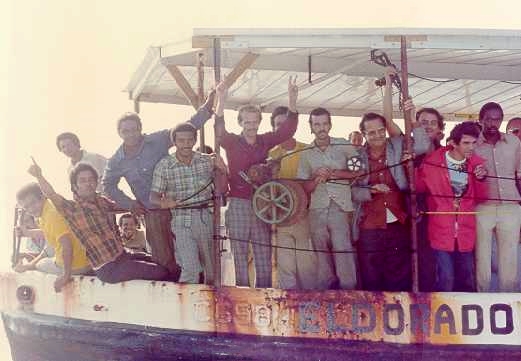
Sobre todo en sus dramas más recientes, Abel González Melo ha cambiado de describir experiencias personales en su trabajo a referenciar y dramatizar puntos de contacto históricos cubanos (como el Éxodo Mariel, los UMAP (Unidades Militares de Ayuda a la Producción), el Quinquenio Gris y el Período Especial. El Éxodo Mariel constituye la migración masiva más grande de Cuba en su historia. De abril a octubre de 1980, se estima que ~125.000 cubanos salieron del Puerto Mariel para los Estados Unidos. La historia fue bien cubierta en los medios de comunicación: un pequeño grupo de cubanos tropezó un autobús urbano hasta las puertas de la Embajada peruana en La Habana en un intento de pisar tierra allí y solicitar asilo político (y eventualmente salir de la isla). Se les concedió asilo y, después, más de 10,000 personas se acercaron a la embajada con las mismas esperanzas. Al ver esta situación desarrollarse desde los Estados Unidos, el presidente Jimmy Carter emitió una invitación abierta a cualquier persona de Cuba que huyera del régimen de Castro, evitando en parte la política y el procedimiento de inmigración de los Estados Unidos. Siguió un giro típico de Castro: después de un discurso muy público el primer de mayo, el Día del Trabajador, en la Plaza de la Revolución de La Habana, vació las cárceles y hospitales de Cuba de criminales condenados y enfermos y requirió cualquier embarcación estadounidense que fuera a recoger a familiares o seres queridos para llevar del Puerto Mariel también consigo un barco lleno de otros 'indeseables', en los que incluía hombres homosexuales y personas con problemas psiquiátricos. Como señala González Melo en nuestra conversación a continuación, la historia de Cuba con los hombres homosexuales está marcada por una trágica discriminación, tortura y muerte. Los históricos campos de trabajo de la UMAP (en español, Unidades Militares de Ayuda de la Producción) que sirvieron como un tipo de prisión laboral de 1965 a 1968 en Camagüey, Cuba, fueron politizados como campos agrícolas para "objetores de conciencia", pero fueron más una especie de "purga" social de cualquier persona que fuera considerada anticastrista o antirrevolucionaria, afirma el historiador Abel Sierra Madero.4Abel Sierra Madero, "Academies to Produce Macho-Men in Cuba." Translated by Alicia Barraqué Ellison. Translating Cuba. February 19, 2016. https://translatingcuba.com/academies-to-produce-macho-men-in-cuba-abel-sierra-madero/. Esto incluyó a los acusados de homosexualidad.
Siguiente de los años de la UMAP hay un período de poco más de cinco años (1971–1977) conocido como el quinquenio gris en el que el gobierno cubano controlaba rígidamente las producciones culturales y artísticas de la isla. Esto período limitó severamente la expresión y la publicación artísticas. Varios de los dramaturgos más destacados de Cuba, como Virgilio Piñera (1912–1979), Abelardo Estorino (1925–2013) y Antón Arrufat (1935–), sufrieron tremendamente bajo esta censura, tanto por su insistencia en la libertad creativa como por su homosexualidad. Rodeados de un ambiente hostil, los tres utilizaron la metáfora como forma de expresión, siempre tratando de evitar la censura. La obra de Piñera preguntó en términos amplios conceptos de identidad nacional y la parte del escritor como resistor. Un prolífico escritor de ensayos, cuentos y teatro, las colecciones de Piñera como Cold Tales (1956) y Little Maneuvers (1963) fueron acreditadas por inspirar a generaciones de escritores que vendrán después, incluso el autor conocido del Mariel, Reinaldo Arenas. Abelardo Estorino, que antes fue censurado con su obra Los mangos de Caín (1965), solo escribió un texto en los años 70 y en cambio se dedicó a la dirección de clásicos en la Compañía Teatro Estudio. Antón Arrufat recibió altos honores de la UNEAC por Los siete contra Tebas en 1968, pero esa institución publicó el libro con una nota que acusaba al escritor de ser un contrarrevolucionario; Arrufat fue condenado, y no publicó más por una década.
Finalmente, la inmigración hacia y desde La Habana varió drásticamente desde la década de 1960 hasta la actualidad, y las leyes que prohíben el reingreso, así como la relación política y acre entre los Estados Unidos y el régimen de Castro, crearon una forma estratificada de entender el hogar, la comunidad, y exilio. A principios de la década de 1960 se produjo un éxodo de las clases media y alta, que en su mayor parte aterrizaron en el sur de Florida y se quedaron. Después del Éxodo Mariel, la política de inmigración estadounidense de mediados de la década 90 llevó a un aumento de la inmigración de la isla, ya que 'pie mojado, pie seco' permitió acelerar los procedimientos de inmigración de EE.UU. para cubanos. El aumento de balseros es notable durante este Período Especial. De estas grandes olas de inmigración, Mariel se distingue por la demografía de la población, así como por el giro politizado en ambos lados: ese grupo fue menos aceptado por los cubanos en la isla y experimentó una integración más dura en su nueva comunidad del sur de Florida.5Aviva Chomsky, A History of the Cuban Revolution, 2nd ed. (Hoboken, NJ: Wiley-Blackwell, 2015), 75.
González Melo es descendiente de estos primeros dramaturgos cubanos así como heredero de esta historia enredada. En la conversación que sigue, González Melo reflexiona sobre la realidad del hombre "gay" en Cuba antes y después de Mariel, y cómo esta faceta de la historia cubana encuentra su camino en sus obras dramáticas. En particular, su obra Fuera del juego revisa el Caso Padilla y la UMAP, destacando la censura subversiva y la tortura psicológica de los artistas en los primeros años de la Revolución. Su obra Bayamesa se remonta a lo más lejano de la historia cubana, para abordar temas de la tradición colonialista, los roles de género y el feminismo en Cuba.
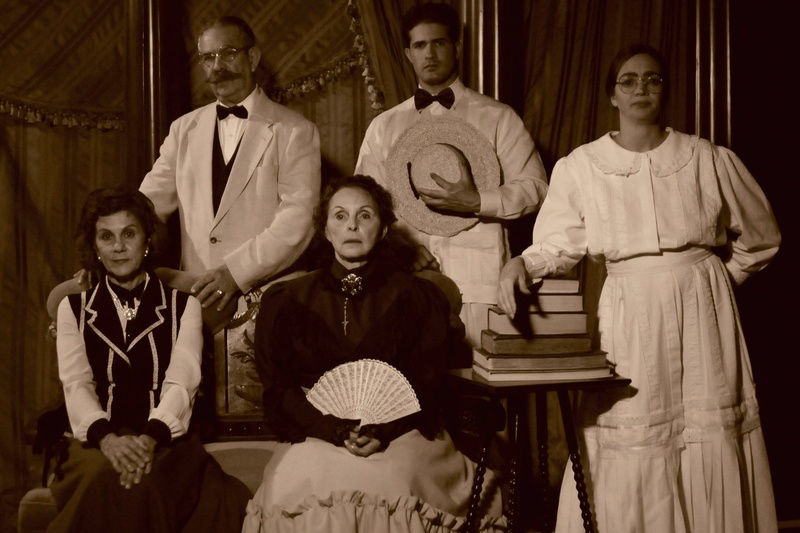
Gunnels: Describe los cambios, si los hubiera, en la realidad del hombre gay en Cuba desde que escribiste Chamaco (2004) hasta En ningún lugar del mundo (2018).
González Melo: El lapso que dices comprende poco más de una década y no creo que los cambios hayan sido muy apreciables. La Revolución no se ha comportado de modo precisamente bondadoso con los homosexuales, quienes fueron considerados durante mucho tiempo lacras sociales y enviados entre 1965 y 1968 a campos de trabajo llamados UMAP (Unidades Militares de Ayuda a la Producción). Todo ese proceso acrecentó el machismo y la homofobia en nuestra sociedad. En la obra de grandes dramaturgos cubanos, que además eran homosexuales (pienso en Virgilio Piñera, Abelardo Estorino o Antón Arrufat), el tema no aparece o aparece muy escamoteado, quizás a causa de la autocensura: después de las UMAP vinieron los terribles años 70 y sus políticas de marginación a homosexuales artistas. A mi generación le ha tocado una etapa un poco más amable, aunque la homofobia persiste y ha encontrado vías soterradas para manifestarse. En lo personal he podido abordar el tema gay en textos que se han publicado y estrenado dentro de la isla, han aparecido antologías de poesía y narrativa homoeróticas, etc. Se ha intentado incluir, en la enmienda a la Constitución, la noción del matrimonio igualitario que ya es una realidad en tantos países del mundo: pero durante demasiados años el propio gobierno ha sembrado el odio hacia los homosexuales, y la mentalidad del pueblo no puede cambiarse de un día para otro.
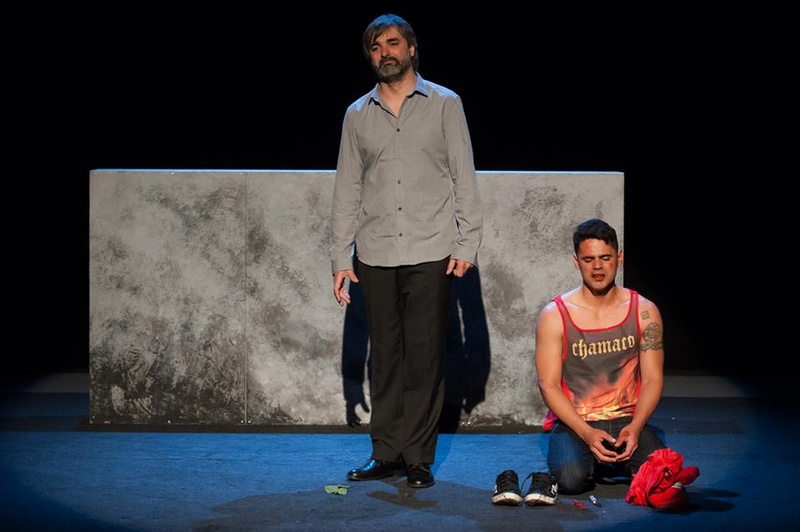
Gunnels: ¿Puede el teatro cambiar a un pueblo? ¿El poder del arte o interrogación?
González Melo: Ni el teatro ni ninguna otra manifestación artística pueden cambiar una sociedad. Sería demasiado pretencioso pensar que sí. He escuchado frases como "el arte cambia el mundo" y siempre siento que tienen un sentido figurado, metafórico. El teatro no es un partido político, no es un ejército, no es una bomba atómica ni una pandemia: no tiene ese poder de cambio brusco, inmediato, contundente. Lo que sí puede el teatro, confío en que sí, es tocar la mente y el corazón de una persona, de un espectador que asiste a una función y descubre otro modo de mirar, se identifica en ese espejo, encuentra algo que le lastima en lo profundo. El teatro transforma, en ese sentido, al individuo y no a la masa, aunque la experiencia de nuestro arte la tengamos en colectivo. El teatro trabaja siempre (en su ejecución, en su recepción) el comportamiento particular, no la generalidad. Tocamos a una persona, y esa persona tendrá en alguna ocasión, quizás, la oportunidad de tocar las cosas que mueven el mundo. Esa es la sencilla y hermosa condición de nuestro arte.
Gunnels: Su obra de 2018 En ningún lugar del mundo (Nowhere in the World) aborda el silencio en torno a la identidad sexual en Cuba (desde los años 80 hasta la actualidad), tanto como temas de visibilidad gay y el trauma del servicio militar, a través del protagonista Ángel se aprecia el dolor agudo del Mariel tanto para los que se fueron como para los que se quedaron. Cuba tiene una historia de trece años en África (1975–1988), con fuerzas militares cubanas sobre el terreno en nombre de la liberación de Sudáfrica durante ese tiempo. La asociación militar terminó con la independencia de Namibia y, según algunos, el comienzo de la retirada del apartheid en la zona. No obstante, las fuerzas cubanas regresaron con problemas psicológicos, y el drama de En ningún lugar del mundo vuelve a visitar esa época, así como el trauma inminente del Mariel. Ángel, como protagonista, sale de Cuba con el éxodo del 1980, y el drama comienza con su regreso a Cuba después del Mariel, solo para descubrir que el trauma entre familias es profundo e implacable. ¿Cómo entiendes el legado de la generación del Mariel a otros artistas cubanos que han escrito en exilio, forzado o no?
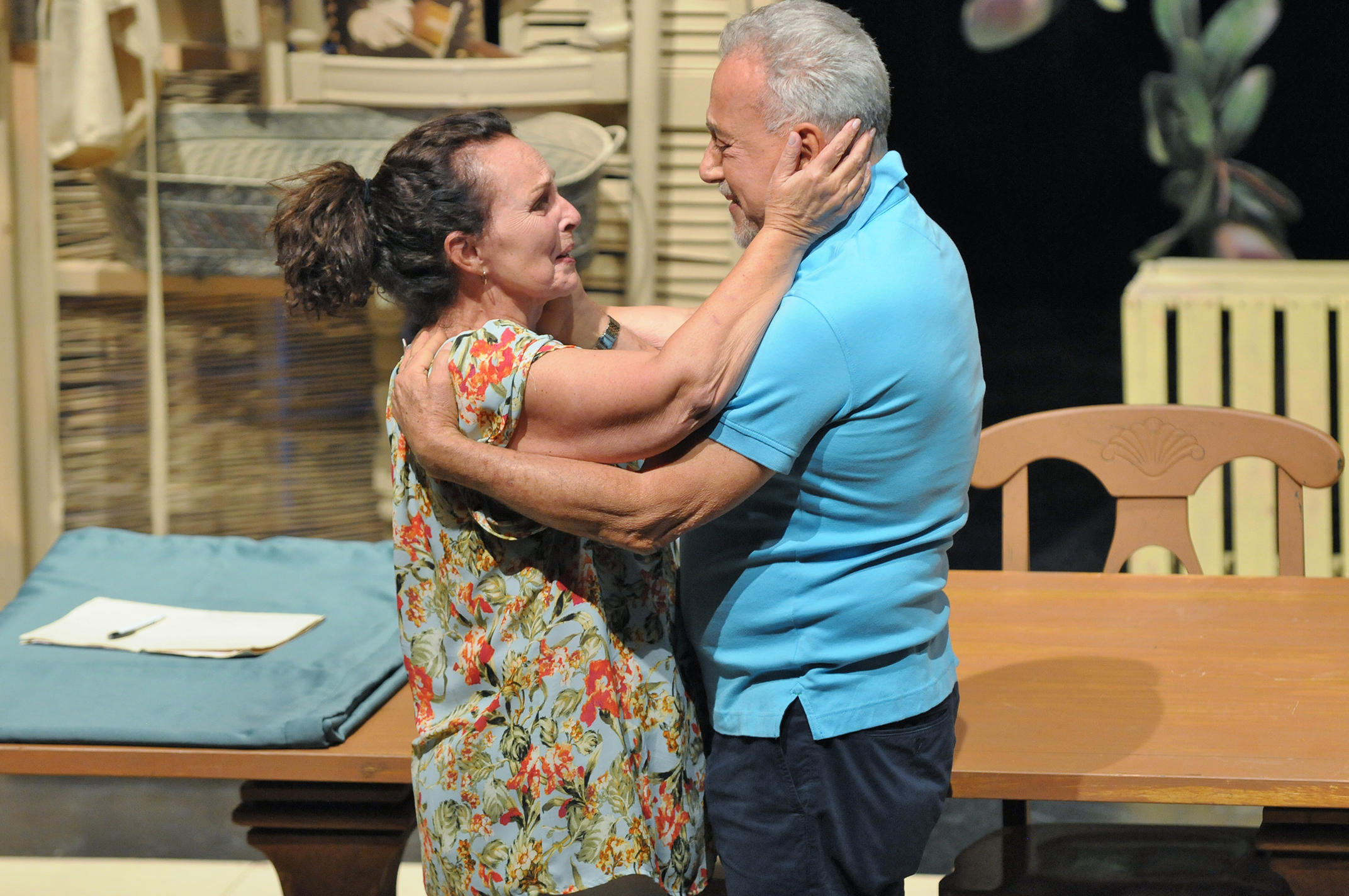
González Melo: El protagonista de En ningún lugar del mundo fue forzado a abandonar Cuba en 1980 por el Mariel, debido a problemas psiquiátricos (sí, algo despiadado: los enfermos mentales eran considerados directamente escoria), cuando en realidad la familia se lo quería "quitar de encima" por sus violentos testimonios de la dura experiencia de tres años como soldado en la Guerra de Angola. La historia de nuestros exilios está llena de gente anónima que no ha dado su testimonio porque aún sigue traumatizada. El Mariel es un entorno demasiado amplio y diverso que escapa a catalogaciones homogéneas. Lo más importante, pienso, es lo que significó como fenómeno, y los miles de cubanos que pudieron (que se vieron en la obligación de) integrarse a la cultura norteamericana y, al mismo tiempo, enriquecerla con su acción directa. No puede entenderse la cultura y la sociedad de Miami hoy sin sumar las capas de exilios que esa ciudad ha asumido. En lo personal admiro mucho la voluntad y la resistencia de las generaciones de cubanos exiliados que han reinventado el concepto de patria.
Gunnels: ¿Qué piensas sobre los dramaturgos que vivieron la época del éxodo del Mariel en Cuba pero permanecieron? Pienso particularmente en Ulises Rodríguez Febles y su obra Huevos. Ya hablamos sobre la idea de salir, ¿pero qué pasa con los que se quedan?
González Melo: El Mariel ha sido relatado brillantemente por dramaturgos que se mantienen creando en la isla, como el propio Ulises en Huevos o Carlos Celdrán en Diez millones. Los dos eran muy jóvenes en 1980 pero han logrado imprimir a sus textos, llenos de matices autobiográficos, un carácter que supera la reconstrucción histórica. Me gusta eso, que podamos sacudirnos el polvo de la cotidianidad, que tanta energía nos roba, y mirar nuestra historia y nuestro porvenir con altura. Ellos viven en Cuba, sí, pero poseen una reconocida carrera internacional: Ulises ha triunfado recientemente en México con una obra que curiosamente reconstruye la trayectoria de otro artista exiliado, Dámaso Pérez Prado, y Celdrán ha paseado sus Diez millones por importantes festivales del mundo. Cada vez la frontera entre el afuera y el adentro, entre irse y quedarse, es más permeable y menos estricta. Por suerte.
El teatro disecado: El proyecto persistente de González Melo
Gunnels: ¿Cómo afectó crecer durante el Período Especial a la trayectoria o temario de tu obra, y la influencia de otros poderes mundiales (como Rusia) en tu país?
González Melo: Es inevitable la influencia. Mi niñez estuvo colmada del imaginario ruso y soviético: esa huella es evidente, por ejemplo, en mi obra Talco, pero también en parte de mis cuentos y en mi pasión por esa cultura. Estudié el bachillerato en una escuela vocacional llamada precisamente "Lenin": fue entre los años 1994 y 1997, en régimen interno. Allí padecí la escasez (de alimentos, de luz eléctrica, de recursos sanitarios) pero también descubrí la solidaridad. Allí sufrí acoso escolar pero pude formarme como alguien independiente. De esa experiencia llena de contrastes nació mi primer libro: Memorias de cera. Y esa etapa, en pleno Período Especial, marcó mi interés por la paradoja en que hemos vivido los cubanos: gritar consignas heroicas en la Plaza de la Revolución durante los desfiles, y al mismo tiempo estar muriéndonos de hambre en casa y susurrando por los rincones nuestra miseria de vida. El Período Especial ajustó el nivel de vida de la sociedad y acrecentó las diferencias de clase, el clientelismo, el mercado negro, la corrupción en todos los ámbitos. Esa doble moral atraviesa mi literatura: personajes que precisan, a toda costa, ponerse máscaras para seguir sobreviviendo.
Gunnels: En Nevada, un tema primordial es el deseo de salir. ¿Cómo ves este sentimiento a través de otras obras que has escrito, y de dónde viene? ¿Puedes profundizar un poco en la naturaleza de la relación Cuba/Estados Unidos y este deseo de salir de la isla, especialmente en esta época de inestabilidad inmigratoria?
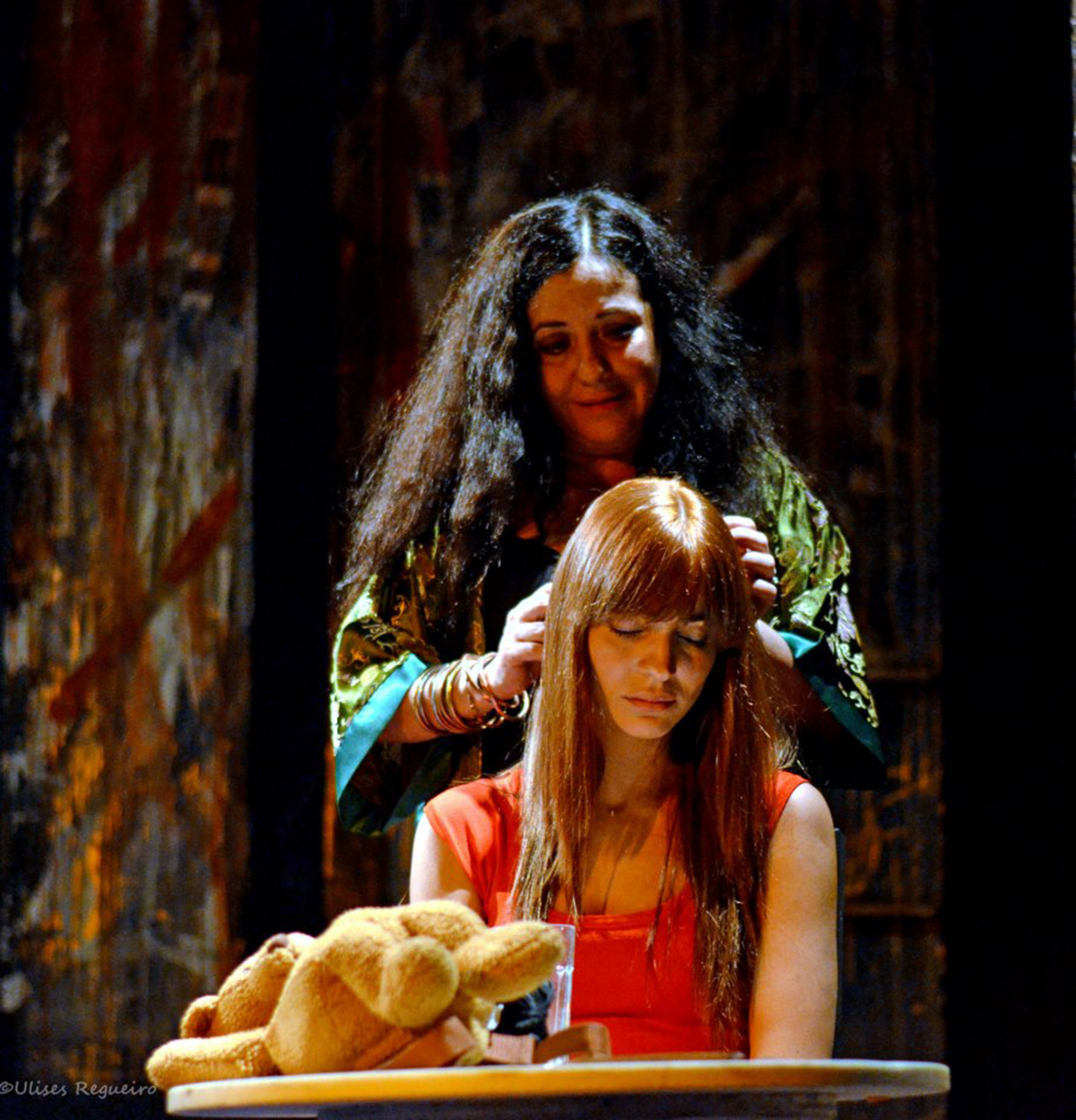
González Melo: Nacer en una isla condiciona el deseo de ir más allá de las fronteras inmediatas que el mar impone. Ya Virgilio Piñera lo resumía en una imagen: "La maldita circunstancia del agua por todas partes". La isla es encierro y anhelo de partir para, en mi caso, tener la oportunidad de volver. Ha sido una constante cubana la necesidad de huir de la isla, acrecentada por factores políticos y económicos en la etapa de la Revolución. Mi propio padre tuvo que exiliarse en México con el fin de garantizarnos una mejor vida: no hablo de lujos, sino de tener dinero para comer, para asearnos, para transportarnos… Como la mayor diáspora se ha dado hacia Estados Unidos, tenemos con ese país una relación muy estrecha. En mi tesis doctoral estudio precisamente los vínculos entre familia y exilio en la dramaturgia de la Gran Cuba, entendida como la generada tanto en la isla como en el extranjero: me gusta esa idea de patria expandida, no sujeta a límites físicos, sino más bien a sensaciones y ámbitos en común. Esa intención recorre gran parte de mi obra como elemento de nuestra idiosincrasia: partir y regresar. Nevada y Adentro hablan del viaje clandestino por mar y los riesgos que ello supone. En Sistema, la tensión se halla justamente en que el protagonista es atrapado en Miami y no puede volver. Epopeya, Intemperie o En ningún lugar del mundo diseñan el arco que va desde el destierro hasta el regreso al paso de los años, y todo lo que ese reencuentro comporta.
Gunnels: Pero para los Marielitos, a quienes se les aseguró que una vez salieran de Cuba no podrían volver a ella jamás, el exilio ha sido y es especialmente doloroso. ¿Te interesa con En ningún lugar del mundo diseccionar el impacto que ha tenido en esa comunidad el dolor ante el regreso a la isla, que finalmente fue posible?
González Melo: Por supuesto. El Mariel y la Guerra de Angola son asuntos que apenas hemos tratado en la escritura nacional pero sus huellas siguen ahí: son heridas no cerradas, y algo de ello he intentado tocar con En ningún lugar del mundo. La estructura familiar ha sido, en la tradición de la dramaturgia cubana, el núcleo a través del cual observar los grandes temas sociales y políticos. Esto tiene que ver con lo que antes te comentaba: el teatro solo funciona desde lo particular y no desde lo general. Los procesos históricos se analizan en libros, artículos, entrevistas, en amplios fondos bibliográficos y documentales. Una obra de teatro no puede contener todo ese proceso, todas las vidas malgastadas en el intento de construir determinado proyecto político-social. Lo que sí puede una obra es aguzar la mirada, focalizar un pequeño grupo humano y aplicarle el escalpelo. Utilizas el verbo adecuado: diseccionar. Como dramaturgo me siento exactamente así: Cuba es mi quirófano, esa familia destrozada es el cuerpo que yace sobre la camilla, y he de aplicar el bisturí con precaución, con suma responsabilidad, intentando llegar a la raíz del dolor.
Gunnels: Es verdad lo que antes decías, que hay una relación muy estrecha entre Cuba y Estados Unidos. ¿Dirías que las experiencias que has tenido en Estados Unidos como dramaturgo cubano hayan sido particularmente reveladores en cuanto a entender esta relación?
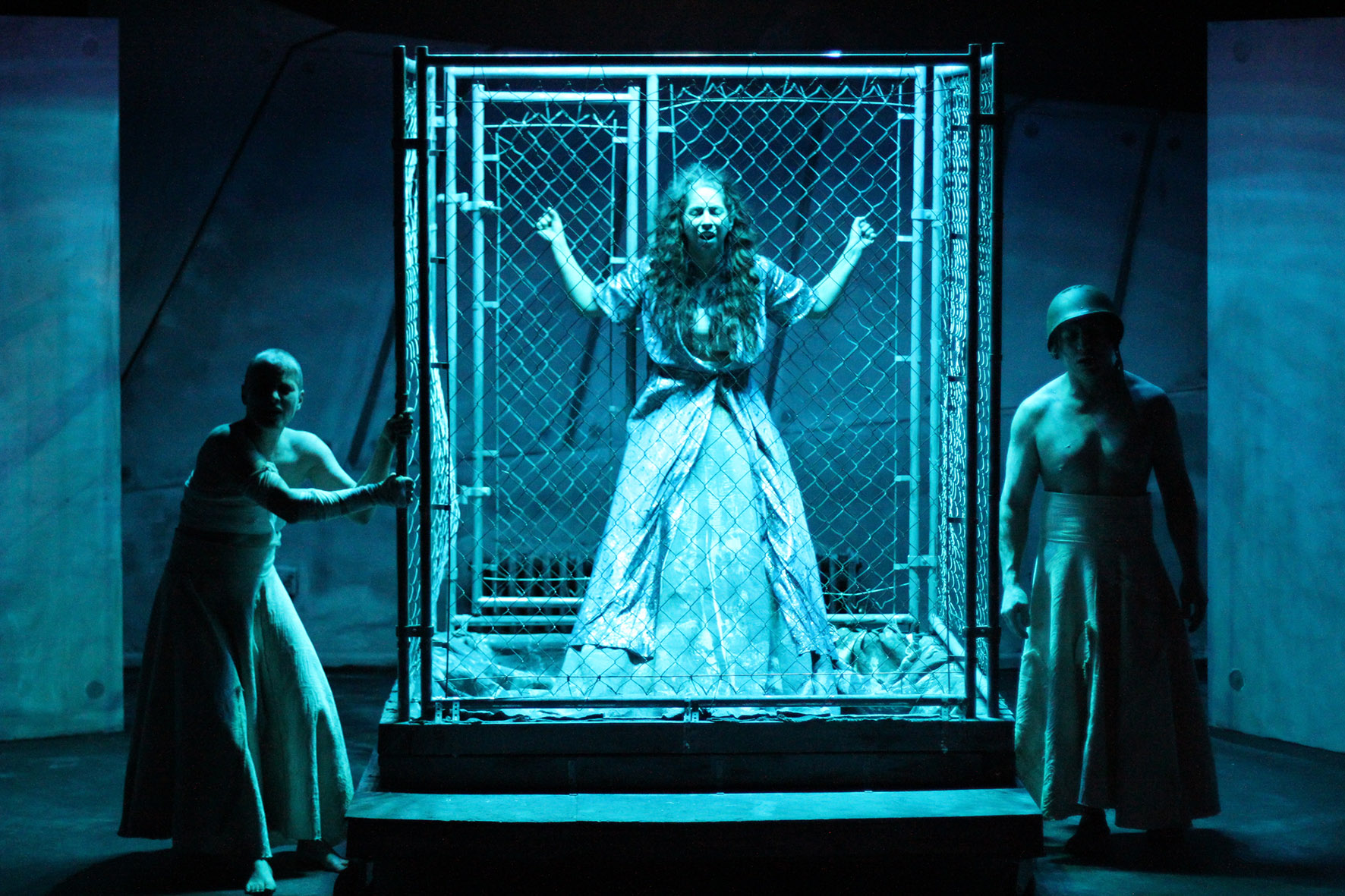
González Melo: Han sido experiencias muy diversas. En Chicago, por ejemplo, Aguijón Theater ha estrenado Adentro y Epopeya; a pesar de ser textos de marcadas referencias nacionales y de que un cubano (Sándor Menéndez) los dirigió, en ambos casos se produjo un rico diálogo con una comunidad latina más amplia, gracias también a las excelentes traducciones de Marcela Muñoz: actores, equipo artístico y espectadores asumían como suyos los temas del desarraigo y la frustración política. Algo similar sentí con el estreno de Por gusto en Repertorio Español de New York, y eso que también era cubana Leyma López, la directora: la desilusión incesante de la juventud y la monotonía de la existencia circular resultaban cuestiones afines a un elenco multinacional. Cuando Ohio Northern University produjo Nevada, recuerdo que les interesaba mucho el estudio minucioso del contexto: parte del equipo visitó la isla y el montaje contó con proyecciones documentales, que contrastaban deliciosamente con la dramatización del texto en inglés, a cargo del mexicano Otto Minera y con traducción de Yael Prizant. En Miami, donde la comunidad hispana es también amplia y variada, la confrontación esencial ha sido con el público cubano, que lógicamente resulta el más interesado, por experiencia directa o por referencia, en ficciones sobre La Habana marginal de Chamaco, Talco y Nevada, obras que Alberto Sarraín dirigió. Siento que el estreno de En ningún lugar del mundo en el XXXIII Festival Internacional de Teatro Hispano, en producción de Teatro Avante, dirigido por Mario Ernesto Sánchez y con traducción de Marian Prío, ha dimensionado aún más el debate sobre la tensión Cuba/Estados Unidos, que es el conflicto entre quienes se quedaron y quienes se fueron. Menciono siempre a las traductoras pues considero esencial su labor y su dedicación: ellas, y mi traductor británico William Gregory, han sido los responsables de que mis textos queden tan bien reescritos en esa lengua.
Gunnels: ¿Cómo escoges los motivos que vas a revisar en el teatro? En Bayamesa (2019) se ve la representación directa de la Cuba tradicional de principios del siglo XX, donde la protagonista María Milanés lucha por encajar a Cuba tradicional con sus propios sueños y ambiciones feministas. En ella, tú alteras tiempo y espacio en el escenario para generar en la obra un diálogo tenso entre el pasado y el presente, y con un suicidio desgarrador que deja a la audiencia destrozada. Nos encontramos a la mujer auténtica que nos anima a todos, pero también aflora la idea de suicidio como tema social, cuando hoy día hay más y más suicidios de gente joven. Como terminas Fuera del juego: "la historia se repite, y se repite".
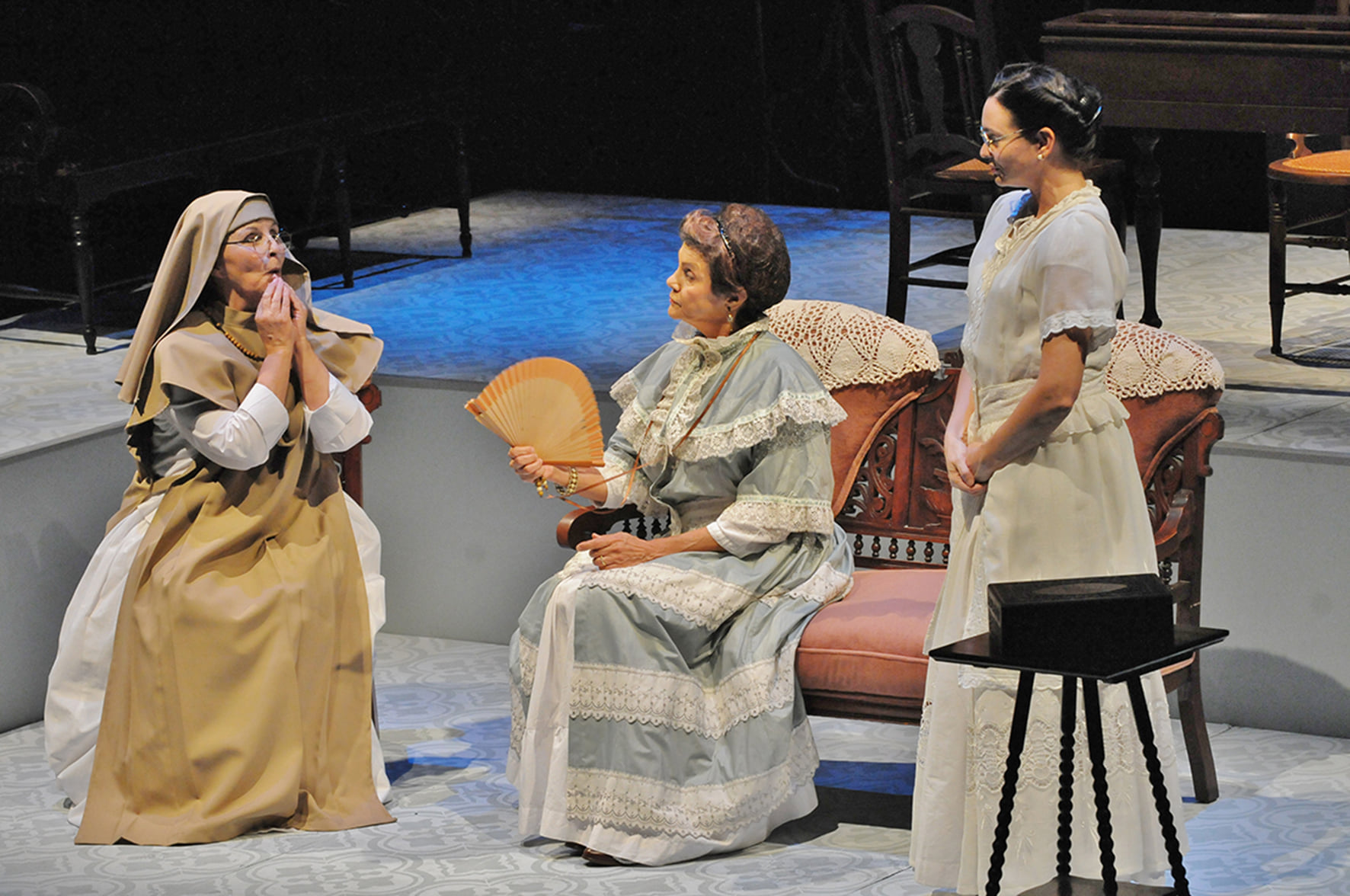
González Melo: La motivación de la escritura es múltiple y cambia de un proyecto a otro. Lo esencial siempre es que el material de partida resuene en mí, que me parezca urgente compartirlo en escena. En el caso de Bayamesa le debo mucho a mi madre, que es filóloga y escritora, y que me habló por primera vez de María Luisa Milanés (1893–1919). Leí sus poemas. Leí su sorprendente autobiografía, que es posiblemente el primer manifiesto feminista escrito en Cuba y uno de los primeros de Latinoamérica. Me impactó su simbólico suicidio: un disparo en el vientre, con la pistola de su padre militar. Un alma libre como ella prefirió escapar de ese modo, antes que continuar sometida al machismo imperante. Supe que la obra debía ser un réquiem que la devolviera a la vida, mediante una ficción que intentase acompañarla, darle voz, siquiera durante la hora y media que dura la puesta en escena. Se cumplió en 2019 un siglo justo de su muerte y, como dices, sigue siendo por desgracia un drama tan vigente…
Gunnels: ¿En qué anda tu trabajo ahora, después del éxito tremendo de Bayamesa?
González Melo: Me estoy sumergiendo cada vez más en la historia de Cuba. Creo que nuestra historia se ha abordado muy poco en la dramaturgia, a veces con una mirada muy superficial, y confío en que el teatro tiene la posibilidad de arrojar una luz nítida sobre sucesos del pasado que nos permitan situarnos en la complejidad del presente. ¿Cómo podemos vivir, cómo podemos entender el país que somos si no analizamos lo que nos ha traído hasta aquí? Durante años trabajé temas y conflictos del presente inmediato, desde los ambientes marginales hasta el lujo de los nuevos ricos. Pero ahora mismo eso se me ha agotado. Imagínate un país cada vez más desabastecido, con un pésimo transporte público, un país donde la gente tiene que pasar horas y horas en horrorosas colas para conseguir una libra de carne de cerdo, una bolsita de detergente, un litro de aceite, todo ello a precios astronómicos. El panorama actual es desolador, no sabría en qué tono dramático abordarlo. Quizás únicamente desde la farsa o el esperpento. Por eso me refugio en el pasado, porque siento que sin memoria no hay densidad de tradición. Hay mucho donde escarbar. El teatro no ha entrado a fondo, por ejemplo, en los graves casos de censura propiciados por las políticas culturales de la Revolución. La censura me interesa mucho: la tenemos demasiado cerca, a menudo sin percatarnos. Me interesa mucho la revisión histórica, siempre que tenga un matiz particular que pueda hablar de una tensión global.
Gunnels: La censura sigue siendo, en efecto, un problema pernicioso en el mundo, ahora con 'caras' diferentes. Al abordar el caso Padilla en tu obra Fuera del juego, te preocupas por problematizar el rol del artista.6En esta obra, González Melo re-visualiza el infame Caso Padilla, en el que el célebre poeta Heberto Padilla es arrestado, encarcelado, tortuado y finalmente exiliado por su trabajo contrarrevolucionaria que cuestionaba la Revolución, el Comandante (Fidel Castro) y el papel de los escritores en general. Utilizada como ilustración clásica de la traumática censura de finales de los 60 y principios de los 70 en La Habana, González Melo cuenta la historia desde la voz del propio poeta como protagonista principal. ¿Es que te interesa "complicar la cosa", para decirlo con palabras de tu propio personaje de Heberto Padilla?
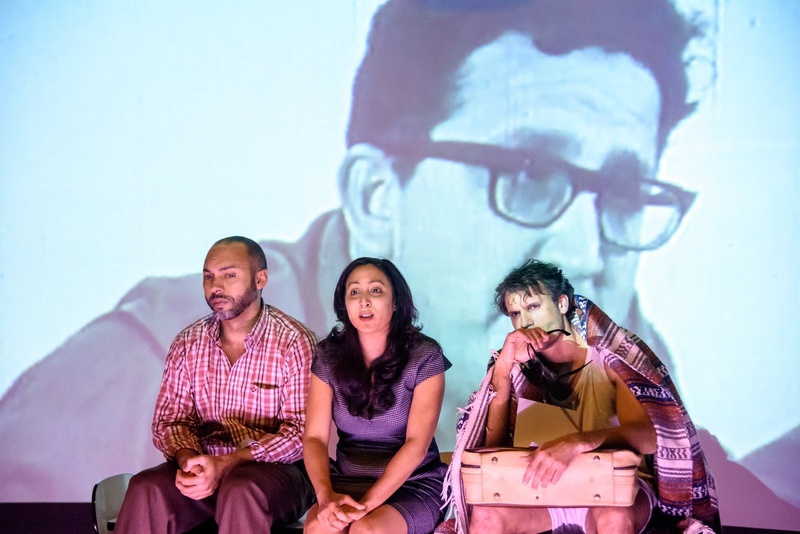
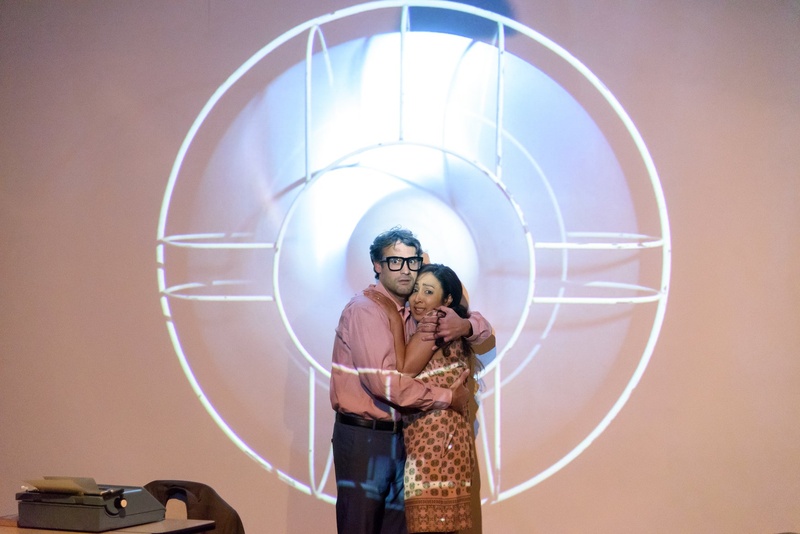
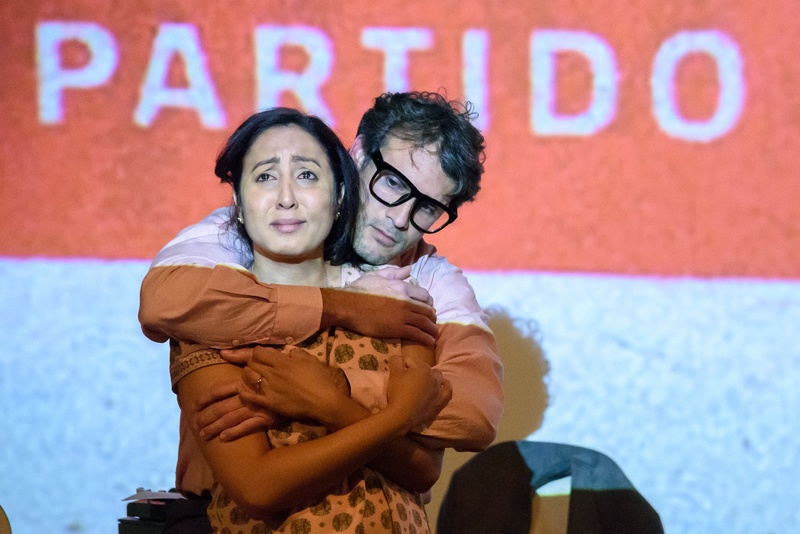


González Melo: Dicen que uno escribe la misma obra a lo largo de toda la vida. El tema de la censura y la autocensura me ha interesado siempre, quizá porque desde muy joven tuve que negociar con ella. Mi libro Memorias de cera por poco no ve la luz, ya que, aunque ganó un premio nacional que consistía en su publicación, contaba mi descubrimiento de la sexualidad en la escuela Lenin, y eso a los funcionarios de la editorial no les gustaba nada. Chamaco, de hecho, puede entenderse como una obra sobre el miedo a la libre expresión dentro de la familia Depás, donde cada uno teme sincerarse ante el otro y todos viven en una espiral de mentiras. Epopeya obtuvo en 2014 el Premio Nacional de Dramaturgia y se publicó por Ediciones Alarcos, pero tuvo una fugaz presentación de solo cincuenta ejemplares, no se distribuyó en librerías, el libro no puede encontrarse en ningún sitio y la obra no puede estrenarse en Cuba (es un texto donde utilizo la metáfora de la Guerra de Troya y el hipotexto de Hécuba de Eurípides para debatir, una vez más, sobre el regreso a la isla de los cubanos exiliados, una vez que Príamo ha caído en combate).
Es cierto que en años recientes me he acercado mucho a la relación entre arte y censura. En 2017 dirigí en Argos Teatro, en La Habana, Cartas de amor a Stalin del dramaturgo español Juan Mayorga, que para mí es una obra que habla sobre la misma situación que padecemos muchos artistas, periodistas y cubanos en general: el terror a decir la verdad, a hablar libremente. Es también uno de los temas de Bayamesa: la censura a la libertad creativa, la plasmación del dolor mediante la poesía, la necesidad de ser independiente. El padre, el marido y la madre de María Luisa Milanés no admitieron ese espíritu rebelde, y eso desencadenó el conflicto y trajo el fatal desenclace. Con Heberto Padilla ocurre lo mismo: fue un hombre muy cercano a la Revolución cubana a inicios de los años 60, incluso fue diplomático, pero lentamente se fue desencantando y su poesía fue haciéndose cada vez más inadmisible para un régimen que terminó asfixiándolo. No quiero "complicar la cosa", más bien intento lo contrario: visibilizar estos asuntos convirtiéndolos en dramaturgia y lenguaje.
Sobre la entrevistadora y el entrevistado
Bridgette W. Gunnels is Associate Professor of Spanish at Emory University and a scholar in Latin American literature from the twentieth century, in all forms, with special emphasis in the short story.
Abel González Melo is a Cuban dramatist, writer, teacher, and theater director. González Melo studied Theater Arts at the Universidad de las Artes de Cuba and is the recipient of various prizes and awards for his literary and theater works, including the Premio Primer Concurso de Dramaturgia de la Embajada de España (2005) for Chamaco [Kiddo]. Most recently, in January 2020, he won the prestigious Casa de las Américas prize for his work, Bayamesa.
]]>Introduction
Playwright Abel González Melo was born in 1980 in Havana, Cuba, the year the Mariel Boatlift saw approximately 125,000 people flee his country, an event he dramatizes in his 2018 play Nowhere in the World (En ningún lugar del mundo). González Melo studied Theater Arts at the Universidad de las Artes de Cuba. He is the recipient of various prizes and awards for his literary and theater works, including the Premio Primer Concurso de Dramaturgia de la Embajada de España (2005) for Chamaco [Kiddo], one of González Melo's most recognized works. Most recently, in January 2020, he won the prestigious Casa de las Américas prize for his work, Bayamesa.
González Melo's work spans two decades and covers multiple social issues of Cuban life. From Cuba's tangled relationship with the Mariel Boatlift in the aforementioned Nowhere in the World (En ningún lugar del mundo, 2018) to teenage prostitution during the early 2000s in Old Havana in his trilogy, Winter Escapes (Fugas de Invierno, 2004–2009), his plays immerse audiences into the streets that surround Havana's Capitolio, to the parks, alleys, and theaters that provide spaces for illegal prostitution, to private homes centering the importance of family to Cubans. The first decade of González Melo's writing centers the Cuban youth culture of the early 2000s, a culture both gay and straight, hungry and sated, resistant and complacent in a country where the Revolution is still fought daily in the streets (although now around the government approved Wifi hotspots). While González Melo maintains his private identification, his plays challenge categorization, interrogate questions of sexuality, and explore survival, the commodification of the body, intense mental trauma, the pain of history, and the deep love of family. His characters weave in and out of his plays to demonstrate with such complexity that as some things have changed others have remained the same.
González Melo's most recent work shifts to recovering figures and episodes from Cuban history with a revisionist eye. Such figures include the early twentieth-century feminist poet María Luisa Milanés (from Bayamo, Cuba) in Bayamesa (2019), which was awarded the Casa de las Américas prize for theater in January of 2020. Tackling the topic of censure at the height of the Revolution in Cuba, González Melo's recent work features Cuban historical figures. Fuera del juego (Outside the Game), dramatizes the experience of Cuban cultural figure Heberto Padilla, an award-winning poet whose work critiqued the Revolution and its leaders in his moment, 1967–68, leading to his arrest, torture, and subsequent exile to the United States in 1980. Padilla worked many years in various positions in higher education in the US, namely Ohio State University, Bowdoin College, and NYU's Institute for the Humanities, before he died alone as a poet in residence at Auburn University, in 2000. In González Melo's most recent drama, Cádiz en José Martí (Festival de Teatro Iberoamericano de Cádiz, 2020), he dramatizes the mythic national hero of the island, revolutionary figure José Martí (1853–1895), by situating him in the Spanish city of Cádiz, his first destination in his long exile and political deportation under the colonial regime.
In this conversation, González Melo explains his creative process and inspirations, the Cuban migration experience as dramatic material, and the idea of recasting history for new audiences and times. He discusses how he drew from lived experience in Havana to craft Winter Escapes as well as how his recent work dives deeply into questions of community and family during some of Cuba's grimmest moments. González Melo also reflects on the unique ligatures between the United States and Cuba. One of these ties is the Spanish-English linguistic connection, as many Cuban-Americans are bilingual. Our conversation, originally conducted in Spanish, has been translated into English here. [Se puede leer la versión en español aquí.]
Kiddo: One Playwright's Beginnings, or González Melo's Early Work
Gunnels: You have written poetry, narrative, non-fiction. Why theater? Do you think that playwriting suits your stories more than other avenues of creation?
González Melo: Theater has something wonderful for a writer: it moves literature away from loneliness. It proposes creation in a team and in direct contact with the spectator. Both questions are very attractive to me. The idea that writing never ceases, is always reinterpreted in the present, needs the communion between the director, the actors, the designers, the technicians, and precisely, inevitably, the complicity of the audience. I am dazzled by that unfinished nature of dramatic writing, that urge to feel the impact immediately. I enjoy writing narrative or essay, but in both cases I miss the real dialogue with the human being. Probably because, more and more, playwriting for me is a process directly related to a very particular human group; it must have an imagined texture that has to walk on a tightrope for success.
Gunnels: Does it feel 'unfinished' to you because it needs other artists, actors to complete it? Or more because of the constant flow of new audiences that are always distinct?
González Melo: Theater is something we do among us all, both the artists and the public. Remember the Greek origin of the word theater: "to watch or look at." Put another way, we only exist because someone looks at us. That is one of the greatest pleasures of writing dramas: feeling that one only offers a guide of stage directions and dialogues on paper, but that the character will have the body, voice, and soul of whoever embodies it in front of the viewer, and that this person will finish building it, in its process of active reception. Why do we keep reviving and repremiering the classics? Because their essence, rather than the argument, lies in how the specific story is told today in the public agora: who executes it, why they decide to do it, in what context and before whom, what senses are born from that experience.
Gunnels: I want to give readers a sense of your Winter Escapes trilogy before we discuss it.
Chamaco ([Kiddo], 2004 English translation by William Gregory) is the first installment of the trilogy. It was first published in Spanish from Ediciones Alarcos and then translated into English by Yael Prizant (University of Miami Press, 2010).1There are two different translations. William Gregory translated both Kiddo and Nevada; Yael Prizant translated the trilogy in a bilingual version with a different press in 2010. Kiddo has been staged globally, from the Argos Theater in Havana to Manchester, England's HOME Theater, to the most recent translation to Czech, with production in Prague set for fall 2021. The trilogy, including Nevada and Talco [Talc] (the second and third installments), covers a span of three months in a tropical winter of discontent. Miami-based academic and theater critic Lillian Manzor writes that "the trilogy addresses concerns that are dear to the author and his generation, namely: the complex and contradictory ways in which homosexuality, sex, and migration from the countryside to the capital becomes means of survival in a society that has lost all sense of value."2Lillian Manxor and Austin Webber, "Ground Down to Nothing but Still Fighting." Hemispheric Institute of Performance and Politics. Accessed March 25, 2021. https://hemisphericinstitute.org/en/emisferica-82/manzor-webbert.html. Kiddo immerses viewers into Christmas Eve in Havana, where a sister uneasily waits for her brother to come home for a dinner that he will never eat, as unbeknownst to her he has died in a knife fight. Nevada follows Lucía and her boyfriend/pimp Rosnay as they encounter the reality of selling their bodies in the effort to get out or escape, in this case, to the state of Nevada, where prostitution is legal, and the "candies come in brilliant gold wrappers." Talc, the final installment, portrays a crude and dirty reality that takes place mainly in the bathroom of an old cinema used for trafficking and prostitution, where the paths of four characters—Javi, Mashenka, Zuleidy, and Alvaro—crisscross in a violent and tense battle for survival. The trilogy was followed by nearly twenty other plays.
Abel, this trilogy really centers the experience of Cuban youth. Describe the importance of giving voice to Cuban youth in many of the works you've written.
González Melo: Now that you mention it, I think that the protagonists of all my plays reflect my age at the time of writing, and in each text these characters are getting older because they grow with me. I wanted to fill them with my doubts, my foibles, my pains. They are like an undercover image of myself in the midst of the world in which I grew up: the Cuba between decades of wars and shortages, and now for a bit more than a decade in Spain in the twenty-first century. I live on the margin between the two countries, and I watch them both with a mixture of passion and strangeness. I cannot speak of all the young people en masse, I do not know how to do it, but I can tell my story of the transition from adolescence to youth. Those impulses are the ones that haunt my work in theater. Hopefully they have to do with the same impulses and emotions of other people.
Gunnels: "Passion and strangeness"—tell me more.
González Melo: I remember that in the early 2000s, when I was walking through Old Havana at night towards my house, I was very curious about the dozens of teenagers who waited leaning on the columns in front of the Capitol, or hanging around Central Park in the middle of the tourist area. What were all these people doing here? Who were they? Little by little, I got closer to them. Many lived clandestinely in Havana; they had emigrated from the East of the island. All of these cisgender boys prostituted themselves, or aspired to do so.3Note from González Melo: "Here we're speaking of, if one must clarify, only cisgender males. I'm no expert in gender studies nor related terminology, but trans populations and women, as I've explained, were in other zones of the city." I learned of many fascinating, terrible stories. The process of discovering them thoroughly was not easy. None were going to give me an interview and tell me about their lives. I became a discreet client. I saved money and went with one of them to a rental room. In the fleetingness of that moment of strange pleasure, I kept myself alert. I listened to them talk about their lives, about their young children whom they had to feed, about their partners who were aware that they were hunting foreigners or Cubans who could pay for sex. My research expanded. One thing led me to another, and I composed a map of the nocturnal marginality of Old Havana. The female prostitute area was at the intersection of Monte and Cienfuegos streets; transvestites and transsexuals were waiting for their clients in the Parque de la Fraternidad; drugs were sold in an abandoned cinema, etc. I fully immersed myself. I did unthinkable things during those years, things that I would not do today. But luckily I dared to do it: I wanted to get to know these people, their places, their reasons, all that environment that the official press did not publish. Three or four years of immersion. After Kiddo finished, I still had so much material that Nevada and Talc were born. Also in my plays Por gusto and Within there are traces of this universe.
Gunnels: Lucía from Nevada and María Luisa from Bayamesa really move me because of the way they confront their worlds, hostile worlds, but always with persistence and love of family front and center. They are strong feminist cross-generational characterizations. For you, is there one character or "angel" from your work that really moves you?
González Melo: I don't usually start from emotion in my writing process. I am quite technical, something I learned with my teacher Raquel Carrió (a great Cuban author, founder in 1976 of the Dramaturgy Department at the University of the Arts of Cuba). the structure-character-language triad is the basis of the preparation of my projects. I believe that emotion comes (or does not come) in parallel with (or after) appreciation of experience. The emotion will then be in the viewer. But for this to happen, the construction of the text or the show itself must be precise, clear; it cannot start from the desire to move emotionally, because the work becomes disfigured. Sometimes I feel that emotion clouds the objectivity of what happens. This happens a lot with actors who act "excited" and then, they overact; or with the dramatists who are over-excited with what they are doing and lose the course of the action, they lose the written synthesis.
It is true that I have had some unique experiences—I would say mystical—during writing itself. It happened while writing Kiddo, in that I felt like someone was dictating it to me directly, right over my shoulder into my ear. The violent death of my father was very recent and the monologue of Silvia, when she found out that her brother had been murdered, I wrote that in tears. I have always believed that Kiddo is my father who became an angel to dictate this work to me and has accompanied me ever since.
History Repeating Itself
Especially in his more recent dramas, Abel González Melo has shifted from describing personal experiences in his work to referencing and dramatizing Cuban historical touchpoints (such as the Mariel Boatlift, the UMAPs work camps, the Grey Period, and the Special Period of Peace). The Mariel Boatlift consitutes the single largest mass migration from Cuba in its history. From April to October 1980, an estimated 125,000 Cubans left the Mariel Port for the United States. The story was well-covered in the media. A small group of Cubans ran a city bus into the gates of the Peruvian Embassy in Havana in an attempt to gain access to the grounds to request political asylum (and eventually leave the island). They were granted asylum, and afterwards, an estimated 10,000 people approached the embassy with the same hopes. Watching this situation unfold from the US, then President Jimmy Carter issued an open invitation to anyone from Cuba who was fleeing the Castro regime, bypassing in part US immigration policy and procedure. A typical Castro pivot followed: after a very public speech on May 1, the Day of the Worker, in Havana's Revolution Plaza, he emptied Cuban's prisons and hospitals of convicted criminals and ill patients and required any American vessel that was picking up family or loved ones at Mariel Port to also take with them a boatload of other 'undesirables,' in which he included homosexual men and those with severe psychiatric problems. As González Melo notes in our conversation below, Cuba's history with gay males is marked by tragic discrimination, torture, and death. The storied UMAP work camps (in Spanish, Unidades Militares de Ayuda de la Producción) that served as a type of work-based prison from 1965–68 in Camagüey, Cuba, were politicized as agricultural camps for "conscientious objectors," but were more a type of social "purge" of any person who was deemed to be anti-Castro or anti-revolutionary, according to historian Abel Sierra Madero.4Abel Sierra Madero, "Academies to Produce Macho-Men in Cuba." Translated by Alicia Barraqué Ellison. Translating Cuba. February 19, 2016. https://translatingcuba.com/academies-to-produce-macho-men-in-cuba-abel-sierra-madero/. This included those accused of homosexuality.
Following the years of the UMAP work camps is a period of a little more than five years (1971–1977) known as the Grey Period (El quinquenio gris in Spanish) in which the Cuban government controlled rigidly the cultural and artistic productions of the island, severly limiting artistic expression and publication. Several of Cuba's most noted dramatists, like Virgilio Piñera (1912–1979), Abelardo Estorino (1925–2013), and Antón Arrufat (1935–) suffered tremendously under this censure, as much for their insistence on creative freedom as for their homosexuality. Surrounded by a hostile environment, all three utilized metaphor as a form of expression, always trying to avoid censure. Piñera's work questioned in broad terms concepts of national identity and the role of the writer as resistor. A prolific writer of essay, short story and theater, Piñera's collections Cold Tales (1956) and Little Maneuvers (1963) were credited with inspiring generations of writers after him, including noted Mariel author Reinaldo Arenas. Abelardo Estorino, who was censured earlier with his work Los mangos de Caín (1965), only wrote one text in the 70s and instead dedicated himself to directing classics in the Company Teatro Estudio. Antón Arrufat was awarded high honors from the National Union of Writers and Artists (UNEAC, in Spanish) for Los siete contra Tebas in 1968, but that institution published the book with a note that accused the writer of being a counter-revolucionary; Arrufat was condemned and ostracized, and didn't publish for more than a decade.
Finally, immigration to and from Havana varied drastically from the 1960s to the present day, and the laws prohibiting re-entry, as well as the acrid political relationship between the US and the Castro regime, created a layered way of understanding home, community, and exile. The early 1960s saw an exodus of the upper and middle classes, who for the most part landed in south Florida and remained. After the Mariel Boatlift, US immigration policy of the mid-90s led to some increased immigration from the island, as "wet foot, dry foot" allowed for fast-tracking of US immigration procedures for Cubans, and the increase of rafters (balseros, in Spanish) is notable during this Special Period of Peace. Of these major immigration waves, Mariel is distinctive due to the population demographics as well as the politicized spin on both sides. That group was both maligned by Cubans on the island and experienced a rougher integration into their new south Florida community.5Aviva Chomsky, A History of the Cuban Revolution, 2nd ed. (Hoboken, NJ: Wiley-Blackwell, 2015), 75.
González Melo is a descendent of these early Cuban playwrights as well as an inheritor of this tangled history. In the conversation below he reflects on the reality of the gay male in Cuba before and after Mariel, and how this facet of Cuban history finds its way into his work. In particular, his play Outside the Game revisits the Padilla Case and the UMAPs, highlighting the subversive censure and psychological torture of artists in the early days of the Revolution. His play Bayamesa reaches back the farthest in Cuban history to tackle issues of colonialist tradition, gender roles, and feminism in Cuba.
Gunnels: How have you seen the Cuban life change for the gay man from writing Kiddo (2004) to Nowhere in the World (2018)?
González Melo: The time period you're referring to is about a decade long, and I don't think that we have seen noted change with regard to the day-to-day life of the gay man in Cuba. The Revolution wasn't too friendly with homosexuals, as they were considered during much of that time as the equivalent of social filth and outcasts; indeed many homosexuals were sent to work camps during the years of 1965–68 (UMAPS, Military Units for Help in Production). This entire process accentuated and encouraged intense machismo and homophobia in Cuban society. In the work of some of the best Cuban dramatists, who additionally were homosexual (I'm thinking of Virgilio Piñera, Abelardo Estorino, or Antón Arrufat), the topic is absent or appears hidden mostly due to self-censure/autocensure. After the horrible experience with the UMAP came the equally traumatic decade of the 1970s, which is historically noted for its strong politics based in marginalization of homosexual artists. My generation hasn't felt as much pain, as today's Cuban artist deals with a more or less 'friendly' public, although homophobia definitely persists and has found more pernicious ways to manifest. In my work personally I've been able to take on the topic of homosexuality in works that I have published and performed on the island; additionally, anthologies of homoerotic poetry and narrative have recently been published. We are trying to include in an amendment to the national Constitution the idea of gay marriage rights, an idea that is presently accepted in many other countries in the world. The problem is that for so many years, too many years, our own government has planted seeds of hate towards homosexuals, and the mentality of a country can't be changed from one day to the next.
Gunnels: But can theater change a country? The power of art or interrogation?
González Melo: I don't believe either theater or any other artistic manifestation can change a society. It would be too pretentious to think so. I have heard phrases like "art changes the world," and I always feel that they have a figurative, metaphorical meaning. Theater is not a political party; it is not an army; it is not an atomic bomb or a pandemic. It does not have that power of abrupt, immediate, forceful change. What theater can do, and I believe this to be true, is to touch the mind and heart of a person, of a spectator who attends a show and discovers another way of looking, of identifying himself/herself in that mirror, of finding something that hurts them deeply. Theater transforms, in this sense, the individual and not the masses, although we share the experience of our art collectively, together. Theater always works at (in its execution, in its reception) particular behaviors, not general ones. We touch one person, and that person will have, on occasion perhaps, the opportunity to touch the things that move the world. That is the simple and beautiful condition of our art.
Gunnels: Your 2018 play Nowhere in the World (En ningún lugar del mundo) addresses silence around sexual identity in Cuba (from the 80s to present day), as well as issues of gay visibility and the trauma of military service, as the lead Ángel negotiates the acute pain of the Mariel Boatlift for those that left as well as for those that remained. Cuba has a thirteen-year history in Africa (1975–1988), with Cuban forces on the ground in the name of liberation from South Africa during that time. Their association ended with Namibian independence and, some say, the beginning of the retreat of apartheid in the area. Regardless, Cuban forces returned with psychological issues, and the drama of Nowhere in the World revisits that time, as well as the impending trauma of Mariel. Ángel leaves the island with the boatlift, and the drama picks up with his return to Cuba after Mariel, to find that family trauma is deep and unforgiving. How do you understand the legacy of the Mariel Generation in comparison to other Cuban artists that have written in exile, either forced or by choice?
González Melo: The protagonist of Nowhere in the World was forced to leave Cuba in 1980 during the Mariel Boatlift, due to psychiatric problems (yes, a ruthless detail of Cuban history: the mentally ill were directly considered scum, unwanted by society, alongside homosexuals and convicts), although the truth of the matter was that the family wanted to get rid of him due to his frequent and violent testimonies of the hard experience of three years as a soldier in the Angolan War as you describe in your synopsis. The history of our exiles is full of anonymous people who have not given their testimony because they are still traumatized. Mariel as a historical moment is very broad and diverse in its interpretation; it often escapes homogeneous cataloging. The most important thing is what it meant as a phenomenon, and the thousands of Cubans who could (who were forced to) integrate themselves into the North American culture and, at the same time, enrich it with their direct action. The culture and society of Miami cannot be understood today without adding the layers of exiles that that city has assumed. Personally, I admire the will and the resistance of the generations of Cuban exiles who have reinvented the concept of homeland.
Gunnels: What do you think about other playwrights who experienced Mariel on the island and stayed? I'm thinking of the play Eggs, by Ulises Rodríguez Febles. We spoke already about the idea of getting out, but what of those who stay?
González Melo: The Mariel story has been told brilliantly by playwrights who keep creating on the island, as Ulises himself in Eggs or Carlos Celdrán in Ten Million. Both were very young in 1980 but have managed to print their texts, full of autobiographical nuances, and this quality surpasses historical reconstruction. I like that: that we can shake off the dust of daily life, that steals so much of our daily energy, and look at our history and our future with a different perspective. Those authors live in Cuba, yes, but they have recognized international careers. Ulises was tremendously successful in Mexico with a work that curiously reconstructs the trajectory of another exiled artist, Dámaso Pérez Prado, and Celdrán has premiered Ten Million at important festivals all over the world. More and more the border between the outside and the inside, between going and staying, is more permeable and less strict. Fortunately.
Drama as Dissection: One Playwright's Persistent Project
From the 1970s to the late 80s, Cuba's economy was nearly solely supported by the Soviet Union, who imported Cuban sugar and other products and exported massive amounts of petroleum to the island to fuel agriculture and transportation. The external effects of the dissolution of the Comecon were immediate: Cuba lost nearly 80% of its imports, and with a heavy trade embargo from the US already in place, the country was left without a major import/export partner. The island entered a period of years (from 1991–1995, although some say it hasn't ended) that later became known as the Special Period of Peace (Período especial), marked by extreme food scarcity (borderline famine), nationwide blackouts to conserve energy (apagones), sometimes for twelve to fourteen hours daily, and a complete dry up of tourism. González Melo was a teenager during this time at the Lenin School in Havana.
Gunnels: Describe how growing up during the Special Period impacted your view of Cuban life vis-à-vis foreign powers.
González Melo: The influence is inevitable. My childhood was full of the Russian and Soviet imaginary: that trace is evident, for example, in my work Talc, but also in part of my stories and in my passion for that culture. I studied in a boarding school called, very precisely, "Lenin." I was there between years 1994 and 1997. There I suffered intense shortages (food, electricity, health resources), but I also discovered solidarity. At that school I suffered bullying, but I was able to become an independent person. From that experience full of contrasts, my first book was born: Wax Memoirs. And that stage, the Special Period, marked my interest in the paradox in which we Cubans have lived. We all shout heroic slogans in the Plaza de la Revolución during the parades, and at the same time we starve to death at home and whisper in the corners the details of our misery. The Special Period adjusted the standard of living of society and increased class differences, clientelism, the black market, corruption in all areas. That double-edged moral crisscrosses my literature: characters who need, at all costs, to put on masks to continue surviving.
Gunnels: In Nevada, a salient theme is the Cuban desire to get out or escape. How do you see that imagined community elsewhere juxtaposed against what is often a very different reality (as in the case of Mariel, for example, or the present-day immigratory reality in the USA)?
González Melo: Being born on an island foments the desire to go beyond the immediate borders that the sea imposes. Virgilio Piñera summed it up in an image: "The damn circumstance of having water everywhere." The island is a prison and the longing to leave is constant alongside, in my case, having the opportunity to return. The need to flee the island has been a consistent facet of Cuban identity, increased by political and economic factors experienced in various stages of the Revolution. My own father had to go into exile in Mexico in order to guarantee us a better life: I am not talking about luxuries, but about having money to eat, to dress and take care of ourselves, to move about the island. The United States is the destination for a great many Cuban migrations; we have a very close relationship. In my doctoral thesis I study precisely the links between family and exile in the dramaturgy of Greater Cuba, understood here as a Cuba generated both on the island and abroad. I like that idea of an expanded homeland, not subject to physical limits, but rather to feelings and areas that both share in common. This issue is found in a large part of my work as an element of our idiosyncrasy: the idea of leaving and returning. Both Nevada and Within talk about the undercover, dangerous trip by sea and the risks undertaken there. In Sistema, the tension is precisely in that the protagonist is trapped in Miami and cannot return. Epopeya, Weathered, Nowhere in the World illustrate the arc that starts at exile only to return after some time, and then most critically, everything that that particular reunion involves and drags out into the present.
Gunnels: But for the Marielitos, precisely, who were told upon leaving that they would never be allowed to return, exile is (was?) painful in different ways. How does this pain of return change the "community" of Greater Cuba that you mention earlier? Is that something that Nowhere in the World wants to dissect?
González Melo: Of course. Mariel and the Angolan War are matters that we have barely dealt with in the Cuban national tradition of writing, but their traces are still there. They are wounds that have not been closed, and I have tried to touch some of it with Nowhere in the World. The family structure has been, in the tradition of Cuban dramaturgy, the nucleus through which to observe perennial social and political issues. This has to do with what I was saying before: theater only works from the particular and not from the general. Historical processes are analyzed in books, articles, interviews, in extensive bibliographic and documentary collections. A play cannot contain all of that process, all of the lives wasted in the attempt to build a certain political-social project. What a play can do is sharpen the gaze, focus on a small human group and apply the scalpel to it. You use the correct verb: dissect. As a playwright I feel exactly like this: Cuba is my operating room, that broken family is the body that lies on the table, and I have to apply the scalpel with caution, with great responsibility, trying to get to the root of the pain.
Gunnels: It's true, as you mention before, there is a very different, distinct type of relationship with the US. Would you say that your experiences in the US as a Cuban-born artist have been particularly revealing in terms of understanding this distinct relationship?
González Melo: They have been very different experiences. In Chicago, for example, Aguijón Theater premiered Within and Epopeya. Despite being texts with marked national references and with a Cuban (Sándor Menéndez) director, in both cases there was a rich dialogue with a wider Latino community, thanks also to the excellent translations of Marcela Muñoz. The actors, artistic team, and spectators took on as their own the themes of uprooting and political frustration. I felt something similar with the premiere of Por gusto in Repertorio Español in New York, and what was also with a Cuban director, Leyma López: the incessant disillusionment of youth and the monotony of a circular existence were related issues to a multinational cast. When Ohio Northern University produced Nevada, I remember that they were very interested in the detailed study of the context. Part of the team visited the island and the editing included documentary projections, which contrasted deliciously with the dramatization of the text in English (by the Mexican Otto Minera and with translation of Yael Prizant). In Miami, where the Hispanic community is also wide and varied, the essential confrontation has been with the Cuban public, which logically is the most interested, either by direct experience or by reference, in fictions about the marginal Havana of Kiddo, Talc, and Nevada, works that Alberto Sarraín directed. I feel that the premiere of Nowhere in the World at the XXXIII International Festival of Hispanic Theater, in production of Teatro Avante, directed by Mario Ernesto Sánchez and with translation by Marian Prío, has further dimensioned the debate on Cuba / United States tension, which is the conflict between those who stayed and those who left. I always mention the translators because I consider their work and dedication essential. They, and my British translator William Gregory, have been responsible for my texts being so well rewritten in that language.
Gunnels: How do you choose what specific issue you are going to dissect in the work? Your 2019 play Bayamesa is the direct portrayal of traditional, early twentieth-century Cuba, where the lead María Milanés struggles to align traditional Cuba with her own very feminist dreams and ambitions. In it, you shift time and space on the stage to bring the play into tense dialogue between past and present, with a gut-wrenching suicide that leaves the audience broken. In Bayamesa we find the authentic woman who encourages all but also the idea of suicide as a social issue emerges, when today there are more and more suicides of young people. It's like the final lines of your other 2019 play Outside the Game: "history repeats itself, and it repeats itself."
González Melo: The motivation for writing is multiple and changes from one project to another. The essential thing is always that the starting material resonates with me, that it seems urgent to share it on stage. In the case of Bayamesa, I owe a lot to my mother, who is a philologist and writer, and who spoke to me for the first time about María Luisa Milanés (1893–1919). I read her poems. I read her surprising autobiography, which is possibly the first feminist manifesto written in Cuba and one of the first in Latin America. I was struck by her symbolic suicide: a shot in the belly, with her military father's pistol. A free soul like her preferred to escape in this way, rather than continue being subjected to the prevailing machismo. I knew that the play must be a requiem that would bring her back to life, through a fiction that tried to accompany her, give her a voice, even during the short hour and a half that the staging lasts. A century of her death was celebrated in 2019 and yet, as you say, unfortunately this continues to be such a current drama....
Gunnels: Where do you see your work going after Bayamesa?
González Melo: I am immersing myself more and more in the history of Cuba. I think that our history has been approached very little in dramaturgy, sometimes with a very superficial gaze, and I trust that theater has the possibility of shining a clear and precise light on events of the past that allow us to situate ourselves in the complexity of the present. How can we live, how can we understand the country we are if we do not analyze what has brought us here? For years I worked on issues and conflicts of the immediate present, from the spaces on the margins to the luxury of the new rich. But right now that present has me exhausted. Imagine a country that is increasingly under-supplied, with lousy public transport, a country where people have to spend hours and hours in horrifying lines to get a pound of pork, a bag of detergent, a liter of oil, all at astronomical prices. The current panorama is bleak; I would not know in what dramatic tone to approach it. Perhaps only from the farce or the grotesque. That is why I take refuge in the past, because I feel that without memory there is no density of tradition. There is so much to dig into. Theater has not gone into depth, for example, in the serious cases of censorship caused by the cultural policies of the Revolution. Censorship interests me a lot. We have it too close to us, often without realizing it. I am very interested in historical revision, provided it has a particular nuance that can speak to a global tension.
Gunnels: Censorship continues to be a pernicious problem in the world, perhaps now with different 'faces.' When addressing the Padilla case in your play Outside the Game, you concentrate on problematizing the role of the artist.6In this play, González Melo re-envisions the infamous Padilla Case, whereby celebrated poet Heberto Padilla is arrested, jailed, tortured, and finally exiled for his counterrevolutionary work that questioned the Revolution, the Comandante (Fidel Castro), and role of writers in general. Used as a classic illustration of the traumatic censorship of the late 60s and early 70s in Havana, González Melo tells the story from the voice of the poet himself as the lead role. Are you interested in "complicating things," to put it in the words of your own Heberto Padilla?
González Melo: It is said that one writes the same work throughout life. The issue of censorship and self-censorship has always interested me, perhaps because from a young age I had to negotiate with that force. My book Wax Memoirs almost didn't see the light of day, because although it won a national award for its publication, it told about my discovery of sexuality at the Lenin school, which the editorial officials did not like at all. Kiddo, in fact, can be understood as a work about the fear of free expression within the Depás family, where each one fears being open to the other and they all live in a spiral of lies. Epopeya, although it won the 2014 National Prize for Dramaturgy and was published by Ediciones Alarcos, had a fleeting presentation of only fifty copies. It was not distributed in bookstores; the book cannot be found anywhere and the work cannot be released in Cuba. (It's a play where I use the metaphor of the Trojan War and the conflicts of Hecuba by Euripides as a hypotext to debate, once again, the return to the island of exiled Cubans, once Priam has fallen in combat).
It is true that in recent years I have moved much closer to the relationship between art and censorship. In 2017 I directed at Argos Teatro in Havana Letters of Love to Stalin by the Spanish playwright Juan Mayorga, which for me is a play that talks about the same situation that many artists, journalists, and Cubans in general suffer: the terror of telling the truth, of speaking freely. It is also one of Bayamesa's themes: the censorship of creative freedom, the expression of pain through poetry, the need to be independent. The father, husband, and mother of María Luisa Milanés did not allow that rebellious spirit, and that unleashed the conflict and brought forth the fatal outcome. The same thing happens with Heberto Padilla: he was a man very close to the Cuban Revolution in the early 1960s. He was even a diplomat, but he slowly became disenchanted and his poetry became increasingly inadmissible for a regime that ended up suffocating him. I don't want to "complicate things," rather I try the opposite: to make these issues visible and debatable by turning them into theater and language.
About the Interviewer and Interviewee
Bridgette W. Gunnels is Associate Professor of Spanish at Emory University and a scholar in Latin American literature from the twentieth century, in all forms, with special emphasis in the short story.
Abel González Melo is a Cuban dramatist, writer, teacher, and theater director. González Melo studied Theater Arts at the Universidad de las Artes de Cuba and is the recipient of various prizes and awards for his literary and theater works, including the Premio Primer Concurso de Dramaturgia de la Embajada de España (2005) for Chamaco [Kiddo]. In January 2020, he won the Casa de las Américas prize for his work, Bayamesa.
]]>Interview
Southern Spaces: How did you begin the project that became this remarkable documentary The Joneses?
John Howard: Jheri (at the time Jerry) Jones and I met forty years ago as coworkers—freight clerks and passenger ticket agents at the Greyhound bus station in Jackson, Mississippi. I was a high school senior. Jheri was a recently divorced father of four who was beginning to transition. Despite the fact that we now live four or five thousand miles apart, we have been friends ever since.
The documentary project spun out of my first book, Men Like That: A Southern Queer History, which began as an Emory dissertation, submitted in 1997. I had these really superb advisers: Mary Odem, Catherine Nickerson, and, of course, Allen Tullos was chair of my committee. Martin Duberman was an external member. Thanks to their incredibly helpful interventions, it was possible to turn that dissertation rather quickly into a University of Chicago Press monograph, Men Like That, that came out in 1999. Doug Mitchell was the key editor, a towering figure in queer publishing. After that, various ideas were floated about how to reach a broader public. Several people recommended verbatim theatre. There were some good examples of this. In 2005 University of Alabama Press published a revised edition of Ben Duncan's memoir The Same Language and I really liked playwright Carl Miller's adaptation for Menagerie Theatre Company in Cambridge (UK). Soon there would be the example of E. Patrick Johnson's very important work on black gay men in the South that he was performing as a one-man show. Johnson had experience in performance studies, and he was using his oral history narratives in that way, which I found very compelling.
I was even more interested in the suggestions to turn Men Like That into a documentary film. Around 2007 Ash Kotak, a friend and neighbor in central London, and I began to talk. I teach his 2000 stage play Hijra, which I think of as a queer/trans subaltern romcom. It's an extraordinary work that will be turned into a film. Ash was insistent that this be a character-led project. We had to forefront an individual who could provide queer, trans, and Mississippi history as part of that character's backstory. We considered several people. An early title was The Strange Career of Jon Hinson based upon a US congressman from Mississippi who twice was caught in compromising situations and queer spaces in the D.C. area, and yet was reelected to Congress for his conservative Republican values. Eventually, he was caught again and run out of office. We thought about Aaron Henry, the great leader of the NAACP in Mississippi, but, to be candid, his wife likely would have quashed any such project.
I told Ash about Jheri's SRS, then called sex reassignment surgery, now called gender confirmation surgery. I was the only friend or family member able to be there when she opted to have that procedure in Belgium. Even with the cost of flights and the initial recovery period in a hotel, it was cheaper to do so there than in the United States. Hearing her story, Ash insisted that Jheri had to be at the center of any documentary that spun out of Men Like That.
We made attempts to get initial funding, including the AHRC (the Arts and Humanities Research Council in the United Kingdom). They gave us the nicest, or worst, rejection: essentially, "this is superb; we have a few concerns around the edges. So be sure and reapply, and we'll give you the money." Well, life intervenes. And sadly, in my case, that involved being drafted into the headship of my department at King's College London. So I was not going to be as deeply involved as I had wanted to be, nor would Ash.
We approached Faction Films in London, where Caroline Spry, formerly with Channel 4, helped steer the project to completion. Among other tasks, Ash and I were asked to interview potential directors. It came down to two: an amazing South African, Oscar-nominated director named Murray Nossel, and a very soft-spoken Londoner named Moby Longinotto. Murray and I really got along in our interview, but I didn't like his initial ideas about how we might frame the project. He wanted a journey of discovery. He wanted me to travel back to Mississippi to ask Jheri for advice, which, for reasons that will become apparent, I don't ever do. That struck me as a bit contrived. All this is unfair to Murray, because this was a single interview and it was just an idea he threw out there. So I want to give a clear shout-out to Murray, I would love to work with him! But it was after viewing the films of both Murray and Moby Longinotto, and especially after seeing Moby's film, Small Town Boy, that Ash and I agreed wholeheartedly that Moby was the person for this project. So, he got busy and on a shoestring budget made a quarter-hour short by 2009.
Q: What was it about Small Town Boy that made you think Moby was suited for Jheri's story?
Howard: It's a beautiful, charming documentary about courage in Somerset, a small-town setting. It's about one brave boy and a group of people who put him out there as the alternative carnival queen, in drag. Moby was able to get extraordinary shots: the fifteen-year-old walks down the street and a fifty-year-old man almost assaults him. And there's great patience and quiet, controlled pacing that seems true to village life. Where, as a filmmaker, you go, stay, and get to know someone for an extended period. You wait for things to happen, and they do.
Q: Do you have any insight into the first meeting between Moby and Jheri and her family?
Howard: Moby hit it off with everyone. As was so apparent in his film No Time for Tea at Raj TV, Moby is adept, attentive, and respectful in cross-cultural settings, easily fitting into local patterns and rhythms. The Joneses soon became accustomed to his regular visits, initially on his own, doing the camera work, and over time with slightly larger teams.
Q: What were those visits like? Did Moby live in Mississippi for months at a time and stay with the family? Did he return over a period of years? How embedded was he?

Howard: He'd go initially for shortish visits. As budgets were slightly increased over time, he would go and stay longer. Stories emerged over years. Different plot lines seemed to come about quite naturally. And the family grew more trusting of Moby and the entire endeavor. More could be said and revealed. Early on, Jheri was talking about using a pseudonym, as we had done in Men Like That. That was going to prove impossible. So much happened over the years that they, all of them, came out in new ways.
Q: I'm struck by your comments that you were there with Jheri in Belgium during her gender confirmation surgery. That's not brought up in The Joneses. Do you know more about how that transpired and how she was able to make connections with care providers in Belgium?
Howard: I do. Jheri got online just before the turn of the millennium, asking trans people in various forums how to get the most affordable but safest surgery possible. She had been transitioning since the late seventies, with Dr. Ben Folk at the University Medical Center in Jackson who prescribed hormones. But she knew she was going have to go out of state for the surgical procedure. Increasingly it seemed it would be more affordable to go out of the country. So that's what she did. It was her first time outside the United States, aside from a cruise to Mexico. It was quite a gutsy thing to do. In The Joneses, Jheri explains how she had to save her money over a long period of time and get to Brussels. Because I live in London, I was able to go and spend several days with her, the only friend or family member who could afford it. An amazing moment happened there, and though I've told this story before, it's important to understanding the genesis of the film project.
Right after her procedure, as Jheri had requested, I rang her eighty-six-year-old mother back in Smith County, Mississippi. Reverting to my old southern accent, I said, "Miz Jones? This is John Howard. I'm calling long distance from Brussels, Belgium. I just wanted to let you know that the surgery was a success. Jheri's still unconscious, but doing fine."
"He is?" she asked.
"Yes, ma'am," I said with emphasis, "she's doing all right."
"Well," she hesitated, "that's good. Please tell her I love her."
That's the story that convinced Ash Kotak that Jheri and her family should be featured. The project held out hope for other reconciliations in fraught familial relationships that went back decades. It also seemed likely to reveal strongly held prejudices, as well as aspects of trans life as yet untold.
For example, around this time, there was a cultural outpouring of stories about sex reassignment surgery. In 2007 Dr. Marci Bowers of Trinidad, Colorado, was getting a lot of attention, and Channel 4 and a US partner made a six-episode series called "Sex Change Hospital" that aired on More4 in the UK and WeTV in the US. Dr. Bowers, by the way, was among the many Jheri consulted by email. It seemed trans media representations at that moment centered on surgery and on good-looking young people. We did not want to do that. We wanted to talk about the distinctive challenges of trans aging, assisted living, end of life care, the Deep South's religious challenges, and LGBT working-class issues more broadly—one of which remains crucially important around the world: employment discrimination.
Q: There are so many determining economic, social, and political pressures in the Joneses situation in Mississippi. How did they understand their economic precarity?
Howard: It's a great question. The documentary can only do so much. The difficulties in Mississippi and the misdeeds and mismanagement of the Mississippi legislature over decades requires a reckoning all its own. But several related things that emerge around structural, systemic oppression of LGBTI people involve intimidation, violence, and employment discrimination. There are scenes in The Joneses where Jheri and her son Trevor reference their experiences of bullying and intimidation in the public schools of Mississippi. Jheri many decades ago; Trevor a couple decades ago. Jheri worries about her grandchildren experiencing bullying if their schoolmates find out they have a trans grandmother.
Trevor was most resistant to the project, not only because of fears of his own coming out as a gay man, but also due to the potential for violent reprisals—worries that I still have around the everyday discrimination and potential violence they face not just in the trailer park, but elsewhere in Mississippi and when they travel. When Jheri tells about her varied job history, it's implicit that after she transitioned, she had to create a whole new job history. What you can't know from The Joneses is that she was hounded out of her job at the Greyhound bus station by some really vicious employees. She was fired from a job at a construction company because management discovered she was trans. She recently told me that she now finally has a job she can't be fired from, because she's a freelance bookkeeper, working mostly for her son Wade, which we do witness onscreen. She still has to work. Retirement is not an option.
To sustain this large family, two members of which are disabled, there's not enough income. There's reference to living at the poverty line. It was very important that the problems of employment discrimination, the precarity of their lives, be central to The Joneses. Much can only be suggested, but it looms over the entire project. This is a poor, working-class family struggling to get by. The nature of the household is forged by economic precarity. Back in 2004, Jheri suggested to Trevor and Brad that it was in their best interest to sell the small house that they had inherited from their mother and move into the trailer with her.
Q: Do you wish that there had been more explicit attention on the structural economic pressures in the documentary? More than is shown through the abandoned storefronts and empty streets of Pearl?
Howard: Yes, to be honest. I was pleased that early on viewers see Jheri preparing for work, and out she goes with her thermos to her car. She's driving to the Salvation Army, where she worked in payroll for a time. If we had tried to film at Salvation Army, she would've been fired. Nonetheless, we do get her narratives of the various kinds of jobs she's held through the years. She doesn't mention chicken farming, and there was other low-wage work that she's unable to speak about. We see Brad working around the home. He does the yardwork. He helps Jheri prepare to cook and cleans up afterward. He walks the pets and does almost all other domestic chores. I wish we could have gotten inside Trevor's workplace, but he works manual labor at a national chain and it seemed very risky.
John Marszalek III's excellent new book Coming Out of the Magnolia Closet shows with great force how employment discrimination informs all aspects of life for lesbian and gay Mississippians. What I've called quiet accommodationism—what his narrators describe as a need for discretion, their refusal to fly the rainbow flag—is borne of the need to keep their jobs and maintain their livelihoods, their tenuous hold on economic security. One narrator after another is fired, suspended, or denied promotion when the boss discovers their sexual orientation.
Q: Equally important in The Joneses are questions of religious belief and practice which the documentary puts into tension and contradiction. From fundamentalist punitive judgment and rejection to joining the inclusive Safe Harbor Jackson congregation. The Joneses are shown joining hands and praying at meals and seem to have adapted Christianity to suit their emotional needs.
Howard: I agree. I think this is one of the The Joneses great successes. I had confidence in Moby's ability to get inside these spaces. They make for some of the most compelling scenes and produce the most important arc in the documentary. We're dealing with a trans matriarch who has four sons, two of whom live with her and one of whom has two children. Jheri grew up in Primitive Baptist traditions, and she is not giving those up. She continues to attend Primitive Baptist churches. Moby manages to get inside one and captures the scene of a well-suited preacher beginning a sermon, stating that "God is love." That sermon rapidly degenerates into condemnations of "sins of the flesh," exhortations against the congregants' "own evil ways." Evil! Moby frames shots in which crocheted blankets are folded over the end of each pew. You get a sense of church ladies' work, their labor in trying to provide cold comfort to these hard pews. But their loving communal labor is in stark contrast to the fierce hellfire-and-brimstone rhetoric from the pulpit.
What we also learn is that Jheri's son Trevor had great trouble coming out as a gay man, even in a trans-headed household. Trevor's biological mother Doris converted to Jehovah's Witness and was rabidly anti-gay. That placed an enormous obstacle in Trevor's reckoning with his own sexuality and identity. In that White Sands Baptist Church cemetery, we have Trevor breaking down, telling his mother at her grave site, I'm gay and I'm not ashamed of it. I know you counseled otherwise, but I must live this way, with honesty. Then, near the end, Trevor and Brad formally join a congregation they had been attending, the LGBTQ+-affirming Safe Harbor Church. Once again, music plays a crucial role. A female pastor inducts them and asks the members of the church to take an oath to support these two new members. There's a powerful hymn, in stark contrast to the Primitive Baptist Church, about love growing and overflowing, with the entire congregation joining hands. It's a much more welcoming and affirming message than those Protestant hymns many of us know so well. Music plays a vital role as these two Joneses are welcomed into this unusual Mississippi church.
Q: Is The Joneses reaching audiences in Mississippi? Do you have a sense that the people who would benefit from this narrative and from having these lives depicted honestly, with the sort of struggles and joy that they have, are accessing the film?
Howard: How can queer youth and LGBTI people of all ages find media representations that feel true to their own experiences? Trevor spends several years in a trans-headed household; even so, it's difficult to come out. He told me that a particular character on a soap opera helped him think things through. The filming also helped him, because it was a process of affirmation and bringing the Jones family closer together.
As for audiences for The Joneses, Jheri was flown to New York and San Francisco for the East and West Coasts premieres; the trio that live in the trailer drove to premieres in Hot Springs, Arkansas, and New Orleans. They were able to participate in the project's dissemination. As of the beginning of 2020, The Joneses has not premiered in Mississippi. It has been shown in Alabama, and most importantly perhaps, it's now available on iTunes, Amazon, and so forth. Hopefully, interviews such as this one will make it more widely known.
As for the struggles of LGBTI youth in Mississippi and the kinds of barriers that trans and non-binary youth are breaking down, it's exciting. People are coming out at younger ages. They're feeling more empowered. There are straight-gay alliances in high schools, though in my hometown the principal actively opposed it, drawing national media scrutiny. Trans youth are doing something heroic and courageous. More power to them. What we thought we could show is how trans elders such as Jheri were the trailblazers.
Q: How were the musical choices made in the documentary? Rarely does it happen that a film crew goes to Mississippi and doesn't replay all the blues clichés. There is a little snippet of blues, but there is also composed acoustic music. And the soundtracks that Jheri has going in the background, and the church music.
Howard: We were paying attention. And while I was reluctant to be too assertive with Moby, it was around music that I was most willing to make suggestions. I would just express to him my worry that we would get the old, hackneyed, twangy blues guitar. The bent notes that are cliché to many of us who see a lot of "Southern" cultural productions. Even in the quarter-hour short in 2009, Moby was paying attention to the ambient music in the household: salsa, classical (at that time on Mississippi Public Radio. No more.), and disco—which is hugely important in Jheri's life and creates moments of affirmation. For me, that musical score is just about perfect. And it begins with composer Joel Pickard's opening number: acoustic guitar with cello underneath when the camera pans over family photo albums and helps viewers understand the chronology they're about to experience. It's extraordinarily powerful. Along with portrait photography and dance, the range of music is a cohesive factor in The Joneses. Interestingly, the one blues track, chosen carefully and used as background when Jheri is describing Mississippi history and the closed society is Tom Dickson's "Labor Blues." I found that an amazing choice, which I had no hand in.
Q: As I was watching The Joneses a second time, I caught myself picking up all sorts of queer cultural cues, especially visually, that are peppered throughout. The rainbow ensemble Jheri wears in her first appearance as she sings "Diamonds are a Girl's Best Friend." A shot of a coffee can tinman sculpture that hangs on a trailer porch recalls the friend of Dorothy and an apocryphal story of the Stonewall Riot origins. A shot of pink flamingos suggests John Waters and Divine. Jheri's dancing and kitchen calisthenics remind me of Little Edie in Grey Gardens. How much was Moby doing deliberately? How do you understand The Joneses in the context of queer cultural history?
Howard: It's highly self-aware and honors various traditions that you've picked up on. It bears multiple viewings. There are more things you can find, not only related to the South but to global capitals' mediation of "Southernness," especially Londoners, especially film and art school types. They know William Eggleston, and you'll notice in the early credits there's a visual citation of him. If not direct citations, there are evocations of photographers Eudora Welty and Zoe Strauss at whom I recommended that Moby take a look in advance of his first trip. And William Christenberry. Moby improves on one of the location stills I was asked to produce early on for promotional purposes, the ubiquitous roadside Golgothas. These are peppered throughout, including lingering as well as fast-paced shots of photo portraits that are on the walls in the Jones home. This works as a way of accessing psychological states and suggesting the back stories for them as individuals and collectively as a family. Moby was able to do so much largely within four walls by virtue of patience and years-long determination to carry the project to completion. He worked his way through the cultural minefield of cliché and hackneyed musical scores and visual representations that we've all worked to undo and deconstruct.
Also hovering over the film, not directly addressed, are the drag cultures that nurtured and sustained Jheri in her earliest days of transitioning. She performed on Jackson drag stages as Lady Gay Chanel in the 1970s and 1980s, specializing in Ethel Merman numbers, and I hope future work, as by the Invisible Histories Project, will have more to say about this. But again, this subject seemed relatively well covered in televisual media, as compared to working-class queer issues, economic struggle, and religious persecution. RuPaul came out of the Atlanta drag scene, and we now have eleven seasons and countless tie-ins and spin-offs that frequently reference distinctive Deep South pageant and performance cultures.
Q: Having dealt with so much across several years, there's an optimism that concludes The Joneses. In terms of the family, what's happened since?
Howard: The family came together, was made stronger, understood themselves better, and were better able to talk with each other. Roughly midway through The Joneses, Trevor tells Jheri, the problem is we never talked. We never talk things through. The production encouraged that and helped make it happen. There are comings out and reconciliations. And this is where the Joneses are now, the year that Jheri celebrated her eightieth birthday. She's still working, working out, and looking for love, arguably in all the wrong places. [Laughter] She's certainly looking for love. But she has to be careful as she discloses to some dates and to new boyfriends. She experiences a lot of rejection, she tells us. At least she no longer faces the "threat of murder," after her surgery.
Brad and Trent are in many ways in the same place physically, sharing that home with Jheri, working in the same jobs, but I think they feel closer to their family members and feel proud of having done this. Trevor's story is most astounding. You'll remember he was the one who was most resistant to being filmed, sending me an all-caps message on Jheri's email account very early in the process: essentially, "GO AWAY. WE DON'T WANT TO PARTICIPATE IN THIS PROJECT."
As we learn in the film, Trevor was forced to drop out of high school to give full-time care to his biological mother Doris, who was in the late stages of morbid obesity, nearing the end of her life. Very recently, Trevor studied for and obtained his GED, and he's considering training as a nurse. He has a boyfriend of two years. Recall that when he spoke on camera as early as 2009 he said he hadn't achieved at his age what he wanted, which left him feeling "worthless" and "inferior." He talked about wanting one person to love and live with. Now, this person is about fifteen miles away, and they spend time in one another's homes.
As for the grandchildren, Nick and Trinity: Because this was a years-long project with countless setbacks, Jheri's grandchildren became teenagers and began to ask questions. You have this extraordinary story of the grandchildren being told that their grandmother—how does Wade put it?—was "technically speaking their grandfather." That trans grandparent coming out to her grandchildren—being helped along with photo albums that visualize her backstory—with their own father, Wade, also explaining is a crucially important part of the story that we never could have imagined when we first began making the documentary.
Nick has been in the Marines stationed in Virginia for the last two years and is considering re-enlistment. He regularly visits with his grandma. Nick coined this term "Grandmapa" in The Joneses that helped him reckon with her life history. Now she is known as his grandma, and they have a wonderful relationship. Trinity is very quiet throughout. Jheri interpreted that as affirmation, but now finds that she has a better relationship with Nick than with Trinity. Trinity graduated from high school and attends the local community college.
Q: In observational documentary you're dealing with who you see and who was around, and there isn't a lot of interracial interaction in The Joneses.
Howard: What you see represents the historic shift from de jure Jim Crow segregation to largely de facto segregation. However, there are positive signs. Pearl, Mississippi, was virtually an all-white town for most of the twentieth century, and when we began the project, the trailer park was almost all white. That changed into a multiracial environment. On one of his afternoon walks with Moby, where over time he reckons with his grandmother and is engaged in a kind of moral reflection, Nick references his "homies," his friends of color within the trailer park. Yet, viewers only get glimpses outside the walls of the mobile home.
The first worker seen in the film, other than one of the Joneses, is a black carpenter. Followed by a white mechanic, then the voice of a female African American caregiver at Trent's assisted living facility: "Where the hug at? Where's the hug at?" This becomes a trope from the opening title photo, taken probably twenty years ago, to the final stills, shot specifically for the project. Institutionalized for much of his life, Trent doesn't quite know how to hug. He doesn't know what to do with his arms when he's photographed. And that gesture for me is one of the most compelling, complicated reckonings with the difficulties of disability and care facilities, and how those phenomena are racialized and disproportionately visited on working-class people.
Perhaps most importantly, the one biracial, if not multiracial, gathering we see in The Joneses is the LGBTQ+-affirming congregation of Safe Harbor Church.
Q: Considering the different paths that brought filmmakers and viewers into this one home, what do you think Jheri hopes for The Joneses to accomplish? And how do you as the producer and Moby as the director perceive it doing activist work? It's so local, specific, and intimate, yet should have resonance far and wide.
Howard: Your question challenges us to think through explicitly activist productions with precise political aims compared with quieter, subtler films that begin as a day in the life and proceed to five plus years in the life. The Joneses resonates with different audiences. The Joneses short went to Brazil, Mexico, the United States, Canada, and Europe. Think about the captioning and the translation that happened, the recirculation of queer ideas and vocabularies. How does this very particular, very queer household in central Mississippi resonate with diverse audiences in other rural or small-town locales? I think the work of Mary Gray is very good on this, her book Out in the Country. Even the most transphobic early cultural productions on cable television can be reworked by latter-day trans-viewers to provide basic information and affirming representations. Jheri has been very explicit: I want to spread the word about trans-knowledge and trans-empowerment.
A group I briefly mentioned above is the Invisible Histories Project. They're an increasingly better funded network for generating new oral history narratives about LBGTI people in the South, as well as archival collecting and preservation. Something Invisible Histories wants to do that we weren't able to develop in The Joneses is explore Jheri's time as a drag performer in the 1970s in gay bars in Jackson, as part of that vital queer bar infrastructure largely made possible by owner-operator Jack Myers. By the way, Malcolm Ingram's stunning 2006 documentary Small Town Gay Bar, set in Mississippi, is an exemplary feature, in this regard.
Invisible Histories also wants to safeguard the Jones family photo albums in climate-controlled archives so that primary documents of Jheri and her family members, letters, diaries, and the traditional stuff of academic historical writing can be maintained long-term. As well as the play script Jheri has written! This is a complex project around institutions historically hostile to LGBTI people. During one of my latest trips to the University of Mississippi, someone pointed out that there were raids on LGBT students, specifically on gay male students, having sex in various places on the campus as recently as the 1980s. So how to convince LGBTI individuals to part with their keepsakes, documents, artifacts and entrust them to institutions in states that until very recently had sodomy laws and continue to have discriminatory employment practices and "religious" exemption clauses based on sexual orientation and gender identity. That's going to require some painstaking work liaising between LBGTI individuals and groups and state universities, repositories, and museums, that are increasingly eager to collect this material. Notions of how and what we archive will have to change. The work involved in negotiating these relationships is fraught, but worth the effort.
Some of The Joneses' most important work suggests ways in which we can challenge well entrenched heteronormative, and now homonormative, constructs. How to think about family and flexible kinship networks in richer ways? At one point, Brad describes a dream he had. He's married; they have a child; and that child does not have the cognitive disabilities Brad does. He's also talking about something as seemingly mundane as teeth. You know, what if that child had "perfect teeth"? And for me, this is one of the subtle but, again, very important moments where you see the cruel juxtapositions of living in the poorest state in the richest nation on earth. Right? So you have these outsized consumerist expectations that are delivered to you via mass media. But then you have the hard realities on the ground that most people here cannot afford dentistry much less orthodontics. That was so powerful for me. Because I've known farm people, certainly of my mother's generation, who talk about the resentment they felt because their parents couldn't afford to get their teeth fixed and therefore they could not have that "winning smile." Again, a seemingly mundane phrase, but a phrase that speaks so much about American culture. You know, one must perpetually perform some aspect of American success ideology—whether it's a coming out narrative, a recovery testimony, or a religious conversion experience—and do so beautifully, working on one's attractiveness, which too is referenced in the workout routines in the film, the frequent trips to the gym, the way that one must not only be healthy but be attractive according to normative beauty standards. Brad speaks something quite profound in those moments.

I would have liked to have been consulted on the captions, because I think we missed some really interesting turns of phrase. Jerry uses the old temperance phrase "teetotal," which just gets transcribed as "total." An opportunity is missed in a word or a phrase. But on the whole, I'm astounded that the project was completed. I'm astounded that it's widely available. And all in all, I'm so proud of what Moby especially achieved with Ash, Caroline and, obviously foremost, the Joneses.
What finally are the documentary's activist impulses and key contributions? They concern endurance, perseverance, resilience, and hope. When you face elevated risks of bullying—a weasel word that really means verbal intimidation, sustained harassment, and physical assaults—when you are daily confronted with increased risk of violence, when as a trans person you're much more likely to be murdered, and yet you endure. You live, survive, even thrive, despite poverty, into your eighties. Each day in the life is an enormous victory.
Another narrative that ended up on the cutting room floor: In the vacant lot directly across from the family's trailer, a young gay neighbor, no doubt harassed by locals, took a gun and killed himself. As I watch The Joneses, this looms with ominous force, as Nick takes those reflective afternoon strolls, as Brad walks the dog. It's an unspoken haunting.
Given all those intense pressures and
threats, given the violence of homophobia and transphobia, given the much
higher suicide rates for LGBT people, maybe, just maybe, when young viewers witness
Jheri, Trevor, and Brad persevering in Mississippi, they will decide that they
too can persevere. In this way, the Joneses give hope and inspiration, the crucial
prerequisites of any activist endeavor.
About the Interviewers and Interviewee
John Howard is Emeritus Professor of Arts and Humanities, King's College London.
Allen Tullos is the senior editor of Southern Spaces, co-director of the Emory Center for Digital Scholarship, and a professor in the Department of History at Emory University.
Eric Solomon earned his doctorate in English from Emory University and is a visiting assistant professor of English and American Studies at Oxford College, Emory University. His work is featured in Southern Spaces, south, PopMatters, and Mississippi Quarterly.
Sophia Leonard is a PhD candidate in the Department of English at Emory University.
]]>Presentation
Part One
Black women who influenced Johnson's thinking about literature, folklore, the arts, and "quare theory" while growing up in western North Carolina and when attending UNC–Chapel Hill (5:27).
Part Two
Johnson's approach to interviewing and transcribing, selecting and editing narratives for print publication, and recording stories of everyday sexual violence (14:49).
Part Three
What most surprised him in the oral history interviews for the book? Themes of spirituality, sexual fluidity, nomenclature, and queerness (9:08).
Part Four
Johnson acknowledges several women in his oral history project who have helped build networks of activism and care (13:40).
Part Five
Bridgforth on growing up in Los Angeles, raised by people from Memphis, and New Orleans, listening to stories, and writing to understand herself and to survive (7:28).
Question and Answer Session
About the Speakers
E. Patrick Johnson is a scholar, artist, and the Carlos Montezuma Professor of African American Studies and Performance Studies at Northwestern University. Johnson performs nationally and internationally and has published widely in the areas of race, gender, sexuality, and performance. He is the author of Appropriating Blackness: Performance and the Politics of Authenticity (Durham, NC: Duke University Press, 2003), Sweet Tea: Black Gay Men of the South—An Oral History (Chapel Hill: University of North Carolina Press, 2008), and Black. Queer. Southern. Women.—An Oral History (Chapel Hill: University of North Carolina Press, 2018).
Sharon Bridgforth is a writer and activist, and a recipient of the Doris Duke Performing Artist Award. A self-employed touring artist since 1998, Bridgforth has received support from Creative Capital, the MAP Fund, and the National Performance Network. Bridgforth's publications include love conjure/blues (Washington, DC: Redbone Press, 2004) and the Lambda Literary Award-winning the bull-jean stories (Washington, DC: Redbone Press, 1998). Bridgforth is also the producer and host of the podcast series Who Yo People Is.
]]>Women's Space, Queer Space: Communes, Landykes, and Queer Contact Zones in the Lesbian Feminist South
The middle-aged man sitting in the row in front of me shoved his wife's arm and pointed at two women. "See?!" he said, conspiratorially, derisively. I looked at my friend Cheryl and raised an eyebrow. Where did he think he was, anyway? The Southeastern Conference (SEC) Women's Basketball Tournament audience is filled with lesbians—butches, femmes, sports dykes, some distinguished by a modified mullet, others by their no-makeup, tennis shoes, and jeans uniform, but all united in their obsession with women's basketball.
Of course, the tournament audience includes others besides lesbians; like most queer spaces in the South, lesbians share the space with many other groups—retirees, parents and their tween daughters, and random diehard SEC fans who love their team or really hate their rivals. Yet the SEC Women's Basketball Tournament is a roving capital of the southern sisterhood, and it is anything but subtle, but if you ask the fathers and the busloads of white-haired retirees about all the lesbians they will look at you blankly, whether they noticed them or not.
This is because "the South" has always been an imagined community, based in wish fulfillment and aspiration, that depends upon deliberate unlooking. It excludes populations that, collectively, comprise a majority of the population. It excludes black southerners, who understandably have a more ambivalent relationship to the "sense of place" invested in their subordination. It excludes the many immigrant groups that have made the South their home over the generations—Chinese, Lebanese, Italians, and more recently, Indians, Vietnamese, Africans, Hispanics. It ignores queer southern communities in towns both small and large. In other words, the "sense of place" so beloved by traditional southern literary critics overlooks the actual people in that place.
This tendency to disavow the full complexity of diverse communities in the South has a long, shameful history. The Confederacy imagined a southern aristocracy based on honor and culture, obscuring a white supremacy dependent on stolen slave labor. Post-Reconstruction politics did more than rewrite the cause of the Civil War—it also remade the space of the South: Confederate memorial statues were erected, often in town squares or in prominent public locations, as Jim Crow laws limited the spaces and places African Americans could live, work, and recreate.1For more see, Caroline E. Janney, Burying the Dead but Not the Past: Ladies' Memorial Associations and the Lost Cause (Chapel Hill: University of North Carolina Press, 2008) and Micki McElya, Clinging to Mammy: The Faithful Slave in Twentieth-Century America (Cambridge, MA: Harvard University Press, 2007). The fact that these public Confederate monuments still dominate southern spaces, and that their removals provoke intense debate and outcry, suggests how effectively this southern space made inequity seem natural.
The ubiquitous notion of a static, conservative South has led to many unwarranted assumptions about LGBTQ communities and their incompatibility in the South. Gay liberation was framed as an urban phenomenon; gay people leave their inhospitable small towns and regions and build a critical mass in major cities like New York and San Francisco, where their visibility and numbers result in political clout and political influence. Greenwich Village in New York and the Castro in San Francisco were two models; pioneer Harvey Milk encouraged queers across the country to join him in paradise.
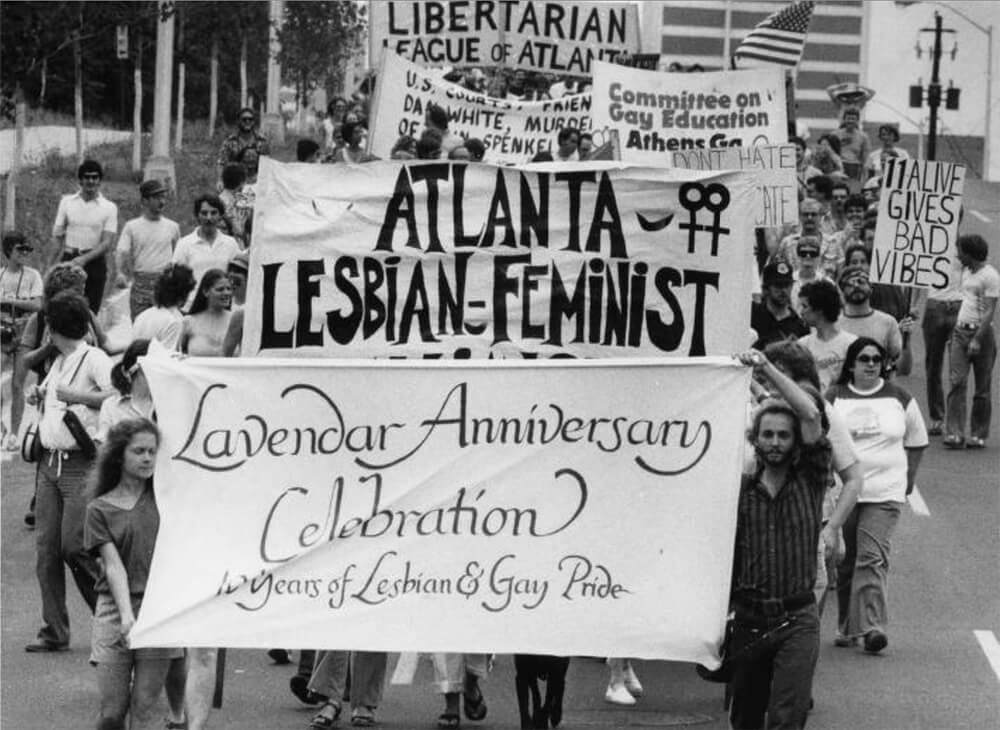
This metronormativity has been questioned in studies of rural and southern queer spaces like John Howard's Men Like That, Mary Gray's Out in the Country, and Scott Herring's Another Country. Howard's ground-breaking book challenged the linking of gay identity and urban life, insisting that this bias "at times has denied agency to rural folk, [and] has assumed that nonurban dwellers can't attach meanings to, can't find useful ways of framing, their nonconforming attractions and behaviors."2John Howard, Men Like That: A Southern Queer History (Chicago: University of Chicago Press, 1999), 14. He argues that "in Mississippi, spatial configurations—the unique characteristics of a rural landscape—forged distinct human interactions, movements, and sites," and that the urban model "incompletely and inadequately gets at the shape and scope of queer life."3Howard, Men Like That, 15. He suggests new models for understanding that queer life, decoupled from both identity and a fixed sense of place.
Scott Herring concurs. He provides a detailed overview of the growing scholarship on queer rural communities, concluding that "these artists and authors pay heed to the 'non-metropolitan' as a dynamic space of inquiry and sexual vitality. Complicating geophobic claims that ruralized spaces are always and only hotbeds of hostility, cultural and socioeconomic poverty, religious fundamentalism, homophobia, racism, urbanoia, and social conservatism, their works question knee-jerk assumptions that the 'rural' is a hate-filled space for queers as they archive the complex desires that contribute to any non-metropolitan identification."4Scott Herring, Another Country: Queer Anti-Urbanism (New York: New York University Press, 2010), 9. Herring's own work focuses on contemporary artistic portrayals of the rural queer in periodicals, photography, memoirs, and graphic novels.
This work on rural queerness is enhanced by feminist and queer geography, which has provided new paradigms to theorize how ideologies order and impede our understandings of space and how different configurations can remake that sense of space. Jack Geiseking explains that "space is not absolute or fixed in the Kantian sense but constantly produced in how it is all at once created, conceived, and lived."5Jen Jack Giesking, "A Queer Geographer's Life as an Introduction to Queer Theory, Space, and Time," in Queer Geographies: Beirut, Tijuana, Copenhagen, eds. Lasse Lau, Mirene Arsanios, Felipe Zuniga-Gonzalez, Mathia Kryger, and Omar Mismar (Roskilde, Denmark: Museet for Samtidskunst, 2014), 14. Our "natural" notions of space, in other words, are not innocent; instead, as the Women and Geography Study Group argues, "dominant senses of place reflect, in both their form and their content, the meanings given to places by the powerful."6Gillian Rose, Nicky Gregson, Jo Foord, et al., Introduction to Feminist Geographies: Explorations in Diversity and Difference, ed. Women and Geography Study Group (Essex, UK: Longman, 1997), 9. They continue, "A consequence of the way in which very specific senses of place are constructed through the particular images and values attached to them by the socially and culturally powerful, is that senses of place are often highly controversial. Other groups may challenge the senses of place produced by the powerful, and cultural geographers therefore argue that senses of place are often also sites of contestation."7Rose et al., Introduction to Feminist Geographies, 9. This focus on space as a site of contestation serves as a dominant focus of feminist and queer geography. "Space" isn't natural, and it isn't neutral.
Doreen Massey lays out the terms for understanding space beyond the fixed narrative of the powerful. She argues that space is heterogeneous, inhabited by diverse groups of people who often disagree about its functions and purpose. Multiple and relational, space is also open-ended and unfixed. As she explains,
What is special about place is not some romance of a pre-given collective identity or of the eternity of the hills. Rather, what is special about place is precisely that throwntogetherness, the unavoidable challenge of negotiating a here-and-now. . . . There can be no assumption of pre-given coherence, or of community or collective identity. . . . In sharp contrast to the view of place as settled and pre-given, with a coherence only to be disturbed by "external" forces, places as presented here in a sense necessitate invention; they pose a challenge. . . . They require that, in one way or another, we confront the challenge of the negotiation of multiplicity.8Doreen Massey, For Space (London: Sage Publications, 2005), 140–141.
Massey's insistence that there is no "pre-given coherence" to a space challenges a fundamental assumption about the fixity of the South and rejects the idea that there is some coherent essence of southernness. It constructs space that is always being created in the present moment, negotiating often contradictory perspectives.
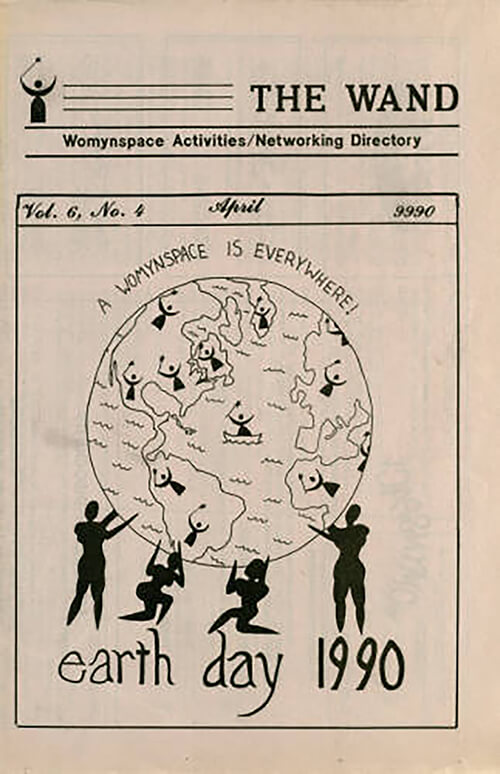
Indeed, Massey's notion of "throwntogetherness" allows for radical reimaginations of space: "What I'm interested in is how we might imagine spaces for these times; how we might pursue an alternative imagination. What is needed, I think, is to uproot 'space' from that constellation of concepts in which it has so unquestioningly so often been embedded (stasis; closure; representation) and to settle it among another set of ideas (heterogeneity; relationality; coevalness . . . liveliness indeed) where it releases a more challenging political landscape."9Massey, For Space, 13. The idea of "alternative imagination" of space is a dominant theme in feminist and queer geography. Geiseking privileges the "action of queering: refusing the normative and upsetting privilege for more radical, just worlds, even those not yet imagined,"10Giesking, "A Queer Geographer's Life," 15. to "uproariously alter the everyday spatialities of heterosexuality."11Giesking, 15. These disruptions include interventions in "the built environment" and the "landscapes" we construct to represent "nature."
Though studies of this utopian "act of queering" tend to focus on contemporary, urban interventions, the act of queering was central to utopian reimaginations of rural space in early women's liberation. Creating autonomous women's space and queer space was a central focus of women's communes and the landyke movement, which had particular resonance in the archive of southern lesbian feminism.
Landykes, Communes, and Lesbian Idealization of the Rural
Early women's liberation was long engaged with challenging the patriarchal hierarchies of space, both public and private. Many early protests—the sit-in at Ladies Home Journal, for example, and the burning of undergarments at the Miss America pageant—were forms of performance art that sought to make visible the seemingly "natural" public spaces allowed to women. These demonstrations intended to smash the public/private distinction that had isolated women and made their concerns a personal failing rather than a structural injustice. The creation of temporary spaces of freedom within a larger heteropatriarchal society—like gay bars and women's music festivals—were another strategy to reconfigure space.
Some lesbian feminists opted for more permanent means of escape that involved experiments in living that were, fundamentally, experiments of spatiality. Greta Rensenbrink explains that "separatist communities emerged in urban areas, especially San Francisco and New York, and increasingly on rural land communes across the United States."12Greta Rensenbrink, "Parthenogenesis and Lesbian Separatism: Regenerating Women's Community through Virgin Birth in the United States in the 1970s and 1980s," Journal of the History of Sexuality 19, no. 2 (May 2010): 291. These separatist communities often functioned as "collectives" in urban areas; some of the most important manifestos of the early women's movement emerged from collectives, which formed and reformed with alacrity in the early 1970s. Women lived and worked in the same space, breaking down the notions of public and private, masculine and feminine. Collectives broke down hierarchies within private and public lives, as well. Members often rejected the distinction between intellectual labor and physical labor; in press collectives, for example, women both wrote articles, short stories, and poems and physically printed these pieces—sometimes on mimeograph machines and later on letterpresses they bought and taught themselves how to use. There was deep suspicion about "leaders" of these groups; decisions were collectively and democratically reached. Cooking, cleaning, home repair—all were burdens to be shared equally in the collective. Collective members tried to re-make space to construct new revolutionary models. They also tried to remake economic models. Frequently, only a few of the members of these collectives had "straight" jobs, which were used to support the entire community. Collectives experimented with different models for self-sufficiency to free themselves from the obligations of capitalist patriarchy. Very few women stayed in these collectives for long; manifestos often had more staying power than the intentional communities that produced them.
Some collective experiments sought physical separation from mainstream society. Research has shown the "the country was an 'ideal' or 'fantasy' place for lesbians to live,"13David Bell and Gill Valentine, "Introduction: Orientations," in Mapping Desire: Geographies of Sexualities, eds. David Bell and Gill Valentine (New York: Routledge, 1995), 8. because it seemed to allow for a reinvention of space from the ground up. Sine Anahita explains, "In the early 1970s, the landdyke movement was created when a radical branch of second-wave feminism converged with ideas from the hippie back-to-the-land and other social movements. . . . From the outset, landdykes articulated the connections between ecological and feminist principles. Early activists sought to create a network of land-based communities where ecofeminist principles could manifest in everyday acts to prefigure a lesbian feminist, nature-centered, postpatriarchal future."14Sine Anahita, "Nestled into Niches: Prefigurative Communities on Lesbian Land," Journal of Homosexuality 56, no. 6 (August/September 2009): 724. This geographical experiment allowed for more democratic and communal constructions of space to teach, inspire, provide refuge, and influence the larger culture with guerrilla-type actions. Rose Norman, Merril Mushroom, and Kate Ellison, editors of a special issue of Sinister Wisdom on the landyke movement in the South, explain that "landykes were creating something larger, beyond a couple or a family. They attempted to live out egalitarian and ecological principles, which they saw as the core of female culture. They attempted this within sometimes stark financial, cultural, and psychological limitations."15Rose Norman, Merril Mushroom, and Kate Ellison, "Notes for a Special Issue, Landykes of the South: Women's Land Groups and Lesbian Communities in the South," Sinister Wisdom 98 (Fall 2015): 8. While the landyke movement was national, the editors suggested that the South has always contained a large share of these experimental communities.16Norman et al., "Notes for a Special Issue," 5.

Such movements are controversial and have been denounced as essentialist, white-identified, privileged, and unrealistic, but participants portray them differently. Some are unapologetic in their insistence on a women-only space and cling to essentialist notions of women's innate difference and superiority, but others see the landyke movement as an essential part of their development that allowed for creative rethinking of what is possible in culture, politics, and living. Sarah Shanbaum explained: "We created a closed and separatist environment, and in that closed and separatist environment, we learned and we became strong, and then we broke that like an egg, and went out into the world, and did what it was we wanted to do."17Dee Mosbacher, dir., Radical Harmonies: Woodstock Meets Women's Liberation in a Film about a Movement that Exploded the Gender Barriers in Music (Wolfe Video, 2004). Seeing separatism as a necessary phase that led to a broader inclusiveness is common for participants, and it is a pattern that we see in the archive of southern lesbian feminism as well.
Women's space and women's land were essential for the utopian possibilities they fostered. Greta Rensenbrink argues that "separatists embraced prefigurative politics, seeking to live the future in the present and working to create communities and local cultures that anticipated a utopian dream."18Rensenbrink, "Parthenogenesis and Lesbian Separatism," 292. As one landyke participant explained in the documentary Lesbiana:
We were actively rethinking the world. Each time I walked out of the bar, I felt like I was crossing a zone from a fictional world—the life in the bar—into reality—life in the city. And that is how I developed this notion of reality versus fiction. Meaning that women's reality was perceived as fiction by men, and what we called reality, was in fact the accumulation of masculine subjectivity that has been working for centuries establishing laws, traditions, etc. And we called that "reality," but it was nothing more than the male version of reality carried through the centuries. During that time, I was writing two pages. On one page I was trying to figure out the male system, a horrible system, detrimental to women: patriarchy. I was trying to figure out its strategies and its tactics, and how it evolved and was persistent to this day. And on the other page, I was writing about desire, utopia, beauty, pleasure, and everything I was discovering with other women. This is how I stayed in touch with the reality of patriarchy and still I could take flight, into love, lust, sisterhood, and all the discoveries I was making at that time.19Myriam Fougère, dir., Lesbiana: A Parallel Revolution (Women Make Movies, 2012).
The creation of a utopian, liberated space, both actual and imagined, was a key part of early women's liberation. It is why the arts were so enmeshed with political activism; why "consciousness-raising" moved from physical gatherings to novels; why women's press collectives were seen as political activism. Physical and imaginative space were mutually interdependent, and a compelling imagined space might end up having more impact than a physical space.
Many writers in the southern lesbian feminist archive were invested in communes and collectives. Bertha Harris went with a group of lesbian friends (including anthropologist Esther Newton and her then-lover Louise Fishman, the painter) to an upstate New York property owned by Jill Johnston,20Esther Newton, Margaret Mead Made Me Gay: Person Essays, Public Ideas (Durham, NC: Duke University Press, 2000), 277n6. which served as a weekend getaway and part-time retreat that Harris would later memorialize in Lover. Blanche McCrary Boyd joined a commune in Vermont (not an exclusively lesbian commune, though she transforms it into one in Terminal Velocity); Rita Mae Brown was part of a women's collective, the Furies, in Washington, D.C., and when she eventually moved to Virginia (after the sale of Rubyfruit Jungle to Bantam Books) she didn't establish a commune, but she did buy land.
In Rebels, Rubyfruits, and Rhinestones, James T. Sears describes a seamless transition of southern queers from their small southern towns to New York City and back to intentional communities in the South—a fluid circulation that negated neither urban gay communities nor southern identities.21James T. Sears, Rebels, Rubyfruit, and Rhinestones: Queering Space in the Stonewall South (New Brunswick, NJ: Rutgers University Press, 2001). The Pagoda community in St. Augustine, Florida was one of the most famous,22For more information, see Lin Daniels, "Pagoda, Temple of Love: Practice Ground for the Matriarchy," 1977, http://kongress-matriarchatspolitik.ch/upload/Lin-Daniels.pdf. but many smaller ones thrived under the radar across the South. Dorothy Allison belonged to a women's collective in Tallahassee, Florida. Catherine Nicholson lived in a collective in Charlotte, North Carolina but was kicked out for her intergenerational romance with Harriet Desmoines; photographs of the Sinister Wisdom group, taken at Nicholson's house on Country Club Drive (with many of the women topless), suggest a faux commune had formed there. And Catherine Ennis, who was so cautious that she wouldn't do readings of her lesbian novels too close to her hometown, appeared in the Ponchatoula Times in the mid-1980s with her "artisans" collective; the photograph suggests a lesbian commune flying under the radar.23"Copper Fountains Bring Ponchatoula Artisans Fame," Ponchatoula Times, July 31, 1986, http://ptl.stparchive.com/pageimage.php?paper=PTL&year=1986&month=7&day=31&page =1&mode=F&base=PTL07311986P01&title=The%20Ponchatoula%20Times. In smaller communities this sort of caution wasn't uncommon. Other communes—usually those in urban centers or college towns in the South—were more open and combative, though often no more visible. The Atlanta Lesbian Feminist Alliance (ALFA), which operated for two decades in the largest urban center in the South and hosted a number of lesbian writers, including southern lesbian feminist writers, was largely unknown in Atlanta proper. The Feminary collective in Durham, North Carolina was well known within lesbian feminist circles but fairly anonymous inside the Research Triangle. More recent communes include one in Alabama and Camp Sister Spirit in Mississippi.24A 2009 New York Times article discusses the Alabama community—see Sarah Kershaw, "My Sister's Keeper," New York Times, January 30, 2009, http://www.nytimes.com/2009/02 /01/fashion/01womyn.html. For more on Camp Sister Spirit, see "Controversial Camp Sister Spirit Celebrates 10 Years," WLOX News, September 22, 2003, http://www.wlox.com/story/1451559/controversial-camp-sister-spirit-celebrates-10-years/.
Despite their many differences in locations, visibility, and intentions, all these communes and collectives served an important function in the archive of southern lesbian feminism. Southern lesbian feminists were deeply invested in the spaces and places of the South. Whether they stayed in the South or fled to New York or San Francisco, they engaged imaginatively and combatively in the remaking of southern place to create a South they did not have to leave. Southern lesbian feminists—white, Latina, and African American—reconsidered their own "sense of place" in regard to their sexual identities and regional inheritance.
Southern lesbian feminist writers reinvent southern space as an imagined kingdom of racial impurities, sexual perversity, and political radicalism. In their imaginary sites of southern space, they include utopian imaginings, communes and collectives, and queer contact zones within the larger communities.
About the Author
Jaime Harker is professor of English and the director of the Sarah Isom Center for Women and Gender Studies at the University of Mississippi. Her research centers on popular American women writers of the interwar period, Cold War gay literature, and women's liberation and gay liberation literature. Prior to writing the book from which this essay is excerpted, she has written two other monographs: America the Middlebrow: Women's Novels, Progressivism, and Middlebrow Authorship Between the Wars (Amherst: University of Massachusetts Press, 2007) and Middlebrow Queer: Christopher Isherwood in America (Minneapolis: University of Minnesota Press, 2013).
]]>Blog Post
The activism of Appalachian women who took up the fight for justice in the 1960s and 1970s pulsed outward from a core ethic of care. Caregiving animated their understanding of politics and activism and infused their movements.1Berenice Fisher and Joan C. Tronto, "Toward a Feminist Theory of Caring" in Circles of Care: Work and Identity in Women's Lives, eds. Emily Abel and Margaret K. Nelson (Albany: State University of New York Press, 1990), 40. Historically, Appalachian women had tended to the broken bodies of miners and industrial workers, mourned the dead, raised children, and negotiated a subsistence economy. They did so not because women are inherently more nurturing than men but because culture, society, and law carved out these positions. Most caregivers do not become activists. The merging of an ethic of care with democratic struggle provided a powerful argument that caring is central to the fight for justice, fairness, rights, and democracy. Women drew upon their experiences in shaping movements for labor and welfare rights, environmental justice, access to healthcare, and women's rights.
In the last thirty years, working-class caregivers have faced a US political economy ever more hostile to their needs and concerns and increasingly demanding of their time and energy. Although overall poverty has decreased since the 1960s, many locations in the Appalachian South, like rural and working-class communities across the nation, have experienced the rise of extreme economic inequality, and a growing divide between rural and metropolitan residents.2See Ronald D. Eller, Uneven Ground: Appalachia since 1945 (Lexington: University Press of Kentucky, 2008), 232–233. In the Appalachian coalfields, the last decades of the twentieth century ushered in the final and most precipitous decline of that industry. Although mine owners and operators had long exploited workers, mining was for many years the best paying work around. When those jobs disappeared, no other industry filled the gap and more people entered the low-wage service economy, surviving with little in the way of workplace benefits or economic security.
Relative Poverty Rates in Appalachia, 2012–2016 (County Rates as a Percentage of the US Average), July 2018. Map by the Appalachian Regional Commission. Courtesy of the Appalachian Regional Commission.
The loss of mining jobs and the transition to a global market and service economy paralleled the unraveling of the social safety net. In the 1990s, the bipartisan dismantling of Aid to Families with Dependent Children left poor families, and in particular women, on shaky ground and delivered a severe blow to decades of activism to guarantee welfare rights.3Deborah Thorne, Ann Tickamyer, and Mark Thorne, "Poverty and Income in Appalachia," Journal of Appalachian Studies 10, no. 3 (2004): 341–357. See also Debra A. Henderson and Ann R. Tickamyer, "Lost in Appalachia: The Unexpected Impact of Welfare Reform on Older Women in Rural Communities," Journal of Sociology and Social Welfare 35, no. 3 (2008): 153–171. Health clinics, legal aid services, and local organizations—the legacies of 1960s activism—stood as the only buffers in a political economy increasingly hostile to poor and working people.
In the popular imagination, "Appalachia" functions as shorthand for a white working class—coded as male industrial workers. For months before and after the 2016 election, journalists reported on various Trump Countries, as they were dubbed—Appalachian communities supposedly serving as ground zero for understanding working-class support for a billionaire who claimed to care about the "forgotten people" of America. This signposting allowed for an evasion of any deep analysis of racism or growing economic disparity, generations in the making and never contained to one region.4Roger Cohen, "We Need 'Somebody Spectacular': Views from Trump Country," The New York Times, September 9, 2016, accessed March 8, 2017, https://www.nytimes.com/2016/09/11/opinion/sunday/we-need-somebody-spectacular-views-from-trump-country.html; John Saward, "Welcome to Trump County, USA," Vanity Fair, February 24, 2016, accessed March 8, 2017, http://www.vanityfair.com/news/2016/02/donald-trump-supporters-west-virginia; Larissa MacFarquhar, "In the Heart of Trump Country," The New Yorker, October 10, 2016, accessed March 8, 2017, http://www.newyorker.com/magazine/2016/10/10/in-the-heart-of-trump-country. For a full list and analysis of this coverage see Elizabeth Catte, "There is No Neutral There: Appalachia as Mythic 'Trump Country,'" October 16, 2016, https://elizabethcatte.com/2016/10/16/appalachia-as-trump-country/.
Such portraits rely on exhausted tropes that erase the voices and experiences of working-class women, a multi-racial and -ethnic group, from history while wiping from historical memory the progressive activism long central to Appalachia's history. Such a narrative ignores the experiences of the vast majority of the region's workers (many of them women) who are not employed in heavy industry, but in the work of caring: health care support, education, and social services.
Conceptions of "workers" that exclude and marginalize caregiving, or cast Appalachia as an isolated, out-of-step place, have little chance of generating the kind of diverse, hopeful coalitional work that emerged in the late 1960s and 1970s.
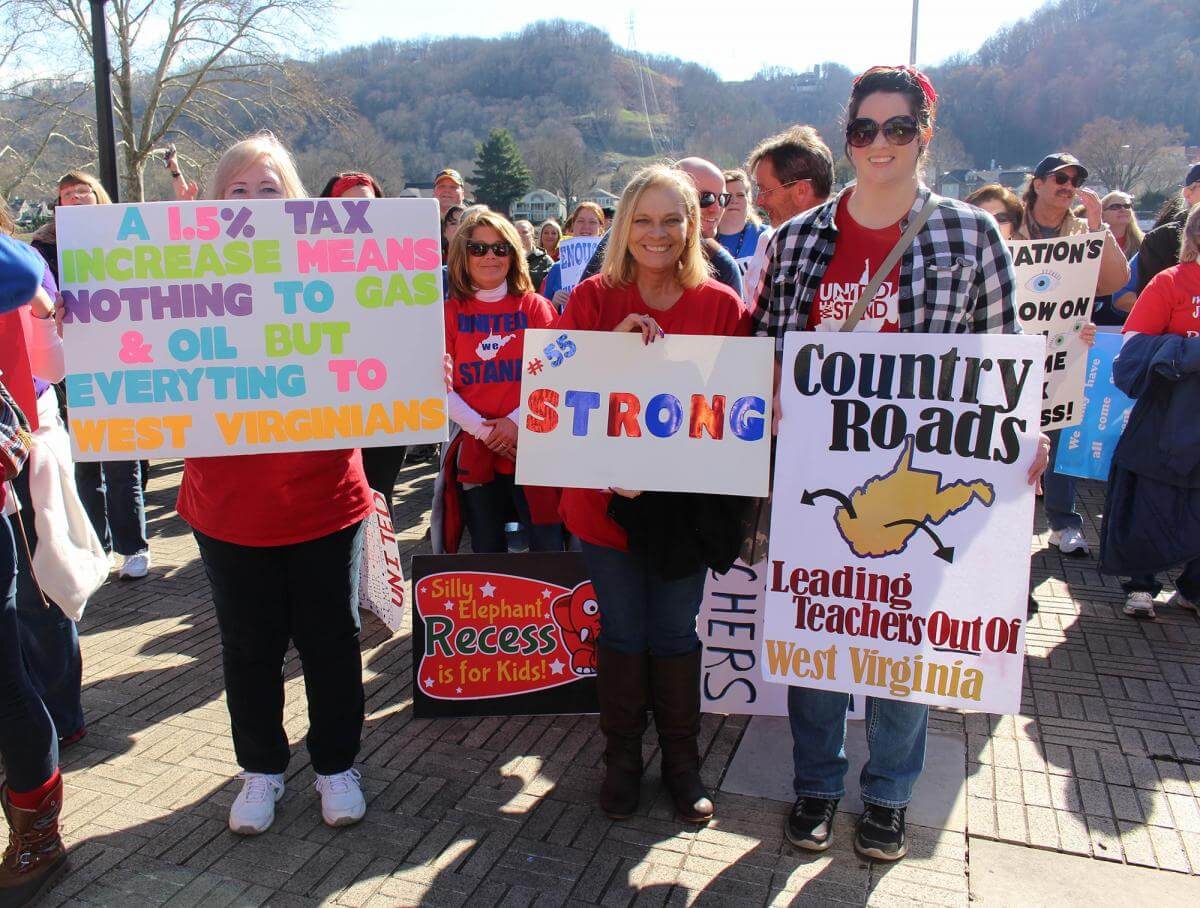
Women activists in Appalachia and their allies—civil rights activists, lawyers, doctors, union organizers, feminists, and students—worked for what they believed was possible: the common good in their communities, region, and nation. Their most potent tool was the knowledge that they carried from a lifetime of tending to families, surviving tragedies, bearing witness to the disasters of unregulated capitalism, advocating for their communities, and taking stands for fairness and justice. Their stories are tools for the present, charting a path to a society that centers and values life-sustaining labor.
About the Author
Jessica Wilkerson is assistant professor of history and southern studies at the University of Mississippi.
]]>Introduction by Katherine Jentleson
During the summer of 2018, Atlanta's High Museum of Art hosted Outliers and American Vanguard Art, an exhibition that demonstrated how self-taught artists have been major contributors to the development of modern and contemporary art over the last century. One of the most popular galleries in Outliers contained a vast open installation that considered the influences of textile and craft-based practices upon generations of painters and sculptors. By mixing quilts by Mary Lee Bendolph and Annie Mae Young of the Gee's Bend Quilting Collective, and the West Coast quilter Rosie Lee Tompkins, with paintings by avant-garde artists such as Al Loving, Mary Heilmann and Howardena Pindell, Outliers emphasized the formative influence that quilts had on artists working in New York in the 1970s, thanks in part to a 1971 exhibition at the Whitney Museum, Abstract Design in American Quilts, that put historical quilts in conversation with twentieth century abstraction.
As the Outliers exhibition brought quilts to Atlanta, there was also an incredible quilt-celebrating show at the Metropolitan Museum of Art in New York: History Refused to Die: Highlights from the Souls Grown Deep Foundation Gift. In addition to monumental works by artists such as Thornton Dial and Joe Minter, the exhibition featured eighteen quilts by Gee's Bend, Alabama, artists including Loretta Pettway and Emma Lee Pettway Campbell that are now part of the museum's collection. Outliers, History Refused to Die, and the High's newly reopened permanent collection galleries, which demonstrate the museum's commitment to collecting and showing more quilts, are all proof of how, despite their long history of being pigeonholed and neglected, quilts have become significant objects in US art museums.
Convened at the High Museum during the final weeks of Outliers, this "Quilting Conversations" panel invited individuals chosen not only for their personal achievements, but also for the variety of relationships to quilting that they each represent. These panelists took the stage and offered their perspectives on the past, present, and future of quilts and quilting.
Marquetta Johnson
Marquetta Johnson, fourth-generation quilter and textile artist, discusses how her quilting techniques have developed over a lifetime, and how she uses her creativity to inspire new generations of quilters, students, and activists.
Michael Moon
Michael Moon considers quilts as kōans ("What is this?") and, with several vivid examples, ponders the intense emotional power and spiritual force that includes, but goes beyond, quilts' visual appeal.
Mary Margaret Pettway
Fourth-generation quilter Mary Margaret Pettway discusses a variety of quilts she has made during her life in Gee's Bend, Alabama. "The mind of a quilter," she says, "is a twisted thing."
Erin Jane Nelson
Erin Jane Nelson puts quilts "into new situations" in her own work by combining traditional methods with inspirations and techniques drawn from contemporary art scenes and movements.
About the Speakers
Katherine Jentleson is the Merrie and Dan Boone Curator of Folk and Self-Taught Art at Atlanta's High Museum of Art. She previously worked as an arts journalist in New York and received her PhD from the department of Art, Art History, and Visual Studies at Duke University, specializing in the art of the United States, with an emphasis on the interwar period.
Marquetta Johnson is a self-taught artist and fourth-generation quilter, known for using innovative hand-dyeing techniques. Her work is represented by Mason Murer Fine Art Gallery in Atlanta, and is in many private and corporate collections (Mr. and Mrs. Bernie Marcus of Atlanta, the Coca Cola Corporation, and the Hartsfield-Jackson International Airport). She is a teaching artist affiliated with the High Museum, VSA arts of Georgia, the Atlanta Partnership for the Arts in Learning, and the NAMES Project Foundation.
Michael Moon is a professor of Women's, Gender and Sexuality Studies at Emory University. In addition to LGBT studies and queer theory, Moon's research concerns modern literature, literary theory, media and mass culture, with a particular emphasis on the cultural production of "outsider" communities. His two most reecent books are Darger's Resources (Durham, NC: Duke University Press, 2012) and Arabian Nights (Arsenal Pulp Press, 2016).
Mary Margaret Pettway is a fourth-generation quilter and member of Gee's Bend Quilt Collective. She is the new Board Chair for the Souls Grown Deep Foundation and a 2018 Fellow of the Alabama Humanities Foundation.
Erin Jane Nelson is the executive director of the digital magazine BURNAWAY. She previously worked as curatorial assistant in Photography and Folk and Self-Taught Art at the High Museum and managed web design, publications, and other media initiatives at the Fraenkel Gallery in San Francisco. She is an actively exhibiting artist, having recently shown her work at the Whitney Museum of American Art and Atlanta Contemporary.
]]>Review
The yeoman farmer is a central figure in debates over the historical dispossessions that created the place we now call Appalachia. For historians like Ron Eller, these self-sufficient small landholders dominated the agrarian past, and first became exploited as residents of company towns when coal, timber, and other corporate interests began in the late nineteenth century to appropriate the land and wealth of the mountains for their own profit.1See Ronald D. Eller, Miners, Millhands, and Mountaineers: Industrialization of the Appalachian South, 1880–1930 (Knoxville: University of Tennessee Press, 1982). During the 1960s and 1970s, activists promoted a related golden-age vision of egalitarian pastoralism in pre-industrial Appalachia, which they contrasted with the ugliness of strip mining, black lung disease, and other contemporary depredations to amplify their calls to "save the land and people." Then, in 1996, Wilma Dunaway swept aside romantic visions of the Appalachian past with prodigious quantitative research, an earlier historical timeline (back to 1700), and the perspective of world systems theory. "On the eve of the Civil War," she concluded, "Appalachians were much more likely than other Americans to be impoverished, illiterate, and landless."2Wilma A. Dunaway, The First American Frontier: Transition to Capitalism in Southern Appalachia, 1700–1860 (Chapel Hill: University of North Carolina Press, 1996), 21.
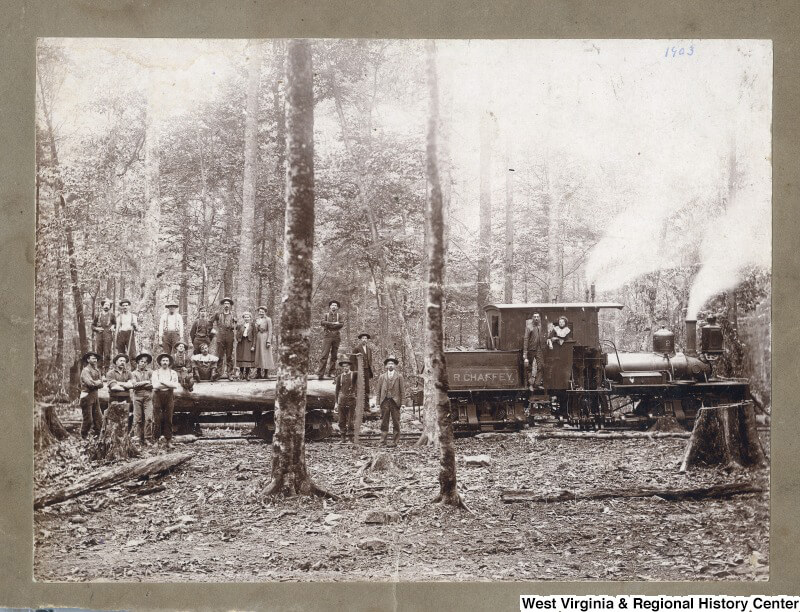
.svg)

Steven Stoll's Ramp Hollow intervenes in these and related debates by recasting the nature of agriculture and the meaning of land ownership among the European colonialists and their descendants who settled the Appalachian frontier. Stoll likens Appalachia's early settlers to peasants all over the world, who depend on access to a common "ecological base." In the Appalachian instance, this "base" is the forest: "This is a vast renewable fund of resources that provides spaces for fields, food for gathering, fodder for cattle, and habitat for wild game. The base gives everything but costs nothing" (33). Through the practice of swidden, sometimes pejoratively called slash-and-burn agriculture, settlers cleared portions of the forest and cultivated crops, but their clearings were limited; more importantly, they utilized the forest as a source of wild plants, game, and mast for their free-ranging livestock. Although their economy was "makeshift," without extensive surplus or accumulation, these early settlers rarely starved, Stoll asserts, and they should not be considered poor.
As the western edge of European settlement, the mountainous backcountry of eighteenth-century Appalachia briefly represented a space of relative freedom from state enforcement of property rights. Although elites gained formal title to millions of mountainous acres through grant or purchase, they tended to view the land as "wilderness" and unworthy of investment or even much attention, according to Stoll. A chaos of competing land claims emerged, as well as, in effect, the practice of "land to the tiller." Use-rights prevailed. Squatters and small landholders utilized the vast forest without regard to absentee elites and their abstract legal instruments, which went unenforced, thereby irrelevant, and they engaged in a vigorous barter economy with one another.
Although historians and activists have focused largely on the land-grabbing actions of coal companies in the late nineteenth century as the definitive dispossession of Appalachia, Stoll takes us back to the federalism of Alexander Hamilton in the early republic. Taxation—an obligation that could only be fulfilled in legal currency—was the means to force subsistence agrarians toward a cash economy and extend the administrative reach of centralized government into the recesses of the mountains. "Taxation does not merely fund the state," Stoll observes, echoing the arguments of James C. Scott and other anti-statist anarchist scholars. "It creates its territorial and financial power" (122).3See James C. Scott, The Art of Not Being Governed: An Anarchist History of Upland Southeast Asia (New Haven, CT: Yale University Press, 2009). Armed resistance to Hamilton's tax on distilled spirits, which did not distinguish between commercial and household production, arose from the high value of whiskey in barter exchanges and the onerous compulsion to send money from a cash-poor economy to a distant central government—all on the heels of a war for "independence." Although the Whiskey Rebellion succeeded in discontinuing the excise tax, the coercive extension of a sovereign state—with a unified system of land ownership, property rights, law, currency, taxation, and administrative regularity—would eventually facilitate destruction of the ecological base and subsistence practices of Appalachian agrarians.
Stoll's tale of rural industrialization in the second half of the nineteenth century focuses on what became West Virginia, and is familiar to scholars and many residents of central Appalachia: extension of the railroads into southern West Virginia, corporate acquisition of mineral rights and vast landholdings, opening of the "billion dollar coalfields," growth of company towns and the exploitative trap of scrip (non-legal tender in which miners received wages), company stores, occupational death, the mine guard system of private security thugs. True to his emphasis on subsistence agrarians, however, Stoll builds on work by Ron Lewis to emphasize the wholesale timbering of the mountains, which accompanied coal mining and devoured the ecological base of the forest.4See Ronald L. Lewis, Transforming the Appalachian Countryside: Railroads, Deforestation, and Social Change in West Virginia, 1880–1920 (Chapel Hill: University of North Carolina Press, 1998). Combined with the contradiction of a growing population seeking sustenance from a shrinking base of land (analyzed in detail by Dwight B. Billings and Kathleen M. Blee), these multiple dispossessions spelled an end to the makeshift agrarian economy.5See Dwight B. Billings and Kathleen M. Blee, The Road to Poverty: The Making of Wealth and Hardship in Appalachia (Cambridge: Cambridge University Press, 2000).
Stoll directs special attention—and some of his most blistering critique—to the ideologues of capitalist modernity, those self-interested promoters of the benefits of wage labor, efficiency, discipline, and "productive" (i.e., profitable for them and their kind) use of the land. Declaring makeshift agricultural practices a miserable, impoverished throwback that impeded the self-evidently desirable processes of modernization, "Atlantic elites" gradually appropriated the means of subsistence of mountain farmers, then pronounced them miserable and poor. This critique of dominant ideology forms an important bridge toward Stoll's larger purpose in Ramp Hollow, which is to defend the integrity of peasants and the viability of their agricultural practices—when not disrupted by various "development" schemes—all over the world. Indeed, the book begins in West Virginia and ends in West Africa, where Stoll decries the contemporary enclosure movement whereby governments are dispossessing entire peasant villages by transferring "idle" common lands to corporations that produce agricultural commodities for global markets.
Reviewers typically feel an obligation to register a complaint or two about a book, and I am no exception. I was disappointed by Stoll's lack of attention to gender relations and the gendered division of labor, especially in view of his definition of the makeshift agricultural economy as a household mode of production. Although he acknowledges that the agrarian household was a "coercive institution" (216), what he means by that is the authority of patriarchs over their children, who "owed their families a certain term of labor before gaining the right to strike out for themselves" (216). Neither patriarchal authority over wives nor the fact that daughters never gained "the right to strike out for themselves" seems to occur to him. Consistent with his Marxist analytic (and neglect of Marxist-feminism), Stoll focuses exclusively on class relations; in the context of coal camps, this includes analyzing the contradictory role of the household garden as a means to lower the cost of miners' and their families' social reproduction (and thus wages) as well as potentially sustain them during strikes. The labor in those gardens, as in social reproduction more generally, remains unexplored.
To its great credit as a work of history, Ramp Hollow is unusual in its direct relevance to contemporary politics. This is true for not only areas of the world where land grabs and enclosures proceed apace, but also central Appalachia, where the struggle to envision and create post-coal—and potentially "post-capitalist"—futures is ongoing. In his final chapter, Stoll offers a "thought experiment" in the form of "The Commons Communities Act" (272–274), which proposes publicly-owned commons, complete with a variety of incentives and protections for those who live there, each with an ecological base sufficient to sustain residents through "hunting and gathering, cattle grazing, timber harvesting, vegetable gardening, and farming" (272). Although his proposal is understandably crafted for rural contexts, given Stoll's concerns throughout the book, the commons is not necessarily so. Indeed, the argument that different forms of public commons may be key to the reinvigoration of civic life and the prospects for democratic, place-based economies seems to be spreading.6See Herbert Reid and Betsy Taylor, Recovering the Commons: Democracy, Place, and Global Justice (Urbana and Chicago: University of Illinois Press, 2010); Kathryn Newfont, Blue Ridge Commons: Environmental Activism and Forest History in Western North Carolina (Athens: University of Georgia Press, 2012); and George Monbiot, Out of the Wreckage: A New Politics for an Age of Crisis (New York: Verso, 2017). Regardless of the specifics of such proposals, they reinforce Stoll's overarching argument: capitalist hegemony is not inevitable, and collective access to land is key to the future of Appalachia.
About the Author
Barbara Ellen Smith is professor emerita at Virginia Tech and a member of the editorial board of Southern Spaces. She has long studied and participated in economic justice movements in Appalachia.
]]>Video
A Reflection by Craig Womack
A friend of mine tells a story about his high school days in the greater tri-city area (Wetumka, Weleetka, and Wewoka—Creek names for water that roars, runs, and barks—for those of you from parts other than rural eastern Oklahoma). One day in his Weleetka High School class, everyone stopped paying attention to the teacher and turned their eyes from the chalkboard, and United States history, to a Kafkaesque-sized cockroach making his (or her) way leisurely across the classroom floor, giant antennae twitching as it navigated its escape from secondary education.
As all of those in our noble profession know, even the most starry-eyed believer in the power of education sometimes loses control of the classroom, and this particular teacher, upon realizing her lecture had been hijacked by a very large insect, walked over to the uninvited intruder and ground it under the heel of her shoe. Given the size of the cockroach, some cleanup was in order, so she went down the hall to get paper towels from the restroom. On the way back, she heard all kinds of cheering coming from her class. While she had been out, the cockroach had reanimated and was making a second beeline, so to speak, for the door. If not for her puzzlement over all the commotion, the teacher might have nailed it again, but the cockroach reached safety, while all the Indian kids in the class cheered it on!
I don't care to judge the historical veracity of this wonderful tale, but it seems to me the Mvskoke Creek language might have about as much chance for survival as that cockroach, and I will leave it up to the reader, and the film viewer, to interpret whether or not I am suggesting that a miracle is needed or that miracles sometimes occur.1The official name of the tribe located in present-day Oklahoma is the Muscogee Creek Nation. The word, in the language, for what Creek people speak is "Mvskoke," pronounced the same as the word for the tribe. Some Creeks prefer the name "Mvskoke" since "Creek" is a name given to the tribe by the English in the Colonial era.
For sure, the dominating force of English surrounds us. People in Creek country say there are five thousand Creek speakers left, but nobody seems to know where that number comes from, and many suggest there are only a few hundred speakers, some even far fewer. This documentary, Hearing the Call: The Cultural and Spiritual Journey of Rosemary McCombs Maxey, features a Creek community leader who is determined to speak the Creek language every day—to people, when possible, and to llamas, chickens, cats, and dogs, when not.
Four years ago, I was approached by Stefanie Pierce, at that time the administrative assistant in the Department of Environmental Sciences at Emory University, who said she was talking to people about making a documentary on Rosemary. The project immediately struck me as having merit, because women in the Creek Nation are seldom given public recognition for their knowledge and contributions, especially in the realm of language and culture where women have been both instrumental as well as often ignored. In Rosemary's case, as Hearing the Call attests, she possesses multi-generational knowledge about community genealogies predating Creek Removal from ancestral homelands in Alabama and Georgia in 1836 as well as a command of specific family histories in Oklahoma Creek churches that goes back to the 1840s, when her family first started becoming leaders in these places of worship. Add to this her history working in Indian Country outside the Creek Nation, among Lakota people in South Dakota, for example; as an advocate for Native Hawaiian prisoners incarcerated in Oklahoma and Arizona; as an interim pastor for a year at Community of Hope, Tulsa's GLBTQ church; as a pastor of various United Church of Christ congregations on the East Coast; and as a person in critical dialogue with leading feminist, race, and theological scholars in the 1970s and 1980s, and it becomes evident that the subject of our documentary has more stories than we could ever put up on the screen.
As I, along with Rosemary herself and a group of Creek language advocates, watched the story unfold when Hearing the Call premiered at Emory earlier this year, it felt like its own kind of coming out story, albeit in this case the story of a kid who, rather than announce to her parents she is gay, instead tells them she's called to be a preacher—even though no such role exists for women in the denomination she grew up in. What strikes me as an incredible act of the imagination seems like something else the way Rosemary tells it: being around preachers was the only thing she knew, so as far back as she can remember she practiced sermonizing on farm animals. I don't know if Rosemary would have ground the cockroach into oblivion, had it shown up during one of her childhood church services on back porches and in farm wagons, but, having known her for many years, I feel confident that it wouldn't have escaped without being addressed at length in the Creek language, and I don't hesitate to imagine it coming up to the altar to be saved.
What is the Creek language, anyway? Without getting too complicated, let's just say it is one of the original languages of the US Southeast, and since I am an Emory professor, I will add that it is the first and foremost language of the campus where I teach. Creek people lived at Emory's exact location prior to the 1820s, having been forced out of the area earlier before the removal of the main body of the tribe that occurred in 1836, the year of Emory's founding. When I am on campus, therefore, I simply have to look where I am stepping if I want to know where the Creek language originates.
The language was originally spoken throughout Alabama and Georgia, and in the late 1700s and into the early decades of the nineteenth century, it spread into Florida through Creek-speaking groups that migrated there and now live on the Seminole reservations and elsewhere in Florida. In 1836 when the tribe was forcibly removed from Alabama and Georgia to the present-day state of Oklahoma, the language moved into what was then known as Indian Territory, a sovereign entity set aside for the exiled tribes sent there. Today, the language is primarily spoken by Oklahoma Creeks, Oklahoma Seminoles, and Florida Seminoles.
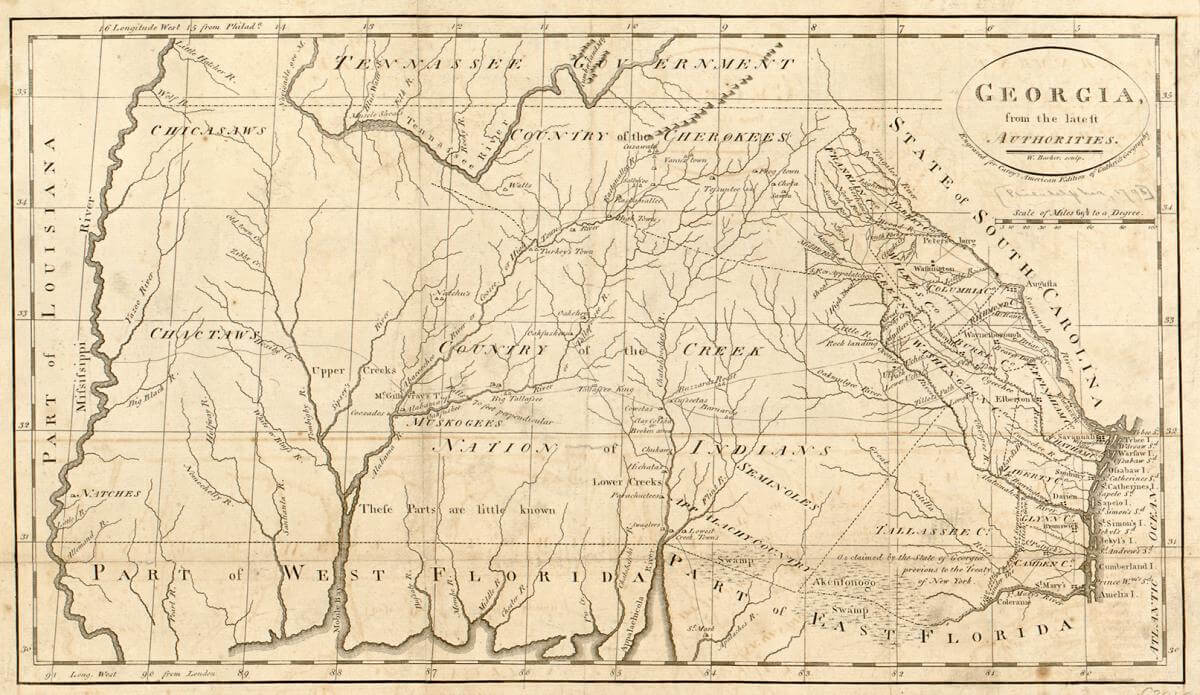
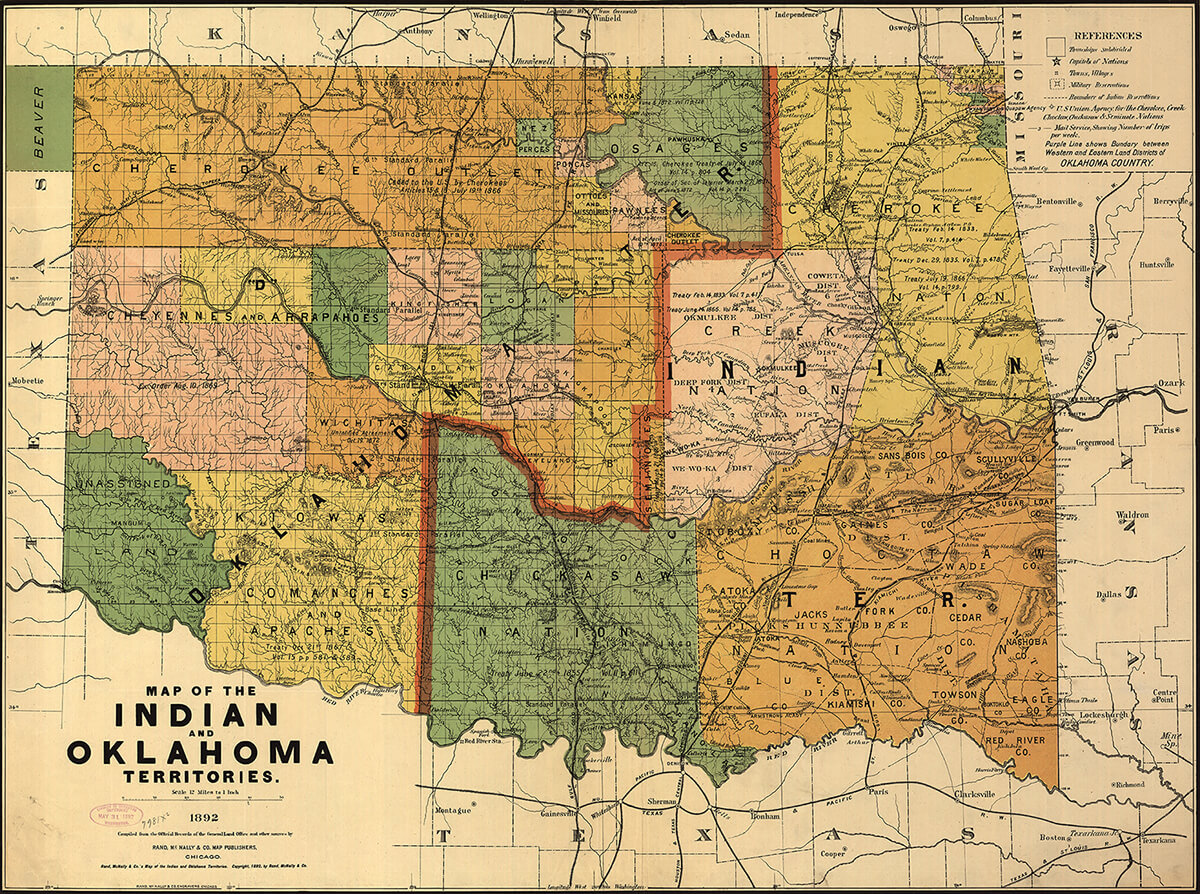
The first university course in the Creek language took place at the University of Oklahoma in the fall of 1991. As fate would have it, I was in that course. A non-Indian graduate student in anthropology, Pam Innes, was the instructor of record, and she was working with the Creek ceremonialist Linda Alexander and her daughter, Bertha Tilkens, both active members of Greenleaf Ceremonial Ground. I remember three things very vividly from that first effort. First, a Creek/Comanche friend of mine, who sat next to me, would rail after every meeting: "How can we have this non-Indian, who doesn't speak the language, trying to teach us how to speak Creek?" I didn't feel inclined to disagree. Secondly, there was constant writing and erasing, the instructors' hands working at cross-purposes, as Pam would write down a verb she had Linda conjugate, then leave it on the board; the next time Linda conjugated the verb it would be totally different, due to the infinite contextual factors that change Creek verbs. Thirdly, though we had no cockroaches for entertainment, Linda had her own way of hijacking a classroom through hilarious and raunchy stories that I have never quite gotten over and hope I never will. I am happy to report that the collaboration between Pam, Linda, and Bertha evolved into a respectful and reciprocal alliance, a friendship I have always been grateful to have been caught up in.
Since these tenuous beginnings, when academics were speculating about how Creek language worked, often relying on the meticulous fieldwork of the linguist Mary Haas, who worked in Oklahoma in the 1930s, and basing their guesses on Mary Haas's guesses, the Creek language has come a long way in terms of formal analysis. A significant part of the progress has involved checking and analyzing this earlier linguistic work with a large cohort of contemporary Creek speakers.
Pam Innes's collaboration produced a Creek grammar—Beginning Creek: Mvskoke Emponvkv (Norman: University of Oklahoma Press, 2004)—which followed a Creek-English dictionary published in 2000 by the linguist Jack Martin, who worked collaboratively for a decade with Creek elder Margaret Mauldin. By the new millennium, classes had spread from the University of Oklahoma to Oklahoma State, campuses where significant numbers of Creek students are enrolled. Martin's own work would expand tremendously with grammars, Creek-to-English translations of stories, innovative interviews of Creek elders by other Creek elders in the Creek language, videos of Creek Christians singing hymns in Creek, and much more.
While all of this has gone on at the level of formal study, the community's ability to produce young Creek language speakers is a dire situation. The tribe faces two major challenges: getting long-term immersion programs started, and the even more daunting chore of creating environments where immersed kids have some place outside the immersion classroom to practice their language skills. It is simply a fact that young kids surrounded constantly by a second language will learn it, but how do you create people for them to speak with? Can this really be done? In comparison, the cockroach might have had it easy.
Questions abound. Numerous tribes no longer have any native language speakers. Does this mean the tribe no longer has an easily definable cultural identity, or can they find new ways to identify as Indian? What, exactly, is contained in language, and to what extent do non-linguistic factors also carry culture? To what degree can English, a language spoken by almost every Indian in the United States and English-speaking Canada, also be considered an Indian language at this point? What does the Chickasaw poet Linda Hogan mean when she writes, "[b]lessed are those who listen / when no one is left to speak"?2Linda Hogan, "Blessing," in Calling Myself Home (New York: Greenfield Review Press, 1978), 27.
Rosemary McCombs Maxey still has people to talk with in Creek, farm animals who get dinner and a language lesson at the same time, Skype meetings with Creek academics in which we work together on bringing increasing levels of Creek language into our writings, and many other ongoing conversations throughout Creek country. We listen, and, since we come from a culture that prizes call and response, we hope to echo back some of what she has taught us. As for our cockroach, I don't know if it had anything akin to a language, but it did have witnesses who wanted it to survive, and we hope Hearing the Call bears witness to the power of resistance and continuance.
About the Directors
Craig Womack is an Oklahoma Creek-Cherokee Native American literary scholar, writer, and teacher, and an associate professor of English at Emory University. He is the author of Red on Red: Native American Literary Separatism (1999), Drowning in Fire (2001), and Art as Performance, Story as Criticism: Reflections on Native Literary Aesthetics (2009). He is co-author of American Indian Literary Nationalism (2006) and Reasoning Together: The Native Critics Collective (2008). He is currently working on a novel about a young musician in Northern Minnesota and his obsession with the Oklahoma folk singer Woody Guthrie. Steve Bransford is a Senior Video Producer at the Emory Center for Digital Scholarship.
]]>